Voting is beautiful, be beautiful ~ vote.©
Showing posts with label India. Show all posts
Showing posts with label India. Show all posts
Thursday, February 27, 2020


Sunday, September 30, 2018
Why Is India Adopting Failed Western Child Welfare Policies, Finally Answered
 |
| It only takes a moment to find inner peace before explaining the financial concept of trafficking tiny humans, over and over again. |
Allow just a moment for my summation.
Because stealin' children is the first leg of conquering a nation and the Child Protective Service model came out Michigan.
The technical name is imperialism through privateers, by and through chattel law, in the name of the tax exempt god, but in this instance, I am just going to call it, for more intuitive purposes, human trafficking.
Selling Chattel: The Oldest Form Of Survival
Selling chattel is the oldest form of survival, but now-a-days we just call it foster care and adoption.Poverty is the crime of abuse and neglect, can I get an "Amen"?
Why are we adopting failed Western childcare policies?
The general public’s complicity in passing dangerous child-related policies often leads to dysfunctional societies, as has been seen in the West. It’s high time that we in India learned from that example.
Last week’s article in this series looked at possible reasons why the West has adopted a confiscatory model of child protection, where intervention is in the form of taking children into foster care rather than helping them in their families. The question became relevant as we saw that the number of cases involving sexual or physical abuse was relatively small. Rather than simply targeting abuse, the child protection systems in these countries target the children of the underclass, using the pretext of “emotional abuse”, or labelling poverty-related home conditions as “neglect” or “parental inability to cope”. Those targeted mostly belong to the perceived “dregs of society”, so-called “welfare bums “or poor single mothers as impoverished, poorly educated, isolated and otherwise marginalised parents.
This is where the whole operation starts to look more and more like a eugenics exercise. Short of sterilisation, this is the best way to cull a society—take the children of the perceived “unfit” parents and send them to be raised in foster care or forced adoption with state-approved “fit” parents.
Not only is this unethical and unspeakably cruel, the system has not succeeded in making things better for most of the children it takes away. The child protection and foster care model of our Juvenile Justice Act, 2015 (“JJ Act”) is failing in the advanced Western countries that have it. Even its most vocal advocates will admit that children in foster care do very badly compared with children in the general population. Most of them age-out of the care system as school drop-outs and enter into a life of homelessness, prostitution, substance abuse or crime.
In the USA, surveys show that only 2-9% of foster youth obtain a bachelor’s degree and half of them drop out of school (National Working Group on Foster Care and Education in the USA, 2014). The channel between foster care and being trafficked into sex work is an accepted fact in England and the USA; it is called the “Foster Care to Trafficking Pipeline”. Experts also speak of a “Foster Care to Prison Pipeline” because of the high rates of criminal offenders found among former foster youth.
According to statistics from England, “looked after” children (i.e. those in state care) are five times more likely than all children to commit a crime (Department for Education, Children looked after in England, Additional Tables, SFR 50/2017). The data also shows that 11% of 16 to 17-year-olds and 5% of 13 to 15-year-olds have substance misuse problems.
Educational outcomes for England’s “looked after” children are much lower than for children not looked after (Department for Education, Outcomes for children looked after by local authorities in England, SFR 20/2018).
Data for children in state care/foster care for a year or more continuously (“children looked after continuously for atleast 12 months”) show that only half (49%) are considered to have normal emotional and behavioural health. 12% have “borderline scores” and 38% have scores which were a “cause for concern”.
So the evidence is in that foster care has failed to improve things for children from families assessed negatively by the state.
The breakup of filial ties through foster care has also meant that as adults many of those ageing out of the care system have no one in the world to go to. Children may have no recollection of their parents’ whereabouts, and many have been told from a very young age that their parents were no good. This also generates a stream of now aged parents without any children to care for them in their old age.
 The cycle of isolation continues with a high number of teenage pregnancies being observed in girls ageing out of the care system, driven by the very human need to have someone to love. The children of these young women are often targeted by the child protection system as their experience of having been in foster care is seen as retarding their ability to be “fit parents”.
Do we want to set this tragic cycle into motion in India?
The question arises why we are looking at foster care at all. Foster care is described in child protection jargon as “de-institutionalisation”, which the prevailing wisdom holds is better than institutionalisation, i.e., being in orphanages. But, in practice, foster care operates very much like a small-scale institution. The JJ Act has the concept of “group” foster care, which is basically a small institution with a limit on the number of children to 8.
Foster care is said to be preferable to life in an orphanage because it gives children a domestic environment and a sense of belonging. But the relatively closed environment of a foster family leaves children vulnerable to other types of abuse and exploitation. There is any amount of testimony in Western countries from people who have been in foster care saying that they suffered far worse abuse in foster care, like rape and thrashings, than anything they faced in their less-than-perfect biological families.
A large number of children run away from state care. In England, statistics show that 33% of children in foster care went “missing”(Department for Education, Children looked after in England, SFR 50/2017). Of all the children placed in institutions or foster care, an average of 4.2 incidents of being “away from their placement without authorisation” were reported. This is official jargon for a child whose whereabouts away from the place of state care are known. In other words, this refers to runaways. This means many children in foster care are running away more than 4 times a year from their supposedly “wonderful” foster carers. Does this look like a child friendly system?
Many former foster children, even if they were not abused or exploited in foster care, will say that they never felt loved or got the sense of belonging they craved. Many say that they were acutely aware of the fact that the foster parents had taken them in for the fostering “paycheck” that came with them.
In India, the Model Foster Care Guidelines, 2016 say that preference is to be given to fosterers who do not ask for state financial assistance to foster the child, but there is nothing to stop them taking funds from the child rights NGOs that have mushroomed in India since we adopted the Western child protection model. There is also no provision for foster parents to account for monies received towards the care of the foster child. Group foster homes in India are allowed Rs. 2000 per child from the government. This sum is bound to grow and grow, if the experience in Western countries is anything to go by. Once you have this system in place, it keeps asking for more funds and politicians look good allocating monies to child protection. Given economic conditions in India, a payment of Rs 2000 per month is already a hefty amount.
Why are we allowing the Ministry of Women and Child Development to get away with importing failed Western systems for Indian children? Who is lobbying the Ministry with ideas of mass foster care programmes? Are parents even aware of how stubbornly committed child rights groups in India are to the dysfunctional Western model of child protection?
Has the Ministry taken the public into confidence about its agenda for Indian children? Where is the public debate and discussion before allowing state agencies such long arms to reach children who have not been abused or abandoned, but are living in ordinary families—families like yours and mine?
Much is said these days about child abuse awareness. But the most universal form of child abuse in India today is the public apathy about the dangerous child-related policies and laws being quietly passed here.Parents cannot afford to be ignorant any longer. It is high time for us to hold our government and the child rights community to account for what is being planned in the name of child protection. This is our last chance to push back. Once the child rights industry takes root here, once the economy of interests invested in it is breathed to life, it will be too late.
This is the fifth in a five-part series of articles. Part IV of this paper was published on 23 September 2018 with the title “The real agenda behind Western child protection”
Suranya Aiyar is a New Delhi-based lawyer and mother. The Global Child Rights and Wrongs series is run in collaboration with her website www.saveyourchildren.in, critiquing the role of governments and NGOs in childpolicy
Voting is beautiful, be beautiful ~ vote.©
Thursday, September 6, 2018
India's Child Snatching Panels: Another Way To Strip Civil Rights & In Trafficking Tiny Humans
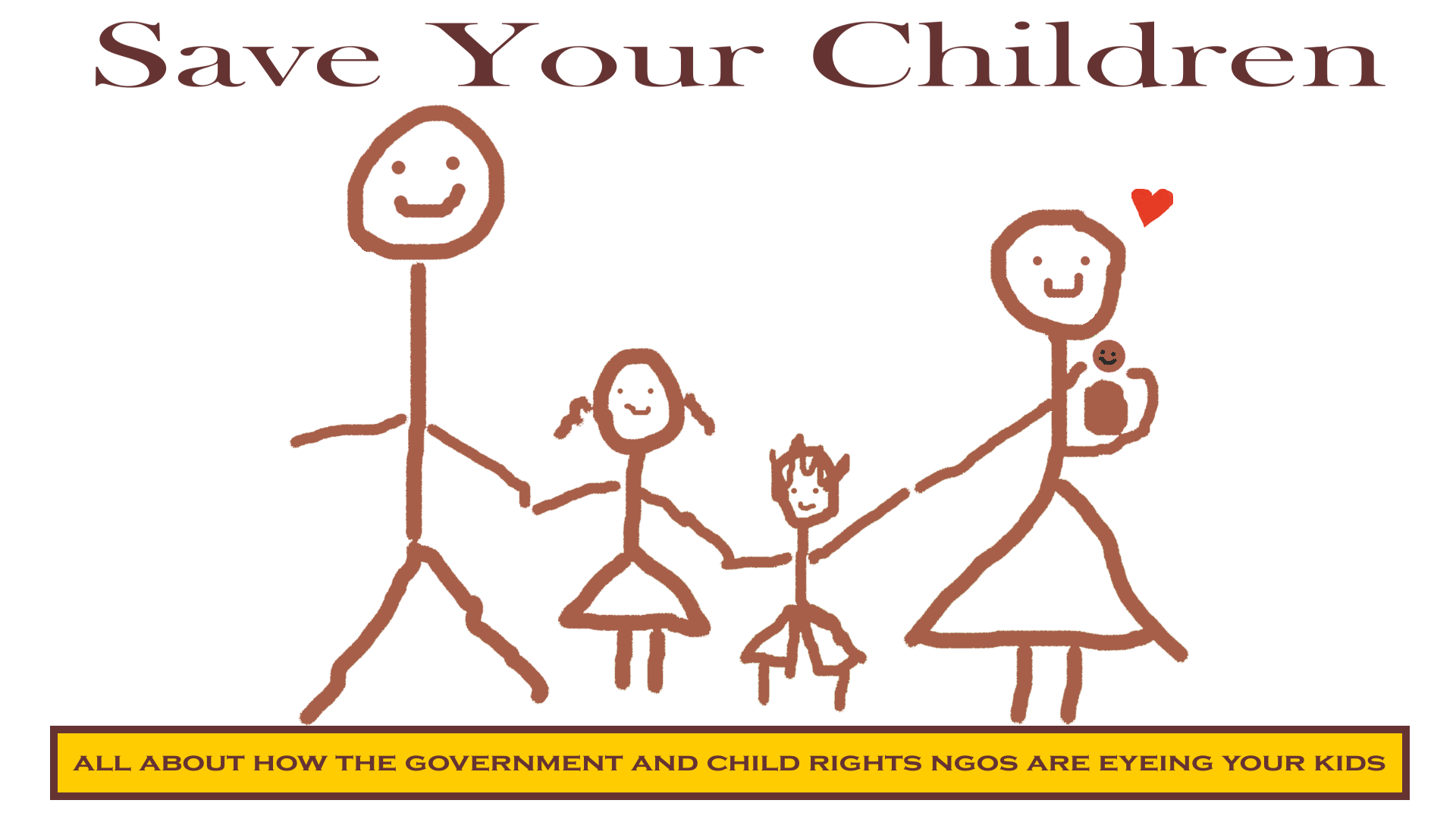 From our friends in India, we have another NGO child welfare, privatization, Trafficking of Tiny Humans financial fraud scheme going on.
Now, special tribunals can decide to snatch your kids, forever, while getting paid for it, too!
Sounds like the work of the Clinton Foundation because these child snatching panels are privatized, which means there are no civil rights.
These people will try just about anything to keep the trafficking of tiny humans networks alive.
Juvenile injustice: Dangerous turn in Indian childcare law
By granting extra-legal powers to Child Welfare Committees, the latest foster-care laws in India have set a dangerous precedent, surpassing the most draconian of child-policy models followed in the West.
Did you know that under the latest Indian foster care laws, any child can be picked up by anyone and declared to have unfit parents by tribunals that are not even courts, called Child Welfare Committees (CWCs)? Did you know that these children can be compulsorily placed in foster care or institutions till the age of 18? Did you know that even if a child is found lost and his parents are traced, the CWC can unilaterally decide not to return him?
And what is the CWC? A 5-member panel chosen from the public on ad-hoc appointment. The panel is given the powers of a court, but is not a court. It has no judges. A lawyer or retired judge can become a member, but it is not mandatory to have them on the committee. The only requirement is that members be from a child-related field like a teacher or paediatrician or a practicing professional such as a “sociologist”, presumably this means an academic, or psychologist. This is the casual manner in which the power has been given under the Juvenile Justice Act, 2015 (“J.J. Act”) to unilaterally and permanently confiscate children from their parents—probably the most drastic state power conceived of, other than the death penalty.
This goes beyond what even most Western countries are doing. In most Western countries you need a judge’s order before the state can take over permanently as super-parent. Only Scandinavian countries like Norway have lay tribunals deciding such a serious matter as the forced removal of children from their families, and we have seen the inhumane consequences of allowing this easy taking of children by the state.
Most people in India, and I am sure this includes most of the Parliamentarians who passed the J.J. Act, would think that child protection and foster care are measures for orphans and abandoned children. No one would dream that while we are looking in horror at the separation of children from their parents for “hand feeding” in Norway and to punish undocumented immigrants in Trump’s USA, that our own government, spearheaded by none less than the Ministry of Women and Child Development, is setting up a system that would permit the unilateral removal of children from their parents by petty district-level government officers and random NGOs, subject only to the approval of the district CWCs, which are not even courts.
The wording of the Model Guidelines for Foster Care, 2016 (“Foster Care Guidelines”), which the Ministry is asking all States to adopt, leaves no doubt that the separation of children from their biological families is high on the agenda. The very first point in the Foster Care Guidelines describing (in Annexure G) the “challenges” of being a foster parent says “separation from family is one of the most upsetting events that can be experienced by a child”. Guideline 2.2.4 talks about counselling the child for “separation from a biological family due to difficult circumstances”. Guideline 2.9(v) says that the consent of biological parents for foster placement need only be taken where “relevant and necessary”.
What makes matters worse is that forced removal of children is envisaged not just in cases of severe abuse or neglect, but for the much lower and subjective reasons of parental “fitness” and “verbal” and “emotional” abuse.
The investigation process regarding children is laughably casual and unprofessional. Under the Foster Care Guidelines, the investigation is to be conducted not by police officers or even government officials but by NGO workers, sociologists or psychologists. NGOs have been given vast police and confiscatory powers. All they have to do is to get registered with the District Child Protection Unit (DCPU) to be given full powers to intrude upon families and recommend their children for removal.
In addition, the DCPU, which consists of government officials, has been given the dubious task of surveilling children for “vulnerability mapping” (r. 2.2.1, Foster Care Guidelines), maintaining data bases of children and targeting them and their families as “at risk” (r. 85(1)(vii), JJ Rules). These powers are given without any consideration of the child’s right to privacy or the restraining requirements of a search or arrest warrant from a court. As in the out-of-control child “protection” systems of the West, the child targeted has less protection from state misuse of power, overzealousness or mistakes than the worst type of criminal.
These are not exaggerated concerns. The potential and, indeed the incentive, for unjustified intrusion and harassment of families in the guise of child protection investigations is real. For instance, Form 43 (r. 69(H)) of the J.J. Rules requires in respect of children proposed to be placed in Child Care Institutions that case workers report on the “religious activities” of the child and family. Form 22 (r. 19(8)) of the J.J. Rules for children proposed for foster care also requires a report on the family’s “attitude towards religion”. Questions listed in Form 43 include what kinds of “associations” and “groups” the child may have made; details of associations with any religious group; “attitude” of said group; whether it “respects social norms” or is “interested in violating the norms” or is “impulsive in violating the rules”.
These so-called investigations give case workers the power to record intimate findings about the child and family dynamics based on nothing but their opinions and the hearsay of neighbours, teachers and so on. No forensic, investigatory or legal analysis seems to have been considered necessary. Forms 43 and 22 of the Foster Care Guidelines merely require the case worker to tick off whether the relationship between family members was “cordial” or “not cordial”; whether parental care of the child was “over protective”, “affectionate”, “not affectionate”, or one of “rejection” (as if these are sufficient grounds to contemplate the permanent removal of children from families); and whether the child was “abused” or “ill-treated”.
For anyone for whom the references to “abuse” and “ill-treatment” conjure up horrific images of incest or battery, please recall, as noted above, that abuse categories include “verbal” abuse and, under r. 7(C)(iii) of the Foster Care Guidelines, “emotional abuse”. It is this latter category that is resulting in the most unfair decisions by child protection agencies in the West.
Children, even newborns, in Western countries, are removed where there is no harm or imminent danger but the assessment of “risk of future emotional harm”, a formulation much in vogue in the child protection system of the United Kingdom; or “attachment disorder”, a favourite phrase of Norwegian child protection workers. These assessments are based on esoteric and contested psychiatric or sociological theories. For instance, attachment disorder is assessed based on the type of eye contact between mother and baby. Risk of future emotional harm is based on the Intelligence Quotient (IQ) or personality of a parent. All of this comes under the broad heading of “emotional abuse”. Is this where we in India want to be headed?
This is the first in a five-part series of articles, to be continued next week
Suranya Aiyar is a New Delhi-based lawyer and mother. The Global Child Rights and Wrong series is run in collaboration with her website, www.saveyourchildren.in, critiquing the role of governments and NGOs in childpolicy
Voting is beautiful, be beautiful ~ vote.©
Sunday, July 29, 2018
Children Are Our Most Precious Treasures: Full text of BRICS Summit Johannesburg Declaration
BRICS is preparing to embark upon the journey of ending financial crimes against humanity: our children.


This is my 5,000th post.
Voting is beautiful, be beautiful ~ vote.©
Our Most Precious Treasures Are Finally Being Protected: FinCEN & Egmont Group

Children are our most precious treasures.
2018/07/27
Following is the full text of the 10th BRICS Summit Johannesburg Declaration released on July 26:
BRICS in Africa:
Collaboration for Inclusive Growth and Shared Prosperity in the 4th Industrial Revolution
SANDTON CONVENTION CENTRE JOHANNESBURG, SOUTH AFRICA 25 TO 27 JULY 2018
10TH BRICS SUMMIT JOHANNESBURG DECLARATION
I. PREAMBLE
1. We, the Heads of State and Government of the Federative Republic of Brazil, the Russian Federation, the Republic of India, the People's Republic of China and the Republic of South Africa, met from 25 - 27 July 2018 in Johannesburg, at the 10th BRICS Summit. The 10th BRICS Summit, as a milestone in the history of BRICS, was held under the theme "BRICS in Africa: Collaboration for Inclusive Growth and Shared Prosperity in the 4th Industrial Revolution".
2. We are meeting on the occasion of the centenary of the birth of Nelson Mandela and we recognise his values, principles and dedication to the service of humanity and acknowledge his contribution to the struggle for democracy internationally and the promotion of the culture of peace throughout the world.
3. We commend South Africa for the Johannesburg Summit thrust on development, inclusivity and mutual prosperity in the context of technology driven industrialisation and growth.
4. We, the Heads of State and Government, express satisfaction regarding the achievements of BRICS over the last ten years as a strong demonstration of BRICS cooperation toward the attainment of peace, harmony and shared development and prosperity, and deliberated on ways to consolidate them further.
5. We reaffirm our commitment to the principles of mutual respect, sovereign equality, democracy, inclusiveness and strengthened collaboration. As we build upon the successive BRICS Summits, we further commit ourselves to enhancing our strategic partnership for the benefit of our people through the promotion of peace, a fairer international order, sustainable development and inclusive growth, and to strengthening the three-pillar-driven cooperation in the areas of economy, peace and security and people-to-people exchanges.
6. We recommit ourselves to a world of peace and stability, and support the central role of the United Nations, the purposes and principles enshrined in the UN Charter and respect for international law, promoting democracy and the rule of law. We reinforce our commitment to upholding multilateralism and to working together on the implementation of the 2030 Sustainable Development Goals as we foster a more representative, democratic, equitable, fair and just international political and economic order.
7. We reiterate our determination to work together to strengthen multilateralism and the rule of law in international relations, and to promote a fair, just, equitable, democratic and representative international order.
8. We recommit our support for multilateralism and the central role of the United Nations in international affairs and uphold fair, just and equitable international order based on the purposes and principles enshrined in the Charter of the United Nations, respect for international law, promoting democracy and the rule of law in international relations, and to address common traditional and non-traditional security challenges.
9. We welcome the hosting of the BRICS-Africa Outreach and second BRICS Plus Cooperation with Emerging Markets and Developing Countries (EMDCs) during the Johannesburg Summit.
10. We express satisfaction at the outcomes of Ministerial Meetings that have been held (Annex 1) and look forward to the remainder of meetings to be held under the 2018 BRICS Calendar of Events.
II. STRENGTHENING MULTILATERALISM, REFORMING GLOBAL GOVERNANCE AND ADDRESSING COMMON CHALLENGES
11. We reaffirm our commitment to the United Nations, as the universal multilateral organisation entrusted with the mandate for maintaining international peace and security, advancing global development and promoting and protecting human rights.
12. We reaffirm our commitment to the purposes and principles enshrined in the Charter of the United Nations, and support for the United Nations as the universal intergovernmental organisation entrusted with the responsibility for maintaining international peace and security, advancing sustainable development as well as ensuring the promotion, and protection of human rights and fundamental freedoms.
13. We reiterate our commitment to the strengthening of multilateral institutions of global governance to ensure that they are able to comprehensively address global challenges.
14. We also recognise the inherent strength of regional initiatives in support of the objectives of the broader multilateral system.
15. We further reaffirm our commitment to the centrality of the universal collective security system enshrined in the UN Charter. We recognize the importance of working towards an international system based on international law, with the UN Charter as its fundamental cornerstone, which fosters cooperation and stability in a multipolar order. We note the long overdue outstanding task of ensuring the adequate representation of African States in the UN, especially in peace and security matters.
16. Faced with international challenges requiring our cooperative efforts, we reiterate our commitment to shaping a more fair, just and representative multipolar international order to the shared benefit of humanity, in which the general prohibition of the use of force is fully upheld and which excludes the imposition of unilateral coercive measures outside the framework of the UN Charter. We emphasise the indivisible nature of peace and security and reiterate that no country should enhance its security at the expense of the security of others.
17. We recall the 2005 World Summit Outcome document and reaffirm the need for a comprehensive reform of the UN, including its Security Council, with a view to making it more representative, effective and efficient, and to increase the representation of the developing countries so that it can adequately respond to global challenges. China and Russia reiterate the importance they attach to the status and role of Brazil, India and South Africa in international affairs and support their aspiration to play a greater role in the UN.
18. We underscore the importance of sustained efforts aimed at making the United Nations more effective and efficient in implementing its mandates. We encourage further collaboration amongst the BRICS countries on a better resourced UN, on its administration and budget, on preserving the UN's Member State-driven character and ensuring better oversight of and strengthening the Organisation.
19. We express our support for continued cooperation of BRICS members in areas of mutual interest including through regular exchanges amongst their multilateral Missions.
20. We reaffirm our commitment to fully implementing the 2030 Agenda for Sustainable Development and the Sustainable Development Goals (SDGs), to provide equitable, inclusive, open, all-round innovation-driven and sustainable development, in its three dimensions - economic, social and environmental - in a balanced and integrated manner, towards the ultimate goal of eradicating poverty by 2030. We pledge our support for the important role of the United Nations, including the High Level Political Forum on Sustainable Development (HLPF), in coordinating and reviewing global implementation of the 2030 Agenda, to reform the UN Development System with a view to enhancing its capability in supporting member States in implementing the 2030 Agenda. We urge developed countries to honour their Official Development Assistance (ODA) commitments fully in time and to provide additional development resources to developing countries.
21. Regarding Climate Change, we welcome the progress towards finalizing the Work Programme under the Paris Agreement and express our willingness to continue working constructively with other Parties to conclude its related negotiations at the United Nations Framework Convention on Climate Change (UNFCCC) towards the 24th Conference of the Parties (UNFCCC COP24) to be held in Katowice, Poland in December 2018. We call upon all countries to fully implement the Paris Agreement adopted under the principles of the UNFCCC including the principles of common but differentiated responsibilities and respective capabilities, and urge developed countries to provide financial, technological and capacity-building support to developing countries to enhance their capability in mitigation and adaptation.
22. We undertake to strengthen BRICS cooperation in energy, especially in transitioning to more environmentally sustainable energy systems supportive of the global sustainable development agenda, balanced economic growth and the collective socio-economic wellbeing of our citizens. We continue to strive toward universal energy access, energy security, energy affordability, reduced pollution and environmental conservation. We reaffirm that the diversification of energy supply sources, including renewable and low carbon energy sources, investments in energy and energy infrastructure, energy industry and market development and intra-BRICS collaboration for access to primary energy sources will continue to underpin our energy security. We recognise the need to accelerate energy transition including in transportation, heating and industry uses.
23. We acknowledge the importance of energy efficiency and the popularisation of an energy efficient life style in virtue of its potential contributions to energy security, industrial competitiveness, emissions reduction, economic growth, job creation and other areas when introduced.
24. We acknowledge that the BRICS Ministers of Energy agreed to establish the BRICS Energy Research Cooperation Platform and to develop its Terms of Reference, and note the ongoing discussions for that purpose.
25. We reaffirm and support the establishment of the BRICS Agricultural Research Platform (ARP) initiated by India in 2016. We appreciate the fundamental importance of research, development and innovation in global sustainability and competitiveness. We endeavour to strengthen the agricultural research collaborative networks among the BRICS countries to enhance the resilience of the collective agricultural and food systems in the face of the changing climate. We recognise the need for follow-up steps in implementing the aims and objectives of the ARP. We commit to step up intra-BRICS collaboration including within the frame of the Agriculture Research Platform and the Basic Agriculture Information Exchange System (BAIES).
26. We acknowledge the outcomes of the 4th BRICS Environment Ministers Meeting which was held under the theme "Strengthening cooperation amongst BRICS on Circular Economy in the context of the Sustainable Consumption and Production (SCP)". We note that the circular economy approach represents enormous potential to reduce waste, to forge more environmentally sustainable processes, diversify our economies whilst contributing to economic growth and job creation.
27. We acknowledge the outcomes of the successive BRICS Environment Ministers' Meetings including the implementation of the Environmentally Friendly Technology Platform, Clean Rivers Umbrella Programme and the Partnership for Urban Environment Sustainability Initiative. The progress in the establishment of the BRICS Environmentally Sound Technology (BEST) Cooperation Platform is acknowledged, which is intended to be practical and results orientated, and would include partners, science organisations, civil society, private sector and financial institutions.
28. We welcome the commitment to enhance cooperation in the field of water on the basis of sustainable development in an integrated way, addressing the themes of water access flood protection, drought management, water supply and sanitation, water and climate, systematically facilitating water pollution prevention and control, river and lake ecosystem restoration and preservation, ecosystem conservation, and water resources management.
29. We acknowledge the BRICS Meeting of Heads of Disaster Management in Buffalo City, wherein the Action Plan 2018-2020, was adopted and the first meeting of the BRICS Joint Task Force was held to further enhance our cooperation in this field.
30. We reaffirm the intention to enhance cooperation and collaboration amongst BRICS countries in the field of biodiversity conservation, sustainable use and equitable access and benefit sharing of biological resources, and also undertake to promote our cooperation in biodiversity-related international conventions and fora including on endangered species and amongst our National Parks authorities.
31. We recognise the vast potential in cooperation and collaboration in advancing the Oceans Economy amongst BRICS countries, which encompasses multiple sectors, including the strategic areas of maritime transport, shipbuilding, offshore oil and exploration, aquaculture, port development, research and technology, conservation and sustainable use of marine resources, marine and coastal tourism, financial and insurance services, as well as coastal industrial zone development.
32. We remain committed to the continued implementation of the Agenda for BRICS cooperation on population matters 2015-2020, which was agreed to by the Ministers responsible for Population Matters in 2014, because the dynamics of population age structure changes in BRICS countries pose challenges and present opportunities, particularly with regard to gender inequality and women's rights, youth development, employment and the future of work, urbanisation, migration and ageing.
33. We deplore the continued terrorist attacks, including in some BRICS countries. We condemn terrorism in all its forms and manifestations wherever committed and by whomsoever. We urge concerted efforts to counter terrorism under the UN auspices on a firm international legal basis and express our conviction that a comprehensive approach is necessary to ensure an effective fight against terrorism. We recall the responsibility of all States to prevent financing of terrorist networks and terrorist actions from their territories.
34. We call upon the international community to establish a genuinely broad international counter-terrorism coalition and support the UN's central coordinating role in this regard. We stress that the fight against terrorism must be conducted in accordance with international law, including the Charter of the United Nations, international refugee and humanitarian law, human rights and fundamental freedoms. We reaffirm our commitment on increasing the effectiveness of the UN counter-terrorism framework, including in the areas of cooperation and coordination among the relevant UN entities, designation of terrorists and terrorist groups and technical assistance to Members States. We call for expeditious finalisation and adoption of the Comprehensive Convention on International Terrorism (CCIT) by the United Nations General Assembly.
35. To address the threat of chemical and biological terrorism, we support and emphasise the need for launching multilateral negotiations on an international convention for the suppression of acts of chemical and biological terrorism, including at the Conference on Disarmament.
36. We firmly believe that those responsible for committing, organising, or supporting terrorist acts must be held accountable. We call upon all nations to adopt a comprehensive approach in combating terrorism, which should include countering radicalisation, recruitment, travel of Foreign Terrorist Fighters, blocking sources and channels of terrorist financing including, for instance, through organised crime by means of money-laundering, supply of weapons, drug trafficking and other criminal activities, dismantling terrorist bases, and countering misuse of the Internet by terrorist entities through misuse of the latest Information and Communication Technologies (ICTs).
37. We reaffirm the importance of the elaboration under the UN auspices of rules, norms and principles of responsible behaviour of States in ensuring security in the use of ICTs.
38. We embrace the undeniable benefits and new opportunities brought about by the advances in ICTs, especially in the context of the 4th industrial revolution. However, these advances also bring with them new challenges and threats resultant from the growing misuse of ICTs for criminal activities, the increasing malicious use of ICTs by state and non-state actors. In this regard, we stress the importance of international cooperation against terrorist and criminal use of ICTs and therefore reiterate the need to develop a universal regulatory binding instrument on combating the criminal use of ICTs within the UN. We acknowledge the progress made in promoting cooperation according to the BRICS Roadmap of Practical Cooperation on Ensuring Security in the Use of ICTs or any other mutually agreed mechanism. We also acknowledge the importance to establish a framework of cooperation among BRICS member States on ensuring security in the Use of ICTs and, in this regard, BRICS member States will work towards consideration and elaboration of a BRICS intergovernmental agreement on cooperation on this matter.
III. STRENGTHENING AND CONSOLIDATING BRICS COOPERATION IN INTERNATIONAL PEACE AND SECURITY
39. We reaffirm our commitment to collective efforts for peaceful settlement of disputes through political and diplomatic means, and recognise the role of the UN Security Council as bearing the primary responsibility for maintaining international peace and security.
40. We express our concern over the ongoing conflict and heightened tensions in the Middle-East region and our conviction that there is no place for unlawful resorting to force or external interference in any conflict and that, ultimately, lasting peace can only be established through broad-based, inclusive national dialogue with due respect for the independence, territorial integrity and sovereignty of each of the countries of the region. We agree that, in each of the countries in the region, citizens have legitimate aspirations to fully enjoy civil, political, economic, social and cultural rights and fundamental freedoms, especially with regard to the Israeli-Palestinian situation.
41. We agree that the conflicts elsewhere in the Middle East and North Africa should not be used to delay resolution of long-standing conflicts, in particular the Palestinian-Israeli conflict. We reiterate the need for renewed diplomatic efforts to achieve a just, lasting and comprehensive settlement of the Israeli-Palestinian conflict in order to achieve peace and stability in the Middle East on the basis of relevant United Nations resolutions, the Madrid Principles, the Arab Peace Initiative and previous agreements between the parties, through negotiations with a view to creating an independent, viable, territorially contiguous Palestinian State living side by side in peace and security with Israel. We reiterate that the status of Jerusalem is one of the final status issues to be defined in the context of negotiations between Israel and Palestine. With regard to the situation in Gaza, we reiterate our support to the UN General Assembly Resolution (A/RES/ES-10/20) on the protection of the Palestinian population and call for its full implementation.
42. We reiterate our support for the United Nations Relief and Works Agency for Palestine Refugees in the Near East (UNRWA). We commend its vital role in providing health, education and other basic services for almost 5.3 million Palestinian refugees and underscore its relevance to bringing stability to the region and the need for ensuring a more adequate, sufficient, predictable and sustained funding for the Agency.
43. The ongoing conflict and major humanitarian crisis in the Republic of Yemen are also causes for further concern. We call for unhindered access for the provision of humanitarian assistance to all parts of Yemen and urge the international community to expeditiously provide the necessary assistance. We urge all parties to fully respect international law, to cease hostilities and to return to the UN brokered peace talks, leading to an inclusive Yemeni-led dialogue towards the achievement of a political solution to the conflict.
44. We also call on all parties directly involved in the current diplomatic crisis in the Gulf region to overcome their dissensions through dialogue and welcome the efforts of Kuwait in this regard.
45. We reaffirm our support for the process of an "Afghan-led, Afghan-owned" national peace and reconciliation process. We express our concern over the deteriorating situation in Afghanistan particularly the increase in the number and intensity of terrorist-related attacks on the Afghan National Security Forces, the Government and civilians. We call on the international community to assist the government and the people of Afghanistan with the objective of working towards the realisation of peace. We also welcome the Parliamentary elections that are scheduled to be held in October 2018 and the Presidential elections in 2019.
46. We reaffirm our commitment for a political resolution of the conflict in Syria, through an inclusive "Syrian-led, Syrian-owned" political process that safeguards the state sovereignty, independence and territorial integrity of Syria, in pursuance of United Nations Security Council Resolution 2254 (2015) and taking into account the result of the Congress of the Syrian National Dialogue in Sochi. We reiterate our support for the Geneva process and the mediation offered by the UN, as well as the Astana process which has been showing signs of positive developments on the ground, and stress the complementarity between the two initiatives. We reaffirm our commitment to a peaceful resolution in Syria and our opposition to measures that run contrary to the UN Charter and the authority of the United Nations Security Council (UNSC) and that do not contribute to advancing the political process. We also highlighted the importance of unity in the fight against terrorist organisations in Syria in full observance of the relevant UNSC Resolutions. We reiterate our strong condemnation of the use of chemical weapons by any party, for any purpose and under any circumstances and renew calls for comprehensive, objective, independent, and transparent investigations of all alleged incidents. We call for enhanced efforts to provide necessary humanitarian assistance to the Syrian people, bearing in mind urgent reconstruction needs.
47. Recalling the Joint Comprehensive Plan of Action (JCPOA) on the Iranian nuclear programme we call upon all parties to fully comply with their obligations and ensure full and effective implementation of the JCPOA to promote international and regional peace and security.
48. We welcome recent developments to achieve the complete denuclearisation of the Korean Peninsula and maintain peace and stability in North East Asia. We reaffirm the commitment for a peaceful, diplomatic and political solution to the situation.
49. We express our serious concern about the possibility of an arms race in outer space and of outer space turning into an arena for military confrontation. We reaffirm that the prevention of an arms race, including of the placement of weapons in outer space, would avert a grave danger for international peace and security. We emphasise the paramount importance of strict compliance with the existing legal regime providing for the peaceful use of outer space. We also reaffirm that there is a need to consolidate and reinforce this regime. We welcome the newly established Group of Governmental Experts to discuss possible elements for a legally binding instrument on the prevention of an arms race in outer space including inter alia, on the prevention of the placement of weapons in outer space. We stress that practical transparency and confidence building measures may also contribute towards non-placement of weapons in outer space. We reiterate that the Conference on Disarmament, as the single multilateral disarmament negotiating forum, has the primary role in the negotiation of a multilateral agreement or agreements, as appropriate, on the prevention of an arms race in outer space in all its aspects.
50. We welcome South Africa's hosting of the Meeting of BRICS Ministers of Foreign Affairs/International Relations in Pretoria on 4 June 2018. The Ministers exchanged views on major global political, security, economic and financial issues of common concern and on strengthening BRICS cooperation. We look forward to the forthcoming Meeting of the BRICS Ministers of Foreign Affairs/International Relations on the margins of the 73rd Session of the United Nations General Assembly.
51. We welcome the 8th Meeting of the BRICS High Representatives for Security held on 28 and 29 June 2018 in Durban, and commend them for enriching BRICS' dialogue on the global security environment, counter-terrorism, security in the use of ICTs, major international and regional hotspots, transnational organised crime, peacekeeping, as well as the linkage between national security and development issues.
52. We emphasise the important role of United Nations peacekeeping to international peace and security, and the contribution of BRICS countries in this regard. We recognise the need for BRICS countries to further enhance mutual communication and cooperation on peacekeeping matters at the United Nations and the South African initiative for a BRICS working group on peacekeeping in this regard.
53. We commend the African Union for its efforts aimed at resolving and managing conflicts on the continent and welcome the strengthening of the cooperation between the United Nations Security Council and the African Union Peace and Security Council. We commend the African Union's commitment to the "Silencing of the Guns by 2020" and support efforts to strengthen the African Peace and Security Architecture.
IV. BRICS PARTNERSHIP FOR GLOBAL ECONOMIC RECOVERY, REFORM OF FINANCIAL AND ECONOMIC GLOBAL GOVERNANCE INSTITUTIONS, AND THE FOURTH INDUSTRIAL REVOLUTION
54. We welcome that the global economy has continued to improve, while noting that growth has been less synchronised and that downside risks still remain. This is reflected in a variety of challenges including rising trade conflicts, geopolitical risks, commodity price volatility, high private and public indebtedness, inequality and not sufficiently inclusive growth. We understand the critical importance of ensuring that the benefits from growth are shared in a more inclusive manner. We further stress the importance of a favourable external environment for sustained growth of global trade.
55. BRICS economies continue to support global economic expansion and outlook. We advocate continued use of fiscal, monetary and structural policies in concert, to forge strong, sustainable, balanced and inclusive growth. We express concern at the spill-over effects of macro-economic policy measures in some major advanced economies that may cause economic and financial volatility in emerging economies and impact their growth prospects adversely. We call on major advanced and emerging market economies to continue policy dialogue and coordination in the context of the G20, FSB and other fora to address these potential risks.
56. Recalling the Johannesburg Summit's focus on the 4th Industrial Revolution and the outcomes of the BRICS Meetings of Science and Technology and Industry Ministers, we commend the establishment of the BRICS Partnership on New Industrial Revolution (PartNIR). To commence the full operationalisation of PartNIR, an Advisory Group will be set up, comprising of respective representatives of BRICS Ministries of Industry, in consultation with appropriate Ministries, to develop, as a first step, the Terms of Reference and a Work Plan aligned with the 4th Industrial Revolution priorities, to be submitted to the BRICS Chair. The PartNIR aims at deepening BRICS cooperation in digitalisation, industrialisation, innovation, inclusiveness and investment, to maximise the opportunities and address the challenges arising from the 4th Industrial Revolution. It should enhance comparative advantages, boost economic growth, promote economic transformation of BRICS countries, strengthen sustainable industrial production capacity, create networks of science parks and technology business incubators, and support small and medium-sized enterprises in technology intensive areas. We believe that the initiative to establish the BRICS Networks of Science Parks, Technology Business Incubators and Small and Medium-sized Enterprises is a promising step in that direction.
57. We recognise the critical and positive role the internet plays globally in promoting economic, social and cultural development. In this regard, we commit to continue to work together through the existing mechanisms to contribute to the secure, open, peaceful, cooperative and orderly use of ICTs on the basis of participation by all states on an equal footing in the evolution and functioning of the internet and its governance, bearing in mind the need to involve the relevant stakeholders in their respective roles and responsibilities.
58. We recognise the importance of BRICS scientific, technical, innovation and entrepreneurship cooperation for sustainable development and to enhance inclusive growth. We welcome the dynamic development of BRICS cooperation in science, technology and innovation and attach special importance to the advancement of our joint work in this area. We affirm the value of implementing coordinated BRICS scientific projects aimed at promoting BRICS science, technology and innovation potential as a contribution to our combined efforts in addressing the challenges of the Fourth Industrial Revolution.
59. We commend the progress of ongoing BRICS IPR cooperation. We recognise the importance of the development and transfer of technologies, including to developing countries, contributing to long-term sustainable and balanced global growth, and in this regard stress the importance of strengthening cooperation in intellectual property rights which contributes to innovation and the advent of new technologies to the benefit of society as a whole.
60. We are convinced that trade and technology are vital sources of inclusive growth, including through economic integration and consolidation of global value chains in sustainable and equitable ways. Technological progress will have wide ranging implications for production of goods and services as well as incomes of people. Appropriate policies and measures need to be taken to ensure that the developing countries benefit from the advantages of technological progress and do not suffer from lack of its early adoption. It is essential to develop effective policies to bridge the digital divides, including through supporting people to learn and by adopting new technologies and ensure effective mechanisms for transfer of relevant technologies.
61. We strongly acknowledge that skills development is critical to addressing the emerging mismatch between the new skills demanded by an increasingly technology-and knowledge-driven global economy and the older skill set of many workers. The pace, scale and scope of present-day economic change make it that more challenging. In this regard, we support measures including policy recommendations proposed in the G20 Initiative to Promote Quality Apprenticeship and the BRICS Action Plan for Poverty Alleviation and Reduction through Skills, to further facilitate vocational training, lifelong learning and the training that is relevant to the fast-changing demand of growing economies and world of work.
62. We reaffirm the centrality of the rules-based, transparent, non-discriminatory, open and inclusive multilateral trading system, as embodied in the World Trade Organisation (WTO), that promotes a predictable trade environment and the centrality of the WTO, and recognise the importance of the development dimension, and will make all efforts to strengthen the multilateral trading system.
63. We recognise that the multilateral trading system is facing unprecedented challenges. We underscore the importance of an open world economy, enabling all countries and peoples to share the benefits of globalisation, which should be inclusive and support sustainable development and prosperity of all countries. We call on all WTO members to abide by WTO rules and honour their commitments in the multilateral trading system.
64. We recall that the WTO Dispute Settlement System is a cornerstone of the multilateral trading system and is designed to enhance security and predictability in international trade. We note with concern the impasse in the selection process for new Appellate Body Members that can paralyse the dispute settlement system and undermine the rights and obligations of all Members. We, therefore, urge all Members to engage constructively to address this challenge as a matter of priority.
65. We acknowledge the need to upkeep WTO's negotiating function. We, therefore, agree to constructively engage in further developing the current legal framework of the multilateral trading system within the WTO, taking into consideration the concerns and interests of all WTO members, including in particular the developing members.
66. We acknowledge the importance of infrastructure development and connectivity in Africa and recognise the strides made by the African Union to identify and address the continent's infrastructure challenges, inter alia, through the New Partnership for Africa's Development (NEPAD) and the Programme for Infrastructure Development in Africa (PIDA). We support the importance of stimulating infrastructure investment on the basis of mutual benefit to support industrial development, job-creation, skills development, food and nutrition security and poverty eradication and sustainable development in Africa. We therefore reaffirm our support for sustainable infrastructure development in Africa, including addressing the infrastructure financing deficit.
67. Keenly aware of the need for Africa's industrialisation and the realisation of the African Union's Agenda 2063, we commend African countries and the African Union on the signing of the African Continental Free Trade Area (AfCFTA). The AfCFTA is an important step to economic integration on the continent and the unlocking of the tremendous potential of intra-African trade and in addressing its socio-economic challenges. In this regard, we reiterate our support for Agenda 2063 and efforts to promote continental integration and development.
68. We advocate for a strong Global Financial Safety Net with an adequately resourced, quota-based International Monetary Fund (IMF) at its centre. To this effect, we reaffirm our commitment to conclude the IMF's 15th General Review of Quotas, including a new quota formula while protecting the voice of the poorest countries by the 2019 Spring Meetings and no later than the 2019 Annual Meetings. Governance reform of the IMF should strengthen the voice and representation of the poorest members of the IMF, including Sub-Saharan Africa.
69. We welcome and congratulate Governor Lesetja Kganyago of the South African Reserve Bank on his appointment as the Chair of the International Monetary and Financial Committee.
70. We note the steps undertaken on strengthening and ensuring the operational readiness of the BRICS Contingent Reserve Arrangement (CRA) and welcome the completion of a successful test run of the de-linked portion of the CRA mechanism. We encourage cooperation between the CRA and the IMF.
71. We note with satisfaction the progress achieved on establishing the BRICS Local Currency Bond Fund, and look forward to starting its operation.
72. We agree to further strengthen cooperation on convergence of accounting standards and auditing oversight of BRICS countries in the area of bond issuance, and to further cooperation in these areas.
73. We welcome the signing of the Memorandum of Understanding on Collaborative Research on Distributed Ledger and Blockchain Technology in the Context of the Development of the Digital Economy. We believe that this work will contribute to our cooperation in adapting to the evolving internet economy.
74. Infrastructure, investment and international development assistance projects are the bedrock for sustainable economic development and growth; boosting productivity and enhancing integration. We stress the significance of infrastructure development and integration to foster closer economic ties.
75. We underscore the role that Multilateral Development Banks (MDBs), in particular, the New Development Bank (NDB), are playing in catalysing private sector financing for public infrastructure and investment.
76. We draw satisfaction from the progress made by the NDB in providing resources to contribute to the social, economic and environmental prospects of our countries and expect the Project Preparation Fund to be put into operation soon. We welcome the upcoming establishment of the Americas Regional Office in Sao Paulo, Brazil, which, alongside the Africa Regional Centre, will help the NDB consolidate its presence in those continents. We note the NDB's Board of Governors' discussions on Innovative Approaches for Development Finance at its 3rd Annual Meeting on 28-29 May in Shanghai, China, that deliberated on the NDB's future development in the changing global environment.
77. We stress the importance of enhancing BRICS financial cooperation to better serve the real economy and meet the development needs of BRICS countries. In the regard, we reaffirm our commitment to facilitate financial market integration through promoting the network of financial institutions and the coverage of financial services within BRICS countries, subject to each country's existing regulatory framework and WTO GATS obligations, and to ensure greater communication and cooperation between financial sector regulators. We will continue to enhance currency cooperation, consistent with each central bank's legal mandate, and to explore more modalities of the cooperation. We will also further expand green financing, so as to promote sustainable development in BRICS countries.
78. We reaffirm our commitment to support international cooperation in combating illicit financial flows, including cooperation within Financial Actions Task Force (FATF) and World Customs Organisation. In this regard, we underscore the importance of increasing mutual exchanges and data sharing. We emphasise the importance of upholding and supporting the objectives of FATF and to intensify our cooperation to implement and improve its Standards on Combating Money Laundering and the Financing of Terrorism and Proliferation in FATF.
79. Corruption remains a global challenge with long-lasting impact, including the undermining of legal systems of states. It also presents a threat to economic growth by discouraging the necessary local and foreign investment in a country. We reaffirm our commitment to international cooperation as envisaged in Chapter IV of the United Nations Convention against Corruption. In that context, we commit to strengthening international cooperation within the context of the BRICS Working Group on Anticorruption Cooperation. Subject to our domestic legal systems we will cooperate in anti-corruption law enforcement, extradition of fugitives, economic and corruption offenders and repatriation in matters relating to assets recovery and other related criminal and non-criminal matters involving corruption and call on the International community to deny safe haven to corrupt persons and proceeds of corruption. We regard experience sharing and exchange as key to increasing mutual understanding and enhancing BRICS anti-corruption cooperation and will continue our efforts in this aspect as we have done in previous years. We will further offer each other support in the implementation of the UNCAC by creating platforms for exchanging information and exploring convergences in multi-lateral platforms. We commend the African Union on choosing 2018 as the year of combating corruption.
80. In operationalising the Strategy for BRICS Economic Partnership, we welcome the positive outcomes of the 8th BRICS Trade Ministers Meeting as supported by the ongoing activities of the BRICS Contact Group on Economic and Trade Issues (CGETI). We also welcome the good progress made in the implementation of the BRICS Action Agenda on Economic and Trade Cooperation. We encourage measures that support greater participation, value addition and upward mobility in Global Value Chains for our firms, particularly in industry and agriculture, especially Micro, Small and Medium Enterprises (MSMEs), including through the preservation of policy space to promote industrial development. In recognising the importance of increased value-added trade amongst BRICS countries, we commend the Ministers of Trade for reconvening CGETI's Trade Promotion Working Group as well as the BRICS E-Commerce Working Group. We welcome the commissioning of the review of the BRICS Joint Trade Study on promoting intra-BRICS Value Added Trade. We welcome the positive outcomes of the 8th BRICS Trade Ministers Meeting on cooperation on the IPR, e-commerce, trade in service, and further enhancement of cooperation in E-commerce, on standards and technical regulations, MSMEs and model e-port.
81. We welcome the signing of the BRICS Memorandum of Understanding on Regional Aviation. We believe it is an important milestone in strengthening BRICS cooperation in the fields of connectivity and infrastructure.
82. We appreciate the outcomes of cooperation between BRICS Customs Administrations in implementing the Strategic Framework of BRICS Customs Cooperation, and welcome its long-term objectives, including the early conclusion and entry into force of the BRICS Customs Mutual Administrative Assistance Agreement so that the BRICS Authorised Economic Operator Programme is functional by the end of 2022, including mutual recognition of controls and economic operators. In this regard, we further welcome the BRICS Customs Action Plan, which identifies actions that will be taken collectively by the BRICS Customs Administrations in the short, medium and long term to achieve the stated goals and the establishment of BRICS Custom Training Centres. We recognise the potential of the BRICS Customs Cooperation Committee and call for enhanced intra-BRICS cooperation and at relevant multilateral fora, including in trade facilitation, law enforcement, use of advanced information technologies and capacity building.
83. We acknowledge the continued support provided by the BRICS Revenue Authorities for all the international initiatives towards reaching a globally fair and universally transparent tax system. We will continue our commitment to deal with the implications of the digital economy and, within that context, to ensure the fairness of the international tax system particularly towards the prevention of base erosion and shifting of profits, exchange of tax information, both on request and automatically, and needs-based capacity building for developing countries. We commit to deepen exchanges, sharing of experiences, best practices, mutual learning and exchanges of personnel in taxation matters. We welcome the establishment of the Capacity Building Mechanism between BRICS Revenue Authorities.
84. We acknowledge the contributions of the BRICS Business Council and its 5th Annual Report, as well as of the BRICS Business Forum, to enhancing trade and business cooperation in infrastructure, manufacturing, energy, agribusiness, financial services, regional aviation, alignment of technical standards and skills development. We welcome the establishment of Digital Economy Working Group within the framework of BRICS Business Council.
85. Recognizing tourism's great potential to contribute to sustainable economic and social development, we welcome the initiative to establish a BRICS Working Group on Tourism, to foster greater cooperation between the BRICS countries and increase economic development and people-to-people relations. The BRICS Tourism work stream will exchange knowledge, experience and best practices in the areas of travel trade, air connectivity, tourism infrastructure, culture and medical tourism, barriers to tourism marketing, tourism safety and support - financial, insurance and medical. We note with satisfaction that Intra-BRICS Tourism has grown despite the global economic downturn.
V. PEOPLE-TO-PEOPLE COOPERATION
86. Emphasising the centrality of people in BRICS and its programmes, we commend the steady progress and exchanges in the fields of sports, youth, films, culture, education and tourism.
87. We reaffirm our commitment to a people-centred approach to development that is inclusive of all sectors of our people.
88. We acknowledge the 8th World Water Forum held in Brasilia, the world's major water-related event, held in the Southern Hemisphere for the first time, which contributed to establishing water as a priority at the global level.
89. We stress the importance for the BRICS countries to cooperate in matters related to outer space and we confirm our support to strengthening current initiatives in this field.
90. We commit to strengthening the coordination and cooperation on vaccine research and development within BRICS countries, and welcome the proposal to establish a BRICS vaccine research and development centre.
91. We welcome the 1st WHO Global Ministerial Conference on Ending Tuberculosis in the Sustainable Development Era: A Multisectoral response, in Moscow in 2017, and the resulting Moscow declaration to End TB and stressed the importance of the upcoming 1st High-Level Meeting of the UN General Assembly on Ending Tuberculosis and the 3rd High-Level Meeting of the UN General Assembly on the Prevention and Control of non-communicable diseases, to be held in September 2018.
92. We recognise the importance and role of culture as one of the drivers of the 4th Industrial Revolution and acknowledge the economic opportunities that it presents.
93. We commend the organisation of the 3rd BRICS Film Festival and recognise the need to further deepen cooperation in this field. We acknowledge South Africa's proposal regarding a draft BRICS Treaty on Co-Production of Films to further promote cooperation in this sphere and to showcase the diversity of BRICS cultures.
94. We emphasise the guiding role of the Action Plan for the Implementation of the Agreement between the Governments of the BRICS States on Cooperation in the Field of Culture (2017-2021) for creative and sustainable cultural cooperation, and we note the various ongoing activities and initiatives of the BRICS culture experts.
95. We acknowledge the 2nd BRICS Seminar on Governance 2018 in Johannesburg, while recognising the intention of Brazil to hold the 3rd meeting in 2019 with greater and more diverse participation of academia and think tanks of all BRICS countries.
96. We acknowledge with satisfaction the progress made towards strengthening cooperation and interaction amongst our people, through exchanges including the Think-Tank Council, the Academic Forum, the Civil BRICS Forum, the Young Diplomats Forum, the Youth Summit and the Young Scientists Forum.
97. We acknowledge the South African initiative regarding a BRICS Foreign Affairs Spokespersons Engagement.
98. We welcome the successful hosting of the 3rd BRICS Games by South Africa and we further note the progress that has been made in establishing the BRICS Sports Council.
99. Emphasising the importance of BRICS parliamentary exchanges, including of Women Parliamentarians, we look forward to further strengthening of BRICS exchanges in this regard.
100. Emphasising the role played by women in promoting inclusive development, we note the work being done to consider the establishment of the BRICS Women's Forum and the BRICS Women's Business Alliance.
101. Brazil, Russia, India, and China commend South Africa's BRICS Chairship in 2018 and express their sincere gratitude to the Government and people of South Africa for hosting the 10th BRICS Summit in Johannesburg.
102. Russia, India, China and South Africa extend full support to Brazil for its BRICS Chairship in 2019 and the hosting of the 11th BRICS Summit.
This is my 5,000th post.
Voting is beautiful, be beautiful ~ vote.©
Friday, July 6, 2018
Mother Teresa & The Trafficking Of Tiny Humans
 |
| 1835 Manifest, alien ages: 13-15 years |
How do you think they got so many slaves on the Good Ship Jesus?
They were children and it was funded by the Holy See.
Besides, good help is so hard to find these days, just ask Michele Bachmann.
Both thy bondmen, and thy bondmaids, which thou shalt have, shall be of the heathen that are round about you; of them shall ye buy bondmen and bondmaids. Moreover of the children of the strangers that do sojourn among you, of them shall ye buy, and of their families that are with you, which they begat in your land: and they shall be your possession. And ye shall take them as an inheritance for your children after you, to inherit them for a possession; they shall be your bondmen for ever.
Leviticus 25:44-46.
"[W]e grant to you full and free power, through the Apostolic authority by this edict, to invade, conquer, fight, subjugate the Saracens and pagans, and other infidels and other enemies of Christ, and wherever established their Kingdoms, Duchies, Royal Palaces, Principalities and other dominions, lands, places, estates, camps and any other possessions, mobile and immobile goods found in all these places and held in whatever name, and held and possessed by the same Saracens, Pagans, infidels, and the enemies of Christ, also realms, duchies, royal palaces, principalities and other dominions, lands, places, estates, camps, possessions of the king or prince or of the kings or princes, and to lead their persons in perpetual servitude..."
Besides, if you sell a few kids, you can take care of even more.
Just never ask about the godly things they do with the children after procurement.
Indian authorities say they have sealed a home run by Mother Teresa's religious order and charged a nun and one other person with baby trafficking.
Key points:
- Child protection body says home was charging between $785 and $1,964 per baby
- The home was required to inform authorities of all babies born there
- Activists claim they were selling more than they were handing over to authorities
The home in eastern India's Jharkhand state is run by Missionaries of Charity, the order set up by Mother Teresa in India, and provides shelter for pregnant unmarried women.
"They have said that at least five to six babies have been sold to childless couples," police officer Aman Kumar told Reuters in a phone interview.
"We are investigating to see how the operation was run and how many more children have been given away in the last few years."
An Indian couple claimed they paid 120,000 rupees ($2,354) to Anima Indwar, who worked at the shelter run by the Missionaries of Charity, said Mr Kumar.
The arrests of the nun and another worker on Tuesday and Wednesday followed the couple's complaint the charity worker had taken back the baby boy and kept their money.
Mr Kumar said the police were investigating three other complaints against Ms Indwar for allegedly selling children from the shelter.
Spokeswoman Sunita Kumar said the Missionaries of Charity was investigating.
"There was no question of selling any child as the Missionaries of Charity had stopped giving children for adoption three years ago," she said.
She said the charity had never taken money from parents while arranging adoptions in the past.
Mr Kumar said 100,000 rupees ($1,964) was recovered from the two who were arrested.

The Missionaries of Charity stopped organising adoptions in India in 2015, saying they disagreed with government rules that made it easier for single, divorced, and separated people to adopt children.
There have been a number of reports of babies and children being trafficked through charity-run homes and hospitals, which campaigners say is driven by a long waiting list for adoption.
The Nirmala Shishu Bhavan home, run by the Missionaries of Charity in Jharkhand state capital Ranchi, was required to inform authorities about all babies born there.
"They were selling more babies than what they were handing over to authorities," said Baidnath Kumar, a Ranchi-based child rights activist who had filed complaints against the home.
Mr Kujur said his organisation had directed that the credentials of every home run in the state should be checked.
Voting is beautiful, be beautiful ~ vote.©
Subscribe to:
Posts (Atom)