FUN FACT! THE U.S. STILL HAS INTERNMENT CAMPS CALLED FOSTER CARE
Yes, internment camps, that no man's land of where a bunch of people try to figure out which crown your allodial title is attached.
Yes, a government can Legally Kidnap a tiny human and enact their powers to be the final arbitor of whom is worthy of being gifted the grant of guardianship and custodianship.
Oh, wait, that is child welfare.
This is nothing more than the U.S. model, which came from Detroit, on trafficking tiny humans, except, for the adults, they call foster care internment camps.
In child welfare, you Terminate Parental Rights where the child is adopted out or ages out.
In matters of adult immigration, you revocation of citizenship where the adult is exiled or deported.
It is just chattel law, or rather the residuals of the peculiar institution because they do the exact same things with real estate.
COPENHAGEN — Denmark plans to house the country’s most unwelcome foreigners in a most unwelcoming place: a tiny, hard-to-reach island that now holds the laboratories, stables and crematory of a center for researching contagious animal diseases.
As if to make the message clearer, one of the two ferries that serve the island is called the Virus.
“They are unwanted in Denmark, and they will feel that,” the immigration minister, Inger Stojberg, wrote on Facebook.
On Friday, the center-right government and the right-wing Danish People’s Party announced an agreement to house as many as 100 people on Lindholm Island — foreigners who have been convicted of crimes but who cannot be returned to their home countries. Many would be rejected asylum seekers.
The 17-acre island, in an inlet of the Baltic Sea, lies about two miles from the nearest shore, and ferry service is infrequent. Foreigners will be required to report at the island center daily, and face imprisonment if they do not.
“We’re going to minimize the number of ferry departures as much as at all possible,” Martin Henriksen, a spokesman for the Danish People’s Party on immigration, told TV 2. “We’re going to make it as cumbersome and expensive as possible.”
The deal allocates about $115 million over four years for immigrant facilities on the island, which are scheduled to open in 2021.
The finance minister, Kristian Jensen, who led the negotiations, said the island was not a prison, but added that anyone placed there would have to sleep there.
Louise Holck, deputy executive director of The Danish Institute for Human Rights, said her organization would watch the situation “very closely” for possible violations of Denmark’s international obligations.
The agreement was reached as part of the annual budget negotiations. Each year, the Danish People’s Party demands restrictions on immigrants or refugees in return for its votes on a budget.
In Denmark, as in much of Europe, the surge in migration from the Middle East and Africa in 2015 and 2016 prompted a populist, nativist backlash.
The government has vowed to push immigration law to the limits of international conventions on human rights.
Legal experts said it was too early to tell whether the Lindholm Island project would cross those boundaries, constituting illegal confinement. They said it resembled an Italian government project that was struck down in 1980 by the European Court of Human Rights.
The Lindholm Island plan furthers the government’s policy of motivating failed asylum seekers to leave the country by making their lives intolerable.
Asylum seekers with criminal records are not allowed to work in Denmark. Rejected asylum seekers who cannot be deported are given accommodations — where they cannot prepare their own meals — food and an allowance of about $1.20 per day, which is withheld if they fail to cooperate with the authorities.
A former immigration minister, Birthe Ronn Hornbech, called the island project “a joke” and a blunder comparable to a soccer player scoring a goal for the opposing team.
Many foreigners who have been denied asylum cannot be deported to their home countries for fear of abuse or persecution, or simply because those countries refuse to take them back.
Hundreds lingering in two deportation centers refuse to leave — a challenge for a government that has promised to get rid of those who have no legal right to remain in Denmark.
Some have held out for more than a decade despite a steady deterioration in living conditions. An independent study by a former prison director now working for the rights group Helsinki Citizens’ Assembly found conditions in one of the deportation centers to be comparable to those in some prisons, or worse.
Prime Minister Lars Lokke Rasmussen said last month that the government’s aim in receiving refugees would no longer be to integrate them, but to host them until they can return to their countries of origin.
“It’s not easy to ask families to go home, if they’ve actually settled,” he told a meeting of his party. “But it is the morally right thing. We should not make refugees immigrants.”
This summer, a ban on face coverings was introduced and quickly nicknamed “the burqa ban” as it followed a debate on the Islamic garment seen by some as “un-Danish.” This month, Parliament is expected to pass legislation requiring immigrants who want to obtain citizenship to shake hands with officials as part of the naturalization ceremony — though some Muslims insist that they cannot shake hands with someone of the opposite sex.
Early this morning, United States Immigration and Customs Enforcement (ICE) implemented a 2004 order of deportation to the Federal Republic of Germany of Jakiw Palij, a former Nazi SS labor camp guard in German-occupied Poland and a postwar resident of Queens, New York.
President Trump commends his Administration’s comprehensive actions, especially ICE’s actions, in removing this war criminal from United States soil. Despite a court ordering his deportation in 2004, past administrations were unsuccessful in removing Palij. To protect the promise of freedom for Holocaust survivors and their families, President Trump prioritized the removal of Palij. Through extensive negotiations, President Trump and his team secured Palij’s deportation to Germany and advanced the United States’ collaborative efforts with a key European ally.
Palij had lied about being a Nazi and remained in the United States for decades. Palij’s removal sends a strong message: The United States will not tolerate those who facilitated Nazi crimes and other human rights violations, and they will not find a safe haven on American soil.
Palij, who was born in what was then Poland and is now Ukraine, immigrated to the United States in 1949 and became a United States citizen in 1957. During the United States immigration and naturalization process, he concealed his Nazi service and his participation in human rights abuses.
Palij lied to United States immigration officials, saying that he had spent World War II working on a farm and in a factory.
In 2001, Palij admitted to officials at the Department of Justice that he trained in 1943 at the Nazi SS Training Camp in Trawniki, in German-occupied Poland. Court documents demonstrated that men who trained at the SS Training Camp in Trawniki participated in executing “Operation Reinhard,” a code name for the Third Reich’s plan to murder Jews in Poland. Palij also served as an armed guard at the adjacent Trawniki Labor Camp. On November 3, 1943, approximately 6,000 Jewish children, women, and men who were incarcerated at the adjacent Trawniki Labor Camp were shot to death in one of the single largest massacres of the Holocaust. By serving as an armed guard at the Trawniki Labor Camp and preventing the escape of Jewish prisoners during his Nazi service, Palij played an indispensable role in ensuring that the Trawniki Jewish victims met their horrific fate at the hands of the Nazis.
In August 2003, a federal judge revoked Palij’s United States citizenship based on his wartime activities, human rights abuses, and postwar immigration fraud. He was ordered deported in 2004, and his administrative appeal was denied in 2005.
The United States government has prioritized the identification, prosecution and deportation of Nazi war criminals since the 1970s. If you have information about foreign nationals or foreign nationals who naturalized to United States citizenship and are suspected of engaging in human rights abuses or war crimes, please call the ICE Homeland Security Investigations tip line at 866-DHS-2-ICE, or complete its online tip form.https://www.ice.gov/human-rights-violators-war-crimes-unit
Now, let us apply this same Socratic line of questioning as to why Unaccompanied Alien Children are sent to the same foster care facility.
Q: Why were the foster kids beaten, drugged, raped, attempted suicide, committed suicide and killed at the Texas Youth Facility?
A: Because it makes too much money and no one cares about foster care and adoption.
Watch the video and remember, no one cares.
Not Amnesty International, not DOJ, not FBI, not HHS OIG, not the churches, not the Republican National Committee, not the Democratic National Committee, not the pharmaceutical corporations, not the investors.
Child trafficking is woven deeply into the social fabric of this country as a residual of the peculiar institution and no one cares, except for Jeff Sessions.
Just as Texas stopped sending foster children to centers operated by one man, the U.S. government tossed him a new source of money: immigrant kids.
By the time the federal government started sending immigrant children to Shiloh Treatment Center in 2009, the warning flags were waving blood red.
Three children had died after being physically restrained at Shiloh and affiliated facilities in rural Texas run by the same man, Clay Dean Hill. A teenager from California died after running away and getting hit by a truck. Texas officials repeatedly had cited Hill’s residential centers for troubled youths after caretakers were found to have slapped, punched, and kicked children.
Yet nine years ago, the U.S. Department of Health and Human Services sent its first delivery of federal tax dollars to Hill, a one-time longshoreman-turned-millionaire entrepreneur specializing in the care of vulnerable children. The federal government wanted Hill to take immigrant children with mental health problems who were caught crossing the border without parents or papers.
The funding started a couple of months before a male caretaker in his 40s was caught preying on a 15-year-old girl from California, sexually abusing her at one of Hill’s all-girl dormitories, where he was assigned overnight. He’s now a convicted sex offender.
“It shows you how disgraceful the place was,” said the former resident, now 25, who told her story publicly for the first time to Reveal from The Center for Investigative Reporting.
The federal Office of Refugee Resettlement continued to send immigrant children to Hill’s care after another teenager was killed during a restraint and the state of Texas shut down one of his facilities, deeming it unsafe for children. And this year, after immigrant children said in court declarations that they were forcibly injected with psychiatric drugs, federal officials claimed there was no problem. In all, the federal government has paid Shiloh more than $33 million for the care of immigrant youths.
It took a federal judge to force the refugee office to take action. U.S. District Judge Dolly Gee ruled July 30 that the Office of Refugee Resettlement must remove children from Shiloh unless a licensed psychiatrist or psychologist determines they pose a risk to themselves or others.
It didn’t have to get to this point. The history of death and abuse at Hill’s rural outpost for troubled children was no secret. Hill, 69, has remained a go-to provider for the Office of Refugee Resettlement even after multiple exposés by Texas newspapers, calls by members of Congress for Shiloh to be shut down and warnings from the local district attorney.
The story of Shiloh shows just how bad it can get at a child care operation the federal government deems worthy of taxpayer dollars and acceptable for immigrant children. Reveal previously found that private companies operating immigrant youth shelters across the nation have racked up citations for serious lapses in care. A ProPublica analysis of police reports found hundreds of allegations of sexual abuse, fights and missing children at these shelters.
Hill and Shiloh employees have not returned multiple calls by Reveal seeking comment.
A July statement on Shiloh’s website says it has been investigated by various government agencies and “all of the widely distributed allegations about Shiloh were found to be without merit. The children have been found to be properly cared for and treated.”
Trump administration officials also maintain that the children are in good hands at Shiloh and other facilities paid to supervise immigrant children. Scott Lloyd, director of the Office of Refugee Resettlement, said in a June press briefing that his agency is “proud of its partnership with our UAC care providers,” using the acronym for unaccompanied alien children.
“I’ve witnessed firsthand the good work they do throughout the U.S. to ensure UACs receive proper care and services,” he said.
The government’s defense of Shiloh also points to a fundamental problem with federal oversight. In court filings this year, government lawyers made it clear that the federal agency responsible for the children puts much of its faith in state officials to monitor immigrant shelters such as Shiloh.
But Reveal has found that Texas licensing officials apparently failed to properly implement their own regulations when they shut down Hill’s Daystar Residential Inc. facility and allowed Shiloh to continue. The law should have stopped Hill from operating any residential child care centers for five years.
It was a far-reaching failure that let Hill salvage his operation. Just as Texas stopped sending its foster children to Hill, the federal government was tossing him a new source of money: immigrant children.
Former employees told Reveal that they loved working with the children but were concerned that Hill has been allowed to stay in business, taking in a vulnerable population after decades of problems.
Four said they were disturbed by the abuse that happened there while management looked the other way. They also said they didn’t want to use their names for fear of retaliation.
“Some of these guys, they were just so rough and brutal,” said a former employee who worked for years as a caretaker at both Daystar and Shiloh. “They seemed like they just wanted to always provoke the clients and get them to act out, get them to fight each other. They would abuse them.”
Drugging kids
Clay Hill now faces a court order to stop drugging children without proper consent. Immigrant children, many traumatized by violence in their home countries, told of being threatened that if they didn’t take pills, they would be punished with more time in Shiloh. Some said they were held down and forcibly injected with medication despite their objections.
Parents of the children said they never were asked permission for the powerful drugs to be administered.
This should not have been a surprise. Medication problems at Hill’s facilities go back many years, Reveal found.
“If they get mad, they’re gonna get a shot,” said a former employee who worked with foster children at Daystar and immigrant children at Shiloh. “If they start talking like, ‘I’m not going to do this,’ they’re gonna get a shot.”
A Texas Education Agency review in 2015 cited Shiloh for requiring parents of special education students to consent “to the use of ‘emergency’ medications as a condition of acceptance.”
“Some parents stated to the district that they did not feel their concerns were being heard by the facility doctors,” the findings state. “It also was reported by some district representatives that they have observed a Shiloh staff member threaten to give students ‘a PRN (emergency medication)’ for misbehavior.”
Ten years earlier, the Texas Department of State Health Services issued a scathing report on medication practices at Daystar. A team of experts found a troubling pattern: "There was no evidence of documented, informed consent for prescribed medications."
The diagnoses and treatment plans were “canned” and often didn’t correspond to the patient, the report said. Children and their families were not being told why they were being given the drugs. Many children were developing weight problems and some as young as 10 years old had high cholesterol.
“In almost none of these children were the elevated laboratory tests addressed,” the review found.
Daystar’s psychiatrist at the time was Dr. Javier Ruíz-Nazario, a longtime fixture of Hill’s operation and the same man immigrant children at Shiloh said was giving them medication. In fact, all four psychiatrists listed on a 2007 organizational chart for Daystar also are named on Shiloh’s forms for dispensing medication to immigrant youths.
Still, federal officials assured a judge in May that Shiloh didn’t need more oversight.
Jallyn Sualog, deputy director of the Office of Refugee Resettlement, said in a court declaration: “To my knowledge, Texas state licensing officials have not reported any concerns regarding Shiloh's compliance with state guidelines concerning the administration of psychotropic medications” to detained immigrant children.
Sualog asserted that “the board certified child and adolescent psychiatrists” at Shiloh use “best practice guidelines.”
Ruíz-Nazario, however, hasn’t had board certification to treat children and adolescents for years, Reveal found. After Reveal’s story, Sualog filed a revised declaration acknowledging that.
Another federal official said in an April letter to attorneys for the children that the Office of Refugee Resettlement has a medical team that monitors treatment and has visited Shiloh. In a footnote, he admitted the agency “does not, however, employ child and adolescent psychiatrists who would have the training to scrutinize the specific medications prescribed by Shiloh experts.”
Over-medicating the children to keep them in line was common practice, said three former employees. Two said caretakers would ask doctors to boost the medications to make the children sleepy and easier to deal with.
Even if federal officials were not paying attention to the findings of Texas agencies, they should have seen the Houston Chronicle’s 2014 investigation of Shiloh, which raised questions about the use of psychotropic medications. The story prompted U.S. Rep. Sheila Jackson Lee, D-Texas, to call for Shiloh to be shut down.
Jackson Lee told Reveal that she reacted to the recent news of problems at Shiloh with “a combination of disbelief, disappointment and outrage.” She had assumed the government stopped sending immigrant children there after the previous outcry.
“I’m sure there are some nice people there, but the overall record makes it inappropriate to send traumatized children to this facility. So it is very much a great disappointment to me,” she said. “I’m kind of taken aback.”
Who is Clay Hill?
Clay Hill has a special education degree from the University of Houston and a teaching certificate, according to a deposition he gave in 2003. After college, Hill started working with an autistic child and later ran a treatment center in Dallas.
In the 1990s, Hill founded Daystar and Shiloh, building a sprawling campus out of trailers and houses off country roads south of Houston. He created a variety of interrelated corporate entities, but Hill was behind it all.
BRANDON WADE FOR REVEAL
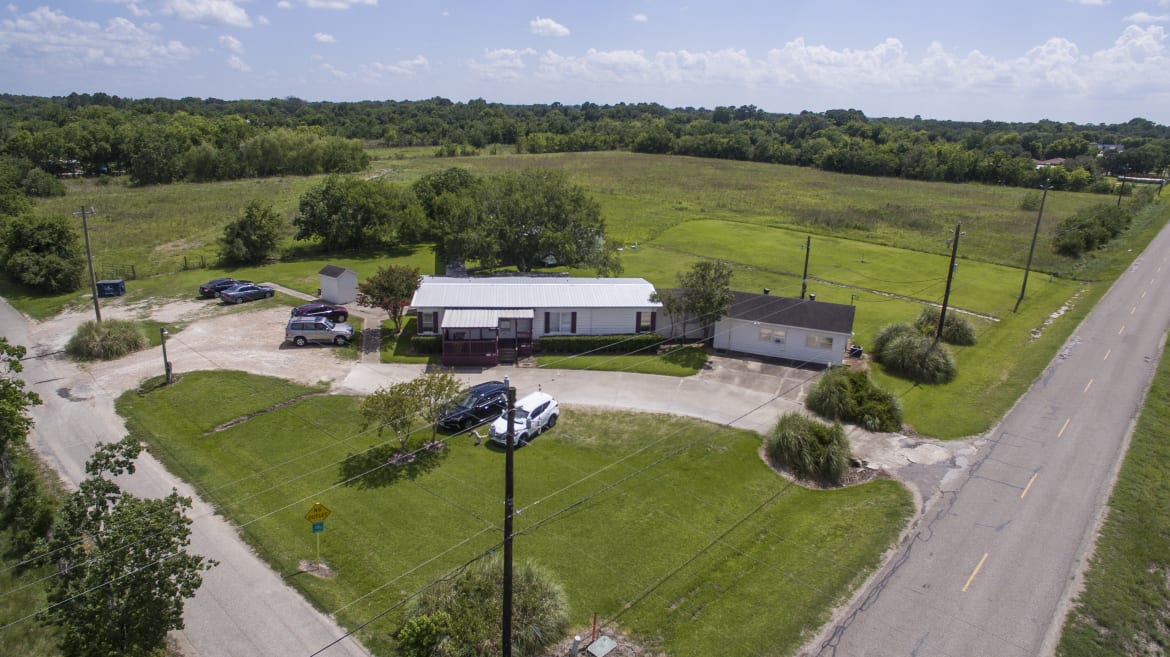
Shiloh Treatment Center, shown in an aerial photograph, is in the same area and run by the same person who operated on the same campus as the Daystar Residential Inc. facility, which the state of Texas shut down in 2011. State officials allowed Clay Hill to continue running Shiloh, even though state law should have stopped him from operating any residential child care centers for five years.
He took in the most vulnerable children: emotionally disturbed foster kids, nonverbal autistic children and special education students school districts couldn’t handle. Many were from Texas, but some were sent there from California and Guam.
The operation thrived because he would accept children no other facility would, former staff members said. Some were extremely disturbed and volatile, at times attacking caretakers.
Hill set up Daystar as a nonprofit at the suggestion of state officials, to allow for the use of federal tax dollars, according to his deposition. Daystar then leased the land, buildings, furniture and vehicles and contracted services from Hill’s for-profit entities.
Hill even served as president of the now-defunct Daystar Pharmacy, a for-profit that provided drugs to his programs. Years ago, the pharmacist there got caught using fake prescriptions to steal some 15,000 pills, including more than 7,000 doses of opioids, according to state records.
Daystar and Shiloh sat near each other, sharing some staff and leadership. The children living at Daystar often went to school at Shiloh. At one point, their administrative headquarters were different parts of the same trailer.
At the same time, Hill created a baseball team for elite high school players that claims big-leaguers Josh Beckett and Matt Carpenter as alumni. Hill ran a nonprofit called Texas Tournament Baseball with a former banker who went to prison for fraud and later worked at Hill’s treatment facilities. Ex-employees said ballplayers without experience caring for troubled children would sometimes work there, too.
Former employees said Hill seemed to care more about making a profit than improving the lives of children.
Hill took in compensation of $680,000 in 2006 and $720,000 in 2007, the most recent years he reported the amount in public tax filings. That was down from a salary of more than $1 million that he reported in 2001. Meanwhile, children had limited facilities for recreation, former workers said, and lived in buildings sometimes cited by state regulators as grimy and dilapidated.
“It was all about money with him,” said Caroline Laifang, who worked as a special education teacher at Shiloh for several years in the 2000s. “If you’re trying to explain to him this is not in the best interest of the students, he’ll let you know—this is a business.”
Hill, for his part, said he was constantly working for Shiloh and Daystar.
“I think I work 24 hours a day, seven days a week because I'm on call all the time,” he said in his 2003 deposition, “and I respond to every call.”
Dangerous restraints
In October, David, a 13-year-old boy from El Salvador, didn’t feel safe at Shiloh Treatment Center.
Fearful of employees who screamed at him, David packed a bag to escape. When he tried to open a window, he said in a court declaration, a supervisor threw him against the door and pinned him against the wall.
“This made me feel like I was choking and it was hard for me to breathe. I told the supervisor to stop because I couldn't breathe,” David’s declaration states. “I briefly fainted. As I recovered consciousness a staff person violently threw me on my bed and this caused my head to bang against the wall.”
It was eerily reminiscent of scenes described in medical examiner reports when U.S.-born children died in Clay Hill’s care.
Dawn Renay Perry had been struggling with depression, aggressive behavior and low mental function when she was placed at Hill’s Behavior Training Research facility, in the same area outside the town of Manvel where Shiloh sits now.
In April 1993, the 16-year-old was held face down on the floor by four people, records show.
“After restraint was applied multiple times, the decedent relaxed and rolled up into a ball as she usually did when she quit fighting,” medical examiner records state. Then she vomited, turned blue and stopped moving.
Stephanie Duffield was also 16 when, in 2001, she became upset that a Shiloh staff member didn’t escort her to the bathroom quickly. There was a struggle, and the assistant held her down, face to the carpet, putting her weight on Duffield’s shoulders, according to medical examiner records.
Duffield protested, saying she couldn’t breathe. Then she did stop breathing. The medical examiner called it “sudden cardiac death following hyperactivity and physical exertion during restraint,” ruling it an accident.
Hill said in a 2003 deposition that he didn’t think his staff did anything wrong.
“I thought it was just another horrible, horrible incident,” he told a lawyer representing Duffield’s family. “I happen to be—considered myself—a friend of Stephanie's, had worked with her two days before. She bit my hand and scratched it and all the things that she could do. And we were friends. It... it broke my heart to see the kid die.”
“So, you know, I thought she died of a heart attack,” he said. “I didn't think the length of the restraint had a lot to do with it.”
He didn’t see a pattern when, a year after Duffield’s death, 15-year-old Latasha Bush also died following a restraint.
The girl, who was diagnosed as bipolar with the emotional age of a 6-year-old, had told her one-on-one caretaker, Tisha White, that she wet the bed at night because she was afraid of her.
White said in a deposition that Bush was restrained by other caretakers after it appeared she was going to throw a flashlight and then threw herself against the wall, cracking it, and repeatedly asked to be left alone. White said the employees put Bush on her side, but a youth in the house said one of them was sitting on Bush and she was screaming that she couldn’t breathe.
The medical examiner called it homicide by asphyxiation. State licensing officials said she suffocated as a result of being restrained with excessive force. The district attorney told The Dallas Morning News in 2003 that she considered prosecuting but lacked hard evidence of criminal intent.
Hill called Bush’s death “a horrible tragedy” but saw no fault in his operation’s methods.
“Based on the information we had, we felt like the restraint was done the way it was supposed to be done,” he told a lawyer for the Duffield and Bush families, who ended up settling their lawsuits.
“I'm not willing to agree that the restraint caused the suffocation," he said.
Those deaths had been well publicized by the time federal officials awarded Shiloh $480,000 in May 2009 to start sheltering immigrant children.
What they didn’t know was there would be another.
In November 2010, Michael Owens, a 16-year-old battling depression and behavioral problems, gasped for air in a closet smeared with blood. Daystar employees had taken him to the floor, pulling his arms behind him, when he began “huffing and puffing,” medical examiner records show.
He died from asphyxiation, the medical examiner found, also noting “blunt impact trauma of face, torso and upper extremities." Like Bush’s death, it was ruled a homicide.
His death was one too many for the state of Texas. Officials stripped Daystar of its license, cut off its multimillion-dollar contract and moved out all the children who lived there in 2011.
Texas’ foster care agency wouldn’t send any of its own children to Shiloh, either. In response to concerns from the district attorney, the Department of Family and Protective Services wrote in a 2011 letter that it “has no intention of contracting or placing any CPS children with Shiloh, Inc. and staff has been instructed accordingly.”
But Hill got a big break from the state. Licensing officials kept Shiloh open for business, and that was good enough for the federal government, which was ramping up its delivery of immigrant children and millions of taxpayer dollars.
A month after Owens’ death, the U.S. Department of Health and Human Services awarded $1.8 million to Shiloh to take in detained immigrant children. The address on federal funding records is the same as the one on Owens’ autopsy report.
Problems continued. In 2011, state officials found a Shiloh caregiver restrained a child without justification, causing “an injury to a vital body area.” He had lifted up and then dropped the child to the ground, records show, putting his body weight on top. Within two months, the federal government awarded Shiloh $2 million more.
With the influx of immigrants, state investigators started finding a new twist on an old problem: Shiloh didn’t always have employees present who could speak the child’s language.
A Honduran boy was bleeding from his mouth and screaming in Spanish that he was in pain while being held down in 2013, according to witness accounts described in state records.
One of the employees restraining him admitted that he did “not speak Spanish and he would not be able to understand if (the boy) was complaining.”
The federal Office of Refugee Resettlement and its parent agency, the Department of Health and Human Services’ Administration for Children and Families, declined an interview and did not respond to repeated requests for comment.
Slapping, punching and kicking
In November, an 11-year-old girl said in a signed declaration that she’d rather live on the streets in her native Honduras than stay at Shiloh.
“On at least two occasions staff members have tried to hurt me,” she stated. “One time a staff member put her two thumbs up to my throat and her hands around my neck. It hurt and I was gasping for breath. The staff member said she was just ‘playing’ but I felt scared.”
Such testimony should come as no surprise to government officials.
On several occasions over the years, Texas investigators found that employees at Hill’s facilities slapped, hit and kicked children. In one case, an employee bit a child during a restraint. In two others, employees punched children in the head.
An employee bathing a 16-year-old resident caused severe bruising to the teenager’s buttocks. Another child, a nonverbal 8-year-old boy, was found with multiple marks to his lower back and bottom. Years later, a cellphone video surfaced showing a Shiloh employee slapping a nonverbal autistic child.
At one point, a Daystar supervisor and another employee instructed seven developmentally delayed residents to fight, using snacks as a reward for the winner. The staff “laughed and cheered as the residents fought,” leaving multiple injuries, according to state records.
Former employees said there were people working there who were doing their best. But they also told of abuse by co-workers that they couldn’t forget: the ones who beat up a foster child, the one who frightened an autistic boy with sexual comments, the one who offered to teach how to choke children to “put them to sleep.”
A former Shiloh caretaker said other employees would antagonize children to get them to act out, prompting a painful restraint.
“It was just like they got a kick out of it,” said the former worker. Some of them were longtime employees, and no one would get in trouble, she said. She ended up quitting because, she said, “I didn’t want to be a part of any of that.”
Even in the early years, getting beat up was a part of life at Hill’s treatment centers, said Brielle Gillis.
“It was to a point where you got beat so much that you felt like you deserved it,” she said.
CHERYL GERBER
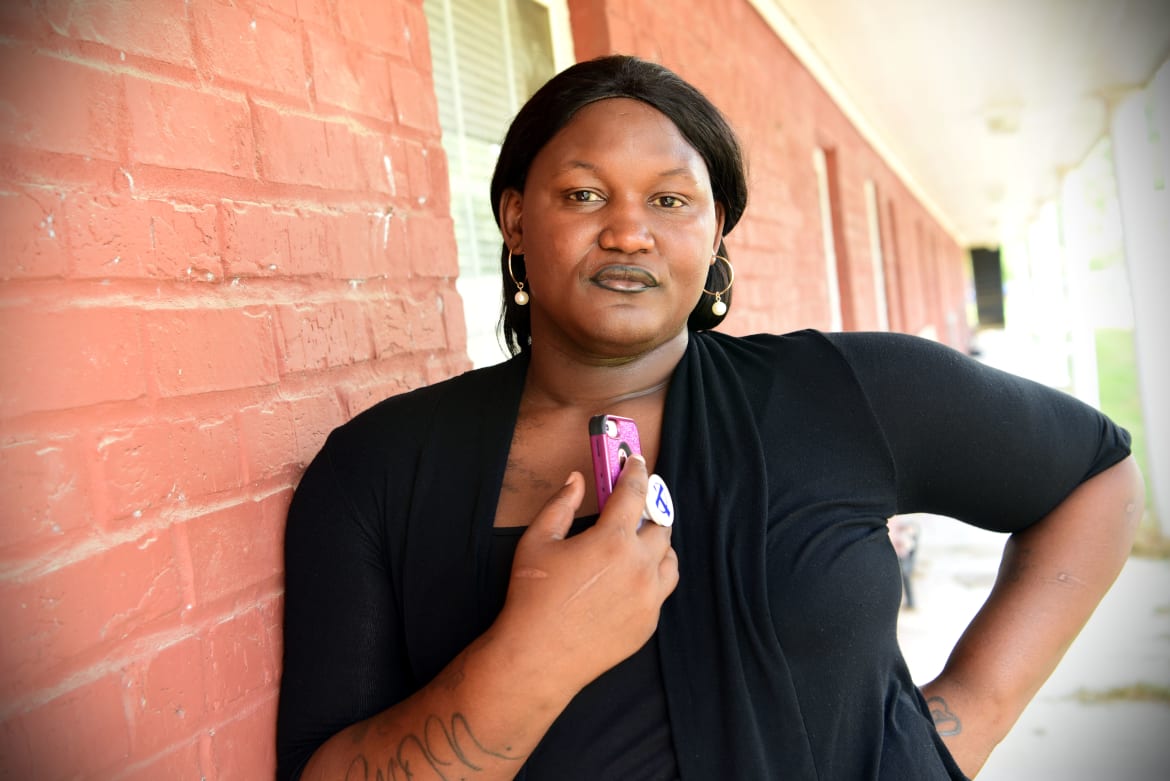
Brielle Gillis arrived at Clay Dean Hill’s youth residential treatment centers in the 1990s as an 11-year-old foster child, removed from an abusive home. She says getting beat up was a part of life at Hill’s facilities.
Gillis arrived in the 1990s as an 11-year-old foster child, removed from an abusive home, she said. Now 35 and transgender, she went by the name Jeremy Keith Gillis at the time. Gillis spent her adolescence at Hill’s facilities until she got out in 2001.
One time, she said, three caretakers ganged up on her.
“They was holding me down, folding me like a pretzel, and they was stomping and kicking me,” she said.
An adult witness to the beating confirmed it to Reveal and said nothing came of it.
Any complaints would get back to the caretakers, who would punish the children, Gillis said. In any case, she said, kids were written off as troubled liars.
CHERYL GERBER
Brielle Gillis, who spent her adolescence at Clay Dean Hill’s youth residential treatment centers, says complaints of abuse often would get back to the caretakers, who would punish the children.
‘Controlling persons’
Texas has a law to prevent someone such as Clay Hill from running another child care facility when one gets shut down.
The state warned Daystar that its “controlling persons” – those determined to exercise control over the facility – would be barred from running another residential facility for five years.
If there was a person in control at Daystar, it was Hill.
Hill said it himself in his 2003 deposition when the family of Latasha Bush sued Daystar. He said he was the ultimate authority in terms of hiring, giving raises, training staff and accepting patients, though he delegated some decisions to underlings. The executive director of Daystar, Carroll “Cal” Salls, reported to Hill, he said.
State licensing officials should have known as much. A 2007 organizational chart in state files lists Hill at the top of Daystar. And state records list Hill as a “controlling person” at Shiloh.
It was even more clear on the ground, said former employees and residents. From Daystar to Shiloh, Hill ran everything.
“He’s the one who runs the show,” said former employee Caroline Laifang. “No decision is made without Clay Hill knowing about it.”
But somehow, the state didn’t see it that way.
“In conducting its investigation, the state found that Daystar Residential and Shiloh Treatment Center did not share a controlling person,” said John Reynolds, spokesman for the Texas Health and Human Services Commission.
Still, the federal Office of Refugee Resettlement had plenty of opportunities to pull the plug. The Brazoria County district attorney, Jeri Yenne, wrote a letter to federal officials in 2011 “out of concern for the safety of children.”
“This is due to the fact that there have been a number of deaths over the years of minors placed on the property managed by Shiloh and its affiliate corporation Daystar Treatment Center,” she wrote. “I am requesting increased monitoring of Shiloh Treatment Center and that your agency review the same and consider limiting the number of children placed in Shiloh Treatment Center.”
Relying on state oversight
This year, an attorney representing immigrant minors at Shiloh wrote a letter urging federal officials to stop sending children there. It focused on the drugging problems, but noted Shiloh’s connection to Daystar and the deaths.
An Office of Refugee Resettlement official responded by making a point of distancing Shiloh from Daystar.
“Notably, Shiloh RTC (Residential Treatment Center) is not operated by DayStar Treatment Center (DayStar), which is mentioned in your letter,” wrote senior federal field specialist supervisor James De La Cruz. “Even when it was still in business the licensure of Daystar was completely separate from that of Shiloh.”
The distinction is lost on former employees and residents. And Clay Hill wasn’t the only person who oversaw both institutions during their darkest moments. Kellie Pitts has been in charge of quality control at Shiloh since 1999 and also held that role at Daystar, according to Hill’s deposition. Tisha White, who was briefly suspended but cleared of wrongdoing in the 2002 death of Latasha Bush, appears to work at Shiloh, based on her Facebook profile and accounts of others. Pitts and White could not be reached for comment.
When lawyers representing the children asked a federal judge to intervene this year, government attorneys shot back that there is already plenty of oversight.
Federal officials argued that the court “should not conduct its own evaluation,” but rather “should rely on the State’s own evaluation.”
“Given this extensive level of oversight by the states,” the government’s filing says, “this Court can – and should – reasonably rely on the conclusions of those state licensing authorities.”
Yet state licensing officials, also responsible for the Texas foster care system, have been found to be dangerously ineffectual.
Federal District Judge Janis Graham Jack ruled in December 2015 that Texas was fundamentally failing to protect foster children. Among widespread problems, she found the state licensing agency was “failing its licensing and inspecting duties” and “almost never takes an enforcement action.”
She cited an internal review that found error rates of up to 75 percent in the state’s investigations of abuse allegations.
“This is staggering,” she wrote, “and it means that many abused children – for whom a preponderance of evidence indicated that they were physically abused, sexually abused, or neglected – go untreated and could be left in abusive placements.”
It is the same agency that investigated 30 complaints of abuse or neglect at Shiloh since October 2012 and ruled out every one of them, according to Department of Family and Protective Services records.
Texas, the judge found, “has closed one facility in the past five years, but it is a story of horror rather than optimism regarding enforcement.” She was talking about Daystar.
Texas authorities “allowed this facility – that was responsible for four deaths, numerous allegations of sexual abuse, and unthinkable treatment of developmentally disabled children – to operate for 17 years,” the judge wrote. “The Court does not understand, nor tolerate, the systemic willingness to put children in mortal harm’s way.”
In January 2018, the same judge issued a grim update: “Over two-years later, the system remains broken.”
Jack ordered continued monitoring of the state system by appointed special masters. Texas Attorney General Ken Paxton appealed the ruling to the U.S. Court of Appeals for the 5th Circuit, where it is pending.
“The ruling was arrived at by an unelected federal judge who misapplied the law, hijacked control of our state’s foster care system, and ordered an ill-conceived plan by the special masters that is both incomplete and impractical,” Paxton said in an April statement.
Former federal officials said they were doing the best they could.
“There was definitely a sense that the problems at Shiloh were problems that could be fixed,” one ex-official said. Given that Shiloh maintained its state license, “working to address the issues seemed like the right thing to do to keep the capacity on line.”
There weren’t a lot of other options for immigrant children with serious mental health problems, said the former official, who requested anonymity: “It is a specialized facility. We don’t have a ton of those in the system.”
Even one case of child maltreatment is unacceptable, but in a system housing thousands of children, it is also inevitable, said Maria Cancian, who was deputy assistant secretary for policy in the Administration for Children and Families, over the refugee resettlement office, from 2015 to 2016.
“Sometimes things are going to happen that shouldn’t happen,” she said.
The refugee resettlement agency tightened oversight, Cancian said, including increasing unannounced visits to shelters by field representatives.
“Was it enough? Almost certainly not,” she said. “There’s almost never a child service organization in this country that is adequately resourced.”
Cancian said she visited shelters that were “overwhelmingly staffed by people who were trying to do their best, and by and large, they were places that provided high-quality care.”
“The exceptions are absolutely not acceptable,” she added, “and it’s appropriate to shine a light on that.”
Foster Care and Adoption (including 'refugee' which is nothing but the international fancy term for foster care) is how they traffic tiny humans.
The terms "Foster Care", "Adoption", "Refugee" were ostentatiously omitted from the guidance because it illuminated each and every agency and organization that has their hands in the child welfare fraud cookie jar.
The guidance also presents legal pathways in dealing with child immigration, instead of throwing the kid in foster care, to have a concurrent plan put in place, which is expedited, under the States, to keep the kid in for as long as billablely possible, recognized are legal determinations for parental search and reunification, because many of these kids are victims of child trafficking, who, in turn, get caught up in the U.S. trafficking of tiny humans industry.
Now, let us see what the Congress is going to do.
OJJDP PUBLISHES INTERNATIONAL CHILD KIDNAPPING GUIDE FOR LAW ENFORCEMENT
WASHINGTON – The Office of Justice Programs’ Office of Juvenile Justice and Delinquency Prevention today published guidelines to help law enforcement prevent and respond to cases of international kidnapping of a child by a noncustodial parent.
In 2017 there were more than 900 cases of international kidnapping of children across 59 countries reported to the U.S. Department of State’s Office of Children’s Issues. Law enforcement agencies play a critical role in the prevention and resolution of international parental kidnapping.
A Law Enforcement Guide on International Parental Kidnapping describes law enforcement’s role as initial responders and investigators of kidnapping crimes, discusses applicable laws and legal remedies for child recovery and reunification, and outlines considerations for criminal prosecution and extradition of offenders.
TITLE:
A Law Enforcement Guide on International Parental Kidnapping
AUTHORS:
OJJDP and the Federal Agency Task Force on Missing and Exploited
Washington, D.C. – On Wednesday, June 20, 2018 at 1 p.m., House Democrats, led by House Judiciary Committee Ranking Member Jerrold Nadler (D-NY), will hold a press conference on the Keep Families Together Act,H.R. 6135, legislation to end family separation at the U.S. border.
Ranking Member Nadler’s legislation is the House companion to the legislation introduced by Senate Judiciary Committee Ranking Member Diane Feinstein (D-CA) earlier this month. More than 190 House Democrats cosponsored the legislation.
Speakers: Rep. Jerrold Nadler (D-NY), Ranking Member of the House Judiciary Committee
House Democratic Leader Nancy Pelosi (D-CA)
House Democratic Whip Steny Hoyer (D-MD)
Wendy Young, Executive Director of Kids in Need of Defense (KIND)
Rep. Zoe Lofgren (D-CA), Ranking Member of the Immigration Subcommittee
Trump Administration Continues to Lie about Family Separation
President Donald Trump is lying when he says family separation is required by the laws on the books. As fact-checkers at the Washington Post and elsewhere have concluded, there is simply NO law that requires family separation. What is causing children to be taken from their parents is the deliberate choice—the Trump Administration’s “zero tolerance” policy—to prosecute asylum seeking families at the border for illegal entry. I guess the Judiciary Chief of Staff is too damn terrified of his future to do his job and do fact checking. Once again, I will do the work for them. Here is the law the Trump Administration is following.
Trump administration officials have been sending babies and other young children forcibly separated from their parents at the U.S.-Mexico border to at least three “tender age” shelters in South Texas, the Associated Press has learned.
Lawyers and medical providers who have visited the Rio Grande Valley shelters described play rooms of crying preschool-age children in crisis. The government also plans to open a fourth shelter to house hundreds of young migrant children in Houston, where city leaders denounced the move Tuesday.
Since the White House announced its zero tolerance policy in early May, more than 2,300 children have been taken from their parents at the U.S.-Mexico border, resulting in a new influx of young children requiring government care. The government has faced withering critiques over images of some of the children in cages inside U.S. Border Patrol processing stations.
Decades after the nation’s child welfare system ended the use of orphanages over concerns about the lasting trauma to children, the administration is standing up new institutions to hold Central American toddlers that the government separated from their parents.
“The thought that they are going to be putting such little kids in an institutional setting? I mean it is hard for me to even wrap my mind around it,” said Kay Bellor, vice president for programs at Lutheran Immigration and Refugee Service, which provides foster care and other child welfare services to migrant children. “Toddlers are being detained.”
Bellor said shelters follow strict procedures surrounding who can gain access to the children in order to protect their safety, but that means information about their welfare can be limited.
By law, child migrants traveling alone must be sent to facilities run by the U.S. Department of Health and Human Services within three days of being detained. The agency then is responsible for placing the children in shelters or foster homes until they are united with a relative or sponsor in the community as they await immigration court hearings.
But U.S. Attorney General Jeff Sessions’ announcement last month that the government would criminally prosecute everyone who crosses the U.S.-Mexico border illegally has led to the breakup of migrant families and sent a new group of hundreds of young children into the government’s care.
The United Nations, some Democratic and Republican lawmakers and religious groups have sharply criticized the policy, calling it inhumane.
Not so, said Steven Wagner, an official with the Department of Health and Human Services.
“We have specialized facilities that are devoted to providing care to children with special needs and tender age children as we define as under 13 would fall into that category,” he said. “They’re not government facilities per se, and they have very well-trained clinicians, and those facilities meet state licensing standards for child welfare agencies, and they’re staffed by people who know how to deal with the needs, particularly of the younger children.”
Until now, however, it’s been unknown where they are.
“In general, we do not identify the locations of permanent unaccompanied alien children program facilities,” said agency spokesman Kenneth Wolfe.
The three centers — in Combes, Raymondville and Brownsville — have been rapidly repurposed to serve needs of children including some under 5. A fourth, planned for Houston, would house up to 240 children in a warehouse previously used for people displaced by Hurricane Harvey, Mayor Sylvester Turner said.
Turner said he met with officials from Austin-based Southwest Key Programs, the contractor that operates some of the child shelters, to ask them to reconsider their plans. A spokeswoman for Southwest Key didn’t immediately reply to an email seeking comment.
“And so there comes a point in time we draw a line and for me, the line is with these children,” said Turner during a news conference Tuesday.
On a practical level, the zero tolerance policy has overwhelmed the federal agency charged with caring for the new influx of children who tend to be much younger than teens who typically have been traveling to the U.S. alone. Indeed some recent detainees are infants, taken from their mothers.
Doctors and lawyers who have visited the shelters said the facilities were fine, clean and safe, but the kids, who have no idea where their parents are, were hysterical, crying and acting out.
“The shelters aren’t the problem, it’s taking kids from their parents that’s the problem,” said South Texas pediatrician Marsha Griffin who has visited many.
Alicia Lieberman, who runs the Early Trauma Treatment Network at University of California, San Francisco, said decades of study show early separations can cause permanent emotional damage.
“Children are biologically programmed to grow best in the care of a parent figure. When that bond is broken through long and unexpected separations with no set timeline for reunion, children respond at the deepest physiological and emotional levels,” she said. “Their fear triggers a flood of stress hormones that disrupt neural circuits in the brain, create high levels of anxiety, make them more susceptible to physical and emotional illness, and damage their capacity to manage their emotions, trust people, and focus their attention on age-appropriate activities.”
Days after Sessions announced the zero-tolerance policy, the government issued a call for proposals from shelter and foster care providers to provide services for the new influx of children taken from their families after journeying from Honduras, El Salvador, Guatemala and Mexico.
As children are separated from their families, law enforcement agents reclassify them from members of family units to “unaccompanied alien children.” Federal officials said Tuesday that since May, they have separated 2,342 children from their families, rendering them unaccompanied minors in the government’s care.
While Mexico is still the most common country of origin for families arrested at the border, in the last eight months Honduras has become the fastest-growing category as compared to fiscal year 2017.
During a press briefing Tuesday, reporters repeatedly asked for an age breakdown of the children who have been taken. Officials from both law enforcement and Health and Human Services said they didn’t know how many children were under 5, under 2, or even so little they’re non-verbal.
“The facilities that they have for the most part are not licensed for tender-age children,” said Michelle Brane, director of migrant rights at the Women’s Refugee Commission, who met with a 4-year-old girl in diapers in a McAllen warehouse where Border Patrol temporarily holds migrant families.
“There is no model for how you house tons of little children in cots institutionally in our country. We don’t do orphanages, our child welfare has recognized that is an inappropriate setting for little children.”
So now, the government has to try to hire more caregivers.
The recent call for proposals by the federal government’s Office of Refugee Resettlement said it was seeking applicants who can provide services for a diverse population “of all ages and genders, as well as pregnant and parenting teens.”
Even the policy surrounding what age to take away a baby is inconsistent. Customs and Border Protection field chiefs over all nine southwest border districts can use their discretion over how young is too young, officials said. And while Health and Human Services defines “tender age” typically as 12 and under, Customs and Border Protection has at times defined it as 5 and under.
For 30 years, Los Fresnos, Texas-based International Education Services ran emergency shelters and foster care programs for younger children and pregnant teens who arrived in the U.S. as unaccompanied minors. At least one resident sued for the right to have an abortion in a high-profile case last March.
For reasons the agency did not explain, three months ago the government’s refugee resettlement office said it was ending their funding to the program and transferred all children to other facilities. This came weeks before the administration began its “zero tolerance” policy, prompting a surge in “tender age” migrant children needing shelter.
In recent days, members of Congress have been visiting the shelters and processing centers, or watching news report about them, bearing witness to the growing chaos. In a letter sent to Attorney General Jeff Sessions on Tuesday, a dozen Republican senators said separating families isn’t consistent with American values and ordinary human decency.
On Tuesday, a Guatemalan mother who hasn’t seen her 7-year-old son since he was taken from her a month ago sued the Trump administration. Beata Mariana de Jesus Mejia-Mejia was released from custody while her asylum case is pending and thinks her son, Darwin, might be in a shelter in Arizona.
“I only got to talk to him once and he sounded so sad. My son never used to sound like that, he was such a dynamic boy,” Mejia-Mejia said as she wept. “I call and call and no one will tell me where he is.”
The following study looks at the cycle of Child Protective Services in Canada by examining data to see if foster kids who have babies, have their babies snatched, too.
Do I really have to tell you what they found?
I guess, I do because no one cares.
Yes, foster youth who have babies in foster care will have their parental rights terminated and the child will be put up for adoption.
These agencies have to keep operating, you know.
In the United States, it is called "red flagging".
Once you have received any form of social assistance, your generations and extended family is automatically flagged for possible removal of children, just because the individuals involved in Child Protected Services possess the innate ability to predict the future, you know.
They can predict future abuse and neglect, so if you are in foster care, under the aegis of the state, and you go and get pregnant, whether it be through rape, prostitution, or your basic human trafficking to buy something to eat for that day, your child will be automatically snatched, as the state is the de facto legal parent, and, at any time, can file to terminate parental rights, which they normally do not as the mother is already a ward of the state, and the baby is put up for adoption.
The term being adopted today for this type of human marketing is called asset forfeiture, where, if you receive social assistance, you must sign over your rights to any ownership, including the legal interests of your children.
Remember, poverty is the crime of abuse and neglect.
For my favorite example of a child welfare organization harvesting children, I use Vista Maria as my go to tool.
Both thy bondmen, and thy bondmaids, which thou shalt have, shall be of the heathen that are round about you; of them shall ye buy bondmen and bondmaids. Moreover of the children of the strangers that do sojourn among you, of them shall ye buy, and of their families that are with you, which they begat in your land: and they shall be your possession. And ye shall take them as an inheritance for your children after you, to inherit them for a possession; they shall be your bondmen for ever. Leviticus 25:44-46.
Let’s be clear. These actions will not end or reduce legal immigration. These actions will be directed at reducing illegal immigration. Only Congress can change legal immigration.
As a battered spouse, child or parent, you may file an immigrant visa petition under the Immigration and Nationality Act (INA), as amended by the Violence Against Women Act (VAWA).
Yes, Guardian ad Litum (GALs) or rather court appointed legal guardians can go through child welfare services under child abuse and neglect and funnel these children through the U.S. foster care and adoption programs.
Attorney General Sessions Delivers Remarks to the Executive Office for Immigration Review Legal Training Program
Monday, June 11, 2018
Remarks as prepared for delivery
Thank you, James, for that introduction, and thank you for your years of superb service to the Department as an SAUSA, at Main Justice, and now here at EOIR. James has been doing a fabulous job. He understands these issues, knows exactly what our challenges are, and is working steadfastly every day to meet them.
Thank you also to Katherine Reilly, Kate Sheehy, Chris Santoro, Edward So, David Neal, Chief Judge Keller, Lisa Ward, Jean King, Robin Sutman, and all of the leadership team.
It is good to be with you today.
Each one of you plays an important role in the administration of our immigration laws. Immigration judges are critical to ensuring that the Department of Justice carries out its responsibilities under the INA. You have an obligation to decide cases efficiently and to keep our federal laws functioning effectively, fairly, and consistently. As the statute states, Immigration Judges conduct designated proceedings “subject to such supervision and shall perform such duties as the Attorney General shall prescribe”.
This responsibility seeks to ensure that our immigration system operates in a manner that is consistent with the laws enacted by Congress. As you know, the INA was established to ensure a rational system of immigration in the national interest.
Of course there are provisions in the INA, consent decrees, regulations, and court decisions where the commonsense enforceability of the plain intent of the INA has been made more difficult. That's what you wrestle with frequently.
President Trump is correct: Congress needs to clarify a number of these matters. Without Congressional action, clarity and consistency for us is much more difficult.
Let’s be clear: we have a firm goal, and that is to end the lawlessness that now exists in our immigration system. This Department of Justice is committed to using every available resource to meet that goal. We will act strategically with our colleagues at DHS and across the government, and we will not hesitate to redeploy resources and alter policies to meet new challenges as they arise.
Last month, the Department of Homeland Security announced that it will begin to refer as close to 100 percent of illegal Southwest Border crossers as possible to the Department of Justice for prosecution. The Department of Justice will take up those cases.
I have put in place a “zero tolerance” policy for illegal entry on our Southwest border. If you cross the Southwest border unlawfully, then we will prosecute you. It’s that simple.
If someone is smuggling illegal aliens across our Southwest border, then we will prosecute them. Period.
I have sent 35 prosecutors to the Southwest and moved 18 immigration judges to detention centers near the border. That is about a 50 percent increase in the number of immigration judges who will be handling cases at the border.”
All of us should agree that, by definition, we ought to have zero illegal immigration in this country.
Each of us is a part of the Executive Branch, and it is our duty to “take care that the laws be faithfully executed.”
Ours is a public trust.
And the United States of America is not a vague idea. It is not just a landmass or an economy. Ours is a sovereign nation state with a constitution, laws, elections, and borders.
As you all well know, one of our major difficulties today is the asylum process.
The asylum system is being abused to the detriment of the rule of law, sound public policy, and public safety— and to the detriment of people with just claims. Saying a few simple words—claiming a fear of return—is now transforming a straightforward arrest for illegal entry and immediate return into a prolonged legal process, where an alien may be released from custody into the United States and possibly never show up for an immigration hearing. This is a large part of what has been accurately called, “catch and release”.
Beginning in 2009, more and more aliens who passed an initial USCIS credible fear review were released from custody into the United States pending a full hearing. Powerful incentives were created for aliens to come here illegally and claim a fear of return. In effect, word spread that by asserting this fear, they could remain in the United States one way or the other. Far too often, that rumor proved to be true.
The results are just what one would expect. The number of illegal entrants has surged. Credible fear claims have skyrocketed, and the percentage of asylum claims found meritorious by our judges declined.
That’s because the vast majority of the current asylum claims are not valid. For the last five years, only 20 percent of claims have been found to be meritorious after a hearing before an Immigration Judge. In addition, some fifteen percent are found invalid by USCIS as a part of their initial screening.
Further illustrating this point, in 2009, DHS conducted more than 5,000 credible fear reviews. By 2016, only seven years later, that number had increased to 94,000. The number of these aliens placed in immigration court proceedings went from fewer than 4,000 to more than 73,000 by 2016—nearly a 19-fold increase—overwhelming the system and leaving legitimate claims buried.
Now we all know that many of those crossing our border illegally are leaving difficult and dangerous situations. And we understand all are due proper respect and the proper legal process. But we cannot abandon legal discipline and sound legal concepts.
Under the INA, asylum is available for those who leave their home country because of persecution or fear on account of race, religion, nationality, or membership in a particular social group or political opinion. Asylum was never meant to alleviate all problems— even all serious problems— that people face every day all over the world.
Today, exercising the responsibility given to me under the INA, I will be issuing a decision that restores sound principles of asylum and long standing principles of immigration law.
We have not acted hastily, but carefully. In my judgment, this is a correct interpretation of the law. It advances the original intent and purpose of the INA, and it will be your duty to carry out this ruling.
This decision will provide more clarity for you. It will help you to rule consistently and fairly.
The fact is we have a backlog of about 700,000 immigration cases, and it’s still growing. That’s more than triple what it was in 2009. This is not acceptable. We cannot allow it to continue.
At this time, when our immigration system and our immigration judges are under great stress, I am calling on you to use your best efforts and proper policies to enhance our effectiveness. To end the lawlessness and move to the virtuous cycle, we have to be very productive. Volume is critical. It just is. We ask you to evaluate your processes and disposition rates.
We ask each one of you to complete at least 700 cases a year. It’s about the average. We are all accountable. Setting this expectation is a rational management policy to ensure consistency, accountability, and efficiency in our immigration court system. Thank you for working every day to meet and exceed this goal. You can be sure that this administration and this Department of Justice supports you in this critically important and historic effort.
That’s why we are hiring more than 100 new immigration judges this calendar year. And we are actively working with our partners at DHS to ensure that we can deploy judges electronically and by video-teleconference where needed and to obtain appropriate courtroom facilities.
Let’s be clear. These actions will not end or reduce legal immigration. These actions will be directed at reducing illegal immigration. Only Congress can change legal immigration.
This is a great nation—the greatest in the history of the world. It is no surprise that people want to come here. But they must do so according to law.
When we lose clarity or have decisions that hold out hope where a fair reading of the law gives none, we have cruelly hurt many people. As we resolutely strive to consistently and fairly enforce the law, we will be doing the right thing.
The world will know what our rules are, and great numbers will no longer undertake this dangerous journey. The number of illegal aliens and the number of baseless claims will fall. A virtuous cycle will be created, rather than a vicious cycle of expanding illegality.
The American people have spoken. They have spoken in our laws and they have spoken in our elections. They want a safe, secure border and a lawful system of immigration that actually works. Let’s deliver it for them.