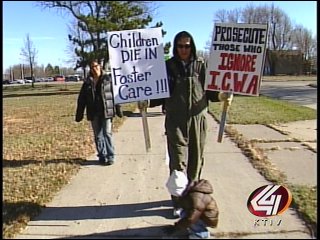
I have discovered a tutorial on how to come up with crafty ways to submit false claims for cost reimbursement in Medicaid Targeted Case Management of Medicaid.
There is always a reason to bill...and to document evidence that the reasonable efforts did not work because no one successfully benefits from this crap, which is in more instances that one, only exists on pretty shiny pamphlet, where they can spread around the community, have universities co-sign, and raise funding for their children's trust fund, which does nothing but invest in Social Impact Bonds.
"The Poors" (always said with clinched teeth) will still remain poor but the Targeted Case Management programs will flourish.
Rumor has it Michigan is so jacked up when going after Medicaid Fraud, that the U.S. DOJ and OIG HHS have teamed up to use the state as an example of "what not to do" when going after Medicaid Fraud.
A few years ago I had FOIA'd for its mandated annual report to the OIG. They told me they did not have one.
Seriously.
Then, this one time I had to call the U.S. OIG HHS to let them know that they had substantial errors in its review of Michigan's False Claims Act. At least they thanked me.
So, for your reading pleasure in learning about MFCUs, allow me to do what I do best, in fuchsia.
[Don White] What role does OIG play with State Medicaid Fraud Control Units and why are they important? I'm Don White in public affairs with the Office of Inspector General, and today, we're here with Richard Stern, OIG's director of program oversight for the Medicaid Fraud Units, and from our regional Office of Investigations, Special Agent in Charge Shimon Richmond of the Miami region. Shimon, what is a MFCU?
Greetings Don, Richard and Shimon. I am here to bring jolly into your professional lives and do something about Medicaid Fraud in Child Welfare.
[Shimon Richmond] Well, Don, aside from being an awkward acronym, MFCUs are Medicaid Fraud Control Units. And as that name suggests, they investigate and prosecute Medicaid provider fraud, as well as patient abuse and neglect in health care facilities. They are state-based agencies and there is one of each in 49 states and the District of Columbia.
Well, Gentlemen, you failed to state that the States MFCU were never designed to go after Medicaid Fraud in Child Welfare, and have yet, to the date of this post, publicly addressed the fact that child welfare programs of the Adoption Safe Families Act were enshrined by the Congress to be impervious to any form of external scrutiny of its operations through IRS non-profit certifications.
[Don White] Well Richard, so you understand this best, why do we need Medicaid Fraud Control Units anyway?
[Richard Stern] Well, while we hear a lot about Medicare Fraud, involving the program for the elderly and the disabled, total taxpayer costs are actually higher in Medicaid, than in Medicare, with total yearly expenditures for Medicaid of over $500 billion dollars. And fighting fraud in Medicaid can be especially challenging. Each state runs its own program, So the rules vary from state to state. And we don't have good data at the national level. As we often hear, once you've seen one Medicaid program, you've seen one Medicaid program.
Guys, you failed to mention that child welfare programming, now, almost completely privatized, is untouchable when it comes to its state operations. See, child welfare so-called oversight has been placed in the make shift huts called ombudsman offices, due to the fact that the original statute for the creation of MFCUs was exclusively designed for the aged. Ombudsman offices of the States are then, on a secondary level, with watered down oversight authority of referral to law enforcement, further constrained due to privacy laws. This means that there are no mandates for the States to adopt any policies for mandatory referral of suspected Medicaid Fraud in Child Welfare, to the State Attorneys General for prosecution, recovery, sanctions, exclusions, contractual debarment or criminal prosecution. Why, you may ask? Well, boys, the reason is two-fold. First, you cannot audit God, meaning, any IRS charity/non-profit cannot be audited. Secondly, anything dealing with child welfare is exempted and excluded from FOIA, as well as any other public disclosure, in the best interests of the child, you know.
[Don White] I understand that MFCUs have an important role in investigating and prosecuting patient abuse and neglect in nursing homes and other health care facilities as well, is that true?
[Richard Stern] Yes, that is true.
Richard, I understand that MFCUs do not do a damn thing about children being legally kidnapped by Child Protective Services, being drugged, raped, beaten and tortured in foster care, where each and everyone of these activities are cost-reimbursed through Medicaid.
[Don White] I can see that investigating Medicaid fraud would certainly be challenging given how different each State's programs can be. So since fighting Medicaid fraud is an OIG priority and a Top Management Challenge for the U.S. Department of Health and Human Services, I'm wondering how OIG works with these State MFCUs? Richard?
The OIG does absolutely nothing to work with the States MFCUs because the administrators of the HHS Children and Families Administration are the same people who were running these fraudulent child welfare programs, grant research and are, also, lobbyists. I would be so remiss not to mention that the legislators benefit from the campaign contributions from the booty of Medicaid Fraud in Child Welfare to keep the same lack luster culture in place of willful ignorance to the blatant defalcation through double billing and phantom billing.
[Richard Stern] Well, yeah. Well, OIG administers a grant to each of the units that provides 75% of their funding. We also set performance standards, we review each state's program, we provide technical assistance identify best practices, and we collect and analyze statistics that we make available to the public on OIG website.
And you still fail to acknowledge that Medicaid Fraud in Child Welfare is an intentionally omitted variable in the annual report, I have so graciously provided, below. Here are the data for FY 2016 Medicaid Fraud in Child Welfare prosecuted and recovered through the States MFCUs: 99 - missing data; $0.00
[Don White] How does that grant program work, Richard?
[Richard Stern] Well, as part of the Medicaid program, each of the States is required to have a MFCU or to receive a waiver. And the way it works, in exchange for receiving Federal matching funds, the States run a self-contained unit that includes investigators, auditors, and prosecutors or other attorneys. This model of having prosecutors work side by side with investigators and auditors has proven to be very successful. Most of the units are in the State Attorney General's Office and either prosecute cases themselves or refers cases to other State, County, or Federal prosecutors. MFCUs also collaborate closely with their State Medicaid programs, the OIG Office of Investigations and the FBI, as well as Department of Justice and U.S. Attorney offices nationwide.
Hold on a minute. Let me put my 2 cents in about those waivers. Those waivers created another quagmire when it comes to conflicts of interests, but let us start with the States Attorney General. How is it the States Attorney General can prosecute contractual entities it contemporaneously advocates, while prosecuting cases in child welfare proceedings? See, it is like this. The state contracts privately with a child placing agency to provide Targeted Case Management services to a foster child. The agency proceeds to submit fraudulent Medicaid billing for cost reimbursement and uses those exact same need for services as legal standing to proceed with termination of parental rights, which is litigated by the States Attorney General. So, what some states did was to accept the waiver and house its MFCUs in places other than the AG, even though there are only a few states which have done this. Placement of its MFCUs are then ensconced deep within the same agency which reimburses Medicaid costs. Yes, this is an inherent conflict of interest but, under ASFA, there is a "right to lie" when submitting the false claims of Medicaid cost reimbursements in child welfare. To top all this off was another set of Medicaid waivers in child welfare. These waivers allowed States to use Targeted Case Management funding for what they attempted to coin as "home-based/community-based" services under family preservation.
[Don White] But I'm wondering how successful have these MFCUs been when working with OIG in fighting Medicaid fraud?
I am going to go out on a limb and say that these MFCUs have not been very successful when working with OIG in fighting Medicaid fraud because Medicaid fraud is a major funding mechanism when it comes to human trafficking. Oh, you do know human trafficking is exactly what child welfare is, right? Right? I'll let Shimon answer that.
[Richard Stern] I'll let Shimon answer that. Florida, and especially South Florida, is one of our hot-spots for health care fraud.
[Shimon Richmond] Sure thing. So around the country, the OIG works a lot of cases with the Medicaid Fraud Control Units. In 2016, our Medicaid cases resulted in 312 indictments, 348 criminal actions, and 222 civil actions. These Medicaid cases - some of which also involved Medicare - resulted in almost $3 billion dollars in expected recoveries.
Shimon, you did not answer how successful the OIG has been in working with MCFUs in stopping Medicaid Fraud in Child Welfare and its human trafficking. Around the country, Child Protective Services targets populations for Medicaid fraud billing opportunities through Targeted Case Management.
[Don White] So how important would you say these Medicaid Fraud Units are to your operations, Shimon?
[Shimon Richmond] Well Don, they're absolutely critical to our efforts.
So, what exactly are your efforts to stop Medicaid Fraud in Child Welfare?
[Don White] Can you give us some recent examples where your people worked with the MFCUs?
Hello? Can someone please answer my question as to what are your efforts to stop Medicaid Fraud in Child Welfare?
[Shimon Richmond] Sure Don, we work with the Florida MFCU quite a bit. And there are several cases that come immediately to mind. First, working with the Florida MFCU, we charged 10 owners of a Miami-Dade county Assisted Living Facility with health care fraud and receiving illegal cash kickbacks in return for referring residents to a specific pharmacy. The pharmacy owner was sentenced not long ago, to federal prison and ordered to pay back more than a million dollars to the Florida Medicaid program. This ring was exposed by joint efforts between OIG agents and MFCU agents working in undercover capacity.
Have you guys ever hear of the Medicaid defalcation stories in residential institutions through what I like to call kiddie kickbacks?
[Richard Stern] You know I should also say, however, the MFCUs work many of their own cases without assistance from other agencies, and do so very successfully. MFCUs investigate, and prosecute, patient abuse or neglect in nursing homes, and hospitals, as well as in assisted living facilities. Sadly, the abuse of the elderly and other residents of these facilities has become a major social issue. These are difficult cases, and MFCUs are one of the few State or Federal agencies devoted to criminal prosecution of patient abuse or neglect.
Well, boys, if MFCUs can work on their own cases without assistance from other agencies, that would mean that the Unit would end up prosecuting its state attorney general by accessing information of child welfare cases without authorization, contaminating any evidence, leaving the state contractual entities to continue to fraudulently bill Medicaid.
[Don White] Well, Shimon, could these Medicaid Fraud Control Units be doing even more?
Let me answer that for you, Shimon. Yes. These Medicaid Fraud Control Units can be going after Medicaid Fraud in Child Welfare by starting with a public admission that it needs congressional help in implementing parallel jurisprudence and civil rights in child welfare.
[Shimon Richmond] Absolutely they could. But many of the MFCUs really need additional resources to fight the fraud in their jurisdiction. And currently there are no MFCUs in Puerto Rico or North Dakota. Also, the Medicaid Fraud Control Units need the legal authority to investigate and prosecute patient abuse or neglect in home- or community-based settings in addition to institutions. The current rules made some sense when Medicaid services were primarily provided in institution in times past, but as those services are increasingly provided in the home and the community, things really have changed.
Hey, I have a better idea and it will not cost as much. How about setting up a bounty program? I am not speaking upon the False Claims Act, as the victims of Medicaid Fraud in Child Welfare are, meeting the criteria of Title IV-A, are in the exclusive category of "The Poors". No money, no justice. So, instead of an impossible qui tam, how about an administrative program like the IRS Whistleblower program? Yes, it will take time, but you will be doing "hands-free" data collection on Medicaid Fraud in Child Welfare, then, can run those data with program performance, well, let us just say the possibilities are endless.
[Richard Stern] Right. We will need Federal legislation to make that happen and there does seem to be interest for that happen on Capitol Hill.
I just told you guys that Medicaid Fraud in Child Welfare funds their political campaigns, so, of course, there is no interests on Capitol Hill, nor the White House.
[Don White] Well, I hope that this podcast has provided some helpful information on the important work by of the Medicaid Fraud Control Units.
And I hope that I have provided some helpful information on the important work the Medicaid Fraud Control Units do not do.
[Richard Stern] Thank you for the opportunity to speak about the work of the over 1900 MFCU professionals across the nation.
I would like to thank everyone who has taken the time to find out more on Medicaid Fraud in Child Welfare and the constraints of the States Medicaid Fraud Control Units. Remember to sign up for your daily dose of me!
[Don White] Any last words, Shimon?
[Shimon Richmond] Well, just that the MFCU's play a critical role in protecting the taxpayers and the residents of health care institutions, so I'm happy to participate and glad that we can discuss this today.
[Don White] Thanks a lot.
Thank you, gentlemen, for allowing me the opportunity for another glorious castigation on the DOJ's and HHS' complete and utter failure to end Medicaid Fraud in Child Welfare. On of these days, the world will finally listen to me.
Its purpose is to create a database to, basically, follow the money as a quality control mechanism yet
there is nothing on the public agenda to address Medicaid fraud in child welfare.
Neither is there discussion on the role and powers of the States Medicaid Fraud Control Units as this bill will, without any temper tantrums, expand Targeted Case Management services into home-based, community-based delivery.
What worries me the most is that there is a major shift for data collection and maintenance of personal information to use predictive databased models which will, just as it is called, "predict future behavior of abuse and neglect" using aggregate data.
Even though there is mention of interstate databases for monitoring services, there is nothing addressing the lack of decision-making authority and understanding of the Interstate Compact on the Placement of a Child and its jurisdictional violations, thereof.
I shall now complete the list of omissions in child welfare reform with the complete silence of Judiciary on the "guilty until proven innocent" standard in dependency courts of child welfare to authorize certain funding.
This Bill should sail through Congress quite smoothly now that...well, I shall leave like this for now, but there is much more work to be done.
The slightly re-named Family First Prevention Services Act, an overhaul of federal child welfare financing aimed at supporting more efforts to prevent foster care placements, will likely be introduced next week in both the House and Senate.
“At a time when an opioid epidemic is tearing families across the country apart, Congress is fighting to keep families together,” said House Ways and Means Committee Chairman Kevin Brady (R-Texas), in a statement released late on Friday.
The bill “provides bipartisan solutions for families and children affected by the opioid addiction crisis,” said Senate Finance Committee Chairman Orrin Hatch (R-Utah), who developed the legislation with fellow Finance member Ron Wyden (D-Ore.). “The bill also aims to reduce the reliance on group homes for children by providing services that will keep families together.”
The legislation would, for the first time, enable states to use federal Title IV-E dollars to pay for time-limited services to help families with children who are at risk of entering foster care. Title IV-E is an entitlement program that currently can only be used to pay for foster care and adoption.
Under Family First, a state or county agency could use matched IV-E dollars for time-limited services for 12 months after identifying a child deemed at risk of being removed to foster care. States would be responsible for developing a federally approved plan for such services, and would eventually have to report on the impact of these services. State agencies would need to show results; by 2021, they will need to report how many children deemed at risk of foster care did not end up in foster care after these services were rendered.
Earlier iterations of the bill cast a wide net on what might be considered time-limited prevention services, including assistance with affordable and safe housing. The draft planned for next week includes just three areas: mental health, substance abuse treatment and “in-home parent skill-based programs.”
Family First would also reframe the use of Title IV-B money, a much smaller block of funds that go to states, to focus on the reunification of children in foster care. The bill would remove the 12-month time limit for reunification services, and then also allow for service continuation after the child has returned home.
As Hatch described, the bill stops federal funding for congregate care placements after the second week of a child’s placement into a congregate care setting, referred to in this bill as a “child care institution.”
There are three exceptions made to this rule:
Qualified residential programs.
A prenatal, post-partum or parenting support program.
An independent living program or people who remain in foster care after age 18.
The definition of “qualified residential programs” is spelled out in seven sets of criteria within the legislation. They include credentials from one of several accreditation providers, use of a trauma-informed treatment model and the presence of licensed clinical and nursing staff on site during business hours.
The restrictions on congregate care spending are the main offset to spending increases caused by this legislation. The other offset is a two-and-a-half year delay in the federal government’s expansion of support for adoption assistance. The Fostering Connections to Success and Increasing Adoptions Act, passed in 2008, ended a rule that tied adoption assistance to certain income standards related to the parents of the adoptee.
Fostering Connections set a timeline that would have all adopted children eligible for adoption assistance by 2018. The Family First Prevention Services Act would delay the phasing in of that expanded coverage until at least 2020.
Legislators have also tacked on several key extensions and revisions of other federal child welfare programs to Family First. Among them:
Extension of the adoption and guardianship incentives program, which rewards states for increasing the number of finalized adoptions and guardianships of foster youth.
Extension of Promoting Safe and Stable Families, a major part of IV-B, at $345 million annually.
Permission for states to increase the age range to 23 for the John H. Chafee Foster Care Independence Program, a program that generally sends about $180 million to states to help youth who are transitioning from foster care into adulthood.
The U.S. Government Accountability Office has issued a report on racial disparities in child welfare, at the request of U.S. Representative John Conyers, Jr., and it was released on my birthday.
Slow, my beating heart.
The report begs the question, "Why are minority children treated differently?"
I answer this question in the most simplistic term for all to understand: MONEY
It works like this. Federal law and policy pays money for "the best interests of the child" but pays even more for the darker kids.
Civil Rights Data are skewed based upon child welfare reporting policies of SACWIS because everything at HHS ASPE in child welfare is run by the same folks who used to run child welfare, so there is no need to change anything.
God forbid that the U.S. Department of Education and the U.S. Department of Health and Human Services actually did something crazy like, share Civil Rights Data and coordinate because that would violate confidentiality laws in child welfare.
Then one must take into consideration each particular state and how that state executes its departmental civil rights data initiatives to even solicit data in child welfare. The report identifies its weaknesses in methodology of data reporting, as Civil Rights Data collection is a dataset which has only been in existence for the last 5 years, with the traditional 2 year federal lag.
Always remember that the States Medicaid Fraud Control Units do not touch Medicaid Fraud in Child Welfare.
Child welfare is an uber secret operation which can only be examined from the belly of the beast, and I am an original source.
If anyone wishes to witness the stages of privatization policies being implemented, just watch child welfare.
Religious Freedom Restoration Act was based on a child welfare case.
Social Impact Bonds are privatizing schools and monetizing child poverty with absolutely no oversight because you cannot audit God and child welfare information is exempted and excluded from external scrutiny by law.
This is the greatest birthday present a gal like me could ever possibly dream about!
FLINT, Mich. – Today, the U.S. Department of Health and Human Services announced that the Centers for Medicare & Medicaid Services (CMS) has approved the State of Michigan’s 1115 demonstration to extend Medicaid coverage and services to Flint residents impacted by the lead exposure. In recognition of the public health crisis in Flint, it is a top priority for the Administration and for the Department to ensure that all children and pregnant women exposed to lead in their water in Flint have access to the services they need. Approximately 15,000 additional children and pregnant women will be eligible for Medicaid coverage and 30,000 current Medicaid beneficiaries in the area will be eligible for expanded services under this new waiver agreement.
“Expanding Medicaid coverage to tens of thousands of expectant mothers and youth means the most vulnerable citizens served by the Flint water supply can now be connected to a wide range of needed health and developmental services, including lead-blood level monitoring and behavioral health services,” said HHS Secretary Sylvia M. Burwell.
Michigan will expand Medicaid coverage to children up to age 21 and pregnant women who were served by the Flint water system from April 2014 up to a date specified by the Governor, and who have incomes up to 400 percent of the federal poverty level (FPL). Michigan will also set up a state program allowing pregnant women and children up to age 21 who were served by the Flint water system and individuals with incomes above 400 percent of FPL to purchase unsubsidized coverage. This comprehensive health and developmental coverage includes lead-blood level monitoring and behavioral health services, among other services.
“Connecting children to primary care providers who can follow their health as they grow and develop is a critical component of this response and recovery effort,” said Dr. Nicole Lurie, HHS Assistant Secretary for Preparedness and Response, who is leading the federal response and recovery effort in Flint. "The expanded benefits available through this Medicaid waiver give parents in Flint access to this type of care and support that may be needed to help their children overcome possible effects of high lead exposure. The ultimate goal is for children to thrive.”
Individuals receiving Medicaid coverage will receive full state plan benefits, primarily delivered using the state’s existing managed care system and will not be subject to cost sharing or premiums. The agreement will also enable the state to provide targeted case management services designed to support those exposed to lead through the water system. Targeted case management services will include assistance to help impacted residents gain access to needed medical, social, educational and other services. Eligibility for this coverage starts today and services will be implemented in the coming weeks.
The demonstration will last for five years. HHS is continuing to work with the state on other initiatives to remove lead hazards in homes that are outside the scope of this 1115 demonstration.
Further, the Administration is working across government to support state and local efforts to ensure that families in Flint have access to safe drinking water and the assistance they need to mitigate any harmful impacts of lead contamination in the water supply. Additional federal support underway in Flint includes efforts to analyze the water supply and control the corrosion of pipes (EPA); distribute bottled water, filters and replacement cartridges (FEMA); connect residents with blood-lead level screenings and follow-up care (HHS); help families on food stamps purchase infant formula that doesn’t need to be mixed with water (USDA); inspect and abate lead in homes (HUD); and provide impacted small business owners with low-interest economic injury disaster loans (SBA).
Approximately 100 experts and incident management staff from federal agencies, including members of the U.S. Public Health Service Commissioned Corps, and the CDC, have been deployed to Flint to assist with the response and recovery effort.
Great. Now this is why it will go no where: They forgot about child welfare!
Child welfare includes juvenile justice.
Child welfare was intentionally designed and funded for "Targeted Populations".
Medicaid in child welfare specifically funds the administration of "Targeted Case Management".
The target, under various federal codes, is minorities and Child Protective Services, a pseudo law enforcement entity, targets minorities, or rather, "vulnerable populations" and will enter your home, remove children, and prosecute, without warrant, without charges, without facing the accuser, to be tried as guilty until proven innocent, based upon generations of teaching and training.
The targeting of vulnerable populations, more specifically "minorities", are taught in the pedagogy of the School of Social Work and is reinforced through policies of the States.
As child welfare is exempted from public scrutiny, no one will ever know in an individual case if there was racial profiling. Records are sealed and States are immune to litigation in child welfare.
Targeted Case Management is racial profiling and the child welfare industry, being on the fast track to privatization, will never allow this Bill to survive because there is too much money involved, but at least it has started a dialogue,
What the dialogue is, is still in question because I am the only one speaking upon the fact that there are no civil rights in child welfare...for now.
And for now, racial disparities in foster care will continue and there is nothing this legislation will do about it because it forgot about the children, again.
Long after the Trail of Tears Native American children have been removed from families and placed in Christian boarding homes to be "assimilated" under the guise of abuse and neglect.
The practice of "assimilation" (stripping of culture, language, indoctrination of Christianity) only recently ended in the late 1990s but continues in the blatant violations of the Indian Child Welfare Act.
The funding nomenclature of these activities is simply termed, "Targeting".
Targeting is designed to focus on "vulnerable populations".
Vulnerable populations are just that; people of color.
It is easiest to see the target when the bullseye is based on the pseudo-science of racial profiling and no oversight of due process; hence, the purposes of this DOJ filing.
The time has come to illuminate the egregious practice of civil rights violations in child welfare.
The Justice Department has weighed in on a class-action lawsuit in South Dakota pitting Native American tribes against state officials, and come down resoundingly in support of tribes.
It's the first time the department has intervened in a federal district court case involving the Indian Child Welfare Act, a law meant to keep Native American families together. The department filed an amicus brief.
In the suit, tribes claim the state is failing to abide by the 36-year-old federal law, removing hundreds of Indian children from their families in court hearings where parents are rarely allowed to speak, and that often last less than 60 seconds.
The children are then placed in foster care, where they may stay for months or years.
"It's disgraceful," says Stephen Pevar, who is a senior staff attorney at the ACLU, which has brought the suit along with the Oglala Sioux and Rosebud Sioux tribes.
As part of the lawsuit, the state had to turn over rarely seen transcripts of 120 recent court hearings. In every one, the Native American children were taken into state custody.
Not a single parent was allowed to testify at the hearings. Most were not allowed to say anything except their names.
"These were virtually kangaroo courts," Pevar says. "There was nothing, nothing that any of the parents did or could have done. It was a predetermined outcome in every one of these cases."
In one case cited in the lawsuit, children were taken away from a mother who the state said was neglectful. Their father, who was divorcing the mother, appeared at the hearing and said, "I am here. Please give custody of my children to me." The judge placed the kids in foster care.
In another example, a mother returned home from work to find her children had been taken away when her babysitter got drunk. She went to the hearing to explain she was the mother. Her children were also placed in foster care.
"This violates every concept of humanity," Pevar says. "If you have a right to a prompt hearing when [your] automobile is seized, they have a right to a prompt hearing when their children are seized."
State officials declined NPR's request for comment, citing the ongoing lawsuit. Pevar says the suit has been a long time coming.
"There is a crisis in many parts of the United States, and there has been one for decades involving the forceable removal of Indian children from their homes by state judges and social services employees," he says. "This lawsuit seeks to do something about it."
In its brief, the Justice Department wrote that state court and state officials with the Department of Social Services have an obligation to "actively investigate and oversee emergency removals of Indian children to insure that the removal ends as soon as possible, and that Indian children are expeditiously returned to their parents or their tribe" from the beginning of the process with the first court hearing to the end.
The Indian Child Welfare Act mandates that states place children with their tribes, their relatives or Native American foster parents if they have to be removed from their families.
In South Dakota, almost 9 out of 10 Native American children are placed in non-Indian homes or group homes, says Chase Iron Eyes, a staff attorney with the Lakota People's Law Project.
"It's a human rights crisis what's going on," he says.
This year, 7 of the state's 9 tribes applied for federal planning grants, with the help of the law project, in an effort to develop their own foster care programs. State officials have said they support that effort.
"We're trying to turn the whole system around," Iron Eyes says, "and give that power back to where it belongs — the power to raise our own families."
Iron Eyes says the future of Native American tribes depends on it.
Transcript
MELISSA BLOCK, HOST:
The Justice Department has weighed in on a case in South Dakota, where Indian tribes charged that too many of their children are put in foster care improperly. In a rare move, the DOJ is supporting the tribes in a class-action lawsuit. The tribes say, the state is violating the 36-year-old Indian Child Welfare Act by removing hundreds of children after extremely brief court hearings. NPR's Laura Sullivan reports.
LAURA SULLIVAN, BYLINE: Last year, tribes in South Dakota came together with the ACLU to file a class-action lawsuit against South Dakota courts and state officials. The tribes say, the state has removed their children and placed them in foster care without giving them notice or a proper court hearing.
As part of the lawsuit, the state had to turn over rarely seen transcripts of 120 recent court hearings - hearings where Native American children were taken into state custody and typically placed for months into foster care. Most of the hearings lasted just a few minutes. Others lasted less than 60 seconds.
STEPHEN PEVAR: It's disgraceful.
SULLIVAN: Stephen Pevar is a senior staff attorney with the ACLU, which has brought the suit along with the Oglala Sioux and Rosebud Sioux tribes. Not a single parent was allowed to testify at the hearings. Most were not allowed to say anything except their names.
PEVAR: These were virtually kangaroo courts. There was nothing - nothing - that any of the parents did or could have done. It was a predetermined outcome in every one of these cases.
SULLIVAN: In one case cited in the suit, children were taken away from a mother the state said had neglected them. Their father, who was divorcing the mother, appeared at the hearing and said, I am here. Please give custody of my children to me. The judge placed those children in foster care.
In another example, a mother returned home from work to find her children had been taken away when the babysitter got drunk. She went to the hearing to explain she was the mother. Her children were also placed in foster care.
PEVAR: There's a crisis in many parts of the United States - and there has been one for decades - involving the forcible removal of Indian children from their homes by state judges and social services employees. And this lawsuit seeks to do something about it.
SULLIVAN: State officials declined NPR's request for comment, citing the ongoing lawsuit. This month, the Justice Department sided overwhelmingly with tribes. It has never before intervened in a district court case involving the Indian Child Welfare Act.
The act mandates that states do everything they can to keep native families together and that they place native children with their relatives, tribes or Native American foster parents if those children are removed from their families. Chase Iron Eyes is a staff attorney with the Lakota People's Law Project. He says nine out of 10 Native American children who are taken from their families in South Dakota are placed in non-Indian homes or group homes.
IRON EYES: It's a crisis. It's a human rights crisis - what's going on.
SULLIVAN: This year, seven tribes in the state applied for federal planning grants to develop their own foster care programs.
EYES: We're trying to turn the whole system around - turn the whole ship around - and kind of give that power back to where it belongs - the power to raise our own families.
SULLIVAN: Iron Eyes says, the future of Native American tribes depends on it.
Once again, the U.S. Department of Health and Human Services in partnership with the U.S. Department of Justice plum forgot to address the multi-billion dollar industry of child welfare fraud.
Why, you ask?
Because there are not enough Inspectors General and Attorneys General reading my posts.
The Affordable Care Act takes historic steps toward combating health care fraud, waste and abuse by providing critical new tools to crack down on entities and individuals attempting to defraud Medicare, Medicaid, the Children’s Health Insurance Program (CHIP) and private insurance plans....except child welfare.
The Centers for Medicare & Medicaid Services (CMS) is using state-of-the-art technology review claims before they are paid to track fraud trends and flag suspect activity. Everyone knows an individual is guilty until proven innocent in child abuse and neglect proceedings which means it is impossible to review a damn claim, no matter how fancy the computers. SACWIS is not state of the art because the states will report what they want, when they want where details on legitimacy of the claims are kept a secret. New power to fight fraud, granted in the health reform law, will also help achieve the 2012 goal of cutting the rate of improper payment claims in the traditional Medicare program by half. Child welfare is a traditional Medicaid program.
Summary of Fraud Prevention Accomplishments Under the Affordable Care Act
Tough New Rules and Sentences for Criminals: The Affordable Care Act increases the federal sentencing guidelines for health care fraud offenses by 20-50 percent for crimes that involve more than $1 million in losses. In child welfare, you get to keep the money and immunity if busted. The law establishes penalties for obstructing a fraud investigation or audit and makes it easier for the government to recapture any funds acquired through fraudulent practices. If you are found obstructing a Medicaid fraud investigation in child welfare, you can easily file a reimbursable claim to Medicaid for your inconvenience. The law also makes it easier for the Department of Justice (DOJ) to investigate potential fraud or wrongdoing at facilities like nursing homes. Juvenile detention centers, temporary shelters and foster homes are untouchable so you will never have to worry about the Department of Justice ever walking through your front door. If they do, remember, bill Medicaid for your troubles. Convictions under the Health Care Fraud and Abuse Control Program increased by over 27 percent (583 to 743) between 2009 and 2011, and the number of defendants facing criminal charges filed by federal prosecutors in 2011 increased by 74 percent compared with 2008 (1430 vs. 821). Child welfare false claims convictions: 0, an increase of 0 from the previous decade.
Enhanced Screening and Other Enrollment Requirements: Last year CMS published rules to enforce some of the Affordable Care Act’s most powerful new fraud prevention tools. New requirements for providers and suppliers wishing to participate in Medicare, Medicaid, and CHIP who may pose a higher risk of fraud or abuse are now required to undergo a higher level of scrutiny. This scrutiny includes licensure checks and site visits to confirm legitimacy and location.
If you are in child welfare, you are exempt from any licensure checks and excluded from site visits to confirm legitimacy and location. The chances of having license revocation, contractual debarment or any prosecution when found to have participated in filing false claims are slim to none. If you do get caught by the state, just rename your company.
To support the Affordable Care Act’s new requirements for risk-based provider enrollment CMS implemented a new Automated Provider Screening (APS) system in December 2011. The APS uses existing information from public and private sources to automatically and continuously verify information submitted on a provider’s Medicare enrollment application including licensure status. The new system replaces the time- and resource-intensive process of manual review of the enrollment application. Anything in child welfare is a secret. You try getting a copy of a former foster child's medical records. Better yet, I double dare the U.S. Attorney General to go examine any foster care medical records. Impossible to do because they will shred them before the AG walks through the door.
In addition to the enhanced enrollment and screening requirements, the Affordable Care Act also allows the Secretary to impose a temporary moratorium on newly enrolling providers or suppliers of a particular type or in certain geographic areas if necessary to prevent or combat fraud, waste, and abuse. Could you even imagine a moratorium on child placing agencies? The child abuse propaganda machine will rev up and kick into high gear making it a moral imperative to keep these human harvesting factories open at all costs. Society would shut down is a foster care system was penalized for filing false claims to Medicaid. Please. CMS will publish a Federal Register notice to announce any enrollment moratorium and to explain the agency’s rationale for its action.
Increased Coordination of Fraud Prevention Efforts: Many of the Affordable Care Act antifraud provisions increase coordination among states, CMS, and its law enforcement partners at the Office of the Inspector General (OIG) and DOJ. For instance, the law expressly authorizes CMS, in consultation with OIG, to suspend Medicare payments to providers or suppliers during the investigation of a credible allegation of fraud. What about Medicaid? Does anyone remember the GAO cohort study of the top 5 states improperly and unnecessarily drugging foster kids with psychotropic cocktails at an alarming rate or is it just me? This initiative reverses a long-standing Medicare practice of paying claims then attempting to recoup funds if the claim is found to be an error or fraudulent. States must also withhold payments to Medicaid providers where there is a pending investigation of a credible allegation of fraud unless the State Medicaid agency has good cause not to do so. If there is a pending investigation in child welfare, the state attorney general will never prosecute as it will be too busy advocating for the filing of false claims. The Affordable Care Act also ensures that fraudulent providers and suppliers cannot move easily from state to state or between Medicare and Medicaid by requiring all states to terminate anyone whose billing privileges have been revoked by Medicare or who has been terminated by another state Medicaid program for cause. There is no enforcement of the Interstate Compact on the Placement of Children. Why would a state give away its cash cow of a child. The more children are placed in foster care, the more revenue a state generates. The longer a child is in foster care, the more revenue a state generates. The more psychotropic drugs a child is prescribed in foster care, the more revenue a state generates.
Health Care Fraud Prevention and Enforcement Action Team (HEAT): One of the most visible examples of increased collaboration is the Health Care Fraud Prevention and Enforcement Action Team (HEAT), a joint effort between HHS and DOJ to fight health care fraud. It has engaged law enforcement and professional staff at the highest levels of HHS and DOJ to increase coordination, intelligence sharing, and training among investigators, agents, prosecutors, analysts, and policymakers. A key component of HEAT is the Medicare Strike Force: interagency teams of analysts, investigators, and prosecutors who can target emerging or migrating fraud schemes, including fraud by criminals masquerading as health care providers or suppliers. Little known fact: a foster care case worker, who does not have to hold a college degree, can do Axis III diagnosis. There is no such thing as intelligence in foster care. Any semblance of logic are grounds for termination of parental rights and immediate adoption proceedings. Why? Because once a child is adopted, all files are hermetically sealed for all eternity. Try analyzing that.
In 2011, HEAT coordinated the largest-ever federal health care fraud takedown. Nothing was done in child welfare. In one action, Strike Force teams charged 115 defendants in nine cities, including doctors, nurses, health care company owners and executives, for their alleged participation in Medicare fraud schemes involving more than $240 million in false billing. In another takedown, Strike Force prosecution teams charged 91 defendants in eight cities for their alleged participation in a Medicare fraud scheme involving more than $290 million in false billings. I have personally uncovered larger schemes and have reported to the U.S. HHS OIG and U.S. DOJ AG. Want to know their response when I walked in with boxes of original files?
[sic] "We heard about it but we just don't know what to do."
Seriously. Out of the mouth of a U.S. HHS Inspector in a room filled with U.S. Attorneys.
Use of State-of-the-Art Fraud Detection Technology: To target resources to highly suspect behaviors, CMS has implemented the new Fraud Prevention System, which uses advanced predictive modeling technology to fight fraud. The system has been screening all Medicare fee-for-service claims before payment is made since June 30, 2011. Targeted Case Management is a Medicaid fee-for-service claim which can only be forensically reviewed. The only robust analysis that can be executed is if an actual federal law enforcement entity physically comes down and talks to the parties involved and seizes all case files. Much like the predictive technologies used in the credit card industry, the Fraud Prevention System uses advanced technology to identify suspicious behavior and billing irregularities. This targets investigative resources on areas of vulnerability that demand immediate attention and response. By streaming claims on a prepayment basis, CMS and its investigative partners are able to more efficiently identify fraudulent claims and respond quickly to emerging trends.
I constructed an algorithm which can detect child welfare fraud, not just Medicaid fraud. My R was .9238 when analyzing my two variables. I could predict actual months where there would be spikes of Child Protective Services actions. Anyone want to guess which months? Allow me to assist you. April: Child Abuse Prevention Month which also happens to be midpoint of a fiscal year and November: National Adoption Month, the beginning of a new fiscal year.
New Focus on Compliance and Prevention: Under the new law, some preventive measures focus on certain categories of providers and suppliers that historically have presented concerns, including Home Health agencies, and Durable Medical Equipment, Prosthetics, Orthotics, and Supplies (DMEPOS) suppliers. Child Placing Agencies and Child Community Mental Health are excluded, of course.
On November 17, 2010, CMS published final regulations authorized under the Affordable Care Act requiring physician certification of a patient’s “face-to-face” visit with an appropriate health care professional to ensure Medicare only pays for necessary and covered Medicare home health and hospice services. In child welfare, there is a method called "flip signing". This is when a physician is signing medical procedures such as annual check ups or prescribing psychotropics to foster children in massive stacks because they have never seen the child. This practice is so blatant that if one took the time to look at the files, it will be found that there were medical examinations of little girls who were actually boys because of the name. On July 12, 2011, CMS proposed “face-to-face” encounter requirements for Medicaid home health including medical supplies, equipment and appliances. Additional face-to-face requirements to combat fraud among Medicare DME suppliers will be proposed later this year.
Expanded Overpayment Recovery Efforts: The Affordable Care Act expands the Recovery Audit Contractor (RAC) program to Medicaid, Medicare Advantage, and Medicare Part D programs. The Medicaid RAC program became effective on January 1, 2012 and is projected to save $2.1 billion over the next five years, of which $900 million will be returned to states. These efforts build on the success of the Medicare fee-for-service RAC program which in fiscal year 2011 recouped nearly $800 million in overpayments. The reason the RAC will never work in child welfare is because of confidentiality laws. It just would not be in the best interest of the child to allow anyone to look at the case files because fraudulent billing and fraudulent generation of documents would be found. A pattern would be detected of racketeering of a child welfare organization, in collaboration with state officials and the court.
A portion of these overpayments are used to support political campaigns of judges who adjudicate child welfare proceedings.
New Durable Medical Equipment (DME) Requirements: Under a new risk-based approach to fighting fraud, CMS has focused its efforts on combating fraud among DME suppliers by instituting enhanced enrollment standards and screening requirements. On August 27, 2010, CMS issued final rules enhancing Medicare enrollment standards for DME suppliers such as more stringent operations and facilities requirements to ensure only legitimate suppliers can participate in Medicare. Additionally, the competitive bidding program is expected to save the Medicare program and its beneficiaries $28 billion over 10 years. The second phase of the program will be expanded from 9 to 100 metropolitan areas across the country. Competitive bidding in child welfare does not exist. There are no rate comparisons with other counties or states, there is no continuous quality control of the delivery and efficacy of services. Hell. most of the time the services only exist in a pretty shiny brochure allowing for arbitrary price setting.
New Resources to Fight Fraud: The Affordable Care Act provides an additional $350 million over 10 years to ramp up anti-fraud efforts, including increasing scrutiny of claims before they’ve been paid, investments in sophisticated data analytics, and an increased number of law enforcement agents and others to fight fraud in the health care system. Give me a million of that and watch me generate a billion in recovery. Seriously, I am going to submit a proposal.
Greater Oversight of Private Insurance Abuses: The new law also provides enhanced tools and authorities to address abuses of multiple employer welfare arrangements and protect employers and employees from insurance scams. It also gives new powers to the Secretary and Inspector General to investigate and audit the health insurance exchanges. This, plus the new rules to ensure accountability in the insurance industry, will protect consumers and increase the affordability of health care. If you can afford private insurance, there is a strong likelihood that you will not cross paths with child welfare because it is just that, social assistance. Remember, child protection is an entitlement program. This is why poverty is codified as abuse and neglect. Every time a social program funding is cut, a call is made to CPS.
Senior Medicare Patrols: As a part of the new resources dedicated to fighting fraud, the Obama Administration has significantly expanded funding for Senior Medicare Patrols – groups of senior citizen volunteers to educate and empower their peers to identify, prevent and report health care fraud. The 75 percent increased funding from FY2008 to FY 2011 has helped thousands of Medicare beneficiaries host thousands of community meetings and educational events to increase awareness of fraud among people with Medicare and to solicit their help in preventing fraud.
Child Welfare Fraud Patrols: If you suspect Medicaid fraud in child welfare, report it to me and I will post it up and forward to the U.S. HHS OIG and U.S. DOJ AG.
When reporting child welfare fraud, mainly Medicaid fraud, go to a brick wall and scream until you are blue in the face then pour yourself a stiff drink because that is just about all that will happen when you report Medicaid fraud in child welfare to the U.S. Department of Health and Human Services Office of Inspector General Health Care Fraud Enforcement Task Force.
Why?
Because the Secretary, Daniel Levinson is the one who authorizes the States Medicaid Fraud Control Units which will not do shit about Medicaid fraud in child welfare because it protects its contractual fraudfeasors.
So, as you watch this federal compliance training video, sit back and get ready for a comedy of frauds because child welfare fraud is above the law.
Simply put, even if you are caught, nothing will ever happen to you. No prison. No payback. Alll at taxpayer expense.
There was a time in this country when thousands of Native American children were forced from their homes by public and private agencies, then sent to boarding schools where the school founder’s motto was “Kill the Indian, Save the Man.” This practice wiped out cultural ties and traditions from an entire generation on which tribes depended to carry on their legacies. In 1978, Congress passed the Indian Child Welfare Act, a law meant to ensure that Native American children stay with Native American families, especially when placed in foster care.
But an NPR investigation reveals that 32 states are “failing to abide by the act,” with the most egregious violations occurring in South Dakota. In this state, “Native American children make up only 15 percent of the child population, yet they make up more than half the children in foster care.” According to the investigation, “the state is removing 700 native children a year, sometimes in questionable circumstances,” claiming generic “neglect” when there isn’t any. State records reveal that “almost 90 percent of the kids in family foster care are in non-native homes or group care.”
Meanwhile, these questionable decisions to break up families create a massive inflow of federal money into the state:
Every time a state puts a child in foster care, the federal government sends money. Because South Dakota is poor, it receives even more money than other states – almost a hundred million dollars a year.[...]
Then there’s the bonus money. Take for example something the federal government calls the “adoption incentive bonus.” States receive money if they move kids out of foster care and into adoption — about $4,000 a child. But according to federal records, if the child has “special needs,” a state can get as much as $12,000.
A decade ago, South Dakota designated all Native American children “special needs,” which means Native American children who are permanently removed from their homes are worth more financially to the state than other children.
In 10 years, this adoption bonus program has brought South Dakota almost a million dollars.
As an example, the Children’s Home Society, the state’s largest foster care provider, has close ties to the state. As NPR notes, the foster home used to be run by state Gov. Dennis Daugard who “was on the group’s payroll while he was a lieutenant governor — and while the group received tens of millions of dollars in no-bid state contracts.” Meanwhile, tribal foster homes remain empty.
State officials insist that the money never played a part in the state’s decision to remove a child. “The state doesn’t financially benefit from kids being in care,” said one official. “The state is always paying some part of it.” But as state records show, the federal government reimbursed the state “for almost three quarters of the money it spent on foster care.”
Essentially, the state is removing children under nebulous circumstances and getting a huge pay out in return. As on tribal social worker put it, “they make a living off off our children.”