Moscow – The US Embassy in Moscow said Tuesday it had no information on the whereabouts of an American convicted in June of espionage, despite reports that he is being transferred to a prison colony in central Russia.
Paul Whelan’s brother David said Tuesday on Twitter that he “appears to now be in Mordovia, on his way to prison camp IK-17.” The republic of Mordovia, about 350 kilometers (210 miles) east of Moscow, is home to several prison camps.
Paul Whelan, a former U.S. Marine, who was arrested in Moscow at the end of last year, was detained at the end of December for alleged spying.
Paul Whelan, a former U.S. Marine, who was arrested in Moscow at the end of last year, was detained at the end of December for alleged spying. (Photo: Pavel Golovkin, AP)
The Interfax news agency cited David Whelan as saying he received the information from the British Embassy. Paul Whelan holds US, British, Irish and Canadian citizenship.
US Embassy spokeswoman Rebecca Ross said on Twitter: “We have not received official notification from Russian authorities of any such move, despite our repeated recent attempts to gain consular access to Paul.”
Whelan, a former corporate security executive from Michigan, was arrested in Moscow in December 2018; he was convicted in June and sentenced to 16 years in prison. Whelan’s lawyer has said his client was handed a flash drive that had classified information on it that he didn’t know about.
The "Guantanamo List" (Russian: список Гуантанамо) is the list of US politicians and citizens barred from the entrance into Russia for being responsible for human rights abuses, primarily in Guantanamo Bay detention camp, a "symmetric response" to the Magnitsky List.[1]HistoryInitially the list contained 11 US officials responsible to running the Guantanamo prison was compiled in December 2012.[2] The Russian law to match the Magnitsky Act was signed by Vladimir Putin on January 28, 2012.[2] In January 2013 a Russian Parliamentarian Aleksey Pushkov announced that the list was expanded to 60 persons, to include people related to the prosecution of Russian arms dealer Viktor Bout, described as politically motivated, and of a Russian drug dealer Konstantin Yaroshenko, allegedly kidnapped by the USA in Liberia.[1]In April 2013, the finalized list was published to include 18 US officials, four of which were related to Guantanamo and 12 were declared responsible to human rights violations with regard to Russian citizens abroad.[3]In July 2014, the Guantanamo list was expanded with 10 people responsible for Abu Ghraib torture and prisoner abuse and 2 more related to Guantanamo, a symmetric response to the American List of individuals sanctioned during the Ukrainian crisis.[4]List of banned people[edit]The people banned from Russia are listed below: US officials involved in legalizing torture and indefinite detention of prisoners:
Jeffrey Harbeson, US Navy officer, commandant of JTF-GTMO (2010–2012)
The Russian lawmakers also banned several U.S. officials involved in the prosecution and trial of Russian arms smuggler Viktor Bout and drug smuggler Konstantin Yaroshenko, both serving prison time in the United States:
Jed Rakoff, Senior US District Judge for the Southern District of New York
Preet Bharara, US Attorney for the Southern District of New York
Michael J. Garcia, former US Attorney for the Southern District of New York
Brendan R. McGuire, Assistant US Attorney
Anjan S. Sahni, Assistant US Attorney
Christian R. Everdell, Assistant US Attorney
Jenna Minicucci Dabbs, Assistant US Attorney
Christopher L. Lavigne, Assistant US Attorney
Michael Max Rosensaft, Assistant US Attorney
Louis J. Milione, Special Agent, US Drug Enforcement Administration (DEA)
Sam Gaye, Senior Special Agent, US DEA
Robert F. Zachariasiewicz, Special Agent, US DEA
Derek S. Odney, Special Agent, US DEA
Gregory A. Coleman, Special Agent, US Federal Bureau of Investigation
A Michigan security executive convicted of spying on the Russian government could appeal his 16-year sentence in a maximum-security prison colony within the next couple of weeks, according to one of his Russian lawyers.
Olga Karlova and Vladimir Zherebenkov plan to review next with Whelan the details of the appeal, which must be filed within about 10 days of sentencing.
It is unlikely that Whelan, 50, of Novi will serve his sentence at a maximum-security labor camp because "he is too important," Karlova said.
Whelan's family has expressed worry over the sentence but noted the verdict also might trigger further involvement from diplomats seeking some kind of deal to secure Whelan's release.
"The Russian government has been clear, through statements from the Ministry of Foreign Affairs, that it expected to extract concessions but that Paul's inclusion in those discussion would only happen after a conviction," Paul's brother, David Whelan, said in a statement Monday. "That time is here."
Karlova on Monday said she and Zherebenkov have heard rumors of an exchange with the United States for Victor Bout and Konstantin Yaroshenko. Bout is a Russian arms trader convicted in 2011 of conspiring to sell weapons to Colombian rebels, while Yaroshenk is a Russian pilot arrested for conspiring to smuggle cocaine into the U.S., according to the Associated Press.
Secretary of State Mike Pompeo said in a statement Monday that the United States is outraged with the Monday ruling, which occurred after a "secret trial, with secret evidence, and without appropriate allowances for defense witnesses."
Pompeo demanded Whelan's release.
"We have serious concerns that Mr. Whelan was deprived of the fair trial guarantees that Russia is required to provide him in accordance with its international human rights obligations," he said.
Whelan, a former U.S. Marine and director of global security for Auburn Hills auto parts supplier BorgWarner, was arrested in Moscow in December 2018 and charged with espionage, which carries an up to 20-year prison sentence. Russia’s Federal Security Service arrested him at his hotel after agents allegedly found a USB drive with classified information in his room.
His family has said he was visiting the city for a friend's wedding.
Whelan has told reporters in Moscow that a Russian friend in law enforcement planted the storage drive without his knowledge. He has denied being a spy.
U.S. officials have decried Russia's handling of Whelan's case, noting there has been no credible evidence produced in court to show Whelans' guilt and prison officials at times have delayed Whelan's medical treatments.
“During his detention, Mr. Whelan has endured unimaginable hardships," Michigan's Congressional delegation said Monday. "He was denied necessary medical care until his condition required a life-saving emergency surgery. He was barred from speaking to his family for over a year. He has been threatened by prison guards.
“Despite months of harsh and cruel treatment, we remain steadfast in our commitment to working with the Whelan family to end this nightmare. Mr. Whelan should not continue to be held as a political prisoner, and he should be allowed to return home to his family in Michigan immediately.”
David Whelan also criticized the sentence Monday and called on President Donald Trump "to bring Paul home."
"The court's decision merely completes the final piece of this broken judicial process," David Whelan said. "We had hoped that the court might show some independence, but, in the end, Russian judges are political, not legal, entities."
The Vatican is a geopolitical nation state, which is foreign to the United States, complete with voting districts called parishes and dioceses, under the principalities or the princes, called archbishops.
The Vatican, has their own set of law, over the U.S. Conference of Catholic Bishops, a foreign corporation.
Pope Francis leads the opening of the 91st judicial year of the Vatican City state court during an audience in the Apostolic Palace at the Vatican Feb. 15, 2020. In mid-March Pope Francis updated the norms governing the Vatican City State judiciary system.
ROME — Pope Francis updated the laws that govern the Vatican judicial system in an effort to establish greater transparency and independence, particularly in financial and criminal matters.
The pope said the new measures, issued “motu proprio,” on the pope’s own accord, March 16, are meant to emphasize that the administration of justice is not just a “temporal necessity.”
“The cardinal virtue of justice, in fact, enlightens and synthesizes the very purpose of the judicial power proper to each state in order to cultivate the personal, generous and responsible commitment of those invested with the jurisdictional function which is, above all, essential,” the pope wrote.
The updated laws will replace the previous legislation on the Vatican’s judicial system issued by St. John Paul II in 1987.
The Vatican press office said that the updated law was necessary in the wake of financial, economic and criminal regulatory reforms, as well as the Vatican’s “accession to important international conventions.”
At the same time, the Vatican said, it “preserves and ensures the specificity of Vatican law, which recognizes the canonical system as the first source of legislation and the first criterion of reference for interpretation.”
Confirming the independence of the Vatican’s judicial system and judges, the measures state that judges are “hierarchically dependent only on the Supreme Pontiff” and must exercise their duties with impartiality.
Vatican judicial authorities also have direct use of the Vatican police force and are granted Vatican citizenship during their terms, the legislation states.
The Vatican tribunal is comprised of a president and four judges. The pope increased the tribunal membership by one, and further specifying that at least one of the judges must serve full time and exclusively in the Vatican judicial system.
He also specified the judges “are chosen among university professors and among jurists of evident reputation, with proven experience — judicial or forensic — in civil, criminal or administrative matters.”
The Vatican’s prosecutor’s office, known as the office of the Promoter of Justice, will also exercise its functions autonomously and independently from the tribunal, according to the new legislation.
In addition, Pope Francis updated the requirements for lawyers of the Roman Rota, the Vatican tribunal that mainly handles marriage cases. Those wishing to enroll in the Roman Rota’s bar association must also be registered with the bar association of their state of residence.
Lawyers for the Roman Rota are also required to show “proof of knowledge of canon law and Vatican law,” the motu propio states.
Voting Rights is more than just standing in line casting a ballot.
Voting Rights addresses Parental Rights, which addresses the Right to Keep and Bear Arms of a nation state, where, the nation state, in this instance, is Russia, where, I bet he got it from Detroit.
Moscow – Russian President Vladimir Putin on Wednesday postponed a nationwide vote on proposed constitutional amendments that include a change that would allow him to seek another term in power.
Putin didn’t set a new date for the plebiscite originally set for April 22, saying that it would depend on how the new coronavirus pandemic develops.
He also announced during a televised address to the nation that the government doesn’t want Russians except those working in essential sectors to come to work next week. He said that stores, pharmacies and banks will stay open.
“Health, life and safety of the people is an absolute priority for us,” Putin said.
Under current law, Putin wouldn’t be able to run for president again in 2024 because of term limits. A new measure would reset his term count, allowing him to run for two more six-year terms if he chooses.
The 67-year Russian leader has been in power since 2000, longer than any other country ruler since Soviet dictator Josef Stalin.
Russian authorities reported 163 more virus cases in the country Wednesday since the day before, bringing the national total to 658. That marked a significantly bigger daily increase from previous days, when the number of new infections grew only by several dozens.
Russia’s comparatively low caseload given its size and shared border with China has raised questions and in some quarters, doubts. Moscow Mayor Sergei Sobyanin told Putin on Tuesday that the low number of cases in Russia could reflect insufficient screening rather than the actual scale of the epidemic and said the situation was “serious.”
Denis Protsenko, chief doctor of the top Moscow hospital treating COVID-19 patients, echoed the mayor’s sentiment and later told Putin that Russia needed to “prepare for the Italian scenario.”
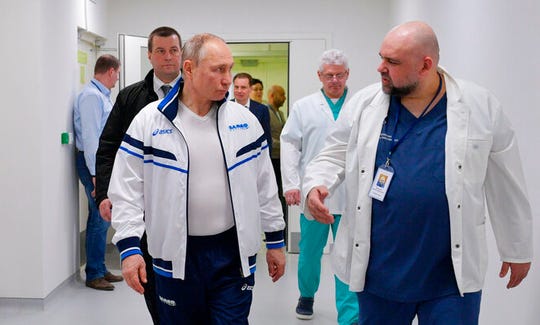
Russian President Vladimir Putin, center, wearing a protective suit enters a hall during his visit to the hospital for coronavirus patients in Kommunarka settlement, outside Moscow, Russia, Tuesday, March 24, 2020. (Photo: Alexei Druzhinin, AP)
Putin last week ordered the vote on amending the Russian Constitution to be held but kept the door open for a delay if the coronavirus situation worsened. He donned a yellow protective suit during a visit to a Moscow hospital treating people with COVID-19 and conferred with officials on strategies to contain the outbreak.
Other constitutional changes further strengthen the presidency and emphasize the priority of Russian law over international norms – a provision reflecting the Kremlin’s irritation with the European Court of Human Rights and other international bodies that have often issued verdicts against Russia.
There are also proposed amendments to outlaw same-sex marriage and to mention “a belief in God” as one of Russia’s traditional values.
The word "mother" has been replaced with "host", whether natural or artificial, it is a parent corporation.
This is privatization, or rather the residuals of the peculiar institution.
Parent One and Parent Two are terms regularly used in private law, better known as corporate law.
Putin is on a mission....and so am I...
Vladimir Putin, today: "You said the word mother 'can't be replaced.' It turns out, perhaps, it can. In some countries, they now have 'parent number one' and 'parent number two.' I hope we never have that (in Russia).”pic.twitter.com/O7mS7YNtfI
Gather round, my dearies, for the Celestial Goddess of the Woodshed shall tell the tale of Pat Cipollone, Laura Ingraham and the industry of trafficking tiny humans as lab rats.
Laura Ingraham considers Pat Cipollone as her spiritual leader.
Well, I guess we should get to know Laura to find out the content of Pat's character.
This is Laura at CPAC, the conservative political operative job fair.
Listen to Laura market her talking points propaganda, rooted in absolutely no facts, whatsoever.
Here is a list of Laura's most favorite charities.
Manto de Guadalupe http://www.mantodeguadalupe.com/site/english/
We are a non-profit organization with two main goals:
- Defend life from conception to natural death
- Serve the poor in our local communities and around the world
Saving Lives and Changing Lives
Follow on Twitter: Verastegui777
Warriors & Quiet Waters Foundation, Inc. http://www.warriorsandquietwaters.org/
Through the experience of fly fishing in Montana, Warriors and Quiet Waters Foundation is a catalyst for positive change in the lives of post-9/11 combat veterans. We envision an America in which a new generation of combat veterans successfully reintegrates into society.
Wounded Warrior Project www.woundedwarriorproject.org
The mission of the Wounded Warrior Project is to honor and empower wounded warriors. To raise awareness and enlist the public's aid for the needs of severely injured service men and women, to help severely injured service members aid and assist each other, and to provide unique, direct programs and services to meet the needs of severely injured service members.
The Fisher House www.fisherhouse.org
Supporting America's military in their time of need, we provide "a home away from home" that enables family members to be close to a loved one at the most stressful time -- during hospitalization for an illness, disease or injury
The Greatest Generations Foundation www.tggf.us
The Greatest Generations Foundation (TGGF), a Denver based IRS 501(c)(3) International non-profit educational organization, that is committed to offering our country's combat Veterans the opportunity to revisit the sites of their battlefield campaigns.
Care Net www.care-net.org
Care Net is a growing affiliation network of more than 1,000 pregnancy centers throughout the United States and Canada. For over twenty-five years, we have been promoting, equipping, and developing our centers to better serve men and women in their communities.
Soldiers Angels www.soldiersangels.com
Soldiers' Angels are dedicated to ensuring that our military know they are loved and supported during and after their deployment into harms way.
America Supports You
"America Supports You," a nationwide program launched by the Department of Defense, will recognize citizens' support for our military men and women and communicate that support to members of our Armed Forces at home and abroad.
St. Jude's Children's Hospital www.stjude.org
St. Jude is unlike any other pediatric treatment and research facility. Discoveries made here have completely changed how the world treats children with cancer and other catastrophic diseases. With research and patient care under one roof, St. Jude is where some of today's most gifted researchers are able to do science more quickly.
Covenant House www.covenanthouseny.org
Covenant House New York, the first and largest center of the nation's foremost agency serving homeless, runaway and at-risk youth, opens its doors 24 hours a day for teens in need.
DC Hospice www.capitalhospice.org
The mission of Capital Hospice is to improve care for those facing life-limiting illness through direct support of pa
Laura did not just study in Russia, she adopted Russian tiny humans, then became the U.S. spokestoken for the entire industry, including the Ukraine, because it is nothing but a floating border for trafficking tiny human industries like being genetic, biomedical lab rats, and other horrors I have addressed, ad nauseum.
The Tale Of Kateryna Mykhaylivna Yushchenko & Her Ukrainian Trafficking Tiny Humans Trust Funds With George Bush
Laura lead the charge against the Russian adoption ban, or what we know in the Trafficking Tiny Humans Community as the Magnitsky Act, or what I like to call stealin' the children, land and votes.
AuthorccainstituteCategoriesAdoption, Haiti, International, International Adoption, Right to a family, Russian Adoption Ban, State DepartmentTagsAdoption, Adoption Ban, International Adoption, Kathleen Strottman, State Department, STUCK
STUCK_PosterArt_small
We are proud to announce that STUCK—an award winning documentary about international adoption—features CCAI’s Executive Director, Kathleen Strottman.
As Kathleen explains in the documentary, which uncovers the personal, real life stories of adopted children and their parents, “the right to a family is a basic human right and our policies have to start recognizing that.” The film also features CCA Co-Chair Senator Mary Landrieu, Senator Richard Lugar and Charles Nelson, Co-Principal Investigator of the Bucharest Early Intervention Project.
On March 1st, Both Ends Burning Founder Craig Juntenen will be launching a 60 city bus tour to promote the film and issue a call to action for the United States Government to promote international adoption as a worthy and effective way to find homes for children without families.
Laura is one of the Nasty Ones, who are fungible with the Meanies. This is the shit I am talking about. Your federal tax payer dollars at work. Behold, the residuals of the peculiar institution, in the form of predictive modeling crap as modern day human trafficking, using children of "The Poors" (always said with clinched teeth) as tiny human lab rats, in the name of the tax exempt god.
The safety and scientific validity of this study is the responsibility of the study sponsor and investigators. Listing a study does not mean it has been evaluated by the U.S. Federal Government. Read our disclaimer for details.
ClinicalTrials.gov Identifier: NCT00747396
Recruitment Status : Active, not recruiting
First Posted : September 5, 2008
Last Update Posted : June 4, 2019
Sponsor:
Charles Alexander Nelson III
Collaborators:
Tulane University Health Sciences Center
University of Maryland, College Park
University of Minnesota
Temple University
Duke University
MacArthur Foundation
National Institute of Mental Health (NIMH)
Information provided by (Responsible Party):
Charles Alexander Nelson III, Boston Children’s Hospital
The purpose of this study is to determine the long term effects of early intervention (placement into foster care) on physical, cognitive, social and brain development and psychiatric symptomatology in previously institutionalized children.
Condition or disease
Intervention/treatment
Phase
Cognitive Ability, GeneralPsychiatric and/or Mood DisordersBrain FunctionSocial CognitionHealth BehaviorRisk-TakingExecutive Function
Other: Foster Care Placement
Not Applicable
Detailed Description:
The Bucharest Early Intervention Project (BEIP) was a randomized controlled trial of foster care as an intervention for children abandoned at or around the time of birth and placed in one of six institutions for young children in Bucharest, Romania (Zeanah et al., 2003). The PI (Nelson) and Co-PIs (Zeanah and Fox) conducted this study beginning in the fall of 2000 from baseline assessments and implementation of the intervention in the spring of 2001.
The BEIP began with comprehensive assessments of 136 institutionalized children and their caregiving environments prior to randomization. Half the children were randomly assigned to high-quality foster care and the other half to remain in institutional care. The average age at foster care placement was 22 months (range=6-31 months). All children were initially seen prior to randomization and again for follow-up assessments at 30 months, 42 months 54 months, 8 years and 12 years of age. The development of children in foster care was compared to the development of children in institutions and to a group of never institutionalized children (community controls). These children are being assessed at age 16 years.
Study Design
Go to
Study Type :
Interventional (Clinical Trial)
Actual Enrollment :
136 participants
Allocation:
Randomized
Intervention Model:
Parallel Assignment
Masking:
None (Open Label)
Primary Purpose:
Basic Science
Official Title:
The Bucharest Early Intervention Project: Effects of Early Psychosocial Deprivation on Mental Health in Adolescence
Study Start Date :
September 2000
Estimated Primary Completion Date :
March 2025
Estimated Study Completion Date :
March 2025
Arms and Interventions
Go to
Arm
Intervention/treatment
Experimental: Foster Care Placement Group
Children randomized to this group were placed in high quality foster care developed for the study.
Other: Foster Care Placement
A group of children living in institutions in Bucharest, Romania was randomly assigned to placement in foster care. Foster parents were recruited, consented to background checks, and trained in Romanian. Before placement, foster parents visited their children to begin developing a relationship with the child. Hired foster parents were supported and monitored by project social workers. Foster parents in the BEIP network received frequent visits from the social workers, with visits occurring weekly for several months after placement of the child, then biweekly and later monthly. Foster parents were invited to participate in a support group organized by social workers. Project social workers consulted weekly with US staff experienced in dealing with young children in foster care.
Other Name: Foster Care Group
No Intervention: Care As Usual Group
Children randomized to this group remained in institutional care.
Outcome Measures
Go to
Primary Outcome Measures :
Changes in Cognition in later childhood and adolescence [ Time Frame: 8 years, 12 years, 16-18 years ]
WISC-IV
Changes in Cognition in early childhood [ Time Frame: baseline, 30 months, 42 months ]
Bayley Scales of Infant Development
Changes in weight [ Time Frame: baseline, 30 mos, 42 mos, 8 years, 12 years, 16 years ]
weight in kilograms
Changes in height [ Time Frame: baseline, 30 mos, 42 mos, 8 years, 12 years, 16 years ]
Height measured in centimeters
Changes in head circumference [ Time Frame: baseline, 30 mos, 42 mos, 8 years, 12 years, 16 years ]
Head circumference in centimeters
Changes in Psychiatric Symptomatology in adolescence [ Time Frame: 12 years, 16 years ]
DISC -IV
Changes in Psychiatric Symptomatogology [ Time Frame: 54 months, 8 years ]
Changes in Expressive Language Quality [ Time Frame: 30 mos, 42 mos and 8 years ]
language sample from interview
Changes in EEG Coherence Brain Function [ Time Frame: baseline, 30 mos, 42 mos, 8 years, 12 years, 16 years ]
EEG coherence
Changes in EEG Power Brain Function [ Time Frame: baseline, 30 mos, 42 mos, 8 years, 12 years, 16 years ]
EEG power
Changes in EEG Asymmetry Brain Function [ Time Frame: baseline, 30 mos, 42 mos, 8 years, 12 years, 16 years ]
EEG asymmetry
Changes in Attachment Disturbances and Disorders [ Time Frame: baseline, 30 mos, 42 mos, 54 mos, 8 years, 12 years, 16 years ]
Disturbances of Attachment Interview
Changes in Attachment Style [ Time Frame: baseline, 30 mos and 42 mos ]
Strange Situation Procedure
Changes in Caregiving Environment [ Time Frame: baseline, 30 mos and 42 mos ]
Observational Record of Caregiving Environment
Changes in Indiscriminate Behavior [ Time Frame: 54 mos, 8 years and 12 years ]
Stranger at the Door
Changes in Emotion Discrimination [ Time Frame: baseline, 30 mos, 42 mos and 8 years ]
Event-related Potentials
Changes in Face Recognition [ Time Frame: baseline, 30 mos, 42 mos and 8 years ]
Event-related Potentials
Changes in Brain Structure [ Time Frame: 8 years, 16 years ]
MRI
Changes in Problem Behaviors [ Time Frame: baseline, 30 mos and 42 mos ]
Infant Toddler Social Emotional Assessment
Changes in Social Communication and Interaction [ Time Frame: baseline, 30 mos, 42 mos, 8 years, 12 years, 16 years ]
Social Communication Questionnaire
Changes in Genetics [ Time Frame: 8 years, 12 years, 16 years ]
Buccal Swab
Secondary Outcome Measures :
Changes in Emotional Reactivity/Temperament [ Time Frame: baseline, 30 mos and 42 mos ]
LAB-Tab Puppets and Peek-a-boo
Motor Skills [ Time Frame: 8 years ]
Bruininks-Oseretsky Test-2
Other Outcome Measures:
Changes in Physiological Reactivity to Stress [ Time Frame: 12 years, 16 years ]
Trier Social Stress Test
Eligibility Criteria
Go to
Information from the National Library of Medicine
Choosing to participate in a study is an important personal decision. Talk with your doctor and family members or friends about deciding to join a study. To learn more about this study, you or your doctor may contact the study research staff using the contacts provided below. For general information, Learn About Clinical Studies.
Ages Eligible for Study:
16 Years to 18 Years (Child, Adult)
Sexes Eligible for Study:
All
Accepts Healthy Volunteers:
No
Criteria
Inclusion Criteria for assessment at age 16 years:
previously institutionalized and community children that took part in previous BEIP assessments
target recruitment age is +/- 3 mos of 16th birthday
Exclusion Criteria for assessment at age 16 years:
open or closed head injury within the past 12 months
viral or bacterial meningitis within the past 12 months
Contacts and Locations
Go to
Information from the National Library of Medicine
To learn more about this study, you or your doctor may contact the study research staff using the contact information provided by the sponsor.
Please refer to this study by its ClinicalTrials.gov identifier (NCT number): NCT00747396
Locations
Romania
Fundatia Tanner
Bucharest, Romania, 011467
Sponsors and Collaborators
Charles Alexander Nelson III
Tulane University Health Sciences Center
University of Maryland, College Park
University of Minnesota
Temple University
Duke University
MacArthur Foundation
National Institute of Mental Health (NIMH)
Investigators
Principal Investigator:
Charles A Nelson, Ph.D.
Children's Hospital Boston/Harvard University
Principal Investigator:
Nathan A. Fox, Ph.D.
University of Maryland, College Park
Principal Investigator:
Charles H. Zeanah, M.D.
Tulane University Health Sciences Center
More Information
Go to
Publications automatically indexed to this study by ClinicalTrials.gov Identifier (NCT Number):
Charles Alexander Nelson III, Richard David Scott Chair in Pediatric Developmental Medicine Research, Professor of Pediatrics and Neuroscience, Boston Children’s Hospital
Trump is the 'most valuable witness': Lawmakers point to president as new hearings loom
Lawmakers from both parties on Dec. 1 discussed where impeachment hearings against President Trump stood and what more there was to learn.
As the impeachment inquiry moves into a critical week, President Trump and his Republican allies are debating the degree to which the president should participate in a process they have spent more than two months attacking.
On Sunday evening, White House counsel Pat A. Cipollone told the House Judiciary Committee in a five-page letter that Trump would not participate in its first impeachment hearing, scheduled for Wednesday. The invitation from Chairman Jerrold Nadler “does not begin to provide the President with any semblance of a fair process,” Cipollone wrote.
Four constitutional scholars — three chosen by Democrats, one by Republicans — are expected to testify on the standards for impeachment. Nadler (D-N.Y.) told Trump he had until 6 p.m. Sunday to notify the committee that he or his attorneys would attend; he has given Trump until Friday to decide whether to participate more broadly in the impeachment process.
In his letter Sunday, Cipollone did not rule out participating in future hearings but asked Nadler to detail his plans for the upcoming proceedings, including whether he would allow further testimony and cross-examination of fact witnesses, among them those who already testified before the House Intelligence Committee. He also said Republicans should be able to call additional witnesses.
“Even at this late date, it is not yet clear whether you will afford the President at least these basic, fundamental rights or continue to deny them,” Cipollone wrote.
Nadler spokesman Daniel Schwarz declined to comment on Cipollone’s letter.
The Trump administration’s response suggests it will continue taking a defiant approach to the impeachment proceedings, betting that Republicans will stick together behind a noncooperation strategy meant to cast the inquiry as a partisan witch hunt. The move comes as Democrats on the House Intelligence Committee prepare to meet Tuesday to approve the release of their report detailing the panel’s findings on Trump’s dealings with Ukraine.
Where do the impeachment arguments stand?
The Fix’s Amber Phillips analyzes where the Democratic and Republican arguments on impeachment stand following the second week of public impeachment hearings. (Video: JM Rieger/Photo: Matt McClain/The Washington Post)
On Sunday, Democrats called on the White House to cooperate, suggesting an innocent person would have no problem testifying.
“We’re certainly hoping that the president, his counsel, will take advantage of that opportunity if he has not done anything wrong,” Rep. Val Demings (D-Fla.) said on ABC News’s “This Week.” “We’re certainly anxious to hear his explanation of that.”
But there is a conflict inside the GOP over the extent to which Trump and his congressional defenders ought to engage, even as Republicans signaled they will continue their aggressive campaign to delegitimize the process as corrupt and unfair.
Speaking on “Fox News Sunday,” Rep. Douglas A. Collins (Ga.), the top Republican on the Judiciary Committee, said he understood why the White House might want to skip the Wednesday hearing, calling it “just another rerun” covering ground already surveyed in previous Judiciary Committee hearings.
“This is a complete American waste of time right here,” he said.
But he added that Republicans would be more keen to participate in future hearings — particularly one examining the findings of the House Intelligence Committee as prepared by its chairman, Rep. Adam B. Schiff (D-Calif.).
Other Republican lawmakers said Trump could benefit from availing himself of the due-process protections that Nadler has offered, including the right to present evidence, suggest witnesses and cross-examine those called by Democrats to testify.
Rep. Tom McClintock (R-Calif.), a Judiciary Committee member, said on “This Week” that he thought it “would be to the president’s advantage” to have counsel participate in the upcoming hearings. “But I can also understand how he is upset at the illegitimate process that we saw unfold in the Intelligence Committee,” he said.
The president did not address the issue himself Sunday. He sent two tweets about World AIDS Day in the early afternoon and spent a second day in a row at his golf course in West Palm Beach, Fla., after returning early Friday from a Thanksgiving visit to U.S. troops in Afghanistan.
In the past, however, Trump has suggested that he would like to participate. Last month, he said he would “love” for several senior administration officials to testify in the impeachment inquiry, but he contended the White House was preventing them from doing so to protect the institution of the presidency.
“The D.C. Wolves and Fake News Media are reading far too much into people being forced by Courts to testify before Congress,” Trump said in a tweet on Nov. 26. “I am fighting for future Presidents and the Office of the President. Other than that, I would actually like people to testify.”
On Sunday, Republicans also renewed an array of attacks on the impeachment process, a likely preview of what’s to come this week.
Collins attacked the timeline that Democratic leaders are pursuing, one that appears aimed at concluding an impeachment vote in the House before Christmas rather, he argued, than providing appropriate due process for the president.
“They want to get this president right now before everybody completely sees through the process sham,” Collins said. “So we’re rushing this.”
He also called Sunday for Schiff personally to testify, indicating that the Intelligence Committee chairman would face intense questioning from Republicans on the role his panel played in shepherding the whistleblower complaint that exposed Trump’s irregular dealings with Ukraine, among other matters.
The Republican congressman noted that Schiff has compared the panel’s fact-finding process to that of the independent prosecutors who examined matters that led to impeachment proceedings against Presidents Richard Nixon and Bill Clinton. In those cases, Collins noted, those prosecutors subjected themselves to congressional questioning.
“He’s put himself into that position,” Collins said. “It’s easy to hide behind a report. It’s easy to hide behind a gavel and the Intelligence Committee’s behind-closed-door hearings. But it’s going to be another thing to actually get up and have to answer questions.”
Another Republican, Rep. Andy Biggs (Ariz.), predicted the impeachment inquiry will take a turn for the combative this week, when it moves to the Judiciary Committee.
“It’s a bunch of brawlers sometimes on the Judiciary Committee, so it should get pretty hot and under the collar as we go along,” Biggs, who sits on the panel, said in an interview with Fox News Channel’s Mike Emanuel on “Sunday Morning Futures.” “I don’t think things have been done the way they’ve been done in the past, Mike, and so it causes some rancor and it should be pretty — much more feisty, I would say, than the Intel Committee was.”
Democrats on the Judiciary Committee, meanwhile, said Sunday that Republicans were trying to distract from Trump’s wrongdoing by raising objections to the impeachment process without challenging the facts that have been gathered.
Demings said Democrats were “not going to play any games” with Republicans and called on Trump to end his stonewall of the Democrats’ witness and document demands.
“They want to . . . play a political game and tie the process up in the courts as long as they can and run the clock out,” she said. “We’re not willing to play that game.”
Sen. John Neely Kennedy (R-La.), meanwhile, argued that both Russia and Ukraine interfered in the 2016 presidential election, despite the intelligence community’s assessment that only Russia did so.
The comments mark Kennedy’s latest attempt to shift the focus away from the U.S. intelligence community’s conclusion that Russia worked to help elect Trump, after a Fox News Channel interview last week from which he later backtracked.
“I think both Russia and Ukraine meddled in the 2016 election,” Kennedy told host Chuck Todd on NBC News’s “Meet the Press” on Sunday.
Todd pressed Kennedy on whether he was concerned that he had been “duped” by Russian propaganda, noting reports that U.S. intelligence officials recently briefed senators that “this is a Russian intelligence propaganda campaign in order to get people like you to say these things about Ukraine.”
Kennedy responded that he had received no such warning.
“I wasn’t briefed. Dr. Hill is entitled to her opinion,” Kennedy said, referring to former National Security Council Russia adviser Fiona Hill, who testified in the impeachment inquiry last month.
In her public testimony, Hill warned that several Trump allies had spread unfounded allegations that Ukraine, rather than Russia, had interfered in the 2016 U.S. presidential election.
Pat Cipollone
Stein Mitchell Cipollone Beato & Missner LLP
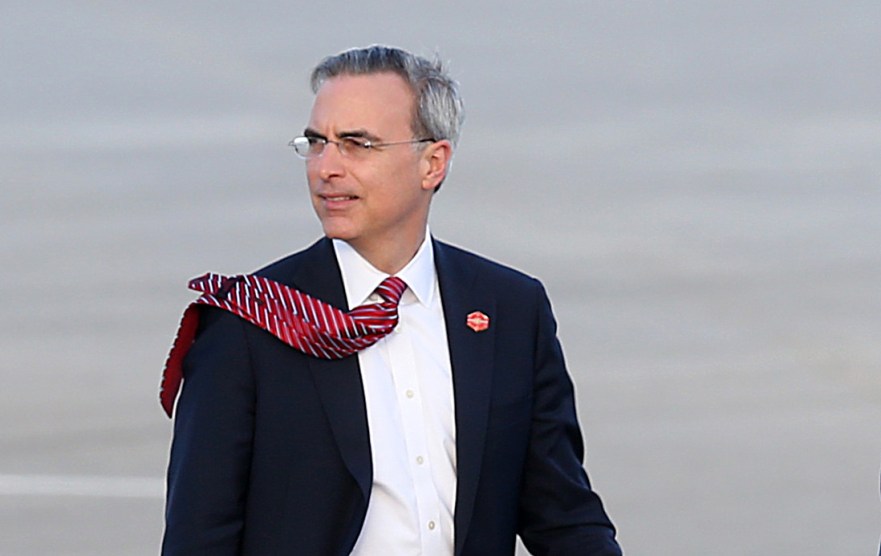
Pat Cipollone is the top White House counsel. President Trump chose Cipollone to replace his former attorney Don McGahn in October 2018.
Cipollone’s background includes serving in the Justice Department while President George H.W. Bush was in office. While in the private sector, he handled cases involving government contracts and congressional investigations.
On October 8, 2019, Cipollone sent a letter to House Democrats, including Speaker Nancy Pelosi, explaining that the White House would not cooperate with the impeachment inquiry. This means that the White House will not comply with document requests or agree to testify before lawmakers.
Cipollone accused the Democrats of orchestrating an effort to “overturn the results of the 2016 election and deprive the American people of the President they have freely chosen. Many Democrats now apparently view impeachment not only as a means to undo the democratic results of the last election, but as a strategy to influence the next election, which is barely more than a year away.”
He added that the impeachment inquiry “violates fundamental fairness and constitutionally mandated due process.” You can read the full letter here.
Here’s what you need to know about Pat Cipollone.
1. Pat Cipollone Is Said to Have Earned President Trump’s Trust & Respect
Pat Cipollone
Getty
(L-R) Acting White House Chief of Staff Mick Mulvaney, White House Counsel Pat Cipollone, and Principal Deputy Press Secretary Hogan Gidley at the White House on May 7, 2019
Pat Cipollone reportedly served as an informal adviser to the White House legal team for several months before he was brought on in an official capacity, a source confirmed to Business Insider.
After joining the administration, Cipollone was said to have quickly earned President Trump’s trust and respect. Kellyanne Conway told Politico in June of 2019, “He has the president’s ear, he’s earned the president’s respect and that allows people in this building not just to survive but to succeed in doing their jobs.”
Current and former senior administration officials told the Atlantic that Cipollone is “clear in his admiration” for the president and doesn’t try to hide that. He is also reportedly known for being very discreet and straightforward. Alex Azar, the Secretary of Health and Human Services, praised Cipollone to the magazine. “Pat would tell me if I was doing something I shouldn’t be doing or going in the wrong direction. He wouldn’t hesitate to tell me that, and I know he wouldn’t hesitate to tell the president that either.”
Cipollone is firmly on the president’s side when it comes to the call with the leader of Ukraine, which was part of what sparked the formal impeachment inquiry. In the letter Cipollone sent to Democratic leaders on October 8, 2019, he strongly defended the call and praised the president’s decision to release the official record of the call. “For his part, President Trump took the unprecedented step of providing the public transparency by declassifying and releasing the record of his call with President Zelenskyy of Ukraine. The record clearly established that the call was completely appropriate and that there is no basis for your inquiry.”
2. Cipollone Was a Litigation Partner at a Firm Based in Washington, D.C.
Pat Cipollone
Getty
(L) Lawyer Pat Cipollone, White House Press Secretary Sarah H. Sanders and White House Social Media Director Dan Scavino in the Rose Garden of the White House on May 7, 2019
Pat Cipollone was a partner at the law firm Stein Mitchell Cipollone Beato & Missner LLP in Washington, D.C. His areas of focus were listed as commercial litigation, anti-trust & trade regulation, and healthcare fraud.
According to the firm bio, Cipollone had experience handling cases involving government contract matters, tax disputes, consumer fraud, crisis management, congressional investigations and insurance litigation, just to name a few. Before joining this firm, Cipollone worked at Kirkland & Ellis LLP.
One previous high-profile case Cipollone worked on included a class-action lawsuit against Equifax. He was on the 11-person legal team that defended customers who had their personal data, including social security numbers, exposed in a major data breach. The cyberattack reportedly impacted as many as 145 million customers.
He is licensed to practice law in Washington D.C. and Illinois. Cipollone earned a bachelor’s degree at Fordham University in 1988. He attended law school at the University of Chicago and served as the managing editor of the University of Chicago Law Review, graduating in 1991.
3. Pat Cipollone Previously Served in the Justice Department
Pat Cipollone had prior experience working in government before going to work in the White House. He was an attorney in the Justice Department during the administration of President George H.W. Bush. He served under Attorney General William P. Barr focused on communications and special projects.
Cipollone’s bio on his previous law firm’s website stated that Cipollone “has substantial expertise in defamation counseling and litigation on behalf of corporations, organizations and public figures, including prepublication negotiations and/or litigation with major media organizations.”
Simply put, he has a lot of experience dealing with negative media attention and representing well-known people. Though Cipollone’s government experience is limited, his background was likely viewed as a crucial asset, especially after Democrats took back control of the House in the 2018 midterm elections and increased investigations.
4. Cipollone is Active With Two Catholic Organizations
Pat Cipollone is a practicing Catholic. He is a co-founder of the National Catholic Prayer Breakfast. The annual event first launched in 2004 in Washington, D.C. and typically attracts more than 1,000 participants.
According to the event website, the Prayer Breakfast’s founders were inspired by “Saint John Paul II’s call for a New Evangelization.” Former Senator Rick Santorum is another founder.
Cipollone is on the board of directors of the Catholic Information Center. The group’s mission statement explains that the group is “committed to making the Catholic Church alive in the hearts and minds of men and women living and working in our nation’s capital. Through a variety of spiritual, intellectual, and professional programs, the CIC offers the tools to live an integrated life and to engage in all areas of human endeavors.” The organization holds daily weekday masses and confessions, as well as puts on speaking events. The Catholic Information Center is located about half a mile from the White House.
5. Cipollone Was Connected to Trump Ally Laura Ingraham & Was Described as a ‘Big Trump Supporter’ Before He Was Hired as White House Counsel
Laura Ingraham
✔
@IngrahamAngle
The Trump Administration and the country will be very well-served with this appointment of Pat Cipollone as WH Counsel. Whip smart, dedicated, tough but fair-minded, respected by both sides of the aisle. (And a great friend to many—incl me. ) https://twitter.com/FoxNewsResearch/status/1051488045847928832 …
Fox News Research
✔
@FoxNewsResearch
Pat Cipollone:
•Litigation partner at D.C. law firm
•Experience w/ investigations & disputes involving state/federal agencies
•Served at DOJ under then-AG William P. Barr (Bush 41 nominee)
•Has reportedly been advising Trump's outside legal teamhttps://www.foxnews.com/politics/trump-has-chosen-pat-cipollone-as-new-white-house-counsel-sources-say.amp …
Pat Cipollone has a connection to Fox News host Laura Ingraham, who has been described as an “ally” of President Trump. According to the Washington Post, she views Cipollone as her “spiritual mentor.”
Ingraham praised the attorney on Twitter, writing “The Trump Administration and the country will be very well-served with this appointment of Pat Cipollone as WH Counsel. Whip smart, dedicated, tough but fair-minded, respected by both sides of the aisle. (And a great friend to many—incl me.)”
Axios, which first reported that Cipollone had begun filling out paperwork to become White House Counsel, cited an unnamed source that described Cipollone as being “loyal” to President Trump. The site quoted this source describing Cipollone as a “true believer” and a “big Trump supporter.”