Showing posts with label EAA. Show all posts

Tuesday, December 18, 2018

It Seems Michigan Richard Baird Really Likes Public Private Trust Funds

The more the Michigan Governor's Cabinet operations are uncloaked, the more I am inclined to reaffirm my position that Snyder was falsely advised, if he was even advised on what was going on.


Here is a list of Rich Baird's privatization activities in Michigan:

The search and appointment of Kevyn Orr, Emergency Manager for the Detroit Bankruptcy.

Pay attention to all those trust funds and real estate.

Flint Homecoming

Senior Advisor and Transformation Manager
Office of Michigan Governor Rick Snyder

Richard L. Baird was appointed Senior Advisor and Transformation Leader to Michigan Governor Rick Snyder in October of 2013. Prior to that, he was the CEO of MI Partners, LLC, a Michigan-based consulting company contracted by the Snyder administration since January, 2011.

Baird works with the Governor and his leadership team to reinvent and transform Michigan. Baird has played key roles to address financial solvency, organizational redesign and performance, talent assessment, financially distressed city turnaround strategies, public safety and infrastructure, economic/workforce development and education reform.

Baird served as co-leader (with U.S. District Court Judge Sean Cox) of the mediation team which led to the creation of the Great Lakes Water Authority and also assisted Judge Gerald Rosen in the successful resolution of creditor disputes under the Detroit bankruptcy. He created the Office of Good Government for the State of Michigan, designed the Governor’s Council on Law Enforcement and Reinvention (CLEAR), and has been actively involved in pension redesign, enhancing opportunities for the disabled, ex-offender rehabilitation, and tax payer reform.

More recently (since January, 2016), Baird has served as the Team Leader for “Mission Flint” which coordinates the State’s partnership with the City of Flint and the related nearly $300 million appropriation to address problems arising from the water crisis and assist with economic/workforce development, medical and education initiatives.

In 2010, Baird retired from PricewaterhouseCoopers, LLP as global and U.S. leader of people and change management. From 2003–2008, he was global managing partner – people, responsible for human resources and learning & education for PwC’s 150,000 partners and staff in 150 countries, while serving on the 14-partner global leadership team. From 19997 to 2000, Baird was President of Compass.com, a couple sold to TMP Worldwide (Monster.com) in 2000.

Baird has been referenced in various professional publications for his work in talent management, including The Wall Street Journal, Global HR News, Newsweek, Economist, and Chicago Tribune.

Baird serves as Treasurer of the Michigan Education Excellence Foundation, and is a member of the board for the Grow Michigan Investment Fund. He joined the board for the American Center for Mobility in May, 2017. He is a life member of the board of trustees for United Methodist Homes and Services and a past member of the AIESEC U.S. board of directors and global advisory steering committee. An avid conservationist, he also served on the board of the Great Lakes Protection Fund.

United Methodist Homes | Independent & Assisted Living Senior Care
https://www.unitedmethodisthomes.org/services/

Aiesec Logo
https://aiesec.org/about-us
Mark Image
Word MarkDETROIT SCHOLARSHIP FUND
Goods and ServicesIC 036. US 100 101 102. G & S: Charitable fundraising; Charitable fundraising services, namely, raising funds for college education costs; Providing educational scholarships; Providing college scholarships; Financial administration of scholarship programs. FIRST USE: 20130430. FIRST USE IN COMMERCE: 20130430
Standard Characters Claimed
Mark Drawing Code(4) STANDARD CHARACTER MARK
Serial Number86597230
Filing DateApril 14, 2015
Current Basis1A
Original Filing Basis1A
Date Amended to Current RegisterOctober 30, 2015
Registration Number4915636
Registration DateMarch 8, 2016
Owner(REGISTRANT) Michigan Education Excellence Foundation non-profit corporation MICHIGAN P.O. Box 10030 Lansing MICHIGAN 48901
Attorney of RecordEric T. Fingerhut
DisclaimerNO CLAIM IS MADE TO THE EXCLUSIVE RIGHT TO USE "SCHOLARSHIP FUND" APART FROM THE MARK AS SHOWN
Type of MarkSERVICE MARK
RegisterSUPPLEMENTAL
Live/Dead IndicatorLIVE

Mark Image
Word MarkMICHIGAN EDUCATION EXCELLENCE FOUNDATION
Goods and ServicesIC 036. US 100 101 102. G & S: Accepting and administering monetary charitable contributions; charitable fundraising; charitable fundraising services, namely, raising funds for college education costs; financial administration of scholarship programs; charitable fundraising for education projects in the State of Michigan. FIRST USE: 20120827. FIRST USE IN COMMERCE: 20120827
Standard Characters Claimed
Mark Drawing Code(4) STANDARD CHARACTER MARK
Serial Number85429727
Filing DateSeptember 22, 2011
Current Basis1A
Original Filing Basis1B
Date Amended to Current RegisterFebruary 21, 2013
Registration Number4319072
Registration DateApril 9, 2013
Owner(REGISTRANT) Michigan Education Excellence Foundation non-profit corporation MICHIGAN P.O. Box 10030 Lansing MICHIGAN 48901
Attorney of RecordMichelle R. Osinski
DisclaimerNO CLAIM IS MADE TO THE EXCLUSIVE RIGHT TO USE "FOUNDATION" APART FROM THE MARK AS SHOWN
Type of MarkSERVICE MARK
RegisterSUPPLEMENTAL
Live/Dead IndicatorLIVE

https://pdf.guidestar.org/PDF_Images/2016/453/076/2016-453076410-0eb4e396-9.pdf


Baird received his bachelor’s degree from Albion College and was a trustee for 12 years, including five as chair. He received an honorary Ph.D. from Albion College and from Eastern Michigan University.
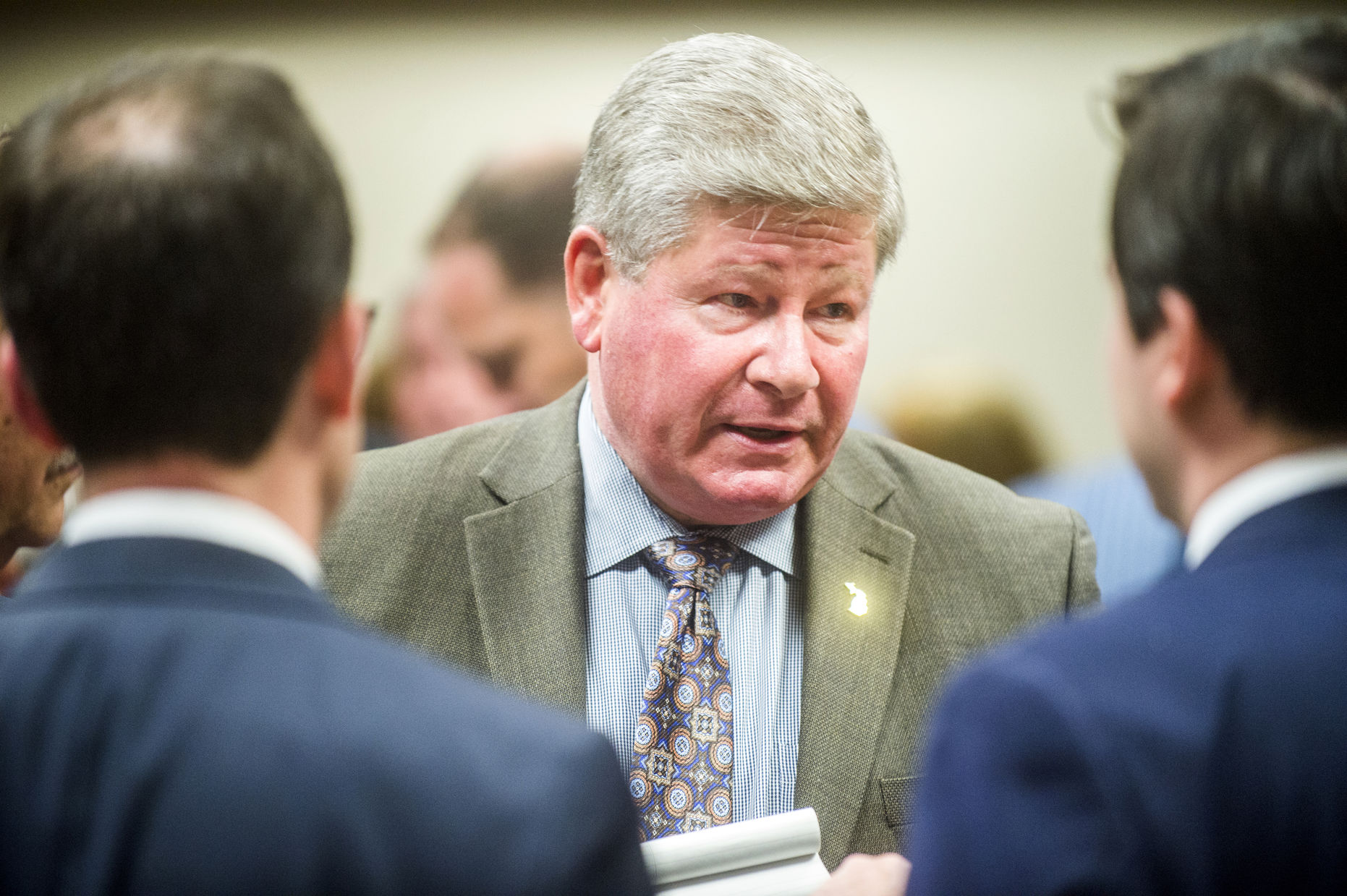
Governor's right-hand man served as emissary, deal-maker, talent scout

Rich Baird, senior adviser to Gov. Rick Snyder, has worked throughout Snyder’s tenure as a de facto deputy governor of the state, whether it was dealing with the Flint water crisis or weekly meetings with Detroit Mayor Mike Duggan.

Rich Baird's skin is a lot thicker these days after eight years as a student of government.

The former PricewaterhouseCoopers LLP executive's faithful service as the right-hand man for outgoing Gov. Rick Snyder has been a ride through the making of laws, Detroit's landmark bankruptcy, some well-intended ideas gone awry and the tsunami of turmoil that engulfed his hometown of Flint — and nearly took the Snyder administration with it.

Whenever there was a controversy or a fire to put out during Snyder's unconventional tenure as Michigan's chief executive, Baird was typically on the scene, serving as an emissary, a deal-maker, the talent scout and, in the eyes of some people, a de facto deputy governor of Michigan.

For the past six years, Rich Baird's trail has run from the governor's office and courtrooms to Detroit Mayor Mike Duggan's office and Flint City Hall. And for most of that time, he has spurned attention from journalists who have been curious about his wide-ranging assignments from the governor.
Rich Baird has seemingly been everywhere:

  • He recruited the top minds to Snyder's team, convincing Jones Day bankruptcy attorney Kevyn Orr to camp out in Detroit for a nearly two-year bankruptcy reorganization project that defied political gravity.
  • He set up Snyder's now-defunct Education Achievement Authority school reform entity — and later was involved in dismantling the EAA after it became entangled in mismanagement and corruption.
  • In 2016, Baird planted himself in Flint during the height of the city's lead-tainted water crisis, living in rooms he rented off Craigslist and serving as the governor's personal representative at a time when hatred for Snyder was at a fevered pitch.
  • He has served as Snyder's ambassador to the Manoogian Mansion, holding meetings every Thursday morning with Duggan for the past five years and forging an early peace treaty in 2013 between the emergency manager and a newly elected mayor who vowed to dispose of the EM.
  • During and after the bankruptcy, Baird mediated negotiations with stakeholders, including creation of the Great Lakes Water Authority, a regional entity that spun off suburban water and sewer operations from the Detroit Water & Sewerage Department.
  • In the four years since Detroit emerged from bankruptcy, Baird has continued to be the go-to troubleshooter for state-city issues, serving as a self-described "field commander" in Detroit's failed bid for Amazon's second headquarters.
  • Baird played a central role in striking key deals for construction of the Gordie Howe International Bridge, including securing funds for Detroit to relocate Delray residents who live near the planned bridge plaza.
"He's the person we turn to when we're stuck," Duggan said of Baird. "The fact that he's down (in Detroit) every day, he understands what we're trying to do and why, it has made him very effective as an honest broker with a lot of different major deals."

Baird's broad role in the Snyder administration "created a vacuum, a mystery around him" that was widely misunderstood, Lt. Gov. Brian Calley said.

"It's hard for this town to understand that there's this person that you've never heard of that has a lot of influence. What's going on there?" Calley said in an interview.

Before Snyder took the oath of office on Jan. 1, 2010, incoming Chief of Staff Dennis Muchmore gave Baird the ubiquitous title of "transformation manager."

"What's transformation manager mean?" Baird asked Muchmore.

"Absolutely nothing," Muchmore replied.

"Or it could mean absolutely everything," Baird said.

The latter turned out to be true.

"Rich Baird has been one of the most important, impactful and effective members of this administration," Calley said.

The recruiter
Baird, 62, retired from PricewaterhouseCoopers on June 30, 2010, after three decades at PwC and one of the accounting giant's predecessors, Coopers & Lybrand, where he hired Snyder in 1982 to work in the firm's Detroit office. Snyder has been Baird's colleague, a client when he ran Gateway Computers, confidante and friend ever since.

Baird volunteered for Snyder's gubernatorial campaign. In the transition, Snyder tapped Baird to lead the recruitment of state agency directors and top aides — a natural fit for the guy who was PwC's global managing partner for human resources.

Two positions proved to be the most difficult to fill: the Department of Corrections director and the state budget director. The corrections director job would be filled a month into Snyder's tenure with the appointment of then-Jackson County Sheriff Dan Heyns.

For the budget director job, Baird was not satisfied after interviewing nearly two dozen in-state candidates.

"I did not come away with the sense that any of them really understood what it was going to take to not only deal with the budget and fill what we knew was a deficit, but also knowing how the governor was going to approach policy and budgeting," Baird said.

On a Saturday afternoon in November of 2010, Baird called former Gov. John Engler for advice on out-of-state candidates for the job.

Engler, who was then CEO of the National Association of Manufacturers, came back to Baird with a list of five well-regarded state budget officers across the country. At the top of the list was Utah's budget director, John Nixon, then the president of the National Association of State Budget Officers.
"(Engler) said, 'You won't get this guy, but you should start with him and talk to him about the other candidates — because he knows all of them,'" Baird said.

Baird sent Nixon an email — and within an hour Utah's budget guru called the Michigan headhunter on a Saturday night.

Nixon, a devout Mormon with six children who were ages two to 14 at the time, wasn't interested in uprooting for the Midwest.

But cajoling is Baird's specialty.

"I said, 'It seems to me that you've retired in place. How exciting could it be? Why don't you at least come out and talk to us? We'll make you part of the biggest comeback in the history of the country,'" Baird said. "And he laughed."

Nixon relented, flying to Detroit to meet with Baird and the top members of Snyder's cabinet — Calley, Muchmore, Treasurer Andy Dillon and Strategy Director Bill Rustem. He also met with members of Snyder's transition team: Business Leaders for Michigan CEO Doug Rothwell and Meijer Inc. Vice Chairman Mark Murray, a former state budget director and treasurer under Engler.

When Nixon came back the following weekend with his wife to meet with Snyder, Baird called in a favor from Honigman corporate attorney G. Scott Romney, son of former Gov. George Romney and a fellow Mormon and Republican.

Baird asked Romney if he'd take the Nixons to his Mormon church. "The Romney name is like gold in Utah," Baird said.

On New Year's Eve 2010, Nixon flew to Michigan and set to work on a grueling mission: Produce a two-year budget in six weeks that eliminates a $1.5 billion budget deficit and lets the state slash business taxes.

"Rich is a compelling guy. I realized they had built a first-class team. And I thought, this is something I want to be part of," said Nixon, who returned to Utah in 2014 to become chief administrative officer of the University of Utah.

'Great idea' gone bad
Baird never intended to be part of Snyder's administration.

Initially, Snyder asked Baird to work as a consultant for six months to help put together a new government.
Baird says he "resisted" becoming an employee of the State of Michigan.
"I'm not a bureaucrat," Baird recalled telling the governor. "I don't want to stay on."

"He said, 'Well, I'll pay you out of the NERD Fund,' which we thought was a great idea at the time," Baird added.

And that's how Baird got on the radar of reporters like me.

For most of Snyder's first three years, Baird was paid $100,000 annually from the New Energy to Reinvent and Diversify (NERD) Fund, a not-for-profit organization that could accept limitless donations without having to disclose the donors.

The arrangement raised the specter of whether special interest groups with a policy or legislative agenda were funding the salary of an influential member of the governor's inner circle.
"It wasn't special interests that gave to the NERD Fund — it was Democrats, a whole bunch of them," Baird said.

But Democrats had a field day, raising transparency questions about the secrecy of the fund and the source of Baird's pay while being listed as a state employee with an office across the hall from the governor's suite.

To this day, the identity of the donors who contributed $2.2 million to the NERD Fund remains a secret. In October 2013, Snyder shuttered the NERD Fund, put Baird on the state payroll — at $140,000 a year — and started a new nonprofit organization that has voluntarily disclosed its donors and expenses.

But Baird insists his NERD Fund employment arrangement was devoid of conflicts.

"If I'm a tool of the special interest, then somebody should be shot because I made exactly one-twentieth of what I made in my old life at PricewaterhouseCoopers," Baird said.

'Hated being called a tax cheat'
Even after Snyder tried to tamp down the NERD Fund controversy, Baird remained a frequent target of Democrats and the governor's political enemies.

In August of 2014, the critics pounced after MIRS news service discovered Baird was claiming tax principal homestead exemptions on a $500,000 home in Clinton County's Bath Township and his longtime residence in suburban Chicago. Tax laws limit the property tax break to just one home.

Baird also was still driving around a vehicle with an Illinois license plate, even after he had changed his voter registration to Michigan and got elected a precinct delegate to help re-nominate Calley for lieutenant governor at a GOP state convention — and vote for Snyder that fall.

That move, Baird said, triggered a call from his accountant, who flagged the fact that Michigan — under Snyder — was now taxing pension income for individuals born after 1946.

"She said, 'Are you crazy? You've got to move your pension away from Illinois and to Michigan — and you're going to get taxed on the pension,'" Baird recalled. "I said, 'I know. I was at the scene of that crime.'"

'EAA was not a failure'
Baird's activities stretched well beyond recruitment and the confines of governing inside the Lansing bubble.

Snyder made turning around Detroit and its long-failing schools a top priority. For the city's schools, a succession of state emergency managers was not working, and Snyder wanted to try something new.
The governor tasked Baird with helping to create a new entity that would take over 15 persistently failing schools in Detroit in an effort funded in large part by billionaire Detroit native Eli Broad to demonstrate a different style of education with longer school days, year-round instruction and no grade levels.

The result was the Education Achievement Authority, which was organized as an intergovernmental agreement between Eastern Michigan University and Detroit Public Schools, which was run by an emergency manager at the time.

That move, Baird said, triggered a call from his accountant, who flagged the fact that Michigan — under Snyder — was now taxing pension income for individuals born after 1946.

"She said, 'Are you crazy? You've got to move your pension away from Illinois and to Michigan — and you're going to get taxed on the pension,'" Baird recalled. "I said, 'I know. I was at the scene of that crime.'"

'EAA was not a failure'
Baird's activities stretched well beyond recruitment and the confines of governing inside the Lansing bubble.

Snyder made turning around Detroit and its long-failing schools a top priority. For the city's schools, a succession of state emergency managers was not working, and Snyder wanted to try something new.

The governor tasked Baird with helping to create a new entity that would take over 15 persistently failing schools in Detroit in an effort funded in large part by billionaire Detroit native Eli Broad to demonstrate a different style of education with longer school days, year-round instruction and no grade levels.

The result was the Education Achievement Authority, which was organized as an intergovernmental agreement between Eastern Michigan University and Detroit Public Schools, which was run by an emergency manager at the time.

From the outset, the EAA was troubled.

The school reform entity struggled to meet payroll and manage expenses in the absence of authority to borrow money like normal school districts do.

John Covington, the former Kansas City schools superintendent who was hired to be the EAA's chancellor, was "a good blueprinting guy ... but not an operations guy," Baird said.

Baird said Covington's insistence that the EAA be a closed shop for the American Federation of Teachers triggered an unnecessary "war" with the union and legislative Democrats, who dredged up thousands of pages of emails that revealed the early dysfunction and stumbles of Snyder's school reform project.

"I ultimately rolled over on that," Baird said. "I'm really sorry I did, because over the years, I've worked with the (AFT), and we've been able to find common ground."

In 2013, as Snyder was seeking legislation to expand the EAA to 50 failing schools across the state, Baird said he experienced an "epiphany" that the EAA was faltering when a highly skilled information technology director quit after one week on the job.

"I called her and I said, 'What's going on?' And she said, 'There's so many things that are wrong, I can't fix them and I'm not going to fool anybody into thinking I can,'" Baird said.

Baird asked David Behen, the state's chief information officer at the time, to audit the books of the EAA. "He did a thorough investigation — as good as anything a PwC or a Deloitte would have done," Baird said.

The audit revealed duplicate IT contracts and a "consistent lack of controls" that allowed vendors to get paid without contracts. That caused Baird to turn to a former PwC partner, Tom Golden, who co-authored a guide to forensic accounting.

Golden's investigation led to an FBI and state police probe that rooted out a corruption scheme involving an EAA principal who was driving a Maserati and pocketing tens of thousands of dollars in bribes from a vendor. A dozen principals in DPS were eventually charged for taking bribes from vendors in a pay-to-play scheme that had been going on in Detroit schools for years.

The corruption scandal, Covington's mismanagement and controversial frequent travel to conferences coupled with declining enrollment and rampant staff turnover eventually caused the Snyder administration to fold the EAA schools back into DPS in 2016.

"It clearly didn't work," said David Hecker, president of the AFT Michigan. "But I'll give Gov. Snyder credit for realizing it didn't work."

Baird insists the "EAA was not a failure."

"If we had done some things differently, I'm convinced the EAA would have been the trigger to create some real revolutionary change in school districts across the state," Baird said. "It was always designed to be Stage One of a statewide focus."

Defending the EM law
For eight years, Snyder wore his "relentless positive action" mantra on his sleeve, while Baird worked to enforce it.

On the Thursday after Detroit's November 2013 mayoral election, Baird brokered the first meeting between Mayor-elect Mike Duggan and Kevyn Orr, who had been running the city for nearly eight months as emergency manager.

Baird hand-wrote a pledge for the two men: Both agreed to keep their disagreements private "and the only time that we're going to publicly talk about the other person is when we have something good to say."

"I made them sign it," said Baird, who declined to show me a copy of this peace accord.

At that meeting, Duggan and Orr agreed to share power for the next year — Orr would manage the bankruptcy and supervise police chief James Craig, while Duggan would run city departments.
Baird cautioned Orr on how the arrangement could play out.

"You've heard about if you give a mouse a cookie, he's going to want a glass of milk," Baird recalled telling Orr. "Mike Duggan will want the barn, the dairy farm, the production facility and the supply chain — it won't stop with the milk."

Since Orr left town at the end of the bankruptcy four years ago this month, Baird has remained Snyder's point man in Detroit, holding court with the mayor every Thursday morning. Duggan even gave Baird his own mayor's office ID badge that lets him bypass security.

"I think Rich Baird has been as big a part of the progress Detroit has made in the last eight years as any other person, including Kevyn Orr, Mike Duggan and Rick Snyder," Calley said. "Rich Baird has been that impactful."

Baird credits the bankruptcy's success to both Duggan's management and turnaround skills and the talents Orr and his Jones Day legal team brought to the restructuring of a city that was drowning in debt and political dysfunction.

The same cannot be said for Flint, where Baird ran a "Mission Flint" program in 2016 trying to chart new initiatives in education, economic development and social services for his hometown in the wake of the water crisis.

Baird, the longtime human resources professional, is blunt in his assessment of how Flint's water became tainted with lead under the watch of Snyder-appointed emergency managers.

"The reason it didn't work in Flint is because we did not always have the right emergency manager that looked at this as a partnership as opposed to a dictatorship," Baird said.

Rumor has it
With just two weeks remaining in Snyder's term, the only transforming Baird is working on is stepping back into semi-retirement.

Snyder appointed Baird to an eight-year term on the Eastern Michigan University Board of Regents, and he's planning to do some long-overdue traveling with his wife next year.

And even though he's already got walk-in privileges at the mayor's office, Baird said he isn't going to join the Duggan administration.

"I think Mike was the one spreading that rumor," Baird said with a laugh.

In an interview, Duggan didn't deny he has tried to make Baird more than a weekly visitor to Coleman A. Young Municipal Center.

"Yeah, I'm recruiting people all of the time," Duggan said. "But you know, I think he's earned retirement."

Voting is beautiful, be beautiful ~ vote.©

Wednesday, October 3, 2018

Privatization: Why Michigan Special Education Sucks

Yes, privatization is the reason why Michigan Special Education sucks.

Privatization made the people poor, then stole the children, the land and the votes.

Here are just a few recent articles to support my previous statement that Michigan Special Education Sucks.

57 Detroit schools have high levels of lead and copper in drinking water


And this is my all time favorite reason why Michigan Special Education Sucks:

Michigan EAA, Detroit Public Schools and "The Elected Ones"

Learn more: BEVERLY TRAN: Michigan EAA, Detroit Public Schools and "The Elected Ones" http://beverlytran.blogspot.com/2015/12/michigan-eaa-detroit-public-schools-and.html#ixzz5SuRSIWmX
Stop Medicaid Fraud in Child Welfare

I believe I have made my point.

Michigan's special education efforts near bottom in nation: U.S. report

If Laurie Kondek could fix what ails Michigan's special education system, it would be this: She would ensure that children like her Samuel — who is severely autistic and has several other ailments — would have the same shot at success as kids with no special needs.

"You have these special ed kids who have so much potential. Maybe they're not going to fly as high academically ... but my kid is just as valuable," said Kondek, who lives in Northville and has one son who attends the local district there and another who attends a nearby charter school.

To Kondek and many others, Michigan is falling short. And the U.S. Department of Education agrees, identifying Michigan in a recent report as the only state in the nation "needing intervention" this year because of the poor academic performance, high dropout rates and low graduation rates of its special education students.

Michigan shared the distinction with the District of Columbia, plus the U.S. territories of Palau and the Commonwealth of Northern Mariana Islands. If Michigan remains in that designation for three straight years, it could lose some federal funding.

How bad are Michigan's results? The education department gave Michigan a 59 percent for its outcomes for special education students — much of it based on student performance on the National Assessment of Educational Progress, a rigorous national exam given to a representative sample of students in each state. The state with the highest percentage: Massachusetts with 88.75.

Here's a look at the data that earned Michigan the designation, one of four given by the education department (meets expectations, needs assistance, needs intervention and needs substantial intervention):
  • Only 22 percent of fourth-graders and 34 percent of eighth-graders scored at or above the basic level in reading on the NAEP, which breaks down scores in four levels (below basic, basic, proficient and advanced).
  • Only 39 percent of fourth-graders and 19 percent of eighth-graders scored at or above the basic level in math on the NAEP.
  • 29 percent dropped out of school during the 2016-17 school year. 
  • Only 63 percent earned a traditional high school diploma.
Michigan had been designated previously as needing assistance.

The data isn't surprising to Marcie Lipsitt, the organizer of a Wednesday rally in Lansing on special education issues and a vocal critic of how the state and local school districts address the needs of such students.

Lipsitt said Michigan, for instance, sets too high a bar for identifying a child as having a learning disability. And she believes it often ignores what she describes as "glaring violations" of the law.
"There's no accountability, no transparency. ... There is no concern for the outcomes for children," Lipsitt said.

The rally will include speeches from a bipartisan set of speakers — including Gretchen Whitmer, the Democratic candidate for governor, and Republican Lt. Gov. Brian Calley. Lipsitt said Whitmer's opponent in November's election, Republican Bill Schuette, was invited but no one from his campaign responded.

Calley, a longtime special education advocate and the father of a child with autism who attends public schools, said there is too much focus on compliance at the state level and not enough on improving programs.

"If we were more concerned about identifying what kids need and providing it ... and helping school districts to develop the resources and knowledge and know-how to be effective, we'd be way better off," Calley said. "It can't just be about compliance."

Michigan's focus on compliance is clear in the federal report: It earned just 8 out of 24 points for results, and 17 out of 20 points for compliance. Massachusetts, on the other hand, earned 21 points for results and 18 for compliance.

Calley believes one way for schools to improve outcomes for students with disabilities is through behavior management programs — such as positive behavior interventions and support. More commonly known as PBIS, it's a more proactive approach to behavior management that focuses on teaching good behavior and expectations rather than addressing behavior after the fact.

Calley said he doesn't have data showing behavior is more of an issue with special education students, but "I just know ... a child with autism, for example, you need to much more directly and proactively teach and reinforce desired behavior."

Such behavior approaches keeps kids in school learning, Calley said.

"A student that’s not in school is not learning."

Fight to get services

For much of Samuel's education, Kondek has fought to get services he needs —beginning with trying to get her son identified as special needs so he could begin receiving preschool services. It took her from the time he was 2 until he turned 4.

The fight has continued. Now, she works to ensure that her son has assistance such as a full-time aide in the classroom. It's crucial not just for him, she said, but also for his teachers. That's important, she said, given that there's currently a shortage of special education teachers.

"If there’s not enough adult support in the classroom for these teachers, they aren’t set up to succeed," Kondek said.

Just as important, others said, is properly funding special education programs. Students with special needs are often more difficult to educate because they need additional resources. Federal law requires they receive a free and appropriate education.


Calley chairs a special education task force that last year released a report showing the state is underfunding special education by $700 million. That dollar amount is the difference between what it costs to educate special education students in Michigan and what the state spends to educate them.

That report noted that under the current system, the state funds special education students either through the per-pupil grant schools receive — which varies by school district — or 28.61 percent of the expenses associated with educating the child. Schools get whichever of the two is the greatest amount.

But that often creates inequities, Calley said. The lowest per-pupil amount a district can receive is a little under $8,000, but some districts receive well over $12,000 per pupil.

Calley says it would be better to have a system that would — for each special education student — pay schools a per-pupil amount as well as a percentage of the costs to educate that student.

Michelle Fecteau, a Democrat on the State Board of Education, is also among Wednesday's speakers. And like Calley, she has experience as a parent — she has had one biological child and three children she fostered who required special education services. As one of eight elected board members, Fecteau says she gets a couple of phone calls a week from people with concerns about special education.

"I've talked to plenty of parents who struggle to get the services they need," Fecteau said. At the same time, she said, "I've talked to principals that want to provide those services, but they don't have the resources to do it."

The people who work in special education programs — at the local level and the state level — "are not the villains," Fecteau said.

"We need to come together to fight for better financing and better models for supporting kids and their families," she said. "I don't think our state invests enough in these kids."
"I think these kids are worth that investment."

Rally seeks to spark discussions

Lipsitt is hoping the rally will spark a conversation about special education, and that it will become a key issue in the race for November elections. She's hopeful that whoever the next governor is will rescind an executive order issued in the 1990s by then-Gov. John Engler that stripped much of the state board's power and put it in the hands of the state superintendent. She believes the special education system has deteriorated since then.

Lipsitt also believes that parents of children who don't have disabilities need to become more cognizant of what she calls a crisis in special education.

"People have to use their voices, their pens. They have to use their presence on social media and talk about the state of education in Michigan," Lipsitt said. "Public education is not serving children in Michigan, and that includes children with disabilities."

State working to improve outcomes

Teri Chapman, director of the office of special education at the Michigan Department of Education, was not available for comment last week, said Bill DiSessa, an MDE spokesman.

He provided a statement that acknowledged outcomes for students with disabilities — graduation rates, dropout rates and NAEP results — "are the underperforming factors identified in the U.S. Department of Education's report."

The statement said the MDE is "in the process of moving in a new direction to improve educational outcomes for students with disabilities." It is part of the department's efforts to transform Michigan from a state that is struggling with academic outcomes to a state that is a Top 10 performer.

That effort includes an "evolving partnership" between MDE and intermediate school districts in the state that "further ensures the alignment and coordination that evidence-based practices are implemented and supported in local districts."

Fecteau said the board briefly discussed the federal report in August.

"I would like to have a discussion at the state board that looks into this more deeply, and understand why this is the way it is," she said of Michigan's status as needing intervention. "What are the root causes ... and where do we really need to make some changes and address it."

Contact Lori Higgins: 313-222-6551, lhiggins@freepress.com or @LoriAHiggins

If you want to go


Each one of these speakers are system sucks and have not done a damn thing about the child poverty or the fact that charter schools do not provide IEP testing or services.

You cannot even get your kids' school records if the charter school does not want to release it because you have to hire a private attorney.

That is what Bill Schuette, the Attorney General said to me, because he is too busy defending the state in these fraudulent educational operations.

The Michigan Kids with IEPs Count Day Rally — which seeks to draw attention to the need to fix the special education system in Michigan — is set for 12:30-2:30 p.m. Wednesday on the steps of the Michigan Capitol.
Among the speakers:
  • Lt. Gov. Brian Calley
  • Gretchen Whitmer, Democratic candidate for governor
  • Andy Levin, Democratic candidate for U.S. Congress
  • Michelle Fecteau, Democratic member of the State Board of Education
  • Tom McMillin, Republican member of the State Board of Education
  • Mark McWilliams, Michigan Protection and Advocacy
  • Colleen Allen, president and CEO, Autism Alliance of Michigan
  • Kristin Totten, education attorney, ACLU of Michigan
For more information, contact organizer Marcie Lipsitt at 248-514-2101 or at marcielipsitt@outlook.com

Voting is beautiful, be beautiful ~ vote.©

Saturday, April 14, 2018

It Happened In Detroit Because No One Cares About The Children, Unless There Is Money Involved

There is so much more to this Detroit Public Schools scandal and it has to do with the Detroit Land Bank Authority and political corruption.

No one cares about the children, unless there is money involved.

Stay tuned.

Figure in 2 scandals sentenced to 1 day in prison

Detroit – A corrupt school vendor convicted in a corruption scandal who later helped federal prosecutors bag state Sen. Bert Johnson in a theft case was sentenced Thursday to one day in federal custody and one year in a halfway house before probation.

Glynis Thornton, 55, of West Bloomfield, is the last figure in a widespread corruption scandal involving the Education Achievement Authority, a district created to improve the academic performance of students in the state’s lowest performing schools. The scandal led to more than 12 convictions, including Kenyetta Wilbourn Snapp, the Maserati-driving, baseball-bat wielding former principal of Mumford and Denby high schools.

In a court filing, prosecutors urged U.S. District Judge David Lawson to sentence Thornton to 15 months in prison and pay restitution because she provided substantial assistance in the Johnson case. 

“Thornton’s fraud on the EAA, the taxpayers, and the schoolchildren of Detroit was a very serious offense,” Assistant U.S. Attorney Michael Buckley wrote in a sentencing memorandum.

Instead, Lawson sentenced Thornton to one day in federal custody, which she already served, plus one year in a halfway house correction center and three years on supervised probation. She also was ordered to pay $58,050 in restitution to the EAA. He said the sentence was taking into consideration her chronic medical condition and her previously clean record.

"Pay to play has plagued DPS for years and the victims of corruption are not only taxpayers but the students themselves," Lawson said. "You have touched the lives of a number of people, who have sent letters to the court; however, this happened over one year with multiple payouts."

Thornton, whose company, Making a Difference Everyday (“M.A.D.E.”) provided after-school tutoring services at Mumford and Denby high schools, pleaded guilty to a felony charge of conspiracy to commit federal program bribery.

Prosecutors say she conspired with Wilbourn Snapp and a third woman, employee Paulette Horton, to take school funds and enrich herself and laundered money in the process.

"It's been 41 months that I have suffered through this," Thornton said through tears Thursday. "It's not who I am, how I was raised and I just lost sight of myself and got caught up in pay-to-play"
Thornton said she was embarrassed for her 80-year-old mother and had time to reflect on her actions.
"This has been like death and torture," she said. "I've beaten myself up about this so much, it has affected my health. I wish I could put your hand on my heart because you wouldn't be able to carry how heavy it is."

According to the grand jury indictment, Snapp, as principal as Mumford and Denby in 2012-14, selected M.A.D.E. as the after-school tutoring vendor for both high schools. In exchange, Thornton paid Snapp kickbacks as a reward for selecting and retaining M.A.D.E. as a vendor.

Thornton allegedly disguised payments to Snapp by having checks issued payable to Horton’s company, rather than paying Snapp directly. Horton, who was sentenced to 15 months in federal prison, would then deposit and withdraw the money and give it to Snapp, according to the indictment.
“Thornton paid kickbacks to Snapp, a public official, who was entrusted to serve the EAA honestly, with the best interests of the school and its students in mind,” Buckley wrote in a sentencing memorandum. “The spectacle of a school principal corruptly using her position for her own financial benefit does untold damage to the faith of our citizens in the education being provided to their children.”

After being ensnared in the schools scandal, Thornton started cooperating with federal investigators in a case against Johnson, the state senator.

Johnson added Thornton to his Senate payroll as a “ghost employee,” paying her for a no-show job so he could repay a loan, according to prosecutors.

Johnson stole more than $23,000 from taxpayers between March 2014 and January 2015, according to prosecutors. During the investigation, Thornton secretly recorded a conversation with Johnson at his home in November 2015, prosecutors said. He resigned as senator and pleaded guilty last month.
Thornton's defense attorney, Gerald Evelyn, spoke on her behalf, saying she is "virtually no risk to re-offend."

"She did fall into the pay-to-play culture in DPS and quickly realized the wrongdoing," Evelyn said during sentencing. "She knew she couldn't reach back but did everything she could to reach forward and fix it. She was also the cornerstone of this government case."

Peter Henning, a Wayne State University law professor, said the sentence is a substantial reduction compared with the others involved.

"We haven't seen many light sentences lately and this could be sending a message of the benefits of cooperation," said Henning, a former federal prosecutor. "She gave them something they weren't expecting to find. It's not an unusual sentence, it's a combination."

Voting is beautiful, be beautiful ~ vote.©

Friday, March 31, 2017

Now We Know Why "The Elected Ones" Ignore Child Welfare Fraud

I am just going to drop this right here, sit back, and watch another chapter of my mission unfold....


Records: Johnson aide linked to EAA kickbacks made $24K


The FBI search State Sen. Bert Johnson's Highland Park home Monday morning, March 27, 2017.

The FBI and Michigan State Police also conducted searches at Johnson's Lansing officer. Johnson, D-Highland Park, has served in the Senate since 2010.

 LANSING, MI -- FBI raids of State Sen. Bert Johnson's home and office appear to be related to one of Johnson's former employees, his attorney said Thursday morning.

Attorney Cyril Hall said it is his understanding that the FBI investigation is related to Glynis Thornton, a contractor with Detroit's Education Achievement Authority who was indicted of a felony charge of conspiracy to commit federal program bribery. 
According to capitol newsletter Michigan Information and Research Service, Thornton is potentially a "ghost employee" who had loaned Johnson money. Hall did not comment on those allegations, only saying he believes the investigation is related to Thornton. Johnson has not been charged with a crime.
The FBI and Michigan State Police have declined to comment on the reason for Monday search of Johnson's Highland Park home and Lansing Senate office.
LANSING, MI — The FBI and Michigan State Police are conducting searches at State Sen. Bert Johnson's Lansing office and Highland Park home, the Michigan State Police confirmed on Monday.  Johnson, D-Highland Park, who has served in the Senate since 2010, could not be reached for comment Monday morning. Access to his office in the Connie B. Binsfeld Office Building, where...

Thornton was expected to be sentenced last month on the felony charge, but the hearing was delayed. According to the U.S. Attorney's Office, Thornton ran a tutoring company called Making A Difference Everyday. EAA Denby High School Principal Kenyetta Wilbourn Snapp selected the company as a vendor and Thornton gave her $58,000 in kickbacks.

20-month prison term recommended for principal who took over $55,000 in bribes

The federal government recommends a former Detroit principal who admitted to accepting over $60,000 in bribes spend 20 months in federal prison.

According to information provided to MLive by the Senate Business Office, Thornton was employed by Johnson's office as a "community liaison" from March 28, 2014 to Jan. 2, 2015. She made $20 per hour.

All Democratic members receive an annual $117,100 staff budget and two staff benefit packages, according to information provided by a Senate spokeswoman.

Johnson told reporters on Tuesday he was disappointed by the searches and concerned for his family.

He says he's an "open book," but is still trying to figure out what authorities were looking for.

It's possible the searches aren't over, as the Senate has received a notice of intent that the FBI may search Johnson's storage space located in the Boji Tower in Lansing.

Voting is beautiful, be beautiful ~ vote.©


Thursday, May 12, 2016

Child Poverty In Detroit Brings Opulence And The FBI

"But the FBI caught on."

Yes, the FBI did catch on to child welfare fraud in Detroit Public Schools and it only took them...let's see...when did I start my blog?

But then again, there were signs to tip off the FBI like that time when ghetto fab went horribly wrong or,

Former Detroit Public Schools Executive, Several Others Named in Superseding Indictment; or,

DOJ Busts Detroit Public Schools Kiddy Kickback Racket ; or,

Southfield doctor to plead guilty in fraud case ; or,

Are Michigan Children's Educational and Medical Programs Joining Forces? ; or,

Feds accuse retired DPS official in $6M tutoring fraud ;or,

Federal Probe of Privatization in Michigan Child Welfare Fraud Widens .


This is a start, but there is more, so much more to do. 

My question is: "When is the FBI going to end Medicaid Fraud in Child Welfare, nationally?"

I want everyone to look at how someone lived off the impoverishment of an entire system for the welfare of the child.

This same mentality of opulent self-indulgence is reason why on one will speak upon ending child poverty.

Vendor in DPS corruption case lived like a king

635956578550579210-houseenvy1.jpg


In 2002, Norman Shy was settling into his new, custom-built mansion in Farmington Hills — complete with an indoor lap pool, massive marble foyer, paneled library, movie theater and nine bathrooms.

Life was good for the school supply vendor.

But behind the glamour was a scammer, prosecutors allege in a federal criminal case, and he would go undetected for years.

Here, in this 11,000-square-foot estate, public records show, is where the central figure in a Detroit school corruption case lived for years  while allegedly cheating the Detroit Public Schools out of millions of dollars with the help of 12 principals and one administrator. Shy's home was featured in a Michigan House Envy article in the Detroit Free Press in 2013.  He sold the home in November 2014.
According to court documents, principals used Shy as their school supply vendor for items such as chairs, workbooks and paper, but the supplies rarely made it to the classrooms.  In return for their help, the principals allegedly received $1 million in kickbacks that came in all forms: payments made to sham companies that the principals had created, cash, gift cards and house repairs, including a new roof and gutter work for one administrator.

DPS unknowingly paid for it all, prosecutors allege, claiming Shy was the biggest benefactor of all. Over 13 years, he billed DPS $5 million, of which $2.7 million was ill-gotten, they say.

But the FBI caught on.

On March 29, weeks after another Detroit principal and vendor pleaded guilty in a kickback scheme, Shy was charged with bribery and tax evasion in U.S. District Court. Prosecutors said a school corruption investigation into the state's embattled Education Achievement Authority reform school district led them to Shy, who allegedly ran a kickback scheme from 2002 through 2015.

He has since cut a deal in the criminal case and is waiting for a guilty-plea hearing to be rescheduled.

 A May 12 hearing was postponed.

Almost the entire time he was allegedly bilking the struggling Detroit school system, Shy was living in his Farmington Hills estate, which he sold for $2.4 million before moving to Franklin.

When contractors who built the house learned of the criminal case against Shy, they were outraged and claimed Shy had caused them plenty of legal grief over the years. After the house was built, Shy sued eight contractors for more than $500,000, claiming poor workmanship. The cases settled for significantly less.

"It touched a raw nerve," marble contractor Harry Ashbaugh said of the federal case.  "To live like lords and pretend they are great business people turns my stomach."
Ashbaugh's company, Glenn's Tile & Carpet,  installed the marble, tile and granite at Shy's house. Shy sued Ashbaugh for $400,000, claiming poor workmanship. Ashbaugh settled the case for less than $20,000.

Donald Worthington, the general contractor who oversaw the entire construction project of Shy's house, said Shy forced him out of business after 40 years of building houses. Shy sued Worthington's West Bloomfield company, Affinity Building, in 2005, alleging shoddy work. Worthington settled the case for $25,000, and then shut down his business.

"I certainly didn't like him. He was using attorneys to break me," said Worthington. "This was the only house I ever had any problems with."

According to Worthington, Shy rarely wrote checks and paid him $5,000 a month in cash, which he would deliver to him in wads of hundreds, bound together with a rubber band. According to Shy's lawsuit against Worthington, he paid the contractor more than $125,000 in cash for the work he did on his home.

Shy's website says he teaches "interactive, communication seminars." He has a bachelor's degree in television and radio from Michigan State University in 1966 and a master's degree from Wayne State.
According to records filed in Oakland County Circuit Court, Shy often used intermediaries — or middleman — in doing business with DPS, where for years he was on an approved list of vendors.

His company was Allstate Sales, which he ran out of his Farmington Hills estate. But sometimes, the middlemen wouldn't pay Shy, so he would sue them — in some cases, winning judgments against them.

So far, Shy has remained silent about the school corruption case.  Days after getting charged, he answered the door of his Franklin home with a Chihuahua under his right arm, but declined to answer questions about the case.  He said the FBI  and  his lawyers told him not to discuss his case while it's pending.

Shy's attorney, Christopher Andreoff, said his client feels bad about what has transpired and that he is cooperating with the government to resolve the case. He mentioned restitution, but didn't elaborate.
"We are attempting to resolve the manner to minimize any expense on behalf of the government, and there are issues that we are trying to resolve relating to any indebtedness to DPS," Andreoff has previously said, noting his client is accepting responsibility for his actions.

"He’s an older man;  he’s 74 years old. He has some major health considerations. This will be a horrible financial setback for him and his family."

Voting is beautiful, be beautiful ~ vote.©

Friday, January 15, 2016

CONYERS at Gompers Elementary-Middle School along with State Reps. Sherry Gay Dagnogo, Brian Banks, and LaTanya Garrett during the Detroit Public Schools Legislative Tour.


This morning I had the pleasure of meeting and joining students in the classroom at Gompers Elementary-Middle School along with State Reps. Sherry Gay Dagnogo, Brian Banks, and LaTanya Garrett during the Detroit Public Schools Legislative Tour.


Voting is beautiful, be beautiful ~ vote.©

Monday, January 11, 2016

Rick Snyder And Maura Corrigan Knew and Had A Plan For Flint

They knew.  They lied.

Listen how the process was explained by this mother.

City increases water rates after the switch to nasty river water.

People have water shut off because they cannot afford to pay the water bill.

The home is condemned and Child Protective Services comes to remove the kids and place them in foster care, which is privatized.

Even though this how it typically plays out, the American Enterprise Institute and those in support of the Paul Ryan budget proposals had, not only a plan of action, but funding for it.

Medicaid.
 
What this mother and the ACLU may not know is that the response of the State of Michigan leadership is very well planned, callous, financially logical and politically feasible.

This is testimony of Maura Corrigan, former Michigan Supreme Court Justice, former Michigan Director of Department of Human Services, November 2015, to the U.S. House Ways and Means Committee on the quest to privatization.

Here is a quote from Madame Corrigan, quoting Rick Snyder, her boss, the Governor:

 What we want, and how we got here 

Here I quote my former boss, Governor Rick Snyder, who stated it more eloquently than I can.  In his 2015 State of the State address, Gov. Snyder stated: 

“This is about revolutionizing how government operates. This is time for the bigvision….Before our country was even founded, why did people come to America? And,after it was founded, why did people come and why do they come today? We are theland of opportunity. That’s what makes us who we are. Now the issue is to have a fair chance to have that opportunity in our country.” 

The governor continued: 

“If you go back to the 1930s, we built a system that was about adding programs andthese are good well-intentioned people, but if you look back over the last 80 years, whathave we done? We have added prescriptive program after prescriptive program. Wheredo we stand today? We’ve counted 145 plus programs and still counting: 35 in healthcare, 40 in work force, and 70 in child services. The system is failing folks—that’s nothow you solve the problem of helping people have opportunities. What we have done issliced and diced people into programs. We have moved away from treating them as realpeople. In fact, in some cases we have taken some of their dignity away as a person, byputting them through so many programs.”


As I have previously alleged, Michigan intentionally poisoned the people of Flint.

The plan was to swoop in with privatized "life coaches", funded through Medicaid, more than likely Targeted Case Management and/or new "Opportunity Grants".

This is just one glimpse into the privatization model for social services, which includes taking over public schools and more corporate subsides of wages.

Voting is beautiful, be beautiful ~ vote.©

Wednesday, December 23, 2015

Michigan Governor Rick Snyder Lies About Child Welfare Under Direction of Maura Corrigan

What manner of asshatterry is this?
Michigan Governor Rick Snyder learning how to lie about
child welfare operations from The Madame Maura Corrigan

What we have here is a news blurb, that has not been picked up by any other news source outside of the state's capitol, with no identified sources of authority, sans any mention of any press release or formal statement.

As a matter of fact, if Michigan was in federal compliance, that is what it is called, then there would be pomp and circumstance in the waiving of the federal determination.

If Michigan's child welfare and foster care meets national standards, then, please, someone answer why:


Oh, and while I am at it, allow me to ask how and what happened to the $2 million the state has "saved"?

Report, please, #OneToughNerd #RickSnyder ~

You really need to let The Madame Maura Corrigan do it directly for you, as she is a Brilliant and Refined Liar,

I am calling BS on this until someone proves me wrong.

Michigan now meets national standards for child welfare and foster care

LANSING, MI. (WLNS) – Six years after federal officials determined the State of Michigan did not meet national requirements for child welfare and foster care, Governor Rick Snyder announced that’s not the case anymore.

In 2009 federal officials said the Great Lakes state didn’t meet certain standards.
Michigan officials made a list of goals.

According to the governor’s administration, all of those goals have been met including enhancing our capacity to provide for children and families and enhancing accountability and workforce development.

Not only that, but the state saved more than $2 million because of those improvements.

Voting is beautiful, be beautiful ~ vote.©

Monday, December 21, 2015

Michigan EAA: It Only Takes One

The results are in!

Let us celebrate the one singular sensation of the Michigan EAA, Detroit Public Schools and the Elected Ones!

Here is a fun little historical fact for the 2015-2016 school year for DPS.

When school commenced, the Special Needs Department of DPS re-routed its calls to Transportation because it would not be in for another two weeks.

So, in the mean time, kids were just...well...just left...sitting...sometimes in an auditorium, sometimes in a desk, the entire day.

But fear not!

Some of the Elected Ones have a plan for balancing the Detroit School District's budget woes, I just wish the other Elected Ones had a plan to better care for the kids of Michigan.

I just do not understand why it is so difficult to understand that a state cannot treat its kids like this.

M-STEP results: Just 1 EAA 4th-grader passed math

Detailed results from Michigan's tough new standardized exam paint a worrisome picture for many schools in Detroit and will likely boost state efforts to fix what many see as a broken educational system in the city.

Just one fourth-grader in schools run by the Education Achievement Authority — a state district created to turn around the worst-performing schools in the state — passed the math portion of the exam, according to results released this morning. Overall, only 1.2% of the students in the district passed in math and 5.6% passed in English language arts. In some grades and subjects, not one student passed.

The EAA includes 15 schools, 12 of which are directly run by the district. The three operated as charters did better, with 6% passing in math and 11.6% passing in English language arts.
In Detroit Public Schools, 7.9% of students passed in math while 14.56% passed in English language arts.

Across metro Detroit, performance varied. Oakland County schools performed above the state average in both English language arts and math, while Macomb and Wayne county schools performed below state averages.

The new test — called the Michigan Student Test of Educational Progress (M-STEP) — was given for the first time in spring 2015 in English language arts, math, science and social studies. The Michigan Department of Education released a breakdown of individual school and district results Thursday.

Demographic results showed the gap in achievement between white and minority students persists. There was a gap of 32 percentage points in proficiency between black and white students in English, 30 percentage points in math, 27 percentage points in social studies and 21 percentage points in science. The gap between Hispanic and white students was largest on the English and math portion, at 19 percentage points.
More than a month ago, state results were released. Thursday's data provides a more detailed picture of just how well students did on the exam, which is largely based on the ambitious Common Core State Standards. Those standards, adopted by Michigan and more than 40 other states, spell out what students must learn to be prepared for college and careers.

Statewide, 50% of third-graders passed the English language arts exam — the best result among the grades. Elsewhere, the results ranged from 45% proficient for sixth-graders to 49% proficient for fifth- and 11th-graders.
In math, results ranged from 28% of 11th-graders passing to 49% of third-graders passing.


The standards didn't change for science and social studies, but those results also were cause for concern. Just 12% of the fourth-graders who took the science test passed it. And only 22% of the fifth-graders who took the social studies exam passed it. The State Board of Education approved tougher standards for science last month and the same likely will happen for social studies next year.
Because the exam was far more difficult than the state exam it replaced, fewer students passed the M-STEP than previous assessments. The same occurred in other states that adopted tests based on the Common Core standards.

But it wasn't just the more rigorous standards that made M-STEP harder. It was given online to about 80% of the students who took it. And it was interactive, requiring students to do far more than fill in multiple choice bubbles. For instance, students had to type in answers to some questions, plot data on a graph, listen to a presentation and then answer questions, and draw shapes.

The test also included a performance task in math and English language arts, which required students to complete an in-depth project during the course of the exam that demonstrates their analytical and problem-solving skills.

Robert Floden, codirector of the Education Policy Center at Michigan State University, said the poor performance overall isn't cause for panic.

"It’s a new exam and so any time you have a new exam, there’s always a dropoff in the first year and things pick up in two to three years," Floden said.

But he said there is reason for concern about results in Detroit.

"With results that low, things aren’t going well. You can’t expect kids performing at those levels to leap ahead and be ready for career or college when they finish high school."

Because the M-STEP is new, the results can't be compared to results from the Michigan Educational Assessment Program, the 44-year-old exam that was retired in 2013. The exam starts a new trend line as students try to reach state expectations that by 2025 require 85% of Michigan students to be proficient in English language arts and math.

EAA Chancellor Veronica Conforme said Thursday that while the scores provide a baseline "for where our students stand academically and the educational gap we urgently need to address, it does not represent the future of our schools, the ability of our students, or the dedication they and our staff demonstrate on a daily basis."

Conforme said the district has made progress in other areas, including in developing teachers and leaders, implementing a quality curriculum and providing social and emotional support services for students and families.

Michelle Zdrodowski, spokeswoman for DPS, said the district's performance is "fairly consistent with the lower outcomes achieved by school districts across the state."

"While we know that there remains work for us to continue to do to help our students improve their academic outcomes, we must keep in mind that this is a new test that was designed to be a much more rigorous measurement tool, raising the bar on content in all subject areas and that scores were expected to dip."

She said improving academic achievement is at the center of efforts now under way in the district.
The gaps in achievement between white and minority students were described as "deeply troubling" by Education Trust-Midwest, an education research and advocacy group.

"These results reinforce the need for strong leadership in Michigan to provide strategic action and investments to help all Michigan students, no matter where they live or who they are," said Amber Arellano, executive director of the group.

The best results were posted by suburban schools created with a focus on rigorous, world-class standards — like those that have adopted the rigorous International Baccalaureate (IB) curriculum. Performance was also predictably high for schools that educate gifted and talented students and those in suburban, wealthier school districts.

At the Washtenaw International Academy and the International Academy of Macomb, both of which use the IB curriculum, every student passed the English language arts exam, and at the Crestwood Accelerated Program, a gifted and talented school, all of the students passed the math exam.

But those holding up the rear? They're located in high-poverty, economically distressed areas and include a number of alternative schools and many schools that have consistently been among the worst-performing in the state.

Gov. Rick Snyder has been promoting his plan for fixing the financial and academic problems facing DPS, the EAA and the dozens of charter schools in the city — a plan that would involve splitting the district into two and having an education commission provide oversight. But his plan has yet to result in legislation.
These are the 10 public schools in the state with the highest passing rates in math and English language arts on the Michigan Student Test of Educational Progress:

English language arts
• Washtenaw International Academy, Ypsilanti, 100% passing
• International Academy of Macomb, Clinton Township, 100%
• International Academy, Bloomfield Hills, 98.84%
• Crestwood Accelerated Program, Dearborn Heights, 97.87%
• Webster Elementary School, Livonia, 97.36%
• Dearborn 6/7 STEM School, 94.83%
• Musson Elementary School, Rochester Hills, 92.77%
• Handley School, Saginaw, 92.7%
• Brown Elementary School, Byron Center, 92.65%
• Schroeder Elementary School, Troy, 91.95%

Math
• Crestwood Accelerated Program, Dearborn Heights, 100%
• Webster Elementary, Livonia, 98.68%
• International Academy, Bloomfield Hills, 98.26
• Martin Luther King Elementary School, Ann Arbor, 92.06%
• Brown Elementary School, Byron Center, 90.69%
• Savage Road Elementary School, Belleville, 90.4%
• Hemmeter Elementary School, Saginaw Township, 89.71%
• Angell School, Ann Arbor, 88.19%
• Musson Elementary School, Rochester Hills, 88.09%
• Dearborn 6/7 STEM School, 87.93%
