Showing posts with label commerce. Show all posts

Thursday, January 9, 2020

OVERSIGHT: Hearing On Why No One Understands Citizenship & Unreported Targeted Populations

Oh, joy!

Image result for peter griffin race card
U.S. Census tool for race counting
The U.S. House Oversight Committee on the 2020 Census to get an accurate account, but everyone has failed on two fronts, the first being labeling of the variable of race.

Now, I am going to have to have someone provide me with the operationalization of the tools for measurement of race.

I was always told race was determined by the enumerator, per OMB Directive 15 but I ended up finding the legal tool for it.

Office of Management and Budget (OMB)
DIRECTIVE NO. 15
Race and Ethnic Standards for Federal Statistics
and Administrative Reporting
(as adopted on May 12, 1977)
This Directive provides standard classifications for record keeping, collection, and presentation of data on race and ethnicity in Federal program administrative reporting and statistical activities. These classifications should not be interpreted as being scientific or anthropological in nature, nor should they be viewed as determinants of eligibility for participation in any Federal program. They have been developed in response to needs expressed by both the executive branch and the Congress to provide for the collection and use of compatible, nonduplicated, exchangeable racial and ethnic data by Federal agencies.
1. Definitions
The basic racial and ethnic categories for Federal statistics and program administrative reporting are defined as follows:
American Indian or Alaskan Native. A person having origins in any of the original peoples of North America, and who maintains cultural identification through tribal affiliation or community recognition.
Asian or Pacific Islander. A person having origins in any of the original peoples of the Far East, Southeast Asia, the Indian subcontinent, or the Pacific Islands. This area includes, for example, China, India, Japan, Korea, the Philippine Islands, and Samoa.
Black. A person having origins in any of the black racial groups of Africa.
Hispanic. A person of Mexican, Puerto Rican, Cuban, Central or South American or other Spanish culture or origin, regardless of race.
White. A person having origins in any of the original peoples of Europe, North Africa, or the Middle East.
2. Utilization for Record keeping and Reporting
To provide flexibility, it is preferable to collect data on race and ethnicity separately. If separate race and ethnic categories are used, the minimum designations are:
Race:
-- American Indian or Alaskan Native
--Asian or Pacific Islander
--Black
--White
Ethnicity:
--Hispanic origin
--Not of Hispanic origin
When race and ethnicity are collected separately, the number of White and Black persons who are Hispanic must be identifiable, and capable of being reported in that category.
If a combined format is used to collect racial and ethnic data, the minimum acceptable categories are:
--American Indian or Alaskan Native
--Asian or Pacific Islander
--Black, not of Hispanic origin
--Hispanic
--White, not of Hispanic origin.
The category which most closely reflects the individual's recognition in his community should be used for purposes of reporting on persons who are of mixed racial and/or ethnic origins.
In no case should the provisions of this Directive be construed to limit the collection of data to the categories described above. However, any reporting required which uses more detail shall be organized in such a way that the additional categories can be aggregated into these basic racial/ethnic categories.
This was about the same time the term "African-Americans" came to be fashionable.

The African-Americans, a term Jesse Jackson coined, needs to told as his tale. 
 If Africa is a continent, and the United States is a nation, does that mean African Americans have dual citizenship or are these votes disqualified under Voter ID laws?
 Not everyone from the continent of Africa is of the darker persuasion. 
Not everyone of the darker persuasion is from Africa. 
If Colored Person A procreates with Colored Person B, producing Colored Offspring X; and, Colored Person C procreates with Colored Person D, producing Colored Offspring Y; where, Colored Offspring X and Colored Offspring Y procreate to produce Colored Offspring XY, does the zygote qualify for reparations? 
 https://beverlytran.blogspot.com/2019/07/cocktails-popcorn-reese-everson-of.html
Image result for royal family prince harry christmas card
"Will I be counted as an African-American?"
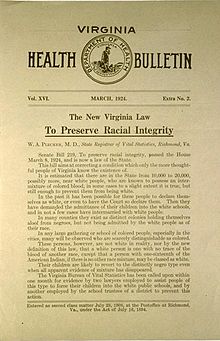
Here is an example of law that allows the U.S. to label one, based upon the status of the mother, Partus Sequitur Ventrum, more readily understood as the one-drop rule of property ownership under the law of chattels.


An Act to Preserve Racial Integrity 
loco parentis

Every local registrar may, as soon as practicable, have such registration certificate made by or for each person in his district who so desires, born before June fourteen, nineteen hundred and twelve, for whom he has not on file a registration certificate, or a birth certificate. 
2. It shall be a felony for any person wilfully or knowingly to make a registration certificate false as to color or race. The wilful making of a false registration or birth certificate shall be punished by confinement in the penitentiary for one year.
3. For each registration certificate properly made and returned to the State Registrar, the local registrar returning the same shall be entitled to a fee of twenty-five cents, to be paid by the registrant. Application for registration and for transcript may be made direct to the State Registrar, who may retain the fee for expenses of his office.
4. No marriage license shall be granted until the clerk or deputy clerk has reasonable assurance that the statements as to color of both man and woman are correct. 

If there is reasonable cause to disbelieve that applicants are of pure white race, when that fact is stated, the clerk or deputy clerk shall withhold the granting of the license until satisfactory proof is produced that both applicants are "white persons" as provided for in this act. 

The clerk or deputy clerk shall use the same care to assure himself that both applicants are colored, when that fact is claimed. 
5. It shall hereafter be unlawful for any white person in this State to marry any save a white person, or a person with no other admixture of blood than white and American Indian. For the purpose of this act, the term "white person" shall apply only to the person who has no trace whatsoever of any blood other than Caucasian; but persons who have one-sixteenth or less of the blood of the American Indian and have no other non-Caucasic blood shall be deemed to be white persons. All laws heretofore passed and now in effect regarding the intermarriage of white and colored persons shall apply to marriages prohibited by this act. 
6. For carrying out the purposes of this act and to provide the necessary clerical assistance, postage and other expenses of the State Registrar of Vital Statistics, twenty per cent of the fees received by local registrars under this act shall be paid to the State Bureau of Vital Statistics, which may be expended by the said bureau for the purposes of this act.  
7. All acts or parts of acts inconsistent with this act are, to the extent of such inconsistency, hereby repealed. 

If one is "not colored", does that make them invisible, and if they are invisible, how can you count them?

FUN FACT! ABSENTEE BALLOTS ARE SUBJECT TO THE SAME CORPORATE PARENTAL RIGHT LAWS

I have a better suggestion to get a better count of our U.S. population.

How about answering this question:

Now, what is the citizenship of the foster kid?
So, if a child is a citizen of Guatemala crosses the Mexican-U.S. Border, to be taken into U.S. custody and placed under a privatized, state contracted child placing agency like Bethany Christian, a Michigan licensed business entity, which is under the U.S. Conference of Catholic Bishops, a foreign corporation, where that child is processed through the policy, not law, like DACA & DAPA, of the Interstate Compact on the Placement of Children under the legal aegis of the contracting state Child Placing Agency, qualifying the child for Targeted Case Management billing reimbursement of Medicaid for the purposes of concurrent case planning to fast track Termination of Parental Rights for adoption, which includes a new identity and an issued Social Security Number, what is the citizenship of that child and what happens with the original identity?

"Taking an inventory of his wealth"
So, instead of listening to the dribbled of ignorance of this hearing, I would like to inform "The Elected Ones" that we did not count the babies until the early 20th Century, but do not tell them that because the lord was the keeper of the record.

The church record of the birth, not the certificate.

Then, no one is talking about the live and dead births certificates.

No one is talking about Foster Care and Adoption.

No one is talking about those fake identities after termination of parental rights over the children, hailing from "The Poors" (always said with clinched teeth).

Here is a synoptic overview on how they child welfare industry can multiple a child's identity to maximize revenues".


So, if the U.S. conjures up their own laws on how to count "The Poors" (always said with clinched teeth), will it be challenged by the Holy See because it does not have any legal congruency, outside the U.S.?

That would be fun!

Again, to keep with my ad nauseum theme of coming up with new and improved ways of trying to get people to understand that the residuals of the peculiar institution are alive and thriving for the simple fact that slavery was never, ever abolished, I shall close out this round of castigation with one of my favorite taglines.

#Time2AuditGod

Who owns the child because corporations are people, too.

This is about the children's trust funds.


Since, we are building a meshed Wall, just like the Vatican has a Wall, who is the parent of data?

US to start collecting DNA from people detained at Detroit border

https://beverlytran.blogspot.com/2019/10/judiciary-online-platforms-and-market.html

If I throw in Voting Rights, I believe some of the "Elected Ones" may experience the stigmata.

Image result for too complicated stimata
"But, if we do not salvage the souls of the savages,
how can we promulgate law to procure & purvey tiny humans
for revenue maximization in the name of the tax exempt god?"
Voting is beautiful, be beautiful ~ vote.©

Friday, March 15, 2019

U.S. Commerce Secretary Has An Issue With Trafficking Tiny Humans On The 2020 Census Hearing - No One Said DACA, Foster Care Or Adoption

Poor Wilbur Ross had a grueling  time in hearings today House Oversight Committee on the U.S. Census.

Focus was on the question of citizenship on the census, which is currently in SCOTUS.

The members asked interesting questions like why does it budget $100 for each U.S. citizen to collect data in the age of technology.

Some asked about the reliability of the survey when people are not willing to respond to such invasive questions.

Census data are used for redistricting, so, when you have a situation of gerrymandering due to fraudulent property tax and mortgage foreclosures, you have corrupt data, based upon an exogenous variable called forced migration.

Then, you have the issue of homelessnesss.

"The Poors" are not willing to provide information on who is laying up on their sofas, for fear of losing their benefits, due to manufactured poverty.

Then, you have that one issue no one wants to talk about, children.

What happens with the identities of children whose parents rights were terminated?

What happens to former identities of children who have been adopted?

Do the corporate parents report on children in their care, in their facilities?

What about immigrants under student VISAs?

What about college students?

What about DACA?

What about the children's trusts?

Oh, wait, that is on the litigation menu.

Well, all I can say is that it was a really good thing none of the members in the hearing dared speak into the record those dreadful words when it come the maintaining their secret registries of tiny humans they like to traffic.

See, there are lots of databases which are supposed to track the kids, but, they are so jacked up, being private and all, designed specifically to do predictive modeling crap, that they no longer function as heraldry of the legacies of the children because they like to strip the civil assets through civil forfeiture, as a private, corporate parent, that no one knows what is going on with the children of "The Poors", (always said with clinched teeth).


No one said DACA, Foster Care or Adoption.

You have SACWIS, National Center for Missing and Exploited Children, Central Registries and you have CODIS.

Then you have public school educational records and medical records, which, by design, cannot be accesses because these are privatized databases.

I could continue, but I believe I have made my point that this entire system of keeping track of legacies is horrific.

It is time for the Quantum Renaissance and blockchain everything.

We have the technology, you know.

Wilbur is a proverbial representation of the entire Department of Commerce, which is over the selling of chattel, including patents and tiny humans, modern day slavery and human trafficking.

That budget is for the private contractors who are going to be doing data scraping for redistricting, surveying real property for gerrymandering.

Cummings pulled it out of Wilbur that Jeff Sessions was concerned about the preservation of voting rights.

I told you.

Get ready.


Census Bureau Plans to Eliminate ‘Foster Child’ Category

(January 2007) The U.S. Census Bureau plans to eliminate the “foster child” relationship category on its questionnaires for the 2010 Census and the American Community Survey. They will be counted with other children, but foster children’s characteristics as a group will not be available.

Census Bureau officials had set a January deadline to approve the content of questions on the 2010 Census short form that goes to every U.S. household. Decisions about the 2010 Census form also affect the American Community Survey (ACS). The census survey is intended to replace the census long form, so the two data sets must be comparable.

Bureau officials said they had to eliminate one of the 15 relationship-to-householder categories because they had adopted a new questionnaire design in hopes of improving response rates and accuracy.1 In the census data collection process, the form designates one person in each household, usually the one who fills out the questionnaire, as the householder. Everyone else must be listed in a category that describes his or her relationship to the householder, such as spouse or boarder. “Foster child,” which had been included with roomers and boarders in the 1990 Census, became its own category in the 2000 Census.

The elimination of the foster-child category was among a number of proposals for census-form revisions on the agenda in November at the Bureau’s Joint Advisory Committee meeting. The Census Bureau is required to give Congress a list of topics it plans to ask about by April 1, which gives legislators a chance to voice their opinions.

Census officials said they decided to drop the foster child category because it had the fewest responses of any relationship option in the 2000 Census, and because census numbers do not match figures provided by state governments to the U.S. Department of Health and Human Services. Census Bureau figures count about 50 percent to 60 percent of the number of foster children included in the Adoption and Foster Care Analysis and Reporting System (AFCARS).

The 2000 Census 100 percent file shows 334,974 children in the foster child category,2 compared with 544,000 in AFCARS in September 2000.3 The 2005 ACS shows 307,000 children in foster care compared with 513,000 in the 2005 AFCARS report.

The figures provided by states include about 24,000 foster children aged 18 to 20, and census numbers only include foster children under age 18, but that explains only a small part of the difference between the two data sets. In addition, about 100,000 foster children in 2005 lived in group homes and institutions, which the Census Bureau classifies as group quarters.4 The Census Bureau does not identify foster children as such if they live in group quarters and not in households.

The rest of the gap between the two sets of data, experts believe, comes about because census counts miss and misclassify many foster children. Householders may not list foster children on their questionnaires: They often are in foster homes for only a short time, and the census respondent may not feel the foster child is part of the household. Or householders may list foster children in a different category. Because many are in “kinship care” with grandparents, aunts and uncles, or other family members, foster children may be listed as relatives on the census form. In 2005, according to state records, about a quarter of children in foster care (roughly 125,000 children) were in kinship care.5

Census Bureau surveys and the decennial headcount seem to capture a consistent proportion of children in foster care each year. But whether those numbers are representative of the foster child population is less clear. Analysis shows that data captured by the Census Bureau adequately reflects some characteristics of children in foster care, but not others.

In terms of age and gender distribution, 2005 American Community Survey estimates look very similar to state administrative data from AFCARS, especially considering the sampling errors in the census survey that are associated with these small categories. The proportions of foster children aged 15 through 18 in the ACS are slightly lower than the proportions in AFCARS, probably because the census survey does not account for the many teens in foster care who live in group homes.

There is a bigger gap between the two data sources for some racial and ethnic groups. About a third of the foster children counted by states are non-Hispanic black, compared with about a quarter of those in the 2005 American Community Survey. The opposite is true for Hispanics: State figures indicate that less than a fifth of foster children are Hispanic, but the Census Bureau reported that nearly one in four is Hispanic. Some of the discrepancy could be due to the fact that questions about race and Hispanic origin are not worded the same from state to state, in contrast to the uniform wording of census questions.

As the table (PDF: 34KB) shows, in general, the distribution of foster children by state in the American Community Survey looks similar to that in the AFCARS database, despite differing estimates of population size. For 42 states and the District of Columbia, the difference in proportions was less than one percentage point. The eight states with larger differences are California, Indiana, Texas, Florida, Pennsylvania, Illinois, Georgia, and Virginia. Of course, the ACS estimates have large sampling errors, and the difference between the two datasets in part reflects the small proportion of foster children in many states.

Foster children are a population of special concern because they often have been abused or neglected, then placed under government care. Many fall behind in school, and often have a host of other socio-emotional problems. State records on children in foster care focus heavily on their experience in the child welfare system. They have little information on the characteristics that census numbers are supposed to shed light upon, such as foster children’s soci/>

In addition, access to the AFCARS data is not now readily available, aside from a series of key tables that are available on the federal Health and Human Services Department website, because it requires sophisticated programming capability. If the data on foster children are eliminated from the Census and the ACS as the Census Bureau plans, it suggests that we need to do more to make the data from other sources such as AFCARS more accessible.

Voting is beautiful, be beautiful ~ vote.©

Tuesday, December 18, 2018

SCOTUS U.S. v. Department Of Commerce - Privatization Of Citizenship Question On Census For Violations Of Voting Rights Act & Administrative Procedures Act

In short, the U.S. is petitioning to take the issue of putting the citizenship question on the next 2020 Census as a mandamus to stop violations of the Voting Rights Act & Administrative Procedures Act.

It seems, Steve Bannon may have assisted Kris Kobach and Wilbur Ross, under the financial direction of private political interests, through propaganda, to have citizenship on the census, for the purposes of securing electioneering data and, dare I say, the implementation of a national absentee voting ballots scheme. involving real estate.

But hey, what do I know?

I know there are many more SCOTUS Petitions for Certiorari in the pipeline and they are all legally symbiotic.

I also know to put the citizenship question on the census is an act of privatization because policymakers, the Executive Branch, cannot make law, only the Congress makes law.

Happy National Adoption Month: SCOTUS - DHS v. States Children's Trust Funds On Trafficking Tiny Humans - DACA, DAPA Privatization Policies Of Fraud


QUESTION PRESENTED Whether, in an action seeking to set aside agency action under the Administrative Procedure Act, 5 U.S.C. 701 et seq., a district court may order discovery outside the administrative record to probe the mental processes of the agency decisionmaker—including by compelling the testimony of high-ranking Executive Branch officials —when there is not a strong threshold showing that the decisionmaker disbelieved the objective reasons in the administrative record, irreversibly prejudged the issue, or acted on a legally forbidden basis.

SERRANO: Should political parties and campaign politics ever factor into what is asked of every household in the country on the census? 
ROSS: No political party has asked us to do anything on the census. We have had a request, as everyone is aware, from the Department of Justice, to add a citizenship question to the 2020 census. 
SERRANO: * * * I was very disappointed to see yesterday that the Republican Party campaign to reelect the president put out an appalling e-mail specifically noting that the president wants a new citizenship question added to the census * * * . Do you disavow this campaign e-mail? * * *
ROSS: I’m not familiar with the e-mail. I’m not part of the Republican campaign committee. So, I have not seen it. I have heard about it, this morning. We are responding solely to the Department of Justice’s request, not to any campaign request, not to any other political party request. We are listening to stakeholders. Many have written to us. Some have come in to talk with me.

Besides, what the heck is a third party administrator going to do with all that data?

I thought it only fair to report what Tom Perez, DNC Chair is up to when it comes to his activities of securing voter data profiles, strictly for the purposes of monetization, of course.

Hey, at least Tom was open and obvious in the DNC's intentions of selling voter data profiles to private, foreign, third parties.


Democratic National Committee Chairman Tom Perez launched an attack on his own party’s state organizations Saturday with a long and angry email over the future of the party’s most valuable asset — its voter data file.

Just days before an important Tuesday meeting in D.C. on the future of the data operation, Perez sharply criticized a new proposal from state party leaders and singled out prominent state officials by name.

“For some inexplicable reason, this proposal would tear down just about everything about our current data structure, reversing so much of the progress we made over the past decade,” Perez wrote.

The national chairman, describing his own reaction to the state proposal as “disappointed” and “dumbfounded,” accused the president of the Association of State Democratic Committees, Minnesota’s Ken Martin, of undermining the DNC by not keeping other state party officials “in the loop,” prompting withering criticism of Perez from state party leaders.

It‘s the latest fight in a quickly escalating war over the trove of Democratic voter information — a conflict that broke into the open at a gathering of the state parties and the DNC in Puerto Rico late last month. The party’s data are largely owned by the state parties, but a considerable amount of other data being collected by outside groups like labor unions and super PACs could be leveraged to benefit Democratic candidates and the eventual 2020 nominee.


COUNTDOWN TO 2020


The race for 2020 starts now. Stay in the know. Follow our presidential election coverage.

The DNC wants to gather all the data points on voters into a new, massive for-profit database but needs to convince state parties on the idea. The state parties have been wary, accusing the DNC of conducting a power grab that could financially benefit a few elite party figures.

In response to the DNC plan, Martin on Friday circulated a counterproposal designed to better integrate data from outside groups within the existing infrastructure. It was this proposal that prompted Perez’s email.

Perez’s email — with the seemingly innocuous subject line “UPDATE on data” — immediately triggered an uproar Saturday among state party leaders, who held conference calls and communicated with a flurry of emails and texts. The DNC chairman was referred to in a call as “a bull in a china shop,” according to one state party official. Another state party official called him “petulant,” via text message.

The backlash threatens to splinter the state parties and the national committee — technically separate entities — just as Democratic contenders are preparing to launch presidential campaigns.

Perez argued in his Saturday email that “Ken’s new entity...amounts to having State Parties effectively going alone on technology and data.” He threatened to cut off access to campaign tech tools like VoteBuilder, an online organizing platform, if state parties go forward with their plan.

“You would have to find a replacement for VoteBuilder — either building or buying — as the DNC has sole rights to the platform,” he wrote.

“The reality is the state parties own the voter file. At the end of the day, we hope to move forward with the DNC, but if the DNC continues down this path, we’re just not interested in that,” Martin told POLITICO. “It’s clear that the DNC is not interested in any other proposals or in negotiating.”

Of the email, Martin said that “it’s highly disappointing that Tom would make it so personal.”

Party chairs in the early 2020 presidential primary states also criticized Perez for personalizing the dispute.

“I was very disappointed, and I felt we could have continued to have conversations at a better level than the tone of that email, and I find it very unfortunate,” said Ray Buckley, chairman of the New Hampshire Democratic Party. “I think that’s how negotiations are, and for [Perez] to be surprised that there would be alternative suggestions is disappointing.”

Trav Robertson, the South Carolina Democratic Party chairman, said Saturday’s email prompted him to “spit out my sweet tea.”

“His email was wholly inappropriate and wholly in the wrong spirit of our conversation,” he said. “For them to say that Ken Martin and Brad Martin [president of the state party executive directors group] have misled us and have not operated in good faith is just not true. In fact, it’s a lie.”

The fight is likely to deepen the intraparty gridlock on how best to prepare a data operation for the eventual 2020 nominee — a goal both sides share but over which they are in deep disagreement on the means.

Ken Martin added that Perez’s email could imperil future negotiations: “I don’t know how you put the genie back in the bottle at this point after Tom’s email.”

DNC officials see a chance to update their tech and pool their data quickly with cash from liberal donors and Silicon Valley tycoons. Republicans have this capability already — although in practice the Koch brothers-backed outside groups and the Republican National Committee have feuded over sharing their data — which has many Democratic leaders worried about being at a competitive disadvantage in 2020.

“It is also time to take critical steps to modernize our data infrastructure. The other side has already done this, so time is of the essence,” Perez wrote to the state parties. With several state parties staunchly opposed, DNC officials have discussed potentially integrating just some states at first, with the hope of eventually persuading all of them to sign on.


The counterproposal offered by Martin and additional state party officials — most state parties received copies on Friday, with a briefing scheduled for Monday — would largely build on the existing infrastructure utilized by the state parties and data vendor TargetSmart. Proponents argue that the goal of integrating all the progressive world’s data is achievable without creating an entirely new organization.

“TargetSmart has provided key data services to the DNC for more than a decade,” Tom Bonier, TargetSmart’s CEO, told POLITICO. “The fact is that there are no shortcuts in this work. Handing over our data to an outside entity could hurt our candidates in 2020 and put our party at a disadvantage for years to come.”

Although most state parties hadn’t publicly weighed in on the new state party-centric proposal by Saturday morning — many hadn’t even read it yet — Perez’s email caused officials to rally behind Martin, the veteran Minnesota chairman.

The executive director of the Alaska Democratic Party, Jay Parmley, emailed a response directly to Perez telling him he was being “petty.”

“To insinuate that that these individuals haven’t been completely transparent and open with the ASDC membership simply because much of the ASDC membership doesn’t trust what the DNC is ‘peddling’ when it comes to a Data Trust is just wrong,” he wrote in an email obtained by POLITICO.

Parmley, who has served in state party leadership in numerous states, confirmed he authored the email.

“I like Tom, but I think this was really poor judgment. It read like a letter from an 8th grader,” Parmley told POLITICO.

Other state party chairs also supported Martin.

“I think Ken’s doing a good job,” said Troy Price, chairman of the Iowa Democratic Party. “It’s disappointing for a fight like this to become so public. Obviously, our [2020 presidential] caucus is coming up here in 14 months, and that data conversation is very important.” 

Voting is beautiful, be beautiful ~ vote.©

Sunday, June 11, 2017

Day 231 - Hillary's Leakers Hackers and Henchmen: Databases, Political Campaigns & Fraud

Judicial Watch of Hillary Email Fame, NASA Data Being Snuck Under Tressle? 

NOAA is a Part of Dept. Of Commerce - Serve Process Here at 1401 Constitution Ave

Voting is beautiful, be beautiful ~ vote.©

Sunday, November 25, 2012

Michigan Lawmaker Introduces Bill To Interfere With Interstate Commerce

Lately there has been extreme hate speech on what is considered as "fit to parent".  When I see this type of hatred being pushed by legislators, I have to stand up and do what I do best:  Make them look stupid.

Ok.  What we have here is a handful of Michigan Legislators who want to fantasize about what happens in the bedroom of two adults.  First it was the marriage folks who claim that a single parent should not have the right to raise children.  Then there are the parental rights people who believe that poverty and disability is the "governmental interest of the highest order" to deny a parent the  right to raise a child.

Lest not forget the folks who believe parenting should theologically based and even based on the level of melanin of one's skin.

So now there is a movement in Michigan to add to the fitness category of parenting one's disability, religion, color of skin or sexuality.

There are three approaches to examine the constitutionality of banning gay couples the right to become foster and adoptive parents.  Instead of beating the same old drum of the civil rights argument, I am going to begin with the dormant commerce clause argument.

The dormant commerce clause:  Foster care is a federally funded program.  People have a right to engage in business with government.  Michigan Representative Kenneth Kurtz has introduced legislation that would exclude individuals from doing business with the state based upon what people may or may not do in the bedroom.

States do not have the power to regulate commerce of a federally regulated program.  The case of Granholm v. Heald awakened the dormant commerce clause to let Michigan know that it cannot interfere with interstate commerce.

Is foster care interstate?  Of course it is.  Let's look at Michigan's powerpoint on the Interstate Compact on the Placement of Children.

Michigan Interstate Compact on the Placement of Children 2012

Since I believe I have made my point that HB 5763 and HB 5764 is unconstitutional as it violates the commerce clause, let us proceed to my second point of contention that the supporters of these Bills believe morality trumps the Constitution.


THE PEOPLE OF THE STATE OF MICHIGAN ENACT:
SEC. 5A 1 . THE DEPARTMENT SHALL NOT CONSIDER A CHILD PLACING
2 AGENCY'S OBJECTION TO PLACEMENTS THAT VIOLATE THE CHILD PLACING
3 AGENCY'S WRITTEN RELIGIOUS OR MORAL CONVICTIONS OR POLICIES IN ANY
4 SITUATION IN WHICH THE DEPARTMENT INTERACTS WITH THAT CHILD PLACING
5 AGENCY. THIS PROHIBITION INCLUDES, BUT IS NOT LIMITED TO, PLACEMENT
6 CONSIDERATIONS, FUNDING CONSIDERATIONS, CONTRACTING CONSIDERATIONS,
7 OR ANY OTHER AREAS IN WHICH THE DEPARTMENT MUST MAKE A
8 DETERMINATION INVOLVING A CHILD PLACING AGENCY.


Gay foster youth:  If a child placing agency decides, as a conscience choice, not to place a gay youth, then is it true a child placing agency can decide not to place a gay youth back with the family under similar reasoning of personal morality?  Would this mean CPS can remove a child based upon the sexual orientation of the biological parent or relative?  What an evil message our elected officials are sending to our youth.

Disabilities:  Instead of going into details, I encourage everyone to read this groundbreaking report from the National Council on Disabilities.  Rocking the Cradle:  Ensuring the Rights of Parents with Disabilities and Their Children.  Parents with mental or physical challenges are having their children removed and being denied placement based upon what the Child Placing Agencies are calling a moral and conscience decision.

Rocking the Cradle: Ensuring the Rights of Parents with Disabilities and Their Children

I object to this Bill based upon my moral convictions to not interfere in commerce.


Michigan UU Social Justice Network
  
   
Stop Extremist Legislators
From Denying Homes for Kids!
gay family - women  
Take Quick Action -- On-Line
Attend Hearing in Lansing, 10:30 a.m. Nov 27th

The Unitarian Universalist denomination's new Study/Action Issue on "Reproductive Justice" recognizes that gay couples should have the right to adopt a child.  However ...

It is quite troubling that a hearing has been scheduled by the Michigan House Committee on Families, Children and Senior Citizens at 10:30 a.m. Tuesday, November 27th on two bills that would legalize discrimination against gay couples who want to raise children. HB 5763 would allow adoption agencies the abililty to deny an adoption placement based on that agency's "moral or religious beliefs". HB 5764 would protect government funding for agencies choosing to discriminate.  The bills even acknowledge that a religious or moral conviction that could allow an agency to deny adoptions rights to certain families does NOT imply "that the proposed adoption is not in the best interest of the adoptee". 

With 14,000 children in Michigan who need a place to call home, our government should be focusing on finding stable environments to raise children, not on turning away capable and willing families eager to love and support a child in need. The bill's primary sponsor, Kenneth Kurtz, (R-Coldwater), is wasting our money on a bill which does nothing to help children residing in foster care in Michigan. 


Click HERE to go to an Equality Michigan action alert that will allow you to quickly express your opposition to these bills.  Forward this email to others.

MUUSJN and other UU's plan to attend this hearing and, if possible, testify how we feel about this outrageous legislation.  If you can join us,  please call me at 248-224-5572 (cell) or email me at randyblock@yahoo.com.  When you see your friends in church this Sunday,  invite them to go to Lansing on Tuesday morning!

Hearing Time: 10:30 a.m. November 27th
Place:  Room 327 Anderson House Office Building, 124 North Capitol,
across the street from the Capitol, Lansing, Michigan.

Together, we can do great things,
  
Randy Block, Director
Michigan UU Social Justice Network


Voting is beautiful, be beautiful ~ vote.©