Showing posts with label Paul Manafort. Show all posts

Thursday, September 3, 2020

Prelude To Detroit: Buzzfeed & CNN Find Out Through FOIA That You Cannot Hack A Handwritten Letter

Jason Leopold has yet to tell us how Cernovich came into possession of his Confidential Congressional Documents, which were published by Buzzfeed, to assassinate a character in the act of blasphemy.

So, who was this FBI Special agent who had to give White House Counsel the FBI director's email address, who then, generated a missive, got Trump to approve and sign, then deliver to a third party, a letter of termination,  on the other side of town, in under four minutes?

It is simply magical, like how Michigan Attorney General Bill *Smooches* Schuette was able to get Michigan Emergency Manager Kevyn Orr to file the Detroit Fake Ass Bankruptcy within minutes of him representing the State of Michigan in the Court of Claims.

I just do not know why I want to say JonesDay.

It is almost like filing a fake ass letter of resignation in D.C. when you are in Detroit.

Manafort had lots of Corporate Shape Shifting Rock Financial mortgages, you know, but rumor has it MERS is still under SIGTARP investigation and there is also an internal audit going on of the mysteriously roaming mortgages, but hey, what do I know?

#maytheheavensfall

New FBI Documents From Mueller’s Russia Investigation Reveal What Witnesses Said About Trump

BuzzFeed News filed a public records lawsuit to get the documents Robert Mueller used to write his report. Today, we are publishing the ninth installment of what witnesses in the investigation told Mueller’s team.

A new cache of witness interview summaries from special counsel Robert Mueller’s two-year probe into Russia’s interference in the 2016 presidential election was released Monday in response to Freedom of Information Act lawsuits by BuzzFeed News and CNN.

Key Takeaways:

  • These documents include five pages of Jared Kushner’s FBI interview summary — but all five are completely redacted. The FBI’s notations indicate that much of the material relates to an ongoing law enforcement investigation. Senior Assistant Special Counsel Andrew Goldstein told Kushner that answering a question with “I don’t recall” if he indeed did recall was considered a lie.
  • Interview summaries for former deputy national security adviser K.T. McFarland, former White House lawyer and senior Justice Department official James Burnham, and former Stone associate Randy Credico are also almost entirely redacted. McFarland and Credico’s summaries include markings that indicate redacted information relates to ongoing investigations.
  • A chunk of the 412 pages of interview summaries relates to the special counsel’s investigation of Roger Stone. That material had been withheld during Stone’s prosecution, but now that it has ended — with a 40-month prison sentence that Trump commuted — the documents are being released. They are still heavily redacted.
  • The documents indicate that in the fall of 2017, the accountant for Michael Cohen, Trump’s longtime lawyer, was under the impression that Cohen was getting a White House job and “needed to liquidate his assets.” Cohen did not get an administration position.
  • Michael Cohen used to refer to himself as “Trump’s pitbull” — before he flipped on his former boss and cooperated with Mueller — and according to his accountant, even had a statue of himself in his office bearing that title.
  • An Ohio woman who caught the attention of the special counsel’s office because in 2016 she renamed her Twitter account @Guccifer2 — after the character credited with hacking and leaking Democratic emails — told the FBI she had created the account to see if it would be censored by Twitter.
  • One witness whose name was redacted told investigators that before the Miss Universe pageant, Trump “would have all of the contestants line up on stage and then he would ask them questions about each other.” Most people would be cleared out of the room for this exchange, which was recorded, the witness said.


These documents, known as FBI 302s, shed light on what Trump administration officials and campaign staffers, as well as other people close to the president, told federal law enforcement agents about events during and after the campaign. In the last set of summaries that were released, one witness said people in Trump’s “orbit” didn’t care whom they hurt, believed their “deep state narrative,” “read books like ‘The Turner Diaries,’” and “downloaded military manuals from the internet.”

A person whose name was withheld on privacy grounds told investigators during an Aug. 11, 2017 interview that after the 2016 election Trump's "hardest" supporters were "shut out" of the new administration by the Republican National Committee, which cut a deal with Reince Priebus, the former White House chief of staff.

"They had many favors to repay the Committee. Trump gave Priebus a chance but Priebus didn't get the healthcare bill passed," the person told Mueller's investigators.

On Nov. 21, 2017, an FBI agent and two lawyers from Mueller’s office interviewed Jeffrey Getzel, who had worked as an accountant for Trump’s former lawyer and fixer Michael Cohen. Getzel was under the impression that Cohen was up for a job in the White House. He told investigators that roughly a month to a month and a half before the interview, someone (whose name is redacted) told Getzel that Cohen “was going to the White House and that COHEN needed to liquidate his assets.”

Getzel said he respected Cohen’s “significant position” in the Trump Organization. He noted to investigators that Cohen had a statue of himself in his office with the phrase, “Trump’s pitbull” written on it, a phrase that Cohen used to describe himself in the past, according to CNN.

A White House job never materialized, though. Cohen would eventually turn on his former boss and cooperate with Mueller’s investigation. He pleaded guilty to financial crimes unrelated to his dealings with Trump as well as campaign finance violations related to his role orchestrating hush-money payments to two women who claimed to have had affairs with Trump.

Getzel told investigators that Cohen was “an extremely sharp individual,” but also a “difficult client” who didn’t pay his bills on time. Cohen “resented paying taxes more than most people” that Getzel did work for, he said, and would pay penalties at the end of the year rather than paying quarterly estimated taxes.

Much of Getzel’s interview summary is redacted, but one section makes clear that he spoke with Mueller’s team about Essential Consultants, the corporate entity that Cohen created to facilitate the hush-money payments. Getzel said that if he’d known more about Essential Consultants, he would have “pushed harder to encourage COHEN to include his interest in the company” in a personal financial statement.

Getzel knew about another corporate entity that Cohen recently created, Michael D. Cohen & Associates P.C. Getzel told investigators that he didn’t think the company had “any real value” because its only client was Trump, ”who had a propensity for firing people.” The Washington Post reported Cohen used that business to pitch himself as a consultant to companies based on his close ties to Trump.

“As such,” the summary reads, “MDCPC was not really a company COHEN could sell to anyone.”

One of the interview summaries is of Cassandra Ford, an Ohio woman who caught the attention of the special counsel's office because in 2016 she renamed her Twitter account @Guccifer2, after the character credited with hacking and leaking Democratic emails. Ford's identity and the interest she attracted from Mueller's investigators were first revealed in October 2018, in an article in BuzzFeed News.

Ford was interviewed by the FBI in April 2018. In the six-page summary of that encounter, much of which is redacted on privacy grounds, she explained why she created @Guccifer2 and chose to give the impression that she was Russian.

"In creating her own twitter account @Guccifer2, Ford wanted to see of the account would be censored by Twitter, because of the notoriety of Guccifer2.0," the interview summary said. She went on to say that she chose the Volgograd time zone for her Twitter account in order to “appear to be Russian.”

Screenshot of the Mueller Memos
Obtained by BuzzFeed News
“Ford used the photo of Felix Dzerzhinsky as her Twitter profile photo. Ford read in the article on Smoking Gun that some of the documents released by Guccifer2.0 persona had the name of Dzerzhinsky on internet and thought he had a ‘creative background,’” the summary said.

In a separate interview, the Republican strategist Jason Miller, who was chief spokesperson of Trump’s 2016 presidential campaign, told the FBI he sought assistance from the Republican National Committee in 2016 poring over the hacked Democratic National Committee emails that WikiLeaks released. Moreover, he said he recalled hearing stories “about there potentially being a tape in which Trump used the ‘N-word."’ When the campaign learned it was the infamous Access Hollywood tape, Miller said he and the campaign went into damage control. He said he was responsible for disseminating the statement that Trump’s “grab em by the pussy” line “amounted to locker room talk.”

Although the Mueller investigation led to 37 indictments and seven convictions, Trump has aggressively sought to discredit it, repeatedly referring to it as a “witch hunt.” His efforts have been supported by Attorney General Bill Barr, who has intervened in several cases related to the investigation, including the prosecutions of former national security adviser Michael Flynn and political consultant Roger Stone. Last year, Barr also tapped a US attorney in Connecticut, John Durham, to investigate the origins of the Russia probe.

Last month — after Trump commuted Stone’s prison sentence and referred to the probe as a “hoax” and “witch hunt” that the “Left and its allies in the media perpetuated for years in an attempt to undermine the Trump Presidency” — Mueller broke his silence by writing an op-ed in the Washington Post defending his investigation. In June, in response to a separate lawsuit filed by BuzzFeed News and the Electronic Privacy Information Center, a previously blacked-out portion of the Mueller report was disclosed; it showed that Mueller’s team suspected Trump had lied to investigators in his written responses to their questions about Stone.

The final 448-page Mueller report, released in April 2019, was the most hotly anticipated prosecutorial document in a generation. But it reflected only a tiny fraction of the primary-source documents that Mueller’s team had amassed over the course of its two-year probe; much of the content of the typewritten interview summaries taken by the special counsel’s office has never before been reviewed publicly. A month after the report was released, BuzzFeed News sued the FBI and the Department of Justice, seeking access to those records. That litigation was subsequently joined by CNN.

In October, a federal judge ordered the release of the documents, and the two agencies began releasing 302s last November. Under the court order, records must be disclosed every month; to date, the government has produced about 3,000 pages of summaries from interviews with more than 500 witnesses who spoke to Mueller’s team during the course of the investigation.

The vast majority of the 302s have been heavily redacted, leaving vast swaths of information about what witnesses told investigators obscured from view. BuzzFeed News has challenged some of those redactions, arguing in court that one category of exemption the government has cited to justify the withholdings was legally unfounded, politically motivated, and implemented solely to protect the president.

DOCUMENT
PAGES
TEXT
Zoom

Sunday, October 20, 2019

Oleg Deripaska Offices In U.K. By U.S. - Was SIGTARP Wrapping Up The Great Rape Of Detroit?

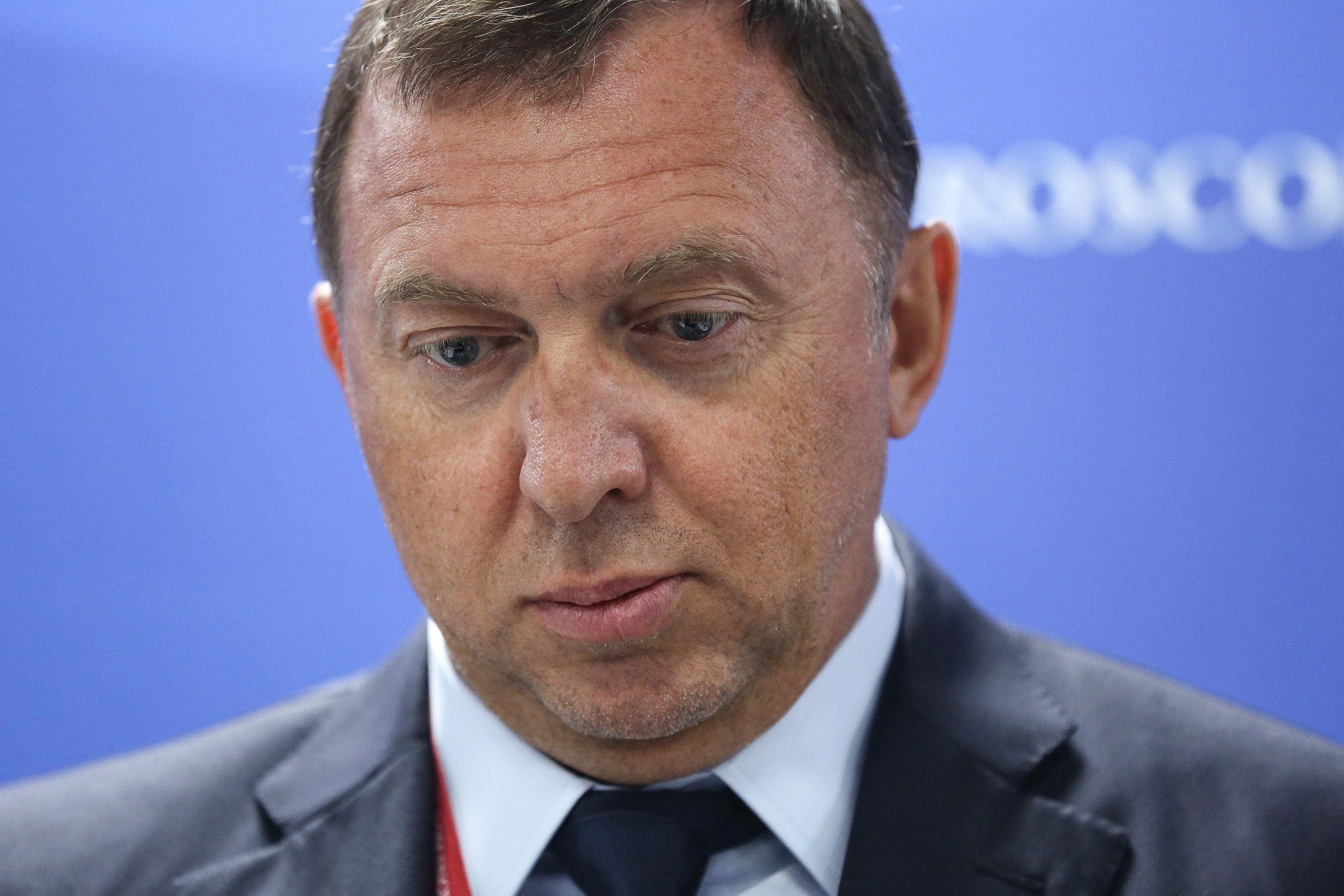
Now, why was Oleg, *The Ass* Deripaska's offices raided by U.S. prosecutors in the U.K.?

Did it have something to do with the aluminium stockpiles in Detroit from the underground industry of survival during the Great Rape of Detroit?

For those of you just now joining in, I refer to the Great Rape of Detroit to encompass everything in the Mueller Report. (i.e. Foreclosure Crisis, Emergency Manager, Detroit Bankruptcy, Grand Bargain, TARP, Detroit Land Bank Authority, Big Three Auto Bankruptcy, Child Poverty, Infant Mortality, Gerrymandering, Election Fraud, Campaign Finance Money Laundering) or in a more portable size term: "stealin' the children, land & votes.

SIGTARP is on the Great Rape of Detroit.

Where is Jeff Sessions?

#FreeMariaButina

Oleg Deripaska-Linked Firm Was Raided for Undisclosed U.S. Inquiry

Oleg Deripaska
"I guess there is no more aluminum to scrap in Detroit",said, Oleg the Ass.
U.S. prosecutors aren’t done with Oleg Deripaska, the Russian billionaire who figured prominently in Special Counsel Robert Mueller’s case against Donald Trump’s campaign chairman.

In what could be an offshoot of Mueller’s work, federal authorities are seeking records seized from a U.K. company associated with Deripaska, according to documents filed in a London court this week. As part of the previously undisclosed inquiry, U.S. authorities are seeking evidence of “money laundering, tax offenses and fraud offenses” from 18 individuals and companies including Terra Services Ltd., a real estate firm that until last year was controlled by Deripaska, the filings say.

The inquiry is “live and ongoing,” according to a U.K. government filing Thursday. Terra, in another filing, said the search request appears to have been made “in connection with the special counsel investigation being conducted in the U.S.” into Russian election interference.

The investigation came to light because Terra is challenging a search warrant that led to the December 2018 seizure of at least 25,000 electronic documents from a British storage unit it owned. Terra asked a London judge to prevent the documents from being handed over to the Americans.

Redacted Report
The presiding U.K. judge who granted the search warrant in December 2018 said that any seized materials could be helpful “in an ongoing U.S. investigation into a number of criminal offenses committed by two U.S. subjects, Paul Manafort and Rick Gates,” according to court documents. But by that time Manafort had been convicted and was awaiting sentencing. Gates had already pleaded guilty and was cooperating with prosecutors.

Mueller’s team ended its work earlier this year, referring several matters to other U.S. prosecutors. Many of those haven’t been made public. Parts of Mueller’s report dealing with Manafort and Gates are redacted to avoid interfering with unspecified ongoing investigations.

According to Mueller’s report, one-time Trump campaign chairman Manafort had a business dispute with Deripaska that he was looking to resolve, and he offered Deripaska briefings and internal polling data. Manafort was convicted of multiple crimes and is serving a sentence of more than seven years; Deripaska wasn’t accused of wrongdoing.

U.S. Request
The U.S. request named 18 entities including Terra Services and two U.K.-based lawyers. The documents available in the London case don’t include the U.S. request for a search, or the corresponding U.K. search warrant, but quote from parts of the warrant. The filings don’t say which U.S. authorities are currently handling the matter.

The U.K. National Crime Agency, which carried on the search, and the U.S. Department of Justice declined to comment.

Judges have so far denied requests by Terra and others to see the U.S. letter.

‘Degree of Confusion’
“There is a degree of confusion as to what exactly is being investigated,” Terra’s lawyer, Monica Carss-Frisk, said in court.

Deripaska’s office in Moscow referred queries to Terra Services. A lawyer for the U.K. firm declined to comment.

Deripaska, who grew rich in Russia’s aluminum business, is one of the highest-profile Russians caught up in waves of U.S. sanctions against the country since its 2014 annexation of Crimea and support for separatists in eastern Ukraine. Some companies formerly controlled by Deripaska were removed from the blacklist in January, following an administration effort to lift the sanctions that was supported by Senate Majority Leader Mitch McConnell.

One of Deripaska’s companies subsequently committed funds to a new aluminum plant to be built in McConnell’s home state, Kentucky.

The billionaire himself remains under U.S. sanction, which means American citizens and entities are prohibited from dealing with him.

The British warrant said that the owners would seek to destroy or conceal evidence if it wasn’t issued, according to filings in the London case.

Just days before the warrant was issued, the NCA conducted its own search of the storage unit to “assist a money laundering investigation.” The British search, authorized under legislation that allows for covert surveillance, should have been approved by a judge, Terra said in its filing. It’s unclear if the investigations are related.

Cable Deal

Manafort and Deripaska fell out in 2008 over a deal to buy a cable company in Ukraine. Lawsuits filed by Deripaska in 2014 describe how Gates, Manafort’s deputy, failed to respond to requests for information on the investment around the same time. In September 2010, Deripaska asked Gates to account for the $18.9 million he’d invested, but the report was never delivered, according to court documents.

Documents unsealed in June 2018 showed that Manafort and his wife acknowledged on a 2010 tax return that they owed $10 million to Deripaska.

Deripaska handed control of Terra Services in January 2018 to an individual named Pavel Ezubov, whose name matches that of the billionaire’s cousin, Russian media group RBC reported last year. The firm owns several properties in San Tropez and Paris, RBC said. It has just six employees, according to a U.K. corporate registry.

Voting is beautiful, be beautiful ~ vote.©

Sunday, September 29, 2019

The Tale Of Burisma, Hunter Biden, Taggart Romney, Their Daddies, Deutsche Bank & Trafficking Tiny Human Trust Funds With Catholic Charities

This is the tale of Joe Biden, running trafficking tiny human ops out the White House, with the assistance of his brother James and his son. 

Tagg Romney
Mitt Romney's eldest son, Tagg, made a surprise announcement today: He and his wife, Jen, are the new parents of twin boys delivered by a surrogate.

"Happy 2 announce birth of twin boys David Mitt and William Ryder. Big thanks to our surrogate. Life is a miracle," Tagg Romney said via Twitter at 3:17 p.m.

Ten minutes later, his mother, Ann Romney, said in her own tweet: "Grandchildren 17 and 18 are here – congratulations @TRomney and Jen! We can't wait to meet David and William."

Tagg Romney is one of five children of the presumptive Republican presidential nominee and his wife. Tagg and Jen Romney had four children previously.

The Associated Press reported it was the second time the couple had used a surrogate. Their son Jonathan was born in 2010 by a surrogate.

Tagg Romney said on his Facebook page that the latest surrogancy was gestational, meaning the new boys are the biological product of him and his wife.

"Everyone is healthy and happy," Tagg Romney wrote. "They weighed in at 5 pounds 13 ounces and 19-3/4 inches, and 6 pounds 13 ounces and 19 inches. A special thanks to our gestational surrogate who made this possible for us. Life truly is a miracle, and we feel so blessed to be able to celebrate the arrival of these precious boys into our family."

His Facebook homepage features a group photo at Fenway Park of him and three of his four brothers.
Both Tagg and Jen Romney are members of the Church of Jesus Christ of Latter-day Saints, which encourages its members to have large families and places a premium on genealogical research.

Nonetheless, "The Church strongly discourages surrogate motherhood," says an LDS handbook.

As for adopted children, the handbook says: "Questions regarding the exchange of information and contact between adopted children and their biological parents should be handled with sensitivity. The legal rights and emotional needs of all relevant parties should be considered."

I believe this tale is self explanatory.

They all were stealin' the children, the land and the votes.


As Democrats and the media remain fanatically obsessed with assembling some form of a “quid pro quo” from the infamous Trump-Zelensky phone call, new details have emerged regarding Burisma, the company for which Hunter Biden worked and the company that Ukraine’s top prosecutor had been investigating before Vice President Joe Biden had the prosecutor fired via a months-long pressure campaign. According to web archives, top Mitt Romney adviser Joseph Cofer Black, who publicly goes by “Cofer Black,” joined Burisma’s board of directors while Hunter Biden was also serving on the board.

According to The New Yorker, Hunter joined Burisma’s board in April of 2014 and remained on it until he declined to renew his position this past May. Meanwhile, according to Burisma’s website, Black was appointed in February of 2017 and continues to serve on its board. The timelines would indicate that Black and Biden worked together at Burisma, and indeed, web archives from late 2017 show Black and Biden listed simultaneously on the board.

Black joined the CIA in 1974 and eventually climbed the ranks to become director of the National Counterterrorism Center from 1999 to 2002. In 2002, President George W. Bush appointed him ambassador at large and coordinator for counterterrorism. He later worked at Blackwater as a vice chairman before joining Romney’s campaign as a “special adviser” on Romney’s Foreign Policy and National Security Advisory Team in October of 2011. In 2017, Black joined the board of Burisma.

It’s looking increasingly probable that Burisma, the subject of a series of corruption allegations in the past, has been smartly buying Western complacency by slapping a few famous names on its board. In addition to the son of a vice president and a special adviser to a GOP presidential candidate, the board also boasts the former president of Poland from 1995 to 2005, Aleksander Kwaśniewski.

Hunter Biden

Appointed: April 2014
Hunter Biden
He serves as Counsel to Boies, Schiller, Flexner, LLP, a US national law firm based in New York. Mr. Biden is also an Adjunct Professor on Georgetown University’s Masters Program, in the School of Foreign Service. He currently serves as Member of the World Food Program USA Board of Directors and as a Director on the not-for-profit Board of the Center for National Policy, the Truman National Security Project and the US Global Leadership Coalition. Mr. Biden is Member of the CSIS Executive Council on Development, the Chairman’s Advisory Board for the National Democratic Institute, and the President’s Advisory Board for Catholic Charities in Washington D.C.

Catholic Charities in Washington D.C.
Mission
Catholic Charities Foundation of the Archdiocese of Washington invests endowment assets and provides financial support to Catholic Charities of the Archdiocese of Washington, an affiliated organization, which is the leading provider of comprehensive human services, serving people in need.
 
Catholic Charities of the Archdiocese of Washington helps people in need to strengthen and rebuild their lives. Focused on prevention when possible, intervention when needed and advocacy when resources are inadequate. Helping those we serve to develop skills and abilities that enable them to move from crisis and isolation to stability and growth. Serving those in need without regard for race, religion or national origin.
http://beverlytran.blogspot.com/search?q=catholic+charities#axzz60vKhibbr

Image result for beau biden foundation
https://www.beaubidenfoundation.org/
Image result for National Democratic Institute
https://www.ndi.org/
Madeline Albright, Chairman

https://pdf.guidestar.org/PDF_Images/2017/521/338/2017-521338892-0fb49675-9.pdf

Киевский международный институт социологии (КМИС).jpg
Kiev International Institute for Sociology
World Food Program USA
https://www.wfpusa.org/
Consistent with the mission of the United Nations World Food Programme, World Food Program USA works with U.S. policymakers, corporations, foundations and individuals to help provide financial resources and develop policies needed to alleviate global hunger.
From 2006 to 2009 Mr. Biden served on the Board of Directors of Amtrak, serving as Vice Chairman from 2007 to 2009. Mr. Biden was honored to serve as an Honorary Co-Chair of the 2009 Presidential Inaugural Committee and to have served in the Jesuit Volunteer Corps. Previously, Mr. Biden was a founding member of the law firm Oldaker, Biden and Belair, LLP, was appointed by President Clinton to serve as Executive Director of E-Commerce Policy Coordination under Secretary of Commerce William Daley and was a Senior Vice President at MBNA America Bank. He is also a Member of the Bar in the State of Connecticut, the District of Columbia, the U.S. Supreme Court and the U.S. Court of Federal Claims. Mr. Biden received a Bachelor’s degree from Georgetown University and a J.D. from Yale Law School.

BSF Achieves Dismissal of Claims Against Family Members of Vice President Biden

BSF won a major victory when New York Supreme Court Justice Bernard Fried granted in its entirety the Firm's motion to dismiss all claims filed against BSF's clients, including James and Hunter Biden, the Vice President’s brother and son, respectively, for alleged breach of contract, conversion and fraud arising from a failed acquisition of portions of a hedge fund.

Fund manager sues son and brother of U.S. Senator Biden

NEW YORK (Reuters) - A Deutsche Bank executive is suing a son and a brother of Delaware Sen. Joe Biden for at least $10 million over a deal they had to buy into a hedge fund, according to court documents. Stephane Farouze, who is global head of fund derivatives for Deutsche Bank and lives in London, claimed that Biden’s son Hunter and brother James broke a May 2006 contract and defrauded him after agreeing to buy his membership interests in New York-based Paradigm Companies LLC.

The lawsuit filed in New York State Supreme Court in Manhattan in June names Washington lobbyist Hunter Biden, James Biden, and James’s former business partner Anthony Lotito as defendants. On Wednesday, Farouze’s lawyer Marlen Kruzhkov said that the Bidens “never had any intention of carrying out the agreement with my client”.

He said the Bidens and their lawyers have not responded to the complaint. Representatives for the Bidens could not immediately be reached for comment. The lawsuit said that while the Bidens took control of the company, they never paid Farouze the cash they had agreed to pay.

Sen. Biden is a Delaware Democrat who was first elected to the U.S. Senate in 1972. He has been mentioned as a possible vice presidential candidate on Sen. Barack Obama’s presidential ticket. The lawsuit is the second accusing Biden’s relatives of irregularities in their deal to buy hedge fund firm Paradigm. An earlier lawsuit was filed by Lotito in January 2007.

Voting is beautiful, be beautiful ~ vote.©

Wednesday, September 25, 2019

Who Is The Ukrainian Liar - Schiff Or The U.S. Intelligence Community?

Adam Schiff said this about the Trump's phone call with Volodymyr Zelensky.


In Biden's own words on threatening withholding U.S. funds to the Ukraine if the prosecutor general was not fired.


This is the resignation of the Ukrainian prosecutor directly after Biden's mandate.


Either the intelligence community has generated a fraudulent unclassified document entered into the formal record or Schiff is lying, but hey, what do I know?

I know someone is lying.

This is the transcript of the call.

Crowstrike video history

106th Congress                                              Treaty Doc.
                                 SENATE                                
 1st Session                                                  106-16
_______________________________________________________________________


  TREATY WITH UKRAINE ON MUTUAL LEGAL ASSISTANCE IN CRIMINAL MATTERS                               __________

                                MESSAGE

                                  from

                   THE PRESIDENT OF THE UNITED STATES

                              transmitting

TREATY BETWEEN THE UNITED STATES OF AMERICA AND UKRAINE ON MUTUAL LEGAL 
 ASSISTANCE IN CRIMINAL MATTERS WITH ANNEX, SIGNED AT KIEV ON JULY 22, 
1998, AND WITH AN EXCHANGE OF NOTES SIGNED ON SEPTEMBER 30, 1999, WHICH 
                PROVIDES FOR ITS PROVISIONAL APPLICATION


 November 10, 1999.--Treaty was read the first time, and together with 
the accompanying papers, referred to the Committee on Foreign Relations 
          and ordered to be printed for the use of the Senate.

                               __________

                    U.S. GOVERNMENT PRINTING OFFICE
79-118                     WASHINGTON : 1999


                         LETTER OF TRANSMITTAL

                              ----------                              

                                The White House, November 10, 1999.
To the Senate of the United States:
    With a view to receiving the advice and consent of the 
Senate to ratification, I transmit herewith the Treaty Between 
the United States of America and Ukraine on Mutual Legal 
Assistance in Criminal Matters with Annex, signed at Kiev on 
July 22, 1998. I transmit also, for the information of the 
Senate, an exchange of notes which was signed on September 30, 
1999, which provides for its provisional application, as well 
as the report of the Department of State with respect to the 
Treaty.
    The Treaty is one of a series of modern mutual legal 
assistance treaties being negotiated by the United States in 
order to counter criminal activities more effectively. The 
Treaty should be an effective tool to assist in the prosecution 
of a wide variety of crimes, including drug trafficking 
offenses. The Treaty is self-executing. It provides for a broad 
range of cooperation in criminal matters. Mutual assistance 
available under the Treaty includes: taking of testimony or 
statements of persons; providing documents, records, and 
articles of evidence; serving documents; locating or 
identifying persons; transferring persons in custody for 
testimony or other purposes; executing requests for searches 
and seizures; assisting in proceedings related to restraint, 
confiscation, forfeiture of assets, restitution, and collection 
of fines; and any other form of assistance not prohibited by 
the laws of the requested state.
    I recommend that the Senate give early and favorable 
consideration to the Treaty and give its advice and consent to 
ratification.

                                                William J. Clinton.
                          LETTER OF SUBMITTAL

                              ----------                                
        

                                       Department of State,
                                      Washington, October 19, 1999.
The President,
The White House.
    The President: I have the honor to submit to you the Treaty 
Between the United States of America and Ukraine on Mutual 
Legal Assistance in Criminal Matters with Annex (``the 
Treaty''), signed at Kiev on July 22, 1998. I recommend that 
the Treaty be transmitted to the Senate for its advice and 
consent to ratification.
    Also enclosed, for the information of the Senate, is an 
exchange of notes under which the Treaty is being provisionally 
applied to the extent possible under our respective domestic 
laws, in order to provide a basis for immediate mutual 
assistance in criminal matters. Provisional application would 
cease upon entry into force of the Treaty.
    The Treaty covers mutual legal assistance in criminal 
matters. In recent years, similar bilateral treaties have 
entered into force with a number of other countries. The Treaty 
with Ukraine contains all essential provisions sought by the 
United States. It will enhance our ability to investigate and 
prosecute a range of offenses. The Treaty is designed to be 
self-executing and will not require new legislation.
    Article 1 sets forth a non-exclusive list of the major 
types of assistance to be provided under the Treaty, including 
taking the testimony or statements of persons; providing 
documents, records and other items of evidence; locating or 
identifying persons or items; serving documents; transferring 
persons in custody for testimony or other purposes; executing 
requests for searches and seizures; assisting in proceedings 
related to immobilization and forfeiture of assets, 
restitution, and collection of fines; and, rendering any other 
form of assistance not prohibited by the laws of the Requested 
State. The scope of the Treaty includes not only criminal 
offenses, but also proceedings related to criminal matters, 
which may be civil or administrative in nature.
    Article 1(3) states that assistance shall be provided 
without regard to whether the conduct involved would constitute 
an offense under the laws of the Requested State.
    Article 1(4) states explicitly that the Treaty is not 
intended to create rights in private parties to obtain, 
suppress, or exclude any evidence, or to impede the execution 
of a request.
    Article 2 provides for the establishment of Central 
Authorities and defines Central Authorities for purposes of the 
Treaty. For the United States, the Central Authority shall be 
the Attorney General or a person designated by the Attorney 
General. For Ukraine, the Central Authority shall be the 
Ministry of Justice and the Office of the Prosecutor General. 
The article provides that the Central Authorities shall 
communicate directly with one another for the purposes of the 
Treaty.
    Article 3 sets forth the circumstances under which a 
Requested State's Central Authority may deny assistance under 
the Treaty. A request may be denied if it relates to a military 
offense that would not be an offense under ordinary criminal 
law. A further ground for denial is that the request relates to 
a political offense (a term expected to be defined on the basis 
of that term's usage in extradition treaties). In addition, a 
request may be denied if its execution would prejudice the 
security or similar essential interests of the Requested State, 
or if it is not made in conformity with the Treaty.
    Before denying assistance under Article 3, the Central 
Authority of the Requested State is required to consult with 
its counterpart in the Requesting State to consider whether 
assistance can be given subject to such conditions as the 
Central Authority of the RequestedState deems necessary. If the 
Requesting State accepts assistance subject to these conditions, it is 
required to comply with the conditions. If the Central Authority of the 
Requested State denies assistance, it is required to inform the Central 
Authority of the Requesting State of the reasons for the denial.
    Article 4 prescribes the form and content of written 
requests under the Treaty, specifying in detail the information 
required in each request. The article permits other forms of 
requests in emergency situations but requires written 
confirmation within ten days thereafter unless the Central 
Authority of the Requested State agrees otherwise.
    Article 5 requires the Central Authority of the Requested 
State to execute the request promptly or to transmit it to the 
authority having jurisdiction to do so. It provides that the 
competent authorities of the Requested State shall do 
everything in their power to execute a request, and that the 
courts or other competent authorities of the Requested State 
shall have authority to issue subpoenas, search and arrest 
warrants, or other orders necessary to execute the request. The 
Central Authority of the Requested State must make all 
arrangements for representation of the Requesting State in any 
proceedings arising out of an assistance request.
    Under Article 5(3), requests are to be executed in 
accordance with the laws of the Requested State except to the 
extent that the Treaty provides otherwise. However, the method 
of execution specified in the request is to be followed except 
insofar as it is prohibited by the laws of the Requested State.
    Article 5(4) provides that if the Central Authority of the 
Requested State determines that execution of the request would 
interfere with an ongoing criminal investigation, prosecution, 
or proceeding in that State, it may postpone execution or, 
after consulting with the Central Authority of the Requesting 
State, impose conditions on execution. If the Requesting State 
accepts assistance subject to the conditions, it shall comply 
with such conditions.
    Article 5(5) further requires the Requested State, if so 
requested, to use its best efforts to keep confidential a 
request and its contents, and to inform the Requesting State's 
Central Authority if the request cannot be executed without 
breaching confidentiality. This provides the Requesting State 
an opportunity to decide whether to pursue the request or to 
withdraw it in order to maintain confidentiality.
    This article additionally requires the Requested State's 
Central Authority to respond to reasonable inquiries by the 
Requesting State's Central Authority regarding the status of 
the execution of a particular request; to report promptly to 
the Requesting State's Central Authority the outcome of its 
execution; and, if the request is denied, to inform the 
Requesting State's Central Authority of the reasons for the 
denial.
    Article 6 apportions between the two States the costs 
incurred in executing a request. It provides that the Request 
State shall pay all costs, except for the following items to be 
paid by the Requesting State: fees of expert witnesses, costs 
of interpretation, translation and transcription, and 
allowances and expenses related to travel of persons pursuant 
to Articles 10 and 11. If during the execution of the request, 
it becomes apparent that extraordinary expenses will be 
entailed, the Central Authorities shall consult to determine 
the terms and conditions under which execution may continue.
    Article 7 requires the Requesting State to comply with any 
request by the Central Authority of the Requested State that 
information or evidence obtained under the Treaty not be used 
for proceedings other than those described in the request 
without its priorconsent. Further, if the Requested State's 
Central Authority asks that information or evidence furnished under 
this Treaty be kept confidential or be used in accordance with 
specified conditions, the Requesting State must use its best efforts to 
comply with the conditions. Once information is made public in the 
Requesting State in accordance with either or these provisions, no 
further limitations on use apply. Nothing in the article prevents the 
use or disclosure of information to the extent that there is an 
obligation to do so under the Constitution of the Requesting State in a 
criminal prosecution. The Requesting State is obliged to notify the 
Requesting State in advance of any such proposed use or disclosure.
    Article 8 provides that a person in the Requesting State 
from whom testimony or evidence is requested pursuant to the 
Treaty shall be compelled, if necessary, to appear and testify 
or produce items, documents and records. The article requires 
the Central Authority of the Requested State, upon request, to 
furnish information in advance about the date and place of the 
taking of testimony or evidence pursuant to this Article.
    Article 8(3) further requires the Requested State to permit 
the presence of persons specified in the request and to permit 
them to question the person giving the testimony or evidence. 
In the event that a person whose testimony or evidence is being 
taken asserts a claim of immunity, incapacity, or privilege 
under the laws of the Requesting State, Article 8(4) provides 
that the testimony or evidence shall be taken and the claim 
made known by written notification to the Central Authority of 
the Requesting State for resolution by its competent 
authorities. Finally, in order to ensure admissibility of 
evidence in the Requesting State, Article 8(5) provides a 
mechanism for authenticating evidence that is produced pursuant 
to or that is the subject of testimony taken in the Requested 
State.
    Article 9 requires that the Requested State provide the 
Requesting State with copies of publicly available records in 
the possession of government departments and agencies in the 
Requesting State. The Requested State may further provide 
copies of any documents, records or information in the 
possession of a government department or agency, but not 
publicly available, to the same extent and under the same 
conditions as it would provide them to its own law enforcement 
or judicial authorities. The Requested State has the discretion 
to refuse to execute, entirely or in part, such requests for 
records not publicly available. Article 9(3) provides that 
records produced pursuant to this Article shall, upon request, 
be certified by the appropriate form attached to the request. 
Article 9(3) also provides that no further authentication shall 
be necessary for admissibility into evidence in the Requesting 
State of official records pursuant to this Article.
    Article 10 provides a mechanism for the Requesting State to 
invite the voluntary appearance in its territory of a person 
located in the Requested State shall indicate the extent to 
which the expenses will be paid. It also states that the 
Central Authority of the Requesting State has discretion to 
determine that a person appearing in the Requesting State 
pursuant to this Article shall not be subject to service of 
process or be detained or subjected to any restriction of 
personal liberty by reason of any acts or convictions that 
preceded his departure from the Requested State. Any safe 
conduct provided for by this article ceases seven days after 
the Central Authority of the Requesting State has notified the 
Central Authority of the Requested State that the person's 
presence is no longer required, or if the person has left the 
Requesting State and voluntarily returns to it.
    Article 11 provides for temporary transfer of a person in 
custody in the Requested State or in a third State to the 
Requesting State for purposes of assistance under the Treaty 
(for example, a witness incarcerated in the Requested State may 
be transferred to have his deposition taken in the presence of 
the defendant), provided that the person in question and the 
Central Authorities of both States agree. The article also 
provides for voluntary transfer of a person in the custody of 
the Requesting State to the Requested State for purposes of 
assistance under the Treaty (for example, a defendant in the 
Requesting State may be transferred for purposes of attending a 
witness deposition in the Requesting State), if the person 
consents and if the Central Authorities of both States agree.
    Article 11(3) further establishes both the express 
authority and the obligation of the receiving State to maintain 
the person transferred in custody unless otherwise agreed by 
both Central Authorities. The return of the person transferred 
is subject to terms and conditions agreed to by the Central 
Authorities, and the sending State is not required to initiate 
extradition proceedings for return of the person transferred. 
The person transferred receives credit for time served in the 
custody of the receiving State.
    Article 12 establishes the authority of the Requested State 
to authorize transit through its territory of a person held in 
custody by a third State whose appearance has been requested by 
the Requesting State. The Requested State further has the 
authority and the obligation to keep the person in custody 
during transit. The Parties retain discretion to refuse to 
grant transit of their own nationals, however.
    Article 13 requires the Requested State to use its best 
efforts to ascertain the location or identity of persons or 
items specified in a request.
    Article 14 obligates the Requested State to use its best 
efforts to effect service of any document relating, in whole or 
in part, to any request for assistance under the Treaty. A 
request for the service of a document requiring a person to 
appear in the Requesting State must be transmitted a reasonable 
time before the scheduled appearance. Proof of service is to be 
provided in the manner specified in the request.
    Article 15 obligates the Requested State to execute 
requests for search, seizure, and delivery of any item to the 
Requesting State if the request includes the information 
justifying such action under the laws of theappropriate. The 
Central Authority of the State receiving such information is required 
to inform the Central Authority that provided the information of any 
action taken.
    Article 17 also obligates the Contracting States to assist 
each other to the extent permitted by their respective laws in 
proceedings relating to forfeiture of the proceeds and 
instrumentalities of offenses, restitution to victims of crime, 
and collection of fines imposed as sentences in criminal 
prosecutions. This may include action to temporarily immobilize 
the proceeds or instrumentalities pending further proceedings. 
The Contracting State having custody over proceeds or 
instrumentalities of offenses is required to dispose of them in 
accordance with its laws. Either Contracting State may transfer 
all or part of such assets, or the proceeds of their sale, to 
the extent permitted by the transferring State's laws and upon 
such terms as it deems appropriate.
    Article 18 states that assistance and procedures provided 
in the Treaty shall not prevent either Contracting State from 
granting assistance to the other Contracting State through the 
provisions of other applicable international agreements or 
through the provisions of its national law. The Contracting 
States may also provide assistance pursuant to any bilateral 
arrangement, agreement, or practice which may be applicable.
    Article 19 provides that the Central Authorities of the 
Contracting States shall consult, at times mutually agreed, to 
promote the most effective use of the Treaty, and may agree 
upon such practical measures as may be necessary to facilitate 
the Treaty's implementation.
    Article 20 provides that the Treaty is subject to 
ratification and the instruments shall be exchanged at 
Washington as soon as possible. The Treaty enters into force 
upon the exchange of instruments of ratification. Article 20 
further provides that either Contracting State may terminate 
the Treaty by written notice to the other Contracting State, 
with termination to be effective six months following the date 
of notification.
    A Technical Analysis explaining in detail the provisions of 
the Treaty is being prepared by the United States negotiating 
delegation, consisting of representatives from the Departments 
of Justice and State, and will be transmitted separately to the 
Senate Committee on Foreign Relations.
    The Department of Justice joins the Department of State in 
favoring approval of this Treaty by the Senate as soon as 
possible.
    Respectfully submitted,
                                                    Strobe Talbott.


Shokin Statement by JohnSolomon on Scribd

Voting is beautiful, be beautiful ~ vote.©