6The first phase of procurement it to meet eligibility criteria of RFPs.
You have to establish yourself ad a primary stakeholder, or rather show you have skin in the game.
Sick people would be considered secondary stakeholders.
You know there will be tiny human lab rat experiments.
They always do.
Gates Foundation, other charities pledge $125 million to find coronavirus antidote
The Bill and Melinda Gates Foundation has teamed up with two charities to commit up to $125 million toward treatments for the coronavirus.
The Gates Foundation and Wellcome will each contribute $50 million and the Mastercard Impact Fund will commit $25 million, the foundation
The most cases, more than 80,000, are in China, where the virus originated. The virus has rapidly spread across other regions, including more than 9,000 cases in Italy, more than 8,000 in Iran and more than 7,000 in South Korea.
In the U.S., 756 confirmed cases have been reported, according to the Johns Hopkins data.Voting is beautiful, be beautiful ~ vote.©


Tuesday, October 16, 2018
Microsoft Paul Allen Is Dead But Still In Detroit With Dan Gilbert & Rashida Tlaib
Call me morbid, but Microsoft is in Detroit.
Follow the money.
Follow Rashida Tlaib.
Follow Dan Gilbert.
Voting is beautiful, be beautiful ~ vote.©
Follow the money.
Follow Rashida Tlaib.
Follow Dan Gilbert.
Microsoft moves into new downtown Detroit office, donates $2 million to Southwest Solutions
Founded in 1975, Microsoft (Nasdaq “MSFT”) is the worldwide leader in software, services and solutions that help people and businesses realize their full potential.
With formidable resources at their disposal and increasingly overlapping interests, former President Bill Clinton and Microsoft chairman Bill Gates could prove to be a consequential force in the world of international philanthropy, the Wall Street Journal reports.
Microsoft co-founder Paul Allen dead at 65
 |
| http://www.pgaphilanthropies.org/ |
Microsoft co-founder Paul Allen died today from complications with non-Hodgkin’s lymphoma. He was 65. Allen said earlier this month that he was being treated for the disease.
Allen was a childhood friend of Bill Gates, and together, the two started Microsoft in 1975. He left the company in 1983 while being treated for Hodgkin’s lymphoma and remained a board member with the company through 2000. He was first treated for non-Hodgkin’s lymphoma in 2009, before seeing it go into remission.
In a statement given to ABC News, Gates said he was “heartbroken by the passing of one of my oldest and dearest friends.” He went on to commend his fellow co-founder for his life after Microsoft:
From our early days together at Lakeside School, through our partnership in the creation of Microsoft, to some of our joint philanthropic projects over the years, Paul was a true partner and dear friend. Personal computing would not have existed without him.But Paul wasn’t content with starting one company. He channelled his intellect and compassion into a second act focused on improving people’s lives and strengthening communities in Seattle and around the world. He was fond of saying, “If it has the potential to do good, then we should do it.” That’s the king of person he was.
Paul loved life and those around him, and we all cherished him in return. He deserved much more time, but his contributions to the world of technology and philanthropy will live on for generations to come. I will miss him tremendously.
Microsoft CEO Satya Nadella said Allen’s contributions to both Microsoft and the industry were “indispensable.” His full statement is quoted below:
Paul Allen’s contributions to our company, our industry, and to our community are indispensable. As co-founder of Microsoft, in his own quiet and persistent way, he created magical products, experiences and institutions, and in doing so, he changed the world. I have learned so much from him — his inquisitiveness, curiosity, and push for high standards is something that will continue to inspire me and all of us as Microsoft. Our hearts are with Paul’s family and loved ones. Rest in peace.
In a memoir published in 2011, Allen says that he was responsible for naming Microsoft and creating the two-button mouse. The book also portrayed Allen as going under-credited for his work at Microsoft, and Gates as having taken more ownership of the company than he deserved. It created some drama when it arrived, but the two men ultimately appeared to remain friends, posing for a photo together two years later.
After leaving Microsoft, Allen became an investor through his company Vulcan, buying into a diverse set of companies and markets. Vulcan’s current portfolio ranges from the Museum of Pop Culture in Seattle, to a group focused on using machine learning for climate preservation, to Stratolaunch, which is creating a spaceplane. Allen’s investments and donations made him a major name in Seattle, where much of his work was focused. He recently funded a $46 million building in South Seattle that will house homeless and low-income families.
Both Apple CEO Tim Cook and Google CEO Sundar Pichai called Allen a tech “pioneer” while highlighting his philanthropic work in statements on Twitter. Amazon CEO Jeff Bezos said Allen’s work “inspired so many.”
Allen has long been the owner of the Portland Trail Blazers and Seattle Seahawks as well. NFL Commissioner Roger Goodell said Allen “worked tirelessly” to “identify new ways to make the game safer and protect our players from unnecessary risk.” NBA Commissioner Adam Silver said Allen “helped lay the foundation for the league’s growth internationally and our embrace of new technologies.”
He also launched a number of philanthropic efforts, which were later combined under the name Paul G. Allen Philanthropies. His “philanthropic contributions exceed $2 billion,” according to Allen’s own website, and he had committed to giving away the majority of his fortune.
Allen’s sister, Jody Allen, wrote a statement on his family’s behalf:
My brother was a remarkable individual on every level. While most knew Paul Allen as a technologist and philanthropist, for us he was a much loved brother and uncle, and an exceptional friend.
Paul’s family and friends were blessed to experience his wit, warmth, his generosity and deep concern. For all the demands on his schedule, there was always time for family and friends. At this time of loss and grief for us – and so many others – we are profoundly grateful for the care and concern he demonstrated every day.
Some of Allen’s philanthropy has taken a scientific bent: Allen founded the Allen Institute for Brain Science in 2003, pouring $500 million into the non-profit that aims to give scientists the tools and data they need to probe how brain works. One recent project, the Allen Brain Observatory, provides an open-access “catalogue of activity in the mouse’s brain,” Saskia de Vries, senior scientist on the project, said in a video. That kind of data is key to piecing together how the brain processes information.
In an interview with Matthew Herper at Forbes, Allen called the brain “hideously complex” — much more so than a computer. “As an ex-programmer I’m still just curious about how the brain functions, how that flow of information really happens,” he said. After founding the brain science institute, Allen also founded the Allen Institute for Artificial Intelligence and the Allen Institute for Cell Science in 2014, as well as the Paul G. Allen Frontiers Group in 2016, which funds cutting-edge research.
Even back in 2012, when Allen spoke with Herper at Forbes, he talked about plans for his financial legacy after his death — and he said that a large part of it would be “allocated to this kind of work for the future.”
The Verge,
The Allen Institute’s President and CEO Allan Jones said:
Paul’s vision and insight have been an inspiration to me and to many others both here at the Institute that bears his name, and in the myriad of other areas that made up the fantastic universe of his interests. He will be sorely missed. We honor his legacy today, and every day into the long future of the Allen Institute, by carrying out our mission of tackling the hard problems in bioscience and making a significant difference in our respective fields.
According to Quincy Jones, Allen was also an excellent guitar player.
Voting is beautiful, be beautiful ~ vote.©
Monday, January 22, 2018
I Have A Dream: International Criminal Court Kicks Off 2018
A gal like me can always dream.
And it looks like we are getting 6 brand new justices, too!
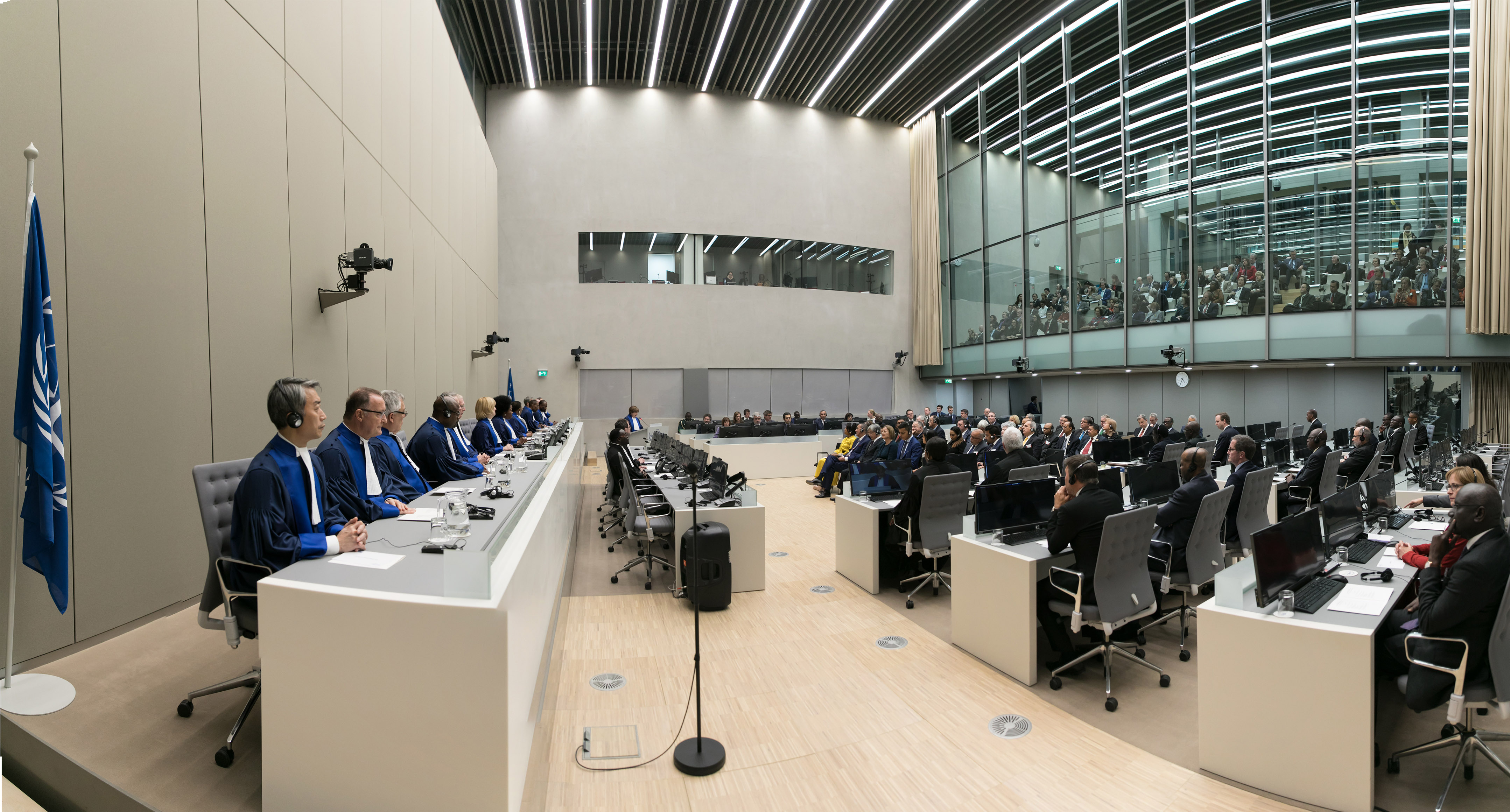 The Judges of the International Criminal Court and eminent guests of the opening of the ICC judicial year 2018 held on 18 January 2018 at the seat of the Court in The Hague ©ICC-CPI
And it looks like we are getting 6 brand new justices, too!
International Criminal Court Marks Opening of the Judicial Year 2018
On 18 January 2018, the International Criminal Court ("ICC" or "Court") marked the opening of its judicial year by organising a ceremony at the seat of the Court in The Hague, Netherlands. H.E. Anthony Thomas Aquinas Carmona, President of Trinidad and Tobago attended the event, together with more than 50 senior judges representing the national jurisdictions of 25 States Parties to the Rome Statute, 8 regional or international courts, and the International Criminal Court. Members of the diplomatic corps, international organisations and civil society were also present.
It was the first time that the ICC formally marked the opening of the judicial year, which also coincided with the launch of commemorations of the 20th anniversaryof the Rome Statute, the Court's founding treaty.
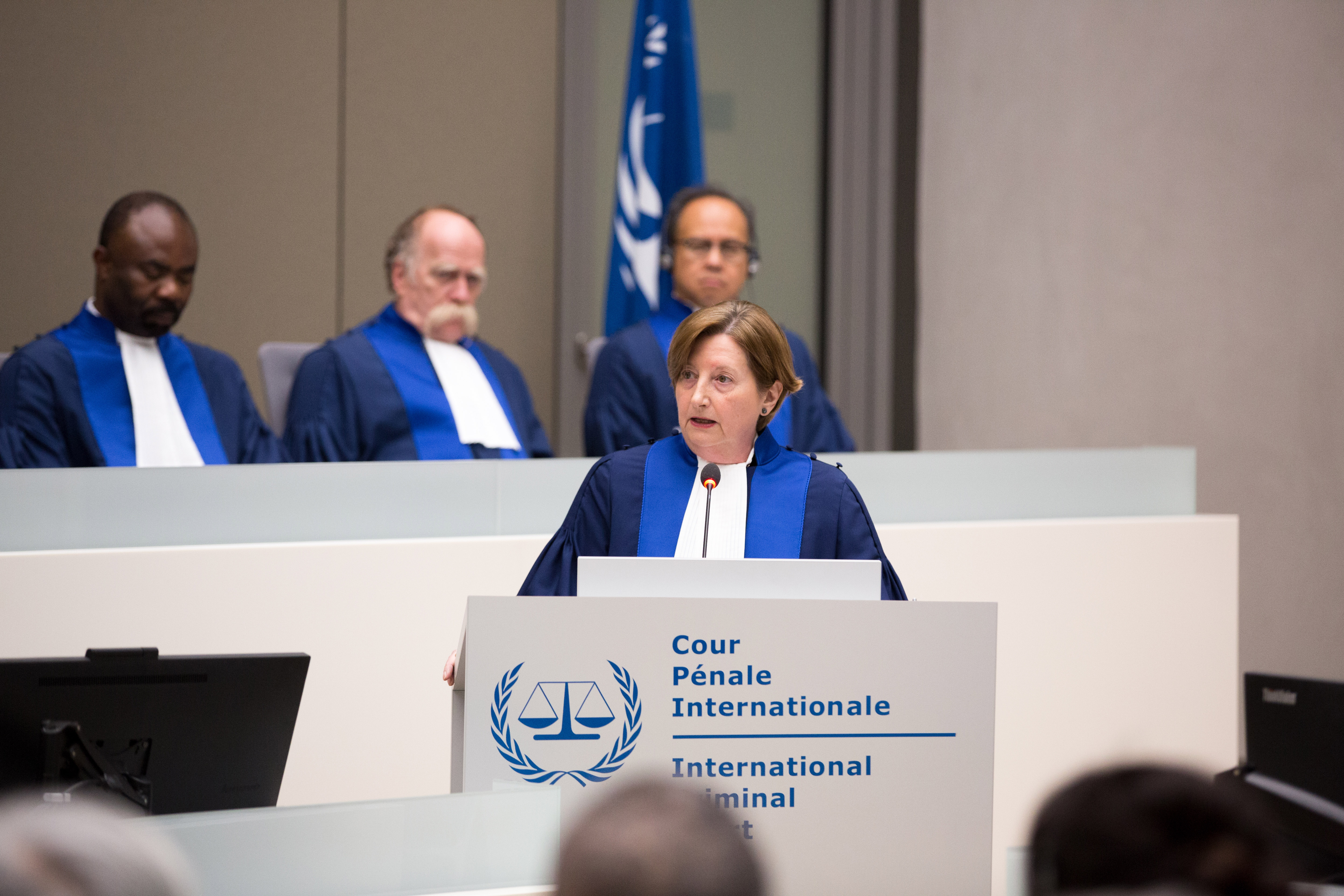 "In holding such a ceremony for the first time at the International Criminal Court, we underline the judicial nature of our institution, which is guided strictly by its legal framework, and we recall our undertaking to perform our duties honourably, faithfully, impartially and conscientiously", said ICC President Judge Silvia Fernández de Gurmendi. "The ceremony provides an opportunity not only to foster understanding about the Court's work but also to engage with judges of other jurisdictions in order to exchange views and experiences in our respective functions. (…) The future of the rule of law lies in dialogue and collaboration – not in isolation."
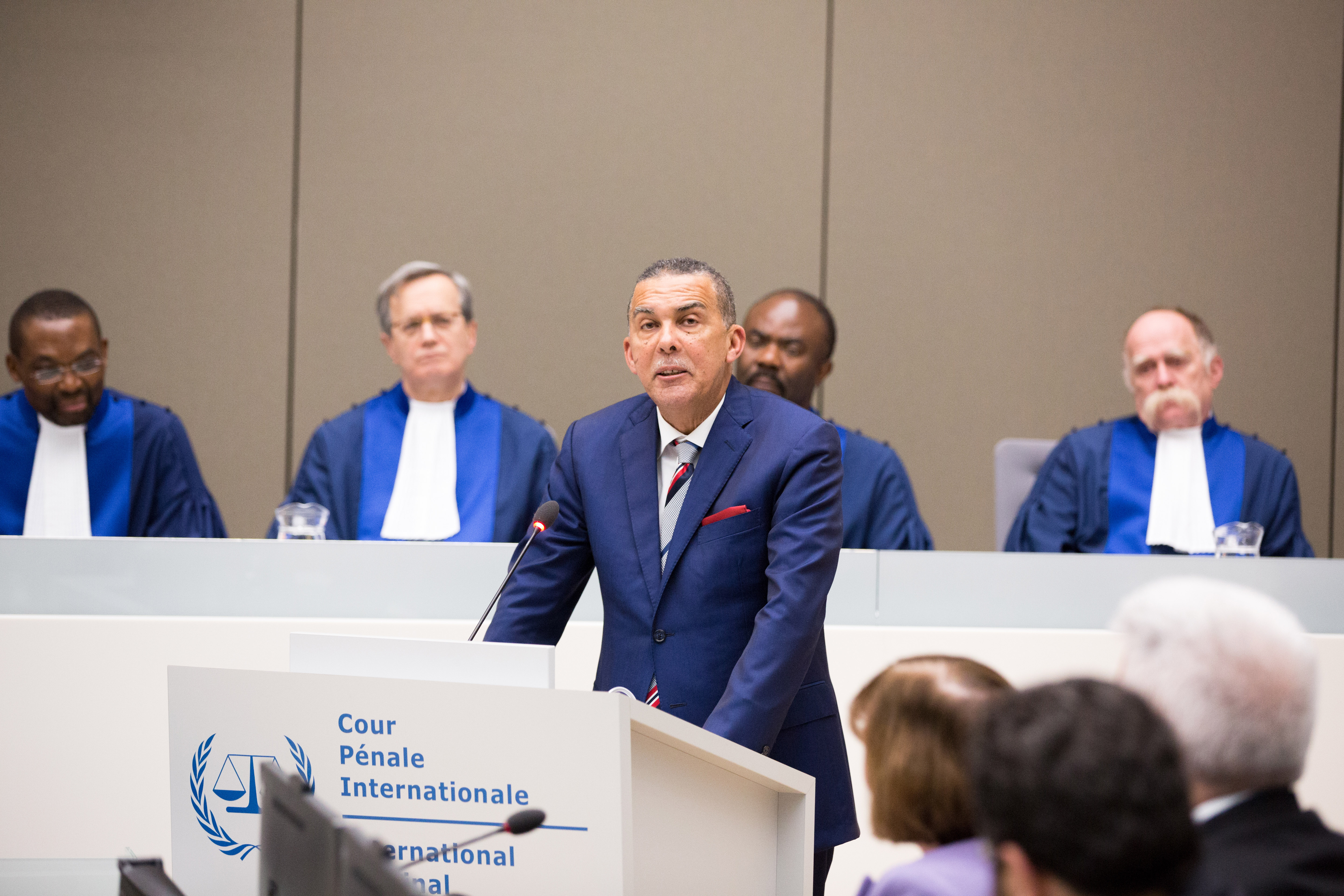 H.E. Anthony Thomas Aquinas Carmona O.R.T.T., S.C., President of the Republic of Trinidad and Tobago, former ICC Judge and former High Court Judge of the Supreme Court of Trinidad and Tobago was the distinguished guest speaker of the event. "The International Criminal Court is the international guarantor and guardian of the rule of law, " President Carmona declared. "Today, as the ICC commemorates the milestones of an inauguration and an opening ceremony, the resonating themes implicit in the Court's very existence are accountability, transparency, independence, cooperation among Member States, Nation States and the universality of the Rome Statute."
The Ceremony was held after a fruitful judicial Seminar on complementarity and cooperation of national, regional and international Courts where participants discussed the interconnectedness of international, regional and national courts as part of a global justice system.
For further information, please contact Fadi El Abdallah, Spokesperson and Head of Public Affairs Unit, International Criminal Court, by telephone at: +31 (0)70 515-9152 or +31 (0)6 46448938 or by e-mail at: fadi.el-abdallah@icc-cpi.int.
You can also follow the Court's activities on Twitter, Facebook, Tumblr, YouTubeand Flickr
Voting is beautiful, be beautiful ~ vote.©
It was the first time that the ICC formally marked the opening of the judicial year, which also coincided with the launch of commemorations of the 20th anniversaryof the Rome Statute, the Court's founding treaty.
"In holding such a ceremony for the first time at the International Criminal Court, we underline the judicial nature of our institution, which is guided strictly by its legal framework, and we recall our undertaking to perform our duties honourably, faithfully, impartially and conscientiously", said ICC President Judge Silvia Fernández de Gurmendi. "The ceremony provides an opportunity not only to foster understanding about the Court's work but also to engage with judges of other jurisdictions in order to exchange views and experiences in our respective functions. (…) The future of the rule of law lies in dialogue and collaboration – not in isolation." H.E. Anthony Thomas Aquinas Carmona O.R.T.T., S.C., President of the Republic of Trinidad and Tobago, former ICC Judge and former High Court Judge of the Supreme Court of Trinidad and Tobago was the distinguished guest speaker of the event. "The International Criminal Court is the international guarantor and guardian of the rule of law, " President Carmona declared. "Today, as the ICC commemorates the milestones of an inauguration and an opening ceremony, the resonating themes implicit in the Court's very existence are accountability, transparency, independence, cooperation among Member States, Nation States and the universality of the Rome Statute."The Ceremony was held after a fruitful judicial Seminar on complementarity and cooperation of national, regional and international Courts where participants discussed the interconnectedness of international, regional and national courts as part of a global justice system.
For further information, please contact Fadi El Abdallah, Spokesperson and Head of Public Affairs Unit, International Criminal Court, by telephone at: +31 (0)70 515-9152 or +31 (0)6 46448938 or by e-mail at: fadi.el-abdallah@icc-cpi.int.
You can also follow the Court's activities on Twitter, Facebook, Tumblr, YouTubeand Flickr
Sunday, October 22, 2017
Gates Foundation Drops Common Core For A More Profitable Return Off "The Poors"
Well, now what we have here is another Clinton Foundation and the Gates Foundation partnership to focus on.
More money.
That is correct.
Here, we find that the Gates Foundation is going to "drop" Common Core, which has questionable origins and intentions.
But instead of addressing the initiatives of these NGO children trust funds, stripping the resources and properties from the people, creating an economic environment of poverty, where children are struggling to survive, these foundations have been lurching in the wings of the educational world, ready to swoop in and "save the savages" with their new and improved social learning programs, that I enjoy calling out as another social impact bond scheme.
Detroit is the model for the nation, where, "The Elected Ones" are too busy doing their selfie fashion shows to even care the Wall Street is taking over education.
Just another social impact bond scheme to profit off "The Poors" (always said with clinched teeth).
 Marking a new chapter in education philanthropy, the Bill & Melinda Gates Foundation will step back from its traditional education reform agenda to instead invest close to $1.7 billion over the next five years on new initiatives that include a focus on building networks of schools.
Voting is beautiful, be beautiful ~ vote.©
More money.
That is correct.
Here, we find that the Gates Foundation is going to "drop" Common Core, which has questionable origins and intentions.
But instead of addressing the initiatives of these NGO children trust funds, stripping the resources and properties from the people, creating an economic environment of poverty, where children are struggling to survive, these foundations have been lurching in the wings of the educational world, ready to swoop in and "save the savages" with their new and improved social learning programs, that I enjoy calling out as another social impact bond scheme.
Detroit is the model for the nation, where, "The Elected Ones" are too busy doing their selfie fashion shows to even care the Wall Street is taking over education.
Just another social impact bond scheme to profit off "The Poors" (always said with clinched teeth).
Gates Foundation to Shift Education Focus
Bill Gates on Thursday plans to announce a $1.7 billion investment and detail his philanthropic organization’s move toward building collaborative school networks.
 Marking a new chapter in education philanthropy, the Bill & Melinda Gates Foundation will step back from its traditional education reform agenda to instead invest close to $1.7 billion over the next five years on new initiatives that include a focus on building networks of schools.
"Education is, without a doubt, one of the most challenging areas we invest in as a foundation," Bill Gates is expected to say Thursday during a speech at the Council of the Great City Schools' annual conference in Cleveland, according to prepared remarks. "But I'm excited about the shift in our work and the focus on partnering with networks of schools."
In a sprawling address, the Microsoft co-founder and co-chair of one of the most influential and contentious entities involved in the education space plans to reflect on lessons learned about the foundation's efforts and how those lessons will play into its revamped vision for the future.
"There are some signs of progress," Gates is expected to say of past efforts. "But like many of you, we want to see faster and lasting change in student achievement."
During the Gates Foundation's involvement in education philanthropy over nearly two decades, the organization – of which Bill Gates' wife, Melinda Gates, is also a co-chair – has poured billions of dollars into advancing new ideas and played an especially significant role in the rise of the education reform movement. Yet it has been widely criticized for funneling funding into what some consider silver-bullet policies or the latest education fad.
One of the foundation's first serious forays into K-12 policy was its push for smaller schools – a contentious idea that yielded mixed results.
"Unfortunately, our foundation underestimated the level of resources and support required for our public education systems to be well-equipped to implement the standards," Desmond-Hellmann wrote in an open letter. "We missed an early opportunity to sufficiently engage educators – particularly teachers – but also parents and communities so that the benefits of the standards could take flight from the beginning."
Gates is expected to use Thursday's speech in part to echo that sentiment, as he plans to say "it became clear that teacher evaluation is one important piece of several critical elements." Of the Common Core standards, he will say "more needs to be done to fully realize their potential."
He also will emphasize what the foundation will prioritize in the future. Going forward, Gates is expected to say, the foundation will no longer invest in new initiatives designed to tackle teacher evaluation and compensation, although it will continue to collect data on the effectiveness of its previous efforts. Instead, it plans to increase funding for curriculum design and professional development aligned to states' standards – be they the Common Core or others – and also continue its support for charter schools, though it will tailor that focus to schools that are improving outcomes for students with disabilities.
According to Gates, about 60 percent of the new $1.7 billion investment will support the development of new curricula and the foundation's new venture centered around building networks of existing schools, and about 15 percent will support the foundation's charter school work. The other 25 percent will focus on "big bets," which Gates characterizes as having "the potential to change the trajectory of public education over the next 10 to 15 years."
The foundation's vision for building school networks includes funding up to 30 networks, beginning with a focus on high-needs schools and districts in six to eight states where data collection and analysis is used to drive results, particularly when it comes to closing the achievement gap between students of color and low-income students and their white and wealthier peers.
While it had a positive impact in some places – such as New York City, where graduation and college enrollment rates increased for the majority of smaller-scale schools – it didn't move the needle in many other places and ultimately was deemed too costly, both fiscally and politically, to replicate successfully.
The foundation's biggest bets, however, were in its decision to back the Common Core State Standards – academic benchmarks for what students should know by the end of each grade – and its push to reimagine teacher evaluation and compensation systems based in part on student test scores.
That effort dovetailed with the Obama administration's competitive education grant program, Race to the Top, which gave states hundreds of millions of dollars to carry out those very education policy changes, among others. The Gates Foundation was instrumental in helping states that won the funding but lacked the capacity and expertise to go it alone and carry out their winning proposals.
The results of those efforts, however, also were mixed.
The District of Columbia, for example, is hailed by many education policy experts as a model for how school districts can create evaluation systems that retain and reward the best teachers while showing the least effective ones the door. But some states, like Tennessee, have had a harder time sticking to their original visions, largely due to the politicization of Common Core, which led to a chain reaction in how states were able to test students and make the results of those tests part of teacher evaluations and pay scales.
In May 2016, Sue Desmond-Hellmann, CEO of the Gates Foundation, offered somewhat of a mea culpa for the foundation's misread of how ready – or not ready, as it turned out – states were to handle implementation of the Common Core standards.
"We will focus on locally driven solutions identified by networks of schools, and support their efforts to use data-driven continuous learning and evidence-based interventions to improve student achievement," Gates will say, underscoring a recent sea change in the foundation's recognition that local community buy-in is essential for the success of most education policies.
"We will leave it up to each network to decide what approaches they believe will work best to address their biggest challenges," Gates is expected to say. "Giving schools and districts more flexibility is more likely to lead to solutions that fit the needs of local communities and are potentially replicable elsewhere."
According to the prepared remarks, Gates additionally will outline what the foundation envisions for these networks by citing already-existing partnerships.
Examples he'll share include: the Network for College Success, a group of 15 schools that have partnered with the University of Chicago and in which researchers help educators keep tabs on a set of indicators predictive of student graduation and college enrollment; California's CORE Districts, which involves a group of school districts that banded together in 2010 to help each other implement the Common Core and more effective teacher training programs; and Tennessee's Lift Education, which brings together superintendents from rural and urban districts across the state to collaborate on best practices.
"We believe this kind of approach – where groups of schools have the flexibility to propose the set of approaches they want – will lead to more impactful and durable systemic change that is attractive enough to be widely adopted by other schools," Gates will say.
Over the next 30 to 60 days, the foundation plans to gauge interest from nonprofits and other education organizations about leading school networks, and to gather information about their experience and capacity to do so. Working with chosen intermediaries, the foundation eventually will begin looking at specific schools to participate in its networking effort.
"If there is one thing I have learned," Gates will say, "it is that no matter how enthusiastic we might be about one approach or another, the decision to go from pilot to wide-scale usage is ultimately and always something that has to be decided by you and others in the field."
Voting is beautiful, be beautiful ~ vote.©
Friday, September 22, 2017
Gates Foundation Partners With The Clinton Foundation In Child Welfare Trust Fund Fraud
It seems the Bill & Melinda Gates Foundation has announced its partnership with the Clinton Foundation in another child welfare fraud scheme through trust funds.Trust funds, you remember how those pesky child welfare trust funds were always one of my pet peeves.
Well, if you do not remember my ire about these children's trust funds, allow me to refresh your memories with one of my previous rants on how the U.S. DOJ, IRS & SEC does not do crap when it comes to child welfare trust funds.
For those who do not have the curiosity to follow the previous link for a bit of background information on children trust funds, allow me to sum it up in a nutshell:
Through privatization, a complex scheme to implement socio-economic policy for "The Poors" (always said with clinched teeth) by a bunch of former and current governmental officials who use their public office to invest in social impact bonds,to go from pig farmers to millionaires, overnight, which is funded through the billing....fraudulent billing...of Social Security programs, like education, Medicaid, SCHIP, to set up programs which end up ripping off property, property taxes, to take over a geopolitical location, to set up their own cheap labor corporations.
I bet there are some who are saying that that was just a mouthful!
This is the international model, which, as the article clearly maps that these regions are located, and many surrounded, by major water ship lines, like U.S. Navy-ly desired locations to set up military industrial complex operations.
But, what about the children?
Of course, they will get a few crumbs, be taught the trade of slave labor, and if lucky, will be able to move up the socioeconomic ladder to have a successful career as a victim of human trafficking, oops, I mean international adoptions.
The main item which triggered me into a rage of Post Traumatic Stress, is because I know, as an original source, the level of fraud in these trust funds.
The Children's Investment Fund Foundation, with its hedge fund, the Children's Investment Management, handling the $5 billion fund, is a front for nefarious property acquisition schemes and they are the "hands and feet" of the Clinton Foundation.
Plus, considering the fact that I know the Gates & Clinton Foundation Filings are so jacked that they may not be in operation, in the not so distant future.
I am waiting for the Detroit model to be launched, because the States have children's trust funds, too.
Gates Foundation Pledges $220 Million for Women, Children, Adolescents
The Bill & Melinda Gates Foundation has announced commitments totaling $220 million in support of efforts to empower women and save the lives of thirty-eight million women, children, and adolescents by 2030.
Announced on the margins of the United Nations General Assembly meeting, the commitments include a $200 million pledge to the World Bank's Global Financing Facility Trust Fund in support of the UN's Every Woman Every Child initiative, launched in 2010 to address the major health challenges women, children, and adolescents face. With the goal of expanding the financing facility to fifty countries over the next five years, the fund aims to raise $2 billion to help close the estimated funding gap of $33 billion a year. Each dollar invested in the GFF Trust Fund leverages domestic government resources, financing from the World Bank's International Development Association and the International Bank for Reconstruction and Development, aligned external financing, and private-sector resources. To date, eleven projects supported by $307 million in GFF Trust Fund grants and linked to $1.8 billion in IDA/IBRD financing have been approved.
"The world has made historic progress against global poverty and disease, but that progress is in jeopardy," said Melinda Gates, co-chair of the Gates Foundation, which is a member of the investors group overseeing GFF. "Investing in women and children's health is critical to lifting the world's poorest out of poverty, and the Global Financing Facility offers an innovative blueprint to make financing health more effective."
At the Gates Foundation's inaugural "Goalkeepers" event this week, held in New York City following the release of its report on the Sustainable Development Goals, the Gates Foundation also announced a $20 million commitment to strengthen local grassroots women's groups and women's movements. The grants will support organizations including Mama Cash and the Prospera network, which sub-grant to grassroots women's groups across the Global South and help build strategic alliances; targeted campaigns to advance the SDGs and amplifying local women's voices in the process; online and offline platforms, including the Change.org Foundation and the Amref Advocacy Accelerator; and research to deepen understanding of the impact of movements and strengthen the investment case.
Other commitments announced at the event include an effort led by Last Mile Health to support the development and expansion of national community health worker programs through online platforms; an effort involving the United Nations High Commissioner for Refugees to expand access to digital financial services for the world's poorest; and the Power of Nutrition, a platform founded by the Children's Investment Fund Foundation and others to multiply contributions to provide millions of children with high-impact nutrition interventions, which plans to expand into Benin, Côte d'Ivoire, India, and Madagascar.
"We are at a defining moment in the history of global development where we can either collectively show resolve and get the job done, or turn our backs on human suffering and inequity," said Bill Gates, co-chair of the Gates Foundation. "I believe when people know about the progress we've already made, they'll be inspired to finish the job."
Voting is beautiful, be beautiful ~ vote.©
Subscribe to:
Posts (Atom)