If we are supposedly on the cusp of war with Russia, and Russia is hacking our stuff, then riddle me this -
"Why are we in a joint Russian partnership with the International Space Station and space R&D?"
SpaceX will launch the second demonstration mission of its Crew Dragon vehicle as part of NASA's Commercial Crew Transportation Capability Program (CCtCap), carrying two NASA astronauts to the International Space Station. This mission will be the first crewed flight to launch from the United States since the end of the Space Shuttle program in 2011. DM-2 demonstrates the Falcon 9 and Crew Dragon's ability to safely transport crew to the space station and back to Earth and it is the last major milestone for certification of Crew Dragon. NASA has extend the mission duration to allow the astronauts to participate as Expedition 63 crew members. The exact duration of the mission will be determined in orbit based on the readiness of the first operational crew mission.
The mission was scrubbed due to weather.
Next launch opportunity - May 30, 2020, 3:22 p.m. EST.
The tech billionaire Reid Hoffman said he was “embarrassed” to learn that his funding had been used to spread disinformation.
Reid Hoffman, the tech billionaire whose money was spent on Russian-style social media deception in a Senate race last year, apologized on Wednesday, saying in a statement that he had not approved the operation and did not support such tactics in American politics.
Mr. Hoffman said he had no idea that political operatives whose work he had financed had used fakery on Facebook and Twitter in the special Senate election a year ago in Alabama. But he had an obligation to track how his money was spent, he said, and he promised to exercise more care in the future.
“I categorically disavow the use of misinformation to sway an election,” said Mr. Hoffman, a co-founder of LinkedIn and a prominent figure at the intersection of Silicon Valley and Democratic politics. He said he had financed “organizations trying to re-establish civic, truth-focused discourse” and was “embarrassed” to learn his money had been spent on disinformation.
The New York Times and The Washington Post reported last week that $100,000 from Mr. Hoffman was spent on a deceptive social media campaign to aid Doug Jones, the Democratic candidate, who barely defeated the Republican, Roy Moore.
Sign Up for On Politics With Lisa Lerer
A spotlight on the people reshaping our politics. A conversation with voters across the country. And a guiding hand through the endless news cycle, telling you what you really need to know.
The money went to a small group of social media experts that included Jonathon Morgan, the chief executive of New Knowledge, a cybersecurity firm.
They created a Facebook page intended to look like the work of conservative Alabamians, and used it to try to split Republicans and promote a conservative write-in candidate to take votes from Mr. Moore.
You have 3 free articles remaining.
Subscribe to The Times
They also used thousands of Twitter accounts to make it appear as if automated Russian bot accounts were following and supporting Mr. Moore, according to an internal report on the project. The apparent Russian support for Mr. Moore drew broad news media coverage.
Democratic political strategists say the small Alabama operation — which accounts for a minuscule share of the $51 million spent in the contest — was carried out as a debate about tactics intensified within the party.
Democrats had been shocked to learn of Russia’s stealth influence campaign to damage Hillary Clinton and promote Donald J. Trump in the 2016 presidential race. But at least a few Democrats thought their party could not shun such tactics entirely if others were going to continue to use them.
Editors’ Picks
No Hearing Aids? Then No Marriage
I Worked for Alex Jones. I Regret It.
Would You Consider Living on Roosevelt Island? Two Newcomers Look There for the ‘Flow of Life’
Continue reading the main story
The Alabama operation is among the first examples to come to light of such underhanded methods on social media in American politics. But because such efforts are generally very easy to hide and very difficult to trace, it is possible that other instances have gone undetected.
In 2017, through a fund called Investing in Us, Mr. Hoffman gave money to a small company, American Engagement Technologies. The company’s leader, Mikey Dickerson, is a former Google employee who founded the United States Digital Service during the Obama administration to try to upgrade the federal government’s use of technology. An associate of Mr. Hoffman’s said that his total grant to American Engagement was $750,000, which also went toward other political races and social media research. Mr. Dickerson has declined to comment.
American Engagement then passed $100,000 to Mr. Morgan and other researchers. Mr. Hoffman’s statement says the money went to Mr. Morgan’s company, New Knowledge, but Mr. Morgan said the Alabama project was carried out separately from the company.
The revelations of and fallout from the operation are being closely watched. Some American political experts fear that the Russian influence campaign of 2016 could become a dangerous model for stateside politics, with dirty tricks on social media becoming common. Laws and regulations have not been updated to cope with such a threat.
On Saturday, Facebook shut down five accounts, belonging to Mr. Morgan and other unnamed individuals, in response to their use of “inauthentic” operations on the platform. Twitter declined to say whether it had taken any action in the Alabama case.
Senator Jones and Democratic Party officials have said they were unaware of the social media tactics and denounced them. Mr. Jones has called for investigations by the Justice Department and the Federal Election Commission — a call Mr. Hoffman joined on Wednesday.
“We cannot permit dishonest campaign tactics to go unchecked in our democracy — no matter which side they purportedly help,” Mr. Hoffman said in his statement.
Penn State University seems to run the bioethics portion of modern day human trafficking in support of Iceland's commercialization of really, really, tiny humans, like genomes for genomic predictive modeling crap.
WHO definitions of genetics and genomics Genetics is the study of heredity.1
Genomics is defined as the study of genes and their functions, and related techniques. 1,2
The main difference between genomics and genetics is that genetics scrutinizes the functioning and composition of the single gene where as genomics addresses all genes and their inter relationships in order to identify their combined influence on the growth and development of the organism.
Bioethics is just another reengineered component when it comes to the residuals of the peculiar institution, which is what shall eventually aid in the obviation of policy and law, specifically in the areas of procurement for inurement.
It seems there are those in Congress who possess the political fortitude to prepare hearings on decades of UAW corruption.
Unfortunately, it seems these brave "Elected Ones" are just going to have to breakdown and speak upon TARP, but probably not, because we are probably going to see the art of deflection.
Have no fear, the UAW has a formidable history that shall not be bleachedbitted, and it all started in Detroit, but no one will #sayhisname.
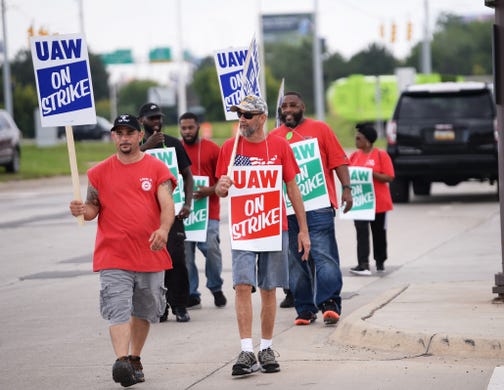
Washington — Republican lawmakers on the U.S. House Education and Labor Committee are calling for Congress to investigate what they call "widespread, brazen lawbreaking" at the United Auto Workers union.
U.S. Rep. Tim Walberg, R-Tipton, and his colleague U.S. Rep. Virginia Foxx, R-NC, wrote in a letter to the top ranking Democrats on the Democratic-controlled U.S. House Education and Labor Committee that the panel should "hold a public hearing on the ongoing federal investigation of the United Auto Workers union for violating the Labor Management Relations Act."
They said it was "essential the committee confront the widespread, brazen lawbreaking by union leaders who purport to represent nearly 150,000 American autoworkers but have betrayed their trust in favor of self—enrichment."
The UAW, which is striking against General Motors Co., is in the midst of a union corruption scandal that has produced nine convictions, and last week led to a regional UAW director being charged. The federal investigation has implicated UAW President Gary Jones and his predecessor, Dennis Williams. Investigators allege the two are part of a multi-year conspiracy that involves misusing member dues and squandering them on poolside villa rentals in Palm Springs, booze, cigars, more than 100 rounds of golf and spending sprees at pro shops.
Walberg and Foxx said in their letter: "Since 2017, federal investigators have uncovered more than a decade of rampant corruption among the senior ranks of the UAW, which has included money laundering, tax fraud, bribery, and embezzling workers’ hard-earned union dues for lavish personal expenses."
Brian Rothenberg, a UAW spokesman, said in a statement: "The UAW and its membership are focused on taking care of GM and Aramark members to make sure they have quality health care insurance, as well as adequate pay and benefits.
"GM’s decision to cut access to health insurance for 48,000 members makes this an urgent issue for autoworkers right now," he said. "That is where all of our focus continues to be – on our members.”
Rothenberg's statement did not address the calls for congressional investigation of the UAW's leadership.
The call for a congressional investigation into the UAW's corruption scandal could put Democrats in Washington in a bind. Democratic lawmakers have been careful to stand alongside UAW rank-and-file members during the strike, while largely avoiding comment on the union and its leadership.
Michigan Gov. Gretchen Whitmer and U.S. Rep. Debbie Dingell, both Democrats, joined picket lines on Monday to march with union members. U.S. Sen. Amy Klobuchar, D-Minn., a 2020 Democratic presidential candidate, marched with striking GM workers Thursday.
I wonder what new crappy predictive models they shall diffuse in Detroit for 2020, for revenue maximization purposes of those Public Private Partnerships for their fake ass Social Impact Bonds.
We should my Psychobabies up there at University of Michigan.
The Technion Board of Governors Welcomes a New Chairman
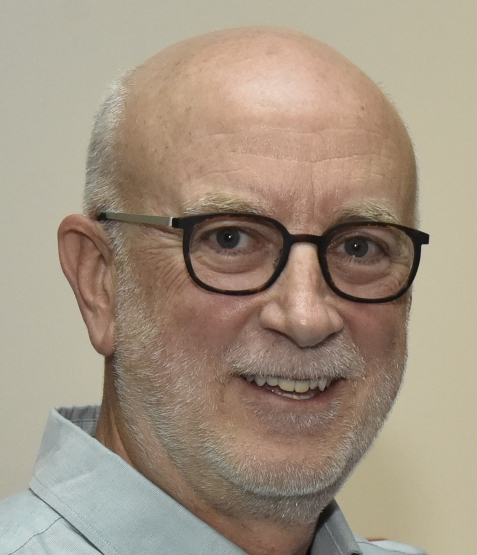
Scott Leemaster of Franklin, Michigan, is the new chairman of the Technion Board of Governors, the governing body of the Technion–Israel Institute of Technology. He assumed the post in June 2019 during the Board’s annual meeting, succeeding long-time chairman, Larry Jackier. Both Mr. Leemaster and Mr. Jackier hail from the Detroit area.
“For many years now, I have been fortunate to follow in Larry’s footsteps, and honored to work together with him on behalf of the Technion,” Mr. Leemaster said. “This amazing institution is arguably the fundamental driver not only of Israel’s economic success, but also of its growing international relationships in Africa, India, China, and other parts of Asia. I am deeply honored to be asked to take on this new role and grateful for the opportunity to continue my life-long love affair with the Technion and its people.”
Mr. Leemaster is vice president and principal of Warren, Michigan-based Madison Electric Company, a wholesale distributor of electrical supplies, industrial controls, and automation equipment. He is credited with expanding the company’s product offerings, managing the Madison Electronics division, and improving inventory efficiency.
He became involved with the ATS in the late 1990s, driven by the Jewish value of tikkun olam, Hebrew for repairing the world. “The Technion improves the lives of people around the world through its innovative solutions in science and technology. Technologies related to agriculture, energy, water, and solar all have deep roots at the Technion,” said Mr. Leemaster.
He participated in an ATS leadership development program, and by 2004 was elected to a two-year term as president of the organization’s Detroit community. In 2008, he assumed the local presidency again. Under his stewardship, Detroit supporters helped fund key Technion projects including laboratories at the Stephen and Nancy Grand Water Research Institute, the Max Gill Emergency Fund for Technion Students, The D. Dan and Betty Kahn Mechanical Engineering Building and the Michigan–Israel Partnership, a research collaboration between the University of Michigan, the Technion and the Weizmann Institute of Science.
On the national level, Mr. Leemaster became active on the ATS National Board of Directors in 2005, chaired numerous committees including the Audit Committee, and in 2012 became ATS president. During his tenure, he presided over the launch of the organization’s half-billion-dollar fundraising campaign, “Innovation for a Better World.” Most recently, he has served as the national chairman of the board.
He and his wife Susie have participated in and co-chaired many ATS trips to Israel and other destinations. Together with Mr. Jackier, he helped organize a Solidarity Delegation to Israel during Operation Protective Edge in 2014.
The Leemasters are Technion Guardians, a designation for those who support the university at the highest level. They have generously funded a number of projects including the Departmental Library in the D. Dan & Betty Kahn Mechanical Engineering Building, and the Shared Core Facility in the Sohnis and Forman Families Center of Excellence for Stem Cell and Tissue Regeneration Research. In 2009, Mr. Leemaster was awarded a Technion Honorary Fellowship for his generosity and his hands-on involvement.
Outside of the Technion, Mr. Leemaster’s main philanthropic involvements are with the Hebrew Free Loan, where he served on the board and executive committee. Previously, he was active with the Jewish Federation of Metropolitan Detroit. He was recognized for his community service with the Alex J. Etkin Award for Young Leadership in 2001-2002, and with a Distinguished Community Service Award from the Association of Fundraising Professionals in 2008.
He and Susie have one son, Jacob, who participated in the Technion’s SciTech summer science program for high school students. Jacob is now an electrical engineer with MIT, in Boston, Mass.
Earlier in this issue (on page 12), you may have read about the service of Detroit Jewish community leader Larry Jackier to the Technion-Israel Institute of Technology. His colleagues at the Jackier Gould law office in Bloomfield Hills and at the American Technion Society are celebrating his 12 years as chair of the Technion Board of Governors.
As chair, he led those who oversee the university’s programs and finances as well as its president and officers. As someone who spent 30 years working at Wayne State University and the University of Michigan, I know this is a big, big job, one that takes a tremendous amount of time, work and dedication (along with accumulating massive frequent flier miles!) So, to say the least, Jackier can claim a major contribution to Technion’s great success over the past decade-plus.
The Technion began as an idea that Jews needed their own technical institute and it should be in Palestine. In March 29, 1908, the notion of Technion — or a Technikum in German, the original language of Technion — was formed.
The cornerstone to the physical university was laid on April 11, 1912, in Haifa, where the university still stands. Albert Einstein was an early supporter and planted the first palm tree on campus, which is still there. From humble but determined beginnings, Technion has grown to rank among the leading research universities in the world. It is a leader in many fields, including biotechnology, its students build satellites, and two of its professors were the first to bring Nobel Prizes for science to Israel. A third soon followed.
I went into the William Davidson Digital Archive of Jewish Detroit History to see what I could find on the history of Technion and, more importantly, the critical connections between it and Jewish Detroit. I was not disappointed by the JN’s reporting on Technion: It was cited 3,677 times.
In short, one can easily find plenty of evidence that Jewish Detroiters were keen supporters of Technion. When the American Technion Society (ATS) was formed in 1940, the Detroit chapter followed that same year. The list of local contributors to Technion at the time is a who’s who of Jewish leaders including Albert Kahn, Fred Butzel, Rabbi Morris Adler and JN editor/publisher Philip Slomovitz.
There were many other supporters. A report in the Dec. 11, 1953, issue of the JN, for example, cited the $75,000 donation from Mr. and Mrs. Samuel Brody, considered at the time to be the largest sum ever donated by Detroit Jews for educational purposes to that date. In today’s dollars, that is about $700,000. The Detroit ATS Chapter sent $160,000 to Technion that year or more than $1.5 million in today’s dollars. Other early supporters of Technion included Joseph H. and Edythe Jackier. It seems Larry is carrying on his family’s legacy and then some.
The story of Technion is an impressive one. It is still a young university when compared to Oxford, Harvard or even the University of Michigan. Since its first students entered the doors of Technion, however, they and their professors have had a wonderful record of accomplishments.
Jewish Detroiters can also take great pride in Technion and its leadership, including that of Larry Jackier, who recently was succeeded as chair by Scott Leemaster, another Detroiter.
They are doing live color commentary like a sporting event and I absolutely love it.
They are even doing live commercials for the corporations involved in the launch, claimed as the largest Arab satellite network in the world.
The tech companies are now the new NFL in technology promoting corporate team spirit in open sourced advancement.
I can see the armoralities in colorful heraldry where individuals rally, through their votes, not limited to a thumbs up or down marginalized decision-making process.
No more war because stock market is nothing but a rigged gambling theifdom that is to be dismantled and rebuilt and we can do it blockchain and stop the stealin'.
The U.S. likes to traffic tiny human and their souls over the border for lots and lots of money.
But do not just ask Chuck & Nancy because it is personal inurement of office and how politicians fund their campaigns, which would be an issue of self incrimination.
We would not want Chuck & Nancy to incriminate themselves but we could ask Betsy DeVos, a subject matter expert on trafficking the souls of tiny humans.
And that is why we are going to have a Constitutional Crisis because we would like to know who is in our country and the purveyors of tiny humans do not want to stop salvaging all the souls, which includes our intellectual property.
Trump is championing the end of stealin' the children, the land and the votes.
European–Vatican relations
QUESTION*: What does the Vatican and European Union have in common?
ANSWER: A Bitcoin Wall
According to Wikipedia: Holy See–European Union relations is the relationship between the European Union (EU) and the Holy See (or Vatican City).This is framed by the Holy See's geography (within an EU state capital) while being unable to join.
The Schengen Information System (SIS) is a governmental database maintained by the European Commission. The SIS is used by 31 European countries to find information about individuals and entities for the purposes of national security, border control and law enforcement. A second technical version of this system, SIS II, went live on 9 April 2013.Schengen Information System
What is the Schengen Information System (SIS)?
The Schengen Information System (SIS) is the most widely used and largest information sharing system for security and border management in Europe. SIS enables competent national authorities, such as the police and border guards, to enter and consult alerts on persons or objects. An SIS alert does not only contain information about a particular person or object but also instructions for the authorities on what to do when the person or object has been found. Specialised national SIRENE Bureaux located in each Member State serve as single points of contact for the exchange of supplementary information and coordination of activities related to SIS alerts. At the end of 2017, SIS contained approximately 76.5 million records, it was accessed 5.2 billion times and secured 243 818 hits (when a search leads to an alert and the authorities confirm it).
What is the purpose of the SIS?
The main purpose of SIS is to make Europe safer. The system assists the competent authorities in Europe to preserve internal security in the absence of internal border checks. The scope of SIS is defined in three legal instruments:
Regulation (EC) No 1987/2006 (Border control cooperation): SIS enables border guards and visa issuing and migration authorities to enter and consult alerts on third-country nationals for the purpose of refusing their entry into or stay in the Schengen area.
Council Decision 2007/533/JHA (Law enforcement cooperation): SIS supports police and judicial cooperation by allowing competent authorities to create and consult alerts on missing persons and on persons or objects related to criminal offences.
Regulation (EC) No 1986/2006 (Cooperation on vehicle registration) Vehicle registration services may consult SIS in order to check the legal status of the vehicles presented to them for registration. They only have access to SIS alerts on vehicles, registration certificates and number plates.
In June 2018, the co-legislators reached political agreement on the new SIS package. The new functionalities in SIS will be implemented in different stages, with a requirement for the work to be completed by 2021.
The changes will entail enhancements in the following areas:
Biometrics: SIS will contain palm prints, fingerprints, facial images and DNA concerning, for example, missing persons to confirm their identity.
Counter-terrorism: More information will be shared on persons and objects involved in terrorism-related activities, allowing the authorities of the Member States to better pursue and prevent serious crimes and terrorism.
Vulnerable persons: Competent authorities will have the possibility of entering preventive alerts in the system to protect certain categories of vulnerable persons (missing persons, children at risk of abduction or potential victims of trafficking in human beings or gender-based violence).
Irregular migration: Return decisions and entry bans will be part of the information shared in the system to enhance their effective enforcement.
Enhanced access for EU Agencies: Europol will now have access to all alert categories in the SIS while the European Border and Coast Guard Agency operational teams will be able to access SIS for the purpose of carrying out their tasks in the hotspots.
Moreover, the introduction since March 2018 of an AFIS (Automated Fingerprint Identification System) in SIS, and the resulting possibility of making searches using fingerprints, makes it even more difficult for criminals to move unnoticed across Europe.
In which countries is SIS in operation?
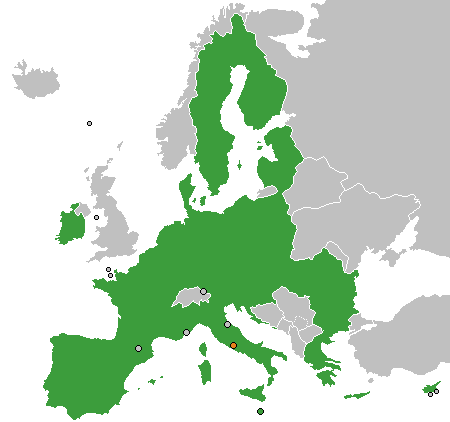
SIS is in operation in 30 European countries, including 26 EU Member States (only Ireland and Cyprus are not yet connected to SIS) and 4 Schengen Associated Countries (Switzerland, Norway, Liechtenstein and Iceland).
EU Member States with special arrangements:
Bulgaria, Romania and Croatia are not yet part of the area without internal border checks (the 'Schengen area'). However, since August 2018, Bulgaria and Romania started using fully SIS. A Council Decision is still required for the lifting of checks at the internal borders of these two Member States. In the case of Croatia, there are still some restrictions regarding its use of Schengen-wide SIS alerts for the purposes of refusing entry into or stay in the Schengen area. Those restrictions will be lifted as soon as Croatia has become a part of the area without internal border checks.
The United Kingdom operates SIS but, as it has chosen not to join the Schengen area, it cannot issue or access Schengen-wide alerts for refusing entry and stay into the Schengen area.
Ireland and Cyprus are not yet connected to SIS. Ireland is carrying out preparatory activities to connect to SIS, but, as is the case for the UK, it will not be able to issue or access Schengen-wide alerts for refusing entry or stay. Cyprus has a temporary derogation from joining the Schengen area and is not yet connected to SIS.
The European Union has moved forward with its plans to create a gigantic biometrics database, despite facing criticism for putting privacy rights at stake through it.
Last week, the European Parliament has adopted a legislation that will enable EU information systems to exchange records through the Common Identity Repository (CIR), which is set to gather data for over 150 million individuals. The move has been taken as a further attempt to simplify the jobs of EU border and law enforcement officers.
According to a press release by the European Parliament, the new system will facilitate the tasks of border guards, migration officers, police officers and judicial authorities by providing them with more systematic and faster access to various EU security and border-control information systems.
The EU Commissioner for Migration, Home Affairs and Citizenship Dimitris Avramopoulos asserted that the Security Union is steadily taking shape with a whole range of tools, actions and rules being put in place to protect all EU citizens.
Whereas, the Commissioner for the Security Union Julian King said that the new adoptions mark another important milestone in the work of the EU towards an effective and genuine Security Union.
“Interoperability will help those working in the frontline to keep EU citizens safe – ensuring police and border guards have efficient access to the information they need, including to fight identity fraud, enables them to do their jobs properly,” he said a day after the Parliament had adopted the legislation.
EU Criticized for Putting Privacy Rights at Stake
Watchdog and non-profit organizations have long criticized the move for establishing such a system.
Non-profit organization Statewatch published a report last year titled “Interoperability morphs into the creation of a Big Brother centralized EU state database including all existing and future Justice and Home Affairs databases.”
According to the report the notion that these plans are simply bringing together existing data and biometrics, and so there is nothing to be afraid of, is untrue.
“If there has been one clear lesson since 11 September 2001 it is that function creep is the name of the game. From the late 1970s onwards each new stage of the technological revolution has been justified on the grounds that there is nothing new, it is just making life easier for law enforcement and border control agencies to get access to the information they need to do their job more efficiently. Whereas the reality is that at each stage databases become ever more intrusive as security demands cumulatively diminish freedoms and rights,” the report concludes among others.
Perhaps, she can awe us, again, with her soothsaying skills to reassure everyone that the churches in Louisiana Landry Parish will soon awe us again.
The majesty of Notre Dame—the history, artistry, and spirituality—took our breath away, lifting us to a higher understanding of who we are and who we can be. Being here in Paris tonight, my heart aches with the people of France. Yet I know that Notre Dame will soon awe us again. https://t.co/p1mIDMbwe1
The man who was arrested after a string of fires left historically black churches gravely burned is now facing hate crime charges.
Holden Matthews was arrested Wednesday after investigators tied him to three church fires that spanned a 10-day period in Louisiana's St. Landry Parrish.
Matthews, the 21-year-old son of a sheriff's deputy, appeared in court in Opelousas on Monday. He entered a not guilty plea via his court-appointed lawyer.
The Associated Press reports Matthews did not speak during the hearing, which came after prosecutors filed papers to add three charges accusing Matthews of violating the state's hate crime law. Those three charges come in addition to three charges of arson of a religious building that Matthews already faced.
Holden Matthews
Matthews was denied bond on Monday, which law enforcement officials pushed for because they view him as a continued threat.
"We felt that he was an immediate risk to public safety," said Louisiana Fire Marshal Butch Browning, according to the AP.
"In my mind, I felt another fire was imminent," Browning said in court Monday.
Browning made similar sentiments shortly after apprehending Matthews. During a news conference on Thursday, Browning said officials were still working to determine his motives, but added they found that Matthews had ties to "black metal and its association and history with church burnings in other parts of the world."
Black metal, a distant genre of devil-worshipping death metal music, has roots in the Norwegian heavy metal scene that reportedly was the inspiration for several church burnings in the country in the early 1990s.
Matthews' father, who works for the local sheriff's department, was present at Monday's hearing. The AP said the suspect's parents watched from a video conference of the courtroom, and at one point his father was seen leaving the room in tears.
The three fires investigators tied Matthews to were all near the town of Opelousas, and no one was hurt as no one was inside any of the structures at the time of the blazes.
This is an extremely, very well constructed and written journalism.
This is the quality of reporting that is worthy of the title of keeper of the record.
This is Pulitzer Prize level writing.
This is devoid of poverty shaming.
This demonstrates a mastery of the subject matter.
Proper locations were noted, with, I must direct attention to, Google Maps interactives, visual histograms, timelines, balanced interviews and narratives with principle authorities and original sources, like neighbors, homeowners, victims, elected and authoritative officials representing Wayne County, Wayne State University and University of Michigan-Dearborn, all in District.
[I went to all those schools. (snicker) I wonder what they said about me.]
The use of public resources, the likes of corporate filings and County Register of Deeds recordings, laid out another wonderful visual for one to follow through the chain of command in ownership, whether broken or distorted as a corporate shape shifter.
I found much joy with the use of the Limited Liability Company as a cursory working model of real property schemes.
This is "submission of evidence" worthy.
Now, this is the point where I must interject by throwing my two cents into the mix.
I believe I have previously covered this, but currently, I am so moved by this cogently documented moment of Detroit history, I shall reiterate one of my favorite tales of the Corporate Shape Shifters.
(The names of the LLC's have been changed to protect my future claims.)
Once upon a time, there was a LLC in Idaho named ABC Properties which was listed on a Quit Claim Deed for 123 Elm St. in Wayne County Register of Deeds.
The ABC Properties took out a mortgage on 123 Elm St. and defaulted, where it ended up at the Wayne County Sheriff's sale.
Waiting in the auditorium for the Wayne County auction, 123 Elm St. was never called to auction.
Then, a new Quit Claim Deed magically appears in the Wayne County Register of Deeds as ABC Properties, LLC, registered as a domestic, or perhaps as seen in some instances as a foreign entity, in the State of Michigan, where another mortgage is taken out on 123 Elm St.
Some time later, the Detroit Land Bank Authority swoops in to file a Quiet Title action, wiping out all outstanding liens, mortgages and taxes, only to sell it to another LLC, in the same, exact "switch-o-change-o" out of state/in state Corporate Shape Shifter fraud scheme.
But, since there was no mention the Detroit Land Bank Authority, I am going to giddily assume that it is recognized as never existing, so I am not going there.
Thank you, Allie. You are a burst of brilliant reality to your profession. This report is bad ass.
Time to step your games up, keepers of the record.
PROPERTY SPECULATION BRINGS DYSFUNCTION TO DETROIT'S HOUSING MARKET, EXACERBATING BLIGHT AND INSTABILITY IN THE NEIGHBORHOODS.
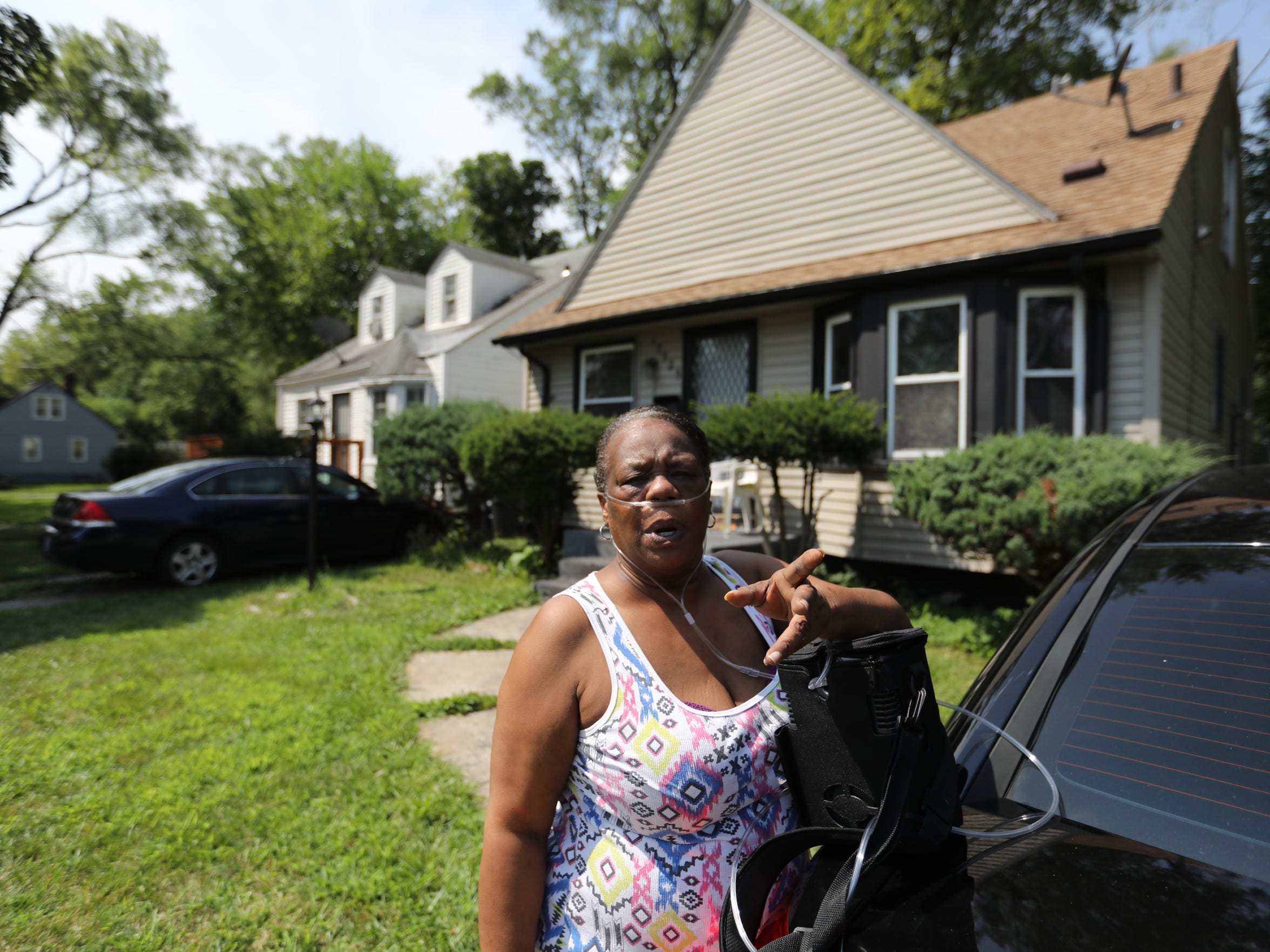
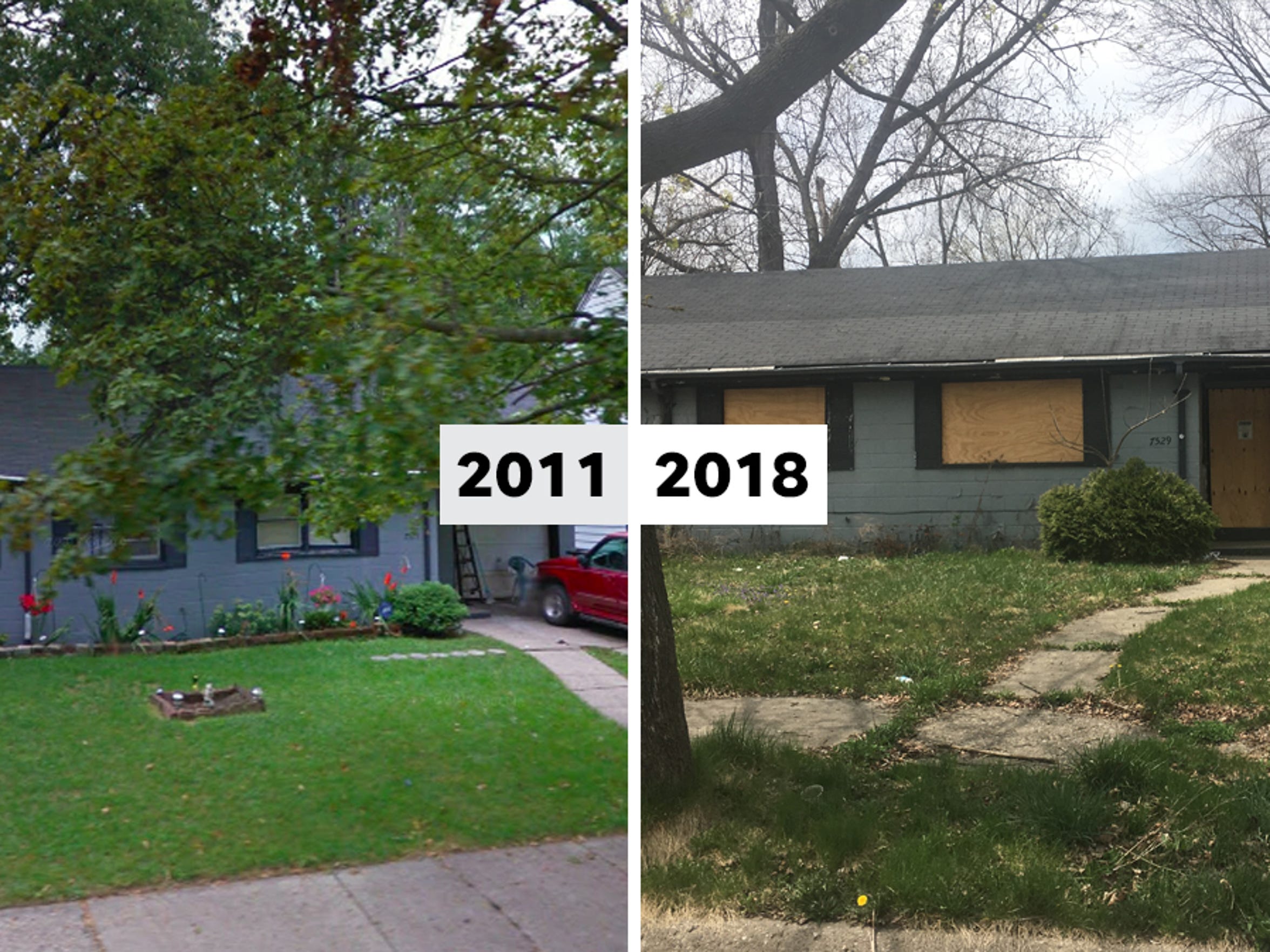
Felicia Anderson shook her head as she looked at an outdated photo of 17529 Kentfield.
The gray, ranch-style bungalow was visible from the 59-year-old’s bedroom window. She saw it every day. But it had been years since she glimpsed at it as it once was: well-kept and thoughtfully trimmed. A home.
“Eli took care of it. Inside and out,” Anderson said as she looked at the Google Street View image from 2013, back when Eli Brown, her sister’s ex, lived in the northwest Detroit house. “He kept it up.”
This house is at 17529 Kentfield St. in Detroit.
It's easy to write off such conditions as a thing of Detroit's past. A so-called pre-renaissance problem.
The aftermath of Detroit’s economic downturn. A byproduct of middle-class flight from the city, disinvestment and the subprime mortgage crisis.
The chain of title on Kentfield, however, highlights a more recent and concrete undoing. First, cash-poor Detroiters lose their homes in the annual Wayne County tax foreclosure auction. Then, hands-off speculators swoop in and either "rent" the houses back to those who lost them, using predatory schemes that often lead to evictions and cycles of instability, or, as is more common, the speculators just sit on them.
The end result:
Blocks of homes rot as investors wait for a fabledpayout.
Home values for Detroiters in the neighborhoods plummet.
A dysfunctional housing market is created where one home can fetch anything from $500 to $51,000 — with no consistency or logic.
There are no clear winners. Just chaos.
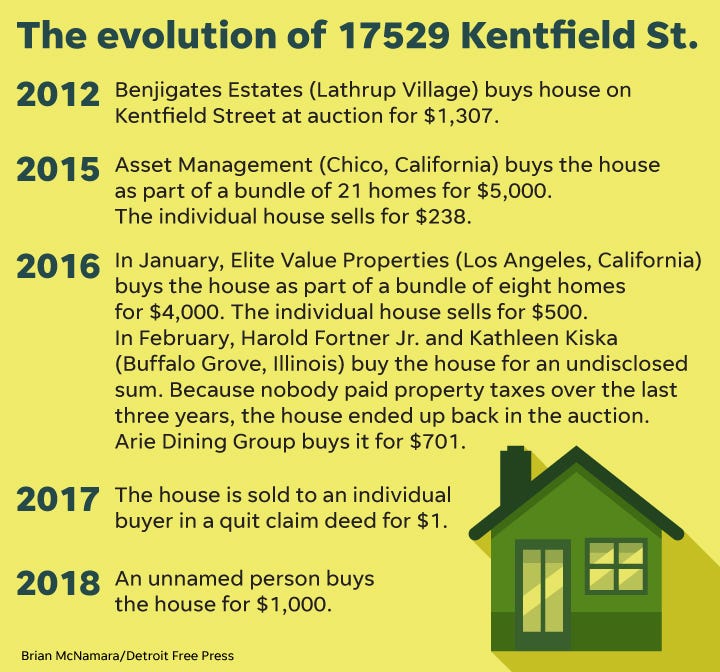
Kentfield exemplifies this trend: From 2012 — when Brown lost the house to tax foreclosure and then signed a rent-to-own land contract before eventually being evicted — to present day, 17529 Kentfield swapped hands eighttimes. In those six years, it landed in the portfolios of speculators in California and Illinois and even back in the tax auction in 2016.
With each transaction, passing year and repackaging of the property — the home was often bundled with others — the house deteriorated. Its value declined.
Kentfield is one 23 properties the Detroit Free Press studied this past spring to better understand property speculation and its impact on Detroit neighborhoods. To come up with a sample group, the Free Press focused on one out-of-state speculator — Los Angeles LLC Elite Value Properties — and tracked the properties in its portfolio. The study revealed a complex system in which homes swapped hands in various bundles and newfangled arrangements with the ease and familiarity one normally associates with balancing a checkbook or filling up a tank of gas.
Of the group, 20 were lost to tax foreclosure in 2012 and three in 2013.
While 78 percent of the properties appeared to be occupied in 2011, according to an analysis of Google Map images, 78 percent were either abandoned, demolished or burned down this spring when the Free Press visited the properties.
Additionally, of the 23 homes, 60 percent ended up back in the auction because none of the speculatorspaid property taxes on the houses they purchased. (Homes are foreclosed and placed in the auction after three years of unpaid property taxes.)
While the auction — which is required by law — is billed as a tool to reactivate abandoned spaces and recoup revenue, the opposite happened to this set of homes.
See the houses and details of transactions by clicking on the map below:
"The Wayne County Tax Foreclosure Auction is one of the greatest destabilizing forces in Detroit," said Joshua Akers, assistant professor of Geography and Urban and Regional Studies at the University of Michigan-Dearborn, who in 2016 launched the website Property Praxis to document speculation in the city.
"The auction is the perfect way to gamble. If a bet doesn't pay off in three years, all you lost is the initial purchase price," he continued. "At least that's the speculative perspective. There is a much higher cost for the neighborhoods."
According to Akers, the Free Press study and his own research underscore an often-ignored truth: Blight is an active process caused by people, policies and economic interests, rather than the passive phenomenon it’s often made out to be.
“We often think of decline as a slow process," he said. "But what’s actually happening is people and agents engaging in different practices like speculation that contribute to the decay we see."
Back by Kentfield Street, this is hard to ignore. Loved and cared-for homes — tended to as recently as 2013 — are now not only empty but liabilitiesfor neighborhoods.
“I don’t want to live across the street from another abandoned house,” Anderson said with a sigh, pointing to the half-dozen neglected nooks and recently demolished plots that surrounded the home she rents.
A closer look at speculation
Land speculation is not unique to Detroit.
"It would be difficult to overemphasize the importance of land greed in American history," historian R. Kent Newmyer wrote in 2007, pointing to the fact that for "the better part of two centuries" the idea of "cheap land" attracted millions of immigrants to the country — specifically those traveling west in pursuit of Manifest Destiny. <=== Oh, no, she did not go there!!!
"It was fought over by the rich and powerful to see who could get the most and the best. It was fought for by the poor, who wanted a little piece of the action and who, unlike the large buyers and sellers, were willing to put their lives on the line to get it."
Detroit today is just a new manifestation of a long American pursuit. What makes the city remarkable, however, is the sheer number of homes available. In 2007, the height of the mortgage meltdown, 5 percent of Detroit's homes were repossessed — the highest rate in the nation. Between 2002 and 2016, 143,958 properties landed in the tax auction.
The elevated numbers, cheap prices and the ease by which homes can be purchased — with the click of a mouse via the online auction — have conspired to create a chaotic reality.
Between 2005 and 2015, speculative investors accounted for 90 percent of all purchases in the Wayne County Tax Auction, according to Akers and Eric Seymour, a postdoctoral research assistant at Brown University who co-authored a 2016 paper on the consequences of speculative bulk buying.
To conduct their study, the duo defined speculator as: A person (or LLC) with three or more parcels in an area in which the owner does not have a taxable address; a person with a large number of parcels in varying conditions and disuse; a person with a single vacant or abandoned property but with an out-of-state or international address; a person with a residential property that serves as a taxable address for multiple owners with three or more holdings in the city.
Akers said he has since reassessed the definition and changed the first and last requirement to a person with five or more properties. It has not made a drastic difference, as roughly 40 percent of the properties purchased between 2005 and 2015 were by bulk buyers of 50 or more properties.
While most people, according to Akers, like to focus on the visual consequences of a neighborhood's decline, the instigators — speculative investors engaging in a steady and continuous swapping of capital and titles — often go under the radar.
“What looks to us like a slow decay of vacant and abandoned property that’s static is actually moving quite quickly in financial markets around the world. Capital is changing hands all the time, titles are changing hands all the time,” Akers told Michigan Radio in a 2016 interview. “The friction from that, the outcome of that are the conditions we see in the city.”
And those outcomes, according to Akers, manifest in two forms: vacant properties left to sit fallow, and/or predatory rent-to-own land contracts in which the prospective buyer has a high likelihood of eventual eviction.
While 18 of the 23 homes that the Free Press tracked are currently empty — the first option — many, at some point, fell victim to the latter.
The trouble with land contracts
Eighteen of the 23 were originally purchased in the foreclosure auction by Benjigates Estates, a local real estate company that has since shuttered but utilized the land-contract model.
Benjigatesbought thousands of properties in the auction and then "sold" them — often to former owners — with rent-to-own land contracts in which the renter would be responsible for paying both monthly payments (often referred to as rent) and the property taxes.
In a 2013 profile in Crain's, Benjigates' principals explained that because of the "market," they couldn't afford to pay taxes while also offering "prices feasible to low-income buyers."
For this reason, the principals explained, the company set contract periods of a year or a year and a half and once the buyerhad paid in full, gaining possession of a home's title, he or she had two years to pay the current and back taxes owed before the house went into foreclosure.
Nearly half of the homes Benjigates purchased were occupied, Antoine Hayes, Keith Hudson and Eugene Broadway, Benjigates' principals, explained.
The Free Press attempted to reach Benjigates via the company's Facebook page but did not hear back. The organization dissolved in 2016 following a court order, according to the Michigan Department of Licensing and Regulatory Affairs.
While the arrangement could be problematic for many buyers who already had lost their homes because of cash-flow problems, it had another complication.
Land contracts — a popular home buying tool in Detroit where mortgages have historically been hard to come by — have little protections for buyers.
"Land contracts can be so pernicious there is no filing requirement, there is just no regulation on them," explained Peter Hammer, director of the Damon J. Keith Center for Civil Rights at Wayne State University Law School. "They can just exist in this completely private space, and almost no accountability for them."
While in 2017 there were efforts to draft legislation that would regulate land contracts, it never came to be, according to Lorray Brown, co-director of the Michigan Law Poverty Program, who was working on the provision.
"The draft legislation never made it out of the work-group meetings as there were a lot of oppositions from the industry folks," Brown wrote in an email this week, noting that she's seen a number of private investors purchasing uninhabitable and dilapidated foreclosed homes and selling them to consumers under land contracts.
"These land contracts are predatory because they are set up to fail," she wrote, explaining that the contracts often require consumers to take on all of the obligations of a homeowner with none of the rights.
"The terms of the contract require the consumer to fix up the property within a reasonable time. Then there is usually a provision that says if the consumer fails to comply with any of the provisions, the contract will convert to a month-to-month tenancy and the seller will terminate the contract. The seller then takes back the property through eviction and the consumer loses all of the money invested in repairing the property," Brown wrote.
This could be seen in the history of the house on Kentfield.
In 2012, Benjigates purchased the home at the tax auction for $1,350 (that year, the company bought 442 properties at auction, 129 of which they scored for the minimum bid of $500). Benjigatesoffered to sell Kentfieldback to Eli Brown with a rent-to-own land contract. Brown agreed. But in July 2014, before he regained the title, he was evicted over an outstanding debt of $3,100 — a 129-percent increase in what Benjigates paid for the house at auction.
A year later — before the house could go back to auction for a lack of property tax payments — Benjigatessold the house to a company in Chico, California, in a bundle of 21 houses for the price of $5,000, or $238 per house.
At this point, the house's trajectory took a turn and went down the other path Akers describes: vacancy.
According to a 2015 report by Loveland Technologies, a data and mapping service, almost 1 in 6 of the occupied homes in the 2014 tax auction was vacant by fall 2015. Of those empty homes, 180 were considered demolition candidates. In short: Homes that were once occupied by people now not only sit empty but are considered dangerous eyesores.
"You have this auction, which was designed to either buttress the property market or get property taxes to produce revenue, but at the end of the day, it has actually further undermined both the effort to get public revenue and also to re-establish a property market because you have all these speculators and other people coming in just snatching up properties not out of need but on a belief that this market will somehow come back," said Hammer.
He pointed out that sale prices are often dictated by comparable home sale prices, a neighborhood, or schools in an area — but in the case of much of Detroit, they're often determined by arbitrary factors like the taxes owed.
"It hasn’t come back for most of the city," Hammer continued. "And therefore speculators can’t generate revenue. They’re not renting it necessarily. They’re not paying their taxes. And these properties just go through this cycle."
One buyer, 23 houses, little profit
William Joseph Whitaker has never been to 17529 Kentfield, but for one month in 2016, the Los Angeles resident owned it.
Benjigatesmay highlight the rental path for a speculator, but Whitaker — the man behind Elite Value Properties — showcases the other trajectory: houses that just sit there.
In the fall of 2015, Whitaker traveled to Indianapolis for a two-day “field training” on property rentals with real estate guru Aaron Adams.
"We feel like US rental properties is the BEST investment you can use to create cash flow for your retirement," Adam’s company, Alpine Management, opined on its website at the time.
Whitaker didn’t need much convincing. He created his LLC at the seminar and purchased two homes from Adams that week. Upon returning to his own apartment in Los Angeles, a friend encouraged the then-50-year-old to scope out Detroit. It was, he remembers the friend saying, "hot."
He linked up with Dennis Elliott, one of the top owners of real estate in Detroit, who is behind Diversified Investment and Asset Management, two Chico, California-based LLCs.
Elliott had purchased several homes from Benjigates in December 2015, and in January 2016, Whitaker threw down just under $15,000 to buy the 22 houses from Elliott’s two LLCs and one from an LLC based in Jackson, Wyoming, according to the Wayne County Register of Deeds.
“I bought the properties for pennies on the dollar. I thought it was a good deal," he said.
In reality, they were mostly, he said, dumps.
"One had a tree growing inside. I bought them sight unseen,” Whitaker said by phone in January.
A month after his purchase, and realizing he was in over his head, Whitaker sold 20 of the 23 properties.
Kentfield was sold to a man and woman in Illinois, who bought 14 of the properties from Whitaker. The rest went to people in California, Tennessee and England.
The three remaining houses were in better shape, so Whitaker held on to them.
The home at 18906 Moross was eventually sold in June 2018 to a woman in Sugarland, Texas, for $14,500. The home at 12569 Glenfield was listed in January for $4,500 — with a memorable Zillow ad that noted a "friendly squatter" may be living inside. It ultimately fetched $2,500 in May — sold to a man in Maricopa, Arizona. The home at 21506 Orchard sold in December 2017 for $14,250. It was the only one of Whitaker's homes that was sold to an actual Detroiter.
“I’d never recommend anyone buying in Detroit, at least not residential investors," Whitaker said in January, noting that while he was able to sell some of the homes for decent prices, he had at one point hired a management company to try and rent out the houses (this was not successful) and had put money into some upkeep like "removing a squatter." Ultimately, there was no profit, he said.
"The only people doing well are the industrial investors who are buying large swaths of land,” Whitaker said, laughing at what felt like an absurd experiment on his part.
While Whitaker was happy to unload the properties, a look at the trajectory of many highlights the riskiness of the process.
Months after Harold Fortner Jr. and Kathleen Kiska of Buffalo Grove, Illinois, purchased the properties from Whitaker, many were seized by Wayne County. Nobody over the years had been paying the property taxes. In fact, 60 percent of the homes in Whitaker's inventory ended up back at the auction.
The Free Press tried texting and calling multiple phone numbers associated with Fortner and Kiska but did not hear back.
When Kentfield was sold again in the 2016 auction, it was purchased for $701 — a nearly 95-percent decrease from its 2012 sale price.
Trying to track the actual value of the house is an impossible task as no coherent market exists — just hopes and dreams of what is and isn't possible.
"What we often see coming out of tax foreclosure and mortgage foreclosure is that bulk buyers are often preying on one another," said Akers. "I think it’s musical chairs. The last person without a chair is the one who got duped. There is a lot of shuffling. Speculator shuffling, then moving people into properties, out of properties."
Damaging neighborhoods
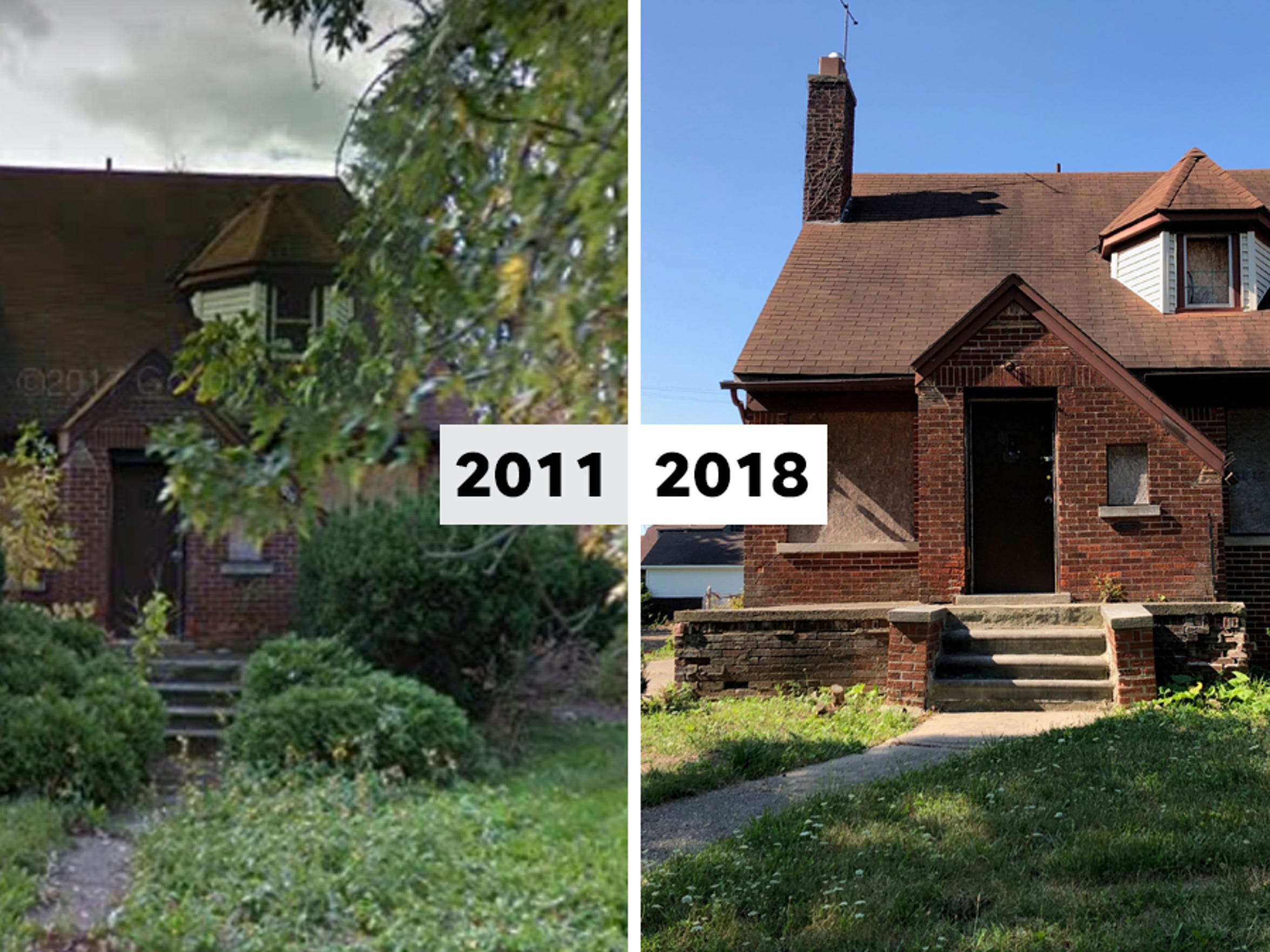
This house is at 9217 Bishop St. in Detroit.
Of course, it's not just speculators who lose. The residents of the neighborhoods — those who lack the most agency, financial capital and say in what occurs around them — have borne the biggest burden: blight and exploitation.
While Kentfield is a good example of how the auction and speculation conspire to breed blight and dysfunction, it is only one of many damaged streets.
Driving around Detroit — east side, west side — the conditions are the same.
Take 9217 Bishop St.
Bishop Street is only 11 miles east of Campus Martius in downtown Detroit. But it might as well be in another city.
On an airless Wednesday afternoon John Dillon, 80, sat in front of his house talking with Andre Moore, a former neighbor and now friend.
Moore had moved to the neighborhood — on Yorkshire Street, a block over — in 1987. His was, he said, the third black family to move to the block.
“I left in 1997, and when I left, every house had people in it,” Moore said from Dillon’s stoop. Kitty-corner, and just in view, is 9217 Bishop, one of the 23 homes that, at one point, ended up in the hands of Whitaker.
In 2008, the house was lost to mortgage foreclosure over a $98,174 debt and ended up in the hands of Aurora Loan Services.
Aurora Loan Services sold the house to SD Associates by quit claim deed, for an undisclosed sum, and that same year, SD Associates sold the house to a buyer for $3,499.
That buyer lost the home to tax foreclosure in 2012, though Aurora Loan Services was the name on the foreclosure notices. And Benjigates purchased the house at the 2012 Wayne County Tax Auction for $500.
In June 2015, the Detroit Land Bank went before Judge Robert Colombo asking that he declare the house a nuisance. But this did not deter Benjigates, in December 2015, from selling the house to Elliott's Asset Management in a bundle of 21 homes for $5,000 ($238 per house).
In January 2016, Asset Management sold the house to Elite Value Properties in a bundle of eight houses for $4,000 ($500 per house). In February 2016, Elite sold the house to Fortner and Kiska for an undisclosed sum in a quit claim deed. In February 2018, Judge Colombo ordered the property be taken over by the Detroit Land Bank. Last month, the Detroit Land Bank sold the property to an individual buyer for $1,900.
These granular details and transactions are almost irrelevant to Dillon — who goes by "Pops" — and Moore. While there is hope that someone like the new buyer can actually reactivate the space, what they see, right now, is abandonment.
Abandonment that feels like quicksand. It is nearly impossible to stop the trend once it’s started.
“I can’t leave because I can’t afford to,” said Dillon, who purchased his house 25 years ago when the neighborhood was still bustling.
He pays $700 a month on his mortgage, which he is “just about” done with. Then he will own the house in full. A house that when he bought it — in a then-diverse and densely populated neighborhood — had value.
“I was born and raised in Detroit and I cry when I see this,” said Dillon. “A whole block of lots and every other one is mowed. Take it away from the people who are just holding on and sitting on it. The people who are playing. They should have to pay to tear it down.”
Moore, who now lives in Southfield, nodded as “Pops” spoke.
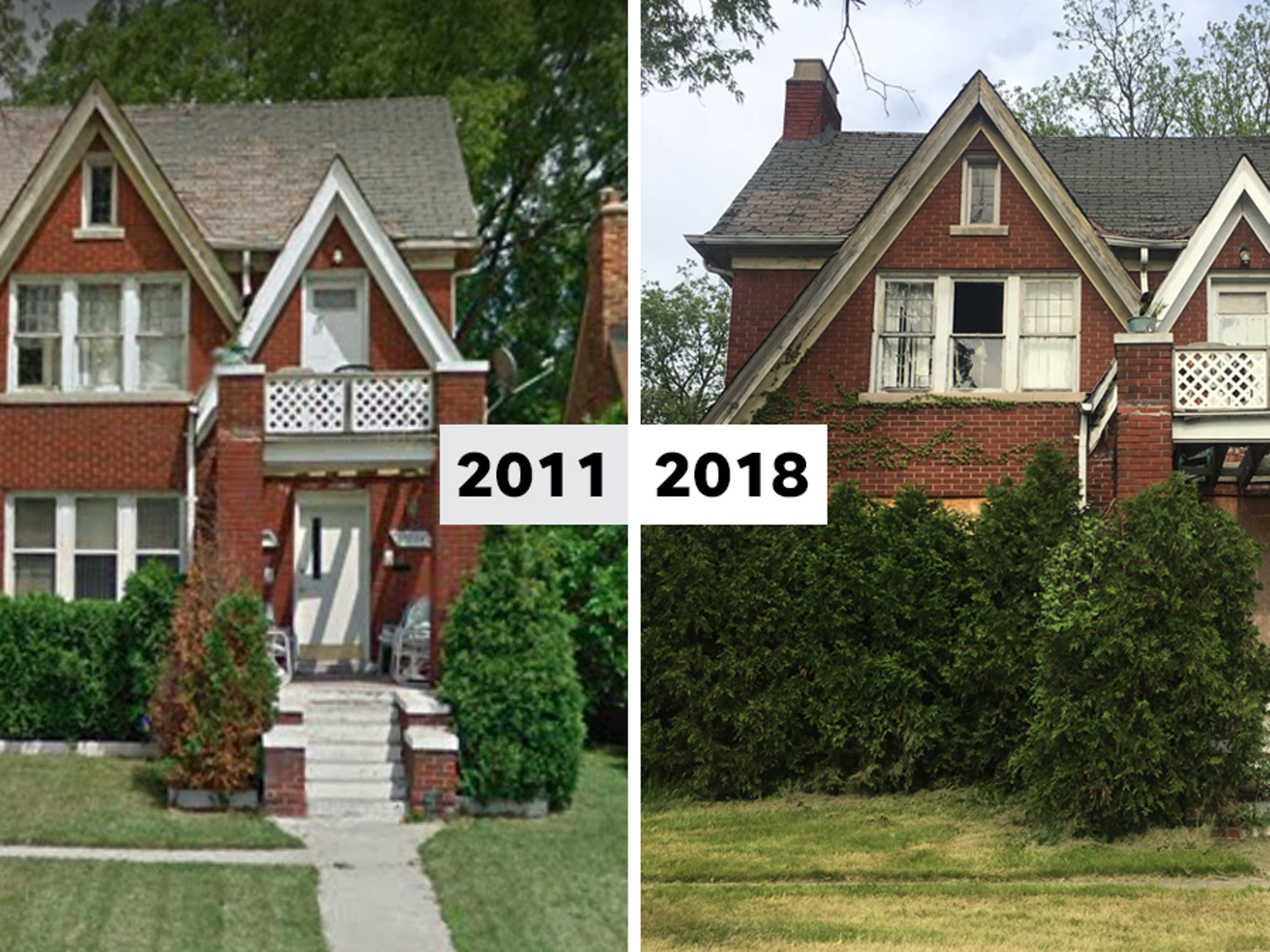
This house is at 13224 Hubbell Ave. in Detroit.
“I feel sad, sad knowing how it was. How it used to work,” the 46-year-old said. “It was beautiful.”
Across town, the people may be different, but blocks, houses and stories sound eerily similar.
If Cynthia Brown and her brother KB craned their heads, they could see 14923 Hubbell, another property picked up by Benjigates in the 2012 auction for $500.
Like Kentfield and Bishop, the Hubbell house was passed along in the same bundle of 21 properties from Benjigates to Elliott in Chico and then on to Whitaker in Los Angeles, and then, eventually, to Fortner and Kiska in Illinois.
Like Kentfield, nobody paid property taxes on the house. In the fall of 2016, it was sold in the auction for $500 to Brian Pepper. In November, Pepper sold the house to Florida-based Lima & Charlie Business Investments for $51,000.
The high sale price — an almost mythical figure — is what attracts so many to the speculator game. But despite the elevated sale price, the house is still an eyesore. It still stands vacant.
"What a market does is it provides some sort of private ordering. It gives value. You are matching, in theory, supply and demand. People who want something and someone willing to sell something," said Hammer, the WSU law professor, synthesizing the situation.
"When you have this absence of a market, it’s an environment for just random and bizarre things to take place with a theme of exploitation and pipe dreams of making money off housing."
Brown and KB didn’t know about the California companies that had owned the house or the Florida investment company that had just bought it.
What they did know was that RD Ware, KB’s best friend, had owned the home. When Ware died, his stepson started to take care of the house. Then it was lost to tax foreclosure.
The home is clearly abandoned today. Plywood serves as a door or a barrier, depending on who you are. The once delicate flowers that grew out front are gone.
But the grass outside is cut.
This, according to Brown, is because the neighbors next door refuse to let it get out of control.
“The couple next door pay to have the grass cut, to make it look lived in,” Brown said. “To keep the neighborhood going.”
Protecting the most vulnerable
Getting a handle on the chaos caused by speculation is difficult.
In January 2015, Gov. Rick Snyder signed into law a bill that prohibits individuals with a foreclosed property or delinquent taxes from bidding in the auction. Land contracts, which put the taxes on the tenant, however, give bulk buyers, speculators, an out.
More notably, many are buying under LLCs and so the issue of being associated with a foreclosed property is harder to come to light. One needs to just register a new LLC and continue to bid, under the radar.
The result of the auction and speculation have drastically altered the makeup of Detroit.
Black homeownership peaked in Detroit in 2000 with 144,571 units, according to Akers and Seymour. By 2015 that share fell by 46 percent to 95,506 units.
“As oversimplifying as it is, there are two Detroits," Akers said of downtown rising and neighborhoods deteriorating. "I don’t really know how you debate that.”
The Wayne County Treasurer's Office points to the declining number of occupied houses in the auction as evidence of a new direction that the office has taken since Eric Sabree was appointed in April 2016.
The county went from 28,000 foreclosures in 2015 to less than 7,000 this year.
"The Wayne County Treasurer is always focused on doing what he can to improve stability in neighborhoods and reducing foreclosures, down to zero if possible," Mario Morrow, spokesperson for Sabree said, noting that Sabree is bound, by law, to hold an auction every year.
In terms of the allowance of speculators partaking in the auction, Morrow says Sabree's hands are tied. While all auction participants must sign an affidavit, which includes a promise that nobody listed as a grantee on the deed has delinquent property taxes, beyond this, Morrow says, it's hard to monitor.
"The Wayne County Treasurer's Office doesn’t have the resources, financial or human, to police thousands of properties that are sold in the auction. Input from the community is appreciated in that regard. So, yes, the Treasurer and the office care but cannot, on their own, resolve all concerns.
Legally, speculators are allowed to purchase as long as they’ve followed the rules," Morrow said.
As of July, there were 3,959 structures and lots on the county's foreclosure list — a list that if nothing changes over this month, will be indicative of what is up for grabs in the 2018 Wayne County Tax Auction, which starts next month.
The county did not provide occupancy stats in its list, but Loveland Technologies did an analysis and found 1,866 unoccupied structures, 1,405 occupied structures, 419 vacant lots and 269 unknowns.
Back on Detroit's northwest side, Anderson was happy: 17529 Kentfield had sold for a second time since it landed in the 2016 Wayne County Tax Auction.
The house was still boarded up but there were four cars in the empty lot next to it, and — most notably — signs of life. A motorcycle, two lawnmowers, two BBQs and piles of trash were scattered across the front lawn.
An older couple, Anderson said, had bought it. They were, she said, clearing it out.
There was hope that after the four years since Eli Brown had been kicked out, a new, stable and permanent neighbor would return.
"They're taking the debris out," Anderson said with a smile. "I'm just glad someone got it."
Contact Allie Gross: AEGross@freepress.com. Follow Allie on Twitter @Allie_Elisabeth.