Showing posts sorted by relevance for query bioethics. Sort by date Show all posts

Saturday, October 19, 2019

JUDICIARY: Online Platforms and Market Power, Part 3: The Role of Data and Privacy in Competition - Bioethics In Modern Day Human Trafficking

Iceland has a generational genetic repository.

Penn State University seems to run the bioethics portion of modern day human trafficking in support of Iceland's commercialization of really, really, tiny humans, like genomes for genomic predictive modeling crap.

Wayne State University has the blood bank.

University of Michigan has the library system of predictive modeling crap.

Michigan State University looks to be the keyman for all the human lab rat experiments.

WHO definitions of genetics and genomics
 Genetics is the study of heredity.1 Genomics is defined as the study of genes and their functions, and related techniques. 1,2 The main difference between genomics and genetics is that genetics scrutinizes the functioning and composition of the single gene where as genomics addresses all genes and their inter relationships in order to identify their combined influence on the growth and development of the organism.

Bioethics is just another reengineered component when it comes to the residuals of the peculiar institution, which is what shall eventually aid in the obviation of policy and law, specifically in the areas of procurement for inurement.

deCODE genetics
https://www.decode.com/
https://cofs.lara.state.mi.us/CorpWeb/CorpSearch/CorpSummary.aspx?ID=801050160&SEARCH_TYPE=3


Voting is beautiful, be beautiful ~ vote.©

Friday, December 10, 2010

Seventeen More U.S. Families Take Giving Pledge

Bet this is ruffling a few feathers in the conservative camp.


The time has come to reinvest in the social infrastructure.  Give a legacy.


Seventeen More U.S. Families Take Giving Pledge 
Additional Billionaires Pledge Majority of Wealth to Philanthropy 
SEATTLE Dec. 8, 2010 – Seventeen more of America’s wealthiest families have committed to returning the majority of their wealth to charitable causes by taking the Giving Pledge. The announcement of a second group of pledgers follows news in August of this year when 40 families took the pledge, a long-term charitable project launched by Warren Buffett and Bill and Melinda Gates. 
“People wait until late in their career to give back. But why wait when there is so much to be done?” said Mark Zuckerberg, co-founder, CEO and president of Facebook. “With a generation of younger folks who have thrived on the success of their companies, there is a big opportunity for many of us to give back earlier in our lifetime and see the impact of our philanthropic efforts.” 

“I’m delighted to welcome these 17 families into the Giving Pledge community,” said Warren Buffett, pledge co-founder and chairman and CEO of Berkshire Hathaway. “In just a few short months we’ve made good progress. The Giving Pledge has re-energized people thinking about philanthropy and doing things in philanthropy and I look forward to many more conversations with families who are truly fortunate, and whose generosity can and will change lives.” 

Announced in June, the Giving Pledge now includes 57 families from across the United States. Additionally, both Buffett and the Gateses have begun conversations with billionaires from other countries to learn about their philanthropy efforts and what has worked in their countries. 

“The Giving Pledge is about changing the culture of giving," said Peter Singer, professor of bioethics in the University Center for Human Values at Princeton University and author of “The Life You Can Save.” “Research shows that when people know that others are giving, they are themselves more likely to give. So publicly pledging to give will encourage others to give. This holds true for billionaires and for those of us who aren't anywhere near that level of wealth. We can all make a difference, and play our part in making the world a better place.” 

A full list of those taking the pledge and personal letters by many of these pledgers outlining their commitment to give is available online at www.givingpledge.org. 

The Giving Pledge is an effort to help address society’s most pressing problems by inviting the wealthiest American families and individuals to commit to giving more than half of their wealth to philanthropy or charitable causes. The pledge is a moral commitment to give, not a legal contract, and it does not involve pooling money or supporting a particular set of causes or organizations. While it is specifically focused on billionaires or those who would be billionaires if not for their giving, the idea takes its inspiration from other efforts that encourage and recognize givers of all financial means and backgrounds. Seventeen More U.S. Families Take Giving Pledge Page 2 

December 2010 Pledge Signatories (by State): California 
Michael and Lori Milken 
Dustin Moskovitz 
Mark Zuckerberg 
Illinois 
Joe and Rika Mansueto 
New York 
Nicolas Berggruen 
Ted Forstmann 
Carl Icahn 
Sidney Kimmel 
Tom and Cindy Secunda 
Charles Zegar and Merryl Snow Zegar 
New Jersey 
Lee and Toby Cooperman 
Duncan and Nancy MacMillan 
Oklahoma 
David and Barbara Green 
South Dakota 
Denny Sanford 
Texas 
Lyda Hill 
George P. Mitchell 
Virginia 
Jean and Steve Case 

Monday, November 7, 2011

CPS Can Now Steal The Twinkle In Your Eye

Child Protection folks are ready to celebrate another victory by tagging prospective foster kids at the point of conception.

This is the best marketed scheme of population control I have yet to witness.  The implications are unconceivable.  Policies can be developed to adjudicate a termination of parental rights case before a woman is even impregnated.

I can see the next conservative initiative which will be mandatory sterilization to prevent intergenerational poverty and stop all the lazy people who will not get a job but will have babies to live off good christian tax payers.

How best to steal the twinkle in your eye than by passing a state constitutional amendment in support of the godly emerging market of human trafficking...oh, I mean "personhood".


Personhood measure divides conservative ranks


On Tuesday Mississippi voters will decide whether to approve a measure, Initiative 26, that would amend the state constitution to define the word “person” to include every human being “from the moment of fertilization, cloning, or the functional equivalent thereof.”
On the surface, it would seem to be a favorable advance for the cause of abortion opponents but the nature of the measure has sparked concern among some anti-abortion advocates that the passage of the measure could eventually threaten already-existing abortion restrictions.
Mississippi Gov. Haley Barbour, a Republican, told NBC’s Chuck Todd last week that he believes that life begins at conception but “unfortunately, this personhood amendment doesn’t say that. It says that life begins at fertilization or cloning or the functional equivalent thereof.” He said, “That ambiguity is striking a lot of pro-life people here as concerning.”
Nonetheless Barbour later overcame his misgivings and said he voted for the measure when he cast his absentee ballot in advance of Tuesday. He also complained Friday that a group opposing the ballot measure, “has called people's homes and deceived voters into thinking I'm opposed to Initiative 26, the Personhood Amendment. As I've previously stated, I voted for the Personhood Amendment.”
Despite his vote, Barbour was articulate in explaining why some anti-abortion advocates think the Mississippi measure is either misguided or may lead to unintended consequences. 
He said, “Strategically, there’s some national organizations that think this may mess up trying to get more pro-life policies adopted nationally.”
He also said, “I am concerned about some of the ramifications on in-vitro fertilization (and) ectopic pregnancies, pregnancies outside the uterus in the Fallopian tubes. That concerns me, I have to just say it.”
Jennifer Mason, a spokeswoman for PersonhoodUSA, a Colorado group which is supporting the Mississippi measure, said its proponents “were able to answer his concerns and that’s why he voted for it.”  Mason cited a study by a conservative group, the Mississippi Center for Public Policy, which determined that Initiative 26 would not outlaw in vitro fertilization.

A statewide vote has a lot of women in fear over the future of certain forms of birth control. NBC's Than Truong reports.
But, in an opinion piece in the Mississippi Business Journal, Jonathan Will, director of the Mississippi College School of Law’s Bioethics and Health Law Center, who opposes the measure, said “If two out of three pre-embryos are lost in the (in vitro fertilization) process, this would seem to be an unacceptable loss of life. If we are committed to pre-embryonic personhood, we should be committed to banning IVF and other similarly risky fertility treatments until such technologies are safe for all persons (including pre-embryos) involved.”

Prominent conservative lawyer James Bopp, who has argued several abortion and free speech cases before the Supreme Court and is the general counsel for the National Right to Life Committee, said that lower federal courts would be likely to strike down the Mississippi measure, if it were enacted, and that the Supreme Court would likely not review the lower court’s ruling.
But if the high court did agree to hear the case, Bopp said, there is a “very substantial danger” that a majority of the justices would adopt a stronger basis for finding that there is a fundamental right to abortion than the due process rationale Justice Harry Blackmun used in the landmark 1973 Roe v. Wade decision.
If that were to happen, Bopp said, the current state and federal restrictions on abortion, such as the Hyde amendment banning federal funding of abortions in the Medicaid program, and laws requiring parental notification before a minor get an abortion, would be swept away.
Bopp sketched out his concerns in a widely circulated memo, pointing to the argument that Justice Ruth Bader Ginsburg made in her dissent in Carhart v Gonzales, the 2007 decision in which the justices upheld the federal law banning the procedure known as partial birth abortion.
A constitutional right to abortion, Ginsburg said, ought to “center on a woman’s autonomy to determine her life’s course, and thus to enjoy equal citizenship stature.”
Mason said Personhood USA’s lawyers think Bopp is wrong. “What we’re expecting to happen with the personhood amendment is that abortion will be made illegal in Mississippi. And that is what the pro-life movement has been working for since the passage of Roe v. Wade -- to ensure that all children in the womb have their personhood rights recognized…. This is a definite way to see some actual results.”
A ballot measure similar to that in Mississippi was rejected by Colorado voters in 2010. Proponents of personhood efforts plan to try to get the measure on the ballot in Florida, Ohio, Oregon and Indiana in future elections.
Updating with a comment from Alexa Kolbi-Molinas, staff attorney with the ACLU Reproductive Freedom Project:
She said the group is hopeful that "voters will reject this attempt to allow government to interfere in the most personal health care decisions of Mississippi’s women and families.  However, should the amendment pass, all options are on the table -- including litigation. We will not stand by while thousands of women and families are placed at risk.”

Sunday, February 27, 2011

Wikileaks Exposes Drugging Kids as Lab Rats

Do not believe for one moment the practice of using people under the care of the state and the poor for clinical drug trials has ended, nor should you believe people no longer cover up such practices.

AP IMPACT: Ugly US medical experiments uncovered

ATLANTA -- Shocking as it may seem, U.S. government doctors once thought it was fine to experiment on disabled people and prison inmates. Such experiments included giving hepatitis to mental patients in Connecticut, squirting a pandemic flu virus up the noses of prisoners in Maryland, and injecting cancer cells into chronically ill people at a New York hospital.
Much of this horrific history is 40 to 80 years old, but it is the backdrop for a meeting in Washington this week by a presidential bioethics commission. The meeting was triggered by the government's apology last fall for federal doctors infecting prisoners and mental patients in Guatemala with syphilis 65 years ago.
U.S. officials also acknowledged there had been dozens of similar experiments in the United States - studies that often involved making healthy people sick.  Read more


In child welfare, under the guise of the "best interests of the child" principle, secrecy laws prevent exposing the use of poor and foster children as lab rats.


Uganda's poor children
Children of third world countries and nations in transition have become 'laboratory rats' for the US' clinical tests for new drugs, an Indian newspaper says.


Under US' 1997 legislation called the Pediatric Exclusivity Provision, intended to speed up development of new drugs for American kids, the trials were carried out in countries such as Uganda and India, The Times of India reported.

Although the trials were carried out in such countries, using their children as laboratory rats, it is not clear if okayed medicines might ever become available there and whether they will be affordable for them.

The most egregious activity of using vulnerable poor children as lab rats is the generation of imperialistic morality propaganda to defend the practices of big pharma.


One of the biggest protectors of the practice of using foster kids as lab rats is the law.  The next level of protection comes from media personalities who wanted to persecute the persons who brought this to light.


Glenn Beck covering up
using poor kids as lab rats
"America has suffered an embarrassing leak of classified information via WikiLeaks. According to some reports today, this is the largest loss of sensitive information by a world superpower in all of human history. But the question is, what did we learn from these? Is there anything new here? I've seen much of what it out there and I've heard the people on TV talk about it. This is merely serving to tell you what you already knew – the government is lying to you."

The only way the Department of Justice can approach the issue of stopping the practices of using poor children as lab rats is to engage in unconventional methods.  The Wikileaks or Cablegate scandal allowed for prosecution of health care fraud.  It is not much, but it is a start.
U.S. Embassy Cable on Pfizer Clinical Trials on Children, Their Murders and Settlement


Monday, July 8, 2019

Mike Pompeo Pushes Corporate Parental Rights As The Unalienable Right - Meet Mary Ann Glendon, Representing The Holy See

This is about parental rights, the acquisition of goods, where those goods are tiny humans.

This is about corporate parental rights for asset forfeiture of a civil debt by foreign entities to steal the children, the land and the votes.

This is about corporations being animated to have christian beliefs of chattel law as an individual.

This is about the re-engineering of the residuals of the peculiar institution.

Pompeo is from Kansas.

Do not forget that.

Mike Pompeo unveils panel to examine 'unalienable rights'

Mike Pompeo
Mike 
Secretary of State Mike Pompeo on Monday unveiled a new Commission on Unalienable Rights, a panel he said is aimed at providing him with “an informed review of the role of human rights in American foreign policy.”

The panel will be headed up by Mary Ann Glendon, a Harvard law professor and former ambassador to the Vatican under George W. Bush. Glendon is also a social conservative who has been a prominent anti-abortion voice, which could lend credence to the concerns among human rights activists that the commission is a ploy to undercut LGBTQ and women’s rights under the guise of religious liberty.

Can you get anymore obviously biased?

In remarks at the State Department on Monday, Pompeo noted that “words like ‘rights’ can be used by good or evil,” decrying how some have “hijacked” human rights rhetoric to be used for “dubious or malignant purposes.”

Glendon, in brief comments, echoed that, telling reporters that "basic human rights are misunderstood by many, manipulated by many, and ignored by the world’s worst human rights violators."

“Every once in a while we need to step back, and reflect seriously on where we are, where we’ve been and whether we’re headed in the right direction,” Pompeo said. He hailed former first lady Eleanor Roosevelt’s 1948 Declaration on Universal Human Rights as one of the foundational documents for the commission’s work, but noted that the panel would serve as advisers as opposed to policymakers.

While Pompeo was vague in laying out what exactly the panel will do, emphasizing its focus on “principles” over “policy,” he praised its members as those he hoped would facilitate "one of the most profound reexaminations of the unalienable rights in the world since the 1948 universal declaration."

The commission will be made up of 10 members who represent a range of religious backgrounds. Many are religious scholars, with at least one other joining Glendon in having been appointed to represent the Vatican on social issues in the past. One, Hamza Yusuf, is one of the founders of the first Muslim liberal arts college in America. Another, Christopher Tollefsen, specializes in moral philosophy, natural law ethics, practical ethics and bioethics.

Pompeo indicated that the panel could also be used in part to rein in overzealous invocations of human rights, suggesting the group “revisit the most basic of questions: What does it mean to say or claim that something is in fact a human right?”

“How do we know — or how do we determine — whether that claim ... is it true and therefore ought it to be honored? How can there be human rights rights we possess, not as privileges we are granted or even earn, but simply by virtue of our humanity belong to us?” he asked. “Is it in fact true, as our Declaration of Independence asserts, that as human beings we — all of us, every member of our human family — are endowed by our creator with certain unalienable rights?”

In an op-ed published Monday morning in the Wall Street Journal, the secretary expressed hope that the group would “reorient” institutions like the UN “back to their original missions.”

“Many have embraced and even accelerated the proliferation of rights claims—and all but abandoned serious efforts to protect fundamental freedoms,” he wrote, complaining that “human-rights advocacy has lost its bearings and become more of an industry than a moral compass.”

Reactions to the new panel were split on Monday. In a statement cheering Pompeo‘s formation of the commission, Tony Perkins, head of the conservative Christian group Family Research Council, said that the panel would be useful in light of governments like Cuba, China and Iran who the group said "have wormed their way onto 'human rights commissions' in their search for international legitimacy."

"Other special interest groups have sought to expand the definition of a 'human right' to include virtually anything. If everything is a human right then the term begins to have little meaning," he said.

In addition, Perkins added, the commission would further promote religious liberty abroad, which he hailed as the "foundation for all other human rights."

Amnesty International, meanwhile, accused Pompeo of using the panel to politicize human rights and pointed to the Trump administration’s rollback of rights for LGBTQ citizens.

"If this administration truly wanted to support people's rights, it would use the global framework that's already in place. Instead, it wants to undermine rights for individuals, as well as the responsibilities of governments," said Joanne Lin, the group’s national director of advocacy and government affairs. "This approach only encourages other countries to adopt a disregard for basic human rights standards and risks weakening international, as well as regional frameworks, placing the rights of millions of people around the world in jeopardy."

And at least one religious group said it was viewing the commission’s formation with skepticism. Rori Kramer, director of government affairs for the American Jewish World Service, criticized Pompeo for employing what she called a “narrow view of religion as a means to undermine the ecumenical belief of respecting the dignity of every person.”

Kramer argued that Pompeo “clearly illustrated” the panel “will be used to question the very notion that basic human rights are inherent in all individuals.”

A pair of congressional Democrats also ripped the commission.

House Foreign Affairs Chairman Eliot Engel said in a statement Monday that the new panel amounted to an end-run around established structures within the department, and touted an amendment in a House spending bill passed last month that would block funding for "this bizarre effort."

He claimed that the group Pompeo had selected would "give preference to discriminatory ideologies that would narrow protections for women, including on reproductive rights; for members of the LGBTQI community; and for other minority groups," and he hit the secretary for providing little information regarding plans for the commission.

And Sen. Bob Menendez, the top ranking Democrat on the Foreign Relations Committee, called Pompeo's claims that human rights had been manipulated "absurd" and asserted the new commission would only weaken human rights.

"President Trump’s personal affection for gross human rights violators has stained America’s moral fabric," he said, pointing to the president's praise for leaders such as North Korea's Kim Jong Un and the Philippines' Rodrigo Duterte. "No Trump Administration commission can erase that."


Former US ambassador to Holy See to chair new human rights commission


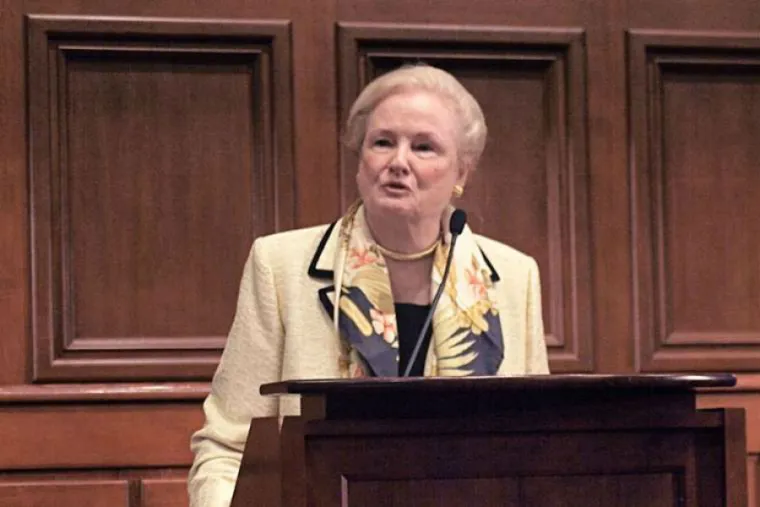
Mary Ann Glendon lectures at Harvard University. Credit: Harvard Law Records (CC BY 2.0).
Mary Ann Glendon
Washington D.C., Jul 8, 2019 / 02:00 pm (CNA).- Mary Ann Glendon, former U.S. Ambassador to the Holy See, will head a new human rights advisory body to the U.S. State Department, Secretary of State Mike Pompeo announced on Monday.

“It’s a sad commentary on our times that more than 70 years after the Universal Declaration on Human Rights, gross violations continue throughout the world,” Secretary Pompeo stated at a July 8 press conference announcing the new Commission on Unalienable Human Rights.

Pompeo said that “the time is right for an informed review of American human rights in foreign policy,” and that Glendon was “the perfect person to chair this effort” and chair the new commission.

Glendon, a former U.S. Ambassador to the Holy See in 2008-09, is a Harvard Law professor with expertise in international human rights.

She was named to the Pontifical Academy of Social Sciences by Pope St. John Paul II in 1994, led a delegation of the Holy See to the fourth U.N. Women’s Conference in Beijing in 1995, and served as head of the Pontifical Academy of the Sciences from 2004-14. In 2018, she resigned as a memeber of the Board of Superintendence, which oversees the IOR, commonly known as the Vatican Bank.

Glendon also served as a commissioner on the U.S. Commission on International Religious Freedom from 2012 until 2016, appointed by Sen. Mitch McConnell (R-Ky.).

During Monday’s press conference, Glendon thanked Pompeo “for giving a priority to human rights at this moment when basic human rights are being misunderstood by many, manipulated by many, and ignored by the world’s worst human rights violators.”

The commission, according to Secretary Pompeo, will be an advisory body made up of human rights experts, philosophers and others from across the political spectrum, with the core mission of advancing  “our nation’s founding principles and the principles of 1948 Universal Declaration of Human Rights.”

In addition to Glendon, commission members include Notre Dame Law professor Paolo Carozza; Katrina Lantos Swett, former chair of the U.S. Commission on International Religious Freedom; and philosopher Christopher Tollefsen.

In an op-ed in the Wall Street Journal on Sunday, Secretary Pompeo noted current confusion between “inalienable” rights and those granted by governments, and how contemporary discourse has confused the two with people “appealing to contrived rights for political advantage.”

“Human-rights advocacy has lost its bearings and become more of an industry than a moral compass,” he wrote, adding that institutions like the United Nations, tasked with upholding fundamental human rights, have contributed to the confusion.

Pompeo added on Monday that the commission members “will provide the intellectual grist for what I hope will be one of the most profound reexaminations of the unalienable rights in the world since the 1948 Declaration.”

“I hope that the commission will revisit the most basic of questions: What does it mean to say or claim that something is, in fact, a human right? How do we know or how do we determine whether that claim that this or that is a human right, is it true, and therefore, ought it to be honored?” Pompeo said.

“How can there be human rights, rights we possess not as privileges we are granted or even earn, but simply by virtue of our humanity belong to us? Is it, in fact, true, as our Declaration of Independence asserts, that as human beings, we – all of us, every member of our human family – are endowed by our creator with certain unalienable rights?”


Voting is beautiful, be beautiful ~ vote.©

Monday, September 2, 2019

Biogenetic Legal Library Of Corporate Parental Rights - The Acquisition Of Asset Forfeiture Of Tiny Human Chattels - Courtesy Of The Detroit Land Bank Authority & Hillary Clinton's Campaign


But wait, it gets better!

Michigan is the first state to initiate the maximization of revenues from a fetus.

Yes, that is correct, you can file for a tax credit for the fetus, which, by the way this bill is introduced, I would most definitely say this was specifically written for corporate parents, who may just so happen to be foreign corporations.

Here is the Michigan Fetal Death Reporting Form.....for a facility, which is a commercial way of identifying the corporate parent.

As seen on the form, there is even opportunity for Medicaid Fraud in Child Welfare.

A fetal death indicates that the corporate parent is "salvaging the soul" of the child, for financial leveraging purposes, only, of course, to be listed in the manifest of some UCC lien, to be pirated off to a foreign land in the children's trust of the Public Private Partnership, across the seas of maritime law, under some form of allodial title of nobility.

Good thing Hillary is building her new privatized law libraries for trafficking tiny humans because she has a campaign to run in Detroit!


SENATE BILL NO. 393

August 20, 2019, Introduced by Senator BARRETT and referred to the Committee on Finance.

A bill to amend 1967 PA 281, entitled

"Income tax act of 1967,"

by amending section 8 (MCL 206.8), as amended by 2018 PA 38.

THE PEOPLE OF THE STATE OF MICHIGAN ENACT:

Sec. 8. (1) "Department" means the revenue division of the department of treasury.

(2) "Dependent" means a dependent any of the following:

(a) A qualifying child as defined in section 152 of the internal revenue code.

(b) A qualifying relative as defined in section 152 of the internal revenue code.

(c) A fetus that has, as determined by a physician, completed at least 12 weeks of gestation as of the last day of the tax year, and that has been under the care and observation of a physician since at least 12 weeks of gestation. As used in this subdivision:

(i) "Fetus" means an individual organism of the species Homo sapiens at any time before complete delivery from a pregnant woman.

(ii) "Physician" means an individual licensed to engage in the practice of medicine or the practice of osteopathic medicine and surgery under article 15 of the public health code, 1978 PA 368, MCL 333.16101 to 333.18838.

(3) "Employee" means an employee as defined in section 3401(c) of the internal revenue code. Any person from whom an employer is required to withhold for federal income tax purposes shall prima facie be deemed an employee.

(4) "Employer" means an employer as defined in section 3401(d) of the internal revenue code. Any person required to withhold for federal income tax purposes shall prima facie be deemed an employer.

Enacting section 1. This amendatory act is effective for tax years beginning on and after January 1, 2019.

Genomenon
https://www.genomenon.com/nih-grant-micropublications-genomic-interpretation/

Genomenon Wins NIH Grant to Develop Micropublications for Genomic InterpretationGrant to Automate Variant Interpretation and Create Platform for Sharing Micropublications Across the Genomics Community

Genomenon, Inc., the leading genomic search engine company, announced today that it was awarded a grant by the National Institutes of Health. The Small Business Innovation Research (SBIR) grant, awarded by the National Human Genome Research Institute*, will fund Genomenon’s further innovation in automating aspects of genomic interpretation from the research literature, and the creation of a platform for producing and sharing “micropublications” across the genomics community.

Micropublications are designed to rapidly place research findings and reviews in the public domain. Curated genomic variant interpretation can be made more efficient if findings and reviews can be rapidly published and shared across the research and clinical community. The grant funds Genomenon’s work to automatically organize the information relevant to genomic classification, along with conclusive content from scientific references, publish the findings, and share the information in a public format.

Importantly, the aim is to allow users to modify and keep up to date the micropublication as new research is published in the field so the findings are always up to date.

“This grant allows us to build on the work from our last successful NIH funding to increase the automation of variant interpretation and allow users to rapidly share their findings across the scientific community.” said Genomenon’s Co-founder and CSO, Dr. Mark Kiel. “This automated micropublication platform will help accelerate the sharing of knowledge as more and more genomic research is being published every year.

* Research reported in this publication was supported by the National Human Genome Research Institute of the National Institutes of Health under Award Number R43HG010446. The content is solely the responsibility of the authors and does not necessarily represent the official views of the National Institutes of Health.

About Genomenon

Genomenon connects patient DNA with the billions of dollars spent on research to help doctors diagnose and cure cancer patients and babies with rare diseases.

Our flagship product, the Mastermind Genomic Search Engine is used by hundreds of genetic labs worldwide to accelerate diagnosis, increase diagnostic yield and assure repeatability in reporting genetic testing results.

We license our Mastermind Curated Genomic Datasets to pharmaceutical and bio-pharma companies to inform precision medicine development, deliver genomic biomarkers for clinical trial target selection, and support CDx regulatory submissions with empirical evidence.

For more information, contact us.

Genomic is in the investment portfolio of Invest Detroit, courtesy of the Detroit Land Bank Authority "Legal Geniuses" (trademark pending).

https://web.archive.org/web/20190701232844/https://investdetroit.com/

https://beverlytran.blogspot.com/search?q=duggan+infant+mortality

Modern day human trafficking is just so much fun!

Have a great day!

#perkinscoiesucks

Voting is beautiful, be beautiful ~ vote.©

Sunday, January 11, 2015

CPS Files Child Abuse Charges for Connecticut Teen to Get Chemo

This is a basic Child Protective Services case of child abuse and medical neglect.
Cassandra Fortin's mother

The parents fail to exhibit a rudimentary understanding of medicine.  As a result the parents failed to provide for the necessary needs of the child.

This is considered medical neglect.

The girl, being under the age of 18 years, falls under the auspices of the state.

I am waiting to see how the child welfare case plays out in court as the parents can face termination of parental rights.

Connecticut Teen With Curable Cancer Must Continue Chemo: Court

A 17-year-old Connecticut girl with a highly curable cancer is not mentally competent to make her own medical decisions and will continue to receive the chemotherapy treatments she's battled to halt, the Connecticut Supreme Court ordered Thursday.

Chief Justice Chase T. Rogers ruled that the teen — listed only as Cassandra C. in legal records — is not mature by any standard. 

That means Cassandra will remain at a Hartford hospital, in the temporary custody of child-welfare workers, and will receive her full course of chemotherapy to treat Hodgkin lymphoma. Doctors have said her odds at recovery are 80 to 85 percent with chemo, but that she will die without it. 

Cassandra, diagnosed in September, had sought to avoid chemo treatments because she views the medicine as "poison." Her mother, Jackie Fortin, has said she support's her daughter's decision.
But recent behaviors and actions by Cassandra's mother — including several skipped oncology appointments and exams — were cited by state lawyers Thursday as they asserted the teen is too immature to make life-altering decisions. 

"The mother took the front seat on this," John E. Tucker, assistant Connecticut attorney general, testified before the panel. "She (Fortin) didn't bring her to the first medical appointment. 

"The child was very quiet, did not engage in conversations during the medical appointments. And for a 17-year-old, as you can imagine, that's a little bit unusual," Tucker added. "Really, the mother did all of the talking and sort of the fighting with the medical personnel. And so, really, the child stands in the shadow of her mother here. She's not an independent decision maker. 

"It was really the mother driving the bus." 

In an interview Wednesday with NBC News, Fortin denied pressuring her daughter into her decision to forgo chemo. 

"I am not coercing her at all and that is what this is about, what they think I am doing," Fortin said.
Cassandra simply does not want to be infused with "toxic" chemicals, Fortin added. 

"My daughter does not want poison in her body. This is her constitutional right as a human being," Fortin told NBC News. "She is almost 18. [Her birthday is nine months away]. If she was 18, I don't think this would be an issue. She is not 10. She is over 17. She is very bright, very smart." 

To that point, Fortin's attorney, Michael Taylor, argued before the panel Thursday that Connecticut laws allow teens under age 18 to drive and to donate blood. 

And when it comes to a minor's ability to make decisions about their own bodies, Taylor argued that both Connecticut courts and the U.S. Supreme Court have previously ruled that a person's right to "common-law bodily integrity is a fundamental right," and that right "exists in the minor the same as it could in an adult." 

What's more, if Cassandra is found to have reached an adult level of maturity, that should preclude state child-welfare workers from retaining temporary custody of the 17-year-old and allow the girl to make her own medical decisions, Taylor argued. 

"If a person is sufficiently mature, if Cassandra is sufficiently mature, then that state interest evaporates. Her fundamental right remains. … Then, the state has no interest in undermining her fundamental rights," Taylor said. 

After Cassandra was removed from her mother's home in December by state child-welfare workers, she was admitted to Connecticut Children's Medical Center (CCMC) in Hartford. The teen's cell phone was taken away and hospital staff pulled the land line out of her room, blocking communication between daughter and mother, court records show. 

Since early December, she's been undergoing chemotherapy. Assistant attorney general Tucker told the panel "the child is doing remarkably well" amid those treatments. 

"And I would note that the child is mid-treatment here," Tucker said. "To interrupt that treatment would be devastating, even more devastating than delaying the treatment in the initial instance." 

Starting, stopping and then, later, re-starting chemotherapy for Hodgkin lymphoma can transform the disease from a highly curable illness to far more lethal disease, Dr. Mitchell Smith, director of the lymphoid malignancy program at the Cleveland Clinic, told NBC News. 

"If she's been in the middle of treatment and then stops and then the disease comes back, that's harder because a lot of times what (cancer) cells that will then come back are now resistant to the chemotherapy," Smith said. (He is not involved in Cassandra's care). 

"Then you're talking about, if you want to cure the disease, you have to go through stem-cell transplant," Smith said. "You (would then) have to go through even more intense treatment with more risks to try to get rid of it." 

Bioethicist Arthur Caplan believes Cassandra, at 17, should not have the right to make a life-and-death medical decision. 

"The primary goal in this case is to save a young life," Caplan wrote in an essay for NBCNews.com. "This is a disease where medicine can do that. Admittedly, the treatment sucks, but it works ..." Caplan is founding head of the division of bioethics at NYU Langone Medical Center. 

"Respecting choice is important," Caplan wrote. "Not burying a young teenage girl who would have lived is far more important.


Voting is beautiful, be beautiful ~ vote.©

Sunday, June 30, 2019

CRISPR & Christian Pro Life Propaganda Campaign For Corporate Parental Rights

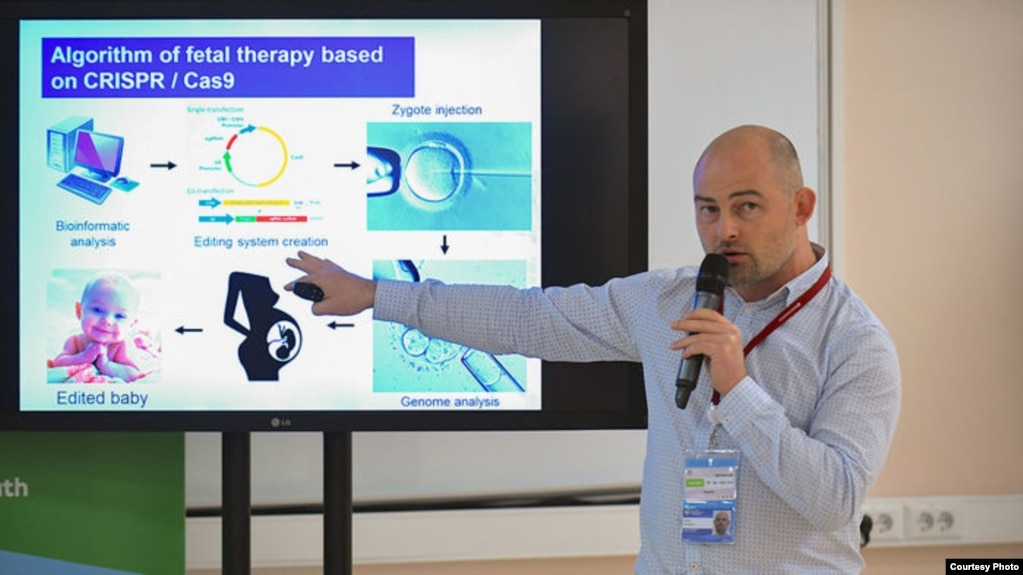
Denis Rebrikov: "My position is that I don't want to do it silently. I want to do it publicly, with publicity so that we can talk about it."
"No more birds and bees because we only need hosts."
(I bet some may not even be human hosts - they're here...)
Before you were a fetus, you were a zygote, but do not tell that to the christian pro life advocates.

That would mean they would have to drop everything and re-engineer their entire personhood laws being rammed through the States.

Yes, science should matter when making law, but, alas, it does not.

CRISPR research uses zygotes.

Zygotes can be made in a test tube.

So, where do they get those zygotes?

These zygotes come from Snowflakes and the pro life movement.
Collecting zygotesZygotes with an abnormal number of pronuclei were obtained from patients undergoing IVF from September 2017 to April 2018 at the NMITS AHP them. V.I. Kulakova. From 11 pairs, 21 abnormal zygotes were obtained (16 were injected with CRISPR-Cas9 and 5 served as controls).
TRANSLATION: ABORTION
The National Institute of Health funds CRISPR research in food production.

Infant mortality is the product of the pro life movement.

Preterm births is just another method of getting those zygotes.

This gives birth to just another facet in the arguments of parental rights, because these zygotes were procured by corporations.

This takes chattel law to nanolevel of analysis because it is legal to sell tiny humans.

Russian Biologist Welcomes Backlash Over His Plan For Gene-Edited Babies

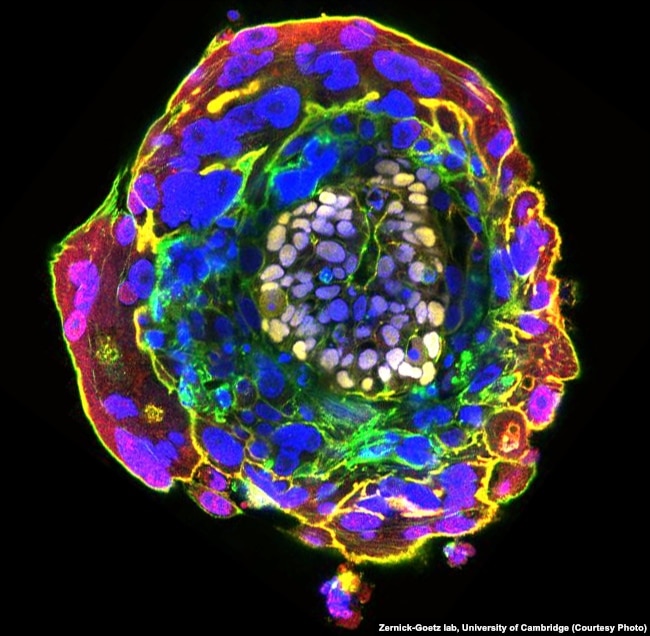
A human embryo, 11 days old
Before you are a fetus, you are a zygote
A Russian biologist has thrust himself to the forefront one of the world's most urgent medical-science debates by declaring his intention to use CRISPR gene-editing techniques to modify the genomes of human embryos and implant them in women.

Denis Rebrikov, a DNA-technology specialist who heads a genome-editing lab at a Moscow fertility clinic, vowed this month to seek Russian authorities' approval to disable a gene, known as CCR5, in carefully selected embryos of would-be mothers who are HIV-positive or who suffer from specific genetic disorders.
The aim would be to block the transmission of the condition and at least boost resistance in the lab-altered newborns, beginning as soon as this year.

"I don't like to use the term genetically modified," Rebrikov told RFE/RL, in English, on June 27. "It's just a correction of a mutation we have in [some] babies."

The plan has raised an international outcry over the fate of such "CRISPR babies" and the ethical and technological implications, amplifying fears that arose when Chinese scientist He Jiankui made a shock announcement last year that he'd modified the genomes of recently born twin girls.

Scientists and ethicists have grappled for decades with the practical and moral obstacles to genetic engineering in plants and animals. Genome editing in human embryos that are then transferred into a woman is seen as a thick red line for many.

Rebrikov said he welcomed the controversy since the influential scientific journal Nature quoted him two weeks ago vowing to go forward as soon as he had suitable volunteers and local approval. "My position is that I don't want to do it silently," he told RFE/RL. "I want to do it publicly, with publicity so that we can talk about it."

'Crazy,' Slippery Slope,' 'Designer Babies'

The debate over lab-directed gene mutations intensified when biologist He told the world in November he had edited the same CCR5 gene in "Lulu" and "Nana," twin month-old girls who he said appeared to be healthy.

The revelation embarrassed Chinese authorities, who quickly suspended He's activities, and added to the chorus of calls for a global moratorium on such work.

The 43-year-old Rebrikov works at the Kulakov National Medical Research Center for Obstetrics, Gynecology, and Perinatology as well as the Pirogov Russian National Research Medical University. Unlike the controversial Chinese scientist, Rebrikov said, "I didn't show any babies -- just work."
The World Health Organization (WHO) has formed an expert advisory committeeto develop "global standards for governance and oversight of human-genome editing," but its conclusions appear to be at least a year off.

A number of the WHO committee's members have already condemned Rebrikov's eagerness to proceed, using terms like "irresponsible" and "cowboy."

Other scientists and geneticists have called his plan "crazy" or a "slippery slope." Another cited familiar fears of "designer babies."

But WHO committee co-chairwoman and former U.S. Food and Drug Administration (FDA) director Margaret Hamburg acknowledged to the medical news site STAT that they don't have "the teeth to do some of what may ultimately need to be done" in the face of such pioneering efforts.

Russian Advantage?

Rebrikov must still find suitable cases and volunteer subjects from among a small subset of HIV-infected women or parents who share the mutation for a condition like deafness or dwarfism, and then convince at least three Russian regulatory bodies to green-light the plan.

"Russia now, I think, is a good country to do this type of experiment," Rebrikov told ScienceInsider recently. "It's not very free in politics, but it's very free in science."

Rebrikov expanded on that notion to RFE/RL, saying it was a reference to Russia's regulatory environment. "In Russia, we have a very good system of idea centers," he said. "The point is not the technology. It's mostly all the same technology everywhere. It's a regulatory point, and I think that the specificity of Russia is that we can make a decision to use some technology or clinical methods...on the level of a ministry or a local body."

Nature published an editorial that acknowledged Rebrikov's "skills, tools, and position" and praised his willingness to publicly discuss plans for his gene-altering work. But it urged the scientific community to "act now on CRISPR babies" and insisted "Rebrikov must listen to the concerns and the critics, and not move forward until the dangers are assessed."

Almost overnight, the high-profile effort at a breakthrough by Rebrikov and his team has boosted Russia's profile in genetic sciences and gene editing -- a field that was revolutionized with the emergence in 2015 of the so-called CRISPR technique that employs molecular "scissors" to find and replace functional bits of DNA.

Technical Challenges

CRISPR's appeal is that it helps modify genes -- in theory, to remove unwanted characteristics for more desirable ones -- without introducing outside DNA, for instance from a bacterial carrier agent.
But experts warn there could be unforeseen effects on "CRISPR babies" because of changes to the gene in question ("on-target" mutation) or a CRISPR mistake that alters the wrong snippet of a genome ("off-target" mutation).

Some of those consequences might only appear later in life, they say, and could include susceptibility to other diseases, shortened life spans, or other tragic outcomes.

They stress the tradeoff between the risk of error and the benefits of gene-editing to combat conditions that might be rare and otherwise mitigable.

Rebrikov said his lab had a system -- "I think unique" -- that allowed careful checking for "off-target" effects of a genome editor.

A bigger obstacle, he acknowledged, was ensuring that all the cells in a blastocyst that will develop into the embryo are free of problems, rather than just the five-to-seven cells that can be inspected in the lab.

...And Ethical

Beyond scientific and ethical challenges, Rebnikov's plans could invite objections on religious grounds. "The attempts of human beings to put themselves in the place of God by changing and 'improving' His creation at their will may bring to humanity new burdens and suffering," the Russian Orthodox Church stated in a chapter on bioethics in its Basis Of The Social Concept.

The leadership of the Russian Orthodox Church wields considerable influence and boasts 90 million or so adherents.

"I think it's a good situation that we're talking about it, because the population should be ready for a [new] technology, and now they're not ready," Rebrikov told RFE/RL. "To make society ready, we should be talking about it -- a lot. We need to discuss it over and over, until a majority [of] society says, 'OK, the research is safe and researchers will do everything correctly,' and society will accept it."

He and his colleagues first hinted at his intentions in a research paper in the Biomedical Journal of Pirogov RNRMU in October. In it, they said preclinical work suggested that a CRISPR-Cas9 modification should "protect the fetus from HIV infection in utero and at childbirth" and provide "a potential lifelong immunity to HIV."

"Importantly, the edited genome will be passed on to subsequent generations," the paper predicted.
HIV/AIDS remains a growing epidemic in Russia, with nearly 1 million infections by official estimates but more than twice that number according to some.

Rebrikov has said his target group would be women who are resistant to antiretroviral (ARV) treatments to purge their blood of the HIV virus that can lead to AIDS but who nevertheless want to have children.

He conceded that statistics suggest the number of such women is only around 30 in all of Russia, out of a population of around 145 million people.

But because HIV is not always transferred "vertically" from a parent, Rebrikov would prefer to target cases where both parents suffer from a genetic disorder that is more likely to be passed. "I don't like the HIV case because we couldn't say 100 percent that the baby would be infected," he told RFE/RL.

In plants and animals, genetic modification has been used for decades under evolving regulatory climates to boost crop resistance to disease or pestilence, to bring meatier cattle or fish to the table sooner, or to simplify the delivery of vaccines, among other things.

But scientists have warned about the threat genetically modified organisms pose to biodiversity, the mixing of modified stocks with wild animals, and more unforeseen problems.
And the public has been wary of the effects on consumers, the food chain, and the environment.

Voting is beautiful, be beautiful ~ vote.©