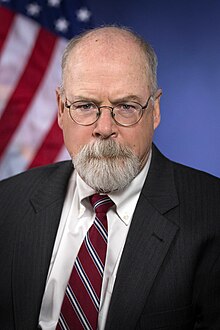
The Honorable Joseph Maguire assumed the role of Acting Director of National Intelligence (DNI) on Aug. 16, 2019.
Prior to serving as Acting DNI, Maguire served as the sixth director of the National Counterterrorism Center (NCTC). In this role, Maguire bolstered NCTC’s relationship with the White House and Congress. He also spearheaded a reorganization to merge three main areas of focus for the CT mission to better align the end-to-end management of CT operations against the most pressing threat of terrorists gaining and using WMD. As NCTC Director, he also served as the National Intelligence Manager for Counterterrorism, responsible for integrating and coordinating all intelligence collection and analysis on CT targets.
Prior to his confirmation as NCTC Director, Maguire served as president and CEO of the Special Operations Warrior Foundation, a non-profit organization whose philanthropic mission is to support combat-wounded and hospitalized special operations personnel, as well as the families and dependents of fallen special operators.
He took this position after leaving his role as Vice President at Booz Allen Hamilton, which was his first job upon retirement from active duty in 2010, after a 36-year career as a Naval Special Warfare Officer (SEAL). He commanded at every level, including the Naval Special Warfare Command.
While on active duty, Vice Admiral Maguire served as NCTC’s Deputy Director for Strategic Operational Planning from 2007 to 2010 and represented the Center as a part of the National Security Council’s Counterterrorism Security Group. In this role, he led the development of the government’s most senior-level strategies and operational plans for CT, as well as the unbiased, objective evaluation of the progress in achieving the goals and objectives of those strategies.
He earned his bachelor’s degree from Manhattan College and a master’s degree in National Security Affairs with a major in Scientific and Technical Intelligence from the Naval Postgraduate School in Monterey, CA. While in the Navy, Maguire was a national security fellow at the John F. Kennedy School at Harvard University in Cambridge, MA. He was born in Brooklyn, NY, and remains an avid fan of the New York Yankees.
WASHINGTON — The Democratic head of the House Intelligence Committee, Representative Adam B. Schiff of California, learned about the outlines of a C.I.A. officer’s concerns that President Trump had abused his power days before the officer filed a whistle-blower complaint, according to a spokesman and current and former American officials.
The early account by the future whistle-blower shows how determined he was to make known his allegations that Mr. Trump asked Ukraine’s government to interfere on his behalf in the 2020 election. It also explains how Mr. Schiff knew to press for the complaint when the Trump administration initially blocked lawmakers from seeing it.
The C.I.A. officer approached a House Intelligence Committee aide with his concerns about Mr. Trump only after he had had a colleague first convey them to the C.I.A.’s top lawyer. Concerned about how that initial avenue for airing his allegations through the C.I.A. was unfolding, the officer then approached the House aide. In both cases, the original accusation was vague.
The House staff member, following the committee’s procedures, suggested the officer find a lawyer to advise him and meet with an inspector general, with whom he could file a whistle-blower complaint. The aide shared some of what the officer conveyed to Mr. Schiff. The aide did not share the whistle-blower’s identity with Mr. Schiff, an official said.
Sign Up for On Politics With Lisa Lerer
A spotlight on the people reshaping our politics. A conversation with voters across the country. And a guiding hand through the endless news cycle, telling you what you really need to know.
“Like other whistle-blowers have done before and since under Republican and Democratic-controlled committees, the whistle-blower contacted the committee for guidance on how to report possible wrongdoing within the jurisdiction of the intelligence community,” said Patrick Boland, a spokesman for Mr. Schiff.
In his whistle-blower complaint, the officer said Mr. Trump pressured the Ukrainian government to investigate a host of issues that could benefit him politically, including one connected to a son of former Vice President Joseph R. Biden Jr.
A reconstituted transcript released by the White House of a call between Mr. Trump and President Volodymyr Zelensky of Ukraine backed up the whistle-blower’s account, which was itself based on information from a half-dozen American officials and deemed credible by the inspector general for the intelligence community, Michael Atkinson.
Mr. Trump, who has focused his ire on Mr. Schiff amid the burgeoning Ukraine scandal, wasted no time in trying to use the revelation about the whistle-blower’s attempt to alert Congress to try to denigrate his complaint. In a news conference in the East Room of the White House after this article was published, Mr. Trump called it a scandal that Mr. Schiff knew the outlines of the whistle-blower’s accusations before he filed his complaint.
“Big stuff. That’s a big story,” Mr. Trump said, waving a copy of the article in the air. “He knew long before and helped write it, too. It’s a scam,” the president added, accusing Mr. Schiff of helping the whistle-blower write his complaint. There is no evidence that Mr. Schiff did, and his spokesman said he saw no part of the complaint before it was filed.
The whistle-blower’s decision to offer what amounted to an early warning to the intelligence committee’s Democrats is also sure to thrust Mr. Schiff even more forcefully into the center of the controversy as a target of Mr. Trump’s.
Earlier Wednesday, Mr. Trump said Mr. Schiff should be forced to resign for reading a parody of the Ukraine call at a hearing, an act Mr. Trump has called treasonous and criminal.
“We don’t call him shifty Schiff for nothing,” Mr. Trump said. “He’s a shifty, dishonest guy.”
Mr. Schiff’s aides followed procedures involving whistle-blower’s accusations, Mr. Boland said. They referred him to an inspector general and advised him to seek legal counsel.
Mr. Schiff never saw any part of the complaint or knew precisely what the whistle-blower would deliver, Mr. Boland said.
“At no point did the committee review or receive the complaint in advance,” he said. He said the committee received the complaint the night before releasing it publicly last week and noted that that came three weeks after the administration was legally mandated to turn it over to Congress. The director of national intelligence, Joseph Maguire, acting on the advice of his top lawyer and the Justice Department, had blocked Mr. Atkinson from turning over the complaint sooner.
In response to questions, spokeswomen for Senators Richard M. Burr of North Carolina, the Republican chairman of the Senate Intelligence Committee, and Mark Warner of Virginia, its Democratic vice chairman, said it was standard procedure to refer whistle-blowers to the relevant inspectors general.
The future whistle-blower went to Mr. Schiff’s committee after he grew concerned about the first investigation he had touched off.
The C.I.A. officer first had a colleague take his concerns — in vague form — to the C.I.A.’s general counsel, Courtney Simmons Elwood, who began a preliminary inquiry by contacting a deputy White House counsel, alerting the White House that complaints were coming from the C.I.A.
As C.I.A. and White House lawyers began following up on the complaint, the C.I.A. officer became nervous, according to a person familiar with the matter. He learned that John Eisenberg, a deputy White House counsel and the legal adviser to the national security adviser, was among those scrutinizing his initial allegation.
Contacts in the National Security Council had also told the C.I.A. officer that the White House lawyers had authorized records of Mr. Trump’s call with Mr. Zelensky to be put in a highly classified computer system, meaning that the lawyers who were now helping the C.I.A. investigate the officer’s allegations were the same ones implicated in them. The officer has alleged that White House aides’ decision to store the call records more restrictively was itself an abuse of the system.
The C.I.A. officer decided the complaint he had brought to Ms. Elwood was at risk of being swept aside, prompting him to go to the lawmakers who conduct oversight of the intelligence agencies.
He followed the advice of Mr. Schiff’s aide and filed his complaint to Mr. Atkinson. And though Mr. Maguire blocked him from forwarding it to Congress, he did allow Mr. Atkinson to notify lawmakers of its existence.
The complaint was filed in consultation with a lawyer, officials said. “The intelligence community whistle-blower followed the advice of legal counsel from the beginning,” said Andrew Bakaj, the lead counsel for the whistle-blower. “The laws and processes have been followed.”
Filing a complaint with Mr. Atkinson gave the whistle-blower added protections against reprisals and also allowed him to legally report on classified information. While House Intelligence Committee members are allowed to receive classified whistle-blower complaints, they are not allowed to make such complaints public, according to a former official. A complaint forwarded to the committee by the inspector general gives it more latitude over what it can publicize.
By the time the whistle-blower filed his complaint, Mr. Schiff and his staff knew at least vaguely what it contained.
Mr. Schiff, after a private letter and phone call to Mr. Maguire, publicly released a letter seeking the complaint and suggested it could involve Mr. Trump or others in his administration. Mr. Schiff followed up by subpoenaing documents from Mr. Maguire and requesting him to testify before the intelligence panel.
Officials in Mr. Maguire’s office, who did not know the details of the complaint, were puzzled why Mr. Schiff went public right away, eschewing the usual closed-door negotiations.
But letters from the inspector general and Mr. Maguire had made clear to the House Intelligence Committee that the Justice Department and the White House were blocking Mr. Maguire’s office from forwarding the complaint.
Congressional officials insisted that Mr. Schiff and his aides followed the rules. Whistle-blowers regularly approach the committee, given its role in conducting oversight of the intelligence agencies, Mr. Boland said.
“The committee expects that they will be fully protected, despite the president’s threats,” Mr. Boland said, referring to the whistle-blower without identifying his gender. “Only through their courage did these facts about the president’s abuse of power come to light.”
A president may not just remove his public speech, or did he?
Everything he says is preserved in the Library of Congress which makes me wonder whose feathers got ruffled.
Trump accused Schiff of reading a false claim into the public, congressional record, which is used for obviation, for the best interests of the children, who are the posterity of this nation, by and through fraud, which becomes testimony in the public square, for the purposes of generating a false record to use for grounds for impeachment.
That sounds like a Right to Lie except that Schiff is an elected office holder.
In essence, Trump accused a member of congress of treason in the public record for violating his oath of office by bearing false witness.
It was at that point that I realized impeachment is basically the legal model for termination of parental rights, like a CPS case.
This is a transposable model.
The next stage is to set up expulsion from congress.
The purpose of expulsion is to defrock the office holder and their right to bear the arms of the U.S., which puts then into the jurisdiction of the land, meaning they can be held accountable in their district jurisdictions.
Keep in mind, there is an entire legal network approaching from the districts through the referrals of OSC to CIGIE to the joint, conjugal collaborations as I like to call them, special task forces in local, county, state, federal and international, well, for Detroit it is international.
So, I would consider "leaks" to be a fat ass worm, on a hook, where it was pulled form the waters just in time to see which fish came up to eat it.
It seems like John Solomon was that Big Salmon.
We still have those issue with McGahn, because Trump's entire cabinet is a straight up, no chaser, bible thumping group of trafficking tiny human privateers, and no, I did not stutter when I said that.
The House Intelligence Committee really, really wants that whistleblower complaint, but I believe their focus is on the "other" whistleblower complaint.
Sue Gordon, the whistleblower no one will name, dropped a complaint about the Trump-Ukraine phone call that she heard about from a friend of a friend who saw it on the news....
The secondary purpose of the whistleblower complaint is to alert the Ukraine and the DNC operatives who are rumored to have the DNC servers and stuff, on their alleged Detroit 2016 Election Interference..... oups j'ai dit une betise!
See, these "Legal Geniuses (trademark pending) are trying to set precedent with the Smarty Pants so they can get a hold of the "Whistleblower Protected by Order of the Highest Authority" to find out what they can do to prevent the heavens from falling.
They have absolutely no clue of the preceding, ongoing qui tam actions about stealin'the children, land and votes.
The Celestial Goddess of the Woodshed has popcorn.
And the moral of the story is, "Do not be mean to my Sweetie."
Washington, DC – Today, the House Permanent Select Committee on Intelligence released the declassified whistleblower complaint. The Intelligence Community Inspector General letter regarding the complaint can be viewed here.
“The Committee this morning will be releasing the declassified whistleblower complaint that it received late last night from the ODNI. It is a travesty that it was held up this long. “This complaint should never have been withheld from Congress. It exposed serious wrongdoing, and was found both urgent and credible by the Inspector General. “This complaint is a roadmap for our investigation, and provides significant information for the Committee to follow up on with other witnesses and documents. And it is corroborated by the call record released yesterday. “I want to thank the whistleblower for having the courage to come forward, despite the reprisals they have already faced from the president and his acolytes. We will do everything in our power to protect this whistleblower, and every whistleblower, who comes forward. “The public has a right to see the complaint and what it reveals.”
The nation's top intelligence official is illegally withholding a whistleblower complaint, possibly to protect President Donald Trump or senior White House officials, House Intelligence Committee Chairman Adam Schiff alleged Friday.
Schiff issued a subpoena for the complaint, accusing acting Director of National Intelligence Joseph Maguire of taking extraordinary steps to withhold the complaint from Congress, even after the intel community's inspector general characterized the complaint as credible and of "urgent concern."
“A Director of National Intelligence has never prevented a properly submitted whistleblower complaint that the [inspector general] determined to be credible and urgent from being provided to the congressional intelligence committees. Never," Schiff said in a statement. "This raises serious concerns about whether White House, Department of Justice or other executive branch officials are trying to prevent a legitimate whistleblower complaint from reaching its intended recipient, the Congress, in order to cover up serious misconduct."
Schiff indicated that he learned the matter involved "potentially privileged communications by persons outside the Intelligence Community," raising the specter that it is "being withheld to protect the President or other Administration officials." In addition, Schiff slammed Maguire for consulting the Justice Department about the whistleblower complaint "even though the statute does not provide you discretion to review, appeal, reverse, or countermand in any way the [inspector general's] independent determination, let alone to involve another entity within the Executive Branch."
"The Committee can only conclude, based on this remarkable confluence of factors, that the serious misconduct at issue involves the President of the United States and/or other senior White House or Administration officials," Schiff wrote in a letter to Maguire on Friday.
The initial whistleblower complaint was filed last month, and Schiff indicated that it was required by law to be shared with Congress nearly two weeks ago. His subpoena requires the information to be turned over by Sept. 17 or else he intends to compel Maguire to appear before Congress in a public hearing on Sept. 19.
Schiff said Maguire declined to confirm or deny whether the whistleblower's complaint relates to anything the Intelligence Committee is currently investigating or whether White House lawyers were involved in the decision-making about the complaint.
Officials in Maguire’s office acknowledged Schiff’s subpoena late Friday.
“We received the HPSCI's subpoena this evening. We are reviewing the request and will respond appropriately,” said a senior intelligence official. “The ODNI and Acting DNI Maguire are committed to fully complying with the law and upholding whistleblower protections and have done so here.”
"Would you do the honors and drop Detroit first, or shall I?"
This just keeps getting better and better.
Benjamin "Bibi" Netenyahu, Prime Minister of Israel, released the reasons for denying entry into Israel, but he was kind enough not to say "incompetence".
For instance: they listed the destination of their trip as Palestine and not Israel, and unlike all Democratic and Republican members of Congress who have visited Israel, they did not request to meet any Israeli officials, either from the government or the opposition.
Such a shame Rashida was not as transparent as Bibi, but, then again, she does have that Epstein issue going on.
#sayhisname
In addition, the organization that is funding their trip is Miftah, which is an avid supporter of BDS, and among whose members are those who have expressed support for terrorism against Israel.
Principal Deputy DNI Sue Gordon embodies the spirit of public servants in America. I worked with countless people like her, who did their work with pride, integrity, and urgency because they loved the mission of serving America. Shame to lose her. https://t.co/Wk4QJUDVMB
"TEVA, anyone?", said Herrington, the Super Secret Agent Whistleblower.
Yes, John Ratcliffe is leaving Congress, the U.S. Judiciary Committee, to become the new Director of National Intelligence, replacing Dan Coats, to work with U.S. Attorney Bill Barr.
For those who do not remember, or simply do not like to click the links I provide to review what I have been presenting, here is a fun video on Ratcliffe and his work in trafficking tiny humans.
You can see how effective Ratcliffe was when it came to trafficking tiny humans by watching Gowdy's lovely facial expressions.
WASHINGTON -- The North Texas Republican picked by President Donald Trump to be America's next intelligence chief is grappling with reports that he embellished his role in a high-profile anti-terrorism case he's cited as proof of his national security bona fides.
At issue is the extent of Heath Rep. John Ratcliffe's involvement as a federal prosecutor in the U.S. vs. Holy Land Foundation case, which ended in 2009 with officials at a Texas-based charity being found guilty of funneling money to the terrorist group known as Hamas.
Jim Jacks, one of the Holy Land case's lead prosecutors, also told The Dallas Morning News on Tuesday that Ratcliffe "wasn't part of the trial team or the investigative team." Asked if it was accurate to say that Ratcliffe "convicted individuals" in the case, he said, "No."
In response to those reports, Ratcliffe spokeswoman Rachel Stephens clarified this week that the Texan, while serving as U.S. Attorney for the Eastern District of Texas, was appointed to investigate issues related to the mistrial that occurred in the case's first trial.
"Because that investigation did not result in any criminal charges, it would not be in accordance with Department of Justice policies to make further details public," she said, confirming a written statement provided to ABC News and NBC News.
Jacks, a former U.S. attorney in the Northern District of Texas, confirmed that depiction, explaining that Ratcliffe was "appointed to look into a collateral matter after the first trial" and that the assignment lasted for a "relatively short-lived period of time."
He added that he found Ratcliffe to be "very smart, a very good lawyer, just first-rate."
The dispute over the Holy Land case is no mere résumé dispute.
"Mr. Ratcliffe appears to be somebody who is more interested in pleasing Donald Trump," John Brennan, CIA director under President Barack Obama and a frequent Trump critic, said this week on MSNBC.
Stephens rejected those criticisms, pointing to Ratcliffe's experience as a federal prosecutor and then as a congressman serving on the House intelligence and judiciary committees.
"Ratcliffe opened, managed and supervised numerous domestic and international terrorism related cases," she said of his time in the U.S. attorney's office, adding that he "handled top secret, secret and confidential national security information as part of his daily responsibilities."
The Texan's allies have also defended his qualifications.
Texas Sen. John Cornyn on Monday called Ratcliffe a "worthy successor" to Coats, upon whom he heaped praise. Trump on Tuesday hailed Ratcliffe as a "very talented guy. "And former U.S. attorney Matt Orwig, who hired Ratcliffe, said he was "imminently qualified."
Orwig sought to further buttress Ratcliffe's standing by telling ABC News that his one-time protégé worked several terrorism-related cases, though he declined to specify them.
The former top prosecutor in the Eastern District of Texas also told The News that when Ratcliffe served as his anti-terrorism and national security chief, he worked to "bring together all the state, federal and local agencies" involved in security efforts.
"That's the job that he did," Orwig said. "He did it very, very well."
Federal Judge Hands Downs Sentences in Holy Land Foundation Case
Holy Land Foundation and Leaders Convicted on Providing Material Support to Hamas Terrorist Organization
Today, in federal court in Dallas, U.S. District Judge Jorge A. Solis sentenced the Holy Land Foundation for Relief and Development (HLF) and five of its leaders following their convictions by a federal jury in November 2008 on charges of providing material support to Hamas, a designated foreign terrorist organization.
"Today's sentences mark the culmination of many years of painstaking investigative and prosecutorial work at the federal, state and local levels. All those involved in this landmark case deserve our thanks," said David Kris, Assistant Attorney General for National Security. "These sentences should serve as a strong warning to anyone who knowingly provides financial support to terrorists under the guise of humanitarian relief."
HLF was incorporated by Shukri Abu Baker, Mohammad El-Mezain, and Ghassan Elashi. Mufid Abdulqader and Abdulrahman Odeh worked as fund raisers. Together, with others, they provided material support to the Hamas movement.
Shukri Abu Baker, 50, of Garland, Texas, was sentenced to a total of 65 years in prison. He was convicted of 10 counts of conspiracy to provide, and the provision of, material support to a designated foreign terrorist organization; 11 counts of conspiracy to provide, and the provision of, funds, goods and services to a Specially Designated Terrorist; 10 counts of conspiracy to commit, and the commission of, money laundering; one count of conspiracy to impede and impair the Internal Revenue Service (IRS); and one count of filing a false tax return.
Mohammad El-Mezain, 55, of San Diego, California, was sentenced to the statutory maximum of 15 years in prison. He was convicted on one count of conspiracy to provide material support to a designated foreign terrorist organization.
Ghassan Elashi, 55, of Richardson, Texas, was sentenced to a total of 65 years in prison. He was convicted on the same counts as Abu Baker, and one additional count of filing a false tax return.
Mufid Abdulqader, 49, of Richardson, Texas, was sentenced to a total of 20 years in prison. He was convicted on one count of conspiracy to provide material support to a designated foreign terrorist organization, one count of conspiracy to provide goods, funds, and services to a specially designated terrorist, and one count of conspiracy to commit money laundering.
Abdulrahman Odeh, 49, of Patterson, New Jersey, was sentenced to 15 years in prison. He was convicted on the same counts as Abdulqader.
HLF, now defunct, was convicted on10 counts of conspiracy to provide, and the provision of, material support to a designated foreign terrorist organization; 11 counts of conspiracy to provide, and the provision of, funds, goods and services to a Specially Designated Terrorist; and 10 counts of conspiracy to commit, and the commission of, money laundering.
The Court reaffirmed the jury’s $12.4 million money judgment against all the defendants, with the exception of El Mezain, who was not convicted of money laundering.
From its inception, HLF existed to support Hamas. Before HLF was designed as a Specially Designated Terrorist by the Treasury Department and shut down in December 2001, it was the largest U.S. Muslim charity. It was based in Richardson, Texas, a Dallas suburb. The "material support statute," as it is commonly referred to, was enacted in 1996 as part of the Antiterrorism and Effective Death Penalty Act. That statute recognizes that money is fungible, and that money in the hands of a terrorist organization — even if for so called charitable purposes — supports that organization’s overall terrorist objectives.
The government presented evidence at trial that, as the U.S. began to scrutinize individuals and entities in the U.S. who were raising funds for terrorist groups in the mid-1990s, the HLF intentionally hid its financial support for Hamas behind the guise of charitable donations. HLF and these five defendants provided approximately $12.4 million in support to Hamas and its goal of creating an Islamic Palestinian state by eliminating the State of Israel through violent jihad.
The government’s case included testimony that in the early 1990's, Hamas’ parent organization, the Muslim Brotherhood, planned to establish a network of organizations in the U.S. to spread a militant Islamist message and raise money for Hamas. The government’s case also included testimony about Hamas material found in zakat committees. The defendants sent HLF-raised funds to Hamas-controlled zakat committees and charitable societies in the West Bank and Gaza. Zakat is an Arabic word referring to the religious obligation to give alms.
HLF became the chief fundraising arm for the Palestine Committee in the U.S. created by the Muslim Brotherhood to support Hamas. According to a wiretap of a 1993 Palestine Committee meeting in Philadelphia, former HLF President and CEO Shukri Abu Baker, spoke about playing down their Hamas ties in order to keep raising money in the U.S. Another wiretapped phone call included Abdulrahman Odeh, HLF’s New Jersey representative, referring to a suicide bombing as "a beautiful operation."
The government also presented evidence that several HLF defendants have family members who are Hamas leaders, including Hamas’ political chief, Mousa Abu Marzook, who is married to a cousin of Ghassan Elashi, HLF’s former Chairman of the Board. Ghassan Elashi, who also served as the vice-president of marketing for Infocom Corporation, is currently serving an 80-month sentence following his conviction on several charges related to export violations. Mohammed El-Mezain was HLF’s Director of Endowments and Mufid Abdulqater was a major HLF fundraiser. Two named defendants, Akram Mishal and Haitham Maghawri are fugitives.
The defendants provided financial support to the families of Hamas martyrs, detainees, and activists knowing and intending that such assistance would support the Hamas terrorist organization. Since 1995, when it first became illegal to provide financial support to Hamas, HLF provided approximately $12.4 million in funding to Hamas through various Hamas-affiliated committees and organizations located in Palestinian-controlled areas and elsewhere.
During trial, the government also presented evidence that HLF was so concerned about investigators uncovering the group’s intentions that they kept a manual entitled "The Foundation’s Policies and Procedures." HLF followed various security procedures outlined in the manual to include hiring a security company to search the HLF for listening devices, ordering defendant Haitham Maghawri, a fugitive, to take training on advanced methods in detecting wiretaps, shredding documents after board meetings, and maintaining incriminating documents in off-site locations.
The case was investigated by the Joint Terrorism Task Force, involving agents from federal, state, and local agencies including: FBI, IRS - Criminal Investigation, U.S. Immigration and Customs Enforcement (ICE), Department of State, U.S. Secret Service, U.S. Army Criminal Investigation Division, the Texas Department of Public Safety, and the Dallas, Plano, Garland and Richardson, Texas, Police Departments. In addition, the Department of Justice Criminal Division’s Asset Forfeiture and Money Laundering Section provided assistance.
The case was prosecuted by James T. Jacks, acting U.S. Attorney; Barry Jonas, Trial Attorney for the Department of Justice Counter-terrorism Section; and Elizabeth J. Shapiro, Deputy Director, Federal Programs Branch, Department of Justice, serving as a Special Assistant U.S. Attorney.
You can easily secure Voting Age Databases in excel from your local city clerk for a nominal fee per variable.
You can search real estate, credit histories, and property taxes which is what they call polling data.
Through what they call Public Private Partnerships, there are those I like to call Predictive Modeling Crappers because they mesh local, state, and federal databases, like Social Security, medical, financial, property, tax, organ donation, court cases, criminal, insurance records and run their forecasting models for gerrymandering, like they did with Michigan in 2010 with the fake ass Emergency Manager Law and its manufactured Detroit Bankruptcy fraud scheme.
There are nefarious schemes being nurtured through social networks to cloak manipulations in elections by targeting specific audiences, then swooping in with some foreign money to further the foreign interest by pushing a social presence of a candidate, which is a fraud.
There are databases of operatives you can hire CPAC and KeyWiki who will go out on into the cyberforest and plant their seeds of discourse as explained so well explained in the video.
Then, through the doctrine of "If You Do Not Live There, You Can Not Vote There", someone you got into government administration runs an absentee ballot scheme with laws passed by the last group of spokestokens you put into office passed.
Then, you just use the vacant properties of the Detroit Land Bank Authority to register and vote with whatever database of identities you probably got from some kids you adopted out, imported in or anyone under corporate guardianship, and you get the election outcome you wanted, or rather paid, unless you were busted by the Celestial Goddess of the Woodshed who threw a cyber monkey wrench into the inner workings of the "Legal Geniuses" (trademark pending) to be hoisted by her own petards.
This is the proper way to use predictive modeling because these are living, breathing data with multiple attestations, or iterations, if you prefer to call it.
The code doesn't make up things, it just shows you what it knows how to do and how it's doing it. Right now there are so many psyops running and people blame the wrong people for "promoting" it. When you look at the digital footprint on twitter of Cicada 3301 overlayed with Qanon you will notice something pretty strange. There are many things that are missed with connections, sometimes people forget that public platforms with public api's allow people to do some amazing things if they have some skill. I was hoping for someone with this skill to start making some graphs of whats really going on and it's a great piece of information.
FUN FACT! I SENT WIKILEAKS DOCS ON MEDICAID FRAUD IN CHILD WELFARE WAY BACK.
Links:
https://pastebin.com/Rczkh2nC
Charges Related to Illegally Obtaining, Receiving and Disclosing Classified Information
A federal grand jury returned an 18-count superseding indictment today charging Julian P. Assange, 47, the founder of WikiLeaks, with offenses that relate to Assange’s alleged role in one of the largest compromises of classified information in the history of the United States. Assistant Attorney General for National Security John C. Demers, U.S. Attorney G. Zachary Terwilliger for the Eastern District of Virginia, Assistant Director John Brown of the FBI’s Counterintelligence Division and Acting Assistant Director in Charge Timothy Dunham of the FBI’s Washington Field Office made the announcement.
The superseding indictment alleges that Assange was complicit with Chelsea Manning, a former intelligence analyst in the U.S. Army, in unlawfully obtaining and disclosing classified documents related to the national defense. Specifically, the superseding indictment alleges that Assange conspired with Manning; obtained from Manning and aided and abetted her in obtaining classified information with reason to believe that the information was to be used to the injury of the United States or the advantage of a foreign nation; received and attempted to receive classified information having reason to believe that such materials would be obtained, taken, made, and disposed of by a person contrary to law; and aided and abetted Manning in communicating classified documents to Assange.
After agreeing to receive classified documents from Manning and aiding, abetting, and causing Manning to provide classified documents, the superseding indictment charges that Assange then published on WikiLeaks classified documents that contained the unredacted names of human sources who provided information to United States forces in Iraq and Afghanistan, and to U.S. State Department diplomats around the world. These human sources included local Afghans and Iraqis, journalists, religious leaders, human rights advocates, and political dissidents from repressive regimes. According to the superseding indictment, Assange’s actions risked serious harm to United States national security to the benefit of our adversaries and put the unredacted named human sources at a grave and imminent risk of serious physical harm and/or arbitrary detention.
The superseding indictment alleges that beginning in late 2009, Assange and WikiLeaks actively solicited United States classified information, including by publishing a list of “Most Wanted Leaks” that sought, among other things, classified documents. Manning responded to Assange’s solicitations by using access granted to her as an intelligence analyst to search for United States classified documents, and provided to Assange and WikiLeaks databases containing approximately 90,000 Afghanistan war-related significant activity reports, 400,000 Iraq war-related significant activities reports, 800 Guantanamo Bay detainee assessment briefs, and 250,000 U.S. Department of State cables.
Many of these documents were classified at the Secret level, meaning that their unauthorized disclosure could cause serious damage to United States national security. Manning also provided rules of engagement files for the Iraq war, most of which were also classified at the Secret level and which delineated the circumstances and limitations under which United States forces would initiate or conduct combat engagement with other forces.
The superseding indictment alleges that Manning and Assange engaged in real-time discussions regarding Manning’s transmission of classified records to Assange. The discussions also reflect that Assange actively encouraged Manning to provide more information and agreed to crack a password hash stored on U.S. Department of Defense computers connected to the Secret Internet Protocol Network (SIPRNet), a United States government network used for classified documents and communications. Assange is also charged with conspiracy to commit computer intrusion for agreeing to crack that password hash.
Assange is presumed innocent unless and until proven guilty beyond a reasonable doubt. If convicted, he faces a maximum penalty of 10 years in prison on each count except for conspiracy to commit computer intrusion, for which he faces a maximum penalty of five years in prison. Actual sentences for federal crimes are typically less than the maximum penalties. A federal district court judge will determine any sentence after taking into account the U.S. Sentencing Guidelines and other statutory factors.
First Assistant U.S. Attorney Tracy Doherty-McCormick, Assistant U.S. Attorneys Kellen S. Dwyer, Thomas W. Traxler and Gordon D. Kromberg, and Trial Attorneys Matthew R. Walczewski and Nicholas O. Hunter of the Justice Department’s National Security Division are prosecuting the case.
An indictment contains allegations that a defendant has committed a crime. Every defendant is presumed to be innocent until and unless proven guilty in court.
Oh, this is going to be champagne buffet-style worthy because he never went away.
DOJ is coming from all directions, even from the pension side.
We already know what he is going to find, because he already found it, which is why the real show is going to be the art of the inquiry, because you already know there are going to be #coloredrevolutions and #clownfests, for they have no clue of what is coming....but hey, what do I know?
I know why Trump is obstructing justice by keeping that IG Report in his back pocket.
WASHINGTON — Attorney General William P. Barr has assigned the top federal prosecutor in Connecticut to examine the origins of the Russia investigation, according to two people familiar with the matter, a move that President Trump has long called for but that could anger law enforcement officials who insist that scrutiny of the Trump campaign was lawful.
John H. Durham, the United States attorney in Connecticut, has a history of serving as a special prosecutor investigating potential wrongdoing among national security officials, including the F.B.I.’s ties to a crime boss in Boston and accusations of C.I.A. abuses of detainees.
His inquiry is the third known investigation focused on the opening of an F.B.I. counterintelligence investigation during the 2016 presidential campaign into possible ties between Russia’s election interference and Trump associates.
The department’s inspector general, Michael E. Horowitz, is separately examining investigators’ use of wiretap applications and informants and whether any political bias against Mr. Trump influenced investigative decisions. And John W. Huber, the United States attorney in Utah, has been reviewing aspects of the Russia investigation. His findings have not been announced.
Additionally on Capitol Hill, Senator Lindsey Graham, Republican of South Carolina and chairman of the Senate Judiciary Committee, has said he, too, intends to review aspects of law enforcement’s work in the coming months. And Republicans conducted their own inquiries when they controlled the House, including publicizing details of the F.B.I.’s wiretap use.
Thomas Carson, a spokesman for Mr. Durham’s office, declined to comment, as did a spokeswoman for the Justice Department. “I do have people in the department helping me review the activities over the summer of 2016,” Mr. Barr said in congressional testimony on May 1, without elaborating.
Mr. Durham, who was nominated by Mr. Trump in 2017 and has been a Justice Department lawyer since 1982, has conducted special investigations under administrations of both parties. Attorney General Janet Reno asked Mr. Durham in 1999 to investigate the F.B.I.’s handling of a notorious informant: the organized crime leader James (Whitey) Bulger.
In 2008, Attorney General Michael B. Mukasey assigned Mr. Durham to investigate the C.I.A.’s destruction of videotapes in 2005 showing the torture of terrorism suspects. A year later, Attorney General Eric H. Holder Jr. expanded Mr. Durham’s mandate to also examine whether the agency broke any laws in its abuses of detainees in its custody.
Mr. Barr has signaled his concerns about the Russia investigation during congressional testimony, particularly the surveillance of Trump associates. “I think spying did occur,” he said. “The question is whether it was adequately predicated. And I’m not suggesting that it wasn’t adequately predicated. But I need to explore that.”
His use of the term “spying” to describe court-authorized surveillance aimed at understanding a foreign government’s interference in the election touched off criticism that he was echoing politically charged accusations by Mr. Trump and his Republican allies that the F.B.I. unfairly targeted the Trump campaign.
Last week, the F.B.I. director, Christopher A. Wray, defended the bureau, saying he was unaware of any illegal surveillance and refused to call agents’ work “spying.” Former F.B.I. and Justice Department officials have defended the genesis of the investigation, saying it was properly predicated.
Yet Mr. Durham’s role — essentially giving him a special assignment but no special powers — also appeared aimed at sidestepping the rare appointment of another special counsel like Robert S. Mueller III, a role that allows greater day-to-day independence.
Mr. Trump and House Republicans have long pushed senior Justice Department officials to appoint one to investigate the president’s perceived political enemies and why Mr. Trump’s associates were under surveillance.
Mr. Trump’s calls to investigate the investigators have grown after the findings from Mr. Mueller were revealed last month. Mr. Mueller’s investigators cited “insufficient evidence” to determine that the president or his advisers engaged in a criminal conspiracy with Russia.
The Mueller report reaffirmed that the F.B.I. opened its investigation based on legitimate factors, including revelations that a Trump campaign adviser, George Papadopoulos, had told a diplomat from Australia, a close American ally, that he was informed that the Russians had stolen Democratic emails.
“It would have been highly, highly inappropriate for us not to pursue it — and pursue it aggressively,” James Baker, who was the F.B.I.’s general counsel in 2016, said in an interview on Friday
As part of the early Russia inquiry, the F.B.I. investigated four Trump associates: Mr. Papadopoulos; Paul Manafort, the Trump campaign chairman; Michael T. Flynn, the president’s first national security adviser; and Carter Page, another campaign foreign policy adviser.
Mr. Flynn and Mr. Papadopoulos later pleaded guilty to lying to the F.B.I. as part of the inquiry; Mr. Manafort was also convicted of tax fraud and other charges brought by the special counsel, who took over the investigation in May 2017, and pleaded guilty to conspiracy.
F.B.I. agents and federal prosecutors also obtained approval from the secretive Foreign Intelligence Surveillance Court to wiretap Mr. Page after he left the campaign. Mr. Trump’s allies have pointed to the warrant as major evidence that law enforcement officials were abusing their authority, but the investigation was opened based on separate information and the warrant was one small aspect in a sprawling inquiry that grew to include more than 2,800 subpoenas, nearly 500 search warrants and about 500 witness interviews.
Law enforcement officials have also drawn intense criticism for using an informant — a typical investigative step — to secretly report on Mr. Page and Mr. Papadopoulos after they left the campaign and for relying on Democrat-funded opposition research compiled into a dossier by Christopher Steele, a former British intelligence officer who was also an F.B.I. informant.
Investigators cited the dossier in a lengthy footnote in its application for permission to wiretap Mr. Page, alerting the court that the person who commissioned Mr. Steele’s research was “likely looking for information to discredit” the Trump campaign.
The inspector general is said to be examining whether law enforcement officials intentionally misled the intelligence court, which also approved three renewals of the warrant. The last application in June 2017 was signed by Rod J. Rosenstein, the deputy attorney general, who defended the decision last month in an interview with The Wall Street Journal.
Mr. Horowitz is also said to be scrutinizing how the F.B.I. handled Mr. Steele and another informant, Stefan A. Halper, an American academic who taught in Britain. Agents asked Mr. Halper to determine whether Mr. Page and Mr. Papadopoulos were in contact with Russians. Mr. Barr has said the inspector general could finish his inquiry in May or June.
Mr. Durham is also investigating whether Mr. Baker made unauthorized disclosures to the news media, according to two House Republicans closely allied with Mr. Trump, Representatives Jim Jordan of Ohio and Mark Meadows of North Carolina, who disclosed in a letter to Mr. Durham in January that they had learned of that inquiry.
While they implied that it was related to the Russia investigation, another witness in Mr. Durham’s inquiry into Mr. Baker, Robert Litt, the former general counsel of the Office of the Director of National Intelligence, came forward to say that he had been interviewed and that the investigation has nothing to do with Russia. Mr. Baker said last week that he was confident he had done nothing wrong and would be exonerated.


 Very interesting.