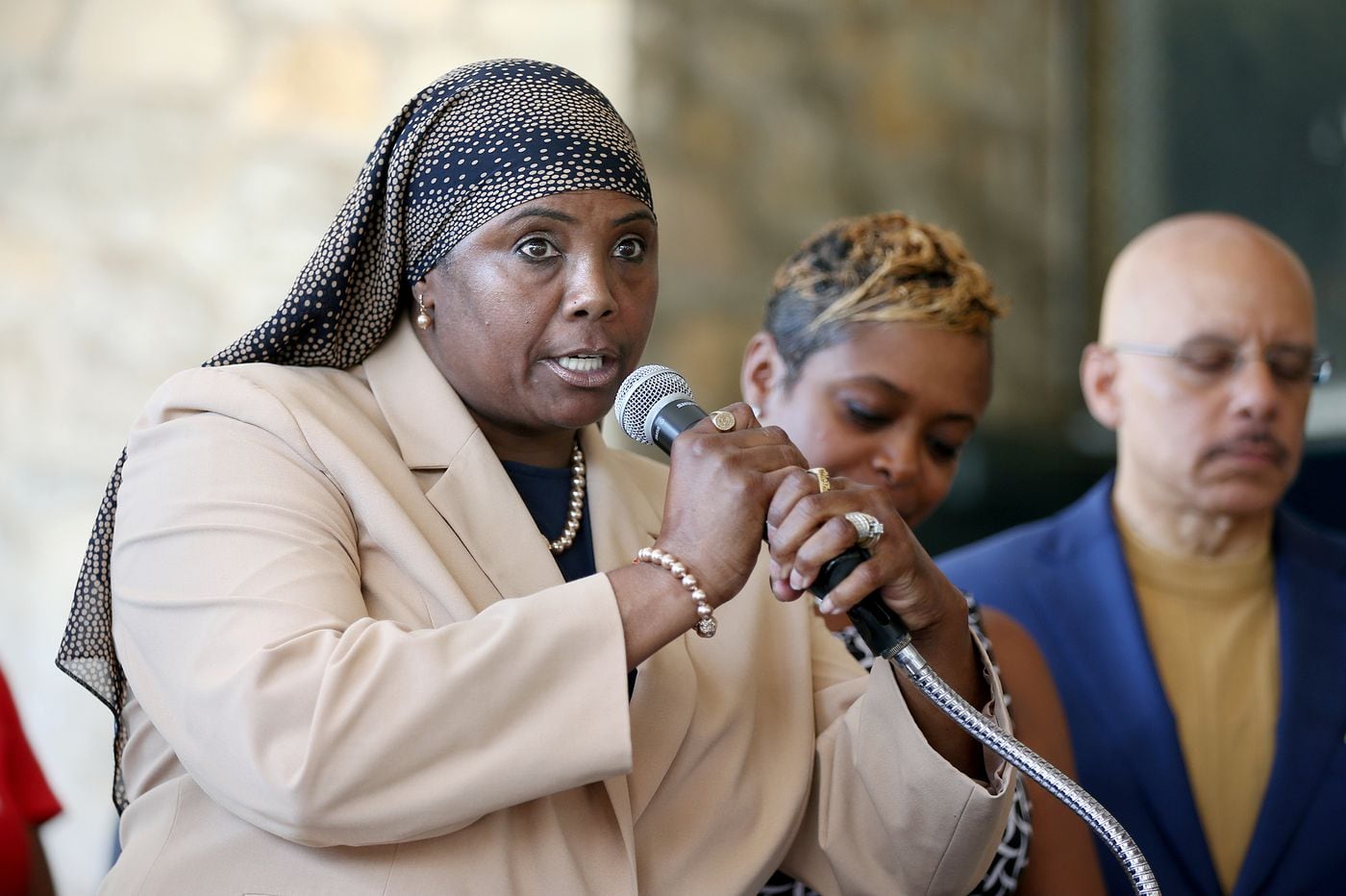
The Detroit Caucus of the Michigan Legislature will consider a vote of no confidence Monday in its
chairwoman, Rep. Sherry Gay-Dagnogo, D-Detroit.
Rep. Leslie Love, D-Detroit, called for the vote. She alleges that Gay-Dagnogo had misrepresented the caucus, forged their signatures on a resolution, was verbally abusive and attempted to file a false report of harassment against a member.
That sounds about right. Someone needs to check any forged documents of my Sweetie's signature, too.
The vote of no confidence would inform those working with Gay-Dagnogo that she no longer speaks for Detroit members, Love said.
Will work for Rand$ or a new outfit.
“I just felt I could not be silent anymore,” said Love.
I am quite shocked Love made it this long.
Gay-Dagnogo pushed back on Love’s accusations and claimed they were a “political assassination” as she runs for Detroit mayor.
“She’s never had any confidence in my leadership so I’ve learned to deal with it, but this is just a witch hunt, a disgruntled decision from a colleague,” Gay-Dagnogo said.
One of the heftiest allegations laid against Gay-Dagnogo is that she forged the signatures of some caucus members February in a document that recognized the work of a Detroit musician.
She apologized for the mistake in a letter to the caucus last week and blamed the issue on a former staffer.
Forgery is a crime. I wonder if Sherry the Sleuth reported it. Probably not, because she was the one who more than likely oversaw the forgeries, like Fat Ass used to do.
On Monday, Gay-Dagnogo said it's not unusual for a staff member to contact staff working for other lawmakers to get signatures, but that apparently was not done properly for the Feb. 23 resolution.
“It’s more of an inclusive act of not leaving someone off,” the representative said of including the names of Love and other caucus members. “It’s something that’s been before.”
Gay-Dagnogo rejected claims of verbal assault, a failure to respond to member requests and immature, insensitive behavior. She also claimed to have had regular communication with the Detroit caucus during the historic vote on auto insurance reform last year, but Love said that also was false.
“I don’t make decisions in a vacuum,” Gay-Dagnogo said. “I always reach out to caucus members and get their input.”
Sherry the Sleuth is probably still in a state of morning for the loss of her Fat Ass and sister, causing her to lash out in her official capacity, but, hey, what do I know? I know Fat Ass and her sister died long after she was stealin' the children, land & vote.
Mikey & Sherry are no longer in love
Love also accused Gay-Dagnogo of making "back door" deals with former Gov. Rick Snyder's administration after the Michigan State Police director called Colin Kaepernick and his teammates "ingrates who hate America."
Gay-Dagnogo said she worked with Snyder in order to avoid the removal of Col. Kriste Etue, only to have her replaced by someone else of the administration's choosing.
Sherry the Sleuth will work with any foreign entity that will give her money to make her a fashion show selfie superstar.
Gay-Dagnogo repeatedly alleged Love was working for someone, perhaps Detroit Mayor Mike Duggan, but Love denied those allegations.
“I’m not running for anything,” Love said. “I’m not working for anyone.”
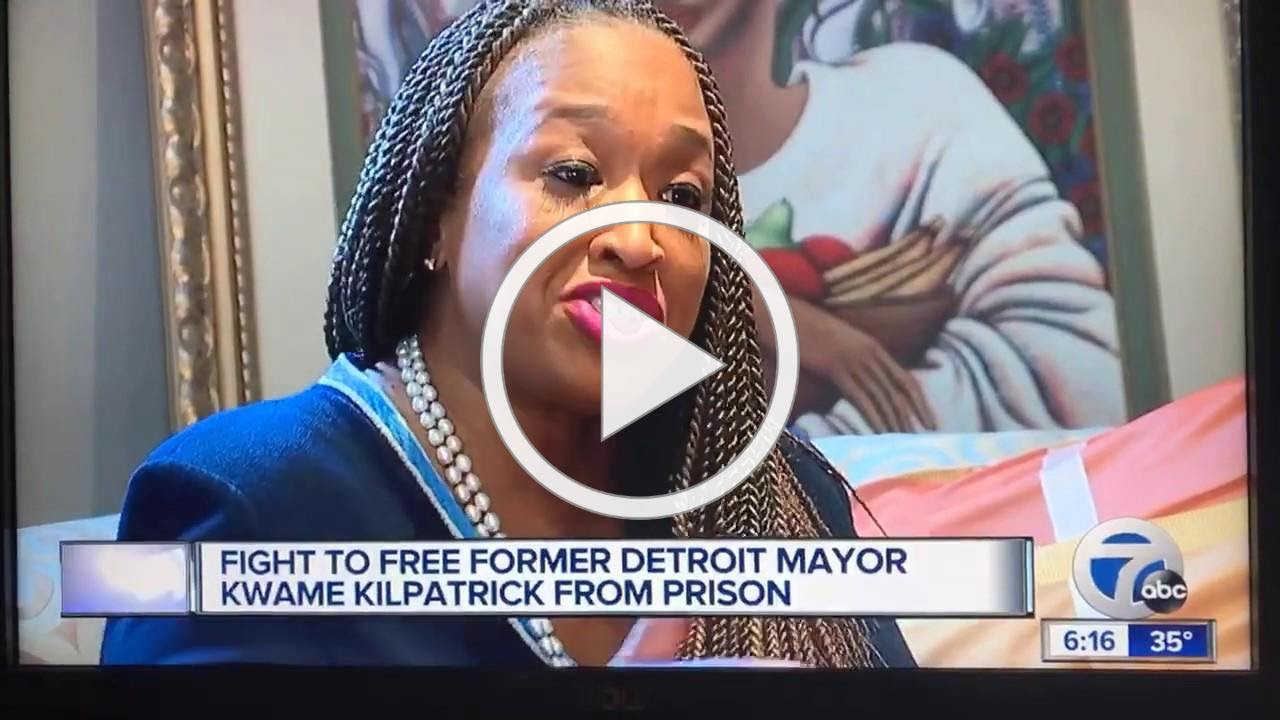
FOX 2 - The Federal Bureau of Prisons has denied the early release of former Detroit Mayor Kwame Kilpatrick.
In a release, the Federal Bureau of Prisons announced Tuesday that it reviewed and denied Kilpatrick, 49, for home confinement.
"Mr Kilpatrick remains incarcerated at the Federal Correctional Institution-I in Oakdale, Louisiana," the release states.
According to a state representative and advocacy group The Ebony Foundation, Kilpatrick was in line for a compassionate release due to the coronavirus in the prison system.
US Attorney General William Barr previously had announced about 3,000 federal inmates were to be released early due to concerns of COVID-19 spreading in the jails.
The Oakdale Federal Prison near New Orleans has hadabout 42 cases of the coronavirus and two deaths as of last week.
Kilpatrick has served seven years of his 28-year sentence for corruption and raketeering in office. He served as mayor of Detroit from 2001 to 2008. He was sentenced in 2013 and has since lost his appeals.
State Rep. Karen Whitsett said Friday she had spoken to President Donald Trump in Ypsilanti Thursday night and was told by him that Kilpatrick would be released.
Stay with FOX 2 for more on this developing story.
A dystopian way of life has settled over metro Detroit as the coronavirus rages, yet humanity shines in the face of COVID-19. Detroit Free Press
Julena Gay, the sister of state Rep. Sherry Gay Dagnogo, D-Detroit, died Tuesday after battling coronavirus for several weeks.
Gay Dagnogo said last week that her sister had been on a ventilator for two weeks, but was improving. On Monday, she posted on her Facebook page that while her sister was recovering from COVID-19, she had developed sepsis, a life-threatening infection.
This obituary is part of “We Will Remember,” a series about those we’ve lost to the coronavirus.
Early Wednesday morning, she posted: "I’m Devastated, Heartbroken, and Disappointed! ... This feels like a horrible nightmare that I’m trapped in! God help me! I want my Sisterrrrrrrrrrrrrrrrrrrrrrrrrrrrrrrrrr!"
More: A look back at when the coronavirus started and how it spread in Michigan
More: Death toll rises as coronavirus sweeps through Michigan nursing homes
Gay, 63, lived in Detroit and worked at Chrysler. She is survived by her mother, Willie Ruth Thomas; children Janita, Julian and Jaynell Gay and Jasyn Young, and her sister.
Members of the Detroit Caucus serving in the Michigan Legislature said they were devastated by the loss, compounded by the loss of state Rep. Isaac Robinson, D-Detroit, who died March 29 from a suspected coronavirus infection. Two other Detroit legislators, state Reps. Tyrone Carter and Karen Whitsett, both tested positive for COVID-19 and are recovering.
"In the face of this unspeakable crisis, Rep. Gay-Dagnogo has set an incredible example of leadership and strength for our entire community, weathering these vast impacts to our lives," said Rep. Tanesha Yancy, D-Harper Woods. "She’s done all of this while serving as a pillar in her own family throughout the past several weeks that her sister was hospitalized prior to her passing."
State Rep. LaTanya Garrett, D-Detroit, said that Gay's death was a loss for the city.
"Ms. Gay was a devoted activist ... who showed a deep love for the community. This is a tragic loss for our district and the entire city of Detroit," she said.
Carter said his battle with coronavirus gave him a glimpse of what Gay-Dagnogo's family was going through.
“After battling with this virus myself, I know firsthand the toll it can take not only on those of us who have tested positive, but our family, friends and loved ones, as well," he said.
On Wednesday, Detroit reported more than 7,100 confirmed cases of coronavirus and 475 deaths..
“We have lost far too many of our Detroit community members to this insidious pandemic, including a fellow legislator and now Rep. Gay-Dagnogo’s sister,” said Rep. Joe Tate, D-Detroit.
Contact Kathleen Gray: 313-223-4430, kgray99@freepress.com or on Twitter @michpoligal.
We Will Remember: If you have a family member or close friend who has died from COVID-19 and you would like to share their story, go to bit.ly/freep-will-remember.
Many Detroiters lack access to health insurance, transportation, clean water and healthy food, a situation that has made the city the epicenter for COVID 19 in Michigan. Residents that contract the disease often suffer from underlying issues which significantly lower their chances of survival, including obesity, high blood pressure and/or diabetes.
In an effort to Flatten the Curve in Detroit, Rep. Sherry Gay-Dagnogo is unveiling a partnership with Ortele Health that will allow people without the ability to access traditional health care services to see a doctor online. This partnership will eliminate those barriers and give people who need a prescription for testing a way to obtain it.
Better yet, how much will Sherry "The Sleuth" declare on her personal income taxes for Medicaid billing, or will this be TARP 2.0 billing, or is this private funding, or did she settle her claim against the City of Detroit for her other business' Detroit Land Bank Authority property that mysteriously burnt down, and was accidentally demolished by another one of her brilliant business associations?
Perhaps, she just needed to quickly generate funding for her legal defense.
Hey, what do I know?
I know Detroit is ground zero for targeted population lab rat testing, again.
DETROIT - A Detroit lawmaker wants to make it easier for residents to be screened for COVID-19 by bolstering the city's telemedicine infrastructure.
Rep. Sherry Gay-Gagnogo (D-Detroit) announced the partnership with The Coalition to Integrate Technology & Education and Ortele Health as a means to bring accessible health care screenings to residents that lack the opportunity to seek it out on their own.
"Poor and marginalized people are contracting the virus at much higher rates than others," Gay-Dagnogo said. "We cannot leave our most vulnerable citizens with no way to protect themselves from this invisible killer. Higher survival rates are a result of early detection and treatment."
The "Virtual COVID-19 screening Program" will connect low-income residents with physicians that can assess their symptoms, determine the need for testing and produce a digital prescription necessary to receive a test.
Despite making up less than 17% of the state's total population, Detroit and Wayne County COVID-19 total make up almost half of Michigan's total number of cases. This disproportionate outbreak has hurt African Americans and families living in poverty the hardest, with more than a third of Detroit's residents living below the poverty level.
Combined with its proximity to an international airport, increased density of the city and the many underlying conditions suffered by residents have created a perfect storm scenario for Detroit.
"People who suffer from obesity, asthma, diabetes, and high blood pressure are much more likely to die from this disease," said Gay-Dagnogo in a statement. "If we want to flatten the curve in Detroit, we have to make sure that everyone in the city that needs testing or treatment can get it."
The partnership kicks off today. Residents who think they may need testing can log onto mydetroitdr.com or test "Detroit" to 48-48-48 for an evaluation with no cost to the patient.
Michigan House of Representatives
First-term state Rep. Isaac Robinson, D-Detroit, died Sunday morning at Detroit Receiving Hospital from a suspected coronavirus infection, according to this mother, former Rep. Rose Mary C. Robinson.
State Rep. Isaac Robinson died Sunday morning at Detroit Receiving Hospital from a suspected coronavirus infection, hours after being transported to the hospital for breathing problems, his mother confirmed Sunday night.
Robinson, 44 and a Detroit Democrat, had not been tested for COVID-19 before being transported by ambulance early Sunday morning to the Detroit Medical Center hospital, said his mother, former state Rep. Rose Mary C. Robinson, D-Detroit.
"I called EMS, they took him to Receiving at 6 a.m. and he was dead by 11," Rose Mary Robinson told Crain's.
Rose Mary Robinson said her son had breathing difficulty in recent days, but resisted seeking medical attention.
"He wouldn't go to the hospital. I kept insisting the last three days," she said. "I kept saying, 'You should go to the doctor, go to the hospital.' Of course, he resisted."
"Tough guy," the mother added.
Robinson's death comes three days after state Rep. Tyrone Carter of Detroit tested positive for COVID-19.
A lawyer by trade, Isaac Robinson was elected in 2018 to represent the 4th District in the Michigan House of Representatives, succeeding his mother in office.
Before working in private law practice, Robinson was a political director for a local Teamsters union.
He never married and had no children, according to his mother.
As of Sunday at 10 a.m., the coronavirus had claimed the lives of 35 Detroiters. More than 1,500 Detroit city residents have tested positive for COVID-19, according to the Michigan Department of Health and Human Services.State Rep. Isaac Robinson dies of suspected coronavirus infection
Michigan House of Representatives
First-term state Rep. Isaac Robinson, D-Detroit, died Sunday morning at Detroit Receiving Hospital from a suspected coronavirus infection, according to this mother, former Rep. Rose Mary C. Robinson.
State Rep. Isaac Robinson died Sunday morning at Detroit Receiving Hospital from a suspected coronavirus infection, hours after being transported to the hospital for breathing problems, his mother confirmed Sunday night.
Robinson, 44 and a Detroit Democrat, had not been tested for COVID-19 before being transported by ambulance early Sunday morning to the Detroit Medical Center hospital, said his mother, former state Rep. Rose Mary C. Robinson, D-Detroit.
"I called EMS, they took him to Receiving at 6 a.m. and he was dead by 11," Rose Mary Robinson told Crain's.
Rose Mary Robinson said her son had breathing difficulty in recent days, but resisted seeking medical attention.
"He wouldn't go to the hospital. I kept insisting the last three days," she said. "I kept saying, 'You should go to the doctor, go to the hospital.' Of course, he resisted."
"Tough guy," the mother added.
Robinson's death comes three days after state Rep. Tyrone Carter of Detroit tested positive for COVID-19.
A lawyer by trade, Isaac Robinson was elected in 2018 to represent the 4th District in the Michigan House of Representatives, succeeding his mother in office.
Before working in private law practice, Robinson was a political director for a local Teamsters union.
He never married and had no children, according to his mother.
As of Sunday at 10 a.m., the coronavirus had claimed the lives of 35 Detroiters. More than 1,500 Detroit city residents have tested positive for COVID-19, according to the Michigan Department of Health and Human Services.
Detroit — The Wayne County Prosecutor's Office said Friday it will not file a warrant against the owner of a demolition company that mistakenly tore down a state lawmaker's house.
"The suspect readily admits that he 'jumped the gun' and demolished the house without final confirmation that his bid was accepted," the office said in a statement. "Nothing suggests anything other than negligence on the suspect’s part. For these reasons the warrant is being denied."
Authorities said the owner of Detroit-based Gipson Brothers Trucking tore down the house at 14567 Minock St. in July 2019.
State Rep. Sherry Gay-Dagnogo's nonprofit group, Coalition to Integrate Technology and Education, bought the house from the Detroit Land Bank Authority in 2018. The Detroit Democrat said in October she planned to renovate the home and give it to a needy family.
In September, Gay-Dagnogo told the media she was informed by a third party that the house was demolished. Police began an investigation. It was later learned debris from the demolition was taken to a Waste Management landfill in Wayne.
After the home was razed, Gay-Dagnogo became a vocal critic of Detroit's demolition program, urging council members to weigh whether more taxpayer money should be allocated for it.
Last month, Gay-Dagnogo, who represents Michigan's 8th District on the city's northwest side, announced she was exploring a bid for Detroit mayor.
Gay-Dagnogo did not immediately respond Friday to phone and email messages seeking comment.
Great, but what she does not know is that there is much, much more going on than she realizes.
It is just a legal thang.
I 💖MIED.
Commutation for former Mayor Kwame Kilpatrick Under White House Consideration!
Dear Beverly,
I had the recent pleasure of attending a lecture with Freedom Fighter Angela Davis, at the University of Michigan-Ann Arbor, and was moved to continue fighting for justice, quality education, and criminal justice reform by expanding expungement opportunities for returning citizens.
In my third and final term, I am grateful for the bipartisan commitment to the aforementioned, and believe that it is time that we seize the possibilities of collectively advancing commutation of former Mayor Kwame Kilpatrick's sentence. As such, I hope that you will consider joining me by writing a letter to Jared Kushner, Senior White House Advisor to the President, to express that after 7 years of Kilpatrick's 28 year sentence, as a first time offender, his sentence should be commuted to time served. This is not a race issue; this is a Justice issue!
Sincerely,
Sherry Gay-Dagnogo, M.Ed.
State Representative, 8th House District
Detroit Caucus Chair
Rep. Sherry Gay-Dagnogo of Commutation of Former Mayor Kwame Kilpatrick!
Rep. Sherry Gay-Dagnogo on Former Mayor Kwame Kilpatrick's Commutation Request to White House!
You're Cordially Invited to Attend...
Rep. Sherry's 53rd. Birthday Celebration!
January 30th, 5:30 p.m. | International Banquet Center
Millionaire businessman Peter Karmanos says he's pushing to free Kwame Kilpatrick from prison, saying the convicted ex-Detroit mayor got a raw deal from the feds, and that President Donald Trump is seriously considering a request to pardon him.
"What you guys witnessed was a modern day lynching, that’s what we saw," Karmanos said of Kilpatrick's conviction on Charlie Le Duff's "No BS News Hour" podcast Sunday. Karmanos noted it was he who personally delivered Kilpatrick's clemency request to Trump's son-in-law, Jared Kushner, last year.
"I’m going to continue to push. It's not right," said Karmanos, adding that he "absolutely" believes that Trump is seriously considering honoring Kilpatrick's request for clemency.
"I do know that If Trump gave him clemency before the election, where do you think he’d help Trump’s campaign at? You don’t think (Kilpatrick) would go to the black community," Karmanos said, adding he believes Kilpatrick "had done absolutely zero" wrong.
And he scoffed at Kilpatrick's historic public corruption sentence.
"Twenty-eight years, are you kidding me?" said Karmanos, who described Kilpatrick as a "good politician" and "smart businessman," and stressed that he never shook him down, as was alleged by several contractors during Kilpatrick's corruption trial.
"He never asked for a cent ... Everything was on the up and up," said Karmanos, 76, cofounder of Detroit-based Compuware, once the largest computer technology company in the state. He also founded the Barbara Ann Karmanos Cancer Institute in Detroit, named after his first wife.
Start your day with the morning's top stories. From local news to sports and politics, our Daily Briefing newsletter has it all. Become a subscriber today!
Over the years, Karmanos has been a loyal friend, advocate and supporter of Kilpatrick.
According to campaign finance records, Karmanos gave $100,000 to Kwame Kilpatrick’s Generations political action committee in 2005. And, he donated a total of $4,000 to Kilpatrick's mom — former U.S. Rep. Carolyn Cheeks Kilpatrick, D-Detroit — when she served in Congress.
In 2009, a year after Kilpatrick resigned from office amid a text message scandal exposed by the Free Press, Karmanos also gave Kilpatrick a job: He hired him as a salesman for Compuware subsidiary Covisint in Dallas, where Kilpatrick moved with his family.
Campaign finance records show, however, that most of Karmanos' donations go to Republican organizations and candidates, including $2,700 to Trump in 2016 and $500,000 to John Kasich’s presidential campaign’s super PAC (New Day for America).
The U.S. Attorney's Office has long argued that Kilpatrick was convicted fair and square, and it has successfully fought all his appeals.
“Mr. Kilpatrick received a fair and just sentence that reflected the seriousness of his crimes and the devastating impact they had on our community," U.S. Attorney Matthew Schneider said in an email to the Free Press on Monday.
As for Kilpatrick's pardon request, Schneider said:
"Ordinarily, in a pardon or commutation request, the Office of the Pardon Attorney at the Justice Department consults with the U.S. Attorney about the merits of the request. We are willing to provide any assistance to the Pardon Attorney that may be needed to explain our position and justify the appropriateness of the sentence.”
Kilpatrick resigned from office in 2008 after the Free Press published text messages that showed Kilpatrick lied about an affair with his chief of staff and gave misleading testimony about the firing of a police officer during a whistleblower trial.
The Free Press investigation also triggered criminal charges against Kilpatrick, who pleaded guilty to obstruction of justice, served 99 days in jail and was ordered to pay up to $1 million in restitution.
Kilpatrick's federal corruption trial would come five years later and ended with him getting convicted by a jury on 24 of 30 counts, for crimes including racketeering, bribery, extortion and fraud. He was convicted of running a criminal enterprise out of the mayor’s office that included shaking down contractors in pay-to-play schemes and steering work to his contractor friend, Bobby Ferguson, who shared his ill-gotten gains with Kilpatrick.
Kilpatrick has been fighting for his freedom ever since, though all of his appeals have failed.
HARRISBURG — State Rep. Movita Johnson-Harrell, a West Philadelphia Democrat who took office after a March special election, will resign after being charged with perjury, theft, tampering with public records, and related crimes Wednesday.
Johnson-Harrell used her nonprofit to enrich herself, stealing more than $500,000 from the organization to spend on real estate, vacations, luxury clothing — and her bid for the legislature, State Attorney General Josh Shapiro said at a morning news conference in Harrisburg.
“There will be a guilty plea that will be worked out, and you will see the details of that soon," Shapiro said.
“I am saddened and dismayed by the nature of the allegations brought against me today. I vigorously dispute many of these allegations, which generally pertain to before I took office and I intend to accept responsibility for any actions that were inappropriate,” Johnson-Harrell said in a statement through her attorney.
Paying bills and spending lavishly
Prosecutors said Johnson-Harrell used the nonprofit, Motivations Education & Consultation Associates (MECA), which she established more than a decade ago to assist poor people struggling with mental illness, addiction, and homelessness, for profligate spending and personal gain.
Over several years, Johnson-Harrell tried to systematically cover up her crimes through an elaborate, years-long scheme involving several properties in Philadelphia and false financial statements, Shapiro said.
Among Johnson-Harrell’s steps to obscure her financial situation and avoid paying taxes or debts were inflating her tax bills, hiding the charity’s money through false record-keeping, not reporting the money she was taking from MECA as income, and reporting her real salary as lower than it was, prosecutors said.
“MECA’s actual mission was to serve as a cash account for Johnson-Harrell’s own personal use,” Shapiro said.
Among the funds used was $12,500 Johnson-Harrell allegedly transferred from MECA to the Friends of Movita campaign committee during her run for legislature earlier this year and told the campaign to record as a $15,000 personal loan she was making to the committee.
Then, toward the end of the campaign, as it was running out of money, Johnson deposited a $30,000 bank check she’d taken out after transferring MECA funds to her own account into the Friends of Movita account, withdrew half in cash, and left the rest for the campaign as an unreported loan, according to the affidavit of probable cause for her arrest.
Johnson-Harrell also funneled $12,000 in MECA funds to Friends of Movita during a previous unsuccessful run for the same seat in 2015 and 2016, authorities said.
Councilwoman Jannie Blackwell, who has known Johnson-Harrell for many years, said she was surprised by the criminal charges.
“I’ve only seen her doing a great job. I’m sorry to hear it. No win in that, because she loves her community and served it well,” Blackwell said. “Things happen, but I’m hoping for the best, but we’ll just have to see what happens.”
With MECA funds, Johnson-Harrell spent $16,000 on vacations in 2017, including a two-week vacation with a relative to a resort in Acapulco in April and a second trip to Mexico in November. She also dropped $5,500 on four fox fur coats weeks after she filed for bankruptcy in 2018, according to prosecutors. She allegedly spent $13,000 in total on online shopping, including on designer clothing.
Johnson-Harrell was spending the organization’s money as homes MECA ran for disadvantaged Philadelphians — partly funded by Medicaid and Social Security disability checks for residents — were falling into uninhabitable squalor, Shapiro said.
The attorney general’s investigation was sparked by Johnson-Harrell’s closure of one of the homes in 2018 after the Pennsylvania Department of Human Services threatened to shut it down.
Even after it was shuttered, prosecutors say, Johnson-Harrell continued taking monthly rent payments from MECA for the property, which she owned, for the rest of the year, totaling $50,000.
“When her personal checking account was low, she simply refilled it with money from MECA’s account,” Shapiro said.
In 2017, Johnson-Harrell used some of the charity’s money to twice donate to Larry Krasner’s campaign for district attorney, giving $2,500 in total and making each donation immediately after transferring money from MECA to her personal account. She also gave $500 to then-candidate Joe Khan, who Krasner beat in the primary. She would become a supervisor in the Victim/Witness Services Unit of Krasner’s District Attorney’s Office the following year.
She also used the money to pay the City of Philadelphia with checks labeled “taxes,” as well as overdue gas bills, back taxes to the IRS, an overdue water bill, tuition for her grandchildren’s private school, and past-due car payments. She paid $7,979 in restitution for a 2014 criminal conviction for not paying unemployment compensation taxes.
As Johnson-Harrell filed for bankruptcy in 2018, contending with the foreclosure of some of her properties, prosecutors say she obscured and misrepresented her money and assets, claiming she earned tens of thousands of dollars less than she did.
Johnson-Harrell moved tens of thousands of dollars out of her bank by check, making the money invisible in bank statements, while claiming that she had only about $1,000 a month to pay toward her debts, prosecutors said.
She also overstated her expenses in tax returns and lied on her financial disclosure statement when she worked for Krasner’s office and when she ran for the House, according to the affidavit.
In addition, prosecutors say, she told a court she was selling a three-parcel property on Powelton Avenue. Instead, they said, set up a “straw purchase” in which she planned to have an acquaintance buy the property and eventually return the title to her.
‘Those elected to serve have to follow the law’
Johnson-Harrell, 53, was the first Muslim woman to serve in the Pennsylvania state legislature. Reducing gun violence has been her top issue as a lawmaker. Her father, brother, and 18-year-old son were all killed by gun violence.
She was elected to represent the 190th Legislative District in West Philadelphia after Vanessa Lowery Brown was convicted of bribery and other charges and resigned last December.
Johnson-Harrell’s arrest marks the 60th arrest of a public official by the attorney general’s office since 2017, Shapiro said.
“Rep. Movita Johnson-Harrell remains a woman dedicated to ending gun violence in Philadelphia and focused on the well-being of all Philadelphians,” her lawyer, Jessica Natali, said in a statement. “This matter will be resolved with the attorney general’s office and ultimate disposition will be addressed in a court room at an appropriate time.”
Shapiro said Johnson-Harrell had turned tragedies into triumphs and used her experience to help others.
“It is not lost on me that Rep. Johnson-Harrell has faced serious struggles in her personal life,” Shapiro said, but, “Defrauding a non-profit, defrauding taxpayers, and then systematically lying over many years to cover it up is unjust, it’s unfair and it’s a crime.... She is going to spend time behind bars.”
House Democratic Leader Frank Dermody said the 190th District’s constituent service office would remain open to serve residents until a new representative is elected in 2020.
“These criminal charges are beyond disturbing. Representative Johnson-Harrell is taking responsibility for what she did and I expect her to resign very soon. She obviously cannot continue serving in elected office," Dermody said in a statement.
“I know her commitment to her constituents — especially to the goal of ending gun violence in Philadelphia — is heartfelt and sincere. ... But the fact is those elected to serve have to follow the law before they can make the law.”
I really do not understand what the issue is with Detroit City Council voting to approve mo' money to tear down these properties they intentionally and purposefully blighted because they are all illegitimately elected.
That would make the vote illegitimate, too, but hey, what do I know?
I also know many of the members of City Council also got some of those blighted Detroit Land Bank Authority properties the same way Sherry Gay Dagnogo did.
Michigan state Rep. Sherry Gay-Dagnogo spoke against the blight demolition bond ahead of council's vote, urging the body to vote it down. City of Detroit, Detroit Free Press
The Detroit City Council peppered Mayor Mike Duggan's administration with several concerns and questions Tuesday about his $250 million blight bond proposal, just days after a blistering Auditor General report outlined several problems with Detroit's demolition program.
The contentious vote was postponed for at least a third time Tuesday, according to the city clerk's office. The vote, if approved, would have advanced the ballot to the March 2020 ballot for voter consideration.
According to officials, Nov. 26 is the last day the body can vote on the measure before it goes on recess.
Detroit City Council President Brenda Jones said she remains concerned about the bond and suggested that the administration proves it can "do better" in light of a litany of issues with the program.
"Why not start with a pilot amount (instead of the full $250 million) to show you can do better as opposed to getting all the money and you don't do better," Jones asked. "I still have a lot of concerns."
Jones also grilled the administration on its lack of responsiveness to the auditor general. The office was forced to subpoena the Detroit Building Authority twice to receive the necessary information for its report and encountered several monthlong delays. Auditors never got some answers.
"It's just disheartening that we're talking about an audit I requested four years ago," Jones said. "To sit here and keep talking about a timeline is crazy when nobody responded properly," she said. "No one took the issue serious enough until we got a bond initiative to come before us. ... It's just ridiculous."
I bet Sherry Gay Dagnogo is mad Mike Duggan has not assisted her in finding out who is responsible for demolishing her nonprofit's blighted Detroit Land Bank Authority house she got for campaigning for him. Sherry was so distraught she went to Cuba the next day,
Detroit City Council President Pro Tem Mary Sheffield said she believes a community meeting or forum should be held prior to the council vote to ensure residents have a role in the discussion. Sheffield said she believes the bond proposal has "long-standing financial ramifications for the residents of Detroit if passed."
"Given the administration's desire to place the measure before voters in a primary in the dead of winter, I believe it's imperative for City Council to provide citizens with all the pertinent information necessary to help them develop an informed opinion about the matter before we vote," Sheffield told the Free Press after the vote to postpone.
Duggan's administration officially submitted the bond proposal in September, outlining a goal to remove remaining residential blight from Detroit by mid-2025.
According to the auditor general, the city has already spent a staggering $532 million on Duggan's aggressive blight removal effort, which began shortly after he took office in January 2014. The city has used a mix of city, federal Hardest Hit Funds and other designated monies.
If given the green light by voters in March 2020, total possible spending on blight removal over the next five years, including funds allocated outside of the bond proposal, could be as much as $500 million, according to a report written by council's legislative policy division.
That means by 2025, the city may have spent upwards of $1 billion on blight remediation, thanks to the bond and other funding mechanisms the city has planned for the next several years.
Michigan state Rep. Sherry Gay-Dagnogo, one of many who spoke against the bond ahead of council's scheduled vote, urged the body to vote it down. Gay-Dagnogo based much of her comments to the council on her belief that the Duggan administration lacks transparency and credibility, given numerous recent investigations.
Citing a search warrant that was executed Friday by Michigan Attorney General Dana Nessel's Office related to its Make Your Date investigation, Gay-Dagnogo said the city council shouldn't push the bond forward.
"We need to remove this cloud of suspicion that exists over this body," Gay-Dagnogo said. "You are able to restore true trust and transparency. We cannot have a representative democracy with all of these inquires that are going on, all the investigations that are going on and all the questionable activity."
Detroit Charter Commission member Nicole Small also urged council to vote the bond down.
"Now's not the time for you to support this," Small said. "It's OK to tell him (Duggan) 'no.' Don't be an enabler for the mayor any longer. Be a representative and advocate for the interests of the people."
Detroit Auditor General Mark Lockridge's report concluded Friday the city's demolition program has been mismanaged and beset with significant problems for the past four years.
The sweeping audit also revealed the Detroit Building Authority — along with one or more city departments — in some instances: failed to properly provide oversight and administer contracts; did not fully comply with some local and state laws; didn't monitor to ensure that demolition contractors met requirements.
Lockridge also blasted the city for having "inconsistent and unreliable" demolition data, as well as poor record keeping that made it difficult to perform the audit.
"A perception that public officials are using the procurement system to reward themselves, their friends, or supporters, poisons the public’s confidence in government and shakes its faith in the bureaucratic process," he wrote.
City officials pushed back on the report, saying the auditor general used flawed and outdated data. But Lockridge's office said they simply used the data that was provided to them and even adjusted to include a newer set of data, which produced similar concerns about the program.
Deputy Auditor General Laura Goodspeed said Tuesday the office was disheartened by the administration's response to their audit.
"We stand by our data, we stand by our numbers and yet we have not heard a comprehensive or genuine response to our findings," Goodspeed said.
Council Member Raquel Castañeda-López urged the administration to take the auditor general and recent Detroit Inspector General report on the controversial Make Your Date prenatal program more seriously.
"I think it's dangerous ground to walk on ... to dismiss the findings of the AG and OIG," Castañeda-López said.
The audit also raises questions about the true cost of demolitions per structure. Of the $532 million spent thus far, about $330 million can be attributed directly to the hard costs to demolish more than 19,175 structures across Detroit.
Of that, $202 million has been invested in administrative and other "soft" costs which include pre-demolition activities such as property surveys, personnel and other costs.
The auditor general found that the average cost per structure based on the 19,175 homes demolished thus far is $17,198.
But according to the audit, the average total cost per structure is significantly higher at $27,756 when you factor in the administrative and soft costs.
The administration has said it "fundamentally" disagrees with the administrative cost figures detailed by the auditor general.
The audit, which focused on city-funded demolitions, was launched in October 2015, when the Detroit City Council requested the office audit the city’s demolition program.
The office looked at the program’s operation between Jan. 1, 2014 to Dec. 31, 2018.
The bond resolution authorizes the city to secure $250 million in "unlimited tax general obligation bonds" to continue Duggan's aggressive blight remediation efforts.
According to officials, the bond will help tear down an additional 19,000 properties and it will also renovate an additional 8,000 homes through Detroit Land Bank Authority sales and legal actions against privately owned vacant buildings.
But several council members have raised concerns about the bond, in light of previous issues with the program that have been reported by the Free Press and other media over the past several months.
In attempt to assuage some of council's concerns, the administration has proposed creating an entirely new demolition department solely under city control and subsequently canceling or revising the current demolition contract with the Detroit Building Authority.
The city's demolition program is currently managed by the Detroit Land Bank Authority and the Detroit Building Authority under a structure Duggan put in place after he was elected in 2014.
The city is in the process of transitioning the demolition program away from the Land Bank, officials announced earlier this year.
Jones said in a Sept. 17 memo to Duggan and Chief Financial Officer David Massaron that she wants several stipulations and requirements put in place if the ballot initiative is approved.
Dave Massaron, the Chief Financial Officer for the City of Detroit talks with the Detroit Free Press editorial board at the newspaper on Thursday, September 26, 2019.
Dave Massaron, the Chief Financial Officer for the City of Detroit talks with the Detroit Free Press editorial board at the newspaper on Thursday, September 26, 2019. (Photo: Eric Seals, Detroit Free Press)
Jones wants the bond funds to be placed in an escrow account with a requirement that council must approve any "drawdown" on the bonds. Jones also wants the bond funds to be drawn in five increments of $50 million, with 25% of those funds set aside for investment into foreclosure prevention and assistance.
Jones also wanted each increment of $50 million to have 30% of the funds set aside for Detroit-based and Detroit-headquartered businesses and for at least 51% of the individuals employed by companies tearing down the homes would be required to be Detroit residents.
Sheffield previously told the Free Press that the bond issue raised concerns, for her indicating a "proposal of this magnitude that has long-lasting social, economic and financial, implications" should have been a petition-led initiative that would have allowed "voters to be fully engaged and more educated about the proposal before it reaches the ballot."
"I have serious concerns about equity and inclusion with respect to contracts and employment as well as access to opportunity and ownership after demolition," Sheffield said.
Castañeda-López submitted a detailed memo on Monday to the administration, also asking that several provisions be added to the bond resolution. Among the proposals were "proof that all stages of demolition were monitored — including the backfill activity, any ongoing investigations or litigation, and any violations issued."
A Free Press investigation in February revealed that federal authorities were probing whether contaminated dirt was potentially used to fill sites across Detroit.
Castañeda-López also asked for several provisions be put in place for how vacant land be used after demolition.
Last year, the Free Press published an investigation that revealed just 16% of the Hardest Hit funded demolitions went toward black companies in Detroit. Sheffield said her office has been working to improve the hiring of Detroiters through a proposed local hiring ordinance.
"We must have guarantees that Detroiters benefit from the use of their tax dollars and that the goal is to truly improve the quality of life of residents and not lead to another urban renewal which amounted to urban removal in the past," Sheffield said.
More than $250 million from the federal Hardest Hit Fund was allocated to Detroit from the U.S. Department of Treasury for its demolition program since Duggan began an aggressive effort to tackle blight across the city. Detroit has the largest demolition program of its kind in the nation. Those dollars are expected to be exhausted by early next year, officials have previously stated.
The city's demolition program has faced intense scrutiny in recent years for its practices and a highly publicized federal probe.
The federal investigation resulted in criminal charges in April against two former employees of a demolition firm, one of whom worked for the city of Detroit at some point.
Federal agencies have been probing various facets of the city's program over the past several years.
After the Free Press published a series of investigative stories about the program, congresswomen Rashida Tlaib and Brenda Lawrence jointly called for increased oversight of the city's blight remediation efforts.
In a statement released Tuesday evening, Lawrence said she is "incredibly alarmed" by the auditor general's findings.
"The demolition program in Detroit has been marred by a lack of oversight and administrative failures that beleaguer an otherwise beneficial program to the city," Lawrence said. "As a member of the House Committees on Appropriations and Oversight and Reform, it is my duty to ensure the proper use of federal funds, and the Detroit Auditor General’s report demonstrates a gross lack of oversight."
Lawrence said she expects the city to "institute a more robust system" of oversight.
"I urge the city of Detroit to work with relevant federal agencies to ensure the health and well-being of its residents are protected. In order to provide the people of Detroit with the certainty they deserve, I request that the city of Detroit immediately begin to remediate all demolition sites to ensure there are no environmental risks associated with the demolition program," Lawrence said.