Showing posts with label Maura Corrigan. Show all posts

Thursday, August 20, 2020

Michigan Breaks Ground Building The Flint Children's Trust Model - Light Up That Network

The State of Michigan has initiated the first leg in the construction of the children's trusts in the intentional poisoning of Flint's posterity, the children.
preliminary settlement of the

Not the Michigan Children's Trust, but it seems there is a viable option for each child to access their own, individual trust, like a blockchain.

That would be a logical purpose to the contact tracing, considering the fact that Michigan is #1 in the nation when it comes to trafficking tiny humans through its Child Welfare System, which is still under the purview of Nancy Edmunds.

What would be really exciting is to see if the settlement structure continues through the network of those Public Private Partnerships, that were formed as a result of the privatized contracting which falsely advised elected officials.

Just think if, in the continuance of identifying other, private, foreign corporations, there was found suspected violations of law and policy, which were referred to the proper jurisdiction of law enforcement, to provide reparations to the individual trusts of the children?

What about JonesDay and all of those Michigan advisors in Trump's White House Cabinet?

What about #perkinscoiesucks?

Light up that network.

Hey, Mittens, any comments at the Republican National Convention?

I just adore transposable models and I am sure the children will, too.

#maytheheavensfall

Michigan reaches over $500M settlement in Flint water crisis civil suits

The state of Michigan has reached a more than $500 million settlement that would put to rest lawsuits arising out of the Flint water crisis, two sources with knowledge of the agreement confirmed Wednesday.

The sources weren't authorized to speak publicly on the matter, which is a significant development in a years-long legal fight that's garnered national attention.

The state of Michigan has reached a more than $500 million settlement that would put to rest lawsuits arising out of the Flint water crisis, two sources with knowledge of the agreement confirmed Wednesday.
Details about the settlement arising out of the Flint lead-contaminated water crisis are expected to be spelled out Friday. The deal comes after several years of litigation in which Flint residents pursued damages from the state for the lead-contaminated water piped into many households.

The settlement would be one of the largest in the state's history.

Marc Edwards, the Virginia Tech professor and water expert who tested city water at Flint households and helped expose the lead contamination, responded quickly to the news of a settlement.

"If money is how government expresses sorrow for its crimes — this is a big apology," Edwards said.

Flint Mayor Sheldon Neeley was not part of the settlement discussions, but he said Wednesday that he is "anxiously awaiting closure."

"We’re just staying positive and moving our community forward in a positive direction," said Neeley, who was a city councilman during the water source switch to the highly corrosive Flint River in 2014.

Flint Councilman Eric Mays called the settlement a “good start.”

“I always believed we would be somewhat successful in the civil lawsuits,” Mays said Wednesday. “I will hold my breath and wait till Friday.


“I believe a major portion of that (money) will go towards kids 5, 6 years old in that age group,” added the councilman, who is a member of the class-action civil lawsuit. “I will be waiting to see what the attorney fee portion might be out of that.”

Ryan Jarvi, a spokesman for Michigan Attorney General Dana Nessel, declined to provide details or confirm a settlement had been reached Wednesday night.

Flint Councilman Eric Mays
Nessel's office and Gov. Gretchen Whitmer's office have been engaged in ongoing mediation effort in Flint water cases for more than 18 months, Jarvi said.

"We and the other parties are bound by a federal court order to maintain the confidentiality of detailed settlement and mediation communications until we reach a certain point," Jarvi said. "We have not yet reached the point where we can discuss a potential settlement."

Nessel said last year that she was in discussions regarding the negotiations with Whitmer and legislative leaders about the settlement, which will likely require lawmakers to appropriate state funds.

The governor's office isn't at the point where it can discuss a potential settlement in the case, Whitmer's spokeswoman Tiffany Brown said Wednesday.

"Since taking office, the governor's and the attorney general's teams have been working steadily to reach a resolution of the Flint water cases, and they continue to do so," Brown said.

Through June 2019, Michigan was the subject of 79 Flint related lawsuits in state and federal court. Over the years, some suits have been consolidated for case management purposes.

It is not clear whether the settlement expected Friday resolves all of the civil suits filed against the state or a majority of them.

The state also had filed its own civil suit against engineering companies that had been hired by the Flint government as consultants when the city switched its water source. Nessel has said she expected any settlement from the lawsuits against Veolia and LAN would offset what the state would eventually pay in the state and federal civil litigation.

The settlement comes as the state faces what experts say could be up to a $3 billion hole in next year's budget because of decreased tax revenue during the coronavirus pandemic.

The state has a fund that it draws settlement money from, but never one of this proportion. The settlement amount calls for the involvement of the Legislature to appropriate more money toward the agreement.


Between 2015 and 2019, the state has pulled $15.1 million from the Lawsuit Settlement Proceeds Fund — a fund containing settlements in favor of the state — for Flint water investigations and legal defense costs alone, according to a January 2019 report by the House Fiscal Agency.

Between 2008 and 2018, the state paid $441.4 million in settlements across all departments, according to a Senate Fiscal Agency report.

The largest settlement in the past 10 years that comes close to the expected Flint deal appears to be an agreement reached in February requiring the Michigan Department of Corrections to pay $80 million to settle a lawsuit with former juvenile offenders who contended they were sexually abused in Michigan prisons. In 1996, the Corrections Department also reached a $100 million resolution in a separate case in which female prisoners alleged sexual misconduct and harassment by male officers.

Michigan Attorney General Dana Nessel
The Flint lawsuits were prompted after the state had appointed a series of emergency managers to operate the city of Flint after years of financial distress. Under state oversight, the city's water source was switched in April 2014 from water provided by the regional Detroit Water and Sewerage Department system to the Flint River. Flint was switched back to the Detroit system in October 2015.

The more acidic river water was not treated with anti-corrosion chemicals upon the advice of Michigan environmental department experts. A panel formed by former Gov. Rick Snyder found that the series of events led to the acidic river water corroding aging city water lines, resulting in the leaching of lead into the drinking water.


Experts have argued the contamination also resulted in two outbreaks of Legionnaires’ disease that resulted in at least 13 deaths in the Flint area.

The expected settlement comes nearly two months after a divided Michigan Supreme Court ruled a class-action lawsuit against the state — one of many civil suits filed after the water contamination — could proceed on the argument that Flint residents should be able to recover the value of their property alleged to have been improperly taken due to the contamination.

Todd Flood, the former special prosecutor for the criminal cases under then-Attorney General Bill Schuette.
Todd Flood, the former special prosecutor for the criminal cases under then-Attorney General Bill Schuette, praised the civil side attorneys and officials “for their steadfast efforts in making sure the victims are whole in the city of Flint and for Gov. Gretchen Whitmer closing this deal and making sure that victims were taken care of.”

“I worked hard with Noah Hall on the civil side of this case to make sure that we could do everything we could,” Flood added. “And that’s the first step in the process of justice."

In June 2019, Solicitor General Fadwa Hammoud dropped all pending criminal cases in Flint in to reboot the probe that had begun under Schuette. Hammoud replaced Special Assistant Attorney General Noah Hall with assistant attorney generals working to defend the state from civil lawsuits.

Nessel had ceded authority over the criminal cases to Hammoud to build a conflict wall between the civil cases, which Nessel oversaw, and the criminal cases, which fell under Hammoud’s purview.

Trials for former Michigan Department of Health and Human Services Director Nick Lyon and former Chief Medical Executive Eden Wells on manslaughter and other charges were dismissed. Charles also were dropped against six other state and Flint officials.

Hammoud’s investigation is still ongoing.

The state needs to shift its focus to criminal prosecutions next and revive charges, Mays said.


"The second step (of justice) will be coming, I’m sure," former special prosecutor Flood said, "with the criminal side of the case. I’m prayerful that that will come.”

Voting is beautiful, be beautiful ~ vote.©

Friday, January 31, 2020

TRUMP Celebrates The End Of Trafficking Tiny Humans Month With A Summit - Meet The Human Traffickers

For those of you who are just now starting to figure out what is going on, trafficking tiny humans is just another fancy way of saying slavery, because it is christian chattel law.

The summit is attended by all the biggest Public Private Partnershippers who traffic in tiny humans.

IT IS CALLED FOSTER CARE AND ADOPTION.

Meet Maura Corrigan.

"Have You Seen Me": Michigan CPS Corrective Action Plan Is Really A Cover Up Of Trafficking Tiny Humans

This is the legacy of the man of whom no one wants to #sayhisname, but something tells me Trump may be the one who will finally say it.

Will Bill Boo Boo Barr stop promulgating the trafficking of tiny humans?

Wisconsin is not the greatest when it comes to providing services to "The Poors" (always said with clinched teeth) because poverty is considered abuse and neglect, where the mental health services absolutely sucks.

Meet Sam Bronwback.

Callista Gingrich is pushing Faith Based organizations, where she is talking about the Holy See, the administrators of international trafficking tiny humans.

Catholic Charities is your biggest trafficker of tiny humans.

Here is one example of a terrorist organization that profits from trafficking tiny humans and they launder money through Catholic Charities.

Beau Biden Foundation
https://www.beaubidenfoundation.org/stewardsofchildren/

Federal prosecutors are talking about FOSTA and Facebook going to end-to-end encryption but law enforcement is going in through legislation to intervene in the largest repository of child porn.

There was discussion of tiny human trafficking from the Ukraine, and other Eastern European nations like Russia, which is what Magnitsky is all about.


WASHINGTON (AP) — President Donald Trump plans to expand the White House domestic policy office by appointing an individual to focus exclusively on combating human trafficking, The Associated Press has learned.

Trump is expected to create the position by executive order Friday after he addresses a human trafficking summit at the White House.

A candidate has yet to be identified for the new post on the Domestic Policy Council, according to a White House official, who added that Trump wants to fill the slot quickly with someone detailed from another government agency. The White House official was not authorized to discuss the president’s plans before his Friday announcement and spoke to the AP on condition of anonymity.

Trump has sought to elevate human trafficking since taking office by speaking publicly about the issue and inviting reporters into his White House meetings with victims and anti-trafficking advocates.

A partner in the effort is Ivanka Trump, the president’s daughter and senior adviser. During a visit to Atlanta this month, she compared trafficking to “modern-day slavery” and said the White House is committed to ending it.

Ivanka Trump is also scheduled to speak at Friday’s summit. She said Thursday in a statement to the AP that the coming executive order will provide additional resources to combat human trafficking.

“From funding for prevention education programs, to enhanced intelligence-level coordination, to fighting child pornography, to a new full-time position within his White House’s Domestic Policy Council, the president is using all tools at his disposal to ensure that the end of modern-day slavery becomes a reality.”

Under the executive order, according to the White House official, the State Department will be tasked with creating a website to serve as a clearinghouse where law enforcement officials, victims, advocates and others can get information on government-wide efforts to combat human trafficking.

Federal departments and agencies will also be asked to propose legislative and executive actions to help law enforcement officials track the sharing - in real time - of child sexual abuse material on the internet.

The Justice and Homeland Security departments will also be directed to work with the Education Department to fund prevention education programs for the nation’s schools.

Some groups criticized the summit. Other groups that have been invited said they will not attend.

Eric Schwartz, president of Refugees International, said in a statement that the Trump administration has pursued policies that endanger trafficking victims by chipping away at their legal protections. Schwartz cited an increase in the denial rate for special visas that allow trafficking victims to legalize their status, access services and seek punishment for their abusers.


Voting is beautiful, be beautiful ~ vote.©

Sunday, October 27, 2019

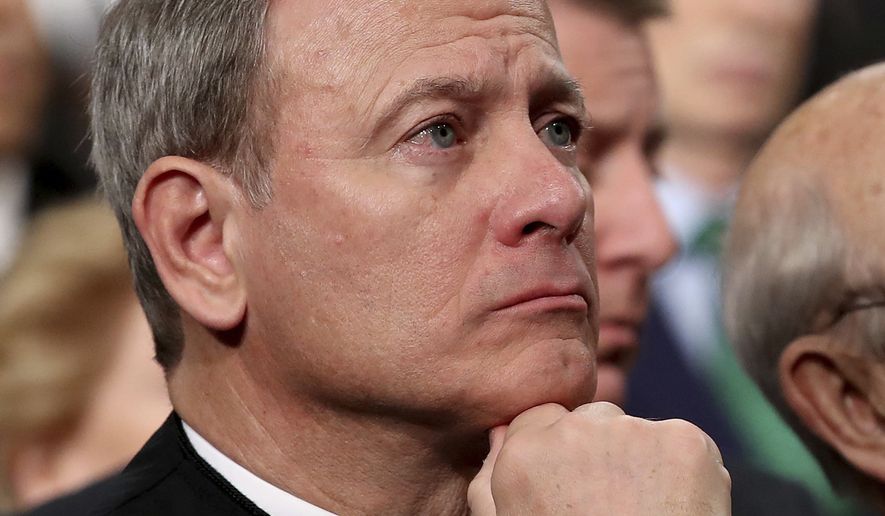
SCOTUS John Roberts & The Falling Of The Heavens - Impeachment

I believe there are stakeholders who are rallying to the cloaking conclave of John Roberts because the Madame is popping up in my Secret Forest of Analytics.

John Roberts is battling with other demons at the moment.

Praise the lord.

#sayhisname

#maytheheavensfall

'Crisis of confidence': John Roberts' impeachment role prompts recusal rumblings

"Damn, the heavens are falling and must #sayhisname."
In an impeachment trial in the Senate, President Trump would look up to see one of his Washington establishment foes, Supreme Court Chief Justice John G. Roberts Jr., presiding over the historic proceedings from the dais in the upper chamber.

Mr. Trump, who has clashed with Chief Justice Roberts over the perceived political bias of the federal courts, would have to count on him for a fair hearing when the fate of his presidency hangs in the balance.

It’s a prospect that has caused rumblings in Washington that the chief justice should recuse himself.

John Cardillo, a conservative radio personality and host on Newsmax TV, sounded the recusal alarm.

“There is already a crisis of confidence among the American people that we have a fair system of justice. When you have a chief justice of the Supreme Court overtly making comments that are derogatory to the president of the United States, take all speculation out of the process,” he said.

What’s more, the recusal question extends down the bench of the high court. All of the justices likely will play a role in deciding Congress’ subpoenas power over the executive branch as House Democrats conduct an impeachment inquiry.

Chief Justice Roberts and Justice Ruth Bader Ginsburg have publicly commented on Mr. Trump in recent years, including Justice Ginsburg going as far as calling him a “faker” and the chief justice sending a sharp rebuke to the commander in chief over the political independence of the judiciary.

The issue of potential bias comes about a year after Justice Roberts released an unusual statement, indirectly firing back at the president over his politicization of judges based on the president who appointed them.

“We do not have Obama judges or Trump judges, Bush judges or Clinton judges,” Justice Roberts said in a statement in November 2018 issued from the court’s public information office.

“What we have is an extraordinary group of dedicated judges doing their level best to do equal right to those appearing before them,” he added.

The rare rebuke of the president came after Mr. Trump was critical about a ruling issued from a district judge in California against his administration.

“Sorry Chief Justice John Roberts, but you do indeed have ‘Obama judges,’ and they have a much different point of view than the people who are charged with the safety of our country,” the president fired back on Twitter.

Justice Roberts‘ defenders insist that the eyebrow-raising statement does not demonstrate a conflict of interest or at least not one significant enough to require him to step aside from overseeing Mr. Trump’s impeachment trial.

“Roberts‘ comments were about as even-keeled as they get,” said Josh Blackman, a professor at South Texas College of Law, adding in an impeachment trial, “The chief justice’s role is fairly limited.”

Mark Graber, a constitutional law professor at the University of Maryland, went a step further.

“There is nobody on the court who ought to be recused,” he said.

Still, the justices likely will play a critical role in the subpoena fight over which administration documents and testimony House Democrats get their hands on.

Without directly weighing in on the issue of impeachment and Congress’ subpoena power, a federal court last week ruled that Mr. Trump’s accounting firm had to turn over tax documents to House Democrats in one of their many probes into Mr. Trump and his financial dealings.

The case involving the financial documents could test the president’s executive authority to thwart the congressional subpoenas.

Ilya Shapiro, who publishes the Cato Institute’s “Supreme Court Review,” said an emergency petition to halt a lower court decision in the impeachment inquiry likely would be filed with the justices in the future.

If so, the debate over recusals might be raised against Justice Ginsburg, whose comments during the 2016 campaign about then-candidate Donald Trump likely crossed the line of what is permitted by a justice.

Justice Ginsburg has apologized for calling Mr. Trump a “faker.”

“He has no consistency about him. He says whatever comes into his head at the moment. He really has an ego,” she told CNN in 2016. “How has he gotten away with not turning over his tax returns? The press seems to be very gentle with him on that.”

In response, Mr. Trump called for the senior justice’s resignation.

Mr. Graber, though, said the liberal icon’s remarks about the 2016 campaign have been worked out and she has weighed in on several legal challenges involving the administration during the president’s first three years in office.

Justices Neil Gorsuch and Brett M. Kavanaugh “are Trump appointees — nobody is talking about recusing them, and for good reason,” Mr. Graber said.

Mr. Shaprio said Justice Roberts‘ role in the impeachment proceeding would be more like a “traffic cop than trial judge,” and he flatly dismissed any questions over Justice Ginsburg’s alleged bias.

“Her comments in no way prejudged the legal issues at stake,” he said.

If Justice Roberts did decide not to preside over a Senate impeachment trial, the most senior justice, Justice Clarence Thomas, would then step in, Mr. Blackman said.

Voting is beautiful, be beautiful ~ vote.©

Sunday, September 1, 2019

Operation Reanimation Of The Peculiar Institution In Flint Is A Success - Just Ask Marua Corrigan

"Have you seen Maura Corrigan?"

They had a plan.

They got the Genessee Land Bank.

They got their Medicaid expansion plan implemented.

They increased their Special Needs population, which is an automatic default to the corporate parent who provides aid and shelter to the savages who must forfeit assets of their souls in foreign corporate legal guardianship.

Operation Reanimation of the Peculiar Institution is a roaring success.

For everything you ever wanted to know about the Flint Water Crisis, go here

Or here:  https://beverlytran.blogspot.com/search?q=flint#axzz5egWbwTZU

EDUCATION: School Re-Segregation - Brown v. Board Of Education - A Residual Of Predictive Modeling Crap Databases Of Property Ownership & Gerrymandering


Someone should interview Maura Corrigan to find out how proud she is of her passionate work to reanimate the Peculiar Institution of the Michigan Department of Human Services.

In Flint, Schools Overwhelmed by Special Ed. Needs in Aftermath of Lead Crisis

Years after reports surfaced of alarmingly high lead levels in the water system, the toll of the crisis is becoming clear: At least 1 in 5 students in Flint's public schools are eligible for special education—and the school system is buckling under the weight of federal requirements and costs for providing programs and services.

The percentage of special education students has increased by 56 percent, rising from 13.1 percent in 2012-13, the school year before the water crisis began, to 20.5 percent last school year.

Schools are understaffed. Teachers are overwhelmed. Parents are frustrated.

"It's been a fight," said Maxine Onstott, a leader of a citywide special education parent-advocate group. Her autistic 6-year-old son, Maximilliano, began kindergarten this month. "There [are] a lot of children right now that are not getting the services they need and that are not getting the support they deserve to get from the schools."

The fallout in Flint could foreshadow problems in other districts. Schools across the country have found elevated lead levels in drinking water.

In a suit brought by the American Civil Liberties Union of Michigan, the Education Law Center, and the New York-based firm of White & Case, lawyers representing Flint families have sued the school system, the Michigan education department, and the Genesee County Intermediate school district, alleging systematic failure to meet the needs of special education students. The Genesee district helps oversee special education services in Flint and other county districts.

While the lawsuit does not pin the increased need for special education services solely on the prolonged lead exposure, research has linked lead toxicity to learning disabilities, poor classroom performance, and increased aggression.

"Any amount of lead is damaging to a child's brain development, and clearly a number of children in Flint were overexposed," said epidemiologist and pediatrician Philip Landrigan, whose research in the 1970s in El Paso, Texas, was among the first to show that lead can cause brain damage to children at levels too low to cause clinically evident signs and symptoms.

In Flint, families drank, bathed, and cooked in their homes with lead-laced water from the Flint River for 17 months before the problem was discovered and the water supply was shut off. The contamination occurred when the city switched its water supply from Lake Huron as a cost-cutting measure.

Still more children have suffered lead exposure because of lead-based paint in the city's older, deteriorated housing stock, said Landrigan, a professor of biology and the director of the Global Public Health Program and the Global Observatory on Pollution and Health at the Schiller Institute for Integrated Science and Society at Boston College.

"The combination of lead in paint and lead in water is a double whammy," Landrigan said.

City officials say the water is safe to drink now, but the water fountains and faucets in the schools remain off-limits for students. Even so, the percentage of special education students in Flint could continue to rise as children born during the water crisis begin to enroll in the city's schools.

A System in Stress
In an interview with television station WJRT, Flint schools Superintendent Derrick Lopez said that 28 percent of the district's students have individualized education programs this school year. That's more than double the national average of 13 percent.

Lopez did not respond to interview requests from Education Week. But, in a prepared statement from the district's public relations firm, he responds by saying: "The Flint Community schools district is deeply committed to the well-being and success of all students."

For Onstott, though, trying to secure educational support for her son has been one big waiting game: waiting months for an updated individualized education program or IEP, waiting weeks for special education staff to return her calls, waiting hours in district offices to plead her case for help.

"I should be able to walk into my child's school and know and trust that everybody that has interaction with him is doing the best things for him," Onstott said. "You're supposed to be able to trust your child's school, and I don't."

The water crisis has further eroded trust in a city and school system already decimated by deindustrialization and urban decay.

Flint was a city once fueled by General Motors jobs. Many of those jobs are gone, poverty is pervasive, and few cities report more violence per capita.

At the peak of the city's manufacturing boom in the 1960s, Flint had 54 school buildings and close to 50,000 students. Four decades later, enrollment has dropped to less than 4,500, declining 35 percent since the water crisis began.

Many families with the resources to do so have left town. Those left behind are disproportionately poor and in need of extra support.

The lead poisoning has made "an absolutely terrible situation significantly worse," said Gregory Little, the chief trial counsel at the Education Law Center, a Newark, N.J.-based nonprofit that advocates for at-risk students.

The Flint schools "simply do not have the resources to provide these programs and services," Little said.

Ebony Dixon, a mother of two children identified for special education services—a son, 7-year-old Torea, diagnosed with autism, and a daughter, 6-year-old Alexus, deemed to be cognitively impaired—has struggled with that reality for years.

Dissatisfied with the services in Flint schools, Dixon faces a constant dilemma: Should she leave her home in the city behind and head to a more affluent school district?

Tracking the Growth of Special Education in Flint
The percentage of students who qualify for special education services in Flint has grown from 13.1 percent in the school year before the water became contaminated to 20.5 percent last school year.

2012-13: 13.1%

2013-14: 15.1%

2014-15: 15%

2015-16: 16.7%

2016-17: 17.4%

2017-18: 19.8%

2018-19: 20.5%

Source: Michigan Department of Education
Dixon has moved to neighboring school districts more than once, only to return because she was unable to make ends meet.

"It's been a struggle at times," she said.

Dixon said that she doesn't want to leave now that her children have started school, but even if she did, "I'm still stuck here."

Overwhelmed Teachers
Unable to recruit and retain qualified special education teachers, the school district has resorted to filling vacancies with long-term substitutes and hires from temp agencies. As many as 25 percent of special education teaching and support jobs in the Flint schools have been filled that way, the lawsuit against the district alleges.

William Therrien, a special education professor at the University of Virginia Curry School of Education and Human Development, has visited Flint twice since 2017 to interview parents and current and former teachers to evaluate the special education services in place after the water crisis. He provided a declaration of his findings in support of the lawsuit against the Flint schools.

Therrien documented a number of problems, including a glaring shortage of teachers qualified to work with special education students.

"If we don't have effective educators and enough of them, we're identifying [children in need of special education] for no reason," said Therrien, a former K-12 special education teacher.

Part of the challenge for Flint is that teaching candidates can earn tens of thousands of dollars more in neighboring school systems.

But the issues for teachers extend beyond the struggles to find and retain qualified staff members, teachers said.

Classroom sizes and caseloads for support-staff members, such as speech therapists, have swelled as a consequence of the staffing shortages.

And training to help teachers address student anxiety and aggression has missed the mark, making it more difficult to connect with students who are exhibiting problems in class, according to the local teachers' union affiliate.

The lawsuit also seeks to address the Flint schools' increased reliance on suspensions and related discipline measures to deal with student behavior. The district's suspension and expulsion rate for special education students is four times higher than the state average.

One family in the suit had a child suspended from school more than a dozen times in one school year—and even placed in restraints in an attempt to control him. The child, now a 4th grader diagnosed with ADHD, has since left the district and is enrolled in online classes.

Joanna Coselman, a special education teacher at Flint's Durant-Tuuri-Mott Elementary School, said: Learning has "to come later. You have to feel safe, you have to feel secure."

Union members have reported more student-on-teacher attacks and increased aggression from parents as well. In response, the district has added security in every building to help manage relationships with frustrated parents and to limit in-school confrontations.

"I've had parents come at me," Coselman said."[I say] 'We're not going to do this in front of the kids. Let's go the office. You can yell and scream at me all you want.' "

'Long-Sustaining Disaster'
Flint is not the only school district dealing with lead concerns.

From coast to coast, lead-contaminated water has emerged as a problem aggravated by aging school buildings and plumbing and tight repair budgets.

Hundreds of schools in dozens of districts have identified similar problems. School leaders in big-city districts such as Detroit; Newark, N.J.; and Portland, Ore., have shut off water in buildings for months or years at a time.

A study released earlier this year from the Harvard School of Public Health and the Robert Wood Johnson Foundation suggests the problem may be even more widespread. It found that half of students in the United States attend schools in states that do not have programs for testing drinking water for lead.

Among the schools that do test, about 40 percent have yielded samples with elevated lead levels.

The U.S. Environmental Protection Agency estimates that 98,000 public schools and a half-million child-care facilities are not regulated under the Safe Drinking Water Act, the federal law designed to ensure safe drinking water.

In fact, there is no federal policy that mandates lead testing in schools.

The Genesee Healthy System's Neurodevelopmental Center of Excellence, which provides universal health screening and neurological assessments for families, opened as a result of a $4 million settlement agreement by the lawyers representing Flint children in the ongoing lawsuit against the Flint schools and the state education department.

The current phase of the lawsuit is focused on ensuring that the lead-exposed children receive the special services and resources they are entitled to under federal and state law.

Months after the school district shut off its own water fountains in 2015, the district sent a letter to parents about the water crisis warning that: "It is impossible, at this point, to forecast how it will impact us, our schools, and our children."

Almost four years have passed, and the school district, the state, and the families they serve still don't know the full impact of the lead contamination on the children bearing the brunt of it.

"It's a long-sustaining disaster that society has turned their head away from," said Therrien, the special education professor. "Time really is of the essence here. Years and years are going to go by, and the children that need help the most are going to suffer."


Voting is beautiful, be beautiful ~ vote.©
Wednesday, August 28, 2019

Michigan Proceeds To Give Auditor General Access To Confidential Records - But Will Those Records Include Medicaid Fraud In Child Welfare?

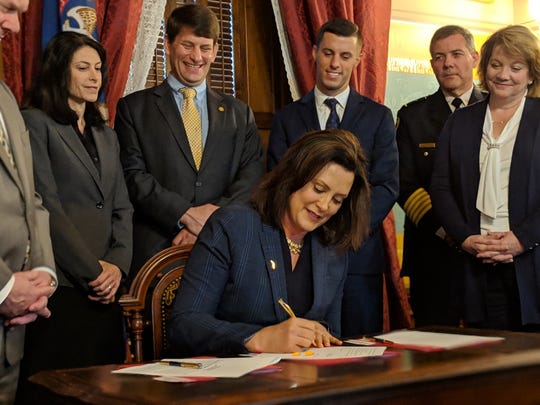
Michigan Gov. Gretchen Whitmer signs civil asset forfeiture reform laws on May 9, 2019. It is unclear whether Whitmer would sign bills giving the state auditor general access to confidential information in state departments.
"I am going to get access to those Foster Care & Adoption
records, now, Suckers." , said Dana.
I seem to remember a particular case where the Michigan Department of Health and Human Services refused to respond to an inquiry of the Office of Children's Ombudsman about a case in its Child Welfare System.

The Auditor General has conducted numerous Single Audits, where Michigan was found, over and over again, to violate general principals of GAGAS when it came to billing of Medicaid.

I also remember a particular extraordinary writ mandating the Office of Children's Ombudsman to refer any suspected violations of law and policy over to the Attorney General, where the court just violated multiple rules of law when it came to due process, claiming that it was not swayed.

So, now, the House  is proceeding to allow the Auditor General access to confidential records, which will, obviously, included the Department of Health and Human Services in Child Welfare.

This is not going to be pretty, because those findings will be made public, which means Nancy Edmunds will be forced to accept the information that I am sure someone will enter into the record, some how, some way, to show, Michigan does nasty things to tiny humans in Foster Care and Adoption.

There are rumors that Michigan maintains double books, but hey, what do I know?

I know the U.S. Department of Health and Human Services Inspector General patiently awaits for those Child Welfare confidential records, which include Michigan Children's Institute.

Since there is a movement to expand background checks on gun licensing to include confidential records of youth, I am quite sure there will be a brave soul from the legal community to step up to the plate and demand access to those child welfare records, hidden behind the iron curtain of Child Welfare, because that is where you shall find the horrors of trafficking tiny humans in Michigan.

That I know shall be messy.

House OKs bills giving auditor general access to confidential records

Lansing — In a nearly unanimous vote, the Michigan House approved legislation Wednesday that would guarantee the auditor general access to confidential information related to an investigation, legislation vetoed last year by then-Gov. Rick Snyder.

Auditor general investigations, which keep tabs on state government operations, have been slowed in the past by state departments concerned about handing over documents they consider confidential, said the legislation's sponsor Rep. Steve Johnson, R-Wayland.

In 2018, the auditor general went so far as to sue the Michigan Department of Health and Human Services for access to adoption records needed for a performance audit.

The bills passed 103-3 in the House Wednesday would ensure “checks and balances” remain in place between the legislative and executive branches, Johnson said.

“One of the checks that the legislative branch has on the executive branch is constitutionally we have an auditor general and they’re able to go through and make sure that the executive branch is doing their job correctly,” Johnson said. “In order to do that, they need access to all their information, all their files.”

In 1993, then-Attorney General Frank Kelley opined that the auditor general could review confidential information from the Michigan Employment Security Commission, but the auditor general would then be bound by the same confidentiality rules governing the commission's handling of the information.

Similar to that opinion, the House bills would allow the auditor general to investigate electronically stored and confidential information in each state agency and include language holding the auditor general liable if the office divulges the confidential information.

Snyder called the legislation “an unconstitutional overreach that would blur the separation between the legislative and other branches” in his December veto letter.

The proposal would give the legislatively appointed auditor general "unrestricted access to all executive functions, whether it was conducting an audit of those functions or not," he wrote. It could result in "inadvertent disclosures of personally identifying, protected health, or other privileged or confidential information,” and potentially expose that information to data security threats.

The legislation had nearly unanimous support last year when it passed the House 107-2 and the Senate 37-0.

Johnson said Snyder was “dead wrong” in his arguments regarding the separation of powers and said the separation was why the Legislature needed the tool. The executive branch has its own form of checks in the form of vetoes and the leeway it has in implementing legislatively-enacted laws, Johnson said.

The legislation's bipartisan sponsorship — Democratic Rep. David LaGrand is a sponsor of one of bills — could help it earn Democratic Gov. Gretchen Whitmer's signature this time around, Johnson said.

“I think Gov. Whitmer has been a very pro-government transparency governor so we’re hoping that she continues that record on this bill,” he said.

But Whitmer's office indicated a veto is likely unless the legislation is amended.

"As written, the bills have serious problems — constitutional and otherwise — and the governor would not sign them," Whitmer spokesman Zack Pohl said in a statement.

Some of the confidential information that could be at stake are adoption and foster care records, health records, or personally identifiable information. Confidentiality excuses surrounding those items could be used as an out by problematic departments facing an uncomplimentary audit, Johnson said.

“You have different departments that have systemic issues that need to be fixed,” Johnson said. “We don’t know about it because we’re not getting all the information on it.”


Voting is beautiful, be beautiful ~ vote.©
Friday, June 21, 2019

Cocktails & Popcorn: Will "The Girls" Charge "The Boys" With Infantcide - Flint Water Crisis Due Over

Image result for pernod pastis
Pastis must always be served with water
I believe someone knows something about stuff.

After "The Girls" have finally achieved their clowning glory of restarting the investigation and controlling the narrative.

"The Girls" want to know what is in those phones and hard drives.

I believe "The Girls" are going to go after the Madame, Maura Corrigan, and her prayer groups because this all took place under the reign of the Emergency Manager.

That would be a great way of diverting attention away from the financial fraud schemes of the contracts, the gerrymandering, the campaign financing, and all the other nasty things associated with the water and authorities of Detroit.

This new investigation could be protracted for years, or, it could be an opportunity to address that pesky "attorney-client privilege" immunity when it comes to a public capacity, particularly if you are elected into office as a county prosecutor, because we are dealing with Wayne County Prosecutor's Office, which has its own, illustrious history under Mike Duggan.

It will be interesting to see if "The Girls" are going to pick up on infant mortality charges that are the latest rage in abortion laws being elevated to the national agenda.

Force abortion through an intentionally manufactured crisis is not just forced migration, but murder, and "The Girls" could bring criminal charges against "The Boys" who were behind the contracts.

Charging christian pro lifers with infantcide!

Now, that is what I call a legal, manufactured crisis.

How this proceeds, I can only say at this time that I would recommend a nice pastis, as we are dealing with water because we have ourselves a federal investigation going on, but hey, what do I know?

Attorney General Nessel explains decision to halt Flint Water Crisis Investigation, start over.


Voting is beautiful, be beautiful ~ vote.©

Tuesday, May 21, 2019

AEI: How To Pitch The Maura Corrigan Gaming The System Using Medicaid Funding For More Child Welfare Propaganda In Public Policymaking

Oh, those rascals over there at the Maura Corrigan Think Tank called the American Enterprise Institute are at it again!

I busted them doing that pre-emptive money pitch for their next scheme they came up with to run those Social Impact Bond seminars in their Faith Based Funded propaganda network they like to now call "the importance of social capital for public policy making".

Sometimes I call it propaganda.

Sometimes I call it a foreign invasion.

Sometimes I call it the work of the Lord.

Sometimes I call it predictive modeling crap.

Either way, you have got to given them credit for re-engineering the residuals of the peculiar institution for corporate parental rights.

Seriously.

But, sometimes, just sometimes, I believe they are only trying to raise legal defense funds for #warcrimes, but hey, what do I know?

I know these people only care about stealin' children, land and votes.

Testimony: On the importance of social capital for public policymaking

Statement before the Joint Economic Committee

Voting is beautiful, be beautiful ~ vote.©

Thursday, April 11, 2019

It Takes A Child To Educate A Federal Judge - Will Nancy Edmunds Finally Figure Out After 10 Years That Michigan's Child Welfare System Sucks?

Nancy Edmunds, the judge presiding over the decade lingering Children's Rights case, Dwayne B. v. Granholm, has yet to figure out that nothing has changed.

Every time Kevin Ryan submits another court monitored report on the progress of Michigan's child welfare system, he only reports on microcosmic duct taped repairs to the conditions of its operations, or, rather, in more realistic terms not reported to the court, the drugging, rapes, beatings, torture, suicides, unsuccessful or successful, oh, and that pesky issue of child trafficking.

Now, mind you, Derrick is only a teen.

He is not a lawyer.

He is not a judge.

He is not an accountant.

What he is, is a young man with a keen eye and a quick response for a brave solution, skills necessary to preside over the Michigan federal case on conditions of foster care and adoption.

So, riddle me this.

How come foster kids get passed around to lots of different places, with their worldly possessions in a plastic bag, with no shoes?

The last time I checked there was federal funding appropriated to the States to provide for the necessary needs of the child.

FUN FACT! CPS CAN REMOVE YOUR CHILD AND PLACE THEM IN FOSTER CARE BECAUSE FAILURE TO PROVIDE FOR THE NECESSARY NEEDS OF THE CHILD IS CHILD ABUSE AND NEGLECT

It seems we have two issues here, the first being an instance of some form of defalcation in funding, because I would really like to know why a young man has to step up and shed light upon the fact that these kids have no shoes.

The second being that Michigan is abusing and neglecting the children in its care and no one cares but this young man.

Rock on, Derrick, I see a very bright future for you.

I wonder if Nancy Edmunds can finally see that the Michigan Child Welfare System Sucks?

Perhaps, Derrick can educate Nancy.

Holly teen collects shoes for foster children


 - Seeing the need for foster children in our area, a Holly teen decided to do something about it.
He doesn't know what it's like to walk in their shoes, but he is trying to make sure they have a new pair of their own.

"I just thought helping the community would be a good thing to do," said Derrick Newman.

"Once he kids an idea, it is forward ho!" said his dad Steven Newman.

His dad isn't exaggerating. You first met Derrick Newman in August of 2017 when he began collecting patches from police and fire departments all over the world
.
After FOX 2's story aired. his collection grew from 1,000 to almost 5,000 - with people sending them to him from as far away as Australia. His patches were sewn onto blue banners paying tribute to the officers and firefighters who put their lives on the line every day.

Now at 14, Derrick has a new mission - his dad and step-mother are in the process of adopting a foster child which got Derrick thinking.

"Most people will give them tooth brushes, toothpaste, shirts stuff like that," Derrick said. "Not shoes."

Learning about the tough times foster kids experience like often moving from home to home, Derrick decided he wanted to help.

He started a shoe drive on Facebook called "Going Somewhere (Shoes for Children in Foster Care). He is asking people to donate new pairs of money so they can purchase footwear for kids in need.

"I think that kids that are going to need a little more time to be adopted, should be able to have new pair of shoes when they need it," he said.

"A lot of foster kids - they are kids - they grow out of shoes quick, just like any kid," Steven said. "But they don't have the support to get new shoes all the time. Hopefully this will help."

Slowly the shoes are trickling in - but with the help of his dad, Derrick refuses to give up. He visits stores, posting videos and hoping people will find it in their hearts to help.

"I think it is awesome that we have gotten so much donated to us, to be able to get shoes," Derrick said.

They are in the process of choosing foster homes to donate the shoes to. Anyone is welcome to contact them on their Facebook page. Derrick sending a message to others if you are able to - do more in your community. CLICK HERE to go to the Facebook page.


Voting is beautiful, be beautiful ~ vote.©

Wednesday, March 20, 2019

Michigan Foster Care Cover Up Death Squad Busted Again: From Ricky Holland To Omarion Humphrey - Not A Got Damn Thing Has Changed - Just Ask Nancy Edmunds

Ricky Holland
Word in the chatterverse has it that the autopsy says that he did not drown.

Michigan has always had a clean up squad in child welfare.

He should never have been there.

Ricky Holland should never have died, either.

Go get that piece of shit Steve Yager, now.

Go get Orlene Hawks.

Go get that entire Office of Children's Ombudsman.

Go get that Michigan Children's Institute.

Go get The Madame Maura Corrigan (said in a high British accent).

I command thee.

Foster agency connected to autistic boy who drowned agrees to close

BURTON, MI -
Omarion Humphrey
 The foster care agency connected to the disappearance and drowning of a severely autistic boy has closed under an agreement with the Michigan Department of Health and Human Services.

Alternatives Services for Children and Families voluntarily surrendered its license and closed on Monday, July 1, 2016, according to an agreement with MDHHS Executive Director Steve Yager.

A state investigation into 9-year-old Omarion Humphrey's death recommended the license surrender. Investigators found that Alternative Services for Children and Families' license should be revoked because of licensing violations at multiple foster homes, MDHHS Spokesman Bob Wheaton said.

Humphrey was visiting Lake Callis in Davison Township with his foster family on July 4, 2015, when he disappeared. Six days later, following a massive search, his body was found in the lake. He apparently drowned.

Body in lake believed to be missing autistic boy, police said.

DAVISON TWP, MI - A body found today in Lake Callis is believed to be that of missing 9-year-old boy with autism, Omarion Humphrey, police said. Rescue crews have found a child's body in the water in Lake Callis in Davison Township....

Last year, the state verified that the 95 children under Alternative Services for Children and Families were safe and began transferring those cases to other private agencies and to MDHHS foster care workers.

Alternative Services for Children and Families still had about 40 children under its care as of June, but all cases were transferred by July 1, Wheaton said.

"Protecting vulnerable children is our top priority," Yager said. "We kept that in mind in recommending revocation of the license and in handling the closing. We took numerous steps to make sure that all children and foster families received appropriate services during this transition."

Revocation of a foster care agency license is rare and occurs when there are serious licensing violations that make closure necessary to protect children, the state said. Alternatives worked collaboratively with the department in reaching an agreement to surrender its license, according to a statement.

The Flint Journal-MLive.com could not reach a representative for Alternatives for Children and Families for comment.

An August report from the MDHHS initially recommended the license revocation saying Alternatives for Children and Families had placed a child, presumably Omarion, in a foster home that had several previous infractions, many for lack of supervision.

Agency that placed autistic boy who drowned should lose license, state says
The state says the foster agency that placed 9-year-old Omarion Humphrey, the severely autistic boy who went missing and drowned in a Davison Township park, should lose its license.

The special investigation report, carried out in response to Omarion's disappearance and death, didn't identify Omarion's foster home or refer to Omarion by name. It refers to a "Foster Child A" who went missing.

The report also refers to a Foster Parent A who did not receive training on autism. The same Foster Parent A, according to the report, took in a child on the same day court documents show Omarion was removed from his biological home in Oakland County.

Missing autistic boy pulled from home squalor just months ago, court says
Investigators said Omarion was sleeping on the floor in a trash-ridden home without adult supervision, wore dirty clothes that didn't fit and had poor hygiene, the court documents say.

"Per the rule, Foster Parent A should have been provided training that related to Foster Child A's needs," the August report said. "At the very least, Foster Parent A should have been trained on how to handle issues dealing with Foster Child A's communication skills, physical safety and self-care."

In an Oakland County court hearing last July, a representative of Alternatives testified that Omarion's foster mother was licensed to foster special needs children, but did not have formal training for managing children with autism.

The foster mother used Internet research to educate herself on caring for autistic children, the Alternatives representative said.

Omarion and 10 of his siblings were removed from their biological parents' home and placed in foster care in 2015. Investigators said Omarion was sleeping on the floor in a trash-ridden home without adult supervision, wore dirty clothes that didn't fit and had poor hygiene, the court documents say.

A lawsuit that Omarion's estate has filed against Alternatives and foster mother Lulu Richardson is pending in Genesee Circuit Court.

Voting is beautiful, be beautiful ~ vote.©

Thursday, January 17, 2019

Will Nessel Interview Engler About Trafficking Tiny Humans & Other Bush-Clinton Operations At MSU?

Will Michigan Attorney General Dana Nessel interview Engler about his "activities" in privatizing those child welfare contracts in Medicaid fraud...

...or his real estate development projects of his buddies...

...or the Michigan Children's Trust Fund...

...or Bush Haiti Foundation...

...or the Clinton Foundation...

...or that pesky attorney-client privilege...

...or the blackmail...

....let me stop there, because I want to watch to see what Dana does...

Michigan's attorney general looks to interview Engler about MSU

Michigan Attorney General Dana Nessel has directed her MSU investigation team to interview former Michigan State University Interim President John Engler, her office said Thursday.

Nessel made the request Monday before Engler stepped down from the post amid controversy. Her office had already contacted MSU to try to set up the interview and the attorney general is “counting on him to honor the request despite his resignation,” said spokeswoman Kelly Rossman-McKinney.

Officials have already contacted MSU attorneys to try to set up the interview and Nessel is “counting on him to honor the request despite his resignation,” said spokeswoman Kelly Rossman-McKinney.
Nessel was concerned by the “lack of transparency and overall cooperation” by MSU under Engler, Rossman-McKinney said.

Engler, citing the advice of counsel, has refused to hand over certain MSU documents in the Larry Nassar investigation based on client-attorney privilege. Nassar had sexually assaulted young women for decades while an MSU and USA Gymnastics doctor, and is effectively serving a life sentence in prison.

MSU spokeswoman Emily Guerrant said Thursday she just became aware of the request to interview Engler.

"I don't see why he wouldn't comply with it," Guerrant said, adding that Engler is in Texas for the interment of his father-in-law.

Engler submitted a letter of resignation on Wednesday that the Board of Trustees accepted on Thursday.

During last Friday's editorial board meeting with The Detroit News, Engler said a judge has reviewed all of the documents and there are 29. If the judge rules that MSU should turn them over, Engler said the university would “absolutely happily to turn those over and privilege is protected for those.”

“There is no issue in those documents, but we are sure resisting the idea that insurance companies should get access to that information at a time when we are in litigation with them,” Engler said.

Nessel’s office is continuing its investigation of MSU and its role in the Nassar scandal after special prosecutor William Forsyth stepped down when his contract expired at the end of last year. Forsyth had been appointed by former Attorney General Bill Schuette.

Christina Grossi is the lead assistant attorney general in the ongoing probe and is working with chief investigator David Dwyre.

The investigation under Forsyth led to criminal charges against former President Lou Anna Simon along with Kathie Klages, the former head MSU women's gymnastics coach, and William Strampel, the former dean of the College of Osteopathic Medicine. Simon's preliminary hearing will be held later this month.

Forsyth's December report on the investigation noted the university had repeatedly stonewalled the investigation "it pledged to support."

“Given the change at MSU,” Nessel’s office may approach the university again for documentation that had previously been withheld during the investigation, Rossman McKinney said. She said Nessel’s office is “hoping for a renewed commitment to transparency.”

The change in the interim presidency and changes in the board membership “provides an opportunity to revisit some of our earlier requests that were denied or argued as privileged or we were told they didn’t exist,” Rossman McKinney said.

When asked whether MSU’s general counsel Bob Young, an Engler appointee, would prove a roadblock to that task, Rossman McKinney said she couldn’t speculate.

MSU Trustee Joel Ferguson on Thursday denied allegations that MSU stonewalled the investigation and said the university has cooperated throughout the process. He said each trustee cooperated when interviewed by investigators.

“This is Forsyth giving a rationale of why he couldn’t find anything on us,” Ferguson said. “It’s a nonissue.”

Ferguson said the university has withheld just 29 documents, which are being reviewed by a judge. Rossman McKinney said the university initially withheld or redacted 7,651 documents.

The university voluntarily released 1,000 documents after Attorney General Schuette's office challenged the denial in court. Of the remaining 6,651 of the documents, 177 were ruled not privileged and went to the attorney general.

MSU objected to the release of 29 of the 177, keeping them tied up in court longer. 

Voting is beautiful, be beautiful ~ vote.©

Wednesday, January 16, 2019

Michigan Legislature Blackmailed MSU Trustees To Hire John Engler Who Has Resigned

My interest would be to identify those Michigan Legislators who blackmailed the MSU Trustees, and if the Legislators who made the threats were compromised, themselves, then find out what they said, following it up by inquiring why no one said or did anything about it, or did they.

Running a state through threats is that monarchy stuff.
The board had two possibilities — former Michigan Gov. John Engler, a Republican, and former Michigan Gov. Jim Blanchard, a Democrat. Both were alumni with long ties to the school. But the state Legislature, then controlled by Republicans, made it clear to MSU — hire Engler or get ready to lose millions of dollars in state aid. Lansing State Journal, 1.16.2019
John Engler is currently battling the demons being summoned from his tenure at the helms of the State of Michigan.

John Engler is the father of privatization who has breech the children's trust, which is treason, because he raided the Michigan Treasury for the benefit of himself and the Privateers, in the name of the tax exempt god.

I always keep my vows.

On a mission...

John Engler resigns as Michigan State University interim president

After a controversial year in office, MSU Interim President John Engler resigned on Wednesday, sending an 11-page resignation letter to the school's board shortly after 6 p.m.

"In compliance with your request that I resign & in order to ensure an orderly transition to my interim successor, I hereby resign the office of President of Michigan State University effective 9 am, Wednesday, January 23," the letter started. "It has been an honor to serve my beloved university."

The move came hours after the board set a special meeting for early Thursday morning with the intent to fire him, the sources said. The timing of the resignation was uncertain, with details still being worked out.

Engler has been under heavy criticism for the past year, since he took over for Lou Anna Simon, who herself resigned under heavy criticism for her handling of the Larry Nassar sexual assaults scandal.
After setting the board meeting for 8 a.m. Thursday, board chairwoman Dianne Byrum told Engler the board would like him to resign or it would fire him, the sources said.

Engler and MSU spokeswoman Emily Guerrant did not return requests for comment.
Board members are expected to name a replacement for Engler during the Thursday meeting, sources told the Free Press.

It's a meeting that has been brewing almost since the day Engler took over as interim president at his alma mater.

Read more:
Like Simon, much of Engler's tenure has been taken up with fallout from the Nassar scandal and heavy criticism from survivors of Nassar's abuse. Engler survived a motion to fire him this summer, but the criticism hasn't abated.

Once the meeting was announced, board member Brian Mosallam, the leading critic of Engler, told the Free Press the time had come for Engler to leave.

"John Engler's reign of terror is over," said Mosallam, who has been pushing for Engler's departure for nearly a year. "Michigan State University will be returned to its people."

The latest round of criticism came after Engler told the Detroit News editorial board that Nassar survivors were "enjoying the spotlight" while the university is "trying to go back to work."

That launched a fresh set of criticism on social media and elsewhere from those who believe Engler should be gone.

Twenty-three of MSU's top academic administrators — mostly deans of various colleges and schools — signed a letter sent to the board Wednesday demanding that Engler be replaced.

"The pattern of comments by interim President Engler, including his most recent statement suggesting that some of the survivors of sexual abuse are 'enjoying' the spotlight, further harms the very people it is our responsibility to support," the letter said. "We do not support his continued leadership."

The advocacy group ReclaimMSU cheered the news that Engler was likely on his way out. It has been calling for his removal for months.

"He was a known entity," said Betsy Riley, a graduate student with the group. "He was a conscious choice by the the board to play defense."

The group said it would like the board to engage various groups around campus in the search for an interim president.

"They say, 'trust us," Riley said. "We can't trust them. This is the group that brought us Engler."

A tumultuous year in office

Engler was hired as interim president amid turmoil at the university.

Last January, MSU was reeling from heavy criticism for its lack of action towards Nassar, a former MSU doctor, after hundreds of victims showed up to testify in court about how Nassar had sexually assaulted them.

Hours after Nassar was sentenced on criminal charges, Simon, now facing criminal charges related to MSU's handling of the Nassar scandal, stepped down and the board began looking for an interim replacement.

The board had two possibilities — former Michigan Gov. John Engler, a Republican, and former Michigan Gov. Jim Blanchard, a Democrat. Both were alumni with long ties to the school. But the state Legislature, then controlled by Republicans, made it clear to MSU — hire Engler or get ready to lose millions of dollars in state aid.

In a closed-door meeting, Democratic board member Joel Ferguson — a Lansing powerbroker with ties to Engler — flipped his vote to Engler, giving him a 5-3 majority. Later that week, in a public vote, all eight board members voted for Engler to start.

In a press conference after being hired, Engler promised that "change is coming" and that he would "move forward as if my own daughter were on this campus."

Over the course of the next year, Engler drew criticism for a number of what his critics saw as missteps.
Among them:
  • Engler canceled a $10 million healing fund set up to help pay for counseling for Nassar survivors. In doing so, he cited what he said was fraud of the system and said after the survivors got a $500 million settlement from MSU, they didn't need the fund to pay for their counseling. Earlier this month, the MSU board rescinded this action and reinstated the fund.
  • In an April email uncovered by the Free Press and the Chronicle of Higher Education, Engler accused Rachel Denhollander, the first Nassar victim to go public,  of getting kickbacks from attorneys for filing a lawsuit against MSU. When it was released in June, it brought a new round of calls for the board to fire Engler, including  one from now Michigan Gov. Gretchen Whitmer.
  • In April, Nassar survivor Kaylee Lorincz said Engler offered her $250,000 to drop her lawsuit. After Lorincz made the offer public and was highly critical of it, a top Engler aide sent a private email obtained by the Free Press in which she said any such claims were "fake news" and made up by survivors.
  • After announcing he was creating a chief compliance officer position to be independent and work as a check on MSU, Engler folded it into an existing office and reportedly didn't give the resources the CCO asked for to run the operation.
  • When the school's alumni magazine created an issue dedicated to the Nassar scandal, including several pieces critical of MSU's handling of the issue, Engler cancelled the issue. Instead an issue with a lengthy question-and-answer piece with Engler focusing on what he called the positive changes he had been making at MSU ran.
  • Engler drew complaints for his hiring, with many saying he brought in his friends and political allies. Drawing the most vitriol was a three-year contract given to Bob Young, whom Engler had appointed to the state 'sSupreme Court when he was governor. Critics said Engler should not have given out contracts longer than the time he was expected to be at the school.
  • When the head of MSU's Title IX office — the department that handles sexual assault complaints on campus — left, Engler appointed Rob Kent as the interim head. Kent had been working in the school's general counsel office and had defended the school in various lawsuits brought against the school by sexual assault survivors who alleged the school didn't follow proper procedures. Those critical of the move said he wasn't the right person to reform the office.
  • After MSU Athletic Director Mark Hollis stepped down, Engler named Bill Beekman, then the secretary to the MSU board, as acting athletic director. He promised a national search. Later, Engler hired Beekman, who had no experience running an athletic department, without doing a national search. He said he made the move because the school's coaches, including head basketball coach Tom Izzo and head football coach Mark Dantonio, wanted Beekman to have the job. 
  • After a lawsuit was filed against MSU by a sexual assault survivor, MSU released a statement about the case detailing the visits of the person filing the suit to MSU's counseling center, a likely violation of federal student privacy laws. Internal emails obtained by the Free Press showed Engler was personally involved in the crafting of that statement.
"We believe the board should fire Engler," MSU faculty member Anna Pegler Gordon, representing the group ReclaimMSU, said during public comment at a Jan. 9 board meeting. She said the group believes Engler has repeatedly lied and been unsympathetic to Nassar survivors.

Engler: Set next president a clean slate

In a meeting at the Free Press last week, Engler said he knew he had upset some people and said he would have done some things differently. But he said he believes he had set the university up for the next president to have a "clean slate" when that person starts.

As for the disagreements and tension? Some of that had come from him not being used to being in a university environment, he said. It's different, he told the Free Press, in little ways, such as who sees his communications.

"Wouldn't be emailing," he said. "As governor, I didn't have to worry about FOIA (public records laws). Unfortunately, everything at a university is subject to FOIA."

It also manifested in big ways — such as his style and approach.

"I think what the university community struggles with ... as governor, I got sued a lot. Litigation is a pretty full-contact sport. This university community is not used to this. I'm probably too used to it."
Engler said the environment at MSU was "hyper-charged."

"There was a lot of pressure going on. I ended up becoming the lighting rod because I'm the guy making a lot of decisions. But at the same time, somebody had to do it."

Voting is beautiful, be beautiful ~ vote.©