Showing posts with label Paul LePage. Show all posts

Saturday, June 9, 2018

Maine Celebrates Its Anniversary Of Child Welfare Fraud With Legally Kidnapped

Almost one year ago to the day, Mary Mayhew, the DHHS Commissioner of Maine's child welfare system stepped down.

Mary Mayhew steps down as DHHS commissioner

Updated: 10:35 AM EDT May 24, 2017

AUGUSTA, Maine — Department of Health and Human Services Commissioner Mary Mayhew is stepping down, according to the LePage administration. Gov. Paul LePage announced on Wednesday that Mayhew was leaving DHHS effective Friday.

Former DHHS commissioner Mary Mayhew announces run for governor Before being appointed commissioner, Mayhew served as the senior health policy advisor for the LePage Administration. Prior to that, Mayhew served for more than a decade as vice president of the Maine Hospital Association. LePage said an acting DHHS commissioner will be named later this week.

But wait, it seems Governor LePage has appointed an interim Director.

Updated: 
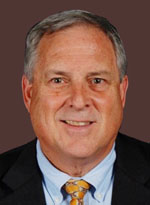
 DHHS Commissioner, Ricker Hamilton
Rick Hamilton

LePage appoints longtime DHHS manager as interim replacement for Mayhew

The following is taken from Maine DHHS:
Commissioner Ricker Hamilton oversees the largest agency in state government, the Maine Department of Health and Human Services, which has an annual budget of over $3.4 billion and more than 3,400 employees. He was appointed as acting Commissioner in May of 2017 and nominated for Commissioner in October. 
Prior to this role, Commissioner Hamilton served as Deputy Commissioner of Programs for Maine DHHS for nearly four years. He has more than 40 years of experience in management, program development, strategic planning, and social work in programs that provide services for children and families, substance use disorder, mental health, sexual assault and domestic violence, aging and disability and acute psychiatric care. 
He is an instructor at the Maine Criminal Justice Academy, serves on the American Bar Association's Commission on Law and Aging, acts as an advisor and trainer for the FBI; Department of Justice, Office on Violence Against Women; National Clearinghouse on Abuse in Later Life; National Institute on the Prosecution of Elder Abuse; and the Federal Law Enforcement Training Center. He received the 2016 Children's Advocate Award from the Maine Coalition Against Sexual Assault. 
Commissioner Hamilton holds a B.A. degree from St. Anselm College, an M.S.W. degree from Boston College Graduate School of Social Work, and received certification by the Maine Criminal Justice Academy as a Reserve Law Enforcement Officer.
Considering the fact that Rick Hamilton is a licensed attorney, it seems he is not very good when it comes to administering DHHS.

I should file on his license for incompetence.

In honor of her resignation, Maine DHHS administration celebrates its time honored tradition of child welfare fraud by generating a fraudulent letter to Legally Kidnapped by identifying Mayhew as the principal agent, even though she is no longer there.

I believe there are some serious legal issues here which need to be immediately addressed by the DHHS administration of Maine.


Congratulations, Maine on another year of child welfare fraud.

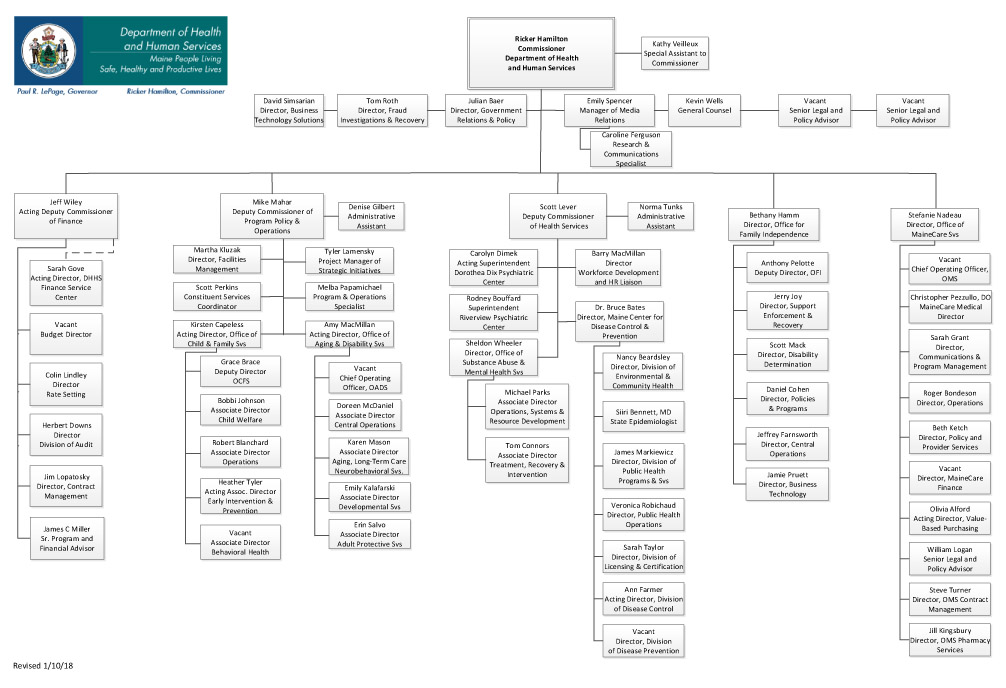
DHHS Organizational Chart

Voting is beautiful, be beautiful ~ vote.©

Tuesday, April 17, 2018

Maine Child Welfare System Still Clueless After All These Years

Image result for facepalm
Please, Maine, stop trafficking tiny humans, please.

I do not know how many times I must castigate the child welfare system of Maine, but all is well, as it is a secret delight to ridicule traffickers of tiny humans.

DHHS reviews child abuse cases it contracted out

In the spirit of fuchsia...

AUGUSTA (BDN) — Maine’s child welfare program is revisiting six-and-a-half months of child abuse reports it received and referred to contractors who intervene in “lower-risk” abuse and neglect cases.

Those "referred contractors" are third party, privatized, NGOs who are beholden to no one, because they are contracted.

The Office of Child and Family Services earlier this month asked the four contractors who handle those lower-risk cases to comb through their records dating back to last Aug. 31 and re-report to the state many of the families whose cases they were assigned. The state would then review those cases.

All they do is file cost reimbursements for crappy programs that a group of sanctimonious, childless fanatics came up with to maximize revenue.

Maine Children's Trust Fund Is A $23 Million Money Laundering Operation

The request indicates that the state’s alternative response programs, which the four contractors run in their respective regions, are one area of focus for the Maine Department of Health and Human Services following the deaths of 10-year-old Marissa Kennedy and four-year-old Kendall Chick, allegedly at the hands of their caregivers. The department has said little about those individual cases, so it’s not yet known whether the department had assigned either family to an alternative response program.

The leadership of Maine Department of Health and Human Services is not the sharpest knife in the drawer, which is why she took the job.

Why Maine Is So Secretive In Privatization: It Stripped Civil Rights Out Of Child Welfare

In a March 12 memo, the state asked its four alternative response contractors to identify the families assigned to them since Aug. 31 with whom their social workers never made contact, who refused services from the social workers, or who stopped working with the social workers before their abuse and neglect cases were closed. The department set a March 23 deadline for the contractors to report those families to state intake workers by phone or email.

The state is not going to do anything, even if they miss the deadline, or even when the reports come in showing a cover up of complete ineptitude in ethics or human compassion.

Maine To Fast Track Trafficking Tiny Human Asset Forfeiture Policies

Those contractors, all nonprofit organizations, are normally required to supply that information through the department’s child welfare information system, called MACWIS. DHHS asked them to continue making the reports through calls or emails to intake workers who staff the state’s child abuse reporting hotline going forward.

Maine Termination of Parental Rights Policy

“It appears that OCFS is playing catch up on cases that were referred to Alternative Response,” Pamela Day, a former director of child welfare services and standards at the Child Welfare League of America, wrote in an email after reviewing the March 12 memo. “They may also be trying to ascertain what they missed with cases that go back to last August 31.”

Emily Spencer, a DHHS spokeswoman, said the department’s request to the alternative response contractors is part of an internal review of Child Protective Services ordered by Gov. Paul LePage following Marissa Kennedy’s and Kendall Chick’s deaths.

Maine Bill: Citizen Medicaid Fraud Busters Could Reap Cash Award

“It is important that in our review, we are taking a holistic look at areas possibly in need of improvement,” Spencer wrote in an email. “We want to ensure that we are leaving no stone unturned when evaluating how our system can best serve the children who depend on us.”

Pingree meets with LePage to discuss DHHS budget waivers

The alternative response programs work with families where children appear to be at low or moderate risk of being abused or neglected. They receive their assignments from Child Protective Services intake workers, who receive all initial reports of suspected child abuse and neglect, and sometimes from the division’s investigators after they’ve looked into abuse and neglect claims and determined they’re of low to moderate severity.

DHHS commissioner needs time to figure out why department is over budget

The state assigns its own Child Protective Services investigators to respond to cases it determines to be more serious. Unlike state child protective workers, alternative response workers can’t file petitions in court to remove children from unsafe houses. Whether parents engage with alternative response workers is voluntary.

Maine Busted In University Child Welfare Training Fraud Scheme

In most cases, alternative response workers work with families for about four months, said David McCluskey, executive director of Community Care, which contracts with the state to run the alternative response program in Aroostook, Hancock, Kennebec, Penobscot, Piscataquis, Somerset, Washington and York counties.

Maine Will Not Eat Its Medicaid Meat

Shawn Yardley, president and CEO of Community Concepts in Lewiston, said DHHS staff members should already have access to the information they’re requesting from the alternative response contractors since the contractors have to send that information to DHHS under the terms of their contracts.

Maine's Admission Of Guilt

“That wouldn’t be something we’d be sitting on,” said Yardley, whose organization provides alternative response services in Androscoggin, Franklin and Oxford counties. “It would be something that should be viewable by the department as part of their normal course of work.”

Maine's Medicaid Publishing of Errors

The alternative response providers’ contracts also specify that they should report families back to DHHS when social workers find the cases are more severe than initially thought.

Maine Children's Services Administrators Need To Be Pubically Flogged

The organization KidsPeace is the alternative response contractor in Cumberland County. Rockland-based Home Counselors Inc. provides the service in Knox, Lincoln, Sagadahoc and Waldo counties.
Tom Farkas, a spokesman for the Maine State Employees Association, the largest union for state workers, called the number of cases affected by the March 12 request “huge” and said the move will “dramatically increase workloads” for workers in Child Protective Services.

Maine Funds Foster Care Fraud Factories

The number of cases DHHS has assigned to alternative response — rather than assigned to a state caseworker — has been on the rise in recent years, DHHS statistics show. Alternative response was also a popular option during Gov. John Baldacci’s administration, the statistics show.

Voting is beautiful, be beautiful ~ vote.©

Thursday, April 5, 2018

Maine Children's Trust Fund Is A $23 Million Money Laundering Operation

From our friends over at Maine Parents, here is a special tribute for Child Abuse Propaganda Month.

Marissa Kennedy and Kendall Chick Are This Years Springboards For Child Abuse Propaganda Month in Maine


With these two cases still fresh in the minds of the emotion junkies who want DHHS to snatch more kids more quickly from their parents and make them harder to get back after comes National Child Abuse Prevention Month.  This is the number one month for all of the private agencies who profit from work with abused children and their families to hold their fundraisers Awareness Campaigns.  There will be blue pinwheel gardens and candle light vigils and ceremonies and on and on all across the country.
Two high profile child abuse cases in Maine, the deaths of Kendall Chick and Marissa Kennedy, left many Mainers wondering how and why it happened.

But one organization is looking ahead, not back. 
The Maine Children's Trust oversees child abuse and neglect councils in every one of Maine's sixteen counties. 
Source >> Maine Children's Trust kicks off Child Abuse Prevention Month
Unfortunately this year we have two recent and horrific child abuse cases which they will certainly be harping on and more people will come out to give because of it.  And ultimately, there will be a spike in the number of foster kids in Maine.

How Maine quietly handed off financial oversight of a $23M program for infants

Maine Children's Trust Fund is a private NGO which reports on to the IRS far less that what it actually is and fails to report to the State of Maine or what it actually does.

Why does it even have $23 million, anyway and do they own any real estate, any place in the world?

Voting is beautiful, be beautiful ~ vote.©

Friday, March 16, 2018

Maine To Fast Track Trafficking Tiny Human Asset Forfeiture Policies

Image result for kids being chased
Give me your inheritance, I got a campaign to fund!
Paul LePage has never come across to me as a man of compassion.

Neither has he even remotely reminded me of a scholar.

Something tells me he is putting Maine in play for those trafficking tiny human asset forfeiture policies.

Yes, that is correct, the next phase of privatization is to snatch the trust funds, inheritances, and the legacies from the children.

Indiana, Kansas, Kentucky, Michigan, all have implemented its asset forfeiture policies, and now it is Maine's turn.

I find it absolutely amazing the lengths an elected official will go to make a few bucks to stay in office, or out of prison.

I want to know who is advising him.

Oh, and he is an adoptive parent.

See a pattern?

Stay tuned.

LePage says he’ll submit orders to change Maine’s child welfare system

Paul LePage, Governor of Maine,
Fastracker of Trafficking Tiny Human
Asset Forfeiture Policies, thinking whether to run for
U.S. Senate or POTUS.
AUGUSTA, Maine — Gov. Paul LePage suggested on Thursday that Maine’s child welfare system may leave too many vulnerable kids with their families and said he will unveil executive orders aimed at shoring up the system after the recent deaths of two girls.

The Republican governor gave few details about his proposals, but his Department of Health and Human Services is being probed by the Maine Legislature and doing an internal investigation after the recent deaths of 10-year-old Marissa Kennedy and 4-year-old Kendall Chick.

Maine’s child welfare system is under the most scrutiny that it has seen since 2001, when the death of 5-year-old Logan Marr at the hands of her foster mother spurred changes that made the system a national model by spurring a move toward family support and reunification.

“I think reunification in the state of Maine is the priority and I think it’s the wrong priority,” LePage told reporters on Thursday. “I want to do what’s best for the children.”

LePage said that he would likely be issuing executive orders to change the structure of the child welfare system to fix “major, major holes.” His office said they would come after internal investigations are finished.

The governor said those orders could include changing how reports of abuse are logged by the state. LePage also said he would ask the Legislature to update DHHS’ software and that caseworkers need “more training” because the jobs are “stressful.”

Police say that Kennedy was killed in February in Stockton Springs by her mother, Sharon Carillo, and stepfather, Juilo Carillo, who are both charged with murder. Chick was killed allegedly by her grandfather’s fiancee, Shawna Gatto, in Wiscasset in December.

LePage has said that DHHS contacted both girls’ families before their deaths. Bangor’s superintendent of schools has said officials reported potential abuse of Kennedy when the girl lived there. A woman who cleaned the apartment building she lived in said she also contacted DHHS.
In 2009, the Annie E. Casey Foundation, a national advocacy group that worked on the overhaul of Maine’s system during the early 2000s, has cited research saying that children are “almost always” better off in family settings and said the state had been overusing group homes.

Rep. Patricia Hymanson, D-York, the co-chair of the Legislature’s Health and Human Services Committee and one of the lawmakers who requested the legislative probe, said LePage is considering legitimate questions about the system.

But she said answers to them may not be known until the Office of Professional and Government Accountability’s investigation into the system is finished and that his Thursday remarks were hasty and looked like “window-dressing.”

“You can’t react like that. You can’t build a system by reacting so quickly to something,” Hymanson said. “You have to examine it and that takes patience.”

Voting is beautiful, be beautiful ~ vote.©

Tuesday, November 1, 2016

Why Maine Is So Secretive In Privatization: It Stripped Civil Rights Out Of Child Welfare


This is a very insightful opinion piece on privatization in the great State of Maine.


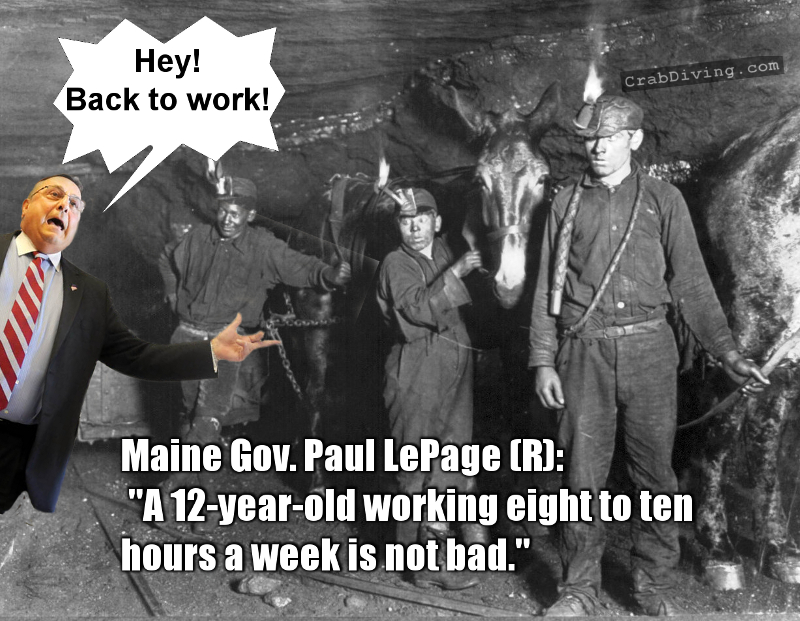
Maine Governor Paul LePage advocating child labor policies
through privatization
In dealing with child welfare services, one must understand that Michigan launched the privatization model,

Contained within this privatization model of child welfare services are series of layers, which are densely compressed through what is called, "the best interest of the child".

In short, the best interest of the child, means that everything is a secret.

No FOIA.

No audits.

No bid contracts which sets its own pricing.

Oh, and never forget, no one cares about the fraud, rapes, suicides and perpetual life on the streets for those who age out of child welfare.

And not one person will ever be held accountable.

Gotta love privatization.

So, if Maine's Governor Paul LePage is not reaping the financial benefits of saving poor abused and neglected children, why does he allow the perpetuation of privatization policies which have proven not to work?

Simple.  Re-election of Governor Paul LePage.

The Maine Heritage Policy Center is quite bold in its public declaration to dismantle civil rights, and what better place than to start with child welfare polices while funding re-election campaigns!

Selling chattel is the oldest form of survival and the best way to "maximize revenues" from the Social Security Trust Fund is to remove civil rights from society.

No one to whom to grieve.  No one to care, but campaigns to be funded.

Privatization has no civil rights, and that is why Maine can be as secretive as it desires.

If privatization is so great, why won’t the LePage administration share information?


Gov. Paul LePage’s administration has given little explanation as to why it has changed longstanding contracts and outsourced government services. The administration has touted and ramped up competitive procurement but has not made it easy for the public to see which private organizations won state contracts and why.

The administration’s decisions affect state services that thousands of Maine residents rely on and have altered the way millions of taxpayer dollars are spent. If LePage is confident that his contract awards are improving the state of Maine, he has no reason to shield them.

There is an easy fix to solving the lack of transparency surrounding Maine’s service contracts. The administration just needs to follow the law.

Last year, the Maine Legislature supported a bill requiring the state to publish online cost-savings information associated with competitive contracts. LePage tried to veto the bill but missed the deadline to do so.

More than a year later, the LePage’s administration is apparently still in the process of creating the rules needed to implement the new law but is not saying when that work will be completed.

Whether it’s refusing to talk to media, limiting the amount of information his administration releases to legislators or equating FOAA requests to a form of “ internal terrorism,” LePage has routinely dismissed the public’s right-to-know since taking office in 2011.

“If we are to guard against ignorance and remain free, as [Thomas] Jefferson cautioned, it is the responsibility of every American to be informed,” Ronald Reagan’s said in a statement to mark National Library Week in 1981.

We agree with Reagan and Jefferson. An informed public is essential to the very essence of a democracy. To be truly informed, citizens must have the ability to gain insight into the decisions made by public officials. When it comes to understanding why large state contracts in Maine were awarded to one entity over another, the public is left in the dark.

If the administration today were as transparent as LePage promised the state would be when he ran for office in 2010, the public would already have online access to all contract decisions. The public would be able to see how the administration is spending its tax dollars.

Without public oversight of contract awards, there’s a higher risk of government officials awarding contracts for personal gain. Such actions are responsible for billions in lost public U.S. dollars each year.

There is no evidence LePage or anyone from his administration has engaged in such unethical practices, but the public has a constitutional right to make sure. But, in 2013, Citizens for Responsibility and Ethics in Washington ranked LePage as the second worst governor in the nation in terms of transparency, cronyism, pressuring public officials and mismanagement. The lack of transparency and accountability has only worsened since then.

Making contract information available online is an incredibly easy fix that requires minimal additional resources.

The University of Maine System publishes the names of successful bidders online. The Maine Department of Transportation also publishes that information. Numerous other states, including several under Republican leadership, publish it as well. There is no reason why the LePage’s administration cannot follow suit.

If the governor’s cost-saving initiatives are as effective as he claims, it’s time for him to prove it.
Voting is beautiful, be beautiful ~ vote.©

Friday, April 3, 2015

Main Pain of Maine in Child Welare

Maine Governor Paul LePage
Once upon a time, like right about now, there was this political idiot who was elected as Governor of Maine by the name of Paul LePage.

He did not take the federal Medicaid Expansion because...well...let's just say he does not like obamacare...and Obama.

But his state has an ongoing major problem in dealing with its horrific child welfare system, and impoverished families.

So, the feds say to LePage, "Hey buddy, we have the great internationally proven model to help new families in your state.  Here are a few dollars to set it up."

LePage, with his corporate crony cover-up go-to gal, Mary Mayhew, said, "Wow.  We will take the money gladly to set up this great program to help new families.  Why not?  We have no money or programs to do it ourselves."

Merrily skipping down the path of administrative program structuring, Paul and Mary, hand in hand, happily set up the wonderful program of Maternal Infant and Early Childhood Home Visiting Program.

The press was in awe.  The community groups and child welfare agencies were blissfully excited.

Two months go by.  The program is ready to go but Paul and Mary forgot about one thing:  The services are 100% cost reimbursements of Medicaid and they did not take the Medicaid Expansion.

Now Maine has the main pain of finding funding for their happy go-lucky program to help new families.

The feds sit back and laugh.

The new families sit back and suffer.

Paul and Mary sit back and look at each other in disbelief.  #mepolitics

To be continued...

Pissing through the money...

> Do you remember back a month and a half ago (Middle of Febuary 2015) when DHHS was bragging about that $1 Million Dollar grant that they got from the Federal Government for the Maternal, Infant, and Early Childhood Home Visiting Program?
They already spent it.

Voting is beautiful, be beautiful ~ vote.©

Tuesday, March 31, 2015

From National Model to Crisis In 4 Short Years: Maine's Child Welfare System Want's You!!!

From National Model to Crisis In 4 Short Years: Maine's Child Welfare System Want's You!!!

In just a couple days, we begin what is known as National Child Abuse Prevention Month, and Maine should be celebrating their successes at keeping kids safe and preserving families like they were back in January of 2011...
Logan died Jan. 31, 2001 — 10 years ago Monday — after her foster mother, Sally Schofield, confined her to a highchair in the basement of her Chelsea home and wrapped layers of duct tape around her head, mouth and chest. Logan suffocated, and Schofield is serving a 17-year sentence after her conviction for manslaughter. 
In the years since, the number of children in foster care in Maine has been cut in half. Those who are in the foster care system are three times more likely to be placed with family members than with strangers. Caseworkers now visit foster children at least once a month, rather than the three-month standard back then. 
10 years after Logan’s death, Maine foster care is US model
But instead, Maine will be celebrating by pushing a foster parent recruitment campaign...
The number of foster children in Maine has outgrown the number of available foster homes, and the state needs 100 families to sign up to care for older children, the commissioner of Maine’s Department of Health and Human Services said Monday. 
Facing shortage, Maine DHHS calls on families to take in foster kids
As well as looking for more homes for the "Parent-less" children of Maine.
 Here are the sobering statistics: There are 1,990 children in foster care. Of those, 502 are seeking adoption. If you think about it, 500 kids out there wondering if they’ll ever have a family of their own is about as sad as it gets. 
DHHS: More than 500 parent-less Maine kids looking for ‘forever homes’
Now how do we go from a National Model Child Welfare system to a Crisis Level Shortage?  It's simple.  You get a governor who claims to hate child abuse so much that he thinks...
The department has been criticized in the past for being too quick to remove a child, LePage said, but now, “sometimes we’re putting them back too quickly and sometimes we’re not taking them out fast enough.”  
DHHS won’t release information on dead baby
And then you take more kids, blame it all on drug abuse, and ask the legislature for an additional $4.2 million dollars to cover the cost.
Legislators and others say factors such as poor planning and cuts in other social services likely contributed to the crisis, adding as many as 500 unanticipated children to the foster care system and leaving child welfare officials $4.2 million short in the fiscal year ending June 30. A supplemental budget put a Band-Aid on the problem in February.
Poor planning adds to Maine’s foster care crisis
And there you have it.  How Maine went from a National Model child welfare system to having a crisis level and desperate need for more foster and adoptive homes in just four short years and they need you to bail them out.

DHHS in need of families to take in foster kids - And Foster Parents Warn Against It!
Voting is beautiful, be beautiful ~ vote.©

Wednesday, March 25, 2015

Maine Launches Medicaid Fraud in Child Welfare Awareness Campaign

Maine did not accept the Medicaid Expansion of the Affordable Care Act.

In order to qualify for the Medicaid Expansion, which would have provided funding for services to families with children who need assistance, Maine would have been mandated to come into compliance in dealing with Medicaid fraud.

Instead of complying to stop Medicaid fraud in child welfare, it becomes fiscally beneficial to allow fraud to flourish through billing of reactionary programs.

This has nothing to do with child abuse prevention.  It is a marketing campaign about profiting from poverty at the expense of the most vulnerable of society.

Poverty is the crime of child abuse.

It goes hand in hand with his push to repeal child labor laws for cheap labor, reimbursed through Medicaid.

Maine to Launch Child Abuse Prevention Effort - A Mary Mayhew Photo Opportunity

Attn World!!!  Gov. LePage declares April Child Abuse and Neglect Awareness Month

Ever notice that the one department in DHHS that never gets the proper conservative criticism regarding cost or efficiency is The Department of Children and Families, AKA Child Protective Services and Maine's Foster Care System?

Sure, they'll take away your drug treatment, cut off your food stamps, and even put thousands at risk of loosing their psych meds by pulling their health care out from under them...  But God forbid you say anything about the cruel and sadistic frauds who are supposed to protect Maine's most vulnerable children from abuse or neglect and instead bounce them from home to home; dope them up on psych meds and cut them off from any and all contact with their friends and families, and in some cases abuse them so that they end up in the teen shelters and on the streets of Portland just to avoid being in the system.  Nope, these are wonderful people deserving of our love and respect.  They should be placed on the highest of pedestals and we should give them raises and glorify their names!
In ceremonies kicking off Child Abuse Awareness Month, Maine Department of Health and Human Services Commissioner Mary Mayhew said that DHHS plans to launch a new initiative next year aimed at reducing child abuse. 
Maine to Launch Child Abuse Prevention Effort
New initiative?  What is that supposed to mean?
Next year, Mayhew said, DHHS will launch a new initiative that will seek to prevent child abuse by setting up a new unit of specially trained staff that will review all reported cases of abuse and neglect and assess all of the cases, with a mandate to establish specific action plans to address each case on an individual basis.
Didn't we already have that?  The workers who answer the phones at the Child Abuse Hotline perhaps?   Are they not specially trained to determine whether or not a report merits further investigation and are very liberal in that regard already?  Are their supervisors not trained to review these decisions?  Now they're going to set up a specific action plan based on every single call to the Child Abuse Hotline?

Okay so let me get this straight, so a call comes into the child abuse hotline, it is a self-righteous helicopter-parent who is concerned about their neighbors neglect because their kid stepped out onto the front porch without a jacket, now what do you do?  Do you send a social worker out there to do a state sponsored anal probe of the family?  Do you send them to Coats for Kids or even Goodwill with a voucher... oh wait never mind that's welfare.   No!  You add a whole new level of bureaucracy to create an action plan just because somebody made a phone call when just a few short years ago the state was bragging about being anational model child welfare system who excelled at keeping kids safe while in the home by setting up an individual safety plan specifically designed for every family based on the needs of that child and family when in many cases the best that could be done was to leave the family alone and focus on the kids who really are abused and neglected so that they don't fall through the cracks while social workers are off chasing shadows.

When did this all change so that they gotta address the problems now?  And how is it that Mary Mayhew can turn this all into a photo opportunity by suddenly deciding that this is necessary when the state has already increased the number of kids they snatch, and that we should now spend what will most likely be an awful lot of money to implement such a program and create action plans for every case?   

Considering the fact that teachers and health care providers are mandated to report every little scrape on the knee, they're bound to be busy.

What a pathetic waste of time and money by the utterly clueless who should learn to leave well enough alone or let those with the right expertise to handle it.  But hey, if you can convince them that it will keep kids safe, the legislature will overwhelmingly vote for it because they will otherwise be chastised as being anti-child or pro-child abuse for voting against it.
Voting is beautiful, be beautiful ~ vote.©

Wednesday, February 1, 2012

Pingree meets with LePage to discuss DHHS budget waivers

You would think LePage would do something about Maine's Medicaid fraud in child welfare.

Benny Hill as Paul LePage
<=== Click here for audio as you read about LePage's budget antics!

Pingree meets with LePage to discuss DHHS budget waivers


AUGUSTA — U.S. Rep. Chellie Pingree said Tuesday that she could empathize with the Legislature and Gov. Paul LePage as they attempt to plug a $220 million budget gap at the Department of Health and Human Services.
However, Pingree, who met with the governor privately Tuesday morning, continued to assert that a portion of LePage's proposed budget is likely illegal.
LePage invited Pingree to his office to seek her assistance in obtaining so-called Maintenance of Effort waivers in the federal health care law. Last week, the administration learned it faced long odds to obtain the waivers, which represent about $37 million in cuts in the governor's budget proposal.
Pingree recently told the Sun Journal she believed the waivers were unlikely because they ran counter to the goals of the Affordable Care Act, which seeks to expand Medicaid coverage in 2014.
LePage has said he wants to align Maine's eligibility with the federal law. To do so, he would have to obtain permission from the federal government.
Pingree acknowledged that LePage asked her to help persuade U.S. Health and Human Services Secretary Kathleen Sebelius to green-light the exemptions.
Last week, the director of the U.S. Centers for Medicare & Medicaid Services sent a letter to Maine lawmakers indicating federal law requires that waivers be issued for experimental projects that expand Medicaid health coverage, not for budgetary purposes.
Since then, LePage has urged lawmakers to ratify his plan, anyway. He's also reached out to the state's congressional delegation seeking their assistance.
"The governor and I had a very honest conversation about the problem he and the Legislature have," said Pingree, adding that she and LePage continue to disagree on the issue of Medicaid waivers.
Pingree said the reason Congress passed the Affordable Care Act with the Maintenance of Effort provision was to make sure states continued to provide health care coverage to low-income individuals until the federal health care law kicks in in 2014.
"In some ways, (LePage) and some others want to characterize this as a welfare program," Pingree said. "But it's a basic safety net for people. It's also how doctors, nurses and hospitals get paid. Without that level of payment and coverage, the (hospitals) are going to be in very tough shape."
She added, "I don't know that the federal government is going to say to Maine that it's OK to put people back out on the streets with no health care coverage. That's really not the solution to the problem."
Pingree's comments highlight the ideological differences between Democrats and Republicans on Medicaid. Republicans worry that the program is inefficient and unsustainable, and believe that some individuals are spurning private insurance in favor of taxpayer-funded health care.
Democrats, meanwhile, have sought to expand Medicaid coverage because, Pingree said, some large businesses reduced their health care benefits to employees to the point that Medicaid was the best option.
Adrienne Bennett, LePage's spokeswoman, said the meeting with Pingree was positive. She added that the governor still believed the waivers were obtainable.
Bennett said the governor had already met with U.S. Sens. Olympia Snowe, R-Maine, and Susan Collins, R-Maine. On Jan. 17, LePage met with Collins and DHHS Commissioner Mary Mayhew to discuss the waiver issue.
Last week, in a written statement, Collins stopped short of endorsing the MOE waiver, saying it was "imperative for the federal Department of Health and Human Services to work closely with the state to maintain the safety net that protects our most vulnerable citizens."
U.S. Sen. Olympia Snowe, R-Maine, also in a statement, said the waiver provision in the health care law was unfair to states such as Maine that had adopted higher eligibility standards than other states.
LePage hoped to discuss the issue with U.S. Rep. Mike Michaud, D-Maine.
Bennett said LePage was hoping to speak with Sebelius on Tuesday.
The Legislature's budgetary committee will continue to work on the governor's proposal.

Friday, January 27, 2012

LePage crashes DHHS deliberations: 'Get this done'


LePage crashes DHHS deliberations: 'Get this done'


AUGUSTA — As lawmakers on the Legislature's budgetary committee grilled the chief of the Department of Health and Human Services on Friday on whether the state would receive federal waivers to make some of Gov. Paul LePage's proposed Medicaid reductions legal, a member of the audience was eager to talk. 
LePage. 
The governor raised his hand at least three times and requested to speak. After the final time, Appropriations Committee co-chairman, Sen. Richard Rosen, R-Bucksport, invited LePage to the interview table. 
During his forceful remarks, the governor reiterated the reasons lawmakers have to ratify his $221 million proposal to reduce Medicaid services.
LePage had given some of the reasons before, but not in this forum, not this way. 
What brought LePage to Appropriations was a letter from the federal Centers for Medicare & Medicaid Services which appeared to present a tall hurdle for $37 million of the governor's proposed cuts. The letter from CMS Director Cindy Mann indicated that the state might not obtain a waiver from the federal health care law to reduce Medicaid eligibility solely for budgetary purposes.
The letter concerned lawmakers on Appropriations, who are being asked to green-light some of LePage's Medicaid reductions, although proposals might not receive federal approval. 
The letter is also a concern for LePage, who is attempting to fill a $221 million budget gap at DHHS.
On Friday, the governor briefly discussed the CMS letter, saying he would personally make the case for the federal waiver to U.S. Health and Human Services Secretary Kathleen Sebelius. 
"If this (budget) is not approved by Feb. 1 and I don’t get on a plane on Feb. 2 and stay in Sebelius’ office, on April 1, the state of Maine will default," LePage said during more than seven minutes of remarks. "(Maine) will not have the money to pay the fourth-quarter 2012 Medicaid payments."
The governor said the cuts were required to keep state money flowing to schools and to keep nursing homes open. 
". . . I will be calling you back and asking you to give me the (General Purpose Aid to Education) money so that I don’t have to close nursing homes and we will probably have to close schools," said LePage, adding that he'd have to call the Legislature back into session before requesting education funding.
He added, "This is not normal politics. This is not rhetoric."
LePage said lawmakers were mistakenly addressing his budget proposal as a budget cut.
"It is not," the governor said. "It is (that) we are running out of money and this is the only way that I see to preserve the nursing homes."
He added, "Believe me, give me $221 million today, I go home, call it a day, business as usual." 
LePage said the Medicaid issue was brought to lawmakers last year in his biennial budget. However, he said, the Legislature did not approve his proposed reductions. 
"Well, the fact of the matter is we are spending at a much faster clip than we even thought," he said. "It’s taken us several months to recognize that we are blowing, or spending, an excess of $10 to $12 million a month more than we have. Add that up by 12 months, you’re at $125 million."
The governor stressed that Maine had been too generous with its Medicaid. He said the state pays "upwards of 200 percent over the federal poverty level for Medicaid" when other states "pay as low as 17 percent."
According to DHHS figures, the 200 percent statement turns out to be a generalization that represents two of the state's Medicaid offerings. Nonetheless, the state does exceed the federal poverty level in other programs.
"What we’ve done as a state has been very, very generous over the last decade," LePage said. "And that’s good. There were good times and we could afford it . . . We are not there any longer. We are not in the good times." 
The governor acknowledged that people would lose their health care if his proposal is ratified. However, he said, some would seek private insurance and others would take insurance through their employers. The latter individuals, he said, were discouraged from doing so because MaineCare provided a richer benefit that's funded by taxpayers.
"There isn’t enough money in Maine to feed the beast," LePage said.
The governor urged lawmakers to "get this done."
"I need to get (to) Washington and and try and sit with (Sebelius) and convince her that the game of being overly generous and the economy is such that they need to work with us," he said. 
LePage asked if lawmakers had questions. None did. Several appeared surprised that the governor had chosen to address the panel.
"I’ll answer any questions if you have any," LePage said, "otherwise I’m going downstairs to make a phone call to Secretary Sebelius."
It remains to be seen whether lawmakers will be heartened by the governor's promise to try to persuade Sebelius to grant the Medicaid waivers. Prior to his remarks, Maine DHHS Commissioner Mary Mayhew cautioned lawmakers about drawing conclusions from the letter.
"This response from CMS is not helpful, nor is it based on a formal proposal," said Mayhew, adding that state officials had been working with the Attorney General's Office to gauge whether the state had a chance to obtain the waivers from the Affordable Care Act.
Mayhew said the health care law's Maintenance of Effort provision was tying the state's hands in addressing its Medicaid budget. She said the federal government should be persuaded to grant an MOE waiver, given a shortfall that threatened its entire Medicaid program. 
Mayhew also noted that the state would seek assistance from its congressional delegation to obtain the waivers. 
U.S. Rep. Chellie Pingree, D-Maine, recently said the waivers appeared unlikely. 
U.S. Sen. Susan Collins, R-Maine, in a written statement Friday, stopped short of endorsing the MOE waiver, saying it was "imperative for the federal Department of Health and Human Services to work closely with the state to maintain the safety net that protects our most vulnerable citizens."
U.S. Sen. Olympia Snowe, R-Maine, went further.
She highlighted an amendment she helped secure in the federal health care law that would mirror what the governor is trying to do with childless adults on MaineCare. 
Snowe said the amendment was trying to fix an inequality in which states with low eligibility didn't have to make the same tough budget decisions as states like Maine with higher eligibility. 
She said that if the federal waiver is granted to lower the eligibility for childless adults from 200 percent above poverty level to 133 percent, Maine "would still have income thresholds for parent coverage that would be higher than 40 other states."
She added, "Indeed, 17 states have coverage only up to 50 percent of poverty, with five states covering only up to 30 percent."
Snowe said the government must continue to help those most greatly affected by the economy.
"At the same time," she said, "there are tremendous fiscal challenges confronting the state, including those resulting from the rising costs of MaineCare."