Showing posts with label Amrock. Show all posts

Thursday, May 28, 2020

The Intercept Is The First To Commence The Unmasking Of Detroit - Brenda Jones, Dan Gilbert, Detroit Land Bank Authority & SIGTARP

WDET News - Get Right or Get Gone: Breakin' Down Duggan's ...
Brenda Jones & Detroit Land Bank Authority
behind the obverse Seal of the City of Detroit
FUN FACT! BRENDA JONES CERTIFIED HER OWN CONGRESSIONAL ELECTION AS A CITY OF DETROIT ELECTION COMMISSION MEMBER BECAUSE SHE REFUSED TO RESIGN

ANOTHER FUN FACT! BRENDA JONES IGNORED MULTIPLE ELECTION COMPLAINTS OF ELECTION FRAUD WHEN SHE CERTIFIED HER OWN CONGRESSIONAL ELECTION

ONE MORE FUN FACT! SIGTARP IS INVESTIGATING THE TARP MONEY QUICKEN LOANS CONTRIBUTED TO BRENDA JONES' CAMPAIGN

LAST FUN FACT! BRENDA JONES WAS MEAN TO MY SWEETIE

http://beverlytran.blogspot.com/search?q=BRENDA+JONES#axzz6NfyXb8lX

It seems Detroit is about to be unmasked.

This article is a nice start, so I shall grade it a C+, just because it did not take the time to identify TARP as the public subsidy nor did it mention the Detroit Land Bank Authority as the vehicle for TARP.

Rashida got some of that TARP money for her campaign, too, you know.

To better foreshadow, think of it like this: Detroit politicians funded their campaigns from the fake ass mortgage and tax foreclosure crisis, then participated in blasphemy to take out a congressional office holder, just so they could run for his seat to cover up the fact that they did what they did - stealin' the children, land & vote.

Let us see if The Intercept, or anyone else for that matter, will bring it up.

#maytheheavensfall

TLAIB OPPONENT BRENDA JONES COLLECTED CAMPAIGN CONTRIBUTIONS FROM QUICKEN LOANS EXECUTIVES AS PUBLIC SUBSIDIES FLOWED

VOICE OF DETROIT: The city's independent newspaper, unbossed and ...
Brenda Jones & Greg Mathis
IN THE WEEKS leading up to Brenda Jones’s vote in November 2017 to award $250 million in taxpayer funds to billionaire Dan Gilbert and his Quicken Loans empire, the Detroit City Council president cashed $8,000 in campaign checks from current and former executives at Gilbert’s companies. In total, Jones has received nearly $25,000 in campaign contributions from the executives, their spouses, and Quicken’s political action committee, while Gilbert, Michigan’s richest man, has accumulated over half a billion in public subsidies.

The $250 million from the city council allowed Gilbert, the owner and co-founder of Quicken Loans, to continue an ambitious redevelopment of downtown Detroit through his real estate company, Bedrock. In the years that followed — and as Jones collected more Gilbert-linked campaign contributions — the relationship between Jones and Gilbert has only tightened.

Jones is one of just two elected officials, alongside her ally, Detroit Mayor Mike Duggan, on the board of the Detroit Economic Growth Corporation. One section of the Trump tax cuts included the bipartisan Opportunity Zone program, which selects low-income census tracts for lucrative tax breaks. The DEGC helped to craft Michigan’s recommendations to the Treasury Department for Opportunity Zone designations that benefited Gilbert. A ProPublica investigation revealed Gilbert’s role in lobbying for the census tract designations, which sparked outrage in Detroit, including a call for a congressional investigation from first-term Rep. Rashida Tlaib, who represents the city in Congress.

Jones, however, made no public statement as anger rose at Gilbert following the revelations. Jones also stayed silent as Gilbert attracted criticism for refusing to assist the city in collecting income taxes from the new, wealthier residents of Bedrock’s luxury apartment buildings.

Jones and Tlaib faced off in two elections in 2018, one to fill the remainder of former Rep. John Conyers’s term, the second for the nomination to succeed him in the next Congress. Jones won the first, serving for roughly three weeks, while Tlaib won the second, going on to become a high-profile member of the so-called Squad, quickly making headlines declaring that House Democrats would “go in and impeach the motherfucker.”

Related
Brenda Jones Took Illegal Campaign Cash From Donors Doing Business With the City of Detroit
Gilbert, who has been referred to by President Donald Trump as “a great friend,” is the most powerful man in Detroit, and owns vast swaths of the city. But his team responded angrily and attacked Tlaib’s demand for an investigation. “Rep. Tlaib would be well served to spend some time at www.oppzonefacts.com learning the truth behind the false ProPublica narrative before advocating that the government spend the public’s money chasing a ghost story,” a Quicken Loans representative told the local press. Now Gilbert has an opportunity to help a politician deeply enmeshed in the census tract designation as a board member of a powerful local development agency, as opposed to a member of Congress, Tlaib, who demanded a federal investigation into the controversial tax break.

Polls for the August 4 Democratic primary show a tight race.

The Intercept reported last month that Jones had received illegal campaign contributions in her 2017 re-election campaign to the Detroit City Council. Neither Jones nor Gilbert, through Quicken Loans, responded to requests for comment.

GILBERT’S ENTRANCE into Detroit began in 2011 when Quicken Loans moved its headquarters to downtown from Livonia in the Michigan suburbs. In a city that is 84 percent African American, with 35 percent of the city and half of its children in poverty, Gilbert’s role in Detroit’s politics and development have not come without controversy. Community discomfort with Gilbert’s vaunted new status was encapsulated in 2017 when Bedrock ran an ad campaign titled “See Detroit As We Do” featuring overwhelmingly white models.

“Dan throws a tremendous amount of money around in the city,” said Maurice BP-Weeks, who lives in Detroit and is co-executive director of the Action Center on Race and the Economy. “He is a political kingmaker. It’s difficult for people to credibly contest him and feel that they can keep their job or their funding because those are the things that are threatened when you take on such a powerful person. If you’re contesting power in Detroit, you’re contesting Dan Gilbert.”

Gilbert is the richest man in Michigan, with a net worth of $7.3 billion.

“The risk here is that a small group of developers can capture a city council or county board and get overpaid to do something they would have done anyways” said Greg LeRoy, executive director of Good Jobs First, which advocates for transparent and fair municipal subsidies.

“If you’re contesting power in Detroit, you’re contesting Dan Gilbert.”
“For a city like Detroit, it really doesn’t have the luxury of wasting any money,” LeRoy said. “Do you want to put all your eggs in one basket, like Dan Gilbert-sized office parks, or do you try to do other things where you’re not putting so many eggs in one basket — where you’re doing public transit, public infrastructure, health, and education, all the things that benefit lots of employers and don’t put you at risk of any one company’s business plan not working out?”

Between 2011 and 2016, Gilbert and his affiliated companies spent $451 million purchasing parcels of land in downtown Detroit. Gilbert and his companies employ over 17,000 workers in Detroit, making it the city’s largest employer. Of the five lenders that had the highest percentage of foreclosures in the city in the aftermath of the 2008 financial crisis, only Quicken is still extant. As of 2015, half of the properties that Quicken has foreclosed on had become blighted. Gilbert has been a leading advocate of expanded government funding to tear down blighted structures. Last June, Quicken Loans paid $32 million to settle charges brought by the Justice Department that it had approved hundreds of loans for unqualified borrowers, and then profited when the borrowers defaulted.

“Dan Gilbert and Brenda Jones are not looking out for the residents,” said Charlevoix VIllage Association President Toyia Watts, a community organization that led the opposition to the 2017 giveaway. “They’re not putting money in the pots for fixing up homes, give the people that live here the empty lots they’ve maintained. We’ve given developers too much power over the community. They have too much power over our neighborhood. The way they’re making money doesn’t work for us.”

BP-Weeks noted the connection between Quicken’s role in the subprime lending crisis and Gilbert’s role in crafting development policy in Detroit today. “Quicken is the folks that were responsible for the last housing crisis” said BP-Weeks. “For an executive of Quicken making all those decisions including about housing is ridiculous. He should not be making those decisions.”

Voting is beautiful, be beautiful ~ vote.©

Saturday, December 7, 2019

Dear SIGTARP & Detroit FBI - Amrock, Detroit Land Bank Authority & The City Of Detroit Are Still Retaliating Against Me By Trying To Foreclose Upon My Property

I told you.

The Detroit Land Bank Authority is operating through the Corporate Shape Shifter called Amrock.

https://beverlytran.blogspot.com/search?q=Amrock

https://beverlytran.blogspot.com/search?q=Title+Source

https://beverlytran.blogspot.com/search?q=gilbert

https://beverlytran.blogspot.com/p/detroit-land-bank-authority-leaks.html

https://beverlytran.blogspot.com/search?q=Detroit+Land+Bank+Authority

Now, mind you, I officially transferred the deed to me, as the Registered Agent of the Detroit Land Bank Authority, where taxes have been granted the poverty exemption, which means they are still running game.

How can the Detroit Land Bank Authority and Amrock have an interest when there is no interest recorded in the Wayne County Register of Deeds?

Hmmmm.....stealin' you think?

So, Amrock converted my property as an instrument of financial leverage, while terrorizing me through that fake ass Detroit Land Bank Authority, of being at the core of the push for property tax foreclosures through another machination of fraud.

I wonder how much they made off me.

I need to be made whole again.

Oh, and Amrock is about to send me their original documents of the fraudulent transaction because this is not even the proper property address.

Seriously.

I enter this into the formal record.

4239 Tyler St (Order Number: 60211677) Detroit Land Bank Authority


Inbox


Detroit Land Bank DetroitLandBank@amrock.com

Thu, Dec 5, 11:25 AM (2 days ago)
to meDetroit


Hello,

I am a representative from Amrock on behalf of Detroit Land Bank. Congratulations on achieving compliance with your property, we have your original recorded document and would like to return it to you. I would like to know the address of where you would like for me to send the Recorded Release of Interest?  

Thank you in advance for your cooperation, 


Amrock
Celeste Shropshire - Senior Advanced Recording Analyst

662 Woodward Ave. | Detroit, MI 48226
(888) 848-5355 
ext. 80040 toll free
(313) 338-0040 
direct | (877) 380-6009 direct fax


This message was secured by Zix&#174.


The following was my response:

You may send all documents to the following address:
477 Michigan Ave., 26th FloorDetroit, MI 48226(313) 965-2323
Thank you for your cooperation.
For those of you unfamiliar with that address, it is the Detroit FBI Office, the ones over the conjugal collaborative investigation with SIGTARP and others.

https://www.fbi.gov/contact-us/field-offices/detroit

That way I can document more mail fraud without having to leave the house.

Oh, mind you, we are still in countdown to foreclosure on my house.

It seems those "Legal Geniuses" (trademark pending) over there at the City of Detroit are coming up with even more clever ways to foreclose on my property.

The following is the email I sent to my Detroit City Councilman, Gabe Leland, City Assessor, whose email is not operational cited on communications, and the Michigan Attorney General:
Beverly Tran <tranbeverly@gmail.com>
Fri, Dec 6, 4:26 PM (17 hours ago)
to assessors, Eric, miag
I have received a request from the Property Tax Division challenging the veracity of my sworn application of poverty exemption of my property, which is an act that I do not take lightly.
This is the second year in a row where I have been questioned about my poverty, which some may take as derogatory action to demean those who are victims of the poorly run Detroit Administration, including the lack of administration of the City's Public Private Partnerships.
It was request that I provide a signed, federal income tax release of information for my son, of whom I declare on my taxes as a dependent, clearly stated, and verified by the State of Michigan Department of Health and Human Services Income Statement for qualification of SNAP benefits and  Medicaid.
As furtherance of my position that I am impoverished, due to the failure of the City IT system to recognize or amend the record that I do not have an accessible water account, my son's SNAP was reduced.
By raising doubt to the declaration of my income, the City of Detroit is, once again, alleging that I have engaged in a act of fraud.
The previous recording of an act of theft was done, twice, with the Detroit Water and Sewage Department.
I sent this poverty exemption request through the U.S. Postal Service, certified, which takes these allegations of providing the City of Detroit fraudulent information, a criminal act.
For this matter, I have reported it to the FBI.
I have also received a notice of foreclosure for failure to pay previous years property tax, where, I was granted the exemption.
Looking into the matter, it was found that I was referred to the Finance Department for collection of a debt from my business.
What this business debt is, has yet to be identified.
The business in question is the Detroit Land Bank Authroity, LLC, which was dissolved by the former Michigan Attorney General Bill Schuette in the Michigan Court of Claims, which means there was no "debt" to even duly determine.
I consider this as a nefarious act of retaliation, as the timing is highly suspect in the light of ongoing investigations, where I have been publicly vociferous in the absolute abhorrent systemic levels of fraud, festering in the bowels of City IT contactors, and policymakers.
Please take notice that, in the event I am denied the poverty tax exemption on 4241, 4238, 4231 and 4225, I will move the court and re-open my federal case.
I thank you in advance to your immediate attention to this matter and take to heart, I am poor by proxy, not by choice.
--
Beverly Tran,
Detroit Land Bank Authority, Registered Agent
A Former Michigan Business since 2017

An Original Source
http://beverlytran.com
http://conyersinthehouse.com 
http://votingisbeautiful.com 
http://teabagsandcoffeegrinds.com
Now, let us see what happens next.

Voting is beautiful, be beautiful ~ vote.©

Saturday, October 26, 2019

Gilbert, Mnuchin, Duggan... Oh My!

Oh, what a tangled web we weave when it comes to stealin' the children, the land and the votes.

Dan Gilbert has a network.

How a Tax Break to Help the Poor Went to NBA Owner Dan Gilbert

After a lobbying effort, Dan Gilbert, billionaire founder of Quicken Loans, won special tax status for wealthy areas of downtown Detroit where he owns billions worth of property.

Billionaire Dan Gilbert has spent the last decade buying up buildings in downtown Detroit, amassing nearly 100 properties and so completely dominating the area, it’s known as Gilbertville. In the last few years, Gilbert, the 57-year-old founder of Quicken Loans and owner of the Cleveland Cavaliers, has also grown close to the Trump family.

Quicken gave $750,000 to Trump’s inaugural fund. Gilbert has built a relationship with Ivanka Trump, who appeared at one of his Detroit buildings in 2017 for a panel discussion with him. And, last year, he watched the midterm election returns at the White House with President Donald Trump himself, who has called Gilbert “a great friend.”

Gilbert’s cultivation of the Trump family appears to have paid off: Three swaths of downtown Detroit were selected as opportunity zones under the Trump tax law, extending a valuable tax break to Gilbert’s real estate empire.

Gilbert’s relationship with the White House helped him win his desired tax break, an email obtained by ProPublica suggests. In February 2018, as the selection process was underway, a top Michigan economic development official asked her colleague to call Quicken’s executive vice president for government affairs about opportunity zones.

“They worked with the White House on it and want to be sure we are coordinated,” wrote the official, Christine Roeder, in an email with the subject line “Quicken.”

The exact role of the White House is not clear. But less than two weeks after the email was written, the Trump administration revised its list of census tracts that were eligible for the tax break. New to the list? One of the downtown Detroit tracts dominated by Gilbert that had not previously been included. And the area made the cut even though it did not meet the poverty requirements of the program. The Gilbert opportunity zone is one of a handful around the country that were included despite not meeting the eligibility criteria, according to an analysis by ProPublica.

Several weeks later, the Michigan governor selected all three of the downtown Gilbert tracts for the program.

Gilbert influenced the local selection process, as well, other emails obtained by ProPublica show: Quicken’s top lobbyist was so enmeshed in the process, his name appears on an opportunity zone map made by the city economic development organization, recommending part of downtown be included in the tax break. No other non-city officials are named on the document.

The result has likely already been a boon to Gilbert: Multiple studies have found that property values in opportunity zones increased because of the tax break. Gilbert has put an estimated $3 billion into buying and renovating properties in Detroit, the vast majority now in opportunity zones.

In addition, even though the law was designed to incentivize new investment, Gilbert has several already-planned developments in the area that could benefit from the tax break, experts said.

The upside for an investor such as Gilbert “could be huge,” said Steve Wamhoff, director of federal tax policy at the Institute on Taxation and Economic Policy, a liberal-leaning think tank. “This seems to be a situation where someone is going to get tax breaks for something they were going to do anyway.”

The White House, Treasury Department and Quicken Loans all declined to answer repeated questions about Gilbert’s interactions with the Trump administration regarding opportunity zones. Roeder didn’t respond to requests for comment. A spokesperson for the Michigan Economic Development Corporation declined to elaborate on the email mentioning Quicken’s work with the White House.

In a statement, Jared Fleisher, Quicken Loans vice president of government affairs, acknowledged Gilbert’s companies gave input to the state but said they “did not exercise any inappropriate influence.” The companies “joined a wide range of stakeholders in providing feedback into the Opportunity Zone selection process,” he said. “The State of Michigan engaged interested parties, asked for their input, and encouraged participants to share the State of Michigan’s request for input with other potentially interested groups.”


A Bedrock Detroit map shows properties owned by Dan Gilbert in orange, part of an estimated $3 billion in real estate investments he’s made in the city. The lower left census tract was named an opportunity zone despite being too wealthy to qualify for the program. (Black lines added by ProPublica to roughly show tract boundaries.)

Opportunity zones were created by the 2017 Trump tax code overhaul. The idea, touted by members of both parties, is to grant lucrative tax breaks to encourage new investment in poor areas around the country. The Treasury Department determined which census tracts were eligible for the special status, based on poverty and income levels, and then each state’s governor picked 25% of them as zones.

But the program has been widely criticized as a giveaway to the rich that will not bring the promised revitalization in needy areas. There is no mechanism to track the program’s results, from how much new investment comes to the zones to how many jobs it creates.

Here’s how the tax break works. Say you’re a hedge fund manager, you purchased Google stock years ago and are sitting on $1 billion in gains. If you sell, you’d send the IRS about $240 million in taxes on the capital gain, less than you’d pay in ordinary income tax but still a lot. To avoid paying that much, you could sell the shares and put the $1 billion into an opportunity zone. That comes with three generous breaks. The first is that you defer that $240 million in tax, allowing you to invest more money up front. Plus, you can hold the investment for several years and you’ll get a significant reduction in those taxes. What’s more, any additional gains from the new investment are tax-free after 10 years.

The exact value of the tax breaks for any individual will likely never be publicly known because the program has no disclosure requirements. Gilbert’s holdings, managed by his firm, Bedrock Detroit, are private.

Experts say two of the downtown Detroit tracts are islands of wealth in the city, one of the poorest in the nation. They are significantly wealthier by median income than the surrounding area. They include Gilbert-owned office space with high-end tenants including Microsoft, JP Morgan and Quicken Loans. The boutique Shinola Hotel sits in another Gilbert property that is now in one of the opportunity zones.

While the tax break is supposed to generate new development, Gilbert already has several long-planned projects located in the newly designated zones, including the construction of a glass-and-steel skyscraper on the historic Hudson’s department store site.


Gilbert at the 2017 groundbreaking of a skyscraper planned for the former site of Hudson’s department store, now in an opportunity zone. He owns so much downtown Detroit real estate, some people call it Gilbertville. (Carlos Osorio/AP Photo)
“These areas are not distressed,” said Conrad Kickert, an urban design academic who wrote a book about downtown Detroit. He noted that Gilbert also helped create a new streetcar line in the area, named the QLine after Quicken Loans. The area is much wealthier and whiter than Detroit as a whole, according to recent census estimates.

This year, Gilbert’s opportunity zone push has continued; his firm has been lobbying the Treasury Department on the regulations for the program, which are still being hashed out two years after the law was signed. The CEO of Bedrock sent a letter to the agency pressing the administration to adopt lax technical rules for real estate projects of the type Gilbert is pursuing, according to a copy obtained by ProPublica.

“We believe that the purpose of the [opportunity zone] legislation is best achieved through large-scale, multipurpose real estate development projects that transform and revitalize entire neighborhoods and communities,” wrote Bill Emerson of Bedrock, appearing to describe the firm’s mixed-use Monroe Blocks project. Therefore, he argued, the department should loosen the rules around how quickly opportunity zone investments have to get under way.

Gilbert’s rise in Detroit started in 2010 when he moved the headquarters of his mortgage firm, Quicken Loans, from a suburb to struggling downtown Detroit. His companies employ more than 10,000, and his influence is so immense that Politico named him to its list of the most interesting mayors in America, the only non-mayor on the list.

Gilbert’s downtown developments have already received city and state subsidies with few strings attached, a recent Detroit Free Press investigation found. Along with myriad tax breaks, Detroit’s Downtown Development Authority, for example, sold an important lot to Gilbert for $1. (He has also been advised in his Detroit strategy by another Michigan native and prominent Trump supporter, the billionaire real estate developer Stephen Ross of Related Companies.)

As Gilbert was expanding his Detroit portfolio, Facebook billionaire Sean Parker was embracing the idea for what would become opportunity zones: give investors a tax break on their capital gains if they agree to invest the money in needy areas. Parker set up a think tank, the Economic Innovation Group, to promote the idea in Washington. In 2015, Gilbert joined the group’s “Founders Circle.”

He hasn’t spoken publicly about opportunity zones, but his real estate holdings and businesses in Detroit were clearly in areas that would be well positioned to benefit from the tax break that Parker wanted to create.

In June 2017, Gilbert met with Treasury Secretary Steve Mnuchin, the administration’s point man on the tax bill that included opportunity zones. Gilbert also had a phone call with Mnuchin, last November, according to public calendars. It’s not known what Gilbert and Mnuchin discussed. (Spokespeople for Quicken Loans and the Treasury Department declined to comment on the communications between Gilbert and Mnuchin.)

Despite his relationship with Trump and the administration, Gilbert has tried to publicly dissociate himself from the president. He is in a particularly sensitive position because Detroit is a majority African American city where Hillary Clinton beat Trump 95% to 3%. Before the event he held with Ivanka Trump in 2017, Gilbert released a statement disavowing electoral politics.

In December 2017, Trump signed the Tax Cuts and Jobs Act, which included the Economic Innovation Group’s opportunity zone idea. That prompted a scramble by state and local officials across the country to assemble nominations for the program.

By mid-February 2018, Gilbert’s lobbyists had joined the fray. They communicated with both Michigan and Detroit officials about opportunity zones, according to emails obtained by ProPublica through public records requests.

On Feb. 15, an official at the Michigan Economic Development Corporation instructed a colleague at another state agency to reach out to a lobbyist from Quicken to discuss opportunity zones.

The colleague, Brian Mills of the state housing authority, confirmed that he had a call with a representative at Quicken. The company was interested in how the state would select zones, Mills recalled. He advised the company that officials in cities like Detroit would have a lot of sway in the process.

A week later, a top economic development official in Detroit emailed maps of areas that the city wanted to nominate for the program to state officials. One of the maps reflected the input of Gilbert’s lobbyist, Jared Fleisher, who is named on the document.

Curiously, the city’s recommendations shown on the map included a downtown tract that the Treasury Department had deemed ineligible for the program because it was too wealthy. Its median family income was almost 1 1/2 times higher than the opportunity zone eligibility requirements allowed, according to census data. Gilbert owns more than 10 buildings in the tract.

Days after the city sent the map to state officials, it proved prophetic. The Treasury Department released a revised list of eligible tracts. The downtown tract was now, for the purposes of the law, a “low-income community.”

Asked why the name of a lobbyist for Quicken Loans appeared in the legend of the map, a spokesperson for the Detroit Economic Growth Corporation told ProPublica that “Jared Fleisher was just one of the experts we consulted on how the Treasury regulations worked.” She added the city “consulted with numerous experts” to assess which tracts would be eligible for the program, and that the city itself wanted the riverfront tract in the program.

It’s not clear why Gilbert’s lobbyist believed that the tract would end up being eligible for the program. Fleisher did not answer questions on the issue but said in a statement that Gilbert’s companies had not “engaged in advocacy activities (monetary or otherwise) regarding the eligibility of certain areas.” A Treasury Department spokesman said only that “the Treasury officials that typically work on opportunity zone issues had no knowledge of this matter.”

In a statement, Fleisher declined to comment on the nature of his interactions with the city, but he told ProPublica, “Ultimately, the City of Detroit — not [Gilbert’s] Rock Family of Companies or any other respondent to the open call for comments — made the recommendations to the state about which census tracts in Detroit should be selected.”

Two weeks after the Treasury Department issued its revision, the city recommended the tract for the program, along with several others in which Gilbert had substantial investments. They did so even though those tracts were not included in a list of recommendations for Detroit that the Michigan State Housing Development Authority had assembled and shared with the city.

In the end, the state deferred to the city, and in April 2018, the downtown tracts in which Gilbert had poured so much capital officially became opportunity zones.

One Trump Tax Cut Was Meant to Help the Poor. A Billionaire Ended Up Winning Big.
Opportunity zones are meant to spur new investment in poor areas. But Under Armour’s Kevin Plank is getting a tax break for investments that are not new and not in a poor tract. And Plank’s area was picked over neighborhoods that are actually poor.
An analysis by ProPublica found that one of the tracts only became eligible through a provision in the law that was intended to allow areas that had been designated for a Clinton-era anti-poverty measure to be included in the program. However, experts told ProPublica that the Treasury Department’s mapping analysis was deeply flawed, and that it erroneously allowed a handful of areas to become opportunity zones. As ProPublica previously reported, a similar loophole allowed a tract largely owned by Kevin Plank, billionaire CEO of Under Armour, to take advantage of the opportunity zone program for his development in Baltimore.

Community groups in Michigan have criticized the selection process, contending it favored wealthier areas that are already seeing redevelopment at the expense of more impoverished areas of Detroit. Of the 10 most impoverished areas in the city that the governor could have picked, only two made the cut. Of the 10 least impoverished areas, six were picked. Those include downtown tracts in which Gilbert has substantial investments.

Former Gov. Rick Snyder, who made the ultimate selections last year, declined to comment.

In an email, a spokesperson for the city of Detroit said its recommendations centered on areas where investors could make a return. “The City recommended the eligible areas where it believed developers were most likely to find profitable investments. To do anything else would have been pointless under the opportunity zone law.”

Voting is beautiful, be beautiful ~ vote.©

Saturday, April 13, 2019

Cocktails & Popcorn: Dan Gilbert Forgot About Amrock Defending Quicken Loans Junk Bond Rating

What about Amrock?

You forgot about Amrock, Dan.

Dan Gilbert defends Quicken Loans over 'junk' bond rating


Quicken Loans Technology Center
in Corktown
Detroit-based Quicken Loans is enjoying strong profits and holds the title as the nation's No. 1 direct-to-consumer mortgage lender.

It is one of the city's largest employers and the biggest revenue-generator in the business empire of Dan Gilbert, the central figure in downtown Detroit's recent and dramatic turnaround.

Yet in the eyes of the Wall Street credit rating agencies, Quicken Loans is still viewed as a relatively risky business and its debt is rated as below investment grade, or what is commonly called "junk" in the financial world. It's considered too dangerous for some investors such as some pension funds.

For the rating agencies, a fundamental issue is not how well Quicken is managed, but rather the nature of its business as a non-bank mortgage lender that is reliant on short-term financing — and without any bank deposits to fall back on.

During last decade's mortgage market meltdown and financial crisis, several similar lenders collapsed when their short-term borrowing arrangements dried up.

No one contends that Quicken Loans is facing any immediate danger of a cash crunch, but the rating agencies' cautionary assessment raises questions about the long-term stability of the mortgage lender's business model — as well as downtown Detroit's continued resurgence, which has relied on Gilbert's ability to finance big real estate investments.


Gilbert's real estate firm, Bedrock, owns or controls about 100 properties in greater downtown Detroit and has undertaken expensive renovations of many of them. Among other projects, the firm is building what would be the tallest skyscraper in Detroit, surpassing the Renaissance Center in height.

”If you took Dan Gilbert’s enterprises out of the equation, Detroit's downtown would be basically crawling along in rebuilding itself," said John Mogk, a Wayne State University law professor who specializes in urban development. "So If you begin to let the air out of that balloon, then everything begins to collapse.”

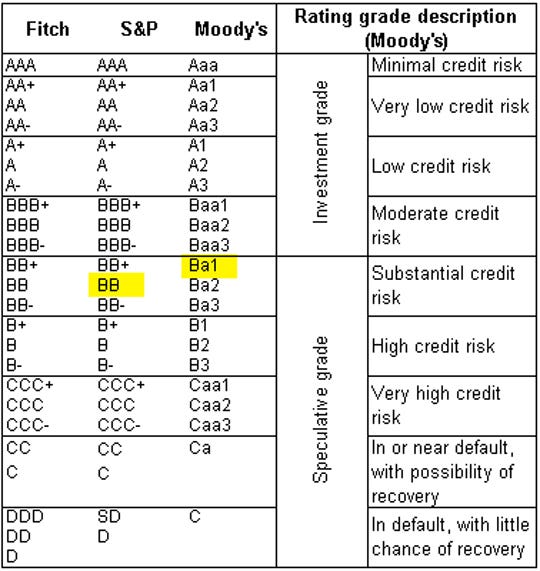
Two of the "Big Three" credit rating agencies have assigned junk ratings to Quicken Loans. The most recent action, in January by agency Moody's Investors Service, scored Quicken as a stable "Ba1," which is a notch below investment grade on Moody's scale.


The other agency, S&P Global Ratings, last affirmed Quicken as "BB" in 2017, or two notches below investment grade on that agency's scale. The third big rating agency, Fitch Ratings, hasn't done any in-depth scores on the company.

Gilbert defends

In a phone interview this week, Gilbert pushed back on any notion that Quicken Loans is a true credit risk.

"Our balance sheet and our liquidity is the most solid and strongest it's been since we started 34 years ago," he said Monday.

Gilbert noted how the junk category has a wide range of gradations and includes companies such as Netflix and Detroit-based Ally Financial, General Motors' former finance arm GMAC. Simply landing in junk territory doesn't mean that a company is in trouble and forced to accept exorbitant borrowing costs, he said.

Quicken had a junk rating when it did a $1 billion, 10-year bond issue in December 2017 with a 5.25% fixed interest rate.

“If you’re familiar with what people people call junk yields, (5.25%) is nowhere near that kind of thing," Gilbert said. "You see companies who are at the worst end of it getting interest rates over 12% and the companies that are at the highest notch of what you're calling junk are getting 4 or 5% interest rates."

Gilbert also emphasized how Moody's scorecard gave 65% weight to Quicken's "operating environment" in the mortgage business and only 35% to the company's balance sheet.
"What brings us down is the industry we're in," he said.

Higher risk

Credit rating agencies are tasked with evaluating the financial health of companies and governments and the riskiness of specific bonds and securities.

Companies with junk ratings typically must pay higher interest rates to borrow money than those with investment-grade ratings. That premium reflects the added risk that investors take when lending to such firms, said Sudip Datta, finance department chair at Wayne State University's Mike Ilitch School of Business.

Some investors like junk bonds because they want the higher yield.

"The rating tells investors that this is a junk-bond category, so be careful, but if you want to have higher returns, take the risk," Datta said.

Many pension funds and money market funds are not allowed to buy junk bonds.

Credit rating agencies appear to be more conservative these day when rating non-bank mortgage lenders than they were before the 2007-09 financial crisis and recession.

For example, Moody's still gave Countrywide Financial an investment-grade rating — albeit a low one — in November 2007, shortly before the mortgage giant's dramatic collapse and acquisition at a fire sale price by Bank of America the following year.

Today, Quicken Loans has a Moody's rating that is one notch below where Countrywide was in those calamitous final months.

A Moody's representative last week declined to comment on whether the agency has adjusted its rating standards for mortgage lenders since the financial crisis.

The government's official Financial Crisis Inquiry Report called the big three credit rating agencies "key enablers of the financial meltdown" for giving top ratings to mortgage-backed securities that were in actuality very risky.

"There's probably a lot of shell-shocked rating firms," Gilbert said. "If you look at the ratings of securitizations from 10, 11 years ago, you'll see a lot of investment-grade stuff that didn't turn out too well for people."

'Strengthen our liquidity'

Quicken's bonds have always been rated in junk territory. The company scored a notch below its current Moody's rating in 2015, when it issued $1.25 billion, 10-year bonds at 5.75%. Most of that money flowed to Quicken's parent company, Rock Holdings.

Gilbert said that both of Quicken's bond issues (2015 and 2017) were done to "strengthen our liquidity".

"One of the reasons was the attractive nature of the terms and the interest rate," he said. "The fact we could lock in debt for 5.25% for 10 years without covenants was something we wanted to take advantage of." (Covenants, in this case, refer to restrictions on a borrower's activities or debt levels.)

Inherent risk

In its Quicken Loans analysis, Moody's praised Quicken's "sound balance sheet" and its "conservative financial management."

It said the company's core profitability has decreased from the exceptionally high levels of 2015-16, during the mortgage refinancing boom, although Quicken is expected to stay highly profitable for the next several years.

But offsetting those positives is the inherent risk in Quicken's business model.

Unlike traditional banks that take deposits, Quicken and other non-bank lenders typically borrow money for their mortgages through so-called "warehouse" lines of credit offered by banks and other financial institutions.

Last decade's financial crisis showed how such funding models can, at times, be precarious. Lenders can pull their credit lines or other short-term financing, leaving dry the companies that depended on the money flow.

That disaster scenario happened to several mortgage lenders during the 2007-08 market collapse that had specialized in risky subprime or "Alt-A" loans, such as now-defunct American Home Mortgage and New Century Financial.

Moody's did credit Quicken for having more than 40% of its credit lines in longer term two-year durations. And it positively noted how Quicken recently began funding a small portion of its mortgages — still less than 10% — with cash on its own balance sheet.

A Free Press review of other large non-bank mortgage lenders that compete with Quicken Loans found their credit ratings to also be in junk territory — typically below Quicken's. Some of those firms had to pay interest rates between 8% and 11% in past bond issues.

Separately, the City of Detroit currently has junk ratings from at least two credit rating agencies. Detroit emerged from the nation's largest Chapter 9 municipal bankruptcy in December 2014. And Moody's downgraded Ford Motor Co. to a notch above junk in August. 

Government-backed loans

Moody's said the vast majority of Quicken's mortgages have explicit government backing through Fannie Mae, Freddie Mac, the Federal Housing Administration or the Department of Veterans Affairs, which insure loans against homeowner defaults.

Quicken pools those mortgages and bundles them into securities, which the company then sells into the secondary market. Quicken uses the money from those sales to pay back the credit line funds.
Moody's said that Quicken holds its mortgages for only a few weeks, which helps to offset risks.

Other risks

The rating agency did mark down Quicken for the long-running Department of Justice lawsuit against the company. That False Claims Act case, first filed in 2015, alleges that Quicken fraudulently approved borrowers for FHA-backed mortgages from 2007 through 2011.

The company has strongly denied the allegations and, unlike other lenders, refused to settle the case with a big payout to the government. Last week, a federal judge in Detroit ordered Quicken and the Justice Department to try one more time to reach a mediated settlement.

Quicken is still the nation's largest FHA lender and, according to Moody's, has among the lowest default rates of all lenders for that type of loan.

Looking ahead, Moody's said that Quicken and other lenders could face challenges in the coming years if interest rates rise and then depress the total volume of mortgage originations.

That scenario might tempt lenders to make dodgier loans to less qualified borrowers. (a.k.a. "The Poors").

"As origination volumes decline, mortgage lenders typically migrate to riskier mortgage origination products to boost origination volumes," Moody's warned in its report.

However, Gilbert told the Free Press that Quicken, which now has a roughly 6 percent market share, would not start giving out dicey mortgages.

"The one company that didn't do those kinds of loans and survived and thrived and became the largest lender in America was Quicken Loans," he said. "So, certainly, we're not going to do that now, after we watched the whole world explode." America' largest lender, Quicken Loans, survived because it was using federal, taxpayer dollars.

Voting is beautiful, be beautiful ~ vote.©

Wednesday, March 6, 2019

Cocktails & Popcorn: Barbara McQuade, Judiciary, Amrock, DACA With Gibson Dunn & Crutcher Featuring Michael, Jolly Jerry's Son

Image result for timing cocktails
"Old fashioneds, it is all about the timing."
The timing is just impeccable.

Here you have Barbara McQuade saying the same thing I just said the other day.

Now, why would Jolly Jerry of Judiciary call for hearings about "obstruction of justice, public corruption, and other abuses of power" when Mueller is about to release his investigative report, and other things, on "obstruction of justice, public corruption, and other abuses of power"?

That sounds so redundant to me, a waste of taxpayer dollars, dilatory distractions, shucking & jiving, you know, your standard clowning right before everyone realizes that all heaven is about to break loose, but hey, what do I know?

I know it looks a bit awkward now that we know that Jolly Jerry's son, Michael Nadler got a job with Gibson Dunn & Crutcher LLP in 2018, which just so happens to be the main law firm suing Trump about protecting their trafficking tiny humans operations, oh, I mean, DACA, but that is not what has me questioning impeccable timing.

In March 2018, Gibson Dunn & Crutcher just so happened to have been representing Amrock in the Canary House Corporate Shape Shifter $706 million dollar fraud judgment, that was just struck down in appeal, as Amrock started crying about blowing the whistle.

I wonder where they got that idea.

We should definitely ask Michael Nadler.

Anyway, I hope everyone enjoys this riveting piece of civil art, created by Barbara McQuade, encouraging Jolly Jerry to embrace the fact that Mueller is very attentive to the proceedings of House Judiciary, and probably the former proceedings of House Judiciary, but hey, what do I know?

I know Barbara McQuade is a Detroit Super Star because she had an entire smear campaign launched against her...that never filed any 990s nor annual reports.

The House’s Sweeping New Probe May Be the Biggest Threat to Trump Yet

Barbara McQuade Rasmea Defense Committee
Barbara McQuade & her cyber-smear
(When you know you are a Detroit Super Star)

Members of the House Judiciary Committee have an opportunity to provide an important service to the American public – as long as they don’t blow it.

On Monday, the committee opened a sweeping investigation into “obstruction of justice, public corruption, and other abuses of power” relating to President Donald Trump by requesting documents from 81 sources. The committee’s probe could potentially uncover more misconduct than Special Counsel Robert Mueller ever will. Committee Chairman Jerrold Nadler vowed to “hold hearings for the public to have all the facts.” The challenge will be to conduct the investigation effectively without compromising Mueller’s work.

In many ways, the congressional investigation offers advantages that Mueller’s probe lacks.
According to the mandate issued by Deputy Attorney General Rod Rosenstein, Mueller has been investigating links between Russia and the Trump campaign relating to interference with the 2016 presidential election, matters arising in that investigation, and any obstruction of justice that might occur along the way. The House Judiciary Committee, on the other hand, has the power to investigate a much broader scope of possible misconduct. Congress can investigate anything over which it has power to legislate, and committees may explore matters that do not amount to crimes. As Nadler pointed out, his committee is charged with a number of responsibilities, including the duty to investigate “abuses of executive power.”

In addition to the broader scope of its powers, the congressional inquiry also differs from Mueller’s probe in its transparency. While Mueller is bound by grand jury secrecy rules and Department of Justice policies to prevent public disclosure of matters under investigation, congressional committees operate largely in the public. In fact, one purpose of the Judiciary Committee’s probe may be to avoid a scenario in which Mueller ends his investigation without any further public disclosure of his findings, as the special counsel regulations seem to permit. The Committee’s document requests stated that the recipient could limit his initial production to documents already disclosed to the special counsel, the U.S. Attorney’s Office for the Southern District of New York, law enforcement, other congressional committees, or in civil or other litigation. By collecting the same material that Mueller has already gathered, Nadler’s committee may be seeking to replicate Mueller’s investigation, but with materials that can be shared with the public.


With this opportunity before them, the Judiciary Committee needs to avoid missteps that could interfere with Mueller’s work or harm the effectiveness of its own investigation. To that end, here are three pieces of advice for Nadler.

First, hire professional help to conduct questioning. How many more hearings must we endure in which members of Congress take turns grandstanding to make political points, only to be parodied on Saturday Night Live? Asking questions in five-minute bursts provides no opportunity for effective follow-up and allows the witness to filibuster away the allotted time. House Democrats should hire counsel with the training and experience to conduct effective questioning. They should also pool their time so that the questioner can proceed as a prosecutor would at a grand jury session by methodically asking the essential who, what, when, where, and why of important matters, demanding explanations and details along the way, and pinning down witnesses to establish facts from which they cannot later walk away.

Second, be careful whom you immunize. Congress has the power to grant immunity to witnesses who invoke their Fifth Amendment rights not to incriminate themselves. By granting immunity, the Committee can then legally compel the witness to testify because their statements may not be used against them. As we saw in the case of Oliver North, however, immunity granted by Congress can prevent prosecutors from using the witness’s statements, or any leads derived from their statements, against them in criminal proceedings. After the former Marine Corps. lieutenant colonel was convicted for his role in obstructing the investigation of the Iran-Contra affair, North’s conviction was vacated because it was tainted by the use of information derived from his immunized congressional testimony.

If the House Judiciary Committee wants to question witnesses, it should avoid immunizing anyone who might be a target of Mueller’s investigation. Donald Trump Jr., for example, has reportedly not met with Mueller, a sign that he may be a target of the special counsel’s investigation. Offering him immunity to testify before Congress could make it much more difficult for Mueller to charge him criminally. Instead, the Judiciary Committee might focus on witnesses who have already been convicted by Mueller, such as Michael Flynn, George Papadopoulos, and even Paul Manafort.

Congress could also call as witnesses people who were in positions to have committed less egregious misconduct, yet possess valuable information, such as Trump’s former communications director Hope Hicks or his longtime assistant Rhona Graff. These witnesses are unlikely to be high priorities for criminal charges. Or, better yet, the committee should clear with Mueller any witness that the committee might want to immunize.

Third, don’t just copy Mueller’s work, create your own roadmap. The evidence that Watergate Independent Counsel Leon Jaworski turned over to Congress is sometimes referred to as a roadmap for impeachment. While Nadler appears interested in obtaining and memorializing Mueller’s work, he should not end there. Mueller is limited to looking for federal crimes. But just because conduct does not amount to a violation of the criminal code does not mean that Congress should permit it to occur unchecked. For example, while lying to the public is not a crime, if the lie is egregious enough, it might be sufficient to disqualify a president from office. Additional lines of inquiry outside of Mueller’s mandate would be well within the scope of proper congressional inquiry, such as foreign influence on the president’s businesses, profits from his businesses that may constitute prohibited emoluments or use of the presidency to enrich family members and associates. Were Jared Kushner or Erik Prince attempting to form back channels of communication with Russia and the UAE? And if so, why? The House Judiciary Committee can find out the answers to all of these questions, even if they are outside the realm of potential criminal misconduct.

Nadler has a job to do, but he must do it well. The stakes of this investigation are high because the House Judiciary Committee has one power that all other entities lack – the power to initiate impeachment proceedings.

EXCLUSIVE: Jerry Nadler’s Son Works For Firm Suing Trump, Which Presents Conflict of Interest

Image result for Gibson Dunn & Crutcher LLP
https://www.gibsondunn.com/
Democrat congressman Jerry Nadler, leading the investigative charge against President Donald Trump, has a son whose firm is trying to get access to Trump documents for their clients in numerous lawsuits against President Trump.

“Congressman Jerry Nadler has a big conflict,” our source tells Big League Politics in Washington, D.C.

“His son (Michael Nadler) got a job with Gibson Dunn & Crutcher LLP in 2018.  That’s convenient because Jerry Nadler and the Democrats just won control of the House in 2018.  Gibson Dunn & Crutcher hire Jerry’s son and Gibson Dunn & Crutcher are the main Nemesis against Trump and the Trump Administration on numerous lawsuits.  Now the Nadler family will gain access to thousands of Trump documents via Jerry’s subpoenas!,” our insider stated.

Profile Picture
https://www.gibsondunn.com/lawyer/nadler-michael-l/

Gibson Dunn represented CNN’s Jim Acosta in his lawsuit against the Trump White House after President Trump revoked Jim Acosta’s press credentials for creating a disturbance in a press briefing and making physical contact with a female White House intern. In December Gibson Dunn announced that it was representing the Center for Reproductive Rights in its lawsuit against the Trump State Department concerning abortion language in Trump administration human rights reports.

Gibson Dunn’s global co-chairman Ted Boutros sued President Trump in a bid to protect the DACA Dreamer program.

Such an arrangement — Jerry Nadler investigating Trump with his son’s firm trying to get access to documents in other cases — violates ethics rules for federal investigators.

Voting is beautiful, be beautiful ~ vote.©