Showing posts with label National Mentor. Show all posts

Saturday, June 30, 2018

Congressional Black Caucus Foundation Legislative Promulgation Of The Privatization In Trafficking Tiny Humans - 2017

The following video is from the 2017 Congressional Black Caucus Foundation Annual Legislative Conference.

I used to go but it gets tiresome after a while when being constantly snubbed.

The term "Braintrust" was originally created as the Judiciary Braintrust, so it seems, oddly enough, that it was highjacked, in a tale I shall tell at a later time.

This "Braintrust" was spearheaded by Sheila Jackson Lee, who has quite the surreptitious background in dealing with child welfare fraud, which I tell at a later time, because I wish to savor the moment, very slowly, when I do tell the tale.

The focus of the "Braintrust" was about privatization of child welfare, where one of the speakers was from MENTOR, which is under investigation.


So, in essence, this Braintrust is allowing leaders of child welfare organizations that are currently being investigated for trafficking tiny humans, which includes multiple forms of frauds, to promulgate national child welfare policy, by promoting the failed model of the residual of the peculiar institution, for the sole purposes of making more money for stealin'.

CIVITAS Solutions: Human Trafficking Listed On NYSE


These advocates for privatization, doing the bidding of their task masters, are regurgitating corrupt data, based upon a two year reporting delay, that is so incomplete, it does not include the trafficking of children.

These speakers have no qualms, whatsoever, in announcing that they are in Public Private Partnerships with their NGOs.

Theses brown paper bag test social policy platforms only further the reinforce the iron curtain of the fraudulent privatization of the child welfare system.

They never even whispered the words"
  • child trafficking;
  • fraud;
  • rape;
  • lab rats;
  • campaign finance;
  • pedophilia;
  • poverty policies.
There are more than 3,000,000 children and youth in the U.S. child welfare system, that are reported.

The numbers of missing children should be twice that amount because selling chattel is the oldest form of survival,  and there are no reliable data on alien immigrant children being trafficked, which is now through privatization.

Slavery never ended.  

It was just renamed child welfare.

The Second Chance Reauthorization Act is nothing more than another Public Private Partnership complex financial fraud scam of more need for out-dated research, using broken down, raggedy-ass, exclusively marginalized, targeted population, qualitative variables, for the purposes of pumping more money into NGOs that will continue to keep these child welfare policy experts, "Dumb, Fat & Happy" so Sheila, and her rogue ass crew can maintain their freedom, for just a little bit longer.

"Fat, Dumb & Happy" and have no clue as to what the Emoluments Clause means to them.

Learn more: BEVERLY TRAN: "The Fat, Dumb & Happy Network": When Ghetto-Fab Goes Horribly Wrong In Unions http://beverlytran.blogspot.com/2018/03/the-fat-dumb-happy-network-when-ghetto.html#ixzz5JwyYNjMp
Stop Medicaid Fraud in Child Welfare 

Increase Funding for the Second Chance Act (SCA)

Urge your Members of Congress, especially those serving on the House and Senate Appropriations Committees, to support increased funding for Second Chance Act programs in the annual appropriations process. The bipartisan Second Chance Act provides resources to states, local governments and nonprofit organizations to improve outcomes for people returning to communities from prisons, jails and juvenile facilities.

BACKGROUND:

Enacted in 2008, the Second Chance Act (P.L. 110-199) authorizes federal grants that assist states, counties and nonprofit organizations in developing and implementing programs to help formerly incarcerated individuals successfully reintegrate into the community after their release from correctional facilities. Administered through the Office of Justice Programs at the U.S. Department of Justice, Second Chance Act programs have helped numerous counties provide reentry services – like employment assistance, substance abuse and mental health treatment, housing, family-center programming and mentoring – to adults and juveniles returning to the community from prisons or jails.

Since its establishment in 2008, the Second Chance Act has funded more than 600 grants to state and local governments and nonprofit organizations, and more than a third of these grants have been awarded to counties. These investments in reentry programs have proven effective in helping individuals successfully reintegrate into their communities. Successful reintegration results in lower rates of recidivism, which improves public safety and provides significant savings to counties, who collectively spend $70 billion each year on criminal justice.

As Congress considers funding for a variety of federal programs and thousands of formerly incarcerated individuals return to their communities, the Second Chance Act should be prioritized in the annual appropriations process. Currently, the program is funded at $68 million under FY 2017 appropriations.

NACo supports an increase in funding for this pivotal program to at least the FY 2010 enacted level of $100 million in future annual appropriations processes. NACo members are encouraged to contact their members of Congress, and especially those on the House and Senate Appropriations Committees, to support this level of funding for the program in the FY 2018 appropriations process.

KEY TALKING POINTS:

  • Counties spend more than $70 billion each year on criminal justice and more than $69 billion on health and human services.
  • According to the U.S. Bureau of Justice Statistics, there are more than 11 million individuals admitted to jails each year. Of that number, only about four percent of jail admissions result in prison sentences – in other words, 96 percent of jail detainees and inmates return directly to the community from jail.
  • The Second Chance Act improves the coordination of reentry services and policies at the state, local and tribal levels, and provides financial assistance for local programs that provide employment training, mentoring, substance abuse and mental health treatment and other family-centered services to formerly incarcerated individuals.
  • Since 2009, more than one out of three Second Chance Act awards has gone to county governments. Of the nearly $300 million that has been awarded to state, local, tribal and nonprofit reentry programs under the Second Chance Act, $95 million has gone directly to county governments.
  • The Second Chance Act is currently authorized and funded at $68 million under FY 2017 appropriations. Funding for the program should be increased to the FY 2010 level of $100 million in future appropriations bills.
Sheila was mean to my Sweetie.  That is not a good thing, at all.

Office of Congressional Ethics Investigation of Representative Sheila Jackson Lee Review No 15-7713 Referra... by Beverly Tran on Scribd

Voting is beautiful, be beautiful ~ vote.©

Friday, June 22, 2018

More Concerns In Privatization In Foster Care

The U.S. Senate Judiciary Committee is expected to hold hearings on the privatization of foster care.

MENTOR is a publicly traded company, just so you know.

Does Privatized Foster Care Put Kids at Risk?

The number of kids in foster care is climbing, and so are public costs. In search of efficiencies, many states have at least partially privatized their systems.

In 2012, when Alexandria Hill was a year old, Texas’s child welfare agency found her parents unfit to care for her. The baby’s biological mother was prone to seizures, officials said, and both parents were using marijuana. So the state authorized a for-profit company, The MENTOR Network, to locate foster parents.

The first family MENTOR placed Alexandria with neglected her; when her biological parents complained after finding her filthy at a supervised visit, the company moved her to another home—that of a 53-year-old woman named Sherill Small. Less than a year later, Small killed Alexandria. She told police she’d been frustrated with the girl and swung her until her head crashed into the floor.

Buzzfeed’s harrowing 2015 investigation into MENTOR exposed the grim repercussions of privatized foster care, detailing Alexandria’s and others’ tragic cases that likely resulted from shortcuts made in the pursuit of profit. Piling too many cases on social workers, for instance, can result in abuse when foster parents aren’t properly vetted or monitored. Among the omissions in Alexandria’s case: MENTOR failed to interview Small’s sisters, who said they would have warned the company about her. (MENTOR denied that it cuts corners to make money.)

The lessons of such an investigation are perhaps even more important today, as more children are entering foster care because of the impact of the widening opioid crisis. According to the U.S. Department of Health and Human Services’ Administration on Children and Families, the number of children in foster care rose almost 7 percentfrom 2013 to 2015, nearing 430,000. In 32 percent of all foster placements parental substance abuse was cited as a factor—an increase of 10 percent compared to 2005.

When a state privatizes foster care, it uses federal, state, and local funds to contract out services, such as locating and monitoring foster parents, to private agencies. In most cases, public agencies still manage children’s long-term outcomes, such as reunification or adoption—but more jurisdictions are shifting even that responsibility to the private sector.

These private agencies are usually nonprofit, making MENTOR, as a for-profit corporation, an extreme example of privatization. Yet nonprofits can subcontract their work to for-profit companies; in states that forbid for-profit entities from administering foster care, MENTOR used this loophole as a workaround. And even in more straightforward nonprofit arrangements, privatization has negatively impacted children.

Over the past three decades, many states have privatized at least part of their foster care systems; some, like Kansas and Florida, have privatized theirs completely. Despite high-profile cases like Alexandria’s—which helped prompt a 2015 Senate Finance Committee investigation that resulted in proposed legislation to strengthen government oversight of foster care—some states and officials continue to see privatization as an antidote to a bloated and inefficient public sector. Kentucky, for instance, recently pledged to investigate whether it should fully privatize its foster care system; private agencies currently provide services for around half of the children in the state’s care. In Texas, a pilot program that privatizes the monitoring of homes identified as at risk for child abuse or neglect is moving forward, despite some lawmakers’ concerns. Proponents of privatization often claim that private entities are more efficient than government agencies, and calls for the privatization of foster care have been no different. Yet Tracey Feild, director of the Child Welfare Strategy Group at the Annie E. Casey Foundation, questions that idea. Private agencies, she said, have “certainly not done the work for a lower cost.”

Feild, whose Child Welfare Strategy Group provides consulting to child welfare agencies, said that the private sector has in fact brought more resources to the foster care system through, for example, successfully lobbying politicians for funds. Though this might be a positive development, she said the argument can also be made that if those additional resources had gone to the public sector to begin with, it could have solved the problems that spurred calls for privatization. For instance, new resources could be used for services such as more and better substance abuse treatment to keep families intact rather than rely on foster care.

And while public agencies still conduct the initial investigations into abuse or neglect, once a system is privatized legislators often assume they no longer need to give them money. This leaves the public agencies chronically underfunded, making it difficult to monitor their private contractors. “A public agency can be handing out tens of millions of dollars to private providers with very little oversight,” said Feild.

Private agencies can be effective in providing foster care services, Feild says. But they often face a steep learning curve. “If you’ve got the patience and good providers, you can make a go of privatization,” she said. “But it’s not going to take two to three years to improve outcomes. It’s more like 10 years.” Kansas’ privatized system, for example, is quite strong, she noted, as it’s been in operation for over 20 years. (Still, the state is struggling to keep up with cases due to the opioid epidemic and funding cuts.)

In less established systems, the private agencies can get overwhelmed with their new responsibilities—and kids can suffer, languishing in foster care or shelters. “Child welfare workers get crisis focused; they’re worried about getting a child a bed for that night,” said Feild. “So the initial priority for the new privatization provider isn’t the child who may be able to return to his family because the provider has been doing work with the parents. It’s who is coming through the provider’s front door, which results in kids staying longer than necessary.”

Jessalyn Schwartz, a Boston attorney focusing on child welfare and mental health law, added that in these circumstances children are usually placed in what is available rather than what is needed. “And they often don’t get much say in where they end up or how often they move,” she said. “Though privatized foster care is often labeled as a corrective, it’s imperative to better understand it before declaring it as such.”

Voting is beautiful, be beautiful ~ vote.©

Tuesday, October 24, 2017

U.S. Senate Finance Committee Study On Privatization In Foster Care

To begin, I extend my humblest gratitude for the extensive work of the staffers of the U.S. Senate Finance Committee in embracing the magnitude of the pervasive issues surrounding the profit component in the privatization in foster care.

I am deeply moved that this Committee came to an agreement to allow this exhaustive, well, somewhat exhaustive, study to be executed.

Now, for my 2 cents.

Of course, the study just had to be diplomatic, but that is expected.

I do not have to be professional as I am an original source.

Even though there was no mention of fraud, the venue is the U.S. Senate Finance Committee, which is proper, but, where is the Medicaid fraud?

I know this is only a start, so we are going to be working together for a very long time because there were 18 very naughty States which did not respond to the Committee's inquiries.

"Not all of the States responded to inquiries from the Committee. » Seventeen States failed to respond to the 50-State Letter. Those States were:
  1. Arizona, 
  2. Florida, 
  3. Georgia, 
  4. Idaho, 
  5. Louisiana, 
  6. Maine, 
  7. Michigan, 
  8. Mississippi, 
  9. Missouri, 
  10. Montana, 
  11. Nevada, 
  12. North Carolina, 
  13. Ohio, 
  14. Rhode Island, 
  15. South Carolina, 
  16. Vermont, and 
  17. Virginia.
» Massachusetts failed to respond to the 5-State In-Depth Letter. Despite repeated assurances from the Massachusetts Department of Children and Family Services that ‘‘continuing efforts are being made to collect and prepare the information’’ with ‘‘the full intention to send a response to the Committee,’’ a response to the Committee’s questions was never received."

Why did this States not respond to the inquiry of privatization in foster care?

Fraud.

Michigan was the first state to privatize.

Now, that the ball is in my court, I shall be publishing my book, the first in a series, quite soon.


Oh, this is going to be so much fun to take these people out because they fund political campaigns and invest in many other ventures besides property.

CIVITAS Solutions: Human Trafficking Listed On NYSE


Voting is beautiful, be beautiful ~ vote.©

Saturday, August 5, 2017

CIVITAS Solutions: Human Trafficking Listed On NYSE

I have stated over and over again that children are still chattel, with attachment to trust funds of Social Security and land.

Profits from foster care and adoption are so good, CIVITAS Solutions, Inc. has gone public, on the New York Stock Exchange, that is.

This is privatization, where there are no opportunity for FOIA or civil rights, as it is a private corporation with its own belief system.

A private corporation does not have to honor Generally Accepted Accounting Practices, which means it engages in Medicaid fraud.
Second quarter net revenue of $362.4 million was a 4.8% increase over the same quarter last year.


These are the faces that are trafficking tiny humans by profiting from Medicaid and no one has a problem with this because they fund political campaigns.

Why am I the only person who sees a problem with private corporations becoming the legal guardians of children who have been removed from the home by CPS to be placed into foster care and adopted out for being poor, by using Medicaid funds, intended for these children and the families, as alternative investment opportunities on Wall Street?

Once a child is under the legal aegis of a private corporation, the private corporation has access and control of all Social Security Trust Accounts of that child, and can use the child as chattel to leverage mortgages.

I guess privatized human trafficking is now in competition with the NGOs of the tax exempt God.

National Mentor Holdings has an IPO prepared by Vestar Capital Partners for $1 billion.

Barclays Capital Inc., BofA Merrill Lynch and UBS Securities LLC are serving as representatives of the underwriters and joint book-running managers for the offering. Raymond James & Associates, Inc., SunTrust Robinson Humphrey, Inc., BMO Capital Markets Corp. and Avondale Partners, LLC are acting as co-managers.
Not one penny will go back into the Social Security Trust Fund, and, more than likely, the money will be used for national and international real estate ventures and investment ventures to profit from the spoils of war, like trafficking more children through a global expansion of its "mentoring" programs, and its intellectual property ownership of humans.

The banks now own humans and they started with the child.

Board Members Of Troubled Foster-Care Company Have Little To Say About Abuses


A recent BuzzFeed News investigation into the nation’s largest for-profit foster care company revealed deaths, sex abuse, and serious lapses in the training and oversight of foster parents.

The investigation into National Mentor Holdings found instances of long-term sex abuse in Maryland by Mentor foster fathers, widespread problems with Mentor documented by the state of Texas, and at least six deaths of children in the custody of Mentor since 2005.
Mentor trades on the New York Stock Exchange as Civitas Solutions Inc., which reported $1.2 billion in revenue last year. Companies can often seem faceless, but like all public companies, Civitas is governed by a board of directors.

BuzzFeed News decided to find out whether members of the board knew about the problems exposed by the recent investigation, and if so, ask what they planned to do about it.
For some children, it’s a question of life and death.


Alexandria Hill
Alexandria Hill
Sherill Small, a Mentor foster parent in Texas, murdered 2-year-old Alexandria Hill in 2013, smashing in her skull. Mentor had placed the little girl with Small despite warning signs that she wasn’t fit to be a foster parent.

From September through December 2012, Small had taken in five foster children, but every one of them had been removed as “failed placements.” Small, according to an internal Mentor document obtained by BuzzFeed News, “reported feeling stressed out, and will express that she is unable to care for the children in the home.” The Mentor document also warns that personnel from the Texas state Early Childhood Intervention (ECI) program “felt the children should not be in the home at that time.” Less than a month after that report, Mentor placed little Alexandria with Small, the foster mother who would become her murderer.


Aram Roston / BuzzFeed News
In Maryland, Stephen Merritt, one of several Mentor foster parents at a compound called Last Chance Farm, pleaded guilty in 2011 to sexually abusing multiple boys in his care. Another foster father on same compound, Tracy Grant Bayne, also admitted to abusing a boy. Again, warning signs weren’t heeded. As far back as 2004, a boy had complained to his Mentor caseworker that he was being abused. The caseworker sent him back to Merritt. Police investigated allegations of abuse twice, but didn’t find enough to press charges.

psychotherapist wrote Mentor in 2010, warning of “huge red flags” in Merritt’s interaction with a child. But it would be another year before police finally arrested Merritt and stopped the abuse.

An analysis of Texas data by BuzzFeed News found that Mentor ranked last among large foster placement providers in the state, based on the number of severe violations per home. Texas regulators found more than 100 serious problems in Mentor foster homes in the last two years, including, but not limited to, instances of children being slapped, hit with belts, and struck.

In Georgia, where the state grades child-placing agencies, Mentor’s fared poorly as well. Of the six branches Mentor runs in Georgia, not one scored an average grade above the median in the 10 most recent quarters.

State and local governments have long worked with nonprofits and religious groups to help find good homes for children whose parents can’t care for them. But over the past several decades, for-profit companies have started winning contracts to manage foster care placements. Former Mentor employees said that the pressure to make profits sometimes led to Mentor cutting corners on protecting the children — a charge Mentor strongly disputed in BuzzFeed News' original story. Mentor also said it has helped thousands of children, and pointed to Maryland, where state regulators recently gave the company high marks.

In 2006, National Mentor Holdings was bought for $242 million in cash by Vestar Capital Partners, a giant hedge fund based in New York City. The company went public last year under the name Civitas, but Vestar still owns about two-thirds of the stock. Three Vestar employees sit on Civitas’ board: Chris Durbin, James Elrod Jr., and Kevin Mundt.


Civitas Solutions / Via civitas-solutions.com
When BuzzFeed News called Vestar to ask to interview its employees after the investigation was published, a spokesperson said, “Vestar declined to comment.”

These Board Members are beholden to no one, not one elected official, not one U.S. citizen, not one parent and can never, ever, be criminally prosecuted for Medicaid fraud, civil rights violations, or your basic human trafficking.

That is why I have always been a SOX gal.

Before the story ran, the spokesperson had provided this statement: “Vestar shares MENTOR Network’s belief that one tragedy within any foster care program is one too many. Mentor’s investments over the past decade to strengthen service quality while expanding programming have been fully supported by Vestar. We are proud to be associated with an organization that has enhanced the lives of tens of thousands of children and adolescents and adults with disabilities.”


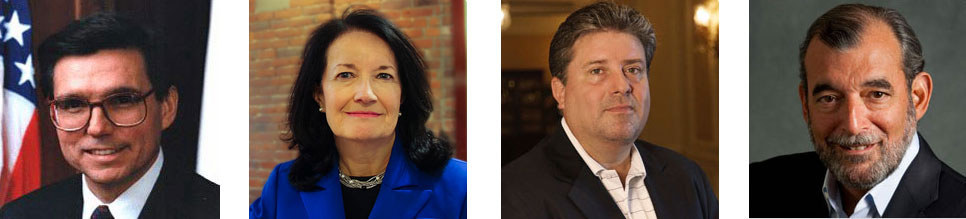
Federico Peña, Pamela Lenehan, Guy Sansone, and Greg Torres
US Department of Energy, Civitas Solutions / Via civitas-solutions.com
Federico Peña, Pamela Lenehan, Guy Sansone, and Greg Torres
Federico Peña isn’t a Civitas board member but he’s a “senior advisor” to Vestar. He’s also a powerful political figure, a former national co-chair of the Obama presidential campaign and a secretary of transportation and a secretary of energy under President Bill Clinton. Reached after the story ran, and told about the problems at Mentor, he said he had not read the BuzzFeed News story. “"I’m not involved in that matter but thank you for the call and I have to go."

Pamela Lenehan, who was elected to the Civitas board in 2008, did not answer numerous phone calls from BuzzFeed News.

Guy Sansone, a healthcare consultant, did not respond to a phone call and email placed by BuzzFeed News.

Greg Torres – former president and CEO of Mentor from 1996-2004 – did not respond to a phone call and email placed by BuzzFeed News.

BuzzFeed News did not reach Patrick M. Gray, an accountant and former audit partner at PricewaterhouseCoopers.

I will be revisiting the role of PricewaterhouseCoopers and other governmental fraud schemes in future posts.


Patrick M. Gray, Edward Murphy and Bruce Nardella.
Civitas Solutions / Via civitas-solutions.com
Patrick M. Gray, Edward Murphy and Bruce Nardella.
Edward Murphy and Bruce Nardella currently work at Mentor. After BuzzFeed News had started contacting the other board members and before calling Murphy and Nardella, a Mentor spokesperson sent a statement on behalf of the entire board:

“Service quality and outcomes across The MENTOR Network are of paramount importance to the entire Board. We were aware of matters raised in your story, and especially the tragedies in Maryland and Texas. We are also aware of how profoundly the organization has been impacted by these tragedies, as well as the comprehensive actions management has taken in an effort to ensure the safety and well-being of the children and adolescents served in MENTOR’s programs.
“As a Board, we appreciate the challenges associated with foster care, and understand that while no provider will ever achieve perfection, each, including MENTOR, has a responsibility to strive for it in partnership with public agencies. We recognize that the good work of the MENTOR team has enhanced the lives of tens of thousands of children at-risk and adults with disabilities. However, we have also insisted that the organization learn from each mistake in order to enhance its programs and protect those it is privileged to support.”


An earlier version of this story contained remarks attributed to Civitas Solutions board member Patrick M. Gray. In fact, BuzzFeed News did not speak to that Patrick M. Gray but to a different person with the same name who claimed to be a Civitas board member.
Voting is beautiful, be beautiful ~ vote.©