Showing posts with label taxes. Show all posts

Thursday, October 8, 2020

Tales Of The New Crown: Boo Boo Barr Suddenly Announces Publication of Cryptocurrency Enforcement Framework Jeff Sessions Put Together After Getting The Cooties Touch

Sometimes, it takes a rogue to catch a rogue... which may be why we have not heard from Boo Boo Barr since he got the cooties touch.

In 2018, Attorney General Jeff Sessions
established a Cyber-Digital Task Force within
the U.S. Department of Justice to evaluate the
impact that recent advances in technology
have had on law enforcement’s ability to
keep our citizens safe. Acknowledging the
many ways in which technological advances
“have enriched our lives and have driven our
economy,” the Attorney General also noted
that “the malign use of . . . technolog[y] harms
our government, victimizes consumers and
businesses, and endangers public safety and
national security.”

#maytheheavensfall


Attorney General William P. Barr announced today the release of “Cryptocurrency: An Enforcement Framework,” a publication produced by the Attorney General’s Cyber-Digital Task Force.  The Framework provides a comprehensive overview of the emerging threats and enforcement challenges associated with the increasing prevalence and use of cryptocurrency; details the important relationships that the Department of Justice has built with regulatory and enforcement partners both within the United States government and around the world; and outlines the Department’s response strategies. 

“Cryptocurrency is a technology that could fundamentally transform how human beings interact, and how we organize society.  Ensuring that use of this technology is safe, and does not imperil our public safety or our national security, is vitally important to America and its allies,” said Attorney General Barr.  “I am grateful to the Cyber-Digital Task Force for producing this detailed report, which provides a cohesive, first-of-its kind framework for those seeking to understand federal enforcement priorities in this growing space.”

“At the FBI, we see first-hand the dangers posed when criminals bend the important technological promise of cryptocurrency to illicit ends," said FBI Director Christopher Wray.   “As this Enforcement Framework describes, we see criminals using cryptocurrency to try to prevent us from 'following the money’ across a wide range of investigations, as well as to trade in illicit goods like criminal tools on the dark web. For example, the cyber criminals behind ransomware attacks often use cryptocurrency to try to hide their true identities when acquiring malware and infrastructure, and receiving ransom payments. The men and women of the FBI are constantly innovating to keep pace with the evolution of criminals' use of cryptocurrency."

“The United States has been enormously successful blocking terrorists, rogue regimes, and their supporters from funding their activity using traditional currencies,” said Task Force member John C. Demers, Assistant Attorney General for the National Security Division.  “As the Cryptocurrency Enforcement Framework explains, we will adapt our strategy and tools to 21st century financing, including to combat the use of cryptocurrencies to evade enforcement and harm our national security.”

“Cryptocurrencies and distributed ledger technology present tremendous promise for the future, but it is critical that these important innovations follow the law.  The Cryptocurrency Enforcement Framework provides the public with important information intended to help them understand and comply with their obligations under the legal regimes that govern these new and fast-developing technologies,” said Task Force member Brian C. Rabbitt, the acting Assistant Attorney General for the Criminal Division.  “While the Department of Justice and its partners are committed to supporting the advancement of legitimate cryptocurrency technologies and uses, we will not hesitate to enforce the laws that govern these technologies when necessary to protect the public.”

Task Force member Beth A. Williams, who serves as Assistant Attorney General for the Office of Legal Policy, lauded the release of the Cryptocurrency Enforcement Framework:  “The Department of Justice is committed to protecting the public from current and emerging cyber threats, including those involving cryptocurrency and related technologies.  This Framework reflects the Department’s extensive cooperation with domestic and international partners in ensuring that we are adequately addressing these challenges, to the benefit of lawful cryptocurrency users and the public at large.”

The Enforcement Framework opens with an introductory essay authored by the Task Force’s chair, Associate Deputy Attorney General Sujit Raman. 

Then, in Part I, the Framework provides a detailed threat overview, cataloging the three categories into which most illicit uses of cryptocurrency typically fall: (1) financial transactions associated with the commission of crimes; (2) money laundering and the shielding of legitimate activity from tax, reporting, or other legal requirements; and (3) crimes, such as theft, directly implicating the cryptocurrency marketplace itself. 

Part II explores the various legal and regulatory tools at the government’s disposal to confront the threats posed by cryptocurrency’s illicit uses, and highlights the strong and growing partnership between the Department of Justice and the Securities and Exchange Commission, the Commodity Futures Commission, and agencies within the Department of the Treasury, among others, to enforce federal law in the cryptocurrency space.

Finally, the Enforcement Framework concludes in Part III with a discussion of the ongoing challenges the government faces in cryptocurrency enforcement—particularly with respect to business models (employed by certain cryptocurrency exchanges, platforms, kiosks, and casinos), and to activity (like “mixing” and “tumbling,” “chain hopping,” and certain instances of jurisdictional arbitrage) that may facilitate criminal activity.    

The Cryptocurrency Enforcement Framework is the second detailed report issued by the Attorney General’s Cyber-Digital Task Force, which was established in February 2018 to answer two basic questions:  How is the Department of Justice responding to global cyber threats?  And how can federal law enforcement accomplish its mission in this area more effectively?  An earlier Task Force report, published in July 2018, canvassed a wide spectrum of cyber threats, ranging from transnational criminal enterprises’ sophisticated cyber-enabled schemes, to malign foreign influence operations, to efforts to compromise our nation’s critical infrastructure, and articulated the Department’s priorities in detecting, deterring, and disrupting cyber threats.

Additional Cyber-Digital Task Force members include Andrew E. Lelling, United States Attorney for the District of Massachusetts, and two senior FBI executives.  Components from across the Department contributed to the Cryptocurrency Enforcement Framework’s drafting.

Voting is beautiful, be beautiful ~ vote.©

Tuesday, October 6, 2020

DOJ: John McAfee Indicted for Tax Evasion

But is John still running for president?


Allegedly Hid Cryptocurrency, a Yacht, Real Estate and Other Properties in Nominee Names to Evade Taxes

An indictment was unsealed today charging John David McAfee with tax evasion and willful failure to file tax returns, announced Principal Deputy Assistant Attorney General Richard E. Zuckerman of the Justice Department’s Tax Division and U.S. Attorney D. Michael Dunavant for the Western District of Tennessee. The June 15, 2020 indictment was unsealed following McAfee’s arrest in Spain where he is pending extradition.

According to the indictment, John McAfee earned millions in income from promoting cryptocurrencies, consulting work, speaking engagements, and selling the rights to his life story for a documentary. From 2014 to 2018, McAfee allegedly failed to file tax returns, despite receiving considerable income from these sources. The indictment does not allege that during these years McAfee received any income or had any connection with the anti-virus company bearing his name.

According to the indictment, McAfee allegedly evaded his tax liability by directing his income to be paid into bank accounts and cryptocurrency exchange accounts in the names of nominees. The indictment further alleges McAfee attempted to evade the IRS by concealing assets, including real property, a vehicle, and a yacht, in the names of others.

If convicted, McAfee faces a maximum sentence of five years in prison on each count of tax evasion and a maximum sentence of one year in prison on each count of willful failure to file a tax return. McAfee also faces a period of supervised release, restitution, and monetary penalties.

An indictment merely alleges that crimes have been committed. The defendant is presumed innocent until proven guilty beyond a reasonable doubt.

Principal Deputy Assistant Attorney General Zuckerman and U.S. Attorney Dunavant commended special agents of IRS-Criminal Investigation, who conducted the investigation, and Trial Attorney William Guappone of the Tax Division and Assistant U.S. Attorneys Matthew Wilson and Damon Griffin, who are prosecuting the case.

Additional information about the Tax Division and its enforcement efforts may be found on the Division’s website.


Voting is beautiful, be beautiful ~ vote.©

Wednesday, July 15, 2020

DeAndree Watson Is Extracted From Humanity

It is devastating when the people you care about are extracted from humanity.

Westland man who took his own life is person of interest in 2 murders

DeAndree used to work for Charles Pugh.

#maytheheavensfall

'Heartbroken': Detroit council staffer dead in apparent murder-suicide mourned

DeAndree Watson, 30, pictured with Detroit Mayor Mike Duggan. The longtime council policy staffer was found slain in Westland early Sunday.Detroit — City Hall is mourning the loss of a beloved policy staffer with a promising future who was killed on Sunday.

DeAndree Watson, a 30-year-old University of Michigan graduate, was found in his vehicle by Westland police at the Willow Creek Apartments on Fairwood just off Ford Road. Officers had responded to investigate an OnStar panic button notification, authorities said in a news release. Police said Watson was the apparent victim of a homicide.

The investigation led police to a nearby apartment where they discovered a second person, Deontez Jones of Westland, who was dead from an apparent self-inflicted gunshot wound. The incident remains under investigation, but police note the pair were known associates and the deaths appear to be connected.

Detroit City Council President Brenda Jones said Monday the entire council family is "heartbroken" over the loss.

Watson, who was headed to the University of Michigan Law School this fall, she said, was a "legislative genius with a bright future ahead of him."

The Detroiter spent eight years working for the office of Detroit Council member James Tate as a policy analyst, according to his LinkedIn profile.

Jones, in a statement on Facebook, said Watson stood out for his activism and deep connection with city communities. He also helped oversee the drafting and implementation of the city's medical and recreational marijuana ordinances and management of the council's Planning and Economic Development subcommittee, Jones noted.

"He was a fair, diplomatic and caring individual with a love for the people of Detroit and public service," Jones wrote. "He could have been president one day."

Tate said Watson was "dynamic" and "dogged with details," aiding not just Tate's office but all council members as a go-to resource for policy-related advice.

The Cass Technical High School student body leader and graduate ascended in his policy position within Detroit city government. He began as a council intern and quickly made a name for himself, Tate said.

"You name it, he just always rose to leadership positions. Those around him realized he was the best fit to lead," said Tate, who added that he considered Watson like family. "He realized through policy you can truly make a change in society. That's really what he dedicated his life to."

Watson was engaging with community groups and youth, Tate said. He took a special interest in working with and encouraging youth who had come into contact with the criminal justice system so they could get on the right path.

Watson was recently accepted at UM's law school and was set this fall to attend the program in Ann Arbor. Tate said criminal justice was Watson's passion. He wanted to reduce the "school-to-prison pipeline" and ensure those who came into contact with the criminal justice system were treated fairly and given a chance for a positive transformation.

"It wasn't uncommon to see him at a youth detention center where he was sharing experiences with young people who were detained," Tate said. "He did that quite often, with no pay, as a volunteer. He found a group and started working with them and really took pride in it."

Detroit Mayor Mike Duggan expressed shock and deep sadness Monday over Watson's death.

"DeAndree was one of Detroit’s rising leaders with a deep commitment to public service and the city he called home," the mayor said in a social media post.

An outpouring of friends, colleagues and family flooded his Facebook page Monday with condolences, photographs, videos and memories.

Among them was former state Rep. Fred Durhal III, D-Detroit, who met Watson in 2011 when Watson, then UM student body president, introduced President Barack Obama, who had appeared there to deliver a speech.

Afterward, Durhal said, Watson joined the campaign of Durhal's father, Fred Durhal Jr., when he made a 2013 bid for Detroit mayor. Instantly, Durhal III said, "DeAndree just became family."


"He became like a brother and just was very sharp. He had great political instincts," Durhal told The News on Monday.

Later, when Durhal III launched his own campaign for state representative in 2014, Watson took on a role as an "invaluable" field organizer and a volunteer. Durhal was elected in November 2014, serving the state's 5th District.

Durhal joked that Watson would affectionately refer to him as "Baby Fred," because "I was just like my dad."

Watson, Durhal said, was "always there" at every campaign kickoff, fundraiser and big event, even during Durhal's unsuccessful bid for Senate in 2018.

"He was just that thoughtful," said Durhal, who now works for the Michigan State Housing Development Authority, and, just months ago, had talked with Watson about arranging a meeting to discuss housing.

Durhal noted Watson was a "true public servant." He recalls asking Watson one day what his path was and what he wanted to become. Watson answered that he "could be president of the United States," Durhal said, and "I believed him."

"He always chose to excel and wanted to give back to where he came from," Durhal said. "This guy was full-steam ahead. He's gone way too soon. It tears me to pieces."

Voting is beautiful, be beautiful ~ vote.©

Friday, February 28, 2020

Detroit Property Tax Protest - "Write The Check"

For a background on this situation, click here.

It was far more than $600 million, but the only problem is who will speak upon the origins of the stealin' the children, land & vote?

Detroit homeowners overtaxed $600 million


Someone is going to have to call out the Detroit Land Bank Authority.

Protesters call on Duggan to pay back overtaxed Detroiters


About 70 people braved chilly winds to protest outside downtown's Coleman A. Young Municipal Center on Friday chanting “cut the damn check,” demanding relief for overtaxed Detroiters. 

Protesters, organized by the activist group Call 'Em-Out, called for a moratorium on foreclosed occupied homes and water shutoffs.


“We don’t care where the money went. No is unacceptable.”

The Detroit News published an investigation in January that found City Hall overtaxed homeowners by at least $600 million between 2010 and 2016 after officials failed to accurately bring down property values in the years following the recession.

Renla Session, 64, of Detroit joins protesters demanding restitution for residents who were overtaxed and lost their homes to foreclosure.
Renla Session, 64, of Detroit joins protesters demanding restitution for residents who were overtaxed and lost their homes to foreclosure. (Photo: Clarence Tabb)

Detroit Mayor Mike Duggan has acknowledged past over-assessment but said he cleaned up the practice and lowered values after he took office in 2014. The mayor said he can't repay homeowners because current law doesn't allow it and the city can't afford it.

But he said he and the city's law department are working with the City Council on possible ways to compensate some homeowners who were overtaxed.  

The protesters marched outside before entering the City Hall lobby with continued chanting. 

Resident Cheryl Major held a sign covered in fake money reading “Make us whole.” Major said that she has been overtaxed, but families she serves have suffered far worse. 

“Many of our families have been impacted and lost their homes because of overtaxing,” said Major, founder of Children Spa For Children with Disabilities. “Whatever time it was, doesn’t matter at this point. They should have known it was happening and we need to make it come back. 

"We need to come up with another plan to replace it. Have a spend down, a credit, so when that money is up, they get their credit and when it’s up, you start taxing them again.”


Voting is beautiful, be beautiful ~ vote.©

Friday, February 7, 2020

Detroit Sues Top Slumlords, Except The Detroit Land Bank Authority

Hmmmm.......

If City of Detroit Corporate Counsel, Larry Garcia is suing the top three Detroit landlords for blight and health hazards; where the Detroit Land Bank Authority is the largest Detroit property owner; then, how come the Detroit Land Bank Authority is not named in this action?

Oh, wait, I know!

If Larry names the Detroit Land Bank Authority, as a party to the action, then, that would mean that the Detroit Land Bank Authority is not a part of the City of Detroit, meaning it is a private operation, and, as such, would have to provide its corporate parent disclosures and instruments of authority, of which was dissolved by Bill Schutte, some time back, in the State Court of Claims, when he has his legal lackey enter into the record that I was a public nuisance.

Uh, oh.

I, also, seem to recall that Carmack case, that is coming up relatively soon for trial, where no one wants to talk about the Detroit Land Bank Authority being in that chain of command of the deed to the property Larry is claiming was stolen from the City, when there has yet to be an explanation of how the Detroit Land Bank Authority acquired the property, in the first place, considering that it was never incorporated, despite Janice Winfrey taking it upon herself to declare incorporation, because she is almighty and stuff, because someone from JonesDay told her so.

But, then again, it could have been someone from Perkins Coie Sucks, or both.

Hey, what do I know?

I know if Larry is not going to go after the largest blight owner in the City of Detroit, that made itself a creditor in the Detroit Bankruptcy, by settling fake ass debts with properties that were fraudulently foreclosed upon, through fake taxes, where the Detroit Land Bank Authority has a history of levying fake ass taxes with their fake ass, made up powers of authority, because it never incorporated, and pilfered all the Hardest Hit Funds out the country into their own personal ventures through children's trust funds, to run back into the U.S. to fund political campaigns, because, if he did, he is going to have to do battle with Butch Hollowell and the lot.

If I had the energy, I would file to intervene, just because Larry is not going after the Detroit Land Bank Authority, but I will not, simply for the fact that I know how this is going to end.

#maytheheavensfall

Detroit sues landlords for blight and health hazards


DETROIT (FOX 2) - The city of Detroit is suing three notorious landlords for neglect, blight and health hazards.

Detroit says the property owners might have 1,000 properties combined all across the city.

City of Detroit goes after slum lords with lawsuits
The city of Detroit is suing three notorious landlords for neglect, blight and health hazards

FOX 2 went to look at three properties on the list filed in Wayne County Circuit Court against Steve and Stephen Hagerman a father and son team, Salameh Jaser and Michael Kelly.

They have earned a title from the city we're sure they don't want - some of the city's most notorious speculators and slumlords.

FOX 2 tried to track them down, stopping at Michael Kelly's office Friday. So far we haven't been able to reach them for comment.

The city says it took legal action because according to them, these folks buy up a bunch of properties and rent them out - even though they were never brought up to code.

They are dilapidated homes that often have serious and terrible health and safety risks like peeling lead paint. The city says the folks above have piles of tickets for not following the rules, and this is a new approach.

"This is a new tactic to attack a business model that is particularly pernicious," said Lawrence Garcia, Detroit city attorney.

Pernicious because they invest and neglect - but in some cases the properties are vacant.

"The notion of a public nuisance, the notion that these properties present an unreasonable danger to the public grossly - I think that is an idea whose time has come."

In the lawsuits the city asks the court to declare the business model a public nuisance and make owners keep their properties up, stopping them from buying more properties until they get their act together.


Voting is beautiful, be beautiful ~ vote.©

James Warner Gets 10 Years For Swallowing A Napkin - Kwame Kilpatrick Revisited

I do enjoy preludes of justice.

Kwame Kilpatrick possesses a wealth of information, you know.

Oh, the tales he shall tell!

Ex-Detroit Metro official sentenced to 10 years for bribery

Defendant James Warner, a former field inspector at Detroit Metro Airport who is charged with taking bribes, leaves the Theodore Levin Federal Courthouse in downtown Detroit on May 21, 2019.Detroit — James Warner, a former Detroit Metropolitan Airport supervisor convicted of receiving more than $6 million in bribes — the third-largest amount in U.S. history — was sentenced to 10 years in federal prison Wednesday.

The sentence from U.S. District Judge Victoria Roberts fell far short of the 25 years sought by prosecutors, and below the national record 28-year sentence for corruption. Former Detroit Mayor Kwame Kilpatrick received that record sentence seven years ago, tying the corruption sentence issued to Ohio county politician Jimmy Dimora.

Warner, 53, of Commerce Township was convicted of 10 crimes in June, including bribery, theft and money laundering conspiracies, and obstruction of justice. Prosecutors say he steered $43.7 million worth of airport contracts to three co-conspirators in return for more than $6 million in kickbacks — the highest total in the history of public corruption cases in Metro Detroit.

The judge said Warner has redeeming qualities — family and friends called him a good, supportive man — and said his crimes did not cause as much damage as those committed by Kilpatrick, whose racketeering activity included pocketing approximately $1 million in illegal benefits.

Kwame Kilpatrick, left, and Jimmy Dimora"Kwame Kilpatrick mightily contributed to the slide of Detroit both locally and nationally, contributed to (Detroit's) slide into bankruptcy and the city's tarnished image," the judge said.

"Mr. Warner, while a significantly corrupt public official, is not in the same position," Roberts added.

Warner, who hung his head at hearing the sentence, apologized to his friends, family and airport colleagues. He also apologized to the judge.

"I respect the system and the role everyone plays in it and I am hopeful the sentence allows me to find work in the future and to be there for my friends and family," he said.

The government has seized $11 million from Warner and co-conspirators during the years-long criminal investigation.

Warner's lawyer pushed for no more than a four-year sentence.

The money Warner received from airport contractors is the largest bribe total prosecuted in the history of the eastern district of Michigan.

Warner is among more than 109 public officials, bureaucrats and union leaders charged with public corruption in Metro Detroit in the past decade.

Jurors deliberated for about four hours last summer before reaching the verdict following a trial that lasted parts of three weeks. In a rare move, Warner testified in his own defense.

Warner is a dishonest and deceitful man whose time on the witness stand featured "perjury-laced testimony," Assistant U.S. Attorney Eaton Brown said.

"At the end of the day, Mr. Warner robbed citizens and taxpayers blind," Brown told the judge, "and he had no qualms doing it."

Warner, an airport manager and field inspector who also worked for West Bloomfield Township, is the rare indicted public official to stand trial on corruption charges and risk a decades-long federal prison sentence.

A video primer on corruption: Count the kickbacks, cash and bribes pocketed by Metro Detroit's most corrupt UAW bosses, auto execs and politicians. The Detroit News

Two of the most recent politicians to stand trial in federal court —Kilpatrick and Clinton Township Trustee Dean Reynolds — were convicted and sentenced to double-digit prison sentences.

The bribery conspiracy outlined by prosecutors started in May 2010 when Warner was working as a field inspector at the airport approving maintenance and repair contracts. He headed several related schemes involving Metro Detroit contractors, including Romulus businessman William Pritula, whose company William Pritula & Sons held facilities and maintenance contracts at the airport, prosecutors said.

Warner drafted and submitted inflated invoices for work Pritula was hired to perform at the airport, according to the government. The payments totaled more than $18 million.

In return, Warner received approximately half of the profits from the contracts, or more than $5 million, according to the indictment.

Pritula pleaded guilty to bribery and was sentenced to probation. He agreed to forfeit $5.4 million to the government.

Federal court records describe Warner as a greedy, potty-mouthed felon.

"If it weren't for me, your ass would be out," Warner told one airport contractor, according to the indictment.

That contractor, authorities allege, was Gary Tenaglia of Rochester, who was accused of defrauding the Wayne County Airport Authority of $1.5 million. He was sentenced to 14 months in prison.

Warner allegedly gave Tenaglia inside information so the contractor's company, Envision Electric, could win contracts. In return, Warner received 10% of each invoice, prosecutors said.

At one dinner, Warner and Tenaglia discussed contracts and kickbacks, prosecutors said.

"During the meal, James Warner wrote '5k,' a proposed kickback amount, on a napkin," prosecutors wrote in the indictment. "He folded it and slid it across the table to Gary Tenaglia. After Gary Tenaglia acknowledged the meaning of the writing on the napkin, James Warner retrieved the napkin and ate it."

Voting is beautiful, be beautiful ~ vote.©

Friday, January 10, 2020

DOJ: St. Louis Resident Sentenced to Prison for Role in a Stolen Identity Fraud Scheme That Claimed $12 Million in Tax Refunds


Stole Public School Employees’ Identities to File Fraudulent Tax Returns

A St. Louis resident was sentenced to 48 months in prison today for his role in a tax fraud scheme, announced Principal Deputy Assistant Attorney General Richard E. Zuckerman of the Justice Department’s Tax Division and U.S. Attorney Jeffrey B. Jensen for the Eastern District of Missouri.
According to documents and information provided to the Court, Babatunde Olusegun Taiwo, co-conspirator Kevin Williams and others, engaged in a scheme to file false tax returns in the names of individuals whose personal identifying information they obtained without authorization. In particular, Taiwo, Williams, and others accessed from a data breach at a payroll company the information of hundreds of individuals, including school district employees in Alabama and Mississippi. The co-conspirators then used the information to file false tax returns with the Internal Revenue Service (IRS). They sought to conceal their fraud by filing the tax returns under electronic filing identification numbers that the IRS issued to tax return preparation businesses that they obtained without authorization. The conspirators directed that the claimed refunds be mailed to their residences in St. Louis. In total, Taiwo and his co-conspirators filed more than 2,000 fraudulent tax returns that claimed more than $12 million in refunds, of which the IRS paid out $889,712.
“The Department remains committed to prosecuting those who use stolen identities to steal money from the United States by filing false tax returns and claiming fraudulent tax refunds,” said Principal Deputy Assistant Attorney General Zuckerman.  “As today’s sentence makes clear, there is a heavy price to pay for such criminal conduct.”
“Today’s sentencing of Babtunde Taiwo highlights how seriously IRS Criminal Investigation and our law enforcement partners take the issue of identity theft,” said Thomas Holloman, Special Agent in Charge, IRS Criminal Investigation, Atlanta Field Office. “We will continue to pursue criminals who prey on innocent victims and we will continue to enforce our nation’s tax laws. Today’s sentencings should send a clear message to would-be criminals — you will be caught and you will be punished.” 
In addition to the term of imprisonment, Senior U.S. District Judge Catherine D. Perry ordered Taiwo to serve a term of three years of supervised release and to pay restitution to the United States in the amount of $889,712.  
Co-conspirator Williams was previously sentenced to 78 months in prison for his role in this scheme as well as voter fraud and re-entering the United States after having been removed.
Principal Deputy Assistant Attorney General Zuckerman and U.S. Attorney Jensen commended special agents of IRS-Criminal Investigation, Federal Bureau of Investigation and the United States Postal Inspection Service, as well as the Dothan Alabama Police Department and Alexander City Alabama Police Department, who investigated the case, and Trial Attorneys Michael C. Boteler and Grace Albinson of the Tax Division, who are prosecuting this case with assistance from the United States Attorney’s Offices in the Eastern District of Missouri and the Middle District of Alabama.
Additional information about the Tax Division and its enforcement efforts may be found on the division’s website. 
The year 2020 marks the 150th anniversary of the Department of Justice.  Learn more about the history of our agency at www.Justice.gov/Celebrating150Years.

Voting is beautiful, be beautiful ~ vote.©

Friday, December 20, 2019

Sometimes, Transposable Models Of Stealin' Are Not That Complex - Just Look for The Greed

Another transposable model.

Sometimes, stealin' is not that complex.

Audit: Ex-employee stole $7 million from housing agency in state's largest-ever fraud case

A former Pierce County Housing Authority employee stole nearly $7 million from the agency in the largest-ever fraud ever recorded for a local government in Washington state, an investigation has confirmed. (KOMO News)

TACOMA, Wash. – A former Pierce County Housing Authority employee stole nearly $7 million from the agency in the largest-ever fraud ever recorded for a local government in Washington state, an investigation has confirmed.

The investigation by the state Auditor's Office found that the authority’s former finance director, Cova Campbell, used a variety of schemes to misappropriate $6,948,277 in funds since 2016, officials said Monday. The Auditor's Office detected the thefts during a routine financial audit, when auditors questioned wire transfers of large sums of money out of state.

The results of the investigation are being forwarded to the Office of Inspector General for the U.S. Department of Housing and Urban Development and the FBI, which is conducting a criminal investigation into the case.

A former Pierce County Housing Authority employee stole nearly $7 million from the agency in the largest-ever fraud ever recorded for a local government in Washington state, an investigation has confirmed. (KOMO News)


The Pierce County Housing Authority, which provides affordable housing for low-income families, ended the finance director’s employment in August after the fraud scheme was discovered.

"This was a shameful breach of the public trust that harms the very people who need affordable housing options the most," said State Auditor Pat McCarthy.

The auditor's investigation also discovered how the thefts were carried out, and the Housing Authority has now implemented new, stricter controls to prevent it from happening again, said Housing Authority Chair Sally Porter Smith.

According to investigators, the former finance director first began making fraudulent purchases on the housing authority’s credit cards in March 2016.

In July 2016, she made the first of 78 transactions that disguised transfers to her own account as batched payments to legitimate vendors. In this scheme, she substituted her own bank account number for the vendors’ account numbers, according to the Auditor's Office.

In 2018, she transferred housing authority funds to a bank in Oklahoma, where she had purchased property the same month. In 2019, she began directly wiring housing authority funds into her personal Washington bank account, the investigation found.

The former finance director admitted to investigators that she was responsible for the misappropriations - but claimed she had been directed by the housing authority’s executive director to misappropriate the funds and to provide him with a share in cash. The investigators found no evidence to support that assertion.

State Auditor Pat McCarthy announces the result of the investigation into the $7 million fraud scheme{p}{/p}

The investigation also revealed concerted efforts by the former finance director to circumvent accountability and detection.

Details, including a breakdown of the amount obtained through each scheme, can be found in the full fraud investigation report, which can be found here.

Voting is beautiful, be beautiful ~ vote.©

Will Talyor Mayor Rick Sollars Blow The Whistle To Reduce His Sentencing?

Will Rick Sollars snitch on Shady Awad?

Will Rick snitch on the hunting lodges?

Will Rick snitch on the Rotary Clubs?

Stay tuned.

Taylor mayor claims innocence, appears in federal court for bribery and wire fraud charges


DETROIT (FOX 2) - A 33-count indictment is damning alleging Taylor Mayor Rick Sollars and a former city official were on the take.

Charges claim Sollars received personal benefits not to mention money, so a business man could get his hands on tax foreclosed properties in the city. Sollars appeared in federal court downtown Thursday.

Taylor mayor appears in federal court for indictment

Charges claim Rick Sollars received personal benefits not to mention money, so a business man could get his hands on tax foreclosed properties in the

"I am not happy about any of it," said Sollars. "But again, I am innocent and I look forward to putting this behind me."

Allegations include $30,000 of renovations for Rick Sollars' home and $11,000 for his lake house, $12,000 for items like a new refrigerator, stove, $1,600 cigar humidor amid other items on the list - including thousands of dollars.  That cash is allegedly what businessman Shady Awad gave Taylor's mayor so Awad's company could get its hands on tax foreclosed properties owned by the city.

Awad's real estate development company Realty transition LLC allegedly received these properties and the feds say Jeffrey Baum, Taylor's community development manager, was purportedly also taking bribes from Awad and another developer in exchange for help acquiring these tax foreclosed properties.

Awad allegedly texted the contractor doing work on Sollars' lake house writing "My relationship with Rick is worth $1 million ... so whatever it takes I'll pay for it."

FOX 2: "How do you defend the text messages between Mr. Awad and this contractor who was allegedly doing some free work on your house?"

"I haven't read the text messages as I just said, I will read them tonight and tomorrow and go over the details with my attorney," Sollars said.

Sollars and Baum are also charged with 18 counts of wire fraud, alleging the two defrauded donors to Sollars' campaign fund in several ways like the mayor telling supporters to write checks directly to a market where events never happened.

Sollars and Awad were arraigned Thursday and released on bond. Federal prosecutors tell me Baum is expected in court on Monday.

Sollars was elected in 2013 and is in his second term as mayor following a stint as councilman.
Voting is beautiful, be beautiful ~ vote.©

Tuesday, December 17, 2019

When Election Interference Costs Voters Billions In Fraud - Think Of Detroit

Egads!

You mean to tell me there is a possibility the Detroit Public Schools Bond that ending up building Little Ceasar's Arena may have experienced election interference of gerrymandering?

I am in utter shock....not really...just doing my stand up castigation shtick.

I bet the SEC is interested in this.

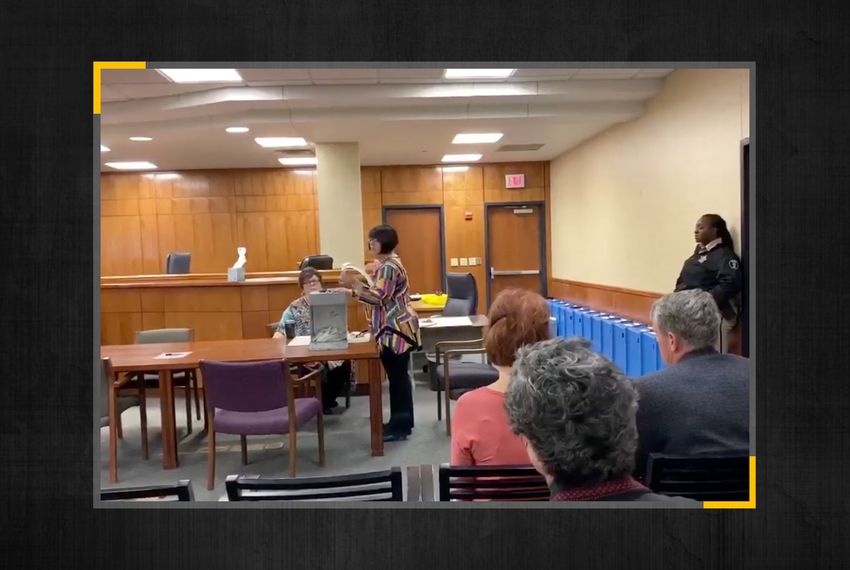
Midland County officials just found a missing ballot box. It may change the result of a $569 million bond election.

Midland officials found in a missing box from the November 2019 election containing over 800 ballots.A proposal for a $569 million bond failed, then passed and could fail again after the discovery of missing ballot box from the November election.

A proposal for a $569 million bond to build two new high school buildings in Midland failed by 25 votes in the November election, a margin slim enough it set off calls for a recount.

The ballots were recounted manually, and to the delight of Midland ISD officials, the results flipped and the proposal passed by a margin of 11 votes.

But last week, a Midland elections staffer found a box on the bottom of a shelf in the office containing 836 ballots that weren't tallied in the recount. Those votes threaten to again reverse the election results, which school officials are counting on to generate hundreds of millions of dollars for school construction.

The elections office obtained a court order to open the ballot box on Monday morning, when staffers began to count up the missing votes.

The first and unofficial vote tally on Nov. 5, which used the electronic ballots, took the missing ballots into account. The paper ballots are a physical copy of how constituents voted on the electronic system. The paper ballots came into play during the manual recount, which was missing the more than 800 ballots, making the recount number inaccurate.

The revelation of the vote discrepancy doesn't automatically change the election result, however. The result of the manual recount was canvassed — or made official — on Nov. 15, when it was signed by County Judge Terry Johnson.

But last week, representatives for Better Bond for Midland, the special political action committee opposing the bond, filed to contest the election results. We Choose Our Future, the SPAC in favor of the bond will also contest.

The missing ballot box is just the latest reversal in a roller coaster ride for this particular bond proposal. On election night, Midland voters watching the polls closely initially believed the bond passed by 18 votes, because of the results posted on Midland County's election website. But a week after the posting, officials clarified to reporters that the tally didn't include mail-in votes, which revealed it had actually failed that night, according to Deborah Land, elections administrator for the Midland County Elections Office. We Choose Our Future quickly called for the recount.

The Office of the Secretary of State has advised Midland officials of how to proceed and “will continue to provide appropriate assistance to Midland County officials as this matter proceeds forward,” wrote Stephen Chang, a representative of the office.

Land said she might have been the one to have moved the ballot box in question that led to it not being counted, but she's not positive.

“It was human error,” Land said, adding that the office will learn from the blunder and do things differently come the next election.

In her five years working in the elections office, Land said she’s never seen something like this happen before.

The deputy secretary of state and the director of elections were in Midland on Monday to observe the ballot count and advise local officials, according to a tweet by State Sen. Kel Seliger, who represents the area.

“Every Texan deserves to have full faith in our elections process,” Seliger wrote in a tweet.


Voting is beautiful, be beautiful ~ vote.©

Thursday, December 12, 2019

Hey, FBI & SIGTARP: Can Corporations Be Money Mules, Too?

Not just your bank account could be fueling crime, but also your church, your investment broker, your 401K, any and all public & state pensions, and of course, federal pensions.

In Detroit I like to call this creature of stealin' the children, land & votes, or rather the Detroit Land Bank Authority.

Either way, stop funding crime, particularly the foreign invasion of our great nation.

Praise the lord.

But, if humans can be money mules, is there a possibility foreign corporations, functioning under fake ass Public Private Partnerships, like the Detroit Land Bank Authority, can, also, be placed in such a similarly constructed class based animus, too?

I officially decided today to be "Pick on SIGTARP" day, because there was a fleeting moment in House Judiciary Impeachment Hearings - Day 2 - where the powers of the U.S. Treasury accidentally, slipped from the tongues of the members, but that moment was quickly remedied when Matt Gaetz dropped Hunter Biden's crackpipe.

So many artifices, so many machinations of gerrymandering...

Your Bank Account Could Be Fueling Crime
Money Muling Is Illegal and Helps Criminals

Like many Americans, Aaron Cole and his wife had been able to save up a nest egg through the rising value of their home. But after six years there and the births of their two children, the Oregon couple decided to sell and use the equity they had built up to purchase a slightly larger place.

After they had sold their current home, Aaron Cole received word that his title company would be in touch soon with the wire instructions for sending the down payment required to close on the new house. When an email arrived on December 4, 2018, from what appeared to be the title company, Aaron's wife went to the bank and sent $122,850 to the account number provided in the message.

A few days later, the title company called to tell Aaron Cole it was time to wire over the down payment. Was he ready for the account information?

It took the representative from the title company just moments to figure out what had happened: The Coles had been the victims of a business email compromise scam and had wired their money to a criminal who had spoofed the title company’s email address and sent them fake wire instructions.

The family’s savings was gone. Their down payment had been funneled into one account and then broken up and sent to four other banks. Within days, the money would be on its way out of the country and into the control of those who carried out the scheme.

The Cole family had already sold their existing home with a move out deadline of December 23. Now, they couldn’t complete the sale of their new house, had little left in savings, and in a few weeks would have nowhere to call home.

“I’m never at a loss for words,” said Aaron Cole. “When this happened, I couldn’t come up with the words to tell my wife.”

What happened to the Coles was due to the deliberate actions of the online criminals who compromised an email account to steal from them, but the criminals could not have carried out the scheme without the involvement of money mules.

The FBI defines a money mule as a person who transfers illegally acquired money on behalf of or at the direction of another person. Money mules often receive a commission for the service or provide assistance because they believe they have a trusting or romantic relationship with the individual who is asking for help moving money.

“Mules are laundering money for people who have done some major damage. Who’s losing the money? It’s average people. It’s small companies.”
Yaqub Prowell, special agent, FBI Portland
Money mules may or may not be aware of the role they are playing in a crime, but the actions they take do serious harm to people like the Coles and millions of other innocent victims of online scams and frauds.

The FBI’s Internet Crime Complaint Center (IC3) received more than 20,000 complaints in 2018 from victims of business email compromise alone. These victims reported losses of more than $1.2 billion.

“Mules are laundering money for people who have done some major damage,” said FBI Special Agent Yaqub Prowell, who worked the Coles’ case through the FBI’s Portland Field Office. “Who’s losing the money? It’s average people. It’s small companies.”

Aaron Cole will be the first to tell you how devastating the loss was. “The equity in the house was our way to move forward,” he said of the theft. “I put myself back 15 years.”

In the Coles’ case, the title company generously helped the family cover their down payment in exchange for Aaron Cole’s help alerting others about business email compromise. The title company was seeing homeowners hit with this crime despite the warnings about fraud and account security they put on every document they send to clients.

Aaron Cole, like many people, skimmed right over those messages in the mass of paperwork that accompanies the process of buying and selling a home. Cole said, “I grew up with computers. I know not to click on anything suspicious. Nothing about this looked suspicious.”

The title company hopes that a human face and a very human story about what can happen will make more people aware of the crime and on guard against it.

Prowell, who spent days tracking the path the Coles’ money made from bank to bank, was successful in seizing some of the assets and saving about 30 percent of the funds the Coles lost. But those assets, because of the legal process involved, would not have made it back to the Coles fast enough to save their home. “The quickest forfeiture process I’ve seen has been about 12 months,” said Prowell.

He stressed that even though it was a good ending for the Cole family, the title company will absorb the rest of the losses. “This is a small title company,” Prowell said “But it was a small company with a heart.”

Prowell is also hopeful Aaron Cole’s story will raise awareness about business email compromise and the need to be vigilant about online security.

Cole said he used the same password for several email and social media accounts and hadn’t changed them for a while. The criminals could have been monitoring his accounts for years using a simple software that watches for keywords that may indicate money is about to move.

In addition to strong passwords and better awareness, Prowell says people should revert to old fashioned means of verification before sending money. “Go check in person,” he said. “Or pick up the phone and make a call.” 

But Prowell also wants those who act as money mules to understand the harm they are doing to others and the peril they are exposing themselves to. First and foremost, acting as a money mule is illegal. Those performing the function can face criminal prosecution, damage to their credit standing, and financial liability for the money they move.

Money Mule Awareness Booklet
People who agree to allow others to use their bank accounts or open new accounts for these purposes are also linking themselves to criminal organizations. One of the money muling groups involved in Aaron Cole’s case was part of a separate FBI investigation into financial and violent crimes. “These groups are not always just fraudsters,” Prowell said. “That particular group was also dangerous.” 

“If you send and receive money at someone else’s request—especially someone you’ve never met—you are likely helping criminals to steal from hardworking people, senior citizens, and small businesses,” said Supervisory Special Agent James Abbott of the FBI’s Money Laundering, Forfeiture, and Bank Fraud Unit.

During a recent eight-week campaign to combat money mules, the FBI partnered with other federal law enforcement agencies to interview more than 550 individuals. They served more than 500 warning letters on individuals who served as money mules for fraud schemes. The letters informed recipients that they could be prosecuted if they continue.

Additionally, more than 30 individuals were criminally charged, in part, for their roles in receiving victim payments and providing the fraud proceeds to accomplices. Abbott stressed that banks and law enforcement take note of unusual account activity: “Anyone who continues to participate in this type of activity should be prepared to hear from the FBI or our partners.”

Learn more about money mules and help raise awareness by sharing the facts through #DontBeAMule.

Signs You May Be Acting as a Money Mule

  • You receive an unsolicited email or contact over social media promising easy money for little to no effort.
  • The “employer” you communicate with uses web-based email (such as Gmail, Yahoo, Hotmail, or Outlook).
  • You are asked to open up a bank account in your own name or in the name of a company you form to receive and transfer money.
  • As an employee, you are asked to receive funds in your bank account and then “process funds” or “transfer funds” via a wire transfer, ACH, mail, or money service business (such as Western Union or MoneyGram).
  • You are allowed to keep a portion of the money you transfer.
  • Your duties have no specific job description.
  • Your online companion, whom you have never met in person, asks you to receive money and then forward the funds to an individual you do not know.
  • How to Protect Yourself
  • Do not accept any job offers that ask you to use your own bank account to transfer their money. A legitimate company will not ask you to do this.
  • Be wary when an employer asks you to form a company to open up a new bank account.
  • Never give your financial details to someone you don’t know and trust, especially if you met them online.
  • Be wary when job advertisements are poorly written with grammatical errors and spelling mistakes.
  • Be suspicious when the individual you met on a dating website wants to use your bank account for receiving and forwarding money.
  • Perform online searches to check the information from any solicitation emails and contacts.
  • Ask the employer, “Can you send a copy of the license/permit to conduct business in my county or state?”


How to Respond

  • If you have received solicitations of this type, do not respond to them and do not click on any links they contain. Inform your local police or the FBI.
  • If you believe that you are participating in a money mule scheme, stop transferring money immediately and notify your bank, the service you used to conduct the transaction, and law enforcement.

How to Protect Yourself Against Business Email Compromise
Improve account security: Create strong passphrases for all online accounts. Do not use the same passphrase for more than one account. Change passphrases frequently.

Verify email addresses: Carefully check the address of any message that contains a link, attachment, or instructions. Criminals will make small changes to email addresses to make them appear as if they have come from a trusted source.

Double check: Never make a purchase, send a payment, or make a financial transaction based on email instructions only. Follow up on such requests by checking in person if possible or making a phone call. Do not use the phone numbers provided in the email in question.

Voting is beautiful, be beautiful ~ vote.©