U.S. Attorney General William Barr, center, visits Detroit to assess a federal crime initiative that involves 42 federal agents coming to town to help fight escalating gun violence.
The feds have arrived.
"Sir Boo Boo! You cannot stop the heavens from falling, for the Celestial Goddess of the Woodshed has cast her spell many a moons ago."
U.S. Attorney General William Barr visited Detroit on Tuesday to see for himself how a federal anti-crime operation is going, though he didn't view the massive city up close and personal — he saw most of it from a helicopter.
The nation's top prosecutor boarded a chopper in a field outside downtown Detroit to assess a new White House initiative dubbed Operation Legend, which, in recent weeks, has brought dozens of federal agents to town to help local police fight an uptick in gun violence. During a 45-minute helicopter ride, Barr saw some of Detroit's progress and blighted neighborhoods from above, though he also saw a little bit of Detroit from inside a sports utility vehicle.
After the helicopter ride, Barr and local officials drove to the JZ Motel on the city's east side and got out and spoke with the owners and workers about how crime has affected their business. Then Barr set out for a tour of the 9th Precinct, a police station surrounded by blight and crime, the same precinct where demonstrators gathered last month to protest the officer-involved shooting death of a man who was a suspect in a quadruple shooting.
U.S. Attorney General William Barr, center, met with Detroit Police officers and workers of the JZ Motel in Detroit Tuesday during a visit here to assess a federal crime initiative in the city. The Feds are sending 42 federal agents to Detroit to help the city fight escalating gun violence.
Barr's visit to Detroit comes amid what has been a bloody summer in Detroit. Homicides are up 25% and shootings are up 51%, with nearly 380 being shot in the last two months alone, including 63 deaths — that's at least one killing a day by gunfire.
"I wouldn't call it an intervention," Barr said of the operation, adding "I think Detroit does need an increase" in law enforcement to help fight the city's escalating gun violence.
"At the end of the day, it's about saving lives," Barr said during an interview from the back of his SUV-limo before he boarded the helicopter.
So far, 32 federal agents have arrived in Detroit. The remaining 10 are due to arrive in the fall.
The federal effort has drawn skepticism from local and state leaders and activists who question the government's motives. Black Lives Matter protesters have expressed concern that the feds may be used against peaceful protests, turning Detroit into another Portland. Others believe President Donald Trump, who announced the initiative last month, is trying to use Detroit's crime problem to win votes in November by portraying himself as the law-and-order leader.
As NAACP President Wendell Anthony has argued: "President Trump is in the midst of his reelection campaign. He cannot have public rallies, visit key cities, hold conventions, or even take pictures in a crowd due to COVID-19."
Anthony views Operation Legend as a "political ploy" by Trump to win votes in November and to "scare suburban and city white folks into voting for him out of fear."
"His poll numbers are tragically low," Anthony has said.
Meanwhile, Detroit Police Chief James Craig, who also rode in the helicopter with Barr, has stressed repeatedly that the crime initiative is about helping Detroit fight escalating violence. He has said he needs and welcomes the help. And the AG came to town, he said, to see how Operation Legend is working.
"He wanted to come see it up close and personal," Craig said. "This is all about crime."
Craig stressed the federal agents are already here.
"Folks are on the ground, but they're still building it up," Craig said of the federal presence.
Detroit is one of several cities that is part of Operation Legend. Federal agents are also being sent to Milwaukee, Chicago and Albuquerque, New Mexico, where escalating violence has been reported.
“Frankly, we have no choice," Trump said about sending in federal agents to these cities. "This rampage of violence shocks the conscience of our nation."
But many local and state leaders are skeptical about Trump's motives.
"I have a lot of concern about what his intentions are," Michigan Attorney General Dana Nessel has said, adding the election is less than three months out. "I’m concerned about his motivations here."
Nessel explained that her skepticism is based on Trump's behavior toward Michigan lawmakers, saying he has disrespected and mocked local and state leaders, including referring to Gov. Gretchen Whitmer as "that woman from Michigan."
"He calls our cities war zones. That’s not someone coming in because he’s genuinely concerned about our populous," Nessel said. "He's not trying to help. He's trying to dominate."
Federal officials disagree.
U.S. Attorney Matthew Schneider said when he was an assistant prosecutor under President Barack Obama, federal initiatives like Operation Legend took place.
"I was doing the same thing then that we are doing now. It's the same. We are working with state and local partners," said Schneider, who believes federal law enforcement assistance is desperately needed in Detroit.
"We have more resources and tools. Who wouldn't want that? If you live in a dangerous neighborhood, you want to make it safe, and that's what we want to do," said Schneider, who also rode alongside Barr on the helicopter tour.
According to Schneider, Operation Legend is already seeing some progress.
"We have some active investigations going on right now," Schneider said. "We're seeing arrests. We've already taken guns off the streets and assault rifles."
Detroit chief James Deier of the Bureau of Alcohol, Tobacco, Firearms and Explosives (ATF) has argued that Detroit can't afford to turn a blind eye to the escalating gun violence.
"Senseless gun violence is taking over the streets of the Detroit," Deier has argued. "Whether we want to admit it or we want to stick our heads in the sand, at the end of the day, statistics do not lie. ... What is happening on the streets of Detroit has to end."
It is such a tragic loss when someone close to you dies, but, in this situation, Kelvin Wheeler, Jr. was assassinated by multiple bullets, down the street from where I reside.
We both have one thing in common, and I do, most certainly expect the investigation to focus on that certain vector.
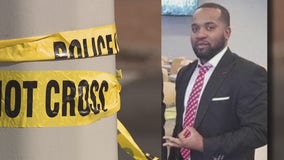
Detroit — Kelvin Wheeler Jr. was the kind of man on whom many people relied, who still made time for family, friends and youth.
When he was killed in July, the death of the dean of students at Triumph Middle School in Harper Woods and the father of an 8-year-old with whom he lived, left unanswered questions about his death and a community grieving.
“I need to know what happened," said his father, Kelvin Wheeler Sr. "I need to know who did it and I need to see them go to jail for the rest of their life.”
The elder Wheeler said Kelvin had just left his house minutes before he stopped at a red light on Livernois and Ewald Circle on July 8. Someone fired into his vehicle; Wheeler was shot multiple times.
On Sunday, the people who were closest to him are seeking for answers in the spot were he was slain. Project Good Samaritan, the faith-based group of Michigan Crime Stoppers, with Liberty Temple Baptist Church, Dexter Avenue Baptist Church and Spirit & Truth Christian Ministries gathered friends and family at the location where Wheeler was cut down for prayers and a community rally to honor the man known for mentoring youth.
Detroit Police Department spokeswoman Sgt. Nicole Kirkwood said detectives are investigating and searching for a suspect.
Police said a male approached Wheeler’s vehicle on foot and open fired on him through the front windshield at about 11:40 p.m. The suspect took off, police said, in older-model gray sedan.
Wheeler was attending Ashland Theological Seminary Southfield branch and was studying for a master's degree in counseling. He was two semesters away from graduating, according to his pastor, the Rev. Steve Bland.
Bland, the senior pastor of Liberty Temple Baptist Church, said Wheeler was a minister at the church and Bland was planning his ordination. Wheeler was training to become the youth pastor for the church. Wheeler was a “class act,” Bland said.
DeAndre Smith, a lifelong friend of Wheeler's, said his friend found God at an early age and he professed his calling in ministry before the age of 20.
“We became friends at Christian Community Baptist Church, where he re-instated himself into church," Smith said. “He started talking about becoming a minister when he was about 12 or 13 years old.”
Along with a passion for youth ministry, Wheeler was known for his culinary skills. After receiving a degree in culinary arts, Wheeler worked at Coach Insignia and Seldom Blues before he entered ministry training, his father said.
He was the person who made others laugh and had a strong connection with the youth, his father said. He served as a football coach.
“He was a person of influence,” said Wheeler's best friend, Stevie Freeman. “I told him he may be what some young kids needed, and that he should tap in with the youth.”
Freeman, who worked in schools as a mentor and football coach, said Wheeler was dedicated, and had worked his way up to dean of students at Triumph Middle School.
“He went from building sub, to athletic director to dean of students. He could have been a principal one day if he wanted too,” Freeman said.
Freeman said he and Wheeler had spent a lot of time together.
“I saw him pretty much every single day," he said. "We went from coaching football in 2012 together to working in the same schools together. The only school we didn’t work at together was the last school he worked at in Harper Woods.
"So for that to abruptly come to a halt, it’s different, you know?”
Wheeler was the second oldest sibling of four.
“He was the guy I could just call and talk to about anything," said his youngest sister, Desiree Wheeler. "He was one of the funniest people I know, always smiling. I miss that so much."
Her brother, she said, always stood on his foundations and dedicated himself to everything he did.
“His greatest accomplishment was his son," she said. "He was like the best father or friend anyone could have. He was really my real-life hero and when I lost him, I felt like a piece of me was taken.”
Wheeler said his son looked to him as his hero, but he looked at his son as his best friend.
“That was my only son, and I could talk to him about anything, and he could talk to me about anything," said Wheeler. "I told him as a parent, when you can say your child is your best friend, you have accomplished everything.”
I know Bill Clinton is already not very pleased with me.
Chairman Nadler Statement for the Markup of H.R. 2678, the No President is Above the Law Act
Washington, D.C. –Today, House Judiciary Committee Chairman Jerrold Nadler (D-NY) delivered the following opening remarks, as prepared, during the markup of H.R. 2678, the No President is Above the Law Act:
"The two bills we are considering today center around the same basic theme: presidential accountability. When the nation’s founders wrote the Constitution, after having just fought a war against a tyrant, they stood fast to a key principle—that the Executive must not be a king and must, instead, be accountable to Congress, to the people, and ultimately, to the rule of law.
"H.R. 2678, the 'No President is Above the Law Act,' reaffirms that important principle.
"This legislation, which I introduced along with Representatives Swalwell and Deutch, would suspend the statute of limitations for any federal offense committed by a sitting president, whether it was committed before or during the president’s term of office.
"This bill is necessary in order to close a dangerous loophole in the law created by Department of Justice policy—most recently embodied in a legal opinion by the Office of Legal Counsel—which holds that a president may not be criminally prosecuted during his or her term in office.
"Under current law, throughout the entire period that a president is presumed by some to be immune from prosecution, the statute of limitations continues to run on any offenses they may have committed.
"Since most federal criminal offenses carry a five-year statute of limitations, a president who is not prosecuted while in office for a crime they may have committed could end up evading justice altogether if the statute of limitations runs out before their term is over, particularly if they are elected to a second term.
"Allowing complete immunity from criminal prosecution merely because of the office a person holds would make a mockery of the rule of law.
"Statutes of limitations are an important element of criminal law. As a general matter, they provide a necessary balance between protecting defendants from delay and allowing prosecutors adequate time to investigate and charge cases. They ensure that the possibility of a criminal prosecution does not hang over a defendant’s head forever and they encourage prosecutors to bring charges while evidence is fresh.
"But the law has also long recognized that certain limited exceptions to this general rule are necessary, such as when the commission of a crime has been concealed or a defendant has fled or is unavailable. The case of a sitting president, whose prosecution is barred under Justice Department policy—no matter how strong the evidence may be—fits comfortably among such exceptions.
"I would note that even if the OLC opinion is reversed, there may be many practical difficulties in bringing an indictment against a president who is still in office. It is necessary, therefore, to simply pause the statute of limitations so that the president—any president—can be held to account for his or her actions and to ensure that the presidency is not a get-out-of-jail free card.
"I want to thank Mr. Swalwell and Mr. Deutch for their work in helping to craft this legislation. The 'No President Is Above the Law Act' would ensure that every person—no matter his or her title or office—is held accountable under our laws.
"I urge all Members to support this legislation, and I yield back the balance of my time."
~~~~~~~~~~~~~~~~~~~~~~~~~~~~~~~~~~ 116th CONGRESS 1st Session H. R. 2678 To amend title 18, United States Code, to provide for the tolling of the statute of limitations with regard to certain offenses committed by the President of the United States during or prior to tenure in office, and for other purposes. IN THE HOUSE OF REPRESENTATIVES May 10, 2019 Mr. Nadler (for himself, Mr. Swalwell of California, and Mr. Deutch) introduced the following bill; which was referred to the Committee on the Judiciary A BILL To amend title 18, United States Code, to provide for the tolling of the statute of limitations with regard to certain offenses committed by the President of the United States during or prior to tenure in office, and for other purposes. Be it enacted by the Senate and House of Representatives of the United States of America in Congress assembled, SECTION 1. SHORT TITLE. This Act may be cited as the “No President is Above the Law Act”. SEC. 2. TOLLING OF STATUTE OF LIMITATIONS. (a) Offenses Committed By The President During Or Prior To Tenure In Office.—Section 3282 of title 18, United States Code, is amended by adding at the end the following: “(c) Offenses Committed By The President During Or Prior To Tenure In Office.—In the case of any person serving as President of the United States, the duration of that person’s tenure in office shall not be considered for purposes of any statute of limitations applicable to any Federal criminal offense committed by that person (including any offenses committed during any period of time preceding such tenure in office).”. (b) Applicability.—The amendments made by subsection (a) shall apply to any offense committed before the date of the enactment of this section, if the statute of limitations applicable to that offense had not run as of such date.
Children's Hospital of Michigan
Wayne State University President M. Roy Wilson and School of Medicine leadership are blasting a recent decision by Tenet Healthcare Corp., owner of the Detroit Medical Center, to oust WSU pediatricians from Children’s Hospital of Michigan after decades of service and in the midst of the city’s struggles with the coronavirus outbreak.
“Our outstanding pediatric faculty physicians, who have cared for sick children in Children’s Hospital of Michigan for decades, will now be summarily evicted from the place they practice and separated from the patients they serve,” said the university. “Their passion for children and their credentials remain steadfast. What has changed is that Tenet, a for-profit company based in Dallas, is once again prioritizing profits over patients. Rather than responding to our inquiries about how this decision was reached after prior assurances that doctors could continue to serve their patients, we were informed that we must contact a high-priced law firm hired by Tenet to defend this unconscionable decision.
“This immoral act puts children at risk and separates doctors from patients in the midst of a global pandemic. We will vigorously oppose this despicable act, and urge members of our community and government leaders to do likewise.”
So far, Tenet has refused to offer any explanation for the ban on the nearly 25 doctors who form Wayne Pediatrics, instead referring inquiries by Wayne State leaders to law firm Jones Day.
Meanwhile, Mark Schweitzer, M.D., dean of the Wayne State School of Medicine, noted that the decision to bar the pediatricians from the hospital marked a complete reversal of hospital leaders’ earlier position.
“The decision comes only a few weeks after Audrey Gregory, the new chief executive officer of the Detroit Medical Center, assured Wayne State officials that Children’s Hospital of Michigan has an ‘open medical staff,’ allowing physicians who meet requirements and standards to provide care in the hospital,” said Schweitzer. “Wayne State University physicians meet those standards.”
With Detroit reeling from nearly 10,000 confirmed cases of COVID -19, university officials expressed concern that Tenet’s decision not only marks yet another vindictive turn in the for-profit corporation’s years-long efforts to destroy ties between WSU and the Detroit Medical Center, but that it will also unfairly punish the area’s children.
“This disturbs me to my marrow and runs counter to everything I was taught by my parents and learned during my more than three-decade medical career,” added Schweitzer. “The CEO of Tenet made nearly $15 million in 2018. How many children could receive preventive medical care for that unseemly amount? Maybe every child in the city of Detroit?”
Conversely, throughout the pandemic, Wayne State has extended numerous good-faith acts to Tenet at the request of its CEO, including recently providing campus residence hall space to DMC physicians and health care workers.
Linda Tripp ran the Monica Lewinsky operation to redirect Whitewater in a series of absolute chaos of a sex scandal, between two legally consenting adults, to function as a distraction for the Adoption Safe Families Act (ASFA) and the Personal Work Responsibility Opportunity Reauthorizaiton Act (PRWORA), and it all started in Detroit.
Listen to Linda not talk about what is known as the corporate parent of the Arkansas Development Finance Authority, the fake ass parent of the Detroit Land Bank Authority.
You were mean to my Sweetie, which is never a good thing to do, now is it, Bitch Boy?
Where is Julian Epstein, of whom I prefer my own appellation of Slimy, Slime, Slime?
(CNN)Linda Tripp, who secretly recorded her conversations with Monica Lewinsky about the then-intern's relationship with President Bill Clinton in the White House, has died, according to her mother, Inge Carotenuto, and her former attorney, Joseph Murtha.
Tripp had previously been treated for breast cancer. She was 70.
Tripp, a friend of Lewinsky's at the time, turned the 20 hours of tapes over to special prosecutor Kenneth Starr. The scandal ultimately led to Clinton's impeachment for perjury and obstruction of justice, though he was ultimately acquitted in the Senate.
Lewinsky, despite their prior experiences, expressed well wishes to Tripp as reports indicated Wednesday that her health was failing.
"(No) matter the past, upon hearing that linda tripp is very seriously ill, i hope for her recovery. i can't imagine how difficult this is for her family," Lewinsky tweeted.
Lewinsky began to tell Tripp, a coworker of hers at the Pentagon, of her relationship with Clinton in the summer of 1996. Tripp began taping their conversations in the fall of 1997.
After contacting Starr about the tapes in January 1998, she met with Lewinsky again while wearing a wire, at which point Lewinsky coached Tripp on what to tell lawyers about Kathleen Willey, another former White House staffer who had testified about alleged unsolicited sexual advances made by Clinton in 1993.
When asked on Larry King Live in 2003 whether she regretted it, Tripp replied, "No, I would do it again."
"I told (Lewinsky) I would not fix a court case. I would not help fix a court case," Tripp said. "Yet I knew the President of the United States and Monica were intending to do that."
Speaking on the podcast "Slow Burn" in 2018, Tripp defended her actions as motivated by the idea that it would ultimately help Lewinsky.
"This was flying by the seat of my pants, terrified, out of my wits, completely guilt-ridden that I was having to manipulate her, but convinced in my soul that in the end it would benefit her. That he would no longer be able to do this to hurt anyone else," she recounted.
Tripp told the podcast that, at the time, she was being disingenuous while taping Lewinsky but only because she felt that she had to be.
"There wasn't a thing about those three months that were authentic. Everything prior to that was, but I needed everything to be recreated and it was beyond manipulative," she said. "Did I want to do that? Not necessarily, but I felt like I had no choice."
Tripp was open that she sought to go after Clinton, saying that Lewinsky's story established "a pattern of behavior that otherwise I believe wouldn't have had credibility" and that she "was eager for this information to fall into the hands of the Paula Jones attorneys," who sued the President on sexual harassment charges.
"But to say it was distasteful, to this day I have enormous guilt about" disseminating information to the press and FBI, she said.
"And of all the people I care about understanding, she's the one I wish I could convince," Tripp added, referring to Lewinsky. "And that'll never happen, so."
All the U.S. House Judiciary Committee had to do was to just put in their filings Don McGahn's role in the Michigan Emergency Manager Law, Detroit Bankruptcy, Detroit Grand Bargain and the Detroit Land Bank Authority, but, alas, they did not, and now there is no de novo review on stealin' the children, land and vote.
These interbranch dispute arguments is dumb.
He is how I would approach this tripartite quagmire:
Were you stealin', either, children, land or votes?
If you say, 'no', then you are lying based upon multiple attestation in the public record, under arms of the seals of governance.
That means you breached your duties as officeholder of the children's trust, which means you can be defrocked, to fall from the heavens, to be held to the laws of the land, in the right of the vote of a grand jury..
Ergo, you were lying, and you better not bear false witness in the public record, again, which makes the opportunity of subpoena a right of due process of the public's right to a civil society.
So, instead of listening to the "Legal Geniuses" (trademark pending), I shall provide my summation:
They were stealin'.
What if there is a "Whistleblower, protected by the Orders of Highest Authority", who has everything these people are averring about with Judiciary, already in the public record?
This is fun, because you do not need a subpoena if one is indicted, oops, I mean, arrested, but that is a completely different jurisdiction and we know it is only constitutional for feds to trump States rights...in federal grand juries....ooooohhhh....chaos......baby........mmmmmm.........
This is about the Kavanaugh argument on attorney-client privilege in Whitewater in the Vince Foster case, when a client is deceased, like my Sweetie...
This is about the trafficking of tiny humans, which is why you shall hear the battle of Valhala, which shall allow the heavens to fall.
WASHINGTON (AP) — Federal appellate judges are wrestling with whether courts should be refereeing a dispute between the House of Representatives and the Trump administration over the testimony of former White House counsel Don McGahn, even in the face of what one judge called the White House’s “broad-scale defiance of congressional investigation.”
A panel of the U.S. Court of Appeals for the District of Columbia Circuit heard arguments Friday over the House Judiciary Committee’s effort to compel McGahn’s testimony. The administration appealed after a trial judge rejected its broad claim that close advisers to President Donald Trump have complete immunity from congressional subpoenas for their testimony.
Judge Thomas Griffith, an appointee of President George W. Bush, pressed tough questions on both sides Friday, describing Trump’s directive not to cooperate with congressional investigations as “broad-scale defiance” that is possibly unprecedented in U.S. history. Even so, Griffith wondered whether courts should get in the middle of a political dispute between the other two branches of government, especially when Congress has other powers available, including cutting off appropriations, stopping the confirmation of judges, even impeachment. “That’s what the separation of powers means,” he said.
The committee wants McGahn’s testimony as it examines potential obstruction of justice by Trump during special counsel Robert Mueller’s Russia investigation.
The committee wants McGahn’s testimony as it examines potential obstruction of justice by the Republican president during special counsel Robert Mueller’s Russia investigation. But it has held open the possibility that McGahn’s testimony could be important in impeachment, even though the two articles of impeachment adopted last month by the House focus on Ukraine and events that occurred after McGahn left his White House post.
Even if McGahn eventually shows up at the committee, it’s unclear whether he would have much to say. Trump could assert executive privilege over some matters, though he allowed McGahn to talk extensively to Mueller’s investigators.
“What happens then? You’re back here?” Griffith asked.
The other two judges on the panel are Judith Rogers, an appointee of President Bill Clinton, and Karen Henderson, appointed by President George H.W. Bush.
Rogers seemed likely to side with the House. Henderson had only a few questions, although she indicated McGahn might have a strong interest in saying little to the committee to protect his conversations with Trump, his former client.
Democrats on the Judiciary Committee subpoenaed McGahn well before the start this fall of an impeachment inquiry centered on Trump’s request to Ukraine’s president that he investigate Trump’s Democratic rival Joe Biden and Biden’s son as well as an unsubstantiated conspiracy theory alleging Ukraine’s interference in the 2016 U.S. presidential election.
The Justice Department has asked the appeals court to dismiss the case, saying there’s no reason for judges to become involved in a political dispute.
The department also says the need for resolving the case is less urgent now that the House has moved ahead with impeachment articles even without McGahn’s testimony.
How old was his mother and was she in foster care, too?
Just keeping it real because no one wants to talk about the parents who children were Legally Kidnapped by foreign corporations in the name of the tax exempt god.
Praise the lord and keep on salvaging those souls.
Former President Bill Clinton has offered a public congratulations to Michael Clark Jr., the 5-year-old Michigan boy who made headlines for inviting his kindergarten class to his adoption ceremony. Clinton sent a tweet Friday night about the boy and how special is story is.
Congratulations to you and your family, Michael. This is a beautiful story. Our country could use more of it.https://t.co/rXEZ6scAVu
Clark’s story went viral this week as the child’s act of kindness caught the eyes of people across the country. Videos of his ceremony were viewed millions of times and photos have been shared across various social media platforms.
During the ceremony, each of his classmates were able to stand up and say why they are friends with Clark. The kids brought handmade signs as well and cheered Clark on after he was officially adopted. Clark was adopted by Andrea Melvin and David Eaton during the 23rd annual Adoption Day in Kent County. As part of Thursday’s ceremonies, 36 other children were also adopted.
In another tweet, Clinton said the adoption issue was something he and his wife Hillary Clinton worked hard to combat during their political careers.
.@HillaryClinton & I worked hard on this issue, especially adoptions out of foster care, which increased 80% in 4 yrs after Congress acted in a bi-partisan way to simplify & speed up the process. Grateful to all who worked on it, including Tom DeLay, an adoptive parent himself.
I really do not understand what the issue is with Detroit City Council voting to approve mo' money to tear down these properties they intentionally and purposefully blighted because they are all illegitimately elected.
That would make the vote illegitimate, too, but hey, what do I know?
I also know many of the members of City Council also got some of those blighted Detroit Land Bank Authority properties the same way Sherry Gay Dagnogo did.
Michigan state Rep. Sherry Gay-Dagnogo spoke against the blight demolition bond ahead of council's vote, urging the body to vote it down. City of Detroit, Detroit Free Press
The Detroit City Council peppered Mayor Mike Duggan's administration with several concerns and questions Tuesday about his $250 million blight bond proposal, just days after a blistering Auditor General report outlined several problems with Detroit's demolition program.
The contentious vote was postponed for at least a third time Tuesday, according to the city clerk's office. The vote, if approved, would have advanced the ballot to the March 2020 ballot for voter consideration.
According to officials, Nov. 26 is the last day the body can vote on the measure before it goes on recess.
Detroit City Council President Brenda Jones said she remains concerned about the bond and suggested that the administration proves it can "do better" in light of a litany of issues with the program.
"Why not start with a pilot amount (instead of the full $250 million) to show you can do better as opposed to getting all the money and you don't do better," Jones asked. "I still have a lot of concerns."
Jones also grilled the administration on its lack of responsiveness to the auditor general. The office was forced to subpoena the Detroit Building Authority twice to receive the necessary information for its report and encountered several monthlong delays. Auditors never got some answers.
"It's just disheartening that we're talking about an audit I requested four years ago," Jones said. "To sit here and keep talking about a timeline is crazy when nobody responded properly," she said. "No one took the issue serious enough until we got a bond initiative to come before us. ... It's just ridiculous."
I bet Sherry Gay Dagnogo is mad Mike Duggan has not assisted her in finding out who is responsible for demolishing her nonprofit's blighted Detroit Land Bank Authority house she got for campaigning for him. Sherry was so distraught she went to Cuba the next day,
Detroit City Council President Pro Tem Mary Sheffield said she believes a community meeting or forum should be held prior to the council vote to ensure residents have a role in the discussion. Sheffield said she believes the bond proposal has "long-standing financial ramifications for the residents of Detroit if passed."
"Given the administration's desire to place the measure before voters in a primary in the dead of winter, I believe it's imperative for City Council to provide citizens with all the pertinent information necessary to help them develop an informed opinion about the matter before we vote," Sheffield told the Free Press after the vote to postpone.
Duggan's administration officially submitted the bond proposal in September, outlining a goal to remove remaining residential blight from Detroit by mid-2025.
According to the auditor general, the city has already spent a staggering $532 million on Duggan's aggressive blight removal effort, which began shortly after he took office in January 2014. The city has used a mix of city, federal Hardest Hit Funds and other designated monies.
If given the green light by voters in March 2020, total possible spending on blight removal over the next five years, including funds allocated outside of the bond proposal, could be as much as $500 million, according to a report written by council's legislative policy division.
That means by 2025, the city may have spent upwards of $1 billion on blight remediation, thanks to the bond and other funding mechanisms the city has planned for the next several years.
Michigan state Rep. Sherry Gay-Dagnogo, one of many who spoke against the bond ahead of council's scheduled vote, urged the body to vote it down. Gay-Dagnogo based much of her comments to the council on her belief that the Duggan administration lacks transparency and credibility, given numerous recent investigations.
Citing a search warrant that was executed Friday by Michigan Attorney General Dana Nessel's Office related to its Make Your Date investigation, Gay-Dagnogo said the city council shouldn't push the bond forward.
"We need to remove this cloud of suspicion that exists over this body," Gay-Dagnogo said. "You are able to restore true trust and transparency. We cannot have a representative democracy with all of these inquires that are going on, all the investigations that are going on and all the questionable activity."
Detroit Charter Commission member Nicole Small also urged council to vote the bond down.
"Now's not the time for you to support this," Small said. "It's OK to tell him (Duggan) 'no.' Don't be an enabler for the mayor any longer. Be a representative and advocate for the interests of the people."
Detroit Auditor General Mark Lockridge's report concluded Friday the city's demolition program has been mismanaged and beset with significant problems for the past four years.
The sweeping audit also revealed the Detroit Building Authority — along with one or more city departments — in some instances: failed to properly provide oversight and administer contracts; did not fully comply with some local and state laws; didn't monitor to ensure that demolition contractors met requirements.
Lockridge also blasted the city for having "inconsistent and unreliable" demolition data, as well as poor record keeping that made it difficult to perform the audit.
"A perception that public officials are using the procurement system to reward themselves, their friends, or supporters, poisons the public’s confidence in government and shakes its faith in the bureaucratic process," he wrote.
City officials pushed back on the report, saying the auditor general used flawed and outdated data. But Lockridge's office said they simply used the data that was provided to them and even adjusted to include a newer set of data, which produced similar concerns about the program.
Deputy Auditor General Laura Goodspeed said Tuesday the office was disheartened by the administration's response to their audit.
"We stand by our data, we stand by our numbers and yet we have not heard a comprehensive or genuine response to our findings," Goodspeed said.
Council Member Raquel Castañeda-López urged the administration to take the auditor general and recent Detroit Inspector General report on the controversial Make Your Date prenatal program more seriously.
"I think it's dangerous ground to walk on ... to dismiss the findings of the AG and OIG," Castañeda-López said.
The audit also raises questions about the true cost of demolitions per structure. Of the $532 million spent thus far, about $330 million can be attributed directly to the hard costs to demolish more than 19,175 structures across Detroit.
Of that, $202 million has been invested in administrative and other "soft" costs which include pre-demolition activities such as property surveys, personnel and other costs.
The auditor general found that the average cost per structure based on the 19,175 homes demolished thus far is $17,198.
But according to the audit, the average total cost per structure is significantly higher at $27,756 when you factor in the administrative and soft costs.
The administration has said it "fundamentally" disagrees with the administrative cost figures detailed by the auditor general.
The audit, which focused on city-funded demolitions, was launched in October 2015, when the Detroit City Council requested the office audit the city’s demolition program.
The office looked at the program’s operation between Jan. 1, 2014 to Dec. 31, 2018.
The bond resolution authorizes the city to secure $250 million in "unlimited tax general obligation bonds" to continue Duggan's aggressive blight remediation efforts.
According to officials, the bond will help tear down an additional 19,000 properties and it will also renovate an additional 8,000 homes through Detroit Land Bank Authority sales and legal actions against privately owned vacant buildings.
But several council members have raised concerns about the bond, in light of previous issues with the program that have been reported by the Free Press and other media over the past several months.
In attempt to assuage some of council's concerns, the administration has proposed creating an entirely new demolition department solely under city control and subsequently canceling or revising the current demolition contract with the Detroit Building Authority.
The city's demolition program is currently managed by the Detroit Land Bank Authority and the Detroit Building Authority under a structure Duggan put in place after he was elected in 2014.
The city is in the process of transitioning the demolition program away from the Land Bank, officials announced earlier this year.
Jones said in a Sept. 17 memo to Duggan and Chief Financial Officer David Massaron that she wants several stipulations and requirements put in place if the ballot initiative is approved.
Dave Massaron, the Chief Financial Officer for the City of Detroit talks with the Detroit Free Press editorial board at the newspaper on Thursday, September 26, 2019.
Dave Massaron, the Chief Financial Officer for the City of Detroit talks with the Detroit Free Press editorial board at the newspaper on Thursday, September 26, 2019. (Photo: Eric Seals, Detroit Free Press)
Jones wants the bond funds to be placed in an escrow account with a requirement that council must approve any "drawdown" on the bonds. Jones also wants the bond funds to be drawn in five increments of $50 million, with 25% of those funds set aside for investment into foreclosure prevention and assistance.
Jones also wanted each increment of $50 million to have 30% of the funds set aside for Detroit-based and Detroit-headquartered businesses and for at least 51% of the individuals employed by companies tearing down the homes would be required to be Detroit residents.
Sheffield previously told the Free Press that the bond issue raised concerns, for her indicating a "proposal of this magnitude that has long-lasting social, economic and financial, implications" should have been a petition-led initiative that would have allowed "voters to be fully engaged and more educated about the proposal before it reaches the ballot."
"I have serious concerns about equity and inclusion with respect to contracts and employment as well as access to opportunity and ownership after demolition," Sheffield said.
Castañeda-López submitted a detailed memo on Monday to the administration, also asking that several provisions be added to the bond resolution. Among the proposals were "proof that all stages of demolition were monitored — including the backfill activity, any ongoing investigations or litigation, and any violations issued."
A Free Press investigation in February revealed that federal authorities were probing whether contaminated dirt was potentially used to fill sites across Detroit.
Castañeda-López also asked for several provisions be put in place for how vacant land be used after demolition.
Last year, the Free Press published an investigation that revealed just 16% of the Hardest Hit funded demolitions went toward black companies in Detroit. Sheffield said her office has been working to improve the hiring of Detroiters through a proposed local hiring ordinance.
"We must have guarantees that Detroiters benefit from the use of their tax dollars and that the goal is to truly improve the quality of life of residents and not lead to another urban renewal which amounted to urban removal in the past," Sheffield said.
More than $250 million from the federal Hardest Hit Fund was allocated to Detroit from the U.S. Department of Treasury for its demolition program since Duggan began an aggressive effort to tackle blight across the city. Detroit has the largest demolition program of its kind in the nation. Those dollars are expected to be exhausted by early next year, officials have previously stated.
The city's demolition program has faced intense scrutiny in recent years for its practices and a highly publicized federal probe.
The federal investigation resulted in criminal charges in April against two former employees of a demolition firm, one of whom worked for the city of Detroit at some point.
Federal agencies have been probing various facets of the city's program over the past several years.
After the Free Press published a series of investigative stories about the program, congresswomen Rashida Tlaib and Brenda Lawrence jointly called for increased oversight of the city's blight remediation efforts.
In a statement released Tuesday evening, Lawrence said she is "incredibly alarmed" by the auditor general's findings.
"The demolition program in Detroit has been marred by a lack of oversight and administrative failures that beleaguer an otherwise beneficial program to the city," Lawrence said. "As a member of the House Committees on Appropriations and Oversight and Reform, it is my duty to ensure the proper use of federal funds, and the Detroit Auditor General’s report demonstrates a gross lack of oversight."
Lawrence said she expects the city to "institute a more robust system" of oversight.
"I urge the city of Detroit to work with relevant federal agencies to ensure the health and well-being of its residents are protected. In order to provide the people of Detroit with the certainty they deserve, I request that the city of Detroit immediately begin to remediate all demolition sites to ensure there are no environmental risks associated with the demolition program," Lawrence said.
See, that is what you get when you try to bleachbit Detroit history.
The Wayne State University Medical School is part of history of Detroit but Michigan State University seems to have skins in the game because, at one point, had all their Sparty Flags a-furhling all over WSU campus.
Privatization sucks, just ask Bill Clinton...oh...wait, the funeral is over.
A training program for neurosurgeons at the Detroit Medical Center has lost its accreditation, jeopardizing the reputation of the health system and its longtime academic partner, Wayne State University.
The Accreditation Council of Graduate Medical Education withdrew accreditation from the program earlier this month following a site visit on Sept. 18. Accreditation is set to end on June 30.
Wayne State University School of Medicine Dean Jack Sobel said the program would appeal. Neither the Council nor the program sponsor, DMC, would comment on how the program could restore its credentials or the specific causes.
A training program for neurosurgeons at the Detroit Medical Center has lost its accreditation, jeopardizing the reputation of the health system and its longtime academic partner, Wayne State University.
"We are going to appeal together to recreate a teaching environment, with both sides participating, that will create an optimal teaching environment,” Sobel said.
The accreditation loss is a byproduct of the discordant partnership between WSU and the DMC, although Sobel said that was not the direct cause. That relationship has deteriorated sharply over the past several years, putting at risk the medical attention provided to high numbers of indigent and under-served residents in the nation's poorest metropolitan city.
Someone was not compliant because they were defrocked.
Sobel said that Wayne State's top neurosurgical teaching faculty left the college to join DMC, which left them without the required teaching credentials to run the program.
"The failure of the residency is a failure of one or two teaching individuals. It's not a conflict between DMC and Wayne State," he said.
"This is an outlier," he said, adding that other residency programs are not at risk.
Loss of accreditation is rare, and rarer still for the seven-year residency programs in neurosurgery, with just 218 positions available nationally each year. They train physicians who perform brain and spine surgeries and treat patients with neurological disorders like stroke, Parkinson's or Alzheimer's disease. Doctors must exit accredited programs to be licensed in their specialty.
"These men and women are pretty stellar," said Atul Grover, executive vice president of the Association of American Medical Colleges.
Neurosurgery is among the most competitive medical professions, and requires seven years of surgical residency following medical school. Neurosurgery residents contacted by The Detroit News declined to comment on the situation Thursday, but one described the situation as desperate.
"When I look at the characteristics of the average person who's matched with neurosurgery these days, they're not only exceptional clinicians with great academic credentials, they've done research, in many cases they have two degrees — these are really competitive people who are exceptional," Grover said.
Beyond the immediate impact, even a threatened loss of status can impact recruiting. Applicants rank their preferred choice of programs and go through a matching process to determine their placement, ensuring that the best applicants get their preferred programs. The DMC-Wayne program is unlikely to rank highly among top surgical candidates who fear it is risky.
Guess this Tenet Health Human to AI transfer program
did not work out so well
The Council accredits 11,000 residency programs across the country. Accreditation was withdrawn from eight programs in 2019. It's not clear how or if accreditation can be restored; the Council would not comment on the Detroit program.
The Council conducted site visits to the Detroit Medical Center's 65 residency programs on Sept. 18, and the eight residency programs sponsored by the Wayne State University Medical School on Oct. 18.
The hundred-year relationship between Wayne State and the DMC was nearly severed last spring before they reached an agreement to continue. Both the university and the health system have sought partnerships with other institutions, with some success.
Loss of accreditation is rare, and rarer still for the seven-year residency programs in neurosurgery, with just 218 positions available nationally each year.
On Thursday, the two entities took turns contesting whether Wayne State was even affiliated with the program.
If medical housekeeping staff do not get the flu shot,
they do not get paychecks.
"The neurosurgery residency program at the Detroit Medical Center belongs solely to the DMC," the university said in a statement. "The Wayne State name is listed on the ACGME website because of a prior teaching affiliation agreement. That agreement ended a year ago when WSU neurosurgeons joined Tenet Physician Resources, or TPR. Since that time, Tenet has named the chair of the program and been responsible for all teaching."
DMC spokesman Brian Taylor, however, said: "(Wayne State is) affiliated with the program. They're our academic partner."
Wayne State still lists the individual residents on its website. Residents have WSU email addresses, and their photos and biographies are listed in the university’s directory of team members.
The website also informs prospective residents how to apply for the residency and and states “Neurosurgery applicants successfully matching to our program will complete all years of training in the Detroit Medical Center-sponsored training program.”
DMC could provide no information or documentation on the reason for the accreditation loss.
"(A)t this point, we have yet to receive detailed information outlining the reasons for the decision," Taylor told The News in an email.
"It's unusual for a small specialty like this that's populated by people who are really exceptional surgeons to not be accredited," said Grover, of the Association of American Medical Colleges.
Always busy collecting data to maximize profits from
non-profit, federal programs, like Medicaid.
The American Board of Neurological Surgery, which provides board certification for neurosurgeons, requires that candidates receive training through a program accredited by the Council.
According to Betsy Koehnen, chief administrative officer for the Board, residents unable to complete their seven years at an accredited institution will need to seek admission to an another program that is accredited to complete their training.
"We only recognized trained individuals who graduate from an accredited program," Koehnen said. It’s unclear whether the residents in the program could depart for other programs, or how soon.
Grover, of the American Association of Medical Colleges, said the program's loss will reverberate throughout the field as medical graduates who hope for careers in neurosurgery compete for fewer available training slots.
"You need all the doctors you can get, especially in a small, narrow specialty like neurosurgery," Grover said.
"There's probably only a hundred or so training programs in the entire country. So anything that effects the ability of an entire program to train people is likely to have an impact — not just on the local area but certainly regionally."