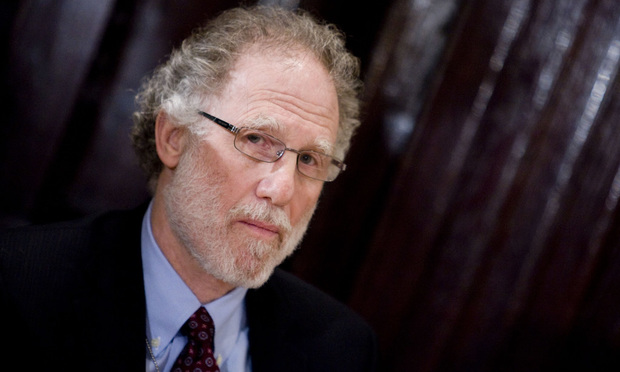
Cenk Uyger & John Conyers, Jr. waiting for something
other than cocktails & popcorn.
Cenk Uyger of The Young Turks is back and failed to mention that Perkins Coie Sucks.
Now, why would Cenk neglect to identify the funding keyman, Perkins Coie, having dropped all those big attorney names, to increase his youtube hits, who are clients?
Hmmmmm......
How come Cenk does not talk about Bob Bauer and Marc Elias, "Legal Geniuses" (trademark pending)? Hmmmm......
Hmmmm.......
How come Cenk did not mention Jeffrey Katzenberg or even Bob Bauer, two primary individuals behind their decision to "organize" with TYT?
Maybe because no one has figured out if the "organizing" was with Perkins Coie, or one of its clients like the DNC, DCCC, Hillary for America, or a number of other Super PACs, or even clients like Dreamworks.
Did TYT social media staff ignore the #perkinscoiesucks or any other form of the hash tag for Perkins Coie, intentionally, and if so, why?
Did TYT engage in any "financial" transactions on behalf of any political campaign activities of the DNC, DCCC, or Hillary for America, (sssshhhhh....it is all the same Corporate Shape Shifter.)?
I am going to ask Cenk if this is one of those "Attorney-Client Privilege" issues.
Bob Bauer, The Original "Legal Genius" (trademark pending)
Robert Bauer, the Democratic Party legal stalwart who served as White House counsel to President Barack Obama, is leaving Perkins Coie after nearly four decades at the firm.
The firm said Bauer will continue to represent several of his existing clients on an individual basis and will serve as co-counsel with Perkins Coie on some of those matters. Bauer will also devote more time to teaching at New York University School of Law.
Bauer was not immediately available to comment, but in a statement he expressed gratitude for his time at Perkins Coie and said he was eager to continue working with colleagues at the firm as a former partner.
“When I came out of law school in 1976, the country was just beginning to regulate the political process in a way that hadn’t been true before,” Bauer said. “At Perkins Coie, we built a practice and defined the field in a way that you just do not find at other law firms. I’m proud of the work we have accomplished, the team we have built and the clients we continue to serve.”
Bauer started at Perkins Coie in 1980, founding the firm’s political law practice. In the ensuing 38 years, he stepped away only twice—to serve as counsel to the Senate minority leader during former President Bill Clinton’s impeachment trial of 1999, and when working as Obama’s White House counsel from 2010 through July 2011.
After leaving the firm, Perkins Coie said, Bauer will continue to write and split his time between New York City and Washington, D.C. He will also remain as personal counsel to Obama and continue working with The Obama Foundation and The Biden Foundation as clients.
Though Perkins Coie is headquartered in Seattle, it has an outsize presence in D.C. thanks to its leading political law practice. The group, known for its longtime work for the Democratic National Committee and other Democratic groups and politicians, has been chaired since 2009 by Marc Elias, who was counsel of record for Hillary Clinton’s 2016 presidential campaign.
Perkins Coie has also attracted attention in recent months based on reports that the firm played a role in funding research by Fusion GPS that led to the “Steele dossier” proffering ties between Donald Trump’s presidential campaign and the Kremlin.
Bauer has not been shy about commenting on controversies surrounding the Trump administration, including writing in support of former FBI director James Comey and arguing that Congress should enact legislation requiring special counsel Robert Mueller to issue a report to legislators if Mueller is fired by the president.
The following is from Wikileaks showing concerns with that "Attorney-Client Privilege".
From:MElias@perkinscoie.com
To: robbymook2015@gmail.com, d.cheng@me.com, john.podesta@gmail.com, Charlie.Baker@deweysquare.com, jesse@jesseferguson.com
CC: JBerkon@perkinscoie.com
Date: 2015-04-07 23:48
Subject: Attorney Client Communication -- Superpac follow up
Team –
Per our conversation on Sunday, we have attached two draft policies dealing with the agency issue.
The first would be the campaign’s. It sets forth HFA’s policy not to confer fundraising authority on any paid employee or consultant of a Super PAC that makes substantial expenditures in the presidential race. This would cover Priorities, Bridge, and WOMEN VOTE!, but would exclude Super PACs that occasionally dabble in the presidential race and social welfare orgs. The draft policy also spells out when an agent’s grant of agency terminates, in an effort to reduce the total number of fundraising agents floating out there at any given time. Finally, it codifies Charlie’s idea that the finance committee (as Dennis has currently explained it) is more of a recognition of work than a grant of additional authority. We’re still safer if we can avoid giving campaign fundraising titles to folks who are raising soft money for a Super PAC. But if that’s not possible with everyone, staking out this position now will be helpful.
The second would be the Super PAC’s policy. Because the campaign cannot sanction the soliciting of soft money, the PAC needs to be the one spelling out the rules for individuals wearing “two hats” who want to raise soft money. However, we would condition any support we offer superpac on them adopting this policy. The goal is to create a uniform set of guidelines that, if followed, would help demonstrate to a regulator that the individual was raising soft money in a capacity other than the campaign’s agent. As we discussed, we may decide that some of our fundraising agents are too risky – either because we don’t trust them to follow these guidelines or because we do not think it is credible that they are raising in a capacity other than as a campaign agent – and tell Priorities that they cannot use them to raise. But this would be the uniform set of guidelines that we would insist everyone wearing “two hats” would follow.
Lastly, we are still working on proposals to address the question of the role we can play re additional supporter/leadership for superpacs. We will be back shortly on that.
--
Marc E. Elias
Perkins Coie LLP
700 13th St, NW
Washington, DC 20005
202-434-1609 (ph)
202-654-9126 (fax)
melias@perkinscoie.com<mailto:melias@perkinscoie.com>
________________________________
NOTICE: This communication may contain privileged or other confidential information. If you have received it in error, please advise the sender by reply email and immediately delete the message and any attachments without copying or disclosing the contents. Thank you.
The following is the policy brief attached to the email.
Federal campaign law defines an “agent” as an individual who
has been conferred actual authority by a candidate or campaign
committee to solicit funds on its behalf (hereinafter, “fundraising
authority”). Hillary for America (“HFA”) may choose to
confer such authority on certain individuals who are not employees.
The list of campaign fundraising agents could include individuals who
agree to host sanctioned fundraising events on HFA’s behalf;
individuals who offer to raise funds on HFA’s behalf and whose
offer is accepted by HFA; and individuals whom HFA asks to raise
funds on its behalf and who accept HFA’s offer. Individuals
who raise funds for HFA without the approval of HFA staff or
individuals who raise funds for HFA in contravention of an
instruction not to do so will not be considered agents of HFA,
notwithstanding their representations to prospective donors or how
those representations are understood. The following rules will govern the campaign’s fundraising
agents. These are in addition to any policies conveyed by HFA
to its agents in other documents or materials. 1. HFA will not confer fundraising
authority on any individual who is compensated (whether as an
employee or a consultant) by a Super PAC that makes substantial
expenditures to influence the presidential election. Such
individuals are not authorized to raise funds on HFA’s behalf. 2. An individual’s fundraising authority
expires on the earlier of the following: (1) when the fundraising
agent informs HFA that s/he is terminating her/his fundraising
agency; (2) when HFA informs the individual that it is terminating
the individual’s fundraising agency; or (3) when the individual’s
contemplated fundraising activity for HFA ends. For example,
when an individual has been conferred fundraising authority for a
specific event, that authority terminates immediately after the
event. As another example, when an individual has been
conferred authority to raise a specific amount of funds, that
authority terminates immediately as soon as those funds are raised. 3. HFA will have employees who are
fundraisers. At this time, HFA does not intend to retain
consultants to raise funds nor does it intend to have volunteer
fundraising positions (e.g. “National Finance Chair” or “Regional
Finance Chair”).
4. HFA will recognize individuals who
raise a certain amount of funds by placing them in honorary groups
(e.g. “Finance Committee”). Placement in these honorary
groups does not suggest that the individual has any additional
fundraising authority. Moreover, there may be some individuals
that remain in these honorary groups notwithstanding the fact that
their fundraising agency has been terminated.
SUPER PAC POLICY ON FUNDRAISING AGENTS
Super PAC recognizes that it may designate an individual as a
fundraising agent who is currently serving as a fundraising agent for
a federal officeholder or candidate. Federal law provides that
an individual serving as a fundraising agent for a federal
officeholder or candidate may legally raise funds outside of federal
source restrictions and contribution limits, as long as the
fundraising is not undertaken in that individual’s capacity as an
agent for the federal officeholder or candidate. The guidelines below govern fundraising activity by such
individuals. It does not apply to anyone other than
these individuals. It does not apply to individuals who
were fundraising agents for a federal officeholder or candidate in
the past, but have terminated that agency. Such individuals
would not be considered fundraising agents for a federal candidate or
officeholder under federal law. Super PAC encourages, though
does not require, individuals who have ceased their fundraising
activities for a federal officeholder or candidate to formally
terminate their agency relationship with the officeholder or
candidate prior to raising funds for the Super PAC. 1. The individual may not use campaign
resources (e.g. staff, facilities, donor lists, or campaign
materials) while raising funds for the Super PAC.
2. The individual should not identify
herself as being associated with the campaign while raising funds for
the Super PAC. For instance, if the individual has a
fundraising title with the campaign or serves on an honorary
committee, that should not be referenced while raising funds for the
Super PAC.
3. The individual may not tell the
prospective donor that s/he is soliciting funds on behalf of or at
the request, suggestion, or direction of the candidate, a campaign
staffer, or any campaign agent. Nor should the individual
suggest this through phrases such as, “It would mean a lot to
Candidate for you to give to the Super PAC” or “I know that
Candidate would appreciate it if you gave to the Super PAC.” 4. When soliciting funds for the Super
PAC, the individual must be clear that he or she is doing so on
behalf of the Super PAC and not the campaign. If the Super PAC
has bestowed a fundraising title on the individual, he or she must
use that title when soliciting for the Super PAC. Likewise, if
letters are sent to prospective Super PAC donors, they must be on
Super PAC letterhead (or the donor’s personal letterhead); if
emails are sent to prospective Super PAC donors, they must be from a
Super PAC e-mail address (or a personal email address).
5. The individual may not solicit funds
for the campaign and the Super PAC at the same time (e.g. in the same
letter, phone call, e-mail, meeting, or event). The
individual may not explicitly earmark funds specifically for use in
the candidate’s race, though it is permissible for the individual
to discuss the PAC’s support for the candidate as part of