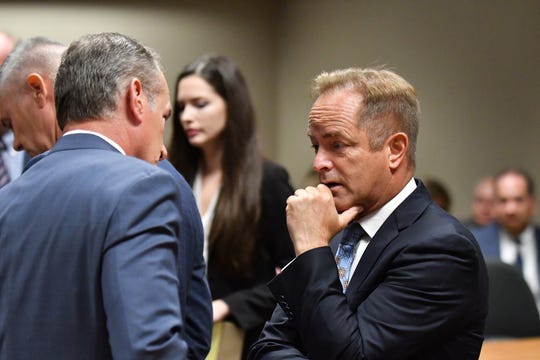
After "The Girls" have finally achieved their clowning glory of restarting the investigation and controlling the narrative.
"The Girls" want to know what is in those phones and hard drives.
I believe "The Girls" are going to go after the Madame, Maura Corrigan, and her prayer groups because this all took place under the reign of the Emergency Manager.
This new investigation could be protracted for years, or, it could be an opportunity to address that pesky "attorney-client privilege" immunity when it comes to a public capacity, particularly if you are elected into office as a county prosecutor, because we are dealing with Wayne County Prosecutor's Office, which has its own, illustrious history under Mike Duggan.
It will be interesting to see if "The Girls" are going to pick up on infant mortality charges that are the latest rage in abortion laws being elevated to the national agenda.
Force abortion through an intentionally manufactured crisis is not just forced migration, but murder, and "The Girls" could bring criminal charges against "The Boys" who were behind the contracts.
Charging christian pro lifers with infantcide!
Now, that is what I call a legal, manufactured crisis.
How this proceeds, I can only say at this time that I would recommend a nice pastis, as we are dealing with water because we have ourselves a federal investigation going on, but hey, what do I know?
“Attorney General Nessel’s appointment of Fadwa Hammoud to serve as Michigan’s next Solicitor General is a brilliant choice. She is a visionary with an excellent work ethic. This is bittersweet for the Wayne County Prosecutor’s Office and me personally. Fadwa has served all Wayne County residents with integrity, distinction, and honor. We are sad to see her leave Wayne County service, but the citizens of the entire State will be the beneficiary of her fairness and impressive reputation.” Wayne County Prosecutor Kym L. Worthy
I wonder what the gals have planned for Andy Arena?
From a fan...
Flint continued cover up and continued expolitation has officially expanded hard core into Flint and the cover up will likely continue. Unless I can get my hands on the Master Plumber who oversaw the Flint water valve turn on to help answer some questions. I bet they have info they don't realize they have and may help get to the root of the real problem. There is some pipe that is supposed to drain from under Flint City that no one seems to know where it is...as in they kinda lost where it was, or ao they kinda say but don't say.....and many others have been dead headed (sealed off) and whatever is under there is likely nasty and PFAS contaminated. Kildee is asking now for PFAS to be added for Superfund cleanup sites. How convenient. Need to find that outlet to get water tested. Oh, and people allegely from Easter Seals allegedly have a contract with MDHHS in Flint because of water and are handing out what they say are psych meds without any official diagnoses.
The state’s new solicitor general will take lead on the state’s criminal cases related to the Flint water crisis, including the prosecution of involuntary manslaughter charges against two former high-ranking Snyder officials.
Attorney General Dana Nessel announced Tuesday Fadwa Hammoud’s appointment as solicitor general, making her the first Muslim Arab American to achieve that post in the country. Hammoud is a former lead attorney at the Wayne County Prosecutor’s Office.
Flint Special Prosecutor Todd Flood, who was appointed by Republican former Attorney General Bill Schuette, will report to Hammoud. He successfully convinced 67th District Court judges to bind over for trial former Health and Human Services Director Nick Lyon and former Chief Medical Executive Eden Wells on criminal charges related to 2014-15 Legionnaire's disease outbreak that killed 12 individuals and sickened at least 79 others.
Schuette's personal supervision of Flood prevented him from engaging in the civil cases related to Flint, Nessel said. Both the civil and criminal cases have continued for years and cost taxpayers millions, she said.
“We don’t prescribe to the idea of prosecution for profit in this office,” Nessel said in a a statement. “I have worked closely with Ms. Hammoud as a prosecutor and trust her to make the right decisions and take the proper steps to ensure justice for the people of Flint. This department has spent millions of dollars on these cases, and our state residents deserve assurance that these cases are handled properly.”
On Tuesday, Flood praised Hammoud.
“Fadwa is a great person and an excellent lawyer who will serve the people of state and Flint very well,” Flood said. “I look forward to working with her.”
Schuette’s position overseeing Flood has remained empty since the turn of the year because Nessel was uncomfortable with the conflicts associated with the role, said Nessel's spokeswoman Kelly Rossman McKinney. Hammoud’s appointment allows Nessel to remain “above the conflict wall” by avoiding a direct role in either the criminal or civil cases.
“For now, (Flood) will report to the solicitor general,” Rossman McKinney said. “She’ll be in court with him tomorrow to watch, listen and learn.”
Special prosecutors will be in 67th District Court for the resumption of the preliminary exam of Patrick Cook, a Department of Environmental Quality water treatment engineer who is accused of misconduct in office, conspiracy to engage in misconduct in office and willful neglect of duty for allegedly manipulating a Lead and Copper Rule report on the levels of lead in Flint’s water.
There have been talks about a possible plea deal for Cook.
In early January, Nessel asked Wayne County Prosecutor Kym Worthy to review the Flint criminal cases, and Worthy was expected to make recommendations regarding the future of the prosecution, including Flood's future as special prosecutor.
Hammoud’s appointment to the case does not interrupt the review of the prosecutions being conducted by Worthy, Rossman McKinney said. The review is ongoing and could influence the future of the cases and who leads them, she said.
Since Worthy and Hammoud worked together in the Wayne County Prosecutor’s Office, “there’s a trusting relationship already established,” Rossman McKinney said.
Worthy declined additional comment on the review, but praised Nessel’s appointment of Hammoud to the cases, calling it a “bittersweet” moment for the Wayne County Prosecutor’s Office.
“Attorney General Nessel’s appointment of Fadwa Hammoud to serve as Michigan’s next solicitor general is a brilliant choice,” Worthy said in a statement. “She is a visionary with an excellent work ethic.”
Yes, the Flint Water Crisis will end up in Detroit because everyone was stealin' so the new Michigan Attorney General Dana Nessel is going to send in her gurl, Kym Worthy, to see who is under investigation so they can be proactive in taking over the prosecution to save her crew.
It may a campaign financing promise, but, hey, what do I know?
FLINT (WJRT) (1/7/2019) - Another Michigan Department of Environmental Quality employee has pleaded no contest to charges related to the Flint water crisis.
Liane Shekter-Smith, the department's former chief of drinking water and municipal assistance, originally was charged in July 2016 with two felonies and one misdemeanor charge.
She pleaded to a misdemeanor charge of disturbing a lawful meeting, which carries a possible penalty of 90 days in jail and a $500 fine. The other charges were dropped in exchange for her plea.
As part of the plea agreement with Special Prosecutor Todd Flood, Shekter-Smith must testify against other government officials charged in the Flint water cases. She likely will be a witness in the upcoming preliminary hearing for former Emergency Manager Darnell Earley and former Flint Water Department Manager Howard Croft.
If she provides misleading statements or fails to cooperate with prosecutors, Flood said a guilty plea to a five-year felony charge of misconduct in office will automatically be entered on her behalf. A review to determine whether she complied with the plea agreement is scheduled for April.
Shekter-Smith and other DEQ officials are accused of failing to do their jobs and provide safe drinking water for Flint residents after the switch to pump water from the Flint River in 2014.
Fellow DEQ officials Michael Prysby and Stephen Busch both pleaded no contest on Dec. 26 to misconduct in office and tampering with water monitoring reports -- both felonies -- along with misdemeanor violations of Michigan's drinking water law.
With Shekter-Smith's plea, seven of 15 people facing criminal charges related to the water crisis have pleaded guilty or no contest. A no contest plea is not an admission of guilt but is treated as one at sentencing.
FLINT, MI -- Three days after new Attorney General Dana Nessel said she wants to replace him, special Flint water prosecutor Todd Flood showed up for work, struck a plea deal with a former state drinking water official and refused to talk about his job security.
Flood answered several questions about his future and Nessel with “no comment” on Monday, Jan. 7, following continuation of a preliminary exam in Genesee District Court.
Nessel issued a news release Friday, Jan. 4, saying she had provided Wayne County Prosecutor Kym Worthy, a member of her transition team, “with the relevant materials related to the (Flint water) cases and has requested that her office take over the prosecution of the criminal cases on her behalf.”
Worthy issued her own statement Friday, saying she would evaluate the remaining criminal cases filed by Flood but not necessarily replace him.
That sounds like code for, "I am just going to take a look to see who is going to be charged so I can put together a defensive strategy for Dana and company."
Flood was appointed to the job by former Attorney General Bill Schuette. He’s charged 15 current and former city and state government officials with crimes related to the water crisis.
Seven of those cases resulted in plea agreements, three have been bound over to Genesee Circuit Court for jury trials and five are in the process of preliminary examinations in Genesee District Court.
As a candidate for office earlier this year, Nessel was among critics of the Flint water prosecutions, calling them “politically charged show trials” but didn’t say for certain if Flood would be replaced.
Despite the uncertainty, the special prosecutor is operating as though he plans to continue working on the cases.
Flood told District Judge Jennifer Manley on Monday that he doesn’t need to return to court to check on the status of the cooperation of former Department of Environmental Quality official Liane Shekter-Smith until at least February. That’s after she’s expected to testify in the preliminary exams for former Flint emergency manager Darnell Earley and Howard Croft.
Last month, Flood told Genesee Circuit Judge Joseph Farah that he anticipated remaining on the job after the transition from Schuette to Nessel.
But, the Flint Water Crisis, which happened under the Emergency Manager Law, is still a matter of interest for Elijah Cummings, Chair of the U.S. House Oversight Committee.
No Flint water crisis if no Karegnondi Water Authority
KWA started “greatest water war in Michigan history”
GLWA widened war, taking over all of DWSD
KWA initiator Jeff Wright, a Democrat, tied to scandal-plagued Synagro, alleged money-laundering, shady campaign financing
Wright prioritized selling untreated water to DTE, other businesses over the people’s need for treated water
Karegnondi Water Group members get Bond Buyers’ “Midwest Deal of the Year” award in 2014. Without them, the poisoning of Flint would not have happened.
DETROIT – The mass lead poisoning of the people of Flint, Michigan, a cold-blooded act of domestic terrorism, was contrived for the profit of the Wall Street bond market, corporations and politicians by both Republicans and Democrats with their own agendas.
The two parties are battling the matter out in electoral debates, with Michigan’s Republican Governor Rick Snyder justifiably though hypocritically castigated by Democratic candidates like Hillary Clinton for his role in this unspeakable catastrophe.
“The governor of that state acted as though he didn’t really care,” Clinton said during the NBC News debate in Charleston, S.C. “If the kids in a rich suburb of Detroit had been drinking contaminated water and being bathed in it, there would’ve been action.” Clinton’s Democratic opponent Bernie Sanders simply asked Snyder to resign.
In the most cynically exploitative campaign move so far, Clinton just published the video below. It calls for donations to a Flint non-profit, rather than pledging billions from the U.S. Treasury to save Flint, just as the U.S. Treasury bailed out General Motors, which left Flint, taking with it 72,000 jobs.
No politician has expressed any intention of locking Snyder and cronies up for life without parole, the only sentence appropriate under Michigan law, or of providing the billions of dollars necessary to rebuild not only Flint’s water infrastructure, but the city itself, devastated for decades by its abandonment by General Motors and other corporations.
Ten Flint residents have already died from Legionnaire’s disease linked to contamination of the city’s water. Tens of thousands more, especially children and babies, face irreversible life-time damage due to the neurological and behavioral effects of lead, according to the World Health Organization.
A petition to recall Snyder has finally
been approved by the notoriously recalcitrant State Elections Board and will no doubt receive mass support, as it should.
But make no mistake—getting rid of Snyder will not cut out the cancer of racism and profiteering that has devastated Flint, Detroit, and cities across the U.S. for years.
The most blatant example of the bi-partisan midwifery of the Flint water catastrophe is the creation of the Karegnondi Water Authority (KWA), in what a Detroit Water and Sewerage Department (DWSD) spokesman called “the greatest water war in Michigan’s history.”
He was quoted before the creation of the Great Lakes Water Authority (GLWA), which has since robbed the people of Detroit, the largest Black majority city in the U.S., of the entire DWSD, the country’s third largest water and sewerage system, founded in 1836, which had been serving 40 percent of Michigan’s population.
The poisoning of the city of Flint, which is also a majority Black, would not have happened without the creation of the KWA at the instigation of Genesee County Drain Commissioner Jeff Wright, a white Democrat who has been Drain Commissioner since 2001 and spent 23 years prior to that in the department under former Drain Commissioner Anthony Ragnone.
According to U.S. Census figures, Genesee County is 75.2 percent white, and 20.6 percent Black, with a 21 percent poverty level. Flint is 37.4 percent white, and 56.6 percent Black, with a 41.5 percent poverty level.
Jeff Wright, CEO of KWA, Genesee County Drain Commissioner
In 2013, the KWA began building a 63-mile pipeline to Lake Huron that runs parallel to DWSD’s pipeline for the region. While boasting it will lower water rates, the Authority admits the pipeline will only deliver raw water, unlike the DWSD, which delivers fully treated water. Communities which sign on to it will have to treat their own water, creating ways to do so at additional costs to customers and profits to contractors. Wright said in 2011 that he wanted to bring raw water in for the benefit of businesses in the area.
The pipeline was supposed to have been up for operation by 2015.
The KWA now includes the “Genesee County Drain Commissioner, Lapeer County Drain Commissioner, Lapeer City, Sanilac County Drain Commissioner and the City of Flint,” according to its website. St. Clair County is reportedly also considering membership as Wright courts more regional customers.
Wright, who has a history of shady dealings with water contractors, began the push to create the KWA in 2006. Snyder’s appointee, Flint Emergency Manager Ed Kurtz, later endorsed it as well. In 2013, Wright got the Democratic City Council of Flint to agree to disconnect the city from the DWSD, which had supplied high-quality water to Flint residents since 1967, and connect with the KWA instead.
Due to KWA construction delays, however, Snyder and Kurtz ordered the ultimately disastrous long-term use of the polluted Flint River in the interim, falsely claiming that Detroit had refused to negotiate better rates for its Genesee County customers. While the Flint Water Treatment Plant, using the Flint River, has always been a back-up water supply to DWSD, which gets its water from Lake Huron, the plant was never outfitted to operate with river water for more than 20 days, on an emergency basis.
DTE’s Greenwood Energy Center in Avoca, MI is on the proposed Karegnondi line.
VOD reader Peter Bernard wrote, “DTE has been involved in the formation of KWA since the beginning. DTE didn’t need treated water to run its turbines. Was it the demand of DTE for untreated water as soon as Flint withdrew from DWSD that caused Flint to pump untreated water into its supply system? I worked for Detroit Edison as a summer intern 60 years ago and they always thought pure water was an extra expense since super-heated stem automatically purified the water driving the steam turbines.”
In 2011, Ron Fonger of the Flint Journal reported that DTE told the KWA board it was interested in purchasing up to three million gallons of untreated water per day from the Authority for its Greenwood Energy Plant.
“Genesee County Drain Commissioner Jeff Wright called the news ‘very encouraging’ during a meeting of the KWA Board of Directors today, and said others could follow ‘as more businesses are made aware of (what we are doing and) the lower cost of untreated water,'” Fonger wrote, adding that Wright said KWA would work with DTE.
Map shows KWA pipeline in red, DWSD pipelines in blue.
In 2014, the Bond Buyer magazine gave KWA the Midwest Bond Buyer of the Year award during an elaborate ceremony in New York’s Waldorf Astoria Hotel, for its second sale of $220 million in bonds to finance the pipeline, an intake facility, and two pumping stations.
It earlier sold $35 billion in bonds despite Detroit’s bankruptcy filing.
“Long before Detroit filed its Chapter 9 bankruptcy case in the summer of 2013, Flint and Genesee County, Michigan saw the need to break away from their dependence on the Detroit water system,” the narrator of a video shown at the ceremony said in a disingenuous, factually inaccurate introduction.
“In 2010 they formed the Karegnondi Water Authority, the two governments’ long-term strategy to deliver a more reliable water supply at more reasonable rates. After years of planning and crafting a bond structure with dual backstops to protect investors, the Authority hit the market in early April with its inaugural issue for $220 million in bonds. . . .The governments expect to cover the debt repayments with system revenues, and both put their limited tax GBO payments behind the bonds.”
The narrator said that Genesee County also pledged to cover Flint’s portions of the bonds if it is not able to do so under state emergency management.
Former Detroit CFO Sean Werdlow and former Mayor Kwame Kilpatrick receive Bond Buyer award in 2004 for disastrous $1.5 billion COPS deal.
“Entering a market where local governments across Michigan faced heightened penalties, the authorities sold the bonds to more than 30 investors and achieved borrowing costs below projections,” the narrator said. “The deal paves the way for the County to trade in annual rate increases of about 11.5 percent for ones closer to five.”
The presentation recalled a similar Bond Buyer award given to former Detroit Mayor Kwame Kilpatrick and his then-CFO Sean Werdlow in 2004, for the disastrous sale of $1.5 billion in “Certificates of Participation,” or “Pension Obligation Bonds,” an amount that ballooned to $2.8 billion with default penalties and interest swaps. Detroit Emergency Manager Kevyn Orr cited the deal as one reason for his improperly authorized 2013 Detroit Chapter 9 bankruptcy filing, but never followed through on a lawsuit he filed calling it “void ab initio, illegal and unenforceable.”
Below is the video presented at the Bond Buyer 2014 awards ceremony, on the Karegnondi Water Authority and the bonds involved.
In 2013, Tucker, Young, Jackson and Tull (TYJT), a Detroit-based engineering and consulting company, was contracted by the Michigan Department of Treasury to provide a study of the proposed KWA, contrasting it with the advantages of Flint remaining with the DWSD. The study strongly contradicted claims the Bond Buyer made at the 2014 awards ceremony, and other made in a study contracted by the community of Swartz Creek. (See full TYJT study at http://voiceofdetroit.net/wp-content/uploads/FLINT-KWA-TYJT-water_report.pdf,)
DWSD spokesman Bill Johnson
“The Flint City Council’s approval of the Genesee County Drain Commission-backed idea to link Flint and a proposed multi-county connector effectively launched the greatest water war in Michigan’s history, “ Bill Johnson, communications head for the DWSD, said in a press release. “The action ignores a credible state-sponsored study that came out against the ill-advised Karegnondi Water Authority (KWA) project. And the vote makes no connection to Flint’s fiscal reality. All things considered, the City of Flint is best served by the Detroit Water and Sewerage Department (DWSD).” (See full release at http://voiceofdetroit.net/wp-content/uploads/water_war_undermines_flint-dwsd_relations-2013-14.pdf.)
The study concluded that the cheapest and safest option out of eight through 2042 for Flint’s water supply was to provide it directly through an adaptation of DWSD’s Imlay City pumping station, which is closer to Flint. DWSD has always provided water for the area through its Lake Huron Water Treatment Plant at Ft. Gratiot, Michigan, which sends it to the Imlay City station to go to Flint. Flint then supplies it to other regional customers. (See graph below.)
TYJT noted that the KWA proposal did not account for cost overruns on construction contracts, an almost inevitable occurrence, or provide a back-up water supply as does the DWSD for all its customers in the event of failure of the primary supply.
Why did Wright ignore this study? His connections with shady contractors during his tenure as Genesee County Drain Commissioner beginning in 2001, and earlier in his 23 years serving under former Drain Commissioner Anthony Ragnone, are well-known.
Southwest community organizer Denise Hearn leads protest against Synagro’s Detroit boondoogle outside the Detroit Wastewater Treatment Plant July 31, 2008.
Wright himself formerly owned a water consulting business called Tara/Aqua Management. During his term as Commissioner, he has signed multiple contracts with Synagro Technologies, Inc. for sewage sludge removal, dewatering, and land application at the county’s Linden and Ragnone treatment plants, from 2002 through 2009, according to a 2010 Flint Journal expose by reporter Ron Fonger.
At least two of the Genesee Drain Commission Synagro contracts, in 2003 and 2005, were signed by James Rosendall, former Synagro vice-president of development who went to prison for 11 months, in connection with the Synagro/Carlyle bribery scandal that brought down former Detroit Mayor Kwame Kilpatrick, DWSD head Victor Mercado, and former City Council President Monica Conyers, among other Black city officials.
Synagro VP James Rosendall
Rosendall was the only white who was jailed, while Black officials who refused to act as FBI informants received terms as long as five years.
Judge Avern Cohn barred the defense from asking why Synagro and the Carlyle Group were not charged in the RICO indictment.
Whatever you do, do not tell anyone the reason why the defense was barred from asking why Synagro and the Carlyle Group was not charged in the RICO indictment was because there was an ongoing investigation into other matters of interest. Sssshhhh.......
Wright was an FBI informant against Conyers’ aide Sam Riddle during the probe. Many officials involved in the probe acted as informants rather than being charged as well.
Synagro was purchased by the insidious Carlyle Group in 2007, one of the largest private equity and alternative investment firms in the world which has extensive ties to the global defense industry.
The Carlyle Group’s board has included politicians from around the world, including former U.S. Presidents George H. W Bush and George W. Bush, and their former cabinet members U.S. Secretary of State James Baker III, and U.S. Secretary of Defense Frank Carlucci, also former chairman of the U.S. Securities and Exchange Commission (SEC) Arthur Levitt, who served under Pres. Bill Clinton.
It is connected to the Bin Laden family and to former Phillippines dictator Fidel Ramos, among numerous others. Synagro went bankrupt in 2013 and was sold.
The KWA’s current major contractors include the omnipresent L D’Agostini & Sons, based in Macomb, at a starting cost $24.6 million for the pipeline and $11.06 million for the intake station on Lake Huron. D’Agostini earlier sued the DWSD because it was barred from further contracting with the department after its involvement in the RICO indictment of Kilpatrick et. al. was exposed. D’Agostini previously did 70 percent of its business with the Department.
The Alabama-based American Cast Iron Pipe Company, which operates one of the largest ductile iron pipe casting plants in the world, has a contract with a starting cost of $84.1 million, while the Flint-based E & L Construction’s contract for the Imlay City pump station has a starting cost of $11.78 million. All this work duplicates DWSD pipelines and intake and pumping stations already servicing the area.
Pipe for Karegnondi Water Authority is hoisted into Lake Huron.
Recently, Channel 2 reporter Charlie LeDuff interviewed Jeff Wright in a story focusing on the profits made by contractors on the Flint water switch. They included Kurtz campaign contributors AECOM, with $18 billion in revenues in 2015, and the engineering firm hired to ensure that the switch to Flint River water would be safe, LAN (Lockwood, Andrews and Norman).
LeDuff reports that firm’s original contract began at $140,000 and ballooned later to $4 million, despite the fact that it did NOTHING to ensure the safety of the city’s water.
(VOD takes issue with LeDuff’s initial contention that Flint ratepayers decided to opt for the KWA because they were paying “outrageous” rates to Detroit. That is a claim that has been made by DWSD’s wholesale customers in six counties for decades, never with an addendum that the communities involved add their own surcharges to the wholesale rates. LeDuff also appears to conclude at the end that water flowing through Flint’s pipes now from DWSD is safe, which it will not be until complete replacement of the corroded infrastructure. )
Flint — A U.S. Environmental Protection Agency water expert testified Wednesday that Michigan Department of Environmental Quality officials told him that Flint was not treating its water with anti-corrosion controls as he warned them it wasn't safe.
Miguel Del Toral, the EPA's Region 5 regulations manager, began looking into water quality issues in Flint in February 2015 after a resident called to alert him to high lead levels in her home.
DEQ water treatment engineer Patrick Cook told Del Toral about the water treatment plant issues, the EPA expert said. Del Toral met with then-DEQ official Liane Shekter Smith at the Chicago EPA headquarters to discuss the issue as well — with him saying each time Flint was not meeting federal standards.
And Del Toral said he was "very surprised" at the lack of corrosion controls and no plans to implement them.
"I was informed by Patrick Cook via email that the city of Flint did not continue using corrosive control treatment after they disconnected from Detroit (area water)," Del Toral said. "Because the city of Flint has lead service lines and in the absence of treatment to lower lead levels within lead service lines, they can get very high."
Del Toral was testifying before 67th District Court Judge Jennifer Manley at the preliminary exam hearing for DEQ water regulators Stephen Busch, Michael Prysby, Cook as well as Shekter Smith, the fired head of the DEQ division responsible for overseeing Flint’s water source switch. This is the first Flint preliminary exam where Del Toral has been asked to testify.
The state regulators have been charged with various criminal offenses, including misconduct in office.
Shekter Smith and Busch are each charged with involuntary manslaughter. Attorney General Bill Schuette accused them and four others of failing to alert the public about a 2014-2015 outbreak of Legionnaires’ disease in the Flint area that killed 12 people and sickened another 79 individuals.
Del Toral, who manages water regulations for the EPA based in Chicago, was the latest witness to testify for Special Prosecutor Todd Flood against them. Much of Del Toral's testimony was technical and often interrupted by objections from defense counsel.
The EPA water expert was considered the agency's Midwest whistle-blower on Flint's lead-contaminated water. In a June 2015 email, he pleaded with superiors to protect Flint residents from lead contamination and even asked for permission to do additional water testing in Flint on his own dime to prove his assertions of widespread lead contamination.
“I understand that this is not a comfortable situation, but the State is complicit in this and the public has a right to know what they are doing because it is their children that are being harmed,” Del Toral wrote in a June 2015 memo to EPA officials. “At a MINIMUM, the city should be warning residents about the high lead, not hiding it telling them there is no lead in the water.”
EPA District 5 Director Susan Hedman asked for a legal opinion about whether the agency could intervene in Flint and didn't receive an answer until November 2015 — after Michigan recognized the crisis in October 2015. Hedman retired after The Detroit News published a January 2016 story about her delay in seeking action.
Under questioning in court, Del Toral said he first became aware of the Flint situation from resident LeAnne Walters, not from DEQ officials. Busch told Del Toral that the lead problem wasn't with the city's service line but with Walters' pipes and that she needed to call a plumber.
But Del Toral said Busch's assertion was "misleading" because she had all plastic pipes in her home.
Walters reached out to Del Toral because lead levels in her home were high and he and another colleague were set to visit her home in April.
"When I see numbers that high, usually they're indicative of lead service lines," he said. "And so my concern was that she had high lead coming off her services lines."
Del Toral will continue his testimony from Flood and then under cross examination on Sept. 19.Del Toral was testifying before 67th District Court Judge Jennifer Manley at the preliminary exam hearing for DEQ water regulators Stephen Busch, Michael Prysby, Cook as well as Shekter Smith, the fired head of the DEQ division responsible for overseeing Flint’s water source switch. This is the first Flint preliminary exam where Del Toral has been asked to testify.
The state regulators have been charged with various criminal offenses, including misconduct in office.
Shekter Smith and Busch are each charged with involuntary manslaughter. Attorney General Bill Schuette accused them and four others of failing to alert the public about a 2014-2015 outbreak of Legionnaires’ disease in the Flint area that killed 12 people and sickened another 79 individuals.
Del Toral, who manages water regulations for the EPA based in Chicago, was the latest witness to testify for Special Prosecutor Todd Flood against them. Much of Del Toral's testimony was technical and often interrupted by objections from defense counsel.
The EPA water expert was considered the agency's Midwest whistle-blower on Flint's lead-contaminated water. In a June 2015 email, he pleaded with superiors to protect Flint residents from lead contamination and even asked for permission to do additional water testing in Flint on his own dime to prove his assertions of widespread lead contamination.
“I understand that this is not a comfortable situation, but the State is complicit in this and the public has a right to know what they are doing because it is their children that are being harmed,” Del Toral wrote in a June 2015 memo to EPA officials. “At a MINIMUM, the city should be warning residents about the high lead, not hiding it telling them there is no lead in the water.”
EPA District 5 Director Susan Hedman asked for a legal opinion about whether the agency could intervene in Flint and didn't receive an answer until November 2015 — after Michigan recognized the crisis in October 2015. Hedman retired after The Detroit News published a January 2016 story about her delay in seeking action.
Under questioning in court, Del Toral said he first became aware of the Flint situation from resident LeAnne Walters, not from DEQ officials. Busch told Del Toral that the lead problem wasn't with the city's service line but with Walters' pipes and that she needed to call a plumber.
But Del Toral said Busch's assertion was "misleading" because she had all plastic pipes in her home.
Walters reached out to Del Toral because lead levels in her home were high and he and another colleague were set to visit her home in April.
"When I see numbers that high, usually they're indicative of lead service lines," he said. "And so my concern was that she had high lead coming off her services lines."
Del Toral will continue his testimony from Flood and then under cross examination on Sept. 19.
Flint — Michigan health and welfare chief Nick Lyon will stand trial on felony charges including involuntary manslaughter related to the Flint water crisis, a judge ruled Monday.
67th District Court Judge David Goggins made the announcement in a nearly 160-minute ruling from the bench after delaying the decision more than three weeks in the most anticipated Flint water prosecution case.
Lyon will go to trial on two counts of involuntary manslaughter and one count of misconduct in office connected to the Flint region's 2014-2015 Legionnaires' disease outbreak that killed 12 people and sickened another 79 people. No public notice about the outbreak was given until Michigan Gov. Rick Snyder made the announcement in mid-January 2016 at a hastily arranged press conference in Detroit.
Lyon "had the ability" to know how many Legionnaires' disease deaths there were in the Flint area and has the "power" as the state's health chief to protect lives and "enforce laws" to that end, the judge ruled, citing prosecution witnesses including retired state epidemiologist Corinne Miller.
Goggins found that Lyon knew about the outbreak in 2015.
Special Prosecutor Todd Flood recently added a misdemeanor charge of "willful neglect" to protect the health of Genesee County residents, but Goggins on Monday appeared to dismiss the charge. He spoke faintly, and courtroom spectators strained at times to hear what he was saying.
If convicted, Lyon could face up to 30 years in prison on the manslaughter charges and up to another five years on the misconduct charge. Up to $25,000 in fines could be added for the three charges.
Goggins was in no hurry to make a decision. Reading from a yellow notepad full of notes, he read from each and every page.
The judge covered every person from the more than 20 prosecution witnesses, from state health officials to the relatives of elderly Flint area residents Richard Skidmore and John Snyder, whom the prosecution say died from Legionnaire's disease that Lyon failed to warn the public about.
To send a case to trial for a jury to consider, the judge must decide whether there’s probable cause that a "reasonable person, based on the evidence, could find the defendant guilty," Wayne State University law professor Peter Henning said.
Lyon walked into court with his wife more than a half an hour before the hearing was scheduled to start, hugging family members and then sitting down with his wife on a bench outside the courtroom. The hearing started 45 minutes late.
Among those in the courtroom were former state Sen. Roger Kahn, R-Saginaw, and former Snyder Community Health Director James Haveman, who has supported Lyon.
The preliminary exam involved 10 months of testimony — starting last September with prosecution witnesses and then this spring with defense witnesses.
Prosecutors contended Lyon should have warned the public of the Flint region's Legionnaires' disease outbreak and could have saved lives.
The defense lawyers countered that Lyon runs a department of 14,000 employees and relied on the expertise of department employees, none of whom recommended issuing a public warning. They also argued the prosecution failed to make any connection between Lyon and the men's deaths, arguing they died from long-term diseases but not Legionnaires'.
Because Skidmore and Snyder went to McLaren hospital in Flint, where medical officials had been warned about Legionnaires' disease, a public announcement wouldn’t have prevented their deaths, the defense said.
Former state-appointed Flint Emergency Manager Gerald Ambrose already has skipped his preliminary exam and will go straight to trial.
Michigan Chief Medical Executive Eden Wells and four current and former Michigan Department of Environmental Quality regulators are still going through their preliminary exams after being charged criminally. No date has been set for Wells' bind-over ruling.
del Tora: "Hey, boss, people of Flint just let me know the children are being poisoned by the water and no one is doing a thing about it."
Hedman: "Really, let me get a legal opinion, first, then put together a legal defense team to come up with a propaganda campaign to cover up why it took so long for us to do anything to stop it."
Lansing — "Management weaknesses" delayed federal intervention in the Flint water crisis after Michigan failed to enforce rules designed to prevent lead contamination and protect public health, according to the Environmental Protection Agency’s Office of Inspector General.
The 69-page report, below, released Thursday highlights known failures by both state and federal regulators that led to the Flint water contamination crisis, but it provides a new level of specificity and includes recommendations to improve oversight.
“While Flint residents were being exposed to lead in drinking water, the federal response was delayed, in part, because the EPA did not establish clear roles and responsibilities, risk assessment procedures, effective communication and proactive oversight tools,” according to the report.
The report cited management problems at the EPA and its Region 5 office in Chicago, which oversees Michigan. Regional managers did not properly address state actions to “disinvest” in safe drinking water requirements dating back to 2010, concluding they were intended to be temporary and not affect public health, inspectors said.
The Region 5 office also lacked an effective risk assessment process, the report said. While initial bacterial violations alone would not have pointed to lead contamination, “the combined information available to Region 5 painted a picture of a system at risk from multiple angles.”
In January 2016, The Detroit News reported that Region 5 water expert Miguel del Toral warned of Flint water problems in a June internal memo, but then-Region 5 Administrator Susan Hedman said she sought a legal opinion on whether the EPA could force action that wasn’t completed until November 2015 — after the state finally recognized the crisis.
Oh, those "Legal Geniuses" (trademark pending), they are everywhere, are they not!?
Hedman soon retired after The News' report, but but no EPA officials were ever fired over the Flint crisis. In a March 2016 congressional hearing, Obama EPA chief Gina McCarthy defended Hedman as "courageous" and blamed the state's misleading and insufficient information for prolonging the crisis.
The state didn’t agree to apply corrosion controls until late July and didn’t publicly concede until October 2015 that it erroneously applied the federal Lead and Copper Rule overseeing water quality. The state decided in October to change Flint’s drinking water source from the corrosive Flint River back to the Detroit water system.
The report, based on two years of research and inquires, dings the federal agency but also repeatedly notes the Michigan Department of Environmental Quality holds primary responsibility for ensuring compliance with safe drinking water requirements.
Communication between the EPA and DEQ “did not convey key information about human health risks from lead,” the report said.
MDEQ did not properly develop and maintain an inventory of lead service lines needed to ensure appropriate test sampling of Flint water, according to the inspector general. The state also failed to ensure Flint continues to use corrosion control chemicals when city began using Flint River water in April 2014 and did not provide the EPA with “accurate information” regarding treatment.
The state “did not issue a notice of violation or take other formal enforcement action regarding either requirement until August 2015.,” the report said. “Instead, the MDEQ advised Flint public water system staff to conduct additional tests and to delay corrosion control treatment installation. The decision to delay corrosion control treatment prolonged residents’ exposure to lead.”
The EPA Office of Inspector General first announced the investigation in January 2016, five days after then-President Barack Obama declared a federal emergency in the city, freeing up $5 million in federal aid. The Obama administration denied Michigan Gov. Rick Snyder's request for a major disaster declaration because the Flint water contamination crisis was a man-made calamity not created by fire, flood or explosion.
Inspectors issued a preliminary report in October 2016, saying the EPA had the authority and enough information about Flint water lead contamination to issue an emergency order to protect public health as early as June 2015, seven months before it's Chicago-based Region 5 office did so.
McCarthy and Gov. Rick Snyder testified before a congressional committee in March 2016 and faced withering criticism for state and federal oversight failures but resisted calls to resign.
Michigan Attorney General Bill Schuette has filed criminal charges against several former and current state employees and officials over the lead contamination and Legionnaires' disease outbreaks that killed at least 12 and sickened 79 others.
Del Toral began raising concerns about Flint water lead content in early 2015 and pressed the DEQ for information about corrosion controls. He confirmed the suspicions in April of that year and two months later summarized the looming problem in an internal memo.
By June 2015, EPA Region 5 knew at least four homes had water with lead concentrations exceeding the federal action level of 15 parts per billion, according to an earlier inspector general report. It was not until Jan. 21, 2016, that EPA finally exerted its authority by issuing an emergency order that laid out steps for Flint and the state to resolve the crisis.
In congressional testimony a month later, the Virginia Tech University professor who helped uncover the Flint water crisis criticized the EPA’s Hedman for discrediting the internal report. But Marc Edwards told Congress the primary blame lies with a few state environmental regulators who “misled” Michigan leaders and residents and tried to “cover up” proof of high lead levels.





 The KWA’s current major contractors include the omnipresent L D’Agostini & Sons, based in Macomb, at a starting cost $24.6 million for the pipeline and $11.06 million for the intake station on Lake Huron. D’Agostini earlier sued the DWSD because it was barred from further contracting with the department after its involvement in the RICO indictment of Kilpatrick et. al. was exposed. D’Agostini previously did 70 percent of its business with the Department.