Showing posts with label European Adoption Consultants. Show all posts

Monday, August 17, 2020

DOJ Takes Down International Trafficking Tiny Humans Adoption Operation In Strongsville, Ohio

Strongsville seems to be the focus, de jour.

I wonder what Lisa Page has to say since Russia banned the U.S. from international adoptions.

I should twat her.

The same thing goes on in the United States, except it is much more gruesome because no one cares about the horrors of Child Protective Services, Foster Care & Adoption, the oldest form of survival.


Three Individuals Charged with Arranging Adoptions from Uganda and Poland Through Bribery and Fraud

Three women were charged in a 13-count indictment filed on Aug. 14 in the Northern District of Ohio for their alleged roles in schemes to corruptly and fraudulently procure adoptions of Ugandan and Polish children through bribing Ugandan officials and defrauding U.S. adoptive parents, U.S. authorities, and a Polish regulatory authority.
Margaret Cole, 73, of Strongsville, Ohio, Debra Parris, 68, of Lake Dallas, Texas, and Dorah Mirembe, 41, of Kampala, Uganda, were charged in the indictment.  In relation to the Uganda scheme, Parris and Mirembe were each charged with one count of conspiracy to violate the Foreign Corrupt Practices Act (FCPA) and commit visa fraud, one count of conspiracy to commit mail fraud and wire fraud, one count of conspiracy to commit money laundering, three substantive FCPA counts and three substantive counts of money laundering.  Parris was also charged with one count of mail fraud.  In relation to the Poland scheme, Parris and Cole were each charged with one count of conspiracy to defraud the United States.  Cole was further charged with one count of making a false statement to a U.S. accrediting entity and one count of making a false statement to a Polish authority.
“The defendants allegedly resorted to bribery and fraud to engage in an international criminal adoption scheme that took children from their home countries in Uganda and Poland without properly determining whether they were actually orphaned.  The defendants sought to profit from their alleged criminal activity at the expense of families and  vulnerable children,” said Acting Assistant Attorney General Brian C. Rabbitt of the Justice Department’s Criminal Division.  “These charges clearly show that the Department of Justice is committed to protecting children worldwide, including those involved in the international adoption process.”
“These defendants are accused of orchestrating an alleged scheme that bribed Ugandan officials, defrauded the United States and manipulated parents inside and outside of the country,” said U.S. Attorney Justin Herdman of the Northern District of Ohio.  “As a result of this alleged conduct, prospective parents were deceived, hundreds of thousands of dollars were misused and innocent children were displaced from their homes.”
“These three defendants preyed on the emotions of parents, those wanting the best for their child, and those wishing to give what they thought was an orphaned child a family to love,” said Special Agent in Charge Eric B. Smith of the FBI’s Cleveland Field Office.  “These defendants allegedly lied to both sides of the adoption process, and bribed Ugandan officials who were responsible for the welfare of children.  Parents, prospective parents and children were emotionally vested and were heartbroken when they learned of the selfishness and greed in which these three engaged.  The FBI will never cease in its efforts to protect the innocent and unwitting from those who prey on that trust and confidence and we will vigorously pursue and hold those responsible accountable.”
With respect to the Uganda scheme, the indictment alleges that Parris and Mirembe, together with others, engaged in a scheme to pay bribes to Ugandan officials to corruptly procure the adoption of Ugandan children by families in the United States, including the adoption of children who were not properly determined to be orphaned and who had to be ultimately returned to their birth parents.
Specifically, Parris, Mirembe, and their co-conspirators allegedly (1) paid bribes to social welfare officers in exchange for them issuing welfare reports recommending that certain children be placed into orphanages without first ensuring that the children were actually orphaned or that putting them up for adoption was in the children’s best interest; (2) paid bribes to Ugandan magistrate judges to obtain court orders placing those children in an orphanage that was willing to accept the children without inquiring into whether they were actually orphans; (3) paid bribes to court registrars to cause the court registrars to assign the cases of these children to two corrupt “adoption-friendly” judges; and (4) paid bribes to the corrupt Ugandan judges to obtain orders to permit their clients to bring the children to the United States for adoption.
Parris, Mirembe, and others also allegedly lied to, and concealed material information from, adoptive parents, including lying about the bribe payments and whether the children were properly determined to be eligible for adoption, and concealing other material information about the children’s history.  The indictment also alleges that Parris, Mirembe, and others agreed to cause false documents to be submitted to the U.S. Department of State to hide the corrupt and fraudulent scheme and to mislead it in its adjudication of visa applications for the Ugandan children being considered for adoption.  The co-conspirators and the entities they worked for received more than $900,000 in connection with these adoptions.
With respect to the Poland scheme, the indictment alleges that after clients of their adoption agency determined they could not care for one of the two Polish children they were set to adopt, Cole and Parris took steps to transfer the child to Parris’s relatives, who were not eligible for intercountry adoption and one of whom had a criminal arrest record.  After the child was physically abused, Cole and Parris took steps to conceal their improper conduct from the entity responsible for accrediting U.S. intercountry adoption agencies—and from the Polish authority responsible for intercountry adoptions—in an attempt to continue profiting from these adoptions. 
An indictment is merely an allegation and all defendants are presumed innocent until proven guilty beyond a reasonable doubt in a court of law. 
If you believe you are a victim of this offense, please visit https://www.justice.gov/criminal-fraud/victim-witness-program or call (888) 549-3945.
The FBI’s Cleveland Field Office is investigating the case.  Trial Attorneys Jason Manning and Alexander Kramer of the Criminal Division’s Fraud Section and Assistant U.S. Attorney Chelsea Rice of the Northern District of Ohio are prosecuting the case.  The Justice Department’s Office of International Affairs assisted in the investigation.
The Criminal Division’s Fraud Section is responsible for investigating and prosecuting all FCPA matters.  Additional information about the Justice Department’s FCPA enforcement efforts can be found at www.justice.gov/criminal/fraud/fcpa.
The year 2020 marks the 150th anniversary of the Department of Justice.  Learn more about the history of our agency at www.Justice.gov/Celebrating150Years.

Voting is beautiful, be beautiful ~ vote.©

Monday, December 2, 2019

Lisa Page & Her First Child Welfare Propaganda Psyoptic Cover Up

Lisa, my dearest....

You know I know that you know....

I shall assign you a C-, for you shall have to do much better than this, Precious....

Did Melanie Sloane help you with this one?

Just asking.

Seriously, this crap was an hilarious attempt at child welfare overt, dstractionary psyoptic like that #MeToo psyoptic.

This is about trafficking tiny humans.

Keep it real, girl, because you know you read the Detroit texts,

Try to impress me on your next psyoptic.

This is about Parental Rights.

#maytheheavensfall

The Last Russian Adoption


Strongsville international adoption agency raided by FBI


Image result for lisa page
Pretty, pretty Lisa Page

Lisa Page Speaks: ‘There’s No Fathomable Way I Have Committed Any Crime at All’STRIKING BACK


EXCLUSIVE
Photo Illustration by Kelly Caminero/The Daily Beast
The former FBI lawyer and ongoing Trump target breaks two years of silence in this exclusive interview. And she has quite a lot to say.

Molly Jong-Fast
Updated Dec. 01, 2019 9:32PM ET / Published Dec. 01, 2019 7:59PM ET
It’s not often that you interview a subject who has no interest in being famous. But recently, I did just that when I sat down with Lisa Page the week before Thanksgiving in my hotel room in Washington. Page, of course, is the former FBI lawyer whose text-message exchanges with agent Peter Strzok that belittled Donald Trump and expressed fear at his possible victory became international news. They were hijacked by Trump to fuel his “deep-state” conspiracy.

For the nearly two years since her name first made the papers, she’s been publicly silent (she did have a closed-door interview with House members in July 2018). I asked her why she was willing to talk now. “Honestly, his demeaning fake orgasm was really the straw that broke the camel’s back,” she says. The president called out her name as he acted out an orgasm in front of thousands of people at a Minneapolis rally on Oct. 11, 2019.

Advertisement


That was the moment Page decided she had to speak up. “I had stayed quiet for years hoping it would fade away, but instead it got worse,” she says. “It had been so hard not to defend myself, to let people who hate me control the narrative. I decided to take my power back.”

She is also about to be back in the news cycle in a big way. On Dec. 9, the Justice Department Inspector General report into Trump’s charges that the FBI spied on his 2016 campaign will come out. Leaked press accounts indicate that the report will exonerate Page of the allegation that she acted unprofessionally or showed bias against Trump.

How does it feel after all this time to finally have the IG apparently affirm what she’s been saying all along? She said she wouldn’t discuss the findings until they were officially public, but she did note: “While it would be nice to have the IG confirm publicly that my personal opinions had absolutely no bearing on the course of the Russia investigations, I don’t kid myself that the fact will matter very much for a lot of people. The president has a very loud megaphone.”

Page, 39, is thin and athletic. She speaks in an exceedingly confident, clear, and lawyerly way. But having been through the MAGA meat grinder has clearly worn her down, not unlike the other women I’ve met who’ve been subjected to the president’s abuse.  She is just slightly crumbly around the edges the way the president’s other victims are. 

My heart drops to my stomach when I realize he has tweeted about me again.
“It’s almost impossible to describe” what it’s like, she told me. “It's like being punched in the gut. My heart drops to my stomach when I realize he has tweeted about me again. The president of the United States is calling me names to the entire world. He’s demeaning me and my career. It’s sickening.”

“But it's also very intimidating because he’s still the president of the United States. And when the president accuses you of treason by name, despite the fact that I know there's no fathomable way that I have committed any crime at all, let alone treason, he's still somebody in a position to actually do something about that. To try to further destroy my life. It never goes away or stops, even when he’s not publicly attacking me.”

Advertisement


Does it affect you in your normal day-to-day life?

“I wish it didn’t,” she said. “I'm someone who’s always in my head anyway – so now otherwise normal interactions take on a different meaning. Like, when somebody makes eye contact with me on the Metro, I kind of wince, wondering if it’s because they recognize me, or are they just scanning the train like people do? It’s immediately a question of friend or foe? Or if I’m walking down the street or shopping and there’s somebody wearing Trump gear or a MAGA hat, I’ll walk the other way or try to put some distance between us because I’m not looking for conflict. Really, what I wanted most in this world is my life back.”


Rising Through the Ranks
Lisa Page did not aspire to fame or fortune. She was, she says, “one of those nerdy kids who from very early on knew I wanted work for the government and make the world a better place.” Born in the San Fernando Valley, she and her family moved to Ohio in her teens. She went to American University in Washington and then moved back home to central Ohio to attend law school, living with her parents so she could save money.

After graduating from law school, she was one of an elite group selected for admission in the Department of Justice Honors Program in 2006—and the only woman in her class of five entering the Criminal Division. She worked as a federal prosecutor for six years before moving across the street to the FBI’s office of general counsel. Soon after her arrival, the deputy general counsel over national security law hired her for a new special counsel-type position in 2013.

Once there, her path begins to be set.

“I start [in the role] in early 2013, and there are two big events that kind of set the trajectory for the rest of my career at the FBI: the Boston bombing in April 2013, and Edward Snowden’s leaks in June of the same year,” she told me. “And those are both significant in their own ways, because the Boston bombing introduces me to Andy McCabe, who at the time was the head of the counterterrorism division at the FBI. Two months later, the Snowden leaks hit, which became a transformative moment for the intelligence community, setting off a series of reforms by the Obama administration with respect to the legal authorities that we rely on to collect intelligence.”

Eventually, she was asked to lead that effort, “which gives me a lot of exposure to senior FBI executives, as well as leaders through the IC, DOJ, and White House.”


Page continued to rise through the ranks of the FBI and was assigned to more significant and substantive work. She became close with McCabe. Eventually she became McCabe’s special counsel.

Hillary’s Emails and Russia—All At once
RELATED IN POLITICS

New Kavanaugh Book: Sen. Feinstein Dithered on Ford Letter

Judge Rules Don McGahn Must Testify in Impeachment

I Did Time for Phone-Jamming for the RNC—They’re at It Again
By February 2016, she was working on one of the most important investigations at the FBI–the Hillary Clinton email case. “We knew that the case was going to get picked apart,” she says. “And we know there's not a person on the FBI team or the DOJ team who thinks this is not the right result. There is no case to be brought here. But it’s very busy. It’s very intense. Director [James] Comey was very clear he wanted this completed as soon as humanly possible and outside of the political environment. So there was a real focus to get it done before the conventions that were happening that summer. And so that’s what we did.”

The Greatest Trick the Trumpists Ever Pulled
J'ACCUSE!
Molly Jong-Fast

“But her emails” would soon give way to an actual threat to national security, one that existed not in the fever dreams of Fox and the Breitbart comments section, but in the real, dangerous world the FBI exists to protect us from, where things like foreign meddling in our elections takes place: strong evidence of Russian interference in the election on behalf of Trump.


“There are two things that happen in the late summer of 2016,” Page says. “The first, of course, is that the FBI gets the predication [courtesy of loose-lipped George Papadopoulos], which starts the Russian investigation. We learn about the possibility that there’s someone on the Trump campaign coordinating with the Russian government in the release of emails, which will damage the Clinton campaign.”

“Predication” sounds mild for what it really means; in the summer of 2016, the FBI and the intelligence community were seeing increasing signs from a variety of intelligence sources and programs (that Page cannot and will not discuss due to classification reasons) that members of the Trump campaign were tied to a variety of Russian intelligence services, and that the Russian Federation was in the midst of trying to manipulate the 2016 United States election with a sweeping information warfare and propaganda effort. As The New York Times reported on Nov. 22, “U.S. intel services concluded, and have told Senate Republicans, that Russia mounted a massive disinformation campaign to implicate Ukraine in 2016 meddling and hide its own role.”

At the end of July 2016 Page finds herself transitioning from one investigation, the Hillary Clinton email inquiry, to another the Russian government disinformation probe. The president is not under investigation, but the FBI is trying to determine if someone associated with his campaign is working with Russia.

“We were very deliberate and conservative about who we first opened on because we recognized how sensitive a situation it was,” Page says. “So the prospect that we were spying on the campaign or even investigating candidate Trump himself is just false. That’s not what we were doing.”


Andrew Caballero-Reynolds/Getty
From Anonymity to Infamy

From summer 2016 to spring 2017, Page worked for McCabe, who had become deputy director. They were very busy, but things were largely normal. And then, on May 9, 2017, FBI Director Comey was fired. What was that like?

“It was horrible,” Page said. “It was a devastating moment at the FBI. It was like a funeral, only worse, because at least when someone dies, you get to come together and celebrate and talk about that person. He was still alive. But he was inaccessible to us. It jolted the ranks and the investigation. It was so abrupt. He was there one day and gone the next.”

Was that very unusual?

“Well, I mean, all of it was!” she replied. “The FBI director had just been fired. Yes, it was totally within the authority of the president, but it was unprecedented and unimaginable given the circumstances. The president fired him with the knowledge that, of course, we were investigating Russian contacts with his campaign. I mean, it just gave the aura of an obstructive effort.”

Page would have probably just been another FBI lawyer if it wasn’t for the extraordinarily politicized environment and a President who had a habit of attacking career government employees. Page, like many other targets of Trump’s wrath, felt the pressure both from the external force of his massive social media presence, but also from within the government.

“At the end of July in 2017, I am informed by the DOJ Inspector General's office that I’m under investigation for political text messages and honestly, I have no idea what they're talking about,” she told me. “I have no recollection. And initially they’re very coy about it. They don’t tell me much about it. I don't have the first clue what they're talking about. What I do know is that my text messages will reveal that I had previously had an affair. I’m overwhelmed by dread and embarrassment at the prospect that OIG investigators, Andy, and my colleagues, now know or could learn about this deeply personal secret.”


She doesn’t think for a minute that her texts with Peter Strzok are too political. They are largely devoted to work and to talking about family members and various articles they read. The few texts that so convulsed the Republicans involved Page asking for reassurance that Trump wouldn’t become president, and Strzok replying with “No. No he’s not. We’ll stop it.” Glenn Kessler wrote in The Washington Post that “some of the texts reflect a deep animus toward Trump and the way he conducted himself during the 2016 campaign.”

Having an opinion and sharing that opinion publicly or privately with another person is squarely within the permissible bounds of the Hatch Act.
She is convinced that she’s followed the rules. She is after all a lawyer and knows that she is a restricted employee under the Hatch Act and can’t engage in partisan political activity. “And I know I’m nowhere close to that,” she says. “I don’t engage in any sort of partisan politicking at all. But having an opinion and sharing that opinion publicly or privately with another person is squarely within the permissible bounds of the Hatch Act. It’s in the regs. Yeah, it says it plainly. I’m thinking, I know I’m a federal employee, but I retain my First Amendment rights. So I'm really not all that worried about it.”

So she hires a lawyer and meets with the IG, who interviews her a number of times. A very small number of people at the FBI know about the investigation, and it stays a secret for six months, and it remains a secret for six months, until the day after Michael Flynn pleads guilty. Then in early December 2017, the day after Michael Flynn pleads guilty, a story comes out about Page being under investigation for political bias—and it includes the affair. The affair was not part of IG’s investigation and not part of their review.

The Inspector General’s office had guaranteed Page and Strzok that the affair would not be made public. But then, The Washington Post included the affair in its story. And in a slip of a second, Page goes from being an anonymous government lawyer to playing an unwilling and recurring role in Trump’s twisted tweetstorms.

“So now I have to deal with the aftermath of having the most wrong thing I’ve ever done in my life become public,” she says. “And that’s when I become the source of the president’s personal mockery and insults. Because before this moment in time, there’s not a person outside of my small legal community who knows who I am or what I do. I’m a normal public servant, just a G-15, standard-level lawyer, like every other lawyer at the Justice Department.”

And despite how awful that felt, Page had no idea it was going to get much, much worse.

Trump’s ‘Truly Reprehensible...Stunt’
“After this comes out, there's a firestorm, of course, and now the president and the Republicans on the Hill latch on to this, and it becomes about political bias,” she explains. “A week or two later, Rod Rosenstein [then the deputy attorney general] was scheduled to testify on the Hill. And the night before his testimony, the Justice Department spokesperson, Sarah Flores, calls the beat reporters into the Justice Department. This is late at night on a weekday. Calls them in to provide a cherry-picked selection of my text messages to review and report on in advance of Rod Rosenstein going to the Hill the next morning.”

Lisa Page Took Rosenstein’s Trump Tape Talk Seriously
TAPEGATE
Betsy Swan

Why does she think the administration released her text messages?

“You’d have to ask Sarah Flores,” she says. “I can tell you that the reporters there that night were told that they weren’t allowed to source them to the Justice Department, and that they weren’t allowed to copy or remove them, just take notes. That’s what I know.”

Those texts were selected for their political impact. They lack a lot of context. Many of them aren't even about him or me.
Sarah Isgur Flores has left the administration and referred questions to the Justice Department. The department declined to comment.

As Politico noted at the time, “The DOJ decision to release the text messages to the media and lawmakers before the IG report has drawn criticism from outside the department.” Ben Wittes wrote on the Lawfare blog, “Rosenstein here has, at a minimum, contributed to that circus—at the expense of his own employees. In throwing a career FBI agent and career FBI lawyer to the wolves by authorizing the release to the public of their private text messages—without any finding that they had done anything wrong—he once again sent a message to his workforce that he is not the sort of man with whom you want to share your foxhole.”

Page felt abandoned by the FBI and Justice because of the release of the messages and because the bureau issued no statement defending her and Strzok. “So things get worse,” she continues. “And of course, you know, those texts were selected for their political impact. They lack a lot of context. Many of them aren’t even about him or me. We’re not given an opportunity to provide any context. In a lot of those texts we were talking about other people like our family members or articles we had sent each other.”

I ask her what she did next.

“There’s not really anything to do,” she tells me. “I go back to work. I try to keep my life together.” But she didn’t stay. She left the FBI in May 2018 (which is why she says she is now free to talk to the press—she hasn’t worked for the government for 18 months).

 Could she have stayed if she had wanted to? “No, not for much longer. It was very inhospitable.”

Does it feel like a trauma? “It is. I wouldn’t even call it PTSD because it's not over. It’s ongoing. It’s not a historical event that is being relived. It just keeps happening.”

And it’s still going on? “I mean, he tweeted about me four days ago,” she told me on Nov. 18. “When Roger Stone got convicted, he asked, why isn’t Page in jail too? Not to mention, you know, his truly reprehensible, degrading stunt at his rally, in which he used my name to simulate an orgasm. And I don’t ever know when the president’s going to attack next. And when it happens, it can still sort of upend my day. You don’t really get used to it.”

Watching the Justice Dept. Collapse
She’s not on Twitter, or Facebook, or Instagram or anything, so she relies on a group of her close friends—the support system, along with her husband, that has helped her get through the last two years—to be her alert system.

“I’ll get a text from a friend alerting me to an outrageous tweet by the president and my first question is always—is it about me? Often the answer is yes,” she says.

I ask her about how for about a month back when all this started, Trump called her the “lovely” Lisa Page. She postulates that it’s possible after her congressional testimony that he saw a picture of her. Which makes as much sense as anything in Trumpworld. One thing becomes quickly apparent talking to Page; what really upset her, what still devastates her, was not the end of her extremely promising career at the FBI, but instead what Trump has done to the FBI itself.

It’s crushing to see the noble Justice Department, my Justice Department, the place I grew up in, feel like it’s abandoned its principles of truth and independence.
“It’s very painful to see to places like the FBI and the Department of Justice that represent so much of what is excellent about this country, not fulfilling the critical obligation that they have to speak truth to power,” she tells me. “The thing about the FBI that is so extraordinary is that it is made up of a group of men and women whose every instinct is to run toward the fight. It’s in the fiber of everybody there. It’s the lifeblood. So it’s particularly devastating to be betrayed by an organization I still care about so deeply. And it’s crushing to see the noble Justice Department, my Justice Department, the place I grew up in, feel like it’s abandoned its principles of truth and independence.”

Page accepts that her life will never be the same, that there’s no “normal life” to return to. She’s still married to her husband and they have two small children. Ultimately, she was just another public servant like Fiona Hill or Marie Yovanovitch. She was dragged into the spotlight, her text messages weaponized, and her life destroyed so that the Trump administration could have a brief distraction.

The era of Trump populism always had an ugly edge, particularly toward women. Trump revels in bringing misery to his opponents and will always seek out and exploit any weakness. Page “wasn’t nice to him,” and so in his eyes she can be endlessly targeted and assaulted.


It’s tempting to describe this as just part of Trump’s deep, baked-in misogyny and sociopathy, but in Page’s case it’s worse; it’s a sign of how deeply he’s corrupted the government to serve his will and his whims. His apologists have become part of Trump’s own squad of witch-hunters, hunting fantasies like “Ukrainian interference” while attacking the people who tried to protect us from Russian attacks.

It’s not just that Lisa Page may never be safe as long as Trump is President.

It’s that we won’t be safe, either.

Voting is beautiful, be beautiful ~ vote.©

Tuesday, September 24, 2019

Cocktails & Popcorn: September 24th, 2019. Ukrainian Connection To Ohio State - Another Wexner DoE Front? - Another Form Of Gerrymandering

Why is it no one is speaking upon the tiny human research of Abigail Wexner or the special human research facilities?

You cannot vote if you do not live there.

You cannot vote if you are dead, sometimes.


Voting is beautiful, be beautiful ~ vote.©

Tuesday, March 26, 2019

Cocktails & Popcorn: March 26th. 2019. Live From Khashoggi One - Lockheed SNAP Rocket - Medicaid Fraud Control Units & Predictive Modeling Crap In Foster Care and Adoption

Go get that codex.

It is called Medicaid fraud in child welfare.


Image result for wolters kluwer
https://wolterskluwer.com/products-services/our-portfolio/health.html

For those of you who are unfamiliar with the university garbage can model in academic learning, allow me to provide a synopsis quickie:

The university garbage can model, an actual model of crap, is when people from the community and the profession think they are participating as stakeholders in the betterment of society, but instead, the university dumps everything in its great receptacle database of crap because they label with lump and dump qualitative categories the like to create all by themselves up in the ivory tower halls, to later fashion a propaganda campaign to support their latest and greatest predictive modeling crap to fund political campaigns to get their people in office so they can have these predictive modeling crap experts, who prophesied in the mandatory text books and academic journals of our institutions of higher learning, crafted by foreign, private corporations, to promulgate their own dumb, crappy Social Impact Bond programming so they can continue stealin' the children, the land and the votes, through the fraudulent billing of Medicaid in child welfare.

My apologies for the extremely long run on rant, but I suffer from Post Traumatic Fraud Syndrome where my sensitivities are triggered when I come upon predicitive modeling crap of Medicaid fraud in child welfare.

Now, I can take a breath.


Learn everything you ever wanted to know about Medicaid Fraud Control Units.


The following is an example of predictive modeling crap:

Wolters Kluwer Introduces AI-Powered Predictive Analytics to Federal Developments Knowledge Center

Collaboration with Skopos Labs, Inc. will enable practitioners to predict the likelihood of bills becoming law

Here is an example of predictive modeling crap:

https://www.civisanalytics.com/predictive-modeling/

Here, predictive modeling crap allegedly used to stop Medicaid fraud.

https://www.bna.com/predictive-modeling-crucial-b12884910669/

And more predictive modeling crap:

https://www.ncbi.nlm.nih.gov/pmc/articles/PMC6245495/

Finally, my example of predictive modeling crap for the purposes of acquisition of goods in foster care because it covers up fraud:

Can Medicaid Claims Validly Ascertain Foster Care Status?

Abstract

Medicaid claims have been used to identify populations of children in foster care in the current literature; however, the ability of such an approach to validly ascertain a foster care population is unknown. This study linked children in the National Survey of Child and Adolescent Well-Being-I to their Medicaid claims from 36 states using their Social Security numbers. Using this match, we examined discordance between caregiver report of foster care placement and the foster care eligibility code contained in the child's Medicaid claims. Only 73% of youth placed in foster care for at least a year displayed a Medicaid code for foster care eligibility. Half of all youth coming into contact with child welfare displayed discordance between caregiver report and Medicaid claims. Children with emergency department utilization, and those in primary care case management health insurance arrangements, had the highest odds of accurate ascertainment. The use of Medicaid claims to identify a cohort of children in foster care results in high rates of underascertainment. Supplementing administrative data with survey data is one way to enhance validity of ascertainment.  <=== That is Medicaid fraud in child welfare.
State Medicaid fraud units no longer need to submit an annual report for recertification but must operate under other requirements of a revised final rule.

The regulation governing state Medicaid fraud control units (MFCUs or Units) has been revised in order to: (1) incorporate statutory changes that have occurred since the enactment of the Medicare-Medicaid Anti-Fraud and Abuse Amendments, (2) align the rule with practices and policies that have developed and changed since the first version of the rule was issued, and (3) reduce the burden on the Units, according to HHS. In addition to incorporating statutory changes, the revised rule also recognizes the Office of the Inspector General’s (OIG) delegated authority, adds definitions, clarifies organizational requirements, amends prosecutorial authority requirements, and puts in communication requirements. In addition, other changes are made regarding Unit duties and responsibilities, staffing, recertification, federal financing participation and disallowance procedures (Final rule, 84 FR 10700, March 22, 2019).

Incorporating statutes. The amended final rule incorporates statutory changes that have occurred since 1977, specifically: (1) extending funding for State MFCUs by authorizing a Federal matching rate of 90 percent for the first 3 years of operation and a Federal matching rate of 75 percent after that, (2) establishing a Medicaid State plan requirement that a state must operate an effective Unit, (3) requiring the Secretary of Health and Human Services to establish standards under which Units must be operated, (4) allowing Units to seek approval from the relevant Inspector General to investigate and prosecute violations of state law related to fraud in any aspect of the provision of health care services and activities of providers of such services under any Federal health care program, including Medicare, as long as the fraud is primarily related to Medicaid, and (5) giving Units the option to investigate and prosecute patient abuse or neglect in board and care facilities, regardless of whether the facilities receive Medicaid payments. HHS notes that these statutory changes were self-implementing and have been operational since their statutory effective dates.

Recertification Requirements. Annual reports are no longer required for recertification. The rule outlines what the OIG does need, including the submission of reapplication materials and statistical data.

FUN FACT! MICHIGAN MFCU, AT ONE POINT NEVER SUBMITTED ANNUAL REPORTS TO HHS OIG.

Organizational requirements. The regulation clarifies that to be a single, identifiable entity of state government, a MFCU must have a single director with all staff reporting to him or her, operate under a budget that is separate from that of its parent agency, and have offices in their own mainly contiguous space.

Prosecutorial authority. Consistent with longstanding practice, amendments are made to the prosecutorial authority requirement options to include the prosecution of patient or resident abuse and neglect, and to include formal written procedures for making referrals to the State Attorney General or another office with statewide prosecutorial authority.

Communication with Medicaid agency. Under the amended final rule, the agreement with the Medicaid agency must establish (1) regular communication, (2) procedures for coordination, and (3) procedures by which the Unit will receive referrals of potential fraud from managed care organizations.

Duties regarding investigations. Units must submit all convictions to OIG, for purposes of program exclusion, within 30 days of sentencing. Also, a Unit must make information available to OIG investigators and attorneys, or other Federal investigators and prosecutors, on Medicaid fraud and investigations or prosecutions involving the same suspects or allegations.
Staffing requirements. The final rule clarifies that Units may choose to employ professional employees as full or part-time employees if they devote their exclusive effort to Unit functions. Also, consultants may be employed, employees may work at other jobs, and Units must train professional employees on Medicaid fraud and patient or resident abuse and neglect matters.

Data mining and other changes. With some exceptions, Units may not receive federal financial participation (FFP) for data mining activities that duplicate surveillance and utilization review responsibilities of state Medicaid agencies. However, Units may engage in activities other than data mining to identify fraud, such as efforts to increase referrals through program outreach activities. Procedures are created in the final rule for OIG disallowances of FFP and for Unit requests for reconsideration and appeal of disallowances. Amendments are also made to the CMS regulation 42 CFR 455.21 to require that the Medicaid agency has an agreement with the Unit.


FYI: Lockheed used to run Title IV-D child support.

Voting is beautiful, be beautiful ~ vote.©

Cocktails & Popcorn: Mueller Flashback - Real Russian Collusion - BWXT Adoption Agencies, Ugly Kids, Brilliant Parents - Welcome To The Dark Underworld Of Trafficking Tiny Humans - Adoption

Yes, my dearies, we stand at the point of no return as we enter the dark, nefarious underworld of the industry of trafficking tiny humans, modern day slavery.

The Peculiar Institution of slavery was never abolished; it was just rebranded to be recognized as child welfare, more specifically foster care and adoption.

Now, there is a new battle in the control of the industry of trafficking tiny humans through privatization of the corporate parent, under the maxims of chattels for the children's trusts.

It started in Detroit.

This is the intro to Magnitsky.


Voting is beautiful, be beautiful ~ vote.©

Wednesday, January 31, 2018

Same Actors, Different Governments: Russia Public Corruption Is U.S.Public Corruption

Congress has just released the Unclassified Report to Congress Pursuant to Section 241 of the Countering America's Adversaries Through Sactions Act of 2017 Regarding Senior Foreign Political Figures and Oligarchs in the Russian Federation and Russian Parastatal Entities.

From knowing what I know, I took a chance see if this has anything to do with the international investigation of child welfare fraud.

I randomly picked one person.

BINGO.

This is about Magnitsky and how Russia stole the children, the land and the vote, just like they did in the Detroit.

It seems Russia has its own public corruption scandal and it seems there is a direct connection to the U.S. governmental officials, and staff.

Stay tuned.

CAATSA Congressional Sanctions Report On Russian Parastatal Entities & Public Corruption

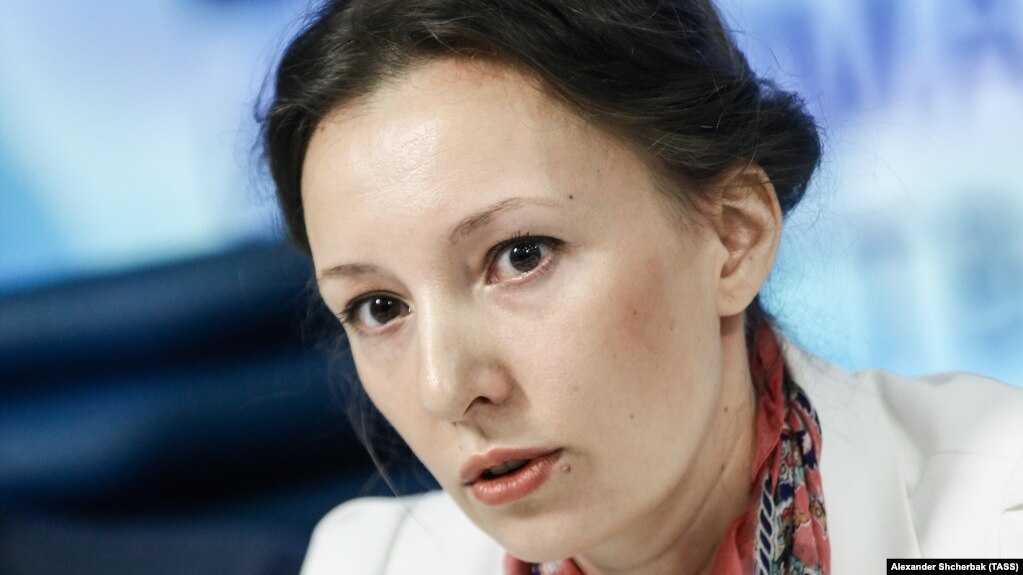
Russia's New Children's Rights Commissioner Can't Recall Discussing Ancient Womb-Memory Science

It has only been a few days since 34-year old Anna Kuznetsova replaced scandal-plagued Pavel Astakhov as Russia's children's rights commissioner, but she has already become embroiled in a controversy of her own.
Russia's new children's rights commissioner Anna Kuznetsova (file photo)
Anna Kuznetsova, Russian Children's Rights Commissioner
spouting U.S. adoption propaganda

Kuznetsova, who replaced Astakhov due to the fallout over his tendency to make callous, off-the-wall comments, is under the microscope for her alleged views on reproduction.

In a 2009 interview with Penza Medical Portal, a psychologist working as a "pre-abortion consultant" identified as Anna Kuznetsova discusses abortions and telegony, a widely debunked theory that every sexual partner a woman has ever had can physically and emotionally influence a child she gives birth to.

The theory -- which dates back to ancient Greece and was popular in the Middle Ages -- is often used to persuade women not to have premarital sex.

"Based on the relatively new science of telegony, we can say that the womb's cells have information-wavelength memory," the interviewee is quoted as saying. "So these cells remember everything that happened in them. For instance, if a woman has several partners, there is a significant chance of a baby being born weakened due to the mixing of information. This fact has an especially strong influence on the morals of a future child."

"An abortion, in its turn, is also a serious shock for a wanted baby, because the cells remember the fetus's fear before abortion -- they remember death."

Kuznetsova, a psychologist and mother of six children, told the RBK news portalshe "doesn't remember" saying anything like that, and suggests that the topic was not something she was qualified to discuss.

"You know, it's a story of quite dubious origin," she said. "Besides, it seems like a qualified biologist, at the least a PhD, is speaking [in the interview]. I don't express myself like that," Kuznetsova said.

One 'Positive' Note

Her husband, Aleksei Kuznetsov, a senior priest in Penza Oblast, some 600 kilometers southeast of Moscow, also cast doubt on the interview.

"Some of our Penza journalists like to embellish their creations and add their thoughts to the article," he wrote on Facebook, speaking about local reports on the 2009 interview. Kuznetsov added that telegony is not a science and neither he, nor his wife "recognize its postulates, because there is a clear position of the church on the matter."

He did, however, find one positive note.

"I am happy that the commentators, without realizing it, promoted the topic of abstinence and morality :)," Kuznetsov wrote.

Tatyana Popadeva, the journalist who conducted the 2009 interview, confirmed that she had interviewed Kuznetsova, and defended her work while noting that people can change their mind or forget things from their past.

"We are not tale-tellers, we don't fantasize, don't embellish, don't invent," she said of journalists in an interview with the local 1PNZ news portal. "However, I want to protect my compatriots Anna and Aleksei Kuznetsov. Human memory is imperfect.... Can you imagine how many books you can read in seven years? How many of them can be scientific? In this time anyone of us could change their mind and worldview by 180 degrees."

Popadeva offered to conduct a new interview with Kuznetsova, noting the importance of her new position guaranteeing a precise account of the conversation. Popadeva concluded by saying: "Lying, it is a great sin for anyone."

The extent to which Kuznetsova's position has changed over the last seven years has been of little importance to many on Russian social media.

"Telegony of womb cells: do not forget, do not forgive!" tweeted financial analyst Slava Rabinovich.


Телегония клеток матки: "Не забудем, не простим!"
"In the U.S., they're presenting the new iPhone, and we have telegony and a womb with wavelength memory," tweeted another user.

В Штатах презентуют новый iPhone, а у нас телегония и матка с волновой памятью..

Amid the uproar, Pavel Chikov, a prominent Russian lawyer and rights advocate, alleged a new potentially damaging revelation about Kuznetsova. In a tweet, he claimed that she was a member of a group on VKontakte titled: "HIV/AIDS -- the biggest mystification of the XX century."


Омбудсмен Анна Кузнецова - участница группы ВК "ВИЧ/СПИД - величайшая мистификация ХХ века" https://vk.com/vichnet 

"I'd like to remind you that there are more than one million HIV-positive children in Russia and there is no money for their treatment," Chikov added.
Voting is beautiful, be beautiful ~ vote.©