This is another sector of trafficking tiny humans, the pre-tiny humans.
This started out as the Pro Life movement in Michigan.
The Pro Life movement was funded through the NRA, but that is another story.
Anyway, I knew this guy, Larry Holland, whose family was supposedly in oil or something, who was taking over the family court movement in Michigan by setting up servers, podcasts, chatrooms, forums, you know, what was necessary to conduct an operation to communicate back in the days, long before Facebook and Twitter.
He told me that he went around the country, laying up, impregnating women, mostly with psychological issues, so he could spread his genes because of his superior intelligence.
Through sheer fascination, I let him tell me about lots of stuff.
It was the memory of his proud vanity of his sperm that had me remember about the sperm banks, or the unregulated modern day human trafficking sector of pre-tiny human banks.
FBI Busts Baby Selling Ring, Then Sits Back On Its Arse While Human Trafficking Continues
You will always have those situations when a plan goes horribly wrong.
Praise the Lord for the Snowflake embyro adoption program where the designer baby program has been going on for quite sometime.
Praise the Lord for the Snowflake embyro adoption program where the designer baby program has been going on for quite sometime.
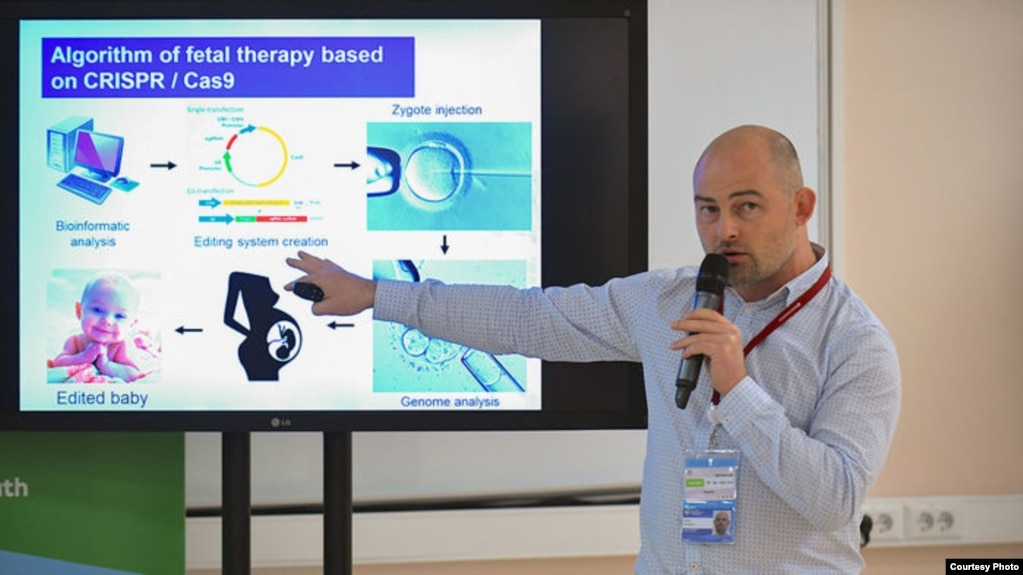
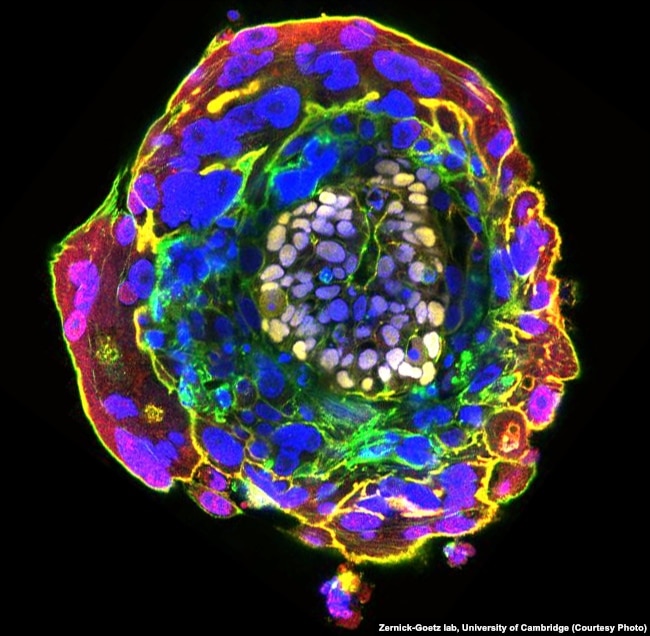
Scientists Call for Do-Over for Rules on Creating "CRISPR Babies"
Basically, these goods are procured through a transfer of corporate parental rights to procure and purvey very tiny humans, to maximize revenues, of course, and to cash in the life insurance policies, but hey, what do I know?
I know there is a struggle because no one has come up with a methodology to determine the citizenship of these abandoned embryos.
Basically, these goods are procured through a transfer of corporate parental rights to procure and purvey very tiny humans, to maximize revenues, of course, and to cash in the life insurance policies, but hey, what do I know?
I know there is a struggle because no one has come up with a methodology to determine the citizenship of these abandoned embryos.
Nation's fertility clinics struggle with a growing number of abandoned embryos
The dilemma over what to do with embryos cast aside, and who should assume ownership of them, is a thorny one.
Dr. Craig Sweet’s fertility clinic in Fort Myers, Florida, has resulted in nearly 3,000 pregnancies.
The pregnancies, he said, have been the upside to his 28 years in the business of helping patients fulfill their dreams of having babies.
But there’s a downside: Hundreds of embryos sit in a frozen state of limbo, abandoned in the center’s storage tanks by in vitro fertilization patients who once sought the help of Sweet’s team in their journey to become parents, then walked away.
“We were not prepared for any of this,” Sweet said.
Sweet is one of thousands of fertility doctors throughout the country grappling with what to do with the embryos cast aside by former patients, many of whom worked for months, even years, to conceive. The dilemma is an unanticipated, and unwelcome, byproduct of the considerable advances made in assisted reproductive technology in recent years, causing concern among bioethicists, attorneys, religious groups and the medical community.
“Twenty-one percent of our embryos have been abandoned,” Sweet said.
The reasons patients choose to abandon embryos vary, he said, though an internal study at his clinic suggests the number of children a patient already has and finances play roles. Storage fees for frozen embryos typically run from $500 to $1,000 a year, and can climb even higher, depending upon the clinic.
Since embryos are eggs that have been fertilized — and therefore have a potential for life — the dilemma over what to do with those that have been abandoned, and who should assume ownership of them, is a thorny one.
“The American Society for Reproductive Medicine (ASRM), the main guiding society for fertility doctors, has put out numerous papers indicating embryos are deserving of respect,” Sweet said. “This idea of abandoned embryos is an ethical conundrum.”
It is not known precisely how many frozen embryos have been abandoned in the more than 500 fertility clinics in the United States. Clinics are not required by the Centers for Disease Control and Prevention, or the Society for Assisted Reproductive Technology, the nation’s primary organization dedicated to assisted reproductive technologies, to report those numbers.
But experts say hundreds of thousands of embryos have been cast aside, if not more.
“Abandoned embryos are a major problem and it’s everywhere,” said Dr. Christine Allen, a veteran embryologist and the founder of Elite IVF TM, a consultant business that works with dozens of fertility clinics throughout the nation to implement high-end technology and to troubleshoot problems the clinics encounter. She said there needs to be more regulation, in part to put limits on the number of embryos created by a couple.
Allen says she believes there are “at least” hundreds of thousands of abandoned embryos in the U.S.
HOW SAFE ARE YOUR EGGS?
Egg freezing 'startups' have Wall Street talking — and traditional fertility doctors worried
A paper co-authored in the scientific journal Nature Biotechnology by Dr. Arthur Caplan, one of the nation’s leading bioethicists and a professor at the New York University Medical School, stated there are at least 90,000 frozen embryos considered abandoned in the U.S. Other studies indicate the number is much higher, possibly in the millions. Of the four fertility doctors NBC News spoke to — along with two embryologists, two fertility coordinators and a fertility attorney — no one said they knew of clinics that are not dealing with the issue.
Though clinics have different definitions, an abandoned embryo generally refers to a situation in which a patient has not paid storage fees related to a frozen embryo for five or more years, and fails to respond to letters and calls from the clinic. Some clinics consider embryos abandoned after as little as a year.
“We have embryos that are not claimed and people are not paying for storage and we do not know where the people are,” Dr. Pasquale Patrizio, director of the Yale Fertility Center, said.
We were not prepared for any of this.
FERTILITY DOCTOR CRAIG SWEET
Patrizio said storage fees at his clinic cost $600 a year, but can cost twice as much, depending upon the clinic.
“The problem is, even if an embryo is considered abandoned, even if there’s a contract in place, it’s very difficult to get rid of. What if one day someone shows up and says, ‘Where’s my embryo?’ And you wind up on the front page of the newspaper for destroying someone’s embryo? The damage would be done,” he said.
For that reason, Patrizio said, his clinic doesn’t destroy abandoned embryos.
Richard Vaughn, a founding partner of the International Fertility Law Group, a national law firm that specializes in fertility matters, with offices in New York and Los Angeles, said he knows of no fertility clinics willing to dispose of abandoned embryos.
“They don’t want to be responsible for a wrongful death,” he said.
The embryos typically don’t require much room.
“Frozen embryos take up very little space,” Dr. Sherman Silber, director of the Infertility Center of St. Louis, said. “You could put a whole city in a lab.”
But while the embryos are small, the liquid nitrogen tanks in which they’re housed aren’t. Patrizio noted a number of clinics are running out of room for the tanks and are outsourcing storage of abandoned embryos to companies like Reprotech, a national storage firm he calls “a mini-storage facility for embryos.”
“Many clinics don’t want to have the abandoned embryos in their facility for liability reasons,” Patrizio said.
Patrizio and Sweet said the issue of abandoned embryos is sometimes discussed at global fertility conferences, but generally remains within the industry what Sweet calls “the elephant in the room,” that’s neither publicly discussed nor addressed.
The problem, Allen said, is that clinics are fertilizing too many eggs.
The number of eggs a woman can produce in a monthly cycle leading up to an egg retrieval varies, depending upon her age, ovarian reserve, medical history and response to fertility drugs.
During the 1990s, many clinics deemed it necessary to inseminate as many of a patient’s eggs as possible, because many embryos didn’t make it through the freezing and thawing process. Now, Allen said, techniques have improved.
“With the technology we have, creating a large amount of surplus embryos is completely unnecessary,” Allen said, noting embryologists now know only a few eggs at a time need to be inseminated.
“[But] you still see many physicians with the mentality of, ‘the more, the merrier.’ So you see [some women] having 40, 50 or 60 eggs retrieved in a cycle and the embryologist gets the orders from her doctor to inseminate all of them — and the question isn’t asked if the patient even wants that many inseminated.
“Nobody’s going to have 30 kids,” she said.
Allen said regulation is needed within the fertility industry and is hopeful the U.S. will follow examples established by Germany and Italy, where only a few embryos can legally be created and transferred at a time, thus avoiding surplus embryos.
Related
Your stories
YOUR STORIES
'It never crossed my mind that I would not be able to get pregnant': Your stories about egg freezing, ages 19 to 60.
Sara Raber, 43, said she knew frozen embryos were part of the process when she began IVF treatments in 2008.
After several rounds, Raber and her husband had two sons in 2010 and 2012 in New York.
Both boys were conceived through the transfer of fresh embryos into Raber’s uterus at the Center for Human Reproduction (CHR), a New York fertility clinic. Other embryos were frozen during her treatments. Raber said she had the option of using frozen embryos when she began trying for her second child, but opted to use new eggs instead.
“I knew I wanted to save the frozen embryos for a rainy day,” Raber explained. “They were my insurance policy.”
Raber said she tried to use one frozen embryo to have a third child in 2014, but suffered a painful miscarriage. That’s when she struggled with the decision of what to do with her five remaining embryos.
“Even though I knew I was done procreating, it was very hard to make the final decision,” Raber said. “For months, I sat on the paperwork.”
The clinic gave Raber four choices: She could continue to pay storage fees for her frozen embryos, donate them to another woman, authorize the clinic to destroy them, or give them to the lab for research purposes.
Ultimately, Raber donated her embryos to her fertility clinic’s lab for research purposes.
“I didn’t want to donate them to a stranger,” Raber explained. “I felt like if I donated the embryos to a stranger, it would be our child out there that we weren’t raising.”
Raber said she understands why many patients quietly abandon their embryos.
“They had their babies. They’re focused on child care now. And the storage fees are a financial strain they don’t want to endure.”
Some embryos, though not technically abandoned, are stuck in legal limbo, which happens when the couple who created the embryos can’t agree on what to do with them.
That was the case with the actress Sofia Vergara. The “Modern Family” star created two embryos with her former partner, Nick Loeb. When the couple broke up, Loeb wanted custody while Vergara wanted to make certain the embryos were never implanted. Today, the embryos remain frozen, as Vergara and Loeb continue to battle in court.
According to Vaughn of the International Fertility Law Group, there have been at least 13 cases similar to Vergara’s that have reached appellate courts. He predicts there will be more lawsuits in the future.
“It will continue to be a growing issue until we have a clearer way of dealing with embryo legislation,” Vaughn said, noting there are no national laws in place that address abandoned embryos.
Tad Pacholczyk, director of education at the National Catholic Bioethics Center, agrees a national debate over frozen embryos will spill into future generations.
Pacholczyk said he knows of cases in which couples, unable to agree on what to do with surplus embryos, continue to pay storage bills — and intend to do so for the rest of their lives.
When the couple dies, a new generation will be left to grapple with the embryos.
Pacholczyk advises couples to create trust funds for surplus embryos, so that storage fees can be paid indefinitely.
“Creating a trust fund for the frozen embryo shows a couple is taking responsibility for what they created,” Pacholczyk said. “To me, the complexity of the situation about what to do with these excess embryos is a powerful reminder that when you cross moral lines, there’s a price to be paid.”
The medical community is uncertain how long frozen embryos remain viable.
Silber of the Infertility Center of St. Louis said if the embryos are properly frozen, they could remain viable for decades.
“We have reason to believe embryos frozen using modern technology can last over 100 years,” Silber said.
Even when patients indicate they want to donate their embryos to science, Sweet said, there are limited facilities willing to take them.
We have reason to believe embryos frozen using modern technology can last over 100 years.
DR. SHERMAN SILBER
“We have 18 percent of our patients telling us they want to donate their embryos to science, but I can’t find anyone to take them,” he said, noting the University of Michigan is among the few places in the nation that have accepted abandoned embryos in recent years. “Now I need to go back to those patients and find out what they want to do, but we often can’t find these people.”
Concerned about the growing population of abandoned embryos, Sweet established Embryo Donation International in 2011 in Fort Myers. The program has gathered surplus embryos from 67 fertility clinics, all from women and couples who have explicitly granted permission to donate their embryos to infertile patients.
Sweet said Embryo Donation International has provided a means for patients to donate embryos to women and couples eager to have a baby. But the program can't make use of embryos abandoned by patients who fail to sign the paperwork.
Those embryos, Sweet said, remain stuck.
In an effort to curb the creation of more embryos that might end up in limbo, Sweet made the decision a decade ago to make his fertility clinic a “non-discard” facility, meaning all of his patients must sign paperwork indicating they will not discard their embryos.
Sweet said he made the decision for ethical, not religious, reasons.
“The embryos were abandoned by the patient, and I felt if I abandoned them they were abandoned a second time."
Sweet knows there is much his profession needs to tackle when it comes to abandoned embryos. The process, he said, will not be easy.
Still, he said, it’s time for the industry that’s been all about making babies to finally address the embryos that were created, then abandoned, in the process.
“I think many of us realize that we have a bit of a mess and I’m not sure doctors know how to fix it,” Sweet said. “But we need to try.”
Couple give embryos, 'hope' to UM in fight against rare disease
 Alexandra Cellucci was 28 when she was diagnosed with neurofibromatosis, a rare genetic disease that causes noncancerous tumors to grow on the body's nervous tissues. She was also eight months pregnant at the time, but she would eventually deliver a healthy baby girl.
Neurofibromatosis, known as NF for short, runs in Cellucci's family, so she knew her daughter could have the disease and she could pass it on to future children. So she and her husband, Marc, used reproductive medicine to conceive another baby, had the embryos tested for the gene that causes NF and had doctors implant embryos in her womb without the mutated gene.
Cellucci, now 35, never got pregnant again, despite many attempts. She and her husband have since learned their daughter Maible, now6, also carries the gene for NF2, one of the three forms of the disease. The day before Maible's birthday last November, the girl asked if she had the disease. Cellucci said she told her yes and that she would be OK.
That's why the Massachusetts couple donated seven embryos with the NF2 gene to the University of Michigan so researchers could create an embryonic stem cell line that other researchers could study, with the hope of one day discovering a breakthrough. In a perfect world, such a development would come before their daughter endures any symptoms.
“I just wanted hope," said Cellucci, who had surgery last month to remove a benign tumor behind her eye. "They could possibly find a cure for (Maible) ... and offer hope for other families."
UM researchers have turned the Celluccis' embryos intothe first stem cell line that models NF2, which is one of the more rare forms of the disease. Besides the tumor growth, NF2 comes with a host of issues, including hearing loss, ringing in the ears and loss of balance. Symptoms typically appear in the teen years.
The embryonic stem cell line modeling the disease, created by Professor Gary Smith, director of the MStem Cell Laboratories, has been accepted onto the National Institutes of Health Human Embryonic Stem Cell Registry for other scientists to study and make discoveries around interventions and a possible cure. Another line also is under review.
Researchers can apply to access the stem cell lines on the federal registry to study how diseases form and develop, with the aim of finding ways to better understand, treat, delay and possibly even cure diseases.
Smith has derived all of UM's 56 embryonic stem cell lines on the national registry, including 36 disease-specific lines. He said the personal stories behind all of those stem cell lines are important.
"We just don't do science to do science," Smith said. "We do science to help others. Here is a family that recognizes that. Sometimes that gets lost on people. ... We really do want to help people."
The NF2 stem cell line comes as neurofibromatosis scientists and clinicians prepare to gather next month for their annual conference in San Francisco.
It also comes as Detroit businessman and Cleveland Cavaliers owner Dan Gilbert has used philanthropy to support the small research community of neurofibromatosis. His 23-year-old son, Nick, was born with neurofibromatosis type 1.
NF2 afflicts 1 in 33,000 people worldwide, while NF1 is more common, occurring in 1 in 3,000 to 4,000 people, according to the National Institutes of Health. NF1 typically begins in childhood and leads to skin changes and bone deformity. Schwannomatosis, the rarest type of NF, causes intense pain.
Gilbert, who suffered a stroke in late May, has spoken about neurofibromatosis and also about how Nick, a Michigan State University student, had to undergo brain surgery in 2018 to remove tumors.
Gilbert, a billionaire, has invested $64 million over the years through the Gilbert Family Foundation, including $12 million for gene therapy initiatives to address the underlying cause of NF1 and $11 million for vision loss in NF1 patients, which Nick grapples with, according to YooRi Kim, the foundation's scientific officer.
"With deeper understanding with each of these diseases that we've obtained over time, it's becoming more and more clear that the strategies that you would use to help each of those patients are going to look different," Kim said.
Even so, she said there is excitement about advances in research on other forms of NF, such as the stem cell line modeling NF2.
There are four embryonic stem cell lines on the registry that model NF1, but the line UM created is the first for the research community studying NF2, according to Smith.
"It means a lot to the couple that somebody is using something that otherwise would have been discarded and instead trying to make it something that can be used worldwide to understand this disease better," he said.
The stem cell line has been applauded by Sally Temple, scientific director of the Neural Stem Cell Institute in Rensselaer, New York, which uses stem cell technologies to develop therapies that affect the nervous system.
"It's a really wonderful and generous for the parents to do," said Temple, who is also a UM adjunct professor in the ophthalmology department. "When you make these human embryonic stem cell lines, they are essentially a resource forever for the community. It's available and it will be there for (researchers) to use forever in the future. It's not a one-time donation."
She added that this is important for the NF2 community since it is such a devastating disease.
Marc Cellucci is beyond thrilled, and hopeful of the possibilities for the stem cell line that he and his wife helped create and what it could do for his daughter, wife, in-laws and so many others with NF.
“It all has to start somewhere,” said Cellucci, “where the scientific breakthroughs happen, and the miracles begin.”
Voting is beautiful, be beautiful ~ vote.©