Our latest Geointeresting #podcast features NGA’s Director of Research & an NGA scientist discovering the latest in hyperspectral signatures – two women at different stages of their career, but both strong advocates for women in the #STEM field. Listen up! https://t.co/vK7Plnlr7wpic.twitter.com/JyOhUWZaUg
The Detroit Board of Police Commissioners tabled a controversial vote Thursday around the use of facial recognition technology in city neighborhoods.
“It’s still under review, so we cannot move forward at this particular time," Commissioner Willie Bell said, explaining that discussions around that particular surveillance directive were still being hammered out with Police Chief James Craig and Mayor Mike Duggan.
While the facial recognition vote was put off, the board did move forward and approved (6-3, with one abstention) a related directive dealing with rules around cameras mounted onto traffic lights throughout the city's neighborhoods.
"Yes, the traffic light was dealing with face recognition, but we separated it out, they were combined together but they're two separate entities," said Bell.
Community members, who spoke during the public comment period, expressed a different point of view, indicating that they saw the two issues as inextricably tied.
“I understand that you said facial recognition is not on the agenda today, but you moved forward and voted on traffic cameras that will have the capabilities of that technology," said Detroiter Tawana Petty.
“This facial recognition technology has been utilized for a couple of years without transparency and then the minute we get an opportunity to vocalize our concerns on it, it’s rushed through with little accountability," she continued. The city purchased facial recognition software in July 2017 for just over $1 million.
Willie Burton, one of the three commissioners who voted against the traffic directive, agreed with Petty stating that it was impossible to isolate the two directives.
"It was all presented together and now all of a sudden they want to separate it because they knew the community was coming out to speak against it," said Burton.
“This tech has been removed from body cameras in other police depts, it’s banned in SF. The very technologists who created it said it’s harmful and biased. It doesn’t recognize darker skins” - Tawana Petty speaking against facial recognition tech today at police commissioner mtg pic.twitter.com/OKRDYa4jfM
In a rundown of what occurred around the facial recognition directive and why it got pushed back, Gregory Hicks, the board's secretary, explained that the commissioners responded to the original facial recognition directive with 17 recommendations and Assistant Police Chief James White responded with the approval of all but two. The changes were then incorporated in the directive but "at last minute the department requested to pull back" the facial recognition vote.
Hicks said he does not know why the department pulled the directive and that as of now there is no new date for a vote.
“This tech has proven to be inaccurate/misidentifies particularly ppl of color, ppl who look like me, ppl who live/work in my community. I have every right to move thru this city w/o my movements being tracked/watched under the guise that this will make me safer” - Janice Gates pic.twitter.com/Pkg4AwWRCw
Both directives involve the "Neighborhood Real-Time Intelligence Program," a new $9 million initiative that Duggan announced in March at his State of the City address. Using local and federal traffic modernization funds, the city will put high-definition cameras at various intersections in the neighborhoods. They will be monitored by Detroit Public Works staff at the Real Time Crime Center within the Detroit Police Department's Public Safety headquarters downtown.
By the end of 2019, cameras are set to be installed at 11 intersections on the Greenfield and East Seven Mile corridors. Additionally, the Department of Public Works will add cameras to 29 intersections across the city. In 2020, an additional 400 cameras will be added.
“These are the traffic cameras we’re putting up. We will get shots of the perpetrators as they go past and we’ll be able to chase them down,” Duggan said at his State of the City.
Under the traffic-light directive that passed Thursday, Detroit police are prohibited from using the footage or images from the traffic light cameras to enforce traffic misdemeanors or pedestrian laws or to issue civil infractions of any kind. The cameras cannot be used to assess immigration status or engage in immigration enforcement. And DPD cannot use audio from the cameras unless there is a verified court order.
Footage and images obtained from the traffic light-mounted cameras can be used for "legitimate law enforcement purposes," defined as investigations into criminal activity, the pursuit of a criminal suspect, the monitoring of an ongoing situation "in which criminal activity is, or is reasonably expected to occur."
DPD is not prohibited from focusing cameras on handbills, flyers or other materials carried pursuant to the First Amendment, but they will "avoid" doing this.
While some checks are in place, critics remain concerned, especially when considering the yet to be voted on directive that deals with facial recognition.
Worries hit on privacy and the silencing of free speech to the actual efficacy of the technology.
Last year, the American Civil Liberties Union of California tested images of members of Congress on "Rekognition" — Amazon's facial recognition tool. The organization found that of the 535 faces inputted, the software falsely matched 28 with people who had been arrested on criminal charges. Additionally, the software gave false matches for 39% of the minority members, who comprise only 20% of Congress.
Such issues were raised in a May inter-office memo sent to the commissioners. The document cited a January report that found that facial recognition technology showed a lower accuracy rate for African Americans and another that found that artificial intelligence assigned more criminal intent to black men based on difficulties interpreting emotions of black faces.
"That is enough to justify voting against it," said Eric Williams, an attorney working with the ACLU on a committee opposing the city's surveillance tactics. "If it said this for white men and women, this wouldn't even be considered."
Last month, San Francisco — seen by many as the center of the tech-universe — became the first major city to ban police use of the technology, citing several of the concerns Williams and other critics of the software have raised.
"We have an outsize responsibility to regulate the excesses of technology precisely because they are headquartered here," Aaron Peskin, the city supervisor who sponsored the bill, told the New York Times at the time.
This point was raised by Petty during her public comment Thursday.
"I have to push you all to at least understand the technology you’re implementing," she continued. "This will be the largest experiment on black people in the United States — 700,000 black people being submitted to an experiment that has already failed all over the world."
While the directives in question have been discussed in relation to the Neighborhood Real-Time Intelligence Program — the use of such technology and surveillance is not new in Detroit. This is just the latest surveillance project in an ever-expanding network.
The public-facing push to ramp up surveillance began in January 2016 when DPD launched Project Green Light. Starting with eight gas stations, the program has participating businesses pay for and install surveillance cameras on their property that feed directly to DPD's Real Time Crime Center. Additionally, as part of the program, businesses commit to ensuring they have robust lighting and a green light outside of their vicinity to let customers know they are a part of the program.
Today, more than 500 businesses — including churches, schools, and pharmacies — are a part of the program. There are also two "Green Light Corridors" and one public housing property signed on to be part of the program.
Prior to the launch of Project Green Light, however, city officials were thinking about surveillance and specifically facial recognition software.
"FACE Watch Plus tracks face images from live video surveillance, processes the images, then searches your database and alerts you when a match/hit has been made," the proposal explained. "It detects faces within surveillance footage in real-time, then uses cutting-edge facial searching algorithms to rapidly search through your agency's mugshot or watchlist database for positive matches."
The 2017 contract, which expired on Wednesday, explained that the purchase of facial recognition licensing, software and equipment was for "Project Green Light Locations."
Despite this stated use, a May report from Georgetown Law Center on Privacy & Technology noted that nowhere on the Green Light website was the use of face recognition, real-time face surveillance, or any kind of automated face analysis technology mentioned.
This, according to Clare Garvie, a senior associate at the center and co-author of the report, is a problem.
"It should be up to communities to decide whether the benefits of face recognition outweigh the risks and whether these benefits to public safety mean that this technology can and should be used on them," said Garvie.
"What we found in Detroit is the decision to purchase not just face recognition — the ability to do investigations using face recognition — but the ability to do face surveillance was not something that was ever presented to the public," she continued. "It never appears to be presented to the Project Green Light partners, and yes that is absolutely a discussion that should have taken place before the city spends over a million dollars on a system."
For some of the Detroiters in attendance at the vote Thursday, the delay seemed to exacerbate questions of accountability.
"If you can’t even conduct a vote with integrity," asked Janice Gates, "how do you expect us to believe that you will use facial recognition with integrity?"
Detroiter Eric Blount echoed her sentiments.
"It feels like this meeting agenda switch is a sleight of hand switch, so many people came out here thinking they were going to understand and better express themselves on facial recognition and a last-minute switch," Blount said. "I just ask you to stick to the agenda, if there is any possibility that it will be changed, do it far in advance, because these meetings are very inconvenient for most people who have to work."
The U.S. likes to traffic tiny human and their souls over the border for lots and lots of money.
But do not just ask Chuck & Nancy because it is personal inurement of office and how politicians fund their campaigns, which would be an issue of self incrimination.
We would not want Chuck & Nancy to incriminate themselves but we could ask Betsy DeVos, a subject matter expert on trafficking the souls of tiny humans.
And that is why we are going to have a Constitutional Crisis because we would like to know who is in our country and the purveyors of tiny humans do not want to stop salvaging all the souls, which includes our intellectual property.
Trump is championing the end of stealin' the children, the land and the votes.
European–Vatican relations
QUESTION*: What does the Vatican and European Union have in common?
ANSWER: A Bitcoin Wall
According to Wikipedia: Holy See–European Union relations is the relationship between the European Union (EU) and the Holy See (or Vatican City).This is framed by the Holy See's geography (within an EU state capital) while being unable to join.
The Schengen Information System (SIS) is a governmental database maintained by the European Commission. The SIS is used by 31 European countries to find information about individuals and entities for the purposes of national security, border control and law enforcement. A second technical version of this system, SIS II, went live on 9 April 2013.Schengen Information System
What is the Schengen Information System (SIS)?
The Schengen Information System (SIS) is the most widely used and largest information sharing system for security and border management in Europe. SIS enables competent national authorities, such as the police and border guards, to enter and consult alerts on persons or objects. An SIS alert does not only contain information about a particular person or object but also instructions for the authorities on what to do when the person or object has been found. Specialised national SIRENE Bureaux located in each Member State serve as single points of contact for the exchange of supplementary information and coordination of activities related to SIS alerts. At the end of 2017, SIS contained approximately 76.5 million records, it was accessed 5.2 billion times and secured 243 818 hits (when a search leads to an alert and the authorities confirm it).
What is the purpose of the SIS?
The main purpose of SIS is to make Europe safer. The system assists the competent authorities in Europe to preserve internal security in the absence of internal border checks. The scope of SIS is defined in three legal instruments:
Regulation (EC) No 1987/2006 (Border control cooperation): SIS enables border guards and visa issuing and migration authorities to enter and consult alerts on third-country nationals for the purpose of refusing their entry into or stay in the Schengen area.
Council Decision 2007/533/JHA (Law enforcement cooperation): SIS supports police and judicial cooperation by allowing competent authorities to create and consult alerts on missing persons and on persons or objects related to criminal offences.
Regulation (EC) No 1986/2006 (Cooperation on vehicle registration) Vehicle registration services may consult SIS in order to check the legal status of the vehicles presented to them for registration. They only have access to SIS alerts on vehicles, registration certificates and number plates.
In June 2018, the co-legislators reached political agreement on the new SIS package. The new functionalities in SIS will be implemented in different stages, with a requirement for the work to be completed by 2021.
The changes will entail enhancements in the following areas:
Biometrics: SIS will contain palm prints, fingerprints, facial images and DNA concerning, for example, missing persons to confirm their identity.
Counter-terrorism: More information will be shared on persons and objects involved in terrorism-related activities, allowing the authorities of the Member States to better pursue and prevent serious crimes and terrorism.
Vulnerable persons: Competent authorities will have the possibility of entering preventive alerts in the system to protect certain categories of vulnerable persons (missing persons, children at risk of abduction or potential victims of trafficking in human beings or gender-based violence).
Irregular migration: Return decisions and entry bans will be part of the information shared in the system to enhance their effective enforcement.
Enhanced access for EU Agencies: Europol will now have access to all alert categories in the SIS while the European Border and Coast Guard Agency operational teams will be able to access SIS for the purpose of carrying out their tasks in the hotspots.
Moreover, the introduction since March 2018 of an AFIS (Automated Fingerprint Identification System) in SIS, and the resulting possibility of making searches using fingerprints, makes it even more difficult for criminals to move unnoticed across Europe.
In which countries is SIS in operation?
SIS is in operation in 30 European countries, including 26 EU Member States (only Ireland and Cyprus are not yet connected to SIS) and 4 Schengen Associated Countries (Switzerland, Norway, Liechtenstein and Iceland).
EU Member States with special arrangements:
Bulgaria, Romania and Croatia are not yet part of the area without internal border checks (the 'Schengen area'). However, since August 2018, Bulgaria and Romania started using fully SIS. A Council Decision is still required for the lifting of checks at the internal borders of these two Member States. In the case of Croatia, there are still some restrictions regarding its use of Schengen-wide SIS alerts for the purposes of refusing entry into or stay in the Schengen area. Those restrictions will be lifted as soon as Croatia has become a part of the area without internal border checks.
The United Kingdom operates SIS but, as it has chosen not to join the Schengen area, it cannot issue or access Schengen-wide alerts for refusing entry and stay into the Schengen area.
Ireland and Cyprus are not yet connected to SIS. Ireland is carrying out preparatory activities to connect to SIS, but, as is the case for the UK, it will not be able to issue or access Schengen-wide alerts for refusing entry or stay. Cyprus has a temporary derogation from joining the Schengen area and is not yet connected to SIS.
The European Union has moved forward with its plans to create a gigantic biometrics database, despite facing criticism for putting privacy rights at stake through it.
Last week, the European Parliament has adopted a legislation that will enable EU information systems to exchange records through the Common Identity Repository (CIR), which is set to gather data for over 150 million individuals. The move has been taken as a further attempt to simplify the jobs of EU border and law enforcement officers.
According to a press release by the European Parliament, the new system will facilitate the tasks of border guards, migration officers, police officers and judicial authorities by providing them with more systematic and faster access to various EU security and border-control information systems.
The EU Commissioner for Migration, Home Affairs and Citizenship Dimitris Avramopoulos asserted that the Security Union is steadily taking shape with a whole range of tools, actions and rules being put in place to protect all EU citizens.
Whereas, the Commissioner for the Security Union Julian King said that the new adoptions mark another important milestone in the work of the EU towards an effective and genuine Security Union.
“Interoperability will help those working in the frontline to keep EU citizens safe – ensuring police and border guards have efficient access to the information they need, including to fight identity fraud, enables them to do their jobs properly,” he said a day after the Parliament had adopted the legislation.
EU Criticized for Putting Privacy Rights at Stake
Watchdog and non-profit organizations have long criticized the move for establishing such a system.
Non-profit organization Statewatch published a report last year titled “Interoperability morphs into the creation of a Big Brother centralized EU state database including all existing and future Justice and Home Affairs databases.”
According to the report the notion that these plans are simply bringing together existing data and biometrics, and so there is nothing to be afraid of, is untrue.
“If there has been one clear lesson since 11 September 2001 it is that function creep is the name of the game. From the late 1970s onwards each new stage of the technological revolution has been justified on the grounds that there is nothing new, it is just making life easier for law enforcement and border control agencies to get access to the information they need to do their job more efficiently. Whereas the reality is that at each stage databases become ever more intrusive as security demands cumulatively diminish freedoms and rights,” the report concludes among others.
Michigan Department of Health & Human Services
has a Baby Bio Bank
I came across an interesting article that I almost dismissed as a disinformation hit piece that I thought was being spread around as what is called fake news to discredit the organ harvesting stories about to break into the main stream news, but I quickly took pause just because I saw it was a Michigan cases.
So, I pulled the complaint from the Michigan Eastern District Court, my favorite court.
The case is about a group of parents who are suing Michigan for drawing and storing newborn blood and storing it the Michigan Neonatal Biobank of the Michigan Department of Health and Human Services.
For just a moment, I thought once more that this may be a counter conspiracy theory to throw shade to the Planned Parenthood allegations of selling fetal tissue and other sorts of unverified urban legends.
I believe Planned Parenthood is a money laundering operation for the DNC.
Then I realized that I was looking at another one of those human asset databases I have been talking about for the longest.
What was even more sensational is that it looks like it is one of those "authorities".
So I looked up the President, Edward Goldman of this Michigan Neonatal Biobank, where he just so happens he is an attorney out of University of Michigan School of Law teaching Reproductive Justice now at Wayne State University.
Reproductive Justice is just a fancy was of saying "Trafficking Tiny Humans".
Then I realized what I had found, the emerging industry of selling tiny humans, as intellectual property, used as collateral to fund its trust fund, because it is in a bank, a biobank.
So, now, we have land banks, sperm banks, egg banks, and now biobanks, and all of them are unregulated, used in the biomedical research, meaning, they are probably conducting biomedical research on the population of Detroit, which is why the city is number one in the nation in infant mortality, but at this point I can only speculate on things I have heard floating around in the streets.
The State of Michigan does possess the powers to draw and deposit the blood of a newborn into its biobank because of this thing called parental rights, which no one wants to understand.
The biological parent at birth does not possess the right to make decisions on behalf of the infant as the State has not certified the birth.
Notice I did not speak upon registration of the birth.
The Hospital will register the birth with the county, which means, until the State grants the gift of custodianship and guardianship, the state is the original legal parent and the child is property of the state.
I could go deeper into this, but I already did in my book and in multiple posts.
Quintessentially, the State will prevail in its Motion to Dismiss in part, because the parents should be successful arguing that the State cannot establish a chain of command of the blood sample because the repository is privatized.
We all know the issues with privatization in Michigan with the Emergency Manager Law, with boundless "authorities", to do what it wants as long as it makes money, and they answer to no one.
I wonder if we can get an audit on that Michigan BioTrust for Health, because it looks oddly like the Michigan Children's Trust Fund.
I do not have a problem with advances in technology or biomedical research in personal medicine, I just have an issue when they use the babies of "The Poors" (always said with clinched teeth) to "maximize revenues" particularly if Social Impact Bonds are associated with itand other nefarious ideas of servitude, for the glory of human research.
Is this newborn blood tagging a form of biometric tracking, genetic mutation research or what I like to call designer baby research?
Is this part of the "culling" of targeted populations or the generation of organs?
HEMLOCK, Mich. (AP) — A group of Michigan parents have filed a lawsuit alleging that the state didn't obtain proper consent to draw or store their newborns' blood for medical research.
Philip Ellison filed the federal lawsuit on behalf of the parents, saying Michigan's practice of drawing infant blood is unconstitutional, MLive.com reported . The lawsuit also alleges that there aren't protections in place to stop police or others from accessing information that can be derived from the stored blood samples.
"Essentially, the state has stolen consent from parents," said Ellison, an attorney based in Saginaw County.
The lawsuit isn't trying to stop newborn testing, but aims to better inform and return parents' right to decide, he said.
The blood of more than five million people is being stored, according to the Michigan Department of Health and Human Services.
The state started drawing newborn blood to test babies for ailments in the 1960s, the department said. The initial list started with six maladies and has grown to more than 50 conditions today. Michigan began storing the blood samples in the mid-1980s.
Lawmakers amended the state's Public Health Code in 2000 to allow the use of newborn screening blood spots in health research. The BioTrust program was later formed with an advisory board to oversee the stored blood and its use in research.
People born between 1987 and 2010 can opt out of blood research and storage by contacting the state, according to the department. For children born after May 2010, parents can opt out by declining to sign over consent. Blood spots will be stored unless a parent asks the state to destroy them.
Lynnette Wiegand is a mother of four and a plaintiff in the case. She assumed that her children's blood would be discarded after testing.
Michigan's consent form should separate and clearly specify consent for blood to be drawn, for use in medical research and for storage, she said.
Lawsuits challenging blood storage practices in other states have led to the destruction of millions of blood samples.
"It really goes counter to what other parents might want and the importance of them having a say in the process to eliminate samples from the bio bank," said Natasha Bonhomme, who works for the nonprofit Genetic Alliance.
Newborn screening occurs without consent as part of public health in every state, she said. She believes it's critical to separate the issue of consent for drawing blood and consent for storing or testing the blood.
She said the lawsuit could indicate that Michigan needs to do a better job at informing people about their processes.
Weighing Awan Brothers Risk Versus Error Correction
Comey Can't Quite Say Crowdstrike, Alperovitch, and Umbrage, No Code From Julian, Just Plain Text
Comey Is Right - It Was the Russians - It Was Dmitri Alperovitch and His Crowdstrike That Was On-Site at DNC From May 4th, 2016 to June
William Crosley Interview Confirm Four Hour Theft Window at NGP VAN
NGA Is being combined with NSA and DHS data for a 7×24, geo-spatial surveillance system. Pakistan ISI did it with NADRA for biometric tracking, but they needed the Awan Brothers to get satellite data. Until Nanosat technology came along.
No Such Thing as Webb Files, Only Intelligence Product Matters.
Awan Brothers Rolling NGA, NSA, and NASA Data to Middle Eastern Kingdoms.
So far, the public awareness, or rather the public concern, in Medicaid fraud, let alone Medicaid fraud in child welfare has been dearth. Little or nothing comes up in the media acknowledging this issue even exists. The most I have come across is a policy position from the White House and a Wall Street Journal article.
The U.S. patented devices and process is called BIOCLAIM™.
Without providing a lecture on biometric technology, I will cut to the chase and provide an except from the website:
The problem is healthcare fraud. Phantom billing, up-coding, card swapping and medical identity theft are the most pervasive types of fraud resulting in estimated losses between 60-220 billion dollars per year.
Other biometric and smartcard company products do not offer a complete solution to healthcare fraud. Most products rely on the front desk to stop a fraudulent transaction. BIOCLAIM™ removes the reliance on the people who are often part of the fraud and creates an auditable technological record.
BIOCLAIM™ is the solution to healthcare fraud.
BIOCLAIM™ is a comprehensive solution to healthcare fraud.
It was at this point I was brought to my knees in the brilliance of the the perfect solution to Medicaid fraud in Child Welfare.
Up until this point, there has been no possible way of conducting a proper audit or examination of the child welfare industry for the following, very simple reasons:
(1) Any matter dealing with a child is protected, or rather excluded and exempted, under Freedom of Information Act statutes. These matters extend from the actual child's identity to the administrative and fiscal operations of a child welfare agency.
BIOCLAIM™ SOLUTION: Each child is assigned an unique coded identifier as is each individual rendering service. Data can be aggregated in time intervals, geographically stratified, just to name a few quantitative methods, to examine the internal operations of a child welfare agency.
BIOCLAIM™ SOLUTION: The reports could be automatically generate from data, automatically providing transparency, better allowing accountability.
(3) The privatization of child welfare has given birth to the infectious growth called Medicaid fraud. These are Quasi-Governmental-Organizaions (QGOs). Privatization has made it virtually impossible for states to contractually debar, sanction, or revoke licensing due to the inherent conflict of interest of executing the policy of the state. QGOs operate within the woven layers of immunity. This means it is difficult for the state to prosecute itself and this is why the States Medicaid Fraud Control Units do not go after, or even attempt to go after, Medicaid fraud in Child Welfare.
BIOCLAIM™ SOLUTION: Constructing and running specialized reports for States Attorney General to aggressively go after Medicaid fraud in Child Welfare would increase States Federal Funding Percentages, the recoveries could become beneficial to General Funds, and removes the inherent conflict of interest.
(4) Medicaid fraud is so perniciously pervasive that States, and Federal entities, lack the resources and sophistication to stop Medicaid fraud, let alone Medicaid fraud in child welfare.
BIOCLAIM™ SOLUTION: Fraud deterrence would pay for itself through an increase in effective and efficient services. Consumers, or to be more specific, children and guardians will have, for the first time in the history of the child welfare system, an opportunity to file a grievance and have it investigated.
BIOCLAIM™ may be be viewed as an empowering democratic tool as it allows the public, and the consumers of child welfare, to be watchdogs with a voice, furthering the end of Medicaid fraud in child welfare.
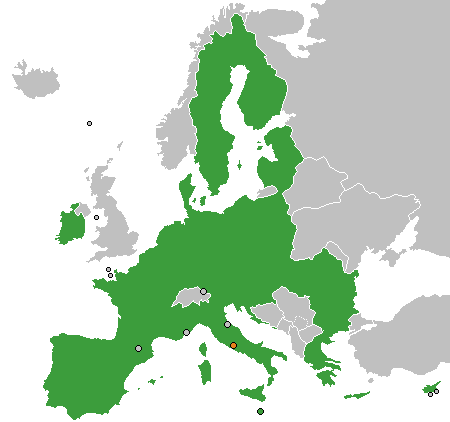
 The European Union has moved forward with its plans to create a gigantic biometrics database, despite facing criticism for putting privacy rights at stake through it.

