Oakland County Children's Village seen on Thursday, July 9, 2015 in Pontiac, MI.
Nine staffers and residents have tested positive for the coronavirus at Oakland County Children's Village and 17 other employees are self-isolating at home for 14 days.
County health officials are working to mitigate the spread of COVID-19 at the juvenile detention facility after an employee tested positive Sept. 3, according to a statement from the county.
Since then, four more staff members and four residents have tested positive. All were close contacts of each other and were connected to one building. They are in isolation, the county stated.
The county health division has not determined the source of the original exposure.
Children's Village, located in Pontiac, offers detention, residential treatment and shelter care services to children and youth who come under the jurisdiction of the court and are deemed to be temporarily in need of out-of-home care, custody and treatment.
It has seven buildings, but only six are being used right now because the population is low, said Bill Mullan, spokesman for County Executive Dave Coulter.
Mullan said the outbreak occurred in residential treatment. He said three employees and two residents had symptoms.
There are 73 residents and 188 full-time employees at Children's Villages, the county stated in its release.
The health division conducted a contact investigation that required 17 additional employees to self-isolate.
It also tested all Children's Village employees and residents for the virus and will continue to do so until all results are negative, according to the county.
Nearby, the Oakland County Jail, the lockup for adults, reported no cases of the coronavirus on Wednesday, Undersheriff Mike McCabe said.
Jail officials were sued earlier this year in federal court related to inmate care amid the COVID-19 pandemic, but the sheriff's office won an appeal in July.
Moscow – The US Embassy in Moscow said Tuesday it had no information on the whereabouts of an American convicted in June of espionage, despite reports that he is being transferred to a prison colony in central Russia.
Paul Whelan’s brother David said Tuesday on Twitter that he “appears to now be in Mordovia, on his way to prison camp IK-17.” The republic of Mordovia, about 350 kilometers (210 miles) east of Moscow, is home to several prison camps.
Paul Whelan, a former U.S. Marine, who was arrested in Moscow at the end of last year, was detained at the end of December for alleged spying.
Paul Whelan, a former U.S. Marine, who was arrested in Moscow at the end of last year, was detained at the end of December for alleged spying. (Photo: Pavel Golovkin, AP)
The Interfax news agency cited David Whelan as saying he received the information from the British Embassy. Paul Whelan holds US, British, Irish and Canadian citizenship.
US Embassy spokeswoman Rebecca Ross said on Twitter: “We have not received official notification from Russian authorities of any such move, despite our repeated recent attempts to gain consular access to Paul.”
Whelan, a former corporate security executive from Michigan, was arrested in Moscow in December 2018; he was convicted in June and sentenced to 16 years in prison. Whelan’s lawyer has said his client was handed a flash drive that had classified information on it that he didn’t know about.
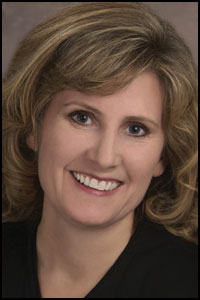
This is the Judge who ruled upon the physical bondage of the youth to Children's Villages.
Hon. Mary Ellen Brennan Presiding Judge of the Family Division Presiding Judge, Oakland County Family Court Division Presiding Judge, Oakland County Family-Focused Juvenile Drug Court Elected to the Oakland County Circuit Court on November 4th, 2008 Senior member of the Oakland County Family Court Bench Graduate - James Madison College of Michigan State University Graduate - Wayne State University Law School Judicial Staff Attorney, 44th District Court 2002-2008 Assistant City Attorney, City of Royal Oak 1998-2002 Assistant General Counsel, Meadowbrook Insurance Group 1996-1998 Assistant Prosecutor, Oakland County 1990-1996 https://www.linkedin.com/in/mary-ellen-brennan-71709454
Hon. Mary Ellen T. Brennan is the presiding judge of the Oakland County Juvenile Drug Court (Family Division). She was a judicial staff attorney for the 44th District Court from 2002 to 2008 and was elected to the Oakland County Circuit Court in 2008. Prior to that, Judge Brennan was an assistant city attorney for the City of Royal Oak, assistant general counsel of an insurance firm, and an Oakland County assistant prosecutor. She is a former board member of CARE House of Oakland County, an organization that offers prevention programming, forensic interviewing for victims of sexual abuse and assault, therapy as needed for victims, family-support services, and a court-appointed special advocate program for children involved with the court. Judge Brennan is also a former board member of the RESTORE Foundation, a group that raises funds for the adult and juvenile therapeutic drug treatment courts through private, tax-deductible donations. She is a graduate of Wayne State University Law School.
Slavery was never abolished because it was renamed gerrymandering and it was privatized through foreign Public Private Partnerships as tiny human asset forfeiture operations.
A 15-year-old in Michigan was incarcerated during the coronavirus pandemic after a judge ruled that not completing her schoolwork violated her probation. “It just doesn’t make any sense,” said the girl’s mother.
PONTIAC, Mich. — One afternoon in mid-June, Charisse* drove up to the checkpoint at the Children’s Village juvenile detention center in suburban Detroit, desperate to be near her daughter. It had been a month since she had last seen her, when a judge found the girl had violated probation and sent her to the facility during the pandemic.
The girl, Grace, hadn’t broken the law again. The 15-year-old wasn’t in trouble for fighting with her mother or stealing, the issues that had gotten her placed on probation in the first place.
She was incarcerated in May for violating her probation by not completing her online coursework when her school in Beverly Hills switched to remote learning.
Because of the confidentiality of juvenile court cases, it’s impossible to determine how unusual Grace’s situation is. But attorneys and advocates in Michigan and elsewhere say they are unaware of any other case involving the detention of a child for failing to meet academic requirements after schools closed to help stop the spread of COVID-19.
The decision, they say, flies in the face of recommendations from the legal and education communities that have urged leniency and a prioritization of children’s health and safety amid the crisis. The case may also reflect, some experts and Grace’s mother believe, systemic racial bias. Grace is Black in a predominantly white community and in a county where a disproportionate percentage of Black youth are involved with the juvenile justice system.
Across the country, teachers, parents and students have struggled with the upheaval caused by monthslong school closures. School districts have documented tens of thousands of students who failed to log in or complete their schoolwork: 15,000 high school students in Los Angeles, one-third of the students in Minneapolis Public Schools and about a quarter of Chicago Public Schools students.
Students with special needs are especially vulnerable without the face-to-face guidance from teachers, social workers and others. Grace, who has ADHD, said she felt unmotivated and overwhelmed when online learning began April 15, about a month after schools closed. Without much live instruction or structure, she got easily distracted and had difficulty keeping herself on track, she said.
“Who can even be a good student right now?” said Ricky Watson Jr., executive director of the National Juvenile Justice Network. “Unless there is an urgent need, I don’t understand why you would be sending a kid to any facility right now and taking them away from their families with all that we are dealing with right now.”
In many places, juvenile courts have attempted to keep children out of detention except in the most serious cases, and they have worked to release those who were already there, experts say. A survey of juvenile justice agencies in 30 states found that the number of youths in secure detention fell by 24% in March, largely due to a steep decline in placements.
In Michigan, Gov. Gretchen Whitmer issued an executive order in March that temporarily suspended the confinement of juveniles who violate probation unless directed by a court order and encouraged eliminating any form of detention or residential placement unless a young person posed a “substantial and immediate safety risk to others.” Acting on Whitmer’s order, which was extended until late May, the Michigan Supreme Court told juvenile court judges to determine which juveniles could be returned home.
Judge Mary Ellen Brennan, the presiding judge of the Oakland County Family Court Division, declined through a court administrator to comment on Grace’s case. In her ruling, she found Grace “guilty on failure to submit to any schoolwork and getting up for school” and called Grace a “threat to (the) community,” citing the assault and theft charges that led to her probation.
“She hasn’t fulfilled the expectation with regard to school performance,” Brennan said as she sentenced Grace. “I told her she was on thin ice and I told her that I was going to hold her to the letter, to the order, of the probation.”
That June afternoon, a month after the sentencing, Charisse left Children’s Village without seeing Grace, but she did pick up a shopping bag of clothes and toiletries she had delivered days earlier. She said officials had rejected them because they violated facility rules: underwear that wasn’t briefs; face wipes that contained alcohol; a pair of jeans deemed too tight.
Charisse counts each day they’re apart, and that was day No. 33. Another month has since passed, and there could still be months to go before they are at home together again.
Driving home, Charisse had to pull over soon after she turned onto the road leading away from the complex. She sat in a parking lot, sobbing.
“It just doesn’t make any sense,” she said. She shook her head as tears dampened the disposable blue face mask pulled down to her chin.
“Every day I go to bed thinking, and wake up thinking, ‘How is this a better situation for her?’”
It has always been just the two of them, Charisse and Grace.
Told by doctors that she would be unable to have children, Charisse, a consultant to nonprofit organizations, was shocked when she became pregnant at 44. She has raised Grace on her own after the girl’s father did not want to be involved, she said.
They did everything together: winter sports throughout Michigan, rounds of golf, going to the opera, singing to Tony Bennett on road trips. They even appeared in a “Pure Michigan” tourism ad. As a child, Grace wanted so much to be like her mother that she asked to be called Charisse No. 2.
When Grace hit her preteen years, however, their relationship became rocky. They argued about Grace keeping her room clean and doing schoolwork and regularly battled over her use of the phone, social media and other technology.
By the time Grace turned 13, the arguments had escalated to the point that Charisse turned to the police for help several times when Grace yelled at or pushed her. She said she didn’t know about other social services to call instead. In one incident, they argued over Grace taking her mother’s iPhone charger; when police arrived, they discovered she had taken an iPad from her middle school without permission. At her mother’s request, Grace entered a court diversion program in 2018 for “incorrigibility” and agreed to participate in counseling and not use electronic devices. She was released from the program early, her mother said.
While there was periodic family conflict, Grace has always had strong friendships and is active in her school and community, her mother said. She has helped run programs at church, played saxophone in the school band and composed music, and regularly participated in service projects.
The incident that led to her current situation happened Nov. 6, when someone called the police after hearing Charisse crying “Help me!” and honking her car’s horn. Grace, upset she couldn’t go to a friend’s house, had reached inside the car to try to get her mother’s phone and had bitten her mother’s finger and pulled her hair, according to the police report.
Police released Grace to a family friend to let the two cool down and referred the case to Oakland County court, where an assault charge was filed against her.
Weeks later, she picked up another charge, for larceny, after she was caught on surveillance video stealing another student’s cellphone from a school locker room.
“After I was caught, I felt instant remorse and guilt. I wanted to take back everything I had done,” Grace wrote in a statement to police. She said she had questioned herself even as she took the phone but wanted one after her mother took hers away.
The other student’s mother, who declined to comment for this story, told police she wanted to press charges, although the phone had been returned to her son soon after Grace took it. “My sincere hope is that any punitive action taken in this case be grounded in the goal of providing this student with opportunities for growth, change and future success,” she wrote in a statement to police.
In the months following the two incidents, Grace and her mother participated in individual and family therapy and Grace stayed out of trouble.
Charisse told a court caseworker assigned to the case that other than being irritable and getting “cabin fever” from being shut at home during the pandemic, “nothing significant” had taken place between the mother and daughter. There was no police contact after the November incidents, records show.
The April 21 juvenile court hearing on the larceny and assault charges against Grace was conducted via Zoom since the courts had shut down, with everyone calling in from their homes. Grace connected from her bedroom, her mother from their living room.
It had the familiar awkwardness of many online meetings: dropped audio; a dog barking in the background; participants swivelling in their chairs; the prosecutor losing his connection. (This hearing and others in the case were recorded, and a ProPublica reporter watched them at the Oakland County courthouse last month.)
Ashley Bishop, a youth and family caseworker for the court, told the judge she thought Grace would be best served by getting mental health and anger management treatment in a residential facility. The prosecutor, Justin Chmielewski, said he agreed. Grace’s court-appointed attorney, Elliot Parnes, said little but asked that she be given probation because she had committed no new offenses and because of the risk of COVID-19 in congregate facilities.
Parnes and Bishop declined to comment for this story and Chmielewski did not respond to calls.
Throughout the hearing, Grace took her glasses off to brush away tears and wiped her nose with her sleeve. She shook her head, which the judge later criticized as a sign of disagreement but which Grace told ProPublica signaled her disappointment in her past behavior. She raised her hand a couple times and asked, in a small voice, “Can I just say something please?”
“My mom and I do get into a lot of arguments, but with each one I learn something and try to analyze why it happened,” she said. “My mom and I are working each day to better ourselves and our relationship, and I think that the removal from my home would be an intrusion on our progress.”
Brennan admonished Grace for the fights with her mother, her thefts at school and behaving in a way that required police to come to their home. “Police,” she said. “Most people go through their entire youth without having the cops have to come to their house because they can’t get themselves together.”
But, citing the pandemic, Brennan decided not to remove Grace from her home and instead sentenced her to “intensive probation.” The terms of the probation included a GPS tether, regular check-ins with a court caseworker, counseling, no phone and the use of the school laptop for educational purposes only. Grace also was required to do her schoolwork.
“I hope that she upholds her end of the bargain,” Brennan said at the end of the hearing.
Schools across the country weren’t prepared for the abrupt turn to remote learning. Grace’s school, Groves High School, in one of the most well-regarded districts in the state, was no different.
In mid-March, thinking the closures might last for only a month, the district initially offered optional online activities and then recessed for an already-scheduled weeklong spring break. Soon after, Whitmer announced that schools would end face-to-face instruction for the rest of the year. The Birmingham Public Schools superintendent asked families for patience as schools moved to an online curriculum in mid-April and promised flexibility in their support. Officials said student work would be evaluated as credit/no-credit.
The initial days of remote school coincided with the start of Grace’s probation. Charisse was concerned that her daughter, who was a high school sophomore and had nearly perfect attendance, would have trouble without in-person support from teachers. Grace gets distracted easily and abandons her work, symptoms of her ADHD and a mood disorder, records show. Her Individualized Education Plan, which spelled out the school supports she should receive, required teachers to periodically check in to make sure she was on task and clarify the material, and it allowed her extra time to complete assignments and tests. When remote learning began, she did not get those supports, her mother said.
Days after the court hearing, on April 24, Grace’s new caseworker, Rachel Giroux, made notes in her file that she was doing well: Grace had called to check in at 8:57 a.m.; she reported no issues at home and was getting ready to log in to do her schoolwork.
But by the start of the following week, Grace told Giroux she felt overwhelmed. She had forgotten to plug in her computer and her alarm didn’t go off, so she overslept. She felt anxious about the probation requirements. Charisse, feeling overwhelmed as well, confided in the caseworker that Grace had been staying up late to make food and going on the internet, then sleeping in. She said she was setting up a schedule for Grace and putting a desk in the living room where she could watch her work.
“Worker told mother that child is not going to be perfect and that teenagers aren’t always easy to work with but you have to give them the opportunity to change,” according to the case progress notes. “Child needs time to adjust to this new normal of being on probation and doing work from home.”
Five days later, after calling Charisse and learning that Grace had fallen back to sleep after her morning caseworker check-in, Giroux filed a violation of probation against her for not doing her schoolwork.
Giroux told the prosecutor she planned to ask the judge to detain Grace because she “clearly doesn’t want to abide by the rules in the community,” according to the case notes.
Grace has said in court and in answers to questions from ProPublica that she was trying to do what was asked of her. She had checked in with her caseworker every day and complied with the other requirements of intensive probation, including staying at home and obeying all laws. She had told her special education teacher that she needed one-on-one help and began receiving daily tutoring the day after the probation violation was filed.
Giroux filed the violation of probation before confirming whether Grace was meeting her academic requirements. She emailed Grace’s teacher three days later, asking, “Is there a certain percentage of a class she is supposed to be completing a day/week?”
Grace’s teacher, Katherine Tarpeh, responded in an email to Giroux that the teenager was “not out of alignment with most of my other students.”
“Let me be clear that this is no one’s fault because we did not see this unprecedented global pandemic coming,” she wrote. Grace, she wrote, “has a strong desire to do well.” She “is trying to get to the other side of a steep learning curve mountain and we have a plan for her to get there.”
Giroux declined to comment. Tarpeh told a reporter she was not allowed to discuss Grace’s case.
The May 14 hearing to decide whether Grace had violated her probation, and what would happen if she had, took place at the Oakland County courthouse when the Family Division was hearing only “essential emergency matters.”
Grace’s case was the only one heard in person in the courthouse that day.
Crop of a court document describing Grace's sentence.
On May 14, Judge Mary Ellen Brennan found that Grace was in violation of probation for not submitting schoolwork and ordered that she be detained at Children’s Village in Oakland County, Michigan. (Records provided by Grace’s Family)
Grace’s attorney, concerned about his health, participated by Zoom, though he told the judge it was difficult to represent her without being there. He told the judge he decided not to request a postponement because the family was worried she would detain Grace if they waited for a later court date.
The prosecution called Giroux, the caseworker, as its only witness. In response to questions from Grace’s attorney, she acknowledged she did not know what type of educational disabilities Grace had and did not answer a question about what accommodations those disabilities might require. Her assessment that Grace hadn’t done her schoolwork was based on a comment her mother made to her teacher, which Charisse testified she said in a moment of frustration and was untrue.
Grace’s special education teacher, Tarpeh, could have provided more information and planned to testify but had to leave the hearing to teach a class, according to the prosecutor.
Grace and her mother testified that she was handling her schoolwork more responsibly — and that she had permission to turn in her assignments at her own pace, as long as she finished by the end of the semester. And, Charisse said, Grace was behaving and not causing her any physical harm.
The transition to virtual school had been difficult, Grace testified, but she said she was making progress. “I just needed time to adjust to the schedule that my mom had prepared for me,” she said.
Brennan was unconvinced. Grace’s probation, she told her, was “zero tolerance, for lack of a better term.”
She sent her to detention. Grace was taken out of the courtroom in handcuffs.
From March 16, when Michigan courts began limiting operations to mitigate the spread of COVID-19, to June 29, at least 24 delinquency cases involving youth in Oakland County court resulted in placements to juvenile facilities. Of those, more than half involved young people who are Black, like Grace.
Those numbers, obtained by ProPublica from the Oakland County Circuit Court, reflect long-standing racial disparities in the state and county’s juvenile justice system. From January 2016 through June 2020, about 4,800 juvenile cases were referred to the Oakland court. Of those, 42% involved Black youth even though only about 15% of the county’s youth are Black.
A report released last month, which found inadequate legal representation for juveniles in Michigan, noted that research has shown a disproportionate number of youth of color are incarcerated in Michigan overall. Black youth in the state are incarcerated more than four times as often as their white peers, according to an analysis of federal government data by The Sentencing Project, a nonprofit that addresses racial disparities in the criminal justice system.
“It is clear that kids of color are disproportionately involved and impacted by the system across the board,” said Jason Smith of the nonprofit Michigan Center for Youth Justice, which works to reduce the confinement of youth. “They are more likely to be arrested, less likely to be offered any kind of diversion, more likely to be removed out of the home and placed in some sort of confinement situation.”
In Grace’s case, too, she was sent to a facility at a time when the governor had encouraged courts to send children home.
At the county-run Children’s Village, which has space for 216 youth in secure and residential settings, the population was down to 80 last week, according to the facility manager. There have been no COVID-19 cases in the youth population and four workers have tested positive from contacts outside Children’s Village, she said.
During March and April, 97 juveniles were released from Children’s Village by court order, said Pamela Monville, the Oakland County deputy court administrator. “We understood the orders and the concerns to stop the spread,” she said. Judges, caseworkers and attorneys worked together to determine “who could go back to the community,” she added.
Juvenile justice experts and disability advocates decried the decision to remove Grace from her home, particularly when “the state gave clear directives that children, and all people, unless it was a dire emergency, were to be kept out of detention,” said Kristen Staley, co-director of the Midwest Juvenile Defender Center, which works to improve juvenile defense across eight states.
Terri Gilbert, a former supervisor for juvenile justice programming in Michigan and a high-profile advocate, said the system suffers from inconsistencies in treatment and sentencing, aggravated by a lack of public information.
“This is too harsh of a sentence for a kid who didn’t do their homework. … There is so much research that points to the fact that this is not the right response for this crime,” said Gilbert, a member of a governor-appointed committee that focuses on juvenile justice. “Teenage girls act out. They get mouthy. They get into fights with her mothers. They don’t want to get up until noon. This is normal stuff.”
Monville said Brennan, a judge since 2008, “made the decision she made based on what she heard and her experience on the bench.”
But officials at the Michigan Protection & Advocacy Service, the state disabilities watchdog organization, said they were especially troubled that a student with special needs — one of the most vulnerable populations — was punished when students and teachers everywhere couldn’t adjust to online learning.
“It is inconceivable that, given the utterly unprecedented situation, a court would enforce expectations about what student participation in school means that was not tied to the reality of education during a pandemic,” said Kris Keranen, who oversees education for the group.
Charisse says the “greatest pain and devastation” of her life was watching Grace handcuffed in the courtroom. She got a letter in the mail a few days later:
Handwritten letter from Grace to her mother while detained.
In the first letter to her mother while in detention, Grace wrote, “I want to be a better person.” (Records provided by Grace’s Family)
“I want to change. I want to be a better person. Here I’ve realized how much you care and love me. I’m sorry I took that for granted. Please continue to send me pictures of me and you or just with anyone. I love you mommy and I miss you.”
On Juneteenth, the day that commemorates the end of slavery, Charisse sat alone at her kitchen table, the wall behind her covered with Grace’s childhood artwork. As the country faced a reckoning over systemic racism, the day had taken on increased recognition and Charisse lamented she and Grace couldn’t mark it together as they usually did, attending programs at church or at the Museum of African American History in Detroit.
Charisse made strawberry lemonade with fresh watermelon, a variation on the traditional red Juneteenth drink, and talked to Grace the only way she could, through a video call monitored by a Children’s Village case coordinator. The longest they had ever been separated before was when Grace attended a leadership sleepaway camp for six weeks over the summer.
“Juneteenth is all about freedom and you can’t even celebrate. What do you have? It has been taken away,” she said to her daughter.
Other than three recent visits, they have seen each other only on screen, including during a court status hearing in early June. On that day, Charisse watched as Grace walked into a room at Children’s Village handcuffed and with her ankles shackled, her mother said.
“For us and our culture, that for me was the knife stuck in my stomach and turning,” Charisse said. “That is our history, being shackled. And she didn’t deserve that.”
“I Can’t Breathe.” It Happens at Schools, Too.
Students in Illinois schools said “I can’t breathe” while being restrained at least 30 times over the time period we investigated, according to our analysis of the records. The practice of face-down restraint is still legal in Illinois.
At the hearing, both Grace and her mother pleaded with the judge to return her home. “I will be respectful and obedient to my mom and all other people with authority,” Grace said. “I beg for your mercy to return me home to my mom and my responsibilities.”
The judge, however, sided with the caseworker and prosecutor. They agreed that Grace should stay at the Children’s Village not as punishment, but to get treatment and services. She ordered her to remain there and set a hearing to review the case for Sept. 8. By then, it will be a week into the new school year.
On Juneteenth, Charisse and Grace spoke for their full allotted 45 minutes. Grace wore a light blue polo shirt her mother had dropped off a few days earlier. Her hair was pushed back with a Lululemon headband.
Their conversation began with the mundane: Charisse reminded Grace to use her deodorant, and Grace said she needed to get her glasses fixed. But it landed, inevitably, at the frustration they both feel.
“I want you to write in your journal,” Charisse told Grace. She urged her “not to get too comfortable” in detention. “I want you to do what you are supposed to do, but I don’t want you to feel like this is your new norm.”
Grace’s initial weeks in detention were “repetitive and depressing,” she recently told ProPublica in response to written questions.
Grace was required to stay in her locked room from 8:30 p.m. to 8:30 a.m. She couldn’t turn the lights on and off herself and she slept on a mattress on a concrete slab, she said. She passed the time by reading, drawing and watching some TV.
The local school district provided packets of material but no classes. She said that she has not yet worked with a teacher in person or online, and that she meets less regularly with a therapist at Children’s Village than she did at home.
She has since been transferred to a long-term treatment program at Children’s Village, where she has a bit more freedom. Still, she tells her mother, it’s difficult to think about what she’s missing. “Everyone is moving past me now and I’m just here,” she said during the Zoom call.
A Children’s Village case coordinator, listening, tried to be encouraging. “You are doing very well right now,” she said. “Whatever happens, it looks good. You are respectful, you are following the rules.”
Then she told them their time was up.
“Stay strong,” Grace told her mom.
“You stay strong, too,” her mother replied. “I love you.”
“I love you, too.”
ProPublica is using middle names for the teenager and her mother to protect their identities.
There are unspoken gag orders in child welfare, where, if a parent speaks out, parental rights will be terminated and the child put up for adoption.
The "Guantanamo List" (Russian: список Гуантанамо) is the list of US politicians and citizens barred from the entrance into Russia for being responsible for human rights abuses, primarily in Guantanamo Bay detention camp, a "symmetric response" to the Magnitsky List.[1]HistoryInitially the list contained 11 US officials responsible to running the Guantanamo prison was compiled in December 2012.[2] The Russian law to match the Magnitsky Act was signed by Vladimir Putin on January 28, 2012.[2] In January 2013 a Russian Parliamentarian Aleksey Pushkov announced that the list was expanded to 60 persons, to include people related to the prosecution of Russian arms dealer Viktor Bout, described as politically motivated, and of a Russian drug dealer Konstantin Yaroshenko, allegedly kidnapped by the USA in Liberia.[1]In April 2013, the finalized list was published to include 18 US officials, four of which were related to Guantanamo and 12 were declared responsible to human rights violations with regard to Russian citizens abroad.[3]In July 2014, the Guantanamo list was expanded with 10 people responsible for Abu Ghraib torture and prisoner abuse and 2 more related to Guantanamo, a symmetric response to the American List of individuals sanctioned during the Ukrainian crisis.[4]List of banned people[edit]The people banned from Russia are listed below: US officials involved in legalizing torture and indefinite detention of prisoners:
Jeffrey Harbeson, US Navy officer, commandant of JTF-GTMO (2010–2012)
The Russian lawmakers also banned several U.S. officials involved in the prosecution and trial of Russian arms smuggler Viktor Bout and drug smuggler Konstantin Yaroshenko, both serving prison time in the United States:
Jed Rakoff, Senior US District Judge for the Southern District of New York
Preet Bharara, US Attorney for the Southern District of New York
Michael J. Garcia, former US Attorney for the Southern District of New York
Brendan R. McGuire, Assistant US Attorney
Anjan S. Sahni, Assistant US Attorney
Christian R. Everdell, Assistant US Attorney
Jenna Minicucci Dabbs, Assistant US Attorney
Christopher L. Lavigne, Assistant US Attorney
Michael Max Rosensaft, Assistant US Attorney
Louis J. Milione, Special Agent, US Drug Enforcement Administration (DEA)
Sam Gaye, Senior Special Agent, US DEA
Robert F. Zachariasiewicz, Special Agent, US DEA
Derek S. Odney, Special Agent, US DEA
Gregory A. Coleman, Special Agent, US Federal Bureau of Investigation
A Michigan security executive convicted of spying on the Russian government could appeal his 16-year sentence in a maximum-security prison colony within the next couple of weeks, according to one of his Russian lawyers.
Olga Karlova and Vladimir Zherebenkov plan to review next with Whelan the details of the appeal, which must be filed within about 10 days of sentencing.
It is unlikely that Whelan, 50, of Novi will serve his sentence at a maximum-security labor camp because "he is too important," Karlova said.
Whelan's family has expressed worry over the sentence but noted the verdict also might trigger further involvement from diplomats seeking some kind of deal to secure Whelan's release.
"The Russian government has been clear, through statements from the Ministry of Foreign Affairs, that it expected to extract concessions but that Paul's inclusion in those discussion would only happen after a conviction," Paul's brother, David Whelan, said in a statement Monday. "That time is here."
Karlova on Monday said she and Zherebenkov have heard rumors of an exchange with the United States for Victor Bout and Konstantin Yaroshenko. Bout is a Russian arms trader convicted in 2011 of conspiring to sell weapons to Colombian rebels, while Yaroshenk is a Russian pilot arrested for conspiring to smuggle cocaine into the U.S., according to the Associated Press.
Secretary of State Mike Pompeo said in a statement Monday that the United States is outraged with the Monday ruling, which occurred after a "secret trial, with secret evidence, and without appropriate allowances for defense witnesses."
Pompeo demanded Whelan's release.
"We have serious concerns that Mr. Whelan was deprived of the fair trial guarantees that Russia is required to provide him in accordance with its international human rights obligations," he said.
Whelan, a former U.S. Marine and director of global security for Auburn Hills auto parts supplier BorgWarner, was arrested in Moscow in December 2018 and charged with espionage, which carries an up to 20-year prison sentence. Russia’s Federal Security Service arrested him at his hotel after agents allegedly found a USB drive with classified information in his room.
His family has said he was visiting the city for a friend's wedding.
Whelan has told reporters in Moscow that a Russian friend in law enforcement planted the storage drive without his knowledge. He has denied being a spy.
U.S. officials have decried Russia's handling of Whelan's case, noting there has been no credible evidence produced in court to show Whelans' guilt and prison officials at times have delayed Whelan's medical treatments.
“During his detention, Mr. Whelan has endured unimaginable hardships," Michigan's Congressional delegation said Monday. "He was denied necessary medical care until his condition required a life-saving emergency surgery. He was barred from speaking to his family for over a year. He has been threatened by prison guards.
“Despite months of harsh and cruel treatment, we remain steadfast in our commitment to working with the Whelan family to end this nightmare. Mr. Whelan should not continue to be held as a political prisoner, and he should be allowed to return home to his family in Michigan immediately.”
David Whelan also criticized the sentence Monday and called on President Donald Trump "to bring Paul home."
"The court's decision merely completes the final piece of this broken judicial process," David Whelan said. "We had hoped that the court might show some independence, but, in the end, Russian judges are political, not legal, entities."
I just do not understand how people so readily forget that Pompeo was running in the aeronautics industry before he got a law license, long before he was appointed by Trump to be CIA Director, which means he already knows what is going on with Whelan.
In 1998, Pompeo moved to Wichita, Kansas, where he and three other West Point friends, Brian Bulatao, Ulrich Brechbuhl, and Michael Stradinger, acquired three aircraft-part manufacturers there (Aero Machine, Precision Profiling, B&B Machine) and in St. Louis (Advance Tool & Die), renaming the entity Thayer Aerospace after West Point superintendent Sylvanus Thayer.[23][24][25] Venture funding for the private organization included a nearly 20% investment from Koch Industries [26] as well as Dallas-based Cardinal Investment, and Bain & Company (Brechbuhl worked for Bain at the time).[27][23] Brechbuhl and Stradinger left the company shortly after it was founded, but Pompeo and Bulatao continued. In 2006, he sold his interest in the company, which by then had been renamed Nex-Tech Aerospace, to Highland Capital Management, which had clients including Lockheed Martin, Gulfstream Aerospace, Cessna Aircraft, Boeing, Spirit AeroSystems and Raytheon Aircraft.[28] Pompeo then became president of Sentry International, an oilfield equipment manufacturer that was also a partner of Koch Industries.[29] In 2017, when Pompeo became head of the CIA, he named his former business partner, Brian Bulatao, the agency's chief operating officer.[24]
After nearly 18 months in prison, Michigan's Paul Whelan is expected to be sentenced Monday in Moscow as his espionage trial there concludes.
Prosecutors are seeking up to 18 years in a labor camp, which Whelan's family and attorneys consider particularly harsh, Whelan's twin brother David said.
Whelan, 50, of Novi has maintained his innocence. His attorneys pressed for acquittal.
His family doesn't really know what’s going to happen Monday, but they expect Whelan will be automatically convicted under Russia's justice system, which involves no due process. A conviction in Russia, David said, means the defendant didn't confess.
"I’m concerned and anxious for Paul. No one wants to be sentenced to 18 years, even if it’s for show. He is the one who will face going to a labor camp in 30 days," David said. "But I really am very hopeful that finally that’s out of the way."
The family is eager for the verdict because that means Whelan can finally move to the next step, where diplomats become heavily involved.
The Russian foreign ministry has indicated during the last year its interest in trading the American for certain Russian prisoners or for access to diplomatic properties the they've been denied access to in New York and Maryland, David said.
"Conviction is a necessary occurrence, so that Paul can then be considered in that potential for whatever concession the Russian government is looking for," David said.
"The sentence is almost immaterial because we don’t want him to have any of the sentence over there. It’s much more about getting past this procedural milestone, so on the government-to-government side they can have discussions about some sort of future exchange."
Paul Whelan, who grew up in Ann Arbor, was arrested in December 2018 in a Moscow hotel room and charged with espionage, which carries up to 20 years in prison in Russia.
The former U.S. Marine was director of global security for auto parts supplier BorgWarner in Auburn Hills and was visiting Moscow for a friend's wedding, according to his family.
He has denied being a spy and urged President Donald Trump to intervene, telling reporters in Moscow that a Russian friend in law enforcement planted a hard drive on him without his knowing.
Russian media reported during the trial that Paul believes Ilya Yatsenko, an FSB agent, set him up to avoid repaying a $1,400 loan to Paul, David said. The FSB is the successor agency to the communist KGB secret police.
In prison, Paul was denied treatment for a painful hernia that worsened and led to emergency surgery two weeks ago. He was transferred back to Lefortovo prison the next day, David said.
U.S. lawmakers and diplomats have repeatedly urged Russia to send Paul home, criticizing the fairness of the judicial process, the lack of evidence against him and the conditions in which he's been held.
“We ... call on Russia to do the same for Paul Whelan, who needs to be released now," Secretary of State Mike Pompeo told reporters Wednesday in Washington.
Ryan Fayhee, the Whelan family's attorney, has said Paul doesn't fit the profile of a spy, as the U.S. government wouldn't send someone to engage in intelligence gathering without diplomatic cover.
It's unclear why Paul was arrested — whether it was carefully orchestrated or was the product of negligence, said Fayhee, who worked in the Justice Department's counter-espionage section.
"What is clear is that Paul is not a spy and that he has subsequently been held, isolated from his family and subjected to a secret 'trial' that will lead to its forgone conclusion," Fayhee said Friday.
"This has all been done to seek some advantage or to extract some benefit from the U.S. government, as has been made quite clear time and again openly by Russian officials."
As a matter of policy, U.S. officials have necessarily been deferential to the Russian judicial process, Fayhee said, but once there is a conviction that deference will cease on both sides.
"And so, optimistically, Paul’s family very much hopes that with Paul’s conviction, a more intensive political process can begin after 18 long months," Fayhee said.
"We hope and expect, come Monday, the full court press will begin. ... We look forward to the coming engagement, whatever it brings."