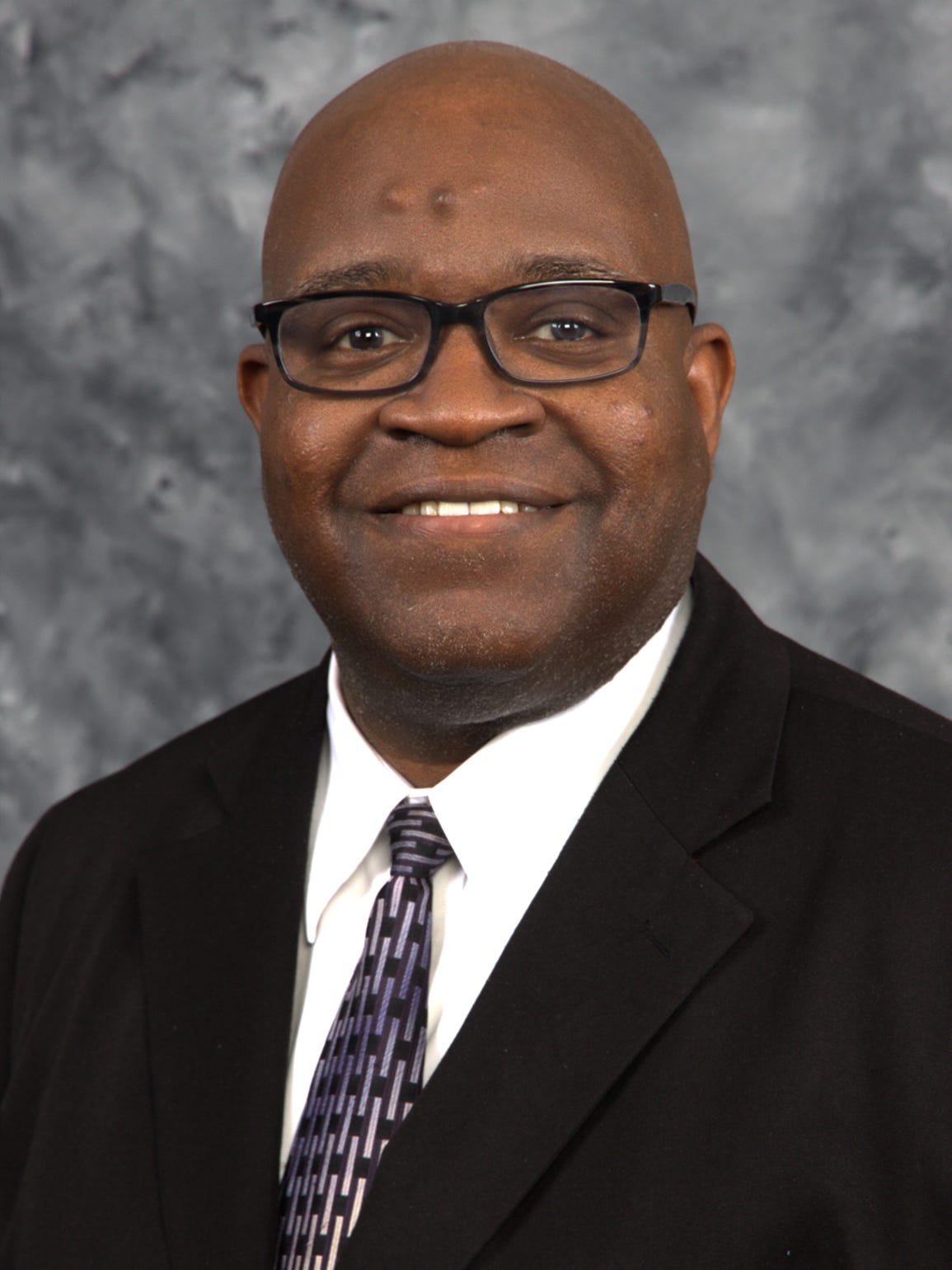
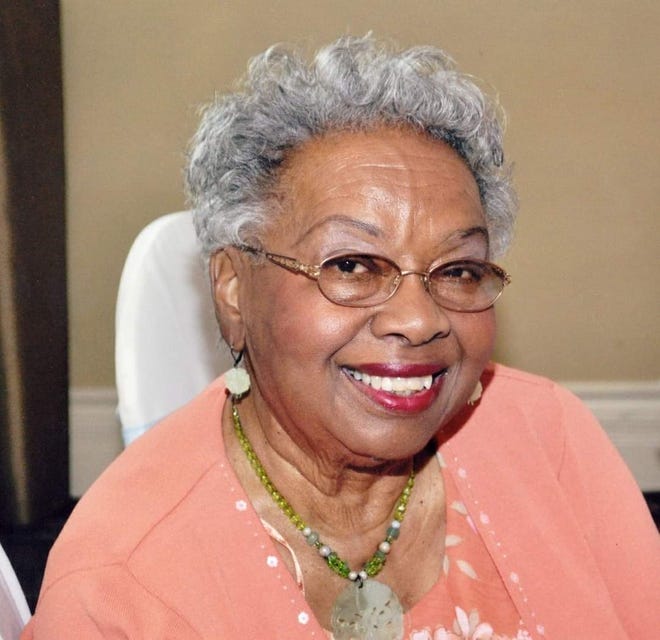
LANSING — Alma G. Stallworth, a longtime state House representative from Detroit who founded the Michigan Legislative Black Caucus Foundation, died Tuesday at age 87.
A trailblazer who was the longtime chair of the House Public Utilities Committee in the days before Michigan term limits, Stallworth played a key role in creating legislation that regulates and deregulates electric and telephone companies and other utilities in Michigan.
Alma Stallworth
Born in Little Rock, Arkansas, Stallworth was first elected to the state House in 1970, serving first through 1974, then without interruption from 1983 through 1996. She served a final term from 2003 through 2004. She also served on the board of Detroit Public Schools after a 2005 appointment.
Stallworth's two sons, Thomas and Keith, also served in the Michigan Legislature.
Thomas F. Stallworth III said on Facebook Tuesday that her death came less than a year after the death of his father.
"Mom has joined Dad, her partner of 65 years, in the arms of the Lord after living long full lives," he said. "We have truly been blessed to have them and I will rejoice in continuing to hear their voices in all that I do."
Alma Stallworth was known for her work improving foster care in Michigan and fighting child abuse. She served as president of the metro Detroit affiliate of the National Black Child Development Institute and as a board member of the Federation of Girls Homes and the Children's Aid Society of Michigan, according to her legislative biography.
The Black Caucus Foundation works on policy issues and diversity training, among other areas, and has fellowship and internship programs for students.
In 1988, Stallworth was part of an official delegation that observed the German elections uniting east and west Berlin.
"Alma helped pave the way for Black legislators and her legacy lives on through them, including her own sons," said House Minority Leader Christine Greig, D-Farmington Hills.
"We owe her a debt of gratitude for her years of public service. I offer my deepest condolences to Alma’s many loved ones and admirers.”
The walls of Denby Salvation Army House of Horrors for children Legally Kidnapped by Child Protective Services can not talk, but the children who survived can.
Denby was a temporary, 30 day emergency shelter of Child Protective Services for children over the age of 10 years.
When taking a tour of the property, as you consider your acquisition, close your eyes and imagine the gang rapes, beatings, drugging and torture of a little 8 year old boy, for nine months, all funded through Medicaid, and no one cared.
Always remember, the bloody screams of children can always be silenced with higher doses of psychotropic medication when running human lab rat research.
The over 90,000-square-foot campus has been vacant since a Salvation Army facility closed in 2016
A long Tudor mansion with different sections of brick, stone, and stucco. A large yard with to straight cement paths intersect in front.
The Denby Center at 20775 Pembroke Avenue totals seven buildings. Photos by Stylish Detroit
The Denby Center has had trouble finding a permanent owner and use. The mansion and grounds have changed hands multiple times since the Salvation Army Denby Center for Children & Family Services, a facility for at-risk youth and teens, left in 2016.
The nearly four-acre, 92,875-square-foot campus sold to Southfield-based IDG Holdings LLC for $515,000 in 2017. This year, it sold to ARI Management LLC—also registered in Southfield—for $1.8 million after sitting on the market for over a year and first listing for $3 million.
Once again, it’s back on the market for $2.95 million.
At the time of the last sale, Crain’s Detroit Business reported that new owner Ieshula Ishakis was looking to build a facility to house and serve homeless veterans. Many of the windows are still boarded up and it’s unclear how much if any work has been done. IDG told Crain’s it spent around $250,000 on maintenance and upkeep.
The Denby Center was at one point just a Tudor Revival mansion designed by Jameson & Graves and built in 1931. The gorgeous building has a stucco and brick facade with some stone accents, bay windows, half-timbering, and a turret. It contains classrooms, sleeping quarters, a chapel, and offices. A cafeteria and gymnasium were added later.
Today, it takes up a whole city block with paved paths between seven buildings and a surface parking lot. Three, one-story cottages were built between 1980 and 2010. They’re between 6,000 and 8,000 square feet and all contain office space, laundry rooms, common rooms, bedrooms, and bathrooms.
Want to own an entire campus? 20775 Pembroke Avenue near 8 Mile Road is listed with Kim Page of Front Page Properties for $2.95 million.
The brick front entrance and second-story wood deck.
Front entrance to the original Tudor mansion.
Mailing Address: The Jason Foundation, Inc.
18 Volunteer Dr.
Hendersonville, TN 37075
Phone:(615)264-2323
Email: info@jasonfoundation.com
Website: www.jasonfoundation.com
ORGANIZATIONAL INFORMATION
Entity Type: CorporationState Established: TNDate Created: 10/01/1997
501(c)(3): YesEIN: 62-1714715
Purpose Statement: PROVIDE EDUCATION AND AWARENESS PROGRAMS TO SUPPORT IN THE AID OF YOUTH SUICIDE PREVENTION.
FILING STATUS
Solicitation Registration Status Charitable Trust Registration Status
Registered - Expiration Date: 7/31/2020Exempt
FINANCIAL INFORMATION
Data is taken from the organization's IRS return or, if no return
was filed, from its solicitation registration or financial statements.
Period Ending 12/31/2018
Total Revenue $1,442,068.00
Total Expenses $1,339,493.00
Revenue Less Expenses $102,575.00
Reports Filed 990/CPA Audit
Total Assets $3,470,240.00
Net Assets $3,298,092.00
Expense breakdown % of Total
Expenses Charitable Programs Program Services $1,189,655.0089.00 % Supporting Services Mgt & General* $118,363.009.00 % Fundraising* $31,475.002.00 % Total Supporting Services $149,838.0011.19 %
=====================================================================
Source US Federal Central Contractor Registration, http://www.acquisition.gov/
RELATED DATA
Company Addresses
COMPANY ADDRESS
1220 L ST NW STE 400, WASHINGTON, DC, 200054013
ID Number: 801868371
Summary for: BCA OF DETROIT, LLC
The name of the FOREIGN LIMITED LIABILITY COMPANY: BCA OF DETROIT, LLC
Entity type: FOREIGN LIMITED LIABILITY COMPANY
Identification Number: 801868371Old ID Number: B94531
Date of Qualification in Michigan: 09/11/2008
Organized under the laws of: the state of Delaware
Purpose:
Term: Perpetual
The name and address of the Resident Agent:
Resident Agent Name:THE CORPORATION COMPANY <=== a foreign agent not registered under FARA because everyone is stealin' the children, land and votes in Michigan and attorneys have immunity...but not for much longer.
Street Address:40600 ANN ARBOR RD E STE 201
Apt/Suite/Other:
City:PLYMOUTHState:MIZip Code:48170
Registered Office Mailing address:
P.O. Box or Street Address:
Apt/Suite/Other:
City:State:Zip Code:
When a youth would file one of those Recipient Rights Complaints, it was always tossed.
I know.
I used to talk to them.
Then I would file a grievance with Michigan, strictly for documentational purposes, only, because all they did was toss, or send me a gratuitous phone call, or dismissive missive, letting me know everything was status quo.
See, there are no civil rights in child welfare because it is all privatized under foreign corporate shape shifters who like to use LLCs because it is easy to dissolve, or bankrupt, or sell, gift, trust or something, right after you get the state grants. contracts and the fake ass Medicaid cost reimbursements because, more than likely, they took out some mortgages, DLA Small Business loan, TARP, then quiet titled, then mortgaged again, or some stealin' like that.
0121028489.15000 GRATIOTDETROITBCA REAL ESTATE HOLDING LLC
0121028489-9015000 GRATIOTDETROITBCA REAL ESTATE HOLDING LLC
0121991831.0115000 GRATIOTDETROITA & H PHARMACY SERVICES INC
0121991831.0215000 GRATIOTDETROITBERGEN BRUNSWIG DRUG COMPANY / PMB 308,LEASED TO:SCCI HOSPITAL OF DETROIT
0121991831.0315000 GRATIOTDETROITZEVEX INC
0121991831.0415000 GRATIOTDETROITABRAMSON, SAMUEL M MD PC / A/K/A ST JOHN GRATIOT CENTER
0121991831.0515000 GRATIOTDETROITSARATOGA URGENT CARE PC
0121991831.1015000 GRATIOTDETROITST JOHN HOSPITAL
0121991831.1515000 GRATIOTDETROITTRIUMPH HEALTH CARE,TRIUMPH HOSPITAL OF DETROIT
0121991832.0015000 GRATIOTDETROITSARATOGA GENERAL HOSPITAL
0121991832.0115000 GRATIOTDETROITUNIVERSAL HOSPITAL SERVICES INC
0121991833.1015000 GRATIOTDETROITCOMPUTER SCIENCES CORPORATION / DBA: COMPUTER SCIENCES<====Dyncorp
0121991834.0115000 GRATIOTDETROITSARATOGA MGMT INC
All they ever want is to turn a profit.
How is it one can turn a profit when engaging in the healing of a child?
Medicaid Fraud in Child Welfare, of course.
Oh, there are so many fraudulent billing scams that go on in child welfare.
I used to let them take me in their offices and show me everything, including voicing their grievances that Michigan will not do a damn thing for these children.
Remember, there are no civil rights in child welfare because it is privatized, where the foreign entity comes up with its own, self-reporting, of all the wonderful things they do for kids.
Lawmakers call for more review of post-release deaths
Notification of Death Report
LANSING (WXYZ) — Since 2017, at least four patients have died within two days of being released from StoneCrest Hospital, a private inpatient psychiatric facility in Detroit. Despite being notified of each of the deaths, state officials never investigated.
Officials with LARA, the Department of Licensing and Regulatory Affairs, say they’re not legally required to follow up on deaths like these, nor are they empowered to by statute. Today, in response to an investigation by 7 Action News, two state senators are calling for changes to ensure that post-release deaths are investigated.
RELATED: A Detroit psychiatric hospital released him Thursday, he took his life Friday
At 162 beds, StoneCrest is one of the largest private psychiatric facilities in the state. 7 Action News first investigated the hospital earlier this year, after one of its patients, Joe Sadlak, admitted to murder only two days after he was discharged.
He had been treated at StoneCrest for less than a week.
“You put my son on four different kinds of medication and knew his drug history,” said Pamela Rowley, Joe’s mother, “and you let him go.”
In Michigan, when a psychiatric patient dies within two days of being released from a hospital, the state requires the hospital to report it. Those reports come to the Department of Licensing and Regulatory Affairs.
In September 2017, StoneCrest reported that a patient came to its hospital after stating he “was not happy in his life and wanted to die.” After treatment, he was released and died shortly thereafter. StoneCrest reported the death to the state, listing the cause as “not known.”
Less than a month later, another patient came to Stonecrest after saying he wanted to “jump off a bridge.” Within 2 days of release, he was found dead in his bathtub with his throat cut. State officials from LARA didn’t investigate.
A third death would be reported the following July. A woman came to Stonecrest with a history of suicidal behavior. She was treated, released and—the next day—found dead in a river. The cause of death was listed as “unknown.” Again, state officials didn’t investigate.
Then, this past June, a 29-year-old Detroit man came to Stonecrest after displaying severe psychotic behavior. He was deemed well enough to be released, but took his life the next day.
“Did your office ask any questions about that?” asked Channel 7’s Ross Jones.
“Again, we’ve been doing our statutory requirement,” said Larry Horvath, the Director of the Bureau of Community and Health System at LARA
“Did you ask any questions about that?” Jones asked again.
“We required the report to be filled out,” Horvath said.
“And that’s it,” Jones replied.
“Yes,” Horvath said.
Officials asked no questions, according to a spokesman, because “LARA is not by law or rule required to follow up on these reported deaths,” nor—they say— does the law give them the express authority to. State watchdogs are empowered to investigate only deaths that occur in restraints, Horvath said.
The death reports are reviewed during regular inspections, but no investigations are launched. Horvath said he hopes hospitals use the reports to guide their treatment.
"If they're starting to notice a pattern with a cause of death that occurs have discharge, hopefully they're starting to work with their medical directors, their nursing staff, their social workers to put corrections in place to address it," he said.
“It’s inexcusable,” said Mark Reinstein, President and CEO of the Mental Health Association in Michigan. “To hide behind, ‘It’s not our legal responsibility.’ Well then whose is it?”
By law, LARA is required to report all psychiatric deaths reported to them to the state legislature. But they haven’t been, 7 Action News has learned, for at least the last three years. In August, prompted by our reporting, the state submitted reports for 2016, 2017 and 2018, though they did not include post-release deaths.
Following our questions, LARA changed the reporting requirements for post-release deaths—no longer requiring that deaths occurring within 48 hours of discharge be reported. Spokesman Jason Moon said changing the policy aligns LARA with state law, which doesn’t require notification of post-release deaths.
The decision stunned multiple mental health advocates, including Andrea Rizor, the Director of Advocacy for Michigan Protection and Advocacy Services,.
“It looks like they don’t want to know if it’s a suspicious death or not,” she said. "It doesn't make sense."
This week, in response to 7 Action News' findings, the Democratic leader in the state senate is calling for changes.
“Stories like these are deeply concerning, and as a state we should be doing all that we can to help stop these preventable deaths,” said Senate Minority Leader Jim Ananich (D-Flint). “The department should have the ability to identify concerning patterns, and if it requires a legislative fix to make sure they are empowered to do so, we will write the bill.”
Dismantle the Office of Children's Ombudsman and let local peace officers make referrals for
assistance, like calling one of the relatives or someone who cares to step in and help the family.
Stop stealin' the children, the land and the votes.
Stop making people poor.
If there is a crime, put it through law enforcement channels of due process.
Take a big red marker and rescind the entire Child Welfare Law in Michigan, but you will have to start with the U.S. Department of Health and Human Services, first.
Prosecute everyone at the Michigan Children's Institute in a federal jurisdiction, where I can come up with lots of antitrust law violations to start, and I would not dismiss the idea of war crimes.
Revoke the licenses, dissolve contracts, prosecute and recover every single last penny from these foreign corporate, privately contracted Child Placing Agencies, where you can start with the Michigan Catholic Conference.
Every "Elected One" who has taken political campaign funding from child welfare NGOs should be defrocked of office.
Commence federal asset forfeiture for every pharmaceutical which has engaged in drugging of Michigan's drugging of children, including every use of Foster Children as lab rats.
I understand that these concepts of trafficking tiny humans for revenue maximization of foreign corporations in Michigan are going to be difficult to understand, but that is why we have a justice system and hand held devices to watch as it goes down, in real time.
What about the Foster Children who are raped, denied education, beaten, tortured or will these continue to be omitted from the public discourse as "Valid-Not-Opened" category of investigations of the Children's Ombudsman Office?
Anyway, this is not the first time the concept of fixin' to do somethin' has come up in legislative initiatives because this has been going on since the Emancipation Proclamation because it all started here, in Michigan.
I believe the public should be able to see the billions upon billions profited off children of "The Poors" (always said with clinched teeth) and the faces of those "Elected Ones" who did absolutely nothing but take another fashion show selfie.
Will Nancy Edmunds do anything besides let Michigan drop another $100 million to the people who already got $200 million for a antiquated SACWIS that needs to be sent back to the 20th century from whence it came?
Probably not, but I bet more children will be beaten, drugged, raped, tortured, attempt suicide and successfully execute suicide to escape from Foster Care, while Nancy Edmunds allows the case to linger another decade in her courtroom.
This may be a tall order but it is always best to understand that not everyone can eat an entire bowl of rice at one time, and, in this instance we shall start with two grains of rice, the first being Ricky Holland, who died, brutally, and another little boy, who used to die, then come back, and die, and be drugged more, raped, beaten, tortured, die, then come back to survive a life of hell in Michigan's Foster Care System.
Lansing – A legislative oversight panel says the public should see the results of state investigations into the deaths of children who are involved with Michigan’s child welfare system.
The recommendation was included in a report adopted unanimously Thursday by the House Oversight Committee. It stems from lawmakers’ review of an audit released in April that found that the state Department of Health and Human Services did not notify the Office of Children’s Ombudsman of 206, or 20%, of child deaths from 2014 through 2017 because workers did not check a box in a cumbersome software system.
The office independently investigates complaints involving children who are under state oversight for reasons of abuse or neglect, and checks to see if public or private agencies followed laws and policies.
Current law only lets people who can file complaints with the ombudsman’s office – including parents, guardians, their attorneys, mandated reporters or legislators – get the written findings, recommendations and DHHS response to the ombudsman’s investigation. The House panel recommended that the ombudsman be required or allowed to publicly release the information.
A similar recommendation was made by the children’s ombudsman in her most recent annual report.
“This is an issue of transparency. It’s an issue of accountability,” said Rep. Matt Hall, a Marshall Republican who chairs the committee.
Another recommendation would give the ombudsman discretion to do preliminary investigations – not full reviews – in child death cases, freeing the agency to focus on complaints involving living children who remain in the system.
Children’s Ombudsman Lisa McCormick, who was appointed to the post by Gov. Gretchen Whitmer in January, told lawmakers in June that there is value in looking at every child death but her office should have leeway, particularly because some deaths are accidental and not the result of violence.
“When you have the discretion to make those decisions on which cases you fully investigate, you can focus your attention on the real issues in child welfare and address those,” she said.
Rep. David LaGrand, a Grand Rapids Democrat, said there are instances where “death happens for some tragic reason that had nothing to do with good parenting. To put those parents through a complete investigation when early on you are confident that this was not anything the parents could have or should have done differently is to put traumatized people through a really crummy experience.”
The panel also said whatever software replaces the failed MiSACWIS system should provide a more efficient way for child deaths to be reported to the ombudsman.
The state is pulling the plug on the network that was rolled out in 2014 and which has cost more than $200 million to build and service.
In March, U.S. District Judge Nancy Edmunds told state officials to come up with a solution after an expert reported an “unmanageable backlog of defects, incidents, and data fixes” that might never end.
FUN FACT! DEATH IN FOSTER CARE IS CALLED A STATISTICAL ERROR!
The Office of Children's Ombudsman is a poorly constructed cover up operation that is powerless, to the point that their reports are not allowed to be entered into a court of record, they do not refer anything for suspected, alleged, violations of law or policy, and absolutely will not refer to the State Attorney General for Medicaid fraud in child welfare.
These people allowed the murderers of Ricky Holland to adopt his siblings, during a murder investigation, and not a damn thing has been done.
The Office of Children's Ombudsman used to have a category called "Valid-Not-Open" meaning, a complain of a child being tortured and trafficked in foster care is valid, but due to budget constraints and personal self-interests, there will be no investigation.
If there were investigations, there would be found billions upon billions in Medicaid fraud in child welfare, and as we all know, the system is too big to fail, for it is nothing but the residuals of the peculiar institution, maximizing revenue for foreign corporations, in the name of the tax exempt god.
These people make you pray as your child is being drugged as a lab rat and being raped, nightly.
in Michigan’s child death reporting system, a state audit is demanding a fix.
A report released Tuesday by Michigan’s Auditor General found Michigan’s Department of Health and Human Services failed to notify a watchdog promptly of 206 child deaths from 2014 through 2017.
That watchdog, the Office of Children’s Ombudsman, is an independent agency mandated by state law to review the deaths of children who have had recent contact with Michigan’s foster care, child welfare or child protection system. The goal is to identify if Children's Protective Services caseworkers failed to follow policy or could have done things differently to better protect the child.
But the ombudsman can’t conduct those reviews if MDHHS fails to notify the watchdog of qualifying deaths.
"It’s certainly a huge concern that these child death alerts were missed because it’s important that we’re the oversight for (CPS within MDHHS)," said Lisa McCormick, the recently appointed head off the Office of Children’s Ombudsman.
McCormick stressed the OCO ultimately did receive and review all of the unreported death cases.
"There were 206 cases that we went back and reviewed, but the important thing to note is that we did review them, and that MDHHS came to the table and they worked with us to make sure we were getting all the cases," she said.
In recent years, on average, the ombudsman received 267 child death alerts annually.
The 206 missed alerts comprised 20% of the total death cases reported over a four-year period.
The audit also urged the ombudsman to find ways to independently identify child deaths that require OCO reviews.
"The auditors made a valid point, which is why we have auditors to improve our procedures, to tell us this is a deficit, this is a hole that’s missing, let’s address it and move forward," McCormick said.
Nancy Edmunds, the judge presiding over the decade lingering Children's Rights case, Dwayne B. v. Granholm, has yet to figure out that nothing has changed.
Every time Kevin Ryan submits another court monitored report on the progress of Michigan's child welfare system, he only reports on microcosmic duct taped repairs to the conditions of its operations, or, rather, in more realistic terms not reported to the court, the drugging, rapes, beatings, torture, suicides, unsuccessful or successful, oh, and that pesky issue of child trafficking.
Now, mind you, Derrick is only a teen.
He is not a lawyer.
He is not a judge.
He is not an accountant.
What he is, is a young man with a keen eye and a quick response for a brave solution, skills necessary to preside over the Michigan federal case on conditions of foster care and adoption.
So, riddle me this.
How come foster kids get passed around to lots of different places, with their worldly possessions in a plastic bag, with no shoes?
The last time I checked there was federal funding appropriated to the States to provide for the necessary needs of the child.
FUN FACT! CPS CAN REMOVE YOUR CHILD AND PLACE THEM IN FOSTER CARE BECAUSE FAILURE TO PROVIDE FOR THE NECESSARY NEEDS OF THE CHILD IS CHILD ABUSE AND NEGLECT
It seems we have two issues here, the first being an instance of some form of defalcation in funding, because I would really like to know why a young man has to step up and shed light upon the fact that these kids have no shoes.
The second being that Michigan is abusing and neglecting the children in its care and no one cares but this young man.
Rock on, Derrick, I see a very bright future for you.
I wonder if Nancy Edmunds can finally see that the Michigan Child Welfare System Sucks?
(FOX 2) - Seeing the need for foster children in our area, a Holly teen decided to do something about it.
He doesn't know what it's like to walk in their shoes, but he is trying to make sure they have a new pair of their own.
"I just thought helping the community would be a good thing to do," said Derrick Newman.
"Once he kids an idea, it is forward ho!" said his dad Steven Newman.
His dad isn't exaggerating. You first met Derrick Newman in August of 2017 when he began collecting patches from police and fire departments all over the world
.
After FOX 2's story aired. his collection grew from 1,000 to almost 5,000 - with people sending them to him from as far away as Australia. His patches were sewn onto blue banners paying tribute to the officers and firefighters who put their lives on the line every day.
Now at 14, Derrick has a new mission - his dad and step-mother are in the process of adopting a foster child which got Derrick thinking.
"Most people will give them tooth brushes, toothpaste, shirts stuff like that," Derrick said. "Not shoes."
Learning about the tough times foster kids experience like often moving from home to home, Derrick decided he wanted to help.
He started a shoe drive on Facebook called "Going Somewhere (Shoes for Children in Foster Care). He is asking people to donate new pairs of money so they can purchase footwear for kids in need.
"I think that kids that are going to need a little more time to be adopted, should be able to have new pair of shoes when they need it," he said.
"A lot of foster kids - they are kids - they grow out of shoes quick, just like any kid," Steven said. "But they don't have the support to get new shoes all the time. Hopefully this will help."
Slowly the shoes are trickling in - but with the help of his dad, Derrick refuses to give up. He visits stores, posting videos and hoping people will find it in their hearts to help.
"I think it is awesome that we have gotten so much donated to us, to be able to get shoes," Derrick said.
The foster care agency connected to the disappearance and drowning of a severely autistic boy has closed under an agreement with the Michigan Department of Health and Human Services.
Alternatives Services for Children and Families voluntarily surrendered its license and closed on Monday, July 1, 2016, according to an agreement with MDHHS Executive Director Steve Yager.
A state investigation into 9-year-old Omarion Humphrey's death recommended the license surrender. Investigators found that Alternative Services for Children and Families' license should be revoked because of licensing violations at multiple foster homes, MDHHS Spokesman Bob Wheaton said.
Humphrey was visiting Lake Callis in Davison Township with his foster family on July 4, 2015, when he disappeared. Six days later, following a massive search, his body was found in the lake. He apparently drowned.
Body in lake believed to be missing autistic boy, police said.
DAVISON TWP, MI - A body found today in Lake Callis is believed to be that of missing 9-year-old boy with autism, Omarion Humphrey, police said. Rescue crews have found a child's body in the water in Lake Callis in Davison Township....
Last year, the state verified that the 95 children under Alternative Services for Children and Families were safe and began transferring those cases to other private agencies and to MDHHS foster care workers.
Alternative Services for Children and Families still had about 40 children under its care as of June, but all cases were transferred by July 1, Wheaton said.
"Protecting vulnerable children is our top priority," Yager said. "We kept that in mind in recommending revocation of the license and in handling the closing. We took numerous steps to make sure that all children and foster families received appropriate services during this transition."
Revocation of a foster care agency license is rare and occurs when there are serious licensing violations that make closure necessary to protect children, the state said. Alternatives worked collaboratively with the department in reaching an agreement to surrender its license, according to a statement.
The Flint Journal-MLive.com could not reach a representative for Alternatives for Children and Families for comment.
An August report from the MDHHS initially recommended the license revocation saying Alternatives for Children and Families had placed a child, presumably Omarion, in a foster home that had several previous infractions, many for lack of supervision.
Agency that placed autistic boy who drowned should lose license, state says
The state says the foster agency that placed 9-year-old Omarion Humphrey, the severely autistic boy who went missing and drowned in a Davison Township park, should lose its license.
The special investigation report, carried out in response to Omarion's disappearance and death, didn't identify Omarion's foster home or refer to Omarion by name. It refers to a "Foster Child A" who went missing.
The report also refers to a Foster Parent A who did not receive training on autism. The same Foster Parent A, according to the report, took in a child on the same day court documents show Omarion was removed from his biological home in Oakland County.
Missing autistic boy pulled from home squalor just months ago, court says
Investigators said Omarion was sleeping on the floor in a trash-ridden home without adult supervision, wore dirty clothes that didn't fit and had poor hygiene, the court documents say.
"Per the rule, Foster Parent A should have been provided training that related to Foster Child A's needs," the August report said. "At the very least, Foster Parent A should have been trained on how to handle issues dealing with Foster Child A's communication skills, physical safety and self-care."
In an Oakland County court hearing last July, a representative of Alternatives testified that Omarion's foster mother was licensed to foster special needs children, but did not have formal training for managing children with autism.
The foster mother used Internet research to educate herself on caring for autistic children, the Alternatives representative said.
Omarion and 10 of his siblings were removed from their biological parents' home and placed in foster care in 2015. Investigators said Omarion was sleeping on the floor in a trash-ridden home without adult supervision, wore dirty clothes that didn't fit and had poor hygiene, the court documents say.
A lawsuit that Omarion's estate has filed against Alternatives and foster mother Lulu Richardson is pending in Genesee Circuit Court.
"The Gretch", Michigan's Pseudo-Governor Elect, has done it again, but this time, she has appointed a tag team of child welfare ragamuffins who are probably, romatically popping champagne bottles to celebrate the pilfering of Medicaid in child welfare when it comes to those private child placing agency contract that I like to refer to as the industry of trafficking tiny humans.
Yes, that is correct.
The incompetent Orlene Hawks, former Children's Ombudsman that Snyder 'politley' asked her to step down, is back and she brought her hubby, who just so happens to get some of those privatized child welfare contracts.
"These kids have no clue what they are in for" said former Michigan Governor Rick Snyder
LANSING — The official who Gov. Gretchen Whitmer named to head one of the largest and most far-reaching state government departments is married to an owner of one of Lansing's biggest lobbying firms — raising concerns about potential conflicts of interest related to industries such as marijuana, where both spouses have responsibilities or client interests.
Whitmer, a Democrat who took office Jan. 1, named Orlene Hawks director of the Department of Licensing and Regulatory Affairs (LARA) — a $518-million agency with responsibilities ranging from oversight of Michigan's lucrative new marijuana industry to liquor licensing, regulation of utilities, and licensing of doctors, hospitals and physical therapy providers.
Hawks, of Okemos, is married to Michael Hawks, an owner and principal of Government Consultant Services, Inc. (GCSI). The firm's clients include marijuana interests such as the Michigan Cannabis Development Association, CannArbor Inc., MedFarm of Michigan LLC, and PSI Labs, state records show.
GCSI also represents many other clients affected by the policies and rulings of LARA and its sub-agencies, such as the Liquor Control Commission, which handles liquor licensing, and the Public Service Commission, which regulates utilities. While state records don't show which GCSI accounts are specifically handled by Michael Hawks, those clients includethe Michigan Beer and Wine Wholesalers Association, Consumers Energy Co., the Michigan Physical Therapy Association, and Blue Cross, Blue Shield of Michigan, to name a few.
It's not the first time in recent years that similar concerns have been raised. Marriages with lobbyists involving a former governor's chief of staff and a former state senator have also been questioned.
While not questioning the integrity of Hawks or her husband, a state government ethics expert said the potential conflicts raised by the situation underline a need for stronger financial disclosure and conflict-of-interest laws in Michigan. A state senator who has the power to hold hearings on Orlene Hawks' appointment said it raises questions about how she will handle conflicts with her husband's firm, if they arise.
"On its face, it is concerning," said Craig Mauger, executive director of the Michigan Campaign Finance Network and an expert on ethics and disclosure rules for state officials.
"LARA is a very important department that has its hands in a lot of different industries," and "lobbyists work with all types of industries to try to advance their interests," Mauger said.
"If you were someone who wants something from LARA, do you think you would be more likely to go to the lobbying firm that is connected to the director of LARA?"
Sen. Peter Lucido, R-Shelby Township, chairman of the Senate Advice and Consent Committee,which can hold confirmation hearings on Whitmer's cabinet selections but is not required to do so,said Monday that areas of potential conflict and how they would be handled would be examined if his committee convenes a hearing on Hawk's confirmation.
"These are things that you've got to look at," Lucido said.
"If there's an appearance of impropriety or a conflict of interest, then I think she has a duty to make it known."
Lucido said one of the issues he wants to explore is "how does a potential conflict get resolved in an administrative agency" such as LARA.
Orlene Hawks, who will be paid $165,000 a year in her new role, formerly served as director of the Office of Children’s Ombudsman, which deals with the state's child welfare system, and before that worked for the state health department. She holds a bachelor's degree from Michigan State University.
“Throughout my entire career in state government, I have served the people of Michigan with the utmost honesty and integrity, and will continue to do so as LARA director,” Hawks said in a statement emailed to the Free Press by an aide on Monday.
Hawks did not respond in detail to an emailed question about how specifically she would respond to a conflict with her husband's firm, but said: “I will rely on all civil service rules and protocols to ensure that the laws under my department’s oversight are administered fairly, efficiently, consistently and transparently.”
Michael Hawks has been voted among the top two lobbyists in the state by Capitol insiders, according to his biography on the website of Eastern Michigan University. Snyder appointed Hawks to the EMU board in 2011. Before joining GCSI around 1990, Hawks worked for Democratic leaders in the state House. Hawks, who did not return a phone message Monday, holds a bachelor's degree from EMU and a master's degree from MSU.
Whitmer spokeswoman Tiffany Brown said the governor is confidentOrlene Hawks and the other cabinet members she selected "will be ethically conscious, serve with integrity and are committed to putting Michigan residents first."
Brown said Whitmer's expectations of her cabinet are clear, pointing to an executive directive Whitmer signed Thursday that points to state law governing conflicts of interest, none of which would prohibit the LARA director from being married to a lobbyist with interests before LARA, and adds other directives, such as that officials "not engage in outside employment or activities conflicting with their official government duties."
Whitmer "has set a high bar and has full faith in her cabinet," Brown said.
Mauger said Michigan is one of only two states that doesn't require some form of personal financial disclosure for top state officials, and the situation with the Hawks demonstrates the need for laws requiring such disclosure.
"This one is kind of obvious, but there could be many more of these situations that we don't know about," he said.
Lucido noted that potential conflicts involving top state officials and lobbyists are not new in Lansing, citing the example of Dennis Muchmore, who was chief of staff to former Republican Gov. Rick Snyder while his spouse, Deb Muchmore, worked as a Lansing lobbyist. She had served as a spokeswoman for Nestle, the company that obtained a controversial state permit to increase its pumping of Michigan groundwater, obtained at a nominal fee, after Dennis Muchmore left Snyder's employ.
State Sen. Joe Hune, R-Fowlerville, who left the Senate at the end of 2018 because of term limits, is married to Lansing lobbyist Marcia Hune. That relationship became an issue in a federal lawsuit involving electric car manufacturer Tesla, because Joe Hune introduced legislative language that Tesla alleges banned the insurgent company's sales model in Michigan, while the firm Marcia Hune worked for counted the established Michigan auto dealers among its clients.
Chuck Perricone, a former Republican House speaker who has worked as a lobbyist in the cannabis industry since 2011, said it's valuable to raise questions and concerns about such relationships because the approval process for various types of marijuana licensing "is just so subjective."
"I appreciate the scrutiny," Perricone said. However, "in my personal experience over the years and in this space, Mike Hawks is a straight shooter and I have no reason to believe that the new director won't operate the same way."
Lansing — The Republican senator responsible for reviewing Democratic Gov. Gretchen Whitmer’s appointments is unsure whether he’ll hold a hearing regarding a potential conflict of interest for the state's new licensing director.
A conflict of interest, when it arises, should be handled according to department policy and procedure, said Sen. Peter Lucido, not necessarily in a committee hearing to confirm the appointee.
“I don’t think it’s an appointment that needs to be questioned just yet,” said Lucido, the Shelby Township Republican who chairs the Senate’s Advice and Consent Committee.
Lucido’s comments come as Whitmer voiced support Tuesday for her cabinet members, including Department of Licensing and Regulatory Affairs appointee Orlene Hawks, whose husband, Michael Hawks, is a Lansing lobbyist.
Michael Hawks’ company, Governmental Consultant Services Inc., assists clients in several areas overseen by his wife’s department, including licensing approval, liquor control and regulatory items, according to the GCSI website.
He was named the second most effective multi-client lobbyist in the state by a 2017 MIRS/EPIC-MRA Insider Survey.
Licensing and Regulatory Affairs houses more than a dozen bureaus including the Michigan Occupational and Safety Health Administration (MiOSHA); the Michigan Public Service Commission; Corporations, Securities & Commercial Licensing; the Liquor Control Commission; Community and Health Systems; Professional Licensing; and Marijuana Regulation.
The former director of the Office of Children’s Ombudsman, Orlene Hawks said she is not a shareholder of GCSI and would comply with civil service rules and protocols to ensure the department’s laws were “administered fairly, efficiently, consistently and transparently.”
“Throughout my entire career in state government, I have served the people of Michigan with the utmost honesty and integrity, and will continue to do so as LARA director,” Hawks said in a statement issued by a LARA spokesman.
Michael Hawks did not return a phone call and email seeking comment.
Orlene Hawks will comply with all LARA rules, which enforce civil service rules, agency spokesman Jason Moon said. That includes rules that require LARA employees to submit forms within 14 days of hire that disclose potential conflicts of interest.
Department rules also specifically prohibit employees from exercising "any decision-making authority of the state regarding any regulation, enforcement, auditing, licensing, or purchasing with respect to any business or entity in which the employee or a member of the employee’s immediate family has any financial interest or management authority."
Whitmer has confidence that her cabinet members “will be ethically conscious, serve with integrity and are committed to putting Michigan residents first," according to a statement from her spokeswoman Tiffany Brown
“The governor's expectations for her administration and state employees are clear, as witnessed by the executive directive she signed just days after taking office, focused on assuring a good, ethical state government,” Brown said.
Advice and Consent Committee meetings, when needed for an appointee, would instead focus on experience, background and what makes the appointees “uniquely qualified to do the work for the people,” Lucido said.
All evidence so far indicates Orlene Hawks matches that description, he said.
"She has an impeccable background for public service," Lucido said
The Hawks dilemma is not the first in state government, nor will it be the last, he said. Lucido noted that another lobbyist, Deb Muchmore, helped Nestle during its fight to gain water withdrawal permits from state government after her husband, Dennis Muchmore, served as Snyder’s chief of staff.
Likewise, last week, former Lt. Gov. Brian Calley registered as a lobbyist with the Small Business Association of Michigan, where he will be able to lobby his own wife, Rep. Julie Calley of Portland.
I would like to take this time to memorialize the work of the Lansing State Journal and the reporting of Justin Hinkley on illuminating the Michigan's Child Welfare System.
You can research the history of Michigan on this blog because it all started here.
On a side note, as I wish not to tarnish this report with in the spirit of fuchsia, but I will say this.
The Michigan Office of Children's Ombudsman has this category called "Valid Not Opened" when it came to requests for investigations.
The intake investigator, being quick on her feet, would make a determination as to the validity of a case, not on anything dealing with the well being of the child, or the original guardians, but on the financial merits of being able to afford the investigation, or if there were political interests, or if there was fraud...
This one particular year, I had decided to skew its reporting statistics.
I went around the state with a friend where we created, printed and distributed fliers at the court houses and child placing agencies with direct information on how to report to the Office of Children's Ombudsman.
I drastically skewed the annual report.
You know you love me, every one of you, including The Madame Maura Corrigan (said in a high British accent).
More Michigan kids are dying from abuse or neglect a decade after a
federal lawsuit forced the state to spend millions of dollars on
improvements.
LANSING — Shortly after Gov. Rick Snyder's child welfare agency argued to a federal judge it had improved enough to escape court oversight, one of the state’s foster children drowned in a lake near Flint.
Omarion Humphrey, 9, was autistic. On July 4, 2015, he wandered away from a foster mother who had no specialized training to care for him.
"We
had him for nine years and nothing even close to that happened to him,"
his sister, 21-year-old Cyrria Mims, said in a recent interview. "They
had him for four months and he ended up dead."
More
Michigan kids are dying from abuse or neglect than a decade ago, when
the state settled a federal lawsuit and vowed to improve its child
welfare system, a Lansing State Journal investigation found.
Deaths
increased despite the hundreds of millions Michigan spent on reforms,
including doubling its child welfare budget and nearly doubling the
child welfare staff.
In 2008, the year Michigan
settled the lawsuit, the state reported 59 deaths from abuse or neglect.
In 2016, the most recent year data is available, Michigan reported 85 such deaths and became one of the five worst states in the nation.
Also in 2016, the Michigan Office of the Children's Ombudsman opened a record number of investigations into the deaths of foster children or kids whose families had recently received child welfare services.
The ombudsman
says the Michigan Department of Health & Human Services did
everything right in 6% of the hundreds of cases it reviewed between
February 2016 and March 2018.
Those reviews included child deaths and
other cases involving Children's Protective Services investigations,
foster care and adoption.
Records show state
employees and contractors frequently violate the laws and policies meant
to protect kids from harm and often fail to intervene when they
should. The ombudsman has written more than 500 suggested improvements
to the child welfare system over the last decade, including 155 related
to child deaths.
While Michigan has
made reforms it should be proud of, "we remain deeply concerned about
the ability of the state to keep kids safe when they're in foster care,"
said Elizabeth Pitman Gretter, an attorney for Children's Rights. That's the New York advocacy group that sued Michigan after several high-profile child deaths, including the 2005 killing of Williamston’s Ricky Holland by his adoptive parents.
Omarion Humphrey’s death 10 years later illustrates
the ongoing flaws. DHHS had removed Humphrey and 10 of his siblings from
their parents over living conditions officials said were unsafe. But
the state placed Humphrey with a foster mother who had a history of
complaints and no training on how to handle autistic children.
"I
don't think anyone that had him there that day actually was sorry,"
Mims said. "My son will never have met his uncle, ever. My baby brothers
don't even know who he is.
And my younger brothers don't remember who
he is."
DHHS can't comment on specific cases, but spokesman Bob Wheaton pointed to state policies requiring the
department to place kids in the most appropriate home and minimize "the
trauma experienced by the child and family."
The
DHHS contractor that placed Humphrey lost its license; Humphrey's
siblings were returned to their parents in December 2016.
Herman McCall,
executive director of Michigan’s child welfare programs, refused to be
interviewed or answer written questions for this article, citing the
ongoing federal lawsuit. Instead, he issued a written statement pointing to numerous new programs launched over the last decade.
"Since
coming under federal court oversight in 2008," the statement says,
"MDHHS has taken numerous measures designed to increase safety and
well-being … and deliver effective services to achieve positive outcomes
for children and families."
Mistakes
like what happened to Humphrey will continue to happen, current and
former DHHS employees said, because of excessive turnover that leaves
kids' lives in the hands of inexperienced caseworkers.
State
civil service records suggest only about 18% of child welfare employees
have at least 10 years on the job. The average worker has about 7
years' experience.
That
can be a serious shortcoming. Child welfare workers need a deep
understanding of state and federal law, the court system, and community
resources available to families.
"You just don't get that without time in the trenches," said David Berns, who ran child welfare agencies in several states, including Michigan in the 1990s.
Turnover
is a common problem in the high-stress, high-stakes world of child
welfare, especially given that the pay is relatively low. DHHS' child
welfare workers make between $19.41 and $33.32 an hour.
But
current and former DHHS employees who spoke with the State Journal said
the problem is exacerbated in Michigan. Employees often quit out of
frustration with supervisors who they believe are more concerned about
escaping court oversight than giving kids what they really need.
Supervisors
often tolerate — or even subtly encourage — shortcuts while harassing
workers who take too long to close cases, workers said.
"The
State of Michigan doesn't care," said Adre Brown, a former CPS
investigator in Ingham County. "As long as you get your cases done in 30
days, you're a rock star."
The federal court, state lawmakers and the Michigan Auditor General are investigating allegations — first uncovered by the State Journal last year
— that supervisors frequently assign cases to employees who are on
leave for medical or other reasons. That makes the state appear to be in
compliance with court-ordered caseload limits but may delay crucial
interventions in kids' lives.
Researchers found turnover among
foster care workers was more than 16%, compared to less than 10%
across all state government jobs. DHHS spends $1.5 million a year hiring
and training new foster care caseworkers, researchers from the National
Council on Crime & Delinquency said in that report.
The
report concluded DHHS should hire enough foster care employees so none
were responsible for more than 13 cases, to give employees adequate time
for kids. Yet, DHHS has repeatedly missed the 15-cases-per-worker
requirement spelled out in the federal lawsuit, including in the most recent monitoring report.
The
department also exceeded caseload limits for supervisors and CPS
workers. The department was within caseload limits for licensing staff
and employees who run the statewide hotline where suspected abuse is
reported.
'There's no leadership'
McCall,
the state's child welfare chief, told lawmakers in March that DHHS has
used the results of employee surveys to make the department a more
attractive place to work.
In his written statement
to the State Journal, he said officials have focused on hiring
qualified staff, providing quality training, and helping employees deal
with the secondary trauma they might experience through the horrors they
witness in their work.
"Recognizing that a
healthy workforce is a significant asset to successful improvement and
sustainability of Michigan’s child welfare system, MDHHS continues to
develop and implement efforts focused on addressing workforce barriers,"
McCall said in the statement.
But it isn't clear that's really happening. Last year's surveys
revealed skepticism among employees at the Children's Services Agency,
the umbrella organization McCall runs that covers child welfare
programs, juvenile justice and more.
Just more
than a quarter of those employees said they'd seen meaningful change
come from engagement survey results. Most said DHHS leadership
is untrustworthy and that employees cannot share their opinions without
fear of retaliation.
So turnover remains a problem. And families feel the effects.
For
about two years, White Lake's Brendan and Erika Bedini have had legal
guardianship of their 5-year-old niece, Addisyn Lantto, because the
girl's mother struggled with alcoholism.
The Bedinis say
they feared for their niece's safety because DHHS allowed Addisyn to
visit her mother even as the mother had relapse after relapse.
The Bedinis said they struggled to get Children's Protective Services to
respond to their concerns.
Wheaton, the DHHS spokesman, pointed to policies that
encourage parental visitation plans that are "in the best interest of
the child and … develop or enhance attachment with the child's family."
Brendan
Bedini said the state repeatedly made the wrong decision in Addisyn's
case. He blamed that, in part, on the fact that they dealt with a dozen
different caseworkers over less than three years.
"I
don't know what the problem is" at DHHS, he said, "except there's no
leadership. There's no direction. There's no one to go to."
Each
state's problems are unique, but "Michigan did seem to get off to a
slower start," said Pitman Gretter, the Children's Rights attorney. "We
are frustrated that we aren't further down the road."
Michigan has changed its system in the decade since then-Gov. Jennifer Granholm signed the first settlement with Children's Rights.
Granholm's administration in 2009 created a specialized unit to investigate allegations of abuse or neglect in foster care.
The timeline below shows the history of child welfare reforms in Michigan. Story continues below.
In
2012, Snyder's administration opened a centralized intake hotline where
all allegations of child abuse or neglect are reported and assigned for
investigation.
In 2015, the administration
launched a massive, $61 million computer system meant to improve data
collection and analysis — though that program has been glitch-ridden
since it went online.
Those and other efforts
have helped the state improve upon some key statistics. The state has
sharply reduced the number of kids in foster care. At a hearing in
the federal lawsuit last summer, U.S. District Judge Nancy Edmunds praised the state for more quickly finding kids permanent homes.
"It is a happy event, and everyone involved should feel proud of what's been accomplished," Edmunds said.
But much remains to be done.
In
their latest report, court-appointed consultants tracking Michigan's
progress in the federal lawsuit said DHHS had accomplished less than 25%
of the goals laid out for it.
Among the missed
targets: Several abuse investigations took longer than allowed by state
law. Nearly a third of the allegations of abuse in foster care that
should have been assigned for investigation never were. And the
department failed to run background checks on some of the relatives with
whom children were placed, meaning some kids were placed in homes with
unsecured firearms or where drugs were abused.
And
monitors still can't measure the state's progress on many metrics.
Partly because of the still-glitchy computer system launched in 2015,
monitors said in their last report they couldn't gauge the state's
progress on 28% of the requirements.
"How does
management know, day to day, what decisions to make?" Sara Bartosz,
another Children's Rights attorney, told Edmunds at the 2017 hearing.
"You're driving a bus in the blind."
Orlene Hawks
Meanwhile, Children's Ombudsman Orlene Hawks said DHHS continues to show "a very concerning pattern of not following those rules and policies" in investigations.
As
long as there is poverty, substance abuse, domestic violence and other
family strife that puts kids at risk, bad things will happen, Pitman
Gretter told the State Journal.
But she said kids shouldn't get hurt because the government agency meant to protect them messed up.
"You
look for a system in place that protects against those human errors,"
she said. "Child welfare is a messy world, but it is not a standard-less
world."
In
2016, the Michigan Department of Health & Human Services reported
263 child deaths — many during or shortly after state intervention — to
the Michigan Office of the Children's Ombudsman. Here's how those deaths
happened:
47.5%: Unknown/unspecified
16%: Unsafe sleep practices
12%: Natural causes/health issues
6.5%: Accident
18%: Miscellaneous, including drowning, suicide and fire.
Source: Michigan Office of the Children's Ombudsman
Michigan child welfare: By the numbers
13,439: Number of Michigan foster children as of Dec. 31, 2017, compared to more than 18,000 in 2008.
76: The number of Michigan children who were abused or neglected in foster care in 2016, compared to 203 in 2011.
85: The number of child deaths from abuse or neglect reported in 2016, compared to 59 in 2008.
144: The
number of child death investigations opened by the Michigan Office of
the Children's Ombudsman in 2016, compared to 74 in 2009.
$1.2 billion: Michigan
Children's Services Agency budget for the 2018 fiscal
year, including $25 million on legal fees and monitoring costs in the
federal lawsuit.
Sources: Michigan
Department of Health & Human Services, Michigan Office of the
Children's Ombudsman, U.S. Administration for Children & Families
Child welfare federal oversight: A timeline
Aug. 8, 2006: Children's
Rights, a New York advocacy group, sues Michigan following highly
publicized government errors in several child deaths, including the 2005
killing of Williamston's Ricky Holland by his adoptive parents.
Oct. 24, 2008: Michigan
settles with Children's Rights. The state agrees to several reforms,
promising to reduce caseloads, hire more qualified employees, and do
more to protect children in foster care.
July 18, 2011: Gov. Rick Snyder signs a new settlement with Children's Rights about seven months after taking office.
Dec. 2, 2014: 28
days after Snyder wins reelection, his administration files a motion to
dismiss the federal lawsuit, starting a third round of negotiations
with Children's Rights.
Feb. 2, 2016: The
Snyder administration signs a new agreement with Children's Rights.
Under the new Exit & Sustainability Plan, requirements end when the
administration proves it can accomplish them.
What's next
The
Michigan Department of Health & Human Services and Children's
Rights will appear in U.S. District Judge Nancy Edmunds' courtroom at 10
a.m. Thursday. Officials from Public Catalyst, the New Jersey firm
appointed by Edmunds to monitor DHHS' progress in the federal lawsuit,
are expected to present their latest report.



/cdn.vox-cdn.com/uploads/chorus_image/image/65939129/20775_Pembroke_Ave_Detroit_MI_large_002_002_20775_Pembroke_St_Detroit0002_1500x1000_72dpi.0.jpg)
:no_upscale()/cdn.vox-cdn.com/uploads/chorus_asset/file/19541964/20775_Pembroke_Ave_Detroit_MI_large_011_011_20775_Pembroke_St_Detroit0011_1500x1000_72dpi.jpg)