Showing posts with label CODIS. Show all posts

Thursday, October 8, 2020

Tales Of The New Crown: Boo Boo Barr Suddenly Announces Publication of Cryptocurrency Enforcement Framework Jeff Sessions Put Together After Getting The Cooties Touch

Sometimes, it takes a rogue to catch a rogue... which may be why we have not heard from Boo Boo Barr since he got the cooties touch.

In 2018, Attorney General Jeff Sessions
established a Cyber-Digital Task Force within
the U.S. Department of Justice to evaluate the
impact that recent advances in technology
have had on law enforcement’s ability to
keep our citizens safe. Acknowledging the
many ways in which technological advances
“have enriched our lives and have driven our
economy,” the Attorney General also noted
that “the malign use of . . . technolog[y] harms
our government, victimizes consumers and
businesses, and endangers public safety and
national security.”

#maytheheavensfall


Attorney General William P. Barr announced today the release of “Cryptocurrency: An Enforcement Framework,” a publication produced by the Attorney General’s Cyber-Digital Task Force.  The Framework provides a comprehensive overview of the emerging threats and enforcement challenges associated with the increasing prevalence and use of cryptocurrency; details the important relationships that the Department of Justice has built with regulatory and enforcement partners both within the United States government and around the world; and outlines the Department’s response strategies. 

“Cryptocurrency is a technology that could fundamentally transform how human beings interact, and how we organize society.  Ensuring that use of this technology is safe, and does not imperil our public safety or our national security, is vitally important to America and its allies,” said Attorney General Barr.  “I am grateful to the Cyber-Digital Task Force for producing this detailed report, which provides a cohesive, first-of-its kind framework for those seeking to understand federal enforcement priorities in this growing space.”

“At the FBI, we see first-hand the dangers posed when criminals bend the important technological promise of cryptocurrency to illicit ends," said FBI Director Christopher Wray.   “As this Enforcement Framework describes, we see criminals using cryptocurrency to try to prevent us from 'following the money’ across a wide range of investigations, as well as to trade in illicit goods like criminal tools on the dark web. For example, the cyber criminals behind ransomware attacks often use cryptocurrency to try to hide their true identities when acquiring malware and infrastructure, and receiving ransom payments. The men and women of the FBI are constantly innovating to keep pace with the evolution of criminals' use of cryptocurrency."

“The United States has been enormously successful blocking terrorists, rogue regimes, and their supporters from funding their activity using traditional currencies,” said Task Force member John C. Demers, Assistant Attorney General for the National Security Division.  “As the Cryptocurrency Enforcement Framework explains, we will adapt our strategy and tools to 21st century financing, including to combat the use of cryptocurrencies to evade enforcement and harm our national security.”

“Cryptocurrencies and distributed ledger technology present tremendous promise for the future, but it is critical that these important innovations follow the law.  The Cryptocurrency Enforcement Framework provides the public with important information intended to help them understand and comply with their obligations under the legal regimes that govern these new and fast-developing technologies,” said Task Force member Brian C. Rabbitt, the acting Assistant Attorney General for the Criminal Division.  “While the Department of Justice and its partners are committed to supporting the advancement of legitimate cryptocurrency technologies and uses, we will not hesitate to enforce the laws that govern these technologies when necessary to protect the public.”

Task Force member Beth A. Williams, who serves as Assistant Attorney General for the Office of Legal Policy, lauded the release of the Cryptocurrency Enforcement Framework:  “The Department of Justice is committed to protecting the public from current and emerging cyber threats, including those involving cryptocurrency and related technologies.  This Framework reflects the Department’s extensive cooperation with domestic and international partners in ensuring that we are adequately addressing these challenges, to the benefit of lawful cryptocurrency users and the public at large.”

The Enforcement Framework opens with an introductory essay authored by the Task Force’s chair, Associate Deputy Attorney General Sujit Raman. 

Then, in Part I, the Framework provides a detailed threat overview, cataloging the three categories into which most illicit uses of cryptocurrency typically fall: (1) financial transactions associated with the commission of crimes; (2) money laundering and the shielding of legitimate activity from tax, reporting, or other legal requirements; and (3) crimes, such as theft, directly implicating the cryptocurrency marketplace itself. 

Part II explores the various legal and regulatory tools at the government’s disposal to confront the threats posed by cryptocurrency’s illicit uses, and highlights the strong and growing partnership between the Department of Justice and the Securities and Exchange Commission, the Commodity Futures Commission, and agencies within the Department of the Treasury, among others, to enforce federal law in the cryptocurrency space.

Finally, the Enforcement Framework concludes in Part III with a discussion of the ongoing challenges the government faces in cryptocurrency enforcement—particularly with respect to business models (employed by certain cryptocurrency exchanges, platforms, kiosks, and casinos), and to activity (like “mixing” and “tumbling,” “chain hopping,” and certain instances of jurisdictional arbitrage) that may facilitate criminal activity.    

The Cryptocurrency Enforcement Framework is the second detailed report issued by the Attorney General’s Cyber-Digital Task Force, which was established in February 2018 to answer two basic questions:  How is the Department of Justice responding to global cyber threats?  And how can federal law enforcement accomplish its mission in this area more effectively?  An earlier Task Force report, published in July 2018, canvassed a wide spectrum of cyber threats, ranging from transnational criminal enterprises’ sophisticated cyber-enabled schemes, to malign foreign influence operations, to efforts to compromise our nation’s critical infrastructure, and articulated the Department’s priorities in detecting, deterring, and disrupting cyber threats.

Additional Cyber-Digital Task Force members include Andrew E. Lelling, United States Attorney for the District of Massachusetts, and two senior FBI executives.  Components from across the Department contributed to the Cryptocurrency Enforcement Framework’s drafting.

Voting is beautiful, be beautiful ~ vote.©

Monday, August 17, 2020

DOJ: Open Public Comments On SORNA - Adam Walsh Child Protection Database - October 13, 2020

Are you bored, in search of a way to have your voice heard, knowing that your Twitter is search suppressed?

Why, here is your opportunity!

DOJ is announcing open comments on its rulemaking.

DOJ did not like public input when it came to rulemaking, but Sessions changed that practice.

You have to get creative to get the DOJ to listen, particularly when it comes to tiny humans, but I digress, not really.


DRU SJODIN
NATIONAL SEX OFFENDER PUBLIC WEBSITE

https://www.nsopw.gov/

So, instead of hammering on your mobile device, how about submitting your comments, under penalty of law, by signing your name, verifying who you are and what you are presenting, for the betterment of society, and not just personal graft.

I believe all social media platforms should have the same disclaimer, but they do not, because they are private, foreign corporations, where there is no such thing as civil rights, unless there is raised an an issue of armigerous validity, a Parental Right, but, I digress, well, not really.

It all comes down to trafficking tiny humans.

Here is the history of SORNA.

Here is the history of the Adam Walsh Child Protection and Safety Act of 2006.

Here is the history of the Central Registry of Child Abuse & Neglect, where poverty is considered a crime.

I say, if we can maintain public databases on individuals who engage in such heinous acts, then, in the same breath, we can maintain public databases on individuals who engage in rulemaking, and Medicaid fraud in child welfare.

I will also go so far as to say that we can just merge all the databases, then invert them so each and every individual will have their own cyberchit, cybertrust, block, self contained, identity.

The same should be done for commerce, where the U.S. Census resided in the Department of Commerce.

That way, all you have to do is pick up your mobile device and build your own wall, where everyone can witness the content of your character.

So, the moral of the story is, "If you do not want people to know what you do, then, perhaps, you should not be doing it."


Summary
The Department of Justice is proposing a rule that specifies the registration requirements under the Sex Offender Registration and Notification Act (“SORNA”). The rule in part reflects express requirements of SORNA and in part reflects the exercise of authorities SORNA grants to the Attorney General to interpret and implement SORNA's requirements. SORNA's requirements have previously been delineated in guidelines issued by the Attorney General for implementation of SORNA's requirements by registration jurisdictions.

Dates
Written and electronic comments must be sent or submitted on or before October 13, 2020. Comments received by mail will be considered timely if they are postmarked on or before the last day of the comment period. The electronic Federal Docket Management System will accept electronic comments until midnight Eastern Time at the end of that day.

Addresses
Comments may be mailed to Regulations Docket Clerk, Office of Legal Policy, U.S. Department of Justice, 950 Pennsylvania Avenue NW, Room 4234, Washington, DC 20530. To ensure proper handling, please reference Docket No. OAG 157 on your correspondence. You may submit comments electronically or view an electronic version of this proposed rule at http://www.regulations.gov.

For Further Information Contact
David J. Karp, Senior Counsel, Office of Legal Policy, U.S. Department of Justice, Washington, DC, 202-514-3273.

Supplementary Information
Posting of Public Comments. Please note that all comments received are considered part of the public record and made available for public inspection online at http://www.regulations.gov. Such information includes personal identifying information (such as your name, address, etc.) voluntarily submitted by the commenter.

You are not required to submit personal identifying information in order to comment on this rule. Nevertheless, if you still want to submit personal identifying information (such as your name, address, etc.) as part of your comment, but do not want it to be posted online, you must include the phrase “PERSONAL IDENTIFYING INFORMATION” in the first paragraph of your comment. You also must locate all the personal identifying information you do not want posted online in the first paragraph of your comment and identify what information you want redacted.

If you want to submit confidential business information as part of your comment, but do not want it to be posted online, you must include the phrase “CONFIDENTIAL BUSINESS INFORMATION” in the first paragraph of your comment. You also must prominently identify confidential business information to be redacted within the comment. If a comment has so much confidential business information that it cannot be effectively redacted, all or part of that comment may not be posted on http://www.regulations.gov.

Personal identifying information and confidential business information identified and located as set forth above will be placed in the agency's public docket file, but not posted online. If you wish to inspect the agency's public docket file in person by appointment, please see the FOR FURTHER INFORMATION CONTACT paragraph.

Department of Justice Publishes Proposed Regulations Articulating the Registration Requirements for Sex Offenders under the Sex Offender Registration and Notification Act

The Department of Justice has published proposed regulations that provide a clear and comprehensive statement of sex offenders’ registration requirements under the federal Sex Offender Registration and Notification Act (SORNA).  SORNA requires convicted sex offenders to register in the states in which they live, work, or attend school, and it directs the Attorney General to issue regulations and guidelines to implement SORNA. 
“SORNA is a crucial public safety measure,” said Assistant Attorney General for Legal Policy Beth A. Williams.  “The proposed regulations will further Congress’s and the Department’s shared goal of ensuring that convicted sex offenders are accounted for under the law.  These regulations will enhance the enforcement of registration and notification across the country and ensure that information about sex offenders in the community is available to law enforcement and the public.”  
Congress enacted SORNA as part of the Adam Walsh Child Protection and Safety Act of 2006 to strengthen the nation’s sex offender registration programs, which exist in every state, and to ensure that sex offenders are effectively tracked as they move among jurisdictions.  SORNA includes requirements regarding the sex offenses for which registration is required and the information sex offenders must provide to registration authorities; reporting of changes in, and periodic verification of, residence and other information; and the required duration of registration for sex offenders in different classes.  SORNA also requires sex offenders to report travel abroad, which addresses the global concern over international sex tourism and trafficking.
The proposed regulations’ clear and comprehensive statement of registration obligations under SORNA will promote the effective enforcement of SORNA’s requirements.  By these means, the proposed regulations will further SORNA’s objective of protecting the public from sex offenders by establishing a comprehensive national system for the registration of such offenders.
The proposed regulations are available here.

Voting is beautiful, be beautiful ~ vote.©

Saturday, July 25, 2020

Tales Of The New Crown: Ending The Secret Diasporic Trafficking Of Tiny Humans - Foster Care & Adoption Reunification Database

Upon the Termination of Parental Rights, the immoveable , the birth certificate, chattel of the child is then transferred, sold, leveraged to be entrusted to a private entity.

I have yet to find out the formal, legal process of amending the register of human deeds for the live births.

Upon Termination of Parental Rights, the moveable chattel of the child, the body corpus, is then transferred through Foster Care, sold through Adoption, and levered in Child Welfare Services cost reimbursements to Medicaid, where the possibility substantially exists that the child will be processed through the underground legal markets of doing nasty things....

The residuals of the peculiar institution has created a diasporic pandemic in the stealin' of children, land & vote, particularly in this day and age of the Public Private Partnership in the promulgation of human asset management databases in the destruction of the posterity of our legacies.

Sunlight does cure the cooties.
Long-lost sisters find each other in the pandemic
These long-lost sisters found each other because of the coronavirus pandemic, they said. https://www.wxyz.com/news/national/coronavirus/sisters-credit-covid-19-for-reuniting-them
Posted by WXYZ-TV Channel 7 on Friday, July 24, 2020
#maytheheavensfall

Voting is beautiful, be beautiful ~ vote.©

Wednesday, July 8, 2020

Ghislaine Maxwell & Her Databases No One Wants To Talk About

Uh....ok.....

She bought a property through a fake ass LLC.

I want to know about the databases.

We can start with CODIS & Schengen Information System.

I bet Boo Boo Barr does not want to start there, or even go there, but have not fear, for the heavens are falling and we are in Detroit.

#maytheheavensfall


DOJ: GHISLAINE MAXWELL CHARGED IN MANHATTAN FEDERAL COURT FOR CONSPIRING WITH JEFFREY EPSTEIN TO SEXUALLY ABUSE MINORS

Maxwell is Alleged to Have Facilitated, Participated in Acts of Abuse

                   Additionally Charged With Perjury in Connection With 2016 Depositions
Audrey Strauss, the Acting United States Attorney for the Southern District of New York, William F. Sweeney Jr., the Assistant Director-in-Charge of the New York Field Office of the Federal Bureau of Investigation (“FBI”), and Dermot Shea, Commissioner of the New York City Police Department (“NYPD”), announced that GHISLANE MAXWELL was arrested this morning and charged with enticing a minor to travel to engage in criminal sexual activity, transporting a minor with the intent to engage in criminal sexual activity, conspiracy to commit both of those offenses, and perjury in connection with a sworn deposition.  The Indictment unsealed today alleges that between at least in or about 1994 through 1997, MAXWELL and co-conspirator Jeffrey Epstein exploited girls as young as 14, including by enticing them to travel and transporting them for the purpose of engaging in illegal sex acts.  As alleged, knowing that Epstein had a preference for young girls, MAXWELL played a critical role in the grooming and abuse of minor victims that took place in locations including New York, Florida, and New Mexico.  In addition, as alleged, MAXWELL made several false statements in sworn depositions in 2016.  MAXWELL is expected to be presented this afternoon in the in federal court in New Hampshire. This case is assigned to U.S. District Judge Alison J. Nathan.
Acting U.S. Attorney Audrey Strauss said:  “As alleged, Ghislaine Maxwell facilitated, aided, and participated in acts of sexual abuse of minors.  Maxwell enticed minor girls, got them to trust her, and then delivered them into the trap that she and Jeffrey Epstein had set. She pretended to be a woman they could trust.  All the while, she was setting them up to be abused sexually by Epstein and, in some cases, Maxwell herself.  Today, after many years, Ghislaine Maxwell finally stands charged for her role in these crimes.”
FBI Assistant Director William F. Sweeney Jr. said:  “Preserving the innocence of children is among the most important responsibilities we carry as adults.  Like Epstein, Ms. Maxwell chose to blatantly disregard the law and her responsibility as an adult, using whatever means she had at her disposal to lure vulnerable youth into behavior they should never have been exposed to, creating the potential for lasting harm. We know the quest for justice has been met with great disappointment for the victims, and that reliving these events is traumatic. The example set by the women involved has been a powerful one. They persevered against the rich and connected, and they did so without a badge, a gun, or a subpoena - and they stood together. I have no doubt the bravery exhibited by the women involved here has empowered others to speak up about the crimes of which they've been subjected.”
NYPD Commissioner Dermot Shea said:  “The heinous crimes these charges allege are, and always will be abhorrent for the lasting trauma they inflict on victims. I commend our investigators, and law enforcement partners, for their continuing commitment to bringing justice to the survivors of sexual assault, everywhere.”
If you believe you are a victim of the sexual abuse perpetrated by Jeffrey Epstein, please contact the FBI at 1-800-CALL FBI, and reference this case.
According to the Indictment[1] unsealed today in Manhattan federal court:
From at least 1994 through at least 1997, GHISLAINE MAXWELL assisted, facilitated, and participated in Jeffrey Epstein’s abuse of minor girls by, among other things, helping Jeffrey Epstein to recruit, groom, and ultimately abuse victims known to MAXWELL and Epstein to be under the age of 18.  The victims were as young as 14 years old when they were groomed and abused by MAXWELL and Epstein, both of whom knew that their victims were in fact minors.  As a part and in furtherance of their scheme to abuse minor victims, MAXWELL and Epstein enticed and caused minor victims to travel to Epstein’s residences in different states, which MAXWELL knew and intended would result in their grooming for and subjection to sexual abuse.
As alleged, MAXWELL enticed and groomed minor girls to be abused in multiple ways. For example, MAXWELL attempted to befriend certain victims by asking them about their lives, taking them to the movies or taking them on shopping trips, and encouraging their interactions with Epstein.  MAXWELL also acclimated victims to Epstein’s conduct simply by being present for victim interactions with Epstein, which put victims at ease by providing the assurance and comfort of an adult woman who seemingly approved of Epstein’s behavior.  Additionally, to make victims feel indebted to Epstein, MAXWELL would encourage victims to accept offers of financial assistance from Epstein, including offers to pay for travel or educational expenses.  MAXWELL also normalized and facilitated sexual abuse by discussing sexual topics with victims, encouraging them to massage Epstein, and undressing in front of a victim.
As MAXWELL and Epstein intended, these grooming behaviors left minor victims vulnerable and susceptible to sexual abuse by Epstein.  MAXWELL was then present for certain sexual encounters between minor victims and Epstein, such as interactions where a minor victim was undressed, and ultimately MAXWELL was present for sex acts perpetrated by Epstein on minor victims.  That abuse included sexualized massages during which a minor victim was fully or partially nude, as well as group sexualized massages of Epstein involving a minor victim where MAXWELL was present.
As alleged, minor victims were subjected to sexual abuse that included, among other things, the touching of a victim’s breasts or genitals, placing a sex toy such a vibrator on a victim’s genitals, directing a victim to touch Epstein while he masturbated, and directing a victim to touch Epstein’s genitals.  MAXWELL and Epstein’s victims were groomed or abused at Epstein’s residences in New York, Florida, and New Mexico, as well as MAXWELL’s residence in London, England.
Additionally, in 2016, while testifying under oath in a civil proceeding, MAXWELL repeatedly made false statements, including about certain specific acts and events alleged in the Indictment.
*                      *                      *
GHISLAINE MAXWELL, 58, is charged with one count of enticing a minor to travel to engage in illegal sex acts, which carries a maximum sentence of five years in prison, one count of conspiracy to entice a minor to travel to engage in illegal sex acts, which carries a maximum sentence of five years in prison, one count of transporting a minor with the intent to engage in criminal sexual activity, which carries a maximum sentence of 10 years in prison, one count of conspiracy to transport a minor with the intent to engage in criminal sexual activity, which carries a maximum sentence of five years in prison, and two counts of perjury, each of which carries a maximum sentence of five years in prison.
The statutory maximum penalties are prescribed by Congress and are provided here for informational purposes only, as any sentencing of the defendant would be determined by the judge.
Ms. Strauss praised the outstanding investigative work of the FBI and the NYPD.
This case is being handled by the Office’s Public Corruption Unit.  Assistant U.S. Attorneys Alex Rossmiller, Alison Moe, and Maurene Comey are in charge of the prosecution.
The charges contained in the Indictment are merely accusations.  The defendant is presumed innocent unless and until proven guilty.


[1] As the introductory phrase signifies, the entirety of the text of the Indictment, and the description of the Indictment set forth herein, constitute only allegations, and every fact described therein should be treated as an allegation.  The defendant is presumed innocent unless and until proven guilty.

Voting is beautiful, be beautiful ~ vote.©

Thursday, January 9, 2020

OVERSIGHT: Hearing On Why No One Understands Citizenship & Unreported Targeted Populations

Oh, joy!

Image result for peter griffin race card
U.S. Census tool for race counting
The U.S. House Oversight Committee on the 2020 Census to get an accurate account, but everyone has failed on two fronts, the first being labeling of the variable of race.

Now, I am going to have to have someone provide me with the operationalization of the tools for measurement of race.

I was always told race was determined by the enumerator, per OMB Directive 15 but I ended up finding the legal tool for it.

Office of Management and Budget (OMB)
DIRECTIVE NO. 15
Race and Ethnic Standards for Federal Statistics
and Administrative Reporting
(as adopted on May 12, 1977)
This Directive provides standard classifications for record keeping, collection, and presentation of data on race and ethnicity in Federal program administrative reporting and statistical activities. These classifications should not be interpreted as being scientific or anthropological in nature, nor should they be viewed as determinants of eligibility for participation in any Federal program. They have been developed in response to needs expressed by both the executive branch and the Congress to provide for the collection and use of compatible, nonduplicated, exchangeable racial and ethnic data by Federal agencies.
1. Definitions
The basic racial and ethnic categories for Federal statistics and program administrative reporting are defined as follows:
American Indian or Alaskan Native. A person having origins in any of the original peoples of North America, and who maintains cultural identification through tribal affiliation or community recognition.
Asian or Pacific Islander. A person having origins in any of the original peoples of the Far East, Southeast Asia, the Indian subcontinent, or the Pacific Islands. This area includes, for example, China, India, Japan, Korea, the Philippine Islands, and Samoa.
Black. A person having origins in any of the black racial groups of Africa.
Hispanic. A person of Mexican, Puerto Rican, Cuban, Central or South American or other Spanish culture or origin, regardless of race.
White. A person having origins in any of the original peoples of Europe, North Africa, or the Middle East.
2. Utilization for Record keeping and Reporting
To provide flexibility, it is preferable to collect data on race and ethnicity separately. If separate race and ethnic categories are used, the minimum designations are:
Race:
-- American Indian or Alaskan Native
--Asian or Pacific Islander
--Black
--White
Ethnicity:
--Hispanic origin
--Not of Hispanic origin
When race and ethnicity are collected separately, the number of White and Black persons who are Hispanic must be identifiable, and capable of being reported in that category.
If a combined format is used to collect racial and ethnic data, the minimum acceptable categories are:
--American Indian or Alaskan Native
--Asian or Pacific Islander
--Black, not of Hispanic origin
--Hispanic
--White, not of Hispanic origin.
The category which most closely reflects the individual's recognition in his community should be used for purposes of reporting on persons who are of mixed racial and/or ethnic origins.
In no case should the provisions of this Directive be construed to limit the collection of data to the categories described above. However, any reporting required which uses more detail shall be organized in such a way that the additional categories can be aggregated into these basic racial/ethnic categories.

This was about the same time the term "African-Americans" came to be fashionable.

The African-Americans, a term Jesse Jackson coined, needs to told as his tale. 
 If Africa is a continent, and the United States is a nation, does that mean African Americans have dual citizenship or are these votes disqualified under Voter ID laws?
 Not everyone from the continent of Africa is of the darker persuasion. 
Not everyone of the darker persuasion is from Africa. 
If Colored Person A procreates with Colored Person B, producing Colored Offspring X; and, Colored Person C procreates with Colored Person D, producing Colored Offspring Y; where, Colored Offspring X and Colored Offspring Y procreate to produce Colored Offspring XY, does the zygote qualify for reparations? 
 https://beverlytran.blogspot.com/2019/07/cocktails-popcorn-reese-everson-of.html
Image result for royal family prince harry christmas card
"Will I be counted as an African-American?"
Here is an example of law that allows the U.S. to label one, based upon the status of the mother, Partus Sequitur Ventrum, more readily understood as the one-drop rule of property ownership under the law of chattels.


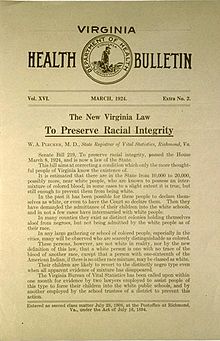
An Act to Preserve Racial Integrity 
loco parentis

Every local registrar may, as soon as practicable, have such registration certificate made by or for each person in his district who so desires, born before June fourteen, nineteen hundred and twelve, for whom he has not on file a registration certificate, or a birth certificate. 
2. It shall be a felony for any person wilfully or knowingly to make a registration certificate false as to color or race. The wilful making of a false registration or birth certificate shall be punished by confinement in the penitentiary for one year.
3. For each registration certificate properly made and returned to the State Registrar, the local registrar returning the same shall be entitled to a fee of twenty-five cents, to be paid by the registrant. Application for registration and for transcript may be made direct to the State Registrar, who may retain the fee for expenses of his office.
4. No marriage license shall be granted until the clerk or deputy clerk has reasonable assurance that the statements as to color of both man and woman are correct. 

If there is reasonable cause to disbelieve that applicants are of pure white race, when that fact is stated, the clerk or deputy clerk shall withhold the granting of the license until satisfactory proof is produced that both applicants are "white persons" as provided for in this act. 

The clerk or deputy clerk shall use the same care to assure himself that both applicants are colored, when that fact is claimed. 
5. It shall hereafter be unlawful for any white person in this State to marry any save a white person, or a person with no other admixture of blood than white and American Indian. For the purpose of this act, the term "white person" shall apply only to the person who has no trace whatsoever of any blood other than Caucasian; but persons who have one-sixteenth or less of the blood of the American Indian and have no other non-Caucasic blood shall be deemed to be white persons. All laws heretofore passed and now in effect regarding the intermarriage of white and colored persons shall apply to marriages prohibited by this act. 
6. For carrying out the purposes of this act and to provide the necessary clerical assistance, postage and other expenses of the State Registrar of Vital Statistics, twenty per cent of the fees received by local registrars under this act shall be paid to the State Bureau of Vital Statistics, which may be expended by the said bureau for the purposes of this act.  
7. All acts or parts of acts inconsistent with this act are, to the extent of such inconsistency, hereby repealed. 

If one is "not colored", does that make them invisible, and if they are invisible, how can you count them?

FUN FACT! ABSENTEE BALLOTS ARE SUBJECT TO THE SAME CORPORATE PARENTAL RIGHT LAWS

I have a better suggestion to get a better count of our U.S. population.

How about answering this question:

Now, what is the citizenship of the foster kid?
So, if a child is a citizen of Guatemala crosses the Mexican-U.S. Border, to be taken into U.S. custody and placed under a privatized, state contracted child placing agency like Bethany Christian, a Michigan licensed business entity, which is under the U.S. Conference of Catholic Bishops, a foreign corporation, where that child is processed through the policy, not law, like DACA & DAPA, of the Interstate Compact on the Placement of Children under the legal aegis of the contracting state Child Placing Agency, qualifying the child for Targeted Case Management billing reimbursement of Medicaid for the purposes of concurrent case planning to fast track Termination of Parental Rights for adoption, which includes a new identity and an issued Social Security Number, what is the citizenship of that child and what happens with the original identity?

"Taking an inventory of his wealth"
So, instead of listening to the dribbled of ignorance of this hearing, I would like to inform "The Elected Ones" that we did not count the babies until the early 20th Century, but do not tell them that because the lord was the keeper of the record.

The church record of the birth, not the certificate.

Then, no one is talking about the live and dead births certificates.

No one is talking about Foster Care and Adoption.

No one is talking about those fake identities after termination of parental rights over the children, hailing from "The Poors" (always said with clinched teeth).

Here is a synoptic overview on how they child welfare industry can multiple a child's identity to maximize revenues".


So, if the U.S. conjures up their own laws on how to count "The Poors" (always said with clinched teeth), will it be challenged by the Holy See because it does not have any legal congruency, outside the U.S.?

That would be fun!

Again, to keep with my ad nauseum theme of coming up with new and improved ways of trying to get people to understand that the residuals of the peculiar institution are alive and thriving for the simple fact that slavery was never, ever abolished, I shall close out this round of castigation with one of my favorite taglines.

#Time2AuditGod

Who owns the child because corporations are people, too.

This is about the children's trust funds.


Since, we are building a meshed Wall, just like the Vatican has a Wall, who is the parent of data?

US to start collecting DNA from people detained at Detroit border

https://beverlytran.blogspot.com/2019/10/judiciary-online-platforms-and-market.html

If I throw in Voting Rights, I believe some of the "Elected Ones" may experience the stigmata.

Image result for too complicated stimata
"But, if we do not salvage the souls of the savages,
how can we promulgate law to procure & purvey tiny humans
for revenue maximization in the name of the tax exempt god?"
Voting is beautiful, be beautiful ~ vote.©

Sunday, October 27, 2019

What To Do With Abandoned Very Tiny Humans? Call CPS?

This is simply precious.

This is another sector of trafficking tiny humans, the pre-tiny humans.

This started out as the Pro Life movement in Michigan.

The Pro Life movement was funded through the NRA, but that is another story.

Anyway, I knew this guy, Larry Holland, whose family was supposedly in oil or something, who was taking over the family court movement in Michigan by setting up servers, podcasts, chatrooms, forums, you know, what was necessary to conduct an operation to communicate back in the days, long before Facebook and Twitter.

He told me that he went around the country, laying up, impregnating women, mostly with psychological issues, so he could spread his genes because of his superior intelligence.

Through sheer fascination, I let him tell me about lots of stuff.

It was the memory of his proud vanity of his sperm that had me remember about the sperm banks, or the unregulated modern day human trafficking sector of pre-tiny human banks.

FBI Busts Baby Selling Ring, Then Sits Back On Its Arse While Human Trafficking Continues

You will always have those situations when a plan goes horribly wrong. 

Praise the Lord for the Snowflake embyro adoption program where the designer baby program has been going on for quite sometime.

Scientists Call for Do-Over for Rules on Creating "CRISPR Babies"

Basically, these goods are procured through a transfer of corporate parental rights to procure and purvey very tiny humans, to maximize revenues, of course, and to cash in the life insurance policies, but hey, what do I know?

I know there is a struggle because no one has come up with a methodology to determine the citizenship of these abandoned embryos.

Nation's fertility clinics struggle with a growing number of abandoned embryos

The dilemma over what to do with embryos cast aside, and who should assume ownership of them, is a thorny one.


Dr. Craig Sweet’s fertility clinic in Fort Myers, Florida, has resulted in nearly 3,000 pregnancies.

The pregnancies, he said, have been the upside to his 28 years in the business of helping patients fulfill their dreams of having babies.

But there’s a downside: Hundreds of embryos sit in a frozen state of limbo, abandoned in the center’s storage tanks by in vitro fertilization patients who once sought the help of Sweet’s team in their journey to become parents, then walked away.

“We were not prepared for any of this,” Sweet said.

Sweet is one of thousands of fertility doctors throughout the country grappling with what to do with the embryos cast aside by former patients, many of whom worked for months, even years, to conceive. The dilemma is an unanticipated, and unwelcome, byproduct of the considerable advances made in assisted reproductive technology in recent years, causing concern among bioethicists, attorneys, religious groups and the medical community.

“Twenty-one percent of our embryos have been abandoned,” Sweet said.

The reasons patients choose to abandon embryos vary, he said, though an internal study at his clinic suggests the number of children a patient already has and finances play roles. Storage fees for frozen embryos typically run from $500 to $1,000 a year, and can climb even higher, depending upon the clinic.

Since embryos are eggs that have been fertilized — and therefore have a potential for life — the dilemma over what to do with those that have been abandoned, and who should assume ownership of them, is a thorny one.

“The American Society for Reproductive Medicine (ASRM), the main guiding society for fertility doctors, has put out numerous papers indicating embryos are deserving of respect,” Sweet said. “This idea of abandoned embryos is an ethical conundrum.”

It is not known precisely how many frozen embryos have been abandoned in the more than 500 fertility clinics in the United States. Clinics are not required by the Centers for Disease Control and Prevention, or the Society for Assisted Reproductive Technology, the nation’s primary organization dedicated to assisted reproductive technologies, to report those numbers.

But experts say hundreds of thousands of embryos have been cast aside, if not more.

“Abandoned embryos are a major problem and it’s everywhere,” said Dr. Christine Allen, a veteran embryologist and the founder of Elite IVF TM, a consultant business that works with dozens of fertility clinics throughout the nation to implement high-end technology and to troubleshoot problems the clinics encounter. She said there needs to be more regulation, in part to put limits on the number of embryos created by a couple.

Allen says she believes there are “at least” hundreds of thousands of abandoned embryos in the U.S.

HOW SAFE ARE YOUR EGGS?
Egg freezing 'startups' have Wall Street talking — and traditional fertility doctors worried
A paper co-authored in the scientific journal Nature Biotechnology by Dr. Arthur Caplan, one of the nation’s leading bioethicists and a professor at the New York University Medical School, stated there are at least 90,000 frozen embryos considered abandoned in the U.S. Other studies indicate the number is much higher, possibly in the millions. Of the four fertility doctors NBC News spoke to — along with two embryologists, two fertility coordinators and a fertility attorney — no one said they knew of clinics that are not dealing with the issue.

Though clinics have different definitions, an abandoned embryo generally refers to a situation in which a patient has not paid storage fees related to a frozen embryo for five or more years, and fails to respond to letters and calls from the clinic. Some clinics consider embryos abandoned after as little as a year.

“We have embryos that are not claimed and people are not paying for storage and we do not know where the people are,” Dr. Pasquale Patrizio, director of the Yale Fertility Center, said.

We were not prepared for any of this.

FERTILITY DOCTOR CRAIG SWEET

Patrizio said storage fees at his clinic cost $600 a year, but can cost twice as much, depending upon the clinic.

“The problem is, even if an embryo is considered abandoned, even if there’s a contract in place, it’s very difficult to get rid of. What if one day someone shows up and says, ‘Where’s my embryo?’ And you wind up on the front page of the newspaper for destroying someone’s embryo? The damage would be done,” he said.

For that reason, Patrizio said, his clinic doesn’t destroy abandoned embryos.

Richard Vaughn, a founding partner of the International Fertility Law Group, a national law firm that specializes in fertility matters, with offices in New York and Los Angeles, said he knows of no fertility clinics willing to dispose of abandoned embryos.

“They don’t want to be responsible for a wrongful death,” he said.

The embryos typically don’t require much room.

“Frozen embryos take up very little space,” Dr. Sherman Silber, director of the Infertility Center of St. Louis, said. “You could put a whole city in a lab.”

But while the embryos are small, the liquid nitrogen tanks in which they’re housed aren’t. Patrizio noted a number of clinics are running out of room for the tanks and are outsourcing storage of abandoned embryos to companies like Reprotech, a national storage firm he calls “a mini-storage facility for embryos.”

“Many clinics don’t want to have the abandoned embryos in their facility for liability reasons,” Patrizio said.

Patrizio and Sweet said the issue of abandoned embryos is sometimes discussed at global fertility conferences, but generally remains within the industry what Sweet calls “the elephant in the room,” that’s neither publicly discussed nor addressed.

The problem, Allen said, is that clinics are fertilizing too many eggs.

The number of eggs a woman can produce in a monthly cycle leading up to an egg retrieval varies, depending upon her age, ovarian reserve, medical history and response to fertility drugs.

During the 1990s, many clinics deemed it necessary to inseminate as many of a patient’s eggs as possible, because many embryos didn’t make it through the freezing and thawing process. Now, Allen said, techniques have improved.

“With the technology we have, creating a large amount of surplus embryos is completely unnecessary,” Allen said, noting embryologists now know only a few eggs at a time need to be inseminated.

“[But] you still see many physicians with the mentality of, ‘the more, the merrier.’ So you see [some women] having 40, 50 or 60 eggs retrieved in a cycle and the embryologist gets the orders from her doctor to inseminate all of them — and the question isn’t asked if the patient even wants that many inseminated.

“Nobody’s going to have 30 kids,” she said.

Allen said regulation is needed within the fertility industry and is hopeful the U.S. will follow examples established by Germany and Italy, where only a few embryos can legally be created and transferred at a time, thus avoiding surplus embryos.

Related
Your stories
YOUR STORIES
'It never crossed my mind that I would not be able to get pregnant': Your stories about egg freezing, ages 19 to 60.
Sara Raber, 43, said she knew frozen embryos were part of the process when she began IVF treatments in 2008.

After several rounds, Raber and her husband had two sons in 2010 and 2012 in New York.

Both boys were conceived through the transfer of fresh embryos into Raber’s uterus at the Center for Human Reproduction (CHR), a New York fertility clinic. Other embryos were frozen during her treatments. Raber said she had the option of using frozen embryos when she began trying for her second child, but opted to use new eggs instead.

“I knew I wanted to save the frozen embryos for a rainy day,” Raber explained. “They were my insurance policy.”

Raber said she tried to use one frozen embryo to have a third child in 2014, but suffered a painful miscarriage. That’s when she struggled with the decision of what to do with her five remaining embryos.

“Even though I knew I was done procreating, it was very hard to make the final decision,” Raber said. “For months, I sat on the paperwork.”

The clinic gave Raber four choices: She could continue to pay storage fees for her frozen embryos, donate them to another woman, authorize the clinic to destroy them, or give them to the lab for research purposes.

Ultimately, Raber donated her embryos to her fertility clinic’s lab for research purposes.

“I didn’t want to donate them to a stranger,” Raber explained. “I felt like if I donated the embryos to a stranger, it would be our child out there that we weren’t raising.”

Raber said she understands why many patients quietly abandon their embryos.

“They had their babies. They’re focused on child care now. And the storage fees are a financial strain they don’t want to endure.”

Some embryos, though not technically abandoned, are stuck in legal limbo, which happens when the couple who created the embryos can’t agree on what to do with them.

That was the case with the actress Sofia Vergara. The “Modern Family” star created two embryos with her former partner, Nick Loeb. When the couple broke up, Loeb wanted custody while Vergara wanted to make certain the embryos were never implanted. Today, the embryos remain frozen, as Vergara and Loeb continue to battle in court.

According to Vaughn of the International Fertility Law Group, there have been at least 13 cases similar to Vergara’s that have reached appellate courts. He predicts there will be more lawsuits in the future.

“It will continue to be a growing issue until we have a clearer way of dealing with embryo legislation,” Vaughn said, noting there are no national laws in place that address abandoned embryos.

Tad Pacholczyk, director of education at the National Catholic Bioethics Center, agrees a national debate over frozen embryos will spill into future generations.

Pacholczyk said he knows of cases in which couples, unable to agree on what to do with surplus embryos, continue to pay storage bills — and intend to do so for the rest of their lives.

When the couple dies, a new generation will be left to grapple with the embryos.

Pacholczyk advises couples to create trust funds for surplus embryos, so that storage fees can be paid indefinitely.

“Creating a trust fund for the frozen embryo shows a couple is taking responsibility for what they created,” Pacholczyk said. “To me, the complexity of the situation about what to do with these excess embryos is a powerful reminder that when you cross moral lines, there’s a price to be paid.”

The medical community is uncertain how long frozen embryos remain viable.

Silber of the Infertility Center of St. Louis said if the embryos are properly frozen, they could remain viable for decades.

“We have reason to believe embryos frozen using modern technology can last over 100 years,” Silber said.

Even when patients indicate they want to donate their embryos to science, Sweet said, there are limited facilities willing to take them.

We have reason to believe embryos frozen using modern technology can last over 100 years.

DR. SHERMAN SILBER

“We have 18 percent of our patients telling us they want to donate their embryos to science, but I can’t find anyone to take them,” he said, noting the University of Michigan is among the few places in the nation that have accepted abandoned embryos in recent years. “Now I need to go back to those patients and find out what they want to do, but we often can’t find these people.”

Concerned about the growing population of abandoned embryos, Sweet established Embryo Donation International in 2011 in Fort Myers. The program has gathered surplus embryos from 67 fertility clinics, all from women and couples who have explicitly granted permission to donate their embryos to infertile patients.

Sweet said Embryo Donation International has provided a means for patients to donate embryos to women and couples eager to have a baby. But the program can't make use of embryos abandoned by patients who fail to sign the paperwork.

Those embryos, Sweet said, remain stuck.

In an effort to curb the creation of more embryos that might end up in limbo, Sweet made the decision a decade ago to make his fertility clinic a “non-discard” facility, meaning all of his patients must sign paperwork indicating they will not discard their embryos.

Sweet said he made the decision for ethical, not religious, reasons.

“The embryos were abandoned by the patient, and I felt if I abandoned them they were abandoned a second time."

Sweet knows there is much his profession needs to tackle when it comes to abandoned embryos. The process, he said, will not be easy.

Still, he said, it’s time for the industry that’s been all about making babies to finally address the embryos that were created, then abandoned, in the process.

“I think many of us realize that we have a bit of a mess and I’m not sure doctors know how to fix it,” Sweet said. “But we need to try.”


Couple give embryos, 'hope' to UM in fight against rare disease

Alex Cellucci, 35, rubs fabric on her right eye, where she had a tumor removed the previous day, while watching a movie with her daughter, Maible, 6, at their home in Quincy, Mass. on Tuesday, Aug. 6, 2019. Alex and Maible both have neurofibromatosis, a genetic disorder that causes tumors to form on nerve tissue. Alex was diagnosed with neurofibromatosis type 2 at age 28 and has since endured two MRI scans every year to monitor tumors.Alexandra Cellucci was 28 when she was diagnosed with neurofibromatosis, a rare genetic disease that causes noncancerous tumors to grow on the body's nervous tissues. She was also eight months pregnant at the time, but she would eventually deliver a healthy baby girl.

Neurofibromatosis, known as NF for short, runs in Cellucci's family, so she knew her daughter could have the disease and she could pass it on to future children. So she and her husband, Marc, used reproductive medicine to conceive another baby, had the embryos tested for the gene that causes NF and had doctors implant embryos in her womb without the mutated gene.

Cellucci, now 35, never got pregnant again, despite many attempts. She and her husband have since learned their daughter Maible, now6, also carries the gene for NF2, one of the three forms of the disease. The day before Maible's birthday last November, the girl asked if she had the disease. Cellucci said she told her yes and that she would be OK.

That's why the Massachusetts couple donated seven embryos with the NF2 gene to the University of Michigan so researchers could create an embryonic stem cell line that other researchers could study, with the hope of one day discovering a breakthrough. In a perfect world, such a development would come before their daughter endures any symptoms.

“I just wanted hope," said Cellucci, who had surgery last month to remove a benign tumor behind her eye. "They could possibly find a cure for (Maible) ... and offer hope for other families."

UM researchers have turned the Celluccis' embryos intothe first stem cell line that models NF2, which is one of the more rare forms of the disease. Besides the tumor growth, NF2 comes with a host of issues, including hearing loss, ringing in the ears and loss of balance. Symptoms typically appear in the teen years.

The embryonic stem cell line modeling the disease, created by Professor Gary Smith, director of the MStem Cell Laboratories, has been accepted onto the National Institutes of Health Human Embryonic Stem Cell Registry for other scientists to study and make discoveries around interventions and a possible cure. Another line also is under review.

Researchers can apply to access the stem cell lines on the federal registry to study how diseases form and develop, with the aim of finding ways to better understand, treat, delay and possibly even cure diseases.

Smith has derived all of UM's 56 embryonic stem cell lines on the national registry, including 36 disease-specific lines. He said the personal stories behind all of those stem cell lines are important.

"We just don't do science to do science," Smith said. "We do science to help others. Here is a family that recognizes that. Sometimes that gets lost on people. ... We really do want to help people."

The NF2 stem cell line comes as neurofibromatosis scientists and clinicians prepare to gather next month for their annual conference in San Francisco.

It also comes as Detroit businessman and Cleveland Cavaliers owner Dan Gilbert has used philanthropy to support the small research community of neurofibromatosis. His 23-year-old son, Nick, was born with neurofibromatosis type 1.

NF2 afflicts 1 in 33,000 people worldwide, while NF1 is more common, occurring in 1 in 3,000 to 4,000 people, according to the National Institutes of Health. NF1 typically begins in childhood and leads to skin changes and bone deformity. Schwannomatosis, the rarest type of NF, causes intense pain.

Gilbert, who suffered a stroke in late May, has spoken about neurofibromatosis and also about how Nick, a Michigan State University student, had to undergo brain surgery in 2018 to remove tumors.

Gilbert, a billionaire, has invested $64 million over the years through the Gilbert Family Foundation, including $12 million for gene therapy initiatives to address the underlying cause of NF1 and $11 million for vision loss in NF1 patients, which Nick grapples with, according to YooRi Kim, the foundation's scientific officer.

"With deeper understanding with each of these diseases that we've obtained over time, it's becoming more and more clear that the strategies that you would use to help each of those patients are going to look different," Kim said.

Even so, she said there is excitement about advances in research on other forms of NF, such as the stem cell line modeling NF2.

There are four embryonic stem cell lines on the registry that model NF1, but the line UM created is the first for the research community studying NF2, according to Smith.

"It means a lot to the couple that somebody is using something that otherwise would have been discarded and instead trying to make it something that can be used worldwide to understand this disease better," he said.

The stem cell line has been applauded by Sally Temple, scientific director of the Neural Stem Cell Institute in Rensselaer, New York, which uses stem cell technologies to develop therapies that affect the nervous system.

"It's a really wonderful and generous for the parents to do," said Temple, who is also a UM adjunct professor in the ophthalmology department. "When you make these human embryonic stem cell lines, they are essentially a resource forever for the community. It's available and it will be there for (researchers) to use forever in the future. It's not a one-time donation."

She added that this is important for the NF2 community since it is such a devastating disease.

Marc Cellucci is beyond thrilled, and hopeful of the possibilities for the stem cell line that he and his wife helped create and what it could do for his daughter, wife, in-laws and so many others with NF.

“It all has to start somewhere,” said Cellucci, “where the scientific breakthroughs happen, and the miracles begin.”

Voting is beautiful, be beautiful ~ vote.©