Showing posts with label Al Fraken. Show all posts

Monday, June 3, 2019

#MeToo: Kirsten Gillibrand Did Not #sayhisname


She says she wants to give a voice to women.

Not the courts.

Not a formal process of recording.

She is going to control the #MeToo narrative as part of her campaign platform.

How cute.


Voting is beautiful, be beautiful ~ vote.©

Sunday, November 18, 2018

Marc Elias Sucks In Florida, Michigan & D.C.

As this article has failed to identify the most illustrious legal engagements of Marc Elias, I have taken the time to do it.

Marc Elias Of Perkins Coie Sucks & So Does The FEC
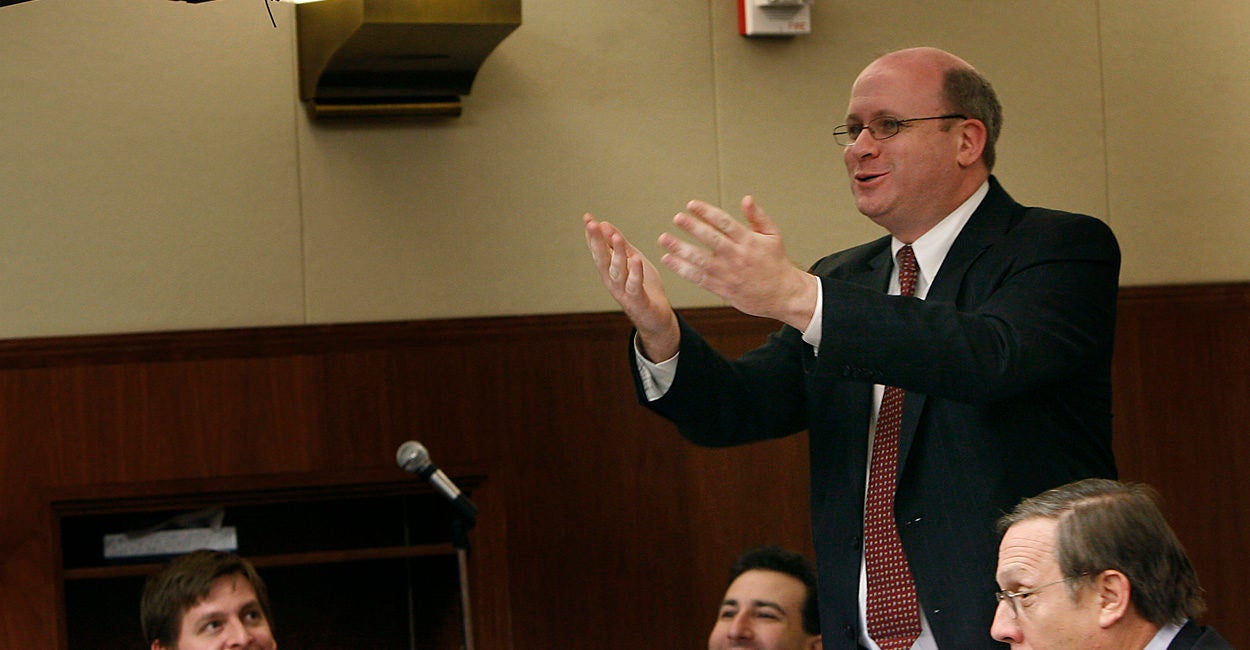

6 Big Election Hits by Marc Elias, Democrats’ Recount King

Marc Elias has a history of turning Democrats who lost on election night into winners after recounts.

The lawyer representing Sen. Bill Nelson in the recount of Florida’s contest for Senate has been at the center of nearly every major election controversy for the past decade.

Elias is chairman of Perkins Coie’s Political Law Group, which was behind the opposition research document that fueled the Trump-Russia investigation. Before that, he was highly instrumental in getting Al Franken into the U.S. Senate.
Nelson, the incumbent Democrat, trails by less than half a percentage point behind Gov. Rick Scott, his Republican challenger. That’s close enough to trigger a recount in Florida, but the deficit of over 10,000 votes is more than than any previous recount has overcome.

Nevertheless, Elias has predicted victory, and he has a winning record at his back in high-profile races.


“I have a pretty good track record on that prediction elsewhere,” Elias told reporters on a conference call last week.

The results of the governor’s race to succeed Scott as Florida governor also qualified for a recount.
Rep. Ron DeSantis, R-Fla., leads Tallahassee Mayor Andrew Gillum, a Democrat, by more than 30,000 votes statewide, though, so the DeSantis win is less likely to be overturned.

Elias, who isn’t involved in the DeSantis-Gillum contest, didn’t respond to The Daily Signal’s request for comment for this report.

Both The Washington Post and CQ Roll Call referred to Elias as the “go-to” lawyer for Democrats. In addition to representing the presidential campaigns of Democrats Hillary Clinton in 2016 and John Kerry in 2004, Elias has represented the Democratic National Committee, the Democratic Governors Association, and former Attorney General Eric Holder’s group, the National Democratic Redistricting Committee.

He also did work for the fundraising organizations Priorities USA, Senate Majority PAC, House Majority PAC, and the pro-choice EMILY’s List.

Here’s a look at high-profile political controversies where Elias played a central role.

1. Al Franken’s Senate Victory
In 2008, the U.S. Senate race in Minnesota between Sen. Norm Coleman, the Republican incumbent, and comedian Al Franken, his Democratic opponent, went into overtime with recounts.
Elias represented Franken’s campaign in the litigation surrounding the recount. His biography on the Perkins Coie website boasts that the Coleman-Franken race was “the largest recount and contest in American history.”

Almost 3 million votes were cast in the race.

Franken actually trailed Coleman by 725 votes after Election Day. The incumbent’s lead was slashed by little more than 200 votes after the first canvass.

However, after the recount, things began to change. It dragged on for six months before the final recount showed Franken squeaking by with 312 votes.

Upon Franken’s belated seating in the Senate in July 2009, The Wall Street Journal editorialized:
The unfortunate lesson is that you don’t need to win the vote on Election Day as long as your lawyers are creative enough to have enough new or disqualified ballots counted after the fact. …
Mr. Franken now goes to the Senate having effectively stolen an election.
Economist John Lott was studythat found at least 341 felons illegally voted in the Senate election, easily enough to have made the difference.

Most of those felon votes were cast in the Twin Cities of Minneapolis-St. Paul region, according to the study.

The group took the voting lists and matched them with conviction lists, then went to voting roster lists, where voters sign in before going to the voting booth, and matched the names by hand.
In their book about voter fraud, “Who’s Counting?,” journalist John Fund and Hans von Spakovsky, a senior legal fellow at The  Heritage Foundation, explain the legal process in Minnesota:
So the Democratic strategy focused on how to conduct the recount so that votes could be added to Franken’s total. The Franken legal team swarmed the recount, aggressively demanding that votes that had been disqualified for failing to meet state legal requirements be added to his count, while others be denied to Coleman. The team’s goldmine was the thousands of absentee ballots the Franken team claimed had been mistakenly rejected. … 
According to Franken’s lead attorney, Marc Elias, scanners, laptops, and other mobile devices were used to record and keep track of every single disputed ballot in every county in Minnesota. Decisions made by local election boards on each ballot were immediately uploaded to a “cloud” database set up by the campaign so that Elias and his legal team knew exactly what vote totals were for each candidate across the state at every point in time. This gave them a tactical advantage over Coleman’s legal team by providing them with information on when to object or not object in individual ballot disputes.
2. Virginia Attorney General
In 2013, Democrats hoped to gain control of the Virginia attorney general’s office for the first time in two decades.

Elias represented Democrat Mark Herring in his razor-thin Virginia attorney general’s race against Republican Mark Obenshain.

On election night, Obenshain led Herring by 1,000 votes out of 2.2 million cast. However, a week later, local election boards produced results putting Herring ahead by 164 votes statewide. The state certified the results weeks later, on Nov. 25.

Obenshain initially asked for a recount, but conceded the race before the recount had ended.

3. The Steele Dossier
Elias was general counsel for Clinton’s 2016 campaign when his firm, Perkins Coie, retained the Washington-based company Fusion GPS to do opposition research.

That resulted in a document written by former British spy Christopher Steele that has become infamous. The unverified, dossier alleged that the Russians might have salacious, compromising information on Donald Trump.

The document also became the basis for the federal investigation into alleged collusion between the Trump presidential campaign and Russian operatives to affect the outcome of the 2016 election.
Special counsel Robert Mueller reportedly is set to issue a report before the end of the year on whether the Trump campaign colluded with Moscow or whether the president obstructed the investigation.

4. Jill Stein’s Recount
After Trump’s election victory, Elias got involved in a recount he likely didn’t have any hope of winning.

Although Clinton didn’t ask for a recount, Green Party presidential candidate Jill Stein demanded recounts in the states of Michigan, Pennsylvania, and Wisconsin.

In a post on Medium in late November 2016, Elias explained that the Clinton campaign wasn’t initiating a recount, but would assist the Stein campaign.

“Because we had not uncovered any actionable evidence of hacking or outside attempts to alter the voting technology, we had not planned to exercise this option ourselves, but now that a recount has been initiated in Wisconsin, we intend to participate in order to ensure the process proceeds in a manner that is fair to all sides,” Elias wrote, adding:
If Jill Stein follows through as she has promised and pursues recounts in Pennsylvania and Michigan, we will take the same approach in those states as well. We do so fully aware that the number of votes separating Donald Trump and Hillary Clinton in the closest of these states—Michigan—well exceeds the largest margin ever overcome in a recount.
But regardless of the potential to change the outcome in any of the states, we feel it is important, on principle, to ensure our campaign is legally represented in any court proceedings and represented on the ground in order to monitor the recount process itself.
In the end, only Wisconsin had a statewide recount that saw Trump widen his lead over Clinton, by 131 votes.

5. North Carolina Standoff
On election night in 2016, state Attorney General Roy Cooper, a Democrat, ledRepublican incumbent Pat McCrory in the North Carolina governor’s race by fewer than 5,000 votes.
Elias represented Cooper in the recount process. In this case, he didn’t reverse fortunes for his client, as the Democratic challenger maintained his lead.

McCrory’s campaign filed complaints with the State Board of Elections alleging voter irregularities in 50 of North Carolina’s 100 counties.

However, the state Republican Party narrowed its focus to Durham County, with a request for recounting 90,000 ballots cast there. After the recount was complete, McCrory conceded defeat to Cooper.

6. The Other 2000 Recount
Elias wasn’t part of the famous 2000 Florida recount over who would win the presidency, Texas Gov. George W. Bush or Vice President Al Gore.

But Elias was on the team that represented Democrat Maria Cantwell in her defeat of Sen. Slade Gorton, a Republican, in Washington state.

Out of nearly 2.5 million votes case, Cantwell emerged the winner with 2,200 votes. A Libertarian candidate won 64,000 votes that year.

Voting is beautiful, be beautiful ~ vote.©

Monday, October 1, 2018

Cocktails & Popcorn: Keith Ellison And His Journey To Due Process

Related image
My $3.00 resale shop hot air popcorn maker
Retaliation is such a nasty thing to endure.

The Keith Ellison Psychoptic is getting to be quite juicy, in a civil rights legal kind of way.

Cocktails & Popcorn: Keith Ellison Calls For His Due Process In Election Interference

Learn more: BEVERLY TRAN: Cocktails & Popcorn: Keith Ellison Calls For His Due Process In Election Interference http://beverlytran.blogspot.com/2018/09/cocktails-popcorn-keith-ellison-calls.html#ixzz5SiqXV8GV
Stop Medicaid Fraud in Child Welfare 

So, if we approach the Keith Ellison Psychoptic in similar fashion to the Kavanaugh Psychoptic, we have in our sight one of those transposable models I just adore.

Kavanaugh Senate Judiciary Republicans say every body (congressional, executive & judicial pun intended) deserves due process but do not want an FBI investigation.

Senate Judiciary even published their own, preliminary report from Rachel Mitchell about Brett Kavanaugh's accuser, Christine Blasey Ford.

But then, Trump said the FBI can question anybody about Kavanaugh.

Then, this happened.
Since Keith has already called for a U.S. House Ethics investigation, that means that there exists a very strong possibility that there is already an ongoing DOJ investigation, because everyone forgets he is friends with my Sweetie.

Basically, what this means is that, if there is an issue with unsubstantiated claims, we have a transposable legal model to apply to those who were forced to resign from Congress in a court of law that would automatically be deferred for a full FBI investigation, which is probably already finished considering it has been going on for quite some time...like it should hurry up and finish...like right now...


I can.

That is why I went to the resale shop and got a hot air popcorn popper for $3 bucks.

MINNESOTA DEMOCRATS’ KEITH ELLISON INVESTIGATION CONCLUDES ABUSE ALLEGATION ‘UNSUBSTANTIATED’: REPORT

An attorney hired by Minnesota Democrats to investigate domestic abuse allegations against Minnesota Democratic Rep. Keith Ellison reportedly concluded the accuser’s claim was “unsubstantiated.”

Ellison’s ex-girlfriend, liberal activist Karen Monahan, accused Ellison of physically and emotionally abusing her during their years-long relationship.

Ellison, the deputy chair of the Democratic National Committee, has been dogged by Monahan’s accusations in his campaign for Minnesota attorney general.

(RELATED: Minnesota Democrats’ Own Lawyer’s Partner Handling ‘Independent’ Keith Ellison Investigation)

Monahan’s refusal to produce a video she claimed proved Ellison’s alleged abuse led Minnesota attorney Susan Ellingstad “to conclude that the allegation is unsubstantiated,” according to a draft version of Ellingstad’s report obtained by The Associated Press.

“An allegation standing alone is not necessarily sufficient to conclude that conduct occurred, particularly where the accusing party declines to produce supporting evidence that she herself asserts exists,” Ellingstad wrote, according to The AP.

“She has thus repeatedly placed the existence of the video front and center to her allegations, but then has refused to disclose it.”

Ellison’s Republican opponent, Doug Wardlow, previously cast doubt on the validity of Ellingstad’s investigation.

“Keith Ellison is being investigated by the party that endorsed his candidacy after multiple allegations of domestic violence. Any claim that this is an independent investigation is laughable,” Wardlow previously told The Daily Caller News Foundation.

“The investigation report, which was released today without our knowledge by someone outside of our organization, was unable to substantiate the claim of physical abuse made by Ms. Monahan,” DFL chairman Ken Martin said in a Monday statement to NBC News.

“For the purpose of objectivity and getting all of the facts regarding these allegations, we have decided to forward the information in the investigation to local authorities in order to let them review the contents and determine whether further investigation is warranted,” Martin said.

Voting is beautiful, be beautiful ~ vote.©

Sunday, April 15, 2018

CONYERS: Act Three - 2018 Michigan Democratic State Convention

Image result for eating popcorn gif
#perkinscoiesucks 
Once upon a time, John Conyers, Jr. attended the 2018 Michigan Democratic State Convention.

Stay tuned, because Perkins Coie Sucks.

COULD AL FRANKEN MAKE A COMEBACK? AMY KLOBUCHAR SAID FORMER SENATOR HAS A THIRD ACT

There may be more to come for former Senator Al Franken, who resigned his post in January after
facing sexual misconduct allegations from multiple women.

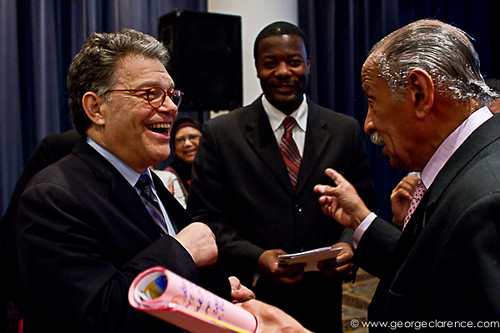
Al Fraken & John Conyers, Jr.
At Sunday’s TimesTalk panel for women senators — which featured Senators Susan Collins (R-Maine), Joni Ernst (R-IA), Heidi Heitkamp (D-ND) and Amy Klobuchar (D-MN) — Klobuchar said she expects her former colleague and friend to make a comeback.

“He’s had two acts and he’s still going to have a third,” Klobuchar told the crowd of Franken.

The Minnesota Democrat said she’s stayed in touch with Franken, and spoke to him just this weekend.

Klobuchar didn’t join the cohort of Democrats who called for Franken to step down in December, when a photo of Franken apparently grabbing a woman’s breasts resurfaced. The photo led to a landslide of accusations from women who said they’d been groped or otherwise harassed by the congressman, who’d built a reputation partly based on his support for women’s equality.

Despite criticism from some that Franken had been forced out, Klobuchar maintained that Franken had made his own choice, one informed by the calculation that the allegations against him would make it difficult to do his job in the Senate.

Still, Klobuchar emphasized the need for “due process” amid the ongoing #MeToo movement, explaining that different kinds of misconduct might warrant consequences that vary in severity.
“As we’re dealing with a change in the workplace ... we have to make sure there’s due process and graduated sanctions,” she said.

Women senators largely led calls for Franken to resign, but soon they were joined by dozens of other Democrats in the Senate, men and women alike, and, eventually, Senate Minority Leader Chuck Schumer.

“Senator Franken should resign,” Schumer said in early December. “I consider Senator Franken a dear friend and greatly respect his accomplishments, but he has an obligation to his constituents and the Senate, and he should step down immediately.”

The day before Schumer’s statement, House Democrats had seen the end of a sexual misconduct scandal within its own ranks. Representative John Conyers just stepped down following sexual harassment allegations from former staffers, one of whom said Conyers threatened to fire her if she didn’t have sex with him. 

Voting is beautiful, be beautiful ~ vote.©

Tuesday, January 2, 2018

Michele Bachmann May Put Me Back In The Saddle To Take Out The Tiny Human Trafficking

Oh, please, let it be true Michele Bachmann is running for the U.S. Senate seat vacated by Al Fraken.

I have forsaken her and look for redemption in my neglect of her political career.

Michele Bachmann was the muse to launch my blogging, but the FEC decided to interupt my endeavors of eternally memorializing her career when they told her to "go far away and never run for the U.S. House, again."

But, alas, the FEC did not warn her on the U.S. Senate.


Michele Bachmann is, and shall always be the Queen of tiny human trafficking.

If you call foster care and adoption human trafficking, people will look at your work like you lost your mind, but if you call it "Tiny Human Trafficking" it makes much more sense for my "untargeted" audiences because they can visualize it.

Tiny human trafficking is a highly complex and sophisticated, generational fraud scheme that involves trillions of international dollars, land and votes.


I have new material and I will be inspired to jump back in the saddle again to call out her royal court.

Voting is beautiful, be beautiful ~ vote.©

Monday, June 12, 2017

Day 232 - Hillary's Leakers Hackers and Henchmen: Awan & Intelligence Committees

George Goes to the House and Then to Senate Today 

 Senator Burr's Office from North Carolina

Senator Paul's Office.

 Senator Paul and the Senate Camera Bullpen.

 Senator Barrasso of Wyoming

Senator Al Fraken and Senator Tester

 Senator Manchin's Office.

Voting is beautiful, be beautiful ~ vote.©

Friday, March 3, 2017

CONYERS: We need an Independent, Non-Partisan Commission To Investigate Trump and Russia Ties

Dean of the U.S. House
of Representatives
John Conyers, Jr.
Attorney General Jeff Sessions announced that he would recuse himself from Trump Campaign related investigations. However, his recusal should not be limited to only investigations involving the Trump Campaign. Under 28 CFR § 45.2, the Attorney General is required to recuse himself from a criminal investigation when he has a “personal or political relationship with any person or organization substantially involved in the conduct that is the subject of the investigation or prosecution,” and must also recuse himself from any investigation where his participation would “create an appearance of a conflict of interest likely to affect the public perception of the integrity of the investigation or prosecution.”

Serious allegations of misconduct involving President Trump and his associates occurred subsequent to the presidential election—including but not limited to communications between General Flynn and the Russian government, potentially improper contact between White House aides and officials within the Justice Department, and misstatements by the Attorney General himself.

Just as importantly, we need to ensure that any investigation involving issues which overlap between the campaign and the Administration are fully and fairly investigated, including what influence the Russian government, Russian intelligence and Russian financial interests may have with regard to Mr. Trump and his Administration, and whether there have been any efforts to cover-up the same.

As such, the Attorney General must recuse himself from any and all investigations involving the campaign, the transition, and the Trump Administration. He must obviously step aside from any investigation in which he himself may be a target.

I am not persuaded by the Attorney General’s effort to explain his misstatements to the Senate Judiciary Committee, in response to questions asked verbally by Senator Franken and in writing by Senator Leahy, and it is not at all clear that an after-the-fact clarification to the Committee will resolve this matter. As every Democrat on the House Judiciary Committee wrote, the question of whether or not the Attorney General’s statement constitutes perjury should be reviewed by the FBI and the U.S. Attorney for the District of Columbia.

I am troubled by President Trump’s statement that he does not think Attorney General Sessions should recuse himself from any Russia-related investigations. It was wholly inappropriate for the President to discourage the Attorney General or anyone else from recusing themselves from any ongoing criminal investigation—let alone an investigation in which he and members of his Administration are potential suspects. Such statements fly in the face of applicable DOJ guidelines. They also smack of an attempted cover-up.

These events and statements also make abundantly clear, as I and many other Members of Congress have stated previously, that we need an independent, non-partisan commission to review the entire matter.

Voting is beautiful, be beautiful ~ vote.©

Thursday, November 17, 2016

Bipartisan, bicameral bill would delay changes to government hacking powers

Proposed Amendments to Rule 41 of the Federal Rules of Criminal Procedure would expand the government’s ability to search Americans’ computers and other digital devices

File:Seal of the United States Congress.svgWASHINGTON – U.S. Senators Chris Coons (D-Del.), Steve Daines (R-Mont.), Mike Lee (R-Utah), Ron Wyden (D-Ore.), and Al Franken (D-Minn.), together with Reps. John Conyers, Jr. (D-Mich.) and Ted Poe (R-Texas), introduced legislation to provide Congress the time necessary to seriously consider and debate the proposed changes to Rule 41 that would expand the government's ability to search computers and other digital devices. The Review the Rule Act would delay the proposed changes to Federal Rule of Criminal Procedure 41 from going into force until July 1, 2017. Without congressional action, the proposed changes will go into effect on December 1, 2016.

Federal Rule of Criminal Procedure 41 governs the procedures and parameters for issuing search warrants.  Under current law, a federal judge may issue a warrant to search property located within a specific judicial district.  At the urging of the Department of Justice, the Supreme Court ultimately approved two sweeping amendments to Rule 41:
       
1.     A judge may issue a warrant to remotely search, copy, and seize information from a device that does not have a known location (and may not be in the district) because the location has been concealed through technological means; and, 
2.       A single judge may issue a warrant to remotely search and copy information from suspected devices across five or more districts.


Dean of the U.S. House
of Representatives
“I remain deeply concerned about the intended and unintended consequences of the expanded authorities contemplated in the proposed changes to Rule 41,” said John Conyers, Jr. (D-MI), House Judiciary Committee Ranking Member. “The bill we offer today will delay implementation until Congress has had a meaningful opportunity to examine the proposal in detail.  Until we have adequately addressed the privacy concerns raised by my colleagues, this rule change should not take effect.”

“The proposed changes are serious, and present significant privacy concerns that warrant careful consideration and debate,” said Senator Coons, a member of the Senate Judiciary Committee. “Our bicameral, bipartisan legislation will give Congress time to do our job and carefully consider and evaluate the merits of these proposed changes to the government’s ability to search personal computers and other digital devices. It is essential that these rules strike a careful balance: giving law enforcement the tools it needs to keep us safe, while also protecting Americans’ constitutional rights to privacy and freedom from unreasonable searches.”

“We cannot give the federal government a blank check to infringe on Americans’ civil liberties,” said Senator Daines.“Congress needs the appropriate time to investigate the implications of this rule on Americans’ Fourth Amendment rights.”

“A single prosecutor should not have the power to hack into the phone or computer of virtually anyone in the United States,” said Senator Lee, a member of the Senate Judiciary Committee. “Yes, federal law enforcement does need new tools to stop and prosecute botnets, but the proposed Rule 41 rule change goes too far. The sensible thing to do is delay the implementation of this rule and allow Congress to investigate further."

“This rule change would give the government unprecedented power to hack into Americans’ personal devices,”Senator Wyden said. “This was an alarming proposition before the election. Today, Congress needs to think long and hard about whether to hand this power to James Comey and the administration of someone who openly said he wants the power to hack his political opponents the same way Russia does.”          

“Government does not have the authority to unilaterally legalize widespread abusive hacking,” said Rep. Poe.  “It is Congress’ responsibility to safeguard the constitutional rights of the people they represent from a power hungry Executive Branch. A delay in the proposed changes to Rule 41 is necessary to ensure that the newly elected Congress, and Administration, have the ability to carefully evaluate this rule change before it goes into effect to ensure that it is constitutional and in the best interests of the American people. Rushing to put the changes in place in the middle of the lame duck session is irresponsible. Too much is at stake to not get this right.”

Voting is beautiful, be beautiful ~ vote.©
Thursday, December 17, 2015

CONYERS: Lighten the Load on Our Nurses for Better Health Care

U.S. Senator Al Franken and U.S. Representative John Conyers, Jr.
Forty-five years ago today, I cast my vote in favor of one of the most important pieces of legislation ever: the Occupational Safety and Health Act of 1970. Passed by a Democratic U.S. Congress and signed by a Republican President, the "OSH Act" as it is known, stood for a radical proposition: workers should not have to choose between their livelihoods and their lives.

Prior to the OSH Act, workplace safety was a concept only familiar to those with a good union or an unusually goodhearted boss.

There was no law saying your employer had to send you home every day in one piece.

The OSH Act changed that.

It made the Secretary of Labor legally responsible for confronting the dangerous, preventable hazards that affected the 55 million people in the workforce in 1970. America's workers finally had someone powerful who could fight for their safety--and that has made a world of difference.

Since 1970, America's workplace death rate has dropped from nearly 12,000 when the OSH Act passed to around 4,000 today. And our injury rate per worker dropped as well, from around 11 in a hundred workers to under 4 in a hundred.

But while saving almost 8,000 lives and the health of about one in 13 workers is a tremendous accomplishment -- there are still more than 4,000 lives lost every year and another one in 30 workers to protect. We still have too many dangers left to confront for us to rest.

Protecting our nurses and other health care workers is a great place to make an immediate impact.
Every day, nurses, nursing assistants, and other health care workers suffer injuries due to the strain of manually lifting their patients. The damage to these caregivers' backs, necks, arms, shoulders, and hips -- medically referred to as musculoskeletal disorders -- drives them from the jobs they love and changes the course of their lives. It also makes medical care more expensive because consumers end up paying for workers' compensation, training replacement nurses, and longer hospital stays due to patient falls.

The simple fact is that human beings are not very good at lifting heavy things. One comprehensive study of automotive workers found the maximum safe amount to lift on a regular basis is 35 lbs., or the weight of an average four-year old boy. But nurses are lifting far more than that--sometimes hundreds of pounds. And the cumulative strain they are under, around 1.8 tons per shift, is literally breaking their backs -- causing more than 20,000 missed days for nursing assistants last year and over 11,000 for registered nurses.

These injuries are foreseeable, preventable, and expensive. They are driving up costs and drive down patients' and caregivers' quality of life. Forty-five years after the U.S. Congress told the American public that you do not have to sacrifice your health to make a living, it is time for us to address this flagrant hazard.

That is why I, along with Senator Al Franken, recently reintroduced legislation to protect our nurses: The Nurse and Health Care Worker Protection Act (H.R. 4266/S.2408).

This simple bill directs the Secretary of Labor to issue a health and safety standard under the OSH Act that eliminates the unsafe and unnecessary practice of manual patient lifting. It would prevent thousands of injuries to nurses, protect patients from falls, and make our health care system more efficient because nurses are focused and pain-free.

This legislation borrows heavily from the work of tireless advocates for nurses and other health care workers. The American Nurses Association has been fiercely supportive of their members on this issue and convened a working-group of world-class experts to design a safe patient handling standard. The American Federation of Teachers has fought for their union-members, many of whom are nurses and other healthcare workers, who sacrifice their bodies for their patients. Public Citizen has laid out the financial and technological case for this standard. And we are especially indebted to the hospitals who have already adopted safe patient lifting standards, and who have shown what happens when health care facilities put workers and patients first.

Forty-five years ago, I helped write a promise into the American Dream: you do not have to risk your life or health to provide for yourself and your family. But that promise remains unfulfilled. The Nurse and Health Care Worker Protection Act will help us change that by ensuring nurses are no longer asked to exchange their health for their patients' health.

Voting is beautiful, be beautiful ~ vote.©

Wednesday, December 16, 2015

Conyers, Franken Reintroduce Bill to Protect Nurses and Health Care Workers from Workplace Injuries


Senator Al Franken and Representative John Conyers, Jr
Washington, D.C. - Today, Representatives John Conyers (D-MI), Bobby Scott (D-VA) and Frederica Wilson (D-FL) and Senator Al Franken (D-Minn.) reintroduced the Nurse and Health Care Worker Protection Act of 2015, a bill dedicated to addressing the hazards nurses and health care workers face from manually lifting patients. The legislation acts upon the increasingly clear fact that nurses are suffering too many serious, preventable injuries due to unsafe lifting practices.

“We reintroduced this legislation because of the dangers that the women and men who care for us in our most trying times face on a daily basis,” said Rep. John Conyers. “H.R. 4266, the Nurse and Health Care Worker Protection Act would ensure that those men and women are adequately protected from injuries caused by lifting and moving patients and other related job hazards.  By literally lightening the burden on nurses, we can lessen the nursing shortage that is driving up health care costs across the country and denying patients the experienced caregivers they deserve.”

“Our nurses and health care workers provide essential care to millions of Americans, and they shouldn’t have to sacrifice their safety or their livelihood to do so,” Sen. Franken said. “Every year, thousands of these caregivers sustain serious injuries as a result of manually lifting patients. These injuries can cause a lifetime of chronic pain and even force nurses to leave the profession permanently. Our bill would ensure that nurses and health care workers have the tools they need to do their jobs safely, which would prevent injuries, increase patient safety, and reduce costs.”

“Too often we take nurses for granted, but we rely on the invaluable services they provide. Nurses literally do the heavy lifting when it comes to patient care and deserve systems designed to protect their health and safety. This legislation would help reduce the sometimes career-ending injuries that are completely avoidable,” said Rep. Wilson.

The Nurse and Health Care Worker Protection Act of 2015 addresses the problems confronting nurses by requiring the Occupational Safety and Health Administration (OSHA) to promulgate a health and safety standard.  That standard would require the use of mechanical lifts and safe lifting practices to minimize the risk of injury. 
   
Presently, nurses and health care workers suffer from work-related musculoskeletal disorders (MSDs) at a rate much higher than the average American worker.  In 2014, registered nurses ranked sixth in the number of days away from work because of such injuries, with more than 11,300 total cases; nursing assistants ranked second, with over 20,000.  While alarming, these numbers actually reflect the innovative efforts of states that already regulate patient lifting and the hospitals that recognize the cost-effective returns of investing in safe patient lifting programs.

Despite some progress, there are still far too many nurses injured on the job while lifting patients.  Those injuries lead to nurses exiting the profession, upending their lives because they can no longer perform their job.  Those injuries can also generate increased costs for the health care industry, which must cover lost wages and medical fees for injured health care workers, and train replacements who lack the institutional knowledge lost with each injury.
  
This proposed standard would build upon the success of similar reforms adopted at the state and individual health care facility level, which has already demonstrated the technological and economic feasibility of such approaches.  Hospitals and other health care providers have repeatedly demonstrated a quick return when they invest in safe patient handling programs, recovering their investment through decreased workers’ compensation costs, employee retention savings, and reduced patient care expenses.  By standardizing this policy across the nation, the Nurse and Health Care Worker Protection Act will alleviate burdens on health care facilities, nursing training programs, and worker’s compensation agencies.

This bill has the support of key organizations that have long-sought reforms for nurses and health care workers. Randi Weingarten, President of the American Federation of Teachers (AFT), said, “Nurses and other healthcare workers put their patients first. Sometimes, these workers get physically hurt by helping the people they care for. This bill provides a wonderful solution for patients, nurses and other healthcare workers by creating a federal standard on safe patient handling, mobility and injury prevention. As the nation’s second-largest nurses union, the AFT supports Sen. Franken and Rep. Conyers’ efforts to give our members a safe healthcare environment in which they can do what they do best—provide the highest-quality of care for their patients.”

The American Nurses Association (ANA) President Pamela F. Cipriano, PhD, RN, NEA-BC, FAAN commends Rep. Conyers and Sen. Franken for the introduction of the Nurse and Health Care Worker Protection Act. “Every day, nurses and other health care workers suffer debilitating and often career-ending musculoskeletal disorders when they manually lift or move patients, and work in pain. Manual lifting is an unacceptable risk and practice when we have the technology and knowledge to significantly reduce injuries. This bill signals that workers are not expendable and injuries are not tolerable as just ‘part of the job.’ It is a much needed step in the right direction to implementing safer programs that will help tosave and extend the careers of thousands of registered nurses,” said Cipriano, noting that safe lifting technology and simple devices also prevent injuries to patients and preserve their dignity.

Sen. Franken—who serves as ranking member of the Subcommittee on Employment and Workplace Safety—has fought to improve safety for American workers since joining the Senate. He first introduced legislation to implement safe patient handling procedures in 2009, and earlier this year he introduced the Protecting American Workers Act to expand the number of safe workplaces and make it harder to violate workplace safety laws.

Voting is beautiful, be beautiful ~ vote.©