This seems to be the first presentation of jurisdictional hierarchic re-structures for prosecution.
In that conjugal collaborative effort, federal, state and local jurisdictions are re-structuring the administration of justice.
Someone in the community says, "Hey, DOJ! Stop the Meanies!" DOJ says, "I do not know what to do?" Someone in the community says, "Look over here! http://beverlytran.com, etc." DOJ says, "We all know." But, what had happened next was.....
Now, let us sit back to see if Boo Boo Barr is going to transpose this jurisdictional assignment of law enforcement to public corruption.
You know I am sitting here, biting my pearls, just to see how Boo Boo Barr is going to go after the Meanies...who like to do nasty things to tiny humans.
When are you going after the industry of Child Welfare?
I want to hear you speak upon gerrymandering because you know these violent actions are foreign in origin.
Why is there a population of "The Poors" (always said with clinched teeth) and why is it there is so much funding flowing through these foreign corporate parents which just so happen to fund political campaigns?
This is not a spurious correlation.
It is public knowledge, Boo Boo.
I want hear you speak of Foster Care and Adoption so I can properly annotate with stuff, just in case you decide to bear false witness, you know.
Moscow – The US Embassy in Moscow said Tuesday it had no information on the whereabouts of an American convicted in June of espionage, despite reports that he is being transferred to a prison colony in central Russia.
Paul Whelan’s brother David said Tuesday on Twitter that he “appears to now be in Mordovia, on his way to prison camp IK-17.” The republic of Mordovia, about 350 kilometers (210 miles) east of Moscow, is home to several prison camps.
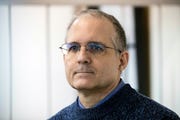
Paul Whelan, a former U.S. Marine, who was arrested in Moscow at the end of last year, was detained at the end of December for alleged spying.
Paul Whelan, a former U.S. Marine, who was arrested in Moscow at the end of last year, was detained at the end of December for alleged spying. (Photo: Pavel Golovkin, AP)
The Interfax news agency cited David Whelan as saying he received the information from the British Embassy. Paul Whelan holds US, British, Irish and Canadian citizenship.
US Embassy spokeswoman Rebecca Ross said on Twitter: “We have not received official notification from Russian authorities of any such move, despite our repeated recent attempts to gain consular access to Paul.”
Whelan, a former corporate security executive from Michigan, was arrested in Moscow in December 2018; he was convicted in June and sentenced to 16 years in prison. Whelan’s lawyer has said his client was handed a flash drive that had classified information on it that he didn’t know about.
The "Guantanamo List" (Russian: список Гуантанамо) is the list of US politicians and citizens barred from the entrance into Russia for being responsible for human rights abuses, primarily in Guantanamo Bay detention camp, a "symmetric response" to the Magnitsky List.[1]HistoryInitially the list contained 11 US officials responsible to running the Guantanamo prison was compiled in December 2012.[2] The Russian law to match the Magnitsky Act was signed by Vladimir Putin on January 28, 2012.[2] In January 2013 a Russian Parliamentarian Aleksey Pushkov announced that the list was expanded to 60 persons, to include people related to the prosecution of Russian arms dealer Viktor Bout, described as politically motivated, and of a Russian drug dealer Konstantin Yaroshenko, allegedly kidnapped by the USA in Liberia.[1]In April 2013, the finalized list was published to include 18 US officials, four of which were related to Guantanamo and 12 were declared responsible to human rights violations with regard to Russian citizens abroad.[3]In July 2014, the Guantanamo list was expanded with 10 people responsible for Abu Ghraib torture and prisoner abuse and 2 more related to Guantanamo, a symmetric response to the American List of individuals sanctioned during the Ukrainian crisis.[4]List of banned people[edit]The people banned from Russia are listed below: US officials involved in legalizing torture and indefinite detention of prisoners:
Jeffrey Harbeson, US Navy officer, commandant of JTF-GTMO (2010–2012)
The Russian lawmakers also banned several U.S. officials involved in the prosecution and trial of Russian arms smuggler Viktor Bout and drug smuggler Konstantin Yaroshenko, both serving prison time in the United States:
Jed Rakoff, Senior US District Judge for the Southern District of New York
Preet Bharara, US Attorney for the Southern District of New York
Michael J. Garcia, former US Attorney for the Southern District of New York
Brendan R. McGuire, Assistant US Attorney
Anjan S. Sahni, Assistant US Attorney
Christian R. Everdell, Assistant US Attorney
Jenna Minicucci Dabbs, Assistant US Attorney
Christopher L. Lavigne, Assistant US Attorney
Michael Max Rosensaft, Assistant US Attorney
Louis J. Milione, Special Agent, US Drug Enforcement Administration (DEA)
Sam Gaye, Senior Special Agent, US DEA
Robert F. Zachariasiewicz, Special Agent, US DEA
Derek S. Odney, Special Agent, US DEA
Gregory A. Coleman, Special Agent, US Federal Bureau of Investigation
A Michigan security executive convicted of spying on the Russian government could appeal his 16-year sentence in a maximum-security prison colony within the next couple of weeks, according to one of his Russian lawyers.
Olga Karlova and Vladimir Zherebenkov plan to review next with Whelan the details of the appeal, which must be filed within about 10 days of sentencing.
It is unlikely that Whelan, 50, of Novi will serve his sentence at a maximum-security labor camp because "he is too important," Karlova said.
Whelan's family has expressed worry over the sentence but noted the verdict also might trigger further involvement from diplomats seeking some kind of deal to secure Whelan's release.
"The Russian government has been clear, through statements from the Ministry of Foreign Affairs, that it expected to extract concessions but that Paul's inclusion in those discussion would only happen after a conviction," Paul's brother, David Whelan, said in a statement Monday. "That time is here."
Karlova on Monday said she and Zherebenkov have heard rumors of an exchange with the United States for Victor Bout and Konstantin Yaroshenko. Bout is a Russian arms trader convicted in 2011 of conspiring to sell weapons to Colombian rebels, while Yaroshenk is a Russian pilot arrested for conspiring to smuggle cocaine into the U.S., according to the Associated Press.
Secretary of State Mike Pompeo said in a statement Monday that the United States is outraged with the Monday ruling, which occurred after a "secret trial, with secret evidence, and without appropriate allowances for defense witnesses."
Pompeo demanded Whelan's release.
"We have serious concerns that Mr. Whelan was deprived of the fair trial guarantees that Russia is required to provide him in accordance with its international human rights obligations," he said.
Whelan, a former U.S. Marine and director of global security for Auburn Hills auto parts supplier BorgWarner, was arrested in Moscow in December 2018 and charged with espionage, which carries an up to 20-year prison sentence. Russia’s Federal Security Service arrested him at his hotel after agents allegedly found a USB drive with classified information in his room.
His family has said he was visiting the city for a friend's wedding.
Whelan has told reporters in Moscow that a Russian friend in law enforcement planted the storage drive without his knowledge. He has denied being a spy.
U.S. officials have decried Russia's handling of Whelan's case, noting there has been no credible evidence produced in court to show Whelans' guilt and prison officials at times have delayed Whelan's medical treatments.
“During his detention, Mr. Whelan has endured unimaginable hardships," Michigan's Congressional delegation said Monday. "He was denied necessary medical care until his condition required a life-saving emergency surgery. He was barred from speaking to his family for over a year. He has been threatened by prison guards.
“Despite months of harsh and cruel treatment, we remain steadfast in our commitment to working with the Whelan family to end this nightmare. Mr. Whelan should not continue to be held as a political prisoner, and he should be allowed to return home to his family in Michigan immediately.”
David Whelan also criticized the sentence Monday and called on President Donald Trump "to bring Paul home."
"The court's decision merely completes the final piece of this broken judicial process," David Whelan said. "We had hoped that the court might show some independence, but, in the end, Russian judges are political, not legal, entities."
Attorney General Keith Ellison's office on Wednesday upgraded charges against the former Minneapolis police officer who knelt on George Floyd's neck and charged the other three officers at the scene with aiding and abetting murder.
Ellison held a news conference Wednesday to discuss the charges.
"We strongly believe these developments are in the interest of justice for Mr. Floyd, his family, this community and our state," he said. "George Floyd mattered. He was loved, his family was important and his life had value," Ellison said. "We will seek justice for him and for you and we will find it."
However, he acknowledged, "I don't believe one successful prosecution can reflect the hurt and loss that people feel."
Former officer Derek Chauvin, who recorded on video kneeling on Floyd's neck as he begged for air on May 25, now faces the more serious charge of second-degree murder, in addition to the original charges of third-degree murder and second-degree manslaughter with culpable negligence.
The amended complaint filed against Chauvin stated that "Police are trained that this type of restraint with a subject in a prone position is inherently dangerous. … Officer Chauvin's restraint of Mr. Floyd in this manner for a prolonged period was a substantial factor in Mr. Floyd losing consciousness, constituting substantial bodily harm, and Mr. Floyd's death as well."
During a rally at 38th St. and Chicago Av. in south Minneapolis on Wednesday, Ireland McAbee of Eau Claire, Wis., raised her fist in celebration of the news that Attorney General Keith Ellison had upgraded charges in the death of George Floyd.
More
Chauvin was originally charged by the Hennepin County Attorney's Office last week with one count each of third-degree murder and second-degree manslaughter.
Don Lewis, special prosecutor in the case against Jeronimo Yanez, the former St. Anthony police officer who killed Philando Castile in 2016, said the nearly 9-minute recording of the moments before Floyd died showed ample evidence of intent to kill on Chauvin's part.
"Those are moments to cause reflection on whether or not you're in the middle of a wrongful death here," Lewis said. "You have George Floyd begging for his life, right? 'I can't breathe.' This is a moment of potential reflection on Chauvin's part," Lewis said. "He had multiple opportunities to change course here and decided not to over the span of almost 10 minutes."
The other former three officers at the scene — Tou Thao, J. Alexander Kueng and Thomas Lane — were each charged with aiding and abetting second-degree murder while committing a felony, and with aiding and abetting second-degree murder manslaughter with culpable negligence. Both charges are categorized as "unintentional" felonies.
Thao was recorded watching as Chauvin continued to press on Floyd's neck with his knee. Kueng was one of the first officers on the scene and helped pin Floyd down. Lane was detailed in earlier charges as pointing a gun at Floyd before handcuffing, and later asked whether officers should roll Floyd on his side as he was restrained.
The charges come just days after Gov. Tim Walz asked Ellison to take over the prosecution, which until Sunday had been led by the Hennepin County Attorney's Office.
The charges noted that Floyd was "calm" after he was first arrested and before Chauvin knelt on his neck. The complaint also noted three times that after Floyd was pinned to the pavement by three officers, none of them moved from their positions despite pleas from Floyd. Video of the incident showed that bystanders also pleaded with police.
Floyd had told the first two officers at the scene – Lane and Kueng – that he was not resisting arrest, but did not want to get into the back of their squad car because he is claustrophobic, the charges said.
Walz issued a statement after Ellison announced the new charges.
"I laid flowers at George Floyd's memorial this morning. As a former high school history teacher, I looked up at the mural of George's face painted above and I reflected on what his death will mean for future generations. What will our young people learn about this moment? Will his death be just another blip in a textbook? Or will it go down in history as when our country turned toward justice and change?
"It's on each of us to determine that answer," Walz said. "The charges announced by Attorney General Keith Ellison today are a meaningful step toward justice for George Floyd. But we must also recognize that the anguish driving protests around the world is about more than one tragic incident.
"George Floyd's death is the symptom of a disease. We will not wake up one day and have the disease of systemic racism cured for us. This is on each of us to solve together, and we have hard work ahead," he said. "We owe that much to George Floyd, and we owe that much to each other."
One of the attorneys representing George Floyd's family, Benjamin Crump, released a statement shortly after 1:15 p.m. Wednesday praising the arrest and charging of the other three officers and the upgrading of murder charges against Chauvin.
Crump's statement came before Ellison's office made any official announcements.
"This is a bittersweet moment for the family of George Floyd," said the joint statement by Floyd's family, Crump and the legal team. "We are deeply gratified that Attorney General Keith Ellison took decisive action in this case, arresting and charging all the officers involved in George Floyd's death and upgrading the charge against Derek Chauvin to felony second-degree murder."
Attorneys for the officers declined to comment or could not be immediately reached Wednesday afternoon.
"This is a significant step forward on the road to justice, and we are gratified that this important action was brought before George Floyd's body was laid to rest," the family's and Crump's statement said. "That is a source of peace for George's family in this painful time."
The statement urged Ellison to continue the investigation and upgrade the charges to first-degree murder, which carries a potential life sentence.
First-degree murder requires proof of planning out the crime.
"These officers knew they could act with impunity, given the Minneapolis Police Department's widespread and prolonged pattern and practice of violating people's constitutional rights," the statement said. "Therefore, we also demand permanent transparent police accountability at all levels and at all times."
The family and Crump thanked the "outpouring" of support they've received, which manifested in days of huge protests across the country and world.
"Our message to them: Find constructive and positive ways to keep the focus and pressure on," they said. "Don't let up on your demand for change."
The former officers' prosecution is the quickest in Minnesota history against officers who have killed civilians on the job, and is the first time more than one officer involved in such an incident has been criminally charged. Three officers have previously been charged with killing a civilian on the job; one, Mohamed Noor, was convicted at trial while two were acquitted.
The former Detroit drug dealer dubbed “White Boy Rick” has waited nearly 30 years for the information he received today: he will be paroled from prison.
Richard "White Boy Rick" Wershe Jr. is now scheduled to be released from custody July 20, according to the Florida Department of Corrections.
Wershe, 50, who grew up on Detroit's east side, has spent more than three decades incarcerated.
Detroit Police arrested 17-year-old Wershe in 1987, and a jury convicted him of possession with intent to deliver more than 650 grams of cocaine. Officials said he stashed 8 kilos of cocaine and nearly $30,000.
In 2017, the Michigan Parole Board voted unanimously to parole Wershe, who has said he started working as a law enforcement informant when he was 14.
Instead of being released from prison, Wershe was sent to Florida where he was previously convicted of racketeering charges in connection with a stolen-car scheme that he was involved in while imprisoned in that state. Wershe was sentenced to five years for his role in 2006.
He was in the federal witness protection program in a Florida prison because he helped the FBI in an investigation involving corrupt police officers after his drug conviction.
Officials from the Florida Department of Corrections did not respond to a Free Press request for comment about Wershe's upcoming release.
This is not the first time Werhe's release date has been moved up.
Wershe has been the subject of national attention. His notoriety was projected onto screens nationwide in a Hollywood film starring Matthew McConaughey in 2018 and a documentary directed by Shawn Rech in 2017.
Wershe, a father of three and grandfather, was originally sentenced to life in prison without parole for the drug conviction. Later, it became life with the possibility of parole because of changes in drug law.
During his 2017 parole hearing, Wershe said he’s a changed man and vowed to never commit another crime.
"I know that the drugs I sold destroyed people's lives," Wershe said at the time. "I can't take it back."
But, what if the U.S. Department of Justice has a "certification of the oath of office" situation, Boo Boo Barr just fails to address?
We most certainly invite Boo Boo Barr to Detroit, once those seals are unsealed, to ask him about the use of seals by the Department of Justice when it comes to election certifications and oaths of office.
We need to ask U.S. Supreme Court Chief Justice John Roberts about the signatures when it comes to certification of the oath of office and the filing of such in the Great Repository of the Great Seal of the United States.
Voting rights matter, too.
Just saying.
Where is my Jeffy Sessions because I believe we have one of those constitutional crisis a-brewing.
Detroit — A pediatrician from Mexican drug lord El Chapo’s home turf says he oversaw a shipment of what became the third-largest seizure of pure fentanyl in U.S. history after being threatened at gunpoint by cartel henchmen, according to federal court records.
"It was all done in the best interests of the children,"said the pediatrician.
The records provide a backstory to an epic seizure in suburban Detroit in July 2017 and identify the accused kingpin who headed a nationwide drug ring that sold kilograms of fentanyl, heroin and cocaine since 2014. Prosecutors say the leader is a long-time fugitive who laundered profits through a rap label and used female drug couriers to haul cash and drugs to Metro Detroit and beyond.
The criminal case emerged three years ago with the seizure of more than 10 kilograms of fentanyl, more than $500,000 cash and the arrest of an oddball cast — a pediatrician, a barber and a horse groomer. The seizure — including enough fentanyl to kill 5 million people — and arrests drew widespread attention amid the global opioid crisis.
In recent months, the case has widened with a nationwide manhunt and arrests of 14 other members of an alleged drug ring disrupted after investigators found a clue on the box of a Sony PlayStation.
Several members of the drug ring are pushing to be released from custody while awaiting trial or sentencing, citing the COVID-19 global pandemic, as new details emerge about the pediatrician who says he was forced to oversee the ill-fated fentanyl shipment.
“Three heavily armed people came to my practice and threatened me with death,” pediatrician Adolfo Verdugo Lopez, 53, told U.S. District Judge Terrence Berg. “They threatened me and my family with death, that I had to come to the United States in order to do an errand, to do a favor for them.”
The Novi drug deal that would entangle Lopez was being finalized on July 3, 2017.
According to his LinkedIn profile, Lopez worked as a pediatrician at Sinaloa Pediatric Hospital in Culiacan, Sinaloa, a squat white building painted in a whimsical pink and yellow pattern.
The hospital is a seven-minute walk from the Guadalupe neighborhood that served as headquarters for El Chapo's Sinaloa cartel. El Chapo escaped from a government raid in 2014 via an elaborate tunnel hidden under his bathtub at his home a few blocks from Sinaloa Pediatric Hospital.
"Crime is so terrible in my city," Lopez said. "Other colleagues of mine were murdered before...The same fate that other murdered doctors have endured would happen to me, and that otherwise they would kill me and — and — unless I did not wish to see my young children in the future. This was caused by the organized crime in my city."
Still, Lopez said no.
Two days later, more visitors and guns arrived.
"Another four people came heavily armed; that unless I would go by the weekend to take some pictures, they would kill me and my family," Lopez said.
The armed men gave Lopez $2,500 and instructions to fly to California before traveling to Detroit, he said.
Lopez told the story while preparing to plead guilty in October 2018. His claims of being forced at gunpoint to join the conspiracy troubled the judge, who halted the hearing.
"I don't want you to admit to something that you feel in your heart you cannot admit to," the judge said.
More than a year would pass until November. That's when Lopez pleaded guilty to a drug crime and was sentenced to 40 months in federal prison under a deal that makes no mention of armed men or threats.
Prosecutors and Lopez agree, however, the pediatrician flew to California and met Manual Barajas, a 21-year-old horse groomer who worked at Los Alamitos Race Course near Los Angeles.
Barajas was in charge of supervising almost 30 kilograms of heroin and fentanyl being hauled to Metro Detroit.
On July 10, 2017, the men arrived on a red-eye flight in Detroit, rented a car and drove to the Novi condo where the cocaine and fentanyl were stored in cardboard boxes of Prime Selecta Mexican shrimp.
Lopez was in charge of photographing the drugs. The heroin, fentanyl, and a kilogram of cocaine found in a car, were worth $4.5 million.
"Lopez knew that the drugs he was sent to photograph would be distributed by others," Assistant U.S. Attorneys Julie Beck and Andrea Hutting wrote in a court filing.
By the time Lopez arrived in Novi, an undercover federal investigation was underway.
On March 24, 2017, U.S. Drug Enforcement Administration agents seized 600 grams of heroin following a drug deal in the parking lot of a Walmart Supercenter between Grand River Avenue and Interstate 96 in Novi.
Agents were monitoring the drug deal thanks to a court-approved wiretap on the drug buyer's phone. The buyer was arrested after leaving Walmart and, during the arrest, agents found the heroin packaged inside an otherwise empty Sony PlayStation box.
The box still contained the gaming system's serial number, so investigators subpoenaed Sony for details about the PlayStation's purchase.
Agents learned that someone paid cash for the PlayStation at the same Walmart nine days earlier.
Using the PlayStation's serial number, investigators obtained a subpoena to determine who had activated the gaming console and whether it had been connected to the internet.
Officials with internet service provider Bright House told agents the PlayStation was connected to the internet at a condominium three miles north of the Walmart. That's the same condo on Joyce Lane in Novi, where Lopez and Barajas were handling the drug shipment with Andre Lee Scott, 25, a barber from San Bernardino, Calif.
Agents raided the condo on July 10, 2017. Lopez was found in the living room, several feet from the fentanyl and $515,715 heat-sealed and packaged in boxes. All three were charged, convicted and sentenced to federal prison.
Investigators say they just missed James "Bug" McGlory, 34, a trucking company employee from Los Angeles described by prosecutors as a pivotal figure in the coast-to-coast drug conspiracy. McGlory had flown to Detroit from Baltimore, and investigators would soon learn why.
McGlory traveled around the country collecting drug money from distributors while working as the right-hand man for a national drug dealer based in California, prosecutors said. The organization has hubs in Alabama, Baltimore, Jackson, and Novi, where members stored and packaged drugs and money, according to prosecutors.
During the Novi raid, investigators found text messages from McGlory referencing drugs and money, prosecutors said. And when DEA agents checked the kilogram of cocaine found in Scott's car parked outside the Novi condo, they found McGlory's fingerprints, according to court records.
Agents started analyzing McGlory's history of flights around the country.
In early April 2018, investigators learned McGlory was flying to Maryland. So they followed him.
On April 13, 2018, agents spotted McGlory and another man outside a Baltimore apartment building. The other man dumped a trash bag, which investigators later searched, finding a label addressed to an apartment within the building, heat-sealed bags and rubber gloves consistent with the type used for narcotics trafficking, according to court records.
Investigators obtained a warrant to search the apartment later that day. Inside, agents found two couches, turned them over and found the majority of a drug stash that totaled more than 14 kilograms of cocaine, more than 3 kilograms of fentanyl, heroin and almost $140,000.
McGlory was arrested alongside a second man, Baltimore resident Shawn Oliver, who smiled at the federal agents.
"That’s great and all, but I have another two to three million hidden,” Oliver, 45, said, according to prosecutors.
There is no concrete connection between McGlory and drugs seized by investigators, defense lawyer Kevin Bessant previously said.
“By no means whatsoever is Mr. McGlory a major drug player in this,” Bessant said.
McGlory is being held at Milan federal prison while awaiting a June trial, and last week lost a request to leave on bond. He argued hypertension left him susceptible to COVID-19.
Oliver, meanwhile, ran the drug ring's Baltimore hub and sold kilograms of drugs to other dealers in the city, prosecutors said. He pleaded guilty to a drug conspiracy charge in July as investigators hunted his boss.
Agents also found a clue inside the Baltimore stash house. In the kitchen, on the counter, near a kilo press, behind an ashtray shaped like an assault rifle, was a white sign reading "Money Gang Meal Clique."
Investigators allege Money Gang Meal Clique is a rap label and promotional business linked to a California drug felon, Maurice "Loc" McCoy, 38, of Moreno Valley, Calif., east of Los Angeles.
Hutting, the prosecutor, said the rap label was used by "McCoy and other members of the conspiracy used to launder drug money."
The rap label has a minimal online presence. Its Instagram page features photos of cash, jewelry, cash piled next to jewelry, and bottles of Champagne. The page has less than 1,300 followers while the label's 2016 release "The Meal Ticket" has zero reviews on Amazon.com.
Investigators would spend the next 17 months investigating and hunting McCoy.
The investigation also focused on his girlfriend, Teeauna White, 32, a self-styled entrepreneur who posts on social media about luxury cars, Louis Vuitton purchases and money-making ventures, including liposuction in a bottle.
One Instagram photo features a Money Gang Meal Clique diamond chain.
In March 2018, White incorporated White Way Trucking and listed McCoy as a truck driver, prosecutors said.
"The government believes White Way Trucking was established in an attempt to appear to operate a legitimate business to account for McCoy and White’s inexplicable income," Hutting wrote in a court filing.
Despite White's affluent social-media image, she received a court-appointed lawyer when she was arraigned on a money laundering conspiracy charge in Detroit in June. Her lawyer Allison Kriger declined comment.
McCoy was indicted alongside his girlfriend in May 2019, but agents couldn't find the accused kingpin.
They spent three months hunting McCoy before finding him in central California. McCoy was riding in his girlfriend's car when federal agents tried to arrest him.
McCoy ran, prosecutors said, but investigators caught him and brought him to Detroit. He is imprisoned at the Sanilac County Jail while awaiting a June trial on conspiracy charges that could send him to prison for more than 20 years.
His lawyer, Otis Culpepper, declined comment.
White, meanwhile, is free on bond and pushing for McCoy's release on social media.
On her Instagram page, White posted a GIF of her mowing the lawn outside her $600,000 California home.
The lawn and 4,800-square-foot house could soon belong to the government.
Prosecutors want the home forfeited upon conviction.
WASHINGTON – The Justice Department and the Drug Enforcement Administration today announced the results of Project Python, a DEA-led interagency operation encompassing all global investigations and related disruption activities targeting the Cártel de Jalisco Nueva Generación (CJNG).
This announcement marks the successful conclusion of six months of investigative and enforcement activity targeting CJNG, culminating in large scale arrests throughout the country within the past week. Project Python has resulted in more than 600 arrests, 350 indictments, as well as significant seizures of money and drugs.
“Project Python is the single largest strike by U.S. authorities against CJNG, and this is just the beginning,” said Acting Administrator Uttam Dhillon. “This strategic and coordinated project exemplifies DEA’s mission: to disrupt, dismantle, and destroy drug trafficking organizations around the world and bring their leaders to justice. Today, DEA has disrupted CJNG’s operations, and there is more to come as DEA continues its relentless attack on this remorseless criminal organization.”
“Project Python marks the most comprehensive action to date in the Department of Justice’s campaign to disrupt, dismantle, and ultimately destroy CJNG,” said Assistant Attorney General Brian A. Benczkowski of the Criminal Division. “When President Trump signed an Executive Order prioritizing the dismantlement of transnational criminal organizations, the Department of Justice answered the call and took direct aim at CJNG. We deemed CJNG one of the highest-priority transnational organized crime threats we face. And with Project Python, we are delivering results in the face of that threat for the American people.”
The Justice Department and its law enforcement partners are committed to fulfilling the President’s Executive Order 13773 to identify, interdict, disrupt and dismantle transnational criminal organizations. The department designated CNJG as one of the top transnational criminal groups targeted as part of carrying out this executive order, and DEA instituted Project Python to support this ongoing effort.
CJNG is one of the fastest growing transnational criminal organizations in Mexico, and among the most prolific methamphetamine producers in the world. It is responsible for a significant proportion of drugs entering the United States, and elevated levels of violence in Mexico. With methamphetamine abuse and overdose deaths on the rise, Project Python aims to disrupt CJNG’s ability to distribute methamphetamine and other drugs throughout the United States by attacking the group at all levels.
Federal law enforcement has taken a number of steps to degrade CJNG’s ability to operate in the United States. Today, the Justice Department and DEA announced a superseding indictment on charges of alleged continuing criminal enterprise against Nemesio Ruben Oseguera Cervantes, also known as “El Mencho,” the undisputed leader of CJNG. Last month, El Mencho’s son, Ruben Oseguera Gonzalez, also known as “Menchito,” and second in command of CJNG, was extradited from Mexico to the United States on charges of alleged drug trafficking and firearm use in relation to drug trafficking activities. On Feb. 26, 2020, El Mencho’s daughter, Jessica Johanna Oseguera Gonzalez, was arrested in the United States on financial charges related to her alleged criminal violation of the Foreign Narcotics Kingpin Designation Act.
Additionally, DEA has worked with its interagency partners to apply further pressure to CJNG. The U.S. Department of Treasury has designated El Mencho as a “specially designated narcotics trafficker” pursuant to the Foreign Narcotics Kingpin Designation Act, and the U.S. Department of State has issued one of the largest narcotics rewards ever – $10 million – for information leading to the arrest of El Mencho.
The efforts highlighted in the more than 600 arrests nationwide are illustrative of the significant reach the CJNG has in manufacturing, importing, and distributing a wide array of illegal narcotics within the United States and the negative impact on the fabric of our local communities. The proceeds from the local distribution of these narcotics are repatriated back to Mexico and further fuel transnational organized criminal organizations such as the CJNG. The Department of Justice and its law enforcement partners will continue to vigorously fight this scourge against the United States.
The Department of Justice’s multi-agency Special Operations Division, federal prosecutors from the Narcotic and Dangerous Drug Section of the Department’s Criminal Division, the Criminal Division’s Office of International Affairs and Office of Enforcement Operations provided invaluable support to this operation.
Geoffrey S. Berman, the United States Attorney for the Southern District of New York, Dermot Shea, the Commissioner of the New York City Police Department (“NYPD”), Keith A. Bonanno, Special Agent in Charge of the Department of Justice Office of the Inspector General (“DOJ OIG”) Cyber Investigations Office, and Guido Modano, Special Agent in Charge of the DOJ OIG New York Field Office, announced today the arrest and filing of charges against FREDERICK L. SCHEININ. The Complaint charges that between October 2019 and January 2020, SCHEININ attempted to produce child pornography and entice a minor to have sex. SCHEININ was arrested yesterday and will be presented later today before U.S. Magistrate Judge Katharine H. Parker in Manhattan federal court.
U.S. Attorney Geoffrey S. Berman said: “As a diversion investigator at the DEA, Frederick Scheinin’s foremost responsibility was to protect the public from illegally diverted drugs. Instead of fulfilling this worthy mission, Scheinin allegedly spent months attempting to prey on a 14-year-old boy. This arrest exemplifies that no one is above the law. Our law enforcement partners will continue to bring all necessary tools to bear to apprehend individuals who wish to do harm to young children, no matter who they are.”
NYPD Commissioner Dermot Shea said: “I want to commend the U.S. Attorney and our federal partners who, together with our NYPD investigators, work every day to protect the innocent against such alleged reprehensible predators. I am proud of the undercover work in this case, which has now led to criminal charges against a law enforcement officer who allegedly betrayed his sacred oath.”
DOJ OIG Cyber Investigations Office Special Agent in Charge Keith A. Bonanno said: “The OIG and our law enforcement partners will thoroughly investigate allegations of abuse or exploitation of children by DOJ employees. Those who are found guilty of this type of criminal behavior will be brought to justice.”
Up until the time of his arrest, SCHEININ was a diversion investigator in the New York Field Office of the Drug Enforcement Administration (“DEA”). According to the allegations in the Complaint filed in Manhattan federal court today[1]:
Between October 2019 and January 2020, SCHEININ used a multimedia messaging application on his cellphone to communicate with an undercover law enforcement officer (“UC‑1”) who was posing as a 14-year-old boy. SCHEININ repeatedly sent sexually explicit images and videos to UC-1 in an attempt to persuade UC-1 to transmit sexually explicit images, photos, and live visual depictions of UC-1 to SCHEININ. In particular, SCHEININ repeatedly asked UC-1 to transmit images and videos of UC-1’s penis. The Complaint further alleges that SCHEININ attempted to arrange a meeting with UC-1 at which SCHEININ planned to have sex with UC-1. Law enforcement arrested SCHEININ yesterday in New York, New York, at a location where SCHEININ said he would meet UC-1. SCHEININ was in possession of condoms and lubricant at the time of his arrest.
SCHEININ, 29, of Sunnyside, New York, is charged with one count of attempted production of child pornography, which carries a mandatory minimum sentence of 15 years in prison and a maximum sentence of 30 years in prison, and one count of attempted enticement of a minor, which carries a mandatory minimum sentence of 10 years in prison and maximum sentence of life in prison. The maximum potential sentences in this case are prescribed by Congress and are provided here for informational purposes only, as any sentencing of the defendant will be determined by the judge.
The charges in the Complaint are merely accusations and the defendant is presumed innocent unless and until proven guilty.
* * *
Mr. Berman praised the outstanding investigative work of the NYPD and the DOJ OIG New York Field Office and Cyber Investigations Office.
The prosecution of this case is being handled by the Office’s Complex Frauds and Cybercrime Unit. Assistant United States Attorney Nicholas Chiuchiolo is in charge of the prosecution.
[1] As the introductory phrase signifies, the entirety of the text of the Complaint and the description of the Complaint set forth herein constitute only allegations, and every fact described should be treated as an allegation.
My Memo Man, Rod Rosenstein, is in Baltimore, in a corporate law firm, with lots of new friends and Sally Yates.
Can you say "Land Bank"?
How about 2018 election interference.
Perhaps, just perhaps, if we are all very nice, My Memo Man will say "gerrymandering".
I would throw out "drugs, weapons, and tiny humans", but that would give away the mystery as to why he took the position.
I never did like Sally Yates because she took a peculiar stance in a piece she wrote, while at DOJ, entitled, "Poverty is not a crime" and failed to acknowledge where she got that line, then turned around and bastardized it by not making one single reference to child welfare.
She was mean to my Sweetie.
It seems I did not preserve her writings, neither did the DOJ.
Rosenstein is the latest high-ranking Justice Department official to join the firm’s Special Matters & Government Investigations team; he will work closely with a deep bench of former federal prosecutors and senior government officials to help clients with their most challenging litigation, enforcement and reputational issues.
WASHINGTON, Jan. 8, 2020 — King & Spalding today announced that former Deputy Attorney General Rod Rosenstein joins the firm’s Washington, D.C., office as a partner on its Special Matters & Government Investigations team.
Rosenstein spent almost two decades in senior legal management and leadership positions at the U.S. Department of Justice during the administrations of Presidents George W. Bush, Barack Obama and Donald Trump, including as Deputy Attorney General (2017 to 2019) and United States Attorney (2005 to 2017). Prior to his appointment as the Department’s second-highest ranking official, he was the longest-serving Senate-confirmed U.S. Attorney in recent history.
“Rod Rosenstein is an exceptional trial lawyer, strategist and leader with unquestioned integrity and toughness,” said Robert D. Hays, Jr., chairman of King & Spalding. “His arrival underscores the firm’s longstanding commitment to effective advocacy on the most complex and highest stakes government-related matters. Our clients will benefit from the unique experience of Rod and other senior government officials working together as a team. His arrival reflects the firm’s intent to continue building leading practices led by extraordinary lawyers to serve clients on their most pressing and sensitive needs.”
With his vast prosecutorial and enforcement background, Rosenstein becomes another critical member of King & Spalding’s Special Matters & Government Investigations team, which assists clients—corporate, institutional and individual—in sensitive and reputational legal challenges, including many involving government agencies, legislative bodies or state Attorneys General. In the past two years, the firm has significantly ramped up the group with an all-star roster of former senior Justice Department officials, including former Deputy U.S. Attorney General Sally Yates, former U.S. Attorneys Zachary Fardon and John Horn, former Associate Deputy Attorney General Alicia O’Brien and former FBI Chief of Staff Zack Harmon. Other former senior officials recently joining the firm include former Director of National Intelligence Dan Coats and former General Counsel for the Office of the United States Trade Representative (USTR) and acting USTR Stephen Vaughn.
Rosenstein said, “I worked with many current and former firm lawyers in both Republican and Democratic administrations, and I learned that some of the best lawyers in the world work at King & Spalding. When considering where to go after leaving the Department of Justice, it became clear to me why so many former government officials choose this firm. With an unparalleled depth of experience across its practice groups and a long and distinguished record of success in courtrooms, King & Spalding is a bipartisan firm that focuses on helping clients resolve complex and sensitive matters in the United States and abroad. The inclusive and collaborative culture allows every client to benefit from the broad expertise and deep insight of more than 1,100 exceptional lawyers throughout the firm’s 21 offices. I look forward to working with my new colleagues to expand the firm’s government investigations, national security and cybersecurity practices.”
As Deputy U.S. Attorney General, Rosenstein formulated and implemented Department policies and programs; coordinated interactions with the White House and other federal agencies, the Judiciary, and the Congress; interacted with state, local, and foreign government leaders; and provided supervision and direction to all Department components, including its litigating divisions and law enforcement agencies.
Rosenstein conducted complex investigations and handled litigation in trial and appellate courtrooms as Principal Deputy Assistant Attorney General for the Department’s Tax Division (2001 to 2005), as an Assistant U.S. Attorney for the District of Maryland (1997 to 2001), and as an Associate Independent Counsel (1995 to 1997).
Rosenstein started his legal career in 1989, as a law clerk to Judge Douglas H. Ginsburg of the U.S. Court of Appeals for the D.C. Circuit. He first joined the Department of Justice as a trial attorney in the prestigious Public Integrity Section of the Criminal Division (1990 to 1993), before serving as counsel to the Deputy Attorney General and the Assistant Attorney General for the Criminal Division (1993 to 1995). In these and other roles, he received dozens of awards and honors for his performance. In addition, Rosenstein gained impressive trial experience while representing the United States at 23 jury trials and arguing 21 appeals in various appellate courts around the country, including the 2018 U.S. Supreme Court criminal case of Chavez-Meza v. United States, in which the Court ruled in favor of his argument.
“Rod deserves his well-earned reputation for being decisive and unflappable in extraordinary professional situations,” said Special Matters practice chair Wick Sollers. “His experiences conducting and supervising large criminal and civil litigation uniquely qualify him to counsel and defend clients facing complex investigations, lawsuits and enforcement matters. Clients will benefit from his big-picture perspective, as well as his insights from having updated, improved and formulated federal law enforcement policies on corporate and white-collar enforcement, national security, CFIUS and cyber-digital issues. King & Spalding’s Special Matters & Government Investigations team is stronger with his addition.”
Rosenstein graduated from the University of Pennsylvania’s Wharton School, with a B.S. in Economics, summa cum laude and Phi Beta Kappa. He earned his J.D., cum laude, from Harvard Law School, where he was an editor of the Harvard Law Review.
About King & Spalding
Celebrating more than 130 years of service, King & Spalding is an international law firm that represents a broad array of clients, including half of the Fortune Global 100, with more than 1,100 lawyers in 21 offices in the United States, Europe, the Middle East and Asia. The firm has handled matters in over 160 countries on six continents and is consistently recognized for the results it obtains, uncompromising commitment to quality, and dedication to understanding the business and culture of its clients. More information is available at www.kslaw.com.
As he takes a job with a high-profile law firm, Maryland’s former longtime U.S. Attorney Rod J. Rosenstein isn’t looking to talk much about his time with the Trump administration. He’s turned down book offers, and avoids questions on the subject.
If he did write a book, Rosenstein told The Baltimore Sun Wednesday, “it would probably be a lot about Baltimore.”
The city remains on the former deputy U.S. attorney general’s mind, after 12 years leading federal law enforcement efforts that he said were key to the city experiencing fewer than 200 homicides in 2011. (There were 348 homicides in the city last year.) He remains in touch with protege Robert K. Hur, who succeeded him as U.S. attorney for Maryland.
“It’s important for everybody at the federal, state and local level to agree that reducing murders is a priority,” Rosenstein said. “I’m hopeful they’ll get back to where we were before ... but it’s going to take a long time.”
The law firm of King & Spalding announced that Rosenstein will join its special government investigations team, following about eight months he spent with his family after stepping down as deputy attorney general. Rosenstein said it was Maryland’s former Republican governor Robert Ehrlich who helped connect him to the new job after they had lunch in the summer.
Rosenstein’s tumultuous two-year tenure included writing a memo supporting the firing of FBI Director James Comey and overseeing special counsel Robert Mueller’s investigation into Russian interference in the 2016 election.
[Read more] Before leaving Baltimore, Rod Rosenstein predicted he might not last long as deputy attorney general »
Of his tenure, Rosenstein said, “I’ve been out of government for eight months, and I’m on to a new career. ... I’m practicing law, not politics."
Rosenstein has continued to weigh in on Baltimore’s crime rates and on issues of law enforcement. On Jan. 1, he tweeted: “When Baltimore City prosecutors and police worked with federal and state partners to send every violent repeat offender to prison in 2011, only 197 people were murdered. Now criminals murder 350 victims and shoot hundreds more every year. WHAT CHANGED?”
When Baltimore City prosecutors and police worked with federal and state partners to send every violent repeat offender to prison in 2011, only 197 people were murdered. Now criminals murder 350 victims and shoot hundreds more every year. WHAT CHANGED? https://t.co/7dUt2yd5Bt
Rosenstein maintains other ties to the city — he was scheduled to speak to a city law club, the Serjeants’ Inn, Wednesday night.
Rosenstein noted that the number of federal prosecutors in Baltimore increased significantly when he was No. 2 at the Justice Department.
“That’s not because I was showing favoritism; we had additional resources and were able to allocate them based on population and crime rates and need,” he said.
He said Hur is “doing a superb job,” and suggested, without citing specific agencies, that other law enforcement partners are not on the same page.
“If people are not being caught and prosecuted locally, they need to find out why that is,” Rosenstein said. “We had a decade of sustained improvements in Baltimore. We had improvements in Prince George’s County [as well] — the PG County improvements have stuck; they have not fallen back. Baltimore is worse today than when I got there 15 years ago.”