Showing posts with label wall. Show all posts

Thursday, August 20, 2020

DOJ: Steve Bannon Grifted The Wall - But What Did He Do With All The Money?

I am much more curios about the crowdfunding website process in its financial mechanisms because it sorta sounds like a vehicle for money laundering and grifting without any reportability duties.

Not having reportability duties, like SARs, would not be a good thing.

I wonder if we will be able to see the journey of these funds because I bet they will go through various trafficking tiny humans trust funds.

I bet some of the funding was invested in other online grifting operations, but, hey, what do I know?

I know that I just adore transposable models.

I wonder what is the next cyber grifting organization will be next

I know thou shalt not bear false witness for they shall fall from the heavens.

#maytheheavensfall

Leaders Of ‘We Build The Wall’ Online Fundraising Campaign Charged With Defrauding Hundreds Of Thousands Of Donors

Former advisor to the US president and US publicist Steve Bannon poses during a photo session in Paris on May 27, 2019.
Steve Bannon
Brian Kolfage, Stephen Bannon, and Two Others Alleged to Have Funneled Hundreds of Thousands of Dollars From the Organization to Kolfage; All Four Defendants Allegedly Profited From Their Roles in the Scheme

Audrey Strauss, the Acting United States Attorney for the Southern District of New York, and Philip R. Bartlett, Inspector-in-Charge of the New York Field Office of the United States Postal Inspection Service (“USPIS”), announced the unsealing of an indictment charging BRIAN KOLFAGE, STEPHEN BANNON, ANDREW BADOLATO, and TIMOTHY SHEA for their roles in defrauding hundreds of thousands of donors in connection with an online crowdfunding campaign known as “We Build the Wall” that raised more than $25 million.  The defendants were arrested this morning.  KOLFAGE will be presented today before U.S. Magistrate Judge Hope T. Cannon in the Northern District of Florida.  BANNON will be presented today in the Southern District of New York.  BADOLATO will be presented today before U.S. Magistrate Judge Thomas Wilson in the Middle District of Florida.  SHEA will be presented today before U.S. Magistrate Judge Kristen L. Mix in the District of Colorado.  The case is assigned to U.S. District Judge Analisa Torres in the Southern District of New York.
Acting U.S. Attorney Audrey Strauss said:  “As alleged, the defendants defrauded hundreds of thousands of donors, capitalizing on their interest in funding a border wall to raise millions of dollars, under the false pretense that all of that money would be spent on construction.  While repeatedly assuring donors that Brian Kolfage, the founder and public face of We Build the Wall, would not be paid a cent, the defendants secretly schemed to pass hundreds of thousands of dollars to Kolfage, which he used to fund his lavish lifestyle.  We thank the USPIS for their partnership in investigating this case, and we remain dedicated to rooting out and prosecuting fraud wherever we find it.”
Inspector-in-Charge Philip R. Bartlett said:  “The defendants allegedly engaged in fraud when they misrepresented the true use of donated funds.  As alleged, not only did they lie to donors, they schemed to hide their misappropriation of funds by creating sham invoices and accounts to launder donations and cover up their crimes, showing no regard for the law or the truth.   This case should serve as a warning to other fraudsters that no one is above the law, not even a disabled war veteran or a millionaire political strategist.”
According to the Indictment[1] unsealed today in Manhattan federal court:
Starting in approximately December 2018, BRIAN KOLFAGE, STEPHEN BANNON, ANDREW BADOLATO, and TIMOTHY SHEA, and others, orchestrated a scheme to defraud hundreds of thousands of donors, including donors in the Southern District of New York, in connection with an online crowdfunding campaign ultimately known as “We Build The Wall” that raised more than $25 million to build a wall along the southern border of the United States.  In particular, to induce donors to donate to the campaign, KOLFAGE repeatedly and falsely assured the public that he would “not take a penny in salary or compensation” and that “100% of the funds raised . . . will be used in the execution of our mission and purpose” because, as BANNON publicly stated, “we’re a volunteer organization.”
Those representations were false.  In truth, KOLFAGE, BANNON, BADOLATO, and SHEA received hundreds of thousands of dollars in donor funds from We Build the Wall, which they each used in a manner inconsistent with the organization’s public representations.  In particular, KOLFAGE covertly took for his personal use more than $350,000 in funds that donors had given to We Build the Wall, while BANNON, through a non-profit organization under his control (“Non-Profit-1”), received over $1 million from We Build the Wall, at least some of which BANNON used to cover hundreds of thousands of dollars in BANNON’s personal expenses.  To conceal the payments to KOLFAGE from We Build the Wall, KOLFAGE, BANNON, BADOLATO, and SHEA devised a scheme to route those payments from We Build the Wall to KOLFAGE indirectly through Non-Profit-1 and a shell company under SHEA’s control, among other avenues.  They did so by using fake invoices and sham “vendor” arrangements, among other ways, to ensure, as KOLFAGE noted in a text message to BADOLATO, that his pay arrangement remained “confidential” and kept on a “need to know” basis.  
*                *                *
KOLFAGE, 38, of Miramar Beach, Florida, BANNON, 66, of Washington, D.C., BADOLATO, 56, of Sarasota, Florida, and SHEA, 49, of Castle Rock, Colorado, are each charged with one count of conspiracy to commit wire fraud and one count of conspiracy to commit money laundering, each of which carries a maximum penalty of 20 years in prison. 
The statutory maximum penalties are prescribed by Congress and are provided here for informational purposes only, as any sentencing of the defendants would be determined by the judge.
Ms. Strauss praised the outstanding investigative work of the USPIS and the Special Agents of the United States Attorney’s Office for the Southern District of New York.  She also thanked the U.S Attorney’s Office for the Northern District of Florida for their assistance.
The case is being handled by the Office’s Public Corruption Unit.  Assistant United States Attorneys Nicolas Roos, Alison G. Moe, and Robert B. Sobelman are in charge of the prosecution.
The charges contained in the Indictment are merely accusations.  The defendants are presumed innocent unless and until proven guilty.


[1] As the introductory phrase signifies, the entirety of the text of the Indictment, and the description of the Indictment set forth herein, constitute only allegations, and every fact described therein should be treated as an allegation.

Aaaaaand away we go!


Voting is beautiful, be beautiful ~ vote.©

Monday, August 17, 2020

DOJ: Open Public Comments On SORNA - Adam Walsh Child Protection Database - October 13, 2020

Are you bored, in search of a way to have your voice heard, knowing that your Twitter is search suppressed?

Why, here is your opportunity!

DOJ is announcing open comments on its rulemaking.

DOJ did not like public input when it came to rulemaking, but Sessions changed that practice.

You have to get creative to get the DOJ to listen, particularly when it comes to tiny humans, but I digress, not really.


DRU SJODIN
NATIONAL SEX OFFENDER PUBLIC WEBSITE

https://www.nsopw.gov/

So, instead of hammering on your mobile device, how about submitting your comments, under penalty of law, by signing your name, verifying who you are and what you are presenting, for the betterment of society, and not just personal graft.

I believe all social media platforms should have the same disclaimer, but they do not, because they are private, foreign corporations, where there is no such thing as civil rights, unless there is raised an an issue of armigerous validity, a Parental Right, but, I digress, well, not really.

It all comes down to trafficking tiny humans.

Here is the history of SORNA.

Here is the history of the Adam Walsh Child Protection and Safety Act of 2006.

Here is the history of the Central Registry of Child Abuse & Neglect, where poverty is considered a crime.

I say, if we can maintain public databases on individuals who engage in such heinous acts, then, in the same breath, we can maintain public databases on individuals who engage in rulemaking, and Medicaid fraud in child welfare.

I will also go so far as to say that we can just merge all the databases, then invert them so each and every individual will have their own cyberchit, cybertrust, block, self contained, identity.

The same should be done for commerce, where the U.S. Census resided in the Department of Commerce.

That way, all you have to do is pick up your mobile device and build your own wall, where everyone can witness the content of your character.

So, the moral of the story is, "If you do not want people to know what you do, then, perhaps, you should not be doing it."


Summary
The Department of Justice is proposing a rule that specifies the registration requirements under the Sex Offender Registration and Notification Act (“SORNA”). The rule in part reflects express requirements of SORNA and in part reflects the exercise of authorities SORNA grants to the Attorney General to interpret and implement SORNA's requirements. SORNA's requirements have previously been delineated in guidelines issued by the Attorney General for implementation of SORNA's requirements by registration jurisdictions.

Dates
Written and electronic comments must be sent or submitted on or before October 13, 2020. Comments received by mail will be considered timely if they are postmarked on or before the last day of the comment period. The electronic Federal Docket Management System will accept electronic comments until midnight Eastern Time at the end of that day.

Addresses
Comments may be mailed to Regulations Docket Clerk, Office of Legal Policy, U.S. Department of Justice, 950 Pennsylvania Avenue NW, Room 4234, Washington, DC 20530. To ensure proper handling, please reference Docket No. OAG 157 on your correspondence. You may submit comments electronically or view an electronic version of this proposed rule at http://www.regulations.gov.

For Further Information Contact
David J. Karp, Senior Counsel, Office of Legal Policy, U.S. Department of Justice, Washington, DC, 202-514-3273.

Supplementary Information
Posting of Public Comments. Please note that all comments received are considered part of the public record and made available for public inspection online at http://www.regulations.gov. Such information includes personal identifying information (such as your name, address, etc.) voluntarily submitted by the commenter.

You are not required to submit personal identifying information in order to comment on this rule. Nevertheless, if you still want to submit personal identifying information (such as your name, address, etc.) as part of your comment, but do not want it to be posted online, you must include the phrase “PERSONAL IDENTIFYING INFORMATION” in the first paragraph of your comment. You also must locate all the personal identifying information you do not want posted online in the first paragraph of your comment and identify what information you want redacted.

If you want to submit confidential business information as part of your comment, but do not want it to be posted online, you must include the phrase “CONFIDENTIAL BUSINESS INFORMATION” in the first paragraph of your comment. You also must prominently identify confidential business information to be redacted within the comment. If a comment has so much confidential business information that it cannot be effectively redacted, all or part of that comment may not be posted on http://www.regulations.gov.

Personal identifying information and confidential business information identified and located as set forth above will be placed in the agency's public docket file, but not posted online. If you wish to inspect the agency's public docket file in person by appointment, please see the FOR FURTHER INFORMATION CONTACT paragraph.

Department of Justice Publishes Proposed Regulations Articulating the Registration Requirements for Sex Offenders under the Sex Offender Registration and Notification Act

The Department of Justice has published proposed regulations that provide a clear and comprehensive statement of sex offenders’ registration requirements under the federal Sex Offender Registration and Notification Act (SORNA).  SORNA requires convicted sex offenders to register in the states in which they live, work, or attend school, and it directs the Attorney General to issue regulations and guidelines to implement SORNA. 
“SORNA is a crucial public safety measure,” said Assistant Attorney General for Legal Policy Beth A. Williams.  “The proposed regulations will further Congress’s and the Department’s shared goal of ensuring that convicted sex offenders are accounted for under the law.  These regulations will enhance the enforcement of registration and notification across the country and ensure that information about sex offenders in the community is available to law enforcement and the public.”  
Congress enacted SORNA as part of the Adam Walsh Child Protection and Safety Act of 2006 to strengthen the nation’s sex offender registration programs, which exist in every state, and to ensure that sex offenders are effectively tracked as they move among jurisdictions.  SORNA includes requirements regarding the sex offenses for which registration is required and the information sex offenders must provide to registration authorities; reporting of changes in, and periodic verification of, residence and other information; and the required duration of registration for sex offenders in different classes.  SORNA also requires sex offenders to report travel abroad, which addresses the global concern over international sex tourism and trafficking.
The proposed regulations’ clear and comprehensive statement of registration obligations under SORNA will promote the effective enforcement of SORNA’s requirements.  By these means, the proposed regulations will further SORNA’s objective of protecting the public from sex offenders by establishing a comprehensive national system for the registration of such offenders.
The proposed regulations are available here.

Voting is beautiful, be beautiful ~ vote.©

Thursday, October 10, 2019

PROCLAMATION: Presidential Proclamation on the Suspension of Entry of Immigrants Who Will Financially Burden the United States Healthcare System

This does not seem to apply to the Child Welfare System or the Medicaid Fraud schemes, within, but it does, with a smooth, legal finesse, document citizenship through contractual relationships under the responsibility of a corporation to approve health care coverage.

So, health insurance databases can be meshed within other immigration systems, where the health insurance company must maintain the genetic histories, expediting the naturalization process to a click of an app.

If the health insurance contracts are found violate its contracts, engaging in fraud, they can be stripped of their rights to bear the Arms of the United States, including asset forfeiture under the powers of the Treasury.

This is the Wall.

  Issued on: October 4, 2019

Healthcare providers and taxpayers bear substantial costs in paying for medical expenses incurred by people who lack health insurance or the ability to pay for their healthcare.  Hospitals and other providers often administer care to the uninsured without any hope of receiving reimbursement from them.  The costs associated with this care are passed on to the American people in the form of higher taxes, higher premiums, and higher fees for medical services.  In total, uncompensated care costs — the overall measure of unreimbursed services that hospitals give their patients — have exceeded $35 billion in each of the last 10 years.  These costs amount to approximately $7 million on average for each hospital in the United States, and can drive hospitals into insolvency.  Beyond uncompensated care costs, the uninsured strain Federal and State government budgets through their reliance on publicly funded programs, which ultimately are financed by taxpayers.

Beyond imposing higher costs on hospitals and other healthcare infrastructure, uninsured individuals often use emergency rooms to seek remedies for a variety of non-emergency conditions, causing overcrowding and delays for those who truly need emergency services.  This non-emergency usage places a large burden on taxpayers, who reimburse hospitals for a portion of their uncompensated emergency care costs.

While our healthcare system grapples with the challenges caused by uncompensated care, the United States Government is making the problem worse by admitting thousands of aliens who have not demonstrated any ability to pay for their healthcare costs.  Notably, data show that lawful immigrants are about three times more likely than United States citizens to lack health insurance.  Immigrants who enter this country should not further saddle our healthcare system, and subsequently American taxpayers, with higher costs.

The United States has a long history of welcoming immigrants who come lawfully in search of brighter futures.  We must continue that tradition while also addressing the challenges facing our healthcare system, including protecting both it and the American taxpayer from the burdens of uncompensated care.  Continuing to allow entry into the United States of certain immigrants who lack health insurance or the demonstrated ability to pay for their healthcare would be detrimental to these interests.

NOW, THEREFORE, I, DONALD J. TRUMP, by the authority vested in me by the Constitution and the laws of the United States of America, including sections 212(f) and 215(a) of the Immigration and Nationality Act (8 U.S.C. 1182(f) and 1185(a)) and section 301 of title 3, United States Code, hereby find that the unrestricted immigrant entry into the United States of persons described in section 1 of this proclamation would, except as provided for in section 2 of this proclamation, be detrimental to the interests of the United States, and that their entry should be subject to certain restrictions, limitations, and exceptions.  I therefore hereby proclaim the following:

Section 1.  Suspension and Limitation on Entry.  (a)  The entry into the United States as immigrants of aliens who will financially burden the United States healthcare system is hereby suspended and limited subject to section 2 of this proclamation.  An alien will financially burden the United States healthcare system unless the alien will be covered by approved health insurance, as defined in subsection (b) of this section, within 30 days of the alien’s entry into the United States, or unless the alien possesses the financial resources to pay for reasonably foreseeable medical costs.

(b)  Approved health insurance means coverage under any of the following plans or programs:

(i)     an employer-sponsored plan, including a retiree plan, association health plan, and coverage provided by the Consolidated Omnibus Budget Reconciliation Act of 1985;

(ii)    an unsubsidized health plan offered in the individual market within a State;

(iii)   a short-term limited duration health policy effective for a minimum of 364 days — or until the beginning of planned, extended travel outside the United States;

(iv)    a catastrophic plan;

(v)     a family member’s plan;

(vi)    a medical plan under chapter 55 of title 10, United States Code, including coverage under the TRICARE program;

(vii)   a visitor health insurance plan that provides adequate coverage for medical care for a minimum of 364 days — or until the beginning of planned, extended travel outside the United States;

(viii)  a medical plan under the Medicare program; or

(ix)    any other health plan that provides adequate coverage for medical care as determined by the Secretary of Health and Human Services or his designee.

(c)  For persons over the age of 18, approved health insurance does not include coverage under the Medicaid program.

Sec. 2.  Scope of Suspension and Limitation on Entry.  (a)  Section 1 of this proclamation shall apply only to aliens seeking to enter the United States pursuant to an immigrant visa.

(b)  Section 1 of this proclamation shall not apply to:

(i)     any alien holding a valid immigrant visa issued before the effective date of this proclamation;

(ii)    any alien seeking to enter the United States pursuant to a Special Immigrant Visa, in either the SI or SQ classification, who is also a national of Afghanistan or Iraq, or his or her spouse and children, if any;

(iii)   any alien who is the child of a United States citizen or who is seeking to enter the United States pursuant to an IR-2, IR-3, IR-4, IH-3, or IH-4 visa;

(iv)    any alien seeking to enter the United States pursuant to an IR-5 visa, provided that the alien or the alien’s sponsor demonstrates to the satisfaction of the consular officer that the alien’s healthcare will not impose a substantial burden on the United States healthcare system;

(v)     any alien seeking to enter the United States pursuant to a SB-1 visa;

(vi)    any alien under the age of 18, except for any alien accompanying a parent who is also immigrating to the United States and subject to this proclamation;

(vii)   any alien whose entry would further important United States law enforcement objectives, as determined by the Secretary of State or his designee based on a recommendation of the Attorney General or his designee; or

(viii)  any alien whose entry would be in the national interest, as determined by the Secretary of State or his designee on a case-by-case basis.

(c)  Consistent with subsection (a) of this section, this proclamation does not affect the entry of aliens entering the United States through means other than immigrant visas, including lawful permanent residents.  Further, nothing in this proclamation shall be construed to affect any individual’s eligibility for asylum, refugee status, withholding of removal, or protection under the Convention Against Torture and Other Cruel, Inhuman or Degrading Treatment or Punishment, consistent with the laws and regulations of the United States.

Sec. 3.  Implementation and Enforcement.  (a)  An alien subject to this proclamation must establish that he or she meets its requirements, to the satisfaction of a consular officer, before the adjudication and issuance of an immigrant visa.  The Secretary of State may establish standards and procedures governing such determinations.

(b)  The review required by subsection (a) of this section is separate and independent from the review and determination required by other statutes, regulations, or proclamations in determining the admissibility of an alien.

(c)  An alien who circumvents the application of this proclamation through fraud, willful misrepresentation of a material fact, or illegal entry shall be a priority for removal by the Department of Homeland Security.

Sec. 4.  Reports on the Financial Burdens Imposed by Immigrants on the Healthcare System.  (a)  The Secretary of State, in consultation with the Secretary of Health and Human Services, the Secretary of Homeland Security, and the heads of other appropriate agencies, shall submit to the President a report regarding:

(i)   the continued necessity of and any adjustments that may be warranted to the suspension and limitation on entry in section 1 of this proclamation; and

(ii)  other measures that may be warranted to protect the integrity of the United States healthcare system.

(b)  The report required by subsection (a) of this section shall be submitted within 180 days of the effective date of this proclamation, with subsequent reports submitted annually thereafter throughout the effective duration of the suspension and limitation on entry set forth in section 1 of this proclamation.  If the Secretary of State, in consultation with the heads of other appropriate executive departments and agencies, determines that circumstances no longer warrant the continued effectiveness of the suspension or limitation on entry set forth in section 1 of this proclamation or that circumstances warrant additional measures, the Secretary shall immediately so advise the President.

(c)  The Secretary of State and Secretary of Health and Human Services shall coordinate any policy recommendations associated with the reports described in subsection (a) of this section.

Sec. 5.  Severability.  It is the policy of the United States to enforce this proclamation to the maximum extent possible to advance the interests of the United States.  Accordingly:

(a)  if any provision of this proclamation, or the application of any provision to any person or circumstance, is held to be invalid, the remainder of the proclamation and the application of its other provisions to any other persons or circumstances shall not be affected thereby; and

(b)  if any provision of this proclamation, or the application of any provision to any person or circumstance, is held to be invalid because of the failure to follow certain procedures, the relevant executive branch officials shall implement those procedural requirements to conform with existing law and with any applicable court orders.

Sec. 6.  General Provisions.  (a)  Nothing in this proclamation shall be construed to impair or otherwise affect:

(i)    United States Government obligations under applicable international agreements;

(ii)   the authority granted by law to an executive department or agency, or the head thereof; or

(iii)  the functions of the Director of the Office of Management and Budget relating to budgetary, administrative, or legislative proposals.

(b)  This proclamation shall be implemented consistent with applicable law and subject to the availability of appropriations.

(c)  This proclamation is not intended to, and does not, create any right or benefit, substantive or procedural, enforceable at law or in equity by any party against the United States, its departments, agencies, or entities, its officers, employees, or agents, or any other person.

Sec. 7.  Effective Date.  This proclamation is effective at 12:01 a.m. eastern daylight time on November 3, 2019.

IN WITNESS WHEREOF, I have hereunto set my hand this fourth day of October, in the year of our Lord two thousand nineteen, and of the Independence of the United States of America the two hundred and forty-fourth.

DONALD J. TRUMP

Voting is beautiful, be beautiful ~ vote.©

Friday, August 23, 2019

Another Section Of The Wall Is Built - N-DEx, CODIS & The Central Registry Of Child Abuse & Neglect

The U.S. is building the wall.

The wall is an AI cybersecurity wall because the U.S. does not have one.

N-Dex and CODIS are sections of the wall.

The other side of the John Walsh Act is the States Central Registry of Child Abuse and Neglect that no one wants to talk about because citizenship of children is not documented in child welfare.

Children are transferred to the custody of the States privatized, foreign corporations, where no one wants to talk about the policy of ICPC, which is not a law.


With a database, one can no longer file false claims, but do not tell that to DHS an its new immigration rule which allows a private, foreign corporation, like Bethany Christian, to keep families together, in the least restrictive, contained environment under human asset management systems, indefinitely, for billing purposes, transferring rights to the corporate parent.

So, if a foreign corporate parent has sole, legal custody and guardianship of immigrant humans, what is the citizenship of the human assets of the foreign corporation?

And this is why we are building the wall.

N-DEx System Helps Law Enforcement Identify Offenders


National Data Exchange (N-DEx) SealCriminal justice investigators across the nation use the FBI’s National Data Exchange (N-DEx) System in their daily work to connect people, places, things, and events—often across jurisdictional boundaries—that may at first glance seem unrelated. Recent N-DEx successes include identifying a suspect in a homicide case, identifying a felon involved in a fraud case, and locating three probationers who traveled outside jurisdictions into neighboring states. Here are details from the cases and information on how investigators used the N‑DEx System to close them successfully.

Homicide Suspect in North Carolina
Recently, the Charlotte-Mecklenburg Police Department in North Carolina was investigating a drug-related homicide. Officers believed the suspect and the victim knew each other, since the victim had been talking on the telephone with the subject just before the homicide. The only information the officers had was a phone number they obtained from the victim’s cell phone. Charlotte-Mecklenburg staff searched the phone number in several databases without success. Finally, they ran the number in the Naval Criminal Investigative Service Law Enforcement Information Exchange (LInX) System and received a hit from the LInX System’s access to the N-DEx System.

The N-DEx System record included a name and address related to an effort by the U.S. Marshals Service (USMS) to locate the suspect on a separate warrant. With the information from the USMS report, Charlotte-Mecklenburg staff obtained a photograph and subsequently positively identified the suspect. The suspect was arrested for murder and robbery, and the case was closed.
Felony Fraud Case in Tennessee

An investigator with the Belle Meade Police Department (BMPD) in Tennessee was investigating a felony fraud case involving a small group of professional con men who targeted female senior citizens. The women hired the men to perform odd jobs such as vehicle, driveway, or roofing repairs, but the men fraudulently overcharged the women for inferior work.
The investigator queried the subjects using the National Crime Information Center and the Interstate Identification Index, but found no records. However, when the investigator accessed the Regional Information Sharing System’s Regional Organized Crime Information Center portal and logged into the N-DEx System, he found multiple incident reports showing a pattern of similar complaints in other states.
One such incident in Glenview, Illinois, was nearly identical to the Tennessee case. The report included the details of the main subject, noting the man’s comment that he knew what he was doing was wrong, but he was there just for the money. When the BMPD investigator presented this information to the subject, he reacted uncomfortably and showed signs of his guilt.

Members of the group are currently awaiting trial in Tennessee. The investigator credited the N-DEx System with saving time and effort by helping him identify patterns in seemingly unrelated crimes and connecting him to law enforcement staff in Illinois. The investigator praised the N-DEx System, saying, “N‑DEx is one of the most valuable tools in my 35 years in law enforcement.”
Probation Absconders in New Mexico

An executive assistant in the Security Threat Intelligence Unit of the New Mexico Corrections Department (NMCD) searched the N-DEx System for any recent records on probationers who had absconded from their jurisdictions. Using the N-DEx System’s batch search tool to query multiple individuals at once, the executive assistant found three subjects who had fled and were later arrested in other jurisdictions.

Five days before the search, the Lubbock County Sheriff’s Office in Texas booked one subject for burglary, assault, public intoxication, and other offenses. The Wise County Sheriff’s Office in Texas arrested a second subject earlier in April for possession of drug paraphernalia and tampering with evidence. Twelve days prior to the search, an agency in Durango, CO, booked the third subject for driving while intoxicated.

The executive assistant verified the custody status of the subjects, then forwarded the updated information to the relevant NMCD officers. Those officers placed holds on the subjects, which means they will serve their sentences, then be returned to the NMCD.
National Data Exchange (N-DEx) Seal

For more information about how your agency can use the N-DEx System to help further its investigations, contact the N-DEx Program Office at ndex@leo.gov or call 304-625-0555.

Resources
National Data Exchange (N-DEx)


Voting is beautiful, be beautiful ~ vote.©
Sunday, August 18, 2019

OVERSIGHT: Full Committee Business Meeting: 7/25/2019 - Cybersecurity & Critical Infrastructure


This report examines the emerging regulatory and policy landscape surrounding artificial intelligence (AI) in jurisdictions around the world and in the European Union. In addition, a survey of international organizations describes the approach that United Nations agencies and regional organizations have taken towards AI. As the regulation of AI is still in its infancy, guidelines, ethics codes, and actions by and statements from governments and their agencies on AI are also addressed. While the country surveys look at various legal issues, including data protection and privacy, transparency, human oversight, surveillance, public administration and services, autonomous vehicles, and lethal autonomous weapons systems, the most advanced regulations were found in the area of autonomous vehicles, in particular for the testing of such vehicles.

Voting is beautiful, be beautiful ~ vote.©

Thursday, June 20, 2019

9th Circuit: "Creativity In New Articulation Of The Item" - A New Concept Of Stealin' - The Real Story Of The Foreign, Privatized Wall

Wait.....

The U.S. is arguing that the Department of Defense money to contract to building of the wall was just a line item transfer.

I swear I am not lying! 🤣

The Trump Administration just said, "We are going to build this wall. Just cross out the description in line item 7 over to line 15, then call it 'creativity in new articulation of the item'".

It does not matter what DoD told congress what they were going to use the money for because it was just taken from one pot and put into another pot, that no one needs to know about.

That sounds like an action of insurrection.

The judge is asking about how often they come up with "creative descriptions" of what DoD does with the money.

I believe we may be crossing over into that Defense Logistic Agency area of really, super special operations for those foreign Public Private Partnerships with Corporate Shape Shifters, but hey, what do I know?

I hope everyone understands the DoD has been in a 2 year historic audit through the OIG.

Yes, I am aware of the issues swirling around about 9th Circuit, but for now, I am more fascinated with my new term I just learned and the opportunity to use it liberally in my venacular of educating the world in the timeless art of stealin'.

"Creativity in new articulation of the item." 


Voting is beautiful, be beautiful ~ vote.©

Friday, April 26, 2019

Build The Wall: Trafficking Of Souls Has Gone AI - Schengen Information System, European Union, Vatican, Bitcoin & Children's Trust Funds

Walls are no longer brick and mortar.

Walls are AI.

The U.S. has no AI border wall.

The U.S. likes to traffic tiny human and their souls over the border for lots and lots of money.

But do not just ask Chuck & Nancy because it is personal inurement of office and how politicians fund their campaigns, which would be an issue of self incrimination.

We would not want Chuck & Nancy to incriminate themselves but we could ask Betsy DeVos, a subject matter expert on trafficking the souls of tiny humans.

And that is why we are going to have a Constitutional Crisis because we would like to know who is in our country and the purveyors of tiny humans do not want to stop salvaging all the souls, which includes our intellectual property.


Trump is championing the end of stealin' the children, the land and the votes.


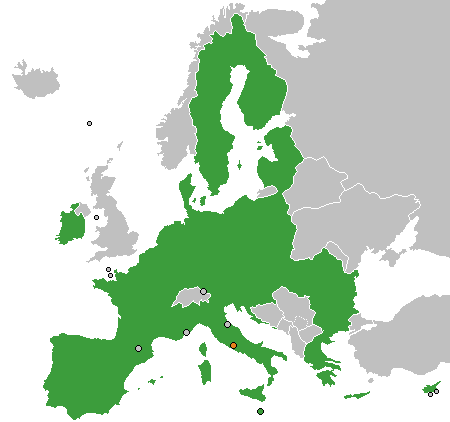
European–Vatican relations
QUESTION*: What does the Vatican and European Union have in common?

ANSWER: A Bitcoin Wall

According to Wikipedia:
Holy See–European Union relations is the relationship between the European Union (EU) and the Holy See (or Vatican City).   This is framed by the Holy See's geography (within an EU state capital) while being unable to join.

According to Wikipedia:

The Schengen Information System (SIS) is a governmental database maintained by the European Commission. The SIS is used by 31 European countries to find information about individuals and entities for the purposes of national security, border control and law enforcement. A second technical version of this system, SIS II, went live on 9 April 2013.Schengen Information System

What is the Schengen Information System (SIS)?

The Schengen Information System (SIS) is the most widely used and largest information sharing system for security and border management in Europe. SIS enables competent national authorities, such as the police and border guards, to enter and consult alerts on persons or objects. An SIS alert does not only contain information about a particular person or object but also instructions for the authorities on what to do when the person or object has been found. Specialised national SIRENE Bureaux located in each Member State serve as single points of contact for the exchange of supplementary information and coordination of activities related to SIS alerts. At the end of 2017, SIS contained approximately 76.5 million records, it was accessed 5.2 billion times and secured 243 818 hits (when a search leads to an alert and the authorities confirm it).

What is the purpose of the SIS?

The main purpose of SIS is to make Europe safer. The system assists the competent authorities in Europe to preserve internal security in the absence of internal border checks. The scope of SIS is defined in three legal instruments:
  1. Regulation (EC) No 1987/2006 (Border control cooperation):
    SIS enables border guards and visa issuing and migration authorities to enter and consult alerts on third-country nationals for the purpose of refusing their entry into or stay in the Schengen area.
  2. Council Decision 2007/533/JHA (Law enforcement cooperation):
    SIS supports police and judicial cooperation by allowing competent authorities to create and consult alerts on missing persons and on persons or objects related to criminal offences.
  3. Regulation (EC) No 1986/2006 (Cooperation on vehicle registration)
    Vehicle registration services may consult SIS in order to check the legal status of the vehicles presented to them for registration. They only have access to SIS alerts on vehicles, registration certificates and number plates.

How will SIS be in the future?

The changes proposed in 2016 by the European Commission will strengthen significantly the system.
In June 2018, the co-legislators reached political agreement on the new SIS package. The new functionalities in SIS will be implemented in different stages, with a requirement for the work to be completed by 2021.
The changes will entail enhancements in the following areas:
  • Biometrics: SIS will contain palm prints, fingerprints, facial images and DNA concerning, for example, missing persons to confirm their identity.
  • Counter-terrorism: More information will be shared on persons and objects involved in terrorism-related activities, allowing the authorities of the Member States to better pursue and prevent serious crimes and terrorism.
  • Vulnerable persons: Competent authorities will have the possibility of entering preventive alerts in the system to protect certain categories of vulnerable persons (missing persons, children at risk of abduction or potential victims of trafficking in human beings or gender-based violence).
  • Irregular migration: Return decisions and entry bans will be part of the information shared in the system to enhance their effective enforcement.
  • Enhanced access for EU Agencies: Europol will now have access to all alert categories in the SIS while the European Border and Coast Guard Agency operational teams will be able to access SIS for the purpose of carrying out their tasks in the hotspots.
Moreover, the introduction since March 2018 of an AFIS (Automated Fingerprint Identification System) in SIS, and the resulting possibility of making searches using fingerprints, makes it even more difficult for criminals to move unnoticed across Europe.

In which countries is SIS in operation?

SIS is in operation in 30 European countries, including 26 EU Member States (only Ireland and Cyprus are not yet connected to SIS) and 4 Schengen Associated Countries (Switzerland, Norway, Liechtenstein and Iceland).

EU Member States with special arrangements:

  • Bulgaria, Romania and Croatia are not yet part of the area without internal border checks (the 'Schengen area'). However, since August 2018, Bulgaria and Romania started using fully SIS. A Council Decision is still required for the lifting of checks at the internal borders of these two Member States. In the case of Croatia, there are still some restrictions regarding its use of Schengen-wide SIS alerts for the purposes of refusing entry into or stay in the Schengen area. Those restrictions will be lifted as soon as Croatia has become a part of the area without internal border checks.
  • The United Kingdom operates SIS but, as it has chosen not to join the Schengen area, it cannot issue or access Schengen-wide alerts for refusing entry and stay into the Schengen area.
  • Ireland and Cyprus are not yet connected to SIS. Ireland is carrying out preparatory activities to connect to SIS, but, as is the case for the UK, it will not be able to issue or access Schengen-wide alerts for refusing entry or stay. Cyprus has a temporary derogation from joining the Schengen area and is not yet connected to SIS.

EU Votes to Create a Gigantic Biometrics Database

EU Biometrics DatabaseThe European Union has moved forward with its plans to create a gigantic biometrics database, despite facing criticism for putting privacy rights at stake through it.
Last week, the European Parliament has adopted a legislation that will enable EU information systems to exchange records through the Common Identity Repository (CIR), which is set to gather data for over 150 million individuals. The move has been taken as a further attempt to simplify the jobs of EU border and law enforcement officers.
According to a press release by the European Parliament, the new system will facilitate the tasks of border guards, migration officers, police officers and judicial authorities by providing them with more systematic and faster access to various EU security and border-control information systems.
“The systems covered by the new rules would include the Schengen Information System, Eurodac,the Visa Information System (VIS) and three new systems: the European Criminal Records System for Third Country Nationals (ECRIS-TCN), the Entry/Exit System (EES) and the European Travel Information and Authorization System (ETIAS),” the press release reads.
The EU Commissioner for Migration, Home Affairs and Citizenship Dimitris Avramopoulos asserted that the Security Union is steadily taking shape with a whole range of tools, actions and rules being put in place to protect all EU citizens.
Whereas, the Commissioner for the Security Union Julian King said that the new adoptions mark another important milestone in the work of the EU towards an effective and genuine Security Union.
“Interoperability will help those working in the frontline to keep EU citizens safe – ensuring police and border guards have efficient access to the information they need, including to fight identity fraud, enables them to do their jobs properly,” he said a day after the Parliament had adopted the legislation.

EU Criticized for Putting Privacy Rights at Stake

Watchdog and non-profit organizations have long criticized the move for establishing such a system.
Non-profit organization Statewatch published a report last year titled “Interoperability morphs into the creation of a Big Brother centralized EU state database including all existing and future Justice and Home Affairs databases.”
According to the report the notion that these plans are simply bringing together existing data and biometrics, and so there is nothing to be afraid of, is untrue.
“If there has been one clear lesson since 11 September 2001 it is that function creep is the name of the game. From the late 1970s onwards each new stage of the technological revolution has been justified on the grounds that there is nothing new, it is just making life easier for law enforcement and border control agencies to get access to the information they need to do their job more efficiently. Whereas the reality is that at each stage databases become ever more intrusive as security demands cumulatively diminish freedoms and rights,” the report concludes among others.


*I had to spell out "QUESTION" because there are humans who like to worship a random letter of the alphabet.

Voting is beautiful, be beautiful ~ vote.©

Monday, March 4, 2019

JUDICIARY: SENIOR JUDICIARY DEMOCRATS DEMAND ANSWERS AFTER TRUMP DECLARES NATIONAL EMERGENCY AT THE SOUTHERN BORDER


Dems Request Hearings with White House Counsel & Department of Justice Officials

Washington, D.C. – Today, House Judiciary Committee Chairman Jerrold Nadler (D-NY), along with the Judiciary Subcommittee Chairs and Vice Chair, sent a letter to President Donald Trump to demand answers after he declared a national emergency at the southern border and to request hearings with White House Counsel Pat A. Cipollone and Justice Department officials.

In addition to the letter, Chairman Nadler released the following statement:

“President Trump’s attempt to strip Congress of its duty by declaring a national emergency at the southern border is a gross abuse of power that subverts the key principles laid out in the constitution. Congress, not the President, has the right to appropriate funding. Instead of these illegal and ill-conceived attempts to circumvent our laws, the President should work with Congress to achieve the necessary bipartisan reforms our immigration system needs.”

Today’s letter was signed by Chairman Jerrold Nadler, Subcommittee on Immigration and Citizenship Chair Zoe Lofgren (D-CA), Subcommittee on the Constitution, Civil Rights and Civil Liberties Chair Steve Cohen (D-TN), Subcommittee on Courts, Intellectual Property, and the Internet Chair Hank Johnson (D-GA) Subcommittee on Crime, Terrorism and Homeland Security Chair Karen Bass (D-CA), Subcommittee on Antitrust, Commercial and Administrative Law Chair David Cicilline (D-RI) and Vice Chair Mary Gay Scanlon (D-PA).

Voting is beautiful, be beautiful ~ vote.©

Wednesday, February 6, 2019

JUDICIARY: CHAIRMAN NADLER RELEASES FACT SHEET ON IMPACT OF TRUMP SHUTDOWN


Washington, D.C. –Today, Congressman Jerrold Nadler (D-NY), Chairman of the House Judiciary Committee, released a fact sheet detailing the impact of the Trump Shutdown on immigration and border security, federal law enforcement, courts, as well as public health and safety.

The report states, “The Trump Shutdown has significantly impacted the federal government’s ability to enforce the law, provide civil justice, and promote public health and safety.  The shutdown burdens federal law enforcement officers working at the border, the very people responsible for handling the so-called ‘crisis’ underpinning President Trump’s demand for an expensive, ineffective border wall.  It has also impacted many other federal law enforcement agencies, undermining federal law enforcement efforts across the board, and making Americans less safe.  The shutdown has also begun to affect the federal judiciary’s ability to provide civil redress, impaired federal enforcement of civil rights laws, and stymied the federal rulemaking process responsible for writing and implementing public health and safety protections.” 

The full report is below. 

Immigration and Border Security

·         Immigration Judges:  The shutdown has caused the Department of Justice (DOJ) to furlough the majority of immigration judges, which is causing massive disruptions to the removal docket.  Our immigration courts are already facing a daunting backlog of more than 800,000 pending cases.  As judges remain furloughed, their cases are being rescheduled several years into the future, which negatively impacts both removal efforts and the ability for some immigrants to obtain relief.

·         E-Verify:  The online system for verifying the employment eligibility of employees is suspended for the duration of the shutdown.  This complicates the hiring process for many employers that use the system, and in some cases could lead to unauthorized employment.  Further, while the system is not mandatory nationwide, it is required for certain employers in many states, and it is unclear how such employers can comply with state laws while the E-verify system remains unavailable.

·         Impact on DHS Personnel:  During the shutdown, approximately 88 percent of Department of Homeland Security employees—including 53,000 TSA employees, 54,000 ICE officers, and 42,000 Coast Guard active duty members—are working without pay.  This includes the principal officers that are tasked with dealing with President Trump’s supposed “crisis.”

o   Customs and Border Protection:  Essential CBP officers continue to work without pay, including those in the Office of Field Operations, which operates and guards ports of entry across the country, and those in the Border Patrol, which protects our land borders between the ports of entry.

o   Immigration and Customs Enforcement:  Essential ICE officers also continue to work without pay, including those who engage in critical enforcement operations, those who operate detention centers, and those who conduct homeland security-related investigations.

o   Transportation and Safety Administration:  The shutdown has caused airport security lines to grow as TSA agents have grown tired of working without pay and begun to call in sick.  The longer the shutdown continues, the more that air travel is made vulnerable to attack and affected by delays. 

Federal Law Enforcement 

·         Impact on Federal Law Enforcement Personnel: Nearly 5,000 FBI employees, including some special agents, intelligence analysts, and support staff, have been furloughed.  The President of the FBI Agents Association warns that “operations are being hindered” and “This situation is not sustainable.”  The Trump shutdown has also jeopardized funding support for active investigations, such as payments to informants and evidence testing.  Additionally, many law enforcement officers with the U.S. Marshals Service, the Secret Service, the Drug Enforcement Administration, and the Bureau of Alcohol, Tobacco, Firearms, and Explosives are working without pay and without many of their support personnel. 

·         Federal Support for State and Local Governments: If the Trump shutdown continues, it will soon interrupt the DOJ’s administration and payment of funds for many public safety grants that provide assistance to many state and local governments.  These grant programs provide critical assistance to state and local law enforcement agencies, nonprofit organizations, and other justice-related initiatives that require federal funding to operate.  For example:

o   Domestic Violence Prevention: Under the Violence Against Women Act (VAWA), the DOJ funds programs that help prevent and respond to instances of domestic violence.  Some grant recipients have been notified by the Office on Violence Against Women that grant payments will be in jeopardy after January 18.  This possibility has already begun to threaten the operation of domestic violence shelters, many of which rely on federal funds on a monthly basis to pay their expenses and keep their doors open.

·         Federal Prison System: The shutdown has severely undermined the operations of the Bureau of Prisons (BOP), the agency responsible for the administration of federal prisons. 

o   Prison Safety:  Corrections officers—many of whom face daily the possibility of injury—are currently working without pay, and despite being deemed “essential” many are not showing up for work by calling in sick.  As a result of staffing shortfalls, many remaining corrections officers are working double shifts, and other prison employees—such as secretaries, janitors, and teachers are providing security, even though it is not normally their primary responsibility.

o   Prisoner Rehabilitation: The shutdown has interrupted implementation of various programs that benefit prisoners, and which ultimately enhance public safety.  It may also delay BOP’s implementation of the FIRST STEP Act, a major bipartisan legislative achievement enacted in December that would help to reduce recidivism by prisoners returning to their communities.

Courts and Administration of Justice

·         Federal Courts Face Possible Disruption Due to Funding Shortfalls After Jan. 25, 2019:  According to the Administrative Office of the U.S. Courts (AO), the Judicial Branch continues to operate by using court fee balances and other “no year” funds, but may only be able to so through Jan. 25, 2019.  The AO has asked courts to delay or defer non-critical expenses, such as new hires and non-case related travel in order to stretch available funds.  If the funds are exhausted, courts could begin to furlough workers as each determines which staff must continue to work unpaid “to support its mission critical work.”

·         The Efficient Administration of Justice Could Become Arbitrary and Depend on Where a Civil Case is Filed: If the AO runs out of funds, it will be up to each court to determine how to schedule and prioritize matters it must be involved in—such as hearings and trials—based on the availability of limited resources and unpaid staff. Depending upon case load and the general nature of their docket, some courts could be more affected than others. For example, the Court of Appeals for the D.C. Circuit—–which handles many cases involving the federal government—–is already warning the public, that if funds are exhausted on Jan. 25, “the federal courts face serious disruption.”      

·         Justice Delayed is Justice Denied: While the chance of serious disruption to the federal courts will only grow as the shutdown continues, it is already impeding the effective and timely administration of civil justice at the federal level.  For instance:
o   Civil Cases Involving the U.S. Government: At the request of the Department of Justice (DOJ), some federal courts have already suspended, postponed, or are holding in abeyance civil cases to which the federal government is a party.  The shutdown is now delaying all federal civil cases to which the federal government is a party, “including discrimination cases, whistleblower cases, disciplinary cases and retaliation actions taken against federal employees.”

o   Employment Discrimination Claims: The U.S. Equal Employment Opportunity Commission (EEOC)—the agency responsible for enforcing federal civil rights laws barring discrimination in private and government employment based on race, sex, religion, sexual orientation or gender identity—is currently shutdown.  This has a significant impact on victims of employment discrimination. All mediations scheduled to occur during the shutdown have been cancelled.  And the EEOC has also sought to suspend all currently pending litigation.

·         Federal Defender Services: AO operations includes the federal public defender offices responsible for providing a legal defense to indigent defendants.  Federal defenders, many of whom already face daunting caseloads, now face the prospect of being furloughed or continuing to work without pay after Jan. 25, 2019, which may undermine indigent defendants’ Six Amendment right to effective assistance of counsel.

Public Health and Safety

·         Federal Laws and Regulations Protecting the Public May Go Unimplemented and Unenforced:  Thousands of federal workers have been furloughed across multiple federal agencies responsible for writing and implementing regulations designed to protect public health, safety, consumer rights, and the environment.   

·         Disruptions to the Federal Rulemaking Process:  The Trump shutdown has affected operations at the White House’s Office of Management and Budget (OMB) and the Office of Information and Regulatory Affairs (OIRA)—which plays a pivotal role in the federal rulemaking process reviewing draft regulations before they are released to the public.  OIRA has only issued vague statements regarding which ongoing reviews of regulatory action have been affected by the shutdown, contributing to public confusion. 

o   Public Notice and Comment: The three main websites providing for online public participation in rulemaking—federalregister.gov, regulations.gov, and reginfo.gov—are impaired. The Trump Administration has yet to clearly announce whether agency officials are accepting or considering requests for agency action or public comment during the shutdown.  

Voting is beautiful, be beautiful ~ vote.©