Showing posts with label Benny Napoleon. Show all posts

Thursday, December 5, 2019

Who The Hell Are "Wayne Kids Win!" And Why Are They Asking For Money That Should Be Going To The Schools?

Wayne Kids Win! logo
https://www.waynekidswin.com/
Who are Wayne Kids Win!?

I dunno, do you?

I searched the website, but found nothing.

I searched Michigan LARA, but found nothing.

I would have called them but there is neither phone nor email contact to be found, unless a form counts.

I looked up the domain and found it was recently created in New York:

RegistrantRegistration Private
Registrant OrgDomains By Proxy, LLC
Registrant Countryus
RegistrarGoDaddy.com, LLC
IANA ID: 146
URL: http://www.godaddy.com
Whois Server: whois.godaddy.com

(p)
Registrar StatusclientDeleteProhibited, clientRenewProhibited, clientTransferProhibited, clientUpdateProhibited
Dates84 days old
Created on 2019-09-12
Expires on 2020-09-12
Updated on 2019-09-12
Name ServersNS47.DOMAINCONTROL.COM (has 52,046,239 domains)
NS48.DOMAINCONTROL.COM (has 52,046,239 domains)
Tech ContactRegistration Private
Domains By Proxy, LLC
DomainsByProxy.com,
Scottsdale, Arizona, 85260, us

(p) (f)
IP Address45.33.78.232 - 194 other sites hosted on this server
IP LocationUnited States - New York - New York City - Linode Llc
ASNUnited States AS63949 LINODE-AP Linode, LLC, US (registered Feb 16, 2015)
Domain StatusRegistered And Active Website
IP History2 changes on 2 unique IP addresses over 0 years
Registrar History1 registrar
Hosting History1 change on 2 unique name servers over 0 year
Website Title  500 SSL negotiation failed:
Response Code500
Whois Record ( last updated on 2019-12-05 )
Domain Name: waynekidswin.com
Registry Domain ID: 2432764483_DOMAIN_COM-VRSN
Registrar WHOIS Server: whois.godaddy.com
Registrar URL: http://www.godaddy.com
Updated Date: 2019-09-12T21:55:27Z
Creation Date: 2019-09-12T21:55:26Z
Registrar Registration Expiration Date: 2020-09-12T21:55:26Z
Registrar: GoDaddy.com, LLC
Registrar IANA ID: 146
Registrar Abuse Contact Email: 
Registrar Abuse Contact Phone: +1.4806242505
Domain Status: clientTransferProhibited http://www.icann.org/epp#clientTransferProhibited
Domain Status: clientUpdateProhibited http://www.icann.org/epp#clientUpdateProhibited
Domain Status: clientRenewProhibited http://www.icann.org/epp#clientRenewProhibited
Domain Status: clientDeleteProhibited http://www.icann.org/epp#clientDeleteProhibited
Registry Registrant ID: Not Available From Registry
Registrant Name: Registration Private
Registrant Organization: Domains By Proxy, LLC
Registrant Street: DomainsByProxy.com
Registrant Street: 14455 N. Hayden Road
Registrant City: Scottsdale
Registrant State/Province: Arizona
Registrant Postal Code: 85260
Registrant Country: US
Registrant Phone: +1.4806242599
Registrant Phone Ext:
Registrant Fax: +1.4806242598
Registrant Fax Ext:
Registrant Email: 
Registry Admin ID: Not Available From Registry
Admin Name: Registration Private
Admin Organization: Domains By Proxy, LLC
Admin Street: DomainsByProxy.com
Admin Street: 14455 N. Hayden Road
Admin City: Scottsdale
Admin State/Province: Arizona
Admin Postal Code: 85260
Admin Country: US
Admin Phone: +1.4806242599
Admin Phone Ext:
Admin Fax: +1.4806242598
Admin Fax Ext:
Admin Email: 
Registry Tech ID: Not Available From Registry
Tech Name: Registration Private
Tech Organization: Domains By Proxy, LLC
Tech Street: DomainsByProxy.com
Tech Street: 14455 N. Hayden Road
Tech City: Scottsdale
Tech State/Province: Arizona
Tech Postal Code: 85260
Tech Country: US
Tech Phone: +1.4806242599
Tech Phone Ext:
Tech Fax: +1.4806242598
Tech Fax Ext:
Tech Email: 
Name Server: NS47.DOMAINCONTROL.COM
Name Server: NS48.DOMAINCONTROL.COM
DNSSEC: unsigned
URL of the ICANN WHOIS Data Problem Reporting System: http://wdprs.internic.net/
Why am I so concerned about this appropriations campaign?

Because an unknown organization wants to independently administer all this money for the kids, and you know how that typically works out, just look at what Detroit did with the Hardest Hit Funds.

I will not revisit the decades of stealin'  from the Detroit Public Schools but you are free to pull my PACER cases, if they have not been removed from the dockets.

Besides, these Public Private Partnerships have made it perfectly clear that they have all intentions of furthering their "compelling government interests of the highest order" where that order seems to be the work of the tax exempt god.

The brochure states it was "Paid for by regulated funds by Wayne Kids Win".

Well, by golly, that is a new one for me - "regulated", so I shall just assume, as I have nothing tangible to test this concept of regulated funds, for this to mean that there is some form of corporate parental rights going on, so I looked up Chalkbeat.
Company Number
4765301
Status
Active
Incorporation Date
28 May 2015 (over 4 years ago)
Company Type
FOREIGN BUSINESS CORPORATION
Jurisdiction
New York (US)
Branch
Branch of CHALKBEAT, INC. (Delaware (US))
Registered Address
  • 15 NORTH MILL STREET
  • NYACK
  • 10960
  • NEW YORK
  • United States
Previous Names
  • CHALKBEAT, INC.
Directors / Officers
Registry Page
https://appext20.dos.ny.gov/corp_publ...
Source New York Department of State, https://appext20.dos.ny.gov/corp_publ..., 1 Oct 2019

Someone from the FBI should take a few moments out their day, and take the time to feel my pain.

Seriously.

Make it stop.

This is a foreign invasion to take over government and it always starts with the children because no one cares.

This money belongs to the classrooms and teachers, not anonymous Corporate Shape Shifters.

These petition signatures were fraudulently solicited which will automatically nullify the vote.

The Wayne County Clerk should know better, but we are dealing with Cathy Garrett so I will wait for her tale to unfold when it comes to elections.

And this ends another exciting adventure of stealin' the children, land and votes.

Campaign committee collects 90K signatures for after-school program millage

Three years after Wayne County voters approved a 2-mill, six-year millage to provide funding for its school districts, another proposal dedicated to after-school programs is making the rounds — most likely landing on the March 2020 ballot.

Campaign committee Wayne Kids Win! delivered almost 90,000 signatures to the Wayne County Clerk's Office Tuesday in time to be considered on next year's ballot, said the group in a news release. The campaign hopes to increase access to high-quality after-school programs to children and youth across the county.

Wayne Kids Win! gathered well more than the minimum 53,000 signatures needed from registered voters in Wayne County by Tuesday's deadline to land on the March 10 countywide ballot. Once the clerk's office certifies the signatures, the proposal will be confirmed. The Wayne Kids Win! campaign is set to officially kick off in January.

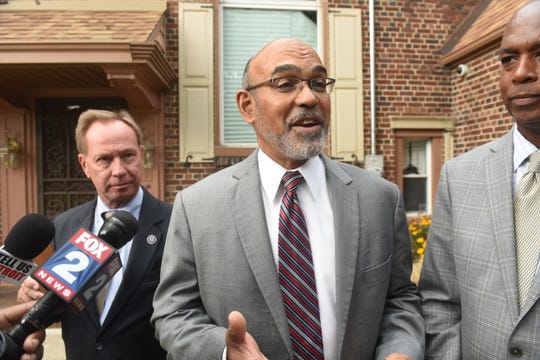
Wayne Kids Win! announced its petition drive in October. A spokesman for the tax backers told Chalkbeat that the committee includes education leaders, law enforcement leaders, elected officials, child advocates, and business leaders. Supporters Detroit Mayor Mike Duggan, Wayne County Executive Warren Evans, Wayne County Sheriff Benny Napoleon and DTE Energy President and CEO Jerry Norcia.

In addition, The Skillman Foundation has also supported the group by funding research to look into potential public funding options that can help finance after-school programs. The organization then talked to several community leaders, informing them of the benefits of after-school programs and the lack of access in some areas.

“The safety of our kids has never been more important,” said Napoleon in the release. “I am truly excited Wayne County voters have shown support for making this once-in-a-lifetime investment in after-school programs that help keep kids safe and on a positive path.”

The proposal would support after-school programs year-round that strive to improve math and reading skills, help develop work-readiness skills, promote safety and provide recreation opportunities for Wayne County children. The group said a proposed rate of 1 mill would cost the average homeowner an estimated $82 per year, or less than $7 per month. If passed, the proposal will provide stable, dedicated funding to develop and expand after-school programs.

All millage dollars would be reported on a public website and go through an independent financial audit every year to ensure taxpayer dollars are spent wisely, said the committee. In addition, an independent oversight board will evaluate programs for effectiveness.

Mark Fisk, a spokesman for the committee, told Chalkbeat that school districts, charter schools, nonprofit organizations and agencies such as parks and recreation departments could be eligible for the funding. He said the money would be collected by the county, but would be administered by the 15-member oversight board and approved by the Wayne County Commission. However, no information was given on how the millage would be split among districts.

The proposal may land in the same year two other education-related millage are expected to be on the ballot for Wayne County residents. In November 2020, the six-year millage is up for renewal, while an 18-mill operating millage for Detroit Public Schools will be on the ballot next August.

The Wayne Kids Win! news comes after Dearborn Public Schools recently rejected a $240 million bond proposal in the November election that would have funded repairs and renovations for the district's school buildings.

“As CEO of a large business headquartered in Wayne County, I know after-school programs work,” said Jerry Norcia, DTE Energy President and CEO. “They provide kids with the skills needed to compete in a global economy — one that demands a skilled workforce, including skilled trades. Wayne Kids Win! is a unique opportunity for our community to make a landmark investment in the future of our young people.”

Voting is beautiful, be beautiful ~ vote.©

Friday, March 15, 2019

Cocktails & Popcorn: Wayne County Treasurer & Prosecutor - Gerrymandering In Office

"The Elected Ones" do this all the time.

The Wayne County Treasurer's Office has the Wayne County Property Deed Fraud Unit.

Becky (said like a 1980s valley girl) Camargo, used to run the Wayne County Property Deed Fraud Unit, through the Wayne County Prosecutor's Office, but did nothing.

Well, actually, Becky was working with Mike Duggan when he was Wayne County Prosecutor, but she ended up getting the Principal Attorney position at the Detroit Land Bank Authority when Duggan was elected Mayor, but that is just a coincidence.

Becky was still running the show over there with the Wayne County Property Deed Fraud Unit having properties sent over to the Detroit Land Bank Authority.

Becky had to leave Detroit Land Bank Authority, but now she is representing the contractors of her former Ham Sandwich, for I have no other term for DLBA because it never incorporated, so I have no idea how she was even hired, cashed her checks, and legally represented  it.

Kym Worthy is the Wayne County Prosecutor, now.

Kym may have a conflict of interest when it comes to prosecuting "The Elected Ones" who have ended up getting Detroit Land Bank Authority and Wayne County Tax Foreclosure Auction properties, but hey, what do I know?

I know Benny Napoleon is the Wayne County Sherrif.

And I know this is another form of gerrymandering.

And I know Garlin Gilchrist falls into the grouping of "The Elected Ones", too!

I also know alot about Raymond Wojtowicz, former Wayne County Treasurer because he used to hang out at the Piast Institute and Brendan Dunleavy used to have a lot to say, but no one would listen to him but me.

FBI scrutinizes Sabree property dealings; family underpaid taxes


Wayne County Treasurer Eric Sabree speaks from outside
his Detroit residence on Thursday August 31, 2017
The FBI is looking into land deals by the family of Wayne County Treasurer Eric Sabree, including an allegation that interest and penalties were waived on his son's delinquent properties, The Detroit News has learned.

Investigators have contacted a former Sabree staff member who complained to human resources about suspicious activity on the accounts of Sabree family properties, according to two sources familiar with the federal review.

They would only speak on the condition of anonymity.

Sabree's lawyer said he was not aware of an FBI investigation, but he said it was discovered in 2017 that the treasurer's family underpaid taxes on their delinquent property bills by $13,000, which is around the time of events the former staffer describes in her complaint.

Thomas attributed the shortfall to a mistake by Sabree's staff involving about a dozen family properties. The treasurer's wife paid the bills on May 24, 2017 shortly after they were recalculated, he said.

“It is our position that nothing inappropriate was done by Mr. Sabree,” said attorney Philip Thomas. “It was a mistake.”

The disclosures of a federal inquiry and irregularities with his family's properties come amid a Wayne County ethics board review of Sabree's activities. It was sparked by a Detroit News investigation that among other findings,showed a company Sabree founded and his wife participated in the county's tax foreclosure auction in violation of county rules.

Sabree responded to the ethics complaint earlier this week, denying any conflict of interest but expressing regret for his wife's purchases that may appear to run afoul of county policy.

His lawyer said Friday that he didn't know how the miscalculation of $13,000 with properties tied to Sabree happened or who found it. He said he was still gathering information and wasn't sure how far back the debt went back. Some of the properties included vacant lots on Wyoming and houses in Harper Woods, Thomas said, which Sabree's wife purchased from the annual tax auction.

The News asked Friday for a copy of the payment receipt, but Thomas declined to supply it because it contained his notes.

Sabree joined the office in 2011 as a deputy and has been treasurer since 2016. He makes $115,891 a year.

It is unclear if the FBI has launched a full investigation. FBI Special Agent Mara Schneider would neither confirm nor deny the existence of an investigation or discuss the bureau’s interest in the real estate dealings.

The News' investigation found, through multiple Freedom of Information Act requests, other county sales involving his son and nephew, along with family properties purchased at auction that later racked up enough tax debt that they could have been seized but weren't.

The former staffer sent a complaint in February 2018 detailing the allegations to Steve Mahlin, Wayne County's director of the county's personnel and human resources department, which The News obtained through the Freedom of Information Act.

The former clerical employee alleges that Sabree requested she reapply interest and penalties to his son's delinquent properties.

"Once I started to process a few, I noticed it was for his son," the woman wrote in the email. "This made me very uncomfortable."

Sabree later gave her an explanation of "why he waived" the interest and penalties, but "I didn't believe it," she wrote.

"I told him all I wanted was not to be asked to do something like this in the future."

The staffer's complaint was referred to the Wayne County Prosecutor's Office, which determined it had a conflict of interest. The treasurer's office funds the prosecutor's office.

The employee wasn't sent notice of that decision until a year later, the same day The News published the investigation into Sabree's family real estate dealings.

The prosecutor's office sent her a letter detailing their belief of a conflict of interest and recommending she contact the Michigan State Police. The number they suggested she call was a fax number.  
The former staffer sent the complaint to human resources after she put in a request to rejoin the treasurer's office and was denied, in part because she was told she had confrontations with coworkers. She had left the office for another job but it didn't pan out, she wrote.

The former staffer said in the complaint that she believed she was blocked from returning because she expressed concern over Sabree's son's interest and penalties.

Sabree's lawyer, Thomas, said he wasn’t aware of the specific allegation by the female staffer regarding Sabree’s son’s properties.

Taxes are often recalculated at the treasurer’s office to correct mistakes, Thomas said.

"Mistakes happen everywhere, in every office, everyday," said Thomas, who has been retained personally by Sabree and is not being paid through county funds.

Former Chief Deputy David Szymanski said that the correction of "clerical errors are not unusual" in the office, for example if a property mistakenly had a principal residency exemption reserved for owner occupants. 

Jerry Paffendorf, a critic of the annual auction and co-founder of Loveland Technologies which has studied the effects of foreclosure, said the Sabrees' family real estate transactions further erode trust in what he called a flawed process. 

"There has been a loss of trust for a long time," Paffendorf said. "There is not a consistent policy on why properties are foreclosed or not. ... I hope this is a gateway to a wider investigation that (the county isn't) following the law. "

The auction is controversial because the county seizes properties with delinquent tax bills and resells them to the highest bidder, a process that costs homeowners their equity and increases the risks associated with speculation.

Thomas said he doesn't want to comment on specifics about the pending ethics board review but said that Sabree is an “honest man.”

“I don’t think there is a shred of evidence to show he participated in improper conduct as Treasurer,” Thomas said. “Every allegation has turned out to be completely and utterly false. I haven’t seen any allegation that is troubling to me.

“There is an explanation for everything.”

County rules ban family members of Treasurer’s Office employees from participating in the auction, which seizes properties from delinquent taxpayers and resells them to the highest bidder.  Sabree has said the family ban was removed in 2015 and 2016 but is not sure why it was reinstated in 2017 and 2018.

The Detroit News investigation found that a company Sabree formed in 2002, which he says is now run by his wife, bought three Harper Woods homes from the auction in 2011, when he was deputy treasurer coordinating the sale. Sabree’s son Yusuf now lives in one of the homes; the other two are owned by the company Sabree formed. That company, U.S. Development Services LLC, later violated a requirement that tax payments for the homes remain current for at least two years.

Sabree’s son Adam, an attorney, was listed as a successful bidder for a Detroit home in 2017, although he said that it was an error probably caused by him helping a client register to bid. Both Adam and his brother Yusuf were registered bidders in 2016, although county records don’t suggest they were successful in purchasing property that year, The News found.

The investigation also found that 10 properties owned by Sabree, his wife or U.S. Development owed nearly $29,000 in delinquent taxes as of November, debts that were paid off 10 days after The News made inquiries about them. One of those properties by law should have been resold at auction because of the debt, but was not because of an error, Sabree said.

Wayne County Executive Warren Evans filed an ethics complaint against Sabree citing articles by The News and Detroit Free Press on the real estate dealings, which he called "extremely troubling."  County Commission Chairwoman Alisha Bell requested the commission's Auditor General start its regular audit of Sabree's office several months early to look into the real estate deals. 
The Wayne County Ethics Board's next meeting is March 20, but it's not clear if they will publicly review Evans complaint then. Sabree responded to the complaint on Monday.

In the response, Thomas reiterated earlier denials to The News that that there was any conflict of interest in the family real estate dealings and blamed Sabree's political enemies.

"He truly regrets this situation which has allowed his political adversaries to peck through his past for ammunition to use against him in an attempt to belittle the job he has done as Deputy Treasurer and more recently as the Treasurer," the written response reads. "He is genuinely sorrowful for the shadow that the media reports have cast over his distinguished career."

The activist group, Coalition to End Unconstitutional Tax Foreclosures, has called for the ethics board to investigate as well.

"Given that the Wayne County Treasurer’s office has foreclosed on one in four Detroit properties from 2011 to 2015, the problem is systemic," the group's statement reads. "If in fact systemic violations are discovered, this will support the Coalition’s call for a moratorium on selling owner-occupied homes in the tax foreclosure auction."

Voting is beautiful, be beautiful ~ vote.©

Thursday, November 29, 2018

More Corporate Shape Shifters: Another Set Of LLCs Stealin' Detroit Properties From The Poors

Much love to Allie Gross for another fabulous piece of reporting.

She should interview Bert Johnson when he gets out of prison for the holidays to get more, detailed information on how these fake land contracts and fake LLCs were stealin'.

I believe he is a subject matter expert.

Oh, and so is Adam Hollier.

Detroit land owner Michael G. Kelly sued over 'predatory' contracts

A lawsuit filed in federal court this week takes aim at Michael G. Kelly, one of the top landowners in Detroit, over contracts for housing that the suit calls "predatory."

The suit filed Monday by Mantese Honigman and Michigan Legal Services seeks class-action status and alleges that Kelly and four other defendants lured unassuming and vulnerable Detroiters into a "real estate bait and switch" in violation of the Truth in Lending Act and the Home Ownership Equity Protection Act.

At the crux of the complaint is the use by Kelly — and the various LLCs associated with him such as Detroit Property Exchange — of contracts that seem to operate outside of federal regulations, contracts Joe McGuire, an attorney at Michigan Legal Services who focuses on housing issues in Detroit, says are actually land contracts, which would have some consumer protections.

"The question that this litigation raises," said McGuire, "is can a property like Detroit Property Exchange get around the regulations that were passed by Congress specifically to address predatory lending, like this, simply by renaming the agreement to something other than land contract?" 
The Detroit Free Press reached out to Kelly for comment via the Detroit Property Exchange but did not hear back.

Land contracts are  popular home-buying tools in Detroit where mortgages have historically been hard to come by. They often operate in a nebulous legal space and leave little protections for buyers (called vendees). They also often result in evictions.

But, according to McGuire, a general land contract pales in comparison to the  vague and confusing agreements Kelly uses in his land deals.

"Often, when people hear about land contracts, if all they're used to is your conventional mortgage, they are struck by how much worse a land contract is in the way it's written," McGuire said. "They balk at the idea that you only get your deed when it's paid all off, and that there is no appraisal required, no inspection in the law. But these agreements (used by Kelly) make land contracts look amazing."

According to the complaint filed in U.S. District Court for the Eastern District of Michigan, the deals would work like this: 
  • Kelly (or one of his companies) would purchase homes, often sight unseen, at the Wayne County Tax auction for a low price. The homes are usually dilapidated. 
  • After attracting a potential buyer, Kelly (or one of his companies) would have them sign an "ambiguous, opaque contract" with a high interest rate. 
  • Under the contract, the purchaser would be under the impression that after several years of payments they would own the property, and that in the interim, as the future owner, they would be responsible for fixing up the property.
  • When the buyer "inevitably" got behind on payments "due to their general lack of an ability to pay back the loan," Kelly (or one of his companies) would evict the purchaser as a tenant, rather than a land contract vendee, who would have more time to catch up on payments before being evicted.
  • The tenant's eviction would go unquestioned because of the contract's "intentional use of ambiguous, confusing, cherry-picked language." Adding to the chaos is the fact that purchasers would have typically signed two documents when committing to the property: a "Lease with Option" and "Real Estate Purchase Agreement." One makes the customer a tenant; the other makes them a purchaser — together they created confusion. 
  • Once the "purchaser" had been evicted, the complaint alleged that the scheme would begin again with a new potential buyer.
While the complaint states the deals were predicated on buyers never actually getting the property, a land contract-like agreement was used instead of a rental agreement because it was more lucrative for the defendants.

Michigan law prohibits landlords from collecting a security deposit greater than 1.5 times the monthly rent, but the seller of a land contract can ask for a "nonrefundable down payment" at a cost far greater to the purchaser.

"Defendant sold plaintiffs and the class members home ownership but evicted them as tenants," the complaint said, noting that Detroit Property Exchange, one of Kelly's businesses, has a ratio of 1.49 "evictions" for every property in their portfolio.

Ultimately, according to the complaint, the contracts acted as "high-cost mortgages" and served to originate loans (the monthly bills "buyers" received often had "loan numbers" on them).

Because of this, the complaint states, the Truth in Lending Act — a 1968 federal law aiming to protect consumers in dealings with lenders and creditors — and the Home Ownership Equity Protection Act — a 1994 amendment to the Truth in Lending Act that tackles abusive practices with high-interest rates — should apply.

And because many of the potential buyers could not reasonably make the monthly "rent-to-own" payments — and no consumer financial data was reasonably collected or analyzed — the complaint states the land contracts were ultimately predatory.

The four other defendants are  entities Kelly uses for his land contract business — Detroit Property Exchange, Suena Homes Realty LLC and Homes of Detroit LLC — and Crystian Segura, a licensed real estate agent and property manager for a Kelly real estate company.

The representative plaintiffs are Natalie James, Jerome Day and Carl Austin. All three entered into contracts with the defendants. The complaint seeks class-action certification and the plaintiffs are requesting a jury trial.

A costly route to home ownership

In the United States, land contracts — also known as a contract for deed — were popularized between the 1930s and 1960s as a tool for African-Americans who were prevented from accessing traditional mortgage loans to buy homes.

It is estimated that in Chicago during the 1950s, 85 percent of properties bought by African-Americans were purchased using land contracts.

While land contracts have ebbed in popularity over the decades, especially following the subprime foreclosure crisis that placed constrictions on mortgage lending, they've seen a resurgence as a tool for individuals who cannot obtain conventional home financing.

This is particularly the case in Detroit, but how many have been issued over the years is not known because Michigan law does not require land contracts to be filed with any governmental entity.

"Land contracts can be so pernicious — there is no filing requirement, there is just no regulation on them," Peter Hammer, director of the Damon J. Keith Center for Civil Rights at Wayne State University Law School, said this summer for an article on property speculation in Detroit.

"They can just exist in this completely private space."

Under typical land contracts, the seller holds the deed to the property until the contract — a certain purchase price at an interest rate over a series of years — has been fulfilled. Despite not having a legal title to the house, the buyer, or vendee, is typically obligated to pay property taxes, obtain homeowners insurance and make repairs.

Language within land contracts varies, but it typically includes, as explained in the complaint, vague wording that favors the seller.

"If the buyer defaults during the term of years, the contract usually purports to allow the seller to cancel (or "forfeit") the land contract, keep all payments made by the buyer and evict the buyer through a forfeiture proceeding," the complaint explains.

Land contract forfeiture actions give a vendee 90 days to repay what is owed (180 days if they've already paid 50 percent of the purchase price by the time the case goes to court).

But Kelly has treated the agreements he has made as tenant-evictions, the complaint states, which give tenants only 10 days to pay what is owed.

Ultimately, the complaint states, the agreements — despite their names — are land contracts. 
"The reason that these are land contracts, despite the fact that they slapped a different name on top of it," McGuire said, "is they operate exactly like land contracts."

He said that   following the housing crisis, regulations were passed  targeting land contracts.

As a reaction, those utilizing them began to call them something else.

“It’s pretty common knowledge that this is what drove a lot of these companies that were former land contract sellers to instead start calling these contracts 'lease with option to buy' or 'rent to own' instead of land contracts,” McGuire said.

But, he added, "if you look at the paperwork Detroit Property Exchange gives these customers, they have amortization schedules, they have statements that refer to a loan number, they have (an) interest rate and how it’s being applied to the purchase price; they even in one case ... gave the customer the required IRS form for writing off mortgage interest on income taxes," said McGuire.

"Everything they're giving the customer gives them the impression that they're buying property," McQuire continued. "And ... from what I've heard, when the customer is going in, the agreements are referred to as land contracts. You're told you're buying a property."

They therefore should be subject to federal consumer protection laws that require certain disclosures and evaluations around a customer's ability to repay the loan, the complaint states.

Exploiting buyers

"For buyers, the land contract represents an opportunity to own their homes," Josh Akers, assistant professor of Geography and Urban Regional Studies at the University of Michigan-Dearborn, and Eric Seymour, a postdoctoral research assistant at Brown University, wrote in a 2018 paper on land contracts that the complaint cites. "For unscrupulous agents, it is an opportunity to profit through exploitation and eviction."

In 2017, efforts to regulate land contracts never came to be, according to Lorray Brown, co-director of the Michigan Law Poverty Program, who was working on draft legislation.

"The draft legislation never made it out of the work-group meetings" as there was a lot of opposition "from the industry folks," Brown said this summer, noting that she has seen a number of private investors purchasing uninhabitable and dilapidated foreclosed homes and selling them to consumers under land contracts.

"These land contracts are predatory because they are set up to fail," she said, explaining that the contracts often require consumers to take on all of the obligations of a homeowner with none of the rights.

"The terms of the contract require the consumer to fix up the property within a reasonable time. Then there is usually a provision that says if the consumer fails to comply with any of the provisions, the contract will convert to a month-to-month tenancy and the seller will terminate the contract. The seller then takes back the property through eviction and the consumer loses all of the money invested in repairing the property," Brown wrote.

NameCompanyPipelineProperties
John HantzHantz FarmsTax Foreclosure1,941
Manuel MorounVariousTax Foreclosure1,208
Melvin WashingtonVariousGovernment665
Michael KellyVariousTax Foreclosure534
Dennis ElliottAsset Managers DirectREO391
Matthew TatarianVariousTax Foreclosure344
Bert Dearing Jr.VariousTax Foreclosure304
Stephen HagermanBrick Homes, Unique Homes, OtherREO207
Leslie CoxonHome Source DetroitREO177

Kelly, according to Akers, is one of the more "sophisticated" speculators working in Detroit. 
"He's not just engaged in a single practice like the one called out here in the complaint, but he also purchases vacant land near potential development sites, he finds wrinkles in land records. He's notorious for purchasing parcels within parcels in the land auction," Akers said, pointing to a 2011 Detroit News article that detailed this unusual practice where Kelly has been known to find anomalies in the tax auction — single parcels within a business's larger footprint — and then scooping them up with the intention of selling them back to the buisness at a premium. He notably did this in 2006 with a parcel within a strip club's parking lot. He bought the land for just over $1,000 and sold it back to the club for $19,000.

Today, Akers said Kelly owns roughly 500 properties in Detroit. At the peak of his two-decades of buying properties in the Wayne County Tax Auction, Kelly had more than 1,150 parcels, according to the complaint.

"He's one of the earliest and most recurring characters in the auction showing up in person for days with a team of people going back and forth looking over things and just acquiring lots of properties," said Akers.

Voting is beautiful, be beautiful ~ vote.©