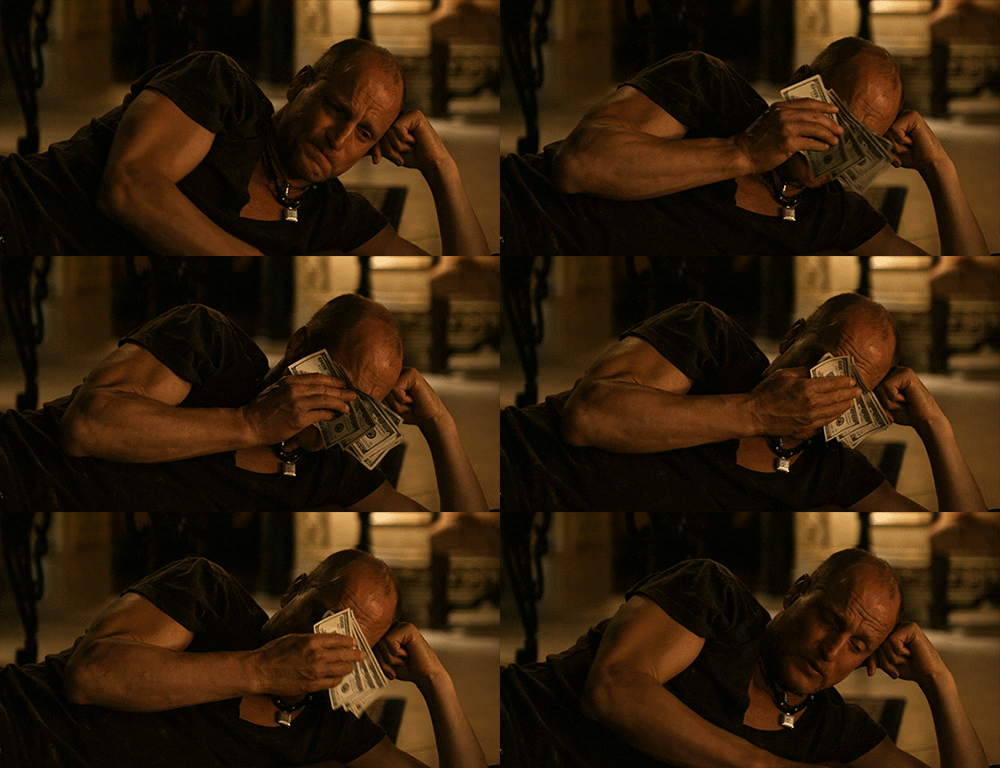
Getting a new attorney does not absolve one from lying into the public record.
Halimah is from the Juvenile Law Center.
This is getting interesting, but, we shall see what she does, as we are dealing with the industry of trafficking tiny humans.
Halimah DeLaine Prado is a Vice President of Legal at Google LLC. Prior to joining Google, Halimah practiced media law and products liability law at Dechert LLP and Levine Sullivan Koch and Schulz (now Ballard Spahr). She also clerked for the Honorable Mary A. McLaughlin of the United States District Court for the Eastern District of Pennsylvania. Halimah graduated from Yale University with a B.A. in Political Science and later obtained her J.D. from Georgetown. Halimah is passionate about education and juvenile rights, having served on various boards that address these issues, including the board of the Juvenile Law Center. When not working, she enjoys traveling with her husband and two daughters.
Just as a point of interest, I thought it prudent to note that my blog is run on google, for I am quite sure Halimah already knows this, as google would never bleachbit the public record....they may just face an situation in the termination of their corporate parental rights to keep and bear the arms of the United States....
Google has promoted Halimah DeLaine Prado, vice president of legal, as its new general counsel. Prado will take on legal duties previously held by Kent Walker, a senior vice president, the company said. The new appointment comes at a time the company faces intense antitrust scrutiny. Halimah DeLaine Prado is the new General Counsel at Google. Google has a new head general counsel, company legal exec Halimah DeLaine Prado. The company announced Tuesday that Prado will be taking over legal duties from Kent Walker, a senior vice president, effective immediately. The company promoted Walker to senior vice president of global affairs in 2018, where he took on extra responsibilities, including overseeing Google's policy, legal, trust and safety, and corporate philanthropy teams. The latest appointment comes as the company faces potential antitrust cases against it this year. Google is reportedly expecting a lawsuit from the U.S. Department of Justice, focused on its dominance in online advertising and search. Last month, Alphabet and Google CEO Sundar Pichai joined CEOs of Amazon, Apple and Facebook at the House Judiciary subcommittee on antitrust for a four-hour questioning session about the company's competitive practices. That was followed by the release of trove of internal emails. Prado will oversee legal responsibilities and teams, reporting directly to Walker, the company said. In a statement, Walker said: "Halimah has been a trusted counselor and exceptional leader, having navigated a variety of cross-product and company-wide issues over the course of her nearly 14-year career at Google. She is uniquely qualified to lead the Legal Department at this critical moment, and I look forward to working with her as we enter this next chapter." Before the new appointment, Prado oversaw Google's global team that worked on legal counseling for Google products including advertisements, Search and YouTube, the company said. She's been at Google since 2006. The company said she is not taking on a replacement role for Alphabet's longtime chief legal officer, David Drummond, who in January retired after he was the subject of shareholder lawsuit alleging misconduct.
Children on the registry – including some as young as 8 years old – face residency and
employment restrictions as well as barriers to education; suffer the stigmatization of
being labeled a sex offender; and can face possible incarceration for failing to meet
onerous registration and reporting requirements.4 A 2013 Human Rights Watch report
examined the grave consequences befalling registered youth.5 Over 85% of these
youth reported serious mental health issues or suicidal ideation. A 2017 study revealed
that registered children are nearly twice as likely to have experienced an unwanted
sexual assault that involved contact or penetration in the past year when compared to
nonregistered children who have also engaged in harmful or illegal sexual behaviors.6
They are also five times more likely to report having been approached by an adult for sex
in the past year.7 Children on sex offender registries are four times more likely to report
a recent suicide attempt than non-registered children who have engaged in harmful
or illegal sexual behavior.8 Many registered youth also experience vigilantism in their
communities, with 52% reporting harassment and physical violence directed at them.
Accessing and maintaining housing is also a major barrier for both registered youth
and their families. Over 44% of children experienced homelessness as a result of the
restrictions placed on their housing due to registration.9 Almost all registered individuals
face financial challenges and barriers to employment. In some states, registration fees
are so prohibitive that many fall out of compliance and face incarceration.
The Juvenile Law Center has only enhanced the industry of trafficking tiny humans, through juvenile justice, in the sense that they only address the latest and greatest hot button issues, and have, not once engaged me.
I reached out to them many moons ago.
They never got back, but I do recall a spirited dialectic.
They were "Legal Geniuses" (trademark pending).
I told my Sweetie about them.
They never even had the courtesy of reaching out to him, which means they are Meanies, but I do not know Halimah, so I shall reserve my angst for that moment she starts her magical cloaking of what they do in the realms of antitrust.
I was sitting right there, in shock, when they first spoke in the public record about their search algorithms, because, what they were doing, flew right over the Members' heads, which is why I do what I do.
As of this very moment, the search function is just a hot mess, but, it may be due to the fact that I am on legacy mode, because the new mode is severely lacking on the ability to see individual datum, but data visualization in pretty pictures in the new blogger, but I digress.
This case is currently being weaponized by one of our most favorite "Legal Genius" (trademark pending), Cernovich, because he is the progenitor of #pizzacrap and the promulgator of #MeToo.
In a nutshell, a group of young men were individually convicted under the Michigan Child Welfare System of governance in the courts for, not to make light of the situation, "dating" girls who were over the four year range of the age of consent, meaning, according the suit, were anywhere from 14 years to 17 years of age, where, the perpetrators were in median of 18 years.
Some of the John Does came out of Foster Care.
Some of the John Does were in the hands of Those Who Like To Do Nasty Things To Tiny Humans.
Many of the Plaintiffs were sentenced under Michigan HYTA Law, for juveniles between the ages of 17 and 24.
For the simple fact these individuals came out child welfare, I take pause as to what Cernovich is rallying in nefarious cyberverse.
Michigan also has a Central Registry of Child Abuse and Neglect, but we have already covered these databases.
There was another issue that triggered me, and that was the fact that I saw gerrymandering.
So, since we have Halimah at the helm, and I am quite sure she has just finished reading this post, let us sit back to see what she is going to do, particularly, when dealing with Cernovich and his pizzacrappers, because they were all mean to my Sweetie, including the U.S. Conference of Catholic Bishops, which are the overlords for these foreign, privatized, Foster Care to Juvenile Justice Pipelines.
The former Detroit drug dealer dubbed “White Boy Rick” has waited nearly 30 years for the information he received today: he will be paroled from prison.
Richard "White Boy Rick" Wershe Jr. is now scheduled to be released from custody July 20, according to the Florida Department of Corrections.
Wershe, 50, who grew up on Detroit's east side, has spent more than three decades incarcerated.
Detroit Police arrested 17-year-old Wershe in 1987, and a jury convicted him of possession with intent to deliver more than 650 grams of cocaine. Officials said he stashed 8 kilos of cocaine and nearly $30,000.
In 2017, the Michigan Parole Board voted unanimously to parole Wershe, who has said he started working as a law enforcement informant when he was 14.
Instead of being released from prison, Wershe was sent to Florida where he was previously convicted of racketeering charges in connection with a stolen-car scheme that he was involved in while imprisoned in that state. Wershe was sentenced to five years for his role in 2006.
He was in the federal witness protection program in a Florida prison because he helped the FBI in an investigation involving corrupt police officers after his drug conviction.
Officials from the Florida Department of Corrections did not respond to a Free Press request for comment about Wershe's upcoming release.
This is not the first time Werhe's release date has been moved up.
Wershe has been the subject of national attention. His notoriety was projected onto screens nationwide in a Hollywood film starring Matthew McConaughey in 2018 and a documentary directed by Shawn Rech in 2017.
Wershe, a father of three and grandfather, was originally sentenced to life in prison without parole for the drug conviction. Later, it became life with the possibility of parole because of changes in drug law.
During his 2017 parole hearing, Wershe said he’s a changed man and vowed to never commit another crime.
"I know that the drugs I sold destroyed people's lives," Wershe said at the time. "I can't take it back."
She knows what goes on in Foster Care because she is the spokestoken for the Foster Care Committee and, for a hot second, lead the charge of the Congressional Black Caucus, which runs the system by championing the chattel ranching property ownership labels of "black & brown", or rather what the latest segregationists like to call targeted populations.
Not once has she ever reached out to me, which is an automatic indicator of a willing participant of stealin' the children, land and votes.
And, if she has the audacity to make a public disclaimer that she does not know who I am, well, then I believe we have validation that she is one of the "Elected Ones".
I will allow Karen to respond to my statement.
Of course, I make no bones in displaying my disdain for the dumb ass gentlelady, for she is only one of the "Elected Ones".
The Caucus has a server, you know.
It is absolutely amazing how Shelton McElroy states that his mother was 14 when her rights were terminated and the only reaction was the "Legal Genius" (trademark pending) giving a proverbial thumbs up to the credibility of their distracting from the child welfare system.
Cicillini wants a judicial rubrik for judgement, yet, has no clue of the child welfare system, with the committee making no comment on the juvenile system, the criminalization of children or the predictive modeling crap that goes along with the dumb pretrial detention programs.
The commercial bail system is chattel ranching where chick touted how her family survived taking in foster kids
Another no money no justice moment where if you cannot afford bail you cannot afford an attorney and if you can mustard the money for representation, it will not be adequate, with absolutely no mention of Guardians ad Litem, who are not licensed attorneys, nor CASA volunteers, who are not even sworn civilian officers of the courts.
Not one mention of Child Protective Services.
What happens when the parents go to jail for an inability to secure a bail bond?
The kids go to foster care, but the Committee did not seem to find that to be a subject of interest.
What was of interest to me was that Mary Smith, who has a family bail bonds business, started out as foster parents.
You can do the math by calculating the number of foster children times the monthly foster care payments, and possible adoption tax incentives, but hey, what do I know?
I know the committee addressed nothing about trafficking tiny humans, but for this particular hearing, it is juvenile justice and the billions to be made in the private sector of chattel law.
Witnesses
Mr. Brandon Buskey
Deputy Director for Smart Justice Litigation, American Civil Liberties Union Criminal Law Reform Project
Michigan intentionally created this population of "The Poors" for the purposes of profit.
Michigan's Child Welfare System Sucks.
That boy should never have been in the care of the State.
There is no help for the parents whose children are only the victims of the wonderful biomedical, psychiatric and socioeconomic experiments, performed by the likes of foreign corporations, with costs reimbursed through Medicaid.
An entire generation of parents have been demonized from the resounding sounds of praise in pointing the finger at the moral turpitude of poverty, where one is blessed when there is a maximization of profits.
The term is called "involuntary placement" into Foster Care, the only place where a parent may access mental health treatment that is so poorly run, children will learn to defend themselves, to the death, for the purposes of survival.
Wayne County has an absolutely deplorable track record when it comes to prosecuting youth.
Someone should really confront Kym Worthy on this because I know of duplicate cases being run under her jurisdiction, where she did absolutely nothing except run one sensational case after another, leaving children to fear the court and the entire juvenile system, taking their chances of survival to the streets.
You people like to call it human trafficking, now a days.
Some of these age out youth have no parents and are left to fend for themselves, if they are lucky to capture that glorious SSI check, to get a room and some make shift community support system.
The parents sacrifice everything to care for what was done to the mothers during gestation and their children in Michigan's Foster Care System.
I have documented and witnessed the massive pilfering of this "it takes a village" mentality for more than two decades.
It boils down to parental rights.
This is nothing but another residual of the peculiar institution.
Praise the lord and may the heavens fall for what has been done to our most precious treasures.
Nancy Edmunds needs to stop covering up the hellhole of Michigan's Child Welfare System.
I would love to see a forensic audit on his medical and psychiatric files because there was mention of a kidney condition.
You do not break confidentiality in doing a stochastic analysis of the expenditures and you will most definitely find Medicaid Fraud In Child Welfare.
A severely mentally ill teen discharged from jail to a local emergency room after being ruled incompetent to stand trial for murder was discharged late Thursday to a state-run psychiatric hospital as The Detroit News made calls about his placement.
Darian Smith-Blackmon has been placed at one of Michigan's five psychiatric hospitals, after spending 45 days at Detroit Receiving Hospital.
The News is not disclosing his location to protect his privacy.
Darian Smith-Blackmon, 19, pictured here on Oct. 30, 2019, with his mother, Melvina Smith of Romulus, was discharged from Wayne County Jail to the E.R. at Detroit Receiving Hospital on Sept. 17, and remains an inpatient while awaiting placement in an adult foster care home.
"Darian was ruled incompetent and the process should not take this long," said Ann Arbor attorney Bill Amadeo, who represents Smith-Blackmon.
"There's certainly a problem that needs to be corrected."
A Michigan Department of Health and Human Services spokeswoman wouldn't comment on Smith-Blackmon's case because it involves "protected health information."
"However, once an individual is identified as permanently incompetent, if they are thought to need additional hospital level care, they may go through probate court for that commitment, and these activities can occur at the local level and take some time to complete," HHS representative Lynn Sutfin said Friday.
The department "is working with many stakeholders to help improve both the ability to access state hospital beds, and the ability for the community to facilitate discharges to make those beds available."
The case of Smith-Blackmon illustrates how Michigan, like other states, grapples to care for its most difficult mentally ill patients while preventing them from hurting others. His case was highlighted in an Oct. 10-11 Detroit News series called "Healing Justice" that compared Norway's innovative approaches to mental health and criminal justice with practices in Michigan and the United States.
There were 191 people on a waiting list for treatment at a state mental hospital as of Oct. 31, up from 138 waiting for a bed at the end of September, according to the state Department of Health and Human Services.
The autistic teen was found incompetent to stand trial on Aug. 27, but remained at Wayne County Jail for 21 more days. Late on the evening of Sept. 17, he was transported to the emergency room at Detroit Receiving Hospital.
The 19-year-old Smith-Blackmon had spent nearly six months in jail after assaulting a fellow resident at an adult foster care home on March 22. He suffers from intellectual disability, psychosis and bipolar disorder, and has been in and out of group homes and hospitals since the age of nine.
John Bagget, an elderly man with "mild retardation and schizophrenia" at Woods Care Home in Wayne, died of his injuries on April 22, and Smith-Blackmon was charged with first-degree murder.
The News was unable to contact Bagget's next of kin.
Questions remain about why Smith-Blackmon was sent to Woods Care Home, a low-security facility with mostly senior residents, after he had assaulted residents at two previous adult foster care homes.
"I don’t think anything (was) intentionally screwed up here, it’s just that nobody knows how to handle this kind of problem," said Amadeo, the attorney.
Michigan had the 46th fewest mental hospital beds in the nation with 7.3 state psychiatric beds per 100,000 residents, according to a 2016 study by the Treatment Advocacy Center, a Virginia nonprofit that works to reduce barriers to care for the mentally ill. The state had 725 beds in a state with nearly 10 million people.
During a Wednesday night interview with The News at the teen's hospital room, Smith-Blackmon's mother, Melvina Smith of Romulus, said social workers were trying to locate another adult foster care home to take him.
"This is the picture of a system failure across the board that allowed this to happen," said Tom Watkins, a former state mental health director and former director of the Detroit Wayne Mental Health Authority. "We have a responsibility to get it right for this young man.
"We can't afford to fail — for the people he's going to be around, his family who love him and society at large. Without the proper treatment and service, he could be a ticking time bomb."
The Detroit Wayne Wayne Mental Health Authority, which oversees adult foster care home placements for the county, would not comment on Smith-Blackmon's case.
The authority's network strives to "prevent crisis, provide early intervention and stabilize individuals" while providing a safety net of crisis services for Wayne County's 75,000 residents, said spokeswoman Tiffany M. Devon.
Smith-Blackmon gave his mother multiple hugs during his Wednesday night interview. He greeted a reporter with a smile and shyly revealed a tattoo on his right arm that he's proud of.
"Woke, sleep, watch movies," he said when asked what he did that day. "I'm bored."
Smith-Blackmon didn't receive any psychotherapy at the hospital, jail or any of the four adult foster care homes he's lived in during his short time as an adult, Smith said.
Asked if he'd like to get therapy, Smith-Blackmon said "yes."
Asked how he feels when he thinks about the "incident" at Woods Care Home, he looked down at his hands and said "sad."
Darian Smith-Blackmon, 19, pictured here on Oct. 30, 2019, with his mother, Melvina Smith of Romulus, was discharged from Wayne County Jail to the E.R. at Detroit Receiving Hospital on Sept. 17, and remains an inpatient while awaiting placement in an adult foster care home.Buy Photo
Darian Smith-Blackmon, 19, pictured here on Oct. 30, 2019, with his mother, Melvina Smith of Romulus, was discharged from Wayne County Jail to the E.R. at Detroit Receiving Hospital on Sept. 17, and remains an inpatient while awaiting placement in an adult foster care home. (Photo: Karen Bouffard, The Detroit News)
Smith said she was perplexed why her son was discharged from the jail to a Detroit hospital emergency room on Sept. 17.
The hospital discharged him to an adult foster care home four days later, but he was returned to the emergency room within hours, so emotionally upset that he required restraints and injections to calm down, his mother said.
A few days later, Smith-Blackmon experienced kidney problems, chest pains and an elevated heart rate, and was moved to a medical unit for intravenous treatment, she said.
He was diagnosed with rhabdomyolysis, according to Smith. It's a serious syndrome that can lead to kidney failure. A long list of possible causes for the condition includes physical injury, exposure to infections or use of anti-psychotic medications.
According to Smith, her son's been off intravenous treatment "at least (a) couple weeks now." But she's been frustrated by the difficulty of getting medical information on her son.
Though found incompetent to stand trial, he's still legally his own guardian. Smith said she'd taken steps to obtain guardianship before the assault occurred, and she still hopes to accomplish that. She also hopes that, one day, she'll be able to care for him herself.
"I want him to get treatment," Smith said. "He wants treatment, but he also wants freedom at home."
About 2% of people with a serious mental illness commit major crimes, according to the Treatment Advocacy Center, a Virginia nonprofit that works to reduce barriers to care for the mentally ill.
Residents at Michigan state mental hospitals receive psychotherapy in addition to psychiatric medications, according to experts, who say therapy can be effective in helping aggressive or violent mentally ill people learn to live safely in community settings.
"I don't think he will ever be competent to understand what the average person understands," Amadeo said. "I don't think Darian will ever have a nine-to-five job, but I think he could have a decent life where he's not a threat to society.
"That's what we can hope for in this situation. I think there's a chance to help him, and help him while protecting the community. That can be accomplished."
It always starts with the children because no one cares.
I would like the public to honor the beauty of heraldry, where The Detroit Free Press is the keeper of the timeless immemorials, the great repository of the public square, for those who wish preserve their claims to challenge the right to bear arms, by bearing witness, in public testimony, of the founding of this great nation.
All children should read this story and watch this video, so when they grow up, they can make sure this never happens again.
That is why I tell tales, for no one else will.
This is but one example of the failed child welfare system, in the life of a girl growing up in Michigan, where, I pray, the Free Press will continue with this series, to go into the Public Private Partnerships and identify "The Elected Ones" whose campaigns were funded by the foreign interests who planned for the collapse of a civil society, and it all started in Michigan.
This is what you call modern day human trafficking because this should never have ever been allowed to happen under a duly elected government.
Consider this the first in my new series on Socioeconomic Tiny Human Lab Rat Experiments, or as I enjoy to so adoringly call it stealin' the children, land and votes because it was all very well planned and I watched them plan it.
That is why I like to get into the Medicaid Fraud in Child Welfare NGO trust funds and the Social Impact Bond Program predictive modeling crap.
She was prostituting, pregnant, doing drugs by 14. Now, Taylor girl fights to save her own life.
MATURE CONTENT WARNING: This story explores drug abuse, sexual abuse and prostitution; it is not suitable for children.
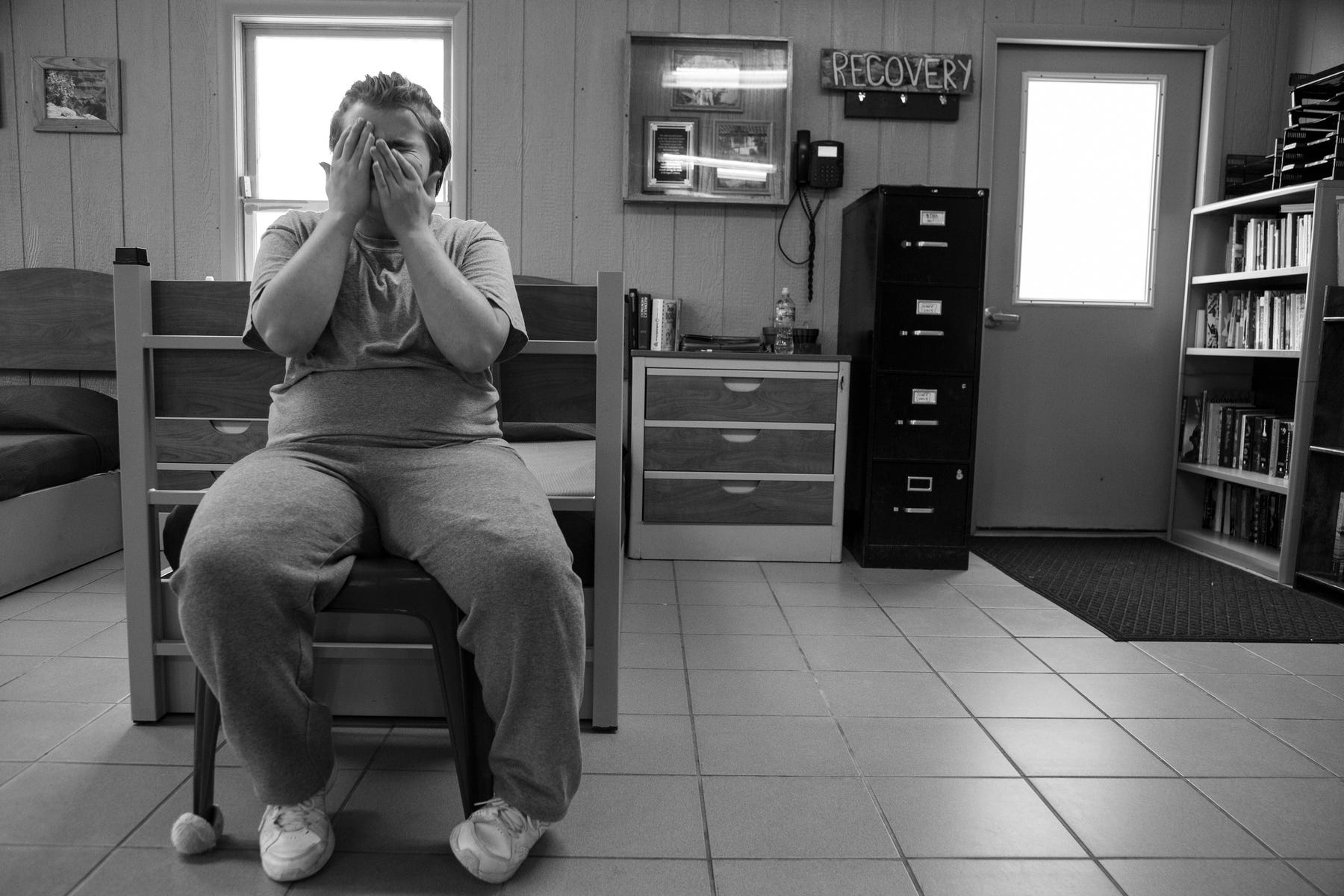
Sitting on plastic chairs arranged in a circle at the edge of the woodsy yard, the girls were barely into their meeting when the 16-year-old from Taylor with welts and scars up and down her arm started to fidget.
It's not the first time the Girl from Taylor has been here, at this camp where teenagers wear uniforms and can't talk without permission. It's not the first time she's gone to bed knowing a minder is sitting across the half-lit dormitory style room, watching her and the others sleep. Or the first time she's pretended not to be upset that her mother seldom visits.
Addicted teen looks for path to survival in tiny Michigan town
It's interesting the way people picture drug addicts, almost always conjuring an image of an adult. Hardly anyone ever thinks of kids.
MANDI WRIGHT, DETROIT FREE PRESS
The kids here do that a lot, put on a tough face; it's easier than dealing with disappointment. They've had plenty of that in their lives so far. Caused plenty of it, too. And yet, deep down, most of them have a certain childlike quality they've yet to outgrow. How else do you explain that a girl who became a prostitute at 14 to pay for drugs, still gets excited at the thought of, maybe, someday, going to prom?
Vassar, Michigan
Part juvenile detention center, part residential drug rehab, the goal here at the Wolverine Growth and Recovery Center in Vassar — a tiny farm town about two hours north of Detroit — is to save young people ages 12-17 by getting them off weed and opioid pills before they graduate to heroin and end up dead.
It's a race against time.
Because that's the trajectory these days: weed, pills, heroin, which is almost certainly laced with fentanyl, the powerful synthetic opioid responsible for most of the overdose deaths in Michigan and across the nation. And because 18- to 25-year-olds are more likely than anyone else to use heroin.
The Girl from Taylor
I've done enough stuff to put 50-year-olds in the dirt.
The Girl from Taylor — one of about 40 teens here over the summer — is ahead of schedule on that front. She's already used heroin. "I've done enough stuff to put 50-year-olds in the dirt," she said. Once, she mixed heroin with pills and Molly, also known as the party drug Ecstasy, and overdosed, waking up in the hospital with no idea where she was or what had happened. For a few minutes, she thought she might be dead.
She was more engaged in the group therapy circle now, sharing a bit of her background with the other girls: "Once you hear ... like, something so much from one person, you begin to believe it. ... 'You're ugly. You're worthless,' " she said, sounding breathless, from upset or asthma or maybe both.
"I was a kid ...
"He was supposed to be a father."
Her voice disappeared into the rustle of leaves and chatter of branches brought on by a strong, late summer wind. A storm was coming.
Soon she and the other girls — there were eight in the group that day — would be in their cabin, waiting for dinner, maybe engaging in small talk about home and family and life on the outside or, as they call it, "in the community." Nobody wants to be here; they've been sent over by juvenile court judges for violating probation. They're here to serve their sentence — usually between 6 and 9 months — and to get used to living without drugs.
To do that, though, they need to confront the incredible forces, the dysfunction, the hate, the lies and the awful, awful truths that led them to drugs. The Girl from Taylor didn't do that the first time she was here. She completed her sentence, which ran from September 2017 to June 2018. Then she went home to her mother's house, relapsed, returned for two weeks of respite care in December, went home, relapsed again, ran away, got caught and was locked up for a time in the Wayne County Juvenile Detention Facility in Detroit before being sent back to Vassar in February 2019.
She wants things to be different this time.
But if there's one thing circumstances have taught her, it's that wanting something to happen doesn't mean it will.
Age and gender conspire to addict
It's interesting the way people picture drug addicts, almost always conjuring an image of an adult, often a man, stumbling along the street or rushing furtively into a trap house or passed out under a freeway viaduct with a needle in his arm. Hardly anyone ever thinks of kids. Even kids don't think of their peers, let alone themselves, as addicts. "They hold that as a kind of denial," said James Tumidanski, who spent more than a decade working as a therapist at the Vassar center. They think, " 'I'm too young to be an addict.' "
The Girl From Taylor sits in a chair by her bed Thursday, July 25, 2019, she along with other clients were court ordered to Wolverine Growth and Recovery Services in Vassar, a program designed to intervene with alcohol, drug and behavioral issues.
And yet, adolescents — awkward from growth spurts, insecure about fitting in and finding their place, sensitive, impatient for independence — are wired for addiction.
The teenage brain is a work in progress. Doctors compare it to a car without brakes because the part of the brain that processes emotions and feelings of pain and registers the satisfaction of feeling good is fully developed. But the portion that regulates those emotions, that puts them into perspective and makes people stop and think before acting — the prefrontal cortex — is not. It doesn't mature until about age 25.
Because of that, teenagers and young adults are more likely to be impacted by stress, anxiety, depression and peer pressure. They're also more likely to participate in risky behavior — including using drugs to quiet doubts, soothe feelings and numb emotional pain. Last year, according to a study by the federal government, 38.7% of the nation's 18- to 25-year-olds used illicit drugs, compared with 16.7% of people age 26 and over.
Assault, domestic violence, abuse and rape increase the likelihood a teenager will seek out drugs. "The girls just have so much trauma." said Rebecca Lutz, a therapist at Vassar. And "it's not usually just one incident. It's usually a pattern."
Neglected by her meth-addled father, raped repeatedly by another relative, whipped on the back of her legs with a belt swung by her drug-using stepmother and forced to kneel on uncooked grits and rice spread over the floor, a 17-year-old girl from Livonia put it this way: On drugs, "I was on the top of the world, like nobody could take anything from me." Otherwise, "I would try to commit suicide. I was always really depressed because of stuff that happened to me."
There's a lot of that here: depression, anxiety, anger management problems and other mental health issues. Many of the girls acknowledge past suicide attempts and episodes of self-harm. The scars on the Girl from Taylor's arm — she counts 33 — are from the time she dug into her flesh with the jagged stem of a broken wine glass. She wanted to kill herself. “I felt like there was nothing for me," she explained. Even at the camp, girls sometimes sneak pencils into the bathroom so they can cut themselves with the sharp point. Or they use a paper clip. Or their fingernails. Mostly, they'll use whatever they can find, even the bottom corner of a toothpaste tube.
Drug addiction and mental illness are intertwined. One study of teenagers in drug treatment found that more than 60% had a co-occurring mental illness; other experts believe the figure is closer to 75%. And at no time is that connection more apparent than just before bedtime when a member of the Vassar staff pushes the medical cart into the girls' dormitory cabin. One at a time, the girls approach the cart and lean their heads back and open their mouths so the attendant can drop in the pills; they look like baby birds being fed by their mother. (They are not allowed to touch the medication.) The girls then take a sip of water, swallow and open their mouths again to show that they aren't hiding anything under their tongue or inside their cheeks.
"Trazodone, Abilify, Trileptal, Zoloft ... " the Livonia girl said, naming the mood-stabilizing medications she takes every day. "I have a personality disorder, it's where my moods switch up really quick and I can be one person one day and I will be another person the next. ... I do have bipolar issues. I have anger, anxiety, depression ..." She sighed. "I have so much."
The Girl from Taylor, who started drinking when she was 10.
My mom's an addict, my dad's an addict, I'm an addict.
The earlier users start drugs, the more likely, and more quickly, they are to become addicts. A family history of drug use or addiction — there's a great deal of that in the families of the young people here — also plays a role. Experts say genetics count for 40%-60% of a person's addiction risk. Gender has a part in this, too: research suggests females become addicted faster than males.
"My mom's an addict, my dad's an addict, I'm an addict," said the Girl from Taylor, who started drinking when she was 10. Her oldest sister, who is living somewhere on the streets, is an addict. She said she will rip off her 18-year-old sister's toenails if she discovers that she, too, is using drugs. "She's seen what I had to go through and what Mom had to go through and my dad had to go through. If she would make that course of action, I would be so upset."
Not homey, but home for now
Not homey, but home for now
Dinner was over and the Girl from Taylor, back in her dormitory cabin for the night, slipped off her white New Balance sneakers and placed them on a shelf in the tall cabinet where they'd be locked up until morning. The camp confiscates everyone's shoes at night — the kids are allowed to wear slide-on rubber sandals, similar to those worn in locker room showers and some jails, until they get them back. The protocol, the camp staff says, is to deter anyone from escaping into the darkness of night. It's more difficult to run in slide-ons.
Uniform issued New Balance tennis shoes get locked up at night so clients are less likely to run during the night at the Wolverine Growth and Recovery Center in Vassar Monday, August 12, 2019.
Uniform issued New Balance tennis shoes get locked up at night so clients are less likely to run during the night at the Wolverine Growth and Recovery Center in Vassar Monday, August 12, 2019.
MANDI WRIGHT, DETROIT FREE PRESS
Wolverine Growth and Recovery Center is situated on several woodsy lots at the bottom of a dead-end road. The campus includes a half dozen or so unassuming single story-buildings that house dormitories, classrooms, a cafeteria and offices. A gymnasium sits across a parking lot. In some ways, the setting feels like Up North, with perennials lining the sidewalks, tamarack trees scattered across the grounds and at least a gentle breeze even in the dead of summer. It's not unusual to see deer darting through the woods at the edge of the camp, their white tails bobbing up and down as they leap over brush.
The idea is to get the kids, most of whom come from metro Detroit, away from their home environments, their friends and families and anyone or anything else that might be a distraction to their rehab — the pot shop and liquor store down the road and around the corner, closer to downtown Vassar, population slightly more than 2,500, notwithstanding.
About 75% of the kids at the facility —which is run by Wolverine Human Services, the largest foster care, adoption and independent living agency in Michigan — are boys. They and the girls are not allowed any contact. Each group has its own classrooms, its own cafeteria times, its own therapy schedules — the boys tend to be less likely to open up and also less likely to have been victims of extreme trauma. And, of course, they have their own dormitory cabins.
The institutional beige paneled walls of the girls cabin are decorated with motivational posters promoting recovery, the 12 steps from Alcoholics Anonymous and a reminder that sexual abuse is never OK. Raincoats hang on pegs by the door. Twin beds on metal frames, with headboards against the walls, are arranged in the shape of a block U and covered with identical blue bedspreads.
Staff members searched the cabin the first part of August after getting a tip one of the girls was holding notes from a boy. They unmade beds, flipped mattresses, looked everywhere but didn't find any notes or anything actionable. The girls were off-kilter the rest of the day. No one likes being wrongly accused, especially girls trying to do the right thing after a long time of doing wrong.
Wake-up is at 6 a.m., 7 a.m. on weekends. The girls wash, make their beds and walk across the courtyard to breakfast. They're allowed 10 minutes for each meal. They eat in silence; they aren't allowed to talk without permission at the camp and there's no time for conversation during meals. A minder keeps track of the time.
"Six minute napkin check!" the minder yelled during lunch one day. The girls showed her their napkins.
"Three minutes!" she yelled, as the clock wound down.
"Fifteen seconds, last drink!"
When they were done, the girls scraped their plates over a trash can, lined up an arm's length apart from each other and walked out of the cafeteria building single file, with their hands behind their backs as if they were wearing handcuffs. Camp staff says the posture is a security measure.
There's school five days a week from about 8 a.m. to about 2:20 p.m. The teenagers do their lessons — chemistry, history, English and the rest — on computers; the camp has an online classroom arrangement with the local intermediate school district. A teacher supervises and is available for questions.
For many of the girls, it's the first time they've been to school in ages. They have big dreams. One girl wants to be a chef before turning her attention to a degree in social work. The Girl from Taylor wanted to join the military but figured her post-traumatic stress disorder diagnosis would be a red flag to recruiters and that her asthma might be a liability.
Now she wants to be an obstetrician-gynecologist, though she thinks she might like to start out as a phlebotomist. Some days she thinks about becoming a social worker, but only for kids; she doesn't want to deal with adults. She has a nephew with special needs and might want to adopt him. That way she can protect him — maybe because no one was able to protect her — from the world and all of its badness.
"She has a tendency to want to save everybody but herself," Lutz, her therapist, said.
Parents can visit the camp every other week, though many do not. The Girl from Taylor said her mother doesn't visit often because she is without reliable transportation and can't get to the designated meeting spot to catch a Wolverine shuttle to Vassar.
The kids are allowed a weekly 10-minute phone conversation with an authorized family member, usually a parent or guardian but sometimes siblings, too; cellphones are forbidden.
Clients line up in a regimented way to be escorted across campus at the Wolverine Growth and Recovery Center in Vassar Monday, Aug. 28, 2019. Each client has to remain at arms length and hold their hands in a "diamond" shape behind their backs.
They can receive letters from an authorized family member; Vassar staff members watch the kids read their letters to make sure they aren't getting notes from boyfriends or girlfriends back in the community. Hey, are you holding my mail, the kids sometimes ask staff members. No one is holding their mail. But it's easier for them to think someone is keeping it. That way they don't have to admit their people aren't willing to take the time to write. The Girl from Taylor said she's pretty sure her mother is writing but forgetting to put the letters in the mailbox.
There's therapy every day. The girls write in journals. They discuss the things they did well during the day and the things they didn't do so well. Sometimes, their therapist asks them to list their positive attributes, something many of the girls have difficulty doing because they've grown to despise themselves. Five days a week, usually after school, they have group therapy.
In the evening, after giving up their shoes, the girls take turns using the dormitory bathroom, each getting 13 minutes to undress, shower, wash their hair, dry off, dress for bed in a T-shirt and shorts and brush their teeth. A minder sitting outside the shower times them. The bathroom and shower are the only places the kids are allowed to be out of a monitor's direct line of sight.
There's no jewelry — the Girl from Taylor stuck a staple she found into her ear lobe to keep the piercing from closing. There's also no nail polish, makeup or cologne. No hand sanitizer either because last year one of the kids drank some to get high.
Hair has to be off the shoulders.
Uniforms — sweatpants and shirts in black for newcomers, blue for kids at the beginning of their 12-step program and gray for those who are well along in recovery and free of disciplinary problems — must be worn at all times. "The color," the Girl from Taylor said, "defines who you are."
Drugs lead to prostitution
Drugs lead to prostitution
At the beginning of July, the Girl from Taylor found something on the floor by her bed. She was elated. Wrapped in plastic, her gray uniform. That her therapist, caseworker and some of the staff members had approved her request for the new uniform only made the achievement sweeter. It meant they'd noticed she was doing well and that was something wonderfully new. Few people, it seemed, ever took her side.
She'd returned to the Vassar camp feeling awful about herself. It's unusual for girls to do a second stretch here — they either age out of the juvenile justice system and go to jail or end up on the streets — but police found her holed up at a friend's house and the judge sent her back. She called herself disgusting, selfish and an incredible disappointment. She sounded like her father.
He was abusive; he drank and used drugs and told her she was ugly and worthless and fat. He wasn't always that way, she remembers. He was sober when she was 7 or so. He made crepes for her and her siblings every weekend and dropped her off at latchkey and was calm and for awhile, she had a childhood. She'd give almost anything to go back to that. "It's almost a sacred time," her therapist said. But before long — a few months, maybe more, maybe less — her dad slid back into his addiction. He smacked the Girl from Taylor when he was angry, which was often. Even so, when he and her mom split up, she stayed with him; she disliked her mother's boyfriend and besides, at her father's house, she could pretty much do whatever she wanted.
She started drinking when she was 10. Her father gave her a strawberry margarita, one of those premixed drinks that comes in a foil pouch. Didn't he know she's allergic to strawberries? Or didn't he care? Either way, what the Girl from Taylor remembers most about that day is she had she had to chase her drink with a dose of Benadryl. Before long, she was his weekend drinking buddy. And after that, he started touching her breasts and sticking his hands between her legs. "He wouldn’t put anything in me," she said all these years later. "Now that’s one thing I was conscious enough not to let him do."
Signs coaching life skills on the classroom wall at Wolverine Growth and Recovery Center in Vassar, July 25, 2019.
By 11, she was drinking every day. After smoking a joint with her dad, she added marijuana to her repertoire. And after that, opioid pills, cocaine, and, ultimately, on occasion, heroin. She felt prettier that way, drunk and high. She was more lovable and smarter. To prove it, she sought out attention from romantic partners. Sometimes she picked girls (she identifies as bisexual). But most often, she went after boys, usually losers and usually — as is the pattern with girls who start drugs young — considerably older. One day, her 15-year-old boyfriend paid her the ultimate compliment: You're more mature than most 11-year-olds, he said.
The Girl from Taylor
People might say, 'Yeah, I have enough willpower.' But when there's a bag of pot lying there and you know that, don't tell me you're not tempted. ...There's something in you that flips if you're an addict and just takes complete and full control.
Drugs betrayed her the way they betray everyone who falls for them. They made her skip school and run away from home — even after she moved back in with her mother when she was 11½. Once she was gone so long that the authorities, fearing she might be dead, requested her dental records.
Drugs made her steal a car and crash it into a house, another suicide attempt.
Drugs turned her into a prostitute.
She was 14 the first time she had sex with a stranger for money. An ex-boyfriend, who acted as a pimp for other young girls, recruited her.
"I know you need money and I know you like attention from guys," he said. "I can help you with that."
"Sure," she replied without hesitation because, the way she figured it, she didn't have anything to lose.
The money was good. The base rate: $250, of which she kept about 65%. Sometimes, her ex-boyfriend-turned-pimp would instruct her to charge extra — $500 or more — because it turns out men who like to have sex with children are willing to pay a premium. The Girl from Taylor dressed the way the guys liked — in short and skimpy skirts or dresses, no bra or panties. Except for anal sex, she did everything they wanted. She worked in Detroit and Dearborn, in motel rooms with mold around the toilets and no soap in the showers or cases on the pillows. One guy, who always wore a light-colored shirt and stained jeans, insisted she meet him in the front — and only — seat of his green pickup. There was garbage on the floor and the inside of the truck smelled like McDonald's and flatulence and when the man was done with her, he'd clean himself off with a red rag, the kind mechanics use. You make me want to put you in a sack and keep you in my closet forever, he told her once. He never tried to kidnap her. But she was glad she carried pepper spray.
She had other repeat clients. She saw a guy who warned her not to tell his wife what they were doing, though she hadn't a clue as to his wife's identity. She also saw a guy on whom she had a crush and probably still does because she still giggles when she mentions his name. He was maybe 30, not too fat and not too slim. And cute. And nice. I know what we're doing is wrong, he told her. If you were just a little bit older, we could have something real. "I think we both equally enjoyed each other's company," the Girl from Taylor said.
But, God, she hated herself for what she was doing. She hated herself so much she took a razor to her bare thighs every day she worked as a hooker. Seeing the blood trickle down her legs made her feel like a real person, not the zombie for drugs and sex she'd become.
In 2017, the girl from Taylor cut herself with the jagged stem of a broken wine glass. She said she was trying to kill herself. Recently, she counted the scars; there were 33.
Even now, doing well in treatment, earning the confidence of the staff, she remained haunted by her past, paralyzed, almost, by all the bad. She heard the taunts in her mind — fat, ugly, stupid. She cried about her best friend, who cut his wrist and died, and how she found him in his bedroom and tried to scream but couldn't make a sound and how maybe, if she'd answered his texts from the night before instead of hanging out with her new boyfriend, he would still be alive. She thought about the times she overdosed. About the boyfriend who put her in cold water instead of calling an ambulance. "He claimed he loved me a lot," she said, "but the thing is, if I would have seen him overdosing, I would have been on the phone, like, 'Yeah, my boyfriend is overdosing. I need some help right now.' "
She thought about the miscarriage she had when she was 14. She thought about her father and how much she wanted to hate him for what he did to her but couldn't because sometimes she blamed herself for what happened. Sometimes she wondered: What if I hadn't taken that first drink from him? What if I'd worn different clothes around him? What if I'd told someone what was going on instead of keeping it to myself, thinking he'd stop if I stayed quiet?
The Girl from Taylor
I almost died a whole bunch, a lot, probably more than I can count on all of my body parts. I'm not ready to die yet.
She thought, too, about where she would end up once her time at Vassar was over. As much as she missed her mother, as much as she longed to crawl into her lap — "even though I'm a little bit fatter than I used to be and a little bit taller, she still lets me" — the Girl from Taylor knew she couldn't live with her. At least not yet. She'd come to that conclusion on her own; her therapist thought it showed great maturity because it meant she was finally putting her sobriety first. There's just too much going on at her mother's house. Her sister's ex-boyfriend is in and out and he brings drugs with him. "People might say, 'Yeah, I have enough willpower,' " she said. "But when there's a bag of pot lying there and you know that, don't tell me you're not tempted. ...There's something in you that flips if you're an addict and just takes complete and full control." And if that happens, if she uses again, she knows she will fall quickly into the depths of her addiction. "I almost died a whole bunch, a lot, probably more than I can count on all of my body parts," she said. "I'm not ready to die yet."
She'd wanted to get into a semi-independent living program where she'd stay in a group home, finish her high school degree, work on her recovery and learn to live on her own. But her application was rejected because of her extensive history of drug use; she is further along in her addiction than most of the girls at Vassar.
Sometimes, the Girl from Taylor — who took medication for mood disorders — still thought about killing herself.
At the beginning of August, her funk started to lift. Feeling better, she joined the other girls in a gym class soccer game. It was fun, so much fun being part of a group, so much fun acting like a kid.
But then, while trying to get the ball, she accidentally touched another one of the girls. And the other girl accused her of doing it on purpose, of trying to grope her.
The Girl from Taylor felt someone shove her and it reminded her of the way her father used to shove her, though later the others would say no one pushed her, that she'd imagined it. She reached for the other girl's neck and the two ended up on the floor fighting. The Girl from Taylor got kicked on the side of her forehead and for awhile, she had a mark on her face.
"My head hurts; I feel kind of tired," she said afterward.
But something hurt even more: the idea that someone might think of her as a predator.
As punishment for the fight, she lost her gray uniform.
Childhood chased by adult things
Childhood chased by adult things
At group therapy near the end of August, one of the girls brought up her mostly absent father. She'd learned from her mother that he was being swallowed alive by his addiction She was terrified he was going to overdose and die and that if he did, it'd be all her fault because, as his daughter, she should be doing more to help him. She should be spending time with him and not settling for him only coming around a couple times a year. She should be taking care of him. If anyone could make him change, she could. "I think he cares about me the most, just out of everything," she said. Except as soon as she heard herself, she stopped. "Meth and cocaine," she acknowledged, (are) probably first" on his list. But still, his situation is all her fault.
It wasn't, of course. Lutz was trying to make her understand that. Shame and guilt will only hurt you, she said. Shame and guilt will make you relapse. Did he ask you for help? Did he keep in touch with you? He's your father. Isn't it a father's job to have a relationship with his child? Has he tried having a relationship with you?
The girl didn't answer.
The girl from Taylor, left, hugs her therapist Rebecca Lutz at Wolverine Growth and Recovery Center in Vassar Monday, Aug. 26, 2019. The girl was court ordered to this facility which is part juvenile detention center and part residential drug rehabilitation.
It is profound, the amount of guilt and worry the girls carry with them from all the lying, stealing and cheating that accompanies addiction. And from the hurt they inflicted on family members — even family members who hurt them first. Because as bad as it gets, everyone wants to belong to a family. Families are supposed to be about love. And the girls here are desperate for that.
Which is why the Girl from Taylor, sitting in the therapy circle with the others, was so concerned about her mother. In frail health, living on disability payments, working on her own recovery, her mother was under orders to move out of the house where she'd been living; the landlord had other plans for it. Where would she end up? Where would she find the money for a move? What would the stress of relocating do to her?
"My (probation officer) tells me all the time not to worry about adult things, but that’s hard because that’s where my brain goes," the Girl from Taylor said. "It's just first nature for me to worry about how (my mother's) feeling and money issues and the house being clean and stuff like that. ... I did have to grow up fast. I did have to learn how to do certain things. … I did have to learn how to shut off emotions when I didn't want to feel them. I did have to learn how to say, 'I'm OK' when I feel like crying deep down inside. Everyone says, 'Cherish your childhood.' But I never felt like I had one until it was too late to go back."
And now something else was weighing on her mind: A foster family wanted to give her a home. Moving in with them would mean being able to call her mother on the phone anytime she wanted. Plus, she'd go to a public high school, participate in an extracurricular activity and, maybe best of all, go to prom. "I didn’t get to have a childhood like I should have. ... I'm definitely going to prom, now that I've missed every other thing," she said, her voice giddy about the possibility of hair extensions and pink or red lipstick and eyeliner and red heels and a red dress that's tight, but not too tight. Of all the kids out there who need a place to live, the foster family wanted her. She couldn't believe her luck. She was on the verge of a happy ending.
But after two getting-to-know-each-other visits with the foster family, the
Girl from Taylor started to feel uncomfortable. The foster mother had insisted on buying her a pair of Nike sneakers so kids at the public school wouldn't make fun of her for wearing no-name shoes. And while the Girl from Taylor was grateful, she felt guilty accepting them. Her mother had never been able to afford logos or labels. Growing up, "I didn't care what I was wearing," she told Lutz after spending the weekend with the foster family. "I always had a winter coat, whether it was my sister's winter coat or it was my brother's winter coat. I was happy with what I had."
She couldn't help but worry that moving in with another family — and accepting the shoes and whatever else they might provide — would amount to a betrayal of her own mother. She thought about her father and how he'd eventually signed away his parental rights to her and how hurt she'd been because signing those papers meant he didn't want her. Would her mother feel the same way, unwanted because living with another family is different than living in a facility or a group home. Or would her mother understand the Girl from Taylor needed to stay with the other family in order to stay alive?
The girl in group therapy was still talking about her own father when, suddenly, the Girl from Taylor spoke up. She told the group that she, too, used to blame herself for everything her father did but that she'd been wrong to do so.
"Part of me had to realize my dad is a grown-ass man and he's never changing," she said. "He wasn't caring about me when I was 10 years old and needed my medicine or he molested me. ... I was a kid, what was I doing that was so wrong?"
She sounded angry.
'Do good'
'Do good'
On Aug. 28, the Girl from Taylor left the Vassar camp.
She said her goodbyes to the girls in the classroom.
"Have fun, do everything right. I'll be out there soon," one of the girls said.
"Don't come back," another said.
"I love you guys. Do good," the Girl from Taylor said.
She said goodbye to some of the staff members, who also told her they hope not to see her again.
The Girl from Taylor, dances with joy through her residents hall at the Wolverine Growth and Recovery Center, before she leaves the program Monday, Aug. 28, 2019. "I am really excited" I really want to go to prom" she said of getting out.
Her belongings — a couple of books, plants she'd tried to grow, some paperwork — had been packed in a cardboard box, which was waiting for her on her bed.
She caught up with Lutz, the therapist.
"I'm scared," the Girl from Taylor said.
She was still shaken by the incident at the soccer game, how that other girl had accused her of touching her on purpose. And how quickly her temper had turned and how she'd ended up in a fight. "That's something my dad would have done," she said. "I'm scared because I feel like I'm becoming a little bit more like him. When I get into an argument and I get petty, my dad used to do that. I just have a real short temper, like my dad. It's like that with him. I feel like I'm becoming my dad. I do stupid things just like him." She looked like she might cry.
"Do you want him to continue controlling your life or do you want to take charge?" Lutz asked.
"I try so hard not to be like him," the Girl from Taylor said.
Shortly before noon, she climbed into the back seat of a sedan and rode to start a new life with the foster family.
Yes, Michigan Governor Gretchen Whitmer has historically changed the laws of chattel by increasing the age of emancipation for a youth from 15 years to 17 years, to "treat" this increased population of offenders to be transferred under the laws of asset forfeiture to give corporations parental rights, to "reduce their contact with the system" because the child welfare system is the largest industry in the State of Michigan.
Besides, you can keep this population under the auspices of the State until the age of 25, now, and when you do that, through that corporate parental rights proxy, a foreign corporation possesses the control of the absentee votes of that population, too!
Lansing — Bills that would treat 17-year-olds in Michigan’s criminal justice system as juveniles instead of adults were signed into law Thursday by Gov. Gretchen Whitmer in what supporters called a "historic reform."
Michigan joins 46 other states who already treat 17-year-olds as juveniles or are preparing to do so. During a bill signing ceremony at the Capitol, Lt. Gov. Garlin Gilchrist said the legislation would prevent kids from spending a lifetime in and out of prison.
"We can reduce their contact with the system," Gilchrist said. "We can ensure that more young people go down real paths to careers that make sense for them and allow them to live out their best potential … We can change the trajectory for life for thousands of people here in the state of Michigan."
Thursday's signing ceremony came after a years-long "raise the age" campaign and eventual passage in the past month by the Republican-controlled Legislature.
In 2014, the Michigan Council on Crime and Delinquency published a report on the treatment of young people in the state’s adult jails. The report found that 17-year-olds faced sexual and physical assaults and their incarceration as adults increased the risk they would commit additional crimes after release.
Jason Smith, director of youth justice policy for the Michigan Council on Crime and Delinquency, said 17-year-olds in the adult criminal justice system don’t receive age appropriate treatment and their families aren’t sufficiently involved.
Smith recalled initial meetings he had with former Rep. Harvey Santana, D-Detroit, in 2014 about the "raise the age" legislation. Smith said the push to get the bills through the Legislature was a "long road."
"We are celebrating today,” Smith added. "This is a historic reform for Michigan’s youth."
Criminal justice reform has become a focus of the Whitmer administration and a bipartisan group of lawmakers. Lawmakers have a better understanding today than they had 20 years about the types of systems that will rehabilitate offenders instead of simply "locking people up," Gilchrist said.
Former Rep. Joe Haveman, R-Holland, attended Thursday’s signing ceremony since he worked on a series of criminal justice reforms while serving in the Legislature from 2009 through 2014.
"We knew this stuff was going to succeed eventually," Haveman said. "You could see the train coming. You could see attitudes change."
If 17-year-olds move to the juvenile system, an increase of 7,564 juvenile cases is expected to occur in Michigan, according to an analysis by the nonpartisan Senate Fiscal Agency. From July 2015 to July 2016, there were 29,959 juvenile cases overall.
Making that Medicaid Money.
Under the bills, the state would pay the increased costs faced by local governments because of the additional juvenile cases. The change would take effect in 2021.
State law would still allow prosecutors to pursue charging juveniles who commit serious crimes, such as murder or rape, as adults, but opponents of the "raise the age" bills have questioned how often that would actually happen.
Briana Moore of Madison Heights was one of the supporters who attended Thursday’s bill signing. Moore was charged with assault and battery when she was 17 years old because of her involvement in a scuffle at a mall. She was sentenced as an adult to a year of probation.
"Standing there and having my lawyer say you’re being charged as an adult, I’m like I can’t even sign up for the military and I can’t even vote," Moore said.
The adult conviction made it difficult to get a job and to pursue a college education, she said.
Smith noted that 17-year-olds who commit crimes in other states and are treated as juveniles are in better position for their future careers than similar 17-year-olds in Michigan.
"We are doing something right for kids today," Smith said.


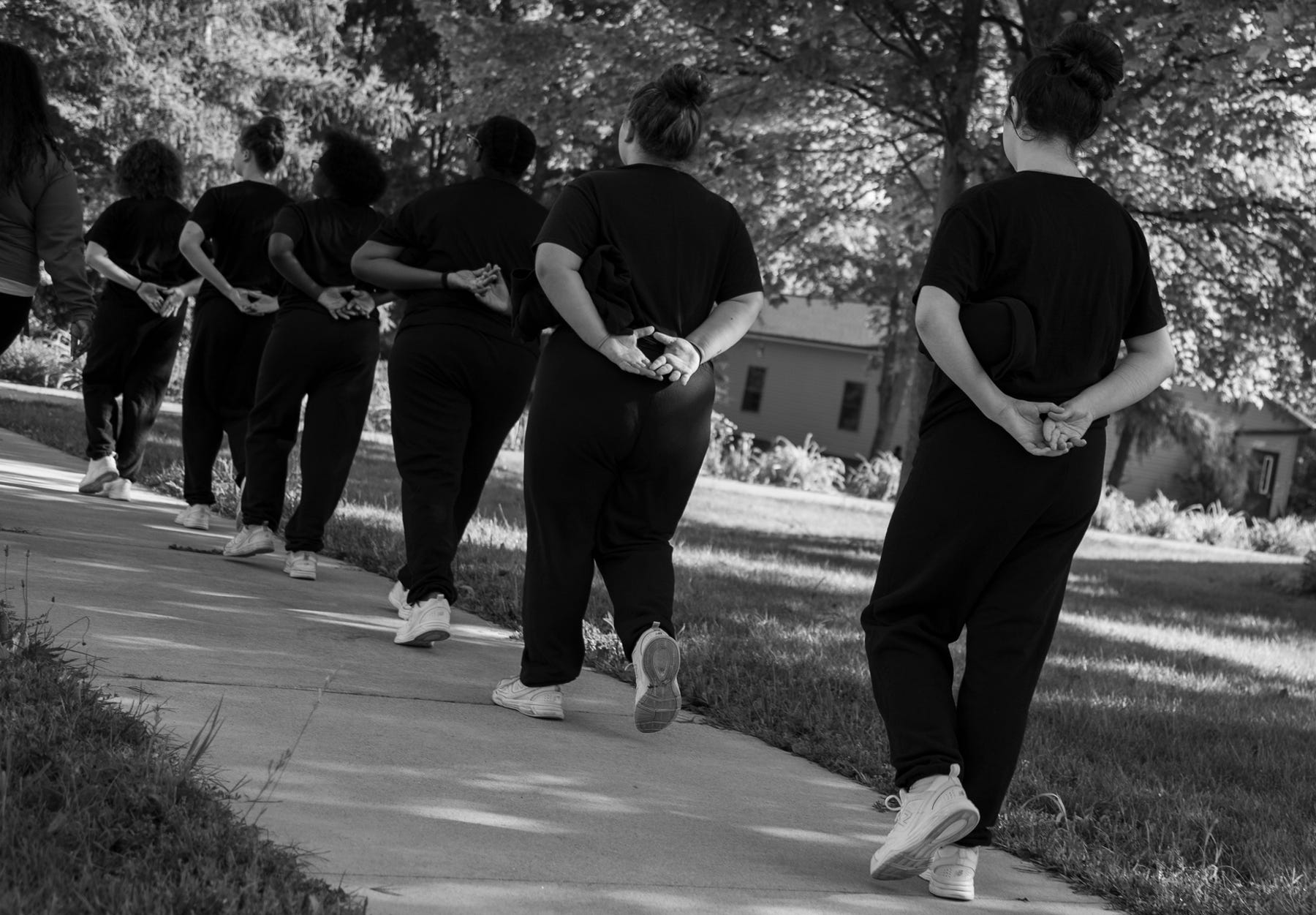
 Clients line up in a regimented way to be escorted across campus at the Wolverine Growth and Recovery Center in Vassar Monday, Aug. 28, 2019. Each client has to remain at arms length and hold their hands in a "diamond" shape behind their backs.