Showing posts sorted by relevance for query st vincent. Sort by date Show all posts

Tuesday, April 16, 2019

Clueless In Michigan: More Trafficking Tiny Humans Lawsuits - Will St. Vincent Sarah & Bethany Christian Move To Enjoin To Nancy Edmunds' Court?

If St. Vincent and Bethany Christian can sue Michigan over new gay adoption rules, well, by golly, Michigan can sue St. Vincent and Bethany Christian, and all the other Foster Care & Adoption Agencies for Trafficking Tiny Humans.

It is only logical considering the fact that they are the ones who are trafficking tiny humans.

I wonder if the Michigan GiGi Interlopers, DHHS Robert Gordon and Garlin Gilchrist, will show up, or at least publicly admit that child trafficking is foster care and adoption.

Oh, wait.

I forgot.

Nancy Edmunds is supposed to decide if Michigan is all better when it comes to its child welfare system.

Perhaps, St. Vincent and Bethany Christian can enjoin in the Dwayne B. v. Granholm (now Gretchen Whitmore) action.

Probably not.

Trafficking tiny humans through foster care and adoption is how St. Vincent and Bethany Christian maximizes their revenues.

As for the LBQRSTUV adoption issue, it is just a legal property ownership argument under the law of chattels.

Welcome to Foster Care & Adoption in Michigan, oops, I mean, human trafficking.


Happy Child Abuse Propaganda Month!


Michigan DHHS Director Robert Gordon,
& Lt. Gov. Garlin Gilchrist - Clueless in Michigan

An adoptive mother, a former foster child, and a Michigan faith-based adoption agency are challenging a recent state settlement that bans state contracts with foster and adoption agencies that refuse to work with gay couples.

St. Vincent Catholic Charities, former foster child Shamber Flore, and Melissa Buck, a mother of five special needs kids adopted through St. Vincent, filed a federal lawsuit Monday alleging the new rules violated the group’s First Amendment rights. The agency is represented by religious liberty group, Becket Law.

The lawsuit is filed against Michigan Department of Health and Human Services Director Robert Gordon, Children's Services Agency Director Herman McCall, Attorney General Dana Nessel, the federal Health and Human Services department and its secretary, Alex Azar.

The lawsuit asks the court to issue an injunction on the settlement's provisions that would require the state to stop contracting with agencies that, because of their religious beliefs, refuse to work with same-sex couples.

Nessel's office declined to comment until officials had a chance to review the lawsuit. 
In a Monday statement announcing the lawsuit, Buck, of Holt, said her family still relies on the support of St. Vincent “in every step of our journey together as a family" and could have problems should the family look to adopt siblings of their adopted children through St. Vincent in the future.

“We are hopeful that the courts will step in, do the right thing and allow faith-based agencies to continue to help vulnerable families like mine,” Buck said.

In March, Nessel reached a settlement with the American Civil Liberties Union of Michigan and two gay couples who had sued the state when they were rejected by agencies with religious objections to same-sex couples. The agencies were St. Vincent Catholic Charities and Bethany Christian Services.

The settlement required the state Department of Health and Human Services to maintain non-discriminatory provisions in foster care and adoption agency contracts by ending state contracts with agencies if they discriminate against same-sex couples.

Because the settlement was between the state attorney general's department and the ACLU, St. Vincent as an intervenor in the lawsuit had no option but to file a separate action, said Nick Reaves, a lawyer for Becket.

Without the state contract, St. Vincent would be forced to close its doors and the settlement could have a similar effect on "any other organization that shares their religious beliefs," Reaves said. He added that he is not aware of any contracts being dropped so far in light of the March settlement.
“Faith-based agencies like St. Vincent consistently do the best work because of their faith, and we need more agencies like them helping children — not fewer,” Becket President Mark Rienzi said in a statement.

Catholic agencies make up a small portion of the 58 private agencies that contract with the state for adoption and foster care services, proving "there really isn't any access problem" for gay couples seeking an agency through which they can adopt, Reaves said.

For example, in Ingham County, 17 other adoption agencies besides St. Vincent are available to parents seeking to adopt, he said.

Agencies already can refer couples to different adoption agencies for various reasons, including geography, wait lists or a family's search for a specific type of child.

Further, a same-sex couple still can adopt a child within St. Vincent after receiving a home study and becoming a certified pre-adoptive home through a different agency, St. Vincent said in its lawsuit.
Nessel’s office maintained a 2015 law passed by the Republican-led Legislature only protected faith-based agencies that declined to provide services based on religion when it came to “private action.” The protection did not carry over into state-contracted services, she argued.

Such a conclusion is in "serious tension" with previous interpretations of the law and the language of the law itself, Reaves said.

Republican former Attorney General Bill Schuette had defended the state against the ACLU lawsuit when it was filed in 2017. But even before taking office Jan. 1, Nessel had signaled she would not continue to support Schuette's position on the lawsuit.

As of mid-February, St. Vincent and Bethany were responsible for nearly 10% of the more than 13,000 children under state supervision.

Voting is beautiful, be beautiful ~ vote.©

Friday, September 27, 2019

The Battle Of Parental Rights - The Michigan Child Welfare System - St. Vincent & Bethany Christian Trafficking Tiny Humans - DOJ Intervenes In Illinois


This has nothing to do with sex.

This is about parental rights.

People fail to understand that the States Attorney General possesses the parental right, under commerce, in this particular situation, trafficking tiny humans.

This is about chattel law because we are dealing with land, and children are attached to the land, which uncloaks another layer in the residuals of the peculiar institution.

For some, this is about human asset management.

One side wants degenderfication for investments, the other side wants to conserve their hierarchic human property ownership structure of chattels.

Children are attached to the land as immovable chattels, but the soul is the movable chattel, better understood as the birth certificate, the identity, the one thing necessary for billing to Medicaid.

If St. Vincent and Bethany Christian lose their ability to acquire goods, their institutions would not be eligible to meet their contractual obligations with DHS and ICE, in warehousing, transportation and distribution of all those border babies.

I bet "The Boys" over there at the U.S. Conference of Catholic Bishops got The Saddy Faces right now because another federal judge has made another ruling, allowing the DOJ to file a Statement of Interest in a similar subject matter case.

This is about the children's trusts.

Justice Department Files Statement of Interest in Indiana Lawsuit Brought by Former Teacher Against Archdiocese

The Justice Department today filed a Statement of Interest explaining that the First Amendment protects the right of the Roman Catholic Archdiocese of Indianapolis to interpret and apply Catholic doctrine. The lawsuit was brought against the Archdiocese by a former teacher who was fired from a Catholic high school within the diocese because he was in a same-sex marriage in contradiction to Catholic teaching on marriage. The Archdiocese indicated that the school had to terminate the teacher, or the school would forfeit its Catholic identity, which would have led to several repercussions for the school.
“The First Amendment to the United States Constitution protects the right of religious institutions and people to decide what their beliefs are, to teach their faith, and to associate with others who share their faith,” said Assistant Attorney General Eric Dreiband for the Civil Rights Division. “The First Amendment rightly protects the free exercise of religion.” 
“If the First Amendment’s Religion Clauses stand for anything, it is that secular courts cannot entangle themselves in questions of religious law,” said United States Attorney Josh Minkler.   
This case stems from a directive issued by the Archdiocese to Cathedral High School, a Catholic school in Indianapolis. The Archdiocese told Cathedral that the school’s continued employment of a teacher in a public, same-sex marriage in contradiction to Catholic teachings on marriage would result in Cathedral’s forfeiture of its Catholic identity. After much deliberation, the school terminated the teacher. The teacher then filed suit against the Archdiocese, claiming the directive to Cathedral interfered with his employment and his contractual relationship with the school.  
The government explains in the Statement of Interest that the First Amendment prevents courts from impairing the constitutional rights of religious institutions. The former teacher’s lawsuit attempts to penalize the Archdiocese for determining that schools within its diocese cannot employ teachers in public, same-sex marriages, and simultaneously identify as Catholic. Supreme Court precedent clearly holds that the First Amendment protects the Archdiocese’s right to this form of expressive association, and courts cannot interfere with that right.
The Statement of Interest also makes clear that courts cannot second-guess how religious institutions interpret and apply their own religious laws. Supreme Court precedent explains that the First Amendment forbids courts from engaging in “quintessentially religious controversies.” Instead, as the Statement of Interest explains, “the legitimacy of the Archdiocese’s decision as a matter of Catholic law” is committed exclusively “to the judgment of the Archdiocese.”   
In July 2018, the Department of Justice announced the formation of the Religious Liberty Task Force. The Task Force brings together Department components to coordinate their work on religious liberty litigation and policy, and to implement the Attorney General’s 2017 Religious Liberty Guidance.


Here is another federal judge who had an issue with indefinite holding of children in state facilities.

Indentured servitude is traditionally contracted in seven year incrementswith 90 day dispositional cycles.

Dana is slated to be placed in a similar, strategic, legal position, as the DOJ has just done, if she just so happens to file an enjoinder with Statement of Interest in previous federal cases in dealing with the Brothers of St. Vincent and the Daughters of Charity, or something wily creative to that effect.

Robert Jonker is the judge who halted the rules, promulgated from the law.
Image result for judge jonker michigan
Robert Jonker
Federal judge halts Michigan's new gay adoption rulesRobert James Jonker (born March 9, 1960) is the Chief United States District Judge of the United States District Court for the Western District of Michigan.
Born in HollandMichigan, Jonker received a Bachelor of Arts degree from Calvin College in 1982 and a Juris Doctor from the University of Michigan Law School in 1985. He was a law clerk for Judge John F. Feikens of the United States District Court for the Eastern District of Michigan, from 1985 to 1987. He was in private practice in Grand Rapids, Michigan, from 1987 to 2007.
On March 19, 2007, Jonker was nominated by President George W. Bush to a seat on the United States District Court for the Western District of Michigan vacated by Gordon Jay Quist. Jonker was confirmed by the United States Senate on July 9, 2007, and received his commission on July 16, 2007. He became Chief Judge in 2015.

Here is a bit of background on the christian legal battles of marriage.

Here is a fun little rubric to play with during the course of this uncloaking:

If two individuals are of the same "sex" (not broaching definitive legal measurement tools for the distinctions of phenotype and genotype), what is the citizenship of the adopted child?

Better yet, what is the race of the child, considering they like to lump and dump in crappy predictive modeling variables of race, since we still use race classifications, one of those pesky residuals of the peculiar institution. 

It is called "Right of the Womb".

This is about the re-animation of the peculiar institution while battling for their stake in those economic redevelopment funds, because they are going broke from stealin' the children, land and votes.

Gerrymandering.

Federal judge halts Michigan's new gay adoption rules


A Grand Rapids federal judge has halted a new state policy that bans state contracts with foster and adoption agencies that refuse to work with gay couples.

The state’s settlement and comments made by Democratic Attorney General Dana Nessel about the policy prior to taking office show “that the state’s new position targets St. Vincent’s religious beliefs,” U.S. District Judge Robert Jonker wrote in his Thursday opinion.

The opinion comes none too soon for St. Vincent, whose contract for adoption services with the state expires on Monday.
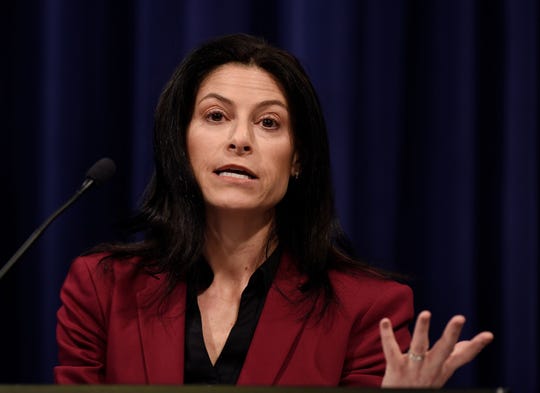
"If they cannot come to an agreement that allows for a quick process of the decommissioning of Line 5 then I will act," Attorney General Dana Nessel said in an interview on the sidelines of the Mackinac Policy Conference. "I'm not prepared to wait much longer on that."
Dana Nessel
"One of the reasons we needed urgent relief was because the contract was ending on Monday," said Nick Reaves, a lawyer for the adoption agency. "This ruling basically protects St. Vincent’s and stops the state from taking adverse action, such as not renewing the contract.”

"If they cannot come to an agreement that allows for a quick process of the decommissioning of Line 5 then I will act," Attorney General Dana Nessel said in an interview on the sidelines of the Mackinac Policy Conference. "I'm not prepared to wait much longer on that." (Photo: Clarence Tabb Jr., The Detroit News)

In his opinion, Jonker said Nessel "is at the very heart of the case" in part because of comments she made on the campaign trail in which she described supporters of the state’s prior policy as “hate mongers” and said she “could not justify using the state’s money” to defend “a law whose only purpose is discriminatory animus.”

Shortly after taking office, Nessel agreed to change state policy so contracts with agencies that refused to work with gay couples would be terminated.

"All of this supports a strong inference that St. Vincent was targeted based on its religious belief, and that it was defendant Nessel who targeted it," wrote Jonker, an appointee of Republican President George W. Bush.

“Under the attorney general’s current interpretation of Michigan law and the parties’ contracts, St. Vincent must choose between its traditional religious belief, and the privilege of continuing to place children with foster and adoptive parents of all types," Jonker wrote.


Nessel tweeted late Thursday in response to the development: "Now and forever I will fight to support the constitutional precepts of separation of church and state and equal protection under the law for all Michigan residents and all Americans."

The lawsuit filed on behalf of St. Vincent, an adoptive mother and a former foster child revolves around a March settlement between Nessel and the American Civil Liberties Union of Michigan regarding two gay couples who had sued the state when they were rejected by agencies with religious objections to same-sex couples. The agencies were St. Vincent and Bethany Christian Services.

The judge's opinion failed to note that some of those comments were made by Nessel in her capacity as a private citizen and others were taken out of context, said Jay Kaplan, a staff attorney for the ACLU of Michigan.

Jonker's decision to issue a preliminary injunction was disappointing and appeared to ignore counter arguments made by the state and the ACLU in amicus briefings, he said.

Adoption agencies essentially become state actors when they contract with the state and allowing them to invoke religious reasons for failing to serve a group of people is akin to a "violation of church and state," he said. The decision essentially "provides a license for discrimination," Kaplan said.

"The ones who lose as a result of this are the children, the children who need these loving, stable homes," Kaplan said.

A spokeswoman for Nessel's office said the department is reviewing the decision. The Michigan Department of Health and Human Services referred comment to the attorney general's office.

The settlement required the state Department of Health and Human Services to maintain non-discriminatory provisions in foster care and adoption agency contracts by ending state contracts with agencies if they discriminate against same-sex couples.

In its April filing, St. Vincent argued the new policy violated the group’s First Amendment rights to free exercise of religion and free speech, the group's 14th Amendment rights to equal protection and those rights guaranteed under the Religious Freedom Restoration Act.

The agency is represented by a religious liberty group, Becket Law.

The judge's ruling Thursday shows "discriminatory actions taken by the state in this case really have no role in the foster care and adoption context," Reaves said. "And when the state takes these actions, it actually makes it harder to find a home for kids in need.”

The case revolves not around whether same-sex couples can be great parents, Jonker wrote, but around “whether St. Vincent may continue to do this work and still profess and promote the traditional Catholic belief that marriage as ordained by God is for one man and one woman.”

Without state contacts, St. Vincent would be forced to close its doors, the agency argued. Further, other adoption agencies are available to gay couples seeking a child.

As of mid-February, St. Vincent and Bethany were responsible for nearly 10% of the more than 13,000 children under state supervision.

Agencies already can refer couples to different adoption agencies for various reasons, including geography, waitlists or a family's search for a specific type of child. But under the new policy, "the only justification for a referral that is now impermissible is a religious objection to same-sex marriage," the lawsuit said.

In the past, St. Vincent had referred gay couples to other adoption agencies because it believes an evaluation recommending the couples for state licensure “would conflict with (its) religious beliefs.”

The state has investigated St. Vincent for compliance with the new policy but "were waiting for the lawsuit to play out before they take the next step," Reaves said. The rulingfurther prevents the state from acting on the new policy during the duration of the case, he said.

The Legislature in 2015 passed a law that protected faith-based agencies that declined to provide services based on religion. Nessel’s office argued the law applied only to “private action” and not to “state-contracted services.”

Republican former Attorney General Bill Schuette had defended the state against the ACLU lawsuit when it was filed in 2017, but Nessel’s office sought a settlement instead.

The Michigan Catholic Conference, a lead advocate for the 2015 law, praised the judge's Thursday decision, saying: "it's encouraging to see that Dana Nessel's animosity toward Catholics has now been recognized in federal court."

Voting is beautiful, be beautiful ~ vote.©

Sunday, September 6, 2009

Kiddy Kickbacks

Before diving into the world of what I call "kiddy kickbacks", let's begin by understanding the term,Kickback.

A kickback, under the theories of fraud, is generally when when a person provides false information to benefit from federal funds.

Recently, the U.S. DHHS OIG and U.S. DOJ AG partnership to end health care fraud, Detroit H.E.A.T. identified another multi-million dollar Medicare Fraud scheme. This is an excellent example to apply to Medicaid Fraud profit-maximizing schemes in child welfare.

In this particular setup, the clinic routinely billed the Medicare program for services that were medically unnecessary or were never provided. Patients were prescribed medications at the clinic based not on medical need, but on what medications were likely to generate Medicare reimbursements. Falsified medical files were maintained by the clinic to make the treatments purportedly being given there appear legitimate, when in fact they were not.

Medicare beneficiaries were not referred to the clinic by their primary care physicians, or for any other legitimate medical purpose, but rather were recruited to come to the clinic through the payment of kickbacks. In exchange for those kickbacks, the Medicare beneficiaries would visit the clinic and sign documents indicating that they had received the services billed to Medicare. Kickbacks came in the form of cash and prescriptions for narcotic drugs.

Now, here is how it works in child welfare:

Targeted Case Management is a Medicaid funding source in foster care and adoption. Child Placing Agencies (CPA) routinely bill the Medicaid program for services that were unnecessary or were never provided. These services could range from individual therapy for the child to MRIs. Children referred to mental health clinics by a CPA are prescribed medications at the clinics, not based on medical need, but on what medications were likely to generate Medicaid reimbursements. Falsified medical files are maintained by the clinic, the CPA and the courts to make the treatments purportedly being given there appear legitimate, when in fact they were not. The higher the dosage of medication, the higher level of payment. This scheme was explained in the court transcripts of the adoptive father of Ricky Holland that was murdered in Michigan.

The next question on everyone's mind is, "Why haven't I heard about this before?"

The answer is quite simple: Freedom of Information Act (FOIA).

Quite simply, under FOIA, anything dealing with a child, especially a child under the auspices of the state in foster care are protected from review and disclosure. The best part is when a child in foster care is adopted out, those records are not just sequestered from public scrutiny, they are shredded forever. There is no possible way for a federal audit to detect the blatant false claims and fraud...until now.

Kiddy Kickbacks go deeper than the FBI Medicare investigation I presented. In foster care, the entire system operates on kiddy kickbacks. It is relatively easy to find the connections, just look at the board of directors.

Let's start with the Archdiocese of Detroit.

For example, Robert Asmussen, is Vice President of Strategic Planning at St. John Health and is the Chairman, Board of Directors, St. Vincent and Sarah Fisher Center, a residential institution for foster care youth, I shut down. (I dare anyone to challenge me on that one.) Children who were physically harmed while at St. Vincent and Sarah Fisher Center were taken to Providence, a health care facility of St. John Health. As mandatory reporters, the doctors would never, ever, ever file incident reports to the state of children who were harmed.

St. John would shoot the kids back to St. Vincent Sarah Fisher Center to be diagnosed by Psychiatrist Howard Weiner, M.D., to be in need of higher dosages of medication, generating more reason for the children to remain in care and opening the door to increases in funding for higher levels of special needs.

Services were never provided to the children in St. Vincent Sarah Fisher Center but they were documented, signed by Dr. Weiner and submitted into court.

It gets better.

Patricia M. Moylan, Ph.D. would conduct physicals for the children at St. Vincent Sarah Fisher and submit for billing. Dr. Moylan was signing physicals for children she had never seen because on one document, she conducted a physical for a 12 year old girl, who was a boy. (Yes, I have the documents stored in various locations.)

But wait, there is more.

Judge Michael J. Talbot sits on the Michigan Judicial Tenure Commission. This is the place where one would file a complaint against a Referee or Judge challenge conduct and procedure in a child protection case. Needless to say, the Commission has never found any fraud, wrong doing, or any transgressions by the those presiding over cases. The reason why is most judges sit on the boards of these CPAs.

Just look at Michigan Supreme Court Justice Maura Corrigan. She is a Director of Vista Maria, a Commissioner of the Pew Commission on Children in Foster Care, and participates in various child welfare task forces. In fact, she focuses on funding, or rather the construction of federal funding-maximizing schemes for foster care, because we all know, the Chief Justice of the Supreme Court is the overseer of the State Court Administration Office, which is in charge of child welfare funding. Justice Corrigan is the former Chief Justice who ran her campaign telling the public to thank her for everything she has done for foster care and adoption in Michigan.

Then there is Nancy J. Diehl who has worked as a prosecutor for over 24 years and currently heads the Felony Trial Division in the Wayne County Prosecutor's Office overseeing the Child and Family Abuse Bureau. She lectures extensively throughout the state and nationally on domestic violence and child abuse investigation, prosecution and related issues. Diehl is the coauthor of four booklets pertaining to children and the legal system.

Not one CPA has ever been prosecuted in Wayne County. Even more interesting, it is the Attorney General who prosecutes abuse and neglect in Wayne County and not the county prosecutor.

In the end, Kiddy Kickbacks are a great way of keeping a system functioning at peak performance, never giving any cause for alarm of fraud. CPAs refer children to contracted psychological service providers. In turn, the service providers known as therapists and psychologists, generate court reports that will have the child medicated for higher levels of billing and longer stays in the system. As the end goal is termination of parental rights, the service providers guarantee court reports that will support the CPA activities. The more the service providers support the CPA activities, the more clients are referred to them. And that is what is called a Kiddy Kickback.

Wednesday, April 19, 2017

Michigan Judicial Tenure Commission Sucks

The Michigan Judicial Tenure Commission sucks and this is why:

To begin, in Michigan, Supreme Court Judicial Candidates are exempted from disclosing campaign contributions.

SCOTUS handed down a wishy-washy ruling on judicial candidates soliciting campaign contributions.

Judicial lobbying is something that goes on everyday, meaning that a judge can sit on the board of a child welfare organization while presiding over a case where the chid welfare organization is in front of the court.

The Madame Maura Corrigan used to do it all the time.

But then, there is this particular situation.

I have not checked lately but, back in the dark ages of Michigan Child Welfare, members of the Judicial Tenure Commission used to sit on the boards of child welfare organizations, like St. Vincent Sarah Fisher Residential Center, where, if one was to file a grievance against a presiding judge in a child welfare case like St. Vincent Sarah Fisher Residential Center, the chances were 100% that the grievance would be dismissed.

Dude would not even give the chance to recuse himself when a case was brought to his court, where the defendant was St. Vincent Sarah Fisher Residential Center.

He refused to "entertain" the filing.

Before anyone decides to dismiss this blatant conflict of interest, let me tell you a little story about the Michigan Court of Appeals.

See, back in the 1980s, Michigan came up with this brilliant plan to stop the bottle necking of cases going to appeal.

Instead of providing due process for all citizens, the Michigan COA decided to filter cases it deemed worthy upon the reading of "a clerk", not a judge.

These judges were well aware of the questionable operations in the lower courts so the COA restructured to only take cases that would benefit their own personal interests/investments.

So, what had happened was...

The moment I realized
Judge Michael Kelly was mad at me
According to the Michigan court rules, it says that you can file in the COA anything against a public official.

So, I did, but I did it my way.

I filed an ex-parte writ of Mandamus.  

See, this means that I am asking the court to make a decision on whether a public official has to follow a specific statute, and if they do, the court has to make the decision whether to make the public official do it, or make them show up in court and give a good reason why they are not upholding the
law.

So, the clerk actually calls me to tell me that I had to serve the public official.

I told him I did not, pursuant to Federal Rules of Civil Procedure and Michigan Court Rules because it was an extraordinary writ.

Needless to say, I made him and Michael Kelly mad because no one had ever identified this error in the restructuring of the COA.


Of course, I did not bother filing a Michigan Judicial Tenure Grievance because he would have denied that one, too, just like he did all the others.


JUDGE MICHAEL J. KELLYCOURT OF APPEALS

Of Bloomfield Hills, born 1929 in Cleveland, OH, admitted to bar 1956; trial practice tri-county area; founding partner Kelly, Oster, Brennan, Tatham & Solner; attended John Carroll University, Kent State University and the University of Detroit undergraduate schools (no undergraduate degree); JD University of Detroit 1956; LL.M. University of Virginia (Master of Laws in the Judicial Process) 1982; Korean War Veteran, Eighth Army, Seoul, Korea, 1953-1954; married 1957, four children, Michael, Timothy, John and Kathleen; remarried 1988 to Marilyn E. (Ramirez) who is a practicing R.N., Waterford, Michigan, three stepchildren; former member American Legion, VFW, Knights of Columbus, Board of Advisors of the Saint Vincent and Sarah Fisher Center, Board of Directors of Boysville of Michigan; present member of Detroit Athletic Club, Michigan Handball Association, Trout Creek Condominium Association, Harbor Springs; Director of Incorporated Society of Irish/American Lawyers; professional affiliations include ABA, IJA, AJS, Fellow of the Michigan State Bar Foundation and member of the Michigan Supreme Court Historical Society, Inc.; elected member of Judicial Tenure Commission June 13, 1977 through December 31, 1985, past Chairman 1981-1982.

So, if you have a case, or know of a case, where you find out a judge did something jacked up like sit on a board or have financial interests with a party of a case, where that particular party committed fraud upon the court, and continues to rule in their favor, you, and the public, are just out of luck.

The Michigan Judicial Tenure Commission just sucks.

And so does Kelly Ramsey.

State Supreme Court considers limits on judicial misconduct probes


LANSING, Mich. (WXYZ) - A new rule being considered by the state's highest court could limit complaints of misconduct against judges. Michigan's Supreme Court justices are considering adding a three-year statute of limitations to complaints filed against judges with the Judicial Tenure Commission.

According to the proposed rule, “any complaint filed more than three years after the grievant knew…or should have known...shall be dismissed.” Since 2014, 34 judges across the state have faced some sort of action that began at the Judicial Tenure Commission, which can range from a letter of caution to being removed from the bench entirely.

 "There’s just all kind of reasons why trying to defend something three years after the fact is difficult," said Brian Einhorn, an attorney in support of the rule change.

Einhorn has represented dozens of judges accused of misconduct, from former Judge Wade McCree—who carried on an affair with a litigant—to ex-Justice Diane Hathaway, who was sent to prison for bank fraud.

"If a person knows that a judge did something three and a half or four years ago, I don’t think it’s fair to the judge to have to defend himself," Einhorn said.

But not all attorneys agree. Peter Henning is a former federal prosecutor and today is a law professor at Wayne State University.

 "You’re talking about an individual who has immense power and can be quite intimidating," Henning said.

"If you have certain types of cases, say for example a sexual harassment case, that may take years to surface because the individual who was harassed is going to be intimidated and might not have the strength to come forward for four or five years."

 The proposed rule allows for claims outside of the three-year statute of limitations to be considered for "good cause," but critics fear the term is vague and could lead to prolonged legal battles.

 "Should the judge be able to get off simply because (misconduct) happened more than three years ago?" asked Chanel 7's Ross Jones.

 "But we’re dealing with something that’s probably not going to happen very often,"  Einhorn responded.

 But there have been past examples of misconduct that could have been thrown out with a statute of limitations.

 In Wayne County, Judge Bruce Morrow was disciplined for misconduct that happened years before a formal complaint was filed, including giving bond to a man after he was convicted of rape, even though state law didn’t allow it. Morrow was suspended for two months.

 Today in Livingston County, Judge Teresa Brennan is under fire for her affair with a state police officer that testified in a murder trial in her courtroom.

His testimony helped to send a man to prison.

Their affair happened more than three years before it was finally discovered.

It’s unclear if the JTC is investigating Brennan.

 Still, attorney Brian Einhorn says judges shouldn’t have to defend themselves from years-old allegations, after memories fade and evidence becomes stale.

 "There’s timing for doing everything," Einhorn said.

"And there’s nothing different about a judge being accused of misconduct to a lawyer being accused of malpractice to a doctor being accused of malpractice."

 Except in Michigan, there is no statute of limitations for complaints against lawyers or doctors, either.

Giving judges special protection would be unique and improper, argues Carl Marlinga, who is a judge himself.

 "The unintended effect, certainly, is to offer a level of protection for bad judges," Marlinga said. "With the judiciary, maximum integrity is the minimum qualification.

Anything that would protect or shield a judge from scrutiny I just think is wrong."

 A decision on the proposed statute of limitations and scores of other rules currently being considered by the Michigan Supreme Court could come any day.

 "What is the benefit?" asks Wayne State's Peter Henning.

"What is the upside, other than what appears to be giving judges added protections?"

Voting is beautiful, be beautiful ~ vote.©

Thursday, August 26, 2010

Judge dismisses Huron Consulting whistleblower case

Something is terribly wrong in New York. This is the third fraud case today that has been dismissed.

Judge dismisses Huron Consulting whistleblower case

Aug 26 (Reuters) - A federal judge on Wednesday dismissed a whistleblower lawsuit filed against Huron Consulting Group Inc (HURN.O) by a former accountant, who accused the management consultancy firm of involvement in false medical claims and reimbursements.
The plaintiff, Associates Against Outlier Fraud, an entity solely owned by Steven Landgraber, brought in a number of fraud claims under federal and state laws against Empire Heathchoice Assurance, a unit of Huron Consulting.
Empire is an intermediary under contract with the Centers for Medicare and Medicaid Services, the federal agency that manages Medicare and Medicaid, to administer the Medicare program, including auditing of annual reports.
Defendant Huron was hired to provide consulting services to St. Vincent Catholic Medical Center, a network of five hospitals, prior to and during the bankruptcy restructuring of the hospital network.
Landgraber worked as an accountant consultant for St. Vincent in 2005 and 2006.
In his complaint, Landgraber said Huron, together with the consulting firm Speltz and Weis, "ran -- really controlled the (St. Vincent) Hospitals, including the hospital's reimbursement submissions and activities."
U.S. District Judge Jed Rakoff dismissed the lawsuit and said in his ruling that neither the fraud claims nor the conspiracy charge against Huron could be sufficiently proved by the plaintiff Landgraber.
"The amended complaint does not sufficiently plead the false claims that were allegedly presented for payment, nor that defendants caused them to be presented," Rakoff said in a ruling.
Whistleblower cases, sometimes known as qui tam cases, are a means for people who believe companies have defrauded the government to file suit. These people can share in settlement or other payments that companies may make.
Judge Rakoff said the parties would have to set a schedule for the filing of a second amended complaint before Aug 31.
The case is IN re: Associates Against Outlier Fraud vs Huron Consulting Group Inc et al, Case No. 1:09-cv-01800, U.S. District Court, Southern District of New York. (Reporting by Sakthi Prasad in Bangalore; Editing by Muralikumar Anantharaman)

Wednesday, September 15, 2010

Marketing God and Kids For Fraud

Brownie troop collects items to comfort kids in group homes

Here I present to all of my beloved readers an article which on the surface appears to be a good thing. A wonderful group of little girls who want to help children in need.

I must weigh in and make one correction to Legally Kidnapped's post: using children to promote child protection is not a tactic, it is marketing strategy

In child welfare, there are federal dollars for each specific need of a child, including marketing. Federally funded marketing is more readily known as public relation campaigns, which I have renamed as child abuse propaganda.

Here, with the federally funded campaign recruitment of youth groups, you have a successful marketing strategy; they work for free.

In this case, the Brownies have maximized federal dollars as they now solicit from the community donations.

In this case, the Brownies have maximized federal dollars as they now solicit from the community donations for foster children that has already been appropriated through a series of federal and state grants; In turn, the group home agency owner can benefit from the savings by going shopping or getting her hair did.

I am quite sure there are many who will are ready to call me out of my name, which I encourage using the descriptives only with my name in a sentence, so allow me to tell a story about this marketing strategy.

Once upon a time there was a place for foster children that has already been appropriated through a series of federal and state grants.  In turn, the group home agency owner can benefit from the savings by going shopping or getting her hair did.

I am quite sure there are many who will are ready to call me out of my name, which I encourage using the descriptives only with my name in a sentence, so allow me to tell a story about this marketing strategy.

Once upon a time there was a place that shall remain unnamed, St. Vincent Sara Fisher Center, who is the master of this marketing strategy, until this day.,

Before they were shut down by the state and started up in a different city, the administrators would literally make your skin crawl standing in their presence.  They would have a religious group Daughters of Charity who are no longer associated with St., Vincent Sarah Fisher, rally the community to donate for the children warehoused in its suburban house of horrors.  The donations would come in the front door and be placed in the reception office.  From there, the toys and stuffed animals were separated from the gift cards and the clothes with tags.  Someone, Nancy Swaine would cash in the gift cards and take the cash to pay for things such as toilet paper, gas, cleaning supplies, etc., which were all ready billed, at maximum levels, under Title IV-E and Medicaid.  The toys were taken back to the stores, sold off, or warehoused in the upstairs storage of the building.  The kids got little to nothing.

Charity donations are pure personal profit of the most successful marketing strategy for the industry of , effectively carried out by children.

Monitoring and regulating charities are traditionally duties of the Attorney General, unless it deals with children and God, the sweet marketing mixture of deception and racketeering of Medicaid fraud.

Thursday, September 11, 2014

U.S. Senate Gets A First Look How Child Welfare Treats Children

Images of Detained Children Haunt U.S. Senate Rotunda

The picture below should haunt every human who claims to care about the well- being of children,

This is the same detention room (except without benches) that was in the Michigan residential facility St. Vincent Sarah Fisher, that I shut down with the help of the Michigan Bureau of Child and Adult Licensing.

In this room, typically 3 by 5 feet, with a drain, or if the kid was semi nice, a bucket, a youth would be locked down for anywhere between a few hours to a few days.  The latter was the norm.  

The room reeked of urine and feces.  The lights were constantly on.  The loudspeaker was used to pipe in taunts staff to ridicule the youth.

Sometimes there were gray bologna sandwiches on stale, or moldy bread thrown in once a day.

This is the place where, once the child calmed down, normal time was at least 2 days, the child would be set free to be placed on a cocktail of psychotropic medication to cause them to show signs of tardive dyskinesia allowing the facility to bill at a higher rate of care.

Majority of the time a child was placed the cell because they complained too much of being raped, beaten, drugged, starved, stabbed, tortured and just wanted to go home.  

The courts function off the fraudulently generated recommendations of the facility and never recommends release.

Rates of billing ranged from approximately $300 to $1,000 a day.  Children were kept in the system for years.  You do the math.

St. Vincent Sarah Fisher Residential Institution made so much money they bought the surrounding land for high end residential development.

As a disclaimer, I will come out to say the Daughters of Charity knew nothing about this.  They had privatized care with some of the most nefariously vile creatures who called themselves "christian".

Always remember...You cannot audit God.

The facility was shut down.  Land sold.  The scum regrouped, changed its name, a bit, and was never prosecuted.. Department of Justice get off its arse and give these children justice. 

#EricHolder #DOJ #Michigan #DanielLevinson 
Detained youth
Richard Ross
“I’m waiting for my mom to come get me. Is she in there? She’s at work today. I want to go home. I got in trouble at school today.” R.T., age 10.

More than half of all states continue to incarcerate children for status offenses through the Juvenile Justice and Delinquency Prevention Act’s (JJDPA) valid court order exception. As a result, in 2011 alone, more than 2,000 children were estimated to be incarcerated each day for behaviors such as running away from home, skipping school or coming home after curfew.

The 10-year-old boy stands with his back to the camera and his hands in his pockets in a bare white cinderblock cell in the juvenile detention center.
In text beneath the haunting image, the boy explains: “I’m waiting for my mom to come get me. … She’s at work today. I want to go home. I got in trouble at school today.”
Another image shows a full-length silhouette of a pregnant 16-year-old girl in a cell who says her only crime was running away from home.
They’re among the 15 images by photographer Richard Ross being showcased this week in an exhibit on juvenile detention in the Senate Rotunda of the Russell Senate Office Building in Washington.
The Act4 Juvenile Justice advocacy group, with the help of Sen. Bob Casey, D-Pa, is hosting the exhibit, “Juvenile In Justice,” on display through Friday.
The event marks the 40th anniversary this week of the landmark 1974 Juvenile Justice and Delinquency Prevention Act (JJDPA).
Ross, a 67-year-old distinguished professor of art at the University of California, Santa Barbara, traveled to more than 30 states and visited 300 juvenile detention centers, where he photographed more than 1,000 children over nearly five years.
The photos on exhibit this week appeared in Ross’ acclaimed 2012 book, “Juvenile In Justice.”

Detained youth
Richard Ross
“I got kicked out of school for partying and truancy. I use meth. They have had me here for two weeks. I think they keep me here because they think I am a risk of hurting myself. When they want to come in, they come in, they don’t knock or anything — this is the observation room …” C.T., age 15.
The Office of Juvenile Justice and Delinquency Prevention reports that 20 percent of children who are detained for status offenses — such as skipping school and other nondelinquent behaviors — are placed in living units with a young person who has committed murder or manslaughter. Research has shown that suicide rates among incarcerated youth are more than four times higher than they are among youth who are not incarcerated.

Juvenile justice advocates hope the exhibit brings attention to efforts to persuade congressional lawmakers to reauthorize the JJDPA.
Speaking of senators and others who see his exhibit, Ross said: “I hope that they realize that lives are at stake and that there’s nothing abstract about this, and the places that they hold these kids are inappropriate and they have it within their power to alter that fact.
“Often, you get these works displayed in places that will say, ‘Oh, this is such a shame but [people] are impotent to actually do anything. Well, in this environment, the audience is not impotent. They’re the policymakers.”
Juvenile justice advocates are pressing for a ban on court exceptions to a JJDPA “core protection” calling for deinstitutionalization of “status offenders” — or those who commit offenses that wouldn’t be crimes for adults (like truancy, running away from home or alcohol possession).
The number of status offenders detained had dropped markedly after the JJDPA linked the core requirement to federal funding. But in 1980, the act was amended to include an exception allowing judges to confine a youth for a status offense if the youth had violated a valid court order not to repeat the offense.
Today, more than half of U.S. states continue to allow use of the valid court order exception to detain youths charged with status offenses. The Office of Juvenile Justice and Delinquency Prevention has reported about 12,000 annual uses of the exception nationwide.
.
In 2011-12, U.S. schools referred 260,000 of their students to law enforcement; 92,000 students were arrested for school-related issues, according to the U.S. Department of Education Office for Civil Rights. These young people were disproportionately black students and students with disabilities. They are part of what’s known as the “school-to-prison pipeline,” and include children who, for example, are chronically truant due to bullying at school or get into fights at school as a result of unmet mental health needs.
Voting is beautiful, be beautiful ~ vote.©

Wednesday, November 21, 2018

Mississippi Catholic Churches Next Up In Trafficking Tiny Humans - DHS Raid Diocese Of Jackson

This sounds like one of those Catholics In Action (CIA) operatives.

Why did Homeland Security raid Catholic Diocese of Jackson? It starts with a priest.

The Office of Homeland Security raided the Catholic Diocese of Jackson office investigating accusations a Starkville priest obtained money by lying about having cancer when in fact he was HIV positive and was sent to a Canadian sexual addiction facility for priests.

An affidavit by Homeland Security Special Agent William Childers was filed Friday in U.S. District Court in Jackson. The search of the Jackson Diocese apparently took place Nov. 7.

The affidavit says Homeland Security Investigations have developed probable cause to believe the Rev. Lenin Vargas-Gutierrez, pastor of St. Joseph Parish in Starkville, knowingly devised schemes of obtaining money by means of false and fraudulent pretense, through the use of wire communications.
The affidavit refers to Lenin Vargas-Gutierrez as Father Vargas after the initial introduction. A native of Mexico, he was ordained a priest in the Jackson diocese in 2006.

Childers' affidavit said the diocese had knowledge of Vargas' felony and concealed it by not making it immediately known.

The Diocese of Jackson issued the following statement Monday:

"Earlier this week the government began an investigation of the financial administration of St. Joseph in Starkville. St. Joseph Parish and the Diocese of Jackson are cooperating with the investigation. Pending the resolution of the investigation, Father Lenin Vargas will not engage in any public ministry and has been removed from all pastoral and financial administration.

"After receiving complaints, Bishop Joseph Kopacz ordered an internal accounting audit of the Starkville Parish’s finances.  After Bishop Kopacz’ staff conducted the audit, the Diocese placed fiscal constraints on Father Vargas’ spending and found that he was violating diocesan policy concerning soliciting charitable donations and demanded that he stop these activities and conduct no further charitable fundraising without first informing the diocese of these planned activities. Federal law, the Health Insurance Portability and Accountability Act, better known as HIPPA, prohibits our discussion of Father Vargas’ medical condition — not only when we first learned of it, but also throughout the time period mentioned in the affidavit. In fact, HIPPA law continues to bind us today in that we can neither admit nor deny anything related to Rev. Vargas’ medical condition."

In Vargas' absence, the diocese saidthe Rev. Jeffrey Waldrep, pastor of Annunciation in Columbus, will serve as administrator, and the Rev. Rusty Vincent will be responsible for all pastoral ministry at St. Joseph and at Corpus Christi in Macon.

"The continued spiritual and financial well being of St. Joseph Parish and Corpus Christi is of the utmost importance, and we will continue to aid you both in sound fiscal management of all of your resources. Let us pray with trust that the Lord Jesus will shepherd us through this difficult time of upheaval and uncertainty," the diocese said.

The affidavit said agents met with five confidential informants with years of experience with the diocese in August or September.

Affidavit highlights of confidential informants' statements

  • Confidential informant No. 1 reported that in late 2014 Vargas went to the Oktibbeha County Hospital Regional Medical Center for breathing trouble. Vargas stayed in the hospital for several days.
After Vargas was discharged, he invited the confidential informant to dinner and told him he was diagnosed with a rare form of cancer — Walden Storm's macroglobulinemia lymphoma.
Vargas told the informant that the Diocese of Jackson was sending him to Canada for treatment because the Canadian hospital was one of the few hospitals that dealt with the type of rare cancer.
The informants said Vargas announced from the pulpit numerous times to St. Joe parishioners that he had cancer.

In April and May of 2015, an announcement appeared in the church bulletin, providing an address of Vargas for those parishioners who wished to send him mail. The address listed was the address of Southdawn Institute, "founded to address the need of religious and clergy around addictions and mental health issues."

A GoFundMe account was established for Vargas' benefit to cover medical expenses. Also, an informant said Vargas raised money for his alleged cancer from private donations as well.

Agents confirmed the GoFundMe account and that 57 people donated $9,210.

The GoFundMe narrative said that while Vargas has medical insurance, the costs associated with his cancer were high and that bills continued to be significant, and that donated funds would be deposited into the account. Three confidential informants told Homeland Security agents that the Diocese of Jackson's medical coverage for priests is very good and effectively covers everything, and that Vargas' medical expenses were covered.

The narrative contained a disclaimer that the Diocese of Jackson wasn't responsible for this campaign.
  • Confidential informant No. 2 told agents he learned from a reliable source that Vargas didn't have cancer and was in fact diagnosed with HIV in 2014. The informant said the information was forwarded to Bishop Joseph Kopacz of the Diocese of Jackson in 2015.
Information provided by the informant was corroborated by agents who subpoenaed Vargas' medical records from Oktibbeha County Hospital Regional Medical Center. The doctor ordered a HIV test. On Sept. 28, 2014, Vargas checked out of the hospital without seeing his doctor.

On July 16, 2016, Vargas went to Oktibbeha County Hospital Medical Associates for right knee pain and reported he had HIV. He reported on two other occasions that he was HIV positive, according to the court affidavit.

The cover-up allegation

In April 2015, Vargas left St. Joseph and went to Canada for treatment, informing parishioners during Mass that he was going for cancer treatment.

One of the informants said Vargas actually went to Southdown Institute of Toronto, Canada, which among other things, is a sexual addiction facility for priests.

In March 2015, the Diocese of Jackson furthered Vargas' cancer story by sending out email to priests in the diocese. Two informants said they believe the diocese was aware of Vargas' diagnosis when he was sent to Canada.

"The Diocesan email stated that Vargas would be leaving for extensive treatment in the near future, and that he would be gone for a few months. What the email failed to state was that Vargas was not going away for cancer treatment. As a result, Vargas continued to raise money for his supposed cancer treatment. Your affiant (Agent Childers) believes the email was sent in order to perpetuate the cancer story, to hide Vargas' HIV condition and protect the Diocese of Jackson  from negative publicity," the affidavit said.

In addition to the GoFundMe account money, St. Joseph parishioners and others donated more than $33,000 to Vargas and most of the money was spent on personal expenses. Two informants said that as of this year, Vargas was still claiming he had cancer.

Additionally, Vargas was raising money for an orphanage in Mexico, but authorities said he never provided any letter or correspondence from a Mexican orphanage and never provided receipts. 
Vargas is also alleged to have solicited money for a chapel in Mexico.

Informants said Vargas spent excessively, especially by standards for priests.

According to the affidavit, in October 2017, Bishop Kopacz and Vicar General Kevin Slattery were informed by concerned clergy that Vargas was raising significant amounts of money from parishioners for cancer treatment and unverified charitable causes. The bishop and Slattery were told that Vargas was making numerous trips to Mexico and that money was missing from the parish coffers.


Voting is beautiful, be beautiful ~ vote.©

Thursday, October 22, 2020

Of Parental Rights: Michigan Attorney General Dana Nessel Releases 2 Year Report On U.S. Conference Of Catholic Bishops Trafficking Tiny Humans

The Celestial Goddess of the Woodshed honors the standing armies of the Generals Attorney and Inspector of Michigan, and those who have yet to be unmasked.
  • Christopher Allen – Office of the Solicitor General 
  • Danielle Bennetts – Sexual Assault Team, Assistant Attorney General
  • Josh Booth – Ethics Officer, Chief Legal Opinions 
  • Michelle Brya - Division Chief, Licensing and Regulation Division 
  • Paul Carbini – Victim Advocate 
  • Tom Fabus – Chief of Investigations (AG) 
  • Christina Grossi – Deputy Attorney General 
  • Danielle Hagaman-Clark – Acting Division Chief Criminal Trial Appellate Division 
  • Robyn Liddell – Acting First Assistant Criminal Trial Appellate Division 
  • Sgt. William Luebs – Dt/Sgt. Michigan State Police 
  • Eric Restuccia – Office of the Solicitor General 
  • Ann Sherman – Office of the Solicitor General 
  • Rebekah Snyder – Victim Advocate 
  • Scott Shea – Special Agent (AG)
This is only the first layer, parsimoniously slivered, as a sample specimen, of what goes on in the residuals of the peculiar institution.

I wonder how the U.S. Conference of Catholic Bishops is doing, or rather, how the appointment of our latest Supreme Court Justice is going, considering the fact that there is a case to shutter in Pennsylvania the day after the election.

This is about Parental Rights.

#maytheheavensfall

#sealsmatter

11 Men See Charges as AG's Clergy Abuse Investigation Hits 2-year Mark

LANSING – Millions of documents have been reviewed and 11 men have been or are being prosecuted by Attorney General Dana Nessel’s office since authorities executed search warrants two years ago on all seven of Michigan’s Catholic dioceses as part of the state's investigation into clergy abuse. 

Forty-two Michigan State Police troopers, five officers from different law enforcement agencies and 15 special agents from the Attorney General’s office executed search warrants on Oct. 3, 2018, at Michigan’s seven dioceses. In that effort, they seized 220 boxes of paper documents and more than 3.5 million digital documents. 

Due to a slowdown in court operations as a result of COVID-19, no charged cases have been resolved through plea deals or trial since late 2019. However, the review of documents has continued along with other steps to further the investigation. To date, the department has: 

  • Completed the paper document review of the Gaylord, Grand Rapids, Kalamazoo, Lansing and Marquette dioceses. Of the 220 boxes of paper documents seized, about 78 boxes remain;
  • Completed the electronic document review of the Gaylord, Grand Rapids, Kalamazoo and Marquette dioceses;
  • Hired and trained a full-time victim advocate to support the hundreds of victims identified in the course of the investigation;
  • Continued to refer the completed criminal investigations back to the respective dioceses; and
  • Followed up with victims who have not been interviewed with a trauma-informed interviewer – including those whose cases are barred by the Statute of Limitations, where the accused priest has died or any other reason that makes criminal prosecution impossible. 
Through the department’s review of paper documents alone, 454 accused priests and 811 reported victims have been identified. That number may change as investigatory efforts continue. 

As of Sept. 28, the Attorney General’s Clergy Abuse Investigative Team had reviewed more than 2.24 million of the digital documents seized. 

Attorney General Nessel recorded a video message to outline the progress her office has made

“I am deeply proud of the work our Clergy Abuse Investigative Team has done – and we are dedicated to continuing this incredibly important work,” Nessel said. “We are committed to ensuring that every case of sexual abuse and assault is thoroughly reviewed and that whenever we are able to pursue justice for a victim, we do so aggressively and relentlessly. We must all commit to breaking down the walls of silence that so often surround sexual assault and abuse. In the end, we hope this investigation provides a voice to those who have suffered in silence for so long and shines a light on those offenders who have escaped punishment for their crimes by hiding in shadows.” 

In addition to the paper and digital documents seized from the dioceses, information is also received through the Attorney General’s clergy abuse tip line: 1-844-324-3374. That has generated 750 tips related to abuse, leading to 112 police investigations, 180 victim interviews and 285 police reports. 

The Michigan Department of Attorney General’s clergy abuse investigation has resulted in 11 cases being prosecuted so far: 

  • Vincent DeLorenzo, who was a priest at Holy Redeemer Church in Burton, Michigan was arrested in Marion County, Florida in May 2019 and charged with three felony counts of first-degree criminal sexual conduct and three felony counts of second-degree criminal sexual conduct. A pre-trial hearing in Genesee County is scheduled for 9:30 a.m. Nov. 12, 2020. Click here for background
  • Jacob Vellian, a former priest at St. John the Evangelist Parish in Benton Harbor, was charged in May 2019 with two counts of rape. His extradition from India is in progress. Click here for background.  
  • Timothy Crowley, who was a priest at St. Thomas Rectory in Ann Arbor, was charged in May 2019 with four felony counts of first-degree criminal sexual conduct and four felony counts of second-degree criminal sexual conduct. He was arrested in Tempe, Arizona.  Crowley’s case was dismissed after a preliminary examination but the Attorney General’s office filed an appeal in December and it remains pending in Ann Arbor Circuit Court before the Hon. Archie Brown. Click here for background
  • Gary Jacobs, a priest at parishes in Ewen and Iron Mountain in the Upper Peninsula, faces a total of 10 criminal sexual conduct charges in five cases. He was arrested in January in Albuquerque, New Mexico. He has been bound over for trial and a Walker Hearing is scheduled for Nov. 6, 2020. Click here for background.
  • Roy Joseph, a priest in Marquette, was charged in Marquette County with one count of first-degree criminal sexual conduct. His extradition from India is in progress. Click here for background.
  • Neil Kalina, who was a priest at St. Kiernan Catholic Church in Shelby Township, was charged in May 2019 with two felony counts of second-degree criminal sexual conduct and arrested in Littlerock, California. His trial starts Nov. 19, 2020. Click here for background.
  • Joseph “Jack” Baker, a pastor at St. Mary Parish in Wayne and an associate pastor at Sacred Heart in Dearborn and at St. Hugo of the Hills Parish in Bloomfield Hills, was charged with one count of first degree criminal sexual conduct. He awaits a trial date in Wayne County Circuit Court and his next court date is October 19, 2020. Click here for background.
  • Joseph Comperchio, a teacher at St. John Elementary in Jackson County, was charged in September with two counts of first-degree criminal sexual conduct and four counts of second-degree criminal sexual conduct. He waived extradition and was returned to Michigan on Oct. 1, 2020.  His next court date is October 26, 2020. Click here for background.
  • Gary Berthiaume, a former priest at Our Lady of Sorrows in Farmington, was charged with one count of second-degree criminal sexual conduct, a 15-year felony. He was arrested in late September in Illinois, waived extradition and was returned to Michigan on Friday. He was arraigned Monday in Farmington District Court and given a $50,000 cash/surety bond. His next court date is Oct. 28 in the 47th District Court in Farmington.  Click here for background.
  • Patrick Casey, who was a priest at St. Theodore of Canterbury Parish in Westland, was charged with one felony count of third-degree criminal sexual conduct in May 2019.  He pleaded guilty to aggravated assault after a jury trial in Wayne County Circuit Court in October 2019 and served 45 days in the Wayne County Jail.  Click here for background.
  • Brian Stanley, who was a priest at St. Margaret’s Church in Coldwater, was charged with false imprisonment, pleaded guilty on Nov. 20, 2019 and was sentenced to 60 days in jail, probation and sex offender registration. Click here for background.  

For more information on the Attorney General’s clergy abuse investigation or to submit information, visit the department’s website. Information may also be provided by calling the investigation hotline at 844-324-3374 (Monday - Friday, 8 a.m. to 5 p.m.) or send information by email

Michigan Attorney General Clergy Abuse Investigation 705417 7 by Beverly Tran on Scribd


Absolutely gorgeous visual graphics.


Voting is beautiful, be beautiful ~ vote.©