Showing posts sorted by date for query Kiddy Kickbacks. Sort by relevance Show all posts

Friday, March 27, 2020

Macomb County Trafficker Of Tiny Humans Prosecutor Eric Smith, et al, Finally Indicted

What has yet to be unsealed is the trafficking of tiny humans in Michigan.

Yes, Eric Smith, Prosecutor for Macomb County, Michigan runs Termination of Parental Rights cases.

These are cases where his team of tiny human traffickers run some fake ass cases to cover up their activities of Child Protective Services legally kidnapping children of "The Poors" (always said with clinched teeth) in an act of acquisition of goods, for a foreign nation, to process through some fake ass Foster Care billing for services phantom services, kiddy kickbacks, double, and treble billing to Targeted Case Management of Medicaid, to run through some fake ass Child Welfare NGOs, as they use kids as lab rats in some seriously nefarious phamaceutical and epigenetic experiments, just so they can fund their campaigns, to stay in office, to procure more dumb ass, fake family services, so they can go to the strip club to do lines off the ass of a kid who aged out foster care.

Yes, I said that.

I spied with mine eyes, the lies, of what they do to tiny humans.

#maytheheavenfall


Macomb County also has been running Child Support fraud schemes under Title IV-D, putting fathers in jail, solely for the reasons of hailing from the population of "The Poors" (always said with clinched teeth).

Heck, I remember working on the case when Macomb County was running an auto theft ring, driving up with tow trucks, towing SUVs out of hotel parking lots in the middle of the night, selling them in Ohio.

The case is out there, look it up.

I did not get into the money laundering through those god forsaken Foster Care and Adoption dens of atrocious inequities.

I have seen these people double bill in Wayne and Macomb Counties.....because they like to borrow the revenue maximizations fraud schemes.

Praise the lord.

Mirs News (Subscription service. The article should be out later.)

Macomb Prosecutor, 3 Others Charged With Felonies
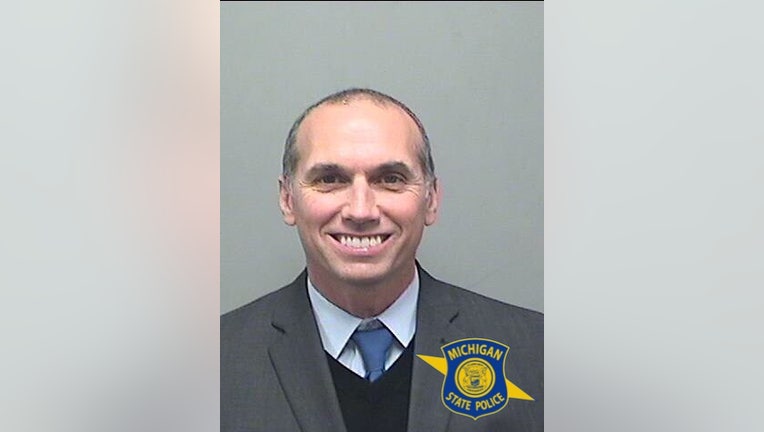
Eric Smith
Macomb County Prosecutor Eric SMITH, assistant prosecutor Derek MILLER and two other individuals have been charged with a litany of felony crimes, including embezzlement, misconduct in office and conducting a criminal enterprise.

Michigan Attorney General Dana NESSEL announced today that Smith faces 10 charges, including official misconduct in office and tampering with evidence in a civil proceeding as well as five counts of embezzlement by a public official. He faces up to 10 years in prison if convicted as charged.

Benjamin LISTON, retired Macomb County assistant prosecutor and former chief of operations, and Miller, a former state representative, each face official misconduct in office charge while Liston also is charged with embezzlement. Liston faces up to 20 years in prison and Miller up to five years if they are convicted as charged.

Business executive William WEBER is charged with forgery, larceny by conversion, aiding and abetting Smith's embezzlement and receiving and concealing stolen property. He faces up to 14 years in prison if convicted as charged.

Nessel’s office today sought arrest warrants for the four men following a year-long public integrity investigation involving the Attorney General's Public Integrity Unit, the Michigan State Police and other agencies.

"It is my conclusion today, that the following individuals not only violated the bare minimum standards of integrity, they corrupted the justice system and trampled upon the public trust while doing so," Nessel said.

Southfield's 46th District Court Judge Cynthia ARYANT was appointed by the State Court Administrator to sign the warrants after Macomb County 41B District Court judges recused themselves.

Due to the public health emergency and the state’s stay-at-home order, Nessel issued a video today discussing the situation.


Listen to Dana present her transposable model in the Termination of the Right to Keep and Bear Arms for breaching oath of office to protect the children's trust, called posterity.

#maytheheavensfall


Macomb County, Michigan Traffickers of Tiny Humans

CHILD ABUSE AND NEGLECT
Child Abuse and Neglect Proceedings - Macomb County Prosecuting Attorney

The Michigan Department of Human Services (formerly the Family Independence Agency) is the agency charged with the responsibility for investigating allegations of child abuse or neglect. The Juvenile Division of the Macomb County Prosecuting Attorney’s Office is the legal consultant to the DHS. This means that an Assistant Prosecuting Attorney will represent the DHS at all stages of a child protective proceeding.

A child abuse/neglect proceeding begins with the filing of a petition with the Circuit Court Family Division in the County where the abused or neglected child “is found”. A petition is a complaint or other written allegation that a parent, guardian, non-parent adult, or legal custodian has harmed or failed to properly care for a child. The purposes of a petition are to frame the issues for the court and to provide notice of the allegations to a respondent (usually a parent). Typically, a DHS Children’s Protective Services worker prepares and files a petition with the court. However, prosecutors, school officials, the Children’s Ombudsman of Michigan, guardians, custodians, and foster parents may file petitions.

If a petition is filed and requests placement of the child outside the parental/custodial home, the court must hold a preliminary hearing to decide whether to authorize the filing of the petition and continue the child’s placement outside of the home. The preliminary hearing must commence no later than 24 hours after the child has been taken into protective custody. In cases in which the child has been severely physically injured or sexually abused, the preliminary hearing must commence no later than 24 hours after the DHS submits a petition.

If the court authorizes the petition at the preliminary hearing, the matter will be scheduled for a pretrial before a judge or referee. At that pretrial the respondent will have the opportunity to admit to the allegations, or a portion of the allegations in the petition, or deny the validity of the allegations contained in the petition. If a respondent admits to the allegations contained in the petition, the child will be made a temporary court ward. If the respondent or respondents deny the allegations contained in the petition the matter will be scheduled for a bench trial before a judge or referee, or a jury trial before a judge.

If a respondent admits to the petition, or if a referee, judge or jury found after trial that the petitioner proved at least one of the allegations by a preponderance of the evidence, the child is made a temporary court ward. The matter must then proceed to an initial dispositional hearing. The purpose of the hearing is to determine what measures the court will take with respect to a child properly within its jurisdiction and, when applicable against any adult. Generally the court orders regarding a plan for reunification is based upon the recommendations of a DHS Foster Care Specialist. Prior to the dispositional hearing the Foster Care Specialist will have met with the respondents, conducted a family history, and drafted a parent agency agreement which lists all the services the DHS believes will assist the family in reunification.

Following the initial disposition the court will schedule periodic dispositional review hearings. The purpose of these review hearings is to monitor a respondent’s progress in complying with and completing the court ordered remedial measures. The respondent, respondent’s attorney, the Foster Care Specialist, an Assistant Prosecuting Attorney, Foster Parents, and any professional involved in the treatment plan may participate in a review hearing. Dispositional review hearings must be conducted every 90 days. The court may order additional reviews sooner than every 90 days if the court deems it necessary.

Permanency planning hearings are conducted to review the progress being made toward returning home a child in foster care, or to show why the child should not be made a permanent court ward. A court must hold a permanency planning hearing no later than one year after an original petition was filed. The permanency planning hearing is conducted in the same manner as the review hearing described above. However, at the conclusion of the permanency planning hearing the court must order the child returned home unless it determines that the return would cause a substantial risk of harm to the life, physical health, or the mental well-being of the child. If returned home, the child may be dismissed as a court ward, or may continue as a court ward to monitor the adjustment to the home environment. If the court determines at a permanency planning hearing that the child should not be returned home, it must order the DHS to initiate proceedings to terminate parental rights.

Upon the filing of a supplemental petition, the court will schedule a termination trial. If the child is already a court ward the respondent has no right to a jury trial. In certain cases of severe physical abuse, or sexual abuse the DHS may request termination of parental rights in an initial petition. Once a court finds by clear and convincing evidence after trial that a legal basis for termination exists, the court must terminate parental rights unless termination is clearly not in the best interest of the child. Parental rights to a child include the rights to custody, control, services, earnings, and inheritance. If all parental rights to a child are terminated, the child will be placed in the permanent custody of the court for purposes of placement and where appropriate, adoption. Termination of parental rights does not extinguish an obligation to pay child support.


Voting is beautiful, be beautiful ~ vote.©

Wednesday, January 23, 2019

Did Michigan Appeals Judge Colleen O'Brien Consent To Dissent An Adoption For MCI Trafficking Tiny Humans Under Foreign Duress?

The following is a unanimous ruling, with dissent if that makes sense, of an aunt trying to adopt her niece, but the Michigan Children's Institute Superintendent said, "NO" because, more than likely, as per the norm, there was fraudulent billing to Medicaid, mixed in with a sprinkle of the child being Legally Kidnapped, on paper, which is why there was a dissent.

Before we get to the dissent of the unanimous ruling (yea...I am still working on this on), you have Michael Kelly, who must have been reading my blog.

Michigan Judicial Tenure Commission Sucks

Image of Colleen O'Brien
Because I would conclude that the trial court misapplied 
MCL 710.45, I would reverse the trial court and reinstate the 
superintendent’s decision to deny petitioner consent to adopt RC.
Colleen O'Brien
I am not familiar with Meter, so I am just going to fast forward to this Colleen O'Brien, who just had to throw in her two cents on the unanimous ruling, with her dissent.

Colleen O'Brien is a judge on the Michigan Second District Court of Appeals. Governor Rick Snyder (R) appointed her on September 29, 2015, to finish the unexpired term of Pat Donofrio, who retired the following day.[1]

Donofrio's retirement came as a surprise.

O'Brien was elected to the seat for a full six-year term in 2016. Her current term expires on January 1, 2023.

I do not have a grasp of her campaign funding yet, but it is quite odd.

She has been granted campaign filing waivers, yet, generated over $500,000 for her campaign.

https://cfrsearch.nictusa.com/documents/379145/details/filing/summary?changes=0

Make sure to check out the broken English
I am not going to harp on this too much for the simple fact that Michigan Campaign Finance Law was set up where you can just ask for a filing waiver if you think you are going to generate and spend less than $1,000, or $5,000 for other campaigns.

That way, a candidate can run whatever money they want through a campaign because no one is going to check the bank accounts.

She is endorsed by:

hand
https://mcrgo.org/
So, in a nutshell, I am trying to find out why this woman would "consent to dissent" by saying, basically, MCI was not whimsically pulling decisions out its arse in denying consent for the aunt to adopt her niece because it was due to a technical error of the lower court not to rule in favor of MCI keeping the kid as a ward of the state, even though the parents voluntarily terminated their parental rights for the aunt to adopt.

What I see is that Colleen O'Brien seems to be one of those "foreign-influenced" individuals who are part of the newest trend to rebrand foster care and adoption, starting in Michigan, of course, by privatizing the courts, starting in child welfare, like they always do.

Tag, Colleen. You are it.
Fostering Futures
http://www.ffkids.org/

It also seems Colleen deferred to Fostering Futures, to support MCI Superintendent denying consent of an aunt to adopt her niece.

So, allow me to tell a little tale of Fostering Futures.

Carmine DeVivo is an individual who needs to be permanently extracted from human existence.

Carmine DeVivo came out of Michigan State University School of Social Work to run one of the first trafficking tiny humans networks out Orchards Children's Services in Michigan.

What he used to do was to run what is called concurrent planning ops that go like this.

The kid is Legally Kidnapped by CPS and placed in the private, state contracted Child Placing Agency for foster care.

While in foster care, Orchards bills Medicaid twice, thrice or even under different names of the kid, in phantom billing, double billing, treble billing, or just made up cases to bill.

Hell, Orchards even ran a juvenile case on a woman who was in her 30s, where they phantom billed, double billed, treble billed, for whatever they came up with.

While all this was going on, Carmine, in his infinite wisdom, would set up concurrent planning, which is a code in Michigan for Medicaid billing for adoption services, while billing for foster care services, at the same time....concurrently....contemporaneously....simultaneously.....fake billing.

Anyway, Carmine would refer his foster care cases to himself for adoption counseling.

Yes, this is how I came up with the term "Kiddy Kickbacks".


Back to Colleen.

She basically deferred to the authority of Fostering Futures, which is run by some chick with the same last name as Carmine, who is probably his adoptive daughter or sister, or something like that, which just so happens to be registered as a Michigan LLC and a domestic non-profit.

But, hey, what do I know?

I know Colleen sucks.
Before: M. J. KELLY, P.J., and METER and O’BRIEN, JJ.  PER CURIAM.  Petitioner, Lucinda Carrier, the paternal aunt of the minor child RC, sought consent to adopt RC after the parental rights of RC’s biological parents were voluntarily released.  The superintendent of the Michigan Children’s Institute (MCI) withheld consent to adopt.1  Carrier challenged the denial of consent to adopt in the circuit court.  After conducting a hearing pursuant to MCL 710.45(2) (Section 45 hearing), the circuit court found that the superintendent’s decision to deny consent was arbitrary and capricious.  The MCI appeals that decision as of right.


Voting is beautiful, be beautiful ~ vote.©

Saturday, April 8, 2017

Whistleblowers Need To Writ Kiddy Kickbacks As False Claims

Whistleblower attorney in the act
of filing a sealed writ of
Medicaid fraud in child welfare
Remember the "Kids for Cash" scandal where the judge was busted getting kiddy kickbacks for sending kids to jail, for no reason?

Well, here is another one.

To be honest, I believe the Judge should dismiss the case, without prejudice, as it was not properly filed.

Why?  Because this should have been filed, under seal, as a False Claims case as it deals with Medicaid funding.

Since we all know the States Attorney General are constrained from going after Medicaid fraud in child welfare, the only other venue to pursue legal recourse would be federal.

To the attorneys on the case, go forth and proceed with the writ!

(My apologies for not pulling the complaint.  I have been a bit busy, lately.)

Judge to decide whether whistleblower suit should be dismissed

A judge in Washington County said he will consider whether the county’s former president judge and two other court officers should face trial in a whistleblower lawsuit brought by a former court employee.

Visiting Senior Judge William Nalitz from Greene County heard arguments Thursday from lawyers representing former Common Pleas Judge Debbie O’Dell Seneca and two other defendants who were sued by former juvenile probation officer David Scrip.

Mr. Scrip, 54, of Carroll, alleges he was unlawfully fired by Judge O’Dell Seneca after reporting a relationship between his former supervisor and a woman who worked as a placement officer for a treatment center for juvenile offenders.

Mr. Scrip claims he and other probation officers were pressured by Daniel Clements, his superior and the former chief probation officer of Washington County, to recommend placement for juveniles at Abraxas Youth and Family Services, where Mr. Clements’ girlfriend worked.

After he reported his concerns, Mr. Scrip said he was retaliated against and eventually fired by Judge O’Dell Seneca and Thomas Jess, the former director of the county’s probation services department.

“He worked in the juvenile probation department for 25 years and was never disciplined until the last 18 months, when he was written up three times then fired,” said Noah Geary, Mr. Scrip’s lawyer.

Along with former Judge O’Dell Seneca, Mr. Scrip sued Mr. Jess and Mr. Clements, neither of whom remain employed by the county. Judge O’Dell Seneca retired in January 2015, shortly after being stripped of her administrative duties when other judges complained to the Administrative Office of Pennsylvania Courts, which oversees the judiciary.

Mr. Scrip initially filed a lawsuit in federal court, but it was dismissed last year, prompting Mr. Geary to seek relief from the state court.

Judge O’Dell Seneca’s lawyer, Caroline Liebenguth and Robert Grimm, the lawyer representing the county, Mr. Jess and Mr. Clements, argued that their clients were immune from lawsuits as members of the state judiciary and under provisions in the state constitution.

“His client has no cause of action,” Mr. Grimm told the court. “The case should be dismissed.”
But Mr. Geary argued the suit shouldn’t be dismissed because the defendants were sued in their private capacity.

He also cited the code of conduct for judicial officers, revamped in 2011 after the “Kids for Cash” scandal in Luzerne County, in which two judges were accused of being paid to send juvenile offenders to certain facilities. According to the new code, court employees have “a duty to report wrongdoing without fear of reprisal,” Mr. Geary said.

Judge Nalitz is expected to rule within a month.

Voting is beautiful, be beautiful ~ vote.©

Thursday, May 12, 2016

Child Poverty In Detroit Brings Opulence And The FBI

"But the FBI caught on."

Yes, the FBI did catch on to child welfare fraud in Detroit Public Schools and it only took them...let's see...when did I start my blog?

But then again, there were signs to tip off the FBI like that time when ghetto fab went horribly wrong or,

Former Detroit Public Schools Executive, Several Others Named in Superseding Indictment; or,

DOJ Busts Detroit Public Schools Kiddy Kickback Racket ; or,

Southfield doctor to plead guilty in fraud case ; or,

Are Michigan Children's Educational and Medical Programs Joining Forces? ; or,

Feds accuse retired DPS official in $6M tutoring fraud ;or,

Federal Probe of Privatization in Michigan Child Welfare Fraud Widens .


This is a start, but there is more, so much more to do. 

My question is: "When is the FBI going to end Medicaid Fraud in Child Welfare, nationally?"

I want everyone to look at how someone lived off the impoverishment of an entire system for the welfare of the child.

This same mentality of opulent self-indulgence is reason why on one will speak upon ending child poverty.

Vendor in DPS corruption case lived like a king

635956578550579210-houseenvy1.jpg


In 2002, Norman Shy was settling into his new, custom-built mansion in Farmington Hills — complete with an indoor lap pool, massive marble foyer, paneled library, movie theater and nine bathrooms.

Life was good for the school supply vendor.

But behind the glamour was a scammer, prosecutors allege in a federal criminal case, and he would go undetected for years.

Here, in this 11,000-square-foot estate, public records show, is where the central figure in a Detroit school corruption case lived for years  while allegedly cheating the Detroit Public Schools out of millions of dollars with the help of 12 principals and one administrator. Shy's home was featured in a Michigan House Envy article in the Detroit Free Press in 2013.  He sold the home in November 2014.
According to court documents, principals used Shy as their school supply vendor for items such as chairs, workbooks and paper, but the supplies rarely made it to the classrooms.  In return for their help, the principals allegedly received $1 million in kickbacks that came in all forms: payments made to sham companies that the principals had created, cash, gift cards and house repairs, including a new roof and gutter work for one administrator.

DPS unknowingly paid for it all, prosecutors allege, claiming Shy was the biggest benefactor of all. Over 13 years, he billed DPS $5 million, of which $2.7 million was ill-gotten, they say.

But the FBI caught on.

On March 29, weeks after another Detroit principal and vendor pleaded guilty in a kickback scheme, Shy was charged with bribery and tax evasion in U.S. District Court. Prosecutors said a school corruption investigation into the state's embattled Education Achievement Authority reform school district led them to Shy, who allegedly ran a kickback scheme from 2002 through 2015.

He has since cut a deal in the criminal case and is waiting for a guilty-plea hearing to be rescheduled.

 A May 12 hearing was postponed.

Almost the entire time he was allegedly bilking the struggling Detroit school system, Shy was living in his Farmington Hills estate, which he sold for $2.4 million before moving to Franklin.

When contractors who built the house learned of the criminal case against Shy, they were outraged and claimed Shy had caused them plenty of legal grief over the years. After the house was built, Shy sued eight contractors for more than $500,000, claiming poor workmanship. The cases settled for significantly less.

"It touched a raw nerve," marble contractor Harry Ashbaugh said of the federal case.  "To live like lords and pretend they are great business people turns my stomach."
Ashbaugh's company, Glenn's Tile & Carpet,  installed the marble, tile and granite at Shy's house. Shy sued Ashbaugh for $400,000, claiming poor workmanship. Ashbaugh settled the case for less than $20,000.

Donald Worthington, the general contractor who oversaw the entire construction project of Shy's house, said Shy forced him out of business after 40 years of building houses. Shy sued Worthington's West Bloomfield company, Affinity Building, in 2005, alleging shoddy work. Worthington settled the case for $25,000, and then shut down his business.

"I certainly didn't like him. He was using attorneys to break me," said Worthington. "This was the only house I ever had any problems with."

According to Worthington, Shy rarely wrote checks and paid him $5,000 a month in cash, which he would deliver to him in wads of hundreds, bound together with a rubber band. According to Shy's lawsuit against Worthington, he paid the contractor more than $125,000 in cash for the work he did on his home.

Shy's website says he teaches "interactive, communication seminars." He has a bachelor's degree in television and radio from Michigan State University in 1966 and a master's degree from Wayne State.
According to records filed in Oakland County Circuit Court, Shy often used intermediaries — or middleman — in doing business with DPS, where for years he was on an approved list of vendors.

His company was Allstate Sales, which he ran out of his Farmington Hills estate. But sometimes, the middlemen wouldn't pay Shy, so he would sue them — in some cases, winning judgments against them.

So far, Shy has remained silent about the school corruption case.  Days after getting charged, he answered the door of his Franklin home with a Chihuahua under his right arm, but declined to answer questions about the case.  He said the FBI  and  his lawyers told him not to discuss his case while it's pending.

Shy's attorney, Christopher Andreoff, said his client feels bad about what has transpired and that he is cooperating with the government to resolve the case. He mentioned restitution, but didn't elaborate.
"We are attempting to resolve the manner to minimize any expense on behalf of the government, and there are issues that we are trying to resolve relating to any indebtedness to DPS," Andreoff has previously said, noting his client is accepting responsibility for his actions.

"He’s an older man;  he’s 74 years old. He has some major health considerations. This will be a horrible financial setback for him and his family."

Voting is beautiful, be beautiful ~ vote.©

Tuesday, January 3, 2012

Kiddy Kickbacks Is A Safe Harbor Of Stark's Law

Kiddy Kickbacks: n. The "safe harbor" provision of the federal anti-kickback statute which allows a contractor of a child welfare program to get away scott free when engaging in a Medicaid fraud scheme.


Sunday, November 27, 2011

Petition To Judiciary To Hold Hearings On Penn State

As some of you may well know, I consult the U.S. House Judiciary which means I have met lots of people in Washington, D.C.

And as some of you who personally know me, you know I will open my mouth anytime, anywhere, with the greatest of eloquence, in my elegant fashion, and rip holes in any stupid, fallacious statement regarding child abuse propaganda and its imperialistic morality parade.

With that said, I have decided to create a petition to end Medicaid fraud in child welfare.

My petition is to have U.S. Representative Lamar Smith, House Judiciary Chairman and U.S. Representative John Conyers, Jr, Judiciary Chairman Emeritus to send a letter to U.S. Attorney General Eric Holder requesting investigation of the States on Medicaid fraud in child welfare.

Of course, we all know who will be writing the letter.  Me.

Here's the plan.  I plan on riding the coattails of this Penn State scandal.  U.S. Representative Shelia Jackson Lee has already called for hearings...and she sits on Judiciary.  Many of the Judiciary members are from States who have been hit with HHS OIG findings in the millions for child welfare fraud, where H.E.A.T.  has set up shop for the unreal levels of Medicare fraud.

Unfortunately, there are Members of Congress who are stuck on broken record of revving up mandatory reporting of child abuse.  You cannot report child abuse in child welfare because it is a conflict of interest.  It is hard for a state to snitch on itself so legislation is going to have other snitch.  This snitching panic for the smallest delusion of a transgression will lead to an increase of child rape in foster care, paid with Medicaid dollars.

This petition is to wake up the nation.

The only thing left to do is your signature.

Send this petition to your elected officials and administrators.  Send it anyone with an email or a facebook account.   You wanted a voice in Washington, well now you have it.


Greetings,
I just signed the following petition addressed to: Representatives Lamar Smith and John Conyers, Jr..
-----------------------
In the wake of the Penn State child sexual abuse matter, the issues of fraud in child welfare must finally be addressed as the children were under the care of the state as foster children.

Under the shroud of confidentiality laws, the number of children who are murdered, raped, tortured and have committed suicide while in foster care go unreported. What is even more egregious is not the fact that these foster children have suffered were billed under Medicaid; it is the fact that there have never been national hearings on the matters of Medicaid fraud in child welfare.

Quintessentially, child welfare service providers are paid through Social Security to literally get away with murder and rape of children.

States do not maintain policies to refer Medicaid claims violations of law by its privatized Child Placing Agencies to the Medicaid Fraud Control Units, typically housed in the States Attorney General Office, due to the fact that the States Attorney General defends its privatized Child Placing Agencies under the grant of immunity.

Children in foster care are prescribed psychotropic drugs at an alarming rate because there is no enforcement oversight mechanism beyond the False Claims Act. As a result, children in foster care are improperly and unnecessarily overmedicated creating fraudulent claims for Medicaid cost reimbursements.

There have been a number of Corporate Integrity Agreements between the U.S. Department of Justice and major pharmaceutical corporations for "illegally and wrongfully" marketing psychotropic drugs, which were never FDA approved, to children; yet, in foster care, children continue to be medicated with these same drugs.

State child welfare contracts are not competitive by nature, creating breeding grounds for numerous antitrust violations which remain omitted from national discussions. Coupled with institutionalized patterns of practice in double-billing, phantom-billing (i.e. billing for non-existent, poor quality, or unnecessary services) and kiddy kickbacks (i.e. similar to physician kickbacks), and false statistical reporting of child abuse, you have the makings of Medicaid fraud in child welfare.

Most people have heard of Medicare fraud, and the campaign to stop it, but nobody knows about Medicaid fraud in child welfare. Medicaid fraud in child welfare is a multi-billion dollar industry which exists without any penalty.

Contrary to popular belief, the largest federal funding source in foster care is not Title IV-E, Title IV-A Emergency Assistance or Title XX of the federal Social Security Act, it is Title XIX (Medicaid) and the area that we are addressing is Targeted Case Management.

Targeted Case Management (TCM) is considered a “pay-as-you-go” program. This means, whenever there is a bill in child welfare, it will be paid, in full by the feds. Unlike Medicaid Federal Financial Participation (FFP), TCM in foster care and adoption is 100% covered which means the states do not pay any portion. Then, a portion of these funds was set aside to suspend regulation, called a moratoria, on TCM.

So, now we have a basic formula for the child welfare fraud:

100% FFP + MORITORIA = TCM REVENUE-MAXIMIZATION SCHEME

TRANSLATION: It becomes financially beneficial for states to place children and keep them in foster care than to provide community-based services because there is no regulation of the legitimacy of TCM costs.

TCM funds exactly what it says, the management of cases from targeted populations. So what are targeted populations?

Targeted populations are children who are considered as “at-risk”, meaning the likelihood of them being in need of child welfare services is substantial because they meet the following criteria:

At or below the Federal Poverty Level
Minorities
Single parent homes (this includes divorced and widowed)
Sibling groups
Unemployed
Living in low-income neighborhoods
Special needs (education, medical, psychological)
Disabilities (caregivers and/or children)
Homeless
Lack of medical coverage
Victims of domestic violence
Children of undocumented immigrants

These are populations who have no access to legal recourse nor opportunity to redress grievance as confidentiality laws silence any whistleblower with threats of termination of parental rights.

To first properly understand Medicaid fraud in child welfare, we must conduct a forensic autopsy, meaning, it may only be examined after the billing has been submitted and costs reimbursed. The complexity of TCM child welfare fraud varies from state to state, and from child placing agency to child placing agency, but they exist, in a multitude of shapes and forms.

Concerns of the pervasiveness of these revenue-maximizing schemes have been federally expressed, but ignored by Congress.

Therefore, gentlemen, I strongly encourage you to send letter of request to the Attorney General Eric Holder to investigate Medicaid fraud in child welfare and for this honorable body to hold judiciary hearings to bring into public light the pilfering of the Social Security system under the guise of the child.


----------------

With serenity and sincerity,

Beverly Tran
http://beverlytran.com


Saturday, November 5, 2011

Economic Domestic Violence Against Children

If it is the last thing I do, I will make our lawmakers bow down and say "Medicaid fraud in child welfare" in public, loudly.

Poor people cannot lobby but we do have an internet presence and we do vote.


Of course it is optimal for the posterity of the nation to target, as an immediate point of origin, the population of children, to prevent domestic violence, but this may only be done by recognizing a far more pervasive form of domestic violence entrenched within our society, and that is economic domestic violence.


Economic domestic violence is the ugly monster conceived under the darkness of regulation which survives without its natural predator of penalty, to launch multiple attacks upon the nation's health care system for children: Medicaid, CHIP and TRICARE.

Each incident of economic domestic violence against children must be considered as the individual filing of false claims, kiddy kickbacks, kiddy dumping, phantom services and double-billing under child welfare programs. Collectively, the pattern of practice of fraud, waste and abuse in child welfare services (i.e. foster care and adoption) have resulted in nothing less than a reign of economic terror upon our national treasures, the children.

Each year, hundreds of billions of dollars are violently taken from children under the guise of their best interest and no one will speak upon this. As a nation we have publicly acknowledged Medicare fraud with the intense partnership between the put children at risk as simply witnessed in income inequalities and its dramatic rise in poverty.

Until issues of fraud, waste and abuse in child welfare are included in the discussion, any legislation which does not provide for the amelioration of economic domestic violence against the children and their caretakers, is reduced to a political folly.

Saturday, August 20, 2011

Kiddy Kickbacks Are Judicial Dysfunction

I ran across this op-ed in the New York Times on judicial dysfunction and had to take a moment to review.  Needless to say, it was nothing but a reiteration of what I have been screaming about for years.

Kiddy Kickbacks.

No one ever discusses the issues in child welfare and the courts but one must understand that the same principles, if not worse, exists in dependency courts dealing with these matters as there is absolutely no regulation or ramifications to any misconduct.

Well, I retract that last statement.  The feds did set precedence with the "Cash 4 Kids" scandal.


A Study in Judicial

Dysfunction


Harsh state judicial campaigns financed by ever larger amounts of special interest money are eating away at public faith in judicial impartiality. There are few places where the spectacle is more shameful than Wisconsin, where over-the-top campaigning, self-interested rulings, and a complete breakdown of courthouse collegiality and ethics is destroying trust in its Supreme Court.

Maura Corrigan, the leader in
special interest campaigning
One of those "few places" is Michigan where Supreme Court judicial campaign, which are suppose to be non-partisan, are bankrolled by special interests.  Just ask former Chief Justice for the Michigan Supreme Court, now Director of the State Department of Human Services, Maura Corrigan.
On Monday, a special prosecutor was named to investigate an altercation between two justices on opposite sides of the court’s bitter ideological divide. Ann Walsh Bradley, a member of the court’s liberal wing, has charged that David Prosser, a conservative, put her in a chokehold during a heated exchange shortly before the court upheld the new state law eliminating most collective-bargaining rights for public employees.
Justice Prosser has disputed Justice Bradley’s version of what occurred, and the facts remain unclear. What is certain is that Justice Prosser should have recused himself from that ruling. His vote to uphold the law occurred shortly after his re-election campaign in which he benefited from heavy anti-union independent spending.
Justice Prosser won the April election by a very small margin, prompting a recount. The Milwaukee Journal Sentinel reported that he then raised more than $270,000 for the recount, much of it in $50,000 chunks. (The contribution limits that apply under Wisconsin’s public financing system for judicial races do not extend to recounts.) Some $75,000 of the haul was used to pay fees to a law firm led by an attorney representing conservative groups in a case challenging state campaign disclosure rules, which is scheduled to be heard by the court next month.

Maura Corrigan has ensured that disclosure of her campaign contributions does not exist  due to the incumbent waiver but her audacity is engrained in the minds of those who have been affected through her questionable campaign activities.
Given the lawyer’s role in Justice Prosser’s recent recount success, a reasonable person might well question the judge’s impartiality on that case, too. After first saying he had no intention of recusing himself, Justice Prosser on Thursday asked the parties in the campaign finance case to file memos stating their views about recusal. It should not take a formal request for him to step aside.
A contentious 4-to-3 decision by the court last month declared recusal decisions by the justices to be unreviewable. In another sign of the court’s dysfunction, the deciding vote came from Justice Patience Roggensack, whose involvement in an earlier case was the subject of the disqualification motion that the court was reviewing. Like the ruling itself, Justice Roggensack’s participation in judging her own conduct showed astounding disregard for legal ethics and every litigant’s right to impartial justice. The problems don’t even stop there. A year ago, by another 4-to-3 vote along ideological lines, the court weakened the recusal standard by adopting a rule saying that campaign fund-raising or expenditures can never be the sole basis for a judge’s disqualification. The rule was largely written by a business group that has spent lavishly in judicial campaigns.
Members of Wisconsin’s top court need to focus on restoring civility and public trust. For starters, they should scrap last year’s decision on campaign money in favor of strict disclosure requirements for lawyers and litigants. They should also adopt an appeals process for recusals, so the final decision is no longer left to the judge whose impartiality is being questioned. The court’s credibility, and justice in Wisconsin, are on the line.

In the Michigan, the higher court rules allows the court to "entertain a case".  This means that not all cases are guaranteed to be given the light if day, particularly when these judges sit on the boards of the defendant parties and get kiddy kickbacks. 


Wednesday, August 10, 2011

A CPS Anit-Kickback Scheme

There are similar schemes in child welfare which I prefer to call "kiddy kickbacks". The schemes may not deal with durable medical goods, but they do deal with child welfare services.

A good example of a child welfare anti-kickback scheme would be the Godboldo case.

A mother takes her child in to the Children's Center for services then the Children's Center refers the child for foster care services on the next floor. This is a self-referral. Once the child is in the foster care case management division, billing for Targeted Case Management Services goes through the roof.

In the area of child protective services (CPS), the structures operate on the county and municipal levels. What this means is that a county CPS agency will refer a child to its own county Child Placing Agency (CPA).

Even though we are not dealing with physician referrals under Stark's law, this is an indirect violation of the anti-kickback statute.

This child welfare scheme is a kiddy kickback and since there are no laws preventing it, Medicaid fraud will flourish.

If it happens in Medicare, trust and believe, it happens in Medicaid.

Recruiter in Multi-Million Dollar Health Care Fraud Scheme Pleads Guilty to Conspiracy to Violate the Anti-Kickback Statute

HOUSTON – An accused recruiter in a multi-million dollar health care fraud scheme scheduled for trial on Monday, has instead pleaded guilty to conspiracy to violate the Anti-Kickback Statute, United States Attorney José Angel Moreno announced today. Birdie Leroy Revis, 60, of Houston, pleaded guilty before United States District Judge David Hittner this morning to conspiracy to violate the Anti-Kickback Statute. Trial had been scheduled to begin with jury selection on Monday, Aug. 8, 2011.

Revis was a recruiter for Sefan Medical Supply (Sefan), a durable medical equipment provider, located in Houston. Based upon the joint investigative efforts of the agencies comprising the Medicare Fraud Strike Force into a $2.8 million scheme to defraud Medicare by Sefan, evidence was obtained proving that Revis’ role in the scheme was to provide Medicare beneficiary information to Sefan. Sefan, in turn, then billed Medicare for medically unnecessary durable medical equipment and supplies which were either not provided to Medicare beneficiaries or a lesser product from what was billed to Medicare was provided. The information was provided on a prescription form for arthritis kits. All the kits included a knee adjustment with air chamber, rigid frame back brace, elbow with joint, ankle gauntlet, flex glove with elastic finger, heat lamp with stand and a wrist brace. Sefan would order these items for both the left and right side. If the beneficiaries received any items, they did not receive the rigid brace items billed to Medicare, instead they would receive neoprene sleeves, which was not covered by Medicare.

Revis provided to Sefan information for more than 686 beneficiaries for which Sefan paid Revis approximately $400 per beneficiary for a total of more than $353,000. With the information provided by Revis, Sefan billed Medicare for more than $2.8 million worth of claims for arthritis kits and was paid more than $1.7 million for those fraudulent claims.

Revis remains on bond pending sentencing, which is set on Nov. 2, 2011. Revis faces a maximum of up to five years in prison to be followed by up to a three-year-term of supervised release and a fine of up to $250,000 for the kickback conspiracy conviction.

The owner of Sefan and the physician whose signature was on the prescriptions have also been convicted following their respective pleas of guilty to conspiracy to commit health care fraud. Kate Ose Olear, the owner of Sefan, was sentenced to 57 months in prison on Feb. 10, 2011, by United States District Judge David Hittner. John Edward Perry III, the physician, pleaded guilty in June 2010. He remains on bond pending his sentencing on Oct. 21, 2011, before United States District Judge Gray H. Miller.

The investigation leading to the charges in this case was conducted by the Medicare Fraud Strike Force comprised of agents with the Department of Health and Human Services, Drug Enforcement Administration Diversion Division, Texas Attorney General Medicaid Fraud Control Unit, United States Railroad Retirement Board and the FBI. Assistant United States Jennifer Lowery and Special Assistant United States Attorney Justin Blan are prosecuting the case.

Thursday, June 30, 2011

DOJ Busts Detroit Public Schools Kiddy Kickback Racket

Shout out to Barbara McQuade:
Image may contain: one or more people, people standing and suit
Barbara McQuade

You go, girl!!!!!!

Detroit Businesswoman Convicted of Defrauding the Detroit Public Schools 
A federal jury in Detroit returned guilty verdicts yesterday against a Detroit businesswoman for conspiracy to defraud the Detroit Public Schools (DPS) of $3.3 million and money laundering conspiracy, announced United States Attorney Barbara McQuade.
Ms. McQuade was joined in the announcement by Special Agent in Charge Andrew G. Arena, Federal Bureau of Investigation, and Special Agent in Charge Erick Martinez, Internal Revenue Service, Criminal Investigation.
Found guilty was Sherry Washington, 54, a partner in an entity doing business as “Associates For Learning.” The jury deliberated for about one hour and 20 minutes before returning the guilty verdicts after a two-week jury trial conducted before United States District Judge Paul D. Borman.
“These defendants exploited the Detroit Public Schools system and essentially stole $3 million that could have been spent on school children,” McQuade said. “We hope that this prosecution will discourage others from taking money that is intended to benefit students.”
According to the superseding indictment, Associates for Learning contracted with Stephen Hill, the former Executive Director of the Risk Management Department at DPS, to facilitate a wellness program for DPS employees, despite the lack of any bidding process or a written contract, in violation of DPS policies. The original proposal was for $150,000 for a six month pilot program. However, in 2005 and 2006 Associates for Learning submitted three inflated, fraudulent invoices to DPS, each for approximately $1 million, which DPS paid by electronic wire transfers. As part of the conspiracy, Hill was paid five percent cash kickbacks by members of Associates For Learning. Washington was also convicted of money laundering in an attempt to conceal the kickbacks.
Seven others charged in this case have all pleaded guilty for their roles in the conspiracy to commit program fraud by submitting fraudulent invoices to DPS for services and thereafter participating in making kickbacks to Hill. Those include Gwendolyn Washington, Marilyn White, and Sally Jo Bond, who were business partners of Sherry Washington’s; Duane Polk, Valerie Polk, Thomas Ray Taylor, and Stephen Hill The original indictment, returned on April 18, 2010, had also named former DPS Risk Management executive Christina Polk-Osumah, who died of natural causes on September 2, 2010.
Sentencings for the defendants are set for July and August.
The case was investigated by special agents of the FBI and IRS with the cooperation of Detroit Public Schools, Office of Inspector General. The case is being investigated and prosecuted by Assistant United States Attorney J. Michael Buckley of the Public Corruption Unit.

Wednesday, March 2, 2011

SCOTUS Listens To Why CPS Has Immunized Omnipotency

Here is what at stake.


If the Ninth Circuit's decision is not overturned, you are looking at an all scale war on baby snatching.


This is not the first time SCOTUS has entertained a child welfare issue, or more specifically, an issue in dealing with interrogating a child without parental consent.


The entire matter of child welfare, from its immunized omnipotent powers to its questionable practices of generating revenue-maximization schemes is coming to light.


Oregon Attorney General
John Kroger defending CPS
No matter what happens, be it false claims, rape, murder, fraud, kiddy kickbacks, antitrust violations, abuse, or torture, child protective services always seems to get away, scot free and ends up getting more federal funding out the deal.


So, as SCOTUS examines the issue of whether child protective services can snatch and rape a child, and as John Kroger defends CPS, I shall sit back and sharpen my tongue to give a provocative thrashing on this issue of reparations.  Money does not always right a wrong.


Suits of law are not always about asking for money to make oneself whole again.  Sometimes a person can be made whole again making sure it never happens to anyone else.


This is a case of child welfare reform.

The U.S. Supreme Court today took up what potentially could be a major test involving the rights of children when interacting with the police and other government investigators in schools.
But in the case over whether school interviews of children by investigators constitute unreasonable "seizures" under the Fourth Amendment, the arguments today quickly stumbled over procedural issues.
"It just seems like the whole case has evaporated," Justice Ruth Bader Ginsburg told Oregon Attorney General John R. Kroger early in the arguments in Camreta v. Greene(Case No. 09-1454). She was referring to the fact that the child in the case, identified as S.G., has not sought money damages from the two investigators who were found to have violated her rights.
The justices spent much of the hour debating whether the appeal presented a live case or controversy, as required by federal law. By the end, the court seemed inclined to throw out the appeal or set aside a federal appeals court ruling which had held that child-abuse investigators must have a court order or parental permission to interview a child at school about potential sex abuse at home.
Kroger said setting aside the ruling by a panel of the U.S. Court of Appeals for the 9th Circuit, in San Francisco, would be acceptable since it would wipe the warrant or parent consent requirement off the books.
"Child-protective workers face an enormous burden to acquire a warrant before even talking to the child," Kroger said.
The Obama administration was the state's ally before the high court, with Acting Principal Deputy Solicitor General Leondra R. Kruger urging the justices to "correct the mistake the 9th Circuit made in this case."
"What we have is a decision that changes the legal landscape for child-protective workers who are doing their best to protect children," Kruger said.
She also said that wiping out the 9th Circuit decision would be acceptable, although that would put up a roadblock to the development of clear legal rules that could guide investigators.
Carolyn A. Kubitschek, the lawyer representing S.G. and her mother, said several times today that overly zealous child-abuse investigations could be harmful to children.
The state's position is that "there are no limits, no constraints" on what investigators could do in interviewing a child in school, Kubitschek said.
In the case from Bend, Ore., 9-year-old S.G. was pulled from her classroom one day in 2003 and taken to a school office, where she was interviewed by a state child-protective-services caseworker and a deputy sheriff.
The authorities suspected the girl was being sexually abused at home. After lengthy questioning, the girl told the investigators that she had been touched inappropriately by her father. The girl and her sister were briefly removed from their home, but criminal charges against their father were later dismissed. The father did accept a plea agreement over abuse charges involving another child.
S.G.'s mother sued not only the investigators who questioned her daughter, but also the Bend-La Pine school district and the school counselor who had removed the girl from class. The mother says in court papers that only after two hours of denying any abuse did S.G. tell the investigators what the girl believed they wanted to hear—that her father had touched her improperly. The school district was dismissed as a defendant in earlier proceedings.
The justices today eventually did get around to exploring the merits of in-school interviews of potential child-abuse victims.
Justice Antonin Scalia wondered, only half-seriously, whether faced with hurdles over removing schoolchildren to a private room to be interviewed, they would be forced to sidle up alongside them in school hallways to inquire about abuse.
Justice Stephen G. Breyer asked whether it constituted a "seizure" under the Fourth Amendment when students were confined to class by school officials for misbehavior.
Kubitschek said most interactions between school personnel and students (as opposed to state investigators) would be governed by cases that give school authorities wide disciplinary latitude.
There seemed to be little sympathy on the court for the idea that the 9th Circuit was right on the merits and that such child-abuse interviews would require a search warrant or parental permission.
"It's hard to swallow that if a child is asked [in circumstances similar to this case] and says she is being abused, that it is unreasonable" for state investigators to take the next steps in an investigation, Justice Sonia Sotomayor said.
A decision in the case is expected by June. On March 23, the court will take up another case involving the police and schools. In J.D.B. v. North Carolina (No. 09-11121), the justices will consider whether a student interviewed at school about suspected neighborhood thefts should have been given a Miranda warning.

U.S. Supreme Court Oral Arguments of Camreta v. Greene Transcripts, March 1, 2011

Camreta v. Greene U.S. Supreme Court Case No. 09-1454