Showing posts sorted by relevance for query kevyn orr. Sort by date Show all posts

Tuesday, November 5, 2013

Conyers Urges Kevyn Orr to Respect Michigan’s Constitution and Protect Public Pensions


(DETROIT) – Earlier this week, speaking from the witness stand on the fifth day of the Detroit bankruptcy trial, Detroit’s Emergency Manager Kevyn Orr said he could force a legally binding settlement plan on the City’s creditors – including its more than 23,000 retirees – that could include cuts to pension benefits. Congressman John Conyers, Jr. (D-Mich.) issued the following statement in response to this account:

U.S. Representative
John Conyers, Jr.
“I am deeply disappointed to hear that Kevyn Orr, the unelected Emergency Manager of Detroit, has opened the door to slashing the earned retirement benefits of Detroit’s public employees. I must remind Mr. Orr that putting the pensions of our brave police officers, firefighters, and other city workers on the chopping block violates not only our State law, but our City’s working class history and heritage. Long after Mr. Orr has left Detroit and returned to private practice, we Detroiters will be forced to bear the consequences of any decision to deny our workers their hard earned and constitutionally protected rights,” said Conyers.

“Tellingly, Mr. Orr acknowledged in court this week that he was unaware of any other instances when the bankruptcy law was used to supersede a state’s constitutional protection for pension benefits. I believe the law is clear on this issue. Chapter 9 of the Bankruptcy Code requires a city to abide by all applicable laws, including state laws. Michigan’s constitution specifically provides, ‘The accrued financial benefits of each pension plan and retirement system of the state… shall not be diminished.’

“By spelling out protections for public sector retirees in its constitution, Michigan recognizes the importance of the State’s commitment to its workers. I encourage Mr. Orr to adhere to its laudable principles. As the Motor City continues to reorganize, the overwhelming majority of Detroiters strongly support the protection of the earned pensions of those employees who spent their careers working for Detroit and all of its citizens.”

Voting is beautiful, be beautiful ~ vote.©

Wednesday, March 13, 2019

Paul Manafort, Bill Schuette, Kevyn Orr & Tag Team Sentencing in SDNY

Filing indictments in a state court minutes after a federal sentence?

Why, this sounds like something Bill Schuette and Kevyn Orr did in the Detroit Bankruptcy, but hey, what do I know?

I know we should ask Bill Schuette and Kevyn Orr.

*Smooches*

NY prosecutors announce Manafort indictment minutes after federal sentencing

New York prosecutors Wednesday announced criminal charges against President Donald Trump’s former campaign chief, Paul Manafort, only minutes after his sentencing in a federal case.
The indictment, unveiled by Manhattan District Attorney Cy Vance, charges Manafort with 16 counts related to mortgage fraud, conspiracy and falsifying business records.

“No one is beyond the law in New York,” Vance said in a statement. Manafort’s alleged actions “strike at the heart of New York’s sovereign interests, including the integrity of our residential mortgage market,” Vance added.

Crucially, Trump does not have pardon power for state charges.

The president has not explicitly ruled out pardoning his former campaign official. But Trump has lambasted special counsel Robert Mueller’s Russia probe as a “witch hunt,” and in recent days has appeared to criticize investigations in New York related to his business empire.
White House spokeswoman Sarah Huckabee Sanders said Monday that the president would decide whether to pardon Manafort “when he’s ready.”

But Trump, when asked about whether he planned to pardon Manafort, told reporters at the White House on Wednesday afternoon that he has “not even given it a thought as of this moment.”

Earlier Wednesday, a federal judge sentenced Manafort, who is 69 years old, to 43 months of additional prison time on conspiracy charges lodged by Mueller as part of his probe of Russian election meddling and possible Trump campaign collusion.

Less than a week earlier, Manafort had received a 47-month prison sentence in another federal case lodged by Mueller. Manafort’s combined prison time in the Mueller cases totals 7½ years.

A spokesman for Manafort did not immediately respond to CNBC’s request for comment on the state prosecutors’ charges.

Manafort’s charges in Mueller’s cases largely related to consulting work he did for a pro-Russia political party in Ukraine years before joining Trump’s presidential campaign. But the New York charges involve Manafort’s conduct between 2015 and 2017, according to the indictment.

Voting is beautiful, be beautiful ~ vote.©

Saturday, March 31, 2018

Noel Fransico Sucks

Jeff Sessions had dinner with the U.S. Solicitor General Noel Fransico.

So, what exactly does the U.S. Solicitor General do?

From U.S. Department of Justice, Solicitor General site, it states the following:
The task of the Office of the Solicitor General is to supervise and conduct government litigation in the United States Supreme Court. Virtually all such litigation is channeled through the Office of the Solicitor General and is actively conducted by the Office. The United States is involved in approximately two-thirds of all the cases the U.S. Supreme Court decides on the merits each year. 
The Solicitor General determines the cases in which Supreme Court review will be sought by the government and the positions the government will take before the Court. The Office's staff attorneys, Deputy Solicitors General and Assistants to the Solicitor General, participate in preparing the petitions, briefs, and other papers filed by the government in the Supreme Court. The Solicitor General conducts the oral arguments before the Supreme Court. Those cases not argued by the Solicitor General personally are assigned either to an Assistant to the Solicitor General or to another government attorney. The vast majority of government cases are argued by the Solicitor General or one of the office attorneys. 
Another responsibility of the Office is to review all cases decided adversely to the government in the lower courts to determine whether they should be appealed and, if so, what position should be taken. Moreover, the Solicitor General determines whether the government will participate as an amicus curiae, or intervene, in cases in any appellate court.
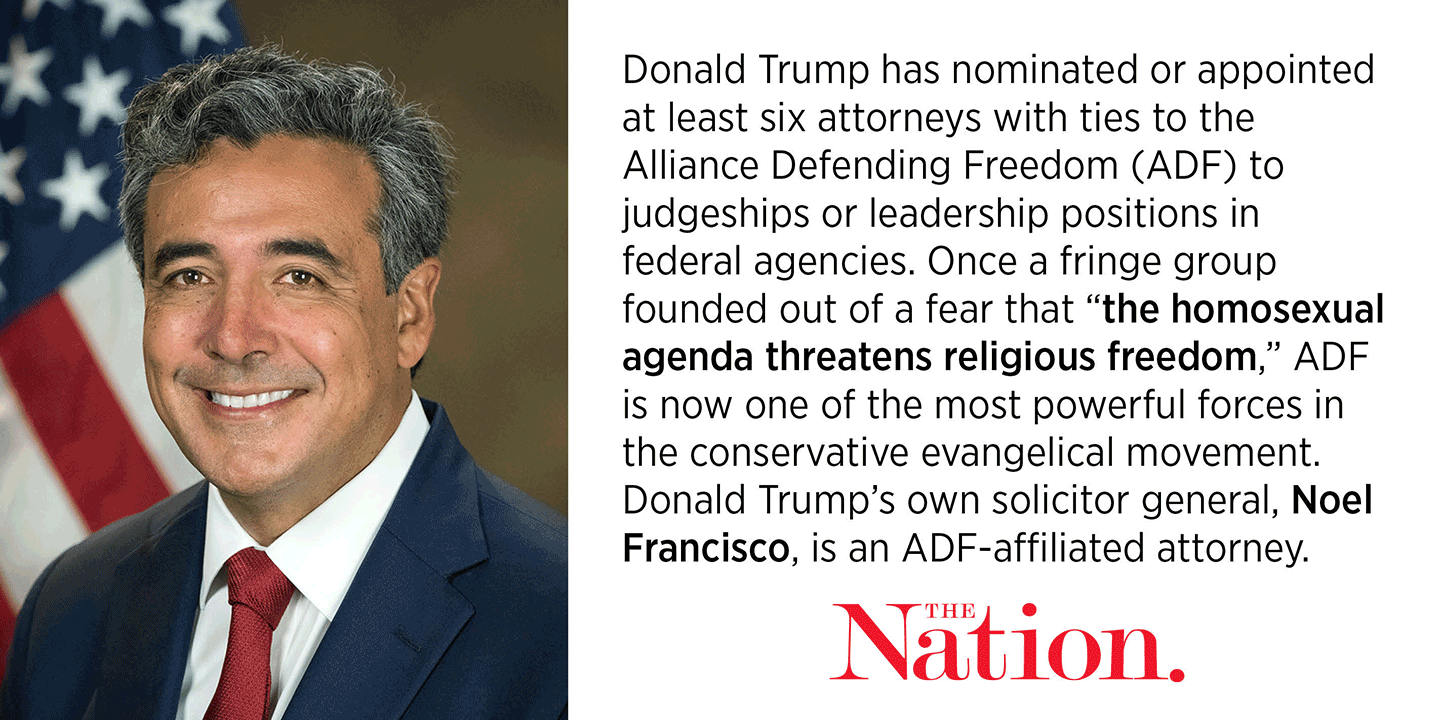
(ENTER - STAGE LEFT) Noel John Fransico in the spirit of fuchsia.

Image result for Noel John FranciscoNoel John Francisco was sworn in as the 48th Solicitor General of the United States on September 19, 2017.

 Cheers, love.

Prior to joining the Justice Department, he was a partner in the Washington, DC office of Jones Day, where he was the chair of the Firm’s Government Regulation Practice.

Jones Day???

The same Jones Day that financially raped Detroit in the Chapter 9 bankruptcy, Grand Bargain, that allowed the Detroit Land Bank Authority to file as a creditor and get TARP, through the State appointed Emergency Manager, Kevyn Orr, who also hails from Jones Day???


Taken from the Jones Day site.

Kevyn Orr provides strategic crisis management advice, identifying creative approaches to novel or first impression situations with an eye toward developing cost-efficient, business oriented solutions.  
He has practiced in the areas of business restructuring, financial institution regulation, and commercial litigation for over three decades and has experience handling all aspects of complex and precedent-setting matters. Kevyn is Partner-in-Charge of the Washington, D.C. Office. 
Prior to rejoining Jones Day in 2015, Kevyn served as Emergency Manager of the City of Detroit and was charged with restructuring the city's finances and operations. During his tenure, he oversaw the largest and most complicated municipal bankruptcy proceeding in the nation's history. As a result of that proceeding, the city successfully restructured $18 billion in debt, reduced overall debt by $7 billion, developed and implemented a multiyear $1.7 billion revitalization plan for city services and operations, streamlined key city operations, helped improve public safety, put the city's art in a perpetual public trust, and avoided drastic cuts to pension and related retiree benefits. Kevyn received Turnaround Management Association's Mega Transaction of the Year Award for the City of Detroit, Michigan in October 2015. 
At Jones Day, Kevyn's experience includes advising Chrysler on all aspects of its bankruptcy, National Century Financial Enterprises in its bankruptcy and asserting its claims in the health care provider bankruptcies of PhyAmerica Corporation and DCHC/Greater Southeast Hospital, and Laidlaw Corporation in its defense of a $1 billion claim by the purchaser of its environmental cleanup division. 
Kevyn is a member of the American Bar Association and the American Bankruptcy Institute.
Back to Noel.
While at Jones Day, he appeared several times before the Supreme Court, including in McDonnell v. United States, which involved the meaning of “official act” under federal bribery statutes; Zubik v. Burwell, which involved the application of the Religious Freedom Restoration Act to regulations related to insurance coverage for contraception; and NLRB v. Noel Canning, which involved the Constitution’s recess appointment power.  
Religious Freedom Restoration Act litigation?  That is child welfare.  That is privatization.  That is asset management of human capital.  That is human trafficking stuff.  The plot thickens. 
He has also argued numerous cases in the lower federal and state courts on a wide range of constitutional, civil, and criminal matters. 
He argued the SCOTUS National Voting Rights Act case where he changed the position of the nation to just purge voter rolls if you fail to vote for more than 6 years, claiming it was ok if notices were mailed out.  He never explained the switch of position, nor did he identify his authority to make such a switch in national voting policies without Congress, or public discussion, for that matter.  This was another election manipulation "authority" case to implement privatization, or what could be deemed as another implementation phase of a soft coup.  

Noel was mean to my Sweetie!
  
From 2001 to 2003, Mr. Francisco served in the Office of Counsel to the President as Associate Counsel to President George W. Bush, and from 2003 to 2005 he served as a Deputy Assistant Attorney General in the U.S. Department of Justice, Office of Legal Counsel. 
Noel knows where the children are buried, who did it and why.
Mr. Francisco was raised in Oswego, NY.  He received his B.A. with honors in 1991 from the University of Chicago, and a J.D. with high honors in 1996 from the University of Chicago Law School. After law school, Mr. Francisco served as a law clerk to Judge J. Michael Luttig of the United States Court of Appeals for the Fourth Circuit before clerking for Associate Justice Antonin Scalia of the United States Supreme Court.
The Alliance Defending Freedom, is quite the $250 million international operation, or at least that is what it says in the filings, training lawyers to defend christian NGOs around the world, (yes, I intentionally made the "c" lower case), with very interesting 501c3 filings and a foundation, too! Only issue, though, is it does not seem to fund much "legal training" unless those "human rights" financial transfers do.  Just saying.  ADF is into neo-feudalism, promulgating that privatization law of owning humans as currency, more readily understood as the form of human traffickers.  They are behind the finalization of corporations being granted parental rights.  I know.  I was one of the original writers.  I can smell the RFRA.

This is the stuff ADF is into.


I am doubling down on my Sneaky Jeffy* and I do not care what anyone has to say about it.

Get 'em, get 'em all.

Noel Fransico sucks.

Sessions: Federal prosecutor evaluating alleged FBI, DOJ wrongdoing, no second special counsel for now

Attorney General Jeff Sessions revealed Thursday a federal prosecutor was evaluating certain issues involving the FBI, the Clinton Foundation and Uranium One, but said he would not appoint a second special counsel at this point.

In a letter directed to Senate Judiciary Chairman Chuck Grassley, House Judiciary Committee Chairman Bob Goodlatte and House Oversight Committee Chairman Trey Gowdy, Sessions revealed that he asked U.S. Attorney John Huber to lead the evaluation into issues raised by the committees in recent months.

“I write in response to recent letters requesting the appointment of a Special Counsel to review certain prosecutorial and investigative determinations made by the Department of Justice in 2016 and 2017. I take the concerns you raise seriously,” Sessions wrote, noting how important it was that the American people and Congress had “confidence” in the Justice Department.

“While we continue to believe the appointment of a second Special Counsel is necessary, this is a step in the right direction. We expect that U.S. Attorney Huber, given his reputation, will conduct an independent and thorough investigation. Such an investigation is critical to restoring the reputation of both the Bureau and DOJ in the eyes of the American people,” Goodlatte and Gowdy responded in a statement.

Sessions referenced a November 2017 letter sent by Assistant Attorney General Stephen Boyd, first reported by Fox News, directing senior federal prosecutors to evaluate “certain issues” requested by congressional Republicans, involving the sale of Uranium One and alleged unlawful dealings related to the Clinton Foundation.

John Huber
On Nov. 13, 2017, Boyd wrote: “These senior prosecutors will report directly to the Attorney General and the Deputy Attorney General [Rod Rosenstein], as appropriate, and will make recommendations as to whether any matters not currently under investigation should be opened, whether any matters currently under investigation require further resources, or whether any matters merit the appointment of a Special Counsel.”

John Huber has a particular background in child welfare fraud and "authorities" using TARP, which makes me starry eyed.  "Hiya, Peaches!"

Sessions revealed Thursday in the letter to top Republican lawmakers in both chambers of Congress that Huber was the senior federal prosecutor leading that effort.

Sessions revealed that he asked U.S. Attorney John Huber, seen here, to look into the accusations.
“Mr. Huber is conducting his work from outside the Washington D.C. area and in cooperation with the Inspector General,” Sessions said, noting that Huber’s review would “include a full, complete, and objective evaluation of these matters in a manner that is consistent with the law and facts.”

Huber is a federal prosecutor, twice confirmed, unanimously, by the Senate as U.S. attorney for the District of Utah in 2015 and again in 2017. Huber previously served in leadership roles within the U.S. Attorney’s Office as national security section chief and executive assistant U.S. attorney.

“I receive regular updates from Mr. Huber and upon the conclusion of his review, will receive his recommendations as to whether any matters not currently under investigation should be opened, whether any matters currently under investigation require further resources, or whether any matters merit the appointment of a Special Counsel,” Sessions said.

Huber ultimately would be the prosecutor to decide whether issues raised by Republicans in Congress warrant the appointment of a second special counsel, Sessions said.

The attorney general cited U.S. Code, noting that the appointment of a special counsel was "reserved for use in only the most 'extraordinary circumstances,'" and that any special counsel must be "selected from outside the United States Government."

"To justify such an appointment, the Attorney General would need to conclude that 'the public interest would be served by removing a large degree of responsibility for the matter from the Department of Justice," the letter read.

Sessions added, "The Department has successfully investigated and prosecuted many high-profile resource-intensive matters since the regulations were promulgated in 1999, but the regulations' standard has been found to be satisfied on only two occasions," and said it was "more common" to appoint "accountable prosecutors" to conduct investigations within the department.

On March 6, Gowdy, R-S.C., and Goodlatte, R-Va., penned a joint letter to Sessions demanding the appointment of a special counsel to investigate "conflicts of interest" and decisions "made and not made" by current and former Justice Department officials in 2016 and 2017, noting that "the public interest requires" the action.

The letter cited potential Foreign Intelligence Surveillance Act (FISA) abuses, which  Justice Department Inspector General Michael Horowitz announced Wednesday would be investigated by his team. 

“The Office of Inspector General will initiate a review that will examine the Justice Department’s and the Federal Bureau of Investigation’s compliance with legal requirements, and with applicable DOJ and FBI policies and procedures, in applications filed with the U.S. Foreign Intelligence Surveillance Court (FISC) relating to a certain U.S. person,” the Horowitz statement obtained by Fox News read.

“As part of this examination, the OIG also will review information that was known to the DOJ and the FBI at the time the applications were filed from or about an alleged FBI confidential source.”

Sessions told lawmakers in his Thursday letter that he understood the Justice Department was "not above criticism," and noted that if anyone "falls short" of the "highest level of integrity, ethics and professionalism," he would act.

"I will fulfill my responsibility to take necessary action to protect the integrity of our work," Sessions wrote, thanking the lawmakers for their "leadership" on the matters, and stating that he would  make their letters available to both Huber and Horowitz.

*I call Sessions "Sneaky Jeffy" because I busted him grinning when he should not have been grinning in a public hearing and I am pretty darn sure I know why he was grinning because I was grinning, too!

Voting is beautiful, be beautiful ~ vote.©

Tuesday, December 18, 2018

It Seems Michigan Richard Baird Really Likes Public Private Trust Funds

The more the Michigan Governor's Cabinet operations are uncloaked, the more I am inclined to reaffirm my position that Snyder was falsely advised, if he was even advised on what was going on.


Here is a list of Rich Baird's privatization activities in Michigan:

The search and appointment of Kevyn Orr, Emergency Manager for the Detroit Bankruptcy.

Pay attention to all those trust funds and real estate.

Flint Homecoming

Senior Advisor and Transformation Manager
Office of Michigan Governor Rick Snyder

Richard L. Baird was appointed Senior Advisor and Transformation Leader to Michigan Governor Rick Snyder in October of 2013. Prior to that, he was the CEO of MI Partners, LLC, a Michigan-based consulting company contracted by the Snyder administration since January, 2011.

Baird works with the Governor and his leadership team to reinvent and transform Michigan. Baird has played key roles to address financial solvency, organizational redesign and performance, talent assessment, financially distressed city turnaround strategies, public safety and infrastructure, economic/workforce development and education reform.

Baird served as co-leader (with U.S. District Court Judge Sean Cox) of the mediation team which led to the creation of the Great Lakes Water Authority and also assisted Judge Gerald Rosen in the successful resolution of creditor disputes under the Detroit bankruptcy. He created the Office of Good Government for the State of Michigan, designed the Governor’s Council on Law Enforcement and Reinvention (CLEAR), and has been actively involved in pension redesign, enhancing opportunities for the disabled, ex-offender rehabilitation, and tax payer reform.

More recently (since January, 2016), Baird has served as the Team Leader for “Mission Flint” which coordinates the State’s partnership with the City of Flint and the related nearly $300 million appropriation to address problems arising from the water crisis and assist with economic/workforce development, medical and education initiatives.

In 2010, Baird retired from PricewaterhouseCoopers, LLP as global and U.S. leader of people and change management. From 2003–2008, he was global managing partner – people, responsible for human resources and learning & education for PwC’s 150,000 partners and staff in 150 countries, while serving on the 14-partner global leadership team. From 19997 to 2000, Baird was President of Compass.com, a couple sold to TMP Worldwide (Monster.com) in 2000.

Baird has been referenced in various professional publications for his work in talent management, including The Wall Street Journal, Global HR News, Newsweek, Economist, and Chicago Tribune.

Baird serves as Treasurer of the Michigan Education Excellence Foundation, and is a member of the board for the Grow Michigan Investment Fund. He joined the board for the American Center for Mobility in May, 2017. He is a life member of the board of trustees for United Methodist Homes and Services and a past member of the AIESEC U.S. board of directors and global advisory steering committee. An avid conservationist, he also served on the board of the Great Lakes Protection Fund.

United Methodist Homes | Independent & Assisted Living Senior Care
https://www.unitedmethodisthomes.org/services/

Aiesec Logo
https://aiesec.org/about-us
Mark Image
Word MarkDETROIT SCHOLARSHIP FUND
Goods and ServicesIC 036. US 100 101 102. G & S: Charitable fundraising; Charitable fundraising services, namely, raising funds for college education costs; Providing educational scholarships; Providing college scholarships; Financial administration of scholarship programs. FIRST USE: 20130430. FIRST USE IN COMMERCE: 20130430
Standard Characters Claimed
Mark Drawing Code(4) STANDARD CHARACTER MARK
Serial Number86597230
Filing DateApril 14, 2015
Current Basis1A
Original Filing Basis1A
Date Amended to Current RegisterOctober 30, 2015
Registration Number4915636
Registration DateMarch 8, 2016
Owner(REGISTRANT) Michigan Education Excellence Foundation non-profit corporation MICHIGAN P.O. Box 10030 Lansing MICHIGAN 48901
Attorney of RecordEric T. Fingerhut
DisclaimerNO CLAIM IS MADE TO THE EXCLUSIVE RIGHT TO USE "SCHOLARSHIP FUND" APART FROM THE MARK AS SHOWN
Type of MarkSERVICE MARK
RegisterSUPPLEMENTAL
Live/Dead IndicatorLIVE

Mark Image
Word MarkMICHIGAN EDUCATION EXCELLENCE FOUNDATION
Goods and ServicesIC 036. US 100 101 102. G & S: Accepting and administering monetary charitable contributions; charitable fundraising; charitable fundraising services, namely, raising funds for college education costs; financial administration of scholarship programs; charitable fundraising for education projects in the State of Michigan. FIRST USE: 20120827. FIRST USE IN COMMERCE: 20120827
Standard Characters Claimed
Mark Drawing Code(4) STANDARD CHARACTER MARK
Serial Number85429727
Filing DateSeptember 22, 2011
Current Basis1A
Original Filing Basis1B
Date Amended to Current RegisterFebruary 21, 2013
Registration Number4319072
Registration DateApril 9, 2013
Owner(REGISTRANT) Michigan Education Excellence Foundation non-profit corporation MICHIGAN P.O. Box 10030 Lansing MICHIGAN 48901
Attorney of RecordMichelle R. Osinski
DisclaimerNO CLAIM IS MADE TO THE EXCLUSIVE RIGHT TO USE "FOUNDATION" APART FROM THE MARK AS SHOWN
Type of MarkSERVICE MARK
RegisterSUPPLEMENTAL
Live/Dead IndicatorLIVE

https://pdf.guidestar.org/PDF_Images/2016/453/076/2016-453076410-0eb4e396-9.pdf


Baird received his bachelor’s degree from Albion College and was a trustee for 12 years, including five as chair. He received an honorary Ph.D. from Albion College and from Eastern Michigan University.

Governor's right-hand man served as emissary, deal-maker, talent scout

Rich Baird, senior adviser to Gov. Rick Snyder, has worked throughout Snyder’s tenure as a de facto deputy governor of the state, whether it was dealing with the Flint water crisis or weekly meetings with Detroit Mayor Mike Duggan.

Rich Baird's skin is a lot thicker these days after eight years as a student of government.

The former PricewaterhouseCoopers LLP executive's faithful service as the right-hand man for outgoing Gov. Rick Snyder has been a ride through the making of laws, Detroit's landmark bankruptcy, some well-intended ideas gone awry and the tsunami of turmoil that engulfed his hometown of Flint — and nearly took the Snyder administration with it.

Whenever there was a controversy or a fire to put out during Snyder's unconventional tenure as Michigan's chief executive, Baird was typically on the scene, serving as an emissary, a deal-maker, the talent scout and, in the eyes of some people, a de facto deputy governor of Michigan.

For the past six years, Rich Baird's trail has run from the governor's office and courtrooms to Detroit Mayor Mike Duggan's office and Flint City Hall. And for most of that time, he has spurned attention from journalists who have been curious about his wide-ranging assignments from the governor.
Rich Baird has seemingly been everywhere:

  • He recruited the top minds to Snyder's team, convincing Jones Day bankruptcy attorney Kevyn Orr to camp out in Detroit for a nearly two-year bankruptcy reorganization project that defied political gravity.
  • He set up Snyder's now-defunct Education Achievement Authority school reform entity — and later was involved in dismantling the EAA after it became entangled in mismanagement and corruption.
  • In 2016, Baird planted himself in Flint during the height of the city's lead-tainted water crisis, living in rooms he rented off Craigslist and serving as the governor's personal representative at a time when hatred for Snyder was at a fevered pitch.
  • He has served as Snyder's ambassador to the Manoogian Mansion, holding meetings every Thursday morning with Duggan for the past five years and forging an early peace treaty in 2013 between the emergency manager and a newly elected mayor who vowed to dispose of the EM.
  • During and after the bankruptcy, Baird mediated negotiations with stakeholders, including creation of the Great Lakes Water Authority, a regional entity that spun off suburban water and sewer operations from the Detroit Water & Sewerage Department.
  • In the four years since Detroit emerged from bankruptcy, Baird has continued to be the go-to troubleshooter for state-city issues, serving as a self-described "field commander" in Detroit's failed bid for Amazon's second headquarters.
  • Baird played a central role in striking key deals for construction of the Gordie Howe International Bridge, including securing funds for Detroit to relocate Delray residents who live near the planned bridge plaza.
"He's the person we turn to when we're stuck," Duggan said of Baird. "The fact that he's down (in Detroit) every day, he understands what we're trying to do and why, it has made him very effective as an honest broker with a lot of different major deals."

Baird's broad role in the Snyder administration "created a vacuum, a mystery around him" that was widely misunderstood, Lt. Gov. Brian Calley said.

"It's hard for this town to understand that there's this person that you've never heard of that has a lot of influence. What's going on there?" Calley said in an interview.

Before Snyder took the oath of office on Jan. 1, 2010, incoming Chief of Staff Dennis Muchmore gave Baird the ubiquitous title of "transformation manager."

"What's transformation manager mean?" Baird asked Muchmore.

"Absolutely nothing," Muchmore replied.

"Or it could mean absolutely everything," Baird said.

The latter turned out to be true.

"Rich Baird has been one of the most important, impactful and effective members of this administration," Calley said.

The recruiter
Baird, 62, retired from PricewaterhouseCoopers on June 30, 2010, after three decades at PwC and one of the accounting giant's predecessors, Coopers & Lybrand, where he hired Snyder in 1982 to work in the firm's Detroit office. Snyder has been Baird's colleague, a client when he ran Gateway Computers, confidante and friend ever since.

Baird volunteered for Snyder's gubernatorial campaign. In the transition, Snyder tapped Baird to lead the recruitment of state agency directors and top aides — a natural fit for the guy who was PwC's global managing partner for human resources.

Two positions proved to be the most difficult to fill: the Department of Corrections director and the state budget director. The corrections director job would be filled a month into Snyder's tenure with the appointment of then-Jackson County Sheriff Dan Heyns.

For the budget director job, Baird was not satisfied after interviewing nearly two dozen in-state candidates.

"I did not come away with the sense that any of them really understood what it was going to take to not only deal with the budget and fill what we knew was a deficit, but also knowing how the governor was going to approach policy and budgeting," Baird said.

On a Saturday afternoon in November of 2010, Baird called former Gov. John Engler for advice on out-of-state candidates for the job.

Engler, who was then CEO of the National Association of Manufacturers, came back to Baird with a list of five well-regarded state budget officers across the country. At the top of the list was Utah's budget director, John Nixon, then the president of the National Association of State Budget Officers.
"(Engler) said, 'You won't get this guy, but you should start with him and talk to him about the other candidates — because he knows all of them,'" Baird said.

Baird sent Nixon an email — and within an hour Utah's budget guru called the Michigan headhunter on a Saturday night.

Nixon, a devout Mormon with six children who were ages two to 14 at the time, wasn't interested in uprooting for the Midwest.

But cajoling is Baird's specialty.

"I said, 'It seems to me that you've retired in place. How exciting could it be? Why don't you at least come out and talk to us? We'll make you part of the biggest comeback in the history of the country,'" Baird said. "And he laughed."

Nixon relented, flying to Detroit to meet with Baird and the top members of Snyder's cabinet — Calley, Muchmore, Treasurer Andy Dillon and Strategy Director Bill Rustem. He also met with members of Snyder's transition team: Business Leaders for Michigan CEO Doug Rothwell and Meijer Inc. Vice Chairman Mark Murray, a former state budget director and treasurer under Engler.

When Nixon came back the following weekend with his wife to meet with Snyder, Baird called in a favor from Honigman corporate attorney G. Scott Romney, son of former Gov. George Romney and a fellow Mormon and Republican.

Baird asked Romney if he'd take the Nixons to his Mormon church. "The Romney name is like gold in Utah," Baird said.

On New Year's Eve 2010, Nixon flew to Michigan and set to work on a grueling mission: Produce a two-year budget in six weeks that eliminates a $1.5 billion budget deficit and lets the state slash business taxes.

"Rich is a compelling guy. I realized they had built a first-class team. And I thought, this is something I want to be part of," said Nixon, who returned to Utah in 2014 to become chief administrative officer of the University of Utah.

'Great idea' gone bad
Baird never intended to be part of Snyder's administration.

Initially, Snyder asked Baird to work as a consultant for six months to help put together a new government.
Baird says he "resisted" becoming an employee of the State of Michigan.
"I'm not a bureaucrat," Baird recalled telling the governor. "I don't want to stay on."

"He said, 'Well, I'll pay you out of the NERD Fund,' which we thought was a great idea at the time," Baird added.

And that's how Baird got on the radar of reporters like me.

For most of Snyder's first three years, Baird was paid $100,000 annually from the New Energy to Reinvent and Diversify (NERD) Fund, a not-for-profit organization that could accept limitless donations without having to disclose the donors.

The arrangement raised the specter of whether special interest groups with a policy or legislative agenda were funding the salary of an influential member of the governor's inner circle.
"It wasn't special interests that gave to the NERD Fund — it was Democrats, a whole bunch of them," Baird said.

But Democrats had a field day, raising transparency questions about the secrecy of the fund and the source of Baird's pay while being listed as a state employee with an office across the hall from the governor's suite.

To this day, the identity of the donors who contributed $2.2 million to the NERD Fund remains a secret. In October 2013, Snyder shuttered the NERD Fund, put Baird on the state payroll — at $140,000 a year — and started a new nonprofit organization that has voluntarily disclosed its donors and expenses.

But Baird insists his NERD Fund employment arrangement was devoid of conflicts.

"If I'm a tool of the special interest, then somebody should be shot because I made exactly one-twentieth of what I made in my old life at PricewaterhouseCoopers," Baird said.

'Hated being called a tax cheat'
Even after Snyder tried to tamp down the NERD Fund controversy, Baird remained a frequent target of Democrats and the governor's political enemies.

In August of 2014, the critics pounced after MIRS news service discovered Baird was claiming tax principal homestead exemptions on a $500,000 home in Clinton County's Bath Township and his longtime residence in suburban Chicago. Tax laws limit the property tax break to just one home.

Baird also was still driving around a vehicle with an Illinois license plate, even after he had changed his voter registration to Michigan and got elected a precinct delegate to help re-nominate Calley for lieutenant governor at a GOP state convention — and vote for Snyder that fall.

That move, Baird said, triggered a call from his accountant, who flagged the fact that Michigan — under Snyder — was now taxing pension income for individuals born after 1946.

"She said, 'Are you crazy? You've got to move your pension away from Illinois and to Michigan — and you're going to get taxed on the pension,'" Baird recalled. "I said, 'I know. I was at the scene of that crime.'"

'EAA was not a failure'
Baird's activities stretched well beyond recruitment and the confines of governing inside the Lansing bubble.

Snyder made turning around Detroit and its long-failing schools a top priority. For the city's schools, a succession of state emergency managers was not working, and Snyder wanted to try something new.
The governor tasked Baird with helping to create a new entity that would take over 15 persistently failing schools in Detroit in an effort funded in large part by billionaire Detroit native Eli Broad to demonstrate a different style of education with longer school days, year-round instruction and no grade levels.

The result was the Education Achievement Authority, which was organized as an intergovernmental agreement between Eastern Michigan University and Detroit Public Schools, which was run by an emergency manager at the time.

That move, Baird said, triggered a call from his accountant, who flagged the fact that Michigan — under Snyder — was now taxing pension income for individuals born after 1946.

"She said, 'Are you crazy? You've got to move your pension away from Illinois and to Michigan — and you're going to get taxed on the pension,'" Baird recalled. "I said, 'I know. I was at the scene of that crime.'"

'EAA was not a failure'
Baird's activities stretched well beyond recruitment and the confines of governing inside the Lansing bubble.

Snyder made turning around Detroit and its long-failing schools a top priority. For the city's schools, a succession of state emergency managers was not working, and Snyder wanted to try something new.

The governor tasked Baird with helping to create a new entity that would take over 15 persistently failing schools in Detroit in an effort funded in large part by billionaire Detroit native Eli Broad to demonstrate a different style of education with longer school days, year-round instruction and no grade levels.

The result was the Education Achievement Authority, which was organized as an intergovernmental agreement between Eastern Michigan University and Detroit Public Schools, which was run by an emergency manager at the time.

From the outset, the EAA was troubled.

The school reform entity struggled to meet payroll and manage expenses in the absence of authority to borrow money like normal school districts do.

John Covington, the former Kansas City schools superintendent who was hired to be the EAA's chancellor, was "a good blueprinting guy ... but not an operations guy," Baird said.

Baird said Covington's insistence that the EAA be a closed shop for the American Federation of Teachers triggered an unnecessary "war" with the union and legislative Democrats, who dredged up thousands of pages of emails that revealed the early dysfunction and stumbles of Snyder's school reform project.

"I ultimately rolled over on that," Baird said. "I'm really sorry I did, because over the years, I've worked with the (AFT), and we've been able to find common ground."

In 2013, as Snyder was seeking legislation to expand the EAA to 50 failing schools across the state, Baird said he experienced an "epiphany" that the EAA was faltering when a highly skilled information technology director quit after one week on the job.

"I called her and I said, 'What's going on?' And she said, 'There's so many things that are wrong, I can't fix them and I'm not going to fool anybody into thinking I can,'" Baird said.

Baird asked David Behen, the state's chief information officer at the time, to audit the books of the EAA. "He did a thorough investigation — as good as anything a PwC or a Deloitte would have done," Baird said.

The audit revealed duplicate IT contracts and a "consistent lack of controls" that allowed vendors to get paid without contracts. That caused Baird to turn to a former PwC partner, Tom Golden, who co-authored a guide to forensic accounting.

Golden's investigation led to an FBI and state police probe that rooted out a corruption scheme involving an EAA principal who was driving a Maserati and pocketing tens of thousands of dollars in bribes from a vendor. A dozen principals in DPS were eventually charged for taking bribes from vendors in a pay-to-play scheme that had been going on in Detroit schools for years.

The corruption scandal, Covington's mismanagement and controversial frequent travel to conferences coupled with declining enrollment and rampant staff turnover eventually caused the Snyder administration to fold the EAA schools back into DPS in 2016.

"It clearly didn't work," said David Hecker, president of the AFT Michigan. "But I'll give Gov. Snyder credit for realizing it didn't work."

Baird insists the "EAA was not a failure."

"If we had done some things differently, I'm convinced the EAA would have been the trigger to create some real revolutionary change in school districts across the state," Baird said. "It was always designed to be Stage One of a statewide focus."

Defending the EM law
For eight years, Snyder wore his "relentless positive action" mantra on his sleeve, while Baird worked to enforce it.

On the Thursday after Detroit's November 2013 mayoral election, Baird brokered the first meeting between Mayor-elect Mike Duggan and Kevyn Orr, who had been running the city for nearly eight months as emergency manager.

Baird hand-wrote a pledge for the two men: Both agreed to keep their disagreements private "and the only time that we're going to publicly talk about the other person is when we have something good to say."

"I made them sign it," said Baird, who declined to show me a copy of this peace accord.

At that meeting, Duggan and Orr agreed to share power for the next year — Orr would manage the bankruptcy and supervise police chief James Craig, while Duggan would run city departments.
Baird cautioned Orr on how the arrangement could play out.

"You've heard about if you give a mouse a cookie, he's going to want a glass of milk," Baird recalled telling Orr. "Mike Duggan will want the barn, the dairy farm, the production facility and the supply chain — it won't stop with the milk."

Since Orr left town at the end of the bankruptcy four years ago this month, Baird has remained Snyder's point man in Detroit, holding court with the mayor every Thursday morning. Duggan even gave Baird his own mayor's office ID badge that lets him bypass security.

"I think Rich Baird has been as big a part of the progress Detroit has made in the last eight years as any other person, including Kevyn Orr, Mike Duggan and Rick Snyder," Calley said. "Rich Baird has been that impactful."

Baird credits the bankruptcy's success to both Duggan's management and turnaround skills and the talents Orr and his Jones Day legal team brought to the restructuring of a city that was drowning in debt and political dysfunction.

The same cannot be said for Flint, where Baird ran a "Mission Flint" program in 2016 trying to chart new initiatives in education, economic development and social services for his hometown in the wake of the water crisis.

Baird, the longtime human resources professional, is blunt in his assessment of how Flint's water became tainted with lead under the watch of Snyder-appointed emergency managers.

"The reason it didn't work in Flint is because we did not always have the right emergency manager that looked at this as a partnership as opposed to a dictatorship," Baird said.

Rumor has it
With just two weeks remaining in Snyder's term, the only transforming Baird is working on is stepping back into semi-retirement.

Snyder appointed Baird to an eight-year term on the Eastern Michigan University Board of Regents, and he's planning to do some long-overdue traveling with his wife next year.

And even though he's already got walk-in privileges at the mayor's office, Baird said he isn't going to join the Duggan administration.

"I think Mike was the one spreading that rumor," Baird said with a laugh.

In an interview, Duggan didn't deny he has tried to make Baird more than a weekly visitor to Coleman A. Young Municipal Center.

"Yeah, I'm recruiting people all of the time," Duggan said. "But you know, I think he's earned retirement."

Voting is beautiful, be beautiful ~ vote.©

Saturday, February 29, 2020

Trump Names Emperor Pence As Corona Emergency Manager Czar - Just Like Snyder Named Kevyn Orr

We still do not have Emperor Pence's emails from Indiana, just like we do not have Bill Schuette's emails, but, then again, it probably has something to do with emergency manager privatization powers of maximizing revenues,and/or trafficking tiny humans, but, hey, what do I know?


I know Emperor Pence appointed Debbie Brix.

Meet Debbie Brix:
Deborah L. Birx official photo.jpg
Debbie Brix
Birx served as a physician in the United States Army, rising to the rank of colonel[4] before she retired from military service. She started her career with the United States Department of Defense as a clinician in immunology, focusing on HIV/AIDS vaccine research. She then served as an Assistant Chief of the Hospital Immunology Service at Walter Reed Army Medical Center from 1985 to 1989. In 1996, she became the Director of the United States Military HIV Research Program at the Walter Reed Army Institute of Research, a role she held until 2005.[5]
From 2005 to 2014, Birx served as the director of CDC's Division of Global HIV/AIDS (DGHA), which is part of the agency's Center for Global Health.[6]
She was nominated by President Barack Obama as United States Global AIDS Coordinator and confirmed by the Senate; she was sworn in April 4, 2014.[7] In her role as ambassador she has led the organization to meet the HIV prevention and treatment targets set by Obama in 2015 with the goal of ending the AIDS epidemic by 2030.[8] She says that PEPFAR has cut pediatric HIV infection rates by 50 percent in several African countries.[9]
On February 27, 2020, Vice President Mike Pence named Ambassador Birx as the coronavirus (COVID-19) response coordinator for the White House.[1] 

Debbie is a board member of The Global Fund to Fight AIDS, Tuberculosis and Malaria
GROSS RECEIPTS
$2,081,857,979
ASSETS
$5,937,508,235 
https://pdf.guidestar.org/.../2018-980380092-10cf9546-9.pdf 


This is the US fund.
GROSS RECEIPTS
$38,159,384
ASSETS
$13,785,134
The mission of the Corporation is to encourage individuals, corporations and charitable entities to provide support for the mission of the Global Fund to Fight AIDS, Tuberculosis and Malaria.
https://pdf.guidestar.org/.../2017-275273239-101a5596-9.pdf

I also know that much of these emergency manager czar activities are going to be contracted out for "job creation" purposes of revenue maximizaition, probably through their children's trust funds.

It seems there is a push to repurpose HIV warehoused drugs for COVID-19, more affectionately called Coronavirus.

Moderna delivers first experimental coronavirus vaccine for human testing

Pence Panned As Corona Czar-Adds Physician Debbie Birx To Team

Pence needs to learn and model good hygiene to prevent infection. This isn't it.

Pence needs to learn and model good hygiene to prevent infection. This isn't it.
Tissues are one of the great American innovations to stop
spreading the flu.
As an infectious disease physician, I (and many others) was shocked at last night’s announcement that Vice President Mike Pence was appointed to oversee the Coronavirus-19 (COVID19) response. There are a number of reasons why.

First, while the President cited Pence’s experience with healthcare as Governor of Indiana, he was widely criticized by the infectious disease community, particularly for his response to opioid use and HIV.

HIV: In Indiana, Pence was instrumental in fueling an HIV epidemic. In tiny Austin, Indiana (pop. 4200), Planned Parenthood, the only place where people could get HIV testing, was defunded. Combine that with poverty, high unemployment and drug use, and the town had over 150 cases of HIV. This prompted then CDC Director Tom Frieden to note that Austin now has a higher incidence of HIV than "any country in sub-Saharan Africa… They've had more people infected with HIV through injection drug use than in all of New York City last year." Many were coinfected with Hepatitis B and/or Hepatitis C (HCV), causing further illness and costly treatment. In fact, in the U.S., 50-80% of people with IV drug use  become infected with HCV within 6-12 months of starting injecting drug use, all avoidable with needle exchanges.

Pence was adamantly opposed to needle exchanges, although they are of proven public health benefit and efficacy in reducing these infections which can be transmitted sexually or by shared needles. Two months after the outbreak was detected, Pence said he would “pray on it.” Because of the HIV epidemic, Pence reluctantly agreed to allow needle exchanges—but only briefly and only in that county. The Chicago Tribune’s David Rutter (@theeditor50) concluded: “The public's HIV treatment bill for Austin will run $200 million once the epidemic peaks—at least $1 million to save each uninsured patient, say health experts...It's the price of inattention and indifference.”

Public Health:

Here, too, Governor Pence was known for cutting funding for the state’s public health departments. Indiana spent $12.40 per person on public health, compared to $220 for West Virginia. As a member of Congress, Pence also voted against the State Children’s Health Insurance Program although he professes belief in “the sanctity of life.”

```````````````

The one thing I do know is that formal protocol has been tossed out the window when it comes to governmental action, which sounds like privatizaiton through foreign corporations, just like they did, and are still doing in Michigan.

Here, Michigan Governor Gretchen Whitmer is taking unilateral action, all by herself to manage the emergency of coronavirus, unless she was advised, but, hey, what do I know?

I know Matt Whitaker is talking about National Emergency Powers.


And, here is the first State emergency takeover in the appointment by the Governor of an Emergency Manager Czar for the City of Detroit, Kevyn Orr.


Voting is beautiful, be beautiful ~ vote.©

Wednesday, May 2, 2018

Detroit Released From State Oversight For Federal Oversight

Oh, goody!

Now, the federal oversight may commence.

Detroit released from state financial oversight 3 years after exiting bankruptcy

Detroit reached a key step in fiscal redemption on Monday by reclaiming control of its own finances roughly three years after exiting the largest municipal bankruptcy in U.S. history.

A state review commission unanimously agreed to release the city from state financial oversight after Detroit delivered three consecutive years of audited balanced budgets. The city was about $12 billion in debt and unable to deliver basic services like prompt responses to 911 calls and park maintenance when the state took financial management.

"Detroit is once again finally a city of full self-governance," Mayor Mike Duggan said following the commission's vote.

The change means that when contracts are approved by the City Council, Detroit won't have to wait for the commission to approve them. But the city must still submit monthly financial reports to the commission, which will continue to monitor Detroit's fiscal health for the next 10 years and could resume oversight if a budget deficit occurs.

Gov. Rick Snyder placed the city under state receivership in early 2013, angering local officials and some residents because the move essentially stripped power from the City Council and mayor's office. The Republican governor also appointed turnaround expert Kevyn Orr as an emergency manager to oversee Detroit's finances. The city, under Orr, filed bankruptcy the same year.

After restructuring about $7 billion in debt and setting aside $1.7 billion in savings and revenue over a decade to improve city services, Detroit exited bankruptcy in December 2014. Part of the restructuring plan was creating the nine-member financial review commission, which is chaired by state Treasurer Nick Khouri and includes Duggan, state Budget Director John Walsh and former Detroit police Chief Isaiah McKinnon. Members were given oversight of borrowing and large city-issued contracts.

Most city operations were returned to Duggan's control in September 2014, but Monday's action helps wipe away the stain of bankruptcy and the anger some in Detroit carried.

"Today is an important day in the history of our city," City Council President Brenda Jones said. "Now, with the dormancy of the (review commission) and a reduction in state oversight, local control is returning to our city and its elected officials can assume the role that voters expect us to carry out."
Under the terms of the bankruptcy, creditors received pennies on the dollar for what they were owed and thousands of retirees saw their pensions cut by 4.5 percent. Annual cost-of-living increases also were eliminated.

Detroit's general fund balance was about $595 million at the end of the 2017 fiscal year, compared to a deficit of about $73 million that the city faced at the end of the 2013 fiscal year following years of a plummeting population and tax base.

A $36 million operating surplus is expected for the fiscal year 2018.

Another move by the city: Planning ahead by reducing costs and increasing revenue. Property tax collections are up nearly 10 percent and income tax revenues 15 percent over the past four years.
The city has been setting aside surpluses ahead of large pension and debt payments due to start in 2024.

The financial review commission's vote "validates Detroit's remarkable progress and path toward continued financial stability," Snyder said in a statement. "Detroit is America's comeback city and I have every confidence that we will continue to see Detroit reach new heights under the city's leadership."

Credit rating agency Moody's Investors Services, which currently rates Detroit's credit as B1 with a "positive outlook," said Monday that Detroit's emergence from financial oversight "is a testament to the positive momentum the city has made in strengthening its reserves and fiscal operations." David Levett, Moody's vice president and senior analyst, said the agency expects "the strong financial management to continue."


Voting is beautiful, be beautiful ~ vote.©

Friday, November 23, 2018

From Michigan Emergency Manager To Sherpa - Fox Rothschild Busted In Another Grand Bargain Trust Fund Fraud Scheme

Michael A. Sweet
Michael Sweet
Fox Rothschild expert on the
filing of the Detroit Bankruptcy
FUN FACT! FOX ROTHSCHILD WAS ALL UP IN THE DETROIT BANKRUPTCY

Just as Michael Sweet.

As seen here, Kevyn Orr was "authorized" to file this bankruptcy petition on behalf of the debtor, when the debtor was in state court arguing against it.

Witness the miracle of cell phones.

Detroit bankruptcy filing came with only 5 minutes to spare

kevin orr signature

Rule 3004. Filing of Claims by Debtor or Trustee


If a creditor does not timely file a proof of claim under Rule 3002(c) or 3003(c), the debtor or trustee may file a proof of the claim within 30 days after the expiration of the time for filing claims prescribed by Rule 3002(c) or 3003(c), whichever is applicable. The clerk shall forthwith give notice of the filing to the creditor, the debtor and the trustee.


Ok, I am just going to ask this only once, because I have been over this a few too many times, but can someone, anyone, tell me how is it that a private individual, who is not elected, represent a State in federal court, when the State Attorney General is representing the State in the State Court of Claims?

The Michigan Emergency Manager does not have any statute "authorizing" representing the State of Michigan in a court of law because that is the job of the State Attorney General.

There is nothing where it says an Emergency Manager can just up and make itself the trustee of a city and represent itself as an individual.

The Act, itself, gives the Emergency Manager, hailing from the executive branch, judicial powers to make judgments.

LOCAL FINANCIAL STABILITY AND CHOICE ACT (EXCERPT)Act 436 of 2012
Sec. 18.
(1) If, in the judgment of the emergency manager, no reasonable alternative to rectifying the financial emergency of the local government which is in receivership exists, then the emergency manager may recommend to the governor and the state treasurer that the local government be authorized to proceed under chapter 9. If the governor approves of the recommendation, the governor shall inform the state treasurer and the emergency manager in writing of the decision, with a copy to the superintendent of public instruction if the local government is a school district. The governor may place contingencies on a local government in order to proceed under chapter 9. Upon receipt of the written approval, the emergency manager is authorized to proceed under chapter 9. This section empowers the local government for which an emergency manager has been appointed to become a debtor under title 11 of the United States Code, 11 USC 101 to 1532, as required by section 109 of title 11 of the United States Code, 11 USC 109, and empowers the emergency manager to act exclusively on the local government's behalf in any such case under chapter 9.
(2) The recommendation to the governor and the state treasurer under subsection (1) shall include 1 of the following:
(a) A determination by the emergency manager that no feasible financial plan can be adopted that can satisfactorily rectify the financial emergency of the local government in a timely manner.
(b) A determination by the emergency manager that a plan, in effect for at least 180 days, cannot be implemented as written or as it might be amended in a manner that can satisfactorily rectify the financial emergency in a timely manner.
(3) The emergency manager shall provide a copy of the recommendation as provided under subsection (1) to the superintendent of public instruction if the local government is a school district.
I am sure there are those wondering, "how the heck does she know all this stuff?"
No automatic alt text available.
Simple. It is nothing but the Michigan Children's Institute law because the Superintendent is the same as the Emergency Manager, except the Emergency Manager law skipped a few steps in due process because it failed recognize a municipality as a public trust and recognized it as a private corporation to initiate seamless asset forfeiture proceedings.

The Children's Trust Funds started here in Michigan and is nothing but the original chattel ponzi scheme, just like they did with the real estate of Detroit, because it all ends up in some form of complex financial fraud scheme as a children's NGO trust.


And to to think, this all started in Detroit.

Anyway, I am quite sure Fox Rothschild has alot more of these ponzi schemes using trust funds, but hey, what do I know?

Fox Rothschild Headed to New Jersey Supreme Court in Case Stemming From Ponzi Scheme

The high court's review follows an appeals court ruling that revived a claim from a U.K. real estate investor alleging Fox Rothschild improperly let $2.4 million flow through an attorney trust account to a fraudster.


The New Jersey Supreme Court will review a London-based real estate investor’s lawsuit accusing Fox Rothschild of improperly transferring $2.4 million from the firm’s attorney trust account to now-convicted Ponzi schemer Eliyahu Weinstein.

With a notice handed down Nov. 16 and made public Monday, New Jersey’s high court agreed to consider whether U.K. real estate investor Moshe Meisels can maintain his claims of conversion and breach of fiduciary duty against Fox Rothschild. Meisels alleged that he was bilked by Weinstein—who previously pleaded guilty to running a yearslong, real estate Ponzi scheme that caused $200 million in losses—and that more than $2.4 million he lost moved through Fox Rothschild’s attorney trust account.

The state high court’s review comes after an intermediate appeals court in June revivedMeisels’ conversion claim against the law firm, while it also kept intact a trial court’s dismissal of the fiduciary breach claims.

Meisels alleged that he and Weinstein reached an agreement to invest in property in Irvington, New Jersey. In connection with that deal, Weinstein in 2007 directed Meisels to transfer a portion of the investment into Fox Rothschild’s attorney trust account, according to court documents. Weinstein, who was later sentenced to 22 years in prison for his Ponzi scheme, told Meisels at the time that Fox Rothschild was carrying out legal work on the property purchase.

Meisels transferred the money, and it later went into the coffers of some of Weinstein’s businesses, with $75,000 of it going to Fox Rothschild. The money was never used to purchase any property and, in his suit against the firm, Meisels alleged that Fox Rothschild effectively aided Weinstein as he carried out his fraud.

Lawyers from Fox Rothschild attacked Meisels’ claims on several fronts, ultimately convincing a trial court to dismiss them in a summary judgment ruling. Among other arguments, Fox Rothschild said Meisels couldn’t pursue his conversion claim because he didn’t do enough to show that he actually owned the money he allegedly lost, and because he never demanded its return.

Meisels countered that, while the transfers to the attorney trust account technically came from a company called Rightmatch Ltd., the business was serving merely as a conduit for the London-based Meisels to help convert his own personal funds from the British pound to U.S. dollars.

In June, the Superior Court of New Jersey, Appellate Division found against the law firm on both of those arguments. The appeals court held that Meisels had done enough to prove it was his money that flowed through the firm’s trust account. The court also noted that under the facts of this particular case, Meisels wasn’t required to demand his money back to be able to claim conversion in court.

The appeals court did, however, come down on Fox Rothschild’s side with respect to Meisels’ breach of fiduciary duty claim. The appellate ruling affirmed the trial court’s conclusion that Fox Rothschild didn’t owe any fiduciary duty to Meisels, leaving that claim dismissed.

Fox Rothschild’s defense lawyer, Francis Devine III of Pepper Hamilton, did not immediately respond to a request for comment, nor did a lawyer for Meisels, Brian Condon of Condon Catina & Mara in Nanuet, New York.

Read More:

Voting is beautiful, be beautiful ~ vote.©