FLINT, Mich. – Today, the U.S. Department of Health and Human Services announced that the Centers for Medicare & Medicaid Services (CMS) has approved the State of Michigan’s 1115 demonstration to extend Medicaid coverage and services to Flint residents impacted by the lead exposure. In recognition of the public health crisis in Flint, it is a top priority for the Administration and for the Department to ensure that all children and pregnant women exposed to lead in their water in Flint have access to the services they need. Approximately 15,000 additional children and pregnant women will be eligible for Medicaid coverage and 30,000 current Medicaid beneficiaries in the area will be eligible for expanded services under this new waiver agreement.
“Expanding Medicaid coverage to tens of thousands of expectant mothers and youth means the most vulnerable citizens served by the Flint water supply can now be connected to a wide range of needed health and developmental services, including lead-blood level monitoring and behavioral health services,” said HHS Secretary Sylvia M. Burwell.
Michigan will expand Medicaid coverage to children up to age 21 and pregnant women who were served by the Flint water system from April 2014 up to a date specified by the Governor, and who have incomes up to 400 percent of the federal poverty level (FPL). Michigan will also set up a state program allowing pregnant women and children up to age 21 who were served by the Flint water system and individuals with incomes above 400 percent of FPL to purchase unsubsidized coverage. This comprehensive health and developmental coverage includes lead-blood level monitoring and behavioral health services, among other services.
“Connecting children to primary care providers who can follow their health as they grow and develop is a critical component of this response and recovery effort,” said Dr. Nicole Lurie, HHS Assistant Secretary for Preparedness and Response, who is leading the federal response and recovery effort in Flint. "The expanded benefits available through this Medicaid waiver give parents in Flint access to this type of care and support that may be needed to help their children overcome possible effects of high lead exposure. The ultimate goal is for children to thrive.”
Individuals receiving Medicaid coverage will receive full state plan benefits, primarily delivered using the state’s existing managed care system and will not be subject to cost sharing or premiums. The agreement will also enable the state to provide targeted case management services designed to support those exposed to lead through the water system. Targeted case management services will include assistance to help impacted residents gain access to needed medical, social, educational and other services. Eligibility for this coverage starts today and services will be implemented in the coming weeks.
The demonstration will last for five years. HHS is continuing to work with the state on other initiatives to remove lead hazards in homes that are outside the scope of this 1115 demonstration.
Further, the Administration is working across government to support state and local efforts to ensure that families in Flint have access to safe drinking water and the assistance they need to mitigate any harmful impacts of lead contamination in the water supply. Additional federal support underway in Flint includes efforts to analyze the water supply and control the corrosion of pipes (EPA); distribute bottled water, filters and replacement cartridges (FEMA); connect residents with blood-lead level screenings and follow-up care (HHS); help families on food stamps purchase infant formula that doesn’t need to be mixed with water (USDA); inspect and abate lead in homes (HUD); and provide impacted small business owners with low-interest economic injury disaster loans (SBA).
Approximately 100 experts and incident management staff from federal agencies, including members of the U.S. Public Health Service Commissioned Corps, and the CDC, have been deployed to Flint to assist with the response and recovery effort.
The following is the reasoning as to why I am absolutely repulsed by Michigan Governor Rick Snyder, Maura Corrigan, and their national , conservative think tanks when it comes to the well-being of children.
So, now the question is why did Michigan intentionally poison the children of Flint?
The answer is to maximize revenues of the state through Medicaid and its expansion, or rather "Medicaid gaming".
Medicaid gaming is simple.
Michigan has been penalized by the feds for Medicaid fraud, cutting federal funding. Michigan has to pay it back, so they came up with the game of unnecessarily billing, and even taxing, Medicaid
"The poors" of Flint will immediately benefit with Medicaid cost reimbursed services and Michigan will automatically maximize its revenues while reducing welfare dependent generations by the genocide of lead poisoning.
Then "the poors" will qualify for SSI and no longer be dependant on state social welfare programs, and if they do, they will die off quite soon.
Ergo, the City of Flint is in a national state emergency.
This is why Governor Rick Snyder and his Executive Cabinet needs to be held accountable by the U.S. Department of Justice. #DOJ
Michigan DEQ and DHHS needs to be snatched and placed under federal receivership.
LANSING — Lead levels in Flint's drinking water would have spurred action months sooner if the results of city testing that wrapped up in June had not been revised by the Michigan Department of Environmental Quality to wrongly indicate the water was safe to drink, e-mails show.
The records — obtained by the Michigan ACLU and by Marc Edwards, a Virginia Tech researcher who helped raise concerns about Flint's water — show how state officials first appear to have encouraged the City of Flint to find water samples with low lead levels and later told Flint officials to disqualify two samples with high readings. The move changed the overall lead level results to acceptable from unacceptable.
The e-mails also show that DEQ district coordinator Stephen Busch told the U.S. Environmental Protection Agency on Feb. 27 that Flint had "an optimized corrosion control program" to prevent lead from leaching into the drinking water from pipes, connections and fixtures. In fact, the city — disastrously — had no corrosion control program.
Why those DEQ officials took the actions they did is a question at the center of a tragedy that has left an unknown number of children and other Flint residents poisoned by lead, and has led to a federal lawsuit and calls for a U.S. Justice Department investigation. The questions surrounding the testing are in addition to the broader question of why Flint, which was under the control of a state-appointed emergency manager at the time, switched its drinking water source, starting in April 2014, from Lake Huron water supplied by Detroit to the much more polluted and corrosive water from the Flint River.
Brad Wurfel, a spokesman for DEQ Director Dan Wyant, declined to say Tuesday why Busch gave inaccurate information to the EPA, why another DEQ official told Flint officials he was hoping they would send him water samples showing low lead levels, or why the DEQ was strict in disqualifying certain water samples with high lead readings but not strict in disqualifying other samples showing low lead levels that did not appear to meet the sampling criteria.
"Most of these questions regard issues presently before the governor's independent after-action review panel," Wurfel told the Free Press in an e-mail. "We don't want to get in front of that review."
On June 25, Adam Rosenthal, of the DEQ's Office of Drinking Water and Municipal Assistance, sent an e-mail about the water samples, required under the federal Lead and Copper Rule, to Michael Glasgow, a utilities administrator with the City of Flint.
"Just wanted to remind you/confirm that Flint is on track for a few items," Rosenthal wrote in the e-mail, which he copied to two other DEQ officials.
"We hope you have 61 more lead/copper samples collected and sent to the lab by 6/30/15, and that they are will be (sic) below the AL (action level) for lead," the e-mail said. "As of now with 39 results, Flint's 90th percentile is over the AL for lead."
If 100 lead-in-water samples were listed in ascending order, the 90th percentile would be the 90th sample, meaning 10 samples would have higher readings. To stay below the "action level," which triggers requirements for public notification and steps to reduce the amount of lead in the water, the 90th percentile for Flint's drinking water samples had to be at or below 15 parts per billion. To put it another way, Flint's water would reach an action level if more than 10% of the samples exceed 15 parts per billion.
Melissa Mays, a Flint resident who drank the contaminated water along with her three boys, said there is only one way to read the Rosenthal e-mail.
"The MDEQ informed the City of Flint that they were in danger of going in violation, and they asked for low samples," Mays told the Free Press.
Wurfel wouldn't comment when asked if that's how the e-mail should be interpreted. Rosenthal did not respond to an e-mail seeking comment. Busch, who was copied on the e-mail Rosenthal sent to Flint, sent an automated e-mail reply that said he is out of the office until Jan. 4.
Had Flint's water sampling come in above the action level, it would have triggered action in July. Instead, it was not until October, after blood test results showed elevated lead levels in Flint children, that the DEQ admitted making a mistake about failing to require the addition of needed corrosion control chemicals to the Flint River water. The state also provided funds to help Flint reconnect to Lake Huron water supplied by Detroit.
The EPA requires that water sampling be done at "high-risk" locations whenever possible. To comply with that, the American Water Works Association says cities such as Flint should collect 50% of samples from homes with lead service lines. For the samples taken in 2015, the EPA rules also required that Flint sample the same 100 homes it sampled the previous year, between July and December of 2014.
But the City of Flint didn't get 100 samples in 2015. After receiving Rosenthal's e-mail expressing a hope for samples below the action level, the city in the next five days collected 30 additional samples, all of which were below the action level.
The DEQ decided that fewer than 100 samples would suffice because Flint's population had dropped below 100,000.
But Edwards said the smaller number of samples the DEQ allowed still should have come from the group of 100 homes tested a year earlier and should have all come from homes at high risk for lead.
The Michigan ACLU, and later the Flint Journal has reported that seven of the additional samples the city collected, or nearly 25% of them, came from a single stretch of Flushing Road in Flint, where the city had replaced a lengthy session of water main in 2007. Not surprisingly, all of those samples measured very low for lead.
In all, the newspaper reported, only 13 of the homes sampled were from the same list of 100 homes tested in 2014. All the homes that were sampled for a second time in 2015 had tested low for lead in 2014. None of the homes that in 2014 had lead levels above the 15 parts per billion action level were sampled a second time.
Edwards told the Free Press the samples were "cherry-picked," and that's a violation of federal law.
Wurfel would not comment when asked if that was the case.
Even then, the 71 samples Flint relied on would have put the city's water above the action level under the original report Flint prepared, dated July 28. Only after two high lead samples were disqualified at the direction of the DEQ, bringing the total number of samples used down to 69, was the water found to be at 11 parts per billion for lead, below the action level.
The revised report, dated Aug. 20, included the following comment from Flint utilities administrator Michael Glasgow: "Revised report after conference call with DEQ staff. Two samples were removed from list for not meeting sample criteria ..."
One of the disqualified samples, which showed lead at more than 100 parts per billion, came from the home of LeeAnne Walters. Walters had subsequently been retested with results coming back even worse and was visited by an EPA official in April. That EPA official, Miguel Del Toral, found that Walters' indoor plumbing was plastic and could not be the source of the high lead readings, as the DEQ had suggested to him.
The DEQ disqualified another high lead-level sample because it did not come from a single-family residence.
On Aug. 4, Walters, other community activists, and concerned pastors met at the Capitol with top aides to the governor and officials from the DEQ. Walters asked why her sample wasn't used and didn't get an explanation. She and others at the meeting say Harvey Hollins, an aide to Gov. Rick Snyder who was last week named the state's point man on the Flint water issue, instructed DEQ officials to get back to her on why her sample wasn't used.
Walters says she never received that explanation, but the DEQ produced a letter sent to Walters by e-mail in response to a FOIA request from Edwards.
In the Aug. 25 e-mail, Liane Shekter Smith, who at the time was the chief of the DEQ's Office of Drinking Water and Municipal Assistance but was reassigned in October after the DEQ acknowledged oversight mistakes in connection with Flint's drinking water, tells Walters her results were disqualified because she uses a water filter.
Walters said that she had been instructed to remove the filter before taking any water samples and always did so.
Though it was strict in disqualifying the high samples from Walters, the DEQ did not strictly enforce other requirements related to the samples, such as that they all come from the same group of homes sampled a year earlier, or that they come from homes at high risk for lead.
"The state is the one monitoring these decisions," Walters said. "They should be doing their job accurately. Someone should be holding them accountable for not doing things the way they were supposed to."
When I mention financial trends, I do not strictly focus on private investment strategies, I look at tax write off to its own philanthropic foundations which, in turn, turn to the government sector to "leverage its investments", oops, I mean charitable contributions, with a return of garnering a cheap labor force and customer loyalty, to improve the lives of the less fortunate.
I then look at the government sector, and this area is what I call social programming.
Michigan just so happens to have graciously demonstrated itself as a living, breathing, real time model to observe the psyche of its fiscally conservative administration, as always, of course.
Here we have the Flint water crisis center stage with Detroit awaiting in the wings in dealing with the future well-being of its children.
Children were harmed with the switching to a lesser quality water source, only for parents and people of affinity to be blatantly dismissed through obfuscatory policy making, like the 'boil water advisories' or the infamous 'two babies in a bath full of lead water' public health awareness poster.
The question now presents itself as to why such indolence to the concerns, validated by independent authorities, of the citizens of Flint, and I am also going to include Detroit as the problems with lead poisoning in Detroit far exceed Flint's man made disaster, were blatantly dismissed.
Going out on a limb, knowing just a little bit more than the average bear on Medicaid fraud in child welfare, I am going to have to take the bull by the horns and say it probably had something to do with a revenue maximization scheme to tap into the great big giant coffers of the Social Security Trust Fund.
I have alleged, and not one person has yet to assuage for me to think otherwise, that Michigan was executing its next phase of selling chattel, more intuitively known as launching the next wave of religious based, non profit, tax exempt (redundant, I know, but I am only emphasizing a point) social welfare programs fully cost reimbursed through the Medicaid Expansion.
Social investment is an emerging market as it is expanding its realms of unregulation as this is all far outside the purview of the SEC and IRS because they are non profits and deal with the privacy protections of child welfare.
This following article is from a commercial industry consulting firm of which sells child welfare Medicaid industry reports.
Over half of foster children are now enrolled in some Medicaid managed care plan. And, that answer varies significantly by state – from 0% to 100%.
Why the variation? Medicaid eligibility criteria for children in foster care are as variable as Medicaid plans. States fall in three general categories with regard to these eligibility criteria:
Mandatory enrollment in FFS: The state requires all foster care children regardless of the circumstances to receive Medicaid services through the FFS delivery system. Historically, most foster care children were served in the FFS delivery due to a high rate of complex health issues, multiple touch points within the social service system, and a high amount of transiency.
Optional enrollment in Medicaid managed care plans: The state allows the foster care child to enroll in either the FFS or managed care delivery system. It is up to the child’s team – caseworkers, guardian ad litem, foster care family, etc. – to determine the delivery system that they think best fits the needs of the child.
Mandatory enrollment in Medicaid managed care plans: The state requires all foster care children, regardless of the circumstances to receive Medicaid services through the state’s managed care delivery system. This model has gained popularity as more states have moved towards the managed care delivery system and enrolled more and more complex populations in this model.
FLINT – Congressman Dan Kildee (MI-05) today led a congressional delegation to Flint, Mich., to hear directly from residents affected by the city’s ongoing water crisis. In addition to Congressman Kildee, twenty-five other Members of Congress joined the trip to Flint, including Democratic Leader Nancy Pelosi (CA-12), Assistant Democratic Leader James E. Clyburn (SC-06), and leaders of the Congressional Black Caucus and Congressional Progressive Caucus. This is the third delegation to visit Flint with Congressman Kildee in recent weeks.
While in Flint, the members toured the city and held a ‘Speak Out’ to hear directly from families affected by the water crisis. The members also received a briefing from Dr. Nicole Lurie, the Assistant Secretary for Preparedness Response at the U.S. Department of Health and Human Services, that provided an update on current federal response efforts. The briefing also allowed the members to discuss additional resources needed in Flint.
“Flint is a strong community and our families are tough people,” said Congressman Kildee. “While this crisis is a setback for our community, I know we will emerge from this tragedy. Flint families just need the resources to overcome this crisis. State decisions created this crisis, and the state of Michigan must step up and do more to help. The federal government, including the President and numerous federal agencies, has already helped in many ways. Congress should also act without delay to help Flint recover from this man-made crisis.”
“No parent should have to worry about the water their kids drink or the safety of their back yards. It’s outrageous that lead poisoning is an ongoing issue affecting families in Flint and across the country. In the Los Angeles area, including in my district, we are confronting a possible environmental crisis due to contamination from a lead battery plant that could affect up to 10,000 homes. Families want solutions and they need action now,” said House Democratic Chairman Xavier Becerra (CA-34).
“What is happening to families in Flint is a tragedy. Every level of government must act in a coordinated effort to solve this crisis. Members of Congress are going to Flint to listen to residents directly and see first-hand what their needs are. With investments in health, education and infrastructure, the children of Flint can live successful, healthy lives. We cannot turn our backs on them, or the children of any other city like it. We must act,” said Congressman Keith Ellison (MN-05).
“The CBC was among the first to demand a thorough federal investigation of the Flint water crisis and we will be visiting with Flint families to further amplify the urgency of this health and environmental crisis. The harm experienced by the residents of Flint is irreversible and multi-generational. Governor Snyder has been a central figure in the decision-making process that led to the water crisis and we look forward to his testimony before the Committee. The lack of oversight and accountability demands a thorough investigation and we have come to Flint to remind them that elected officials will not ignore this crisis. We will hold the right parties accountable for the lack of oversight and accountability that has led to more than 10,000 children unknowingly being exposed to dangerous amounts of lead in their drinking water. This crisis demands more and we must all do our part to ensure the citizens of Flint have the resources they need, both in the short- and long-term,” said Congressman G.K. Butterfield (NC-01).
“It is unconscionable that the Flint water crisis continues to affect families and children. Not only did the State of Michigan fail to protect and serve its people, the government created the crisis and magnified its effects with delayed responses and outright lies that endangered the public,” said Congresswoman Rosa DeLauro (CT-03). “We must ensure that every child exposed to lead has access to nutrition and childhood development services to mitigate the adverse effects of exposure. Federal programs continue to play a critical role in aiding Flint and we have to stop this crisis from happening elsewhere.”
“I want to thank Congressman Kildee for organizing today’s visit, and I appreciate my colleagues who represent constituents in other parts of our country for taking the time to hear directly from Flint families affected by this terrible crisis. I am hopeful that the U.S. Senate will act soon on a bipartisan agreement that I authored with Senator Peters to help fix the pipes and address health care needs. However, federal funds do not replace what the State of Michigan is morally and legally obligated to do to meet its responsibility to the community,” said Senator Debbie Stabenow (D-MI).
“The Flint water crisis is not just a local concern or Michigan problem—it is a national issue that tells us how the story of how de-industrialization, de-regulation, and disinvestment can result in tragedy. What we are seeing in Flint appears to be a perfect storm of global and national headwinds and unforgivable, reckless disregard that must be fixed,” statedCongressman John Conyers, Jr. (MI-13). “I am thankful that my Democratic colleagues in Congress were able to join us here today to hear directly from those that have been impacted and from Dr. Lurie to learn firsthand how we can provide a stronger federal response to bring relief to these families and help remedy the wrong they have suffered. I thank Congressman Kildee for his leadership and determination to resolve this ongoing crisis.”
“We’ve had the opportunity today to listen to the concerns of Flint residents, and we’ve seen the hard work being done to coordinate services. This week, the Administration announced the expansion of Head Start, Early Head Start – and just yesterday of Medicaid – for Flint residents. However, these actions should only be the beginning. Now it is time for the State to act to solve the crisis they created. Resident of Flint must be guaranteed not only clean and safe water, but continued access to health and educational services for their children the foreseeable future to help mitigate the effects of the tainted water,” said Congressman Sander Levin (MI-09).
“I join my Michigan colleagues in thanking my House colleagues from across the country for visiting Flint to hear firsthand from residents and to learn how we can best work together at the federal level to support them. Flint faces many challenges, but Michiganders are strong and resilient and we are committed to standing together to overcome this crisis. It is also imperative that we ensure this never happen in another community in America,” said Congresswoman Debbie Dingell (MI-12).
“I want to thank Rep. Kildee, Leader Pelosi and my fellow members of the CPC and CBC for making this Speak Out possible. It was so important for the residents of Flint, whose trust has been shattered and whose rights have been violated, to have the opportunity to let Congress know firsthand what they need to rebuild their health and lives. It was also important for my fellow members and me to show the people of Flint that we are here, we care, and we will not stop until the truth about this man-made disaster is revealed and steps are taken to ensure it never happens anywhere in America again,” said Congresswoman Brenda Lawrence (MI-14).
“As a mom, I can’t imagine the horror parents must have felt after learning their children were being poisoned by the water coming into their homes and schools,” said Congresswoman Katherine Clark (MA-05). “It’s outrageous that it takes an emergency like this to underscore that vulnerable families are hit hardest when budgets are slashed without regard for health and safety. I want my colleagues to hear the stories we bring back from Flint so that we can ensure the resources that Flint’s families need to care for their children, fix the problem permanently, and make sure this never happens again to any of our nation’s children.”
“Today I stand in solidarity with the women, men and children of Flint, Michigan as well as my colleagues to witness firsthand the extent of the devastation caused by the city’s contaminated water,” stated Congresswoman Yvette D. Clarke (NY-09). “The State of Michigan made a clear choice to divert Flint’s source of water for the sake of saving money with little consideration of the impact on public health. This choice has proven to be catastrophic for the tens of thousands of people living in Flint and in turn created an environmental justice community in the process. Access to clean water is a fundamental human right irrespective of socio-economic status and ethnic origins. I will work extensively to hold those responsible accountable, and fight for justice on behalf of the people of Flint.”
“People should never have to worry about the safety of their drinking supply and parents shouldn’t be afraid of giving their child a simple glass of water. Congress must not only act to help Flint but also ensure this doesn’t happen in other communities,” said Congresswoman Susan Davis (CA-53).
“The Flint water crisis has shown us that the trust and ability to protect our citizens’ basic right to clean water has been shaken. We all have a duty to ensure justice and protection of our citizens. This is an important topic and one that Congress must turn its attention to with urgency and unity of effort to address the harms caused, get an accounting of what happened, understand how the water was poisoned, make the lives of people damaged by this tragedy whole, find justice for those lives that may have been lost and determine and provide for the long-term health needs of those impacted. Not only will the dangers and hazards of this disaster be felt by the residents of Flint, Michigan for years to come, but the American public remains at risk to national security vulnerabilities exposed through our most basic infrastructure that supports the delivery of clean water to homes and businesses nationwide,” said Congresswoman Sheila Jackson Lee (TX-18).
“Thank you to Leader Pelosi and Congressman Kildee for organizing this important delegation so Members of Congress can bear witness to the real impact of this man-made and entirely preventable tragedy. My constituents and I are appalled by this injustice and we are committed to doing everything necessary to help this community,” said Congresswoman Barbara Lee (CA-13). “The tragedy in Flint is a direct result of institutional racism and structural classism that devalued the lives of people living Flint. This happened because public officials with the power to act ignored their responsibility as children and families were poisoned by the very water in their homes. This is simply unacceptable. As Members of Congress, we have a duty to hold officials accountable and take real action to empower and uplift the people of Flint following this unthinkable tragedy.”
“Americans across the country are outraged by the tragedy here in Flint. As Dr. King once said, ‘injustice anywhere is a threat to justice everywhere.’ We simply cannot stand by while our fellow Americans – including thousands of innocent children – are suffering. We are here today because we wanted to meet with the local leaders and families who are confronting this crisis, hear their stories, and stand up for them in Washington. Congressman Kildee is a powerful champion for these families and we are proud to join him in this effort to ensure that justice is done. Flint families deserve answers from the leaders who failed them and solutions that will help them recover from this terrible crisis. We are committed to doing everything we can in Congress to send the resources they need and ensure that those who are responsible will be held accountable. The families of Flint deserve nothing less,” said Congressman Jim McGovern (MA-02).
“We come to the city of Flint, not as Members of Congress or elected officials, but as Americans concerned for the well-being of our fellow brothers and sisters,” said Congresswoman Gwen Moore (WI-04). “The ongoing tragedy occurring in this community demands more than just our collective attention and empathy. It demands swift and effective action from federal, state, and local stakeholders. We are here to let the residents and families of Flint know that they are not alone, for we are reminded by the words of Dr. Martin Luther King that ‘injustice anywhere is a threat to justice everywhere.’”
"This trip with Leader Pelosi and other Members to our colleague Dan Kildee’s district is special for me because the District of Columbia experienced its own lead-in-water crisis 15 years ago,” said Congresswoman Eleanor Holmes Norton (DC). “No Americans are in greater solidarity with Flint than D.C. residents. The opportunity to talk with actual residents going through this crisis is the highlight of this trip. For me, this is also a fact-finding trip to see whether legislation is in order to make sure other jurisdictions can guard against the harm we least expect--in the water we drink. Flint has become the poster child warning the entire nation to take steps to ensure water is free of lead and other contaminants. The Subcommittee on Water Resources and Environment on which I serve has a special responsibility to investigate the safety of our nation’s water infrastructure. The federal government has stepped up by sending many agencies to Flint. However, the state of Michigan itself, whose responsibility it is to provide safe drinking water, has to take the leadership that was so deficient and that could have prevented this crisis. We go back to Washington equipped with a practical to do list that I hope will benefit the people of Flint and the rest of the country.”
“The Flint water crisis is a disgrace to this nation,” said Congressman Donald M. Payne, Jr. (NJ-10). “A glaring lack of oversight created this emergency, and as a result, thousands of children may suffer irreparable harm, never reaching their full potential because of neglect and indifference from Governor Snyder’s administration. We have a moral obligation to protect the health and well-being of our communities. I am proud to join my Democratic colleagues on this visit to listen to the people most impacted by this crisis and see that they are given the justice they deserve.”
“The crisis in Flint is unimaginable,” said Rep. Mark Pocan (WI-02). “With thousands of children and other residents exposed to lead contaminated water in their own homes, we need to hear directly from the families affected. Our first priority is to ensure the people of Flint get the resources they need. By joining together, we can start repairing the damage suffered by Flint residents, so they can have faith in their government again.”
“I am glad to be in Flint to hear firsthand from the families who have been affected by this crisis. The adverse effects of lead exposure are myriad, among them decreased academic attainment, increased need for special education, and higher likelihood of behavioral challenges. As Ranking Member of the Committee on Education and the Workforce, I am working with Congressman Kildee to mobilize programs and implement policies under my committee’s jurisdiction that will help appropriately respond to this crisis. After taking into account each of these programs that can help Flint children, we estimate that it will cost $1.3 billion in supplemental funding over ten years to ensure every Flint youth is receiving the necessary services to mitigate the effects of lead exposure. I was happy to see the Department of Health and Human Services announce some additional funding for health centers and Head Start this week, but that is only a first step. The impact of lead exposure on young children is long lasting and our response must have a long-term approach,” said Congressman Bobby Scott (VA-03).
“I am left heartbroken after speaking with the families of Flint, who have suffered so much." said Congressman Takano. “This terrible crisis was entirely preventable and I join with my colleagues in demanding accountability for those responsible. I am grateful to Congressman Kildee and Congresswoman Lawrence for their invitation and hope that under their leadership we can protect communities across the country from a similar tragedy,” said Congressman Mark Takano (CA-41).
Last month, Congressman Kildee introduced two pieces of legislation in the U.S. House of Representatives in response to the Flint water crisis, focusing on immediate and long-term investments for Flint. The Families of Flint Actwould make critical investments in infrastructure repairs, wrap-around services for families and children exposed to lead, economic development for Flint and long-term health monitoring for city residents. Since the decision to switch the city of Flint’s water source was made by a state-appointed emergency financial manager, Congressman Kildee’s legislation would require state-matching funds equal to the total of the federal bill.
Additionally, the U.S. House of Representatives has already passed Congressman Kildee’s bipartisan Safe Drinking Water Improved Compliance Awareness Act, which would strengthen requirements to have the U.S. Environmental Protection Agency (EPA) step in to notify the public when concentrations of lead in drinking water are above federal requirements. The bill, supported overwhelmingly by Democrats and Republicans, passed the House 416 to 2 on February 10, 2016.
Dr. Mona Hanna-Attisha is a hero in more ways than one.
To begin, she was able to successfully introduce empirical science into Michigan child welfare policy making.
The numbers made the argument. As there is an increase in the levels of lead in the water, there is a direct and perfect correlation with cognitive and psychological developmental disabilities in children as well as an adverse effect in the economic well-being of the population. This is well documented, yet was blatantly ignored by the state. Here is why:
It almost seems the Department of Environmental Quality was creating conditions to solicit the federal government on securing funding to repair and update Flint's water system under a private contractor, but who am I to make such a sensational statement?
Medicaid in child welfare has no oversight mechanism and its billing is easily manipulated which makes this a political issue. Child poverty and its resulting disabilities maximize revenue for its privatized, not-for-profit programs under the Medicaid expansion.
There is no reason why DEQ could not confer with DHHS when issues dealing with the safety and well-being of children were raised and slammed on the table to be addressed by the Doctor and her team. These administrators need to be held accountable for intentionally allowing children of Michigan to suffer. There needs to be an investigation and public hearing to find out why this was allowed to happen.
Dr. Mona Hanna-Attisha uncovered another Medicaid fraud scheme in child welfare, and that is what makes her a real hero. Flint doctor makes state tell lead truth
Spokesman apologizes for questioning results
Under the steady gaze of a watercolor giraffe and tissue paper butterflies, a Flint pediatrician and mother of two last month forced the state of Michigan to snap to attention.
But getting the state to concede the probability that Flint's water is poisoning its children with lead —after months of assurances from both city and state officials that the water is safe — was far from easy.
It required Dr. Mona Hanna-Attisha, 38, to side-step bureaucracy. It meant awkward conversations and putting her hospital —city-owned Hurley Medical Center — smack-dab in a political minefield.
And it meant checking her data “a zillion times,” she said, then second-guessing herself to the point of being physically ill when a state spokesman questioned her credibility.
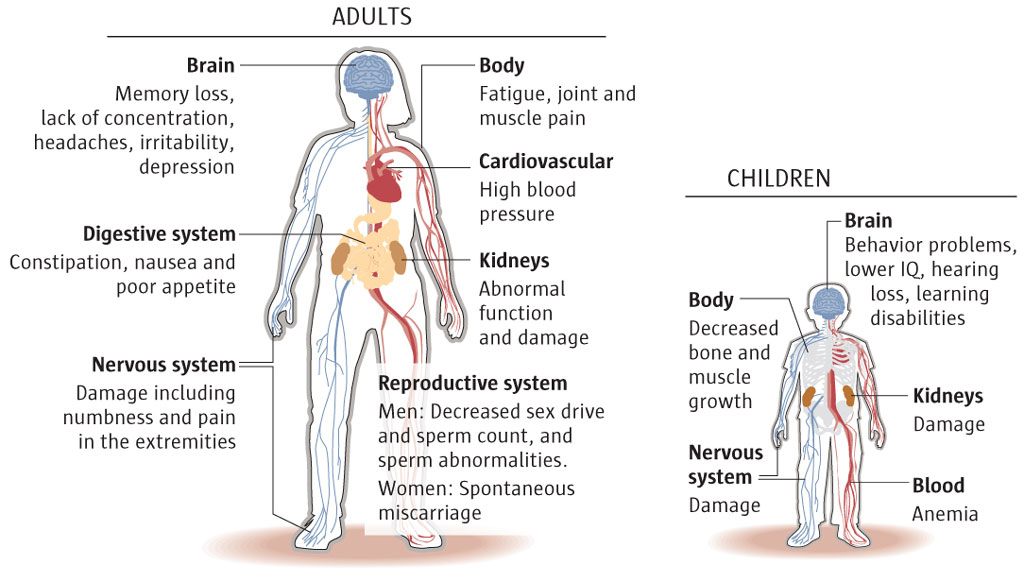
Just hours after state officials acknowledged her data, Hanna-Attisha felt equal parts exhausted and vindicated — at one moment laughing at congratulatory e-mails and comments from colleagues (Maybe they'll give you a lead key to the city, one had quipped), at another reciting sobering statistics about the life-long damage from lead poisoning: irreversible brain damage, development delays, speech problems, a boosted risk for behavioral issues, serious chronic conditions, to name a few.
"It has been such a physiologic response," she said of her look at the numbers and the state's reaction. She sat in her office, where children's artwork hangs haphazardly on the walls. A pink-lettered sign on her door — This is my fight song, it reads — pays homage to Hurley's youngest cancer patients.
"At times I want to cry and then I’m so happy," she said.
But then Hanna-Attisha,a pediatrician for many of Flint's poorest families whose training and experience has focused on environmental toxins and health disparities, shook her head.
"But then I’m tearful because how could this have happened in 2015 when all these regulations are in place (to ensure clean water)? For a population that has every burden in the world already, this is the last thing they needed," she said.
In retrospect, Attisha served as the canary in the coalmine in this latest public health crisis — the doctor who spotted a problem and wouldn't let it go until others paid attention, said Dr. Eden Wells, the state’s chief medical executive.
"She was a doc on the front lines who knows to pick up the phone ... rattle some cages and say 'Hey, come here, we’ve got a problem,'" Wells said.
It began over a dinner party with high school friends Aug. 26.
Among Hanna-Attisha's guests was a friend who played piano at her wedding and is also a water-quality expert. The conversation turned to the issue of the drinking water. Have you looked at kids' blood-lead levels? the friend asked.
Hanna-Attisha was not only intrigued, but also perfectly positioned for such a data dive.
She heads the pediatric residents program at Hurley and is a pediatrics and human development professor at the Michigan State University College of Human Medicine. She sits on the Michigan Chapter of the American Academy of Pediatrics, too.
In short, she lives as much on the research side of medicine as she does the clinical side.
So she knew that routinely drawn blood-led level data existed for thousands of Flint-area children, especially those on Medicaid or who live in high-risk areas for lead exposure. The following week, she turned to the Genesee County Health Department for its blood-lead level data.
She was disappointed. Test results are kept in individual patient files and could not be easily analyzed, Genesee County health officer Mark Valacak told Hanna-Attisha.
Undaunted, she asked the state for its analysis of the same blood-level data for Flint.
In the meantime, local and state officials were facing mounting pressure from residents who had already complained that the water smelled and tasted funny.
In mid-September, a Virginia Tech researcher and lead expert, Marc Edwards, concluded from his testing of Flint water it was 19 times more corrosive than Detroit water. And even though repeated testing at Flint's water treatment plant had detected no lead and testing in homes had registered lead at acceptable levels, according to the state, Edwards wrote on his web site, www.flintwaterstudy.org, that his own test results suggested an undeniable presence of lead in water drawn from Flint homes.
While she waited for state data, Hanna-Attisha began sorting through Hurley's own records — a total of 1,746 test results from Flint children to compare against 1,640 results from elsewhere in Genesee County. The results were sobering: The number of Flint children with elevated blood-lead levels — 5 micrograms per deciliter or more — jumped from 2.1% in the 20 months prior to Sept. 15, 2013, to 4.0% between Jan. 1 and Sept. 15 this year. In certain ZIP Codes, the change was even more troubling, she said — jumping from 2.5% of the children tested to 6.3%.
The change correlated roughly to the timing of the city's switch from using Detroit water to water that would be temporarily drawn from the Flint River.
She and her research assistant kept rechecking the numbers — often late into the evening.
One night, "her baby is crying and I’m like 'Can you run that p-value one more time?'" she said, chuckling.
By the time Hanna-Attisha went to Hurley's CEO, Melany Gavulic, public panic was high. Community organizations were handing out filters and bottled water. Community leaders blamed a state-appointed emergency manager for changing water systems. It's an election year too for the city.
It was a “politically messy situation,” Hanna-Attisha told her boss. Gavulic was clear, Hanna-Attisha said: Kids' health comes first.
On Sept. 24, Hanna-Attisha went public with her results.
The response from the state, she said, was startling. Her research was dismissed and her comments called "unfortunate."
Brad Wurfel, spokesman for the Michigan Department of Environmental Quality, repeated a familiar refrain: Repeated testing indicated the water tested within acceptable levels.
Hanna-Attisha said she crawled into bed that night, physically ill.
"We checked our data a bazillion times ... but when you hear (the state's dismissal) on national news, how can you not doubt yourself?" she said.
She wasn't the only one surprised. Valacak, the Genesee County health executive, said he, "took offense ... in part because I know how dedicated she is and I know the quality of her character."
That Monday, Valacak emailed state health officials. Among his questions: Why would the state's analysis include non-Flint residents? On Tuesday, he pushed again for an answer. On Wednesday: "Any update?"
He got no answers, he said: "It was frustrating."
At the same time, Hanna-Attisha had stepped up conversations with Wells, who had taken her post as the state's chief medical executive in May. The two women knew of each other and had even stood together earlier this year to promote immunizations.
Wells, who leads the preventive medicine residency program at the University of Michigan's school of public health, said she'd heard media reports about Flint's water. She balanced those against water-quality tests indicating the water was safe. Moreover, a look at county-wide data didn't trigger any alarms.
Now, she was alarmed by a closer look at Hanna-Attisha's findings.
In several conversations, Wells and Hanna-Attisha compared the pediatrician's analysis against that of the state epidemiologists. Among the differences: The state's number included kids from outside Flint — those who wouldn't normally drink Flint water. Some had Flint addresses but lived outside city limits.
As September drew to a close, state health epidemiologists reanalyzed their data, eventually confirming Hanna-Attisha's results. Wells saw a yellow Post-it note from her staff on her keyboard when she walked in at 7:30 a.m. Oct. 1. Her own data analysts had confirmed Hanna-Attisha's findings. She walked down the hallway to find Nick Lyon, director of the Michigan Department of Health and Human Services. They'd have to let the public know — and fast, the two decided.
That same day, Valacak and Genesee County commissioners declared a public health emergency. Commission chairman Jamie Curtis said he'd simply had enough. Dr. Hanna-Attisha's data couldn't be ignored, no matter what state authorities said water testing indicated. "In six years I don’t want 5- and 6-year-olds going to school with lead poisoning," he said.
Valacak said he got a call the next day — Friday, shortly before the state news conference. Dr. Hanna-Attisha's numbers had been confirmed, he was told.
At 1:30 p.m. Friday, Oct. 2, Flint Mayor Dayne Walling joined state officials — environmental, health, and public relations — at the microphone in front of a packed room of reporters.
"We understand many have lost confidence in the drinking water. We need to build that back. We need to do that more," Dan Wyant, of the Michigan Department of Environmental Quality, said in front of a line of cameras. Reporters tapped away on keyboards. Outside were protesters.
Quietly in the back of the room stood Hanna-Attisha, She leaned over to Brad Wurfel, the state spokesman who a week earlier had called her work “unfortunate" in a time of “near hysteria."
You called me irresponsible, Hanna-Attisha recalled saying to him. Wurfel said he was sorry.
"I had the opportunity to apologize ... I was grateful for the opportunity to do it," Wurfel told the Free Press later. "I will be the first to say, I came on a little strong on this because I believed the numbers we had in the moment."
Hanna-Attisha, whom Gavulic called "definitely one of our superstars" even before her recent spotlight, said she and other researchers aren't done. They want to specifically map blood-lead levels throughout the city's neighborhoods, and they want to test for blood-levels in cord blood from Flint's newest babies.
Exhausting? Yes. Ready to stop? Never, she said: "Because this is what matters. This is what we do ... This is why we're here."