Showing posts sorted by relevance for query marion brown. Sort by date Show all posts

Saturday, February 24, 2018

Marion Brown Should Ask Perkins Coie To Represent Her

This entire article is such a travesty to the United States process of civil rights.

Why is it that a media outlet such as BuzzFeed must take it upon themselves to advocate due process for Marion Brown?

Where is the U.S. Department of Justice?

Where is the FBI to look into this matter?

Where are the congressional investigations?

Oh, wait.  I remember.  They are still ongoing.

I am going to begin advocating for this matter to be brought forth before the ICC, that way everyone who has been harmed may have their proper time, through due process, of course, to amend the annals of history.

Marion Brown should be afforded the opportunity of publicly presenting her entire work history file, as well as her daughter's and any other relative, while employed by the U.S. Congress and political campaigns.

Perhaps, Marion should ask Perkins Coie to represent her, pro bono.
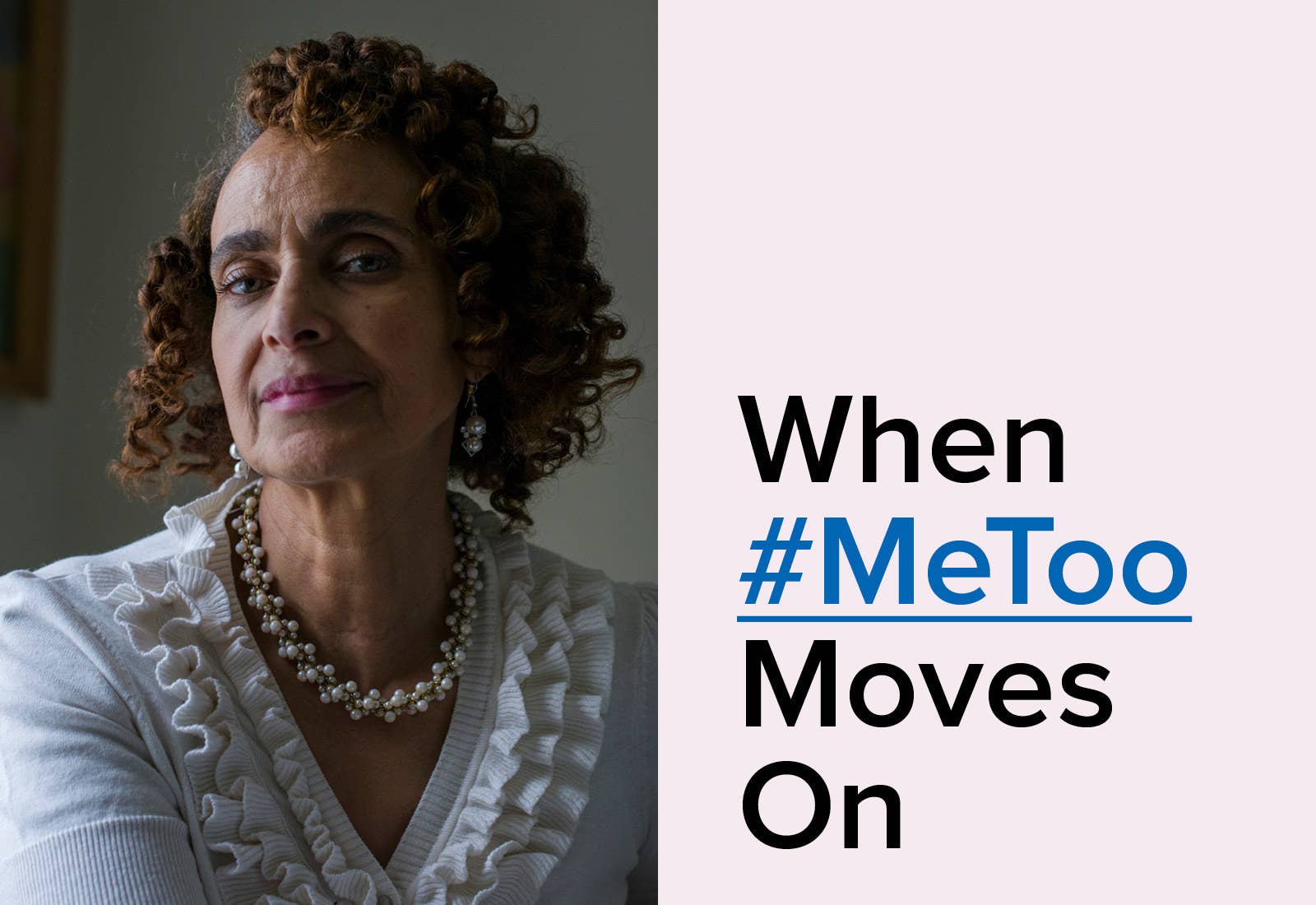
Marion Brown Accused Rep. John Conyers Of Harassing Her. Here’s What Happened After.


“It’s just been really hard. It’s been really hard surviving,” says Brown. “Nobody wants to touch you, no one wants to hire you.”

Marion Brown spent Thanksgiving of 2017 with her family, trying not to think about a phone call she had just received from a reporter telling her that documents detailing a difficult, personal story of hers had been leaked.

Almost three years earlier she had launched a sexual harassment complaint against her old boss, the powerful Detroit politician Rep. John Conyers. It had had been a trying experience, and in the end she took a $27,000 payout in exchange for signing a gag order and walking away. For years that had been that, but now some reporters wanted to write about what had happened to her.

“It was scary and I wanted it to go away. I didn’t want to talk. I didn’t want to deal with it because I didn’t know how to deal with it,” she said.

The call had drudged up some painful memories. Brown had alleged that Conyers repeatedly asked her for sexual favors. Despite three coworkers signing corroborating statements, she struggled to find a lawyer to take her case. Conyers denied all wrongdoing and continued to go on serving as normal.

Brown had to pay part of her settlement to the lawyers she found to represent her, while it didn’t cost Conyers a dime — taxpayers footed the bill. These were not experiences Brown wished to revisit.

But over the course of Thanksgiving weekend, Brown says, she began to see it in a different light. “It kind of felt like a higher purpose that I had been given,” she said. “A great deal of my adult life I’ve tried to find my purpose — how I can have an impact and positive change in our society. You know, I just kind of began to think like that and got a strength to feel like I had to do the right thing.”

Brown, 62, ended up talking about her experiences, and in doing so kicked off a chaotic few months. She has been interviewed on national television and named in countless news stories. Conyers is no longer in Congress. Her story ended up being a key catalyst to force Congress to overturn its secretive system of handling harassment complaints. She’s been lauded as a strong voice for harassment victims in the line of Anita Hill.

“My mom, who passed away at 95 years old a couple years ago, would be proud of me,” she said. “And I feel good that my granddaughter, that she’ll know I can make the world better for her.”

And yet many of her worst fears — and the reasons why she didn’t want to come forward in the first place — were also realized. She felt pilloried by supporters of Conyers, and still feels blackballed by the political establishment in her home state of Michigan.

Brown initially requested anonymity but eventually came forward in a TV interview with the Today show. When asked if she had been released from her gag order, Brown admitted she had not and was taking a legal risk by speaking out. “The reason I’m taking a risk is it’s important. I want to be a voice,” she said on air.

Conyers didn’t sue her, but he did attempt to discredit her. His lawyer held a press conference in Detroit to denounce Brown as an “opportunist.” During it he revealed a photo of Brown and Conyers posing together at a local event, the 2011 Barristers’ Ball, along with a printout of a text from Brown asking for a copy of the photo. “She said that he took every opportunity during [work] hours to harass her. He was an animal but you booed up with him at the Barrister Ball? Come on now, it doesn’t work like that,” the lawyer told reporters.

The photo was shared on Facebook by supporters of Conyers as evidence of Brown’s dishonesty. A rally was held in Detroit where a series of local politicians and community leaders argued Conyers was being unfairly persecuted and denied due process.

Brown describes that period as hurtful and challenging. She remembers running into someone she knew, and afterward overhearing them whisper to a friend, “That’s the woman.” Even after Conyers resigned, he never gave his accusers any validation. “He never apologized, he never admitted to any of us what he did. He just denied it and resigned,” said Brown.

As the scandal unfolded, many people in both Detroit and Washington defended Conyers. Brown herself grappled with the contradiction that the person she was publicly accusing of harassing her had a history of fighting for civil rights that dated back to the late 1950s when he was a young lawyer.

Over the years Conyers cofounded the Congressional Black Caucus, sponsored a bill to create Martin Luther King Jr. Day, and rose to become chair of the House Judiciary Committee. Many people see him as a hero. Brown herself once shared that assessment, and to some degree still does.

“I’m not taking that away from him. There are things that he has done that are very critical and important and legendary in the civil rights movement,” she said. “But that doesn’t take away from what he has done to people, to women — that is wrong. You can be a great person in one aspect but do some bad things.”

A refrain Brown heard after her story came out was: “If you’re telling the truth that the situation was so bad, why didn’t you just leave?” The simple answer to that, she says, is that she tried to leave on multiple occasions. But Conyers’ stature being what it was in Detroit, there was a common understanding that you do not poach one of his staff without his blessing. Her overtures to find another job went nowhere, and in the end she stayed.

“You stay and you find a way to survive because you have to take care of your kids,” she said. “I was a single parent with four children. Don’t try to discredit me because I stayed and tried to survive. That’s just ignorant because that means you haven’t tried to walk a mile in my shoes.”

One of the most frustrating accusations levelled at her is that she came forward with her story for fame. She says she’s heard comments that she should have waited until after Conyers retired to spare the community the embarrassment. But Brown didn’t choose when to come forward at all.

Unbeknownst to her, her old affidavits were obtained by BuzzFeed News last fall. When the story was released it set off a chain reaction of events. Conyers vehemently denied Brown’s allegations and his lawyer denounced Brown as an “opportunist.” But soon another woman’s account came to light, followed by another. After being abandoned by Democratic leadership, Conyers announced his resignation in December.

But the story kept going. Under pressure, the House revealed first that it paid out $350,000 in settlements involving members’ offices between 2008 and 2012, and then that a further $360,000 was paid to settle claims since 2013. Taxpayers footed the bill, and details of the settlements were kept under wraps.

Pressure continued to mount for Congress to reform its secretive harassment settlement system. Following the Conyers story, Sen. Al Franken and Rep. Trent Franks resigned over other harassment complaints. Reps. Blake Farenthold, Ruben Kihuen, and Patrick Meehan all faced allegations and announced they would not run for reelection. The dam finally broke and this January the House voted to change the way it handles harassment claims. It also passed reform legislation that still needs to go through the Senate and be signed by the president.

Many of the reforms were pushed by Brown herself and based on her experience with the system.
“It feels good to know that this change is happening and that I’m a part of it,” she said. “It’s gratifying to know that this was the right thing to do. Sometimes in life you’re chosen to go through adversity for the benefit of many others. So I feel good about that.”

But her career as a political employee has remained effectively over. She has found a part-time job, but says her savings are continuing to dwindle. While she got to tour around Washington and consult with lawmakers to urge changes to the system, many of which were adopted, she hoped at some point she would be welcomed back into the fold. But she still has not found a new job on the Hill.

This is not an experience unique to Brown and she has befriended another woman who went through a similar experience on Capitol Hill, Winsome Packer. Congress’s Office of Compliance used public money to pay Packer $220,000 to settle her harassment complaint with her boss, Florida Democratic Rep. Alcee Hastings. Packer alleged that Hastings made sexual overtures to her. Hastings denied the allegations and his legal team portrayed the harassment complaint as extortion. In recent days Brown and Packer began talking to each other about their experiences and have become friends.

In the years since she left Congress, Packer, too, has struggled to find a job. After a long series of seemingly promising opportunities went nowhere, Packer is currently living with her sister in DC. She still blames Congress for smearing her, and for preventing her from moving on in her career.
Packer worked as an analyst for the House Homeland Security Committee working on files such as border security, combating terrorism, and arms control. “These are not touchy-feely issues,” she said, but rather tough problems problems where expertise is in high demand.

“You must ask, why is it all of us who have complained about sexual harassment, none of us can find work?” she said.

In theory, things are changing. While Brown was given no assistance throughout her complaint process, the reforms already passed by the House include providing guidance and support to employees who launch complaints. If the full package is passed by the Senate, it would remove the gag order, would allow staffers to work remotely while their complaint is pending, and would no longer force complainants to go through mandatory mediation before pursuing a complaint.

But one of Brown’s proposals did not get adopted. She had hoped for some measure where staffers who can no longer work in their offices due to harassment, or are unfairly fired, could continue to draw a salary until they find a new place to work.

That would help fix the imbalance, she argues, in which politicians can move on, draw their pensions and often lead comfortable lives, while their former staffers are left to search for a new job with a black mark on their name. She’s pushing for the bill to be amended to address this.

“It’s just been really hard. It’s been really hard surviving,” said Brown. “Nobody wants to touch you, no one wants to hire you.”

Brown said she still feels like she has a lot left to contribute, and wishes she would be given the chance. But despite feeling shut out, and living through the backlash, Brown said she’s happy her story came out. She got to work with people like California Rep. Jackie Speier to push for Congress to change the way it operates. She hopes to one day meet an idol of hers, Anita Hill, who faced public scorn for publicly saying she was harassed by then-Supreme Court nominee Clarence Thomas.

Brown said she feels a sense of pride and purpose when looking back on the past few months. But it hasn’t been easy. She never got her political career back, and still feels treated like a pariah by some in her community who are angry Conyers retired. For all her public accomplishments, she feels left alone to deal with the backlash.

“That’s the way I feel now — shut out,” she said. “In the beginning everyone was like, ‘oh, you’re making history.’ But then slowly your name disappears, nobody cares.”

The moral of the story is: "Do not be mean to my Sweetie, Period."

Voting is beautiful, be beautiful ~ vote.©

Monday, December 4, 2017

Even Congressional Staffers Go To Prison

Former U.S. Representative Corrine Brown was sentenced to prison for doing what everyone else has been doing in congress for years.

She is just small potatoes.

There are many, many more members of congress who are running fraud schemes through their political campaigns.

What is interesting in this story is that her Chief of Staff was also sentenced.

Even staffers go to prison for lying, stealing and interfering with elections where no manufactured public smear will ever save them.

Even fromer staffers can go to prison when they lie to congress to cover up doing the same thing when they know they may be under federal investigation.

Ex-U.S. Rep. Corrine Brown sentenced to prison


“This is a sad day for everyone,” U.S. District Judge Timothy Corrigan told Brown shortly after announcing her five-year prison sentence.

Former U.S. Rep. Corrine Brown was sentenced Monday to five years in federal prison for fraud and tax crimes that included raising hundreds of thousands of dollars for a sham charity.

Brown’s longtime chief of staff, Ronnie Simmons, was sentenced to 48 months in prison, and the charity’s founder, One Door for Education President Carla Wiley, was sentenced to 21 months.

U.S. District Judge Timothy Corrigan said he believed Brown — whose former district included portions of Marion and Alachua counties — used her position in Congress to achieve an “admirable record of service.” However, he also said she abused the trust of that office in order carry out a criminal conspiracy.

“This is a sad day for everyone,” Corrigan told Brown shortly after announcing her sentence. “I was impressed with all the outpouring of support for you, and I think it’s a tribute to all the work you’ve done over the years. That’s what makes this all the more tragic.”

In a lengthy statement read before announcing the sentences, Corrigan said he believed Brown and Simmons shared an equal amount of culpability in the conspiracy, while Wiley held the least amount.
Still, he noted the three each reaped the benefits of the illegal scheme, which he described as “especially shameless” since they took money that was supposed to provide educational opportunities for children and instead used it to bankroll a lavish lifestyle.

“This was a crime born out of entitlement and greed committed to ensure a lifestyle that was beyond their means,” Corrigan said. “Just think of the good that could have been done with that money if it would have been used for its intended purpose.”

Corrigan ordered Brown to report to prison no earlier than Jan. 8 to an as-yet undetermined prison, but allowed her to remain free until then.

Brown’s attorney, James Smith of Orlando, had argued for probation and said Brown would appeal the sentence.

An appeal may not keep the 12-term congresswoman from going behind bars, however. Federal rules say Brown should begin serving her time while the appeal is pending unless the judge finds the defense is raising substantial issues that are likely to result in a new trial or a sentence shorter than the time he’ll need to decide the appeal.

Prosecutors asked Corrigan for at least five years in prison during a sentencing hearing held last month.

A pre-sentencing report from courthouse staff, which the judge isn’t required to follow, recommended a prison term between seven years, three months and nine years.

That term was based on sentencing guidelines for the 18 counts Brown was convicted on at a trial in May. Jurors found her guilty of charges involving wire and mail fraud, conspiracy, concealing income and filing false tax returns.

Thirteen of the counts Brown was convicted of involved her fundraising efforts for One Door for Education, an organization she falsely described as being a tax-exempt nonprofit supporting projects to help children.

Wiley, who at one point dated Simmons, had started One Door as a grassroots Virginia scholarship fund in honor of her mother. But the fund, which the Internal Revenue Service never recognized as a charity, was essentially inactive until Simmons suggested using it as a tool to receive – and spend – money Brown’s backers donated for receptions she held during yearly legislative conferences.

Between 2012 and the start of 2016, One Door received about $800,000 in donations, often from wealthy businesspeople who later said Brown personally approached them and told them One Door would use the money for kids’ causes.

In reality, jurors were told during Brown’s trial, only a tiny sliver of the money was spent on real charity, while more than $330,000 went into party-like events like outings to a Beyonce concert, a Jaguars-Redskins game in Washington and the invitational golf tournament One Door sponsored in Brown’s honor at TPC Sawgrass.

Prosecutors reminded Corrigan last month that another $26,860 in cash was moved from One Door’s bank account to Brown’s accounts, sometimes with bank cameras recording Simmons picking up or depositing the money. Simmons also hand-delivered some cash to Brown, prosecutors had pointed out.

Simmons was indicted with Brown last year but took a plea deal and testified against his old boss, whom he worked for though a quarter-century. Wiley pleaded guilty to wire fraud conspiracy in March 2016, months before the others were even charged.

Prosecutors’ argument that the fraud had been significant was underscored by their requests for Corrigan to order the three to collectively forfeit more than $650,000 the government labeled as proceeds from the crime.

In addition, under a separate part of the law involving repaying crime victims for their losses, prosecutors asked for Brown and Simmons to be ordered to make restitution payments totaling $452,000 to donors who gave to One Door. They also asked for an order making Brown pay $62,000 in restitution to the IRS for lying on her taxes, and an order for Simmons to pay another $91,000 in restitution for a charge involving him alone creating a ghost employee on Brown’s staff payroll.

If Corrigan’s sentence stands, Brown’s imprisonment will end a tumultuous but significant career in which Brown and two others, all elected in 1992, became the first African-Americans that Florida sent to Congress since the 19th century.

Both in Congress and in Florida’s Legislature for a decade before then, Brown seemed to relish a role as an advocate for poor and disenfranchised people. She also enjoyed touting herself as a politician who brought political bacon home to Jacksonville in the form of funding for big highway projects and important public buildings, including the federal courthouse where she was sentenced.

Her 24 years in Congress only ended after she was indicted, and Brown had pushed back hard against the idea that the criminal case would define her legacy.

“On my tombstone it will not say ‘felon, guilty,’” Brown said during an interview with Times-Union news partner First Coast News in April.

Voting is beautiful, be beautiful ~ vote.©

Thursday, February 15, 2018

Marion Brown Went Shopping In D.C.

No comment at this time...your honor.

https://knightfoundation.org/grants/4078

http://archive.is/xTgPg

Post-#MeToo, Stalled Careers, Alienation Still Haunt Sexual Harassment Victims

Marion, The Dry Humper

Lawmakers say they are aware of challenges

Shortly after Marion Brown’s account of sexual harassment toppled a powerful congressman last fall, she returned to Washington on a frigid afternoon to ask for support from the lawmakers who had lauded her as a hero.

Wearing a smartly tilted fur cap, she left her business cards with aides who, to her, looked two generations her junior. She hoped for a reference, a lead on a new job, a bit of advice. She left the Capitol feeling disappointed, although lawmakers told Roll Call they want to do all they can to help.
Brown, 62, who spent 11 years as a Detroit-based outreach director to former Michigan Democratic Rep. John Conyers Jr., is among a handful of former congressional employees to publicly disclose sexual harassment allegations in the aftermath of the #MeToo movement. Their stories attracted a surge of media attention and inspired bipartisan legislation that unanimously passed the House and is making its way to the Senate.

But the hoped-for reckoning in Congress has sputtered, and several of the alleged victims say the publicity has done little to diminish the toll on their careers and personal lives.

“People try to be as nice as they can, but I’m still feeling the backlash,” Brown said.

In the months after sexual misconduct allegations against Hollywood producer Harvey Weinstein inspired a national conversation about sexual harassment in American institutions, eight members of Congress — seven of them in the House — have either resigned or announced they will not seek re-election because of allegations of harassment or sexual misconduct. That number, though large by historical standards, pales compared to the dozens of accusations against powerful men in other industries.

Meanwhile, details of past allegations against members of Congress remain unclear. There are lingering questions about lawmakers’ ability, or willingness, to investigate their own colleagues. And calls for accountability have largely given way to attempts to improve working conditions for future employees.

Brown and other women who have come forward say all the attention has not improved their stalled careers or their sense of isolation — repercussions that they believe will continue to prevent other women from speaking up about mistreatment.

Lawmakers say they know it is tough for women in Brown’s position. The only thing that will make it easier is to change the culture surrounding gender dynamics in the workplace, and that conversation is just beginning.

The aftermath

Brown, petite and steely-eyed, first encountered those consequences when she lost her job in Conyers’ office in 2013 and filed a complaint alleging that he had touched her inappropriately and pressured her for sex for years. Her case was buttressed by four signed affidavits from colleagues who said they had witnessed Brown’s treatment, and that Conyers had harassed them too.

Not ready to retire, she tried to get another job in politics. She gave up shortly after another member of Congress told her he needed Conyers’ support too much to cross him, she said.

“That was his reputation,” she recalled. “Nobody is going to hire you. Nobody is going to touch you, unless you have a blessing from him.”

In 2014, she signed an agreement never to talk about her allegations in exchange for a $27,000 payment. It was fraction of her $72,000-a-year salary, and did little to compensate for the years of productivity remaining in her career. She took a job as a part-time airline gate attendant for $15 an hour and the promise of occasional free flights.

She thought she had moved on when she got a call last Thanksgiving weekend saying she was about to be thrust into a media firestorm.

Mike Cernovich, a blogger with a far-right following, had offered $10,000 to anyone who could document a sexual harassment claim against a member of Congress. The offer netted him Brown’s settlement agreement, though the source, he later said, declined the reward.

Brown said she still doesn’t know who gave Cernovich the documents. This point is important, she said, because people think she leaked her own story to take revenge on Conyers. Cernovich is best known for promoting a debunked conspiracy theory that the Hillary Clinton campaign ran a pedophile ring from a D.C. pizzeria.

She waited over a week to respond publicly. She made up her mind after watching Conyers deny her allegations and House minority leaderNancy Pelosi defend him on national television as “an icon.”
Watch: The #MeToo Impact on 2018

“I just wanted to control the story,” Brown said. She also hoped that she could rehabilitate her career and play a role in what she saw as an emerging social movement. And for a head-spinning week, she did. She met with lawmakers and House officials who wanted to know how they could change the system.

Conyers’ supporters held a rally at a Detroit church, saying he had been treated unfairly and deserved due process under the law. But the pressure on him mounted as several other alleged victims came forward, and he resigned.

Brown returned to the same pressures of her post-congressional life in Detroit — the unpaid bills, the rapidly diminishing savings, the uncertainty about her future.

This time, though, she faced the added stress of suddenly becoming a public figure in a local community that had expressed extreme ambivalence about Conyers’ rapid descent. Some offered support. Her indoor cycling instructor even led the class in a round of applause. But others shunned her. She was snubbed at restaurants, she said. Friends stopped speaking to her.

“People feel like supporting me publicly is like not supporting him,” she said. “In the community, it’s like, ‘Why did you do it?’ These are the most hurtful things, when you lose people who you thought were friends.”

Conyers’ lawyer Arnold Reed said the former congressman would not comment for this story. He said Conyers is enjoying his civilian life.

“It’s a proven fact that her claims are false,” Reed said, without elaborating. “John Conyers has become the poster child for people to bring false allegations, and then they feel bad, because they lie.”

A better future?

Lawmakers say they are acutely aware of the challenges facing alleged victims like Brown, who lost their careers and reputations for speaking out at a time when there was little incentive to do so. Some have thrown their energies into trying to ensure future victims are better protected.

Female house members played a key role in drafting the workplace protection changes that passed the House last week — the first such update for congressional employees since 1995. Some changes went into effect immediately, including a rule that would create an office devoted to counseling House staffers throughout the claims process and a commitment to pay for their legal representation. Others, like a provision that would require all members of Congress to pay for settlements involving their own alleged misdeeds, are awaiting a vote in the Senate.

Indiana Republican Susan W. Brooks, who chairs the House Ethics Committee, told Roll Call columnist Patricia Murphy last month that her work on the legislation was “some of the most important work I’ll ever do in the House.”

The sponsors spent hours meeting with victims. California Democrat Jackie Speier, one of two former staffers in the group, filmed a video in which she talked about being assaulted as a young staff member.

Other female sponsors said privately they were motivated, in part, by personal experiences they were not prepared to divulge. They also said they feared their male colleagues would respond by shutting young women out of jobs or the social interactions that can be crucial to career development on the Hill.

Critics, however, said it was unclear whether the legislation would make much of a difference, partly because it didn’t specify how the new resources would be paid for. It also took away authority from the Office of Congressional Ethics — the only independent body tasked with investigating ethics allegations against House members. Instead, cases would be automatically referred to Ethics committees in the House and Senate, which are composed of members and their staffs.

Those committees have frequently been criticized for being overly lenient on lawmakers.
“It’s clear that Ethics committees are not just asking what the person is charged with, but what does it mean to the institution, how will impact my party down the line,” said George Derek Musgrove, author of the book “Rumor, Repression, and Racial Politics: How the Harassment of Black Elected Officials Shaped Post-Civil Rights America.”

Most ethical investigations in the House or Senate drag on for years or are resolved in secret — 125 of the 190 cases the House Ethics Committee has opened since 2011 were resolved confidentially, according to a report released Wednesday by the watchdog group Issue One.

Even under the intense media scrutiny spurred by the #MeToo movement, the fallout for members who have been named as alleged harassers in recent months has been mixed, with lawmakers’ themselves deciding their fate and little that amounts to due process.

Keeping secrets

Many allegations still remain secret. The names of members or offices involved in the more than $300,000 in payouts for sexual harassment and other workplace discrimination claims since 2003 have not been released, and it is uncertain if they ever will be.

Rep. Barbara Comstock, who has been at the forefront of calls for institutional changes, said last week that she would continue to press for those details.

“We need to let the victims know that they can speak out from the past,” the Virginia Republican said on the House floor. “If they want to speak out, they can; that this body is not going to be using any of our resources to stop a victim from the past from speaking out.”

Those who have already spoken out, though, say they need more than an assurance that Congress won’t stand in their way. Brown, for one, is still wondering what happens next.

“I don’t want it to be five minutes of fame, to be associated with wanting to just have revenge and taking someone down,” she said. “I want to be a part of the movement for change, for women’s equality. And I would want them to help.”

Voting is beautiful, be beautiful ~ vote.©

Tuesday, May 8, 2018

What Do Marion Brown & Stormy Daniels Have In Common?

Q: What do Marion Brown and Stormy Daniels have in common?

A: #perkinscoiesucks

I wonder if Marion Brown is going to be the opening act.

I hear she is seeking employment.

Stormy Daniels returns: Detroit strip club books porn star for 2 shows


America's most talked-about porn star is coming back to Detroit. 

Stormy Daniels will perform two shows May 14 at the Penthouse Club Detroit at 20771 W. Eight Mile Road, according to the club's Facebook page. 

"Exclusively for the Penthouse #grand opening it's the Penthouse Pet of the century," the post reads. 
Daniels, whose real name is Stephanie Clifford, skyrocketed to mainstream fame in recent months amid news reports of a 2006 one-night stand with President Donald Trump and a six-figure payout as part of a pre-election nondisclosure agreement that may have violated campaign finance laws.
Daniels performed last month at Truth Detroit gentlemen's club. 

No word yet on whether she plans to ever stop at another prominent Detroit strip club — Trumpps.

Voting is beautiful, be beautiful ~ vote.©

Monday, February 7, 2011

REINS Drops The Reins On Medicaid Fraud

Oh, this is hilarious.

Here you have a group of individuals who believe regulation is "job killing".  Well, when you are dealing with elected persons who lack administrative sophistication, you must assume their advice comes from their advocates... oops, I mean lobbyists, the same individuals who would significantly benefit from less regulatory mandates.


See, it goes like this, even though all three branches of government have their input into any administrative regulation that comes down, it is actually "job killing" because most of the local governments would not be in operation if they had to be compliant, let alone have to be compliant wtih civil rights policies.  This rings with even more truth when you understand that these "economically significant" new rules that may come down are dealing with privatization, out-sourced by state governments.

Now, let's put this into a more familiar perspective.

States get their Medicaid funding.  Then the contracts to provide child welfare services are privatized.  Even though there is already a moritoria on Medicaid regulation ... oh hell, just watch the video!


Taking aim at federal rules

U.S. Rep. Daniel Webster is among those who want to ease the red tape that often accompanies federal money


In recent weeks, Marion County officials have complained about being hog-tied by the strings that accompany some federal money they receive.
U.S. Rep. Daniel Webster wants to help them by cutting the fiscal ties that bind.
During a recent visit to Ocala, the newly elected Republican said he supports legislation that would empower Congress to approve "major" rules made by federal regulatory agencies deemed to have a significant impact on the overall economy.
The Regulations from the Executive in Need of Scrutiny Act — or REINS Act — defines a "major rule" as one that would have an annual effect on the economy of $100 million or more — or one that causes a "major increase" in costs for consumers, individual industries or government agencies.
Federal grants and awards often have extensive requirements for compliance and reporting that lead local officials to rethink whether they should have even accepted the funding in the first place.
In recent weeks, for example, the County Commission has questioned staff spending under a federal housing grant designed to stabilize neighborhoods with large numbers of foreclosures.
The program, created in 2008 under the $800 billion Housing and Economic Recovery Act, allows the county to buy, refurbish and resell selected properties as a way to slow the spread of blight in emptying communities.
The county initially received $6.3 million toward the effort and is considering whether to take an additional $4.6 million.
Last week, the commission agreed to approach the Federal Aviation Administration to find out whether a ban on aerobatic planes and pilots at the Dunnellon-Marion County Airport would force the county to forfeit at least $2.5 million in federal grants that fund improvements at the facility.
Marion County Public Schools, meanwhile, once devoted an entire department to monitoring federally funded programs and the attached requirements to ensure compliance with Washington's demands.
Webster, in a recent interview, said there must be a way to give local governments more latitude in deciding how those funds can be spent and still comply with the goals set by federal regulators.
He noted that President Barack Obama has even said as much.
In mid January, Obama issued an executive order calling for a "government-wide" review of federal regulations that hamper job creation and adversely affect economic growth.
"We can aid our communities by getting rid of federal strings," said Webster, whose district includes much of eastern Marion, including parts of Ocala and Silver Springs Shores.
Describing these requirements as often "duplicative and oppressive," the freshman congressman, who is also a 28-year veteran of the Florida Legislature, indicated that he believes these regulations eventually catch up to local governments as they do local businesses.
"These are the items I want to dispose of," he added. "Part of Congress' duty is to oversee, and they have not done that."
He also thought Congress should start to write more specific laws to curtail the ambiguity that executive-branch agencies exploit in the absence of concrete direction from lawmakers.
"People and states have had it with the federal government telling them what to do. This just balances what's there," Webster said.
The REINS Act was introduced in January by Rep. Geoff Davis, a Kentucky Republican. The two other Republican congressmen who represent parts of Marion County — Cliff Stearns of Ocala and Richard Nugent of Brooskville — support the measure. In fact, Stearns is a cosponsor and Nugent has asked to be one.
The fourth member of Marion's congressional delegation, Democrat Corrine Brown, is still studying the legislation and has not taken a formal stand.
Not everyone thinks the bill is so great. "While the legislation...may be well-intentioned, it simply misses the mark," U.S. Rep. John Conyers (D-Mich.) told a House subcommittee last month.
He went on to summarize the critics' position:
For starters, the bill overreaches. Congress may make laws, he said, but the REINS Act "unduly trammels on executive authority."
Second, the REINS cure does not target the disease of over regulation.
"Some might argue that there is a legitimate need to strike a balance between protecting the safety and health of all Americans (through federal rules and requirements) and fostering economic growth, job creation and competitiveness," Conyers said.
But REINS "will distort the rulemaking process" and "hamper the implementation of evert single law on the books!" he said.
"By changing the presumption in the Congressional Review Act, and requiring affirmative congressional approval (as opposed to disapproval) for all major rules, this act will serve as a chokehold, and stifle regulatory review, which I am afraid is the real intent of this legislation."
Finally, he said, REINS is based on incomplete economic analysis and "solely addresses the costs of regulation, while failing to account for the tremendous cost benefits that regulations yield."

Regulations From the Executive in Need of Scrutiny (REINS) Act of 2009

Wednesday, October 3, 2018

Cocktails & Popcorn: Marion Brown, Elisa Grubbs & William Isaac Robinson Have A DOJ OIG Report Issue #MeToo Moment Coming Up

Image result for woman sipping champagne popcorn
"How's that #MeToo working out, so far?"
I wonder if Marion Brown is going to visit Elisa Grubbs in prison, or just end up her cell mate, to keep the family together.

Melanie Sloane should try and get Perkins Coie to represent the rest of the individuals who were mean to my Sweetie.

Isaac can continue to help them with their #MeToo moments, as I am quite sure everyone involved is going to be in dire need of long term clinical psychological services.

I wonder the tales Elisa shall tell...

Oups j'ai dit une betis!

Again, the moral of the story is, "Do not be mean to my Sweetie, period."

Invest in popcorn and butter because the Horowitz DOJ OIG Report has yet to be publicly released.


Detroit — City Councilman Gabe Leland's campaign staffer was charged in federal court Wednesday with joining a conspiracy to bribe an unnamed Detroit politician with thousands of dollars in cash and valuable items.

Elisa Grubbs, 53, is expected to plead guilty amid a federal grand jury investigation targeting City Councilman Gabe Leland, who was first identified as being under investigation last year after The News obtained sealed FBI wiretap documents.

Leland is not named in the criminal filing but a Detroit businessman says he gave $7,500 to Grubbs in an envelope last year as a bribe for the councilman's help with a business dispute.

The conspiracy involving Grubbs is one of the latest corruption scandal to hit Detroit City Hall in the wake of the racketeering conspiracy scandal that sent former Detroit Mayor Kwame Kilpatrick to prison for 28 years.

Elisa Grubbs (front row) attended an event at Mr. Mapp's Lounge in
Detroit with City Councilman Gabe Leland (back row) in July 2017,
one month before prosecutors say she delivered a bribe. (Photo: Facebook)
Grubbs was charged 11 months after she leveled claims of inappropriate sexual behavior against Congressman John Conyers, a claim that contributed to the political titan's downfall after a 53-year career in public service. Grubbs, who said she worked for Conyers from 2001-13, claimed she was also touched by him inappropriately and that he appeared naked in front of her.

Grubbs' court-appointed lawyer did not respond to a message seeking comment Wednesday.

The city official who received bribes from Grubbs is not identified in court records. Instead, investigators refer to the politician as "City Official X."
The conspiracy outlined by the government involved "City Official X" receiving bribes in exchange for the city official using their official position to help an unnamed business owner.

In May 2017, "City Official X" met with an unnamed business owner and discussed helping the businessman in exchange for thousands of dollars.

Three months later, in August, the city official talked with the businessman on the telephone. The city official told the businessman to give the money to Grubbs.

On Aug. 4, 2017, Grubbs met the business owner and accepted thousands of dollars on behalf of "City Official X," according to federal court records. That same day, Grubbs gave the money to the city official.

The allegation and dates in the criminal case against Grubbs matches a claim involving bribes and Leland in a civil lawsuit in federal court.

Businessman Robert Carmack said he delivered $7,500 cash in an envelope to a Leland campaign worker in late summer 2017, according to the lawsuit filed against the councilman, Mayor Mike Duggan, the Detroit Land Bank and Wayne County Treasurer Eric Sabree.

The lawsuit’s allegations date to a few weeks before the August 2017 primary election in Detroit. Leland was running for re-election and Carmack was trying to resolve a dispute involving property he owned at 8124 Michigan Ave. Carmack alleges the city illegally demolished his commercial building using federal funds and was trying to sell the property.

“Leland demanded and requested...$15,000 for his reelection campaign,” Carmack’s lawyer Andrew Paterson wrote in the lawsuit.

Carmack says he ignored the request.

Leland, who chaired a City Council committee responsible for community development, promised not to sell the property in exchange for $15,000, Carmack alleges.

Leland's lawyer Steve Fishman declined comment about the Grubbs criminal case. Leland could not be reached for comment.

Carmack feared he was being extorted so he approached the FBI, according to the lawsuit. The FBI is investigating widespread corruption involving politicians, police officers in Detroit, Macomb County and across southeast Michigan.

“The FBI asked (Carmack to) wear a recording device and to pay defendant Leland as defendant Leland demanded,” Carmack’s lawyer wrote in the lawsuit.

The day after Leland asked for $15,000, Leland called the businessman and said he would be sending someone to pick up the cash, according to the lawsuit.

That same day, a woman who Carmack believed to be a Leland campaign worker met him on a side street near a bank on East Jefferson Avenue in Detroit, the lawsuit alleges.

“During the exchange, (Carmack) explains to the female campaign worker that the cash in the envelope was for defendant Leland and the female campaign worker responds by (stating) that it was not for her and that she would be delivering the money to defendant Leland immediately,” the lawsuit alleges.

The next day, Carmack said he met with Leland.

“Leland responded that he had in fact received the money from the campaign worker,” Paterson wrote.

Carmack was free to do whatever he wanted with the commercial property, Leland said, according to the lawsuit.

On Wednesday, Paterson identified Grubbs as the campaign staffer who received and delivered the bribe. Carmack believes he is the unidentified businessman referenced in the criminal case, Paterson said.

The lawyer said the criminal case proves Carmack was telling the truth about his dealings with Leland and other elected officials.

"My client has been unlawfully retaliated against by Councilman Leland and other elected city officials for exposing this corrupt behavior," Paterson said in a statement to The News. "Hopefully, today's (criminal charge) will send a clear message to other elected city officials who conspired with Councilman Leland to retaliate against my client that the FBI and the U.S. Attorney's office are seriously investigating their unlawful conduct."

Grubbs is pictured with Leland in photographs posted on Leland’s official city council Facebook page.

In one photograph, Grubbs is posing with Leland and others inside Mr. Mapp's Lounge in Detroit on July 3, 2017, one month before prosecutors say she allegedly picked up and delivered the bribe.  
In other photos, she’s at Leland's side at a June 3, 2017, ribbon cutting at Rippling Hope, a ministry that helps with mission trips.

In one of the photos, posted by Isaac Robinson, an attorney and candidate for Michigan’s House District 4, Robinson notes “Leland and the District 7 team” were out supporting the cause. Grubbs is tagged in the Facebook post.


Voting is beautiful, be beautiful ~ vote.©

Monday, September 16, 2019

The Tale Of Lisa Bloom & Her Trafficking Tiny Humans - Will She Represent Marion Brown In Detroit?

Women celebrate at CCBRT in Tanzania
"The Celestial Goddess of the Woodshed is telling
the world why Lisa Bloom sucks using us as lab rats."
Gather round, my Dearies, for the Celestial Goddess of the Woodshed shall tell the tale of Lisa Bloom and her Trafficking Tiny Humans.
I knew Lisa Bloom sucked because she was mean to my Sweetie, but now I know why she was mean to my Sweetie.
Lisa Bloom has a trafficking tiny humans issue and it is called the Fistula Foundation.

Fistula Foundation is in targeted geopolitical regions of Africa,

Fistula Foundation
Fistula Foundation
https://pdf.guidestar.org/PDF_Images/2017/770/547/2017-770547201-0fc4044e-9.pdf
The Fistual Foundation has lots of partners.

Fistula Foundation is dedicated to treating women suffering from obstetric fistula, a devastating childbirth injury that leaves a woman incontinent. Surgery is the only cure. Fistula Foundation provides more life-transforming fistula repair surgeries than any other organization in the world. We believe that no woman should endure a life of misery and isolation simply for trying to bring a child into the world. We are committed to accountability and transparency, and receive the highest ratings from every industry watchdog group.
"Epigenetic testing time series always need at least 80 lags!"

Kidde lab rats.

This is genetic testing.

Ask yourself, how come rare conditions only break out in targeted geographic regions?

According to Fistula:
“This is exactly the kind of program we strive to fund at Fistula Foundation. CCBRT has emerged as a global leader in fistula treatment and as a trailblazer in the use of M-PESA for patient identification and transportation,” said Kate Grant, CEO of Fistula Foundation, which has provided financial support for CCBRT’s fistula work since 2009.

It seems Lisa has investments in M-PESA which looks like the exact same thing Monica Peterson was uncovering in Haiti in those United Nations microfinance asset forfeiture human trafficking schemes. 
Following a three-year migration project to a new technology stack, as of 26 February 2017, IBM's responsibilities have been transferred to Huawei in all markets.
What the article below also fails to identify are the unanswered question of:

  • How did Cernovich get his hands of classified, congressional documents, that are not documented in traditional record keeping channels in congress?
  • Will Lisa be representing Marion Brown in January when Elisa Grubbs gets an attorney? 

At least we do know now her source of operational funding comes from the trafficking of tiny humans in Africa through Goldman Sachs, which means, we finally understand why Lisa was so mean to my Sweetie.

#perkinscoiesucks

The full story of how celebrity attorney Lisa Bloom worked to help Harvey Weinstein and give ammo to Donald Trump

Lisa Bloom
In “She Said,” a new book by New York Times reporters Jodi Kantor and Megan Twohey, the high-profile feminist attorney Lisa Bloom is put on blast for her defense of Harvey Weinstein.

A memo from Bloom to Weinstein detailing how she would use her experience defending sexual assault victims to discredit his accusers has gone viral, with multiple celebrities denouncing Bloom.

In addition, “She Said” suggests that Bloom operated a money-making scheme off of potential sexual assault victims of President Donald Trump, giving the president ammunition to defend himself in the process.

Lisa Bloom built a reputation of representing female victims of sexual assault, not unlike her mother, the famous feminist attorney Gloria Allred. But now Bloom’s reputation is at stake, thanks to a widely-publicized memo she sent her former client Harvey Weinstein and new details from the book “She Said: Breaking the Sexual Harassment Story That Helped Ignite a Movement.”

New York Times reporters Megan Twohey and Jodi Kantor reveal the process of breaking the Weinstein sexual harassment story that won a Pulitzer Prize in “She Said,” and at the same time the two cast doubt on Bloom’s legacy as a defender of women.

As explained in her memo to the disgraced Hollywood producer, Bloom relied on the same tactics she used to defend sexual assault victims to try and slander some of Weinstein’s accusers, most notably Rose McGowan. But as Twohey and Kantor explore in “She Said,” Bloom also provided President Donald Trump with valuable ammunition against the media and his accusers in her efforts to raise money for herself and potential Trump victims.

Read more: Gwyneth Paltrow hesitated to expose Harvey Weinstein because of controversy surrounding Goop, according to a new tell-all

Lisa Bloom’s career includes some major wins for female victims of sex crimes.

Bloom first practiced law at her mother’s firm, helping to file an ultimately unsuccessful sex discrimination suit against the Boy Scouts of America on behalf of a girl who wanted to join.

She enjoyed a lucrative career on TV as a legal expert before starting her own firm in 2010. Since then, Bloom and her clients have engaged in high-profile lawsuits that made strides in sex crime cases in New York and California.

Bloom represented model and actress Janice Dickinson in her defamation case against Bill Cosby, actress Mischa Barton in her revenge porn case, influencer Blac Chyna as she took out a temporary restraining order against Rob Kardashian, and former Representative John Conyers’ sexual harassment accuser Marion Brown.

She also represented three of Bill O’Reilly’s accusers, including Wendy Walsh, whose complaint incited 21st Century Fox to initiate the investigation that led to O’Reilly’s removal.

But in “She Said” and on Twitter, some of her clients have criticized how Bloom handled their cases.

Comedian Kathy Griffin wipes her eyes as her criminal attorney Dmitry Gorin (L) speaks at a news conference in Woodland Hills, Los Angeles, California, U.S., June 2, 2017. At right is attorney Lisa Bloom. REUTERS/Ringo Chiu
In “She Said,” Twohey and Kantor explain that Bloom represented former Fox contributor and attorney Tamara Holder in her sexual assault case against Fox executive Francisco Cortes, who she said trapped her in his office and tried to force her to perform oral sex.

Bloom helped Holder attain a settlement for more than $2.5 million, but Holder later told the reporters that Bloom didn’t explain just how ironclad the terms of the settlement were. Holder wanted to speak out about what had happened to her, but if articles were published, she would lose much of the $2.5 million.

“She did not care about me. She cared about the money,” Holder later told Twohey, explaining that Bloom fired her and walked away with $1 million after Holder voiced her concerns. In “She Said,” Bloom denies that she pressured Holder, and says she walks through settlements line-by-line with her clients.

Read more: The career of Lisa Bloom: How Gloria Allred’s daughter ended up defending Harvey Weinstein and came to regret it

On Twitter, after the memo sent from Bloom to Weinstein leaked, another one of her former clients spoke out: Kathy Griffin. Bloom represented Griffin after the comedian posted a picture of her holding up a prop of President Donald Trump’s severed head.

In her thread, Griffin explains that Bloom called a press conference days after the photo blew up online, during which Griffin felt more like a prop in “an infomercial for her firm in her office.” The comedian also said Bloom invited reporters from Entertainment Tonight, who interviewed Bloom while Griffin was in her office with Bloom’s husband, who held the door shut.

Griffin also said that conservative bloggers showed up to the press conference and harassed her, and that Bloom then charged her $40,000 for representation and advocacy, which Griffin asked to be returned – Bloom refused.

Bloom also relied on her experience defending women to help tear them down to Harvey Weinstein’s advantage.


The explosive memo, which circulated on Twitter and was contained in “She Said,” explains to Weinstein just how Bloom intended to use her repertoire of defenses for sexual assault victims against Weinsein’s accusers.

In it, Bloom specifically refers to actress and Weinstein accuser Rose McGowan as a “pathological liar,” and tells Weinstein “I feel equipped to help you against the Roses of the world, because I have represented so many of them.”

In “She Said,” Twohey and Kantor explore how Bloom attempted to gain information about their reporting and stymie their efforts even in the very beginning of their investigation. As Kantor began meeting with Hollywood actresses who weren’t ready to go on the record about their experiences with Weinstein yet, Bloom reached out via email, feigning ignorance.

Kantor learned from a colleague at The New York Times that Bloom was close to Weinstein, who, along with Jay-Z, she had announced would be making her book “Suspicion Nation: The Inside Story of the Trayvon Martin Injustice and Why We Continue to Repeat It” into a miniseries, which did not come to fruition.

Kantor ended up having a short conversation with Bloom, but did not reveal any details of her investigation into Weinstein’s sexual abuse.

It was also revealed later to the two reporters that Bloom, as part of the tactics she hinted at in her memo, explained to Weinstein that there was a difference between “physical coercion” and “mental coercion,” with the latter being sexual exploitation due to a power imbalance.

Bloom developed Weinstein’s defense that he had only mentally coerced McGowan, a lesser offense than assaulting her.

Bloom has apologized for defending Weinstein, but “She Said” exposes just how far the attorney was willing to go for her client.


Beyond representing Weinstein publicly, Bloom went on the offensive against Twohey and Kantor during their reporting. The attorney apologized for her role in Weinstein’s defense on Twitter, thanking the reporters and writing that “When the first woman went on record accusing him of sexual assault, I immediately resigned and apologized.”

She did resign from Weinstein’s team once the Times went ahead with publishing Twohey and Kantor’s reporting, but the two chronicle how far Bloom was willing to go to stop the publication of their article in “She Said.”

Not only was Bloom aware of records containing allegations against Weinstein prior to the reporting, but her mother Gloria Allred’s firm sat on them prior to the Times’ investigation. Allred negotiated a settlement between Weinstein and a backup dancer from “Dirty Dancing 2: Havana Nights,” which Weinstein’s company Miramax produced.

Read more: Celebrity attorney Lisa Bloom offered Harvey Weinstein a smear campaign against Rose McGowan in an unearthed letter

Allred is also a strong proponent of allowing non-disclosure agreements in conjunction with sexual assault and harassment settlements – which serve as a win for both the legal representation of the victim and the abuser, with the former profiting and the later keeping their reputation intact.

Both Bloom and her mother used the settlement and non-disclosure agreement method to seek closure for the women they represented.

While working for Weinstein, Bloom pressured the Times reporters and suggested the paper had a “reckless disregard for the truth.”


As Twohey and Kantor continued their investigation, W Magazine published a profile of Allred and Bloom with the headline “Gloria Allred and Lisa Bloom Are the Defenders of Women in 2017.” By January 2017, the Times reporters, wrote, Bloom had already been on Weinstein’s legal team for six weeks, and was being paid $895 per hour.

As publication of the Times’ investigation drew closer, in October, Bloom was still working for Weinstein. In an email to the producer and other members of his legal teeam, Bloom wrote “We can nip at [the article] around the edges – and we should – but it is going to run.”

In an early statement prepared for the Times, Bloom wrote that she was a women’s rights advocate and that she had forced Weinstein to listen to her and “evolve.” She noted that he was working on bringing her book to the screen, but had always been very respectful toward her.

Then, in a surprise visit to the newsroom, Bloom and Weinstein appeared in front of the reporters. Bloom pulled out red carpet photos of Weinstein with Judd and McGowan, while Weinstein suggested the two women were mentally unstable.

Right before the article went live online, Weinstein and Bloom called the reporters and continued to make the producer’s case. Bloom resorted to media shaming tactics, complaining that the Times had “a reckless disregard for the truth” and was attempting to publish a “hit piece” full of “false accusations.”

After the first article was published, with actress Ashley Judd on the record, Bloom continued to contend that the accusations were false. She only resigned after multiple more women came forward, The New Yorker published its own investigation, and actress Gwyneth Paltrow decided to go on the record with accusations of her own.

Some of Bloom’s fundraising for sexual assault victims may have been more for herself, and given Trump ammunition against his accusers.


Apart from her involvement in the Weinstein sexual harassment story, Twohey and Kantor pointed out another ploy that appeared to benefit Bloom financially under the guise of seeking legal justice for women. That time, it concerned Donald Trump.

In 2016, the reporters wrote in “She Said,” Bloom got involved in a lawsuit alleging that Trump and the late financier Jeffrey Epstein raped a 13-year-old girl together at a party at Epstein’s New York residence in the ’90s. Bloom announced she was representing the accuser and held a press conference for the Jane Doe to make her first public appearance.

She did not appear. Bloom approached the podium alone and announced that, due to death threats, her client was too afraid to appear publicly. To other Times reporters, it seemed like a stunt to garner media attention that benefitted Bloom. Later, the attorney said she dropped the case because the woman was too afraid to ever go public.

Bloom also acknowledged that she solicited funding from pro-Hillary Clinton donors for her work with the Jane Doe victim. After the lawsuit was dropped, Bloom had collected $700,000 for security and relocation fees, as well as a “safe house” for other potential Trump accusers. She returned $500,000, but kept $200,000 for “out-of-pocket expenses.”

As Twohey and Kantor write in “She Said,” the entire incident gave Trump ammunition to attack his accusers by suggesting that “four or five women […] got paid a lot of money to make up stories about me.” Bloom’s donations and preparations for potential Trump victims coupled with real Trump accusers, then twisted and amplified by the president’s rhetoric, gave Trump a story to stand on.

Bloom is currently representing accusers of Jeffrey Epstein, but her reputation may have taken a hit.


Radio-TV personality Wendy Walsh (R) speaks with reporters alongside her attorney, Lisa Bloom, to discuss her allegations of sexual harassment by Fox News host Bill O’Reilly, during a news conference in Los Angeles, California, U.S., April 3, 2017. REUTERS/Kevork Djansezian
Lately, Bloom has taken on a new role defending women, this time using her firm to represent some of Jeffrey Epstein’s accusers. She and her mother both represent women who have testified that Epstein abused them.

The actress Rose McGowan, who Bloom directly planned a smear campaign against, has spoken out since the publication of “She Said.”

“Her email is staggering. Staggering!” McGowan told Variety. “This woman should never work again.” The actress suggested that both Bloom and David Boies, another member of Weinstein’s legal team who also currently represents Epstein accusers, should be disbarred.

Along with McGown, other actresses and public figures have criticized Bloom’s role in representing Weinstein. Both Busy Philipps and Mandy Moore have denounced the memo’s contents on Twitter, with the former noting “[…] how beyond horrible if you are a victim she currently represents and you read this memo.”

“I hope this book will go a long way to exonerating me and the other victims who’ve dealt with slander and mental assault for years now,” McGowan told Variety. “As for me, in Hollywood I suppose I’ll continue not working. It doesn’t make any sense, and it’s really hurtful.

“But in my own life, I’m incredibly happy now and feeling very balanced. And that’s something they can’t take from me.”

Voting is beautiful, be beautiful ~ vote.©