Now, that Laura Cox has called for Dana Nessel to investigate Detroit and its child welfare issues, because preterm births and infant mortality is more than just a grant, it seems we are also looking into election fraud.
The Michigan GOP has its own grant funding issues, but hey, what do I know?
I know we should ask Mikey!
Everyone loves Mikey.
Mikey is Laura Cox's husband, the former Michigan Attorney General.
Mikey can tell his story and Kwame Kilpatrick can tell his story.
Mikey and Kwame used to be buddies, but hey, what do I know?
The state's Republican Party chairwoman is pointing to "serious allegations of impropriety" in her call Tuesday for the Michigan Attorney General's Office to investigate Detroit's grants office and its leader.
Laura Cox, in a released statement, noted allegations revealed in a Thursday lawsuit involving the city's Office of Development and Grants and Ryan Friedrichs, the office's chief development officer, who also is the husband of Democratic Secretary of State Jocelyn Benson.
“The allegations leveled against Ryan Friedrichs and the Detroit Office of Development and Grants are extremely troubling and warrant a full investigation by the Michigan Attorney General’s office,” Cox said in a released statement.
In a whistleblower lawsuit filed Thursday in Wayne County Circuit Court, ex-Detroit employee Kennedy Shannon contends she placed on administrative leave and ultimately terminated after raising concern over the city's Motor City Match program, a federally funded effort designed to aid small businesses.
Jocelyn Benson & Ryan Friedrichs
Meantime, Democratic Attorney General Dana Nessel's Office said last week that it's reviewing allegations that two city of Detroit employees were directed to delete emails related to Make Your Date, a nonprofit dedicated to premature births. One of the complaints was filed by Shannon.
The state's review comes amid a probe launched in April by Detroit Inspector General Ellen Ha to determine whether Detroit Mayor Mike Duggan, also a Democrat, and city officials potentially "abused their authority" by providing preferential treatment to the program run by Wayne State University. The investigation was sparked by a Detroit Free Press report that Make Your Date received $358,000 in city grants and benefited from a fundraising campaign that a city official led at the mayor’s request.
"Emails were deleted and employees were fired. The Attorney General’s office must get to the bottom of the allegations involving the Motor City Match Program, the city’s involvement with Make Your Date, and the attempt by the Detroit Office of Development and Grants to delete emails sought through correct legal recourse," Cox said. "Will the Attorney General’s office do their duty or will Attorney General Nessel’s friendship with Jocelyn Benson allow this potential cover-up to avoid scrutiny?”
In response, Nessel spokeswoman, Kelly Rossman-McKinney, said the office is actively reviewing the complaints it received involving deleted emails.
"Friendship or not, no one is above the law," she said.
Secretary of State spokesman Shawn Starkey also responded to Cox's comments, saying: “This is nothing more than the shamelessly opportunistic ramblings of a political hack.”
Shannon's lawsuit contends that she informed Katerli Bounds, the city's director of grants, and Friedrichs that there were "major compliance and HUD regulation issues" with the match program and that the city "should not make any more payments to this organization."
The lawsuit contends that she was told by Bounds that refusing to sign off on packets for the match program was "insubordination" and could result in termination.
In response, the city provided The Detroit News with a copy of a March email from Friedrichs sent to Bounds and Shannon following the meeting.
The email noted "takeaways" arrived at from the discussion, including that "staff members are supported in their ability to make a final decision on their sign-off on a packet."
Shannon was suspended for 30 days without pay on May 1. She was terminated May 23.
Duggan spokesman John Roach told The News on Tuesday that the city "strongly believes" the allegations in Shannon's lawsuit are false and "we are vigorously contesting that case in court."
"Injecting partisan politics into this matter isn't going to contribute to resolving the legal issues," he said.
Detroit Corporation Counsel Lawrence Garcia has claimed Shannon's dismissal was tied to concerns involving her time cards. Her concerns about the match program, he said, were "welcomed" and used to improve the system.
With respect to the emails, Garcia has said that Friedrichs and Detroit's Chief Financial Officer David Massaron learned of the "possibility of deleted or missing emails" in May and moved quickly to resurrect them and turn them over to the inspector general.
Garcia has declined to provide further details, citing Ha's ongoing investigation.
Shannon, in the filing, said she also flagged Detroit's inspector general about concerns involving Motor City Match and others tied to the Make Your Date.
On Tuesday, Shannon said Friedrichs and other city staff should welcome the review.
"If Ryan and his office haven't done anything wrong and they are of the highest integrity as they claim, then they should welcome this investigation and the result of the OIG investigation as well," she said.
The city of Detroit has built its development and grants compliance muscle to a team of nearly two dozen people, a third of them raising new public and private support for city initiatives.
That's a record fundraising contingent for the city and among the largest dedicated municipal fundraising efforts nationally, said Detroit's Chief Development Officer Ryan Friedrichs.
The goal? Capitalizing on rising interest nationally in the city's comeback. And there's evidence it is succeeding in bringing in outside money rather than just the usual local philanthropic stalwarts in a city that in the past had trouble actually spending the dollars it did get.
Last year, programs and initiatives in Detroit attracted over $202 million in public grants and private investment, according to the city.
Grants and low-interest loans from private foundations and companies totaled $67.4 million, with more than two-thirds of that coming from out-of-state funders.
"The goals are now bigger and bolder," Friedrichs said.
The city is going to pursue funding from even more sources, foundations that have not been in Detroit before, to fund efforts like the $250 million Affordable Housing Leverage Fund.
Ryan Friedrichs: Began as a one-man fundraising team.
"We are lucky we have a lot of foundations here ... but we also have a lot of need," Friedrichs said.
"What we're trying to do is bring that new funding to the city and not just compete locally, to cut the local philanthropic pie more, but to try to grow it."
Because of the revitalization happening in the city, it's become a magnet for investment from outside of Detroit, said Jim Ferris, director of the Center on Philanthropy and Public Policy at the University of Southern California.
Detroit is not the only city pursuing public and private grants and investment, he said. But "Detroit has put a lot of effort into it, and it's been a success."
Detroit has a spotty history on coordinating grant-seeking.
Detroit had an office of the foundation liaison staffed by David Smydra, during Mayor Dennis Archer's 1994-2001 term, but that office didn't operate during the Dave Bing and Kwame Kilpatrick administrations. And city departments were applying for grants independently of one another in the years before the bankruptcy.
To help strengthen and coordinate its fundraising muscle, the Ford, Kresge and Skillman foundations made a $1.1 million grant to the Community Foundation for Southeast Michigan in 2014 to support an assessment of what each city department was doing in regards to grants and to create a framework to coordinate it, Friedrichs said.
That led to the creation of grants management and development offices in late 2014 and early 2015. Both city offices were created as part of the city's bankruptcy plan, Friedrichs said. Grants management monitored grant compliance and spending, making sure dollars were spent on time, something the city struggled with before its bankruptcy.
Friedrichs came on board in 2015, serving as a one-man fundraising team for a time until the city began ramping up its development staff the following year.
This January the city merged the grants management and development offices to gain efficiencies from their related focus. The merged office now employs 20 and is in the process of hiring three more development employees: two to seek traditional funding from public and private funders and one specializing in loan and investment capital.
It will operate on a $3.1 million budget in the coming fiscal year, down from a combined budget of $3.8 million for the two offices this year, Friedrichs said, as a result of efficiencies such as shared administrative assistants, elimination of vacant grants management positions and collecting data for grant application and reporting one time and keeping it in a single system.
"We view the city's capacity to raise philanthropic grants and to fully expend and maximize federal dollars as a critical capability to enable Detroit's recovery," said Skillman CEO Tonya Allen.
"We are inspired by the growth in revenues materialized by this office, which we believe will improve living conditions for Detroit residents."
Increasing trust, confidence and credibility in the city "will help leverage additional and much-needed public, private and charitable investments to fuel Detroit's trajectory," she said.
Part of the strategy that Friedrichs' team has helped institute is keeping a reserve of city match money that can leverage private money, he said. It's also looking for opportunities where private investment can leverage federal dollars.
It's only been a couple of years, but the development and grant teams' efforts are paying off.
In 2017, the city and third-party groups like the Detroit Employment Service Corps attracted $202.18 million in public and private funds, up from $155.7 million the year before, Friedrichs said. The city operated on a $1.91 billion budget in 2017.
The total raised includes a mixture of grants and low-interest loans to support projects that are administered by community organizations.
They include: Grow Detroit's Young Talent program, which is run by the Detroit Employment Solutions Corp; Motor City Match and Motor City Re-Store, which are run by the Detroit Economic Growth Corp.; and the Entrepreneurs of Color Fund, run by the Detroit Development Fund.
"The goal of our team is not to just support more funds going into city coffers, but to help Detroit compete nationally for resources that improve the lives of Detroiters," Friedrichs said. "And that can mean partnering departments with community organizations via a memorandum of understanding."
Within the total, public support rose $18.1 million between 2016 and 2017. Private support from foundations and companies rose to $67.4 million last year from $39 million in 2016.
Funding from Michigan foundations and companies was fairly static last year, decreasing to $26.62 million from $26.78 million the year before.
Out-of-state funders provided over 60 percent of the total private support coming to the city last year, up from 31. 5 percent in 2016.
Looking forward
Investment is pouring into Detroit to support its rebound, but how will the city sustain those programs when grant and loan dollars run out?
"Philanthropy has really not pulled out of any programs we asked them to support. ... It's really the other direction. They've kind of come in with more support," Friedrichs said.
The city is budgeting to take on $2 million of the $10.2 million cost of Grow Detroit's Young Talent in the coming fiscal year.
The key to sustaining efforts supported through short- and midterm grants and investments is braided funding that combines federal grants and city funds, Friedrichs said.
"Grant funding from foundations is never going to be long-term."
At the City of Hamtramck inauguration of the its newly elected officials, I approached one of the officials, a mayoral appointment to the city's recently created Child Abuse and Neglect Task Force, Darla Swint.
In casual, superficial conversation, I asked her about the activities of her Child Abuse and Neglect Task Force. I wanted to know when and how often were the meetings convened. I wanted to review the agenda, and publish it, being a public document. Basically, I wanted to know if this Task Force was going to continue pumping the same garbage all the Task Forces do. I should have known.
With a scowled face, followed by the dismissive snatch of the head and rolling of the eyes, Darla Swint had the audacity, or rather ignorance, to ask me why I wanted to know. Shocked and dismayed, it was obvious she knew nothing of what she was doing.
Patiently and simplistically, I explained that child welfare policy was my area of recognized expertise. Madame Swint began to swell at the chest and challenge me by informing me that she had worked as a Wayne County child welfare worker for years.
Then, I asked if she was focusing on the fraud, waste and abuse in child welfare.
Well, I was put in my place! Madame Swint emphatically stated, "Everyone knows about the fraud. It has been going on for years. So what." [sic].
I responded, "Why did you never report it?" I was met with instructions to email her. I sent my Quo Warranto. That was the last I heard from her.
I share this story to open the door into the world of self-sustainability. Child Abuse and Neglect Task Forces (CANTF) have done nothing but justify its own existences by securing public and private funding to ensure current policies never change. Members of CANTFs participate to further failing political careers, for lack of any other abilities to pad their resumes.
The purpose of a CANTF, came from Child Abuse Prevention Treatment Act amendments to examine the rise in the phenomena of child abuse and neglect. States and local governments began to coordinate these consorita of foster care lobbying entities and and child placing agencies to "solve the problems of abuse and neglect and to improve the quality and scope of child protective services."
Never once did anyone think that the problem and scope is the fraud. When I say fraud, I mean:
*improper removals of children
*unnecessary removals of children
*improper payments
*fraudulent documentation
*fictitious court cases
*kiddy kickbacks
*phantom services
*phantom children
*double-billing
*murder
*billing for deceased children
*over-medicating children
*physical and sexual abuse
*defalcation
*embezzlement
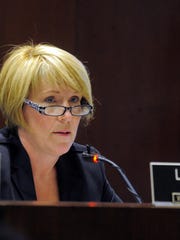
In Michigan, the Children's Trust Fund, is one of the funding sources for the County CANTFs in the state. In 2005, Wayne County Commissioners had created a CANTF. With around about $10,000, County Commissioner Laura Cox, seen here, got together with her colleagues and created the a Wayne County CANTF in response to the horrific death of the boy Ricky Holland.
There were a few phone calls made and that was it.
There was no possible way the Wayne County CANTF would even attempt to touch anything dealing with child abuse and neglect because, in Wayne County you see, the State Attorney General is the only one with prosecutorial power in child abuse and neglect proceedings. That would mean Laura Cox would be held accountable to her husband, Mike Cox. That would mean the Attorney General would have to hold itself accountable to its own Medicaid Fraud Control Unit.
Oh, what a tangled web we weave.
With that said, I shall calmly await for the first unproductive report from the Hamtramck CANTF to continue the tradition of doing absolutely nothing but perpetuating the fraud.
A more progressive potential of these CANTFs would be to take the collaborative example of Federal Interagency Workgroup on Child Abuse & Neglect (FIWCAN) and create joint local initiatives with local law enforcement and H.E.A.T. to stop Medicaid fraud in child welfare and establish accountability and transparency, while generating a substantial source of community funding by becoming relators in filing their own FCAs. There may even be opportunity to access ARRA funds.
But, what do I know about child welfare policy? Nothing according to Darla Swint.
Mikey Cox is back and reporting has failed to mention that he was former Michigan Attorney General under Governor Jennifer Granholm who failed the children of the state who cried out to him when it came to drugging, rape, torture and death in the child welfare system.
When a public entity is faced with significant financial challenges, most often those challenges are not caused by a single factor. Rising costs, declining tax revenue, increased pension and health care costs, and shifting economic forces can combine to not only threaten a public entity’s ability to meet financial obligations, but also inhibit its responsibility to provide vital public services. Dykema understands that a legal approach limited to financial restructuring alone is often insufficient for handling these significant issues. We provide public entities with the comprehensive financial and structural reforms needed to restructure while maintaining the seamless delivery of services required to make fundamental organizational change.
Whether assisting public entities and officers, or representing entities interacting with public entities facing significant financial challenges, Dykema has an extensive background creating and implementing comprehensive structural reforms and financial restructurings. We take an integrated approach to the complexities of government turnarounds by calling on our broad legislative, government affairs, municipal finance, public governance (including transparency initiatives) and litigation experience to help simplify capital structures, streamline and improve government operations and services, and provide creative project and infrastructure finance solutions.
Experience
Financial Oversight
Dykema lawyers were involved in drafting legislative amendments to the State of Michigan’s various municipal oversight and financial emergency laws, and authored the statute creating a financial oversight board for the City of Detroit post-bankruptcy and for the Detroit Public Schools. On behalf of the State of Michigan, Dykema drafted and successfully negotiated the first voluntary consent agreements under Michigan’s financial emergency law with local governments facing declared financing emergencies, including two school districts, a charter township, and Wayne County (Michigan’s largest). The consent agreement with Wayne County enabled resolution of its financial emergency in less than 18 months.
Streamlining Government
Dykema has drafted more than 300 executive orders and directives, including orders merging state departments, consolidating the functions of 12 public corporations into a single debt issuer, and centralizing administrative rules and hearings, human resources, accounting, grant management and permitting functions. We have also authored and assisted with the passage of legislation providing for the sale of a former state hospital property to a global automotive OEM for the construction of a technical center, with successful defense of the legislation and real estate transaction before the Michigan Supreme Court. Building on experience gained a decade earlier in the privatization of the Michigan workers’ compensation fund, in 2015, Dykema represented the Michigan Insurance Commissioner on the conversion of the State of Michigan’s largest health insurer from a special purpose state corporation to an independent not-for-profit mutual insurer.
Pension and OPEB Solutions
Dykema boasts a dedicated Public Retirement Team with extensive experience working with and through the federal and state retirement laws—including Internal Revenue Code provisions, state statutes and the federal and state case law governing state and local retirement plans, including OPEB liabilities.
Dykema has served as consultant and special legal counsel on the State of Michigan’s defined benefit (“DB”) plans, as well as its 401(k) and 457 defined contribution (“DC”) plans for two decades, helping the State convert its DB pension plan to a hybrid DC plan, and implement graded health care, banked leave time, sick leave conversion, and employee health care payment and cost-sharing solutions. These changes have generated significant savings for the State, school districts, and local governments in Michigan.
Members of the Public Retirement Team have drafted multiple reform provisions for state and local pension and retiree health plans, and have lectured on Distressed Municipalities: The Battle Outside Bankruptcy.
Governmental Restructuring
Dykema has extensive experience creating and implementing governmental restructurings. In 2014, we helped Detroit Water and Sewerage Department (“DWSD”) restructure its $6 billion debt portfolio in a voluntary market driven alternative to cram-down in the City of Detroit bankruptcy, making successful regionalization of the enterprise possible. In 2015 and 2016, we worked with the State of Michigan to restructure the School District of the City of Detroit, protecting $1.4 billion in state contingent liabilities.
Dykema has been a leader in structural educational reform since authoring charter school legislation in the early 1990s, successfully defending the legislation’s legal challenges and representing state universities in establishing and overseeing public school academies in the last 20 years. Dykema has assisted with the consolidation, annexation and the dissolution of public school districts, with the conversion of traditional districts to charter districts. Different approaches have included:
the restructuring of the School District of the City of Detroit by creating a new district to deliver public service free of debt service burden, while stranding the debt with the old school district;
the restructuring of the school districts of the City of Highland Park and the City of Muskegon Heights where we created temporary new operating systems to deliver educational services while the old school districts pay off the debt;
the annexation of the financially-distressed Albion school district by the neighboring Marshall school district;
the dissolution of the Buena Vista and Inkster school districts with the assumption of educational functions by neighboring districts without legacy debts or costs; and the creation of consent agreements for the school districts of the City of Benton Harbor and the City of Pontiac where we developed a collaborative agreement involving locally-affected stakeholders and the State for the operation of the entity and repayment of the debt.
In 2008 and 2009, Dykema lawyers drafted and assisted in the enactment of legislation enabling the successful regionalization of the City of Detroit’s convention center, insulating it from city liabilities. This legislation was significantly based on legislation Dykema had drafted in 2002 creating a new independent authority to operate the State’s largest airport.
Tax and Revenue Solutions
Dykema assisted with the conversion of the State of Michigan's business tax model, initially in 2007 from a value-added tax to a hybrid income tax and modified gross receipts tax, and subsequently in 2011 to a corporate income tax model that substantially altered tax credits. We have secured legislative enactment of a new process for the collection of delinquent property tax (Public Act 123 of 1999) and advised county treasurers, municipal treasurers, and land title professionals on the implementation of the tax collection and foreclosure process. In 2014, our lawyers conceptualized and authored legislation eliminating taxes on business equipment while holding affected local governments harmless from lost revenue and assisted in securing legislative approval, and approval by Michigan voters in a statement referendum.
Innovations in Government
Dykema has drafted, negotiated and secured enactment of legislation establishing land bank authorities for return to productive use of tax-reverted and abandoned properties and other economic development activities. Our lawyers drafted and assisted in the passage of legislation authorizing business improvement districts in Michigan, and conceptualized and drafted intergovernmental agreements to create a “virtual city” to develop efficiencies and consolidate back-office functions and other governmental services of local governments on a statewide basis. Dykema lawyers also authored legislation enabling the creation of the nation’s first nonprofit street rail car system in Detroit, and we represent the nonprofit as it partners with the federal, state, and local governments to begin providing the first street car service in Detroit since 1956.
Public Finance Solutions
In 2007 and again in 2009, Dykema helped the State of Michigan secure much needed-transportation funding by financing in anticipation of federal funding through the issuance of GARVEEs and BABs. In 2009, we worked with the Michigan Finance Authority to restructure its over $1 billion student loan portfolio following the collapse of the auction rate market, eliminating significant contingent liabilities in the process. In 2011 and 2012, we worked with the Governor’s office and various departments to refinance $3 billion in unemployment trust fund loans from the federal government, eliminating an unsustainable federal liability. In 2013, we assisted the State of Michigan in amending the Emergency Municipal Loan Act to provide new forms of financing for distressed municipalities. At the same time that we advised on the restructuring of the Detroit Water and Sewerage Department, we helped create the first-of-its- kind debtor in possession financing (DIP) and secured exit financing for the City of Detroit.
Public Governance
Our team of professionals includes attorneys who have worked with and for the State of Michigan, representing the interest of the executive branch and governor, state universities, and numerous government officials and entities. Our team regularly represents governmental agencies, boards and public bodies. We have broad experience counseling such entities on a variety of issues, including public records laws, open meetings issues, conflicts of interest matters, procurement matters, political and gift ban restrictions, ethics compliance and transparency initiatives.
ANN ARBOR, MI — A former University of Michigan wrestler has filed the first lawsuit against UM alleging sexual abuse at the hands of late athletic doctor Robert Anderson.
Livonia attorney Mike Cox said Wednesday he has filed the first of 11 planned federal lawsuits against UM and expects to file the rest through Wednesday evening.
“My 20 or so clients, who are all ‘Michigan men’ and bleed maize and blue, found out two weeks ago that weird acts by Dr. Anderson were in fact motivated by his deviant sexual desires, No. 1,” Cox said. “No. 2, that the University of Michigan foisted this sexual predator.”
Former NHL, UM football athletes among victims of late doctor Robert Anderson, lawyer says
A majority of the former students he is representing attend UM under athletic scholarships and were forced to see Anderson “and endure the exact same assaults that the young ladies in the (Larry) Nassar case endured.”
According to the lawsuit, which was filed in U.S. District Court in Detroit, the plaintiff, who remains anonymous, received a wrestling scholarship in 1984 to attend UM. When seeking medical care, Anderson “sexually assaulted, abused and molested plaintiff by nonconsensual digital anal penetration and excessive genital fondling and manipulation under the guise of medical treatment.”
Lawyers of Larry Nassar victims hired in University of Michigan doctor sexual misconduct case
The plaintiff filed the suit anonymously because of the extremely sensitive nature of the case, Cox said.
The lawsuit alleges Anderson abused the wrestler on at least 35 occasions, "or 70 total acts of nonconsensual anal penetration and genital fondling, between 1984 and 1989.
The wrestler was between the ages of 17 and 22 at the time, according to the lawsuit.
Anderson worked at UM from 1968 to 2003 and is now being investigated after a 2018 letter from former wrestler Tad Deluca detailed sexual abuse in the 1970s, which included unwarranted hernia and prostate checks during medical exams.
Three former UM wrestlers speak out on sexual abuse allegations against late doctor
Other students and athletes endured similar abuse, which included instances described as fondling, and Anderson exposing himself during examinations, according to an extensive police report compiled by UM police. The Washtenaw County Prosecutor’s office declined to issue any charges in the case, noting that Anderson died in 2008.
UM announced a hotline for victims to report any abuse on Feb. 19 and has received more than 100 calls as of Feb. 28.
The lawsuit is seeking unspecified compensatory and punitive damages, as well as attorney fees and corrective actions by the university “to ensure something like this never happens again,” Cox said.
Multiple UM staffers heard rumors of abusive doctor, including one who thought he fired him
UM President Mark Schlissel last month apologized on behalf of the university to those who were harmed by Anderson and created a hotline for victims to report their abuse. The university is also offering free counseling to those affected by Anderson or Provost Martin Philbert, who is on administrative leave amid an investigation into separate claims of sexual misconduct.
The university encourages anyone who may have been affected by Anderson to call the hotline at 866-990-0111 or the Steptoe & Johnson law firm at 202-419-5162 or UofM@steptoe.com.
The Steptoe & Johnson law firm was retained not to defend the university, but to conduct an independent, external investigation, UM spokesperson Rick Fitzgerald said.
“We recognize the enormous strength and courage it takes for survivors to come forward and share their stories,” said UM spokesperson Kim Broekhuizen after the lawsuit was filed Wednesday.
“The university continues to encourage those who have been harmed by Robert E. Anderson or who have evidence of his misconduct, to come forward. It’s important that the University of Michigan hear your voices."
New York (CNN) -- A county prosecutor in Michigan is proposing a law that could punish parents with jail time for repeatedly missing their children's parent-teacher conferences.
Wayne County Prosecutor Kym Worthy introduced a proposal Tuesday at a Detroit City Council meeting that would require a parent to attend at least one parent-teacher conference a year or face up to three days in jail, according Maria Miller, Worthy's press secretary.
The proposal, which Worthy has also sent to the state legislature and the Wayne County Commission, would exempt parents whose children are performing exceptionally well or who are actively engaged with their children's teachers. Parents who are unable to travel for health reasons also would be exempt.
So far the proposal has met with mixed responses.
Detroit Council President Pro Tem Gary Brown applauded Worthy's idea, saying he would support legislation.
"It's child abuse when your child is failing in school and you're not involved, because you are strapping that child to a life of poverty," Brown told CNN.
He noted, however, that jailing parents for missing school meetings might not be practical and suggested altering the punishment. "If it's not jail maybe it's something else, but we've got to do something to get the parents' attention," he said.
Daniel Lessard, a member of the Livonia Public Schools board, said that he agrees with the need to get parents involved, but called the idea "the dumbest thing I've ever heard."
"You can't legislate parental involvement. I think this proposal is purely political and a real neat way to get your name in the paper," Lessard said.
Wayne County Commissioner Laura Cox, R-Livonia, blasted the proposal because she feels that Worthy has bigger problems she needs to deal with first. "Kym Worthy has a record of complaining that her office doesn't have enough funding to prosecute violent crimes, and now she wants to put parents in jail. It's despicable," Cox said.
According to the proposed ordinance, teachers would work to accommodate parents' schedules by setting up conferences at any time during the day. Additionally, any parent convicted under the law would have their sentences delayed to give them another chance to attend a meeting. If they do, the charges would be dropped.
At present there is no legislation pending in the state House, County Commission or City Council.
Kym Worthy was not available for comment Thursday.
The County Commission is set to vote today on a 30-year bond for a $300 million jail. A formal, final vote is Nov. 4. Some commissioners want to issue another $400 million in bonds to consolidate all of Wayne County's courts.
Lansing — The Michigan Supreme Court ruled on Friday that Gov. Gretchen Whitmer did not have authority after April 30 to issue or renew any executive orders related to the COVID-19 pandemic under the 1976 Emergency Management Act.
The court, in its 71-page ruling, also found Whitmer did not possess the authority to exercise emergency powers under the 1945 Emergency Powers of the Governor Act because the act violates the Michigan Constitution.
Michigan Gov. Gretchen Whitmer
The ruling concluded the EPGA violated the Michigan Constitution because it delegated to the executive branch the legislative powers of state government and allowed the executive branch to exercise those powers indefinitely.
"... the Governor only possessed the authority or obligation to declare a state of emergency or state of disaster once and then had to terminate that declaration when the Legislature did not authorize an extension; the Governor possessed no authority to redeclare the same state of emergency or state of disaster and thereby avoid the Legislature’s limitation on her authority," the ruling said.
The ruling said while the EPGA only allows the governor to declare a state of emergency when public safety is imperiled, "public-health emergencies such as the COVID-19 pandemic can be said to imperil public safety."
The Supreme Court's ruling on the question of the 1976 Emergency Management Act was unanimous. But the ruling on the 1945 Emergency Powers of the Governor Act saw a 4-3 split with Republican-nominated justices ruling the act unlawfully delegated legislative power to the governor.
Those ruling against the act were Justices Stephen Markman, Brian Zahra, Beth Clement and David Viviano.
Three medical centers filed suit against Whitmer in federal court earlier this year in a challenge to her executive order that prohibited non-essential procedures at the height of the pandemic.
The suit argued the 1945 Emergency Powers of Governor Act lacked reference to epidemics or public health and that the act's use of the word "emergency" implied a specific time limit.
House Speaker Lee Chatfield, R-Levering, said on Twitter that the court ruled in agreement with the Legislature that the 1945 law is unconstitutional.
"The governor had no right to extend the state of emergency over the Legislature’s objection. Our Constitution matters, and this was a big win for our democratic process," Chatfield said.
Michigan Republican Party Chairwoman Laura Cox added the ruling marked "a great day for the people of Michigan."
"Gov. Whitmer overexerted her powers," Cox said. "The Legislature wants to be a willing partner in dealing with COVID-19, and Governor Whitmer should recognize their duly delegated role.”
Gov. Gretchen Whitmer with Lt. Gov. Garlin Gilchrist II, behind her, acknowledges some guests, during the State of the State address at the Capitol Building in Lansing, Mich. on Jan. 29, 2020. She is flanked by Senate Majority Leader Mike Shirkey, left, and Speaker of the House Lee Chatfield, right.
Lower courts have previously interpreted the 1945 law as giving the governor the ability to declare an emergency and then determine when the emergency is over.
It's one of two laws that allow a Michigan governor to declare an emergency. The 1976 Emergency Management Act includes a time limit that requires the legislative approval to extend an emergency past 28 days.
The suit from the medical centers closely aligned with litigation filed by the GOP-led Michigan Legislature, which has argued Whitmer's unilateral powers violate the separation of powers in government.
The governor's emergency powers should last only as long as it takes for the Legislature to assemble itself to address the emergency, argued lawyers for the GOP Legislature and the Mackinac Center for Public Policy, the group representing the medical centers.
Deputy Solicitor General Eric Restuccia, who represented the governor in the case, countered that Whitmer's unilateral authority is necessary to ensure the governor can continue to act in the event that an emergency prevents the Legislature from holding session or makes it impractical to wait for lawmakers to go through the lawmaking process.
Whitmer has issued more than 180 executive orders since the start of the pandemic under the 1945 Emergency Powers of the Governor Act and the 1976 Emergency Management Act, the latter of which has a 28-day time limit unless extended by the Legislature.
The state high court only considered the arguments of the medical centers after federal district Judge Paul Maloney requested they rule on the question of Whitmer's emergency powers before he decided on the merits of their case.
Separately, a petition initiative drive led by the Unlock Michigan committee has collected more than 400,000 signatures to repeal the 1945 law at issue in the case.
Whitmer first declared a state of emergency because of COVID-19 on March 10. Since then, Michigan has confirmed more than 121,000 cases of the virus and 6,700 deaths linked to it.
DETROIT, MI -- Democratic presidential hopeful Elizabeth Warren wants Detroit’s manufacturing base to lead a new green technology economy.
The Democratic senator from Massachusetts unveiled her $2 trillion plan to build clean energy industry and craft economic policies that put American workers first during a Tuesday town hall in Detroit. Roughly 500 enthusiastic supporters and undecided voters gathered in the workforce development wing of a Detroit human rights nonprofit to hear Warren’s message for Michigan.
“Michigan is where working people have bee on the front lines for decades and that’s why I wanted to come here to talk about a plan to put 1.2 million good jobs back into this economy,” Warren said.
false
Elizabeth Warren to unveil ‘economic patriotism’ agenda in Detroit
U.S. Sen. Elizabeth Warren, D-Mass., is bringing her presidential campaign to Detroit and Lansing Tuesday.
Warren opened the town hall by highlighting how decades of corruption in Washington D.C. is the source of many problems in America. Every part of the policy-making process is touched by money, she said.
Business interests seeping into Congress helped erode the middle class in favor or multinational corporations with no allegiance to American workers, Warren said. It’s also caused pollution to run rampant in communities in the shadow of industry, she said.
Meanwhile, Warren said the American democratic process is under threat from the influx of money in elections, partisan gerrymandering of political districts and voter suppression efforts. She supported a Constitutional amendment to protect the right of every citizen to vote.
“We need big structural change in this country," Warren said. “Small ideas won’t get it done. Let’s attack corruption head on.”
Warren proposed a wealth tax on the top 1% of richest Americans, a 2% annual tax on fortunes over $50 million, 3% tax on every dollar of net worth above $1 billion. She said the taxes are fair, considering building a fortune in part relies on public infrastructure.
The money would be used to pay for universal pre-Kindergarten childcare programs, she said.
“All it takes is a little courage, and a plan,” Warren said.
Warren said addressing climate change will bring economic benefits to industrial cities. She anticipates a $2 trillion investment in the next decade toward green energy research and manufacturing would create 1.2 million new jobs.
Part of the cost will be paid for by Warren’s proposed “real corporate profits tax” — a 7% surcharge on profits of more than $100 million earned by U.S. companies. The tax is expected to generate $1.05 trillion in revenues during the next decade.
Warren said the investment will help achieve some of the ambitious targets set by the "Green New Deal.” The Green New Deal is a nonbinding resolution introduced by U.S. Rep. Alexandria Ocasio-Cortez, D-N.Y., and U.S. Sen. Ed Markey, D-Mass., that pledges to achieve net-zero greenhouse gas emissions, boost investment in clean energy infrastructure, clean up contaminated sites and other goals.
Is a future without fossil fuels possible? Warren said it could be, with technological innovation.
“What is it going to take to save our climate? The answer is it’s going to take a whole lot of new science, a whole lot of R&D and technological manufacturing," Warren said. “My plan is: Let’s do that in the United States.”
Promises to revitalize Midwest cities hollowed out by outsourced manufacturing jobs are a central component of Democratic candidates’ messages and the main focus of President Donald Trump’s Michigan campaign. Warren said there’s no comparison between her “American workers first” message and the nationalist tone taken by Trump.
“My plan is a real plan to build American jobs,” Warren said. “My plan is not about how to help the biggest and most powerful corporations get even bigger and more powerful.”
The Massachusetts senator wasn’t the only candidate campaigning in Detroit Tuesday. Washington Gov. Jay Inslee toured polluted areas of the city and touted his climate change agenda as the most robust among the crowded Democratic field.
Former Vice President Joe Biden released his plan to address climate change and revitalize the economy Monday night. Warren said she did not have time to read his plan yet.
National polls conducted so far show Warren ranks third in support for voters, trailing U.S. Sen. Bernie Sanders, I-Vt., and Biden. A May poll of 600 voters by Vanguard Public Affairs and Denno Research found 9% of Michigan voters support Warren for president, trailing behind support for Biden (37%) Sanders (16%).
Michigan voted for Sanders in the 2016 Democratic primary. He and Warren share similar-sounding progressive messages, particularly on the influence of corporate money in Washington. Attendees at the Detroit event who voted for Sanders in 2016 said Warren is doing a better job winning their vote this time.
Susan Fecteau, a 61-year-old real estate agent from Ann Arbor, said Warren “has a plan for everything.” She said Warren takes a more academic and thoughtful approach than Sanders.
Though she would vote for the blue candidate regardless of who it is, Fecteau said she would be disappointed if the nomination went to Sanders or Biden.
“I love young white guys, it’s the old white guys I can’t stand,” Fecteau said.
Fecteau said Trump “hoodwinked” and “conned” the American people into thinking he is fighting for the middle class. She said Warren is the first candidate she’s seen successfully tie economic hardships facing the middle class to corporate greed.
Carla Meier, a retired Troy resident, said she is undecided, but likes what Warren has to say. Her top campaign priorities are securing equal pay for women, environmental protections and improvement to education.
In a dig against Education Secretary Betsy DeVos, a Michigan native and reviled figure among progressive voters, Warren pledged to pick a public school teacher to lead the Department of Education.
Meier said she attended events for U.S. Sens. Kirsten Gillibrand, D-N.Y., and Amy Klobuchar, D-Minn. The large number of candidates is good for the Democratic Party, she said, and encourages more public engagement.
Meier doesn’t trust Sanders’ commitment to the Democratic Party, considering his status as an independent in Congress. The Democratic National Committee adopted rules for 2020 candidates to affirm that they are a Democrat, which Sanders signed.
Charles Blanchard, a priest at Christ the Good Shepherd in Berkley, said he’s looking for a candidate who can win in the general election and bring stability to the country. He’s hoping South Bend Mayor Pete Buttigieg joins Warren on the ticket as her vice president.
Warren said she will be tough on Trump in response to an audience question about how she would handle Trump’s behavior in a debate. The question alluded to the second presidential debate of 2016, where Trump loomed behind Democratic nominee Hillary Clinton.
“You never back down from a bully," Warren said. “Teachers know you have to claim your space and you have to own it.”
Michigan Republican Party Chairman Laura Cox said Warren is out of touch with Michigan voters in a statement released before the campaign event in Detroit.
“In a last-ditch effort to save her struggling campaign, I find it laughable that the senator has decided to come and try to pitch radical policies that would cripple Michigan’s farming, manufacturing, and auto-industries," Cox said.
Tahira Ahmad, a 60-year-old Detroit resident, said Warren appealed to her after she supported the federal government issuing reparations to African Americans affected by slavery. Though the issue didn’t come up in Detroit, Ahmad said her community needs some relief to overcome generational poverty exacerbated by government antipathy.
“It was my ancestors, but we’re still feeling it today,” Ahmad said.
Warren pledged to build a grassroots coalition that can break through partisan gridlock in Congress.
“It’s about building that momentum, not just so that we win in November of 2020 but so we make real change,” she said.
I have to determine if she is just really dumb or brilliantly nefarious.
I am going with the former until evidence proves, otherwise.
All I can say is that this will be better than any kind of deposition one can creatively conjure.
Since I have an international audience in hand, I thought it would be optimal for me to request assistance:
On November 22, 2019, DTE came to an elderly woman's home, in her 70's with her sister in her 80's, to install a new gas line. They have lived there for 35 years. The workers busted the brick and foundation with sledgehammers, destroying the ventilation system for the water heater. The home is almost 100 years old. The workers even left their tools. We all called to request immediate, emergency assistance to repair the damage, but DTE refused to respond. State Senator Stephanie Chang just referred to constituency request for emergency help back to DTE, who never returned calls. Gretch's office was just rude and referred the matter to DTE, who never returned the call. As of this posting, there is still no hot water and they are sick. I was considering this an act of retaliation, just because it is a predictable pattern of practice when dealing with Michigan social welfare issues, but, hey, what do I know? I know nothing because no one will call back and help them. So much for that MLK humanitarian award....
Considering the fact that Gretch is not duly elected, she probably does not respond to humanitarian emergency requests for assistance because she is an illegitimate governor.
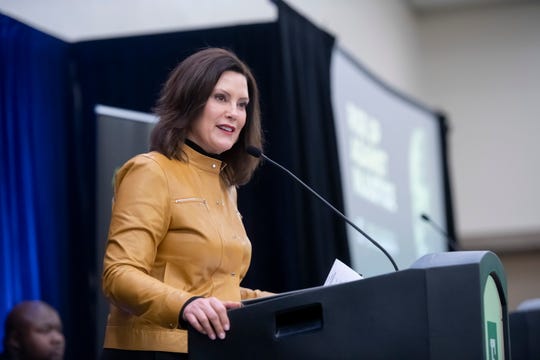
Michigan Governor Gretchen Whitmer gives a speech after receiving the Martin Luther King Jr. Humanitarian Award Capturing that look of complete indifference to due process
Michigan Gov. Gretchen Whitmer will give the Democratic response to President Donald Trump’s State of the Union address Feb. 4, six days after delivering her own State of the State speech in Lansing.
Whitmer will deliver the response beside U.S. Rep. Veronica Escobar of Texas, who will give a separate response in Spanish.
The response is usually given by an elected official whom opposition party officials tag as a rising star. Trump's speech will come one day after the Iowa caucuses and likely in the midst of the Senate impeachment trial.
Whitmer said the response would serve as an “exciting opportunity” to show Democrats “getting things done.”
“Across the country, Democrats are staying focused on building a stronger, more sustainable country for future generations,” Whitmer said. “As leaders, it’s our responsibility to ensure a safe, healthy future for our children and families, and that’s exactly what we’re working toward in Michigan."
But Republicans hit Whitmer's record as lackluster.
"She’s had ample time to make a difference for our state, but her past year in office has been nothing more than photo-op's and sound bites," said Michigan Republican Party Chairwoman Laura Cox. "Ultimately, Gretchen Whitmer's decision to side with Chuck Schumer and Nancy Pelosi makes it that much easier to give our state a new governor in 2022."
Whitmer rode to a 2018 victory in Michigan on a promise to “fix the damn roads,” but making good on the vow has proven difficult with divided government.
The first-term governor's proposal last year to increase the 26.3-cents-a-gallon gas tax by 45 cents was opposed by GOP leaders and effectively died in late August when House Minority Leader Christine Greig, D-Farmington Hills, declared Whitmer's tax plan an “extreme” that likely wouldn't happen.
The debate over road funding options eventually led to a breakdown in negotiations with GOP legislative leaders.
When the Republican-controlled Legislature sent the governor a budget that shifted existing funds from other departments for a one-time $375 million payment toward roads, the governor made 147 line item vetoes, slashing $947 million from the state budget and transferring another $625 million within departments.
"Caught in the middle of Whitmer's political budget retribution were at-risk students, people with autism, public safety, and healthcare services," said Tori Sachs, executive director of the Michigan Rising Action political action committee. "Our state and nation deserve better."
The Democratic governor did slash funding for charter schools, an autism alliance, rural health care and county road patrols, but most of it was restored after negotiations with Republican lawmakers.
Whitmer made Michigan the first state in the nation to declare a ban on flavored vaping products out of concern for youth usage and an uptick in lung injuries, but the ban was halted by the courts amid a challenge from vape shop owners.
But her first year in office included victories, including the signing of bipartisan legislation that reformed Michigan's no-fault auto insurance, changes that had eluded consensus for about 40 years. Some Democrats criticized her for signing the Republican-inspired legislation.
Whitmer has “rolled up her sleeves” during her more time in public service, House Speaker Nancy Pelosi wrote in a Friday statement with Senate Democratic Leader Chuck Schumer announcing Whitmer’s selection.
“Her decades of hard work on behalf of the people should serve as a model for our nation,” Pelosi said. “She’s a forward-looking leader who is laser-focused on solving problems for everyday Michiganders and is uniquely qualified to deliver Democrats’ message of progress for all Americans.”
Whitmer’s efforts in Michigan are a “model for public servants everywhere,” Schumer said.
"Whether it's pledging to 'Fix the Damn Roads' or investing in climate solutions, Governor Whitmer's vision for the future is exactly what this country needs, and I'm thrilled she is giving the Democratic response,” he said.
As a "fierce leader" for Michigan's families, Whitmer will highlight how Trump's "broken promises have devastated our state," said Lavora Barnes, chairwoman for the Michigan Democratic Party.
"Gov. Whitmer was critical to our party’s success up and down the ballot in 2018, and I look forward to working with her this year as we fight to beat Donald Trump, re-elect Gary Peters to the Senate and turn every corner of Michigan blue," Barnes said.
Democratic former U.S. Sen. Carl Levin of Detroit appears to be the last Michigan politician to have given a State of the Union response, according to U.S. Senate records. In 1984, Levin was one of several members of Congress on a panel who responded to then-President Ronald Reagan's address in a partly taped and partly live program.
Then-House Minority Leader Gerald Ford of Grand Rapids, a Michigan native, gave the first televised response to a State of the Union address in a 30-minute rebuttal alongside Senate Minority Leader Everett Dirksen to President Lyndon Johnson's 1966 and 1967 addresses, according to U.S. Senate records.
"Today, thanks to the efforts of Dirksen and Ford, the opposition response is anticipated and discussed almost as much as the president’s speech," according to the Senate Historical Office.
The last sitting governor to give an official response to a State of the Union speech was then-South Carolina Gov. Nikki Haley, a Republican who responded to then-President Barack Obama’s speech in 2016. Haley was Trump's United Nations ambassador until deciding to step down at the end of 2018.
Democrat Stacey Abrams, a former minority leader in the Georgia House of Representatives, gave the response to Trump’s speech in 2019.