I always want to figure out what this "Be Best" campaign was that Melanie has taken on as the flagship of her term in office.
It was the sight of "The Boys" at the National Prayer Breakfast that I realized we are dealing with corporate parental rights.
Yes, the Faith Based Funding Spigot has been turn on, full blast.
This is just a stimulus for the industry of trafficking tiny humans.
Yes, they want the children's trusts because it seems the Vatican and its U.S. Conference of Catholic Bishops are have a bit of financial difficulties having to deal with things like child trafficking in domestic and international child welfare NGOs, running real estate, asset management firms and all the other foundations that like to flow as Corporate Shape Shifters through Public Private Partnerships because their Social Impact Bonds are tanking.
The industry of trafficking tiny humans is quite sophisticated.
This is a full scale legal war and they have raided the legal armories of international law to control their modern day human trafficking and slavery, in a much more fiscally responsible scope.
This is just one individual who is crafting international child welfare law.
First Lady Melania Trump arrived in Nairobi, Kenya late on Thursday evening. She was greeted by the First Lady of the Republic of Kenya, Margaret Kenyatta and the United States Ambassador to the Republic of Kenya, Robert Godec.
On the morning of Friday, October 5, Mrs. Trump traveled to Nairobi National Park. Upon arrival, she went to the Sheldrick Elephant Orphanage to learn about their facilities and mission and to observe the staff engage in their daily routine of feeding the baby elephants rescued by the shelter. Mrs. Trump, joined by Mrs. Kenyatta, fed the baby elephants with large bottles of milk. After the feeding concluded, Mrs. Trump spoke with briefly Angela Sheldrick, the owner of Sheldrick Wildlife Trust, and Edwin Lusuchi, the Chief Elephant Keeper.
On the Safari, the First Lady was able to see many wild animals including zebras, hippos, rhinos, and giraffes. Along the way, Mrs. Trump was briefed by Nelly Palmeris, the senior warden of Nairobi National Park, about the conservation efforts of the Kenya Wildlife Service. Near the end of the tour, Mrs. Trump visited one of the ivory burn sites, which are important landmarks in conservation, where Kenyan president Daniel arap Moi made a dramatic statement to poachers by setting fire to 11 tons of seized ivory in 1989.
Following her visit at Nairobi National Park, Mrs. Trump visited the Nest Baby Village part of the Nest Children’s Home, which cares for children ages newborn to 17 whose mothers are imprisoned. This shelter focuses on children by providing them with clothing and food, emotional support, medical care, and educational opportunities.
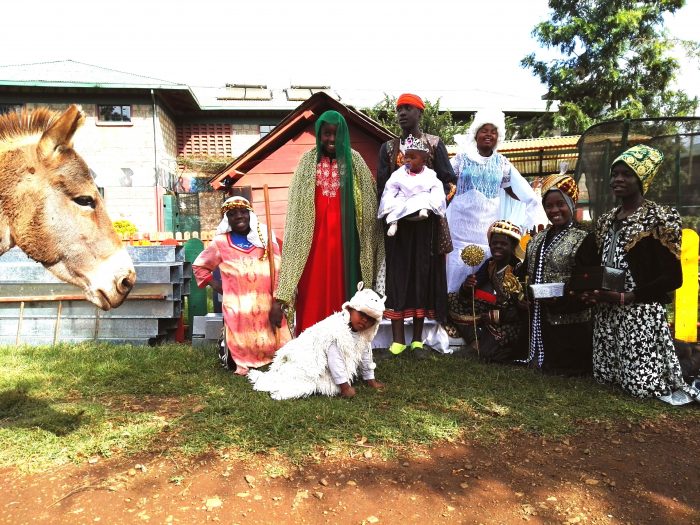
Director and founder of the Nest Children’s Home, Irene Baumgartner, greeted the First Lady. Children sang and danced around Mrs. Trump to welcome her and escorted her to the nursery village. Mrs. Trump met with the staff and held many of the babies. Outside in the gardens, older children sang to the First Lady. Mrs. Trump read a story titled The Lion and the Mouse. Before departing, the children circled the First Lady for a prayer and each child gave her a flower.
The shelter, which has been in operation since 1994, is a charitable trust that relies solely on private donations. The First Lady donated baby blankets, teddy bears, and children’s bags containing several items, including Frisbees and water bottles.
In the late afternoon, Mrs. Trump joined Mrs. Kenyatta at the State House for a private meeting where they discussed their shared goals within their respective countries – noting the importance of maternal health and education for children. First Lady Melania Trump and First Lady Margaret Kenyatta visited the Nairobi National Theater for a cultural performance by the Sarakasi Allstars. The audience included children from various schools and programs including the Nest and USAID Nilendi program.
Mrs. Trump also attended an Embassy Meet and Greet in order to thank United States Ambassador Robert Godec and Embassy employees for their service.
“My time in Kenya impacted me greatly and I want to thank everyone who took the time to meet with me, especially Mrs. Kenyatta,” said First Lady Melania Trump. “The hospitality that I received made the experience so special. I was awed by the beauty of Nairobi National Park and was very interested to learn more about Kenya’s conservation efforts. The Nest is a prime example of what it means to protect and nurture our next generation – seeing their efforts shape the lives of so many children is something I will never forget. I look forward to visiting again in the future.”
Welcome to the world of the residuals of the peculiar institution, where the time has come to dismantle.
Slavery was never abolished, it just slapped a big cross on front of their "Public Private Partner - Ships" and called themselves Child Welfare Services.
Much love to the Eastern District of Pennsylvania and crew.
Praise the lord, for there are thousands upon thousands more of these trafficking tiny human operations, but for now, this is just one operation of trafficking tiny humans in Kenya.
These children are orphaned from mothers who died of HIV human lab rat experiments, funded through the U.S. National Institute of Health, the U.S. Department of Defense, and the Vatican, specifically Catholic Charities, where the children grow up, sometimes, to be lab rats, to see if the girls can give birth under the age of 11 years, to produce more goods to acquire, where, of course, the process is documented on video.
A Lancaster County, Pennsylvania man pleaded guilty today to engaging in illicit sexual conduct in a foreign place.
Assistant Attorney General Brian A. Benczkowski of the Justice Department’s Criminal Division, U.S. Attorney William M. McSwain of the Eastern District of Pennsylvania and Special Agent in Charge Michael Driscoll of the FBI’s Philadelphia Field Office made the announcement.
Gregory Dow, 61, pleaded guilty to four counts of engaging in illicit sexual conduct in a foreign place, before U.S. District Court Judge Edward G. Smith. Sentencing is set for Sept. 29, 2020.
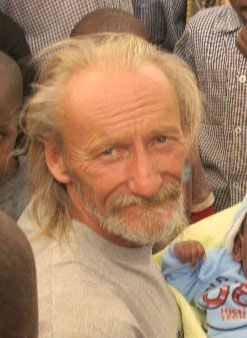
According to the plea agreement, Dow, an American citizen, traveled to the Republic of Kenya in 2008 to start an orphanage which came to be known as the Dow Family Children’s Home. While running the orphanage with his wife, he sexually abused, on multiple occasions, four minor girls between October 2013 and September 2017. During this time period, he maintained ties to the United States.
The FBI’s Philadelphia Field Office conducted the investigation with assistance from Kenyan authorities and local law enforcement in Lancaster County, Pennsylvania. Trial Attorneys Lauren S. Kupersmith and Lauren E. Britsch of the Criminal Division’s Child Exploitation and Obscenity Section (CEOS) and Assistant U.S. Attorney Timothy M. Stengel of the Eastern District of Pennsylvania are prosecuting the case.
This case was brought as part of Project Safe Childhood, a nationwide initiative to combat the growing epidemic of child sexual exploitation and abuse launched in May 2006 by the Department of Justice. Led by U.S. Attorneys’ Offices and CEOS, Project Safe Childhood marshals federal, state and local resources to better locate, apprehend and prosecute individuals who exploit children via the Internet, as well as to identify and rescue victims. For more information about Project Safe Childhood, please visit www.justice.gov/psc.
The following is their financial money laundering network. Please note the federal funding. Slavery was never abolished, it just slapped a cross on it and called it child welfare, in the name of the tax exempt god. Speaking of tax exempt god, has anyone heard from Betsy DeVos, lately?
A Lancaster man accused of sexually abusing four girls at his Kenyan orphanage between 2013 and 2017 has pleaded guilty to four counts against him, according to U.S. Attorney William McSwain.
Gregory Dow, 61, created the Dow Family Children’s Home back in 2008 when he and his family traveled to the Republic of Kenya to start an orphanage, according to the statement from McSwain’s office. The orphanage was established in Bomet County, and Dow claimed he was a Christian missionary who cared for the children and asked them to call him “Dad."
The home was open until September 2017, when Kenyan authorities suspected that Dow was sexually abusing children in his care, McSwain’s office said. Dow fled back to Lancaster when the allegations came to light.
The FBI then investigated the allegations, determining that he had sexually abused at least four girls between October 2013 and September 2017, according to McSwain’s office. Two of the girls were as young as 11 when the assaults began.
The investigation found that Dow’s wife brought the girls to a medical clinic to have birth control devices implanted into their arms in order for Dow to continue abusing the girls without fear of impregnating them, according to McSwain’s office. <=== lab rats. Michigan christians found out that tiny humans can reproduce as young as 11 years of age. Imagine that the next time you look at a christian adoption.
Dow was charged with these crimes in July of 2019, and on Monday, Dow pleaded guilty to the four counts of engaging in illicit sexual conduct with a minor in a foreign place, in front of U.S. District Court Judge Edward G. Smith.
“Gregory Dow hid behind his supposed faith on the other side of the world, hoping no one in the U.S. would know or care about the children he abused. He was wrong,” said U.S. Attorney McSwain. “Holding those accountable who sexually abuse children, no matter where their crimes occur, will continue to be a top priority of my Office and the entire Department of Justice.”
Our Affiliate Adoption Agencies
All God's Children
Headquarters: 1400 NE 136th Avenue/Suite 201, Vancouver, WA 98684
Web: www.allgodschildren.org
Phone: 800.214.6719
Bethany Christian Services
Headquarters: 901 Eastern Ave NE, P.O. Box 294, Grand Rapids, MI 49501
Web: www.bethany.org
Phone: 800.BETHANY
Letien , KE | Other Funding Some of you may remember hearing about Phil’s trip to Kenya back in 2012. He visited the Dow Family Children’s Home to install cement floors in their school building. He came home talking my ear off about girls who “braided” his hair and how I just had to go see for myself what the Dow’s were doing. And then he showed me the pictures of beautiful children and my heart melted.
I began working with the Dows helping with administration items last summer. I started following their updates, reading about these abandoned children and how the Dows were stepping in to change their lives. This family truly lives by faith; giving their entire life up to serve children in Letien, Kenya. They not only run this amazing home, but also minister to the community through a school and church. We will never truly know how many lives they have and will touch! Intrigued by what they are doing, I started doing some research. I learned that there are approximately 153 million orphans worldwide! Just in Kenya there are approximately 2.6 million. How does this happen? And how do we sit here unmoved, armed with those statistics? With the help of Phil’s uncle and his company, Doug Lamb Construction, we’ll be visiting the Dow Family Children’s Home on October 25th through November 4th. We’ll be going with a group of 10 people to build a pavilion and play area for the children. With 55 plus children, their eating area is outside. This becomes a problem during their rainy season, so a pavilion will help keep them dry during meal times. The majority of the children are under the age of 5. You could put that in the context of a bunch of Izzy’s running around looking to expel large amounts of havoc energy. They need a play area…and the staff needs a lot of prayer! Other than loving on the kids, supporting staff in any way I can, I’ll also be helping to finalize the administration needs for the Dows as they will be partnering with Brittany’s Hope starting in January 2014. Brittany’s Hope is an organization from little old Elizabethtown, PA who is enacting global change for internationally abandoned children. Their work is amazing and they will be a wealth of support and stability to the Dow Home. (You should check them out, http://www.brittanyshope.org) We need your help in these three areas. Pick one or pick all three but know that we’re calling on you to support in these areas because we believe you can make a difference in the lives of orphaned children with us. Pray! Pray! Pray! Pray for our plane safety and our traveling safeties once we arrive in Kenya. Pray for the funds to come in for the people going and also for the supplies needed for the playground. Pray for travel logistics to fall into place smoothly. Pray for the Dow’s and the children to be encouraged by our visit. Pray that ultimately, the community in Letien, our traveling companions in the air and on the ground, and all who we come in contact would be truly moved by our mission and see Jesus in it all. Give! Phil and I will need to personally raise a minimum of $2,000 to cover our plane tickets, additional travel costs, immunizations and extra baggage fees as we’ll be taking extra things over to the children. Please know that any amount you can give is truly appreciated! Any funds over our minimum amount raised will go directly towards funding the playground project costs and helping with specific needs of the home and children. If helping out with these direct needs sounds intriguing to you, email me at, jleighlamb (at) gmail (dot) com and I’ll pass along the list of things we’ll be collecting closer to the date of travel.
Join Us! Yeah, we know it’s probably a lot to ask you to join us on that 18 hour plane ride; but consider joining us in other ways. Such as learning about the Dow Family Children’s Home at http://www.dowfamilychildrenshome.org and Brittany’s Hope at, http://www.brittanyshope.org . Consider sponsoring a child in Kenya with the Dow’s or maybe in Ethiopia or Viet Nam which are two of the other countries Brittany’s Hope works in. Consider volunteering at Brittany’s Hope’s events, joining their board of directors, or at the very least, go “like” their Facebook page so you can begin to witness the change they are making in children’s lives. 100% of donations go directly to helping children (in thanks to a very generous sponsor who covers the organizations overhead and administration expenses). This percentage is unheard of and should be a relief to know that your monies really will make a difference in the life of an international orphan. We know it’s not easy to give money, or time or even mental & heart space for one more cause. It’s never easy, but it’s always worth it. We love you all and thank you for taking the time to read this! Feed the hungry and help those in trouble. Then your light will shine out from the darkness, and the darkness around you will be as bright as day. ISAIAH 58:10
Whoever said the christian slave trade ended never met the Tebows!
I believe one of my precious pearls of wisdom divers has found these treasures from the deep, dark net which features some of the activities of those who like to traffic tiny humans, in that very, very, very, special kind of way, in the name of god, which triggers law enforcement to launch investigations.
In this spirit of absolute repulsion, I am just going to pass this one off to my #Superfans, because it would be inappropriate for me to make any further assertions that the Tebow family is trafficking tiny humans without affording the individuals involved to due process.
"Praise the Lord for overseas special needs orphan lab rats!"
Mission Statement: "Healing the sick and proclaiming the kingdom of God
TRANSLATION: USING FOREIGN CHILDREN AS HUMAN SUBJECT BIOMEDICAL & GENETIC RESEARCH IS PART OF THE TAX EXEMPT PROSPERITY PROPHECIES It seems there areother things children are good for, when proclaiming the kingdom of god.
UNCLE DICK’S HOME
Home for orphans in the Philippines
"This is pure and undefiled religion, in the sight of our God and Father, to visit orphans and widows in their distress, and to keep oneself unstained by the world." James 1:27
In 1991, a woman died in childbirth. The husband left the baby with the poor grandfather, who said three days later, “If someone doesn’t take this baby, I will throw her into the river!” With that, our BTEA staff members Bert and Ray Gauran took the baby and named her “Queenie.” Queenie was our first orphan!
As a result, an orphanage was founded by the Bob Tebow Evangelistic Association to provide a Christian home for orphaned Filipino children. The orphanage was later named “Uncle Dick’s Home” after Richard Fowler, a neighbor of the Tebows, who became like a member of their family. They led him to Christ, and he supported the ministry in many ways through the years. Upon his death, he left BTEA a sum of money to be used to establish the orphanage.
Uncle Dick’s Home is located in Lamsugod, Surallah, South Cotabato, Mindanao, Philippines, and is home to 49 orphans and 13 staff.
Jimmy Scroggins
"The children were so beautiful, and we had a great time laughing, playing, and singing. The orphanage is an amazing place with a play area, fruit trees, a garden, a modern kitchen, and gorgeous landscaping. The staff at the orphanage does a tremendous job, and the children are bright, well groomed, and obviously well cared for. Most of all, I was thrilled to listen to the kids as they sang songs about Jesus and recited Scripture verses. Each one of these children has a great opportunity to learn about God and to enter into a personal relationship with Jesus. Praise the Lord for BTEA and its work with these orphans. Uncle Dick’s Home is the instrument of God in the lives of these children, as He proves that He is a ‘father to the fatherless,’ and as He makes a way for the little children to come to Him."
One day, Carlos’ parents were driving down the treacherous mountain road with a load of corn. The brakes on their old truck failed. As they flew off the mountain, the mother threw three-year-old Carlos out the window. Although Carlos broke his ankle and slashed his forehead, he survived! Instead of becoming beggars on the street, Carlos and his five year-old brother now live at Uncle Dick’s Home.
Maureen Albers:
"What I encountered at Uncle Dick’s Home caught me totally off guard. I sat surrounded by children, who were singing a chorus entitled ‘The Love of God,’ and I experienced God’s pure love in a way I never have before. Instead of coming away feeling sorry for these children and wanting to bring them back to America, I left knowing that they already have everything they need. They are wonderfully loved and cared for, and they have a real, vibrant relationship with a living God who is manifesting Himself through them."
The Need:
The monthly cost for each orphan at Uncle Dick’s Home is $125. (This $125 includes school, transportation, clothes, food, housing, medical needs, and orphanage staff payroll.)
The current monthly budget for Uncle Dick’s Home is currently running $8,000.
100% of the money given to Uncle Dick’s Home goes to help the orphans.
A Canadian server, registered in Florida, operating in the Philippines, dealing with tiny humans, in the name of god.
A mix of variables that typically does not produce a very good outcome when it comes to children.
Raw WHOIS Record
Domain Name: BTEA.ORG
Registry Domain ID: D1541580-LROR
Registrar WHOIS Server: whois.tucows.com
Registrar URL: http://www.tucows.com
Updated Date: 2016-04-28T14:21:23Z
Creation Date: 1998-06-26T04:00:00Z
Registry Expiry Date: 2022-06-25T04:00:00Z
Registrar Registration Expiration Date:
Registrar: Tucows Inc.
Registrar IANA ID: 69
Registrar Abuse Contact Email: domainabuse@tucows.com
Registrar Abuse Contact Phone: +1.4165350123
Reseller:
Domain Status: ok https://icann.org/epp#ok
Registrant Organization: Bob Tebow Evangelistic Association
Registrant State/Province: FL
Registrant Country: US
Name Server: NS.OZARKSONLINE.COM
Name Server: NS2.OZARKSONLINE.COM
DNSSEC: unsigned
URL of the ICANN Whois Inaccuracy Complaint Form https://www.icann.org/wicf/)
>>> Last update of WHOIS database: 2019-02-07T08:39:14Z <<<
The face Rod Rosensteinmakes when
covering up Child Trafficking & Fraud
The Department Justice published its guidance for the U.S. Attorney on human trafficking, November 2017.
The Guidance was put out by Rod Rosenstein.
I went through the entire document.
I found the term "foster care" on four occassions in the two sections on child traffickig, where one instance was in a footnote.
The following is how DOJ looks upon children of "The Poors" (always said with clinched teeth).
Do you know how many U.S. foster kids
were trafficked last year?
Neither does the DOJ, they do not
care about children of "The Poors"
(always said with clinched teeth).
"Many sex trafficking victims come from fatherless and unstable homes, some with a history of foster care, homelessness, and/or physical or sexual abuse. Sex traffickers exploit these vulnerabilities by creating a warped “father-child” relationship with victims and manipulating their need for love and acceptance."
"Bereft of parental attention, many victims find in gangs or sex trafficking organizations the “love,” structure, discipline, and sense of belonging that they crave, which can make gang-controlled victims especially uncooperative with law enforcement."
Allowing this level of propaganda to be promulgated through the U.S. Department of Justice is worthy of criminal prosecution, itself.
This federally funded dogma is professed in universities, through the teaching of parallel constructions to generate even more revenue for CPS, keeping its service providers fiscally solvent.
He did not confer or coordinate guidance for the U.S. Attorneys to do a conjugal collaboration with HHS or any other legislative committees or community based agencies outside the child welfare system, which demonstrates the malifide scienter of the DOJ, upper echelon groupthink.
God forbid there is guidance to go after Medicaid fraud in child welfare, or the NGOs which lay claim to helping children like the Clinton & Gates Foundations, to name a few.
How dare Rod Rosenstein command a national, neigh, an international narrative by berating the worthiness of a child in society with the prejudices of his own standards of moral turpitude.
The only thing omitted for this report was for Rosenstein to allow the contributors of the guidance to call these child victims of sex trafficking "sluts & whores".
"[B]ereft of parental attention" is nothing but a code phrase for measurement of a person's worth in society, based upon their socioeconomic status, or what I like to call forced migration to take over the land.
Children are removed by Child Protective Services for "failure to provide for the necessary needs of the child" more readily understood as poverty, or codified through DOJ activities as economic abuse and neglect.
These children, whether fatherless or homeless, do not just fall into human trafficking, as most times it is a last resort to eat for the day.
What about the children being used as lab rats in foster care?
What about the children who are running away from foster care because of the rapes, tortures, attempted suicides, successful suicides and murders?
What about the youth who are lucky enough to age out of foster care alive, to face a life on the streets with no education, no medical, no housing, no support systems?
The report, below, fails to mention anything about children being trafficked through the U.S. child welfare system, but soon, the entire world media will.
The DOJ and FBI have been covering up child trafficking in the U.S. and its international operations for decades.
Child trafficking is not only about sex.
The child welfare industry is much, much darker and Rod Rosenstein has intentionally refused to do a damn thing about it, except to cover it up.
Remember, the DOJ Human Trafficking Guidance for U.S. Attorneys is below.
More than 1 million children, according to the International Labour Organization, are exploited each year in the commercial sex trade. IndyStar columnist Tim Swarens, through the support of a Society of Professional Journalists fellowship, spent more than a year investigating a lucrative business where children are abused with low risk to buyers or traffickers, despite tougher laws and heightened international awareness of the scourge. Google, Eli Lilly and Co., and Indiana Wesleyan University provided additional support for this project.
This is the first of 10 columns in the EXPLOITED series, which explores the cultural and economic forces that contribute to commercial sexual exploitation.
On the day she met Marcus Thompson, the girl later told the FBI, she had been ready to leap from a bridge to end her life.
She was only 15, pregnant and alone on the streets.
And in this wounded child, Thompson saw a means to make money. He promised that if she left her small Illinois town with him, he would make her a model. Grasping for hope, she climbed into his truck.
But the promise was a lie.
Instead, in the summer of 2015, Thompson and his wife, Robin, forced the girl on a nightmarish six-week trek across the southern United States. Photographed in suggestive poses and marketed online, she was sold out of hotel rooms and truck stops to any man with the money and the desire to buy sex.
The justice system eventually would work well in this case in several respects. The victim was rescued and provided with treatment. The traffickers who exploited her were caught, pleaded guilty and were sent to prison.
But what of the men who paid to rape this child? What consequences did they suffer?
Not a single one was ever charged.
That same breach of justice is the norm in thousands of trafficking cases. About 10,000 children a year suffer the horrors of commercial sexual exploitation in the United States. Each victim on average is forced to have sex more than five times a day.
Yet the buyers who fuel the child sex trade are seldom held accountable. Most just blend back into their families, jobs and neighborhoods. Until the next time.
In the Thompson case, the victim, too young for a driver’s license, told the FBI she was beaten once for attempting to escape and was threatened with being “thrown to the alligators” if she tried to run again. Marcus Thompson, according to federal authorities, raped the girl five times.
Still, the child retained enough independence to say no when a buyer demanded anal sex. But her refusal came at a brutal price. The man who bought her complained to the man who sold her. And she was beaten again.
At a hospital in St. Louis, the abuse finally ended when the girl was identified as a sex-trafficking victim. The Thompsons, based on her descriptions, were arrested.
Marcus Thompson is now serving a life sentence. Robin Thompson, who helped place the online ads and book the hotel rooms, was sentenced to 20 years in prison.
At Robin Thompson’s sentencing, Chief U.S. District Judge Michael Reagan described the couple’s crimes as among the worst he had seen in 16 years on the federal bench.
In her victim impact letter, read by Reagan at the sentencing, the girl wrote, “It’s hard to wake up every day and remember the people I had sex with.”
In the past 16 months, I’ve witnessed the worst of human behavior while reporting for this project, one that’s taken me across eight countries on five continents. I’ve talked to 6-year-old trafficking victims, visited a shelter where the oldest survivors were only 11, met a 5-year-old boy living with his parents in a squalid brothel in India and interviewed survivors who were raped by hundreds of men.
Yet the ordeal of that one child from Illinois — beaten for saying no — has haunted me in particular.
It’s stuck in my mind because it exposes a harsh truth: In the sex trade, buyers and sellers view the children they torment as property.
And property cannot say no.
“Despite 20 years of efforts, the sexual exploitation of children in travel and tourism has expanded across the globe and outpaced every attempt to respond at the international and national level... As a result, the risks of child sexual exploitation are increasing.”
— The Global Study on Sexual Exploitation of Children in Travel and Tourism, 2016.
***
This project began with a question: Who buys a 15-year-old child for sex?
The answer: Many otherwise ordinary men. They could be your co-worker, doctor, pastor or spouse.
“They’re in all walks of life,” a 17-year-old survivor from the Midwest, trafficked when she was 15, said about the more than 150 men who purchased her in a month. “Some could be upstanding people in the community. It was mostly people in their 40s, living in the suburbs, who were coming to get the stuff they were missing.”
The scale of the trade indicates that it’s not a small number of men who pay to have sex with kids. A 2016 study by the Center for Court Innovation found that between 8,900 and 10,500 children, ages 13 to 17, are commercially exploited each year in this country. Several hundred children 12 and younger, a group not included in the study, also suffer commercial sexual abuse.
The researchers found that the average age of victims is 15 and that each child is purchased on average 5.4 times a day. I’ve interviewed victims who were forced to have sex with more than 30 men in a week; more than 100 in a month.
To determine a conservative estimate of the demand, I multiplied the lower number of victims (8,900) identified in the Center for Court Innovation study by the rate of daily exploitation per child (5.4), and then by an average of only one “work” day per week (52). The result: Adults purchase children for sex at least 2.5 million times a year in the United States.
The number of identified victims in the U.S. is on the rise. The National Human Trafficking Hotline recorded a 35 percent increase in reports in 2016. Most of the cases involved sex trafficking and many of the victims were children.
Brad Myles, CEO of the Polaris Project, which operates the hotline, said the increase largely can be attributed to better identification of trafficking victims and heightened public awareness that the hotline exists. Yet, Myles said, "The vast majority of victims are still not being found."
International numbers are even more staggering. Sex trafficking, according to the United Nations’ International Labour Organization, is a $99 billion-a-year global industry. The exploitation of more than 1 million children accounts for more than 20 percent of those profits.
And there's evidence that the child sex trade is growing. ECPAT International, a research and advocacy organization, concluded in 2016 in a first of its kind global study that more children than ever are at risk of abuse.
Mark Capaldi, ECPAT’s lead researcher, said in an interview at the organization’s Bangkok headquarters that rising global incomes, cheaper air travel and better internet access have fueled the increase in demand. In short, it’s cheaper and easier than ever for adults to exploit children.
Another reason for the growing exploitation: Buyers face little risk. “You’re unlucky if you get caught,” Bjorn Sellstrom, the head of INTERPOL’s Crimes Against Children unit, said in Lyon, France. “It’s fairly free of risk to travel to another country and abuse children.”
It’s a low-risk crime for domestic abusers as well. In 2015, Congress strengthened federal anti-trafficking laws to provide prosecutors with more tools to go after sex buyers. Prosecutions have only modestly increased as a result.
A U.S. Department of Justice spokeswoman, in a written response to questions, said the primary objective is to focus “our limited resources on apprehending the traffickers, who pose the most imminent threat to the victims.”
She provided examples of about 30 buyers, including former Subway pitchman Jared Fogle, convicted on federal charges in 2015 and 2016. But she said state and local prosecutors are in a better position than the federal government to hold accountable those who pay to exploit children.
Like the federal government, state and local jurisdictions tend to use sting operations in which undercover officers pose as exploited children to stop buyers. Although such operations net thousands of would-be sex buyers each year, most of the men arrested plead down to lesser crimes.
And it’s rare for police and prosecutors to pursue buyers after they've paid to abuse children. That’s true even in the most nauseating of crimes.
In 2016, police rescued a 12-year-old Texas girl who was held captive in a hotel room in a wealthy suburb of Nashville, Tenn. Authorities said the child, found with bruises and scratches on her face, had been advertised on Backpage.com and sold to sex buyers for a month in the Knoxville, Memphis and Nashville areas.
A 36-year-old Nashville man, Tavarie Williams, was charged with multiple counts of trafficking, kidnapping and rape. He is awaiting trial. But, as in the case of the 15-year-old from Illinois, none of the men who paid to sexually abuse a middle school-age child were ever charged. (A spokeswoman for the Davidson County (Tenn.) District Attorney's Office said authorities were unable to identify any of the buyers, who could have faced felony charges).
"That child will have to fight the stigma of what happened to her for the rest of her life," said Alex Trouteaud, director of policy and research with Demand Abolition, a Massachusetts-based organization that works to reduce demand for commercial sex. "Meanwhile, the buyers will never be held accountable. It's what we call the culture of impunity."
Prosecutors note that they face several obstacles in pursuing charges, including the need to show that a buyer knew or should have known that the person he paid to exploit was underage. Victims — traumatized, frightened, frequently dependent on drugs and alcohol — often don't make strong witnesses. Prosecutors also must weigh whether putting a child on the stand, where defense cross examinations can be rough, will further wound the victim.
It’s tempting to put buyers who exploit children in a box — to say that all of them are pedophiles, a small percentage of the population driven by a deep sickness. But researchers and survivors say that’s not the case.
ECPAT International researchers found that the great majority of men who pay to exploit children are opportunists. They don’t set out specifically to buy sex with a child, but neither do they walk away when faced with the temptation.
Survivors I interviewed reported similar experiences. One of them, exploited when she was 15, said only two men turned and left the motel room when they saw how young she was. Even those two didn’t notify police about the ongoing abuse of a child.
More than 100 other men who paid to have sex with her stayed. “They just didn’t care” about her age, she said.
In a room full of sex buyers, enrolled in a court-ordered program in Seattle, I asked: “Do you ever think about the life stories of the girls and women you purchased?”
The men appeared uncertain about how to answer. Then a former once-a-week buyer, arrested for attempting to purchase sex from a police officer posing as a 15-year-old girl, said, “I don’t want to know how the sausage is made.”
A piece of meat. A commodity to be consumed.
Not a child. Not a life.
Later in this series, we’ll further explore the factors that drive men to buy sex with children. But let’s take time now for a dose of inspiration.
We’ll find it in a sewing room in Mumbai, India, where a group of remarkable women are waiting to greet us.
Priya, her body ravaged by HIV, was barely alive the day Seena Simon, director of Care and Development for the Cincinnati-based Aruna Project, found her on the street in Mumbai’s Grant Road red light district.
Trafficked at age 13, Priya had worked in the brothels for 15 years before she was kicked out because of her illness.
“She shared with me that in one night 15 to 20 men used her. That was her life,” Simon, who’s worked with trafficking victims in Mumbai for the past 15 years, said. “She didn’t have the strength or energy to do that work. So she was not earning any money for the brothel keeper and they didn’t want her.”
Told by doctors that Priya wouldn’t survive, Simon found the still-young woman a bed in a hospice, where she went to die.
Except Priya didn’t die.
►7 ways to help fight human trafficking
Her white blood count began to improve. She began to eat, to regain weight and energy. After three months, Priya left the hospice for an after-care home.
At around that time, Simon had been talking to Ryan Berg, an American from Cincinnati who worked for an NGO with operations in India, about the need to provide jobs in a sheltered work environment for trafficking survivors.
“Employment was the gap,” Simon said. “Once they were trained in some kind of skill, we sent them for work, but they couldn’t cope with the pressure. Finish the deadline, finish the targets — they couldn’t do it. There was an internal conflict and many of them failed. And some I know went back to the red light district.”
From that need, and from Berg and Simon’s shared passion to help trafficking victims, a business plan was born. In the U.S., Berg founded The Aruna Project, a Cincinnati-based nonprofit that stages 5K runs in multiple states. Registration fees and other proceeds from the races are used to pay salaries for trafficking survivors in Mumbai.
In Mumbai, Simon manages production and counsels survivors, who are employed to make athletic bags and headbands distributed to participants in Aruna Project races in the U.S. More upscale bags also are sold online.
In 2015, Aruna hired its first survivor, Priya. Simon said the company pays better than market rate salaries and benefits. It also provides group homes for those survivors who are not yet ready to live on their own.
The fight against human trafficking inspires incredible passion among many people, but that passion is sometimes misdirected. More than a few nonprofits working to combat trafficking are less than effective. And when I first heard about The Aruna Project’s approach, I was skeptical. Can 5K runs in America really make a difference for women living in India?
But then I stepped onto the production floor in Mumbai, and I saw the women’s smiles. It’s always humbling for me as a man to meet a survivor. In the sewing room, IndyStar visuals editor Mykal McEldowney and I were surrounded by 22 survivors, women like Priya who had suffered unspeakable horror.
The women answered our questions through a translator and asked their own questions of us. They laughed and giggled and showed off, with clear pride, the bags and other products they had made. They also told us about their dreams for the future — one wants to become a fashion designer, another a tailor.
And a young woman named Ruby, no more than five feet tall, hopes to become a singer. When we asked if she would sing for us, she smiled and chose a worship song, a hymn of thanksgiving.
As her clear, strong voice filled the room, she sang not about the pain of the past but of hope for the future.
Next: ‘The smile on our face is fake’: Shattering the Lolita fantasy
Once upon a time, I read a press release from Mastercard announcing the first, meaning there will be much more, $500 million contribution into the Center for Inclusive Growth Fund.
I felt the constriction of repugnance from deep within my bowels and immediately knew the cause.
The Clinton Foundation.
Yes, it only took an initial search to verify that Mastercard was doing what all the other Trust Funds are doing, stealin'.
Instead of getting your corporation seized and indicted by DOJ for participating in the trafficking of tiny humans, you liquidate and dump into the trust funds.
That is correct, the Clinton Global Initiative University never incorporated, just like the Clinton Global Initiative never incorporated and just like the Detroit Land Bank Authority never incorporated.
This means that Mastercard is laundering money through a fake, child welfare NGOs, but who is cashing those checks?
Listen to Reeta Roy pitch the model for human plantations.
Human plantations are grandiose ideas coming out of NGOs, funded through Social Impact Bonds, to force migration of target populations, to a controlled geographic area by taking women of "The Poors" (always said with clinched teeth) and their children to produce more children to "reach their greatest potential" (code for revenue maximization) in international adoptions, and indentured servitude through microfinancing, just like they did in Haiti.
Controlling water resources encourages complicity of the socially invested chattel.
The term slavery is so crass and out-dated.
Remember Haiti?
I do.
Stay tuned.
Pay attention and you will see more major corporations launder money through their trust funds.
New Fund Will Help People, Businesses Prosper in the Digital Economy
PURCHASE, N.Y. – April 10, 2018 – Mastercard today reported its initial $100 million contribution to the Center for Inclusive Growth Fund, part of a $500 million commitment to support initiatives that focus on long-term economic growth for everyone. The company first announced these plans during its fourth-quarter 2017 earnings as an extension of an ongoing commitment to do well and do good.
The fund has been designed to deliver on philanthropic goals shared with the Mastercard Center for Inclusive Growth. Chief among these goals are to reduce income and information inequality, increase financial inclusion and workforce skills development, and make people and businesses more resilient in the face of a rapidly changing economy.
“There are too many people today who are disconnected from the resources and connections they need to survive and thrive,” said Ajay Banga, president and CEO, Mastercard. “In establishing this fund, we hope to increase the agility and ability of people around the world to navigate change and be successful.”
In addition to the new fund, the Center will continue its mission to use Mastercard’s technology, data and partnerships to develop solutions that allow more people to participate in the formal economy.
The Center recently launched a U.S. inclusive growth initiative, following a series of listening sessions in which Mastercard executives met with employers, community leaders and workers in seven U.S. cities. Learnings from those conversations are currently shaping a set of programs to help overcome barriers to economic growth.