|
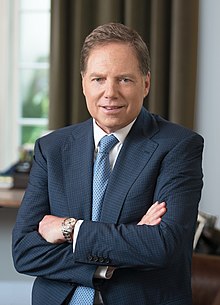
| Bill "Boo Boo" Barr |
Yup.
Stuff.
An allegoric masterpiece, Barb!
It’s like appointing a psychiatrist to perform surgery. Impressive credentials, but not the right ones for the job.
Barr’s spin on replacement for SDNY US Atty makes no sense. Jay Clayton is a mergers and acquisitions lawyer with no litigation experience. It’s like appointing a psychiatrist to perform surgery. Impressive credentials, but not the right ones for the job. https://t.co/GChVjcPjxG— Barb McQuade (@BarbMcQuade) June 26, 2020
Transcript: NPR's Full Interview With Attorney General William Barr
Attorney General William Barr poses for a portrait at the Department of Justice in Washington D.C.Eman Mohammed for NPR
In an interview with Morning Edition's Steve Inskeep, Attorney General William Barr denied that the Justice Department is continually upholding the interest of the president, dismissed concerns about the firing of federal prosecutor Geoffrey Berman and said he does not believe an election conducted mainly by mail can be secure.
Steve Inskeep: Thank you again for taking the time. I'm appreciative to have this opportunity.
Attorney General William Barr: Thank you.
I want to note that in the last few days, there have been three acts of yours that have made the news, sometimes not for the first time. The dismissal of the case against Michael Flynn, which, of course, an appeals court upheld; the Roger Stone case in which a whistleblower questioned the way that you changed the sentencing recommendation; and then the removal of Geoffrey Berman in New York. I want to ask about your underlying authority as you see it in cases like this. Does the president, acting through you, have the power, complete power, to use his authority in cases where he has an interest?
Well, this wasn't a case of the president acting. It was, these were cases of me acting [crosstalk].
Although you say your act as the president's hand. I mean, it's the president acting [crosstalk].
Well, the president ultimately has the authority as chief executive to, quote, see that the laws are faithfully executed against the attorney general who performs that function under the law. And so I will take them in any order you want.
Well, I see here in each case, you have someone who is the president's national security adviser and he'd spoken up publicly in defense of him. Someone who's a close personal friend of the president, who the president said was being unfairly treated. And Geoffrey Berman, a U.S. attorney, who is believed to be investigating cases involving friends of the president, among other matters of interest to the president. In every case, was it appropriate to intervene at the highest levels in what was being done and what personnel did it?
OK well, all cases in the Department of Justice are subject to the supervision of the attorney general. In fact, all the powers carried out by the department are vested in the attorney general and it's appropriate for the attorney general to exercise supervisory authority over cases. So starting with the Flynn case, Flynn was entered into a plea agreement before I arrived that had been there for a long time. And because of legal squabbling, the sentencing didn't come up until after I was attorney general. And he had a new lawyer and she raised a lot of claims. And, you know, we, number one, he was subject to the sentencing process. But before that occurred, the judge started taking up some orders. And we filed a motion to dismiss the indictment based on information we had obtained from another U.S. attorney who I had asked to review the case. There were a lot of issues about that case and it was taking a lot of time to resolve them because the defendant had raised those issues, including misconduct by the government. So I brought in somebody who had been a former FBI agent for 10 years and a prosecutor for 10 years. And I asked him to take a look at it and he recommended that the charges be dismissed.
What I'm driving at is the underlying power here. There's nothing inappropriate about you getting so involved in a case involving a friend of the president. Is that your view of the law?
Well, what I'm saying is, well, Flynn was an appointee in the administration. I don't know whether I would refer to him as [crosstalk] a friend of any administration. But unless there's some conflict of interest that I have, it is appropriate for me to deal with it. And I've said publicly that in those cases, it's very important that the attorney general make sure that there's no political influence at stake involved in that, and there wasn't.
Is there no limit to what the president can do in exercising what you've described as a supervisory authority when it comes to law enforcement cases, even when he has an interest?
So, I testified about this a lot. I think at some point in certain circumstances, presidential action could amount to an abuse of his power. Yes.
Let's take a case that, according to a witness before Congress yesterday, sounded like an abuse of power. Prosecutor Aaron Zelinsky, who said he was a whistleblower, said that in the Roger Stone case, he received pressure to change the sentencing recommendation in a way that he considered inappropriate. And he said he was told by his supervisor that was because of political pressure, because of a fear that the president would be displeased if another course was taken.
Right. Well, the supervisors have said that much of what he said simply false. So, [crosstalk] and the statements he made, he said were, he admitted were double hearsay. He had no direct information. He had never talked to anyone involved in the decision, whereas I actually made the decision. I was the decision maker in that case because there was a dispute. And usually what happens is, disputes, especially in high profile cases, come up to the attorney general. It's not unusual for there to be a dispute in a high-profile case and for it to be resolved by the attorney general. And what actually happened in that case is that the four prosecutors who had prosecuted the case, the first line, they wanted to recommend a seven to nine year sentence on Stone, and the U.S. attorney felt that was too severe and was not justified under the circumstances. And what I said was set forth all the relevant information and leave it to the judge's discretion to select the right decision, which is also not uncommon in the department. And that judge actually gave the sentence that I thought was correct, which was half of what the line prosecutors were recommending. They could not point to any case even remotely close to the seven to nine year sentence. The cases were essentially centered on about two and a half to three years. The judge gave him three years and four months, which I thought was a fair sentence under the circumstances. And it was essentially what I was proposing, or thought was fair. And so the proof of the pudding is in the eating. I made that decision based on what I was felt was fair to that person. Never discussed sentencing with the president. And that decision was made well before the president's tweet about that case.
Now, [crosstalk] regardless of his relationship with the president, he doesn't he doesn't deserve a break, but he certainly doesn't deserve to be treated, and singled out, and treated more harshly than everyone else.
You have indicated that the appropriate limit on a president's power is the people, is the next election. That the president has supervisory authority over law enforcement, that he can involve himself in a case, even if he has an interest in the case, and the appropriate remedy is the people can vote him out or keep him. What do you say to voters thinking about how to vote this year, who see these cases and see a pattern of a president who continually wants to interfere and actually does appear to interfere in cases where he has an interest?
Well, I would say taking them one at a time. There was a lot of hinky stuff in the Flynn case. Everyone knew that. Everyone was wondering why was this case ever brought? We actually went back and found documents that showed that there were a lot of irregularities in what the FBI did. And in fact, when this case was being argued in the appellate court, the appeals panel pointed out, 'Hey, if there were irregularities here, it isn't what Justice Department is doing now, it's what they did when they indicted Flynn.' So I would say that justice was, is being done in that case. I would also say that the same is true in the other case you mentioned, the Stone case. He got the sentence that everyone else would have gotten for that conduct. That's justice. That's the rule of law, treating like people alike.
And just to go to the third case what was the reason for removing Geoffrey Berman?
[crosstalk] That's personnel action, which of course is different. You know, in the criminal justice process, as I've made clear, it's very important that politics be kept out of that. Now, in this other matter, which is a personnel appointment, obviously all U.S. attorneys are appointed by the president and can be removed by the president. And, you know, that's been for as long as there have been U.S. attorneys. And New York is one of the preeminent offices in the Justice Department. The president had never made an appointment to that office. Geoffrey Berman was interim. He was appointed by the court as a temporary U.S. attorney holding the fort. He was living on borrowed time from the beginning. And when a really strong, powerful candidate raised his hand, that is Jay Clayton, currently the chairman of the S.E.C., a prominent New York lawyer from Sullivan and Cromwell, very well-known and highly regarded, an independent, and he said that he was prepared to leave the government, was going back up, wanted to go back up to New York but very much would desire this job, I view that as an opportunity to put in a very strong person as a presidential appointment to that office.
And there was no consideration, or let me ask it a different way. Did you consider the possibility that some might find that inappropriate, given the matters that Mr. Berman was investigating and the president's interest in those matters?
I certainly was aware that given the current environment, anytime you make a personnel move, you know, conspiracy theorists will suggest that there's something, there's some ulterior motive involved. But I felt this was actually a good time to do it because I was not aware of anything that should in reality, give rise to that.
And let me circle back to that big question. How do you answer a voter who sees a pattern here of continually upholding the personal interests of the president?
Well, I'd say that there is no such pattern. I would say that that is a media narrative that has been adhered to, where things that happen all the time in the Department of Justice are misrepresented to the public and cast is somehow suspicious. I mean, do you think someone, do you think a 68-year-old man, with no prior criminal history record, should have gone to prison for a decade for what happened? You know, for misleading Congress? Show me a case where that's even remotely close. As I've said, the judge herself said that the case closest was the Scooter Libby case, who got about three years, and she gave three years and four months. So that's justice. That's what we call justice. And there was a Democratic senator who said that, you know, part of the job of the attorney general or being the attorney general is like being a sheriff standing in front of the jail. There's always the mob. And these days, the media is very prominent among the mob, who either want someone hung or they want him sprung. And part of what the Department of Justice is about and the attorney general is about, is ignoring the mob and the calls and the false narratives, and doing in each case what they think is right. Right and just for the individual, that's what I'm doing and that's why I'll continue to do.
Because you mentioned equal justice. Can you name a case or two where you have intervened so dramatically where the person involved was not connected to the president?
Off the top of my head, I'm sure there were a number of cases since I've been here that I've done that
You can't think of one but...
Well, frequently, cases, you know, we don't go discussing who's under investigation at any given time.
OK, but you're saying there are other cases where you have personally involved yourself in...
Yes. When cases come up, who do you think they come to? And why do you think we have one attorney general? We have 93 United States attorney's offices and we have 50 states. We don't run a department to have 50 different rules of law. We run a department that looks across the whole country to make sure people are treated equally. You can only do that if you have one office that's responsible for that. And that's me.
I read with interest, Attorney General, a speech you gave at Notre Dame, some time ago, came to my home state and did that. Thank you very much. And you promoted the idea of religious education. You also offered a particular idea of the founders who wrote the Constitution. You said that by and large, the founding generation were Christians and they were imbued with those values, which you'd like to continue today.
That's not exactly true [crosstalk]. I was talking about religion generally. Now, they were Christians and so if you're talking about them, they were Christians. But I was talking about the role of religion.
You're talking about the role of religion today.And speaking of Christians, then. Christianity has a particular view of human nature. What does it teach you that [the] president would do with completely unchecked power, with absolute power?
The president doesn't have unchecked power. All power corrupts and absolute power corrupts absolutely. As Lord [John Dalberg-] Acton famously said. So that's why we have a Constitution. And that's why, as I've given speeches about the presidency, I've pointed out that the real miracle of our, in Philadelphia was actually Article 2 of the Constitution, because many people sort of that the Cliff Notes version of our founding was that we fought against a king, and therefore we have to be very suspicious of presidential power. But actually, what happened was, after the Articles of Confederation and almost losing the Revolutionary War, the framers decided to frame a limited office of president.
That was, what most experts on the Constitution would say, is that they, what was unusual is they actually created a very strong office, but they hedged it in with a lot of limitations. It's not a king. It's four years. It's the only office elected by all the people of the United States, not just by a congressional district, but by all the people. It has inherently limited powers. Congress has most of the powers in the federal government. The president can't raise money or anything like that. So all the limitations that the Whigs, the English Whigs, wanted to put on the king have been put on the office of [the] president, it's a limited office. But in emergencies such as war, it has broad powers. And I have to say, Steve, one of the things that perplexes me about all these people who challenged me on the idea of executive power and its nature, they seem perfectly content to sit back and let governors, who are executives and have constitutions, make the most sweeping decisions about people's livelihood. Basically, putting the entire population in home detention and telling people that they have to shut down their livelihood and their business. And they leave that to the discretionary decision of governors. And I haven't heard the media at all saying, 'Hmm this is a pretty broad use of power. Where does it say in the Constitution they have that power?'
I have heard you, or your department, raise that question, specifically involving the governor of Hawaii who has imposed certain limitations for people to quarantine themselves when coming to Hawaii from out of state. The Justice Department has weighed in on a lawsuit against that restriction. Is this something that is of personal interest to you? Did you take part in that decision?
Yes, I've taken part in a lot of those decisions, but actually, that particular decision did not go to the whether or not the governor had the power, whether that was part of the executive power. What that went to is whether or not that was permissible to put those kinds of limits on interstate travel, because that is a constitutional right. And whether that was a reasonable restriction on interstate travel. So we raised that question.
The governor of Florida at one point had restrictions on people coming from out of state. Now, as the cases have shifted, and Florida's gone up and New York has gone down in numbers of cases, New York is imposing restrictions on people coming from out of state. Would you oppose those restrictions as well?
There are different kinds of restrictions, and the question is whether they're reasonable under the circumstances. For example, requiring someone to stay in 14 days of quarantine versus having a test where the results come back quickly. There are different ways of doing it.
I want to ask, Attorney General, about the Durham investigation while we have a few moments. There is a longstanding practice in the Department of Justice against releasing politically sensitive information close to an election. We're getting closer and closer to an election. Is there still time before the election for the Durham report to be known?
All right. Well, as I've said a few times, no one under investigation in the Durham matter is running for president. And I've said publicly that neither President Obama or Vice President Biden are under investigation. And I've also said I'm committed to having the American people have a free choice in this election between the candidates and I don't want the Department of Justice to be interfering in that.
The Durham investigation is another matter where the president has expressed very strong opinions. Does the president have the power under the Constitution to tell you how the Durham investigation needs to come out?
No.
He has supervisory authority [crosstalk].
To tell us how the investigation comes out? [crosstalk] An investigation of facts is an investigation of facts. I mean, even the president can't change facts.
He can't tell you to have the report come out a certain way? Regardless of the facts?
No, I don't think he can. I mean, I think Durham is going to report the facts.
So there is a limit on the president's interference in law enforcement then [crosstalk]. Underlying facts is what the limit is.
Yeah, I have said that, for example, if the president directed an attorney general to indict somebody where there was no predicate, no probable cause and no basis for the indictment, that would be a grave abuse of presidential power. And no attorney general would carry that out and be worth their salt. And I've said this in my confirmation. The president tells you to do something that has no legal basis like that, can't be justified under the law, then the attorney general shouldn't do it. The attorney general's responsibility is to make sure that the laws are faithfully executed.
What instruction, if any, has the president given you about assuring a secure election in 2020?
About what?
About assuring a secure election in 2020?
Well, our main focus has been obviously trying to ensure against foreign influence. And so we have a very strong program, interagency program, trying to monitor efforts by foreign countries to influence the election. And, you know, we're committed to trying to prevent that or if we can't prevent it, at least alert the American people as to what's going on. Other than that, the Department of Justice always is concerned about election fraud. And on every election, we're very attentive to whether there's election fraud.
Some people noticed when you raised concerns about the security of mail-in ballots, as the president also has very loudly and said without evidence that there is a lot of fraud or can be a lot of fraud, you raised a specific concern about foreign entities counterfeiting ballots and mailing them in.
Well, I think there's a range of concerns about mail-in ballots. And let me just clarify here. I'm not talking about a mail-in ballot for a limited number of cases where somebody, you know, is going to be traveling around the world, and the way that the state has provided for that is, you mail in your ballot. I'm talking about a comprehensive rule where all the ballots are essentially mail-in, and there's so many occasions for fraud there that cannot be policed. I think it would be very bad. But one of the things I mentioned was the possibility of counterfeiting.
Did you have evidence to raise that specific concern?
No, it's obvious.
It's obvious that it can be done.
Of course, we got to a lot of, why do you think we go to the problems we do in crafting single dollar bills?
Sure.
Because, make it hard to counterfeit. Now--
Do they not also go through procedures like that with mail-in ballots?
You've seen them. They're pretty primitive.
Kim Wyman, the attorney general of Washington State, was on NPR and was told about your concern, and said, I wish Attorney General Barr would come out and see the security measures that we do have. She's a Republican.Would you take up that offer?
Well, I'm not sure I'm going to go out to Washington state [crosstalk] right now. Glad to call her up [crosstalk]. But, you know, I don't think Washington state has much experience dealing with our adversaries' intelligence services.
Are you able to share any evidence that intelligence agencies have gathered that any foreign entities have targeted this area?
I think foreign entities are — I have specific reason to believe that there are a number of foreign countries that do want to sow discord in the United States by undermining confidence in the results of the election. And I think if we do adopt programs of mail-in, that will be an area which they will exploit. And I think you don't have to be a rocket scientist to figure that one out.
Do you believe that an election conducted mainly by mail can be secure?
Personally, no. I mean, we just mailed out checks under this program. And what is it? I heard something like 20 percent or something were misdirected.
You think the same thing could happen with millions of mail-in ballots?
I know things can happen like that. Because I know people move, a very high percentage in the United States, people move all the time. And I also know that you can easily take things out of mailboxes.
One other thing, Attorney General, regarding the recent protests. You made statements raising concerns about left-wing extremists in the protests and your named Antifa, specifically. One of our correspondents looked earlier this month. I believe it was June 9. And while a number of people have been arrested in connection with the protests, and a good number of crimes were committed, as a matter of fact, there was no record of someone connected with any Antifa organization, and it's not really an organization, who had been named up to that point in prosecutions. You did say around that time that there had been not public information regarding Antifa. Are you able to say now, a couple of weeks later, that anyone has been arrested in connection with that activity you named?
Yes, but...[crosstalk]
Someone with Antifa? Someone with some antifascist organization?
Yes, but when we arrest people and charge them at this stage anyway, we don't charge them for being a member of Antifa. We charge them for throwing a Molotov cocktail, or we charge them for possession of a gun, or possession of gasoline and things to make bombs with. Those are the kinds of charges that are filed. Even less sensational charges, such as battery. But we are building, we are obtaining information and intelligence about the operations of these people. Do you really? I mean, do watch the videotapes of these demonstrations?
I've watched the videotapes [crosstalk].
You don't see agitators in hoodies with earpieces, you know, distributing things to throw and things like that? You don't see that? You don't see people walking through districts with high-end stores, methodically breaking out the windows with sledgehammers or skateboards? Who are they?
Saw lots of break ins. Absolutely.
Not break-ins and looting. This was not looting. No, no. You obviously haven't been watching these videos as we have been watching them. [crosstalk]
I've been out on the streets. And there have been specific crimes that seem to have been committed under the cover of the protests, as well as any kind of engineered violence. But wouldn't you have, if you had somebody who was a member of an extremist group, wouldn't you have mentioned that, and your prosecutors would have mentioned that, in the bail hearing? Like there'd be a public record, that you had evidence of extremists?
Well, at this stage, being a member of a group, and Antifa is really sort of an umbrella term [crosstalk] used for a number of groups. There are a number of groups that have specific names that we're aware of that are Anti-- that's why I've said Antifa-type groups, that some of the people that have been arrested and some of the people that have been charged and some of the people that are under investigation, we have approximately 300 investigations right now, nationwide, do identify as Antifa. So I'm not sure, you know.
OK. Can I ask about one more thing that's on my mind? You were asked about systemic racism the other day in law enforcement, and you said, if I may summarize briefly, it's not really there. It was at one time. It was on the books. It was part of the law. The laws have been removed and there are still problems, but law enforcement is working on that. And I wonder...
I was talking about police departments.
Police departments are working on that. And I want to acknowledge that police departments and a lot of parts of the country do work on that. And yet, statistically, just to pick one statistic, a black man in the United States, statistically, is far more likely to be shot by a police officer than someone of a different race. Why do you think that is?
Well, there are 8,000 Blacks who are killed every year. Eighty-five percent of them are killed by gunshots. Virtually all of those are Blacks on Blacks. I think that there are a number of the statistics on police shootings of unarmed, unarmed individuals are not skewed toward the African American. There are many whites who are shot unarmed by police. Now, those numbers, as I said, have been going down in the past. Five years ago it was 38 African-Americans who were unarmed were shot by police. Thirty-eight in a year. This past year it was 10. Of those six were physically attacking the police when they were shot. So these are not events that happen every day. I know that the media is very interested them, as everyone is interested in them [crosstalk]. Well, everyone's interested in it. But I think the media is ignoring the fact that 8,000 African Americans are killed by crime in high-crime areas, and 10 were killed last year by police, six of whom were under attack when they shot. So you have to put it in perspective. And that's why, you know, I think it is wrong to demonize all the police and all the police departments, as you know, systemically racist and going out looking to shoot unarmed black men. I've seen some cases where it appeared gratuitous, and obviously, those are serious cases and are pursued by the Department of Justice's civil rights violations, which is the statute we have to address those issues. But some of them, while use of excessive force, you know ... during struggles and other things. So I think you have to put these in perspective.
I keep saying final question and it keeps not being true because I keep getting more I want to ask you. You have raised concerns about the direction of the country and the direction the government, the direction of presidential power over the last several decades. Now we're in this period of conflict and chaos, which can be fairly said, regardless of where you are on the political spectrum, this is a, this is a disturbing time for many people. Do you look out at the country and see a country that is moving toward a better place in the right direction, now that some of these issues have been joined from your perspective?
Some of which issues?
Well, the issues that have been fought over in the last several years regarding race, regarding the economy, regarding presidential power, regarding everything else. Do you feel the conflicts of this time are working us toward a better country or not so?
I think, you know, I think America was making a lot of progress on race. I mean, we elected Barack Obama as president. I think the economy was becoming more inclusive. And I think Blacks were participating more in the economy and at record numbers. But I do think that there are some impediments to the advancement of African Americans in society. The principal, one of the principal ones, not the principal one, is that they are being deprived of equal opportunity to attend good schools. And that's, I think that's one of the civil rights issues of our time. I think that they should we should essentially give these inner-city families the buying power to send their kids wherever they want to send them.
I was thinking larger even than race, though. You've raised a question of a society that is in some kind of moral trouble, that is losing its bearings. Do you think that in the conflicts of these last few years, the society is beginning to regain its bearings as you would like them to be?
Yeah, I think I think under President Trump's leadership, with the growing opportunity and some of the stands that he's taken, have put us on a better track. Now, I think what's happened in the last few weeks is a combination of things. I think the people out committing the destruction and the chaos, as you say, they're actually a fairly small group. And I don't think they're representative of what America wants, what they think. I think it's a small group that's deliberately trying to create chaos. And I also think the morale of the country right now has been affected by the pandemic. And that's another factor there. But I do think that as we come out of the pandemic and our economy rebounds, that we do have a promising future.
Attorney General, thank you so much. Thank you.
Voting is beautiful, be beautiful ~ vote.©