
Showing posts sorted by relevance for query Arnold Reed. Sort by date Show all posts

Sunday, July 8, 2018

Cocktails & Popcorn: Arnold Reed, Attorney For John Conyers, Enters The Stage

Image result for happy girl eating popcorn
I have popcorn. Want some?
I wonder if the DOJ OIG Report is about to be declassified.

Oh, and I forgot to mention that Perkins Coie Sucks.

#perkinscoiesucks

Marc Elias Of Perkins Coie Sucks & So Does The FEC

Learn more: BEVERLY TRAN: Marc Elias Of Perkins Coie Sucks & So Does The FEC http://beverlytran.blogspot.com/2017/10/marc-elias-of-perkins-coie-sucks-so.html#ixzz5Kiw2nDU6
Stop Medicaid Fraud in Child Welfare 


https://www.mlive.com/news/detroit/index.ssf/2010/06/just_who_is_kwame_kilpatricks.html

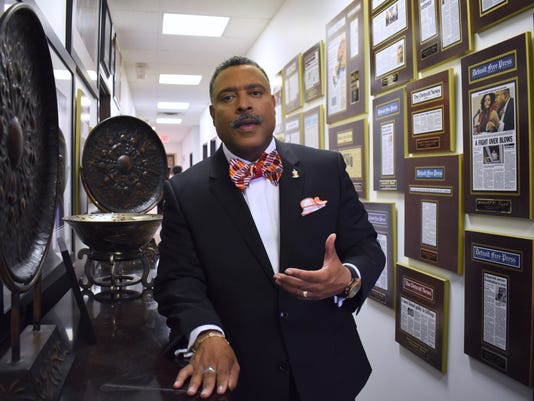
Arnold Reed, 'lawyer on the side of the people'

When his beloved father fell ill, Arnold E. Reed didn't hesitate. He swapped the cloistered halls of law school for Chicago's south side, where his dad owned a barbershop. To keep the business going, Reed, who'd learned the craft from his father, spent the next few months cutting hair.
636664856462526737-2018-0509-bb-ArnoldReed3.jpg

Meanwhile, a classmate would mail Reed homework, and he studied when he could.
In the end, not only did the University of Iowa College of Law student graduate, he did so on time.

"I read the books and taught it to myself," said Reed, 54, whose Dad lived to see him graduate.

"Really, there was never a question that I would finish. Some things ought to be a given."

That kind of decisiveness, devotion and determination would mark his career as one of the state's pre-eminent trial lawyers, specializing in criminal, personal injury, civil litigation, medical malpractice and entertainment law, plus damage control for high-profile clients, such as now-retired Congressman John Conyers and Aretha Franklin. This year, he was cited by Michigan's Lawyers Weekly as one of 30 Leaders in the Law Class of 2018.

While the widely respected trade newspaper is mum on how it culls from a pool of nominees, its website says winners are honored for significant accomplishments in law practice; outstanding contributions to the practice of law in Michigan; seeking improvements to the legal community and their communities at large; and setting an example for other lawyers. In its current form, the award has existed for the last decade.

In many ways, it's an improbable achievement for the Southfield-based legal firebrand, known for dogged representation and an outsize courtroom presence.


Reed was the first in his family to graduate college, let alone law school. While his father operated the barbershop, his mother took two trains and a bus each way to a factory job to help support the family, which included Reed and his older brother.

At age 9, Reed saw someone gunned down on the street. While fleeing, the killer had looked right at Reed, too petrified to move. That’s when Reed decided he needed to be fearless, a mindset that defines his approach to law.

Wayne County Circuit Judge Deborah Thomas described Reed's courtroom manner as a cross between a bulldog and a chihuahua.

"I've watched him since he was a baby lawyer," Thomas said. "He is always prepared, and he will not let go. He is always focused, and he will work that case. He's also a good family man, and what you would like to see in the community and in the profession."

While his childhood community had its share of scofflaws, most of his neighbors were honest blue-collar types. Time and again, he’d see them falsely accused by police, or unable to retain proper representation. Reed decided that knowledge was power and he needed to get it.

In the sixth grade, he ran for class president — and lost. “That made me angry, so I started learning about the Constitution and how to impeach somebody,” said Reed, who is married to a lawyer, has a son in law school and a daughter pursuing graduate studies.

Reed received his undergraduate degree in journalism and political science from Indiana University in Bloomington. After law school at Iowa, he worked as chief law clerk for former Michigan Supreme Court Justice Conrad Mallet Jr., who remembers him as being the strongest member of his team.

"He would consistently present their work in a way that allowed for uncomplicated digestion of whatever argument they helped craft," said Mallet, now chief administrative officer for the Detroit Medical Center. "He's a very, very, very good lawyer."
Attorney Arnold Reed speaks about Congressman John Conyers' health and the latest accusations of sexual harassment in front of the congressman's home in Detroit. Daniel Mears, The Detroit News

That stint as a law clerk was followed by corporate work and a job in Detroit with the public defender's office. Because the fledgling lawyer couldn't convince his boss to give him a capital case, Reed, with no money to speak of, went out on his own, setting up a law practice in Detroit and winning his first multimillion-dollar verdict, in a police misconduct case, at just 29 years old.

Since then, the member of Kappa Alpha Psi Fraternity Inc. has represented former Detroit Mayor Kwame Kilpatrick, Conyers, Franklin and an upstart vocalist named R. Kelly in the mid-'90s.
Reed recalled meetings early on with the Queen of Soul, who he successfully represented about five years ago in a case involving misappropriation of her name and likeness.

"She's a woman who tends to be formal with people she doesn't know or have a relationship with, so it was always, 'Ms. Franklin' and 'Attorney Reed.' After I won the case for her I said, 'Now can I call you Aretha?' She didn't say anything, so I took that to mean she was still 'Ms. Franklin,'" he said, chuckling.

As for Conyers, Reed represented him last year after the congressman became embroiled in allegations of sexual harassment. Conyers ultimately retired.

Reed remembers encountering Conyers years earlier after a particularly long community event. Reed had asked him why he devoted so much time and effort to so many causes when he could find more lucrative work elsewhere.

"He looked at me, smiled and said, 'Arnold, money has never been my motivating factor. I have the best job in the world. I can help people.' So when he needed my help, I answered the call."
Reed's legal battles often extend into the court of public opinion. For instance, he took a lot of heat for representing Kilpatrick in a case stemming from the former mayor's conviction for lying under oath about an affair with his chief of staff.

 "It took me aback a bit," he said of the criticism. "Everyone deserves a right to representation no matter the allegation. Also, I've been in this game over 25 years, and I'd be lying if I said I weren't ever discriminated against based on my color, because I have been.

"When I put my suit and tie on every day and I go out, there are some people who look at me like I'm Kilpatrick simply because I'm African-American. I have to explain to people that when I represent Kwame Kilpatrick, I represent you, I represent your son.

 "In any case, I have a social responsibility not to shy away from cases merely because of allegations."

Reed's brazen style, however, leaves some cold, said Solon Phillips, in-house counsel for Southfield Public Schools.

"I have a great deal of respect for his zeal and tenacity in terms of what he does for his clients, but he is aggressive, so I can see how he could rub people the wrong way," said Phillips, who has known Reed for about 15 years.

"In his younger years, for example, he would press opposing counsel when he saw them by asking them why they weren't working, asking them whether they were working as hard as he was.

 "If you're on the receiving end, I can see where he might make some folks uncomfortable."

 His high-profile client roster notwithstanding, Reed is a self-described "lawyer on the side of the people." Everyone, he says, deserves representation under the law.

"I'm always around rich and powerful individuals, but I know my upbringing," said Reed, who often rides to work on his motorcycle, the back of his leather jacket emblazoned with "Not Guilty."

The voracious reader prides himself on going all out for his clients, often spending days and nights with them. He leans on his journalism background to do his own investigative work and visualizes courtroom plans.

“The major thing is having belief in your cause,” Reed said. “If you don’t believe, you’re not going to convince 12 others.”

He has a fan in Donna Pope, for whom Reed won a $4.2 million judgment in an unlawful termination whistleblower case in 2009.

“He’s very thorough and very patient, very poised and convincing,” said Pope, who lives in western Michigan. “This was one of the hardest things I had to go through in life, and he made it manageable to survive it.”

Mary Chapman is a Detroit-based freelance writer.


Arnold E. Reed
Age: 54
Occupation: Owner, Arnold E. Reed and Associates, Southfield
Education: Bachelor's degree, Indiana University; Juris Doctorate, University of Iowa College of Law

Voting is beautiful, be beautiful ~ vote.©

Saturday, November 25, 2017

CONYERS Is About To Blow The Whistle

Who said the "allegations at the highest levels of government" had to be just about sex scandals?

Perhaps it has to do with fraud and public corruption.


Stay tuned.

Is the dam about to burst open? John Conyers' lawyer hints at allegations at the higest levels of government

Are various members of the House and Senate about to be embroiled in sex scandals of their own? According to Arnold E. Reed, an attorney for Rep. John Conyers (D-MI), the damn may be about to break when it comes to future allegations.

Daily Caller reports:
The attorney for Democratic Michigan Rep. John Conyers, who is accused of continuously sexually harassing his female staffers, defended Conyers by indicating that there are allegations against "many members" of the House and Senate.

Conyers' attorney, Arnold E. Reed, released a statement defending the Michigan Democrat and pushing back against the "disturbing allegations." The bizarre statement was written in all-CAPS and referred to both Reed and Conyers in the third person.

"Reed acknowledged that while these allegations are serious, they are simply allegations," the statement said. "If people were required to resign over allegations, a lot of people would be out of work in this country including many members of the House, Senate and even the president."
Below is Arnold E. Reed's letter in full.


As one Senate staffer admitted to the Daily Caller, "Things have gotten dark around here," in light of the Franken allegations. "Everyone is walking on eggshells, asking who's next?"

According to Axios reporter Jonathan Swan, claims against the Democrat lawmaker are the "very tip of the congressional iceberg.

"Democratic Sen. Al Franken is the very tip of the congressional iceberg. Many more stories are coming and we wouldn't be surprised if they end several careers. A Republican source told me he's gotten calls from well-known D.C. reporters who are gathering stories about sleazy members," says Swan. 

The "next wave," is coming, Swan adds.

In a new report by CNN, over 50 current and former lawmakers, aides and staff say they have personally experienced sexual harassment on Capitol Hill.

As The Gateway Pundit's Cristina Laila reported, prominent Democrats are calling for Al Franken to resign after model and radio host Leeann Tweeden came forward accusing the Senator of sexual assault.

It was revealed Monday evening that one Congressman who settled a harassment suit in 2015 was Democrat Rep John Conyers. According to affidavits, Conyers used taxpayer money to fly women into D.C. to meet with him in hotel rooms.

Voting is beautiful, be beautiful ~ vote.©

Tuesday, January 2, 2018

The Future Unlocks The Past In Detroit Corruption


I am quite sure there are many who are wondering why I am entrenched in this Macomb County Towing federal investigation.

Well, that is because it is all child welfare.

Oh, you do not see it?

You do not remember?

I do.

I never forgot how the Meanies keep doing mean things to my Sweetie.

The future always unlocks the past.

Stay tuned.

FBI wiretaps reveal how towing titan Fiore built his empire

FBI: Fiore's daughter helped write amendment to MDOT budget to ensure firm kept $2M a year conrtact.


Gasper Fiore
Towing titan Gasper Fiore was so politically connected that his daughter last year helped write an amendment to the Michigan Department of Transportation budget that ensured his company would win a multimillion-dollar contract, federal documents show.

In the end, the amendment wasn’t necessary. MDOT backed down — and Fiore was told nearly a month in advance that he would get the contract when it was awarded, which he did, according to FBI wiretap evidence.

Along the way, Fiore, who for years dominated the towing industry in southeastern Michigan, appeared to have gotten help from then state Rep. Brian Banks, D-Detroit, and, possibly, state Sen. Tom Casperson, R-Escanaba, who chairs the Senate Transportation Committee, the wiretapped conversations show.

More:


In wiretap evidence obtained by the Free Press this week, the FBI offers a glimpse into how the well-connected Fiore built his towing empire by currying favor with high ranking officials across southeast Michigan. While Fiore has admitted in federal court to bribing just one Macomb County official,  the FBI says he was in cahoots for years with many, from state lawmakers to police officials to a Detroit city councilman who was dating his daughter.

Brian Banks & Sherry Gay-Dagnogo
The Free Press obtained a copy of the wiretap documents after they were briefly unsealed in a filing in U.S. District Court last Friday and quickly resealed.

The  wiretap transcripts were intended to bolster the FBI's request for more time to conduct the wiretaps.

Tom Casperson
"... additional wire and electronic interceptions are needed to fully understand and be able to prove the entire scope of FIORE's corrupt activities, including the quid pro quo involved with his relationships with numerous public officials,"  the FBI said.

In the documents, the FBI names 18 targets of an ongoing public corruption probe. They include Detroit City Councilman Gabe Leland, who has not been charged; former Detroit Deputy Police Chief Celia Washington, who has been charged with taking bribes from Fiore; and Banks, who has not been charged.


"Fiore is involved in bid-rigging with legislator Brian Banks," Special FBI Agent Robert Beeckman wrote in 2016 affidavit, which included intercepted text messages and phone calls between Fiore and Banks.

Gabe Leland
According to the affidavit, in a May 5, 2016, phone conversation, Fiore and Banks spoke about the MDOT contract when Banks mentioned Fiore's political "might."

"MDOT said you have a mighty force behind you ... They said:  'We don't want to mess with that force,' " Banks said.

Fiore responded: "Mmmmmm yeah. Does that mean, So what they doing with the deal then?"
Banks: "So, you good so far. You hear me."

Banks could not be reached for comment. Banks, who has eight prior felony convictions, resigned his state House seat Feb. 6 after pleading guilty to a misdemeanor charge of filing false financial statements. He had faced four criminal charges related to falsifying documents to obtain a $3,000 loan from a Detroit-area credit union.

The conversation between Banks and Fiore was among many that the government obtained after bugging Fiore's phone last year. According to court documents, the government obtained a search warrant in April 2016  to tap Fiore's phone, saying it had "probable cause" that Fiore and 17 other targets were involved in several crimes: extortion, wire fraud, bribery and conspiracy to distribute marijuana.

Celia Washington
The court filing shows Fiore was obsessed with retaining a lucrative state contract for providing emergency roadside assistance on Detroit area freeways. The Emergency Road Response program is paid close to $2 million a year by the Michigan Department of Transportation to provide roadside assistance. Fiori and family members had held the state contract since 2011, but it was coming up for renewal in the summer of 2016.

On May 5, 2016, Fiore spoke with his ex-wife, Joan, about it.
In the recorded call, Joan Fiore references a proposed amendment to the MDOT budget, written by the Fiores' daughter, Jennifer Fiore, “that would require contracting companies to pre-qualify, showing they had at least five years’ experience. This would eliminate Fiore’s competition, Integral Blue, in the ERR (Emergency Road Response) contract,” FBI agents stated in the court filing.

“Um, they just called about ERR, they said that, uh, they’re gonna talk with us and work with us on our amendment,” a transcript of Joan Fiore’s recorded telephone conversation with Gasper Fiore states. “And they didn’t really want to do that,” she added. “So they want to work with us on the amendment ‘cause it has to go to the Senate. And now they see how much political might you have behind you, and they want to work with you.”

Boulevard and Trumbull towing in Detroit in May 2017. The company is owned by Gasper Fiore of Grosse Pointe Shores. 

That same day, a phone call between  and Banks also discussed the MDOT contract. Banks, like Fiore’s ex-wife, also talked about MDOT’s change of heart to supporting the Fiore-proposed amendment, based upon unspecified political forces in Fiore’s corner.
“MDOT said you have a mighty force behind you,” Banks stated.

Fiore laughed in response.

“They said you – ‘We, we don’t want to mess with that force behind you.’”

Later in the conversation, Banks again reassures Fiore: “You know with the MDOT, you good.”

By May 26, 2016, however, the amendment to MDOT’s budget was no longer deemed necessary by the Fiores. The lucrative Emergency Road Response contract was again theirs.

“Your contract, I’m not supposed to tell anyone, but it should be on the June 21 ad board … when they approve it,” Jennifer Fiore told her father in a recorded telephone conversation.

“You get a letter, that they send online, and it says you win. And then they send your contract to ad board a few weeks later.”

The Fiores then mention interaction with Casperson, who chairs the Senate Transportation Committee.

“I stopped by and saw Randy, ‘cause I still have to pay him some money. He did that …,” Gasper Fiore said.

“Pay who?” Jennifer Fiore replied.

“Well, that guy,” Gasper Fiore said. “Was he helpful?”

“Casperson?” she said.

“Yeah,” replied Gasper Fiore.

Jennifer Fiore then replied that the amendment to the MDOT budget was being pulled. “We don’t need to pursue the amendment if we win,” she said.

“Right, I got all that,” Gasper Fiore said. “But … Dell (a lawyer who appears to be acting as a lobbyist, according to the FBI) told Randy that … I think we had the meeting and all that was helpful, and he took care of him.”

“It is unclear who is ‘taking care of’ whom here,” the FBI states in the filing. It also doesn't say who Randy is.

MDOT spokesman Jeff Cranson responded to Free Press inquiries Thursday with an e-mailed statement: “It is true that MDOT resists language or policies that would give any business an advantage over another,” he said. “MDOT absolutely does not evaluate contract proposals based on a vendor’s political influence.”

Messages left with Casperson, and e-mails left with his legislative assistant, Hannah Kissling, were not immediately returned Thursday evening.

The targets also include Washington, who as legal counsel to the Detroit Police Department oversaw towing rotations.  The FBI claims in court records that Fiore met privately with Washington on numerous occasions, at places like Coldstone and a bar, and that Washington gave him her personal e-mail address to communicate through so that she wouldn't get caught working on his behalf.

"In my experience, it is significant that a public official like Celia Washington has many meetings with a city vendor about a subject matter that is within the scope of her employment, and she always meets the vendor away from her office," FBI agent Beeckman wrote in a filing. "I believe that she is attempting to steer work to Fiore, and that she is attempting to find ways to work around a system which has been put in place specifically so that one towing vendor will not be favored over others."

In a previous interview with the Free Press, Washington denied any wrongdoing, saying "it's absolutely untrue" that she helped Fiore and that she was "livid" with the allegations. She claims that she did not have the authority to influence whether Fiore was chosen to be on the police towing rotation.

Meanwhile, her attorney, Arnold Reed, is trying to block her phone calls from being admitted as evidence in the case. He declined comment. But he states in court documents that the government "never had probable cause to believe that Fiore and Washington were involved in any" extortion, fraud or marijuana crimes.

Or maybe the government did have probable cause.  Go find out.

Arnold Reed
"In essence, there was no probable cause to believe any of the ... offenses would be uncovered during the wiretap,"  Reed wrote in the Dec. 22 filing.

According to court documents, Fiore also was especially tight with police officers, who, the FBI claims in court records, were involved in many of Fiore's shenanigans.

For example, a Detroit police officer once joked with Fiore about taking bribes from a one of Fiore's towing competitors, records show.  Fiore responded by telling the officer that he would turn him in to the police. The officer responded: "Oh man ... you'd be right there with me."

Fiore, 57, of Grosse Pointe Shores, pleaded guilty Dec. 20 to paying $7,000 in cash bribes to Clinton Township Trustee Dean Reynolds in order to obtain a municipal towing contract with the township.  Fiore paid the bribes to Reynolds through Charles B. Rizzo, who was cooperating with federal law enforcement at the time of the bribe payments.

Rizzo, the former CEO of Rizzo Environmental Services, pleaded guilty to bribery and embezzlement last month.

Voting is beautiful, be beautiful ~ vote.©

Friday, April 30, 2010

Starved to Death in Michigan Foster Care

Investigators: Starved to Death in State Care
Contributor: Ann Mullen
Email: amullen@wxyz.com


(WXYZ) - For several months, the Action News Investigators dug deep into Michigan’s tragically-flawed foster care system. During our investigation, we uncovered the heartbreaking story of a 10-year-old boy who starved to death while a facility banked cash to care for him.

We began telling Johnny’s story over the last two days here on WXYZ.com. In that time, the response has been overwhelming and your comments confirm that Michigan’s children need a better foster care system.

Johnny’s mother, Elena Andron, dedicated her life to caring for her wheelchair-bound son. All she wanted was a little help.

The state’s answer was to put him in a foster care facility. One year later, Johnny starved to death.

“He was a big part of my life. He was my life,” Andron told Action News Investigator Heather Catallo.

The state is quick to take kids from parents and put them in foster care, especially poor parents. The state makes it very hard to get them back. Experts say the state has a financial incentive to keep kids away from their families.

Johnny, who was nine at the time, could not walk, talk or feed himself. He had cerebral palsy and epilepsy.

“He was a lot of work, like any single mother, it was kind of hard,” says Andron.

Things got even tougher when she lost her factory job.

She turned to the Michigan Department of Human Services, a decision she will regret for the rest of her life.

The foster care facility where the state sent Johnny failed to feed him enough food. Andron says she watched her son waste away as she begged for help.

“I just wanted to carry him out of there, just pick him up and take him, and just take him home,” she says.

If only it was that simple.

Bill Mitchell knows how difficult it can be to get your kids out the state’s hands. He had to fight all the way to the Michigan State Supreme Court to get his three boys back.

“They’re my kids. I’m not going to give up on my kids,” says Mitchell.

Why did Mitchell and Andron have to fight so hard to try to get their children back? Some say it’s because the state gets a lot of cash for foster kids.

“Termination of parent rights is very high in Michigan,” says Warner. “But it’s also very high nationwide and it happened because of some laws that were passed by the federal government and encouraged states to terminate parental rights more often than they used to and promise to send them money if they would terminate rights and have the children adopted.”

According to the state’s own figures, the federal government gave Michigan about $110 million last year for foster care. That’s compared to the $26 million in programs that help parents keep their kids. Foster facilities also have an incentive to keep kids away from their parents. In Andron’s case, the foster home got about $12,000 a month from the state for Johnny.

“You’re getting paid, you’re getting a lot of money,” says attorney Arnold Reed, who represents Andron in a lawsuit against the foster care facility and several other state-contracted groups.

Reed says the foster facility profited big time off of Johnny.

“There is no shortage of money, plus you’re getting a stipend, you’re getting a clothes stipend and you’re getting a stipend for food,” says Reed.

But not enough of that food made it to Johnny.

“He started deteriorating so quick I could not believe my eyes,” says Andron. “He had gotten so weak to where he was just shaking constantly.”

She agreed to make her son a temporary ward of the state. She was supposed to bring him home after a year - once she got back on track financially. But she says the state didn’t tell her that she would be put on a central registry for parents who abuse and neglect their kids. To get Johnny back she would have to fight to get off of the registry by attending parenting classes and meeting other requirements—something that Andron says was nearly impossible to do with a new job.

“They wanted me to go through some evaluations, which I did,” says Andron.

When she complained about Johnny losing weight, she says the state turned on her.

“They didn’t care. None of my complaints mattered,” says Andron.

The Department of Human Services did not like Andron’s complaints or her efforts to get her son back. They took her to court and asked that she not be allowed to see Johnny.

Andron says the first time she met her court-appointed lawyer was that day in court. She says the lawyer didn’t put up much of a fight. The judge sided with the state. The next time Andron heard about Johnny he was dead.

“I entrusted people with my son and I thought they were good people. They were licensed,” says Andron.

Johnny weighed 120 pounds when he went into foster care, she says. An autopsy report shows he was only 48 pounds when he died of malnutrition.

“I just cannot believe that someone can have that kind of a heart, to starve a child like that,” says Andron.

Bill Mitchell also fought the state. His boys were living with their mom when his children were taken. Mitchell tried to get the boys, but the state asked the court to terminate his parental rights too, primarily because of his finances.

“I have the right to choose where I want to work,” says Mitchell, who is an engineer and works at Walmart. The state held this against him. DHS also didn’t like that he couldn’t keep up the mortgage on the family home after the boys’ mom walked out.

“She was responsible for $300 of the thing and it was too much for me to maintain, you know, all by myself,” Mitchell says.

The state also said Mitchell didn’t try hard enough to get his kids back. But he says he changed his shift to work nights to make state scheduled visits with his sons and parenting classes.

“It wouldn’t have mattered what I said or what I did, they had already determined their course and now we were just going through the motions,” says Mitchell, who didn’t even get a court appointed lawyer until nine months and three hearings into the case.

The lower court sided with the state and terminated bill’s rights but he appealed and three long years later the Michigan Supreme Court sided with him.

“You shouldn’t have to go to this point,” says Mitchell.

The ruling says Mitchell’s finances should never have been held against him. Mitchell is set to get his kids back. But he says it’s all taken a toll.

“Birthdays, first time they discover something, first time they make a new friend, things that will never be returned to me,” he says.

“He’s one of the most outstanding parents ever to have been run through a termination preceding, and if it can happen to him, it can happen to anybody,” says attorney Elizabeth Warner.

“We’re spending a ton of money for putting these kids in foster care,” says Vivek Sankaran, an assistant professor at the Child Advocacy Law Clinic at the University of Michigan Law School. “But for these children we are irreparably scaring them by damaging the bonds that they form with their families.”

Sankaran says only about nine percent of the 16,000 kids in foster care were sexually or physically abused. The majority were taken from their parents because of poverty-related neglect.

“Removal is too often thought of as the first option for protecting children and child welfare rather than working with families, engaging with them, providing them services in the home,” says Sankaran.

His organization, the Detroit Center for Family Advocacy, helps parents on the front end—getting them the services they need so their kids are not taken. He says so far they have had 100 percent success.

“We need to create a culture where parents are willing to say, ‘I need help, help me, I need to become a better parent, here is what I need,'” says Sankaran.

That is exactly what Andron tried to do, but with heartbreaking results.

“I gave them my healthy child and to get him back in a casket. I feel like he’d still be a live today if he was home with me,” says Andron.

State officials would not speak on camera. But they told Action News that their top priority is to return kids to their birth parents. The state also says the number of kids in foster care is down by about 3,000 and fewer parents had their rights terminated last year.

As for the foster home that housed Johnny, the state shut it down.

We are working on an additional story for Friday night, on Action News at 11 p.m., about what some people go through as they try to adopt relatives who are in the Michigan foster care system.

Now, it's my turn...

Hey, Mike Cox, I smell Medicaid fraud.  Am I going to take this one or are you?

Tuesday, November 28, 2017

And Another Former Staffer Accuses Conyers

Another former staffer accuses Rep. John Conyers of sexual misconduct

Veteran congressman John Conyers is facing a fresh round of sexual misconduct allegations after a former staffer said he made unwanted sexual advances toward her.

Deanna Maher, 77, said she decided to come forward with the allegations after Conyers, the longest-serving member in the House of Representatives, agreed to step down as ranking member of the House Judiciary Committee amid as Congress looked into separate claims of sexual misconduct against him.

The House Ethics Committee announced earlier this month that it would investigate allegations of sexual harassment and age discrimination against the Michigan Democrat, 88, involving his staff. Conyers, who has denied those allegations, said he would fully cooperate with the investigation.
Maher, who served as Conyers’ deputy chief of staff between 1997 and 2005, said Conyers touched her inappropriately on at least three occasions, including once in 1999 when he allegedly placed his hands underneath her dress.

“There are so many victims that passed through Conyers, and he was so cruel,” Maher told ABC News in a statement. “Everyone knew what was going on but no one did anything.”

“It’s been a long journey and a very painful one,” she added.

Maher said she decided to keep quiet about her experience because she “needed to earn a living.”

“Back when this was happening to me, I had to keep a job,” Maher said. “I was going through a divorce, and I had no money, and I had to have a job, and it’s hard to be employed especially at that time in my life. I was 57 at that time.”

Now, she says she hopes to be a champion for other victims of sexual harassment.

“At that time I could find my way out of circumstances, and he never succeeded with me, never -- I finally gave up and was able to move away. I survived it,” Maher said. “People would ask me how I was years later, and I would say I survived. I’m surviving. That’s the best you can do.”

“I’m doing this for all the other victims. Before I die, I will be happy to think that I did my part in helping all of the other staff members,” she added.

Maher said she was “absolutely amazed” when Conyers agreed to step down from his role as ranking member of the House Judiciary Committee.

His decision to step aside came after BuzzFeed News reported last week that Conyers' office paid a female aide over $27,000 to quietly settle a wrongful dismissal complaint.

ABC News also obtained court filings referencing a federal complaint filed by Conyers’ longtime scheduler, who alleged "sexual advances in the form of inappropriate comments and touches.” The case was later dropped after the judge denied her request to keep the complaint sealed to protect her privacy.

Separately, Melanie Sloan, a lawyer who worked with Conyers on the House Judiciary Committee, accused Conyers of being “increasingly abusive” to her, behavior she says wasn’t “sexual harassment” but “sexual discrimination.”

Conyers has acknowledged that his office settled a harassment complaint involving a former staffer but denies the allegations against him.

Conyers’ attorney, Arnold Reed, said Maher’s allegations were uncorroborated and that his client denies wrongdoing.

“At the end of the day, he’s confident that he will be exonerated because he maintains that he has not done anything wrong,” Reed said in a statement to The Detroit News, which first reported the story on Monday.

“Any female or male that comes forward and says anybody harasses them, that is serious. Those things are not to be taken lightly. But we have to be able to at least have some corroboration if we’re going to be saying my client did something wrong,” Reed added.

Conyers’ office did not immediately respond to ABC News' request for comment on these latest allegations.

Voting is beautiful, be beautiful ~ vote.©

Friday, November 24, 2017

CONYERS Attorney Arnold Reed States There Is No Resignation

Nespresso What else | www.Graphicfury.comThink once.

Think twice.

Think again.

It is not what you think.

Conyers not resigning over claims, says attorney

A lawyer for U.S. Rep. John Conyers said late Wednesday the Detroit Democrat will not resign amid an ethics probe into allegations of sexual harassment and a settlement with a former staffer.

Attorney Harold Reed, who is representing the 88-year-old lawmaker and longest-serving active member in the U.S. House, said Conyers takes the allegations “very seriously.”

However, “at this juncture, the congressman is not resigning over these allegations. They’re allegations, No. 1. And No. 2, if everybody was called upon to resign over allegations, half the House, half the Senate, including the president of the United States, would have to step down.”

“John Conyers wants individuals to know that he continues to serve and will continue to serve to the best of his ability.”

Accusations against Conyers first surfaced Monday when Buzzfeed News reported on a 2015 settlement he reached with a former staffer. On Tuesday, the site reported on a sexual harassment lawsuit a former staffer withdrew after a federal judge refused her request to seal the records to protect the congressman’s public reputation.

Conyers’ attorney also dismissed a Washington Post report Wednesday that another woman, Melanie Sloan, whom Conyers hired in 1995 as minority counsel to the House Judiciary Committee, said the congressman did not sexually harass her but acted inappropriately and abusively.

“There was nothing I could do to stop it,” Sloan said in a Post interview.

The report centered on Sloan, a high profile-lawyer and former executive director of Citizens for Responsibility and Ethics in Washington.

Reed questioned Sloan’s timing and said he doubted her claims.

“This is the most powerful woman arguably in Washington when it comes to this behavior,” Reed said, adding her allegation was “fundamentally incongruous with the truth. ... Stories like that cast a pall over women who have legitimate claims.”

While they have not called for Conyers to step down, several Democratic colleagues asked for the House Ethics Committee investigation and at least one has called on Conyers to relinquish his role as ranking member of the prestigious House Judiciary Committee.

U.S. Rep. Gregory Meeks, D-New York, said Wednesday it “would not be appropriate” for Conyers to remain in the powerful panel post given the ethics probe.

Conyers should “step down as the ranking member, with the opportunity if he defends himself and says and shows there is nothing there, that he could come back,” Meeks told CNN.

The ethics panel can examine “whether or not there’s a practice or pattern,” Meeks said, and additional considerations should be made when the committee completes its probe.

Meeks and Conyers are members of the Congressional Black Caucus, which Conyers helped found in 1971.

In a withdrawn lawsuit that surfaced Tuesday, a former staffer alleged repeated and escalating harassment by Conyers after she began working in his office as a scheduler in July 2015, saying she had been given extra responsibilities because of his “age and failing mental capacities.”

By the summer of 2016, Conyers was harassing her daily, she said in the complaint, accusing him of rubbing her shoulders, kissing her forehead and covering or attempting to hold her hand.

The Detroit News is not publishing the woman’s name due to the nature of her claims and decision to withdraw the suit. She did not return voicemails left on the phone number she listed in court records.
Buzzfeed previously published notarized affidavits from three other staffers dated 2014. The affidavits describe Conyers making advances toward female staffers that included requests for sexual favors, caressing their hands in a “sexually suggestive” way, and rubbing their legs and backs in an inappropriate manner while in the office or in public.

Conyers settled a complaint by one of the former staffers in 2015, denying her allegations but paying her through his Member’s Representational Allowance, a taxpayer-funded account that is supposed to be used for office operations.

Conyers put the former staffer back on his payroll in mid-2015, paying her $27,111.74 between June 16 and Sept. 15, according to salary data compiled by the website Legistorm.

Settlements for complaints filed with the Office of Compliance are typically approved by the Committee on House Administration. But former Rep. Candice Miller, a Harrison Township Republican who chaired the committee and now serves as Macomb County public works commissioner, said the Conyers’ settlement “did not come through the normal channels.”

“It never came through our committee,” Miller said. “He did it out of the normal channels. He paid for it through his budget.”

U.S. Rep. Ron DeSantis, a Florida Republican, said Wednesday he is preparing legislation to unseal congressional settlement records, bar use of taxpayer dollars to pay claims and prohibit members from using office budgets to camouflage payments, calling the latter “a Conyers rule.”

“Members of Congress cannot be allowed to use the American people’s money as a personal slushfund to cover wrongdoing,” DeSantis wrote on Twitter.

The House Ethics Committee said Tuesday it will probe allegations that Conyers sexually harassed his employees, discriminated against staffers based on age or used official resources for “impermissible” personal use.

Several Michigan Democrats had called for the House investigation, and Michigan Democratic Party Chairman Brandon Dillon called the allegations “incredibly serious and disheartening.”

Conyers confirmed Tuesday that his office reached a financial settlement with a former staffer but denied accusations of sexual misconduct.

“In this case, I expressly and vehemently denied the allegations made against me, and continue to do so,” Conyers said in a statement.

His office settled the complaint “in order to save all involved from the rigors of protracted litigation,” he said, calling the $27,111.74 expense “an amount that equated to a reasonable severance payment.”
Asked about the 2017 lawsuit filed by his former scheduler, a Conyers spokeswoman simply noted the accuser “voluntarily decided to drop the case.”

The withdrawn complaint alleges a long-running series of inappropriate actions by Conyers, including harassment during a car ride to and at a White House event in April 2016. The woman said he urged her to “come home with him” and continued “to touch her against her wishes the entire evening.”

In one instance, the woman said, she was able to use a camera phone on her office desk “to catch some of these events on tape.”

The woman had asked the court to seal her complaint “to protect the reputation of the high profile person” she was suing. She withdrew the suit after Judge Colleen Kollar-Kotelly refused her request to shield court records from the public.

In her initial complaint, the woman said she had “extreme admiration and respect” for Conyers’ legislative work “as a Civil Rights icon.”

Separate records identify the woman as a possible relative of Cynthia Martin, Conyers’ former chief of staff whose tenure ended in controversy. The News was not able to reach either woman to discuss their connection.

The House Ethics Committee is already investigating whether Conyers authorized Martin to be paid for four months in 2016 — from April 20 to Aug. 25 — when she may not have done any official work.

Martin had pleaded guilty in April 2016 to a misdemeanor charge of receiving stolen property after initially refusing to return $16,500 mistakenly transferred into her Congressional Federal Credit Union bank account. Martin agreed to pay $13,000 restitution, according to court records.

The withdrawn complaint from Conyers’ former scheduler alleged sexual harassment, a hostile work environment, retaliation and wrongful termination, and reckless infliction of emotional distress.

The woman claimed Conyers’ wife, former Detroit City Council President Monica Conyers, called her a “whore” when she was hired and pushed staff to fire the woman after she did not provide a medical certificate when requesting medical leave in July of 2016.

The complaint referred to Monica Conyers as a “known brawler” and said the staffer felt threatened anytime the congresswoman’s wife was in Washington D.C. The woman allegedly told a colleague the situation was a “time bomb waiting to happen.”

Monica Conyers, who spent time in federal prison for bribery, filed for divorce in late 2015. The complaint suggests the congressman’s decision to hire the scheduler was a “partial cause.” John and Monica Conyers later reconciled and remain married.

The woman who filed the complaint said she has known Conyers since 2006. She previously worked in his campaign office, traveled with him to campaign events and worked as a House Judiciary staffer at his “behest” from 1997 to 1998.

She said Conyers did not “make an inappropriate advances or touch” her inappropriately until she worked in his office.

Voting is beautiful, be beautiful ~ vote.©
Wednesday, June 15, 2011

Michele Bachmann's Unrivaled Extremism

Michele Bachmann's Unrivaled Extremism


A few dozen people showed up at the town hall for the April 9 event, and Bachmann greeted them warmly. But when, during the question and answer session, the topic turned to same-sex marriage, Bachmann ended the meeting 20 minutes early and rushed to the bathroom. Hoping to speak to her, Arnold and another middle-aged woman, a former nun, followed her. As Bachmann washed her hands and Arnold looked on, the ex-nun tried to talk to her about theology. Suddenly, after less than a minute, Bachmann let out a shriek. "Help!" she screamed. "Help! I'm being held against my will!"
Arnold, who is just over 5 feet tall, was stunned, and hurried to open the door. Bachmann bolted out and fled, crying, to an SUV outside. Then she called the police, saying, according to the police report, that she was "absolutely terrified and has never been that terrorized before as she had no idea what those two women were going to do to her." The Washington County attorney, however, declined to press charges, writing in a memo, "It seems clear from the statements given by both women that they simply wanted to discuss certain issues further with Ms. Bachmann."
Lots of politicians talk about a sinister homosexual agenda. Bachmann, who has made opposition to gay rights a cornerstone of her career, seems genuinely to believe in one. Her conviction trumps even her once close relationship with her lesbian stepsister. "What an amazing imagination," marvels Arnold. "Her ideology is so powerful that she can construct a reality just on a moment's notice."
Belief is the key to understanding Michele Bachmann, who announced her presidential candidacy during Monday's Republican debate. Her impressive performance, which catapulted her close to the front of the presidential pack, surprised some, who perhaps expected her to be as inarticulate as Sarah Palin, to whom she's often compared. But in Minnesota, even those who don't like her politics say she shouldn't be underestimated. "The fact that she's not a heavy lifter, the fact that she's relatively unconcerned about the substance of legislation, does not mean that she's not crafty, that she's not intelligent and she's not fast," says former Minnesota Gov. Arne Carlson, a Republican. Her ideological radicalism should not be mistaken for stupidity.
On Monday, Bachmann didn't talk a lot about her religion. She didn't have to—she knows how to signal it in ways that go right over secular heads. In criticizing Obama's Libya policy, for example, she said, "We are the head and not the tail." The phrase comes from Deuteronomy 28:13: "The Lord will make you the head and not the tail." As Rachel Tabachnick has reported, it's often used in theocratic circles to explain why Christians have an obligation to rule.
“Michele Bachmann says certain things that sound crazy to the general public,” says Frank Schaeffer. “But to anybody raised in the environment of the evangelical right wing, what she says makes perfect sense.”
Article - goldberg bachmannCharlie Neibergal / AP Photos
Indeed, no other candidate in the race is so completely a product of the evangelical right as Bachmann; she could easily become the Christian conservative alternative to the comparatively moderate Mormon Mitt Romney. "Michele Bachmann's a complete package," says Ralph Reed, the former Christian Coalition wunderkind who now runs the Faith and Freedom Coalition. "She's got charisma, she's got an authentic faith testimony, she's a proven fighter for conservative values, and she's well known." She's also great at raising money—in the 2010 cycle, she amassed a record $13.2 million in donations. (Bachmann's office didn't respond to requests for comment.)
Bachmann, who was born in Iowa, was in high school in Anoka, Minnesota, when she was swept up in the wave of evangelical Christianity then surging through the country. "People were coming to the Lord left and right," she said in a recent speech. A pretty cheerleader, she was a member of student government and was elected to the homecoming court. But her family life was unsettled. Her parents divorced in 1970, and her father disappeared from her life and those of her three brothers. When she was in high school, her mother remarried, to a man with five children of his own. Working-class Democrats, the family went to a Lutheran church regularly, but it wasn't until she was born again at 16, she has said, "that the Gospel finally made sense to me."
After graduating from high school, Bachmann went to Israel with the evangelical youth group Young Life. Then, at Winona State University, she joined the evangelical Intervarsity Christian Fellowship, where she met her husband, Marcus Bachmann. At the time, the evangelical movement was not particularly political. Indeed, according to Randall Balmer, who is both an evangelical and a historian of American evangelicalism at Columbia University, it was the born-again Jimmy Carter who first marshaled the era's newly awakened Christians. "He brings them into the political arena. There's no question about that," says Balmer. "And the great irony is that they turned so rabidly and rapidly against him four years later."
That's exactly what happened with Bachmann, who campaigned for Carter in 1976—she and Marcus even went to one of his inaugural balls—but soon tacked sharply rightward. A key moment in her political evolution, as for many of her generation, was the film series How Should We Then Live by the theologian Francis Schaeffer, who is widely credited for mobilizing evangelicals against abortion, an issue most had previously ignored. A Presbyterian minister, Schaeffer argued that our entire perception of reality depends on our worldview, and that only those with the right one can understand the true nature of things. Christianity, he argued, is "a whole system of truth, and this system is the only system that will stand up to all the questions that are presented to us as we face the reality of existence." Theories or assertions from outside this system—evolution, for example—can be dismissed as the product of mistaken premises.
This accounts for some of the bafflement that occasionally greets Bachmann's statements. "Michele Bachmann says certain things that sound crazy to the general public," says author Frank Schaeffer, Francis Schaeffer's son and former collaborator. "But to anybody raised in the environment of the evangelical right wing, what she says makes perfect sense."
Bachmann honed her view of the world after college, when she enrolled at Coburn Law School at Oral Roberts University, an "interdenominational, Bible-based, and Holy Spirit-led" school in Oklahoma. "My goal there was to learn the law both from a professional but also from a biblical worldview," she said in an April speech.
At Coburn, Bachmann studied with John Eidsmoe, who she recently described as "one of the professors who had a great influence on me." Bachmann served as his research assistant on the 1987 bookChristianity and the Constitution, which argued that the United States was founded as a Christian theocracy, and that it should become one again. "The church and the state have separate spheres of authority, but both derive authority from God," Eidsmoe wrote. "In that sense America, like [Old Testament] Israel, is a theocracy."
Eidsmoe, who hung up the phone when asked for an interview, is a contentious figure. Last year, he withdrew from speaking at a Wisconsin Tea Party rally after the Associated Press raised questions about his history of addresses to white-supremacist groups. In 2010, speaking at a rally celebrating Alabama's secession from the Union, he claimed that Jefferson Davis and John C. Calhoun understood the Constitution better than Abraham Lincoln.
Reading Eidsmoe, though, some of Bachmann's most widely ridiculed statements begin to make sense. Earlier this year, for example, she was mocked for saying that the Founding Fathers "worked tirelessly" to end slavery. But in books by Eidsmoe and others who approach history from what they call a Christian worldview, this is a truism. Despite his defense of the Confederacy, Eidsmoe also argues that even those founders who owned slaves opposed the institution and wanted it to disappear, and that it was only Christian for them to protect their slaves until it did. "It might be very difficult for a freed slave to make a living in that economy; under such circumstances setting slaves free was both inhumane and irresponsible," he wrote.
After graduating from Coburn in 1986, Bachmann went on to get a degree in tax law from William and Mary School of Law in Virginia, while her husband studied psychology and counseling at Regent University, the school founded by Pat Robertson. His thesis was about the harmful effects of day care on children. "[T]he best interests of the public would be served if one parent did not work outside of the home unless it was absolutely essential," he wrote.
Nevertheless, when Bachmann's children were small, she worked at the IRS while Marcus got his Christian counseling business up and running. Finally, in 1992, she said, "I realized my lifelong dream, which was to be a full-time mother of children at home." That same year, she received her foster-care license.
Bachmann often says she has "raised" 23 foster children. That may be a bit of a stretch. According to the Minnesota Department of Human Services, Bachmann's license, which she had for 7 1/2 years, allowed her to care for up to three children at a time. According to Kris Harvieux, a former senior social worker in the foster-care system in Bachmann's county, some placements were almost certainly short term. "Some of them you have for a week. Some of them you have for three years, some you have for six months," says Harvieux, who also served as a foster parent herself. "She makes it sound like she got them at birth and raised them to adulthood, but that's not true."
Yet Bachmann clearly had some of her foster children long enough to enroll them in local schools, and it was through them that she got involved in school politics. While she taught her own children at home before sending them to private Christian schools, state law required foster kids to go to public school. Seeing their curriculum, she became convinced that "politically correct attitudes, values, and beliefs" had supplanted objective education. She helped found a charter school but soon left the board amid allegations that she was trying to inject Christianity into the curriculum. Then, in 1999, she decided to run for the local school board.
School board elections in Stillwater, Minnesota, had been nonpartisan affairs, but when Bachmann ran as part of a slate of five Republican candidates, culture war issues were injected into the race. "I remember being called by someone and asked where I stood on abortion," says former school board member Mary Cecconi. People felt that it was "sullying the process, that the partisan aspect doesn't belong at the local level," says Bill Pulkrabek, a Republican county official who helped organize Bachmann's slate. It was the only election Bachmann ever lost.
But the race served as her springboard into the statehouse. In 2000, she challenged incumbent state Sen. Gary Laidig, a moderate, for the Republican nomination. Bachmann, says Pulkrabek, had an extraordinary ability "to motivate activists and delegates to action." She won on the first ballot.
In the statehouse, Bachmann made opposition to same-sex marriage her signature issue. Both she and her husband, by all accounts her most trusted political adviser, believe that homosexuality can be cured. Speaking to a Christian radio station about gay teenagers last year, Marcus, who treats gay people in his counseling practice, said, "Barbarians need to be educated. They need to be disciplined, and just because someone feels this or thinks this, doesn't mean that we're supposed to go down that road."
In 2004, Bachmann gave a speech warning that same-sex marriage would lead to schoolchildren being indoctrinated into homosexuality. She wanted everyone to know, though, that she doesn't hate gay people. "Any of you who have members of your family in the lifestyle, we have a member of our family that is," she said. "This is not funny. It's a very sad life. It's part of Satan, I think, to say that this is gay."


And so, in April 2006, when the Minnesota Senate judiciary committee met for a hearing on Bachmann's proposed constitutional amendment banning gay marriage, Helen LaFave, Wronski, and several relatives including Cielinski were all in the gallery. "I wanted Michele to put a face to this whole thing," says Cielinski. "These were family members she was hurting." They didn't intend to talk to the press—LaFave has always shied away from media attention—but journalists quickly learned who they were and surrounded them. (LaFave declined an interview request, citing concern about the effect of the controversy on her 87-year-old father, who is still married to Bachmann's mother.)She was clearly talking about her 51-year-old stepsister, Helen LaFave, who had lived with her partner, Nia Wronski, for more than 15 years. As Bachmann became the public face of opposition to same-sex marriage, her relationship with her stepsiblings grew strained. "Helen always liked Michele, always," says Linda Cielinski, one of Bachmann's other stepsisters. "They lived together as teenage girls. They were very close at that time." Bachmann's anti-gay activism, Cielinski says, "was a hit to the gut."
The ensuing brouhaha further tore at the family. In a Star Tribune story headlined "Bachmann, stepsister hold opposing views," Bachmann claimed that she'd polled her siblings and stepsiblings, and that six of the nine agreed with her. Her stepbrother Mike LaFave was horrified. "The reality was she hadn't taken a family vote count, nor would my family ever do such a thing," he says. "I just find it terrible that when Michele was taken by surprise by a question she wasn't prepared for, the first thing she did was throw not only my sister but her whole family under the bus."
Over the years, several letters from disgruntled Bachmann relatives have appeared in local newspapers, though they usually don't mention their relationship. "I have a suggestion for Michele Bachmann, R-Stillwater, since she's interested in watching gay people," Cielinski wrote in a letter published in the Pioneer Press in 2005. "Instead of hiding behind bushes with a security guard, go to the grocery store, a PTA meeting, ballgames, concerts, church, the movies, or take a walk around the lake…[T]hey are our friends and family members who have added so much to our lives." Bachmann never responded.
None of this is likely to sour her many devoted fans. Indeed, it's precisely her unwavering ideological commitment that endears her to them. "She's not afraid to say things that other people on the right are probably thinking, but they're just too wimpy to say," says Pulkrabek, who supports Bachmann's presidential ambitions. "She says these things and she promotes these views because she really believes them."