Showing posts sorted by date for query SOS Children's Villages. Sort by relevance Show all posts

Saturday, June 13, 2020

Prelude To Detroit: Will Paul Whelan Do Hard Labor Or Will Pompeo Continue To Cloak CIA Trafficking Tiny Humans Operations?

SOS Children's Villages: A Family For Every Child - The Holy ...
SOS Children's Villages
Paul Whelan is about to do hard labor in a Russian prison camp.

I bet that sucks.

Mike Pompeo wants Paul to come home.

I bet that will suck for Pompeo when Paul comes home due to the fact that we are dealing with stealin' the children, land & vote because the CIA is the one who crafted the U.S. Child Welfare System.

I just do not understand how people so readily forget that Pompeo was running in the aeronautics industry before he got a law license, long before he was appointed by Trump to be CIA Director, which means he already knows what is going on with Whelan.

According to Wikipedia:
In 1998, Pompeo moved to Wichita, Kansas, where he and three other West Point friends, Brian Bulatao, Ulrich Brechbuhl, and Michael Stradinger, acquired three aircraft-part manufacturers there (Aero Machine, Precision Profiling, B&B Machine) and in St. Louis (Advance Tool & Die), renaming the entity Thayer Aerospace after West Point superintendent Sylvanus Thayer.[23][24][25] Venture funding for the private organization included a nearly 20% investment from Koch Industries [26] as well as Dallas-based Cardinal Investment, and Bain & Company (Brechbuhl worked for Bain at the time).[27][23] Brechbuhl and Stradinger left the company shortly after it was founded, but Pompeo and Bulatao continued.

In 2006, he sold his interest in the company, which by then had been renamed Nex-Tech Aerospace, to Highland Capital Management, which had clients including Lockheed Martin, Gulfstream Aerospace, Cessna Aircraft, Boeing, Spirit AeroSystems and Raytheon Aircraft.[28] Pompeo then became president of Sentry International, an oilfield equipment manufacturer that was also a partner of Koch Industries.[29]

In 2017, when Pompeo became head of the CIA, he named his former business partner, Brian Bulatao, the agency's chief operating officer.[24]
Then, this happened....

Pompeo denies impropriety in firing of State Dept. watchdog


Mike Pompeo is from Kansas, the very same state which hosts the fake ass foreign money laundering National Alliance of Children's Trust & Prevention Funds for all the States, which started in Detroit, where Sam Brownback is running the international ops for Faith Base Funding through USAID.

But, hey, what do I know?

I know this happened....

Prelude To Detroit: The Unholy Alliance Of Bill Barr, Mark Esper & Mike Pompeo Falsely Advise Trump To Block ICC War Crimes Prosecutions Of Afghanistan Trafficking Tiny Humans

I know we are in Detroit because it all started in Detroit.

Michigan man to be sentenced in Moscow, faces 18 years in labor camp

After nearly 18 months in prison, Michigan's Paul Whelan is expected to be sentenced Monday in Moscow as his espionage trial there concludes.

Prosecutors are seeking up to 18 years in a labor camp, which Whelan's family and attorneys consider particularly harsh, Whelan's twin brother David said.

Whelan, 50, of Novi has maintained his innocence. His attorneys pressed for acquittal.

His family doesn't really know what’s going to happen Monday, but they expect Whelan will be automatically convicted under Russia's justice system, which involves no due process. A conviction in Russia, David said, means the defendant didn't confess.

"I’m concerned and anxious for Paul. No one wants to be sentenced to 18 years, even if it’s for show. He is the one who will face going to a labor camp in 30 days," David said. "But I really am very hopeful that finally that’s out of the way."

The family is eager for the verdict because that means Whelan can finally move to the next step, where diplomats become heavily involved.

The Russian foreign ministry has indicated during the last year its interest in trading the American for certain Russian prisoners or for access to diplomatic properties the they've been denied access to in New York and Maryland, David said.

"Conviction is a necessary occurrence, so that Paul can then be considered in that potential for whatever concession the Russian government is looking for," David said.

"The sentence is almost immaterial because we don’t want him to have any of the sentence over there. It’s much more about getting past this procedural milestone, so on the government-to-government side they can have discussions about some sort of future exchange."

Paul Whelan, who grew up in Ann Arbor, was arrested in December 2018 in a Moscow hotel room and charged with espionage, which carries up to 20 years in prison in Russia.

The former U.S. Marine was director of global security for auto parts supplier BorgWarner in Auburn Hills and was visiting Moscow for a friend's wedding, according to his family.

He has denied being a spy and urged President Donald Trump to intervene, telling reporters in Moscow that a Russian friend in law enforcement planted a hard drive on him without his knowing.

Russian media reported during the trial that Paul believes Ilya Yatsenko, an FSB agent, set him up to avoid repaying a $1,400 loan to Paul, David said. The FSB is the successor agency to the communist KGB secret police.

In prison, Paul was denied treatment for a painful hernia that worsened and led to emergency surgery two weeks ago. He was transferred back to Lefortovo prison the next day, David said.

U.S. lawmakers and diplomats have repeatedly urged Russia to send Paul home, criticizing the fairness of the judicial process, the lack of evidence against him and the conditions in which he's been held.

“We ... call on Russia to do the same for Paul Whelan, who needs to be released now," Secretary of State Mike Pompeo told reporters Wednesday in Washington.

Ryan Fayhee, the Whelan family's attorney, has said Paul doesn't fit the profile of a spy, as the U.S. government wouldn't send someone to engage in intelligence gathering without diplomatic cover.

It's unclear why Paul was arrested — whether it was carefully orchestrated or was the product of negligence, said Fayhee, who worked in the Justice Department's counter-espionage section.

"What is clear is that Paul is not a spy and that he has subsequently been held, isolated from his family and subjected to a secret 'trial' that will lead to its forgone conclusion," Fayhee said Friday.

"This has all been done to seek some advantage or to extract some benefit from the U.S. government, as has been made quite clear time and again openly by Russian officials."

As a matter of policy, U.S. officials have necessarily been deferential to the Russian judicial process, Fayhee said, but once there is a conviction that deference will cease on both sides.

"And so, optimistically, Paul’s family very much hopes that with Paul’s conviction, a more intensive political process can begin after 18 long months," Fayhee said.

"We hope and expect, come Monday, the full court press will begin. ... We look forward to the coming engagement, whatever it brings."

Voting is beautiful, be beautiful ~ vote.©

Thursday, June 13, 2019

SENATE JUDICIARY: To Document Or Not To Document - That Is The Census Trafficking Tiny Humans Global Expansion Question

Grassley is calling out re-cycling of children at the border.

These agencies like Bethany Christian and Samaritas, get big money in re-cycling.

We need a cyberwall like the Vatican has.

Diane Feinstein is upset about border children being snatched from parents, where the children are put in state custody, sleeping on floors, dirty, hungry, but not once did she ask about foster care and adoption, where the same thing has been going on since we founded this great nation.

Priorities.

These people want to start issuing the latest and greatest Social Impact Bond..Baby Bonds.

Who said databases do not exist to be sold?


There are tens of thousands of chattel being ranched in the antiquated DHS human containment system.

But, however shall congress fix the border?

Have no fear, the christians are here!

Happy Residuals Of The Peculiar Institution Month! - Bethany Christian Joins Up With UNICEF To Re-Engineer The African Slave Trade - The Children's Christian Crusade For More Orphanages

In honor of Juneteenth, the U.S. celebrates, well, not really because the majority of Americans have no idea of what it means, the emancipation of slaves with the signing of the Emancipation Proclamation.

According to Wikipedia:
Juneteenth, also known as Juneteenth Independence Day or Freedom Day, is an American holiday that commemorates the June 19, 1865, announcement of the abolition of slavery in the U.S. state of Texas, and more generally the emancipation of enslaved African Americans throughout the former Confederate States of America. Its name is a portmanteau of "June" and "nineteenth", the date of its celebration.[1][2] Juneteenth is recognized as a state holiday or special day of observance in 45 states.[3]
But slavery was never abolished because of the Exception Clause, or rather the word "except".


We need a more sustainable solution to the global orphan crisis

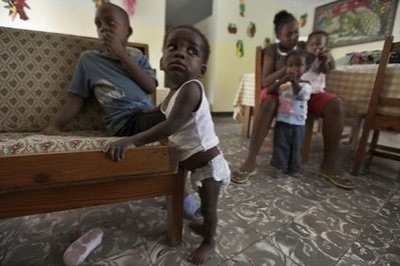
A toddler orphaned in the recent earthquake props himself against a
couch as he practices walking, inside one of several dozen homes for orphans
at SOS Children's Village, outside Port-au-Prince, Haiti.
Wednesday, April 14, 2010.
I understand why people think orphanages effectively address the global orphan crisis. According to UNICEF, there are around 140 million orphans currently in the world. And orphanages can provide a place where children are safe with basic needs met. They have toys, clothing and shelter. They go to school. They sometimes have a swing set.

This is from the reference to UNICEF:

In keeping with this and the agency’s commitment to adapt to the evolving realities of the AIDS crisis, UNICEF commissioned an analysis of population household surveys across 36 countries. Designed to compare current conditions of orphans and non-orphans, the global analysis suggests we should further expand our scope, focusing less on the concept of orphanhood and more on a range of factors that render children vulnerable. These factors include the family's ownership of property, the poverty level of the household, the child’s relationship to the head of the household, and the education level of the child’s parents, if they are living. In UNICEF’s experience, these are the elements that can help identify both children and their families – whether this term includes living parents, grandparents or other relatives – who have the greatest need for our support.


Orphanages allow loving, well-intentioned people to see the direct results of their donations and their work in a tangible way. But are they what’s really best for children? Decades of research tells us no.  It’s time to change how we respond to the Global Orphan Crisis. First, we need to understand that in many ways it’s not an orphan crisis, but an “orphanage” crisis, and in order to usher in real change, we must start to visualize a solution that doesn’t have four sturdy walls:

Families.

Forced migration.

Human trafficking.

Orphanages, however loving and compassionate the staff, founders and surrounding community, are not adequate substitutes for real families. Studies have shown that institutional care – like orphanages - affects the way a child’s brain develops, causing dramatic developmental delays and even stunts physical growth; institutionalized children average 1.0–1.5 standard deviations below the mean for parent-reared children with respect to physical growth and behavioral and mental development. In fact, decades of research have shown us how children’s brains develop differently when affected by abuse and neglect. This changes how children form relationships and limits their ability to attach to others.

Orphanages are human plantations, warehouses of god, complete with a recordkeeping database of legacies, created by christian missionaries to "Salvage the Souls" by "Saving the Savages" by indoctrinating the society to the socioeconomic system of the tax exempt god.

If parents are humans, where humans are carbon. and climate change is about reducing carbon, would that then be one reason behind the need for more orphanages?


Then, there is the logistical issue of a few workers caring for many children. Young children are hardwired to need more than just food and water—they need attention and touch and positive affirmation from a consistent and present role model. Even the most good-hearted orphanage employees cannot possibly fulfill these emotional needs to a large group of children in a truly satisfactory manner. Groups of well-intentioned youth groups and church volunteers can also not meet these needs for children.  Everything about growing up in an orphanage has life-altering consequences.

There are opportunities, already laid out in this World Bank video.

Think about your own family. If something awful were to happen, you wouldn’t want your child would go to an orphanage. Not even one with toys, a school and a swing set.

Parents in the United States often make arrangements for their children to live with relatives should anything unexpected happen, and when that’s not an option, we rely on foster care. By the 1950s, more children lived in foster homes than in orphanages in the United States. Today, U.S. orphanages have largely disappeared with foster care taking their place.

According to UNICEF data, an estimated 90 percent of “orphaned” children around the world actually have at least one living parent. Some parents surrender children to an orphanage because an extenuating circumstance – poverty, illness, regional violence, war or displacement – leads them to that point. If my child is in an orphanage, they think, at least they’ll eat. At least they’ll have a chance to go to school. At least they’ll have a chance at life.

For parents facing desperate options, poverty, the orphanage down the road that promises food and education becomes a good option and surrendering that child is the loving choice. They see it as the best option – or, often, their only option – for their child’s survival or education.

Poverty should never be a reason to place a child in an orphanage but it is andthere is nothing anyone can do about it – orphanages were never made to meet this need. They were once necessary in the midst of large-scale crises, like the HIV/AIDS crisis, that took the lives of entire villages. But now, orphanages should be a last resort, because there is a better way: Family-centered, individualized care.

Foster care that has been contextualized to function effectively in developing countries should be the alternative to orphanages. It’s time to change our understanding of orphanages to reflect the fact that most of the children in them are not actually orphaned.  The majority of children in orphanages worldwide have one or two living parents. Family preservation and family strengthening programs, like temporary foster care, should replace orphanages and be offered to help assist parents thrive and remain together with their children.

No. It is human trafficking. 

Stealin'.

Christians who feel strongly the biblical call to care for the widow and orphan, and who have led the missions work to build orphanages in the past, are uniquely qualified to lead a movement of change within the Western Church.  It is time to stand against orphanage-based care and instead support local, community-based foster care around the world. Foster care was the right decision in the U.S. in the early 1900s and it’s the right decision now on a Global stage.

Of the past????

Girlfriend. That is called the residuals of the peculiar institution.

Like human trafficking?

But the Global effort must foremostly empower the local leaders and social work professionals to lead the change in their own communities. At Bethany, our goal with sharing a foster care blueprint is always to make sure our presence is temporary and that we ultimately are able to step away and let local governments and community-based organizations take the reins. This ensures quality family-based care and support services are sustainable and tailored to every community’s particular needs.

Do your understand you are promulgating human trafficking?  No, seriously, you actually published this into the public record. You need to re-read this, with your eyes closed, and think of yourself as a parent who has had their child snatched from their arms, based upon an anonymous call.

A family setting best supports a child’s spiritual, physical, psychological, social, and emotional needs. I urge Christians, churches and global outreach organizations across the U.S. during this National Foster Care Month to help us in this movement to support families, reunify children in orphanages with their families and establish foster care systems around the world, because every child is made in the image of God, and each of them matters.

Fuck you.


#Time2AuditGod


Voting is beautiful, be beautiful ~ vote.©

Sunday, May 12, 2019

Update On Paul Whelan, BorgWarner, Mariia Butina & Russia In Detroit


Update on Paul Whelan.

BorgWarner also has ties to SOS Children's Villages.

#FreeMariaButina

Paul Whelan’s employer BorgWarner has Russian ties


This St. Clair Shores home is a medieval castle in miniature, a one-of-a kind storybook house with a vivid history and quirky interior.Tanya Wildt
Paul Whelan, a former U.S. Marine
Paul Whelan, the Michigan businessman accused of spying in Russia, entered the country on a business travel visa supported by BorgWarner Inc., he told his lawyers in Moscow.

Whelan, 49, of Novi was the director of global security for the Auburn Hills-based auto supplier when he traveled to Russia on Dec. 22 for the wedding of a friend. He was arrested six days later by the Russian Federal Security Service (FSB) and charged with espionage.


He remains in a prison cell at Moscow's czarist-era Lefortovo Detention Facility, held without much more information about the accusations against him than he knew on the day when he was initially detained.

“He was caught red-handed,” Russian Foreign Minister Sergei Lavrov said at a news conference following Whelan's arrest in his hotel room at the upscale Metropol hotel in Moscow. In his possession was a flash drive containing what Russian authorities say was sensitive information.
It's a claim his family denies.

"Paul thought a friend of 10 years was giving him some photos of his hometown," on the flash drive, said his twin brother, David Whelan, in an email message. Whelan holds U.S., British, Canadian and Irish passports. If he's convicted of spying, he could be imprisoned for up to 20 years.

The State Department confirmed Friday that Secretary of State Mike Pompeo will travel to Russia next week and will meet with President Vladimir Putin and Russia’s foreign minister. The discussions will be dominated by other hot-button foreign policy issues, such as Venezuela and Syria, but Pompeo is expected to raise Whelan’s case, according to a senior State Department official who was not authorized to speak publicly about the secretary’s agenda.

Since his arrest, Russian authorities are limiting Whelan's contact with the outside world, but he has been able to communicate some details about the case to his family through his lawyers. Among those details: BorgWarner helped him get into Russia by sponsoring his visa, and he believes his arrest might be tied to politics involving U.S. sanctions.

BorgWarner's Russian business deals  

BorgWarner has 30,000 employees around the world with 68 locations in 19 countries, but it doesn’t have facilities in Russia, said company spokeswoman Kathy Graham.

The company would not confirm that it sponsored Whelan's Russian business visa.
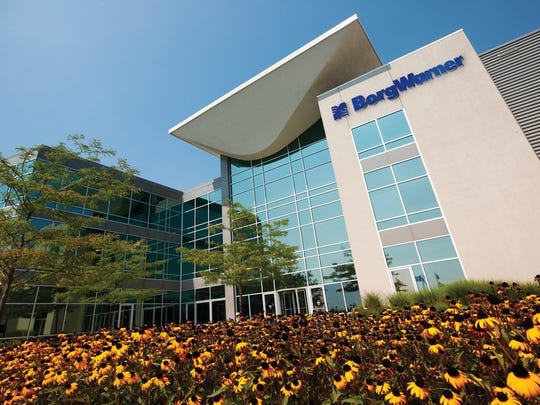
"As a general policy BorgWarner does not comment on travel of any of its employees, nor does the company discuss information about individual customers," said Graham in an email to the Free Press. "Paul was not in Russia on company business. We are deferring to the State Department regarding updates to his situation."

Although BorgWarner operates no facilities in Russia, the company does have a history of doing business there. 


BorgWarner supplied Kamaz Inc., Russia's largest truck-maker, with turbochargers, fan drives and high-performance fans, according to U.S. Securities and Exchange Commission documents. BorgWarner parts are used in nonmilitary Kamaz trucks and Nefaz buses, and its total sales to Kamaz from 2013-15 through non-U.S. subsidiaries was $12.1 million.

"For over 15 years, BorgWarner has supported (Kamaz) with advanced air-flow technologies, and we are looking forward to continuing the successful collaboration," Daniel Paterra, who was then BorgWarner's president and general manager of thermal systems, said in a 2015 news release about the Dakar Rally, an off-road rally in South America in which Kamaz trucks are used.


About a year after Paterra made that statement, the SEC submitted a letter to the president and CEO of BorgWarner, asking for details about the company's dealings with Kamaz, which was reported to have delivered trucks to Syria and Sudan.

"Sudan and Syria are designated by the State Department as state sponsors of terrorism and are subject to U.S. economic sanctions and export controls," wrote Cecilia Blye, chief of the SEC's Office of Global Security risk in a letter to the company dated April 14, 2016.

"We are aware of publicly available information indicating that your subsidiaries have provided turbocompressors, fan drives and high performance fans to (Kamaz) Inc. and news reports indicating that Russia has delivered (Kamaz) military trucks to the Syrian Army."


The company responded in a letter later that month, writing: "There were no direct or known indirect sales or exports from BorgWarner Inc. ... or its subsidiaries ... to Sudan or Syria in 2013, 2014 or 2015.

"Non-U.S. subsidiaries of BorgWarner have had and in the future may continue to have de minimis light vehicle/non-military automotive business with customers in Sudan and Syria.

U.S. law does not prohibit non-U.S. subsidiaries of U.S. companies from engaging in transactions with Sudanian or Syrian customers that do not involve exports or re-exports subject to U.S. jurisdiction."

BorgWarner declined to provide the Free Press with a specific explanation of what it meant by "de minimis" in its response to the SEC, although generally the term is used in legal references to suggest something so small or minor, it is insignificant.

A deep look raises questions  

"There are some very good and reasonable questions to be asked from BorgWarner," said Ryan Fayhee, a Washington, D.C.-based attorney and former U.S. Justice Department prosecutor who is working on behalf of the Whelan family. "There’s an open question right now around the role of a company when their employee, who did not go there for work, but they sponsored his visa, and they have meaningful operations in Russia. They don’t have an office there, but what they do have is … very, very meaningful relations with a company called Kamaz. 

"Kamaz is a very interesting organization because it is actually headed by a businessman who was the co-chair of Vladimir Putin’s re-election campaign. … I wish this was a conspiracy theory. It is not."
The director general of Kamaz is Sergei A. Kogogin, who was, in fact, the co-chair of Putin’s 2018 re-election campaign.
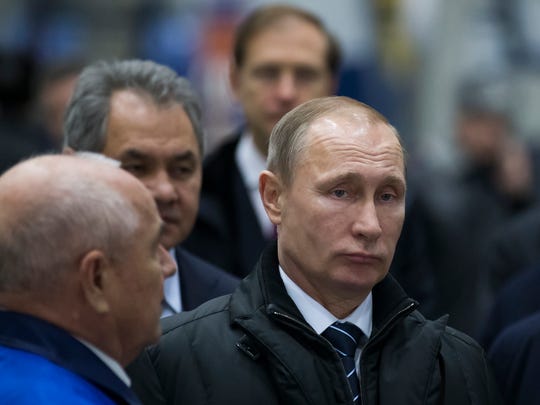
Russian President Vladimir Putin, right, visits the Kamaz
vehicle plant in Naberezhnye Chelny on Feb. 12, 2016.
The largest shareholder in Kamaz (49.9%) is a government-run defense technology company called Rostec Corp., which produces such military products as high-precision artillery munitions, artillery shells, rocket launchers, ammunition, along with aircraft and bomb weapons, among other things.

The director general of Rostec is Sergey Chemezov, who is among the most powerful people in the FSB, according to the Warsaw Institute, a Polish think tank focused on international relations, energy security, defense and other issues important to Poland and east-central Europe.


Rostec was sanctioned by former President Barack Obama's administration after Russia invaded Ukraine. And Chemezov was barred from entering the U.S.

"I’m not suggesting BorgWarner has done anything wrong," Fayhee said, "but I would suggest ... what role can the company have in the horrible, unfortunate situation where one of their employees has become a political pawn? And how do they act, what should they do, and how do they manage it?"

BorgWarner declined to answer questions about its efforts to help recover Whelan from Russian authorities. Fayhee said the company has been less than forthcoming with the Whelan family and in answering his questions, too.

"The big question in the beginning was and still is, ... what, if anything, with respect to the company may have contributed to Paul's arrest?" Fayhee said. "For example, did somebody visit Paul in Detroit, or email or corresponded with him at the company? ... You know, if there's a missing person, you interview his family, you interview his company and you take all these reasonable steps to determine what was done ... things like doing some sort of internal review or gathering materials, forensically or otherwise to help support the government in its effort to examine what would have led up to Paul's arrest and disappearance."

Yet, Fayhee said when he asked BorgWarner whether any such internal review had been done, an attorney for the company told him it is more concerned with its reputation in the news media than conducting an investigation.

The response surprised him.

"What is clear is that Paul, and the family really deserve more out of BorgWarner," Fayhee said. "They deserve a dialogue. ... The family very much wants to engage in even a private dialogue with the company in order to make sure they are doing everything they can do to secure Paul's recovery. 
"That's really at the core of it. The statements made by their lawyer, the fact that they're not speaking directly with the family is really troubling to say the least."

Through its spokeswoman, BorgWarner issued this statement in response to Fayhee's criticisms: “BorgWarner worked closely with the family before they engaged their own attorney, and it has coordinated with the State Department and other government agencies since Paul's arrest, and will continue to coordinate where appropriate, to help bring Paul home safely.”

David Whelan said there's no indication that his brother's work for BorgWarner has anything to do with his arrest in Russia.

"We are not aware of BorgWarner's business connections to Russia beyond what's in the public record," David Whelan said. "We don't have any reason to believe Paul's situation has anything to do with BorgWarner, other than that it is an American-based company.

Twin brothers David and Paul Whelan
"However, we do think that he was targeted by the Russian police because he was an American businessman. Unfortunately, the FSB appears to have miscalculated whatever result they helped to extort out of Paul's false arrest. Paul has shared notes through his lawyer that he believes his arrest has some sanctions-related element, but we don't know why he says that. But there's no indication it has anything to do with BorgWarner."

Whelan's isolation in Russian prison

In recent weeks, bundles of handwritten letters from Russia have arrived at the Manchester, Michigan, home of Whelan's parents, Rosemary and Edward Whelan. The letters from their son have been censored by Russian authorities, but still are a welcome sight, his brother said.

"My mum and dad received about 75 letters, in three groups ... over the past 10 days or so," David Whelan said. "They're handwritten notes from Jan. 18 onward. ... They describe his day-to-day in jail. As they went through the routine prison censoring, before being held by the FSB investigator for months, they are purely day-in-the-life.

"We haven't really learned anything that helps us with seeking his release, but they are comforting for my parents. You can hear his 'voice' in them, and a letter can be read and re-read while they wait for his return."

Since his arrest, Russian authorities have limited Whelan's access to his lawyers and consular services. He has not received mail or phone calls or the English-language books, including an English-Russian dictionary.

Even Jon Huntsman Jr., the U.S. ambassador to Russia, has been restricted in what he's allowed to discuss with Whelan.

During an April 30 meeting with Whelan at the prison, Huntsman was not allowed to read letters from his family, to ask him to sign a power of attorney, and was banned from 'talking about anything that actually matters,' said Andrea Kalan, a State Department spokeswoman, on Twitter.

"Why haven’t Russian officials provided proof? Perhaps it’s lost along with Paul’s mail. Complete lack of evidence + Paul's isolation = greater likelihood officials will try to get a forced false 'confession.' Stop playing games."

David Whelan said his family is concerned that his brother has been interrogated without the presence of his lawyers or his translator, and noted that his attorneys in Moscow, Vladimir Zherebenkov and Olga Karlova, were appointed by the FSB.

In addition, his brother's signed Privacy Act Waiver was held up for months by Russian investigators who alleged the document was lost in the mail. And now, a similar delay is keeping the family from getting access to a signed power of attorney, which would grant them the ability to manage his affairs at home and help him choose his own attorney in Russia.

"There’s a real concern that … at some point given the isolation, the limited access, a lawyer that doesn’t even speak English, that at some point that affects your psychiatric health," Fayhee said. "Maybe that’s done to try to extract some kind of confession out of him or to get him to say something on the record so the Russians can then use that as the basis of his continued detention. It’s difficult or impossible to know. But we shouldn’t understate the potential effects of being isolated the way he’s being isolated."

"We hope they find this as an opportunity to acknowledge that the allegations ... have not been substantiated and that they'll release him. That would be the appropriate thing to do under the circumstances.

"But the family is prepared also for the possibility that the detention will be extended for another three months in order to further isolate him, in order to extract whatever benefit it is that they're seeking to achieve whatever goal Paul is being used to achieve."

In April, the U.S. State Department issued a travel advisory for Americans going to Russia, suggesting increased caution because of terrorist threats, and a risk of being harassed, mistreated, arbitrarily interrogated, detained or targeted for extortion.

"There is no doubt in our minds that Paul's arrest and imprisonment amount to a kidnapping by the Russian police," David Whelan said. "We hope the new designation will help other Americans avoid the same fate."

State Department spokeswoman Julia Mason said the department is continuing to closely follow the Whelan case.

"We urge the Russian government to guarantee a fair and transparent judicial process without undue delay, in accordance with its international legal obligations," she said. "We have visited Mr. Whelan seven times since he was first detained. We will continue to press for fair and humane treatment, due process, and access to appropriate medical care.”

Voting is beautiful, be beautiful ~ vote.©

Monday, April 8, 2019

Meet Hermann Gemeiner - Founding Father of SOS Children's Villages - Lebensborn - Happy Child Abuse Month

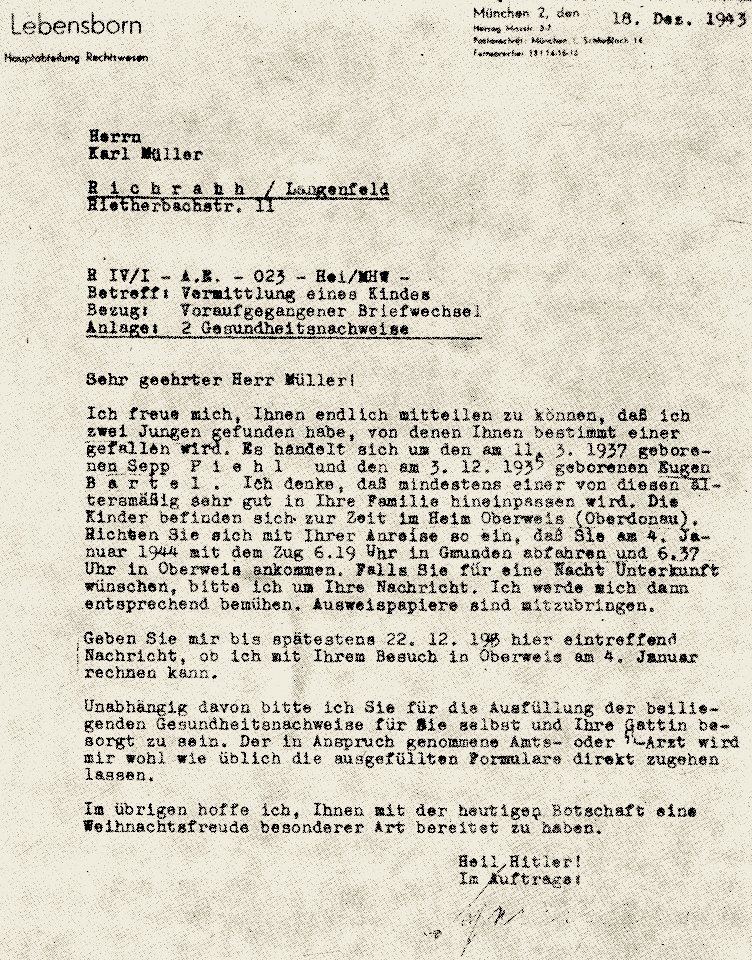
Meet Hermann Gemeiner and the WW II history behind Lebensborn, or Kinderdorf, or rather SOS Children's Villages.

This is the origin of Child Protective Services, Foster Care & Adoption.

In order to properly celebrate Child Abuse Propaganda Month, one must become acquainted to the historical concepts of christian chattel law and its usage.

Yes, that is correct, Child Abuse Propaganda came our of Nazi Germany to cover up their experiments with children, which are in full force today, through the U.S. child welfare system which has dominated the world in the industry of trafficking tiny humans and maximizing revenues.


Logo of the SOS Children's Village eV
https://www.sos-kinderdorf.de/portal
Started in 1949 for orphans, SOS Kinderdorf builds communities around the globe that give foster kids a stable home and long-term parent

Hillary Rodham Clinton isn't the only one who thinks it takes a village to raise a child.

In Austria, where a woman was jailed recently for severely abusing her children, the four young sisters and their brother were sent to a new community and given a new home - complete with a foster mother.

Their destination was an SOS Children's Village, one of 343 such communities around the world set up by SOS Kinderdorf International, based in Innsbruck, Austria. The largest private children's charity in the world, it was originally created to provide homes for orphans. Today, most of its charges in Western Europe are victims of abuse and neglect.

Lebensborn document 1.jpg
The First CPS Foster Care and Adoption Program
The five siblings, like 30,000 other children in 125 countries, joined a small neighborhood of 10 to 20 houses. In Europe, each house is headed by an SOS mother who cares for six to eight children. She performs all the tasks mothers take care of in the normal course of a day: scheduling, cooking, washing, helping with homework, and generally acting as a loving guide. And she does it long term.
The idea behind the villages is to give at-risk children the next-best thing to a natural family. Children get long-term care from well-trained adults in a stable environment. Sixty percent of SOS kids have siblings, and the organization makes every effort to keep them all under one roof.

Virtually all the children still have natural parents and many have some contact with them. And because SOS Kinderdorf puts a premium on community, the villages - which look like a middle-class neighborhood - allow for easy integration into the surrounding area through activities and educational or recreational facilities.

Large families
Ingeborg Neumann cares for two boys and four girls between the ages of 8 and 12. Their home is nestled on a hillside in the Vienna Woods in a community of 27 other SOS homes. Two of the girls are sisters.

During a recent visit, Christmas preparations were well under way in the living room, obviously the center of family life, with a homemade Advent wreath already in place in the center of the table.
 important for the children to have the experience of birthday celebrations and Christmas because many of them haven't had the chance to have celebrations in their previous homes," Ms. Neumann says.

Neumann says she likes what she does. Since becoming a SOS mother 3-1/2 years ago, her conviction has grown that she made the right decision in exchanging her office job for a life of caring for children. And it's quite obvious that her two young sons, who came running in from school for lunch, love her.

While single-mother parenting is often viewed as less than ideal, SOS Kinderdorf International
Image result for lebensborn
"He alone, who owns the youth,gains the future."
generally seeks out only single women to serve as SOS mothers, and has done so since its inception. Single parents are considered less likely to have to leave the family for reasons ranging from a spouse's job relocation to divorce.

But according to Richard Pichler, the organization's secretary general who was raised in an SOS children's village himself, finding candidates is not easy. Even in the early 1950s, when many war widows applied, there was a screening process to make sure that they knew what they were getting into.

"It has never been easy to find good mothers for SOS Children's Villages," Mr. Pichler says "They have to know that it isn't only honey, but that there are rainy days too for an SOS mother."
But, Pichler says, there is a new generation of women, particularly in Europe, who consciously decide to live a single life and want to be SOS mothers. "Single-parent raising of children is very much accepted in society today. Even though the background of SOS mothers has shifted, the desire to be mothers is still the same," he says.

A network of support
One reason SOS villages are often successful, Pichler says, is that they offer the parents a strong network and plenty of support.

The whole community is there to help mothers and their children. SOS mothers are also provided with special training before they establish their new families. There is always an SOS substitute mother who can step in so SOS mothers can have a weekend off or take a vacation. If something in the home needs fixing, an SOS employee is there to take care of it. Children with special needs have access to trained counselors and therapists. Staff members are trained to guide the mothers through particular problems the children may have. And most important, many of the pressures that other single mothers struggle with alone are shared in the villages.

SOS Children's Villages are traditionally headed by male directors who, in addition to running the day-to-day business, also serve as father figures. But times are changing, and a woman director was appointed recently for an Austrian SOS village. Male employees are trained to be positive male role figures for SOS children, helping them with their schoolwork, taking them on excursions, or just being there when the children need a guy to talk to.

The criticism most often directed at SOS Kinderdorf is the perceived weakness of its single-women-only policy. Critics suggest that more male contact is necessary for a child to develop fully.
However, Pichler says, "I had ample male contacts when I was growing up in my SOS family, so it was not a problem for me." In addition to his village director, he had contact with male teachers, male staff members, and his older SOS brothers.

He acknowledges that it is not a perfect arrangement. "We cannot say we are ideally copying the natural family. We have to be realistic and say there are limitations," he concedes. "We know it is not the ideal situation. The ideal situation is adoption or something like that. But in the broad framework, with about 4,500 SOS families worldwide, the most feasible way is with a mother. A single mother."
Helping orphans

Mr. Gmeiner started small. He and a few friends pooled their resources to build five houses for 40 children in the Austrian village of Imst. By 1952, Gmeiner already had 15,000 people contributing one schilling a month (about 4 cents at the time).

Those 15,000 grew to 1 million individuals by 1959, who, through their small donations, built 10 villages caring for 1,000 children. SOS Kinderdorf was on its way.

Other villages were quickly established in Austria, and, beginning in 1956, in Germany. From there, the idea spread throughout Europe. In 1963, the first SOS village in the developing world was established in the Republic of Korea followed by ones in India and the Philippines.

Many countries have used SOS Kinderdorf as a model for their own child-care facilities. India, for example, stated a few years ago that all future work for the placement of children should follow the SOS Kinderdorf village model.

SOS eventually moved beyond just building villages to set up schools. Children from surrounding neighborhoods could also attend, which built stronger ties between SOS kids and their neighbors. SOS has expanded as well into job-training programs, and opened a college in Ghana in 1990. In 1996, 185,000 young people were cared for in a variety of SOS facilities.

Looking back
Theresia Neubauer, who lives in an SOS village with other retired mothers, was one of the first to answer Gmeiner's call for SOS mothers in the early 1950s. She was 25 years old then. In her time, SOS mothers took care of nine to 12 children each.

"Larger families were easier to care for since the older children could help," Ms. Neubauer says. "And children were not so troubled."

The majority of children Neubauer and the other SOS mothers cared for then were orphans. They hadn't been rejected or abused by their natural parents as is more often the case today.

All together, Neubauer raised 32 children and now enjoys ties with 40 grandchildren and eight great-grandchildren. "I never thought of what I did as a job. It was my calling," she says.


Voting is beautiful, be beautiful ~ vote.©

Wednesday, March 27, 2019

Swedbank Knows About Trafficking Tiny Humans - Magnitsky Comes To Bill Browder - Karma

My apologies for my sloppy presentation, but I am screaming.

This shit is about to pop.

Fuck you all.

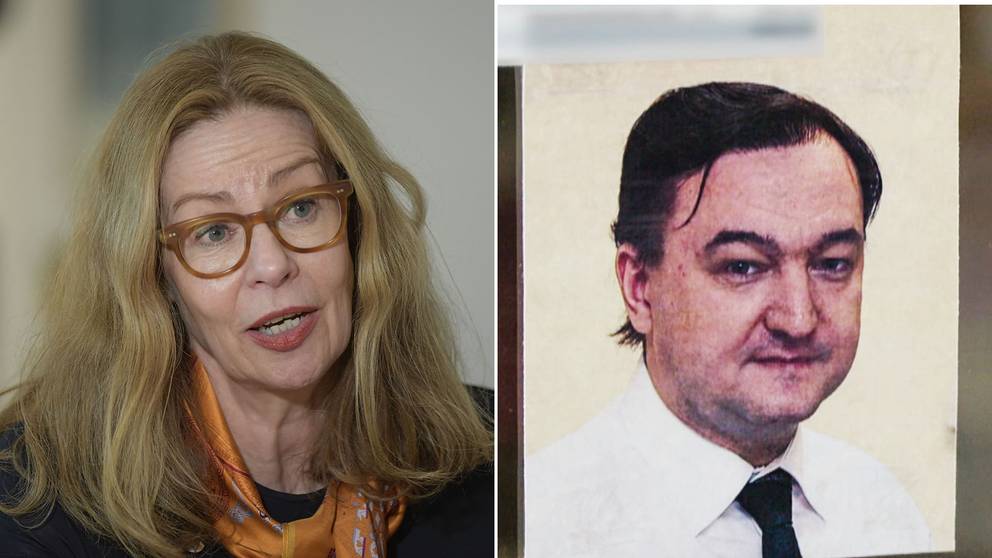
According to sources from the current time, the internal report was sent to Birgitte Bonnesen who was then the head of the Baltic banking business in Swedbank. Photo: TT

Internal documents show: Swedbank investigated Magnitsky's track already in 2013
Swedbank's CEO Birgitte Bonnesen was already informed in 2013 that the bank was involved in the so-called Magnitsky transaction.Nevertheless, there are data that indicate that as late as autumn 2018 there were still customers with Magnitsky connections remaining in the bank.
In 2007, a gigantic $ 230 million in theft was paid to the Russian state through the US Treasurer Bill Browderers' corporation.
Browder hires tax auditor Sergei Magnitsky, who comes the fraudsters on the tracks - but himself is thrown into custody and 2009 is found dead in a cell.
SVT's disclosure that money from the theft has been closed through Swedbankhas triggered strong reactions, but so far the bank has not wanted to answer questions about the case. Nor did the external review presented by the bank last week contain any information about the Magnitsky case.
SVT has taken part of the contents of internal documents that show that Swedbank in Estonia already investigated connections to the Magnitsky business in 2013.

Confirmed by the CEO

A former employee who participated and made the report at Swedbank confirms the information for SVT's partner in Estonia, the Postimees daily newspaper :
- We based on the information that had been published in the newspaper. We looked more closely at the transactions. They went between offshore accounts, but it was very difficult to draw any conclusion because we could only see a small portion of the transactions. The investigation actually led nowhere.
Swedbank's CEO in Estonia, Robert Kitt, also confirms to Postimees that an investigation was made already in 2013. But he does not want to comment further on what measures were taken.
- We have many things in the house that we cannot publicly speak highly of.
Can you comment on what this audit gave for results?
- Not really. But I can confirm that in 2013 the process worked the same way, so that we went back and went through the things. What it did or did not become then is the cause of ours and the law enforcement authorities.

New report 2018

According to sources from the current time, the internal report was sent to Birgitte Bonnesen who was then the head of the Baltic banking business in Swedbank.
Five years later, in autumn 2018, Birgitte Bonnesen receives another secret internal report showing that suspected customers in Swedbank and Danske Bank have settled the equivalent of SEK 95 billion between each other, whichSVT has previously revealed .
The secret internal report also mentions the Magnitsky business. The investigation calls on the bank's management to dispose of all customers who in some way have a connection to the Magnitsky case.

"A boring thing"

The American businessman Bill Browder did not know that Swedbank, as early as 2013, investigated links to the Magnitsky case, nor that the matter was included in an internal report in autumn 2018.
- It's really a boring thing to know if it's true. Because I would have assumed that they had acted much, much earlier if they had that information.
Do you have any thoughts on why it did not make them act?
- I cannot come up with any understandable reason why they retained these customers if they knew they were involved in the Magnitsky case.
SVT has offered Swedbank to comment on the data, but the bank declines comments.

Affiliated organizations Swedbank Human Fund

When you start saving in the fund, you get a letter that invites you to choose which organization you want to support. Remember to answer it so that your money ends up where you want. If you do not choose, the money will be distributed between all organizations that are affiliated to the fund. The same distribution applies if your fund savings do not lie with Swedbank or a savings bank that cooperates with Swedbank. Then we who manage the gift department from the Human Fund cannot see who is the owner of the fund units.
If you want to change the organization that gets your gift, you call or visit your nearest bank office.
You can easily become a customer of Swedbank or a cooperative savings bank online using your Mobile BankID.

Voting is beautiful, be beautiful ~ vote.©