Showing posts sorted by relevance for query michigan gop. Sort by date Show all posts

Thursday, January 31, 2019

Michigan Secretary Of State Jocelyn Benson Takes It Upon Herself To Negotiate Gerrymandering Public Private Partnership Lawsuit - Completely Forgets About SIGTARP

In the spirit of fuchsia...
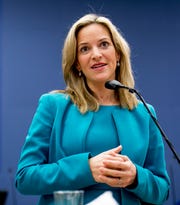
Secretary of State Jocelyn Benson
Michigan Secretary of Usurpation
Jocelyn Benson

GOP asks Supreme Court to block Dem settlement in gerrymandering suit

Lansing — Michigan Republicans are asking the U.S. Supreme Court to hit pause on a federal lawsuit alleging GOP gerrymandering, a move that could disrupt a settlement agreement announced Friday by Democratic Secretary of State Jocelyn Benson.

Work with me on this one.  You mean to tell me that the Michigan GOP filed in SCOTUS to stay a lawsuit alleging they participated in gerrymandering through the Emergency Manager Law for the fake Detroit Bankruptcy where the Detroit Land Bank Authority was a creditor to put people out of their families' generational homes, based upon fake property tax foreclosure, asset forfeiture fraud schemes they introduced, and promulgated through money they laundered through their campaigns into their legislative back pockets, for the purposes of redistricting based upon the people who survived the reign of terror from the "Legal Geniuses" (trademark pending)?

Well, that is awkward, considering that there is another case in federal court, at the judicial threshold of the same exact matter, which means that this Detroit case could be, possibly, enjoined?

Benson's deal with plaintiffs would require Michigan to redraw at least 11 state House districts. It would likely force a recalibration of an unknown number of surrounding districts as well.

Stay with me because this is the part where I have serious privatization issues going on.  I need someone to explain to me why the Michigan Secretary of State can negotiate in a matter pending before the court, and not the Attorney General, without advise and consent of the Senate, from the Executive Branch, by disregarding existing law, where only the Legislature can make law.  That is called a usurpation, the last time I read my Michigan Petition for Writ of Quo Warranto. 

But attorneys for Republican lawmakers are asking the nation’s highest court to intervene and delay any action in the suit until justices consider arguments in similar gerrymandering cases out of North Carolina and Maryland they are expected to take up in March.

Looks like that Detroit Land Bank Authority case is going to be on hold until March.

“The Supreme Court will be ruling soon on the exact issues presented in this case, and this afternoon we asked the United States Supreme Court to stay this entire proceeding,” attorney Charlie Spies told The Detroit News by email.

State House Speaker Lee Chatfield of Levering, Rep. Aaron Miller of Sturgis and several congressional Republicans directed their request to Justice Sonia Sotomayor, a Democratic nominee.

The Michigan lawsuit alleges maps approved by the Republican-led Legislature in 2011 intentionally diluted the power of Democratic voters by “packing” or “cracking” them into specific districts.

It did. It was called fake property tax and mortgage foreclosure schemes.  I was there when they came up with the idea.

The new districts would only apply for the 2020 elections. Voters last fall approved the creation of a citizen redistricting commission that will draw maps for 2022 and beyond.

That citizen redistricting commission is another one of those "Authorities", like the Detroit Land Bank Authority, a Public Private Partnership.

As part of the deal with Benson, which would require approval by a three-judge panel overseeing the case, plaintiffs agreed to drop challenges to congressional and state Senate districts, along with four other state House Districts.

I should file an amicus curiea monkey wrench just for fun. I always wanted to file in SCOTUS. I want to have fun making them waive the fees and giving me special powers in case law.  The Justices need to bond with me, anyway.

The 11 state House districts targeted in the agreement “represent some of the most egregious examples of the unconstitutional attempts by past legislators to draw legislative districts in an effort to rig the partisan outcomes of elections,” Benson told reporters at a Friday briefing.
Several neighboring districts would likely need to be redrawn as well, but “that’s going to be a question for the Legislature,” Benson said.

The Michigan gerrymandering case is currently scheduled to go to trial Feb. 5. In their application to the U.S. Supreme Court, GOP attorneys suggested federal judges are aware of settlement talks but made clear they do not plan to delay the trial for “any reason.”

Plaintiff attorneys submitted the proposed settlement Friday afternoon in the U.S. District Court for the Eastern District of Michigan.

“The next step is whether the court will accept it, and we’ll go from there,” Benson said.​​​​​​

February 5, 2019 is the magic day because it is not just the start of the gerrrymandering trial, it is also the State of the Union Address!

Benson: Deal avoids 'upheaval' 

The Detroit Democrat said she pushed plaintiffs to drop congressional and state Senate district challenges to minimize “upheaval." But the deal still reflects her view that gerrymandering occurred in a way that violated the constitutional mandate of “one person, one vote.”

No, she is dropping the congressional and state Senate district challenges because she knows that stuff is criminal.  Who gave her the powers to negotiate settlements?

Benson has been the subject of considerable GOP scorn the past week after signaling her intent to settle the federal lawsuit brought by the League of Women Voters, a group of Democratic voters and attorney Mark Brewer, former chairman of the Michigan Democratic Party.

Ah, she is with the "Legal Genius" (trademark pending) Mark Brewer.

Michigan Republican Party spokesman Tony Zammit blasted the deal, saying Benson “has shown she cannot be impartial in this case, and therefore she must be replaced as it’s defendant.” Former Secretary of State Ruth Johnson, a Republican, had defended the GOP maps.

Can you smell the fear? Both Republicans and Democrats in Michigan are terrified right about now. #FreeMariaButina

Benson denied partisan motivation for settling the case she inherited after taking office this month, suggesting she did not want to waste taxpayer resources fighting a case she believes the state would lose. The deal would give the Republican-led Legislature the first opportunity to redraw the state House lines, subject to judicial review.

She was not partisan, she is desperately trying to preserve her freedom.

“It does not matter to me who or what parties drew the districts," Benson said. "What matters to me is whether they were drawn to circumvent the will of the voters.”

Technically, if you snatch people's homes, they will no longer live there, which means there are no longer voters, so I guess you can say the will of the voters were not circumvented if no one resides in the properties anymore.

The proposed consent decree would require the state to redraw state House districts 24, 32, 51, 55, 60, 63, 76, 91, 92, 94 and 95. Six of those seats are currently held by Republicans and five are controlled by Democrats. Republicans currently represent 58 of 110 state House districts, a six-seat majority.

I bet they picked those State House Districts arbitrarily and capriciously.

“The Democrats know it will be nearly impossible to redraw these 11 districts without affecting countless others causing electoral chaos,” Zammit said. “Worse yet, outdated 10-year-old data will be utilized to draw the new lines which will not accurately reflect the demographics of our state.”

All those data are corrupt.  Please. All you have to do is compare the voter rolls with a drive by of the addresses. 

The deal does not dictate how the Republican-led Legislature should redraw the state House districts, but it encourages them to do so in “transparent proceedings open to the public.”

Encouragement can be creative when you use terms like "should" and "may" because there is not statutory oversight to challenge anything coming out of the privatized redistricting commission.

The 11 targeted districts include two Republican-held seats in Metro Detroit, both in Macomb County, currently represented by Rep. Steve Marino of Harrison Township and Pamela Hornberger of Chesterfield Township.

I wonder if these negotiations took place in Michigan.

None of the settlement districts are north of Mount Pleasant, meaning seats in the northern Lower Peninsula and Upper Peninsula where Republicans are dominant are unlikely to be affected.

That is because southeastern Michigan, specifically Detroit, has the "highest concentration of voter potential", (my new term for what happens after the Michigan passes laws for stealin' the children, the land, and the votes.)

The federal court would be responsible for establishing a deadline for the redrawn state House maps and determining how it would judge the partisan fairness of the proposed districts.

The federal court should not be responsible for participating in a complex fraud scheme dealing with multiple, ongoing federal investigations.

Brewer ties blasted

Republican lawmakers have denied overt political bias in the district boundaries they approved in 2011, but emails between map makers revealed in the federal case have included partisan references and commentary on the prospects of maintaining GOP power.

If you go through my archive, you can find the links to what they were talking about and who were the biggest cheerleaders.

Benson told reporters she expected Republican opposition to the settlement despite its limited nature, which means state senators just elected to four-year terms would not need to run for re-election in 2020.

By what right does the Secretary of State, through a private attorney, unless Brewer is a Special Counsel, which he is not and should know better.  Well, on second thought, Brewer does know better which is why he is covering his arse for his engagements with Perkins Coie Sucks operations through the DNC and MDP.

“I think no matter what decision I made in this case, someone was going to be upset, whether we went to trial or whether we settled or not,” she said.

Well, I say you, my dear, shall be called to bear witness by what right you have to even hold that office, 

Republicans have blasted Benson for connections to Brewer, the former state Democratic party chairman who donated $500 to her campaign and is a lead attorney for plaintiffs in the case.

The lady doth have a reputation for just about anything to get elected.

Earlier this week, the Michigan GOP accused Benson and Brewer of trying to orchestrate “the greatest partisan power grab in Michigan history,” and attorneys for Republican lawmakers asked court permission to demand their communications donating back to 2017.

Michigan GOP is asking for the Wikileaks files and the DNC servers?  Oh, this is going to be interesting because the MDP was running shop in Detroit through lots of political campaigns.  This sounds like a call for the FEC.

Benson noted she raised more than $1 million for her campaign and received donations from both Republicans and Democrats.

Everyone does the nasty together in Michigan politics, you just do not know it...yet.

“If anyone giving me $500 can influence a decision I made when you raise that much money from thousands of people, then we’re in trouble,” she said. “And so that’s certainly not the case here.”

The settlement does not require any state payments to cover the cost of plaintiff attorneys but makes clear that the parties could agree to award fees at a later date.

“How much money are the taxpayers of Michigan going to be paying Mark Brewer’s law firm in this case?” Zammit said.

Excellent question!  I have one better.  Who approved Brewer's law firm to take on this case?

This is nothing but another Public Private Partnership takeover of Michigan.

And that ends my incredible ability of throwing legal monkey wrenches in cases dealing with SIGTARP.


Again, the moral of the story is, "Do not be mean to my Sweetie. Period". 

Voting is beautiful, be beautiful ~ vote.©

Wednesday, October 3, 2018

Michigan Redistricting Was Part Of The Emergency Manager Plan

I had those maps.

I had the data.

I went to D.C.

I went to the MDP.

I went to the Detroit NAACP.

No one cared because selling chattel is the oldest form of survival.

If you lose you home to fraudulent property taxes and fake ass mortgages, under laws promulgated by those who benefit, people must move, hence, redistricting, or rather forced migration.

The Detroit Foreclosure Crisis was intentionally manufactured through the Emergency Manager Law, whereby the model was lifted from the Michigan Children's Institute Superintendent Law.

Children and land are fungible under chattel law.

This was planned and I was there.

GOP pressure shaped state's district maps, court records show

Lansing — Republican mapmakers who drew Michigan's current political districts were pressured to appease lawmakers and made changes to help gain legislative approval, according to documents and depositions in a federal lawsuit.

The documents show mapmakers in 2011 gave top party officials the partisan vote history breakdowns of new districts, shared proposed maps with an interest group linked to the DeVos family, entertained suggestions from at least one GOP donor and faced backlash from incumbents vexed at how their districts were redrawn.

“I think your map protects all nine incumbents and it looks good,” GOP redistricting guru Bob LaBrant, then a Michigan Chamber of Commerce official, told congressional mapmaker Jeff Timmer in a May 2011 email. It came as pressure from within and outside the Legislature began to rise.

But Republican then-U.S. Rep. Thad McCotter of Livonia and U.S. Rep. Justin Amash of West Michigan, in particular, were “concerned and at times opposed or threatening to be opposed and disrupting the legislative process” by lobbying lawmakers against the plan, Timmer, a GOP consultant for the Lansing-based Sterling Corp, said in a sworn deposition.

The transcripts were revealed by attorneys for congressional Republicans as part of a motion to dismiss the suit alleging partisan gerrymandering. They reference emails that shed light on a redistricting process that Michigan law allows to be controlled by whichever party holds power at the start of any given decade.

Republicans led the process in 2011 and hired mapmakers who used advanced software to draw the lines. The lawsuit, filed on behalf of Democratic voters, alleges Republicans drew maps to benefit their candidates by "packing or cracking" Democrats into a smaller number of winnable districts
Brian Began, a Republican staffer who helped draw state House districts, emailed Timmer and state Senate mapmaker Terry Marquardt in June 2011 with a “map that we will likely use as it doesn’t primary two Dems in Wayne County so long as they vote our way.”

Began, in a sworn deposition, said he did not remember “the context” of his email. But records show three Wayne County Democrats — then-state Reps. Doug Geiss, Andrew Kandrevas and Paul Clemente — ended up voting for the Republican-drawn maps.

The trio cut a deal with Republicans after learning Detroit Democrats were attempting to negotiate their own agreement with the GOP that would have carved up the Wayne County suburbs, including his hometown of Taylor, Geiss told The Detroit News.

"A pox on all of their houses," Geiss said, still frustrated by the process seven years later. "This is not what democracy looks like. It left a bad taste in my mouth and does today. Democrats and Republicans should not be in control of that process."

Timmer, the congressional mapmaker who is a prominent figure in the new court documents, did not respond to an interview request.

Records first reported by Bridge Magazine show his Sterling Corp. firm was paid $170,000 to draw maps and help raise money for the Michigan Redistricting Resource Institute, a nonprofit that does not disclose its donors but spent about $1 million on GOP redistrict efforts in 2011.

Congressional pressure
McCotter and his chief of staff Jack Daly regularly shared suggestions with Timmer as he drew congressional maps, according to the documents. In a previously reported message, Daly celebrated a proposed map that would make it “easier to cram ALL of the Dem garbage in Wayne, Washtenaw, Oakland and Macomb counties into only four districts.”

McCotter, who resigned in 2012 after a petition signature fraud scandal kept him off the primary ballot, wanted to preserve the shape of his district as much as possible, Timmer said. The Livonia Republican was keenly interested in how the new maps would affect potential opponents.

"I know that Thad felt he could get elected anywhere in that district, but he was more concerned about who might run against him in a primary,” Timmer said in his deposition.

Then-state Sen. Gretchen Whitmer, an East Lansing Democrat now running for governor, blasted the GOP congressional map prior to a 2011 vote, alleging districts were drawn to protect McCotter and suggesting that "future generations of school kids might learn about them as examples of gerrymanders.”

Republican lawmakers defended the map, noting it would preserve two African-American majority districts while minimizing districts that break up counties or municipalities.

“What we have in front of us is a fair, a legal and a constitutional plan for our new congressional districts,” state Sen. Joe Hune, R-Hamburg Township, said before the vote.

Timmer repeatedly insisted that his top priority during the redistricting process was adhering to the “Apol standards,” the court-ordered redistricting rules codified by the Michigan Legislature in 1996.
But he acknowledged legislative leaders “would make alterations” to secure votes and said the rules were not strictly adhered to on legislative maps in at least two instances.

Clinton Township was split in an unusual way after requests by Republican lawmakers from Macomb County, he recalled. Two more townships than necessary were added to a Livingston County district on the state Senate map, he said.

'Rock solid' Republican
In one 2011 email, Timmer said Amash was threatening to "scuttle" the plan by lobbying state lawmakers against it. The congressman and former state lawmaker had "concerns about territory" in Kent County and that the map also drew Democratic former U.S. Rep. Mark Schauer into his district, Timmer explained in his deposition.

Schauer had traded terms with GOP U.S. Rep. Tim Walberg of Tipton but did not run again after his home in Battle Creek was drawn out of the 7th Congressional District and into Amash’s 3rd District.
Greg McNeilly, a GOP strategist who works for the DeVos family's Windquest Group, wrote Timmer in June of 2011 to say that “Amash is concerned with Calhoun.” McNeilly, who told The News he was not working directly for Amash or on his behalf, told Timmer that LaBrant had suggested they talk.

Timmer provided McNeilly with what he said was requested information detailing partisan vote totals in the proposed Amash district from 2006 to 2010. In one email, Timmer said the seat was “still rock solid.” Republican operative Jamie Roe said in another email that Amash's district was “still the second best seat in the state” for Republicans.

The deposition revealed that Roe, who was chief of staff to GOP then-U.S. Rep. Candice Miller, celebrated in an email a draft map he said looked like it was “giving the finger” to U.S. Rep. Sander Levin, a Royal Oak Democrat.

Roe was describing a section of Sterling Heights that was included in Miller’s new district. No one lived in the area but it had “good companies,” he said in an email.

Roe asked Timmer to keep a strip between Mound and Van Dyke in Sterling Heights in Miller’s district “so that we can continue to represent General Dynamics, the Chrysler plant, and the Ford Transmission plant.”

Roe has been a vocal critic of a November ballot proposal that would create an independent commission to draw maps and has argued “politics is really not part of” the current process. He said he has not been a fan of Levin, who is retiring.

But his 2011 comments do not prove any effort to gerrymander, Roe argued, noting the “middle finger” created in the map was home to zero voters but was an important part of Macomb County’s defense corridor that Miller “liked fighting for" in Congress.

“I do politics for a living,” he said, explaining why he described proposed districts in terms of partisan voting histories. “Of course I’m going to note the partisan nature, but that’s not a determination of how it was drawn.”

The emails show Republicans were "quibbling over how gerrymandered their district would be, not whether it would be gerrymandered," said Mark Brewer, an attorney in the federal lawsuit and former chairman of the Michigan Democratic Party.

Advocacy group pressure
In one email, Timmer asked another mapmaker to forward a proposed district map and partisan voting history to the Great Lakes Education Project, an advocacy group founded by now-U.S. Education Secretary Betsy DeVos, a former major GOP donor and state party chair.

Another email described in the deposition showed GOP donor Jon Cotton, president of Meridian Health Plan Inc., offering input on legislative maps in an email thread that included Michigan Republican Party Chairman Bobby Schostak.

“Can we still have the map drawers draw a favorable Republican district with the Pointes all together?” wrote Cotton, who lives in Grosse Pointe Farms.

The suggestion was not incorporated because it would have reduced the number of majority-minority districts, said Timmer, who told attorneys he was likely referring to Cotton when he referenced “GP$$ folks” in one email to Schostak.

Timmer also said GOP operative Stu Sandler delivered draft maps and other information to Schostak during the redistricting process.

LaBrant, the former legal counsel for the Michigan Chamber of Commerce who helped shape GOP redistricting efforts for more than two decades, told Timmer in a May 2011 email that “Dale at the RNC has drawn a 10-4 map” for Michigan. It apparently was designed to help the GOP win 10 of the state's 14 congressional seats.

But "your map protects all nine incumbents and it looks good,” said LaBrant, who separately told a legislative aide to then-Congressman Dave Camp that "we've spent a lot of time providing options to ensure we have a solid 9-5 delegation in 2012 and beyond."

Michigan Republicans retained nine U.S. House seats in 2012 and have enjoyed a 9-5 delegation majority since the state lost one seat that year due to population losses.
Emails show that when Timmer provided draft maps to various interested parties, he often included election data charts breaking down how many Republican votes were cast within proposed districts during past elections.

“Any GOPer should fare quite well here,” he said of the way McCotter’s district was drawn in one draft map. “All GOP seats improve except Congressional Districts 2 and 3,” he said in another email. 
Timmer denied a political motivation in his own map making. He testified that he provided vote history data assuming the type of questions Republican lawmakers or staff would ask “once we satisfied the Apol criteria.”

Voting is beautiful, be beautiful ~ vote.©

Thursday, March 21, 2019

Michigan Manipulated Data - SCOTUS Does Not Want To Talk Fraud - TARP, Gerrymandering & The Wasted Votes Of Absentee Ballot Fraud

In the spirit of fuchsia...
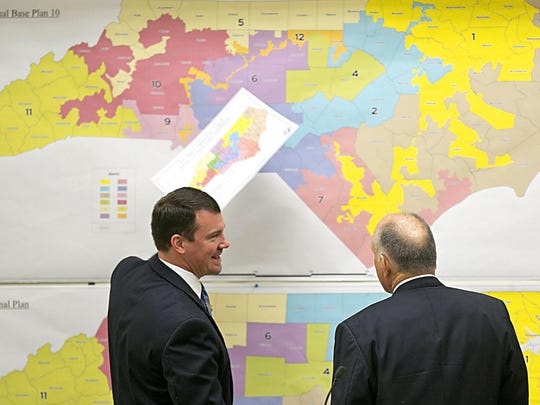
North Carolina elected officials review
historical district maps in 2016.
Lansing — Michigan’s congressional maps continued to favor Republican candidates in 2018 even though Democrats flipped two seats to split control of the state’s delegation in a wave election, according to a new analysis.

It was planned. Check the absentee ballots. They are probably fake.

And its state House boundaries ranked among the most biased in the country.

Because it was planned. One day I shall sit everyone down and teach them about foreign propaganda in our lawmaking.

“Efficiency gap” measurements calculated by The Associated Press challenge GOP claims in the U.S. Supreme Court, which is set to hear oral arguments next week in alleged partisan gerrymandering cases from North Carolina and Maryland as Michigan judges consider a similar lawsuit here.

The Michigan case may be a bit different as we are dealing with a situation of "Legal Geniuses" (trademark pending). Has anyone seen Mark Elias lately?

In a recent high court briefing, attorneys for the Republican National and the National Republican Congressional Committee pointed to Michigan’s 2018 elections as evidence that courts are incapable of determining partisan intent.

I can prove partisan intent. The Michigan Emergency Manager Law that took over Detroit, the most concentrated area of voters, and denationalized everything in state transfers to Public Private Partnerships of foreign corporations that came in as Corporate Shape Shifters to launch a massive fake mortgage fraud foreclosure scam in a real estate grab using federal funding through fraudulent cost reimbursements in the Medicaid child welfare system.

“The ‘durability’ of Michigan’s partisan gerrymander was apparently limited to elections prior to 2018,” lead GOP attorney Jason Torchinsky and his colleagues told the Supreme Court justices, noting Democratic gains last fall.

No, no, no. Michigan was gerrymandered intentionally based upon property ownership. That is how the MDP was able to run their absentee ballot fraud schemes in the City of Detroit.  The Michigan Democratic Party is not too concerned about anything else outside of Detroit.

“Time and time again courts have determined electoral maps to be unconstitutional partisan gerrymanders due to those maps’ effect of 'entrenching' a political party in power and then subsequently, under those same maps, the supposedly ‘entrenched’ party was defeated, sometimes in spectacular fashion.”

No. Those 2010 maps were based on predictive modeling crap.

Michigan congressional districts, drawn by Republicans and first implemented in 2012, did show smaller signs of partisan bias in 2018 than in other recent years, according to the AP analysis of election data across the country.

No mention of the trend in property tax or mortgage foreclosures? That is when you know you have bias.

But Michigan’s 8.1 percent efficiency gap score for 2018 was the 18th highest in the country and suggests Republican candidates won one extra congressional seat than would have been expected based on their vote share.

Right. That score is crap because it did not take into consideration the bogus property tax and mortgage fraud foreclosures. When you have a glaring, intentionally exclusion of independent data, you know you have fraud, or, for the Smarty Pants people, you are using dirty data.

Democratic congressional candidates won 54 percent of major party votes in Michigan, compared with 46 percent for Republicans. They flipped two seats to split the state’s 14 U.S. House seats, seven to seven.

Last time I checked, we still have some unanswered issues with the validity of the 2018 election.

Nationally, Democrats regained control of the U.S. House and flipped hundreds of seats in state Legislatures. But the cycle was not as bad as it could have been for Republicans, whose strong 2010 election cycle put them in position to draw decade-defining maps in many states, according to the AP analysis.

Those 2010 maps busted up neighborhoods going down to stratified household data. I saw it. You people need to stop lying.

“These districts are gerrymandered, but they’re not built for a thousand-year flood,” said Michael Li, senior redistricting counsel for the Brennan Center for Justice at the New York University School of Law.

The people over at the Brennan Center for Justice need to talk to "Pookie" Brennan and ask him if he thinks we know who that predictive modeling crap in land speculation in civil asset forfeiture in real properties.

Republicans who drew district boundaries in Michigan and other states seven years ago had no way to foresee factors that shaped 2018, he said, including the 2016 election of President Donald Trump and unusually high voter turnout last fall.

They had no way to see the factors that shaped the 2018 election because they refuse to talk about those foreign corporations taking over the land, funding political campaigns, to launch those land banks to suck up TARP.

“It’s like saying I had a seven-foot wall and then a hurricane came and it still flooded my property,” Li said.

Measuring bias

The efficiency gap, a relatively new formula cited in Supreme Court arguments, measures wasted votes for losing candidates and votes for winners beyond what was needed to triumph. It’s a way to gauge the impact of “packing” and “cracking” voters into certain districts to minimize the power of the minority party.

No. The Supreme Court needs to be chastised for using such a crappy predictive model to "gauge" that "packing & cracking" voters into certain districts.  This is how you measure.

VOTER PACKING: WHEN THE CITY ELECTIONS CLERK LETS INTERESTED PARTIES FILLS OUT A BUNCH OF ABSENTEE BALLOTS FOR THE CANDIDATES THEY WANT IN OFFICE.

VOTER CRACKING: WHEN THE COUNTY TREASURER SENDS OUT FAKE TAX FORECLOSURE NOTICES TO PROPERTIES THEY NEED TO SECURE TO REGISTER MULTIPLE FAKE IDENTITIES TO CERTAIN ADDRESSES SECURED WITH THE LAND BANK

VOTER SMACKING: WHEN YOU PUT OUT ABSENTEE BALLOT REQUEST FORMS FROM THE PAST YEAR SO THE ELECTIONS CLERK CAN DISQUALIFY AND TOSS ANY VOTES CAST AGAINST THE CANDIDATE THEY WANT

The apparent impact of Michigan’s partisan map-making process was more pronounced in state House races. Michigan’s 10.87 efficiency gap score ranked fourth highest in the country for 2018, suggesting nearly 12 excess seats for the GOP, according to AP calculations.

Homelessness is another factor when it comes to measuring the vote. It is difficult to go vote when you are transient because you lost your home to a fake tax foreclosure.

Democrats won 54 percent of the major party statewide vote, but Republicans won 53 percent of state House races, returning a 58-52 majority in the 110-member chamber.

I would hold off putting any more weight on these results until DOJ & DHS comes out with their findings on the Michigan 2018 election.

Critics say the efficiency gap does not prove partisan gerrymandering and can produce “false positives” because of naturally occurring geographic factors and other legal requirements, including mandates for districts with a majority of African-American or other minority voters.

I wish these so-called Smarty Pants people would give the peculiar institution back its vessel manifest accounting codes.

Rural areas in Michigan, including the Upper Peninsula, have increasingly turned Republican in recent years.

That is because they were invaded by lots of foreign operatives, who launched lots of foreign propaganda, but hey, what do I know? I bet Butina knows.

“In many states, Democratic voters are concentrated in or near urban areas while Republican voters are more evenly distributed,” attorneys for North Carolina Republicans said in a recent Supreme Court filing.

It is called poverty. Land Banks typically target historic areas because the properties are located along major transportation lines and ports.

“As a result, the pre-existing political geography of the State will tend to produce more 'wasted' Democratic votes than Republican votes as long as the map drawer follows traditional districting principles like compactness, contiguity, and preserving communities of interest.”

Fraud, it is called, fraud.  Say it.  Ok, fine, let SIGTARP say it.

Experts say the efficiency gap alone does not prove a partisan gerrymander, and the North Carolina and Maryland cases going before the Supreme Court include other evidence lower courts have used to determine partisan intent.

All you have to do is use my land bank litmus test.  Does the state have a land bank.  Yes? Then there was gerrymandering.

In North Carolina, lawmakers openly discussed partisan intent and a legislative committee adopted a criterion holding that the new makeup of congressional maps would continue a 10-3 majority for Republicans.

The efficiency gap and other statistical evidence can “raise red flags” in states like Michigan that are worthy of additional exploration by courts, Li said.

SIGTARP is has an ongoing investigation into the fraudulent snatching of properties through fake tax schemes. I believe this matter is currently pending before the court, which may just put a monkey wrench on any SCOTUS future rulings. Stay! Good boys and girls.

Geographic factors and a desire to keep communities intact “for any number of good or moral reasons” could play a role in an efficiency gap score, he said.

“In some states, you actually would have to gerrymander to get zero because there’s sort of a natural bias there.”

Michigan decision looms

The North Carolina case before the U.S. Supreme Court alleges a statewide gerrymander by Republicans, while the Maryland case alleges gerrymandering by Democrats to flip a specific congressional seat.

Hardest Hit Fund, Community Development, anyone?

The Michigan suit alleges an unconstitutional Republican attempt to dilute the power of Democratic voters in congressional and legislative districts across the state and seeks an order for new maps in 2020.

There are multiple foreign nationals who have ensured that their Michigan GOP candidates and elected officials will promulgate law and policies to make the people poor, for the purposes of stealin' children, the land and the votes. It is called forced migration.

GOP attorneys had asked the Supreme Court to delay the Michigan case, arguing its resolution would directly affect deliberations here. The court declined the request in February without explanation, and the case proceeded to trial that month.

Do not make me have to do one of those amicus curiae because I will, you know.  I file an entire treatise on stealin': How the Detroit Land Bank Authority, et al, jacked up the 2016 & 2018 elections. I shall be kind and keep it to a small data set of Wayne County property tax foreclosure rolls.

See, if your house is on this list, you probably had your vote tossed, or rather wasted, because it would not be counted.

This is quantitative data, just to let you know.

2018 quantitative data gerrymandering of 2020 redistricting maps:

Evans calls for property tax payment plan review in Wayne Co.


Any Supreme Court decision will “likely supersede or control the ruling of the district court,” said Gary Gordon, an attorney representing some of the GOP lawmakers who have intervened in the Michigan case.

Yes, the lawmaker intervention, move.  Jolly good show to cover thine arse, mate!

Republicans argue Michigan mapmakers followed all applicable laws when drawing congressional and legislative districts in 2011.

Actually, the drawing of the maps did follow the law. Now, how they secured the data is an entirely different legal issue to be addressed.

Emails produced in the case have shown mapmakers used software that calculated the partisan makeup of each district they drew and told Republicans they were providing options “to ensure we have a 9-5 (congressional) delegation in 2012 and beyond.”

Michigan Congressional Redistricting and Its Challenges


The Supreme Court case gives justices the opportunity to “finally lay out the standard for what constitutes a partisan gerrymander,” said Li, who is part of a Brennan Center team that filed a legal brief supporting claims of unconstitutional partisan bias in the North Carolina and Maryland cases.

“That would help the court in Michigan and the courts elsewhere that are sort of wrestling with how to write opinions.”

No, it will not.  Say fraud.  Say it.  Fine.  Say stealin'. Say it.

The Michigan trial concluded in February and judges have since rejected two GOP motions to dismiss the suit or strike evidence. But it’s unclear if they will rule before or after the Supreme Court, which could do so by the end of June.

Force migration?

The impact of the high court ruling on the Michigan suit may depend on whether it is broad or narrowly focused on specifics of the North Carolina or Maryland cases, Li said.

Human trafficking. Say it.

“The Michigan case will be appealed to the Supreme Court as well,” he predicted, “and so it’s unclear to me if the court has any incentive to rush something out, other than at some point Michigan will need maps for the 2020 election.”

We have the technology. Use it. Technology stops fraud. I can tweet it for you if I was not backdoor shadowbanned on Twitter.

Michigan voters last year approved a ballot initiative to create a new citizen redistricting commission that will draw new congressional and legislative district lines, beginning in 2022. Previous state law had allowed whichever political party controlled the Michigan Legislature to control the process.

The following links will provide an in depth insight into the new citizen redistricting commission in Michigan.


Woodrow Wilson School of Public & International Affairs, Princeton University Wipes Out More Detroit Civil Rights Legacy By Publishing Michigan Privatization Voting Rights Gerrymandering Crap - Come Smell It


That continues to be the case in a majority of other states, meaning a Supreme Court decision could have a large impact heading into a 2020 election cycle that will decide who controls the process in those parts of the country.

The selected methodologies of SCOTUS to opine in the matter of gerrymandering is crap.  Please see link directly below.


Alan Krueger, Father Of Predictive Modeling Crap On Modern Human Trafficking, Self-Extracts Himself From Society - Detroit Land Bank Authority, FARA, TARP & Princeton University


“The court will be setting some ground rules for when maps are redrawn in 2021, and that’s going to be important because the data and the technology to do these sorts of gerrymanders are becoming more available and more powerful,” Li said. “People will slide and dice and recombine voters in ways that you would have only dreamed about in 2011.”

I believe Li is referencing that thing called being Butina-ed, foreign funded influence of "The Elected Ones".  Just pull their financials.

Voting is beautiful, be beautiful ~ vote.©
Thursday, September 3, 2020

Prelude To Detroit: Hillary Clinton Speaks Upon Detroit 2020 Primary Election

This happens every election cycle.

Someone files a complaint about the election.

The complaint is ignored.

The election is certified.

#maytheheavensfall

'This can't go on': Detroit primary ballots went unchecked, GOP poll challengers say

Election workers in Detroit's primary improperly altered some votes and counted thousands of absentee ballots without checks against voter lists, say GOP poll challengers who contend Michigan's largest city isn't ready for November's election.

An affidavit signed by Bob Cushman describes what he saw while serving as a poll challenger at Detroit's primary election at the TCF Center on Aug. 4, 2020.Detroit, where problems counting ballots have been in the spotlight for at least 15 years, is quickly becoming a key front in the political fight over election integrity. Republicans are signing affidavits about problems they saw in the Aug. 4 primary, while Democratic state officials are taking steps they hope will improve ballot handling in the general election.

About 25 Michigan Republicans monitored the counting of absentee ballots in the basement of the TCF Center in Detroit for the Aug. 4 primary. They reported a variety of missteps that — if accurate — would violate policies in state manuals, ranging from cellphones being used by workers to votes being counted without lists of voters on hand to check the ballots against, according to interviews with eight poll challengers and signed affidavits from five.

A handful of the GOP poll challengers contended that they saw election workers make digital changes to disregard lone Republican votes on ballots featuring mostly Democratic votes in a bid to make the ballots legally countable in the partisan primary, where voters are not allowed to cross over.

Their accounts come after Wayne County election officials revealed that 72% of Detroit's 503 absentee voting precincts reported ballot totals that didn't match the totals of voters tracked in poll books, the official lists of voters participating in the election. The out-of-balance totals, which could have resulted from not checking ballots against the voter lists, would mean that the precincts couldn't be recounted in a close race under state law.

GOP poll challenger Cliff Frost, 73, of Warren said he was "incredulous" to see ballots sent to tabulators without first being checked against poll books as election workers are supposed to do in accordance with state manuals.

Frost said election workers told him: "We’re saving the envelopes, and we’re going to check them later." But he questioned what would happen if the workers found a problem after the votes had already been counted.

A portion of an affidavit by Janice Brines describes what she saw at the TCF Center where absentee ballots were counted for Detroit's primary on Aug. 4, 2020.


With a surge of absentee voting expected this fall, the Nov. 3 election is going to be "a mess" in Detroit, predicted Matt Harris, 41, of Commerce Township, another Republican poll watcher.

"They have September and October, two months," Harris said of the time remaining before the election. "How can they turn it around that fast?”

Election officials in Michigan have emphasized the problems in Detroit's primary election weren't examples of fraud and don't call into question the integrity of the results.

Detroit Clerk Janice Winfrey, whose office didn't respond to multiple requests for comment, has tied the problems to increases in absentee voting, veteran election workers not showing up during the COVID-19 pandemic and other workers being on the job for more than 20 hours.

There are security precautions for absentee ballots, such as checking signatures on them, that can be done before Election Day, said Aghogho Edevbie, Michigan director for the voting rights group All Voting Is Local. While Edevbie said he's concerned about the processes used in Detroit's primary, he said he doesn't think something nefarious went on.

"The essential integrity of the process was not breached," he said.

The GOP allegations come as the eyes of the nation could be on Detroit this fall amid record absentee voting and criticism from President Donald Trump about mail-in voting. Trump won Michigan by 10,704 votes in 2016, his closest margin of victory nationally.

Hillary Clinton, the 2016 Democratic presidential candidate, referenced the Republican poll challengers during an interview with TV show "The Circus" last month in which she advised Joe Biden, the 2020 Democratic candidate, not to concede the election. She described the GOP challengers as "lawyers" and said a local reporter was told their presence was a "dry run" for November.

"Joe Biden should not concede under any circumstances because I think this is going to drag out and, eventually, I do believe he will win if we don’t give an inch and if we are as focused and relentless as the other side is," Clinton said.

Skipping ballot books
In a basement room beneath the TCF convention center, hundreds of election workers met in the morning hours of the Aug. 4 primary to begin counting Detroit's absentee ballots.

Tables were set up in squares for each of the more than 130 county boards that would handle the city's 503 absentee voting precincts. Robert Brines, 69, of White Lake, one of the GOP poll challengers, described it as a "monster operation."

The election workers were on the job until about 5 a.m. Aug. 5, the day after the primary. Of the eight Republicans who monitored the work and were interviewed by The Detroit News, none stayed at TCF Center longer than Bob Cushman, a 70-year-old General Motors retiree from South Lyon.

An affidavit signed by Bob Cushman describes what he saw while serving as a poll challenger at Detroit's primary election at the TCF Center on Aug. 4, 2020.

Cushman arrived at the TCF Center at 6:50 a.m. Aug. 4 and didn't leave until 5:10 a.m. Aug. 5, according to an affidavit he signed later. While at the facility, he took five pages of notes, which documented election workers not checking absentee ballots against poll books, a practice that is meant to help keep ballot and voter totals in balance.

An affidavit describes what William Lethemon says he saw while working as a poll challenger for Detroit's primary election on Aug. 4, 2020.

At about 2 a.m. on Aug 5, a "soft male voice" came over the microphone system in the center and "instructed everyone to stop what they are doing, open every envelope, separate the ballots and place them in the trays to go to the tabulators," according to Cushman's affidavit. Another announcement repeated the instruction a few moments later, he said.

"About 20 minutes after the announcements, I walked around the TCF Center and noted that there were no more comparisons being made to the poll books at any of the tables that I observed," Cushman said in his affidavit. "I continued to make rounds of the floor with the same observations."

The retiree estimates thousands of absentee ballots were sent to tabulators without being checked against voter lists after the 2 a.m. announcement in an effort to get results more quickly.

"This was just a primary," he said. "There’s going to be a lot more votes, many, many more votes in the general election."

Most other GOP poll challengers said they saw absentee ballots being sent to tabulators without poll book checks earlier on Aug. 4 when counting boards didn't yet have their poll books on site.

Some of the counting boards, which can handle counts for multiple precincts, didn't have poll books until 3 p.m., according to the GOP poll challengers.

"The supervisors were called and seemed shocked, but the workers already admitted that they were told to process the ballots, even without a poll book," said an affidavit from GOP poll challenger Janice Brines of Oxford.

The first steps for counting absentee ballots should involve checking the voter's name in the poll book or qualified absentee voter list, according to Michigan's official manual for absentee voter counting boards. It's an accounting measure that is supposed to help election workers track who's voted and ensure that the number of ballots counted in a specific precinct matches the number of voters.

"You need your poll book. That’s how you begin," said Chris Thomas, who served as Michigan's election director for more than 30 years and is advising Detroit elections operations this fall. "That tells you how many ballots are supposed to be there."

But Detroit was short dozens of election workers for the primary, according to a variety of sources, including Evelyn Archer of Oxford, another Republican poll challenger. Some workers didn't show up. Others left early.

"This can’t go on,” Archer said of the primary problems. “This is not representing the true vote.”

Chris Thomas
'Far cry' from disaster?
On Wednesday, Michigan Secretary of State Jocelyn Benson, the state's top election official, and Detroit Clerk Winfrey said they would partner to administer the election in Detroit this fall.

The effort will include recruiting and training at least 6,000 election workers and revising protocols for ballot counting and sorting to "reduce the potential for error," according to a press release.

New technology played a role in the problems in Detroit's primary, said Thomas, now a special adviser on Detroit's upcoming election. But under his analysis of precinct results, in which some precincts were allocated more votes than expected and others were allocated fewer, the citywide totals left only about 21 votes unaccounted for, he said earlier this week in an interview. More than 121,200 ballots were cast.

"That’s a far cry from major disaster," Thomas said.

Asked how concerned voters should be about Detroit's situation this fall, he answered clerks across Michigan are making adjustments to deal with record absentee ballots.

Detroit's previous high for absentee votes in an election was about 57,000, Thomas said. In the Aug. 4 primary, the city had about 80,000 absentee ballots cast, he said. It reflects about a 40% jump.

More will be cast in the upcoming general election during a pandemic and after voters approved a constitutional amendment allowing no-reason absentee voting in 2018.

“Every clerk is dealing with a pandemic situation," Thomas said. "There’s concern across the board in terms of them having the people and resources they need to get the job done. Detroit is no different."

Current Michigan elections director Jonathan Brater told the Michigan Board of State Canvassers on Wednesday that efforts in Detroit will focus on improving record-keeping and the accuracy of poll books.

"Because of the issues with recording ballots in the poll books along with the fact that ballots were in some cases put in the wrong containers, that made it very difficult for the city and the county to balance things out in the time they had available," Brater said.

Recount impact looms
More than a quarter of Detroit's absentee voting precincts, or 131 of 503 precincts, were off by plus or minus one ballot without an explanation for Aug. 4 primary when comparing poll books to ballot totals, according to information presented to the Wayne County Board of Canvassers.

Another 85 absentee precincts were off by two ballots without an explanation, 48 were off by three ballots, 26 off by four ballots and 73 off by five ballots. In Michigan, precincts with tallies that are off without explanations can't be recounted.

When totals are out of balance and votes can't be recounted, people will question what actually happened, said state Sen. Ruth Johnson, R-Holly, a former secretary of state.

"Something has to be done. It’s not just one city. This happens in a number of places," Johnson said.

Ruth Johnson
But the problems aren't new in Detroit. In 2016, election officials there couldn’t reconcile vote totals for 59% of precincts — combined Election Day and absentee precincts. For the Aug. 4 primary 46% of the total precincts couldn't be reconciled.

The poll book checks weren't the only problems, according to Republican challengers.

Multiple poll observers said they saw Detroit election workers digitally clear improper cross-over votes in the Democratic primary that should have made partisan portions of the ballots invalid. "Three or four times" Robert Brines said he saw election workers remove Democratic primary voters' choice of Republican U.S. Senate candidate John James.

"Some of the operators and observers were correcting an overvote when the ballot should be voided by the system software," an affidavit signed by Robert Brines said.

An affidavit describes what William Lethemon says he saw while working as a poll challenger for Detroit's primary election on Aug. 4, 2020.
Watching the counters
Michigan Republicans plan to closely monitor Detroit's vote-counting in November as President Donald Trump seeks reelection in a state he won by 10,704 votes in 2016.

Trump has argued, without evidence, that the efforts to expand absentee voting during the COVID-19 pandemic "will be the most rigged election in our nation's history." In July, he refused to commit to accepting the results of the election in advance of Nov. 3 — similar to what he did in 2016.

Detroit is Michigan's largest city in the state's largest county, a traditional Democratic stronghold that this fall will likely produce the most Democratic votes among all Michigan counties. In 2016, Detroit supplied 10% of Clinton's statewide vote total, while Wayne County provided about 23%.

Many of the 25 Republican volunteer primary poll challengers at the TCF Center said they plan to be back Nov. 3.

"The integrity of the vote is at stake in my opinion," said Frost, the 73-year-old from Warren.

Like other Republicans, Frost said he wants to see more poll challengers in Detroit — GOP and Democrats. The Democrats had two lawyers at the TCF Center for the primary, according to the Republicans.

"I’m here to watch you," Cushman said one of the Democratic lawyers told him.

Rosanne Ponkowski, 63, of West Bloomfield said she hopes more Democratic poll challengers are active in November, adding election integrity is the No. 1 priority.

"It’s in their interest to make sure the ballots are handled correctly. Period," Ponkowski said.

Voting is beautiful, be beautiful ~ vote.©

Saturday, March 9, 2019

Gretchen Whitmer Is About To Be Thrown Under The Bus - Dark Trust Funds Of The Children

Have no fear!

Stealin' is a non-partisan cultural norm in Michigan because the Bill Schuette had the Michigan Advocacy Trust, the twin sister of the Progressive Advocacy Trust was doing the exact same thing.

Besides, it was never a secret that The Gretch was going to be throw under the bus.

Michigan Democratic Party Asks Detroit Precinct Delegates Who They Want When Something Happens to Gretchen Whitmer

The first U.S. House Resolution 1, appropriately entitled, "For the People Act of 2019" is going to be quite the political career chagrin for The Gretch.


I wonder what Dana Nessel is going to do, considering that she and "The Girls" are busy, busy, busy.

Dark money used to evade donor disclosure laws in Michigan

A logo for Progressive Advocacy Trust from a donor pitch letter obtained by The Detroit News.
Lansing — A dark money group that spent more than $2 million to help promote Gov. Gretchen Whitmer in the 2018 election cycle exploited a legal loophole to avoid disclosing any donors to the state or federal governments — and it is not alone.

https://www.citizensforethics.org/tag/progressive-advocacy-trust/

https://www.detroitnews.com/story/news/local/michigan/2018/07/23/whitmer-ad-campaign-discloses-donors/821995002/

Progressive Advocacy Trust is one of at least five local Democratic Party slush funds that have operated in the shadows since at least 2002, according to a joint investigation by The Detroit News and Michigan Campaign Finance Network. The groups can accept unlimited corporate or union contributions but have evaded all disclosure requirements.

Vender payments:

2018
2016 and 2014 there are no records.

2012

While a similar local Republican outfit spent in the 2010 and 2014 general election, primary spending last fall by Progressive Advocacy Trust and the Phillip A. Hart Democratic Club triggered outrage from progressive activists and cries of hypocrisy as the Democratic party publicly pushes for transparency and campaign finance reform.

"We've long held that we are the party of the people, and I think that puts us, at least in words, directly against the use of these kind of dark money accounts," said former gubernatorial candidate Abdul El-Sayed, who lost to Whitmer in the Democratic primary. "We need to move beyond that, and I think these accounts should be shut down."
Progressive Advocacy Trust was created in 2011 as an administrative account of the Ingham County Democratic Party, a relationship its spokesman and former treasurer have cited when claiming exemptions to campaign finance laws. But the local party has distanced itself from the account, which is run by an outside board of managers that a spokesman has repeatedly refused to identify.

The Michigan Republican Party and Michigan Democratic Party have both used their own dark money administrative accounts to influence elections without disclosing donors. They do so through so-called issue advertising that is exempt from state disclosure laws as long as it does not directly advocate for the election or defeat of a candidate.

But since 2002, local Democratic accounts have spent on candidates in contested primaries, drawing the ire of liberal activists sensitive to party favoritism in the wake of the contentious 2016 presidential primary between U.S. Sen. Bernie Sanders and nominee Hillary Clinton.

Progressive Advocacy Trust was the second largest contributor to organizations that ran ads featuring Whitmer before her primary and general election wins, but it did not directly contribute to her campaign, which raised more than $13 million. Other pro-Whitmer Democratic groups spent at least $13.7 million through the general election, which was one of the most expensive in Michigan history.


The Michigan Democratic Party’s official platform calls for extending campaign finance reporting requirements to political parties, foundations and “other groups used to evade donor disclosure requirements.”

A lack of donor disclosure "keeps the public in the dark about who is influencing Michigan politics," Executive Director Noah Bookbinder said last month as his Citizens for Responsibility and Ethics in Washington group filed an Internal Revenue Service complaint against Progressive Advocacy Trust. Public reporting can "inform voters about who is trying to influence them and to deter corruption," CREW said in the complaint.

It’s not clear if the Michigan Democratic Party could shut down local dark money accounts, but it also utilizes an administrative account that is not subject to disclosure rules for running issue-ad campaigns.

Michigan GOP and Michigan Democratic Party administrative accounts received a total of $2.3 million in traceable donations during the 2018 election cycle, a figure that is only known because of filings by groups that gave to them.

How it works

In an undated letter obtained by The News, former Progressive Advocacy Trust Treasurer Nancy Bohnet, a longtime Whitmer ally who now works for the governor, made clear to would-be contributors that they could remain anonymous.

Progressive Advocacy Trust is “an account authorized by the Ingham County Democratic Party” that is not required “to report the amounts or sources of contributions from individuals or other entities,” she wrote.

Progressive Advocacy Trust claims a Post Office Box 322
in East Lansing as its mailing address.
Little else is known about the group. 
The group claims it is exempt from taxes under Section 527 of the Internal Revenue Code, which requires most groups to disclose donor and spending — but not local political parties.

But that federal exemption is “based on the assumption they are going to be regulated by state law and filing reports of their contributions and expenditures with a state entity,” said Austin Graham, a campaign finance expert with the Campaign Legal Center.

In Michigan, however, the Department of State does not require political parties to disclose donors or spending by administrative accounts, which are supposed to be used for purposes “totally unrelated to the party’s political activity,” according to a campaign finance manual maintained by the state.

The accounts are not addressed in state law but have been exempt from disclosure requirements under interpretive statements issued by the office of Secretary of State Richard Austin in 1981 and 1982, provided the spending is "entirely independent of supporting the election of candidates and opposing or supporting the enactment of ballot questions."

The only known donors to Progressive Advocacy Trust are groups that reported their own contributions. They include a Michigan Pipes Association political action committee that gave $250,000 to the group in February 2018 and Pfizer, the pharmaceutical company, which self-reported a $10,000 contribution during the 2011-12 election cycle.

Citizens for Responsibility and Ethics in Washington in 2015 filed a similar complaint against a GOP group that ran ads to benefit former Attorney General Bill Schuette in 2010 and 2014. The group closed the following year, long before the Midland Republican squared off with Whitmer in the general election.

GOP operative Richard McLellan had claimed Michigan Advocacy Trust was an administrative account of the 23rd Michigan State Senate Republican District Political Party Committee of Ingham County. The inspiration? Democratic groups that had done the same, McLellan said at the time. 

A Whitmer connection

A new ad from Build a Better Michigan featured
Gretchen Whitmer and identified her as a candidate for governor.
Progressive Advocacy Trust donated $300,000 to the group.
Although Progressive Advocacy Trust did not directly contribute to Whitmer's campaign, it gave $300,000 inanonymous money to a separate organization called Build a Better Michigan. This group ran primary-season ads featuring Whitmer and was recently forced to pay a $37,500 fine for violating issue advocacy rules and coordinating with the Whitmer campaign.

Progressive Advocacy Trust also gave $1.875 million to A Stronger Michigan, which ran ads promoting Whitmer and attacking Schuette in the general election.

But the Progressive Advocacy Trust remains shrouded in mystery. Spokesman Mark Fisk repeatedly refused to identify the board of managers that runs the fund. He confirmed that Bohnet served as volunteer treasurer but said she left the group in 2016.


Fisk was not able to explain why a September contribution report from A Stronger Michigan listed an address for Progressive Advocacy Trust that does not exist but is on the same Lansing street as Bohnet's home. The group’s address is actually P.O. Box 322 in East Lansing, Fisk said.

Bohnet, who now works for Whitmer as an assistant in the official gubernatorial residence in Lansing, hung up on a Detroit News reporter and did not return subsequent voicemails seeking comment about her role with Progressive Advocacy Trust.

She previously worked for Whitmer in the Legislature and for Move Michigan Forward, a 501(c)4 nonprofit linked to Whitmer that did not disclose donors and dissolved in early 2015. Bohnet was also the designated record keeper for the Whitmer Leadership Fund political action committee.

Whitmer spokesman Zack Pohl said Bohnet is now a part-time assistant at the governor's residence with an annual salary of $45,000. He declined to discuss Progressive Advocacy Trust but said Whitmer "continues to support stronger campaign finance laws and looks forward to working with the Legislature to bring more transparency to state elections.”

Progressive Advocacy Trust “is and always has been fully compliant with all IRS and campaign finance laws,” said Fisk, who noted it is “no different from other similar entities created for years by county parties and state parties, both Republican and Democrat alike.”

Fisk worked for then-U.S. Rep. David Bonoir in 2002 when a St. Clair County Democratic Party fund spent dark money to boost the Democratic congressman in the gubernatorial primary against eventual winner Jennifer Granholm and former Gov. James Blanchard. A Kalamazoo County fund spent for then-Gov. Granholm in 2006, and a Genesee County fund spent in the 2010 gubernatorial primary to help the victor, Lansing Mayor Virg Bernero.

Last fall, the Philip A. Hart Democratic Club in Macomb County gave $250,000 in anonymous money to a group that ran pro-Whitmer primary ads. The club also spent money to support Macomb County Clerk Fred Miller in his winning primary campaign over then-state Sen. Steve Bieda of Warren, who criticized it at the time as "a secret slush fund that masquerades as a Democratic club."

Meanwhile, the Michigan Republican Party’s main administrative account gave $175,000 in October to a super political action committee called Hardworking Americans. Hardworking Americans then gave the money to another super PAC called Michigan Prosperity that sent out $85,000 in mail against Whitmer and gave $82,000 to another super PAC called Michigan People for Progress, according to the Michigan Campaign Finance Network.

'Tipping scales for one candidate'

Build a Better Michigan reported a $300,000 contribution
from Progressive Advocacy Trust on June 14, 2018.
While Progressive Advocacy Trust claims to be a local administrative account, it’s current relationship with the Ingham County Democratic Party is unclear.

Ingham party members in August adopted a resolution distancing the local party from the Progressive Advocacy Trust four days after Whitmer defeated El-Sayed and Ann Arbor businessman Shri Thanedar in the Democratic primary.

The Ingham County Democratic Party was neutral in the race, but the administrative account contributed to a group that ran pro-Whitmer television ads. This angered local progressive activists, who had no say over the spending and pushed the resolution to remove the party name designation from Progressive Advocacy Trust.

“We were Abdul supporters and really (were upset) about all the stuff that was going on with that,” Ingham County Democrat Kelli Collison said. “We were really upset that there was what looked like the county party tipping the scales for one candidate over another during the primary.”

Ingham County Democratic Party Chairman Chris Swope did not respond to multiple emails or voicemails and refused to discuss the account when questioned by a Detroit News reporter at a party event.

“I won’t be returning your calls on that,” Swope said. “I have nothing to say.”

Asked about the resolution, if the account is still affiliated with Ingham Democrats and other issues, Swope refused to acknowledge the questions.

The resolution was amended on the floor before adoption, and other party officials say only Swope would have the final copy, which he has been unwilling to share with The News. It’s not clear if the Ingham County Democratic Party removed its name from the fund, or if it has the authority to do so.

Former Ingham County Democratic Party Vice Chair Walt Sorg said local officers were not even aware the Progressive Advocacy Trust existed until it became active in the 2018 election cycle and sparked controversy.

“I know it’s been a headache for (Swope),” Sorg said. “He got stuck in the cross-hairs and was blindsided by the whole thing.”

Former Ingham County Democratic Party Secretary Thomas Morgan, now a county commissioner, confirmed he signed paperwork to create the Progressive Advocacy Trust in 2011 but said he was not aware of the significance at the time.

"I was just handed a stack of papers and signed it,” Morgan said. “I should probably have read what I signed, but I have no knowledge or understanding or concept of what this group does.”

Potential reforms

Asked about the dark money spending last fall, Secretary of State Jocelyn Benson, a Democrat, said she wants to revisit interpretive statements issued by the Department of State in 1981 and 1982 that exempted political party administrative accounts from state disclosure rules.

A Stronger Michigan reported more than $1.8 million
in contributions from Progressive Advocacy Trust.
 1432 Gay Lane in Lansing does not exist.
Like her Republican predecessor, former Secretary of State Ruth Johnson, Benson said she also thinks groups that pay for so-called issue ads near an election should also be required to file campaign finance reports. The GOP-led Legislature wrote an issue ad exemption into state law in 2013.


"Other states have figured this out," Benson said during a Feb. 22 taping of "Off The Record" on WKAR-TV. "The federal government has more disclosure requirements than we do, so we can at least move closer to that, is my goal. My principle is everything should be disclosed."

While El-Sayed and other progressive left Democrats are calling on the party to shut down the accounts, former state party Chairman Mark Brewer said it would be unfair to unilaterally disarm unless Republicans are required to do the same.
“If the law is the law, both parties should follow it,” Brewer told the Michigan Campaign Finance Network.

New Michigan Democratic Party Chairwoman Lavora Barnes, elected to the post in early February, did not directly address the controversy in a statement provided to The News but said she supports “comprehensive campaign finance reform.”

Asked if she could shut down local accounts, Barnes said the party "rigorously adheres" to state and federal campaign finance laws. “Local organizations are responsible for their compliance, but the state party regularly stresses strict adherence to all applicable campaign finance law," she said.

Likewise, the Michigan Republican Party "complies with all applicable state and federal laws," spokesman Tony Zammit said. The party "maintains several safeguards to ensure that its administrative funds are not used for candidate support or opposition" and "respects the First Amendment rights of its contributors," he said.

Fisk, co-founder of the Byrum and Fisk Advocacy Communications firm in East Lansing, also serves as spokesman for the pro-Whitmer Build a Better Michigan, the group to which Progressive Advocacy Trust donated and was fined $37,500 for violating campaign finance laws.

The groups are “are completely separate entities that are not connected,” he said. But Fisk declined multiple requests for additional information about Progressive Advocacy Trust.

“As a matter of policy," he said, "we don’t discuss strategy or other private internal information or divulge information regarding the board."

Voting is beautiful, be beautiful ~ vote.©