Showing posts sorted by date for query MEDC. Sort by relevance Show all posts

Saturday, September 7, 2019

Jennifer Dixon Of The Detroit Free Press & Her Transposable Ethical Model For Investigative Reporting - Bearing False Witness Into The Public Record For The Purposes Of Promulgating The Trafficking Tiny Human Networks

Image
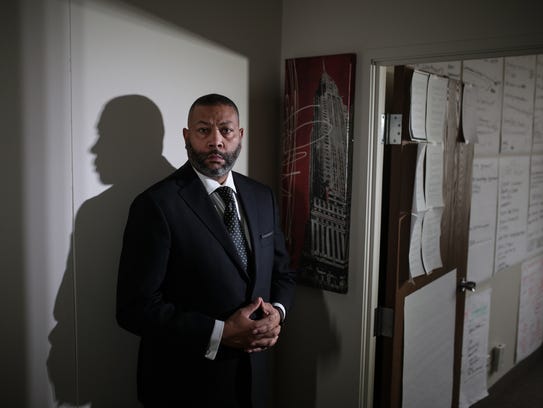
Jennifer Dixon
This is the work of Jennifer Dixon of the Detroit Free Press.

Jennifer Dixon is an award-winning reporter whose stories have prompted criminal investigations and changes in state and federal law. She has been with the Free Press since 1996 and has been a member of the investigative team since 2003.  Before joining the Free Press, she spent 12 years with the Associated Press, including eight years in AP’s Washington, D.C. bureau. 


Contact her at 313-223-4410 or jbdixon@freepress.com 

I thought it was more important to honor her investigative work since it has prompted federal indictments.

Please keep in mind that I am not a journalist nor a self-proclaimed investigative reporter, the latest craze for the online propagandists, who just fail so miserably to understand that they shall be called forth, to bear witness to what they spew, while engaging in commerce, falsely bearing the arms of the U.S., and be held accountable for fraudulently advising "The Elected Ones" in the public record".

Michigan Attorney General Letter of Dissolution of the
Detroit Free Press Charities, Inc.
June 5, 2019


Simply put, if you promulgate false claims in the public record, which lead to any form of civil or criminal action against another, well, that is just not an ethical model for maintaining a civil society.

That is an act of antitrust, a breach of the public trust, which is the children's trust, in the posterity of a civil society.

I felt my spirit transported to LARA to check and see if there were any trafficking tiny human trust funds, just because I have yet to be disproven in my assumptions when it comes to seeing licensed commercial business take the ethical high road, where, in this instance, The Detroit Free Press is honoring their investigative teams, which will result in criminal indictments.


https://pdf.guidestar.org/PDF_Images/2005/204/431/2005-204431012-02e8fa41-9.pdf

"Oups j'ai dit une betise!"

Neal Shine Award for Media Commitment to Philanthropy

Debora Scola
Debora Scola has been a key partner in managing relationships with nonprofits for the Detroit Media Partnership.

As the community affairs director for partnership, which does business as Michigan.com, Scola directs and manages community initiatives and programs for the website, the Detroit Free Press and The Detroit News.

In that role, Scola plans monthly volunteer events for staff members and places Michigan.com executives on many nonprofit boards — including Forgotten Harvest, Habitat for Humanity Detroit and Haven.

"The people I work with are very generous and giving, and that makes it so much easier to do my job," said Scola, 52.

Scola has served as vice president and secretary for the Detroit Free Press charities since 2007. Last year, she raised over $20,000 for the Free Press' Gift of Reading Program and provided 25,000 books to underprivileged children. Books and Backpacks are the most popular tells of child welfare fraud.

As director and manager of Detroit Newspapers in Education, Scola helps provide educational materials to Michigan classrooms, including Yak's Corner, a printed monthly magazine aimed at elementary school students. Targeted  propaganda and data collection are more dead give-a-ways to a child welfare fraud scheme.

Scola also manages the Detroit Free Press/Talmer Bank Marathon charity partner program, which supports local charity organizations that focus on health and wellness. Last year, the program raised more than $2.2 million.

And she directs the Detroit region's Gannett Foundation fund, which provides support to nonprofits, and co-manages the Shining Light Regional Cooperation Awards. The event honors four individuals for improving and uplifting Southeast Michigan. Fancy dinners and award ceremonies are pretty good indicators of self-anointing in successful money laundering operations through children's trusts.

Also, Scola is a founding member and director of Reading Works, a nonprofit focused on improving adult literacy in metro Detroit. Obviously, not very successful.

"Deb really sets herself apart as being personally engaged and involved," said Paula Brown, executive director for Reading Works. "Everyone really likes to work with her because it's not just a job to her — she really comes across as caring and part of the team."

Brown had worked with Scola at the Detroit Free Press Summer Dreams program to fund camps for underprivileged and sick children, which Scola directed for six years.

"Every day we publish sad stories in the paper about the challenges and difficulties people have to overcome," Scola said. "To be able to provide a way to help is the most meaningful part of my job."

My sincerest apologies for my digression, but I continue to experience unexpected bouts of Post Traumatic Fraud Disorder whenever I find another trafficking tiny humans stealin' network, promulgated in the public record, in this instance, the media, under the cloak of the Detroit Free Press.

Here is a bit of background, and always remember, I am the original source.

https://beverlytran.blogspot.com/2019/05/go-blue-stephen-ross-gets-busted-for.html

https://beverlytran.blogspot.com/search?q=MEDC

https://beverlytran.blogspot.com/search?q=dan+gilbert

https://beverlytran.blogspot.com/search?q=MIKE+DUGGAN

https://beverlytran.blogspot.com/p/detroit-land-bank-authority-leaks.html

#sayhisname

Thank you, Jennifer and thank you, Detroit Free Press.

Bedrock got nearly free land, millions in incentives — based on Dan Gilbert promises

"Look, the heavens are about to fall."
"No, that is just Hillary Clinton flying in to save my ass."
Experts say the state and city should have demanded evidence of secured financing for downtown developments before granting incentives

Businessman Dan Gilbert’s organization persuaded Detroit and state officials to give his development companies free land and hundreds of millions of dollars in tax incentives by promising to turn downtown into a walkable urban center with public plazas and a skyscraper that would be a “landmark destination.”

But the city’s Downtown Development Authority and the Michigan Economic Development Corp. didn’t demand that Gilbert’s real estate and development company, Bedrock Detroit, document how it intended to finance construction of the skyscraper at the site of the former J.L. Hudson flagship store, and a 35-story office tower and four other buildings on the Monroe block.

Good governance experts say requiring a developer to disclose financing plans is basic due diligence for a project using public money to build millions of square feet of office, residential, retail, hotel and event space.

Accepting the word of an ambitious billionaire was a gamble by officials who should have insisted on the kind of proof usually required for a typical real estate deal, a Free Press analysis concludes.

Experts interviewed by the Free Press agreed.

The board of the Michigan Strategic Fund was assured that the Hudson and Monroe projects were financially and economically sound and approved $618 million in tax credits for the projects last year.

But in an interview Wednesday, Jared Fleisher, an executive of the development group, conceded that the projects needed to be "smarter and more cost-effective. ... To be successful, to be sustainable, to get the financing, we have to be smart, cost-effective. We're working day in and day out on that."

Fleisher, vice president of government affairs for Gilbert's Quicken Loans and Family of Companies, also confirmed that Gilbert has been in conversations about the Detroit market with another billionaire developer, Stephen Ross and his Related Companies.

"I'm sure Stephen gave Dan advice," Fleisher said. But, "Dan Gilbert keeps his own counsel, has his own vision."

Two real estate experts said Ross gave Gilbert advice about the Monroe Block, Hudson's and a third site.

Jared Fleisher, vice president of government affairs for Quicken Loans Family of Companies
Dan (Gilbert) has a certain vision, somewhat atypical. He sees the longer term, the bigger picture. Dan is willing to accept less return … with more risk, to do something transformative for the community.
Fleisher said that while Ross has a perspective from doing development around the country, "Dan has a certain vision, somewhat atypical. He sees the longer term, the bigger picture. That's kind of been our lodestar ...

"Dan is willing to accept less return, later in the future, with more risk, to do something transformative for the community."

Economy softens, work slows
The softening of the Detroit economy in recent months, illustrated by a slowdown in construction and commercial leasing, as well as Gilbert’s health issues (a stroke over the Memorial Day weekend followed by ongoing rehab) raises the question of whether state and city officials backed his vision for downtown without doing their homework.

The significantly slower-than-expected pace of development has some observers watching closely, with some concerned that officials might have put too much trust in Gilbert's ambitions for a revitalized Detroit.

Today, the Monroe block sits empty, with the exception of the derelict former National Theater. The Hudson’s site is a hole in the ground where the general contractor, Southfield-based Barton Malow, is building a foundation. Cranes are parked in the hole and workers in hard hats can be seen on duty.

Hudson’s and the Monroe block have stalled and Bedrock conceded as much Aug. 7, when it announced that it is dropping plans for a sky deck at the Hudson's site and looking for a hotel to occupy some of the space that had been designated as residential. The project is now scheduled for completion in 2023, a year later than planned.

Bedrock also announced that it was extending the design phase of the Monroe block and talking with real estate brokers about pre-leasing office and retail space. Developers typically need to show lenders that they’ve pre-leased a portion of the space in that kind of project to obtain financing.

Plans for the Monroe block in downtown Detroit included construction of a public plaza, the 35-story office tower fronting Campus Martius, a 27-story residential tower, and three mid-rise buildings with ground-floor retail. The Hudson’s site was to include a skyscraper that rose to 912 feet, the tallest building in the city, and a mid-rise podium separated by landscaped public space.

Too expensive? Too grand?
Real estate experts told the Free Press the two developments, as promised to the state and city, were too expensive, speculative and grandiose, and that Bedrock has been unable to pre-lease significant amounts of space in either.

Without signed lease agreements with credit-worthy retailers and office tenants for a portion of the space, experts say lenders will not bankroll such projects. Records obtained by the Free Press show one of Gilbert’s companies, Bedrock Management, intended to finance construction in part with conventional debt, which Fleisher confirmed.

“Without an anchor tenant, what bank is going to finance a project like that? If you build it and they will come, it doesn’t work that way anymore,” said Cindy Ciura, principal of CC Consulting, a real estate and retail consulting company in Bloomfield Hills.

“When it comes to large developments, one of the most key elements to a project’s success is finding companies that are going to commit” to move in, she said. “In today’s world with the high cost of development, there has to be … guaranteed significant partners in the project that have committed financially,” she said. “Banks seem particularly stringent on their funding.”

Lenders, she said, want to be sure “these are projects that are moving forward; they want guarantees that potential tenants are in place.”

While Bedrock has a track record of renovating existing buildings, new construction is more expensive, and persuading tenants to lease property that hasn’t been built can be a challenge, Ciura said.

“It’s easier to sell an existing building to a tenant, they can walk in, see it,” said William Watch, president and CEO of First Commercial Realty & Development in Southfield. “For new construction, it’s a lot harder to get tenants. It could be two years, four years, before the building is completed, and that’s the anxiety with tenants.”

Steve Morris, managing principal of Axis Advisors, a Farmington Hills real estate firm and an adjunct professor of finance at the University of Michigan’s Ross School of Business, said developing new offices and high-rise residential space takes time, is complicated and risky.

“The first and foremost quality of a developer is a vision,” said Morris, who teaches real estate finance. “Clearly Dan Gilbert and the Bedrock team are visionaries and will continue to improve the City of Detroit’s architectural and business environment.”

Bringing back downtown Detroit
Gilbert is credited with leading the revival of downtown since moving Quicken Loans to Detroit from Livonia in 2010, and investing more $3 billion to acquire, renovate and develop a hundred properties. His companies employ 17,000 people in the city, making those companies the largest private employer in Detroit, and he has another $2.6 billion in development in the works.

Before Bedrock’s recent announcement that it was considering scaling back the height of the Hudson building and redesigning the Monroe block, Wayne State University law professor John Mogk, who specializes in urban development issues, said it’s possible there wasn’t sufficient market demand to support those developments.

“If there were, there would be leases that had been signed, financing available to proceed, and the developer would want to complete the project as soon as possible to begin to receive a return on investment and to avoid carrying costs associated with a delay in finishing the project,” Mogk said.

Several experts said nothing kills a development more than time.

“When you announce a project, you should be ready to hit the ground running or that momentum wanes,” Ciura said.

Bedrock follows its own path on development projects.

Fleisher said Bedrock typically puts its own money into its projects at the start. Once a building is well under construction, "it's easier to attract tenants who can touch it, see it, believe it" and to "get financing at much better terms."

Fleisher said Bedrock, which has already spent $91 million on the Hudson's site, will continue to float the project "until the capital markets are willing to come on board."

"We are going to continue to support that project with our equity, to continue to make the case to lenders to come on board with an iconic project ...  that's how we've had to do business. It's unique to this market," which lenders still consider to be risky. 

"In this market, for these projects, you have to get the ball down the road through our courage and conviction, before the lenders are going to come on board," he said, calling it a "hardscrabble way to make progress."

He said financing for the Monroe block will be sorted out once the design is done.

Land for cheap, tax breaks, too
At various times over the last decade or so, the City of Detroit, the state Legislature and the Michigan Economic Development Corp. blessed Gilbert’s ambitions for the Hudson’s site and the Monroe block. And to make the deals happen, the city’s Downtown Development Authority sold Bedrock a key parcel for $1, while the board of the Michigan Strategic Fund approved millions in incentives.

But experts said the DDA and the MEDC, which is supposed to conduct due diligence for the board of the strategic fund, fell short when they vetted the projects for two of downtown’s most desirable sites for development.

Gilbert has had dibs on the Hudson site since 2007, when he first approached the city about moving Quicken Loans downtown. In 2010, another Gilbert company named Rosko Development signed its first development agreement with the Downtown Development Authority for the property.

The DDA said in that 2010 agreement that it wanted to see a “commitment for financing issued by a qualified financial institution of recognized responsibility …”  But the DDA never got those records, the DDA’s general counsel, Rebecca Navin, told the Free Press in an email.

The DDA did not include similar language in its January 2019 deal with Rosko for the Monroe block.

The DDA provided the Free Press with a one-page financial summary for the Hudson site that listed various costs and potential sources of financing.

The agency then declined to answer additional questions from the Free Press, including whether the DDA asked Rosko about pre-leases and construction financing, and whether it had requested an update from Rosko about the status of the projects.

“The DDA staff was satisfied to proceed to closing on the financing plan that was provided. We have no further information to provide at this point,” Charlotte Fisher, vice president of marketing and communications for the Detroit Economic Growth Corp., said in an email. The DEGC provides administrative services to a variety of public authorities, like the DDA, that have a role in economic development in Detroit.

The Free Press sent an open records request for documents  that Bedrock submitted to support any pitches for economic incentives, such as an application form or financial records. In response, the DDA produced a November 2016 presentation and renderings for the Monroe block, along with a timeline for development.

The DDA’s contributions to the projects include the sale of a surface parking lot for the Monroe block for $1 and the sale of the air rights — the right to develop or build in the air space above a property — above Hudson’s for $1.

The state is contributing to the projects with transformational brownfield credits. The credits required legislation — the bill was passed by the Michigan Legislature in 2017, and the board of the Michigan Strategic Fund approved the deal in 2018.

The tax breaks come largely from capturing property taxes, state income taxes and withholding taxes from the businesses, workers and residents who would occupy the new buildings. In other words, the developer doesn’t get those captured taxes until the project is built. Bedrock can also seek reimbursement from the state for sales taxes paid on construction supplies.

Defending the process
MEDC spokesman Otie McKinley defended the agency’s due diligence, saying it hired outside consultants to study the economic and fiscal impact of the project, and to do a financial analysis.

That financial analysis relied in part on the developer’s assumptions about the project’s income and expenses, and a letter from its CEO “indicating they have the financial capacity to undertake the project as proposed using a combination of conventional financing and equity.”

“This project would not have received approval of the MSF board if it had not been effectively vetted and verified by these entities,” McKinley said in an email.

While most of the tax breaks will go toward Hudson’s and the Monroe block, two other Bedrock projects will also benefit: the renovation of the 38-story Book tower and 13-story Book building, and expansion of the Quicken Loans’ headquarters building, One Campus Martius.

In seeking those tax breaks, Bedrock told the Michigan Economic Development Corp. that the Quicken Loans family of companies would be the "primary" office tenant in the projects, according to state records. But the MEDC never obtained copies of any signed leases “as there were no active leases,” McKinley said.

McKinley said MEDC staff and its outside consultants were provided information from Bedrock regarding the growth of its staff downtown as well as information “on future anticipated staff growth based on the growth of its group of companies.”

A consultant hired by the MEDC to review the finances of the Hudson's, Monroe block and the two other construction projects said the Quicken family would occupy about half the office space created.

That consultant also found that while the developer identified preliminary financing sources for each component of the project, “no documentation from potential lenders has been provided.”

The May 2018 report by SB Friedman Development Advisors of Chicago said the developer planned to finance the projects in part with conventional debt and equity.

According to that report, SB Friedman asked Bedrock to provide at least three references related to financial relationships and public-private partnerships. It got a single letter, from JP Morgan Chase, indicating it had provided banking services to Bedrock and the Quicken Loans family of companies since 2005 and that Bedrock had a track record of undertaking a range of high-quality projects downtown.

The obligations of government
Bernard Weinstein, an economist in the Cox School of Business at Southern Methodist University in Dallas, said the city and state agencies had an obligation to ask Bedrock to show evidence of financing and future tenants.

“It’s absolutely good government to ask for this information,” he said. “Absolutely.”

Bernard Weinstein, an economist at Southern Methodist University
The information should have been provided by a date certain. It’s absolutely good government to ask for this information. Absolutely.
“The information should have been provided by a date certain,” Weinstein said. Absent that information, he said, the deals should have been tossed out.

Greg LeRoy, executive director of Good Jobs First, a nonprofit, nonpartisan research organization in Washington, D.C., that is focused on economic development and incentives, said government agencies have the same obligation to vet a deal as any lender.

“The lender is trying to protect the bank … in the same way a public official wants to not put taxpayer dollars at unnecessary risk,” LeRoy said.

He said the city and state should have asked Bedrock “to show how it intended to finance these projects. It’s standard operating procedure for a big project asking for a lot of money.”

One example of municipal due diligence is Dayton, Ohio.

Brian Heitkamp, president of CityWide Development (the economic development agency for Dayton and the surrounding area), insists that developers disclose evidence of their financing.

He said CityWide discusses the terms and conditions of each financial contribution to a project with the bankers or government agencies providing loans, tax credits or other incentives to ensure all of the pieces work together.

“There has to be communication on the financial structure, and everyone has to be on the same page, that everyone is aware of the rights of the other parties,” Heitkamp said.

He likened CityWide’s due diligence to that of a bank lender and said the goal is to make sure a project is viable. The reputation and track record of the developer are part of that, but CityWide also wants to be certain the project is “sustainable and makes sense.”

Earlier this year, CityWide closed on a complicated $90 million deal that used a variety of tax credits and other financing to redevelop seven buildings on a city block in Dayton, a city of about 140,000 in southwest Ohio.

Ellen Harpel, founder of Smart Incentives, an organization that helps economic developers use incentives effectively and responsibly, said it is important that economic development agencies vet requests for incentives so they have “some confidence the project will proceed as planned and can accomplish the objectives everyone has agreed to.”

Harpel, also president of Business Development Advisors, a consulting company in Arlington, Virginia, said Smart Incentives grew out of that practice. She said proper due diligence includes making sure the applicant has “the experience and resources to follow through … and is likely to keep their commitments.”

In her experience, she said, economic development agencies routinely ask about the financing, “sources of financing, sources and uses of funds.”

Despite the lack of documentation on the sources of financing for the Bedrock projects, the staff of the Michigan Economic Development Corp. assured the board of the Michigan Strategic Fund in a May 2018 memo that “the project has been thoroughly analyzed and is believed to be financially and economically sound.”

The four projects receiving the incentives were expected to cost $2.15 billion, according to that 2018 memo.

The tax incentives were necessary, the memo said, because “market rents in the city are insufficient to support the cost of complex, high-quality, large-scale, high-rise construction.

“Construction costs in Detroit have increased substantially in recent years as demand for construction labor and materials has increased at a faster rate than supply. In addition to this market value gap, the dedication of extensive space to public and civic uses and architectural excellence (while critical to local economic development and overall community quality of life) furthers the financial challenge and in turn, the need for the transformational brownfield incentives to make the project possible.”

What was promised, what will be delivered
The four projects covered by the incentives were expected to create 900 new housing units, and more than 3 million square feet of residential, office, retail and hotel space.

According to the 2018 memo from the MEDC staff to the board of the Michigan Strategic Fund, the Hudson’s site “will be a landmark destination and visitor attraction and is anticipated to include the tallest tower in the city, that will rise to an estimated 800 feet next to a mid-rise podium which will be separated by landscaped public space. The project will also include a public marketplace, a public sky deck and flexible space for exhibitions and events.”

“The Hudson’s site is widely regarded as one of the most important redevelopment priorities in the City of Detroit and the proposed development is intended to create a landmark economic and cultural asset for the city, region and state,” according to the 2018 memo. “It is intended to be a destination that will attract visitors and drive ancillary economic impact further enhancing Detroit’s comeback story.”

The price tag, as of 2018: $909 million.

Plans for the site shifted after that memo was written as new renderings, released in late 2018, showed the tower rising to 912 feet. Plans for Hudson’s shifted again in August 2019, when a Bedrock executive told reporters at a media briefing that the height of the tower may change depending on the needs of the hotel operator to be chosen. According to real estate experts, it is easier to get financing for a hotel than a speculative residential or office tower.

Gilbert and Mayor Mike Duggan broke ground on the Hudson’s site in December 2017.

The beloved flagship Hudson’s department store on the site closed in 1982 and the building was imploded in 1998. The store was a destination for shoppers, as many as 100,000 a day at its height, and was known for its Christmas displays and its fleet of green trucks that would deliver anything, down to a spool of thread.

“We’re standing on a site that has been a source of heartache for Detroiters for 35 years,” Duggan said at the groundbreaking, referring to the years since the department store closed.

The original plans for the nearby Monroe Block included construction of a 35-story office tower, a 10-story development containing residential and retail space, a 27-story residential tower with retail on the first two floors and a public plaza. The price tag for that project as of 2018 was $830 million.

Gilbert said at the groundbreaking last December that the project was needed because many of downtown’s office buildings were full or nearly full, and market demand for housing was strong.

“We have to build to continue to grow,” Gilbert said, according to an article in the Free Press. “There’s no other way to grow, but to build.”

But the project didn’t materialize in the months that followed and New York developer Stephen Ross advised Gilbert to scale it back, according to a person familiar with the situation who insisted on anonymity because of the sensitivity of the discussions. This person said the redesigned project would still be “incredible,” but not “Disneyland.”

In its Aug. 7 announcement, Bedrock promised a “landmark mixed-use development designed to attract the world’s top businesses and talent to Detroit.”

Ross also advised Gilbert to scale back the Hudson’s site as well, the source said.  A second real estate expert said Gilbert had consulted with Ross about the Hudson's site, the Monroe block and a site on Gratiot Avenue.

Ross and Gilbert, longtime friends, have talked about the Detroit market, Fleisher said.

"We're excited to be in conversations with them about this market. It's great to have one of the biggest real estate developers interested in this market."

Ross is the chairman and founder of Related Companies, one of the most prolific developers in the United States with more than $60 billion in real estate assets owned or under development, according to its website. Ross is also owner of the Miami Dolphins and graduated from the University of Michigan and Wayne State. He is the largest single donor to the University of Michigan, which in 2004 named its business school after him.

Dennis Bernard, president of the Bernard Financial Group of Southfield and Detroit, said that even if Hudson’s and the Monroe block are smaller than originally planned, they still can’t be done without tax credits.

“This couldn’t have happened without the state,” said Bernard, whose company has arranged more than $22 billion in commercial real estate financing. “Construction costs are so high and our rents are not there yet.”

Voting is beautiful, be beautiful ~ vote.©

Tuesday, August 20, 2019

Cocktails & Popcorn: Pence Came To Detroit To Cover Up The War Crimes Of Jeffrey Epstein - Detroit Land Bank Authority, Dan Gilbert, Mike Duggan, Children's Trust Funds & Skadden

Erica Ward Gerson
Board of Directors for the
Detroit Land Bank Authority
Former Chair of Detroit Economic Club
Mike Pence came to Detroit to say how great the economy is to the Detroit Economic Club.

While telling everyone about how great the economy is, Trump tweeted about cutting interest rates, contrary to what Pence was promulgating, which led me to the conclusion that Pence did not get the memo that the Detroit Economic Club is under an international investigation.

Here is everything you ever wanted to know about the Detroit Land Bank Authority.

Erica Ward Gerson sits on the Board for the Detroit Land Bank Authority.

From her DEC Bio:

Erica Ward Gerson is a corporate attorney by background and training, but she spent the early part of her career in the federal government and is now engaged full time in the non-profit sector. Erica graduated from Stanford University and the University of Michigan Law School, where she was Managing Editor of the Law Review. She initially joined a corporate firm in Washington, DC, but moved after only three years to the federal government.

She worked first for the U.S. Senate Ethics Committee and then moved to senior positions at the Department of Energy. From there, she joined the White House staff, where she was one of the four Deputy Directors of the Domestic Policy Staff, in charge of the Departments of Energy and Interior and the Environmental Protection Agency.

When she left the government, Erica joined the international law firm of Skadden Arps Slate Meagher and Flom, where she was a corporate and finance partner, specializing in transactions in the domestic and international energy and utility sectors. She retired in 2011 after 30 years with the firm, to become Chair of the Board of Trustees of the Children’s Hospital of Michigan and a member of the Detroit Medical Center Board. In January 2014, Erica was appointed by Mayor Duggan as Chair of the Board of the Detroit Land Bank Authority.


According to Wikipedia, (Pence has put The Celestial Goddess of the Woodshed is in a jaundice mood)
  • 1985 — Skadden ranks as one of the U.S.'s three largest law firms.[8]
  • 1987 — The firm opens its first international office, in Tokyo.[8]
  • 1988 — The firm founds the Skadden Fellowship Foundation.[8] The foundation does not exist.
  • 2000 — Skadden's New York City headquarters moves to 4 Times Square, the "Condé Nast Building."[8]   
  • 2008 — With the City College of New York, the firm launches the Skadden, Arps Honors Program, to increase diversity in law schools and the legal profession.[11]
  • 2011 — Joseph Flom, the last living name partner, dies.[12]
  • 2014 — The firm opens its 23rd office, in Seoul.[13]
  • 2015 — Skadden becomes the first law firm to advise on more than $1 trillion worth of deals in a single year.[14]
  • 2019 — Skadden pays $4.6 million settlement to the Department of Justice over Skadden's failure to register as a foreign agent under the Foreign Agent Registrations Act.[15] Money laundering out of the Detroit Land Bank Authority because it never incorporated so it cannot file a FARA or even open up a bank account so it has to do it through fake child welfare trust funds from the law firm because it got the model for stealin' from #perkinscoiesucks. The $4.6 million represents Skadden's fees for up to 950 hours of work with Paul Manafort because Manafort was running those Corporate Shape Shifting operations through fake ass LLCs where the Detroit Land Bank Authority was running fake ass quiet title and mortgage fraud schemes, over, and over, and over again, running the money through fake ass foreign child welfare NGOs to run back into the U.S. to fund political campaigns. and the Ukrainian government in 2012, because Mike Duggan is the one who set up the Ukrainian fake ass child welfare NGO scams of laundering more money from more child welfare Medicaid fraud ops off children of "The Poors" from the fake ass quiet title and fake ass mortgage fraud scheme to set up TARP so they could have #perkinscoiesucks bring in dumb ass Bill Clinton as the spokestoken for the Detroit Land Bank Authority set up by "The Roach I Want To Stomp", Donna Shalala which Skadden had initially told the Department of Justice had been billed at 100 Ukrainian hryvnias ($13) per hour.[16] As of May 2019, Skadden, along with Mercury Public Affairs and the Podesta GroupWhich took on the money laundering of TARP through the Detroit Land Bank Authority portion of fake ass operations to run the money through the Michigan Democratic Party through my Sweetie's federal campaign, to the DNC, where Hillary just did her bundling thing and funded her 2016, and before, presidential campaign, and the campaigns of just about anyone else, like Carlyle Group, who wanted to run Medicaid fraud in child welfare dollars out the country, through Grand Rapids Spectrum Health, through AlphaBank, to fund GOP campaigns. have been under investigation by the Southern District of New York (SNDY) for possible lobbying violations regarding former Trump campaign chairman Paul Manafort.[17]

Matthew Cullen
Rock Financial - M1

In addition, Cullen is president and chief operating officer of Rock Gaming LLC, a Midwest-based gaming partnership formed to bring first-class casino gaming to Ohio. Through a partnership with Caesars Entertainment, the group has developed unique urban casinos under the Horseshoe brand in Cleveland and Cincinnati. The companies are also developing an urban casino in downtown Baltimore, which is expected to open in 2014. The casino developments are designed to create thousands of jobs while increasing tourism and sparking additional investment in urban cores.

Cullen is also a director of Rock Gaming’s affiliate, Athens Acquisition, which acquired a majority interest in Detroit’s Greektown Casino-Hotel in April 2013.

He is a 29-year veteran of General Motors (GM), where he was general manager of economic development and enterprise services. In addition to coordinating economic development initiatives in the communities in which GM operates, he created a shared services organization and had responsibility for the corporation’s vast 450 million sq. ft. global real estate portfolio.

Cullen was chief architect of GM’s $500 million acquisition and development of the Renaissance Center as the automaker’s global headquarters. Since 2003 he has helped oversee the billion dollar redevelopment of the city’s international riverfront as the founding chairman of the Detroit RiverFront Conservancy, whose vision is to create more than five miles of contiguous public access and linked parks along the river.


In addition, Cullen is the chairman of Invest Detroit; vice chairman of the Downtown Detroit Partnership; and serves on the Detroit Zoological Society executive committee. He is also a board member of Bizdom, Detroit Regional Chamber, Hudson-Webber Foundation, St. Johns Health Foundation, and Tech Town, and a trustee of the College of Creative Studies and Community Foundation of Southeast Michigan. He has previously chaired the Metropolitan Detroit Convention and Visitors Bureau, The Parade Company and the Metropolitan Detroit YMCA, and retains current executive committee membership with all three organizations. For more than 10 years, Cullen served as the governor-appointed chairman of the Michigan Economic Development Corporation (MEDC) executive committee.

Cullen earned a degree in economics from the University of Michigan and an MBA from the University of Detroit Mercy. He also completed the Senior Executive Program at Harvard University.

A native Detroiter, he resides with his wife Karen and their three sons in metro Detroit.

Wanna know a secret? Matt was trying to get an EB-5 program set up through Greektown Casinos.

Wanna know another secret? The members of the Detroit Economic Club are all co-conspirators of the Jeffrey Epstein case because it all started in Michigan, and operates out City of Detroit, Wayne County, State of Michigan, University of Michigan and Michigan State University.

Even Mike Pence participated in the gerrymandering of Michigan which resulted in the 2016 election interference investigation.

Mike Pence supports the death of Detroiters from these nefarious highly sophisticated, complex, financial fraud schemes of stealing the children, the land and the votes, just like they did to Russia.

Where is George Bush, for he was uber mean to my Sweetie, yet, can tell the world why the Russian investigation started.

Ben Carson is from Detroit.

Ben is the Director of HUD.

Ben is working with SIGTARP, DOJ, SEC and a myriad of other conjugal collaborations dealing with the Detroit Land Bank Authority SIGTARP, where Erica Ward Gerson just so happens to be the former Director for the Detroit Economic Club, which, of course, is under the scrutiny of the U.S. Treasury, Russia, and the international judicial community.

That is why I say Ben and Trump trolled Pence...really hard...I mean #EPIC hard troll, because Pence just got flagged, by The Celestial Goddess of the Woodshed as a co-conspirator.

I know Mike Pence shall be back in Detroit, just as soon as the grand juries in Grand Rapids and Detroit unseal, unless Trump decides to expedite justice by stop obstructing justice and pull that IG Report from his backpocket.

Oh, the excitement!

#sayhisname

Pence tells Detroit the economy is riding high as Trump tweets about interest rates

Vice President Mike Pence gave one of those “you’ve-never-had-it-so-good” speeches to the Detroit Economic Club on Monday just after his boss went on a tweet storm about interest rates.

Minutes before Pence took the stage at Motor City Casino, President Donald Trump  tweeted a call for massive interest rate cuts from the Federal Reserve, the overseer of the nation’s money supply. He also bashed his own appointed Fed chair, Jerome Powell, in some of his harshest language to date, deploring Powell’s “horrendous lack of vision.”

In the tweets Trump called for the Fed to slash interest rates by “at least 100 basis points” or 1 percentage point, a far bigger cut than the Fed is likely to approve.

But when the tweets cleared, Pence,  as expected,  delivered upbeat economic bromides of the kind that will form the elixir of the Trump reelection effort in 2020.

Pence's message to  300 Detroit Economic Club members and guests, in short, was that the economy was in dire straits before Trump became president but now is riding high, and will continue to do so as long as voters don't turn to what he termed Democratic socialists.

A practiced speech maker, Pence's delivery was strong but every one of his lines will be contested by the other side.

"President Donald Trump delivered, and the American economy is booming," Pence said. He peppered his 25-minute speech with variations on that theme.

Among those: “The American dream is working again for every American. The forgotten men and women of America are forgotten no more." And "We're gonna keep doing what we're doing 'cause it's working for Americans." And, "It's about trade and jobs and tax cuts ... and the results have been nothing short of remarkable."

Along the way, Pence offered a lot of the most reliable conservative chestnuts about his Democratic opponents: “socialized medicine,” "open borders" and “siren song of socialism.”

Summing it up, he said, "I leave here today with confidence that we will continue to strengthen the greatest economy in the world."

Pence’s audience was a friendly crowd but not a campaign-rally crowd. The applause was frequent but polite, and lots of people headed for the exits even as Pence was still shaking hands with front-row audience members.

Vice President Mike Pence speaks to the Detroit Economic Club on Monday, August 19, 2019 at the Motor City Casino Sound Board.
Vice President Mike Pence speaks to the Detroit Economic Club on Monday, August 19, 2019 at the Motor City Casino Sound Board. (Photo: Ryan Garza, Detroit Free Press)

In a break with Economic Club tradition, Pence neither held a news conference nor took questions from the audience.

And the Economic Club took precautions to ensure no repeat of protests from the audience that marked candidate Trump's appearance in 2016, when several anti-Trump protesters, including now-Congresswoman Rashida Tlaib, were yanked kicking and screaming from the room. The club did not allow public ticket sales and took no last-minute new member sales.

This financial speculation of the City of Detroit publication was generated to finalize the decision by the Governor of Michigan to make a judicial determination of the fake ass bankruptcy for Detroit, where the Detroit Land Bank Authority was a creditor, was written by Erica, who sits on the board for the Detroit Land Bank Community Development Corporation and that fake ass Detroit Land Bank Authority that does not exist because Bill *Smooches* Schuette took me to court to dissolve my LLC, filed with the State of Michigan, LARA.


I thought it only proper to include it since Ben and Trump failed to give Pence the Detroit memo.
Voting is beautiful, be beautiful ~ vote.©

Thursday, March 21, 2019

"The Girls" v. "The Boys": Engler Demands Subpoena, Nessel Ignores Trafficking Tiny Humans In Her AG Office, Get To Know Seth Wexman

In the spirit of fuchsia...

John Engler to AG's office: Unless you recuse yourself, I'm not doing interview with investigators

Former Michigan governor and former MSU
interim president John Engler, right, and Peter Secchia
sit courtside during the second half of the Michigan State,
Michigan basketball game on Saturday,
March 9, 2019, at the Breslin Center in East Lansing. 
Former Michigan State University Interim President John Engler will not sit for an interview with investigators from the Michigan Attorney General's Office because he believes the office is biased against him.

Well, yeah, duh!

"What has become clear is the ethical standards and objectivity required for the conduct of an investigation are inapplicable to your approach to Mr. Engler," says a letter sent Wednesday by Engler attorney Seth Waxman of Dickinson Wright to the AG's office. The letter was sent to Michigan Assistant Attorney Christina Grossi, who has been running the case for Attorney General Dana Nessel. "You have prejudged Mr. Engler’s veracity and motives without ever talking to him. You have launched unfounded attacks and besmirched Mr. Engler. ...

"Your conduct diverges so drastically from the most basic principles of fairness, justice and what is right that you have undermined the integrity of your own investigation, which may be a result of your lack of experience handling criminal prosecutions (this being your first), let alone a high-profile criminal investigation. Your actions also form a claim of prosecutorial misconduct and constitute grounds for your immediate recusal from the investigation."
Nessel could not be reached immediately for comment.

Damn! Dems* fightin' words. (*pun intended).

Dana is supposed to be nice when it comes to due process, not bully pulpit proselytizing political partisanship. It is called due process, like starting with a letter, then a subpoena.  You must document the process.

More on freep.com:
Engler's letter came one day after Nessel sent a letter to MSU Board Chairwoman Dianne Byrum claiming Engler was ducking her investigators and saying he wasn't able to meet with investigators in Michigan, despite attending home MSU basketball games.

Waxman's letter disputes that. Waxman says on March 4, the two sides finalized a meeting for March 28 in Washington, D.C., where Engler has worked in business leadership roles after serving as Michigan governor.

Well, if I were Dana, and I was in D.C. to meet with Engler, what I would do is to contact federal investigative authorities to see if I could possibly do a conjugal collaborative, but then again, I guess it would be awkward to work with those individuals if they were investigating me and "The Girls", but, hey, what do I know, I am not the State Attorney General.

"Nevertheless, based on no action or statement by Mr. Engler, you claim that he has a
Michigan Attorney General Dana Nessel speaks during a press
briefing on her office's investigation into the Larry Nassar scandal
at Michigan State University on Feb. 21, 2019 
'brazen disregard' for the investigation and was not acting in 'good faith,' among other libelous statements," the letter from Waxman says. "Mr. Engler agreed to the interview, that interview date is nine days away, and there is nothing more a witness can do before meeting voluntarily and answering questions."

The letter claims the two sides had also agreed that Engler was not a target of the investigation.

That is because if she targets Engler, she is going to have to target all "The Girls".


Nessel, a Democrat, said in her Tuesday letter she was shocked to learn that Engler was sitting courtside with promiment MSU donor Peter Secchia during MSU's basketball game with the University of Michigan. She said her office had been told Engler, a Republican, wasn't going to be in Michigan.

Sometimes, plans change.

There could be a reason Engler doesn't want to be interviewed in Michigan, Nessel said in her letter.
"...  an individual who interviews in another state is subject to different laws and processes for purposes of the interview. For example, the laws in Washington, D.C., related to intentionally lying to a police officer in the course of an investigation are not as strong as in Michigan."

That is why Dana should do the conjugal collaborative, but she will not.  That would be self-incrimination. Messy.

Engler often in Michigan

Waxman's letter Wednesday disputed that.

Waxman_Seth
Seth Wexman
"Your outrage about Mr. Engler’s travels is similarly surprising and misplaced. Since early February 2019, I have been communicating with you about making Mr. Engler available for a voluntary interview," Waxman's letter said. "At no time did I represent that Mr. Engler would not travel to Michigan as we discussed scheduling. Mr. Engler owns a home in Michigan. He has family in Michigan. It stands to reason that he would and does travel to Michigan when his schedule permits doing so.

"There has been no effort to hide that on two occasions Mr. Engler traveled to Michigan on weekends to see Michigan State University basketball games. Yet, you scurrilously allege that Mr. Engler somehow acted improperly by attending those events, as if he attended in disguise. He is not a criminal defendant. He is not under the supervision of a court. You penalize and criticize Mr. Engler for exercising his unrestricted right to travel and, as do hundreds of millions of Americans, enjoy college basketball games."

That is right.  There are no restrictions in travel for Engler in place.

Nessel's letter Tuesday said that "our offer to travel to Mr. Engler was contingent on Mr. Engler being unavailable to interview in the State of Michigan."

Engler was unavailable to interview.  He was busy at the MSU game...making plans....

"Finally, as if your false representations and strong-arming is not enough, you now threaten to use Mr. Engler’s lawful employment contract with Michigan State University against him.

".... what right does the Attorney General’s Office have to interject itself into and twist a contract between a private citizen and his employer into an illegitimate law enforcement tool? You not only appear to have acted beyond your authority, but also made yourself a witness to the broader investigation. That is a rare accomplishment for a prosecutor to subject herself to personal liability and become a witness."

Oh, SNAP! That was very eloquently stated. I like this cat. Seth used to be the U.S. Solicitor General. Seth works for WilmerHale, the same law firm Jeannie Rhee and Mueller hail. Seth did the SCOTUS Arizona Redistricting Law case that seems to question the people usurping the powers of the Legislature by stopping elected officials from privatizing.  This is a very interesting attorney client privilege situation to watch unfold.


Email exchange
The two sides have exchanged emails over the past months trying to schedule the interview, according to records obtained by the Free Press from a Freedom of Information Act request.

That included an email from Grossi to Waxman late Tuesday night saying if Engler wanted to voluntarily come in and interview in Michigan, he should contact the AG's office.

"Otherwise, there's no reason for you to contact me, certainly not to feign outrage or plead ignorance about the reason the interview was canceled," Grossi said in her email.

The two sides also disagreed about topics for the interview, with Waxman trying to get Grossi to confirm limited topics of conversation and questioning as suggested by an AG investigator and Grossi saying she wasn't going to agree to a script.

Hey, I have a few suggestions for a topic for the interview! Medicaid fraud in child welfare, the Children's Trust Fund and MEDC.  How about privatization of foster care and adoption, which brought in those Public Private Partnerships that funded you and "The Girls'" political campaigns for office...oups, j'ai dit une bétise!

The ongoing investigation has resulted in criminal charges against several MSU employees, including former MSU President Lou Anna Simon — whom Engler replaced. Simon is charged with lying to investigators.

Engler inherited the duties of office, and the breech of trust.  In order for Engler to bear witness to what happened at MSU, Nessel must also bear witness to what is still going on in the Michigan Office of Attorney General.

They shall eat each other alive, and I shall be intently watching.

Voting is beautiful, be beautiful ~ vote.©
Wednesday, May 9, 2018

The Michigan Tale Of Medicaid Fraud In Child Welfare Slush Fund: Campaigns, Trust Funds & Land Bank Authorities

What is this investigative debauchery of the Michigan Attorney General, whereby claims of Medicaid Fraud in Child Welfare have arisen and is funding political campaigns?

I am in utter shock....well, not really...well, maybe a little bit because Bill Schuette is on Duty and Brian Calley is dipping into Medicaid fraud in child welfare slush fund to fund his campaign.

It seems the Michigan Economic Development Corporation is operating out of Michigan State University.

Yes, that is correct, boys and girls, we have ourselves a gubernatorial campaign going on in Michigan!

No wonder John Engler hopped his little self with the quickness, for free mind you, to take over the helm of Michigan State University.

http://www.msufoundation.org/medc/


He was stealin' for his Blackford Capital Fund.

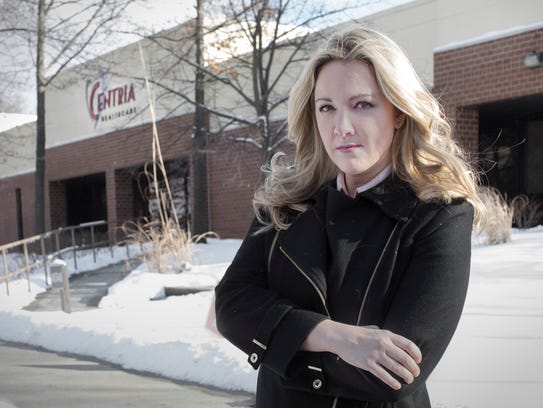
Centria Healthcare, LLC, is one of those Corporate Shape Shifters and seems to be one of those foreign corporations where no one really actually knows from whence it came and is funding political campaigns based upon it false claims to Medicaid in child welfare.


Centria Healthcare, Centira Healthcare L.L.C., Centira Autism Services, or whatever the name of the day is quite the interesting entity because it was funded through a grant from the Michigan Economic Development Corporation, so, let us take a look its financial history...
Three very active Michigan governors have contributed to the Michigan miracle. First Gov. John Engler started to monetize the $1 billion Michigan was scheduled to receive from the Tobacco Settlement to invest $50 million a year in grants to fund Life Sciences companies along the so-called Michigan Life Science Corridor, stretching from Kalamazoo, to Grand Rapids, to Lansing, to Ann Arbor, to Detroit.
When Gov. Jennifer Granholm was elected, she took the tobacco money in 2005 and created the 21st Century Jobs Fund, broadening the state’s investment portfolio to include not only Life Sciences, but also Alternative Energy, Advanced Auto Manufacturing and Materials and Homeland Security and Defense. She also created the Venture Michigan Fund, now two fund-of-funds that have $215 million to invest in VC funds that invest in Michigan companies.
Under Gov. Snyder, the state has put added emphasis on the Michigan Growth Capital Partners fund, launched in 2008 as part of the $300 million InvestMichigan! Program. In February 2013, Credit Suisse and its investment partner Beringea announced the launch of Michigan Growth Capital Partners II, a $180 million fund dedicated to providing growth equity to Michigan companies. Since 2008, more than 1,200 deals have been reviewed with investments made in 28 companies that employ more than 5,000 people in Michigan.
Now, allow me to sum this up.

They were stealin'.

Engler, Granholm and Snyder used class action lawsuit settlements on behalf of the people of Michigan and made into a slush fund by laundering the money through fancy worded, pretty pictures, to make MCLs as Type III transfers to Pseudo-Public-Private-Partnerships (P4, my new term), for the purposes of approving grants for their own private venture capital investment firms as job creation, making private corporations, of which are foreign entities, as the fiduciary of the 21st Century Jobs Fund.


In the spirit of fuchsia...

How Michigan's largest autism therapy provider lost $8M grant


Curtis Moore, Centria whistleblower who was fired.
Michigan's largest provider of autism therapy, Centria Healthcare, has lost an $8 million state grant as the Michigan Attorney General's Office investigates the company for Medicaid fraud.

Well, that is not good.
 
Now, new court filings show the company is suing former employees who've spoken with investigators and the Free Press, seeking to recoup the money.

This is called retaliation against whistleblowers, which is not good.
 
The state awarded the job-creation grant in October then suspended it amid the investigation first reported by the Free Press in February.

Job creation?  So, let me get this straight.  The more kids diagnosed with autism, the more jobs created. Brian Calley participated in setting up data collection to justify this "grant".
 
Last month, time ran out for Centria to finalize the contract needed to receive the $8 million.
“The monies originally earmarked for this project have been released and are available for other economic development opportunities that may present themselves,” Otie McKinley, a spokesman for the Michigan Economic Development Corporation, said in an e-mail to the Free Press.
 
More: Autism treatment firm lands $8-million state grant, spends big on governor's race

From the article, above:
Calley, a longtime advocate for autism therapy and the father of an autistic daughter, publicly urged the Michigan Economic Development Corporation to approve Centria's grant request to expand in Michigan. Five weeks later, a key investor and board member of the company hosted a party at his Orchard Lake mansion that formally launched Calley's gubernatorial campaign, the Free Press has learned.
About 200 people attended, sipping wine and cocktails and enjoying strolling appetizers from Andiamo's. Guests contributed $106,400 to Calley, campaign financial reports show.
The host, Mark Mitchell, was entangled in his own medical fraud case that lasted years, according to federal court records. In 2009, Visiting Physicians Association, a company he owned and ran, agreed to repay the federal government $9.5 million to settle claims of overbilling.  (I know this case well, very well - very, very well and it had to do with Medicaid fraud in child welfare, rape, drugging, torture and trafficking of tiny humans, and a kid who died, brought back to life, at least 5 times that I know about, and not one single person has ever been held accountable because the DOJ, HHS OIG and Michigan DHHS & Attorney General did absolutely nothing, still, to this day, about it.)
More: Centria Healthcare accused of fraud, targeting poor in metro Detroit

From the article links, above:
  • Engaged in a racketeering scheme specifically designed to diagnose children with autism who do not have autism or who do not have autism to the level of diagnosis. 
  • Forged parent signatures on care contracts or otherwise sign off as the child’s parent in the system for those parents who exhibit broken English. 
  • Have sought to run a Medicaid fraud scheme in the state of Michigan. 
  • Are aware that employee files and patient files are stored in unsecured rooms and in employee vehicles and homes.
The grant was a state effort to keep fast-growing Centria from relocating to another state. It was contingent on Centria creating 1,200 new jobs over the next five years.

Work with me here.  So, a job creation grant was approved by the secretive Michigan Economic Development Corporation a domestic, for profit, private corporation, which possesses the fiduciary powers over federal funds, can hand out money in dealing with child welfare programs and services, with no obligations as a federal subrecipient?

That sounds like a slush fund. 

That sounds like the Detroit Land Bank Community Development Corporation (a DLBA corporate shape shifter) which was a creation of the Michigan Land Bank Fast Track Authority, before they disavowed them.
The Michigan Land Bank is part of the Michigan Strategic Fund (MSF), which receives administrative services from the Michigan Economic Development Corporation. The MEDC, a public-private partnership serving as the state's marketing arm and lead agency for business, talent and jobs, focuses on helping grow Michigan's economy. For more on the MEDC and its initiatives, visit: MichiganAdvantage.org <==another corporate shape shifter
 
After the Michigan Economic Development Corporation approves these types of grants, it allows up to 180-days to finalize a contract with the recipient. But Centria's deadline expired in April. The company can reapply for grant money if it remains in good standing at the end of the investigation.
“Should this project navigate the application process and come back to the board, it would be evaluated to determine if the funds would be made available to support this project moving forward,” McKinley said.
Vennesa Pawlak, Centria whistleblower who was fired.
But there's no guarantee that Centria will be selected again. Deed records in Oakland County show the company recently signed a 11-year lease on two buildings in Farmington Hills, which will serve as its new headquarters. Company officials previously said Centria considered moving to New Mexico, Texas, Arizona and Tennessee but stayed in Michigan after winning the grant.

Is this extortion or blackmail?  Is this how we "create jobs" in Michigan?
 
Neither Centria CEO Scott Barry nor a company spokesman responded to requests  for comment. 

Beginning in November, the Free Press examined thousands of internal and public documents related to Centria. The paper reported in February that former executives had accused the company of fraud, forgery, violating patient privacy and employing unqualified staffers to serve autistic children.
Their allegations appeared in a letter the company said was sent to human services agencies across the state. Those allegations were first made public in December, when Centria's attorneys spelled them out in pleadings they filed in a defamation suit. The Free Press has interviewed other former employees not associated with the current litigation whose allegations echo the defendants.
Last month, Centria amended its defamation lawsuit in Oakland County Circuit Court to seek $8 million from the former employees, including the company’s former chief compliance officer and former senior sales executive, both of whom reported alleged wrongdoing to state and federal authorities.
Centria denies all accusations made by the former employees. It claims that the accusations have smeared the company and cost it money.

I guess internal investigations were off the table as an option of remedy to the accusations.
 
“Plaintiffs have suffered damages not less than $8,000,000, harm to reputation, and loss of esteem and standing in the community in an amount to be determined at trial,” Centria lawyers wrote in the pleadings.

 Centria autism services suck.
 
Last week, a judge threw out the amended complaint on procedural grounds, though the company can refile it. The underlying defamation lawsuit continues.
 
Former chief compliance officer Vanessa Pawlak, former senior sales executive Curtis Moore, and another former employee, Samantha Gates, are named in the lawsuit. Their attorney John Harrington argued in a court filing they did nothing wrong.
“(The former employees) only reported the fraudulent activities that took place at Centria Healthcare, LLC., victimizing children suffering from autism, as a result of the (company's) blatant greed, through Medicaid fraud and illegal activities, to the appropriate legal authorities,” Harrington wrote.

“This includes making reports to the Federal Bureau of Investigation, the State of Michigan Attorney General’s Office, as well as other government entities.”

I am pretty sure they suck.  They are in Hamtramck where English is not the first language of these residents who are desperately impoverished and seeking anything, and I mean anything, when it comes to services for children.  Trust me on this one.

More than likely, you had employees who were poorly trained and treated as cheap labor, going above and beyond the call of duty, out their own pockets, knowing fully well that these children were not getting the services they so desperately need.

Boy, this sounds like the uniform standards and practices of the privatized Michigan child welfare system, but hey, what do I know? 
 
Pawlak said Centria's "poor business practices" scuttled the grant.
“Taxpayer dollars should always be put toward ethical companies in good standing to maximize the benefits for our citizens, and especially our children," she said this week. "To point to any other person or entity for Centria’s loss is yet another example of Centria’s continued lack of accountability and reckless disregard for doing the right thing.”

The only problem with this Centria whistleblower argument is that the grant came through a P4, which means it is no longer taxpayer dollars, because it was granted through the Michigan 21st Century Jobs, or what Trust Fund it worked through, which means there were non poor business practices.

The Michigan Economic Development Corporation is nothing more than a slush fund for political campaigns and personal inurement of people like John Engler and Snyder. 

As for Granholm, ask the DNC and the MDP about that one.

Below, is what the Detroit Land Bank Community Development Corporation tried to grow up to be ~ a slush fund for political campaigns and personal investment ventures. 
Voting is beautiful, be beautiful ~ vote.©