Showing posts sorted by relevance for query FOIA. Sort by date Show all posts

Sunday, October 13, 2019

Dana Nessel & Her MSU Email FOIA Transposable Model

You would think, as the Michigan Attorney General, Dana would know that in child welfare everything is a secret, protected by law, layered up through Public Private Partnerships, made up of fake ass child welfare NGOs, doing lots of trafficking tiny human stuff.

Geeze!

There is no right to FOIA when dealing with a federally contracted, foreign, sub recipient of federal funding, because there are no rights to a civil society in privatization.

DUH!

Then there are those FOIA Exemptions and Exclusions, particularly when dealing with anything with a cross and a kid.

Praise the lord.

If Dana can find a way of getting those emails, well, gosh golly, I believe we may have ourselves one of those transposable models I so much adore.

Nessel calls for MSU to release 6K emails to help state Nassar probe


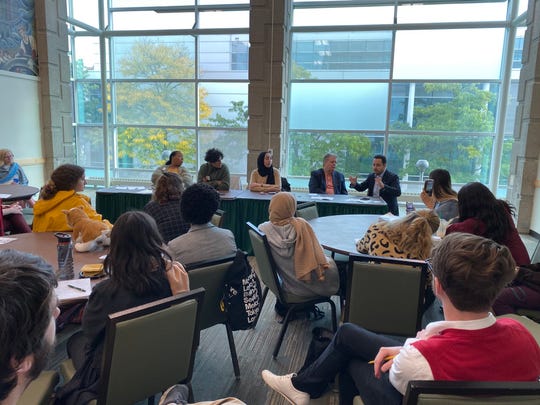
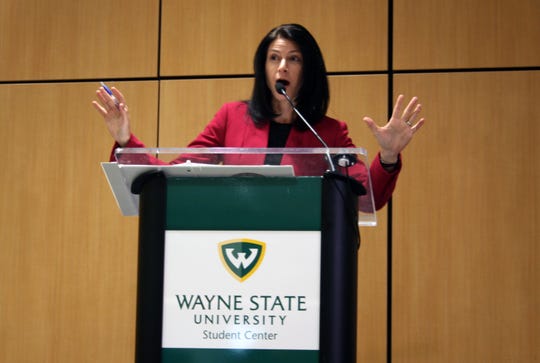
Attorney General Dana Nessel speaks to members of the public and the media at FOIA Fest, an event about the Freedom of Information Act, hosted by the Society for Professional Journalists at Wayne State University on Saturday.Detroit — Michigan Attorney General Dana Nessel told a room of journalists and members of the public that she is "deeply ashamed" that Michigan is the only state that exempts the governor, lieutenant governor and state lawmakers from Freedom of Information Act requests.

"We are not opening the doors to state government," Nessel said Saturday. "In fact, we are locking them with deadbolts, and then we are nailing boards across them, and then there’s a moat … that’s what FOIA feels like with our state government."

Attorney General Dana Nessel speaks to members of the public and the media at FOIA Fest, an event about the Freedom of Information Act, hosted by the Society for Professional Journalists at Wayne State University on Saturday.Buy Photo
Attorney General Dana Nessel speaks to members of the public and the media at FOIA Fest, an event about the Freedom of Information Act, hosted by the Society for Professional Journalists at Wayne State University on Saturday. (Photo: Kevin J Hardy / The Detroit News)

Nessel was the keynote speaker at a day-long festival focused on how to reform FOIA exclusions to the executive and legislative branches of government, developing a state ombudsman or independent commission for FOIA appeals, and reform excessive fees, delays and loopholes in the state's system.

Nessel, who took office in January, has called for more government transparency while noting Michigan's current FOIA restrictions.

"I can’t think of anything more important than to have the public have all the tools available to them and know how to get information," she said.

Kat Stafford, a reporter for the Detroit Free Press, introduced Nessel, saying the attorney general was invited to the FOIA Festival, hosted at Wayne State University by the Society of Professional Journalists, because she's been advocating the importance of government transparency for Michigan residents.

Current and former members of the The South End student newspaper at Wayne State University, which is funded by the university but is editorially independent, share difficulties of filing FOIA requests within their own campus and how they studied student press law after being restricted.Current and former members of the The South End student newspaper at Wayne State University, which is funded by the university but is editorially independent, share difficulties of filing FOIA requests within their own campus and how they studied student press law after being restricted.

Nessel also used the event to take a few shots at the Trump administration, saying the lack of transparency in Michigan is nothing compared to what is going on at the federal level.

"While I am embarrassed on various levels for our lack of transparency in Michigan, but what’s happening in the federal government right now is absolutely unacceptable," Nessel said. "Without these constructs in place, it will be the end of America as we know it."

Nessel also addressed the investigation of John Geddert, a former USA Gymnastics coach who oversaw a Michigan club where multiple victims of sexual predator Larry Nassar trained, Nessel said her office continues to try to get documents Michigan State University has withheld under attorney-client privilege.

MSU initially withheld 7,500 documents under attorney-client privilege and it appears as though her office is not going to see 6,000 of those documents because the university has "fought this office every step of the way."

She called it disingenuous that MSU would ask for the attorney general's office to investigate and then refuse to provide the evidence they need.

"We’ve taken this as far as we can. To fully complete our investigation, we absolutely need to have those emails," she said. "I would ask the board of trustees to reconsider and provide us with those 6,000 plus emails so we can actually complete our investigation."

Beth Konrad, president of the SPJ Detroit chapter and adjunct professor at WSU, said the idea for Saturday's FOIA festival was aimed to build greater awareness and understanding of FOIA and Michigan's Open Meeting Act for better government transparency.

Voting is beautiful, be beautiful ~ vote.©

Monday, January 24, 2011

States' Rumplestiltskin FOIA Avoidance Protocol

What a joke!

I do not know about the rest of the States, but I will surely tell you about Michigan.

See, in Michigan, when you FOIA, even if you follow procedure and state it is a public issue, including demonstrating indigency, the state will hit you with its basic avoidance format.

It has been calculated that the cost of researching and compiling the information, including printing and manpower hours, will be some ridiculous amount.  As a show of good faith, please send a partial payment in the amount of your first born child and a body part.
I guess it just goes to show you, every state has its own excuse not to honor FOIA.


Read the last two paragraphs in this story on Freedom of Information Act "abuse":
Yet another financial problem rests with Freedom of Information Request abuse. DuPage Forest Preserve District Commissioner Carl Schultz said one person had recently cost the district $60,000 for FOIA requests; much of the information is already available, Schultz said.
The problem is stated as being one of abuse. What the commissioner is implying is that it's the requester who is at fault for the high cost of FOIA. However, it's clear this isn't the case.
When one sends FOIA requests for information that is available online, the FOIA response will not fulfill the request and state the availabity of information as a reason; the nice agencies/departments give you URLs. If the FOIA fulfillment system in the Commissioner's district is inefficiently duplicating copies that already exist, that is that commissioner's responsibility to fix the problem.
A system for answering FOIAs is flawed if the system doesn't:
*post information online,

*make it searchable and easy to use.
The second part can be easier said than done, but if information is "available" and the consumer can't get to it, it may as well not be. (DuPage makes real efforts to make information available and usable to its citizens online.)
Setting up and maintaining such a system for responding to public records requests is probably expensive and complicated, but that's certainly no fault of the public. Citizens have a right to information, and local governments have a duty to make this information available to them--it's in the job description.

Wednesday, August 29, 2018

Cocktails s & Popcorn: Will The Real "Emily" Present Identification For The Michigan Election FOIA Requests"

Image result for eating popcorn in office
"My name is Emily but I am going to hide behind my popcorn
so you cannot guess who I really am."
In the spirit of fuchsia...

How the hell can a local election clerk honor a FOIA request by someone who fails to identify themselves?  See, it goes like this.  When you file a FOIA and are denied, you can file an appeal.  If the appeal is denied, you can shift the request, under state law, with monetary penalties, to a Circuit Court.  So, I would deny the FOIA request just to force them to come out in Circuit Court, where, a clerk can then even challenge the validity of the identity and making them go back through the initial process of the FOIA request.

If "Emily" wins a FOIA case in Circuit Court, to whom do the city clerks issue the check?

Is "Emily" going to pay cash for the FOIA requests, because I highly doubt she, or he, has a checking account, but this is Michigan, so I am sure there is a Corporate Shape Shifter wiling to do the banking for an unincorporated entity, or, in this instance, a fake individual.

How do we know "Emily" is emancipated or even of the legal age of 18?

(You can be emancipated at 16 in Michigan, which should not be confused with Emancipation Proclamation of being released from the legal custodian and guardian).

How do we even know "Emily"  is not an infant, not mentally incapacitated, in the military, or is even under legal guardianship of a corporate parent?

How do we even know "Emily" is a citizen of the United States, which makes the FOIA request further open to scrutiny of being submitted in the proper jurisdiction?

If you need ID to cast a vote, then you should present ID to submit a FOIA request about the vote.

Something tells me we are dealing with "Legal Geniuses" (trademark pending).

Something also tells me that the Michigan election may not be recorded tomorrow, but I will update.

The only reason I speculate a pre-emptive attempt to nullify the 2016 Presidential Election is because "Emily" & friends have no clue to what they are about to unearth, and it will not be pretty.

Nope, not pretty at all.


I am going to go out there...just a wild guess....and say....


Voting group behind mystery requests in Michigan

A voting rights nonprofit affiliated with a Democratic super political action committee is behind the recent mystery public record requests that blanketed clerk’s offices around Michigan.

Priorities USA Foundation contracted a third party to send hundreds of public records requests to clerks throughout the state asking for copies of ballots and accompanying materials from the November 2016 election, the group confirmed Tuesday.

The nonpartisan foundation is a separate but affiliated entity with Priorities USA Action, a self-defined "progressive" super PAC that spent $6.4 million supporting Democrat Hillary Clinton and $126 million opposing Republican Donald Trump in the 2016 presidential election.

Among the super PAC's biggest donors in 2015-16 were George Soros, the liberal chairman of the Open Society Foundations; New York hedge fund manager James Simons; and Newsweb Corp. CEO Fred Eychaner of Chicago, according to Federal Election Commission filings.

The Priorities USA Foundation was founded in 2017 and doesn't have any Internal Revenue Service returns that would indicate its funding sources. Nonprofits are not required to disclose donors.

The ballot requests were sent as part of a research project aiming “to determine whether any discrepancies exist in the ballot process across various states and precincts that might disproportionately affect certain communities, particularly communities of color and young people,” the foundation said in a statement.

The response came four days after Michigan Director of Elections Sally Williams said the public records requests sent en masse throughout Michigan had “unnerved” local clerks busy recovering from record turnouts in the August primary and preparing for the November general election.

The requests were signed by a woman referred to as “Emily” with no last name. Clerks were told to direct questions and Freedom of Information Act responses to a Gmail account or an Astoria, New York, post office box from the “United Impact Group.”

The requests ask for all election day, absentee and provisional ballots from the 2016 presidential election; ballots that were not counted and the reason they weren’t counted; and accompanying materials such as the envelopes in which the absentee ballots were sent. Some precincts were asked for the polling books listing the names of those who voted, Williams said.

Though the ballots are anonymous, clerks were concerned about where the information requested would be sent, Secretary of State spokesman Fred Woodhams said. Knowing the group behind the requests could assuage some of those fears, he said.

"It may give them some peace of mind," Woodhams said. 

Republican Secretary of State candidate Mary Treder Lang challenged her Democratic opponent Jocelyn Benson to denounce the efforts by Priorities USA because they distract clerks from preparing for the November election.

"The Democratic Party is trying to rehash the 2016 presidential election recount," Treder Lang said in a statement. "Our county and municipal clerks have an important job to do and should not have to waste their time on an election that was already decided in 2016 ... twice."

Priorities USA Foundation did not immediately elaborate on the reason for the secretive nature of the requests. In response to questions regarding the processing cost to local clerks’ offices, the group said in an email:

“We know the clerks have an important job and want to make sure we are good partners in helping them fulfill the request in a timely manner. We’re happy to work with them to make this possible.”

Detroit estimated it would take about a year to process the request, and the price would be “very, very costly,” said Clerk Janice Winfrey. The city of Lansing estimated the request would take roughly 275 hours of staff time to complete, cost $12,000 and likely wouldn’t be complete until January.

A “representative sample of precincts” in Michigan were the first targeted by the in-depth public records requests aiming to explore procedures for provisional ballots; the consistency of ballot counting; discarded ballots; and under-voting, when a person casts a ballot for some but not all races, according to the foundation.

“The research will be looking into such potential issues as disparities in ballot counting procedures — especially among provisional ballots — and the impact of 'under-voting' and discarded ballots in these communities,” Priorities USA Foundation said in a statement.

President Trump won Michigan by 10,704 votes over Clinton in an election in which about 4.8 million votes were cast. The courts ended up stopping a recount requested by Green Party presidential candidate Jill Stein since she had no shot of winning and thus wasn't an aggrieved candidate under state law.

“During the partial statewide recount of the presidential race, 2 million paper ballots were reviewed by hand before the recount was stopped by the courts,” Woodhams said in an email. “The vote difference between Donald Trump and Hillary Clinton changed by only 103 votes, demonstrating that there is no reason to believe that there were problems tallying the vote.”

Clinton gained 103 votes in the recount, but those votes weren't recognized when the courts struck down the recount.

In 2016, Michigan had roughly 75,000 under-voted ballots in which voters filled out their ballots but did not mark a selection for president, according to Woodhams. Roughly 1,400 of those ballots were cast in Detroit.

The under-vote number was not dramatically higher than the 50,000 in 2012 and 40,000 in 2008, Woodhams said.

Given the record disapproval ratings for Trump and Clinton ahead of the election, "it’s not surprising to us that some people chose not to vote that ballot line," he said.

Precincts throughout Michigan in 2016 issued nearly 4,000 provisional ballots, which are given to voters who don't appear to be registered voters in the precinct but later show proof of their ability to vote there. Roughly 1,500 of the provisional ballots in 2016 were issued in Wayne County. 


Voting is beautiful, be beautiful ~ vote.©

Monday, September 30, 2019

No FOIA For Duggan Investigation, But There Is A Video

If you record the meetings, you can use their own words against them.

Sometimes, wearing a wire is just another way of preserving the historic record since people in positions of authority seem to have issues recently about bearing false witness in the historic record.

Just ask Mike Duggan about that.

The City could email the documents, but that would not be conducive when it comes to covering up child welfare fraud.

Besides, if this has to do with child welfare, those records are sealed.

Thank you, Tony, for the lovely video with the time stamp.

Nice touch.

City puts $222K price tag on Duggan investigation records; flouts state law


Secret video: Carmack secretly records Duggan probe interview
Robert Carmack recorded his meeting with Detroit's inspector general because, he says, he doesn't trust the probe of the mayor will be impartial.

The Detroit inspector general's investigation into Mayor Mike Duggan is in its final stages. The Free Press is seeking records of the probe.

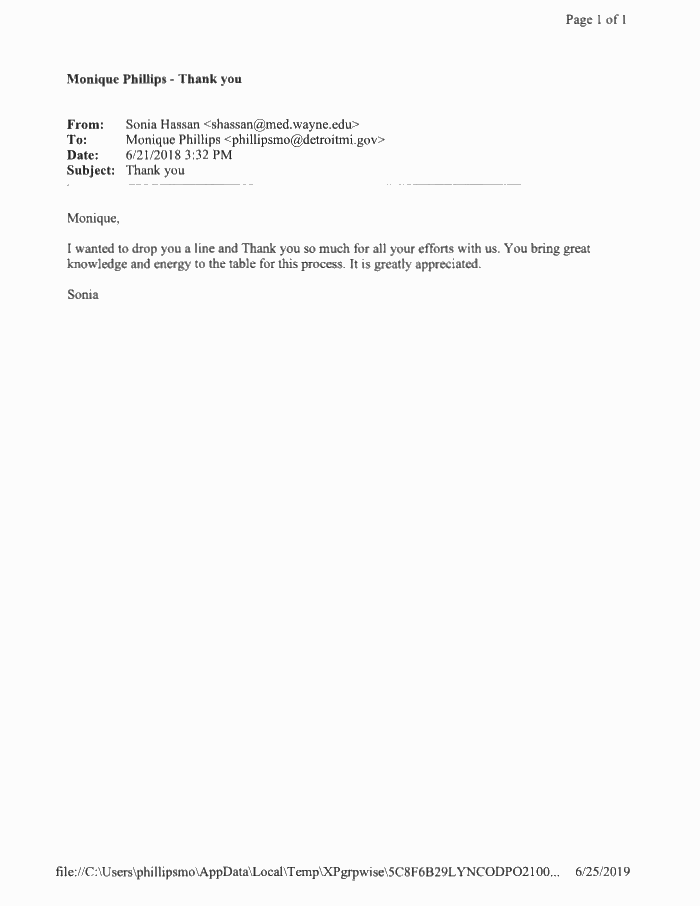
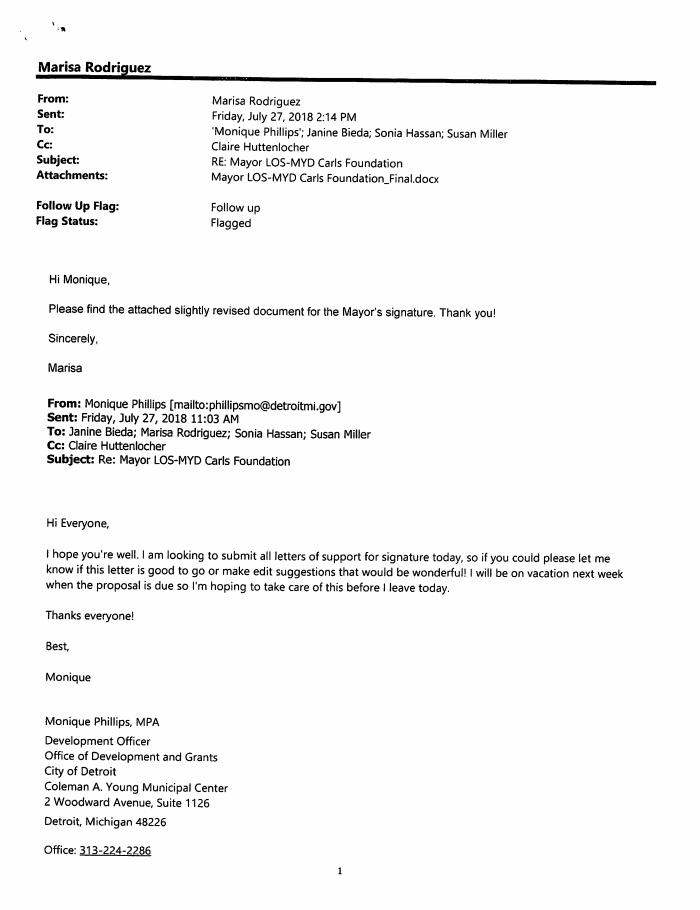
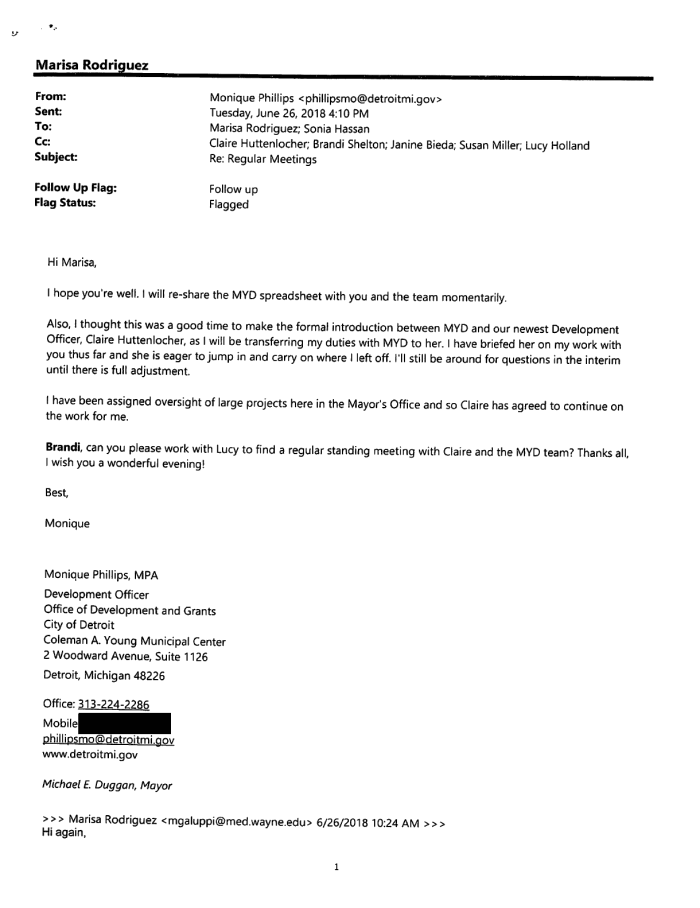
Mayor Duggan's ties to Sonia Hassan include Make Your Date program
An email obtained in a Free Press investigation shows mayor ordered special attention for a nonprofit run by Dr. Sonia Hassan, with whom he's linked.

Anearly six-month investigation into whether Mayor Mike Duggan gave preferential treatment to a local maternal health program is in its final stages and involves more than 400,000 pages of documents, the Free Press has learned.

The Free Press sought the Detroit Office of Inspector General’s investigative records — emails, text messages, financial reports and other documents it has collected as well as newly created reports — through a public records request last month, but the city’s law department said the newspaper would have to foot a bill estimated at $222,667 to obtain them.

Even if the Free Press pays the six-figure invoice, the city plans to fight releasing documents that the inspector general’s office has collected. The investigation involves Duggan and Make Your Date, the maternal health program run by Sonia Hassan, a woman with close ties to the mayor. Duggan initiated the nonprofit program; recommended Hassan to lead it, and ordered high-ranking city officials to help with fundraising. Make Your Date received more than $358,000 in federal grant money through the city.

The Office of Inspector General (OIG) wants to keep the records secret while the investigation is ongoing so they are not used to “mislead the public.”

“Based on information provided by the OIG … release of the requested information and/or record at this time would: 1) paint a biased picture without any context; 2) unfairly prejudice innocent employees and individuals who are identified in the records; and 3) be taken out of context to sensationalize certain aspects of the records and mislead the public,” reads a Sept. 10 letter to the Free Press from the Detroit law department in response to the newspaper’s records request on Aug. 20.

The letter notes that 400,000 pages of records have been gathered and concedes that the state’s public records law may not justify withholding the records. “While specific exemptions under Michigan FOIA may not apply to the records compiled by the OIG, it is our understanding that the OIG will defend its position if necessary,” a footnote in the letter reads.

The city’s letter responding to the Free Press request sheds new light on the high-profile investigation and underscores the complicated relationship between the city’s administration and Inspector General Ellen Ha.

More: Mayor Mike Duggan set her up to succeed. That raises questions.

More: City fundraising office deleted emails about nonprofit tied to Detroit Mayor Mike Duggan

The OIG is supposed to be the city’s independent watchdog, but staff there collaborated with the city’s law department to object to releasing the records to the Free Press. Ha previously worked in the city’s law department, raising concerns about her objectivity.

Deputy Inspector General Kamau Marable said Friday that the office's objections are not specific to the investigation involving Duggan and Make Your Date.

"We are not opposing the (FOIA) request perpetually," Marable said. "Our concern is the information being released while an investigation is ongoing and that's every investigation — high-profile or not. Every investigation we feel that way and will take that stance."

The investigation encompasses whether the city and Duggan provided Make Your Date with any preferential treatment. The probe expanded in July after the Free Press revealed that city workers deleted emails related to Make Your Date and Hassan, while the newspaper prepared its first report on the mayor’s relationship with the program and Hassan.

The inspector general’s office said it would investigate the circumstances surrounding the deleted emails as part of its overall investigation into Make Your Date.

Duggan and Dave Massaron, the city’s chief financial officer, learned about the deleted emails in May.

During an unrelated meeting with Free Press editors and reporters Thursday, Massaron would not comment on whether the inspector general has interviewed him or how he found out about the deleted emails.

“We have been asked by the Office of the Inspector General not to comment until she completes the investigation. So I can’t,” Massaron said.

When asked whether he has ever known any city officials to delete emails to avoid public disclosure, Massaron also cited the inspector general’s instructions to remain quiet. When pressed, he said, “I’m unaware of anybody deleting emails to avoid discussion, disclosure.”

DOCUMENT
PAGES
Zoom

Michigan Attorney General Dana Nessel also has instructed her criminal division to look into the deleted emails after the issue was brought to her personal attention.

Although the OIG investigation is in its final stages, it could be a while before a final report is issued because any person or agency criticized in the preliminary report has the right to a closed-door appeal hearing, according to the inspector general's administrative rules. The appeals process could take several weeks.

The inspector general’s office would not provide any details about the investigation, only characterizing it as ongoing.

The office confirmed that it raised concerns with the law department about the Free Press’ FOIA request.

“Unless required to do so, we do not discuss or share any information we’ve collected during our investigation with any persons outside of our agency,” an email from the inspector general’s office reads. “Preserving the integrity of our investigation under the charter requires our silence until a final report is issued by our office.”

The city charter's requirement that inspector general records be kept confidential is subject to state law, including the FOIA statute, which supersedes local rules and laws.

The Free Press appealed the law department's FOIA response last week. The appeal cited several areas where the city's response appeared to violate state statutes and it requested specific legal justifications for documents that were denied.

The inspector general has the authority to investigate any elected official, city employee, agencies and any programs or contractors who provide goods or services to Detroit.

According to the city charter, the inspector general also has the ability to access financial and other records of all city agencies at any time.

During the course of an investigation, the office can administer oaths, take testimonies, subpoena witnesses and require the "production of evidence relevant to a matter under investigation," according to the city charter.

Any city employee, elected official or contractor who fails to cooperate with an investigation could be subject to "forfeiture of office, discipline, debarment or any other applicable penalty.”

If it is determined that an illegal act was committed, the inspector general is required to refer the matter to the appropriate law enforcement agencies.

Viki Harrison, director of state operations for the nonpartisan grassroots organization Common Cause, said the city’s handling of the FOIA response raises new transparency questions and damages the public’s trust.

Harrison read the city’s FOIA response to the Free Press and said it is inappropriate for the law department to chastise the media by suggesting it would attack innocent employees.

“Are they writing an op-ed or is this a FOIA response?" Harrison said.

Harrison said the city’s response erodes trust in government.

“I'm outraged just reading some of the language that they've used in here,” she said. “They're being incredibly defensive instead of just doing their jobs and answering the question. The public is going to once again think that their government is hiding something and not playing fair and they're stopping the press from doing their jobs. The lack of transparency and ability for the public to really understand what’s happening is completely erased when you get a response like this.”

The inspector general's office said there should be no transparency concerns.

"We have stated that we have no issues with releasing information after the investigation is concluded," the office wrote in an email responding to questions from the Free Press. "As stated previously this is to protect the integrity of any investigation, high profile or otherwise."

Harrison said she also believes the $222,667 price tag to fulfill the request prevents access to documents that should legally be available for public consumption.

“It is obviously outrageous to charge a newspaper $225,000 for something that is going to be nothing but redactions,” Harrison said. “Charging for staff time is a huge problem, too. If your Information Act requires and allows them to charge to compile information, that should be changed. That is something that makes it cost prohibitive for anyone to use this law to get the information they’re entitled to. How is anybody supposed to be able to afford $200,000?”

Make Your Date investigation


“Any time an inspector general is investigating any type of allegation of wrongdoing, that’s just inherently in the public interest,” Marshall said.

The city’s position that it would fight releasing the records despite any legal justification is “patently unlawful,” Marshall said.

“They seem to readily admit that no Michigan FOIA exemption applies but they’re not going to release these records,” he said. “The letter seems to be flouting that legal obligation on the basis of some purported policy argument. That’s not a legal reason that allows those records to be withheld.

“I’m really at a loss to understand how the city thinks this is appropriate or lawful.”

Voting is beautiful, be beautiful ~ vote.©
Wednesday, March 2, 2011

Another Reason Why Child Welfare Fraud Is A Secret

Here are the latest opinions from the Department of Justice on FOIA.  This particular one is quite relevant as it deals with the publishing of information in violent legal matter of an individual who was under the custody of the state.

Once again, I present to the public one more finding of fact and conclusion of law as to why the standard of fraud is so high in child welfare.  Everything in foster care is a secret, including the murders, torture, drugging, rapes, mutilations, and especially the suicides, all funded by your hard earned taxpayer dollars.

Thanks for keeping the secret.


Courts of Appeal
1.Prison Legal News v. EOUSA, No. 09-1511, 2011 WL 72210 (10th Cir. Jan. 11, 2011) (Murphy, J.)
Re:  Request for videos depicting the aftermath of a brutal prison murder and autopsy photographs of the victim which were introduced into evidence and shown in open court
●  Exemption 7(C):  The Tenth Circuit affirms the finding of the district court that certain portions of video and audio recordings depicting the aftermath of a prison murder along with autopsy photographs of the victim were properly withheld to protect the privacy interests of the victim's survivors pursuant to Exemption 7(C).  Comparing the instant case with the facts presented in Favish, the Tenth Circuit finds that "the privacy interest in [the] images [here] is higher than the privacy interest in the photographs at issue in Favish."  "The photographs in Favish depicted the victim of an apparent suicide, . . . but the images did not involve grotesque and degrading depiction of corpse mutilation as do the images at issue here."  Additionally, the Circuit notes that "the images in Favish were all still photographs, whereas the video at issue here depicts corpse mutilation as it occurs."  Likewise, redacted audio portions contain "the voices of the perpetrators themselves describing the heinous acts in progress." 
The Tenth Circuit rejects plaintiff's argument that because the victim "was a prisoner and the images were taken in a prison cell, [he] himself had no expectation of privacy and his family likewise can have none."  Rather, the Circuit holds that "contrary to [plaintiff's] contention that any privacy interest of [the victim's] family is derivative of [the victim's] own privacy interest, family members' privacy interests under FOIA are independent interests." 
The Circuit rejects plaintiff's contentions that "the government was required to offer evidence of the family's objection and that the district court improperly made findings regarding the particular harm the family would suffer."  Instead, the Circuit finds that the "plain language" of Exemption 7(C) shows that "the test is an objective one and does not depend on the affected individuals' statements of objection or their personal views of the harm they might suffer." 
Although the Tenth Circuit finds the public availability of the records at trial "may impact the family's expectation of privacy in those materials[, it] does not negate it."  The court emphasizes that "[h]ere, the images are no longer available to the public; they were displayed only twice (once at each [defendant's] trial); only those physically present in the courtroom were able to view the images; and the images were never reproduced for public consumption beyond those trials."  As such, the Circuit concludes that the victim's "family retains a strong privacy interest in the images."  
With respect to the public interest in disclosure of the images, the Tenth Circuit determines that "[w]hile BOP's protection of prisoners and the government's discretionary use of taxpayer money may be matters of public interest, there is nothing to suggest the records would add anything new to the public understanding."  Moreover, the Circuit notes that EOUSA has fully released the portions of the video and audio files which depict BOP personnel's response to the incident.  The Circuit also finds that the information about the public interests identified by plaintiff, such as the conditions of confinement, the behavior of the two perpetrators and the nature of the mutilation of the corpse, is publicly available.  Accordingly, "to the extent any additional information can be gained by release of the actual images for replication and public dissemination, the public's interest in that incremental addition of information over what is already known is outweighed by the [victim's] family's strong privacy interests in this case."  Similarly, the Circuit concludes that the "audio recordings add little or nothing to the large amount of public knowledge about the crimes and the government's response to them." 
● Waiver:  The Tenth Circuit finds that the family did not waive their privacy interests by virtue of the fact that prosecutors used the images at trial, finding that "[t]he government cannot waive individuals' privacy interests under FOIA."  Additionally, the family's failure to object to the records being made public at trial has no effect on the Circuit's analysis because the "family members did not take any affirmative actions to place the images in the public domain." 
● Public domain doctrine:  With respect to the video and audio recordings at issue, the Circuit differentiates the instant case with the D.C. Circuit's decision in Cottone v. Reno, in which the D.C. Circuit applied the public domain doctrine to rule that the disclosure of wiretapped conversations covered by an Exemption 3 statute that had been played in open court were no longer exempt.  The Tenth Circuit finds that "[e]ven if this court adopted the public domain doctrine [in response to the government's use of the videos at public trial], it would not defeat Exemption 7(C)'s applicability in this matter because the purposes of Exemption 7(C) [i.e., to protect the privacy interests of the victim's family] can still be served."  Lastly, the Circuit rejects plaintiff's "suggestion that admission of certain records at trial is different from other types of public disclosures under FOIA," finding that "for the purposes of FOIA, the only relevant fact about the trial is the extent of disclosure."
● Agency records:  The Tenth Circuit rules that the district court incorrectly limited the reach of the FOIA "to records that shed light on governmental activity." 

Thursday, February 3, 2011

What Is The Big Federal FOIA Issue?

I really do not understand the issue here.  All the feds have to do to avoid FOIA is to use the States Rumplestiltskin FOIA Avoidance Protocol.


Dems object to GOP gov't transparency probe

Congressmen say Rep. Issa's inquiry will burden federal agencies


Some Democrats in Congress objected Wednesday to early steps taken by the new Republican chairman of the House Oversight and Government Reform Committee to conduct a broad inquiry into President Barack Obama's promises to improve government transparency.
Reps. Elijah Cummings of Maryland, Gerald Connolly of Virginia and Peter Welch of Vermont complained in a letter to Rep. Darrell Issa, R-Calif., that his investigation will burden federal agencies responsible for producing government records under the U.S. Freedom of Information Act requested by citizens, journalists, companies and others. Cummings is the senior Democrat on the House oversight committee.

Issa last week demanded details of every such request during the last five years, plus copies of all letters or e-mails between government workers and people with pending requests. He said the effort would make sure that "all federal agencies respond in a timely, substantive and non-discriminatory manner" to requests for records under the information law.
The five-year window would cover part of the Bush administration and the first years of Obama's presidency.
In their letter to Issa on Wednesday, the Democrats said the investigation would require government offices to turn over perhaps hundreds of thousands of documents. "Without a defined focus, your inquiry will place a significant burden on FOIA offices and divert limited staff from processing requests from the public," they wrote.
Issa's investigation into government transparency under Obama is among the earliest by Republicans since they won control of the House, and targets one of the first pledges Obama made after he moved into the White House.
The investigation was at least partly prompted by reports last year from The Associated Press that the Homeland Security Department had sidetracked hundreds of requests for federal records to top political advisers, who wanted information about those requesting the materials.

In some cases the release of documents considered politically sensitive was delayed, according to more than 1,000 pages of e-mails obtained by the AP.
The Democrats said they were uncomfortable with Issa's request for names of all people who sought federal records, dates of their requests, descriptions of what they asked to receive and whether they ever received anything. They said Issa should modify his request to not include names.
"It is unclear why the committee needs the identities of specific FOIA requesters," they wrote.
Names of people who ask the government for records and details about what they sought under the Freedom of Information Act are generally available publicly, and many are published by federal agencies online.

Wednesday, August 25, 2010

Michigan Medicaid Fraud Control Game

There are times when I become just utterly disgusted with blatant lies.  This is one of them.

I recently submitted a FOIA to find information on Michigan's Medicaid Fraud Control Unit.  I called the Office of Attorney General who referred me to the Michigan Department of Community Health.

The FOIA was quite simple.  All I did was to take the federal statute, and cut and paste the criteria for the Medicaid Fraud Control Unit.

  1. Details of Statewide authority to prosecute individuals for violations

  of criminal laws with respect to fraud in the provision or administration
  of medical assistance under the State plan;
  2. Assurances for referral from all State Departments for violations of
  criminal laws with respect to fraud in the provision or administration of
  medical assistance under the State plan;
  3. The organizational structure and chart;
  4. The number of employees, description of duties and qualifications for
  all professional positions;
  5. Federal Memorandum of Agreement and/or orders, if any;
  6. Copy of agreement with the Department of Community Health;
  7. Annual reports of Fiscal Years 2001, 2002, 2003, 2004, 2005, 2006,
  2007, 2008, and 2009; and,
  8. Projected operations and budget for FY 2010
The reason why is because I was tired of the games and it personally hurts.

Medicaid fraud in child welfare is horrific and no one will speak upon this crime.  For years, there are reports generated by the State Auditor General and it gets brushed aside by legislators.  The most recent report documents almost $5 billion in questionable costs.  The only thing that happened was a hearing in Lansing where everyone looked around the room staring at each other, rambling big words on correcting the situation.  It was a joke.

I filed an action to make the state, in accordance to its own laws, stop Medicaid fraud by referring to the Attorney General for prosecution and recovery.  Within a few weeks of my filing, the following was produced:

Michigan Medicaid Integrity Program

After some public posturing, the position of Medicaid Inspector General was created....
Michigan Executive Order On Creation of Health Services Inspector General
...in the Department of Community Health.

This takes us back to the FOIA.

I received, today response to my query on the structure, operations and authority of the Medicaid Fraud Control Unit.  It was a package with an organizational chart of the Department of Community Health, a copy of Senate Bill No.1152 and a bill.

The Department has identified approximately 19,460 pages of documents responsive to your request.  Using the hourly wage of the lowest paid department staff capable of searching for, retrieving, reviewing, examining, and separating exempt material, the cost for processing the request is calculated as follows:
  •   20 hours labor @$22.15 per hour to search and retrieve records..............................................................................................................$443.00
  •   20 hours labor @$22.15 per hour to review, examine and separate exempt from non-exempt records..............................................................................................................$443.00
  •    19,460 pages @ .25 per page.......................................................................$4,865.00
  • Total..............................................................................................................$5,751.00
TRANSLATION:  We do not have the information you requested because it does not exist.  If we charge you exorbitant amounts, knowing that you could never possibly pay it and pretty secure in the fact that you will you use the information in litigation against us, we ain't giving you shit.


I can easily FOIA the U.S. Department of Health and Human Services Office of Inspector General and say,

"Dr. Levinson, did you know the stuff Michigan Office of Attorney General sends in to garner your approval for its Medicaid Fraud Control Unit does not exist?  The Department of Community Health, State Medicaid Director, just sent me a FOIA response saying it does not exist so I was wondering if you would have your staff send it to me, because, of course, you did approve its operations and fund 90% of the Medicaid Fraud Control Unit which does absolutely nothing to end Medicaid fraud as the state does not comply with its own assurances for referral when there is suspect of Medicaid fraud.  I would really appreciate it if you would send those docs to me so I can give them to the Office of Attorney General and the Department of Community Health.  I promise to upload each doc to my Scribd account.

I will do that later.  Stay tuned.

I am a public official.  That means whatever I say goes on public record; therefore, let the record reflect that I am officially calling upon the Democratic candidate for the Office of Attorney General for the State of Michigan, David Leyton, to address the issues of the Medicaid Fraud Control Unit and what will be done to end Medicaid fraud in child welfare.

My following may be small but those who visit my site are powerful.  Let Mr. Leyton know I will be looking for him at Cobo Hall.

Thursday, April 22, 2010

Why Standard of Fraud is So High in Child Welfare

Ever wanted to know why child welfare information and records are not open to the public?

Ever wanted to know why the circumstances of fraud in child welfare are so hard to prove in a court of law?

Well, here it is:

In the case of Tampico v. EOUSA, No. 04-2285, slip op. at 8 (D.D.C. Apr. 29, 2005), the court clarified the position that is applied to all child protection cases, as it is a federally funded law enforcement action by qualifying certain records containing identifying information pertaining to children involved in criminal proceedings by statute to the Freedom of Information Act under Exemption 3.

Congress exempted nine categories of documents from the broad disclosure requirements of the Freedom of Information Act. Exemption 3 applies to documents that are specifically exempted from disclosure by another statute. 5 U.S.C.S. § 552(b)(3). Exemption 6 protects personnel and medical files and similar files the disclosure of which would constitute a clearly unwarranted invasion of personal privacy. 5 U.S.C.S. § 552(b)(6). Exemption 7(C) excludes records or information compiled for law enforcement purposes, but only to the extent that the production of such materials could reasonably be expected to constitute an unwarranted invasion of personal privacy. 5 U.S.C.S. § 552(b)(7)(C).

Then, under the Federal Victims Protection and Rights Act (3) the term “child abuse” means the physical or mental injury, sexual abuse or exploitation, or negligent treatment of a child. 

As seen in the language of the statute, the terms "child abuse" and "child neglect" are fungible. One in the same.

But this still begs the question, "Why are the state contracted child placing and child welfare agencies, States and U.S. Administration for Children and Families not subject to disclosure of operations for publication in the media?

Here is the case.

UNITED STATES DEPARTMENT OF JUSTICE et al. v. REPORTERS COMMITTEE FOR FREEDOM OF THE PRESS et al.

No. 87-1379

SUPREME COURT OF THE UNITED STATES

489 U.S. 749; 109 S. Ct. 1468; 103 L. Ed. 2d 774; 1989 U.S. LEXIS 1574; 57 U.S.L.W. 4373; 16 Media L. Rep. 1545

December 7, 1988, Argued
March 22, 1989, Decided

The court addressed whether disclosure of the rap sheet constituted an unwarranted invasion of privacy within the meaning of 5 U.S.C.S. § 552(b)(7)(C). The court held that the fact that an event was not wholly "private" did not mean that an individual had no interest in limiting its disclosure. The privacy interest in a rap sheet was substantial. Whether an invasion of privacy was warranted had to turn on the nature of the requested document and its relationship to the basic purpose of the FOIA, which focused on the citizen's right to be informed about the government's actions. The news groups in this case did not intend to discover anything about the conduct of the agency, and response to the request would not shed any light on the agency's conduct. Thus, the public interest in release of a rap sheet was not the type of interest protected by the FOIA. The court held, as a categorical matter under § 552(b)(7)(C), that a third party's request for law enforcement records about a private citizen could reasonably be expected to invade that citizen's privacy, and that when the request sought no official information about the government, the privacy invasion was unwarranted.

This is interpreted to mean that it would be an invasion of a child's privacy, or in more familiar terms, not in the "best interest of the child" to release under FOIA any federally funded law enforcement activities pertaining to child abuse for publication in the media. This was theory was qualified under FOIA Exemption 6.

But of course, there is another reason why child welfare is so secretive. We know there are federal enforcement statutes to provide accountability against child welfare fraud, but the U.S. Department of Health and Human Services Office of Inspector General has what is called in the legal community, "Safe Harbor Provisions". Safe Harbor are exactly what you think; they are a place in the law where an individual or corporation can go to as a safe haven when it has been found that they have been practicing questionable and improper billing cost activities that are punishable by law.
HHS OIG Solicitation for Safe Harbors and Fraud Alerts 2009

Now, we can understand why the MFCUs and the States Attorney General will do nothing, (except for Roy Cooper) as they are too lazy to find the statutory passage to go into the "Exemption 3 and 6 safe harbor" and attack the Child Welfare Medicaid Fraudfeasor with full prosecution and recovery.

We can also understand why Child Abuse Propaganda continues to thrive as there is no public scrutiny of the data that is generated nor the research that is published as we can see "abuse and neglect" are lumped into the same Exemption categories.  With poverty codified as neglect, the propaganda campaigns are in full force.   Nothing more than malafide scienter on the part of these universities to protect federal aberrant billing practices.
Michigan Child Abuse Prevention Month Complete Toolkit 2010


Each state has a Medicaid Fraud Control Unit (MFCU), stationed in with the States Attorney General. These MFCUs has the powers and funding to stop Medicaid fraud. Section 1128B(b) of the Social Security Act (the Act) (42 U.S.C. 1320a–7b(b)) provides criminal penalties for individuals or entities that knowingly and willfully offer, pay, solicit, or receive remuneration in order to induce or reward business reimbursable under the Federal health care programs. The offense is classified as a felony and is punishable by fines of up to $25,000 and imprisonment for up to 5 years. OIG may also impose civil money penalties, in accordance with section 1128A(a)(7) of the Act (42 U.S.C. 1320a–7a(a)(7)), or exclusion from the Federal health care programs, in accordance with section 1128(b)(7) of the Act (42 U.S.C. 1320a–7(b)(7)), yet enforcement is exempted under 3 and 6 of FOIA.

This is why only the bravest warriors enter the battlefield of the court to bring forth qui tams.

The barriers of entry into the "safe harbor"  in alleging fraud or mistake in child welfare claims as a party must state with particularity the circumstances constituting fraud or mistake in a court of law.  It becomes an epic battle of honor for the parties who choose to battle the ugly beast named fraud in child welfare.   Even though malice, intent, knowledge, and other conditions of a person's mind who commits child welfare fraud may be alleged generally in litigation, it is still the burden of the party to educate the court on the facts, the honor of the warrior to tell his story...


Stop Child Welfare Fraud

It must be noted that there is still no mention of any oversight of the pervasive fraud, just focusing on child welfare, with TRICARE the military and military families version of Medicaid. Also, child welfare fraud is not exclusive to Medicaid, as the false claims exist in the areas of Title IV-E, the next largest area of child welfare fraud.