FBI: Fiore's daughter helped write amendment to MDOT budget to ensure firm kept $2M a year conrtact.
Gasper Fiore
Towing titan Gasper Fiore was so politically connected that his daughter last year helped write an amendment to the Michigan Department of Transportation budget that ensured his company would win a multimillion-dollar contract, federal documents show.
In the end, the amendment wasn’t necessary. MDOT backed down — and Fiore was told nearly a month in advance that he would get the contract when it was awarded, which he did, according to FBI wiretap evidence.
Along the way, Fiore, who for years dominated the towing industry in southeastern Michigan, appeared to have gotten help from then state Rep. Brian Banks, D-Detroit, and, possibly, state Sen. Tom Casperson, R-Escanaba, who chairs the Senate Transportation Committee, the wiretapped conversations show.
In wiretap evidence obtained by the Free Press this week, the FBI offers a glimpse into how the well-connected Fiore built his towing empire by currying favor with high ranking officials across southeast Michigan. While Fiore has admitted in federal court to bribing just one Macomb County official, the FBI says he was in cahoots for years with many, from state lawmakers to police officials to a Detroit city councilman who was dating his daughter.
Brian Banks & Sherry Gay-Dagnogo
The Free Press obtained a copy of the wiretap documents after they were briefly unsealed in a filing in U.S. District Court last Friday and quickly resealed.
The wiretap transcripts were intended to bolster the FBI's request for more time to conduct the wiretaps.
Tom Casperson
"... additional wire and electronic interceptions are needed to fully understand and be able to prove the entire scope of FIORE's corrupt activities, including the quid pro quo involved with his relationships with numerous public officials," the FBI said.
In the documents, the FBI names 18 targets of an ongoing public corruption probe. They include Detroit City Councilman Gabe Leland, who has not been charged; former Detroit Deputy Police Chief Celia Washington, who has been charged with taking bribes from Fiore; and Banks, who has not been charged.
"Fiore is involved in bid-rigging with legislator Brian Banks," Special FBI Agent Robert Beeckman wrote in 2016 affidavit, which included intercepted text messages and phone calls between Fiore and Banks.
Gabe Leland
According to the affidavit, in a May 5, 2016, phone conversation, Fiore and Banks spoke about the MDOT contract when Banks mentioned Fiore's political "might."
"MDOT said you have a mighty force behind you ... They said: 'We don't want to mess with that force,' " Banks said.
Fiore responded: "Mmmmmm yeah. Does that mean, So what they doing with the deal then?"
Banks: "So, you good so far. You hear me."
Banks could not be reached for comment. Banks, who has eight prior felony convictions, resigned his state House seat Feb. 6 after pleading guilty to a misdemeanor charge of filing false financial statements. He had faced four criminal charges related to falsifying documents to obtain a $3,000 loan from a Detroit-area credit union.
The conversation between Banks and Fiore was among many that the government obtained after bugging Fiore's phone last year. According to court documents, the government obtained a search warrant in April 2016 to tap Fiore's phone, saying it had "probable cause" that Fiore and 17 other targets were involved in several crimes: extortion, wire fraud, bribery and conspiracy to distribute marijuana.
Celia Washington
The court filing shows Fiore was obsessed with retaining a lucrative state contract for providing emergency roadside assistance on Detroit area freeways. The Emergency Road Response program is paid close to $2 million a year by the Michigan Department of Transportation to provide roadside assistance. Fiori and family members had held the state contract since 2011, but it was coming up for renewal in the summer of 2016.
On May 5, 2016, Fiore spoke with his ex-wife, Joan, about it.
In the recorded call, Joan Fiore references a proposed amendment to the MDOT budget, written by the Fiores' daughter, Jennifer Fiore, “that would require contracting companies to pre-qualify, showing they had at least five years’ experience. This would eliminate Fiore’s competition, Integral Blue, in the ERR (Emergency Road Response) contract,” FBI agents stated in the court filing.
“Um, they just called about ERR, they said that, uh, they’re gonna talk with us and work with us on our amendment,” a transcript of Joan Fiore’s recorded telephone conversation with Gasper Fiore states. “And they didn’t really want to do that,” she added. “So they want to work with us on the amendment ‘cause it has to go to the Senate. And now they see how much political might you have behind you, and they want to work with you.”
Boulevard and Trumbull towing in Detroit in May 2017. The company is owned by Gasper Fiore of Grosse Pointe Shores.
That same day, a phone call between and Banks also discussed the MDOT contract. Banks, like Fiore’s ex-wife, also talked about MDOT’s change of heart to supporting the Fiore-proposed amendment, based upon unspecified political forces in Fiore’s corner.
“MDOT said you have a mighty force behind you,” Banks stated.
Fiore laughed in response.
“They said you – ‘We, we don’t want to mess with that force behind you.’”
Later in the conversation, Banks again reassures Fiore: “You know with the MDOT, you good.”
By May 26, 2016, however, the amendment to MDOT’s budget was no longer deemed necessary by the Fiores. The lucrative Emergency Road Response contract was again theirs.
“Your contract, I’m not supposed to tell anyone, but it should be on the June 21 ad board … when they approve it,” Jennifer Fiore told her father in a recorded telephone conversation.
“You get a letter, that they send online, and it says you win. And then they send your contract to ad board a few weeks later.”
The Fiores then mention interaction with Casperson, who chairs the Senate Transportation Committee.
“I stopped by and saw Randy, ‘cause I still have to pay him some money. He did that …,” Gasper Fiore said.
“Pay who?” Jennifer Fiore replied.
“Well, that guy,” Gasper Fiore said. “Was he helpful?”
“Casperson?” she said.
“Yeah,” replied Gasper Fiore.
Jennifer Fiore then replied that the amendment to the MDOT budget was being pulled. “We don’t need to pursue the amendment if we win,” she said.
“Right, I got all that,” Gasper Fiore said. “But … Dell (a lawyer who appears to be acting as a lobbyist, according to the FBI) told Randy that … I think we had the meeting and all that was helpful, and he took care of him.”
“It is unclear who is ‘taking care of’ whom here,” the FBI states in the filing. It also doesn't say who Randy is.
MDOT spokesman Jeff Cranson responded to Free Press inquiries Thursday with an e-mailed statement: “It is true that MDOT resists language or policies that would give any business an advantage over another,” he said. “MDOT absolutely does not evaluate contract proposals based on a vendor’s political influence.”
Messages left with Casperson, and e-mails left with his legislative assistant, Hannah Kissling, were not immediately returned Thursday evening.
The targets also include Washington, who as legal counsel to the Detroit Police Department oversaw towing rotations. The FBI claims in court records that Fiore met privately with Washington on numerous occasions, at places like Coldstone and a bar, and that Washington gave him her personal e-mail address to communicate through so that she wouldn't get caught working on his behalf.
"In my experience, it is significant that a public official like Celia Washington has many meetings with a city vendor about a subject matter that is within the scope of her employment, and she always meets the vendor away from her office," FBI agent Beeckman wrote in a filing. "I believe that she is attempting to steer work to Fiore, and that she is attempting to find ways to work around a system which has been put in place specifically so that one towing vendor will not be favored over others."
In a previous interview with the Free Press, Washington denied any wrongdoing, saying "it's absolutely untrue" that she helped Fiore and that she was "livid" with the allegations. She claims that she did not have the authority to influence whether Fiore was chosen to be on the police towing rotation.
Meanwhile, her attorney, Arnold Reed, is trying to block her phone calls from being admitted as evidence in the case. He declined comment. But he states in court documents that the government "never had probable cause to believe that Fiore and Washington were involved in any" extortion, fraud or marijuana crimes.
Or maybe the government did have probable cause. Go find out.
Arnold Reed
"In essence, there was no probable cause to believe any of the ... offenses would be uncovered during the wiretap," Reed wrote in the Dec. 22 filing.
According to court documents, Fiore also was especially tight with police officers, who, the FBI claims in court records, were involved in many of Fiore's shenanigans.
For example, a Detroit police officer once joked with Fiore about taking bribes from a one of Fiore's towing competitors, records show. Fiore responded by telling the officer that he would turn him in to the police. The officer responded: "Oh man ... you'd be right there with me."
Fiore, 57, of Grosse Pointe Shores, pleaded guilty Dec. 20 to paying $7,000 in cash bribes to Clinton Township Trustee Dean Reynolds in order to obtain a municipal towing contract with the township. Fiore paid the bribes to Reynolds through Charles B. Rizzo, who was cooperating with federal law enforcement at the time of the bribe payments.
Rizzo, the former CEO of Rizzo Environmental Services, pleaded guilty to bribery and embezzlement last month.
We should ask Brian Banks if he can help Sherry "The Sleuth" Gay Dagnogo find out who demolished her blighted nonprofit's home she got from the Detroit Land Bank Authority.
This morning I had the pleasure of meeting and joining students in the classroom at Gompers Elementary-Middle School along with State Reps. Sherry Gay Dagnogo, Brian Banks, and LaTanya Garrett during the Detroit Public Schools Legislative Tour.
A former Kansas bank executive was found guilty by a federal jury yesterday for his participation in a bank fraud scheme to obtain a $15 million construction loan for certain bank customers based upon false and fraudulent representations. The loan was shared among 26 Kansas banks.
Assistant Attorney General Brian A. Benczkowski of the Justice Department’s Criminal Division, Special Agent in Charge Justin R. Bundy of the Federal Deposit Insurance Corporation Office of Inspector General’s (FDIC-OIG) Kansas City Regional Office, Special Agent in Charge Timothy R. Langan of the FBI’s Kansas City Field Office and Special Agent in Charge Catherine Huber of the Federal Housing Finance Agency Office of Inspector General’s (FHFA-OIG) Central Region Office made the announcement.
Troy A. Gregory, 52, of Lawrence, Kansas, was found guilty of four counts of bank fraud and two counts of false statements, as charged in a November 2017 indictment. The jury failed to reach a verdict as to one count of conspiracy. Sentencing is scheduled for Jan. 28, 2020, before U.S. District Judge Carlos Murguia of the District of Kansas, who presided over the trial.
According to the evidence submitted at trial, Gregory was a bank executive and loan officer who had made millions of dollars in loans to a group of borrowers who were struggling to make payments on the loans. Beginning in approximately late 2007, Gregory began the process of making a $15.2 million construction loan to build an apartment complex to that same group of borrowers. Gregory’s bank shared this loan with 25 other Kansas banks. Gregory made and caused others to make false statements to the banks about the strength of the borrowers, the debt status of the apartment property and the existence of approximately $1.7 million in certificates of deposit for collateral on the loan, all to get the loan approved. Instead of using the loan funds promised for building the apartments, Gregory immediately diverted over $1 million of the loan to pay for part of the certificates of deposit pledged as collateral, pay off debt on the apartment property, and make payments on unrelated loans, the evidence showed. Other Kansas banks that shared in this loan would not have participated in the loan without the false representations and promises. The banks ultimately wrote off millions of dollars on the $15.2 million construction loan, the evidence showed.
The FDIC-OIG, IRS-CI, FBI and FHFA-OIG are investigating this matter. Trial Attorney Andrew R. Tyler and Senior Litigation Counsel David A. Bybee of the Criminal Division’s Fraud Section are prosecuting the case.
Well, it seems Calley is going for the jugular, hitting Schuette on his blind trust.
We have a sitting State Attorney General who took an oath on, basically, not to use his office for personal inurement, what some may find a bit more clarification in the understanding of emoluments.
The thing that got me was not the registration of Bill's corporation, Vircom, L.L.C. where he was the Grantor, but Ditleff Point Lots, a Group S, L.L.C., registered in Delaware, with the exact same addresses.
From Wikipedia:
An S corporation, for United States federal income tax purposes, is a closely heldcorporation (or, in some cases, a limited liability company (LLC) or a partnership) that makes a valid election to be taxed under Subchapter S of Chapter 1 of the Internal Revenue Code. In general, S corporations do not pay any income taxes. Instead, the corporation's income or losses are divided among and passed through to its shareholders. The shareholders must then report the income or loss on their own individual income tax returns.
EAST LANSING — Attorney General Bill Schuette continued to have a hands-on role in business dealings, despite his claims he put his assets in a blind trust when he took office in 2011, Lt. Gov. Brian Calley charged Thursday.
Schuette, confronted by Calley with the accusations at a candidate forum on Thursday, said the allegations are false and accused Calley of desperation in his campaign for governor.
The Calley campaign released documents showing Schuette signed deeds in 2014 transferring real estate between Schuette businesses.
The deed records transfer real estate in the U.S. Virgin Islands from Vircom LLC, where Schuette signed as the company manager, to Ditleff Points, Group S, LLC, which lists its corporate address as Schuette's home address in Midland.
Later on Thursday, Calley campaign consultant John Yob retweeted images of another Vircom deed transfer record, from 2017, also signed by Schuette.
The Calley campaign released additional records they say show Schuette similarly directed offshore sales in 2012 and 2013.
"He's been directing the purchase, transfer of millions of dollars in offshore assets while attorney general," Calley alleged at the candidate forum hosted by the Michigan Press Association.
Schuette denied the allegation.
"Brian, you go around the state ... making false allegations," Schuette shot back.
"All my assets are in a blind trust."
Schuette wouldn't comment on the companies or transactions when approached after the candidate forum. He later issued a statement that said the transactions related to property holdings in the U.S. Virgin Islands and Colorado that he and his two sisters inherited from their parents. The transactions represent the sale of some parcels in the Virgin Islands, which were never included in the blind trust because it was family property, Schuette said.
The Calley campaign issued a news release saying the transactions show "a stunning level of hypocrisy" by Schuette.
"What else is Bill Schuette hiding?"
When Bridge Magazine earlier this year asked all candidates to make certain financial disclosures, Schuette released his federal tax return, as he has each year. But he declined to make an asset disclosure, citing his blind trust.
Calley made an asset disclosure similar to the ones federal officeholders file.
Schuette said at the forum that "we need to have openness and transparency." He said he releases his tax return each year, and also made asset disclosures when he was a member of Congress.
"When we pass the law on financial disclosure (in Michigan), I'll do it," Schuette said.
After the forum, Schuette declined to answer questions about the companies involved, or whether he had ties to him. He said Calley has gone negative, but he will continue a positive campaign.
Several hours after the forum, his campaign strategist John Sellek said Calley is "continuing to make negative and false attacks," and thereby "diminishing the office he holds and more importantly, the one he seeks to occupy."
Calley campaign spokesman Michael Schrimpf said Schuette "lied multiple times about his financial holdings, and now he wants voters to believe that selling millions of dollars in real estate for his own benefit poses no potential for conflicts of interest."
The Michigan Governor's office has expressed extreme concern on the educational achievement of Detroit Public Schools.
Actually, Michigan's Governor's office has kept the same child policies for years, going all the way back to Granholm.
The administrative corruption, at the expense of the students, in Detroit Public Schools goes back as far as the first federal complaint I filed against them.
But now, the problem has escalated.
Detroit has the highest rate of child poverty in the nation.
It is well documented that children in poverty do not thrive, specifically for this example, educationally.
It is also well documented that Detroit has the highest rates of cognitive and psychological developmental disorders in the nation, if not in the world.
Michigan, and the nation, continues to thinly slice opaque slivers away from the resources and services specifically designed for the purposes of improving a child's welfare, which is inclusive of the mother, father, and any other degree of consanguinity or affinity.
Children are suppose to be the most precious treasures of the City of Detroit, which I made sure was adopted by the Charter Commission, economically having explained the term as an investment in the best interests of the child to garner future, profitable returns of a productive, tax paying citizen.
So far, all the elected ones can do is make a public spectacle of themselves, lacking in form and substance of their argument.
"Snyder bad. DPS good."
Allow me to break this down, again...
The Michigan EAA was created as a pilot model, to privatize the schools through religious-based, nonprofit, tax exempt organizations that can never be externally audited.
Michigan is still looking to lose a whole bunch of federal dollars if it does not get its child welfare services together, this includes education.
Michigan already has rammed the policies in place to deregulate child welfare through privatization, meaning, there is nothing a person can do but listen to the directed services of the child, which of course is also privatized and a Medicaid billable.
Detroit sucked so badly in its posterity (as I have identified via the U.S. Constitution as child welfare; hence "precious treasures") model that the Madame Corrigan came down as DHS Director to snatch its Head Start and a few other child welfare programming authorities and its federal dollars.
Privatization was in full swing and the elected ones just sat there chanting "EAA bad, DPS good."
If the "elected ones" are so damned concerned on the educational achievement of the students, then start by offering quality and affordable housing, change the educational model, and provide proper health care for those children, and their families, who are entering the second generation of losing everything.
It's a Rousseau thing.
This is what Senator Knollenberg really wanted to say, but, ya know, was like, sooooo, emotionally charged, like um, about, like how bad it is for those lil kids in Detroit who don't look like, um...well...um....don't look like him.
#KnollenbergIsAnAsshole.
MUST-WATCH: GOP Sen. Knollenberg makes blatantly racist comments at an education hearing.
Posted by Progress Michigan on Friday, December 4, 2015
DETROIT (WJBK) - FOX 2 has learned the schools in the Educational Achievement Authority, as well as 16 schools, could soon turn into charter schools.
DPS and EAA are putting out a request for proposals from charter school operators Friday, and that has Detroit's delegation of state lawmakers ticked off.
They say they knew nothing about this plan until they were tipped off Thursday, but for weeks they had been in talks with the parties involved.
"This is a blatant attack to tear up our public school system and it's time for it to end now," said Rep. Brian Banks (D-Harper Woods)
The Detroit caucus of state lawmakers are fuming after getting wind of a joint EAA and DPS plan to charter 31 schools - 16 from DPS and all 15 in Gov. Rick Snyder's Educational Achievement Authority.
"Charters don't outperform, there are some that do very well," said State Sen. Bert Johnson (D-Detroit). "But on par with the rest. They do no outperform DPS schools."
"If those parents wanted their kids in charter schools they would've placed them in charter schools," Banks said.
Detroit lawmakers learned of the plan as they were in negotiations for a Detroit schools rescue package including $700 million to cover the district's debt.
"The current 15 schools in the EAA are creating a $50 million hole in the DPS budget," said Rep. Sherry Gay-Dagnogo. "And so if we're going to add an additional 16 schools to the EAA or for them to develop a charter agreement with 31 schools then will the district be able to sustain itself?"
A spokesman for Snyder says the caucus has it wrong and it was never the governor's plan to turn DPS into a charter district.
But these lawmakers are not buying it, saying they've been in talks with the heads of DPS and the EAA, both of whom answer to Gov. Snyder and neither of whom mentioned the plans to charter 31 schools.
"The message we're sending is they need to go back to the drawing board," Johnson said. "And they need to bring us to the table immediately. They need to scrap this plan because nobody is going to sign off on this plan, anyone that has a D and a Detroit by their name."
DPS released a statement saying "It has not made any decisions to charter additional schools and the joint RFP with the EAA is a tool that will allow it have a list of qualified charter providers as it considers school portfolio options moving forward."
"The whole charter school movement has been a failed experiment," said Ivy Bailey, interim president of the Detroit Federation of Teachers. "This is not fair to our students, to our community members and definitely not fair to our teachers."
According to the timeline for the RFP, which was leaked to those lawmakers, charter school lawmakers will have to submit their applications by Feb. 1 and the final decision that would go into who runs those 31 schools would be made in April.
Gov. Snyder appointed the heads of EAA and the Emergency Manager for the district.
What we have here, Detroit, is a situation of a leak.
It is never a good thing to have your name smeared in the public record.
The Detroit News is a keeper of the public record, so for them to publish information taken from an unsealed court document, which, mind you, was immediately resealed that same day, to me, is nothing more than a leak.
If this information is supposed to be sealed, should not have the Detroit News known it was supposed to be sealed, by conferring with its legal team before illumminating these public figures in a false light?
There are even rumors floating around that there are other names listed, but, since the public must rely upon the initial reporting of The Detroit News, I guess we must just take the word of the media for it.
Then, I have an issue with PACER.
PACER criminal sealed documents are not accessible electronically which means the application for the wiretap was manually uploaded as a separate document.
Then, Dan Lemisch, puts out a mundane statement to the leaking.
See, POTUS has yet to appoint any U.S. District Attorneys, and I think I know the reason why.
Fraud.
Hmmmmmm, what better way to vacate a post than with a leak.
What better way to expedite an investigation of fraud than to watch them scatter like roaches when the light comes on in a filthy kitchen?
If I have uttered this deduction in error, then correct me in the comments, below.
Stay tuned.
(WJBK) - A Wayne County judge is coming forward to clear her name after some high profile people came up in connection with a corruption investigation in Wayne and Macomb Counties.
Wayne County Judge Vonda Evans' name, along with more than a dozen others, was accidentally released in an online FBI document connected to a federal corruption probe.
Attorney Todd Perkins speaking on behalf Evans says he was contacted Tuesday by the U.S attorney's office, which confirmed Judge Evans was not a target or suspect in that case.
"She is relieved. She understands the process. She understands what happens in the legal arena, and what happens in investigations and being a part of that she understands," Perkins said.
The records accidentally filed by another attorney were federal wiretap documents, which contained a list of officials at one point considered "target subjects." The affidavit was filed to seek wiretapping approval for towing businessman Gasper Fiore, who recently pleaded guilty to bribery.
Besides Judge Evans, others named included Wayne County Sheriff Benny Naploeon, Detroit City Councilman Gabe Leland, and former State Reps Brian Banks and Albera Tinsley-Talabi.
FOX 2 is told soon as the mistake was discovered the documents were immediately re-sealed. But there were several high profile people on that list isn't there questions as to why they were being targeted in the first place?
"That's what the general public would typically want to know but as a lawyer these are things that happen in this forum. The government investigates individuals and during the course of an investigation, they fare it out someone who they're going to prosecute and someone who they're not going to prosecute," Perkins said.
In a statement acting U.S. attorney Dan Lemisch told Fox 2:
"There's a reason why such documents are filed under seal. They may contain allegations against individuals, including public officials, that never rise to the level of criminality. It is unfair to impugn the character of anyone."
Public Private Partnerships profiting from failing schools land bank schemes
Here is how it works:
You set up a fake corporation called a land bank.
You kill the tax base by making them poor and forcing migration.
You run a tax foreclosures scheme.
You shutter schools because there are not enough students.
You fraudulently snatch the properties and put them in land banks.
You hand properties out to your campaign contributors to support you in getting charter schools set up for them.
Then they put the money in their pockets and fund your campaigns.
The students are poorer, perform worse in school, which opens the doors to set up more Public Private Partnership programs to help children of "The Poors" (always said with clinched teeth) to learn, which they typically do not, because they are poor.
Frustrated parents migrate, if they can, to better schools and better quality of living.
More properties go to the land banks.
You sell to foreign investors for a substantial profit.
And that ends the tale of why more Michigan charter schools are failing.
Sixteen charter schools are on a new list of schools and districts that are subject to agreements with the state to turn around failing performance.
The Michigan Department of Education released the list Friday of 21 school districts that officials will begin having discussions with — based on poor performance on the state's standardized exam. Charter schools are considered school districts in Michigan.
State law gives the MDE the option of closing failing schools. However, State Superintendent Brian Whiston's approach has instead involved entering into partnership agreements with school districts that have failing schools.
Those agreements, the first of which were implemented last year, cover steps the schools will take to improve academic achievement. If schools don't meet goals, the state has the option to intervene. Closure could then be back on the table.
Previously, the state had entered into partnership agreements with 16 school districts and charter schools. Two of those districts — the Detroit Public Schools Community District and the River Rouge School District — have more schools on Friday's list.
“It’s been encouraging to watch districts making progress,” Whiston said in a news release. “What we’ve seen in the first partnership districts exhibits the positive opportunity to work together under the leadership of the local superintendent and the local board of education toward improving student achievement and outcomes.”
These are the new schools and districts and each one is located in a land bank locality:
Baldwin Community Schools
Detroit Delta Prep Academy for Social Justice, Detroit charter school
Detroit Leadership Academy, Detroit charter school
Detroit Public Safety Academy, Detroit charter school
Ecorse Public Schools
El-Hajj Malik El-Shabazz Academy, Lansing charter school
Flint Community Schools
Frederick Douglass International Academy, Oak Park charter school
GEE Edmonson Academy, Detroit charter school
Genesee STEM Academy, Flint charter school
Grand Rapids Public Schools
Great Lakes Academy, Pontiac charter school
Joy Preparatory Academy, Detroit charter school
Insight School of Michigan, Lansing charter school
Macomb Montessori Academy, Warren charter school
Muskegon Public Schools
Pathways Academy, Detroit charter school
Saginaw Preparatory Academy, Saginaw charter school
Sarah J. Webber Media Arts Academy, Pontiac charter school
Southwest Detroit Community School, Detroit charter school
William C. Abney Academy Elementary, Grand Rapids charter school
The charters and districts will have 90 days to enter into a partnership agreement with the state.
Detroit — Several previously undisclosed Metro Detroit public officials and politicians drew scrutiny from federal agents during a public corruption investigation that started in Macomb County and spread to Wayne County and Detroit, according to federal court records obtained by The Detroit News.
The records, for the first time, publicly mention former Macomb County Public Works Commissioner Anthony Marrocco in a criminal investigation that has led to charges against his former right-hand man, Dino Bucci.
Federal wiretap documents filed in federal court contain a list of “target subjects” that includes several public officials. Among them: Wayne County Sheriff Benny Napoleon, Wayne County Circuit Judge Vonda Evans, two former state representatives and Detroit City Councilman Gabe Leland.
FBI agents were investigating conspiracy to distribute marijuana, bribery, extortion and other crimes in connection with Detroit towing mogul Gasper Fiore or others, according to court records obtained by The News. The records included an application to continue wiretapping Fiore’s cellphone.
Of the public officials named in the filing, only former Detroit deputy police chief Celia Washington has been charged with a crime in connection with the investigation. Napoleon and others reached Tuesday by The News said they were unaware they had been named in the filing.
The names were included in a federal court filing that reflects the broader scope of a years-long investigation that has led to charges against 18 people so far. The filing, which was temporarily unsealed in federal court, gives a rare snapshot of an early stage of a high-profile investigation involving Fiore, a multimillionaire businessman who built a towing empire in Metro Detroit by securing lucrative contracts with municipalities and the federal government.
One court filing by Assistant U.S. Attorney Michael Bullotta from 2016 said there was probable cause that the target subjects “are engaged in the payment and receipt of bribes and corrupt payments.”
“Certain sensitive investigative documents were inadvertently filed on the public docket by a non-governmental attorney,” acting U.S. Attorney Daniel Lemisch told The News in a statement Tuesday.
“There’s a reason why such documents are filed under seal. They may contain allegations against individuals, including public officials, that never rise to the level of criminality. It’s unfair to impugn the character of anyone, especially a public official, with an investigative document that the public official never gets to contest in open court. That’s the reason why these documents should be, and now are, back under seal.”
I am so sorry but that is just hilarious. "Oops. My bad." "Spoof!"
The ongoing corruption investigation has led to 13 convictions so far. The court filings were temporarily unsealed days after Fiore struck a plea deal last week with prosecutors, admitting he bribed former Clinton Township Trustee Dean Reynolds.
The government filing indicates FBI agents started wiretapping people in 2014. By summer 2016, agents were tapping Fiore’s phone.
Using phone records, agents analyzed which public officials and other people were in communication with Fiore’s phone. After realizing Fiore was in contact with several public officials, FBI agents started scrutinizing whether any were involved in wrongdoing.
Those named listed as “target subjects” in the filing included:
■Leland, a Detroit city councilman who was re-elected in November to his second, four-year term on Detroit’s City Council. Leland, 35, first took office in January 2014 and formerly served six years in the state House.
■Napoleon, a former Detroit police chief who has been Wayne County sheriff since 2009. He ran for Detroit mayor in 2013.
■Evans, a Wayne County judge who presided over high-profile trials, including the murder case against Grosse Pointe Park businessman Robert Bashara.
■Brian Banks, a Harper Woods Democrat who resigned from the state House in early February and pleaded guilty to one misdemeanor count of making false statements of financial condition to try to obtain a $7,500 personal loan. He was sentenced to one day in jail.
■Alberta Tinsley-Talabi, a Detroit Democrat. In 2015, The Detroit News reported that the former Detroit City councilwoman was under investigation in connection with a Detroit pension scandal that led to the conviction of her former chief of staff, George Stanton. She left the state House last year amid term limits.
■Assad Turfe, who is chief assistant to Wayne County Executive Warren Evans.
■Romel Casab, former owner of the Packard Plant, who was convicted last year in a separate medical marijuana investigation.
■Jennifer Marie Fiore, daughter of Gasper Fiore and Leland’s former girlfriend. She is an attorney who is an executive with several Fiore-owned companies. In a lawsuit filed in August, Detroit officials alleged Jennifer Fiore, along with her mother, Joan Fiore, Gasper’s ex-wife, her sister Jessica Lucas, Boulevard & Trumbull Towing and other Fiore-related companies, committed “fraud, tax evasion and other crimes against the City of Detroit and its residents.” The city later dropped the lawsuit.
■Michael Irvin Lucas, who worked at B&G Towing in Detroit. He’s married to Jessica Lucas, a daughter of Gasper Fiore.
■Paul Ott, a former Detroit police attorney who owns Gene’s Towing in Detroit.
■Shane Anders, owner of Area Towing and Recovery in Taylor.
■Morris Joseph, a Detroit police officer. He was sued in May, with Gasper Fiore as a co-defendant, and accused of improperly towing an owner’s cars, although a federal judge found the plaintiff’s civil rights hadn’t been violated.
■Louay Hussein, whose brother Hussein Hussein owns MetroTech Collision in Detroit. Detroit officials said in a Sept. 11 federal court filing — which was later withdrawn — that Louay Hussein was supposed to provide Detroit police with information about an alleged stolen vehicle ring involving cops, a towing company and a collision firm. Hussein Hussein “was criminally charged for his involvement in the theft of a stolen motor vehicle,” said the complaint. Louay Hussein offered to provide Detroit police “information on similar crimes involving other individuals in exchange for leniency with respect to his brother,” said the filing. The city agreed to the deal and the charges against Hussein Hussein “were either dropped or reduced,” according to the court filing. In 2016, Louay Hussein purchased an interest in Nationwide Towing, the city said, adding the company since 2010 has been associated with Gasper Fiore, whom the city said engaged in “fraudulent and criminal conduct.”
Bullotta, the federal prosecutor, listed each name in a request to continue tapping Fiore’s phone.
Last year, agents sought permission from a federal judge to keep tapping Fiore’s phone in search of evidence of various crimes, including extortion, honest services mail and wire fraud, and conspiracy to distribute marijuana, according to the filing.
The wiretap application that names the public officials is among evidence the government shared with lawyers representing people charged so far, including Washington, the former Detroit police official who was indicted on federal conspiracy and bribery charges in October.
According to the indictment, Washington, 57, of Detroit, pocketed bribes in exchange for helping Gasper Fiore grab a bigger piece of a Detroit towing industry that totaled more than $2 million a year.
Her lawyer, Arnold Reed, filed a copy of the wiretap application Friday among several motions to dismiss charges against Washington.
The wiretap application was filed despite a protective order that is supposed to shield sensitive documents from the public in the early stages of the prosecution. By Tuesday afternoon, the filings were resealed.
In one document, FBI Special Agent Robert Beeckman, who helped prosecute former Detroit Mayor Kwame Kilpatrick, describes the ongoing investigation.
“Evidence has been gathered showing that crimes involving corruption have been committed by some of the target subjects, including Tinsley-Talabi, Napoleon and Casab,” the agent wrote. “However, those investigations have been pending for months or years and the evidence so far has not been sufficient to bring federal charges.”
Federal agents were tapping multiple phones during the investigation. Marrocco’s name emerged in 2014 while agents tapped the phones of at least three people, including engineering contractor Paulin Modi of Troy, according to court records.
Modi has struck a plea deal after being accused of bribing a Washington Township public official.
The court filing names Marrocco as one person communicating with Modi and two other phones.
Marrocco has not been charged with a crime.
Earlier this year, Macomb County Public Works Commissioner Candice Miller said a federal grand jury was investigating her office during Marrocco’s tenure and had subpoenaed testimony from about a dozen public employees.
FBI agents were asking questions about Marrocco, who lost to Miller in the November 2016 election; Bucci, his former deputy; and millions of dollars in payments to an unnamed county contractor, Miller said.
Public officials named in the court filings had a mix of reactions.
In a statement posted on Evans' Facebook page, her attorney Todd Russell Perkins defended her integrity.
"It is an unfortunate event that Judge Evans' image could be besmirched as a result of knowing an individual who is being investigated," Perkins wrote. "In the sentiment of our Acting US Attorney, Daniel Lemisch, it is wrong to draw the implication of any wrongdoing against those who are mentioned during the course of an investigation. To do so denies an individual due process and the simple freedom to lawfully associate with one another.
He continued: "It is a sad day when a public servant must field questions about her integrity as there are conclusions drawn against her. Please don't do that. Trust the system, and trust that Judge Evans is a servant for the people by the people and that her service to the people is without reproach."
Reached Tuesday, Napoleon said he was unaware of any of the activities described in the filing.
Napoleon said there has never been a hint of impropriety during his law-enforcement career, including stints as Detroit police chief and county sheriff.
Fiore was a county vendor and the two occasionally would talk about questions or issues related to the towing contract, Napoleon said in a statement Tuesday.
“As sheriff, I am required to answer those questions and attempt to resolve those issues when they are brought to my attention,” Napoleon said. “I have never attempted to influence the awarding or implementation of a towing contract. Any suggestion to the contrary is so ridiculous as to deserve no further comment.”
Napoleon said after Fiore was indicted in May, he was removed from the county’s towing rotation.
Leland was unaware that his name was included in the list until being contacted by The News.
“This is the first that Councilman Leland has heard about this and, as I understand it, he has not been contacted by anyone,” said Leland’s spokesman, Daniel Cherrin.
According to the filing, Beeckman wrote that Fiore claimed Detroit Police Chief James Craig had “briefed Gabe Leland about the towing case, and Leland has briefed the Fiore family about it.”
In an interview Tuesday, Craig insisted he never told Leland anything about the investigation. He said he contacted the FBI after a meeting last year with the Detroit city councilman.
“He said he wanted to meet with me for the purpose of discussing something unrelated to towing, but once he gets into the meeting with me, he starts asking about the towing investigation,” Craig told The News. “It’s not my investigation, so I didn’t have anything to give him. I never felt comfortable with him, so I made sure to have a witness in the room with me during this meeting.
“I was not comfortable with Leland’s questions, and I immediately contacted the FBI as soon as he left the room and told them he was asking me questions about the towing investigation.”
Turfe said Tuesday he was unaware and had not been contacted by authorities.
“I have not been contacted and wouldn’t expect to be,” he said in a statement provided to The News.
Banks said Tuesday said he had no knowledge of the investigation and directed The News to his attorney, Ben Gonek, who could not be reached for comment.
Before I begin, I must state that I believe that I have endured an irrevocable emotional harm from the fact that the Detroit Free Press editorial staff besmirched its history being the institution of journalism for the City of Detroit, the keeper of the record, by allowing the publication of propaganda.
Either that, or the paper is announcing the pending demise of its circulation.
Since the article failed to define the legal term of a squatter, and instead, resorted to poverty shaming, I felt the obligation as being the scribe of this entire tale, that I must preserve the record.
To begin, before you can call someone a squatter, there must be a judicial determination, like that stuff called due process.
1. HB 5069/PA 223 amends the revised judicature act
to allow a landlord to use force (but not including assault) and
self-help when recovering possession of premises from a person who came
into possession by trespass (squatting).
2. HB 5070/PA 224
makes squatting in a single family house or a duplex a misdemeanor for
the first offense, with a $5,000 maximum fine and 180 day maximum
sentence; and a felony for second and subsequent offenses, with a
$10,000 maximum fine and a 2 year maximum sentence.
3. HB 5071/PA 225 identifies the felony for second and subsequent squatting offenses as a class G felony with a 2 year maximum sentence.
In essence, the Detroit Free Press, obviously, set this article up to become a hit piece (on a certain Celestial Goddess of the Woodshed) to go along with all the throwing of money to the people in hopes they and divert attention to bide time to generate another narrative to counter the stuff that is about to come out of D.C.
As I am a strong advocate in the practice of illuminating all iterations of a predictive model, just because I am the one who came up with it in constructing spline models that can be used to sniff out stealin' , I would like to share some of the horrific experiences I have suffered by being called on of "Those Squatters" (said with disdain) since May 26, 2016.
Just say no to drugs.
I reported to those people over there at that work group going by the name of Detroit Land Bank Authority, the City of Detroit Inspector General, Detroit Police Department, Office of the Mayor, Wayne County Prosecutor's Office, and multiple federal authorities, and have yet to hear anything, well, actually, the matter is pending before the court.
I patiently await the opinion of the U.S. Attorney General.
I do not believe the legal mechanism of the U.S. Attorney General having to answer for its failure to intervene in stealin' has ever been done before, since the False Claims Act was updated a few years ago.
A politically connected charity that was
supposed to help people living in properties owned by the Detroit Land Bank Authority wrongly evicted some of them and flipped houses to
developers with markups of thousands of dollars.
So, why would the Detroit Land Bank Authority use the Black Caucus Foundation of Michigan to "turn squatters into homeowners"? What better way of shifting the blame...theCorporate Shape Shifter Way!
In
early 2016, the Black Caucus Foundation of Michigan promised it would
convert squatters into homeowners if the Detroit City Council allowed it
to buy up to 200 occupied houses from the land bank.
By what powers does the Detroit City Council have "to allow"....what the heck is "allow"....to purchase 200 occupied houses from the Detroit Land Bank Authority, which is not part of the City of Detroit because it is fake and is using Hardest Hit Funds for something other than what the TARP funds were supposed to be used?
Hold up, I want to know how the Black Caucus Foundation of Michigan purchased these houses because the Detroit Land Bank Authority is not incorporated, which means they have no bank account, which means they used another corporate entity to cash the checks.
To whom were these checks written out to and where is the contract...or was it just one of those Detroit City Council Resolutions where folks got political "guidance" in their political careers, being advised by all those "Legal Geniuses" (trademark pending) from New York, and stuff. I know a few State of Michigan elected officials who bought right into this Detroit Land Bank Authority fraud scheme, just to get elected or to keep a job.
There are a lot of questions here, so I am going to just leave them here for the moment and thank the Detroit Free Press by making a public notice that I request this article to be entered into the formal record, just like what is going on in D.C. with its issues of media propaganda.
Instead, the plan is sputtering along, with finger-pointing all around.
Squatters,
people who live illegally in houses they don't own, are a most vexing
problem in Detroit. There are more than 3,600 houses owned by the land
bank and occupied by such people, many of whom lost their homes to
foreclosure. Evict them and the land bank could add to the city's
homeless population and its enormous stock of vacant and blighted
buildings. Land bank officials have said an occupied property is better
for a neighborhood than an empty building.
Squatters are people who have been determined by a court of law to have violated state laws, after a case is adjudicated.
Remember, the Detroit Land Bank Authority never incorporated which means it has no legal standing in a court of law, unless it is specially created court of law, like Columbo's court of running fake quiet title cases on property addresses, and not the owners, or even the occupants, oops, I meant squatters.
The Black Caucus told council it would, at its
expense, "rehabilitate and affordably sell the fully renovated homes by
land contract to the properties' qualified occupants." To run the
operation, the caucus formed a subsidiary, Bridges to Homeownership.
They were too busy running to the casino.
The
plan included providing "wraparound" services to squatters, such as
educating them on the responsibilities of home ownership, financial
literacy and job advancement.
If things didn't
work out for the squatters, the foundation would try to find buyers
among first responders and skilled craftsmen.
"The Squatters" (said with disdain), as I have now officially adopted this term, had no legal chance in hell of following through with the plan of ownership because the titles were all jacked up, and still are jacked up. Heck, those titles are so jacked up many do not even have the proper address on them. Those titles are so jacked up... How jacked up are they?
They are so jacked up, that they have been bundled through intellectual property and complex fraud schemes that reconveyance will go to some foreign corporation like, perhaps...just pulling a corporate name out the blue...in example only....not making any inference of being a Meanie...like Bill Clinton, inc.
But after council gave its blessing to the Black Caucus, that's not exactly what happened.
Bridges,
the subsidiary, evicted some squatters before it had the deeds to
the houses. Land bank officials say the evictions were improper. Nice covering of thyne arse!
Bridges
or the Black Caucus paid $1,000 each for 29 houses, as of mid-February,
then flipped eight of them to investors for thousands of dollars
more. It sold a two-story brick colonial on Detroit's east side to a
Miami company for $30,000 while it was still occupied. A Southfield man
paid $12,500 for a Bridges house and resold it within days for $19,000. Did someone say Adam Hollier?
Of
those 29 houses, only three have been sold to the squatters, far below
the group's stated goal of buying and selling up to 1,800 houses a year.
Another three have been rented to the squatters. The plan was to go to the casino. Duh.
“It has been a complete nightmare,” said Rachel
Yancey, who was evicted from a house she lost to tax foreclosure after
she decided against buying the property from Bridges to Homeownership.
She said Bridges didn't fix a mice infestation and sewage backups in the
basement. She's now living with her childrenin a friend’s basement.
Wanna bet there were no taxes on that property? See, it seems this is the part where the "Legal Geniuses" (trademark pending) did not get their fake quiet title judgment certifications from the court, but you know darn well they billed the Hardest Hit Fund for it. Not getting the judgments of quiet title means the property taxes were never legally wiped from the books because there was no property tax foreclosure hearing, which means Detroit wiped its books but Wayne County did not, because that certificate of judgment was never filed, which is what we here in the community of whom are not "Legal Geniuses" (trademark pending), like to call stealin' property taxes.
Even
as these issues unfolded, the Detroit Land Bank asked City Council in
June 2017 for permission to sell Bridges up to 200 additional houses, in
batches. The land bank said the foundation had "demonstrated its
ability ... to successfully renovate occupied residential structures in
the City of Detroit." Council agreed, unanimously.
I wonder how many City Council members got houses, or their property taxes wiped, or campaigns funded?
Erica Ward Gerson, chair of the land bank's board, defended Bridges.
"I
believe that they’re succeeding in our goal, which is to allow these
people to stay in their homes or at least to put the homes back into
productive use," she said in an interview.
You know girlfriend was out there front and center defending Bridges, because they were the ones who set it up, because, you know, the board was too busy at the casino, oh, and there is a well documented trail of corporate shape shifting which leads right back to the Detroit Land Bank Authority.
Squatter problem to rival them all
In 2013, Mike Duggan campaigned for mayor on a promise to demolish thousands of blighted buildings across Detroit.
Whatever.
After
he took office, he turned to the land bank to help make that happen.
The city transferred thousands of properties in its inventory to the
land bank to clear title issues, sell the houses or demolish them.
"Granpa, what's a city transfer?"
"Why it's special privatization language used by Legal Geniuses (trademark pending) who set up fake authorities, when executing the final stages of a highly sophisticated complex fraud scheme called Public Private Partnerships that has been in the years making to take over the children, the land and the vote, like they did with those Type III transfers under Engler.
Think of a city transfer like a termination of parental rights, same concept...kids, land, votes...it is all fungible because we have were the ones who transferred governmental authority over to ourselves by buying out these cheap ass, washed up politicians who would do anything to get back down to the casino...or who would stab one of their relatives in the back just for the opportunity to help us do more pilfering of the national treasury.
Any other questions, my Grandson?"
The Wayne County treasurer also began transferring tax-foreclosed properties to the land bank.
Detroit Home showing up for court
Some
of those houses had people living in them. Many of the occupants
had lost their homes to tax foreclosure or their landlords did. Others
simply moved in and took over properties.
As of late March, the land
bank estimated it owned more than 3,600 structures with people living
inside. Overall, including vacant houses, the land bank owns more than
31,000 structures across the city.
You know why there are still people residing in these homes? "The Squatters" (said with disdain) probably grew up in these homes and had no idea their homes were being "city transferred" to the Wayne County Treasurer because there is a strong probability the Detroit Land Bank Authority in that special Columbo court, just rubber stamped defaults to quiet title actions because the house, I mean the actual brick and mortar building, itself, was served and never showed up for court because the occupants were never notified.
I have always wanted to see a house walk into a court room!
Officials
who work with land banks say Detroit's squatter problem could be
the biggest in the country. The land bank's inventory of occupied
properties is likely the largest, in part because many land banks do not
take occupied structures.
That is a blatant lie. ^^^^ documented!
So Gerson said the land
bank drew up its plan for occupied structures "out of whole cloth" and
"shopped it to a bunch of different nonprofits."
Who they hell gave them blanket authority to come up with some crap like this that is sponsored by a few of "The Elected Ones" of Detroit, to transfer authority to levy taxes without a damn vote to a fake, unincorporated, authority, that is private, with no oversight and no civil rights?
You know darn well the Board of the Black Caucus Foundation of Michigan Members were too busy at the casinos to even come up with this stuff.
Girl, you really need to get an attorney when it comes to making public statements like this.
"They
all said, 'this is too hard. This is too heavy a lift. We don’t see
that this is something we can take on,' " Gerson said.
They all saw the massive fraud scheme. Keep it real, girl.
Not the Black Caucus. In 2015, the foundation and land
bank signed the first of several agreements that allowed its
subsidiary, Bridges to Homeownership, to buy occupied properties for
$1,000 each (and later, $1,500).
Because you knew they did not have a freaking clue of what was going on. I should know. One of them asked me for advice. Guess who.
A for-profit
company, Realty Services, has a contract to run day-to-day operations
for the program. It pays the Black Caucus Foundation a fee "per sale
transaction," according to documents Bridges filed in an eviction case
in 36th District Court.
"We are not aware of the
details of any business arrangements between the Black Caucus Foundation
and RSC, nor do we need to be," Gerson said in an e-mail. "Our
agreement is with the Black Caucus Foundation/Bridges to Homeownership."
^^^^^ Statement duly noted into the record that you just contradicted yourself in this article. Thank you, again, Editorial Staff of the Detroit Free Press.
Black caucus makes a pitch
I am going to intentionally skip over this entire section, detailing one property ratline of the fraud scheme for the simple fact that former Michigan Senator Bert Johnson more than likely sang like a canary, with Adam Hollier following close behind.
FUN FACT! TWO BLOCKS OF MCCLEAN IN HIGHLAND PARK HAVE BEEN REMOVED FROM THE WAYNE COUNTY REGISTER OF DEEDS.
Andrew
Munro, a lawyer from Birmingham and chairman of Realty Services, helped
create Bridges to Homeownership, which was incorporated with the
managing director of the Black Caucus after the nonprofit signed its
first deal with the land bank.
After
spending a couple of years handling mortgage foreclosures in the
private sector, Munro said he designed the program to help
Detroiters struggling with affordable housing. Bridges spends about
$48,000 to $55,000 per house when it does the renovations, a figure that
does not include administrative costs, he said.
The
land bank has more than 200 "community partners" who can buy up to nine
houses a year without City Council approval. But none has access to 400
houses like the politically connected foundation.
Former
state Rep. Alma Stallworth founded the group. One of her two sons, K.B.
Stallworth, was managing director but recently retired after inquiries
from the Free Press for this article. His wife, Nicole Stallworth, is
executive director.
K.B. Stallworth also served in the Legislature — but
at that time went by Keith Stallworth. K.B. is also the Keith Stallworth
who pleaded guilty to a felony in federal court in 2003. He was accused
of helping a gang launder money through a Detroit strip club he owned,
according to Free Press reports at the time.
The
Black Caucus website lists state Sen. Virgil Smith and state Reps. Brian
Banks and Bert Johnson as board members. None is still in the
Legislature and all have felony convictions.
The
Black Caucus told City Council it is a nonprofit dedicated to public
policy analysis and direct service that "focuses on life quality
advances for urban, disadvantaged, poor and minority constituencies."
According
to its 2015 federal tax return, the most recent available, the
foundation's mission is to "decrease usage of drugs and alcohol among
youth." That year, Alma Stallworth earned $18,000, Nicole Stallworth,
$47,294.
The Black Caucus did not mention any
experience in real estate or development in its letter seeking council
approval to buy occupied houses from the land bank. But that wasn't a
deal breaker.
"We were less worried about that
because this is a different deal," Gerson said. "There are people around
here who are very successful in real estate who could never handle an
occupied property. So what we did was we ran a test. We gave them four
properties and said you have to prove to us that the renovation is going
to be quality, that you don’t fall down on the finances, that you
provide the housing counseling we required. ... And that was the way we
due-diligenced them."
And the result of that small
experiment? The occupants of two of the houses moved out. The occupants
of the other two are buying the properties on land contracts. One is
paying $57,000; the other $72,000.
"I know that we do everything we possibly can to keep people in" the houses, Munro said. "Our success rate is fairly high."
Land
contracts may be used to sell property to buyers with less than good
credit who wouldn't qualify for a conventional mortgage and when the
seller does not need the entire purchase price up front.
Under
a land contract, the buyer can occupy the property as long as the
required payments are made.
After the last payment, the buyer gets the
deed and holds legal title to the property. If the buyer fails to pay,
the seller can take back the house.
In five cases,
the Free Press found, Bridges began evictions against the occupants
before it had the deed to the houses, according to records from 36th
District Court and the Wayne County Register of Deeds.
The
occupants of all five are gone, land bank records show. Bridges sold
two of those houses to developers and a third to a man in New York.
Who is this mysterious New York man? Did he, perhaps, go through the New York Bank of Mellon?
The land bank's Gerson said the evictions should not have happened that way.
They should not have happened at all; they were fraudulent.
"Our
view is that legally, you are not permitted to evict from property that
we own. They didn’t have the property. ... Our view is that we don’t
allow anyone to evict anyone until after they have legal title and by
the way, we made that explicitly clear" in a December 2017 agreement
with Bridges, Gerson said. Bridges has not filed to evict since signing
the agreement.
You do not own anything. The Detroit Land Bank Authority, which was dissolved in the Michigan Court of Claims as an LLC, was the only legal authority that could enter into any agreement be it financial or legal, and I got the certificate of judgment to prove it.
Thanks Bill Schuette. Smooches...
Monologue, no questions
The
Free Press spoke with Black Caucus and Realty Services officials in
February at a Realty Services building on West 7 Mile in Detroit. Alma
Stallworth opened the meeting by reading a prepared statement that
touched on her 21 years in the Legislature, and various programs that
serve children and the community.
As she finished, K.B. Stallworth addressed her.
"Permission
to speak, Queen Mother?" he asked. He then launched into a
20-minute monologue about the foundation's many contributions to the
world, including teaching life skills to children.
Child welfare fraud schemes.
"I wish the rowing was not so difficult," Stallworth said. Then, he left the building, without taking questions.
Foundation President Michael Aaron did not respond to later requests for comment.
Munro,
in a separate interview, defended the actions, pointing to Bridges'
agreement with the land bank that allowed it to use "any and all legal
methods" to evict occupants. But Bridges was not supposed to remove
occupants without first giving the land bank five days advance notice in
writing.
The land bank said written notice was not provided in those five evictions and two others.
Munro said the evictions were discussed in meetings and noted in spreadsheets shared by Bridges and the land bank.
"Oral
notification is OK because they knew about all of these and they've
never objected until you got involved," Munro told the Free Press. "My
understanding is that there were spreadsheets that went back and forth
that indicated the status of all of the addresses."
TRANSLATION: THEY DID NOT HAVE A CLUE ON WHAT WAS GOING ON...Blackjack...we have a winner!
Some houses flipped
Bridges
also flipped eight properties for thousands of dollars more than it
paid for the houses, according to records from the Wayne County Register
of Deeds.
Take a house on Bishop on Detroit's east
side. Bridges bought the two-story colonial with a sagging gutter and
damage to the brick exterior in August 2017 for $1,000. It sold the
property last November for $30,000 to IDG Holdings of Miami.
Who financed this and have they filed for quiet title to wipe the mortgage, yet?
IDG began evicting the occupant in January.On
a recent day, she told the Free Press no repairs had been done to the
house, and that she has agreed to move. She declined additional
comment.
Then
there's a house on Murray Hill. Bridges bought it for $1,000 in March
2017. Two months later, Realty Services Company, on behalf of the Black
Caucus and Bridges, sold the house to Talfred Waire of Southfield for
$12,500. Within days, Waire sold the house for $19,000.
Tasha
Hervey, who lived nearby, said she had asked the land bank whether she
could buy the house for herself and her two children, but was told it
wasn't for sale.
The Detroit Land Bank Authority does this all the time. They always give first pick of the best to their friends and investors, just ask Adam Hollier and those other individuals on the Board of the Boston-Edson-Arden Park Association.
"I
saved it from getting broken into," she said. "They promised me they
would give me a chance to buy it but they never gave me the chance."
This week, the house sat vacant.
In another case, Bridges bought a house on St Marys
from the land bank in March 2017 for $1,000, then sold it to a company
called Invest Detroit in July for $26,000. Five months later, Invest
Detroit sold the house for $53,596 to a company called Investuru.
Both
companies that bought that house share the same suite with IDG Holdings
on Biscayne Boulevard in Miami. An official reached by phone declined
comment.
I believe you might want to talk to Debbie Wasserman Schultz & Donna Shalala about this one.
Gerson said Bridges described its buyers as “partners that are providing services like contractors."
A house that Bridges sold to a developer for $33,000 was resold earlier this year to a California couple for $110,000.
You may want to talk to Nancy Pelosi about this issue.
Munro
did not answer questions about how much money Bridges put into specific
homes the Free Press inquired about, but said: "As a company, we have
lost money every year of operation."
In December,
the land bank began prohibiting Bridges from selling houses to third
parties until the houses had been rehabilitated. Regarding the houses
that already had been flipped, Gerson said the buyers are
successfully completing the required repairs.
But safely? Not always, the Free Press found.
On a warm February afternoon, the Free Press found a
crew working on a two-story house on St Marys that IDG purchased from
Bridges for $25,500. Two men were on the roof, prying off the shingles.
They had no fall protection.
The workers had no fall protections which means they were not licensed contractors and did not pull permits.
You know Pookie and Ray Ray needed some side work and it was a good cover up to submit some fraudulent billing so they could scrape a few bucks to go to the casino.
(Pookie and Ray Ray are based on your local handyman lovable characters who are just trying to keep a roof over their head because they are probably hit with child support and lots of legal fines that stop them from getting a job, of which there are no jobs in Detroit for them.)
"That's an injury or
fatality waiting to happen," said Dr. Kenneth Rosenman, a professor of
medicine at Michigan State University who studies occupational and
environmental injuries. Falls are a leading cause of death among
construction workers and can be prevented with safety equipment.
The workers declined to speak to the Free Press.
No one was bonded and everyone had Medicaid.
On
Fairmount, a house that IDG Holdings bought from Bridges in December
for $14,500 has a broken front window, a little lion statue in the front
yard and an occupant — Reginal Murphy.
Murphy was sitting on his front porch when the Free Press stopped by.
"What seems to be the problem?" he asked.
A Free Press reporter told him the house had changed hands several times.
"That's way out of my jurisdiction," he said.
Murphy
said he thought his sister owned the house. He said he is on Social
Security and suffered a head injury in a car accident. He asked whether
he could pose for a Free Press photographer.
Standing on the front lawn, he declared: "Olympics. Korea. Karate." Then he did a little dance.
What was the purpose of these two sentences? Are we engaging in more squatter-shaming behaviors Editorial Staff of the Detroit Free Press? When one is a victim of fraud, where everything thing, including a legacy, has been snatched from a dream, life becomes much more precious by just living in the moment, right before they treat you like one of "Those Squatters" (said with disdain) right before they start calling you homeless.
Land Bank catches criticism
The land bank shares the blame for its squatters' troubles.
Because the Detroit Land Bank Authority is a fake corporation that stole these properties.
Under
a second program known as Buyback, certain squatters can purchase their
properties, as is, for $1,000. The land bank admits it failed to inform
some of them, including the occupants of the first houses sold to
Bridges, that Bridges wasn't their only option.
The
land bank said it has no record of successfully contacting the
occupants of 13 houses sold to Bridges. The land bank changed its
procedures in May 2017 to require that squatters be contacted about the
buyback option before their houses are sold to Bridges.
I told you, they contact the property, not the occupants. Duh.
Carl Payne and Rachel Yancey were among those who missed out.
No, they were crossed off.
The
couple bought their house on Ilene in 2010 at the Wayne County
treasurer's tax-foreclosure auction for $3,005. But they were unable to
pay the taxes and lost the home in 2014. They remained in the house.
Oh, "Those Squatters" (said with disdain)!
In
late 2015, Payne said he noticed someone taking photos of the house.
K.B. Stallworth introduced himself and "said he worked for some
organization that helps people in the community save their homes."
Payne
said Stallworth's pitch sounded good. The house needed repairs,
including a new roof. Yancey said Bridges gave them two options:
leave and they would get $900 toward their moving expenses
— cash-for-keys — or stay and let Bridges do the repairs and sell them
the house.
These cash-for-keys signs are all over the off ramps of freeways, Livernois, Seven Mile, Gratiot, etc.
In January 2016, they signed a lease and
began paying $850 a month in rent as Bridges began renovations. That
June, a lawyer working with Realty Services sought to close the sale to
Payne and Yancey.
Oooooo....casino money!
According to the purchase
agreement, Bridges would sell the house for $57,000 on a land contract
with an 8.5% interest rate and monthly payments of about $830. Munro
said Bridges had put $63,000 into the house.
On paper, that is (giggles).
Yancey
said she and her husband didn't go through with the purchase because
the house had a mice infestation and plumbing problems that caused raw
sewage to bubble up in the basement. They stopped paying rent and were
evicted that September.
Their marriage, they said, crumbled under the stress.
"We separated," Payne said. "I was living with a friend, homeless for a while. It was crazy."
"Having to vacate the home, we eventually just had to go our separate ways because we had nowhere to go together," Yancey said.
Since
the eviction, Yancey said, she and her children, who now attend a new
school, are living in the basement of a family friend's home.
"Those Squatters" (said with disdain) get what they deserve, right, U.S. Department of Justice?
Yancey and Payne said no one from the land bank told them about the buyback option.
Gerson,
the land bank's chair, said the program was developed in late 2015 and
was initially offered only to "people ... who called us up."
Ssssshhhh....it never existed......
Land bank records show that Yancey did
contact the land bank in 2015 asking how she could stay in the house.
She was told there were no guarantees but "it will be taken into
consideration that she's been living there."
But in May 2016, the land bank sold the house to Bridges.
Someone must have hit that night at the casino because the Detroit Land Bank Authority does not have a bank account to cash any checks. I wonder if they take casino chips for homes. (Bookmark that for a new program to pitch.)
"I definitely feel betrayed," Payne said.
Yancey
recalled Stallworth's visit to the home, when Stallworth talked about
helping to revitalize the tree-lined neighborhood of brick houses.
"I
kind of feel like they sent the African-American guy because we’re like
an urban community so I felt like they sent him out to communicate with
us first just because we would take to him easier and really not ask a
lot of questions because, you know, the way he talked and presented
himself, we thought it was a reputable organization. So because we
couldn’t contact the land bank, or we tried to and weren’t getting any
feedback, you know, we’re like OK, the Black Caucus organization, we’re
assuming he’s trying to help, so that’s what we went with."
The proper terminology for this particular planned event is called "throwing the casino token under the bus" by keeping them "Fat, Dumb. and Happy" while the fraud scheme evolved.
Relationships strained
Bridges,
in turn, has accused the land bank of undercutting its efforts by not
selling it enough houses, according to e-mails obtained by the Free
Press between Munro, Gerson, Stallworth and a land bank lawyer.
Hey Free Press, how did you "obtain" these emails? Care to share with the DOJ?
In
an August 2016 court filing in the Payne-Yancey eviction, Bridges
predicted it would acquire 200 houses in its first year and at "full
scale, the program will seek to acquire and sell up to 1,800 homes
annually."
But privately, three months earlier,
Munro had complained in a series of e-mails to the land bank that it was
not living up to the terms of their deal.
He
requested a meeting and wrote that the land bank had not transferred any
homes to Bridges in more than seven months, according to e-mail
exchanges with Gerson and the land bank lawyer.
"The viability of BTHO is being jeopardized by our inability to get homes," he wrote.
In
another e-mail that day, he added: "The financial consequences of the
DLBA's nonfeasance are not yet irreparable, but are on the verge of
becoming so. If consequences become irreparable, our conversation
becomes very different."
Hey, wait a minute, I had Michigan LARA certification to operate under the name DLBA, not them. Oooooo, I'm telling.....oh, wait, I already did.
Gerson replied: Munro's "hostile demand" was endangering the land bank's relationship with K.B. Stallworth.
"I
would be personally very distressed to see your attempted intimidation
tactics destroy what he and I have worked so hard to build."
In
a follow-up e-mail, Munro said he had raised capital from investors to
buy and renovate houses based on his agreement with the land bank, but
the land bank hadn't even given him a list of available properties.
"Today, I began laying off employees and am faced with the decision to return investors' money," he told Gerson.
K.B.
Stallworth also weighed in, writing to the land bank that Bridges was
having trouble getting a "good list" of occupied properties it could
purchase. The land bank's lists had properties it didn't even own, that
were not occupied, or didn't have a structure on them.
Stallworth said the land bank needed to make his program "a high enough priority to get us properties to work on."
Stallworth added that he had asked Munro to "stand down" from additional communication.
He's happy, others aren't
Since
signing its first agreement with the land bank in 2015, Bridges has
reached additional deals that have allowed it to purchase vacant
properties and rehab them. In all, Bridges has purchased 46 vacant and
occupied houses from the land bank and one side lot.
Of
that total, it sold seven houses to couples and individuals at prices
ranging from $69,000 to $92,500. It sold another house to a man living
in New York for $15,000 who handled the repairs and said he plans to
live there when his family comes from Yemen.
According to Bridges, renovations have been completed at 15 houses and work is under way at two others.
Word on the streets are that the renovations done by cousin Pookie and Ray Ray are quite shoddy, and probably not even up to code.
For Muhtasib Dirul-Islam, Bridges was a lifesaver. He
and his wife lost their home on Ohio Street to tax foreclosure in 2014.
At the time, they were divorcing and money was tight after he lost his
job cooking for an Oakland County country club. He couldn't keep up with
the repairs, including a leaky roof.
After the divorce, she moved out and he stayed, becoming a squatter.
Oh, "Those Squatters, (said with disdain), such pesky creatures.
Things
were so dire then that Chef Taz, as he's known, was catering out of his
house and delivering food from the trunk of his car. His credit was
shot.
"It was a rough time in my life," he said on a
recent afternoon in the building on Fenkell where he runs his
restaurant, SumThingGood, alongside a mobile phone shop, a check-cashing
business and an insurance agency.
Bridges gave his two-story brick house a new roof, windows, kitchen, central heating — a complete makeover.
"My house looks amazing," he said. "It's one of the nicest houses on the block now."
Dirul-Islam is buying the house on a land contract for $72,000. He's paying 8.5% interest and has monthly payments of $1,000.
"For
me, it lined up perfectly," said Chef Taz, who bills his restaurant
as the King of the Turkey Chop. "I was looking to earn something off the
sweat of my brow."
But two other families who bought vacant houses from Bridges had a very different experience.
Lori and Levan Adams said they decided to buy their house from Bridges
partly because it was affiliated with the Black Caucus Foundation.
"When I saw it on the website, I’m like, 'it’s gotta be reputable,' " Lori said.
They bought it, hook, line and sinker. Nowadays, all you need is a website, an email, a cute poor kid and you are off an running a fraud scheme, and I bet there are some deeper, more nefarious fraud schemes dealing with political campaign finance and other stuff like that.
She's
buying the two-story house for $92,500 on a land contract. She said
that for that price, she was supposed to get a vinyl privacy fence so
they could let their dog, Chance (as in Chance the Rapper), run around
unleashed. Bridges offered the couple $3,500 toward the fence, but Levan
Adams said it could cost twice that.
"I'm very
pissed off," said Levan Adams, standing next to his Silverado pickup,
wearing a Detroit Bad Boys cap and smoking a cigar.
"I got a big ol' Rottweiler in the basement," he said. "I'm pissed. My wife is pissed. You feel like you got shafted."
Another
issue: Bridges built a railing around a second-story balcony and
encased the railing with flimsy wooden lattice panels more often seen
around deck foundations, they said. One of the panels has fallen.
Lori Adams said she won't allow their daughters on the balcony because she doesn't think it's safe.
The
couple moved to Detroit from Roseville because they wanted to be a part
of the city's comeback.
She works at MotorCity Casino; he is a
detective with the Detroit Police Department.
Someone was hustling at the casino, must have been a bad night at the blackjack table. They used their elected offices for personal inurement,
"We could have stayed in the suburbs," Levan said. "But I'm a firm believer that you should police where you live."
Lori said her family could have helped promote Bridges. But not now.
"If
this program ran smoothly it would be a good program ... for people
like me and my husband, who are working people, who are trying to
rebuild credit and live in a home in the city."
They hustled a Detroit Police Officer. That is just out cold.
Ricky and Denise Sailes are also buying their house on
Robson from Bridges on a land contract. Bridges got it for $1,000.
County records indicate the couple is paying $70,000 but they say their
cost is actually $72,000.
The newlyweds (they were
married in June 2017) say they can't use their master bedroom because
there's no heat on the second floor. The garage has a new door, but
the walls are rotted and when he touches the garage, Ricky said, "it
actually moves."
"I ain’t going to say a strong gust of wind is going to bring it down but I could push it down," Ricky said.
The
couple said they moved into the house in March 2017 and, at first,
it looked great. But it wasn't long before doors started coming off
the hinges and the basement flooded with sewage.
They said Bridges told them it would put a bathroom in the basement but ran out of money to build it.
Ricky
and Denise share the home with three dogs named after high-fashion
houses — Prada, Fendi and Chanel. Denise said she worries she and Ricky
made a bad decision. She's not sure how much money Bridges put into the
house.
"But to sell it to us for $72,000 with one
bathroom, no heat upstairs. It’s a lot," Denise said. "They keep
spinning me. I’ve called Mr. Stallworth; he hasn’t returned my calls. I
just want to know, 'is this legit, is we going to be in this house until
we pay it off or is this some scam going on where in five years we
going to be homeless, lose all our money?' That’s all we want to know.
Is it legit?"
To my most dearest #Superfans, please make it stop. Please.
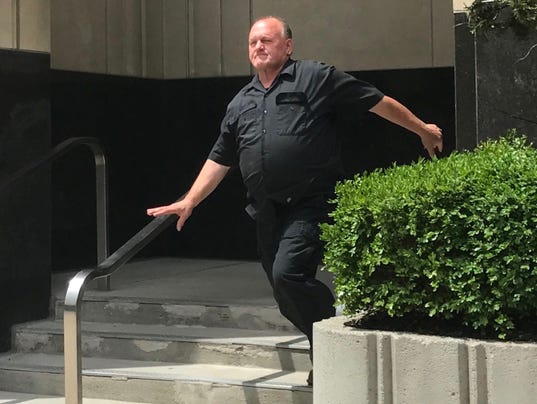

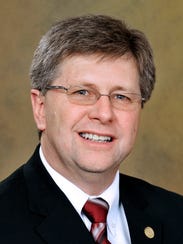
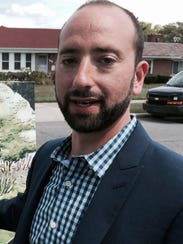

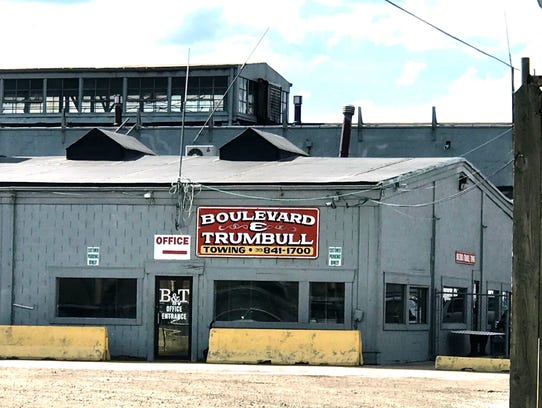 “They said you – ‘We, we don’t want to mess with that force behind you.’”