Showing posts sorted by relevance for query bert johnson. Sort by date Show all posts

Tuesday, September 11, 2018

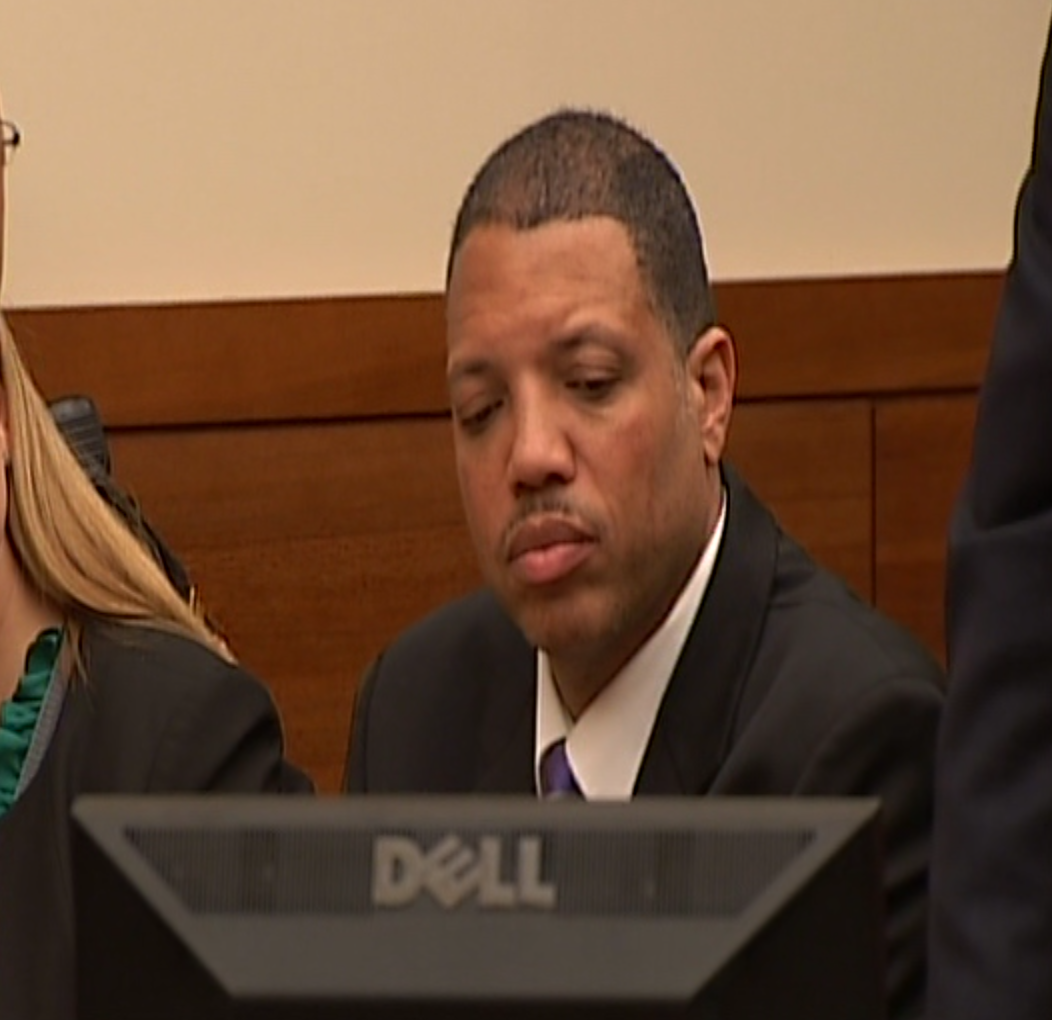
Cocktails & Popcorn: Bert Johnson Made A Video To Expand His Investigation

Cool story, Bruh.


I sit with baited breath, waiting to hear their stories.

Political pals helped spare Johnson stiff prison term

Janee Ayers
Detroit — Several elected officials and political heavyweights, including former Detroit Mayor Dave Bing, helped disgraced state Sen. Bert Johnson dodge a stiff prison term by writing supportive letters to the court.

More than two dozen letters were made public Monday and revealed that politicians, including Detroit City Council members Scott Benson and Janee Ayers, used city letterhead while writing letters supporting Johnson's plea for leniency.

The letters were made public four days after Johnson was sentenced to 90 days in a county jail for stealing more than $23,000 from taxpayers by adding a ghost employee to his senate payroll. U.S. District Judge Matthew Leitman cited the letters, saying that without the personal appeals, he would have sentenced Johnson to as much as 12 months in federal prison.

Johnson received support from numerous Democratic Party heavyweights and a broad cross-section of the community: local and state politicians, a lobbyist and relatives who backed a corrupt politician with a rap sheet, a chronic list of bad debts and the worst attendance record in the state Legislature.
“In my conversations with Bert he realizes he made a mistake, but I hope you will exercise the greatest level of leniency in your sentencing of Mr. Johnson," Benson wrote. "Even though a sever (sic) lapse of judgment has occurred, Bert is not a threat to society and his community can best be served by him remaining free."

Ayers called Johnson one of her best friends.

“Bert has been a mentor and a strong pillar within the community that he represents and throughout the state," Ayers wrote.

In an interview Monday, Ayers said she didn’t think there was anything wrong with using city letterhead since the letter was coming from two vantage points; in her official capacity as a council person as well as on a personal level.

“It was an official letter coming from me as a council person. I didn’t think of it as infringing on any rules,” Ayers said. “I wrote the letter as a council  member and I printed it out on my letter head as a council person. If it is a negligence in using that, I apologize. I didn’t think about it from that perspective.”

Bing, meanwhile, wrote that Johnson was a hard-working legislator who fought for constituents.
“I am aware that Bert has pleaded guilty; but would hope that his political background, his public service, as well as his overall commitment to his community be considered and, therefore, allow for leniency regarding his sentencing," Bing wrote.

Johnson's public service outweighed his crimes and rap sheet, which includes a teenage conviction for armed robbery, Johnson's defense lawyer John Shea said last week.

“Please do not allow this recent indiscretion tarnish the good that Mr. Johnson has done as a state representative and senator," Highland Park Mayor Hubert Yopp wroteon city letterhead.

State Rep. Jewell Jones, a first-term Democratic lawmaker from Inkster, called Johnson a "gladiator."
36th District Court Judge William McConico 
“It is times like now when we need powerful, respected leaders in our nation, I believe it would be a disservice to the public to lose a gladiator like Bertram Johnson," Jones wrote. "Godspeed!”


William McConico, a 36th District Court Judge in Detroit, cited his friendship with Johnson while urging leniency.

“I ask you to take into account that Bert is much more of an asset within the community than away from it,” McConico wrote.

Johnson fought for the poor and children, wrote former state Rep. Phil Cavanaugh, who works for the Wayne County Treasurer’s Office.

“I believe that Bertram Johnson is truly remorseful for any wrongdoing,” Cavanaugh wrote.
A new documentary raises questions about Johnson’s remorse.

Speaking directly to the camera at some point after his indictment but prior to his conviction, Johnson says he went to the Capitol “every day trying to make a difference, trying to make a change” and help constituents.

“And somebody wants to take it away from you? Somebody wants to say you’re not the guy anymore? Frustrated is not the word. It’s (expletive).”

Voting is beautiful, be beautiful ~ vote.©

Friday, March 31, 2017

Now We Know Why "The Elected Ones" Ignore Child Welfare Fraud

I am just going to drop this right here, sit back, and watch another chapter of my mission unfold....


Records: Johnson aide linked to EAA kickbacks made $24K


The FBI search State Sen. Bert Johnson's Highland Park home Monday morning, March 27, 2017.

The FBI and Michigan State Police also conducted searches at Johnson's Lansing officer. Johnson, D-Highland Park, has served in the Senate since 2010.

 LANSING, MI -- FBI raids of State Sen. Bert Johnson's home and office appear to be related to one of Johnson's former employees, his attorney said Thursday morning.

Attorney Cyril Hall said it is his understanding that the FBI investigation is related to Glynis Thornton, a contractor with Detroit's Education Achievement Authority who was indicted of a felony charge of conspiracy to commit federal program bribery. 
According to capitol newsletter Michigan Information and Research Service, Thornton is potentially a "ghost employee" who had loaned Johnson money. Hall did not comment on those allegations, only saying he believes the investigation is related to Thornton. Johnson has not been charged with a crime.
The FBI and Michigan State Police have declined to comment on the reason for Monday search of Johnson's Highland Park home and Lansing Senate office.
LANSING, MI — The FBI and Michigan State Police are conducting searches at State Sen. Bert Johnson's Lansing office and Highland Park home, the Michigan State Police confirmed on Monday.  Johnson, D-Highland Park, who has served in the Senate since 2010, could not be reached for comment Monday morning. Access to his office in the Connie B. Binsfeld Office Building, where...

Thornton was expected to be sentenced last month on the felony charge, but the hearing was delayed. According to the U.S. Attorney's Office, Thornton ran a tutoring company called Making A Difference Everyday. EAA Denby High School Principal Kenyetta Wilbourn Snapp selected the company as a vendor and Thornton gave her $58,000 in kickbacks.

20-month prison term recommended for principal who took over $55,000 in bribes

The federal government recommends a former Detroit principal who admitted to accepting over $60,000 in bribes spend 20 months in federal prison.

According to information provided to MLive by the Senate Business Office, Thornton was employed by Johnson's office as a "community liaison" from March 28, 2014 to Jan. 2, 2015. She made $20 per hour.

All Democratic members receive an annual $117,100 staff budget and two staff benefit packages, according to information provided by a Senate spokeswoman.

Johnson told reporters on Tuesday he was disappointed by the searches and concerned for his family.

He says he's an "open book," but is still trying to figure out what authorities were looking for.

It's possible the searches aren't over, as the Senate has received a notice of intent that the FBI may search Johnson's storage space located in the Boji Tower in Lansing.

Voting is beautiful, be beautiful ~ vote.©


Saturday, September 1, 2018

Bert Johnson Does Not Want To Go To Prison

At least Bert was not convicted for "engagement" with the Detroit Land Bank Authority.

Oh, wait, the Grand Jury has not issued any indictments, yet.

Well, it is a good thing this case was not about campaign finance or election fraud to take someone out of office, that would contain harsher penalties.

I guess the kids will be going to public schools, now.
2016-08-02 17.37.46.jpg
"I hate beverlytran.com."

Spare Johnson prison for corruption scheme, lawyer says

Detroit — Disgraced former state Sen. Bert Johnson should be spared prison because he has a long track record of public service, is remorseful and has family obligations, his lawyer said.

Johnson should be sentenced to probation and home confinement for stealing more than $23,000 from taxpayers by adding a ghost employee to his Senate payroll, defense lawyer John Shea argued in a federal court filing late Thursday.

Home confinement would let Johnson continue to serve as primary caretaker of his mother, who suffers from multiple sclerosis, and continue to raise two school-age children, his lawyer wrote.

The 44-year-old Highland Park Democrat will be sentenced Thursday by U.S. District Judge Matthew Leitman. Prosecutors want Johnson to spend up to one year in federal prison, saying he cheated taxpayers and stole money to pay off debts.

Johnson's good deeds outweigh the bad, Shea said. The former state senator was instrumental in helping Highland Park out of insolvency and spared six Detroit public schools from closure while pushing 31 bills through the state legislature, an enviable record, his lawyer argued.

"The larger point is that the good he has done and the value he has provided far outweigh the mistakes he has made," Shea said. "There is no question that Mr. Johnson’s offense was serious: a democratic society, which relies on public officials’ performance of their duties honestly and in good faith especially as it relates to public monies, cannot countenance theft by those officials of those monies."

The mistakes are well-publicized. Johnson was elected despite a teenage conviction for armed robbery, then amassed the worst attendance record in the state Legislature. From 2010 to 2017, no state legislator had skipped more votes than Johnson, who missed 712 of 5,115 roll calls, according to data compiled by MichiganVotes.org.

"The court should know that, during that period of time, Mr. Johnson suffered a horrific accident involving a snowblower," Shea wrote. "He required nine surgeries and lengthy rehabilitation to recover most of the use of his mangled hand."

Several people wrote letters to the judge praising Johnson, including at least one Detroit City council member. The letters have not been publicly disclosed.

Johnson, whose district encompassed northeast Detroit, Highland Park, Hamtramck, Harper Woods and all five Grosse Pointe communities, resigned after pleading guilty in March.

He is the highest-ranking public official in Michigan convicted of a corruption crime since ex-Detroit Mayor Kwame Kilpatrick was sentenced to 28 years in prison in the City Hall corruption scandal in 2013.

State law bars anyone from serving in a state or local office for 20 years after being convicted of a felony involving “dishonesty, deceit, fraud or a breach of the public trust.” Voters agreed to toughen the state constitutional language in the wake of Kilpatrick’s case.

Johnson admitted conspiring to steal money from a federally funded program, a five-year felony.
In exchange, prosecutors dropped a second, 10-year theft charge.

Johnson also has agreed to pay $23,133.89 restitution to the state.

Johnson stole more than $23,000 from taxpayers between March 2014 and January 2015, according to prosecutors.

He was accused of putting the ghost employee on his payroll so he could repay loans. By 2013, he faced mounting debts, including his son’s private-school tuition at University of Detroit Jesuit High School, his own tuition at the University of Detroit-Mercy and a debt to a political consulting firm, prosecutors said.

The ghost employee was Glynis Thornton, who was ensnared in an earlier corruption scandal involving the state-run Education Achievement Authority in Detroit.

Johnson will pay at least half of the amount of stolen money next week, his lawyer said.

"It can be difficult to demonstrate remorse in a concrete fashion, but one way is to try and make things right," Shea wrote. "In this case, Mr. Johnson has suffered a severe penalty in resigning his office. He has been held up to ridicule and contempt. This all may be justified, but that does not lessen the fact that he has suffered that severe penalty.

"He is ashamed and remorseful, while at the same time recommitted to living the upright life that characterized him prior to this offense."Detroit — Disgraced former state Sen. Bert Johnson should be spared prison because he has a long track record of public service, is remorseful and has family obligations, his lawyer said.

Johnson should be sentenced to probation and home confinement for stealing more than $23,000 from taxpayers by adding a ghost employee to his Senate payroll, defense lawyer John Shea argued in a federal court filing late Thursday.

Home confinement would let Johnson continue to serve as primary caretaker of his mother, who suffers from multiple sclerosis, and continue to raise two school-age children, his lawyer wrote.

The 44-year-old Highland Park Democrat will be sentenced Thursday by U.S. District Judge Matthew Leitman. Prosecutors want Johnson to spend up to one year in federal prison, saying he cheated taxpayers and stole money to pay off debts.

Johnson's good deeds outweigh the bad, Shea said. The former state senator was instrumental in helping Highland Park out of insolvency and spared six Detroit public schools from closure while pushing 31 bills through the state legislature, an enviable record, his lawyer argued.

"The larger point is that the good he has done and the value he has provided far outweigh the mistakes he has made," Shea said. "There is no question that Mr. Johnson’s offense was serious: a democratic society, which relies on public officials’ performance of their duties honestly and in good faith especially as it relates to public monies, cannot countenance theft by those officials of those monies."

The mistakes are well-publicized. Johnson was elected despite a teenage conviction for armed robbery, then amassed the worst attendance record in the state Legislature. From 2010 to 2017, no state legislator had skipped more votes than Johnson, who missed 712 of 5,115 roll calls, according to data compiled by MichiganVotes.org.

"The court should know that, during that period of time, Mr. Johnson suffered a horrific accident involving a snowblower," Shea wrote. "He required nine surgeries and lengthy rehabilitation to recover most of the use of his mangled hand."

Several people wrote letters to the judge praising Johnson, including at least one Detroit City council member. The letters have not been publicly disclosed.

Johnson, whose district encompassed northeast Detroit, Highland Park, Hamtramck, Harper Woods and all five Grosse Pointe communities, resigned after pleading guilty in March.
He is the highest-ranking public official in Michigan convicted of a corruption crime since ex-Detroit Mayor Kwame Kilpatrick was sentenced to 28 years in prison in the City Hall corruption scandal in 2013.
State law bars anyone from serving in a state or local office for 20 years after being convicted of a felony involving “dishonesty, deceit, fraud or a breach of the public trust.” Voters agreed to toughen the state constitutional language in the wake of Kilpatrick’s case.

Johnson admitted conspiring to steal money from a federally funded program, a five-year felony.
In exchange, prosecutors dropped a second, 10-year theft charge.

Johnson also has agreed to pay $23,133.89 restitution to the state.

Johnson stole more than $23,000 from taxpayers between March 2014 and January 2015, according to prosecutors.

Glynis Thornton
He was accused of putting the ghost employee on his payroll so he could repay loans. By 2013, he faced mounting debts, including his son’s private-school tuition at University of Detroit Jesuit High School, his own tuition at the University of Detroit-Mercy and a debt to a political consulting firm, prosecutors said.

The ghost employee was Glynis Thornton, who was ensnared in an earlier corruption scandal involving the state-run Education Achievement Authority in Detroit.


Johnson will pay at least half of the amount of stolen money next week, his lawyer said.

"It can be difficult to demonstrate remorse in a concrete fashion, but one way is to try and make things right," Shea wrote. "In this case, Mr. Johnson has suffered a severe penalty in resigning his office. He has been held up to ridicule and contempt. This all may be justified, but that does not lessen the fact that he has suffered that severe penalty.

"He is ashamed and remorseful, while at the same time recommitted to living the upright life that characterized him prior to this offense."

Seemingly, Bert failed to pay attention in the meetings.

"Do not be mean to my Sweetie. Period."

Voting is beautiful, be beautiful ~ vote.©

Thursday, September 6, 2018

Cocktails & Popcorn: Bert Johnson & The Quantum Renaissance Of Detroit

Bert will be home to witness the Quantum Renaissance of Detroit.

Disgraced ex-Sen. Johnson gets 90 days for stealing from taxpayers 

Detroit — Former state Sen. Bert Johnson was sentenced to 90 days in jail Thursday for stealing from taxpayers.

The sentence by U.S. District Judge Matthew Leitman for stealing more than $23,000 from taxpayers by adding a ghost employee to his Senate payroll was a fraction of the maximum 12 months in prison sought by federal prosecutors.

The conviction scuttled the redemption story of a Highland Park Democrat who overcame a teenage conviction for armed robbery and rose to statewide public office.

A stoic Johnson apologized to constituents and relatives for breaching the public's trust by hiring friend Glynis Thornton for a no-show job. He also apologized for adding his name to the list of dozens of Metro Detroit public officials and businessmen convicted of corruption in recent years.
"I should have never hired Glynis Thornton. That is my failure, and it's on me," Johnson told the judge.

The judge called the crime a serious offense but was impressed by Johnson mentoring strangers and colleagues and how he educated himself and became a state senator despite a teenage felony conviction.

"I personally believe you have learned your lesson," the judge said.

Johnson also must serve 90 days home confinement, spend two years on supervised release and pay at least $23,134 restitution to the state. He also must serve 480 hours of community service in his former Senate district, which encompasses northeast Detroit, Highland Park, Hamtramck, Harper Woods and all five Grosse Pointe communities.

T/> "That's my way of trying to make the world right," the judge told Johnson.

Prosecutors wanted Johnson to spend up to one year in federal prison, saying he cheated taxpayers and stole money to pay off debts, while his defense lawyer pushed for probation and home confinement.

“Public officials, especially those elected by the people, cannot treat the people’s money as their own,” U.S. Attorney Matthew Schneider said in a statement. “The defendant in this case treated taxpayer money as his own, to repay his personal debt. Such an egregious abuse of power will not be tolerated.”

Johnson was elected despite a teenage conviction for armed robbery, then amassed the worst attendance record in the state Legislature. From 2010 to 2017, no state legislator had skipped more votes than Johnson, who missed 712 of 5,115 roll calls, according to data compiled by MichiganVotes.org.

Johnson's public service was commendable and outweighed his rap sheet and crime, his lawyer said. The former state senator was instrumental in helping Highland Park out of insolvency and spared six Detroit public schools from closure while pushing 31 bills through the state Legislature, an enviable record, his lawyer argued.

Johnson is the highest-ranking public official in Michigan convicted of a corruption crime since ex-Detroit Mayor Kwame Kilpatrick was sentenced to 28 years in prison in the City Hall corruption scandal in 2013.
“Senator Johnson made a conscious decision to violate the trust and confidence of the constituents that he was elected to represent,” IRS Criminal Investigation Special Agent in Charge Manny Muriel said in a statement.

State law bars anyone from serving in a state or local office for 20 years after being convicted of a felony involving “dishonesty, deceit, fraud or a breach of the public trust.” Voters agreed to toughen the state constitutional language in the wake of Kilpatrick’s case.

In March, Johnson struck a plea deal, admitting he conspired to steal money from a federally funded program, a five-year felony.

In exchange, prosecutors dropped a second, 10-year theft charge.

Johnson stole more than $23,000 from taxpayers between March 2014 and January 2015, according to prosecutors.

He was accused of putting the ghost employee on his payroll so he could repay loans. By 2013, he faced mounting debts, including his son’s private-school tuition at University of Detroit Jesuit High School, his own tuition at the University of Detroit-Mercy and a debt to a political consulting firm, prosecutors said.

Thornton, the ghost employee, was ensnared in an earlier corruption scandal involving the state-run Education Achievement Authority in Detroit.

Johnson will pay at least half of the amount of stolen money Thursday, his lawyer said.

Voting is beautiful, be beautiful ~ vote.©

Saturday, July 4, 2020

Mildred Gaddis Has A Gerrymandering Situation Going On

sleeping bag.jpg
https://www.theemgfoundation.com/
Mildred Gaddis has a foundation.


Mildred gets funding from the UAW and Ford.

Mildred Gaddis is the voice of Detroit politics, where, for the right price, you, too, can be on her show.

DSC_9977.JPG
Rory and the others, just saving the savages.
Rory Gamble is working with Matt Schneider on routing out corruption of the UAW.

Mildred has lots of friends in Wayne County politics.

Mildred Gaddis never once spoke upon the ilk of the Detroit Land Bank Authority, how people were becoming homeless, leading mothers to be incarcerated and children placed in foster care.

Nope.

But she had a foundation doing all the wonderful things on that salvific mission of salvaging the souls of the savages in her afrocentristic drumbeating chant to maintain the status quo of the heirarchy of the "Elected Ones".

I wonder if Mildred, or her foundation, got any of those precious Detroit Land Bank Authority properties.

They like to do transactions in these fake ass tax foreclosure properties because they got away with it in the Detroit Bankruptcy.

In the realm of the "Elected Ones", one is rewarded with either a fake ass LLC turnkey to start shuffling properties, or, they get a child welfare foundation to get Faith Based Funding to fix up properties, many local churches, which was intentional, because it all falls under the jurisdiction of the Archdiocese of Detroit.

UAW President Rory Gamble gives a thumbs up after meeting with U.S. Attorney Matthew Schneider at offices in Detroit, Michigan on June 30, 2020.UAW meets with feds to avert racketeering takeover, oversight

I bet Rory has lots of tales to tell...

Mildred was mean to my Sweetie, and so were all her other co-conspirators, which is why I am quite sure she will be covering the #coloredrevolution, to vote, like your life depends on it, literally.


I seem to recall another child welfare fraud operation going on.

Is Detroit's Pure Heart Foundation A Strafor - Detroit Land Bank Authority Trafficking Tiny Humans Operation?

Let us just call it gerrymandering for now, for it would be too premature to call it anything else but stealin' the children, land & vote.

#maytheheavensfall

Judge Mathis honor raises funds for Detroit girls program

mathisMany of Detroit’s prominent gathered Saturday night to honor Judge Greg Mathis and raise money for a fledgling organization that helps girls whose mothers are in prison.

The second annual Daughters of Incarcerated Mothers (DIM Project) event at The Roostertail on the riverfront honored Mathis as the 2016 Detroit Man of the Year for his “tremendous work in the city,” said Mildred Gaddis, host of the Mildred Gaddis Show on WCHB-AM 1200 and founder of Daughters of Incarcerated Mothers.

Mathis, a Detroit native whose popular television show is taped in Chicago, performs community outreach throughout Detroit, including programs at the Mathis Community Center on Greenfield.

Phaedra Parks, of the “The Real Housewives of Atlanta,” attended the Daughters of Incarcerated Mothers event at The Roostertail on Saturday night.Gaddis said proceeds from Saturday night’s fundraiser will go to the DIM Project, a self-development program for young girls.

“We’ve been organizing and the program will launch in March,” Gaddis said Sunday.

Phaedra Parks, of the “The Real Housewives of Atlanta,” attended the Daughters of Incarcerated Mothers event at The Roostertail on Saturday night.

Michigan state Sen. Bert Johnson, D-Highland Park, left, and United Auto Workers Vice President Jimmy Settles at Saturday’s night’s Daughters of Incarcerated Mothers fundraiser.
Bert Johnson & Jimmy Settles
Some of the those attending the Saturday event included Phaedra Parks, of the “The Real Housewives of Atlanta,” O’Neil D. Swanson, president and CEO of Swanson Funeral Home, Wayne County Sheriff Benny Napoleon, UAW Vice President Jimmy Settles, U.S. Reps. John Conyers, D-Detroit, and Brenda Lawrence, D-Southfield, and Detroit City Council President Brenda Jones.

Michigan state Sen. Bert Johnson, D-Highland Park, left, and United Auto Workers Vice President Jimmy Settles at Saturday’s night’s Daughters of Incarcerated Mothers fundraiser.

Gaddis said donations to the Daughters of Incarcerated Mothers can be sent to the EMG Foundation, 615 Griswold, Suite 400, Detroit, MI 48226.

Voting is beautiful, be beautiful ~ vote.©

Saturday, April 14, 2018

It Happened In Detroit Because No One Cares About The Children, Unless There Is Money Involved

There is so much more to this Detroit Public Schools scandal and it has to do with the Detroit Land Bank Authority and political corruption.

No one cares about the children, unless there is money involved.

Stay tuned.

Figure in 2 scandals sentenced to 1 day in prison

Detroit – A corrupt school vendor convicted in a corruption scandal who later helped federal prosecutors bag state Sen. Bert Johnson in a theft case was sentenced Thursday to one day in federal custody and one year in a halfway house before probation.

Glynis Thornton, 55, of West Bloomfield, is the last figure in a widespread corruption scandal involving the Education Achievement Authority, a district created to improve the academic performance of students in the state’s lowest performing schools. The scandal led to more than 12 convictions, including Kenyetta Wilbourn Snapp, the Maserati-driving, baseball-bat wielding former principal of Mumford and Denby high schools.

In a court filing, prosecutors urged U.S. District Judge David Lawson to sentence Thornton to 15 months in prison and pay restitution because she provided substantial assistance in the Johnson case. 

“Thornton’s fraud on the EAA, the taxpayers, and the schoolchildren of Detroit was a very serious offense,” Assistant U.S. Attorney Michael Buckley wrote in a sentencing memorandum.

Instead, Lawson sentenced Thornton to one day in federal custody, which she already served, plus one year in a halfway house correction center and three years on supervised probation. She also was ordered to pay $58,050 in restitution to the EAA. He said the sentence was taking into consideration her chronic medical condition and her previously clean record.

"Pay to play has plagued DPS for years and the victims of corruption are not only taxpayers but the students themselves," Lawson said. "You have touched the lives of a number of people, who have sent letters to the court; however, this happened over one year with multiple payouts."

Thornton, whose company, Making a Difference Everyday (“M.A.D.E.”) provided after-school tutoring services at Mumford and Denby high schools, pleaded guilty to a felony charge of conspiracy to commit federal program bribery.

Prosecutors say she conspired with Wilbourn Snapp and a third woman, employee Paulette Horton, to take school funds and enrich herself and laundered money in the process.

"It's been 41 months that I have suffered through this," Thornton said through tears Thursday. "It's not who I am, how I was raised and I just lost sight of myself and got caught up in pay-to-play"
Thornton said she was embarrassed for her 80-year-old mother and had time to reflect on her actions.
"This has been like death and torture," she said. "I've beaten myself up about this so much, it has affected my health. I wish I could put your hand on my heart because you wouldn't be able to carry how heavy it is."

According to the grand jury indictment, Snapp, as principal as Mumford and Denby in 2012-14, selected M.A.D.E. as the after-school tutoring vendor for both high schools. In exchange, Thornton paid Snapp kickbacks as a reward for selecting and retaining M.A.D.E. as a vendor.

Thornton allegedly disguised payments to Snapp by having checks issued payable to Horton’s company, rather than paying Snapp directly. Horton, who was sentenced to 15 months in federal prison, would then deposit and withdraw the money and give it to Snapp, according to the indictment.
“Thornton paid kickbacks to Snapp, a public official, who was entrusted to serve the EAA honestly, with the best interests of the school and its students in mind,” Buckley wrote in a sentencing memorandum. “The spectacle of a school principal corruptly using her position for her own financial benefit does untold damage to the faith of our citizens in the education being provided to their children.”

After being ensnared in the schools scandal, Thornton started cooperating with federal investigators in a case against Johnson, the state senator.

Johnson added Thornton to his Senate payroll as a “ghost employee,” paying her for a no-show job so he could repay a loan, according to prosecutors.

Johnson stole more than $23,000 from taxpayers between March 2014 and January 2015, according to prosecutors. During the investigation, Thornton secretly recorded a conversation with Johnson at his home in November 2015, prosecutors said. He resigned as senator and pleaded guilty last month.
Thornton's defense attorney, Gerald Evelyn, spoke on her behalf, saying she is "virtually no risk to re-offend."

"She did fall into the pay-to-play culture in DPS and quickly realized the wrongdoing," Evelyn said during sentencing. "She knew she couldn't reach back but did everything she could to reach forward and fix it. She was also the cornerstone of this government case."

Peter Henning, a Wayne State University law professor, said the sentence is a substantial reduction compared with the others involved.

"We haven't seen many light sentences lately and this could be sending a message of the benefits of cooperation," said Henning, a former federal prosecutor. "She gave them something they weren't expecting to find. It's not an unusual sentence, it's a combination."

Voting is beautiful, be beautiful ~ vote.©

Monday, January 30, 2012

My ACTA Dinner Invitation To Bert Johnson

Recently, Michigan Senator Bert Johnson celebrated the poetic justice of the death of the Stop Online Piracy Act (SOPA) by slamming its sponsors.

SOPA and its Senatorial counterpart, Protect IP Act (PIPA) may not have been the most publicly engaged pieces of legislation but it did open discussions.  Sadly, no one really understands the motivation behind the formation of national intellectual property policy because it was international.

The United States, along with China and Russia, were a handful of countries that would not comply with international treaties regarding the interference of commerce, or rather counterfeiting. Counterfeiting and piracy was not limited to the recording and film industries, it  was far-reaching into the realms of electronics, food and pharmaceuticals.

One main target for implementation of the World Intellectual Property Organization (WIPO) international treaties and the United Nations Commission on International Trade Law (UNCITRAL).

So what we have is an international stage where the issues encompass the economic impact of fraud.

Economic Impact of Counterfeiting and Piracy

With the help of the SCOTUS ruling in Citizens United the phenomenon of unlimited amounts of money from secret contributors, the anonymous funding of movements began to skew the public perception with asymmetrical background on SOPA.

Quintessentially, the public drank the SOPA Propaganda soup.

Do not get me wrong, SOPA had issues but I would have wanted more input from other SEO experts such as myself.  Alas I entered the equation far to late to be considered as a strong coefficient for the parsimony of the legislation.

So, here's is what happened behind the scenes.

While everyone was rallying against the possibility of SOPA censoring free speech and creativity of the internet, Google was constructing mutational algorithms to prepare for just that: manipulating commerce through the process of filtering information.


It seems SOPA was distractionary legislation to ACTA (Anti-Counterfieting Trade Agreement)an international treaty which the European Union just signed and is expected to be implemented soon.


Here is the link for Stop ACTA http://www.stopacta.info/

I will not argue that the music and film industries are working with antiquated models, but so are the majority of corporations, all of whom register its intellectual property and have demonstrated substantial increases in corporate profits along with a parallel correlation of government subsidies.

The point is that while everyone was mesmerized with the ability of an international community to support major sites going black, ACTA was passed in the silence of the night behind closed doors.

SOPA contained strong parameters for the measurement of intellectual property.  Any tangible good that is registered with the federal entities of either the U.S. Patent and Trademark Office or the U.S. Copyright Office and granted the federal marking, is intellectual property.   (As a rule of thumb, if it does not have the federal marking, it is not intellectual property).  The United States even has established what is called "fair use" standards for using intellectual property.


The U.S. Patent and Trademark Office is warehoused in the U.S. Department of Commerce meaning, under the Commerce Clause of the U.S. Constitution, the Congress has the vested powers to protect individuals and the States from the interference of commerce.

"To regulate Commerce with foreign Nations, and among the several States, and with the Indian Tribes."

The U.S. Copyright Office is located in the Library of Congress. When there is fraud, be it counterfeiting or piracy, it contaminates the historical record of the nation by rewriting history and preventing the Congress to obviate policy. 

"Congress shall make no law respecting an establishment of religion, or prohibiting the free exercise therof; or abridging the freedom of speech, or the press; or the right of the people peaceably to
assemble, and to petition the Government for a redress of grievances."

The key word is "peace". Interference in the recording of the nation's history disrupts the legislative process to ensure peace.  Once this tenet of the First Amendment is violated, peace, the government is empowered to protect the people, pursuant to the General Welfare Clause in the U.S. Constitution. The following is an excerpt of Article I, Section 8 of the Constitution of the United States, called the General Welfare Clause:

The Congress shall have Power To lay and collect Taxes, Duties, Imposts and Excises, to pay the Debts and provide for the common Defence and general Welfare of the United States; but all Duties, Imposts and Excises shall be uniform throughout the United States;

To provide for calling forth the Militia to execute the Laws of the Union, suppress Insurrections and repel Invasions;

To regulate Commerce with foreign Nations, and among the several States, and with the Indian Tribes;

Protection of commerce is in the best interests of the nation.  Fraud is economic domestic violence.
How the nation generates domestic products is part of our national treasure and should not be violently pilfered with counterfeiting and piracy.

Violence, be it verbal, emotional, physical, or economic, becomes grounds for government intervention, or rather the calling of the police to maintain the peace. When fraud of intellectual property happens you have an economic insurrection, pursuant to the General Welfare Clause.

ACTA is vague whereby arbitrary and capricious standards may be applied in the determination of whether something is intellectual property.  Not only that, its enforcement mechanisms are not transparent therefore lacking accountability.  I fear ACTA and now that you are briefly educated upon it, so should you.

In summation, Senator Johnson, instead of attacking the two selected lawmakers who have worked for the last 7 years obviating the potential impact of ACTA, perhaps it would behoove you to first get to know all the guests at the intellectual property dinner table and commerce expansion courses being served.

A true characteristic of a charismatic leader is to generate alternative solutions.  Feel free to bring a dish to the dinner.

United Nations Report on UNCITRAL Colloquium on International Commercial Fraud

Monday, December 2, 2019

Was Clayton Luckie Hanging Out With Bert Johnson In Detroit?

From the sentencing in this public corruption case with Ohio Former State Representative Clayton Luckie, I wonder if he was running with Michigan Former State Senator Bert Johnson.

Just asking.

#FreeKwame


Former Democratic State Lawmaker Says He Will Seek Presidential Pardon Of Corruption Conviction


Clayton Luckie
A former Democratic State Representative sentenced to prison after pleading guilty to mail fraud says he did nothing wrong and will seek a presidential pardon.  

Clayton Luckie, who is black, says pardoning him would be a good way for Republican President Trump to show he cares about the minority community.  Luckie was sentenced in November to four months in prison after a judge rejected a probation recommendation. Luckie was convicted of offering his firm as a front for another company to win work intended for disadvantaged businesses and submitted false invoices for thousands of dollars to the City of Dayton.  Luckie left prison in 2016 after serving three years for convictions on charges that included election falsification.

Hometown success story faces possible prison time

NEWS Oct 14, 2012
V
Staff WritersBefore he was led away in handcuffs after being charged with theft in office, money laundering and other felony charges, Clayton Luckie seemed the epitome of the hometown success story.He grew up in a middle-class West Dayton family and played basketball at Chaminade-Julienne High School, graduating in 1981. After serving 10 years on the Dayton school board, he was elected to the legislature representing Dayton’s 39th House District.He drove a Cadillac Escalade, wore finely-tailored suits and bought a home for his mother in Springboro.“I was really impressed by how good he was to his mother,” noted Mario Gallin, who was often an adversary on the Dayton school board. “That seemed counter to his image as the super politician.”Some privately wondered how Luckie’s lifestyle reconciled with his $68,000 income as a state representative and less than $10,000 from his part-time job as director of sales for Johnson Energy Co. “There was always smoke, but I never saw any flames,” Gallin said. “Nothing happened that was anything but proper and above board.”Gallin was among those caught off-guard last week by the news that Luckie had been indicted on 49 criminal charges, including theft in office, money laundering, election falsification, tampering with records, and tampering with evidence and forgery. The indictment says that over his six years in the Ohio House he stole nearly $130,000 from his campaign account.

If convicted, he could spend years in prison.“It’s no secret we weren’t friends,” Gallin said of the six years the two served together on the school board. But, she said, Luckie cared about the school district and was an advocate for children.“He struck me as more of a street politician, whereas I like to think of myself as not a politician at all,” Gallin said in describing their differences.Jeffrey Mims Jr., Luckie’s former third-grade teacher at Eastmont Elementary School and now a member of the state Board of Education, said the person he knows is nothing like the criminal described in the indictment.At Eastmont, Mims said, Luckie used to bring in 50 cents for students who couldn’t afford to pay for their activity fees. In adult life, he served as a mentor for the Beautillion program, which teaches young men to be disciplined.“He was a very caring person,” Mims said. “Over the years I have observed his thoughtfulness and trying to do the right thing for young people. He made me incredibly proud.”

Dayton demolition contractor Steve Rauch, who donated about $10,000 to Luckie’s campaign fund over the years, said he was saddened by the allegations. “This area needs a lot of support, and he was a good person to do it,” Rauch said. “I am sad for his family and for the Democratic Party. He had a nice future, and it might be gone now.”Drowning in debtLuckie was a political survivor. He was the only incumbent school board member who wasn’t voted out when the four-member “Kids First” reform ticket swept the school board race in 2001, led by the late Gail Littlejohn.“He was very charming, and he knew how to work a room,” Gallin said. “People really liked him.”On Nov. 14, 2006, Luckie was appointed by the Democratic Party to the 39th House District seat vacated when Dixie Allen left her seat to run for county commissioner as a Republican. 

He handily won re-election in the heavily-Democratic district in 2008 and 2010 with 81 percent of the vote.He served as Third Vice President of the Ohio Legislative Black Caucus — a group co-founded by one of his predecessors, C.J. McLin. In January 2009, he was appointed to the state Controlling Board.Luckie’s personal life didn’t match the same trajectory as his public life.He bought a home in Dayton’s Wright-Dunbar District for $151,000 in June, 2005, two months before he married LisaBeth Willis. Their daughter, Kierston, was born in March, 2010 — three months before LisaBeth filed for divorce, citing incompatibility.The divorce file made it clear that Luckie was drowning in debt. He disclosed that he faced $10,433 in monthly expenses, including $6,685 in monthly debt payments, $1,928 for mortgages and utilities, $1,220 for gasoline and car repairs on his 2005 Cadillac Escalade, $792 for the car payment and $500 for medical and insurance items. In August 2011, the court ordered the state to begin garnishing $331.50 a month from his wages to cover his child support payments.In the final divorce decree filed in August 2011, Luckie got the houses at 69 Horace St. in Wright-Dunbar Historic District and 8 English Oak in Springboro, the Escalade and half of Lisa Beth’s 401(k) account. 

The pair split $56,000 in consumer credit card debt: $20,000 for her, $36,000 for him.Luckie, now 49, also disclosed on his state ethics form that he has a son, Chris Beam, and he owns a third house at 607 E. Lakegren in Eaton.Luckie soon would have more than just debt problems. In March, he had his first interview with the FBI.Bogus invoicesThe investigation into Luckie stemmed from an FBI probe into lobbying activities by pay day lenders and W. Carlton Weddington, a Columbus Democrat who pleaded guilty to bribery, elections falsification and ethics charges earlier this year.FBI investigators found a $300 contribution to Luckie’s campaign account reported by a pay day lending political action committee but not reported by Luckie. Ohio Secretary of State Jon Husted said his auditors first noted that discrepancy and Luckie then amended his report. 

The FBI’s forensic accountant, though, uncovered evidence of bogus invoices, transfers to Luckie’s personal accounts, ATM withdrawals at casinos in three states and other irregularities, authorities said.The four misdemeanor counts Luckie is facing have to do with filing inaccurate ethics disclosure statements. Luckie failed to disclose four loans: $4,000 with Union Savings Bank to purchase a jet ski, $3,000 with a Dayton jewelry store, $4,000 with a roofing company, and $5,000 with Frank V. Surico.Surico is listed as vice president of Johnson Energy Co., a dealer in coal, limestone and other fuels. The company has employed Luckie since at least 2005, according to state ethics statements, and lists him as the director of sales on its website. But the job hasn’t paid much. Luckie said on his ethics statements that he earned between $1,000 and $10,000 a year from Johnson Energy in six of the last seven years and in 2008 he said he made between $10,000 and $25,000 at the job.Surico wrote a $625 check to the Ohio Legislative Black Caucus in 2011 to support its annual golf outing, but Luckie deposited the check into his own bank account, according to the indictment.Tony Bledsoe, director of Ohio’s Joint Legislative Ethics Commission, said he’s troubled by the Weddington and Luckie cases, but he doesn’t believe there are widespread abuses at the Statehouse.“There is always a concern about any potential violation of the public trust,” he said. “But with 132 legislators, there will probably be a couple of folks who step outside the boundaries of what is appropriate or what is legal. These are isolated incidents, but we need to know how we can improve our oversight.”Bledsoe said the FBI has voiced no concern over Luckie’s role on the state Controlling Board. 

“One of the checks and balances is the state checking account,” he said.Fundamental trust violatedDayton City Commissioner Nan Whaley said the allegations are baffling, considering how hard it is for candidates to raise even the smallest amount of money. “These dollars are really precious,” Whaley said. “It’s not easy to raise money, and it’s something we don’t like as part of the job. If these charges are true, it’s really strange. Why would you do that?”Whaley praises Luckie for stepping aside in time for the Democrats to place another candidate, longtime Dayton politician Fred Strahorn, on the ballot. “It’s a relief that we are moving on with a good candidate,” she said. “I give Clayton credit for that. He did have the community on his mind.”Derrick Foward, president of the Dayton chapter of the NAACP, said the NAACP is not involved with the case. But Foward, who grew up with Luckie, said, “We are praying for him and his family. We will be very careful about making statements until all the facts are known.”He added, “If he feels he is unjustly treated, the NAACP is here for him.”Foward said that Luckie was known in his youth as an respected middle-class teen who loved basketball, swimming and dances at the West Area YMCA. “It’s a great loss to the community,” he said. “He was an upstanding citizen.”Husted, however, said on Friday that he was not surprised by the indictment. “I really don’t want to expand on that publicly,” said the former House speaker who has known Luckie since the 1990s.Husted said he will ask the General Assembly next year to work on reforming the campaign finance reporting system. 

One change he supports: requiring campaigns to disclose bank account information so that auditors can verify expenditures and contributions if necessary. He said also Ohio needs to update its laws for more timely disclosure of campaign contributions and beef up enforcement.“Not only do we need a reform in campaign finance on the auditing side, but also on the enforcement side,” Husted said. “(Franklin County Prosecutor) Ron O’Brien did a really good job because it got to the prosecutors through the law enforcement side.”Usually campaign finance complaints go through the bipartisan Ohio Elections Commission, Husted said, which can take months or even years to resolve cases.Former Cuyahoga County sheriff Gerald McFaul, a Democrat, stole money from his campaign fund and forced employees to work on his political events. He struck a plea deal with prosecutors in 2010 that included $130,000 in restitution.Husted said the Elections Commission ruled that McFaul could use his campaign funds to pay the restitution. 

Husted has asked for a re-hearing on the matter, he said.“If you get caught doing something wrong and the penalty is pay the money back, that’s not much of a penalty,” he said.Husted said Luckie is eligible to pay his attorney fees out of his campaign fund because the accusations are related to his activities as a candidate and an officeholder.Whaley said that if the allegations are true, Luckie violated the fundamental trust between donor and politician.“I would be really upset if I had ever given Clayton any money,” she said. “There is a code that if you’re donating money, it’s for the campaign.”

Voting is beautiful, be beautiful ~ vote.©

Sunday, August 7, 2016

Conyers affirms staying power with convincing win

Dean of the U.S. House of Representatives
John Conyers, Jr.
Detroit – U.S. Rep. John Conyers on Tuesday survived his closest election in more than 20 years and he did so with ease, defeating Detroit City Clerk Janice Winfrey by more than 20 percentage points in the 13th congressional district Democratic primary.

Considered the “dean of the House” as the longest continuously serving member, the 87-year-old civil rights icon has faced primary challenges in the past three election cycles, but his strong showings suggest the job may be his as long as he wants it, political experts said Wednesday.

“You’ve got a political class that lusts for that seat, but voters are clearly happy with their representation,” said Democratic political consultant Joe Disano.

Winfrey, a longtime city clerk who won more votes than Mayor Mike Duggan in her successful 2013 re-election bid, was considered a serious challenger before falling to Conyers by double digits.

Conyers defeated the Rev. Horace Sheffield III by more than 50 points in the 2014 primary after a petition signature issue that almost kept him off the ballot. In 2012, he topped his nearest primary competitor, former state Sen. Glenn Anderson of Westland, by 37 points.


The primary challenges are a recent phenomenon. State election records show Conyers went at least 14 years without competition from a fellow Democrat until the past six years.

“The results show that the only one restless for a changing of the guard is somebody who wants the job,” said political consultant Steve Hood, who worked for the Conyers campaign in 2014. “The people aren’t restless. Look at the percentage the guy won by.”

In the general election, Conyers will face Republican Jeff Gorman, whom he defeated by more than 60 points in 2014.

Winfrey argued that Conyers has begun “to diminish” and is no longer serving his constituents well as he once did.

But questions over Conyers’ mental acuity have not hindered his electability, Hood said. The congressman is likely to keep winning elections in Detroit, he said, unless he “really stumbles” and does something “really stupid” because of his age.

“I feel he’s at least as sharp as Paul Ryan is,” Hood said, referencing the Republican speaker of the U.S. House. “He’s definitely sharper than Donald Trump, and on his worst day, he was sharper than Janice Winfrey will ever be,” echoing a criticism he made about Sheffield in 2014.

State. Sen. Bert Johnson, D-Highland Park, who helped run Conyers’ re-election campaign this year and in 2014, said his age and experience – along with his status as the ranking Democrat on the House Judiciary Committee – should be considered an asset .

Johnson inadvertently ran against Conyers in 2012, entering the race before Conyers moved into the 13th District after the Republican-led state Legislature redrew Michigan’s political map.

“I got what many would consider an unlucky draw,” Johnson said. “When you’re running against John Conyers, you’re running against the United States of America.”


Voting is beautiful, be beautiful ~ vote.©

Tuesday, June 10, 2014

Under federal investigation, Detroit chose not to apply for the Head Start grant, again

This is not the first time Detroit Head Start funding has been denied or even scrutinized by the feds so for any leader to act surprised at the mishaps at Detroit Public Schools should reassess their leadership abilities of being informed of the history in this matter.

Child welfare programs (i.e. Schools, Foster Care, Medical) have been riddled with fraud, waste and abuse for years yet no one wants to make changes in its operations.

The State has intervened in the operations but of the expansive administrative incompetency, nothing was ever accomplished because the state was just as bad. The blind leading the blind.

Detroit Public Schools chose not to apply for the grant...again.

The feds have been investigating Detroit for years on its poorly operated Head Start Program with even poorer results.

The feds have been investigating Michigan for years on it poorly operated child welfare programs with even poorer results.

Individual whistleblowers have even taken action through the courts.

Michigan was prepared for this so-called mistake with Detroit's Head Start application by preemptively putting together its Great Start Program and expanding its departmental partnerships with DHS to tap into the expanded Medicaid funding for low-income children through child welfare.

The sin and shame was that this official mistake should have been spun much better for a state election cycle.

Next time call me, I will save you from the embarrassment.

Officials’ mistake cancels Head Start in Detroit schools; ‘sin and a shame’ for district

Michigan is expanding preschool for low-to-moderate income families. An application bungle in Detroit imperils more than 900 Head Start seats. (Photo by Lon Horwedel)
Michigan is expanding preschool for low-to-moderate income families, but an application bungle in Detroit imperils more than 900 Head Start seats. (Bridge Photo by Lon Horwedel)
At a time when parents, educators and state officials are pushing to make sure every Michigan child has access to quality preschool, almost 1,000 low-income Detroit 4-year-olds may not get free, federally-funded classrooms because Detroit Public School officials botched the paperwork.
DPS failed to complete the application process for the Head Start preschool program on time. The result: Head Start classrooms are being shuttered across the city, with the district promising to offer 4-year-olds other programs funded by Michigan taxpayers instead.
During the 2013-14 school year, DPS had more than 900 Head Start students in about 56 classrooms, public records show.
Sen. Bert Johnson, D-Highland Park, called DPS’ mistake reprehensible and doubted lawmakers would favor funding more state preschool in Detroit, considering DPS screwed up a chance at federal money.
“I think it renders us functionally obsolete as a school district as it relates to the most vulnerable students,” Johnson added.
Four-year-olds from low-income Detroit families still will be able to enroll in Head Start classes offered by community agencies in the city, according to the regional office of the Administration for Children and Families, which oversees Head Start. It was not immediately clear whether there will be enough classes for the Detroit children who would have gone to DPS, where preschool is taught by certified teachers.
“The application from Detroit Public Schools was not among the eligible applications received on time,” said Kenneth Wolfe, spokesman for the ACF. “Therefore, it was not evaluated by the panel of experts.”
Head Start will be offered by four local Detroit agencies that won $48 million in federal grants, Wolfe said.
The Head Start grant announcements were made in February, but word spread last week when some DPS schools were told to tag and send back any preschool furniture or equipment that was purchased with Head Start funds.

District claims options expanding

Keith Johnson, the president of the Detroit Federation of Teachers union, called the error by DPS “a sin and a shame.”
“It’s really unfortunate in a district that can’t afford to lose a dime,” Johnson said. “How do you not get your I’s dotted and T’s crossed, knowing early childhood is a focal point in our district?”
Asked why DPS failed to meet the Head Start deadline, the district released a statement on Monday saying DPS is actually expanding preschool. DPS did not answer questions regarding the Head Start application snafu, but described it as a program limited to poor students. About 82 percent of DPS students are eligible for free or reduced price lunch.
“DPS will no longer be including Head Start, which qualifies children based solely on their meeting poverty level requirements, in its early childhood education program offerings,” the district said in a written statement.
Last year, DPS had 3,363 children in early childhood programs, about 900 of them in Head Start. Despite losing the Head Start funds, the district plans to add 540 seats in 34 new classrooms using funds from the state’s Great Start Readiness Program and federal Title I funds.
DPS officials did not explain how losing more than 900 Head Start seats and adding 540 Great Start and Title 1 seats amounted to an increase in early childhood offerings.
“Research clearly shows that providing children with early childhood education programs is essential to their personal growth and future academic success,” Jack Martin, the state-appointed DPS emergency manager, said in the news release. “DPS remains committed to providing these critical programs to as many Detroit children as possible.”
State officials did not return calls seeking confirmation that DPS’ expanded preschool will be funded by additional state Great Start funds. But extra funding needed to cover Detroit preschool children, who would have been in the federally funded Head Start program if not for the paperwork snafu, will mean less money for students elsewhere in the state.
LaMar Lemmons, the school board president and vocal critic of the emergency management process, called the DPS mistake further proof that the state is doing a poor job managing its largest school system.
“I think this is a deliberate and systematic dismantling of the Detroit Public Schools system,” Lemmons said. “That, or gross incompetence that is harming our school district and our city.”
Martin reports to the Michigan Department of Treasury. Terry Stanton, spokesman for treasury, was unfamiliar with the DPS Head Start application process, but said he would look into the matter.

A long history with Head Start

Head Start has served over 30 million children across the country since 1965, growing from an eight-week demonstration project to full-day classes. Services include home visits, parenting workshops, English language classes as well as social services and medical referrals.
Those outside-the-classroom services will not be available to children who would have been in Head Start but now will be in Great Start.
Last year, Head Start made a change in Detroit. The government chose five communities nationwide, including Detroit, to participate in a pilot program called Birth to Five. Birth to Five combines programs for expectant families with Early Start services for babies and Head Start preschool services.
The Head Start providers in the selected five cities had to compete for funding due to deficiencies found during prior monitoring reviews. Each applicant submitted a single application to provide a continuum of care in a Birth to Five Head Start program.
In February, four Detroit agencies were awarded a total of $48 million for the Birth to Five pilot that will start in the fall of 2014: Matrix Human Services, Metropolitan Children & Youth, New St. Paul Tabernacle, and Starfish Family Services.
Debra Spring, director for Vistas Nuevas Head Start programs in southwest Detroit that are operated by Matrix Human Services, said she believes the city will have enough seats – a mix of Head Start and Great Start – to accommodate all preschool children in the fall.
“Our hope is that people will look at a program that best fits their needs,” she said.
This fall will likely be the first time ever that DPS will not participate in Head Start, Johnson said.

Push to expand preschool

The DPS bungle comes as the state pushes an effort to offer more preschool.
Gov. Rick Snyder and a host of legislators supported a large increase in preschool funding last year – $65 million, the highest increase among any state in the nation. The money was meant to open classrooms for some of the 30,000 Michigan 4-year-olds who qualified for Great Start but were not enrolled.
The federally funded Head Start program can lead to extra costs for a district because it offers more services to the neediest children, including children who meet risk factors of poverty as well as those with special needs. Head Start provides funds for preschool for students whose families are at or below the poverty line. Great Start funds students whose families earn up to 2.5 times the poverty rate.
Any child who would qualify for Head Start, would also be eligible for either the Great Start Readiness and/or Title I Pre-K programs that DPS will offer, according to DPS.
Unlike some other Head Start providers in the city, DPS’ teachers are paid union wages and typically certified. It is unclear whether DPS will retain all of its Head Start teachers next school year. DPS “believes” those teachers “will likely be absorbed into the planned expansion of the Great Start Readiness and Title I-funded classrooms.”
Johnson, the president of the teachers union, said DPS exhausted its appeals options in the Head Start application process, but should not have found itself in such an “inexcusable” position.
Voting is beautiful, be beautiful ~ vote.©