It seems the U.S. Department of Health and Human Services has adopted, for lack of a better word, predictive analytics in child welfare as its foremost showcase item for the incoming Administration for Children, Youth and Families Commissioner.
But, before we get into the examination of the new Commissioner, first, let us examine, exactly, what predictive analytics in child welfare is:
So, what these foundations did, particularly the
Bill and Melinda Gates Foundation in partnership with the Clinton Foundation, was to optimize revenue generation of "The Poors" (
always said with clinched teeth) or as the concept Hillary Clinton promotes,
"fullest potential".
The concept is simple.
 |
| Tadawul investment in privatized U.S. child welfare bonds |
Make money off "The Poors" by leveraging them as human capital for the best interest of the child, literally.
The children are the chattel and predictive analytics are designed, in the most simplistic way I can present to get people to understand, to be bought and sold on the open markets of complex, private investment schemes.
For a background on Wall Street, Silicon Valley, Foundations and other international investors promoting predictive analytical model in child welfare you can the following link, otherwise, skip it and continue reading.
Econometrics Meets Foster Care.
 |
| Academics doing predictive analytics in child welfare |
In the academic world, way up in the ivory tower of their contained, manufactured reality to keep a job, these people actually believe they can predict the outcome of a kid by plugging the birth into a variable database, click a button, and determine if the kid will end up in prison, so they can invest in the building of more prisons.
Seriously.
These academics, mostly out of California, as the Clinton Foundation is now morphing into the Google Foundation, are looking to come up with some form of mumble jumble in order to apply quantitative investment modeling to the old school form of qualitative eugenics.
Ok, allow me to put this into simpler terms.
These people want to
make slavery, sexy, again by
making profit from the investment in chattel.
Without further adieu, allow me to present to you the man who is going to open to investment doors of privatization to maximize the best interests of the child, the one, the only, Jerry Milner
in the spirit of fuchsia.
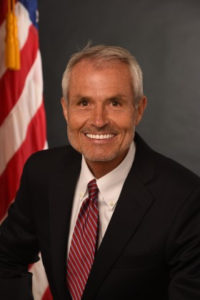 |
Jerry Milner
ACYF Commissioner,
Former VP of a former
ACYF contractor |
In June, the Trump administration hired
Jerry Milner to lead the federal agency within the Department of Health and Human Services that oversees federal child welfare funding and policy.
The Administration for Children, Youth and Families (ACYF) was established in 1977 and oversees the
Family and Youth Services Bureau as well as the much larger Children’s Bureau, which was created by President William Howard Taft back in 1912. As acting commissioner of ACYF, Milner oversees a budget of $9.7 billion and a staff of 200, giving him the power to significantly influence national child welfare policy.
ACYF was created right after CAPTA to make more money during the oil crisis.
Prior to his current role, Milner ran Alabama’s foster care system, and then joined the George W. Bush administration’s Children’s Bureau. There, he helped design the Child and Family Services Review (CFSR) process, a periodic review of state child welfare systems conducted by ACYF.
Did you know not one single, solitary state, has met its benchmarks, let alone pass one of these CFSR reviews?
Did you know that, when one of these states goes through one of these CFSR reviews and is found to be jacked up in its operations, nothing happens?
Wait, the state gets to go through another review, where nothing is found to be improved, which means the state gets a pass until the next review.
Did you know the administrators of the Children's Bureau go through the revolving door of heading up the same privately contracted organizations that have successfully proven to have not done a damn thing to improve the well-being of children, but to being an administrator again?
Milner also served as a vice president at a consulting firm called the Center for the Support of Families, where he presided over child welfare practice.
Did you know the Milner's consulting firm, Center for the Support of Families, is also SLI Global Solutions, LLC, a software, procurement firm?
I do not know about you, but if I find out that, in any shape or form, that Milner has used his position to shoot over contracts, or benefit from his position, and I am going to be nice and keep it in the area of predictive analytics, I am going to go off, which, anyone in public office should know that I am very, very good at doing.
Among his projects there was a 2016 report, where he and his team found that New Hampshire’s child welfare system was not adequately investigating reports of abuse and neglect in part due to a “seriously overloaded workforce.” These are some of the very issues he will have to grapple with in his new role, but on a much larger scale.
Ok, you know I read the entire report.
In a nutshell, this report is nothing but a tempplate pitch for more privatized oversight layers of services that will do absolutely nothing but promote to generation and submission of even more false claims to Medicaid and Title IV-B administrative 75% federal participation rate.
This report was crap.
There was no mention of any thing remotely close to the lack of civil rights, which, if you do not already know, does not exist in child welfare.
Poverty was another one of those elusive terms that was not addressed when looking at the reason why child welfare staff was overworked.
Heck, there was no mention of recidivism of staff or the non-existent conditions for whistleblower, a very powerful tool of oversight.
But, alas, looking at the inherent conflict of interests in Milner's new position, I see lots of procurement policies favoring private contacts that hire SLI to walk them through the creatively fictitious billing process to make those social impact bond payments.
I dare someone tell me I am wrong.
I wonder if he disclosed any financial interests with Ethics.
Following up an in person meeting in Washington, D.C. this fall, Milner agreed to provide written responses to a series of follow-up questions. In those responses Milner remarked on a range of issues including maltreatment prevention, federal finance reform and the future of the CFSR process.
When we met, you discussed the five key messages or pillars that you want to work toward during your time at ACFY. What are those?
We are very interested in changing our current system so that it strengthens the resiliency of families as our primary intervention and gives children what they need to thrive.
What children and families need to thrive: stop making people poor for profit.
Right now, we typically respond only after families have lost much of their protective capacity and children have been harmed. We need to strive to create environments where they get the support they need before the harm occurs, which, in my mind, calls for a reconceptualization of the mission and functioning of child welfare systems. Tweaking what we already have in place won’t solve the problems.
How about stop legally kidnapping kids?
Poverty is not a crime.
Selling kids is called human trafficking.
While certainly not an exhaustive list, there are some priorities that are central in moving toward a system that truly strengthens families.
First, we need to change the focus of child welfare to primary prevention of maltreatment and unnecessary removal of children from their families. We can only break the cycle of family disruption and maltreatment by addressing the root causes of those situations.
How about ditching the moral turpitude stuff and stop making poverty a crime?
How about, instead of these multi-million dollar private contracts to design more designs to design another design to upbill, how about putting the social safety net back together?
Second, we should prioritize the importance of families by ensuring that when foster care is necessary, it operates as a support for the family rather than a substitute for the parent. The integrity of the parent-child bond is essential to healthy child development. Whenever it’s possible and safe, the foster care system should support that bond by engaging birth parents to remain a vital part of their children’s care and routines even while in foster care.
I have a question. How come you promote paying someone else to take care of kids instead of paying the parents, whom you snatched the kids in the first place for being poor?
Third, we must focus our interventions on the overall well-being of children and their parents by changing our core practices, especially around removal and placement. We know that removal of a child from a family is traumatic. Trauma is very hard to undo and presents lifelong challenges. We should consciously avoid inflicting psychological and emotional damage to children in our efforts to achieve physical safety. We can help to do that by providing services to help families stay together whenever possible; keeping children in their communities if removal is necessary, ideally within their extended families; protecting the integrity of the parent-child relationship whenever possible; and normalizing their experience in foster care as much as possible.
 If you know removal of a child is traumatic, did you ever consider what happens to the parents when this happens?
Did you even publish in your report about the drugging of foster kids, the rapes, the beatings, the attempted suicides, the suicides?
Bet you did not because your agency has an adversion to the reality of statistics such as this.
Fourth, to be effective in supporting children and families, communities need the strength of a broad base of collaborative efforts among the entities that touch their families’ lives.
That is just a fancy way of saying that people need to deal with a life of perpetual poverty because "collaborative efforts" is just code word for a privatized entity to come into a community and set up shop for more social impact investing.
See, even these privatized consultants will pitch how to "maximize revenues" instead of providing services to prevent poverty.
Finally, to achieve better outcomes, we must have a healthy and stable child welfare workforce. This is very difficult work, we need to make sure the workforce is skilled, supported, and committed to making families stronger through preventive interventions and not only when maltreatment has occurred.
How about drug testing and psych testing your workforce.
Trust me, anyone who can stay more than a year snatching kids is from a special type of cloth.
How about providing the child welfare workforce a vehicle to report fraud, even with a bounty?
How about giving these workers some authority to make their own decisions to provide services and resources instead of having to follow the jacked up administrative manuals which have not, to this day, proven to meet the needs of federal, state and local complaince of civil rights?
How about stop outsourcing their jobs?
Taken together, I believe these efforts will help reshape our system from one that is reactive and geared toward picking up the pieces after bad things happen to one that is supportive, accessible and provides children and families the services they need to remain healthy and strong.
In regards to primary prevention, what kind of programs and initiatives would you like to see the child welfare system focused on?
We need a range of support services that help to strengthen parents’ protective capacities; for example, parenting education and support, community-based substance abuse prevention and treatment services, ready access to needed medical and mental health services and trauma-informed services to help parents heal from their adverse experiences.
Let me see if I got this one right. You want services to help parents deal with the trauma of being traumatized?
Nice billable, dude.
One of the keys to providing services is to ensure that they are flexible and can be tailored to the needs of individual children and families so that we can get at the root causes of the need for child welfare intervention.
The root cause of intervention: poverty, well, I am going to have to throw in sustainability. Gotta keep those paychecks a-flowing.
No kids, no jobs.
Our current funding structure does not necessarily support such flexibility and changes are needed in order to build responsive prevention systems.
You just want to show your investors you are creative in optimizing revenue maximization for a profitable return on those social impact investments.
What is the role of systems other than child welfare in the child maltreatment prevention push?
Other systems play a tremendous role in preventing child maltreatment — they are absolutely critical. Prevention requires a vigorous, highly integrated, multi-systemic approach involving all who work with children and families. Prevention cannot be accomplished by the child welfare system alone; the issues children and families are facing are just too complex.
I got another system to prevent child maltreatment!
Stop making people poor!
Stop making poverty a crime!
The best examples I’ve seen of community-based prevention services have been the result of strong partnerships among child welfare, the courts and a host of other systems, along with a commitment of all stakeholders to community-based services. No single group or organization can be effective alone in creating healthy, thriving communities, but together with a clear vision and strong leadership, it is possible.
The only leadership I can see you promoting is the fact that you have the procurement pen in your hand for a $9.7 billion budget.
Our challenge and opportunities lie in working across systems, be that the medical system, the mental health and substance abuse treatment provider systems, our schools, law enforcement, community organizations and all other stakeholders that come in contact with vulnerable families and providing them the support they need to stay healthy and strong.
Look at you doing that cross spectrum application for procument, and I bet it is for your lil' global initiative.
How would you suggest the child welfare system re-orient its financing structure to allow for primary prevention? What changes do you think would improve the structure of federal child welfare financing?
End privatization.
Expand whistleblower protections and opportunities.
Make HHS OIG do their job.
Get rid of that useless CFSR.
Contractually debar, sanction, revoke licensure, prosecute and recover fraud.
Under the current funding system, the bulk of federal funding is available to support the costs associated with foster care. This means most of the funding goes to support children who have been maltreated and removed from their parents. We think that is too late. Research tells us that many removals could likely be prevented if warning signs were detected earlier and effective services provided.
States need the flexibility to use federal funds to help families sooner, before serious danger arises or harm occurs. Access to effective prevention services can help keep families together, and flexibility is the key that will allow communities to respond most effectively to their unique needs.
What are your thoughts on the role of predictive analytics for both child maltreatment prevention and responding to reports of child maltreatment?
If people did not fear CPS, and the child welfare system did not have the "Right To Lie", and the entire system was not secretive, and there was due process, and there were civil rights protections, well, I think you get the picture.
I think we have only begun to understand the potential for analytics to support and inform our work.
Some states are using analytics to assist in safety and risk assessment and in identifying reports that warrant action. Others are using analytics at a higher, community level to understand the associations among various factors and the incidence of child maltreatment.
Having the capacity to share data across agencies and programs is an essential component to the effective use of analytics, and is often perceived as a barrier although it is happening in some jurisdictions.
I believe we should continue to support and develop our capacity to collect and use data in ways that will lead to improved outcomes for children and families.
This is that predictive modeling. The stakeholders of this data-driven crystal ball movement thinks they can predict the future of a kid the same way they can do credit scores. Seriously.
I got this administrator out of California who got into an argument with me about this.
Little did old dude know that quantitative analysis just so happens to be one of my expertise, of which he had no background in.
I was into AI when it was just a green screen.
I would pull it up, but this is a long winded rip, and I do not want to lose my witty train of thought.
You mentioned the importance of expanding community-based approaches to child welfare. What do you mean by that and what ideas do you have there?
We need community-based, collaborative services to support healthy and thriving families. This means that improvement efforts are more likely to succeed if they are locally-based and community-driven because that is where families live.
This is particularly important in a prevention environment. Even if foster care is necessary for a child, we know that the opportunities to keep critical relationships intact are greater when children are placed in the communities where they live.
A community-based approach requires a few things. It’s important to understand what life is like for families in their specific communities. What are they struggling with? What resources are available? Are there cultural practices or norms that are unique?
These are all things that are known at the local level and can make a key difference in the effectiveness of interventions. The aim is to become a system to which people turn for help, not seek to avoid.
Well, it looks like the only area for improvement is going to be handing out more privatized contracts.
There’s also good reason to believe that if services were offered in more accessible, less threatening ways, by people and in places that may be familiar, such as through the auspices of a community center or a church, parents may be more likely to seek help on their own and benefit from the supports available to them.
Hey, did you know there are lots of community groups, in the community, that can provide services and resources, if you stop handing out those contracts to your investors which do nothing but put a bunch of fancy words on paper with pretty pictures?
If you give direct funding to the communities, something tells me the community will be able to let the community services do stuff like create jobs and spawn economic development.
Of course that would mean your social impact bonds would have some issues.
What are the most pressing workforce issues in child welfare, and what would you do to alleviate the secondary trauma and burnout so often associated with the child welfare workforce?
Layers, upon, layers, upon layers, of paperwork, which of course is designed by those privatized CQI orgs that have no clue of what the workers on the frontlines have to endure.
The workforce issues are not new. The inability to recruit staff effectively in some areas of the country, high caseloads, inadequate training, inadequate support for staff, a need for ongoing skill development to improve practice, and stressful work that often inflicts secondary trauma on social workers all contribute to challenges in recruitment, retention and the quality of work with children and families.
You train people to legally kidnap children. How would you feel?
There are many ways to support child welfare staff who are constantly exposed to the traumatic nature of the work. Examples include ensuring that supervision and mentoring recognize and respond when social workers are affected by their experiences, building in-house peer supports for staff, understanding and providing for a healthy work-life balance, and decision-making processes that take life-and-death decisions off the shoulders of a single worker.
As a social worker, I believe that child welfare staff want to do good work and oftentimes know what needs to happen to be effective. Unfortunately, organizational cultures and the lack of supports are often barriers.
Effective and inspirational leadership in child welfare is central to supporting the workforce, through establishing a clear vision, a supportive environment, and an organizational culture that values keeping families together. Behind every successful child welfare program, there are leaders who have vision, know what needs to happen and how to make it happen, and who can inspire and bring together their own staff with other essential stakeholders to shape effective systems for children and families.
There are no successful child welfare programs.
Never have, never will if you keep up the same organizational culture that values profits over people.
To what degree are opioids a factor in increasing foster care rates?
Huge.
We are experiencing increases in the number of children in foster care at the same time that there is an increase in the percentage of children entering foster care with a reason related to substance abuse.
However, at the federal level, we cannot make the direct link to opioid use since our data are not specific as to the types of substances being abused. Still, based on the information we hear from states, there is strong reason to believe that opioid abuse is a contributor to some of the increases.
This phenomenon supports the need for greater flexibility in providing prevention services, strong community partnerships, and in data-sharing so that we can both understand and address the problems.
You do not need more data to find the linkage of opiod use and foster care. You already have it!!!!!!!
Did you ever think about a collaborative partnership with DOJ to find out where the opioids are coming from to stop it?
We need to be able to reach families further upstream if we are serious about improving outcomes for children and families.
Flexible funding, thoughtfully applied, will allow us to be a proactive rather than reactive system, which is key to preventing maltreatment, and key to strengthening families.
At the same time, we should take care not to impose increased regulation on states’ abilities to make the right decisions for individual children and families and burden them with unnecessary reporting and compliance requirements.
Wow, you did not answer the question. I will take that as a position of opposition for the Family First Prevention Services Act.
I have my own position on this Act, but that is not the point of this rant.
The Chronicle’s research shows that there is a serious shortage of foster beds relative to foster kids. Do you think the federal government should be more engaged in tracking and assisting states with recruitment?
In the long run, I don’t think we will solve the problems in foster care by finding more beds for children to sleep in. We need to resolve the problems that lead to the increased need for foster care placement.
Nonetheless, in the immediate, we understand that states are facing shortages of placement options when children are entering foster care, and we are very supportive of the need for an adequate supply of family-based placement resources.
Through the Children’s Bureau’s network of technical assistance providers, we have and will continue to support states’ efforts regarding diligent recruitment of foster and adoptive families, with an emphasis on looking first within the children’s extended families. We are also placing emphasis on increased diligence in engaging fathers and paternal relatives, which may provide an expanded array of kinship care options for children in placement.
You almost had me until you took a sharp right, left the staduim and hit the highway doing 90 miles an hour while the game was still going.
How about emphsizing that emphasis on famliy security for continued placement and extended family placement. Again, you can pay a foster parent, why not pay a parent to do the same thing in a time of need, like a time of economic need, oh, like poverty?
Since the Child and Family Services Review [CFSR] process has been in place, not a single state has come into compliance. Do you see this as a product of misguided thresholds, serious state challenges, or perhaps some of both?
First, all states have achieved some degree of conformity with CFSR standards and have been out of conformity in other areas.
You lie.
The CFSR was not envisioned to be a pass-fail review, but rather, a review to help states understand their strengths and weaknesses and to guide continuous quality improvement activities. I believe that some states, however, have come to view it as a compliance process, which is disappointing, and I am also disappointed in not seeing dramatic performance improvements in round three of the CFSR so far.
The CFSR is nothing but a cover up for false claims.
Second, the conformity thresholds for the outcomes and performance indicators in the CFSR are high, as they well should be, given the vulnerable population they are designed to address, so it’s difficult to say the thresholds are misguided.
It is not called "vulnerable population", it is called a targeted population, you know target, attack, then file the cost reimbursements to Medicaid?
I think the problems lie in the program improvement planning process that follows the reviews. On the one hand, the federal government tells states they must make major improvements, many of which require new or expanded services, yet we provide relatively little in the way of funding to support the improvements. That needs to change.
Again, how about shutting down those private contractors?
The CFSR is a valuable tool in helping to raise the bar for outcomes for children and families, and I am committed to looking at ways in which the process can be more effective in leading to greater improvements.
All the CFSR does is prepare a state to find new and improved ways of covering up its failure to monitor its sub-recipients.
Finally, have you had much interaction with President Donald Trump or Health and Human Services leadership regarding their goals for the child welfare system?
Pursuit of the goal of strengthening families through primary prevention, strong and responsive communities, collaborative efforts among those organizations and groups whose work affects outcomes in child welfare, and increasing the well-being of children and families are all entirely consistent with the administration’s goals.
The administration places high value on the importance of families, and we believe this is where we should focus our priorities.
Cannot take them out until you put them in.
Looking forward to your resignation.
#DOJ #FBI watch him and his investors.


